
SharpSpring, now branded as Constant Contact Lead Gen & CRM, sells itself as the affordable marketing automation platform for agencies and small businesses. It bundles email marketing, a visual automation builder, a built-in CRM, landing pages, and lead scoring into one system, all at a price well below the enterprise incumbents. But affordable and complete aren't the same thing. As B2B go-to-market strategies grow more data-driven, SharpSpring's boundaries are getting harder to ignore.
To write this SharpSpring review, we analyzed the platform in detail. We believe it's a good fit if:
You're a digital marketing agency managing multiple SMB clients under one roof
You need marketing automation and CRM in one platform without paying enterprise prices
You want white-label capabilities to rebrand the platform for your clients
Month-to-month contracts matter more to you than advanced features
Your sales process is simple enough for a lightweight CRM
However, SharpSpring might not be the best choice if:
You need verified B2B contact data to fuel your prospecting
Your go-to-market strategy depends on buyer intent signals and account intelligence
You require advanced reporting, custom analytics, or multi-touch attribution
You're scaling beyond SMB and need enterprise-grade CRM and sales automation
You want AI tools that help reps know who to contact, when, and what to say
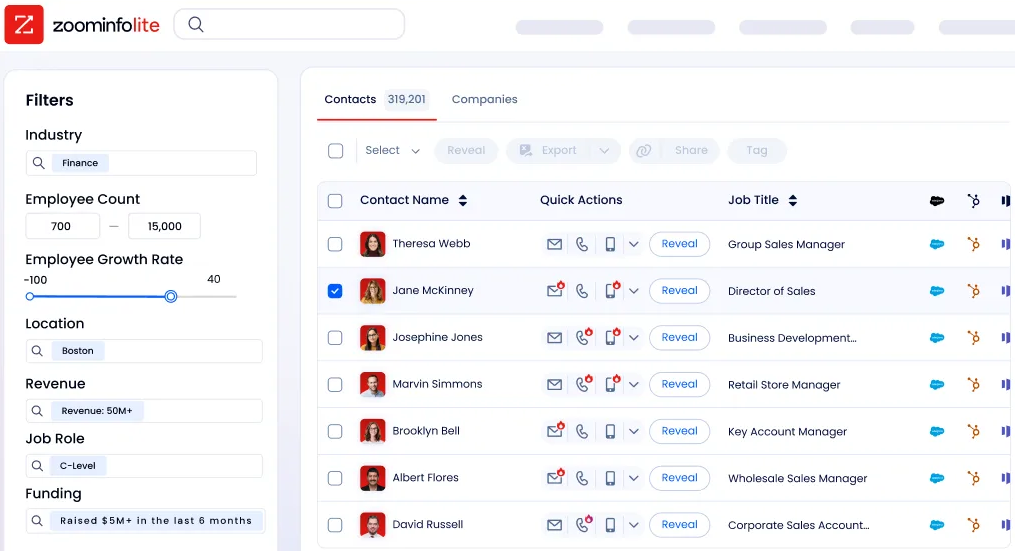
In this case, consider ZoomInfo: an AI-powered GTM platform that goes beyond marketing automation into territory SharpSpring can't reach. ZoomInfo offers B2B data at scale (500M contacts, 100M companies, 135M+ verified phone numbers, and 200M+ verified business email addresses), a GTM Context Graph that reveals not just what's happening in your deals but why, and access through GTM Workspace, GTM Studio, and APIs/MCP. It provides the data foundation and intelligence that marketing automation platforms like SharpSpring were not designed to deliver.
We've included a detailed look at ZoomInfo later in this SharpSpring review, as the natural next step for teams that have outgrown what a marketing automation platform alone can provide. If you're ready to explore a data-driven approach to go-to-market, you can start with ZoomInfo's free trial here.
What is SharpSpring?
SharpSpring was founded in January 2012 in Gainesville, Florida by Rick Carlson, Travis Whitton, and Joe Kelly. Carlson, who holds an MBA from the University of Florida and spent a decade in internet security, saw a gap in the marketing automation market: platforms like HubSpot and Marketo were priced out of reach for smaller buyers and agencies.
The company grew through an agency-first distribution model, positioning itself as the affordable alternative that agencies could white-label and resell. By the time Constant Contact acquired SharpSpring in September 2021 for approximately $240 million, the platform served more than 10,000 businesses globally, including approximately 1,900 agency customers, across 56+ countries.
In March 2023, SharpSpring rebranded as "Constant Contact Lead Gen & CRM" with no changes to the platform itself. The sharpspring.com domain continues to operate, and the platform is available in nine languages.
Today, SharpSpring positions itself as a full-funnel marketing and sales automation platform plus CRM for two audiences: digital marketing agencies seeking a rebrandable platform to manage multiple clients, and SMBs looking for a combined marketing stack at a fraction of enterprise pricing.
SharpSpring Pros & Cons
Pros | Cons |
|---|---|
- All-in-one marketing automation + CRM at a fraction of enterprise cost | - Reporting is limited and cannot filter by custom fields |
- Agency-first architecture with white-label and multi-client management | - CRM lacks depth for mid-market and larger organizations |
- Visual workflow builder praised for usability | - Interface perceived as clunky compared to newer competitors |
- VisitorID tracks anonymous website visitors | - Social media module is underpowered |
- Configurable lead scoring with decay rates | - Mobile app widely criticized as nonfunctional |
- Month-to-month contracts for agencies | - Landing page builder has customization limits and reported bugs |
- Responsive customer support during onboarding | - No built-in B2B contact database or buyer intent data |
- Available in nine languages | - No publicly listed pricing; demo required |
SharpSpring Review: How It Works & Key Features
Marketing Automation & Lead Intelligence: SharpSpring's behavioral tracking engine ties anonymous visitor data to lead scoring and automated workflows.
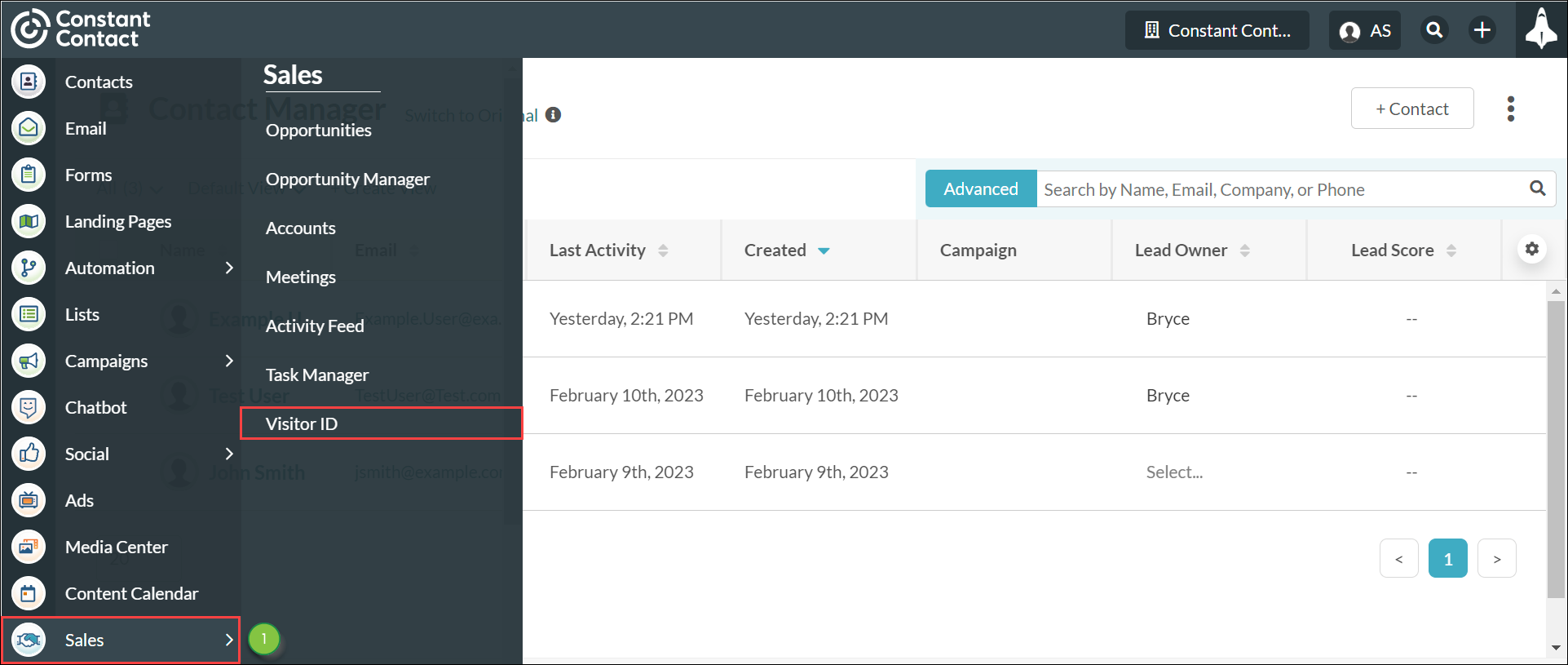
SharpSpring's marketing automation centers on a behavioral tracking engine that follows visitors across your website before and after they identify themselves. It starts with VisitorID, a tracking script that identifies anonymous web traffic and builds behavioral profiles on visitors who haven't yet filled out a form.
Source: Constant Contact
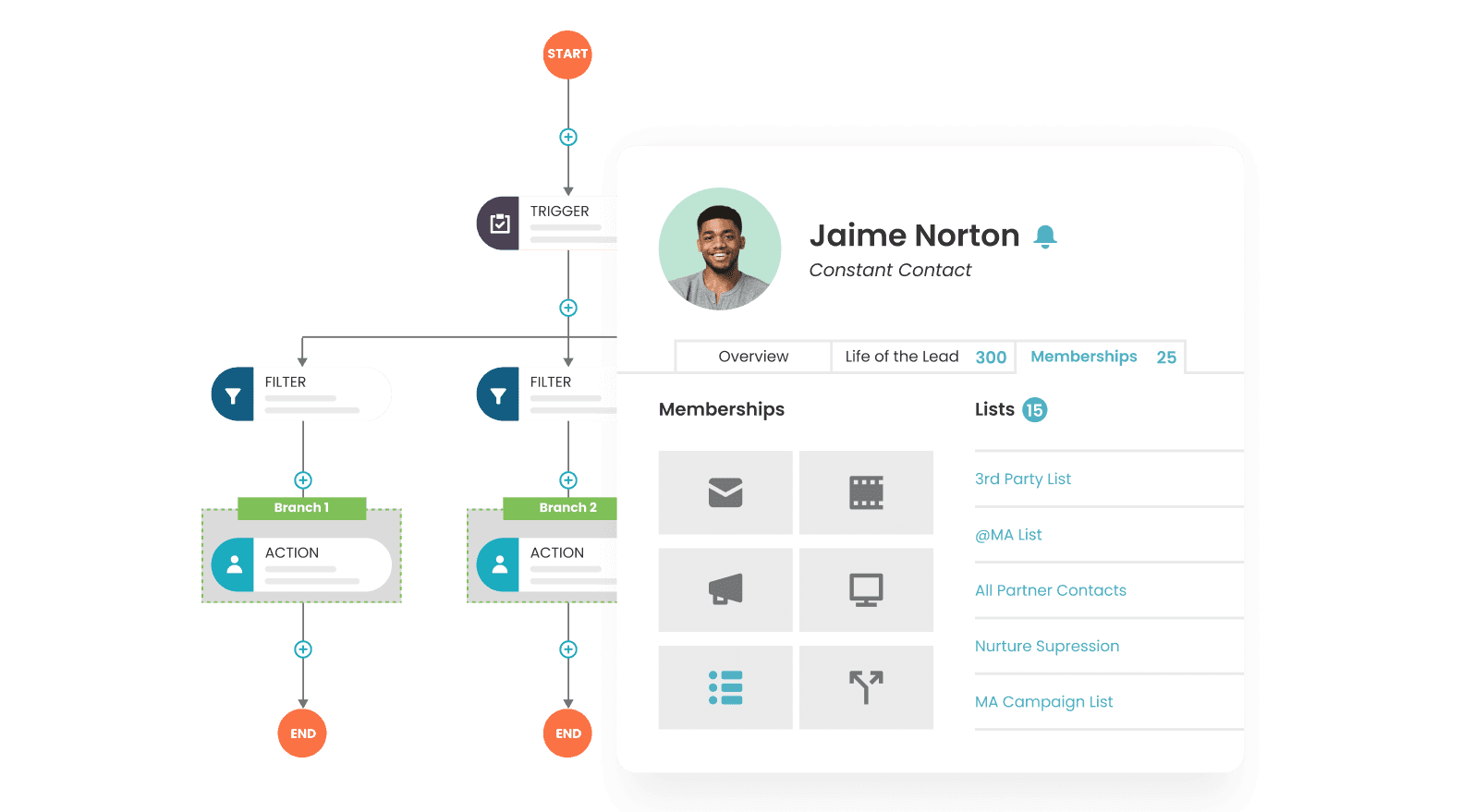
Once a visitor is identified (through a form fill, email click, or return visit), every subsequent interaction feeds into the Life of the Lead timeline: a chronological record of every touchpoint, including pages visited, emails opened, forms submitted, content downloaded, and social interactions. The platform stores all interactions indefinitely and displays up to 300 events visually.
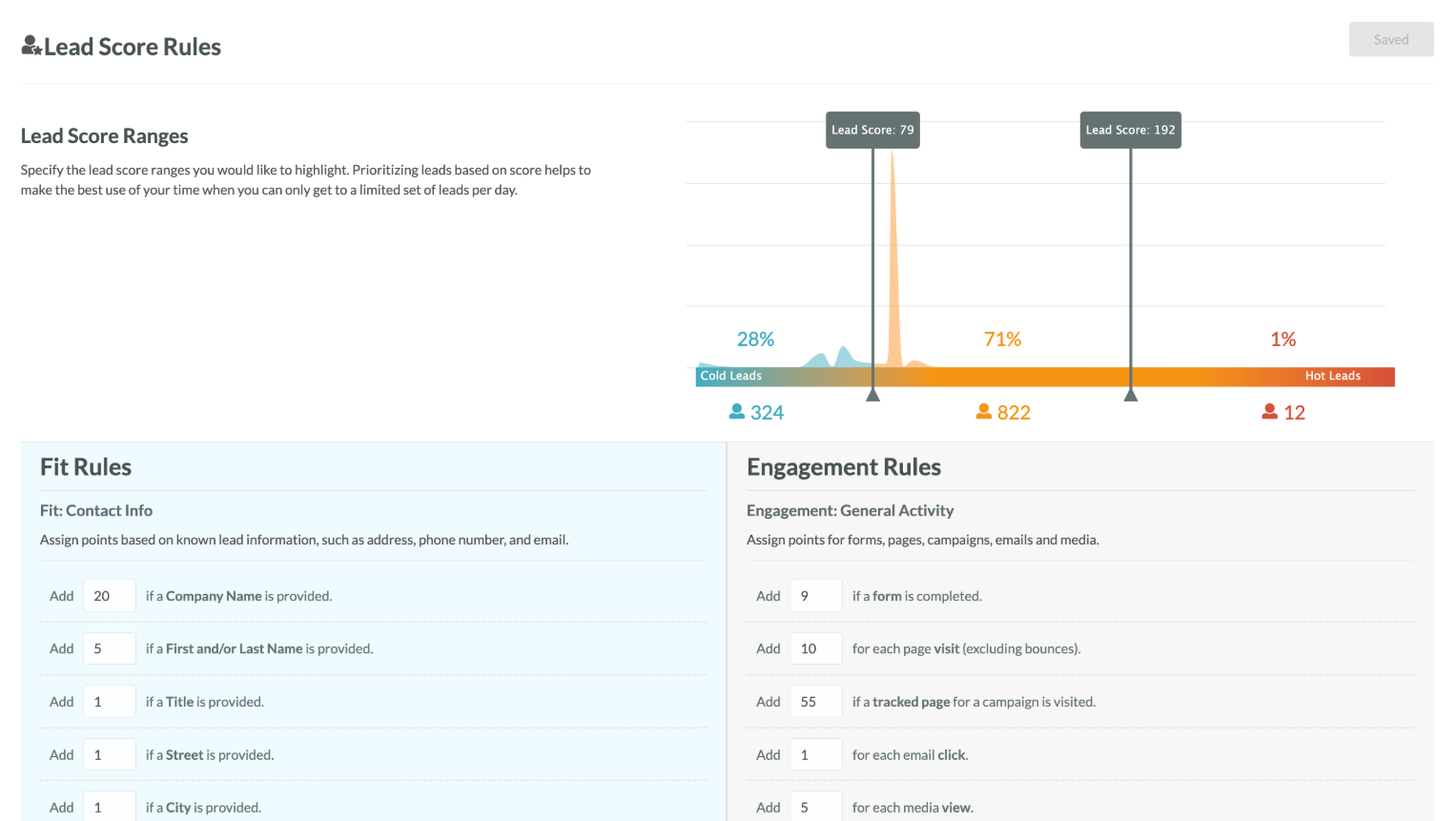
The lead scoring system assigns numerical values in two categories: behavioral signals (page visits, email opens, form fills) and demographic fit (job title, company size). A distinguishing feature is configurable score decay: engagement-based scores lose value over a configurable half-life while demographic scores remain stable. A lead who was active three months ago but has gone quiet naturally drops in priority, while a strong-fit contact stays flagged regardless of recent activity.
Source: Constant Contact
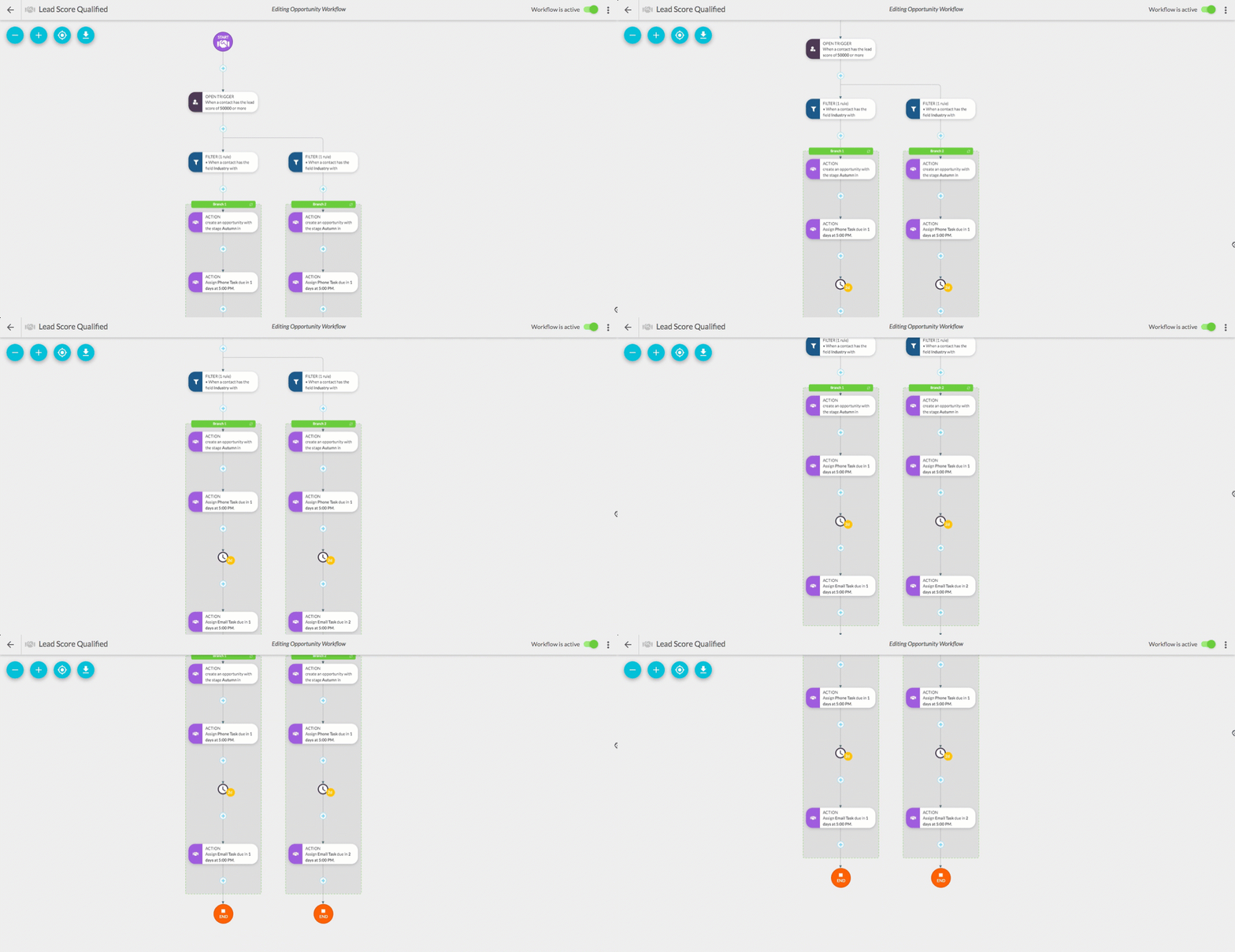
The visual workflow builder uses a drag-and-drop interface to create multi-step automations with triggers, branching logic, time delays, and conditional paths. Workflows can fire on page visits, form submissions, email engagement, lead score thresholds, CRM field changes, and social interactions. When a lead crosses a configured score threshold, the system can automatically create an opportunity and assign it to a sales pipeline, notifying the appropriate rep in real time.
Source: Constant Contact
Dynamic lists add and remove contacts based on real-time criteria, and persona-based workflow assignment routes contacts into nurture tracks based on profile data. A daily "hottest leads" digest surfaces the highest-scored contacts for sales follow-up.
Email Marketing: SharpSpring integrates email campaigns directly with its behavioral tracking and CRM data.
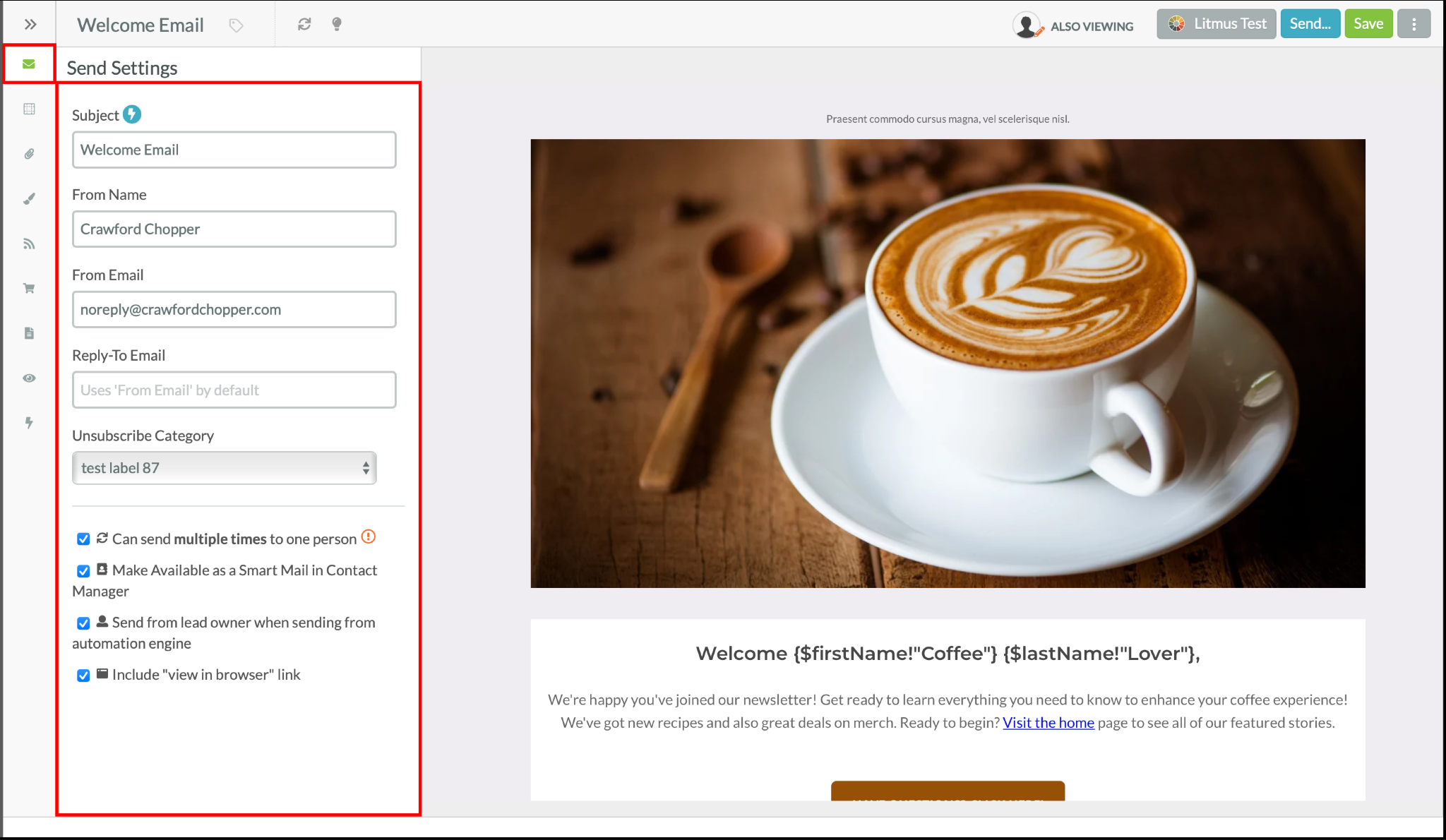
SharpSpring's email module sits inside the same system as the CRM and automation engine. Every send, open, click, and conversion routes back into the contact record and can trigger downstream workflows without extra configuration.
The Email Designer offers both a visual drag-and-drop editor and a raw HTML editor. Pre-built content blocks cover text, images, buttons, and dividers, and users can create and save custom templates for reuse. Personalization goes beyond merge fields: rule-based content swapping shows different text, images, and CTAs to different contacts based on their attributes, without code.
Source: Constant Contact
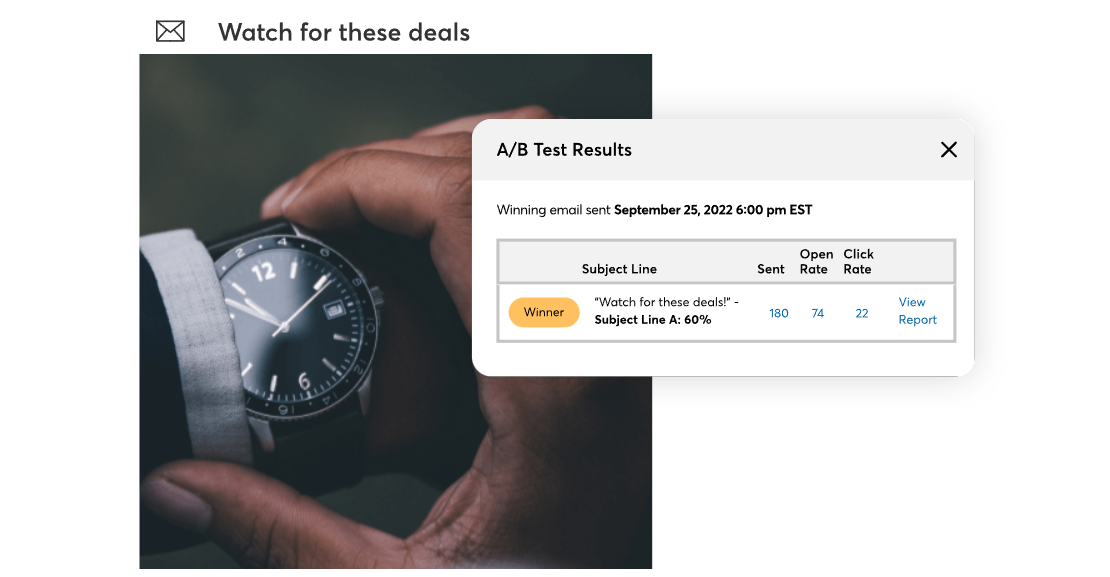
A/B testing supports automatic list randomization and winner promotion. Emails can be sent as one-time broadcasts or triggered within automation workflows based on behavioral events. Every email interaction adjusts the contact's lead score and appends to the Life of the Lead timeline, giving sales reps full context when they follow up.
Source: Constant Contact
For deliverability, SharpSpring maintains shared IP pools with active monitoring and uses engagement data to suppress sends to disengaged contacts.
Built-in CRM: SharpSpring's CRM shares a database with the marketing automation engine, eliminating sync lag.
Most marketing automation platforms treat CRM as an external system connected through an integration. SharpSpring's built-in CRM shares the same database as the marketing automation engine, so behavioral data, campaign history, and deal status all live in one record with no sync delay.
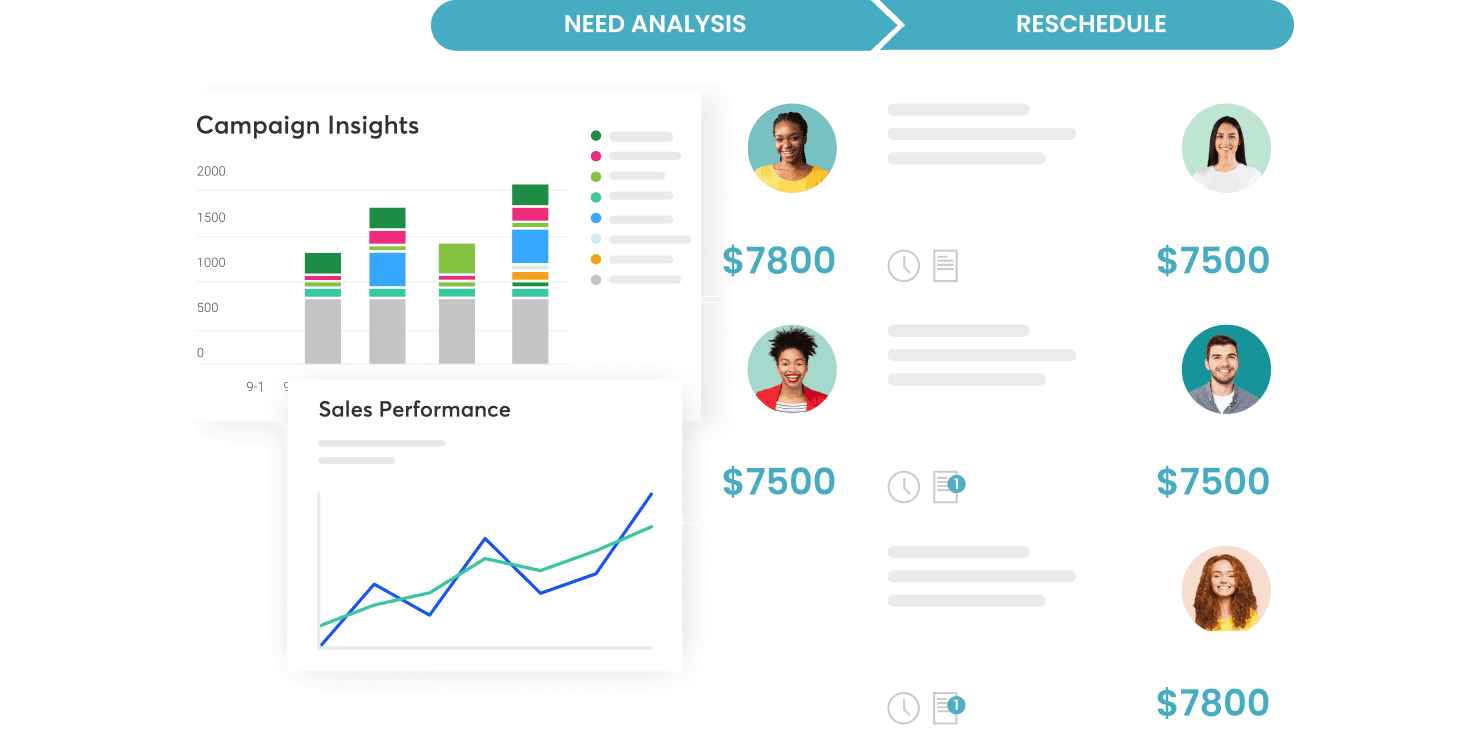
Opportunities are tracked in a visual pipeline with drag-and-drop deal cards. Moving a card between stages recalculates expected close value and probability. Deal stages are customizable, and multiple pipelines can run simultaneously for different products or sales processes.
Source: Constant Contact
The CRM includes task creation and assignment, activity logging for calls and meetings, custom fields on contact and opportunity records, and closed-loop reporting filterable by pipeline, rep, product, and campaign. Deal stage changes can trigger marketing automation workflows. A closed deal can suppress a contact from further marketing emails, and a stalled deal can automatically re-enter a re-engagement sequence.
As TechRadar notes, while the CRM "may lack a few of the more advanced features you'd find in a standalone system," the integration with behavioral data and marketing automation creates value that standalone CRMs cannot replicate natively.
Sales Automation: SharpSpring automates sales follow-up based on behavioral signals, not just CRM field changes.
The Sales Optimizer is SharpSpring's automation layer for active deals. Unlike standalone sales tools that trigger actions only when a rep manually updates a deal stage, SharpSpring fires sales automation off actual lead behavior: a prospect returning to the pricing page, re-engaging with an email after 30 days of silence, or crossing a lead score threshold.
Source: Constant Contact
Opportunity Workflows are automation sequences designed for deals in progress. They move deals through stages, send relevant content, queue tasks for reps, and fire reminders for sales calls based on rules and triggers rather than manual action. Lead assignment automation rotates new qualified leads to reps using configured distribution rules.
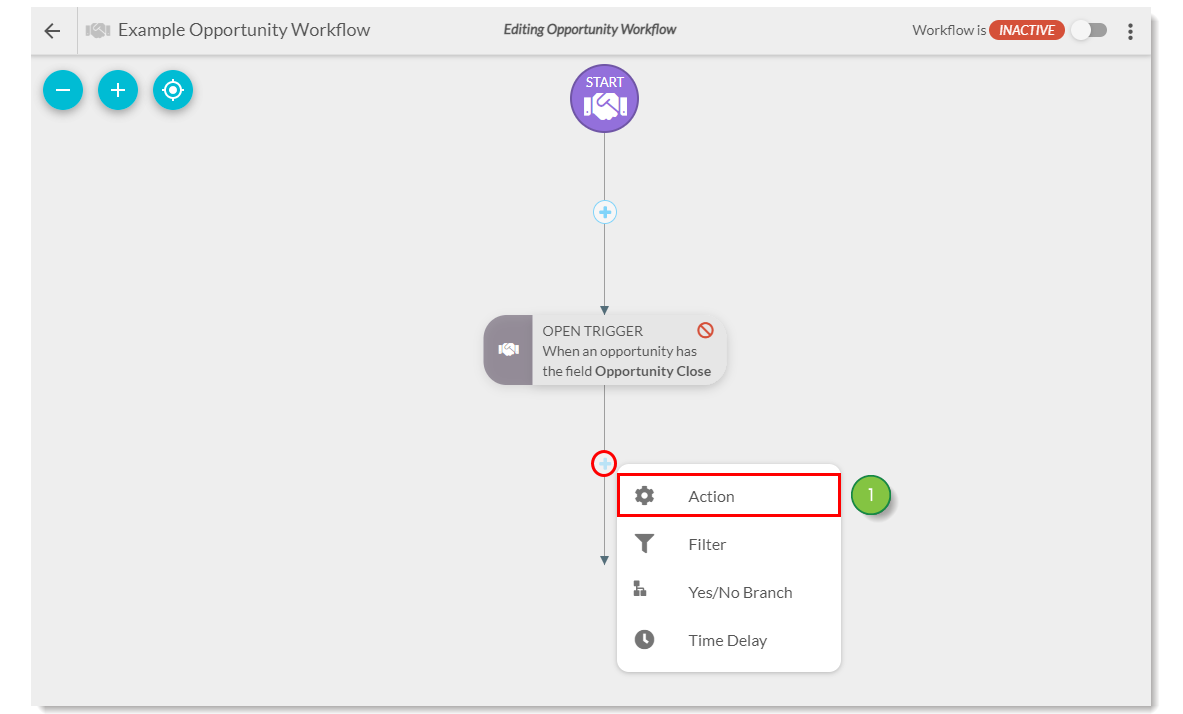
Source: Constant Contact
Real-time notifications alert reps when high-value leads visit the site, open an email, or complete a form. These alerts draw on behavioral data that a standalone CRM cannot generate on its own.
Landing Pages & Forms: SharpSpring builds conversion pages inside the platform with native CRM integration.
The Landing Page Designer is a point-and-click editor with drag-and-drop content blocks for text, images, video, countdown timers, and CTAs. Forms can be dropped directly into the page builder and edited without leaving the interface. Every form submission feeds straight into the contact database and can trigger automation workflows immediately.
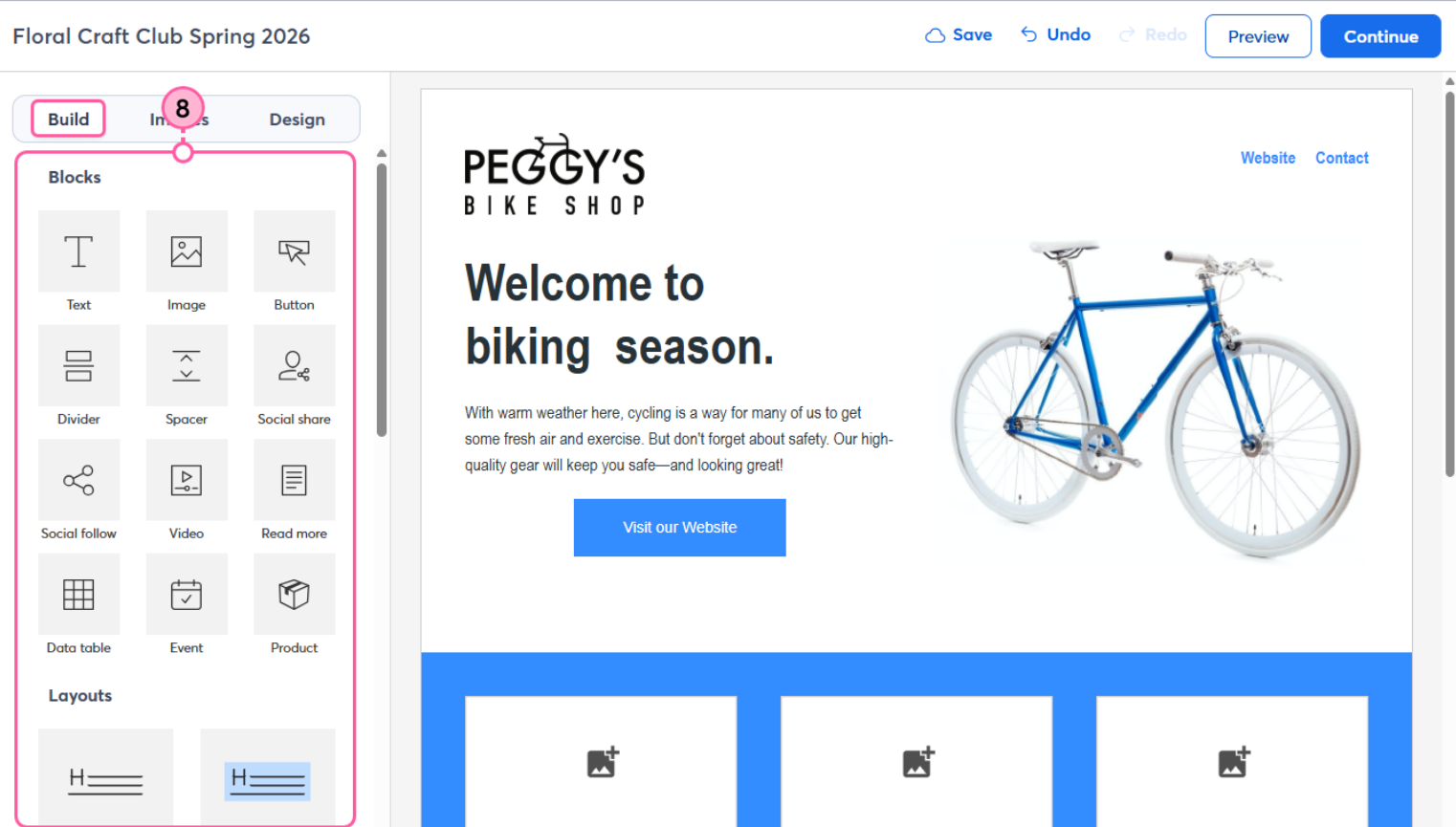
Source: Constant Contact
Dynamic content shows different headlines, images, and CTAs to different visitors based on their lead attributes, without code. A dedicated mobile editor lets teams toggle between desktop, tablet, and mobile views and hide blocks on smaller screens. Pages support custom domains via CNAME, basic on-page SEO controls, and A/B testing.
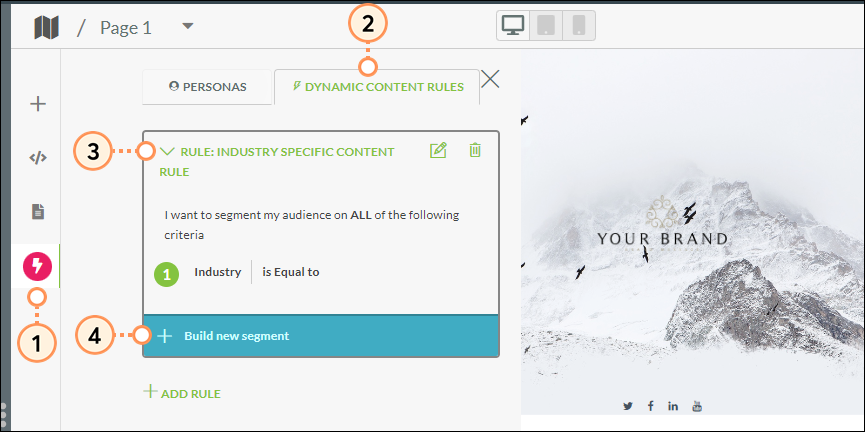
Source: Constant Contact
The advantage over standalone landing page tools like Unbounce or Instapage is that SharpSpring's pages feed directly into the same contact database, automation workflows, and Life of the Lead timeline that power the rest of the platform, with no integration setup required.
Campaign Tracking & Attribution: SharpSpring connects marketing activity to pipeline through UTM tracking and multi-touch attribution.
SharpSpring's campaign tracking system ties marketing spend to pipeline and closed revenue. Tracking begins at the anonymous visitor level, and when a visitor converts, their pre-conversion activity is retroactively attached to their contact record.
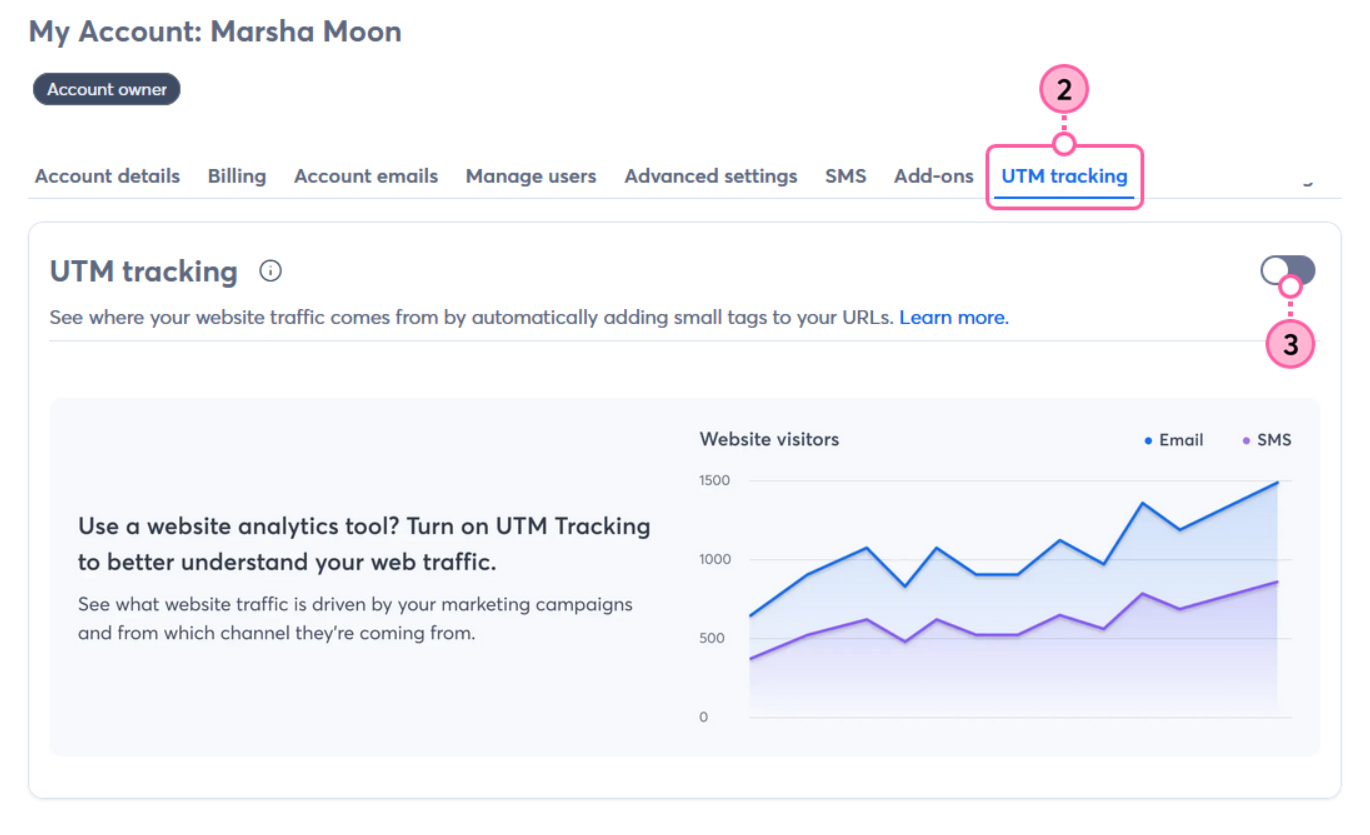
Source: Constant Contact
Campaign assignment works through UTM parameters (all five standard fields), form submissions, API calls, and chatbot interactions. The platform offers multi-touch attribution that distributes credit across touchpoints rather than defaulting to last-touch, along with campaign attribution reports showing which campaigns drove pipeline, qualified opportunities, and revenue.
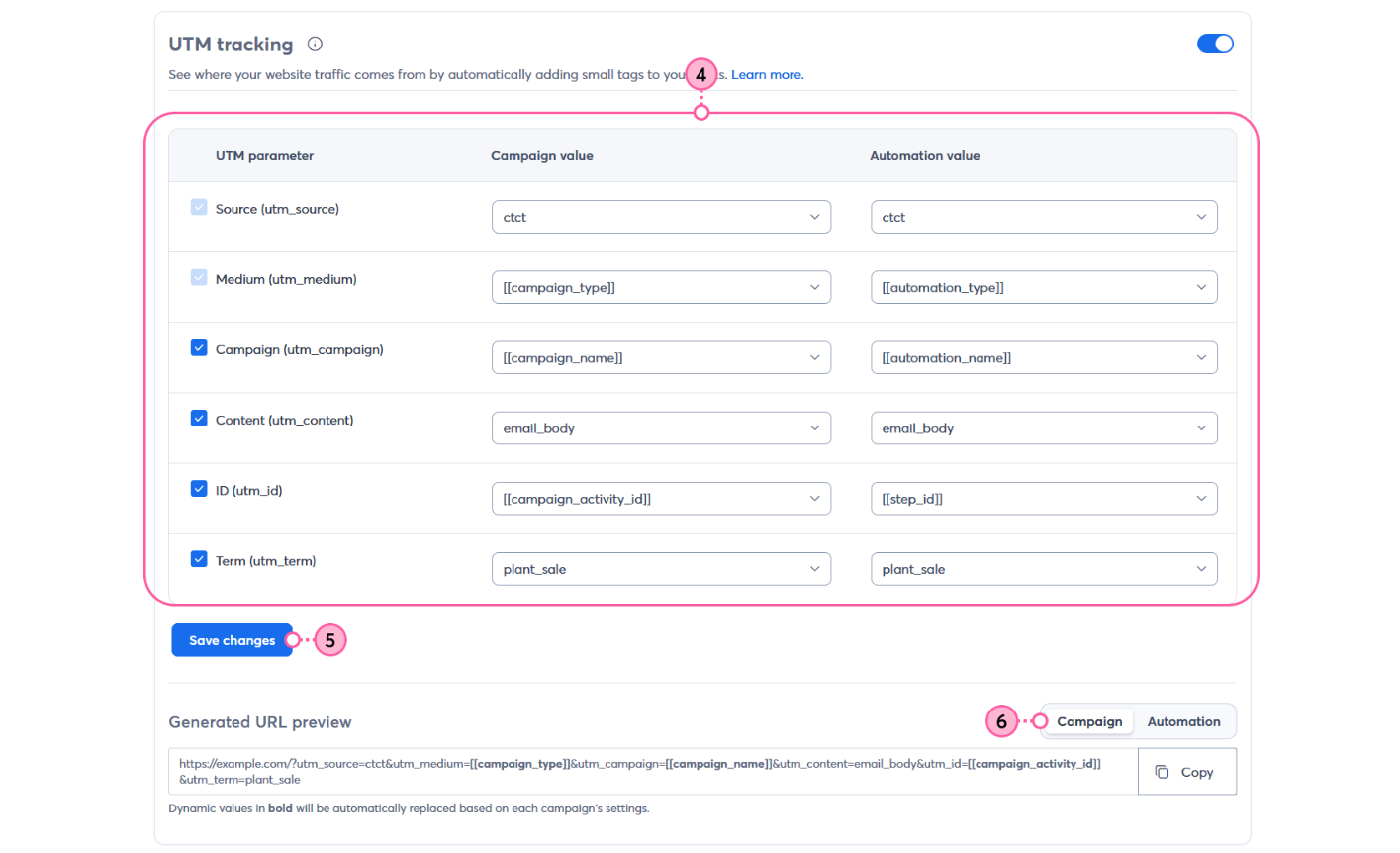
Source: Constant Contact
Because campaign tags, contact activity, pipeline stages, and closed deals share one database, revenue attribution requires no data export or cross-platform joins.
Where SharpSpring Falls Short
SharpSpring delivers solid value for agencies and cost-conscious SMBs. But several limitations surface as teams grow and their go-to-market needs become more complex.
No B2B Contact Database. SharpSpring is a marketing automation and CRM platform, not a data provider. It has no built-in contact database, no verified phone numbers, no business email discovery, and no company intelligence. Teams must source their own leads through inbound channels or purchase lists from third-party providers. For organizations that need to proactively find and reach buyers, this gap means bolting on separate data tools and managing the integration overhead.
No Buyer Intent Signals. SharpSpring tracks what happens on your own website and within your own email campaigns, but it has no visibility into what prospects are researching across the broader web. There are no third-party intent signals, no topic-based buying indicators, and no way to identify accounts that are actively in-market before they visit your site. Teams relying on SharpSpring alone are reactive by design.
Reporting Limitations. The most persistent criticism across TrustRadius, Capterra, and Software Advice is that custom reports cannot filter by custom fields, cross-pipeline aggregate reporting is absent, and attribution reporting is shallow. For teams trying to measure what's working and optimize spend, these constraints force manual data exports and spreadsheet analysis.
CRM Depth Ceiling. SelectHub and TrustRadius reviewers note the CRM runs thin for larger organizations. Account-level features, sales forecasting, deal health scoring, and quota tracking are either nascent or absent. The lead-to-opportunity transition is reported as clunky. For teams with complex B2B sales cycles, this means eventually outgrowing the CRM.
Interface and Mobile Experience. The interface is perceived as clunky and complex compared to newer competitors, with onboarding requiring weeks to months for proficiency. The mobile app is described as "nonfunctional" across review sources, making field sales use impractical.
Social Media as an Afterthought. Multiple review sources including Software Advice note the social module is underpowered, with limited publish/monitor/analyze capabilities and no support for video or gallery posting across all channels.
These limitations aren't design failures. They reflect a platform built for a specific job: affordable, all-in-one marketing automation for agencies and SMBs. But they create a clear ceiling for teams whose go-to-market strategy requires data depth, buyer intelligence, and AI-powered execution that marketing automation alone cannot deliver.
Beyond Marketing Automation: ZoomInfo
SharpSpring helps you nurture leads once they're in your system. ZoomInfo helps you find the right buyers first, understand why deals move or stall, and execute across every channel with intelligence that a marketing automation platform was never designed to provide. Where SharpSpring is a marketing automation tool with a lightweight CRM, ZoomInfo is an AI-powered GTM platform built on three pillars: B2B data, the GTM Context Graph, and open access across any tool or workflow.
The Most Comprehensive B2B Data: ZoomInfo provides the verified contact and company intelligence that SharpSpring doesn't have.
SharpSpring's biggest structural gap is the absence of a contact database. ZoomInfo fills that gap with a B2B data platform covering 500M contacts, 100M companies, 135M+ verified phone numbers, 120M direct-dial phone numbers, and 200M+ verified business email addresses. The data spans three dimensions: identity data (who buyers are and how to reach them), company context (org charts, technographics across 30,000+ technologies, industry classifications, and revenue data), and signals revealing when accounts are actively in-market.
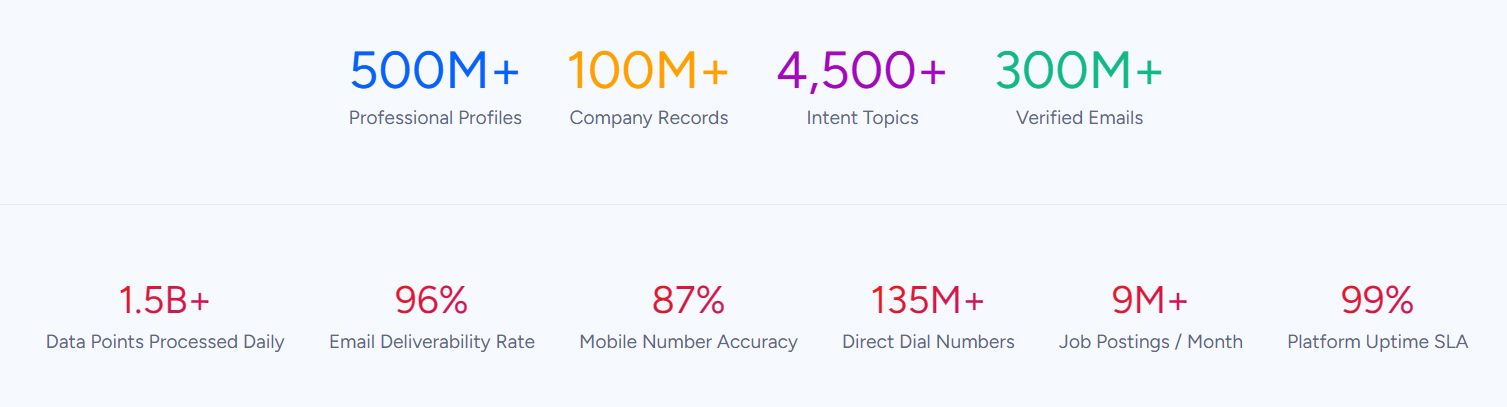
This isn't self-reported scale. In a Fortune 500 competitive RFP analyzing 25 million contacts across vendors, an independent consultant concluded that "no other competitor came even close." Data accuracy reaches up to 95% on first-party data, maintained by a multi-source verification pipeline backed by 300+ human researchers and automated ML scanning of 28 million site domains daily.
For sales reps, this means the direct dial actually rings and the email actually lands. For marketers, TAM modeling becomes a continuously verified census of your buyable market rather than a theoretical exercise built on stale snapshots. For RevOps, enrichment workflows don't require stitching together multiple vendors and a manual research layer to get a complete account picture.
ZoomInfo is a Leader in the Gartner Magic Quadrant for ABM Platforms (2024 & 2025), a Leader in the Forrester Wave for Intent Data Providers (Q1 2025), and Ranked #1 in 142 G2 Reports.
Vensure scaled prospecting with ZoomInfo's data: "ZoomInfo gives us the information we need to execute. We don't have to go through and spend our time digging. It's already there, so we can be three steps ahead." (Vensure)
The GTM Context Graph: ZoomInfo captures not just what happened in your deals, but why.
SharpSpring tracks behavioral signals on your website and inside your email campaigns. ZoomInfo goes further with the GTM Context Graph, an intelligence layer that fuses ZoomInfo's third-party B2B data with your CRM records, conversation transcripts, email threads, and behavioral signals. Processing 1.5B+ data points daily, the GTM Context Graph captures the connections between signals and outcomes across your go-to-market operation.
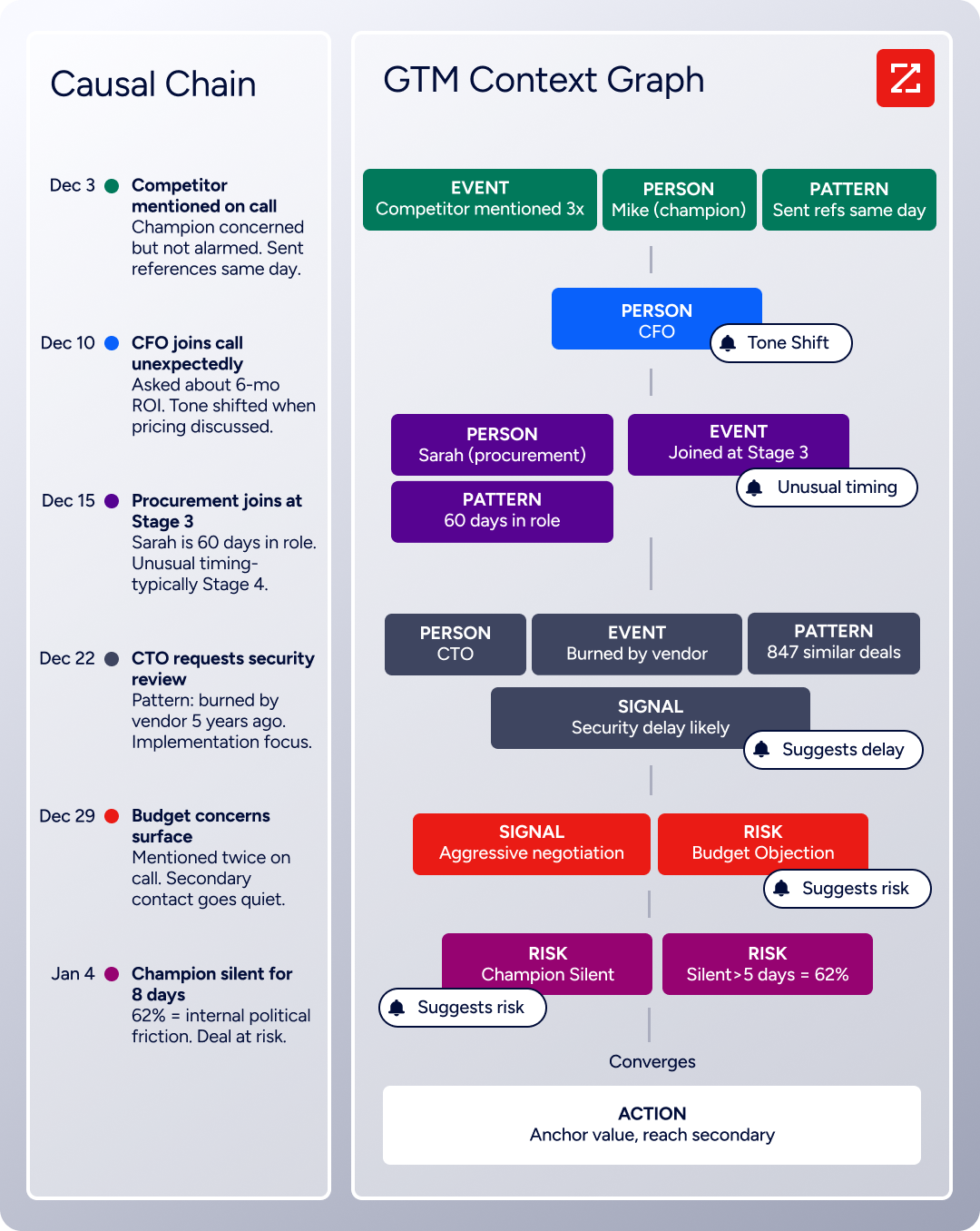
A CRM records that a deal moved from Stage 3 to Stage 4. SharpSpring's Life of the Lead timeline shows which emails a contact opened and which pages they visited. Neither captures why the deal moved. The GTM Context Graph does: it identifies that executive sponsorship entering at this stage, combined with ROI-focused questions on the last call, matches the pattern behind closed-won deals in your segment, and connects that to external signals showing the company is hiring new VPs and researching your competitor.
This intelligence layer exists because ZoomInfo spent two decades building B2B data unification infrastructure and acquired the context capture and intelligence engines (including Chorus conversation intelligence) that extract meaning from every call, meeting, and email. The result is AI that doesn't just hold your data but understands your deals.
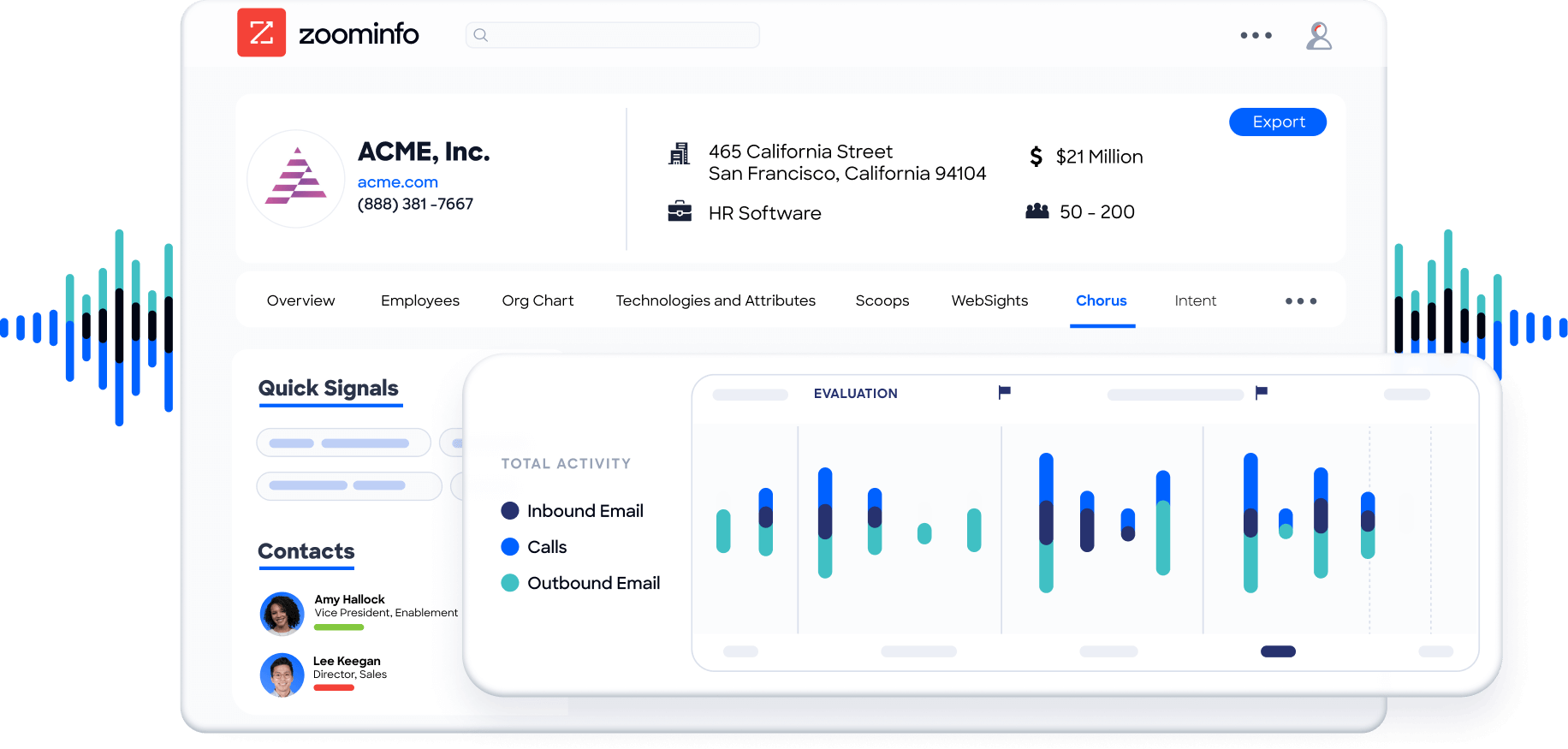
Buyer Intent data tracks signals from 210 million IP-to-Organization pairings and 6 trillion+ new keyword-to-device pairings monthly. Guided Intent, exclusive to ZoomInfo, identifies topics historically correlated with deal success rather than requiring manual topic selection.
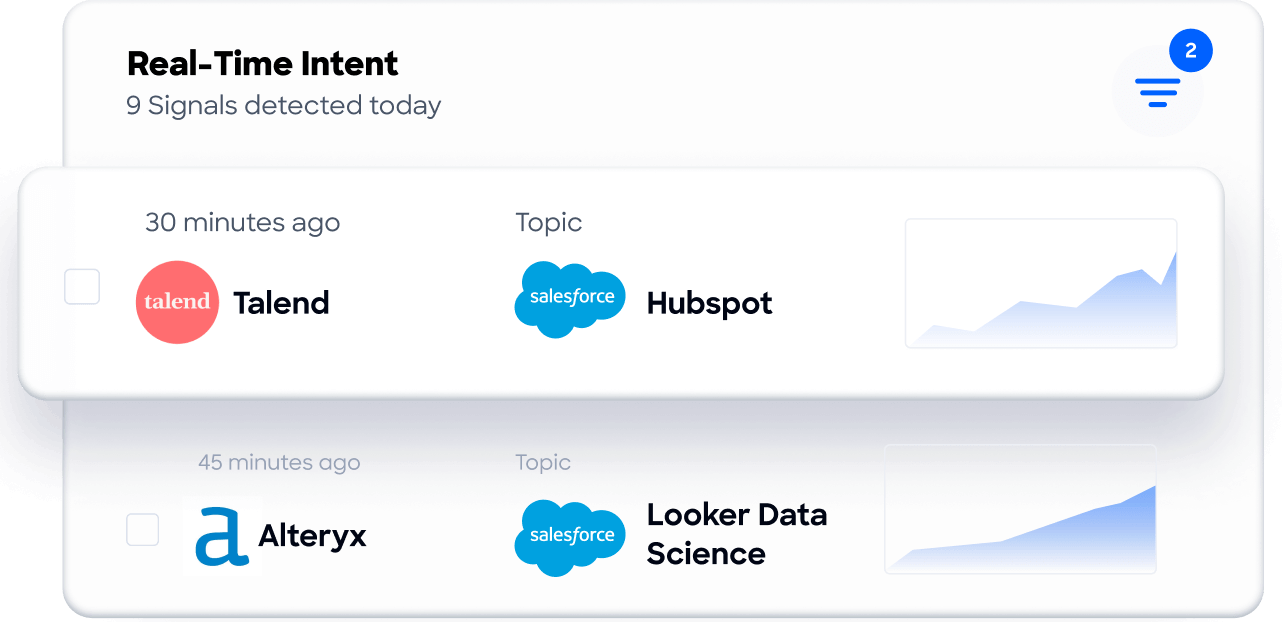
Seismic attributed 39% of active pipeline to opportunities identified or influenced by ZoomInfo signals, with their sales team becoming 54% more productive: "That combination of our internal CRM data, external signals, and AI that's given all that context has helped us craft very specific account- and persona-based messages. And people have responded to them right away." (Seismic)
Universal Access: ZoomInfo delivers intelligence through native products and open infrastructure, not a locked interface.
SharpSpring's intelligence lives inside its own interface. ZoomInfo delivers intelligence through three channels, so teams can work wherever they're most productive:
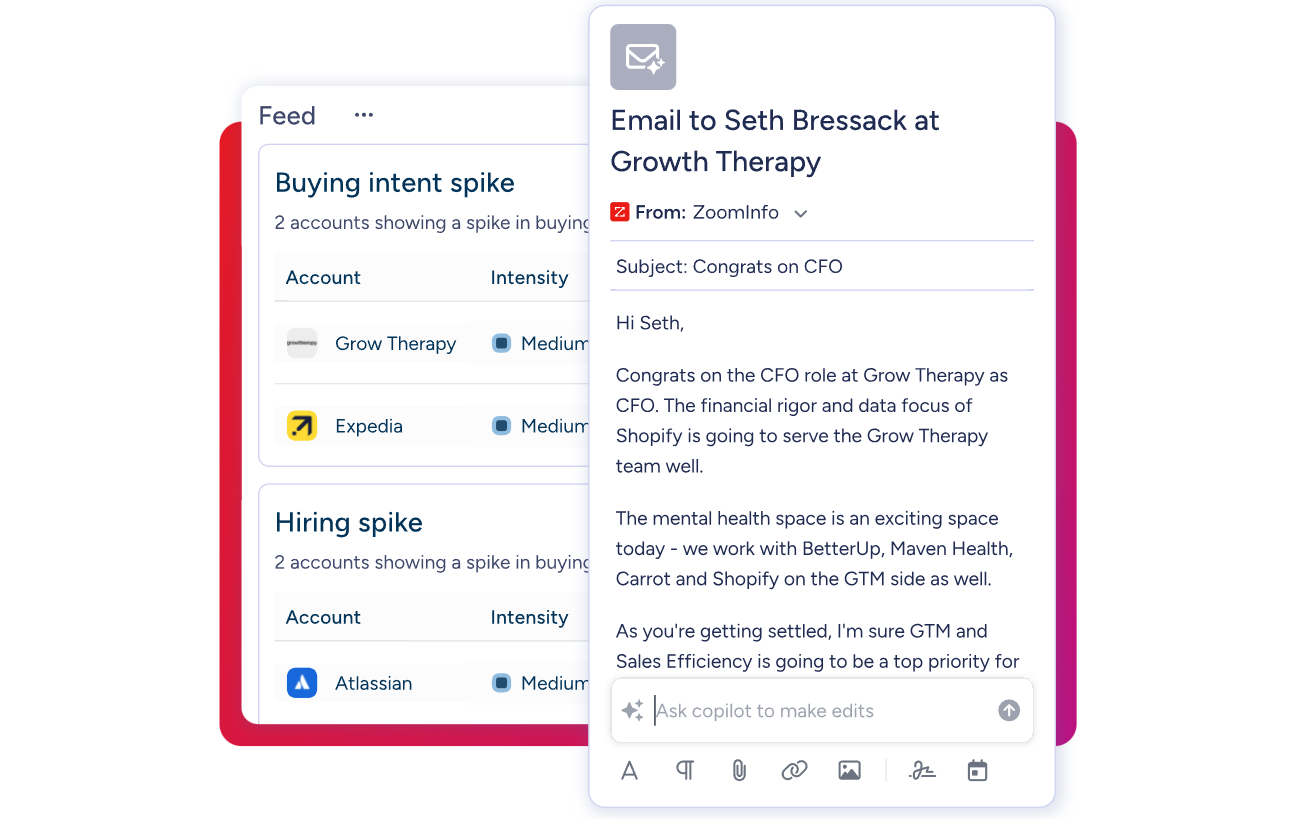
GTM Workspace is the seller's front-end to the GTM Context Graph. It provides a complete book-of-business view across CRM, ZoomInfo data, conversation history, and market intelligence. AI agents handle account research, outreach drafting, CRM updates, and signal monitoring. An Action Feed streams in-market buyers matched to target criteria, with pre-drafted actions on every signal. It integrates natively with Salesforce, HubSpot, and Microsoft Dynamics.
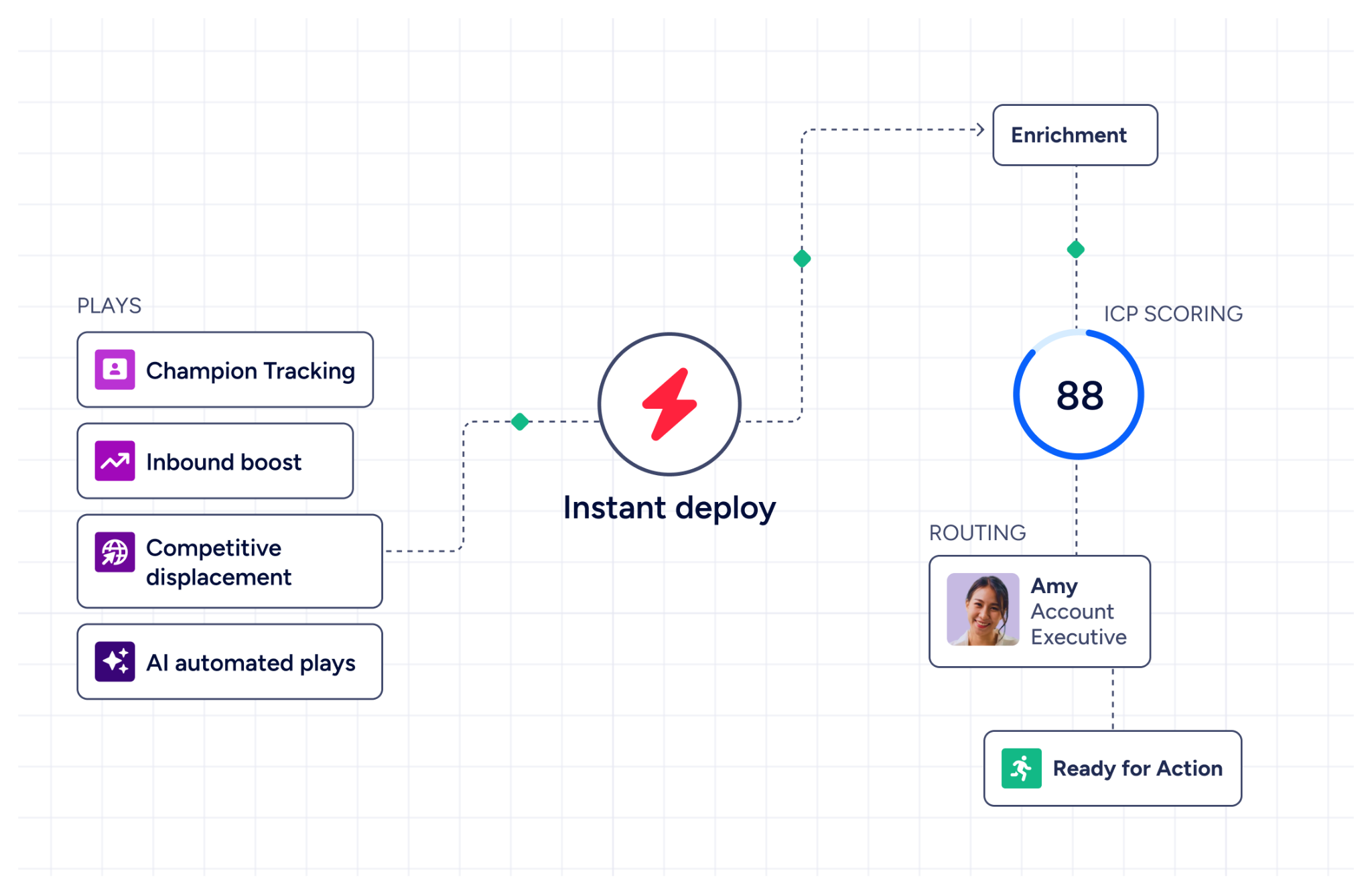
GTM Studio is the orchestration canvas for marketers, RevOps, and GTM engineers. Teams describe audiences using natural language, launch pre-built GTM plays (inbound acceleration, champion tracking, competitive displacement), and orchestrate multi-channel campaigns across email, calls, ads, and direct mail. Expansion plays that used to take three weeks now launch in 30 minutes.
APIs and MCP expose the same intelligence to any custom agent, internal tool, or partner platform. The ZoomInfo MCP server connects AI models directly to ZoomInfo's data as a native tool, currently supporting Claude and ChatGPT. API access is included in all relevant plans.
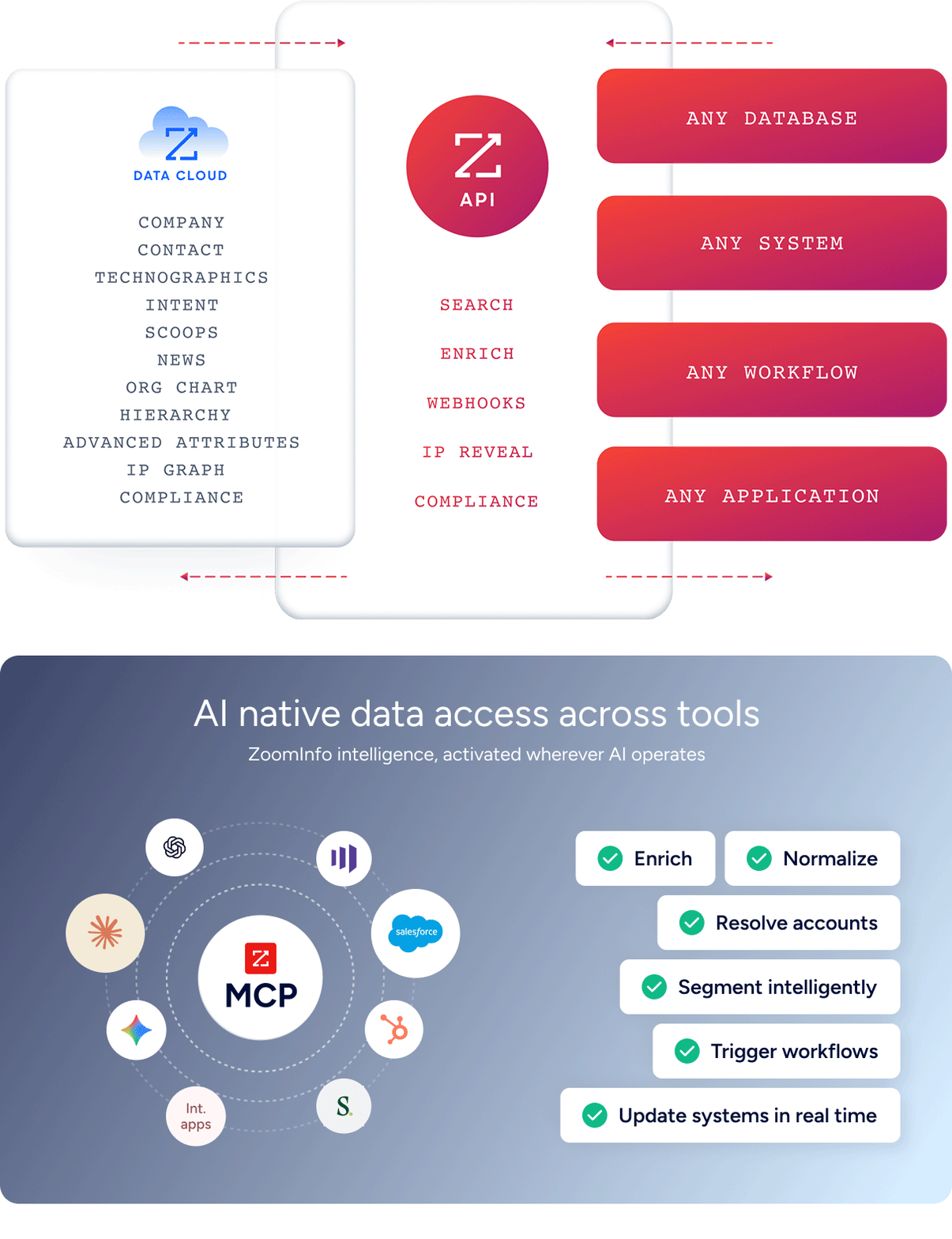
All three channels draw from one GTM Context Graph: the same data, the same intelligence, the same continuously learning model. Where you work never limits the quality of intelligence available.
BDO Canada activated ZoomInfo data directly within their internal systems: "The plug-and-play aspect of the API means I can integrate it very easily into any process and get information at a moment's notice," achieving an 87% reduction in time spent on internal data dashboard updates. (BDO Canada)
Pricing: ZoomInfo uses consumption-based pricing with a permanent free tier.
ZoomInfo uses a custom-quoted, consumption-based pricing model where costs scale with usage (seats, credits, API consumption, and AI activity). No prices are publicly listed; plans are tailored to each customer's needs.
Three product lines (Sales, Marketing, ABM) each have tiered plans (Professional, Advanced, Enterprise for Sales; Marketing Demand, ABM Lite, ABM Enterprise for Marketing), with capabilities like intent signals, AI features, and advanced integrations gated by tier.
ZoomInfo Lite is a permanent free tier (not a trial) that includes access to the B2B database, 10 monthly export credits, individual and company searches, a Chrome extension, and WebSights Lite with up to 10 website visitor reveals per day. A separate 7-day free trial provides access to core paid features with no credit card required.
SharpSpring or ZoomInfo: Comparison Summary
Aspect | SharpSpring (Constant Contact Lead Gen & CRM) | ZoomInfo |
|---|---|---|
Primary focus | Marketing automation + lightweight CRM | AI-powered GTM platform (data + intelligence + execution) |
B2B contact database | None; bring your own leads | 500M contacts, 135M+ verified phone numbers, 200M+ verified emails |
Buyer intent data | None | 210M IP-to-Organization pairings, 6T+ keyword signals monthly |
Lead scoring | Behavioral + demographic with decay | AI-powered account scoring, intent-based prioritization |
CRM | Built-in (SMB-grade) | Native integrations with Salesforce, HubSpot, Dynamics |
Conversation intelligence | Not available | Chorus (recording, transcription, AI analysis, deal intelligence) |
Marketing automation | Visual workflow builder with behavioral triggers | GTM Studio with AI-powered plays and multi-channel orchestration |
Sales automation | Opportunity Workflows with behavioral triggers | GTM Workspace with AI agents for research, outreach, and CRM updates |
Reporting | Basic; cannot filter by custom fields | AI-powered dashboards, multi-touch attribution, deal intelligence |
API access | Open REST API for all customers | Enterprise API + MCP server for AI agents |
Website visitor tracking | VisitorID (company-level) | WebSights (company + contact-level identification) |
Agency white-label | Yes, with multi-client management | Not applicable |
Free tier | No free plan; demo required | ZoomInfo Lite (permanent free) + 7-day trial |
Pricing model | Contact-based tiers (unpublished) | Consumption-based (custom-quoted) |
Target audience | Agencies and SMBs | Enterprise and upper mid-market B2B teams |
Compliance | GDPR documentation and DPA | ISO 27001, ISO 27701, SOC 2 Type II, TRUSTe GDPR/CCPA |
Best for | Affordable all-in-one marketing automation | Data-driven go-to-market with AI intelligence |
Final Verdict
The choice between SharpSpring and ZoomInfo depends on what your go-to-market strategy requires.
Choose SharpSpring if you're a marketing agency or SMB that needs marketing automation, email campaigns, and a lightweight CRM in one affordable platform. It works well when your primary motion is inbound lead nurturing, your sales cycle is straightforward, and you already have reliable ways to generate leads. The agency white-label model, month-to-month contracts, and unified automation-CRM architecture deliver real value for teams that don't need a data or intelligence layer underneath their marketing stack.
Choose ZoomInfo if your go-to-market strategy depends on finding the right buyers before they find you. ZoomInfo provides verified B2B data, buyer intent signals, conversation intelligence, and AI-powered execution that marketing automation platforms weren't built to deliver. With GTM Workspace, sellers get an AI-driven execution environment. With GTM Studio, marketers and RevOps teams launch targeted plays in minutes. With APIs and MCP, the same intelligence powers any tool or AI agent in your stack. For teams that have outgrown what a marketing automation platform alone can provide, ZoomInfo connects data to decisions to revenue.
Get started with ZoomInfo here.
SharpSpring is a capable marketing automation platform for agencies and SMBs on a budget. ZoomInfo is the data and intelligence infrastructure that powers go-to-market at scale. They solve different problems, and for teams whose ambitions extend beyond nurturing inbound leads, ZoomInfo provides the depth that SharpSpring's design was never intended to reach.
SharpSpring FAQ
Is SharpSpring the same as Constant Contact Lead Gen & CRM?
Yes. Constant Contact acquired SharpSpring in September 2021 for approximately $240 million and rebranded the platform as "Constant Contact Lead Gen & CRM" in March 2023. The platform functionality remains unchanged, and the sharpspring.com domain continues to operate. The rebrand was designed to leverage Constant Contact's brand recognition, estimated at over 40 times that of the standalone SharpSpring name.
How much does SharpSpring cost?
SharpSpring does not publish pricing on its website. The platform uses a contact-based, usage-tiered pricing model where accounts are charged based on lead count, email sends, and page impressions. Prospective customers schedule a demo with a Certified Partner to receive pricing. For agencies, month-to-month contracts are available with no long-term commitment required.
Does SharpSpring have a free trial?
SharpSpring's pricing page does not offer a self-serve sign-up or documented free trial. The primary path is through a sales demo. By contrast, ZoomInfo offers both a permanent free tier (ZoomInfo Lite with 10 monthly export credits and access to the B2B database) and a separate 7-day free trial with no credit card required.
Does SharpSpring include a CRM?
Yes. SharpSpring includes a built-in CRM with visual sales pipelines, drag-and-drop deal management, customizable stages, task assignment, and activity logging. The key advantage is that the CRM shares a database with the marketing automation engine, so behavioral data and deal status exist in one record with no sync delay. However, reviewers note the CRM is designed for SMBs and may lack depth for mid-market or larger organizations, including features like advanced forecasting, account-based reporting, and deal health scoring.
What integrations does SharpSpring support?
SharpSpring offers native integrations with Salesforce, GoToWebinar, and Facebook Lead Ads. Beyond those, Zapier serves as the primary third-party integration layer, enabling no-code connections to hundreds of external applications. The platform also provides an open REST API with endpoints covering leads, accounts, opportunities, campaigns, email, lists, and tasks. The App Marketplace lists integrations across categories including CRM, CMS, analytics, event management, and e-commerce.
Can SharpSpring identify anonymous website visitors?
Yes. SharpSpring's VisitorID tracks anonymous website visitors and builds behavioral profiles before they fill out a form. When a visitor later identifies themselves, their anonymous session history merges into a named lead profile. However, VisitorID operates at the company level rather than identifying specific individuals. ZoomInfo's WebSights provides both company-level and contact-level visitor identification, surfacing specific decision-makers with verified contact details.
Is SharpSpring good for agencies?
SharpSpring was built with agencies as the primary audience. It offers a white-label rebrandable interface, single sign-on for managing all client accounts, month-to-month contracts, and a revenue-share model where agencies keep 75% or more of what they charge clients. The platform serves more than 2,000 agencies globally. For agencies whose clients need marketing automation and basic CRM at an accessible price, it remains a strong option.
Does SharpSpring have buyer intent data?
No. SharpSpring tracks behavioral data from your own website and email campaigns but does not provide third-party buyer intent signals. It cannot identify which companies are researching topics related to your product across the broader web. ZoomInfo's intent data tracks signals from 210 million IP-to-Organization pairings and 6 trillion+ new keyword-to-device pairings monthly, with Guided Intent automatically identifying topics correlated with deal success.
Researching SharpSpring? These comparisons and alternatives help you decide:
