
Statista has become a standard source for market statistics, industry data, and consumer insights. With over 1 million statistics from 50,000+ sources across 170 industries and 150+ countries, the platform gives teams one place to find verified data points that would otherwise require searching government databases, trade associations, and research firms individually.
To create this Statista review, we analyzed the platform in depth. It fits best if:
You need quick access to verified statistics for presentations, pitches, or strategy work
You want market forecasts and consumer insights without commissioning custom research
You value expert-curated data over raw, unverified datasets
Your team works across multiple industries and geographies
You need presentation-ready charts and exportable data in standard formats
Statista might not be the best choice if:
You need verified B2B contact data to act on the market insights you uncover
You want to identify specific companies and decision-makers in the markets you're researching
You need intent signals showing which prospects are actively in-market
You require buying signals tied to individual accounts
You want AI-powered prospecting that converts market research into pipeline
In that case, consider pairing your market research with ZoomInfo: an AI-powered go-to-market platform that acts on the intelligence Statista provides. Statista tells you the market is growing; ZoomInfo tells you which companies and decision-makers to target within it, with 500M contacts, 100M companies, 135M+ verified phone numbers, and 200M+ verified business email addresses, plus intent signals showing when accounts are in buying mode.
We've included a detailed look at ZoomInfo later in this review as the complement for teams that want to turn market intelligence into revenue. If you're ready to connect market data to prospecting, start with ZoomInfo's free trial.
What is Statista?
Statista is a data-as-a-service company founded in 2007 in Hamburg, Germany by Friedrich Schwandt, who started the company after early roles at BCG and Deutsche Telekom. The founding idea was simple: data should be easy to find and easy to use.
What began as a statistics portal now serves more than 23,000 companies worldwide, including Google, Samsung, PayPal, Adobe, and P&G. The company employs about 1,200 people across seven locations (Hamburg, Berlin, London, New York, Gurugram, North Sydney, Singapore, and Tokyo), with 75% of revenue generated outside the DACH region.
Source: Statista
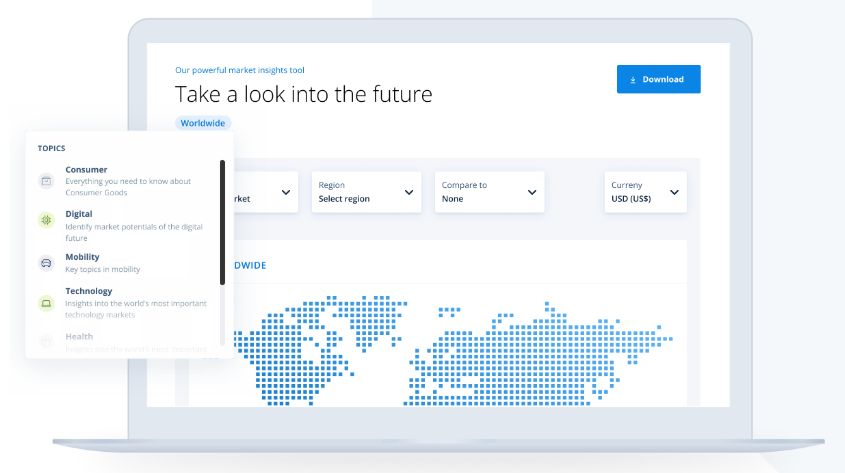
The platform now spans seven products: the Statistics database, Market Insights, Consumer Insights, eCommerce Insights, Research AI, Reports, and Statista Connect (an API service). Over 500 researchers and specialists gather and verify every published statistic, which separates Statista from automated aggregators that pull numbers without editorial review.
Ströer SE & Co. KGaA acquired a majority stake in 2015 and took full ownership in 2019. Under CEO Marc Berg (who took the role on January 1, 2024, after leading FREENOW and Klarna DACH), the company has shifted from a standalone platform toward a data-as-a-service model, feeding verified data into AI assistants, design tools, and business workflows.
Statista Pros & Cons
Pros | Cons |
|---|---|
- Over 1 million statistics from 50,000+ verified sources | - Annual billing only on all paid plans |
- Coverage across 170 industries and 150+ countries | - Starter plan starts at $199/month |
- Expert verification by 500+ researchers | - Some statistics can be outdated |
- Research AI for natural language data queries | - Certain data harder to export in usable formats |
- Presentation-ready exports (PNG, PDF, XLS, PPT) | - Consumer Insights and eCommerce Insights priced separately |
- 9.4 ease-of-use score on G2 | - No monthly billing option |
- Market Insights with 5-year forecasts across 1,000+ markets | - Free plan limited to free statistics only |
Statista Review: How it Works & Key Features
Statistics Database: Over 1 million verified data points organized across 80,000+ topics.
The Statistics Database is Statista's foundation. It covers 170 industries from 150+ countries, with each statistic passing through a six-step methodology: Sourcing, Processing, Modelling, Forecasting, Quality Control, and Updating.
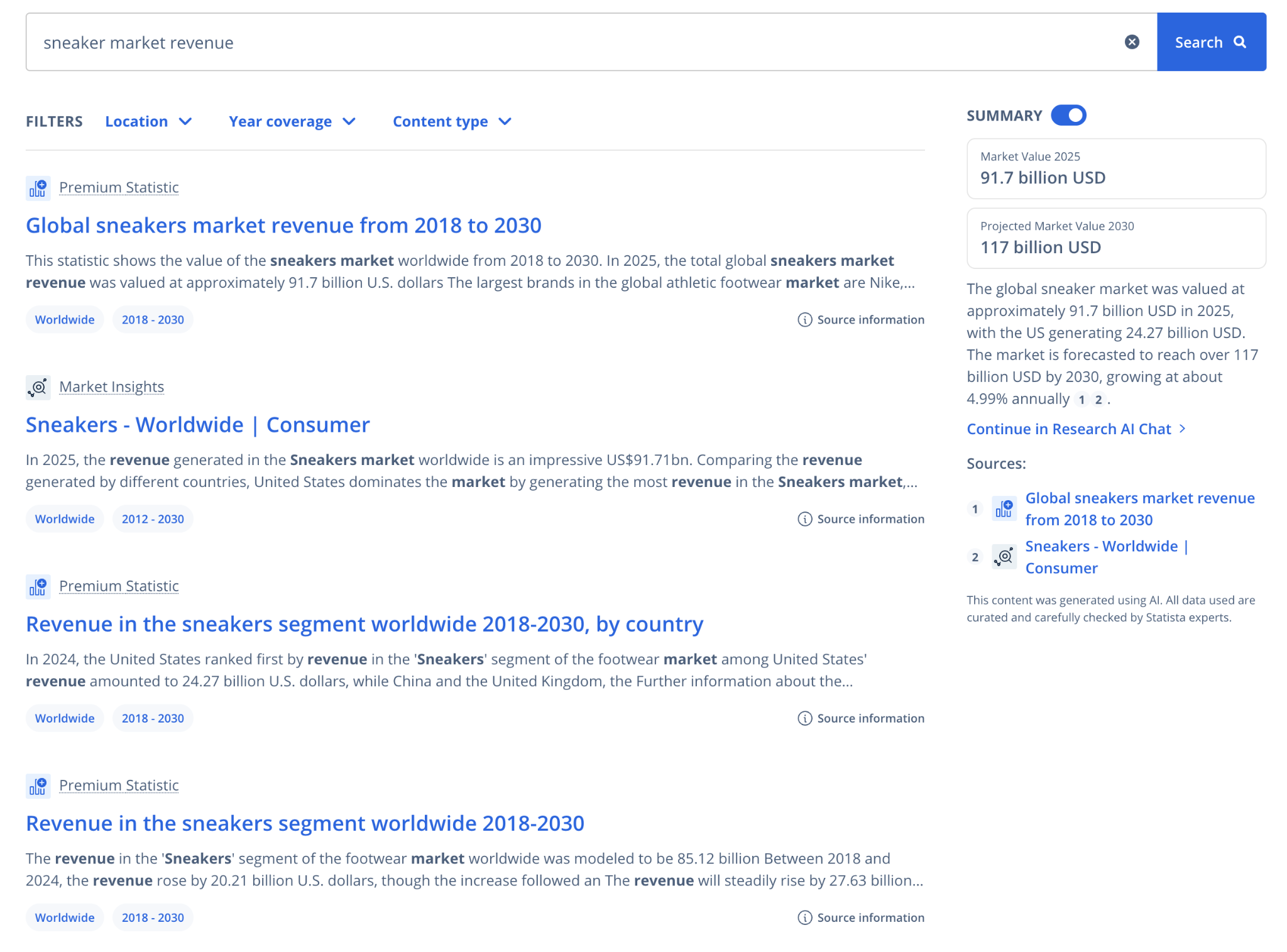
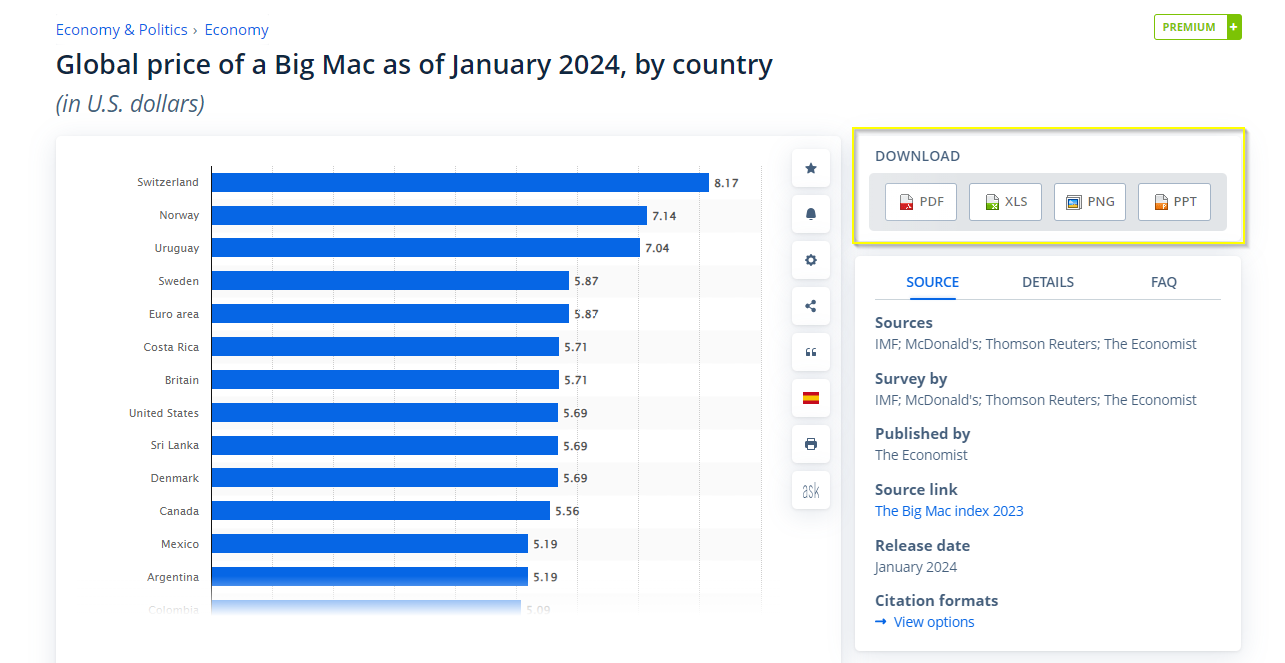
Users search by keyword and narrow results by publication date, geographic region, and category. Every statistic shows complete source information, distinguishing between the original source, the publisher, and the survey conductor, with links to online publications where available. This transparency matters when you need to trace a data point to its origin for a client presentation or board deck.
Source: Statista
Users can download statistics in PNG, PDF, XLS, and PPT formats with automated citations included. They can also configure the visualization before exporting, adjusting chart types and formatting to fit their needs.
Statista vets all sources for quality, drawing from statistical offices, trade associations, public institutions, and specialized research firms rather than accepting any available data. Market sizes use a bottom-up approach factoring in demand-side performance, product prices, purchase frequency, and customer churn rates.
Market Insights: Forecasts and KPIs across 1,000+ markets in 190+ countries.
Market Insights delivers market forecasts and KPIs for 1,000+ markets in 190+ countries and territories. The platform tracks up to 20 KPIs per market including revenue, volume sales, prices, sales channels, key players, and demographics.
Market Insights earns its value through a five-year forecasting horizon built on scientific methods including ARIMA, Bass Diffusion (S-Curve), and Exponential Trend Smoothing. These aren't rough estimates; each model covers full geographical scope, meaning all countries use the same logic and are directly comparable.
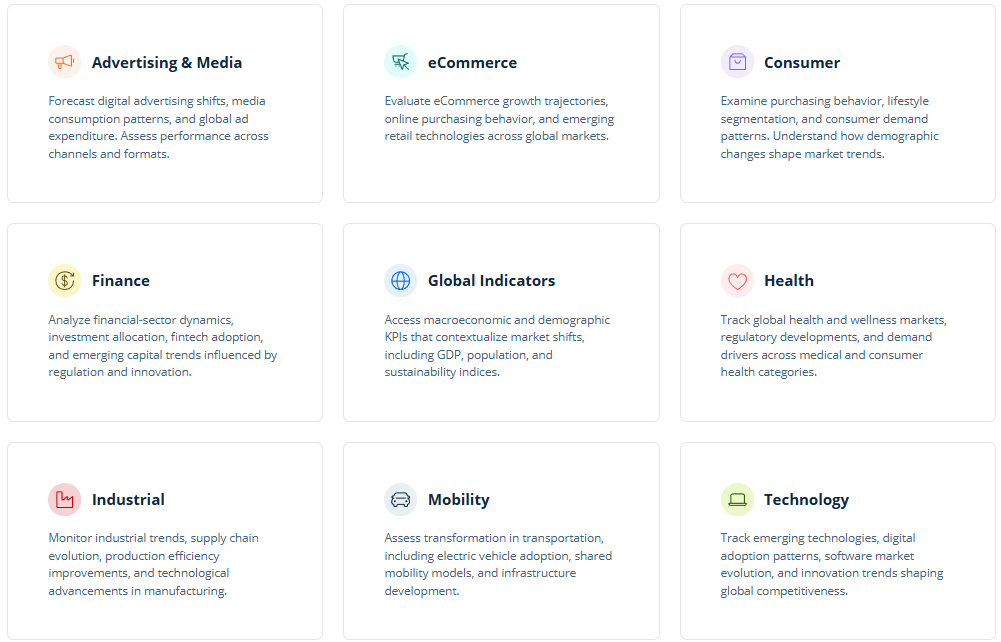
The platform spans nine topics: Consumer Markets, eCommerce, Mobility Markets, Advertising & Media, Finance, Global Indicators, Health, Industrial, and Technology. Users can compare markets across countries and create custom region groupings.
Source: Statista
Updates happen at least twice per year, with more frequent refreshes for major events. The methodology combines secondary data from established institutions with primary data from Statista Consumer Insights, drawing on research across up to 55 countries with up to 60,000 respondents per country.
Consumer Insights: Primary research from 3 million+ interviews across 56 countries.
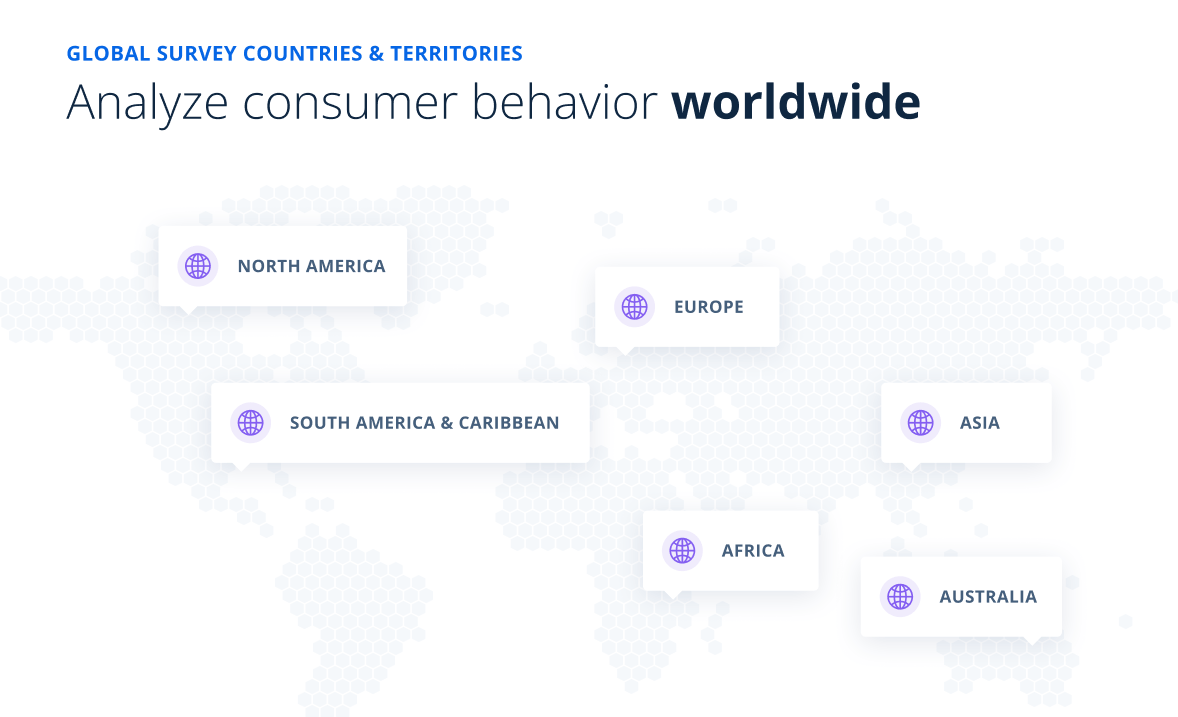
Consumer Insights gives teams access to Statista's own primary research, which has conducted more than 3 million interviews covering 15,000+ brands across 56 countries and 500+ industries.
The platform captures both online and offline consumer behavior through surveys on purchasing patterns, brand usage, media consumption, and lifestyle preferences. Users work with results through an interactive analysis tool where they can create cross tabs, define target groups, compare behavior across countries, and build time series for trend analyses.
Source: Statista
This is where Statista differs most from free data sources. Rather than relying on third-party surveys, Consumer Insights draws on Statista's own fieldwork, giving teams proprietary data they can't find elsewhere. The ability to build personas from thousands of demographics, psychographics, lifestyles, and behaviors makes it valuable for marketing and product teams building audience segmentation models.
Research AI: Natural language queries grounded in verified data.
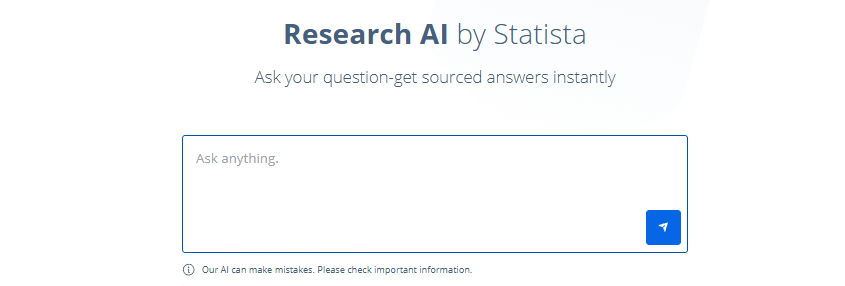
Research AI pairs large language model technology with Statista's curated database, letting users ask questions and get sourced answers instantly. The tool uses Retrieval-Augmented Generation (RAG) to draw answers only from Statista's curated database, never from the open web.
Source: Statista
The system uses Cohere's LLMs for semantic search and Claude 3 Sonnet to generate responses citing up to 10 Statista sources per answer. Every response links to the underlying statistics for verification. Paid plans include unlimited AI prompts with 100-language support.
This solves a real problem with generic AI tools: hallucinated statistics. When a consultant needs a market size figure for a client pitch, Research AI returns numbers backed by verified sources rather than plausible-sounding fabrications. The limitation is that the tool does not yet include data from Consumer Insights and Company Insights, narrowing the data it can query.
Reports and eCommerce Insights: Pre-built research and transaction-level e-commerce data.
Reports (also called Dossiers) are expert-written research documents with analyst findings and curated visualizations. With 60,000+ reports spanning six categories (Companies & Products, Consumer & Brands, Countries & Regions, Digital & Trends, Industries & Markets, Politics & Society), they cover a topic faster than assembling data points one by one. Statista delivers reports in PowerPoint format with reusable visuals.
Source: Statista
eCommerce Insights (branded as ECDB) covers 39,000+ online stores and marketplaces with 70+ KPIs per store, including average order value, conversion rate, return rate, and cart abandonment rate. Unlike survey-based estimates, this data comes from billions of real transactions processed through trusted financial networks, with daily updates. Statista prices both products separately from the core subscription.
Statista Connect: API access for embedding data into workflows and AI tools.
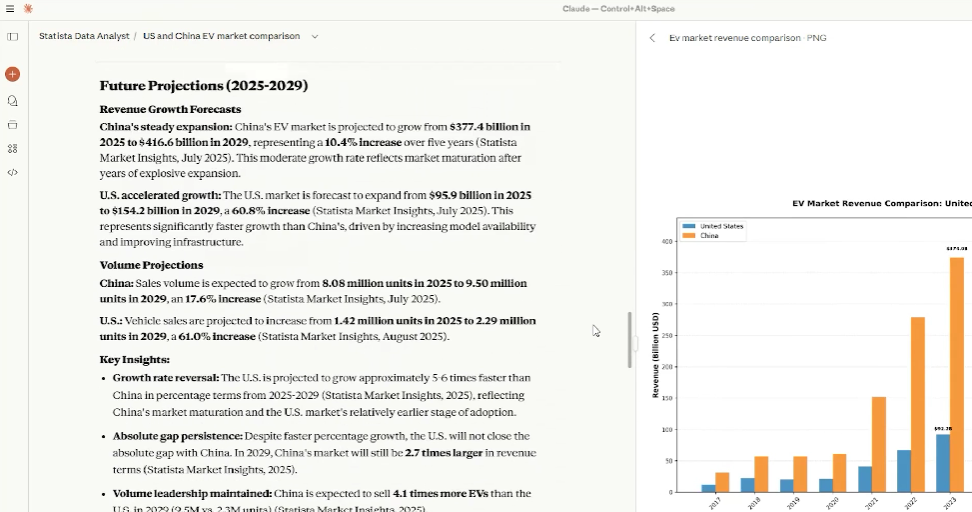
Statista Connect is the platform's API layer, letting teams plug Statista's data into existing tools and workflows. It offers three access methods: a REST API, a Model Context Protocol (MCP) server for AI assistants, and pre-built integrations with Microsoft 365 Copilot, Claude, Canva, Perplexity, and Langdock.
Source: Statista
The API uses a credit-based model, with search operations costing 0-1 credits and full data retrieval costing 10-15 credits depending on data type. Credit pricing is enterprise-contract only and not published publicly. Statista hosts developer documentation at docs.platform.statista.ai with OpenAPI specifications on GitHub.
For teams already using AI assistants, Connect turns Statista into a data layer their tools can query directly, so they don't have to search the platform and copy results by hand.
Statista Pricing
Statista offers four tiers for individuals and small teams, all requiring annual billing:
Basic Plan (Free):
Free statistics only
Limited industry and topic coverage
1 user
PNG and PDF downloads
Starter Plan ($199/month, billed annually):
Free and premium statistics
Unlimited AI prompts with 100-language support
Export in XLS, PPT, and PDF
Cross-industry data with no limits
1 user
Personal Plan ($649/month, billed annually):
Everything in Starter
Unlimited expert-written reports
Analyst insights and key findings
Country and region reports
Presentation-ready visuals
1 user
Professional Plan ($1,399/month, billed annually):
Everything in Personal
5 seats
Market Insights with 5-year forecasts
Visual tools for global market comparison
Commercial publication rights
Dedicated and priority support
On-demand trainings and usage reporting
All prices exclude sales tax. Consumer Insights, eCommerce Insights, custom research (AskStatista), and Statista Connect are priced as separate add-ons. Subscriptions automatically renew with 30 days' notice before renewal, and Statista does not offer standard refunds due to the digital nature of their products. Separate plans for businesses, enterprises, academia, and government are available with custom pricing.
Where Statista Falls Short
Statista organizes and verifies market data well, but several limitations show up with regular use. These are the limits of a platform built for research, not operations.
Data Freshness Gaps: Some users note that statistics are occasionally outdated. In fast-moving industries, the lag between a data point's original publication and its verified appearance on Statista can mean working with stale numbers. The twice-yearly update cycle on Market Insights may not satisfy teams tracking volatile markets.
Price Barrier for Individuals and Small Teams: The jump from the free Basic plan to Starter ($199/month, billed annually at $2,388/year) is steep for individual researchers, freelancers, or small teams. Market Insights, forecasts, and multi-user access require the Professional plan at $1,399/month ($16,788/year). No monthly option makes it harder to test the investment before committing.
No Path from Insight to Action: Statista tells you a market is worth $50 billion and growing at 12% annually. It tells you consumer preferences are shifting. But it doesn't tell you which companies to target, who the decision-makers are, or which accounts are evaluating solutions. For sales and marketing teams, market data is only the first step. Closing the gap between knowing the market and reaching the buyers requires a different kind of data.
Export and Format Limitations: Some data is harder to download into usable formats than others. Teams that need to pull large datasets into their own analytical tools may find the export process more manual than expected. Statista Connect addresses this for technical teams, but it's priced separately and requires an enterprise contract.
AI Features Still Maturing: Research AI is useful, but users suggest the AI could benefit from further refinement. The tool currently excludes Consumer Insights and Company Insights data, limiting its scope to a subset of the platform's content.
These aren't failures. They reflect Statista's design as a research platform. But they create a clear need for tools that can turn market intelligence into go-to-market action.
The Natural Complement to Statista: ZoomInfo
Statista answers the question "What does the market look like?" ZoomInfo answers the question that comes next: "Who should we target, and when?"
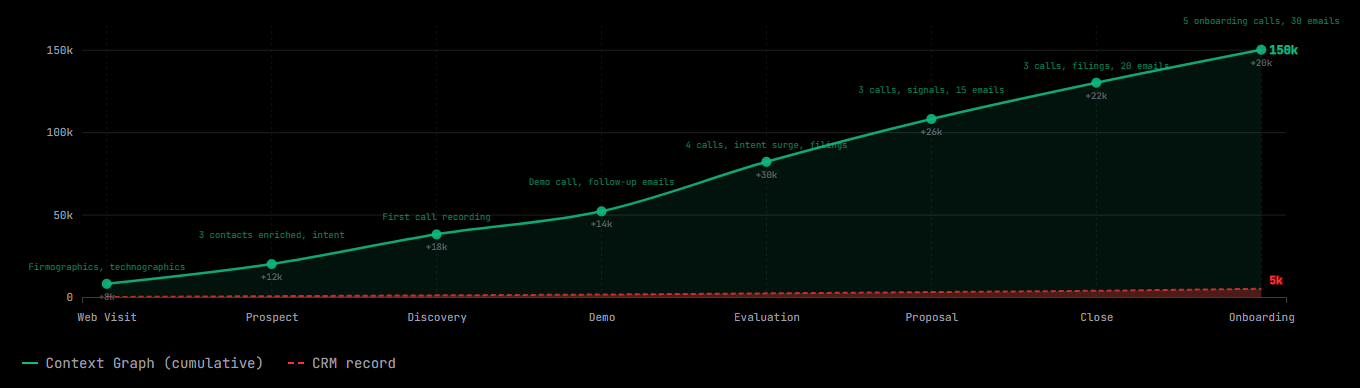
ZoomInfo is an AI-powered go-to-market platform built on B2B data covering 500M contacts, 100M companies, 135M+ verified phone numbers, and 200M+ verified business email addresses. Where Statista provides market context, ZoomInfo provides account and contact data that turns research into revenue. Its GTM Context Graph (processing 1.5B+ data points daily) combines this B2B data with your CRM records, conversation transcripts, and behavioral signals to show not just what's happening in a deal, but why it's happening and what to do next.
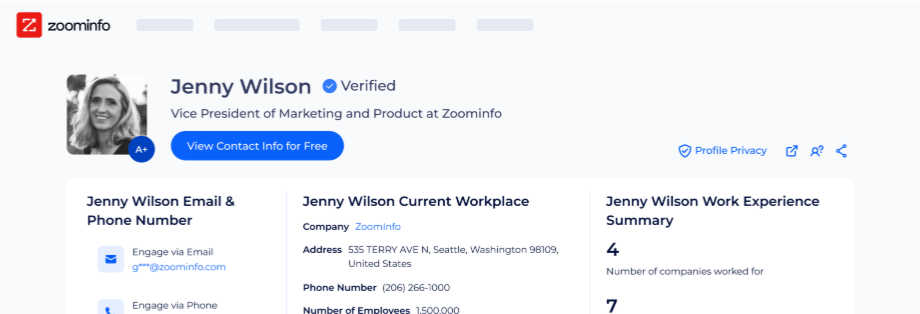
B2B Data at Scale: Verified contacts, companies, and signals that connect market insights to real buyers.
Statista's strength is market-level data: industry trends, consumer behavior, market sizing. ZoomInfo's strength is entity-level data: the specific companies, people, and signals within those markets.
The platform covers three layers of data. Identity data tells you who the buyers are: 500M contacts with 120M direct-dial phone numbers and 200M+ verified business email addresses. Company data tells you where they work: 100M companies with org charts and technographics covering 30,000+ technologies across 200+ categories. Behavioral signals tell you when they're ready to buy: intent data from 210 million IP-to-Organization pairings and 6 trillion+ keyword-to-device pairings sourced monthly.
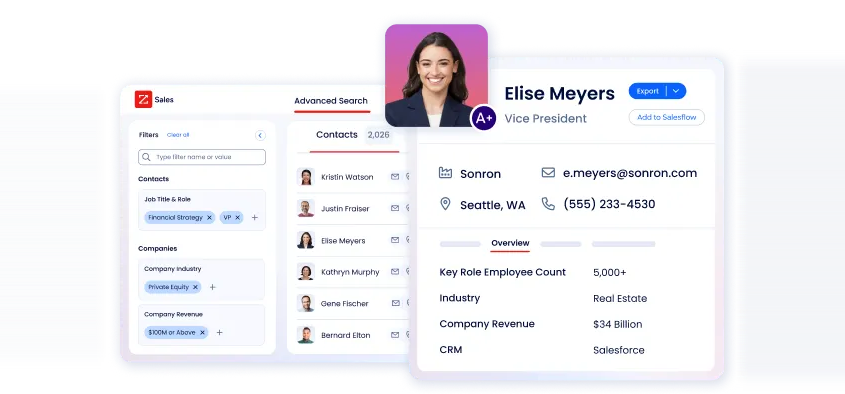
This data runs through a verification process backed by 300+ human researchers, achieving up to 95% accuracy on first-party data. In a Fortune 500 competitive RFP analyzing 25 million contacts across vendors, the independent consultant concluded that "no other competitor came even close."
Vensure scaled prospecting using ZoomInfo's data, with their VP of Revenue Operations noting: "ZoomInfo gives us the information we need to execute. It's already there, so we can be three steps ahead." (Vensure)
The GTM Context Graph: Intelligence that connects market signals to deal outcomes.
Statista provides forecasts based on historical patterns and modeled projections. ZoomInfo's GTM Context Graph provides intelligence based on what's happening now across your accounts, connecting third-party market data with first-party CRM records, conversation transcripts, and behavioral signals.
The distinction matters. A CRM records that a deal moved stages. Conversation intelligence transcribes what the VP of Finance said on the last call. Intent data logs a spike in research activity. The GTM Context Graph reasons across all three to show why the deal moved, and what thousands of similar deals suggest happens next. As ZoomInfo's CPO Dominik Facher writes: "The CRM recorded the state change. It has no record of why it happened."
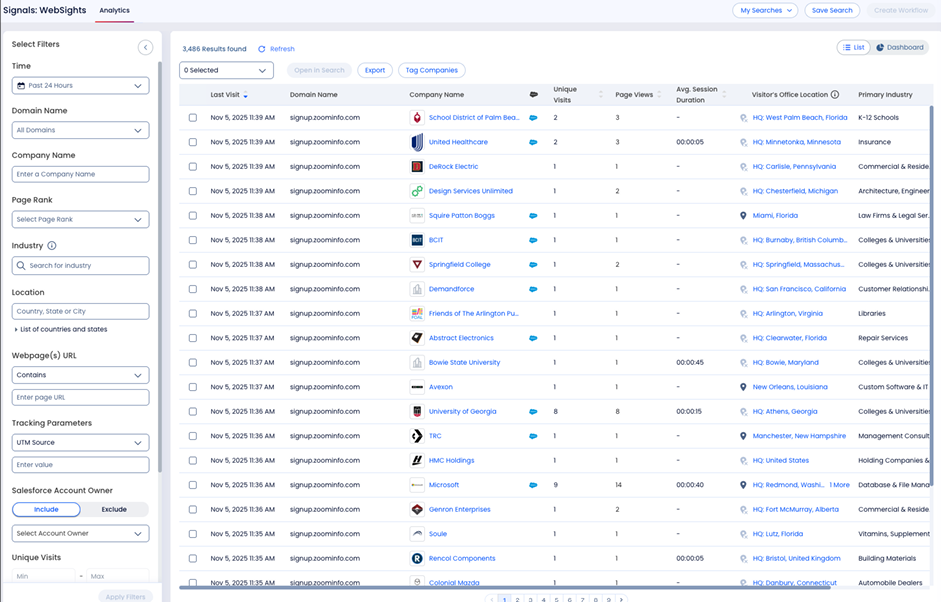
This powers features Statista doesn't offer: Guided Intent that identifies topics historically tied to deal success, website visitor identification that resolves anonymous traffic to companies and buying teams, and AI agents that draft outreach addressing concerns surfaced in previous conversations.
Seismic attributed 39% of active pipeline to opportunities identified or influenced by ZoomInfo signals, with their CBO noting: "That combination of our internal CRM data, external signals, and AI that's given all that context has helped us craft very specific account- and persona-based messages." (Seismic)
Universal Access: Use ZoomInfo's intelligence in any tool, any workflow.
Statista has moved toward embedding its data in external tools through Statista Connect and partnerships with Canva, Microsoft Copilot, and Perplexity. ZoomInfo takes the same approach further with three access methods.
GTM Workspace gives sellers a workspace where they see prioritized accounts, AI-drafted outreach, and deal intelligence in one place. GTM Studio gives marketers and RevOps teams a builder where they define audiences, run campaigns, and measure pipeline in natural language. For teams building beyond ZoomInfo's own products, APIs and MCP expose the same intelligence to any custom agent or third-party platform.
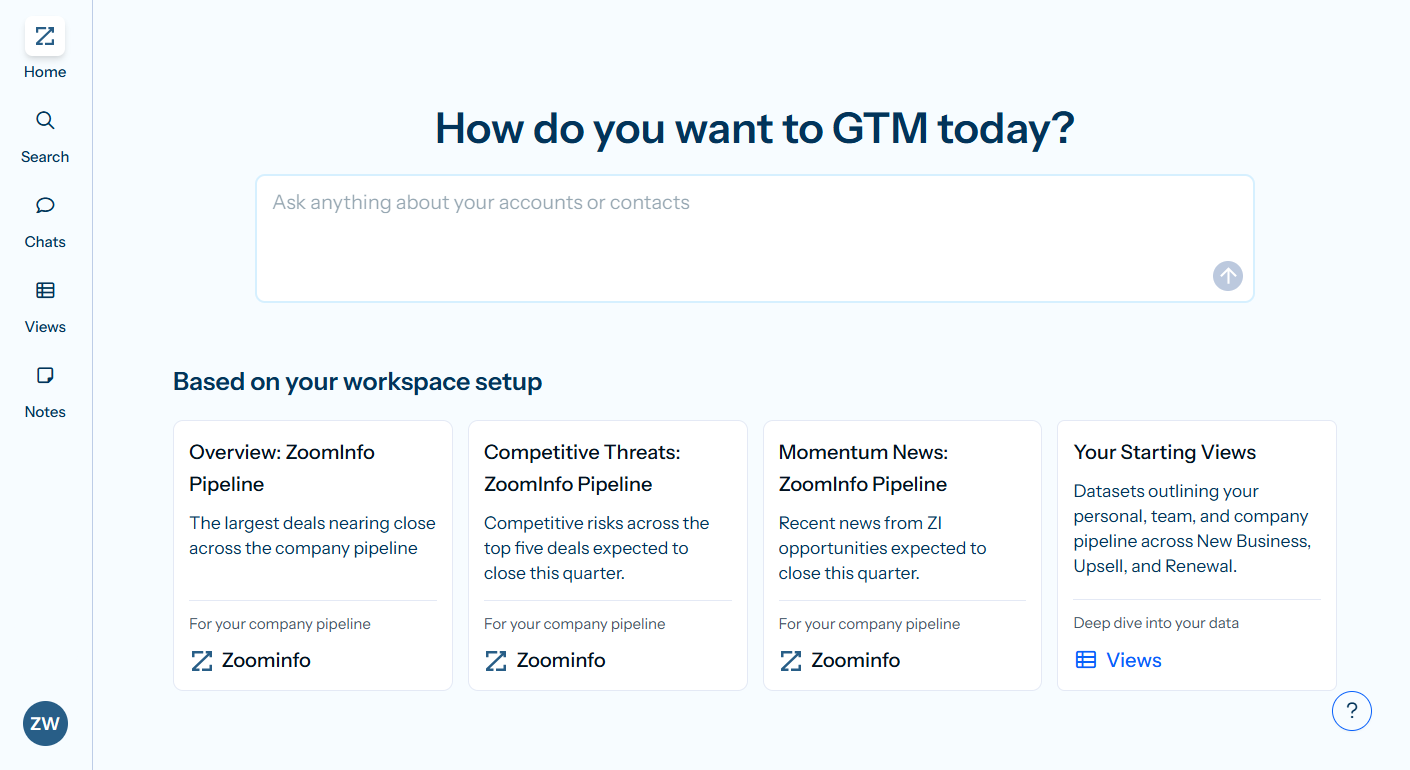
API access is included in all relevant plans, and the MCP server connects to AI assistants including Claude and ChatGPT. All three methods draw from the same GTM Context Graph, so the data stays consistent wherever teams work.
BDO Canada's Senior Marketing Intelligence Analyst noted: "The plug-and-play aspect of the API means I can integrate it very easily into any process and get information at a moment's notice," achieving an 87% reduction in time spent on data dashboard updates. (BDO Canada)
Pricing and Access: A free tier that provides real data, not just a preview.
ZoomInfo offers ZoomInfo Lite as a permanent free tier (not a trial) with access to its B2B database, 10 monthly export credits, advanced search filters, the ReachOut Chrome Extension, and WebSights Lite with up to 10 website visitor reveals per day. A 7-day free trial with broader feature access is also available, no credit card required.
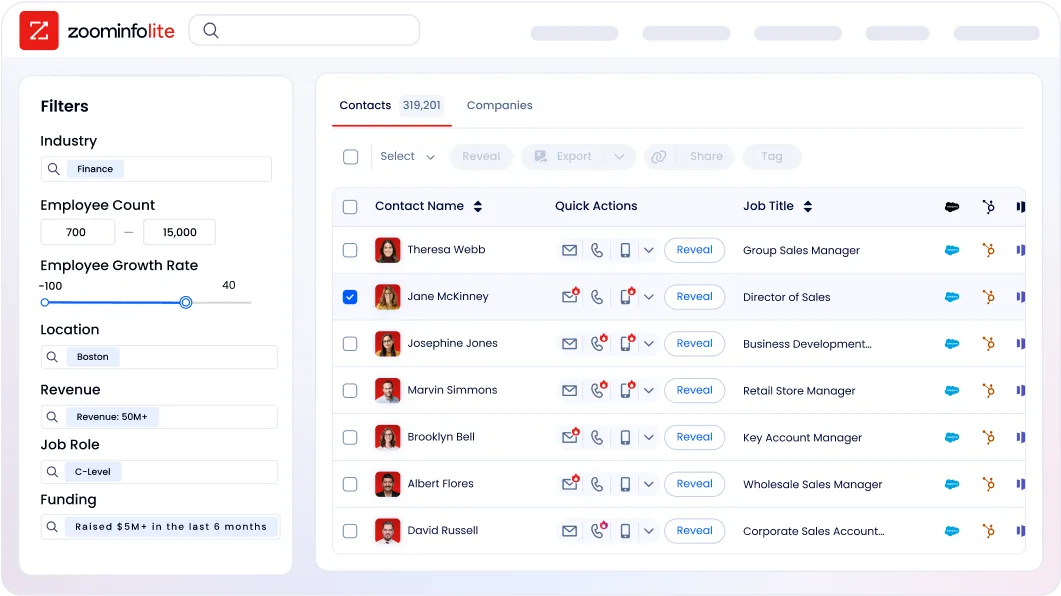
Paid plans use consumption-based pricing organized into Sales, Marketing, and Operations tiers (Professional, Advanced, Enterprise). ZoomInfo custom-quotes pricing based on usage patterns, seats, credit volume, and features. Credits work simply: 1 credit = 1 export of a contact or company profile. Searching and viewing data within the platform is free.
Statista and ZoomInfo: How They Work Together
Aspect | Statista | ZoomInfo |
|---|---|---|
Primary Focus | Market statistics, forecasts, and consumer insights | B2B contact data, company intelligence, and buying signals |
Data Type | Aggregated market-level statistics from 50,000+ sources | Entity-level data: 500M contacts, 100M companies |
Best For | Understanding market size, trends, and consumer behavior | Identifying and reaching specific buyers and accounts |
AI Features | Research AI for natural language data queries | GTM Context Graph for deal intelligence and AI-powered outreach |
Geographic Coverage | 170 industries across 150+ countries | 100M companies globally; 34M+ company profiles outside NA |
Free Access | Basic plan (free statistics only) | ZoomInfo Lite (permanent, 10 monthly exports) + 7-day trial |
Paid Starting Price | $199/month (annual billing only) | Custom-quoted (consumption-based) |
Export Options | PNG, PDF, XLS, PPT with automated citations | CRM export, CSV, API, MCP for AI agents |
Verification Method | 500+ researchers; 6-step methodology | 300+ researchers; multi-source ML verification |
Integration Approach | Statista Connect API, MCP, Canva, Copilot, Perplexity | 120+ marketplace integrations, Enterprise API, MCP |
Analyst Recognition | Trusted by major media (WSJ, NYT, BBC, Bloomberg) | Gartner Leader (ABM), Forrester Leader (Intent Data), 133 G2 #1 rankings |
Final Verdict
Statista and ZoomInfo serve different stages of the same workflow. One informs your strategy; the other executes it.
Choose Statista if you need verified market data for research, strategy, and presentations. It's the right tool when you're sizing a market, building a business case, tracking industry trends, or supporting a pitch with credible statistics. Expert verification, global coverage, and presentation-ready exports make it valuable for consultants, strategists, analysts, and marketing teams who need data they can trust and cite.
Choose ZoomInfo if you need to turn market intelligence into pipeline. Once you understand the market opportunity, ZoomInfo identifies the companies and decision-makers to target, shows which accounts are in-market, and gives your team AI-powered tools to engage them. With B2B data covering 500M contacts and 100M companies, a context graph that explains why deals move, and access through its own products and APIs, ZoomInfo connects market knowledge to revenue.
Get started with ZoomInfo here.
The strongest go-to-market teams use both: Statista for the market picture, ZoomInfo for the accounts and contacts within it. Research without execution is academic; execution without research is guesswork. Together, they close the gap between understanding a market and winning in it.
Statista FAQ
Is there a free version of Statista?
Yes. Statista offers a permanently free Basic plan with access to free statistics and limited industry and topic coverage. The free plan limits downloads to PNG and PDF. It works for occasional lookups but lacks premium statistics, AI prompts, report access, and XLS or PPT exports. The first paid tier (Starter) begins at $199/month, billed annually.
How many statistics does Statista have?
Statista's database contains over 1 million statistics from more than 50,000 sources across 80,000+ topics, spanning 170 industries and 150+ countries. A team of over 500 researchers verifies each statistic through a six-step methodology, with complete source attribution showing the original source, publisher, and survey conductor.
Does Statista offer monthly billing?
No. All paid plans require 12-month annual contracts. Subscriptions automatically renew unless canceled, with 30 days' notice before renewal. Statista generally does not offer refunds due to the digital nature of its products.
What is Statista's Research AI?
Research AI is a natural language query tool that returns sourced answers from Statista's verified database. It uses Retrieval-Augmented Generation to ground every response in Statista's own data rather than the open web. Every answer links to the underlying statistics for verification. The tool supports 100 languages and is included with unlimited prompts in all paid plans.
How does Statista's pricing work?
Statista offers four tiers: Basic (free, limited statistics), Starter ($199/month), Personal ($649/month), and Professional ($1,399/month for 5 seats). All paid plans bill annually. Consumer Insights, eCommerce Insights, custom research, and Statista Connect are priced as separate add-ons. Business and enterprise plans with custom pricing are also available.
What is Statista Connect?
Statista Connect is an API platform that feeds Statista data into external tools and workflows. It supports REST API access, Model Context Protocol (MCP) for AI assistants, and pre-built integrations with Microsoft 365 Copilot, Claude, Canva, and Perplexity. It uses a credit-based model, with pricing available only through enterprise contracts. Statista publishes documentation and OpenAPI specifications at docs.platform.statista.ai.
Can Statista help with B2B prospecting or lead generation?
No. Statista provides market-level statistics, industry forecasts, and consumer insights. It does not offer B2B contact databases, prospecting tools, intent data, or sales engagement features. Teams that need to identify specific companies and decision-makers within the markets Statista covers should consider a complementary platform like ZoomInfo, which provides 500M contacts, 100M companies, and buying signals that connect market research to prospecting.
How accurate is Statista's data?
Statista employs over 500 researchers who verify every published statistic through a six-step methodology covering sourcing, processing, modelling, forecasting, quality control, and updating. The platform vets sources for quality, preferring statistical offices, trade associations, and specialized research firms. Each statistic includes complete source attribution so users can trace data to its origin. Some users note that certain statistics can be outdated, and update frequency varies by data type.
