
SugarCRM picked a lane. While Salesforce and HubSpot chase every segment from solopreneurs to global enterprises, SugarCRM (now rebranding as SugarAI) focused on B2B companies in manufacturing, wholesale, and distribution. Its bet is that these industries need a CRM that speaks ERP, not one that speaks marketing automation.
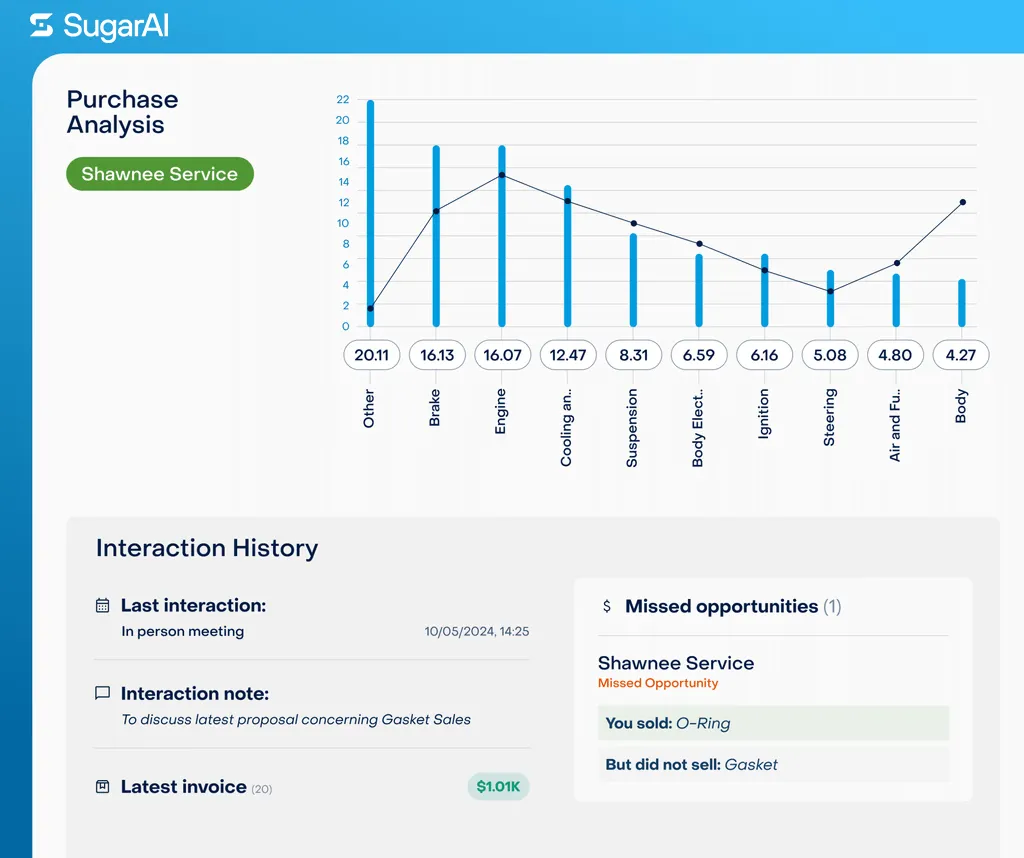
The result is a platform that connects order history, buying patterns, and account health data from your ERP system into your sales reps' daily workflow. For companies where knowing that a customer's reorder cycle is overdue matters more than tracking social media clicks, that focus pays off.
To create this SugarCRM review, we analyzed it in depth. We believe it's the right choice if:
You're a mid-market B2B company in manufacturing, wholesale, or distribution
You need your CRM to pull intelligence from your ERP system
You value customizability over out-of-the-box simplicity
You have 15+ sales reps managing large, recurring account bases
You want both cloud and on-premises deployment options
However, SugarCRM might not be the best choice if:
You need prospecting data to find new buyers outside your existing accounts
You want buyer intent signals showing which companies are researching solutions like yours
You require verified contact information at scale for outbound outreach
You need intelligence that goes beyond your CRM and ERP data to include market signals, org chart changes, and competitive activity
In this case, consider pairing your CRM with ZoomInfo: an AI-powered go-to-market platform that provides the prospecting intelligence and buyer data SugarCRM doesn't offer.
With 500M contacts, 100M companies, 135M+ verified phone numbers, and 200M+ verified business email addresses, ZoomInfo handles the "find and reach new buyers" layer, while SugarCRM manages the "nurture and close existing relationships" layer.
We've included a detailed look at ZoomInfo later in this review as the natural complement for teams that need prospecting intelligence alongside their CRM. If you're ready to explore what that looks like, you can start with a ZoomInfo free trial here.
What is SugarCRM?
SugarCRM was founded in 2004 in Cupertino, California, as an open-source CRM platform.
That origin gave it a developer community and a reputation for flexibility that set it apart from Salesforce and the proprietary incumbents of the era. The company later went commercial but kept its emphasis on configurability and on-premises deployment.
Today, SugarCRM calls itself a "precision selling platform" for B2B companies, with the tagline "The sales CRM for B2B growth." Accel-KKR, a technology-focused private equity firm, acquired a controlling interest in 2018. In April 2026, SugarCRM announced a rebrand to SugarAI, declaring "the next generation of CRM."
Source: SugarCRM
The product suite has four parts: Sugar Sell for sales automation, Sugar sales-i for ERP-driven sales intelligence, Sugar Serve for customer service, and Sugar Market for marketing automation.
SugarCRM's acquisition of sales-i (a platform that analyzes buying patterns from ERP data) extended its reach beyond traditional CRM into ERP-connected revenue intelligence. The company reports 4,000+ customers, 1M+ users across 120+ countries, 180+ ERP integrations, and 96% customer satisfaction.
SugarCRM Pros & Cons
Pros | Cons |
|---|---|
- ERP-native sales intelligence via Sugar sales-i | - 15-user minimum ($885/month floor cost) |
- Customizable with no-code configuration | - Steep learning curve for non-technical users |
- 180+ ERP integrations | - UI feels clunky compared to modern CRMs |
- Both cloud and on-premises deployment | - Mobile app performance issues reported |
- Six consecutive years as Nucleus Research Leader | - AI features gated above entry pricing tier |
- Proven results in manufacturing and distribution | - Performance degrades with large databases |
- Guided workflows with process automation | - No native prospecting or contact data |
SugarCRM Review: How It Works & Key Features
Sugar Sell: SugarCRM's flagship sales automation platform built around prioritized actions rather than passive data storage.
Sugar Sell is designed to "act more like a sales coach, not a database".
Instead of forcing reps to dig through dashboards, it surfaces which accounts and opportunities matter most each day, explains why, and recommends what to do next.
The workflow follows three moments in a rep's day. At login, Sugar Sell shows which accounts need attention now, ranking them by deal risk, engagement gaps, cross-sell opportunities, and early warning signs.
Before customer interactions, it provides a consolidated view combining company summaries, recent news, social insights, past interactions, and contact history. After meetings, AI helps keep CRM records updated, reducing manual data entry.
Guided workflows automate process enforcement: the system assigns tasks based on deal size and timelines, alerts keep teams on track, and process adherence becomes measurable.
Source: SugarCRM
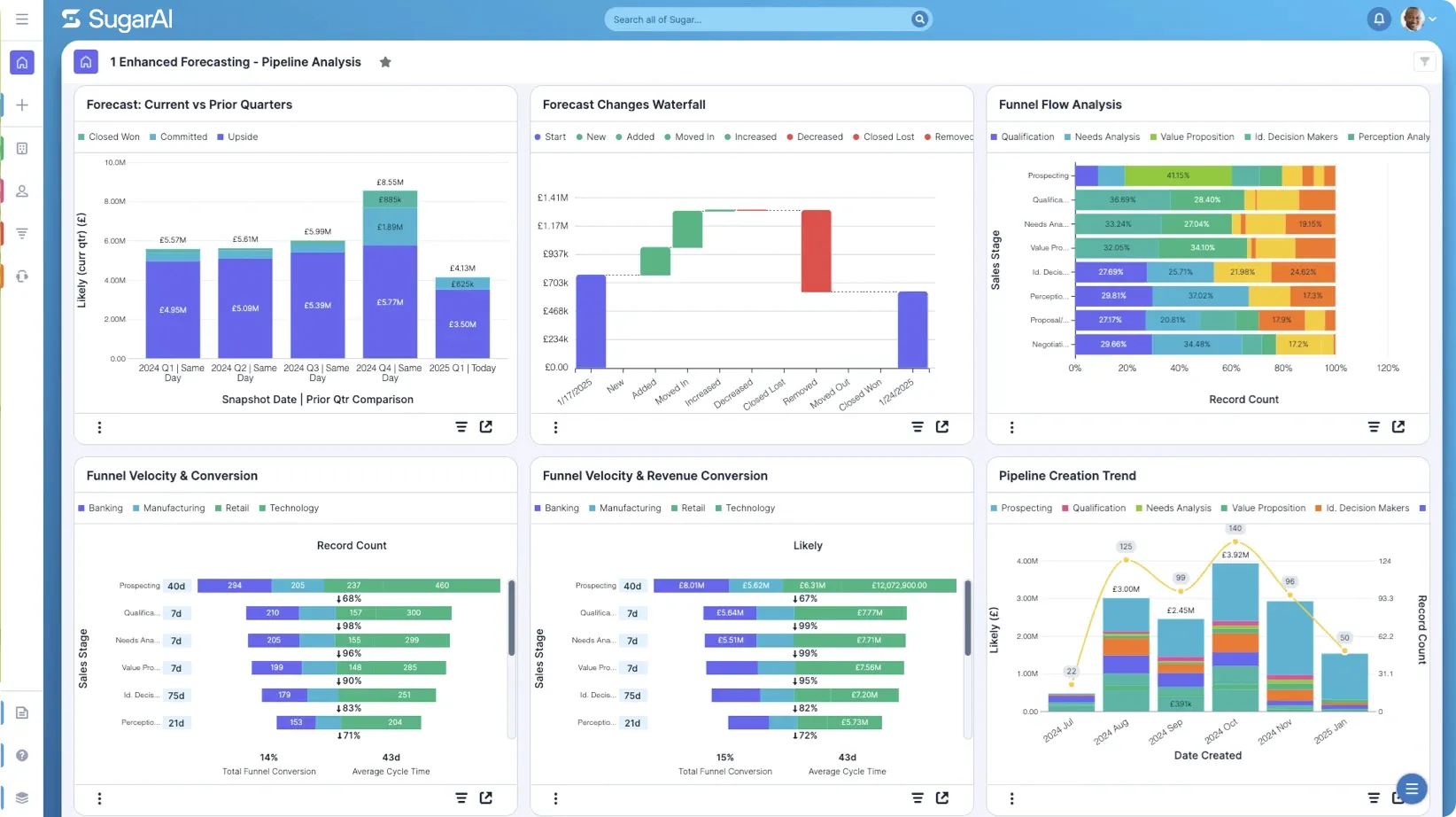
For sales managers, the platform shows where deals are stalling and which reps need coaching.
No-code configuration lets administrators tailor modules, layouts, and workflows without developer involvement.
Sugar sales-i: Revenue intelligence that surfaces buying patterns from your ERP data without requiring BI tools.
Sugar sales-i solves a specific problem: in high-volume, relationship-driven businesses, sales reps manage hundreds of accounts across thousands of SKUs.
Their ERP holds rich transactional history, but that data sits locked inside operational systems sales teams rarely open.
Sugar sales-i connects to the customer's ERP system and pulls transactional sales data into a single layer alongside Sugar Sell. The platform uses AI and machine learning to analyze buying behavior, identify trends, and detect anomalies. At login, reps see a prioritized dashboard highlighting accounts with cross-sell gaps, reorder windows, churn risks, and upsell signals.
The platform supports over 180 ERP systems including SAP, Oracle, Epicor, Procede, Syspro, and Sage.
Sugar Serve and Sugar Market: Customer service and marketing automation modules that share the same platform.
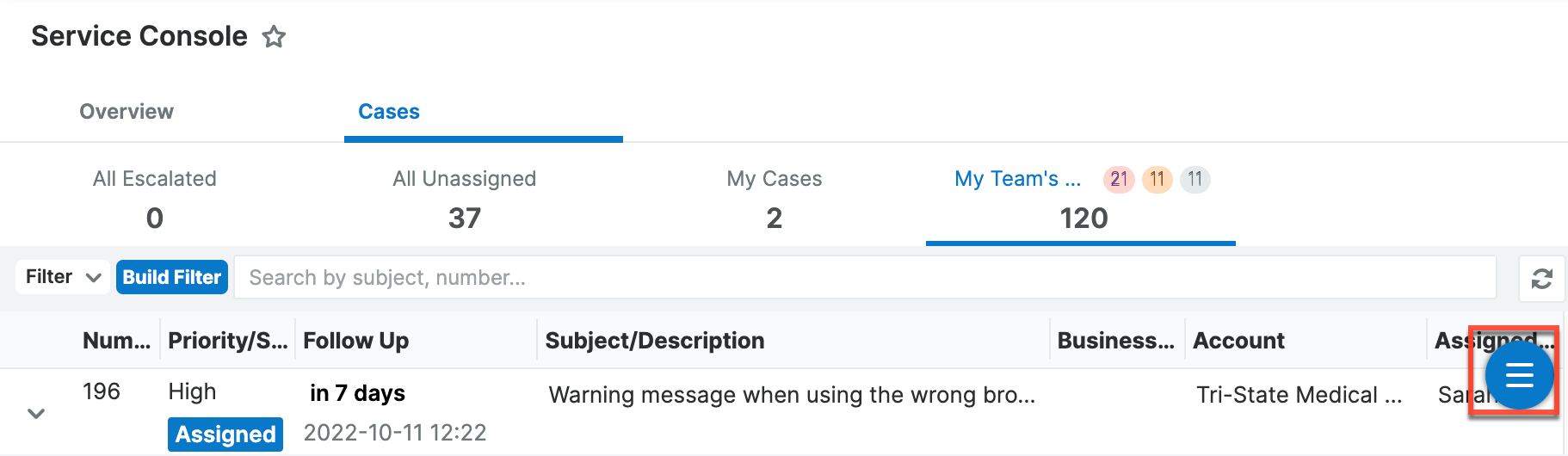
Sugar Serve provides omnichannel customer service with a dedicated Service Console that aggregates case queues, SLA countdowns, and customer data in one workspace.
Source: SugarCRM
SugarLive, the embedded communication layer, handles real-time voice calls and chats via Amazon Connect, automatically matching inbound callers to their account records so agents have context before speaking.
The service module includes SLA automation via a stock SugarBPM template that calculates follow-up dates against region-specific business hours, shift-aware round-robin case assignment, a self-service Sugar Portal for customers, and a Knowledge Base accessible both internally and through the portal.
Sugar Market handles lead generation, nurturing, scoring, and revenue attribution. It includes a drag-and-drop email builder, a visual Nurture Builder for multi-touch campaigns, lead scoring profiles with account-based scoring, and Advanced Analytics powered by Looker at all tiers. A Listener module monitors CRM field changes and triggers marketing actions automatically.
Both products run inside the same platform as Sugar Sell, so service agents and marketers share the same customer data without switching systems.
Pricing: Per-user annual billing with a 15-user minimum.
SugarCRM's pricing is structured around three Sugar Sell cloud tiers, all billed annually:
Tier | Price | Minimum Annual Commitment |
|---|---|---|
Standard | $59/user/month | $10,620/year (15 users) |
Advanced | $85/user/month | $15,300/year (15 users) |
Premier | $135/user/month | $24,300/year (15 users) |
Standard includes accounts and contact management, lead and opportunity management, quote management, pipeline management, business process management, reporting, and mobility.
Advanced adds mail and calendar integration (Outlook/Gmail), case management, and bug tracking. AI features like intelligent lead prioritization, Revenue Intelligence, generative AI, and sentiment analysis are asterisked on the pricing page, meaning they require an upgrade to Premier or a separate purchase.
Premier adds geo mapping, enhanced forecasting, doubled file and data storage, priority support with live chat and phone, news feeds, smart guides, and a LinkedIn connector.
For on-premises deployment, Sugar Enterprise starts at $85/user/month (10-user minimum), and Enterprise+ at $120/user/month. Sugar Market and Sugar Serve pricing is not publicly listed and requires contacting sales.
SugarCRM also offers a 7-day free trial. There is no permanently free plan.
Where SugarCRM Falls Short
SugarCRM excels at managing existing customer relationships, particularly for manufacturers and distributors with ERP systems.
But several limitations appear for teams looking to grow beyond their current accounts.
No Prospecting Data. SugarCRM manages the relationships you already have. It does not provide a database of potential buyers, verified contact information, or direct-dial phone numbers for new prospects.
If your reps need to identify and reach decision-makers at companies not already in your CRM, they need a separate tool. SugarCRM was designed for relationship management, not prospecting, so sales teams pursuing new business must look elsewhere for the data.
No Buyer Intent Signals. SugarCRM draws its intelligence from your internal data (CRM activity and ERP order history). It cannot tell you which companies outside your CRM are researching solutions in your category, which competitors they're evaluating, or when they're entering a buying cycle.
For manufacturers and distributors where long buying cycles make timing critical, this means reps often reach out without knowing whether a prospect is ready to talk.
Limited Contact Enrichment. CRM data decays. People change jobs, companies restructure, phone numbers and email addresses go stale. SugarCRM does not include native contact verification or enrichment. The SugarAI Marketplace offers third-party connectors, but maintaining data freshness requires additional tools and budget beyond the SugarCRM subscription.
Steep Learning Curve. G2 reviewers and Capterra reviewers consistently flag the learning curve. Setting up custom workflows, automations, and reports requires technical expertise. The backend PHP-based customization language is hard for non-programmers. Multiple reviewers describe the interface as less intuitive than modern CRMs.
Mobile App Gaps. Capterra reviewers note the mobile experience falls short of desktop, calling the app slow and buggy. For field sales reps in manufacturing and distribution who spend significant time away from their desks, this matters.
High Entry Floor. The 15-user minimum at $59/user/month means a minimum commitment of $885/month to start. Teams with fewer than 15 reps still pay for 15 licenses. Combined with annual-only billing and no free plan, this creates a barrier for smaller sales organizations.
These limitations reflect SugarCRM's deliberate focus on existing-account intelligence over new-account acquisition. But they create a clear gap for teams that need to both find new buyers and manage existing relationships.
The Natural Complement to SugarCRM: ZoomInfo
ZoomInfo is an AI-powered go-to-market platform built on a large data foundation: 500M contacts, 100M companies, 135M+ verified phone numbers, and 200M+ verified business email addresses.
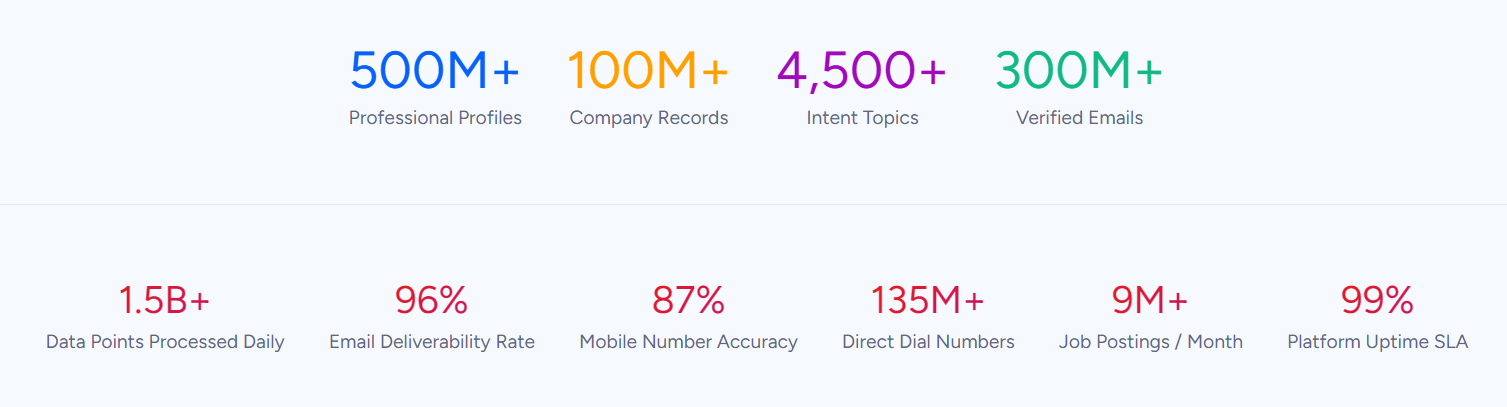
Where SugarCRM manages the relationships you already have, ZoomInfo helps you find and reach the buyers you don't. Together, they cover the full go-to-market cycle, from identifying new opportunities to closing and expanding accounts.
ZoomInfo lists Sugar among its supported CRM and MAP integrations, so the two platforms connect directly. Enriched contacts, intent signals, and account intelligence from ZoomInfo flow into SugarCRM, and reps work from one system with complete data.
Comprehensive B2B Data: ZoomInfo provides verified contact and company intelligence that no CRM generates on its own.
SugarCRM's data comes from what your team enters and what your ERP records.
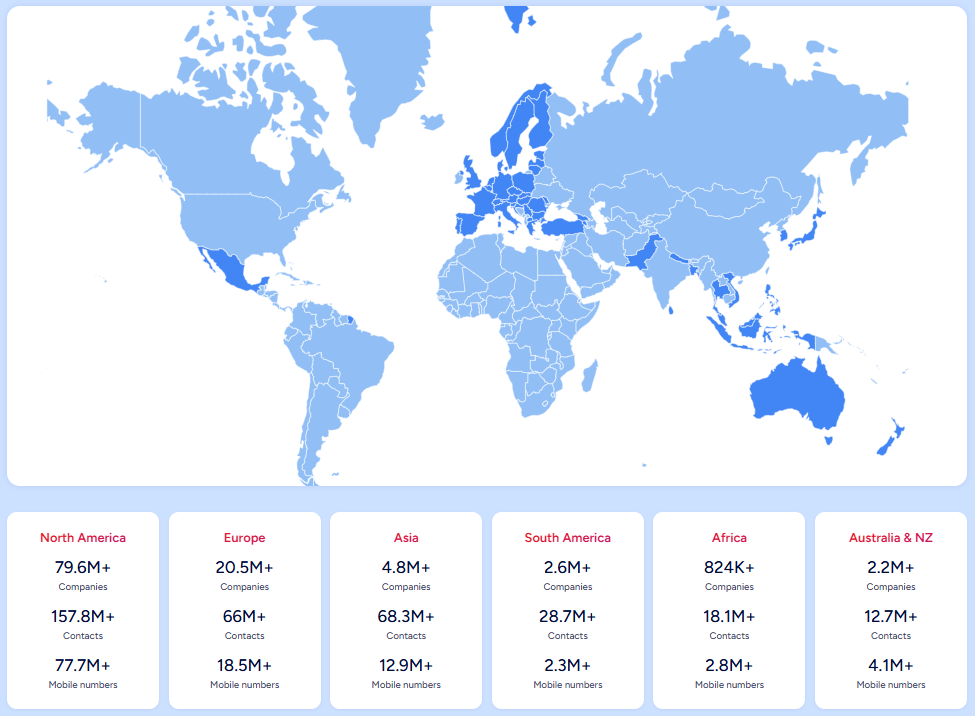
ZoomInfo's data comes from a proprietary collection and verification pipeline: automated ML scanning of 28 million site domains daily, third-party partner data covering 95 million businesses, a community of 200,000+ ZoomInfo Lite users who share data back, and an in-house Data Training Lab of 300+ human researchers. First-party data reaches up to 95% accuracy.
Source: ZoomInfo
For a manufacturing rep using SugarCRM, this means verified direct-dial phone numbers and business emails for decision-makers at target accounts, company data across 300+ attributes for market segmentation, department org charts showing who influences purchasing, and technographic profiles for 30+ million companies tracking 30,000+ technologies.
The data quality has external validation. In a Fortune 500 competitive RFP analyzing 25 million contacts across vendors, the independent consultant concluded that "no other competitor came even close."
Vensure scaled their prospecting with ZoomInfo's data: "ZoomInfo gives us the information we need to execute. We don't have to go through and spend our time digging. It's already there, so we can be three steps ahead." (Vensure Case Study)
Buyer Intent and Signals: ZoomInfo shows which companies are researching your category before they contact you.
SugarCRM's sales-i tells you what existing customers have purchased and when they might reorder.
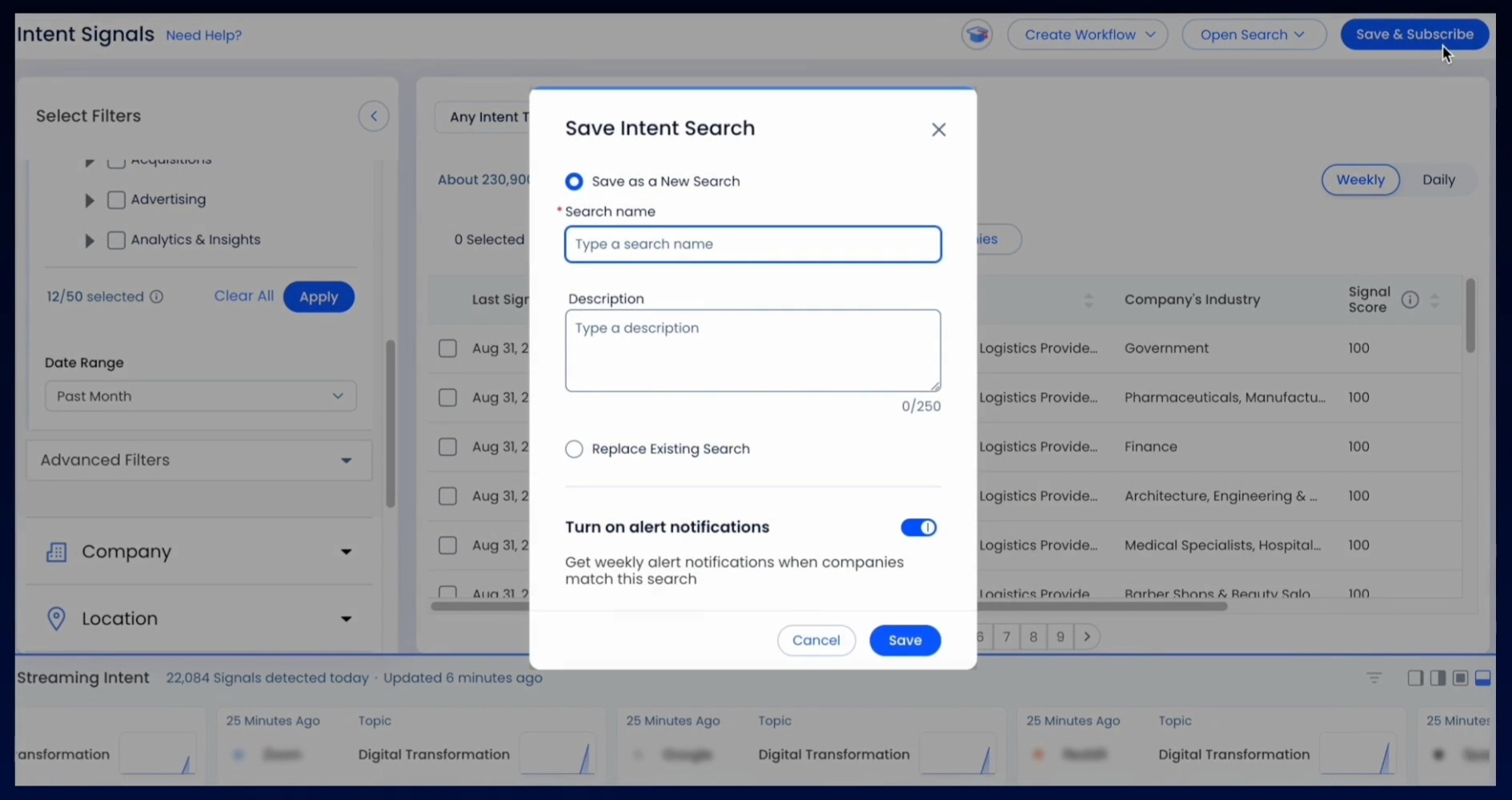
ZoomInfo's Buyer Intent data tells you which companies outside your CRM are researching solutions in your space right now, tracking signals from 210 million IP-to-Organization pairings and 6 trillion+ new keyword-to-device pairings sourced monthly.
Source: ZoomInfo
Guided Intent, exclusive to ZoomInfo, identifies topics historically correlated with deal success rather than requiring manual topic selection. WebSights resolves anonymous website traffic to companies, including buying team identification and direct contact info, with Automatic Traffic Filtering that separates real visitors from bots.
For manufacturers and distributors using SugarCRM, this adds a dimension ERP data cannot provide: knowing which prospects are ready to buy before they raise their hand.
Seismic attributed 39% of active pipeline to opportunities identified or influenced by ZoomInfo signals, with their sales team becoming 54% more productive. "That combination of our internal CRM data, external signals, and AI that's given all that context has helped us craft very specific account- and persona-based messages. And people have responded to them right away." (Seismic Case Study)
GTM Context Graph and AI Execution: ZoomInfo's intelligence layer combines your CRM data with external signals to surface why deals move.
ZoomInfo's GTM Context Graph processes 1.5B+ data points daily, unifying a customer's CRM records, conversation transcripts, email threads, and product usage data with ZoomInfo's third-party intelligence.
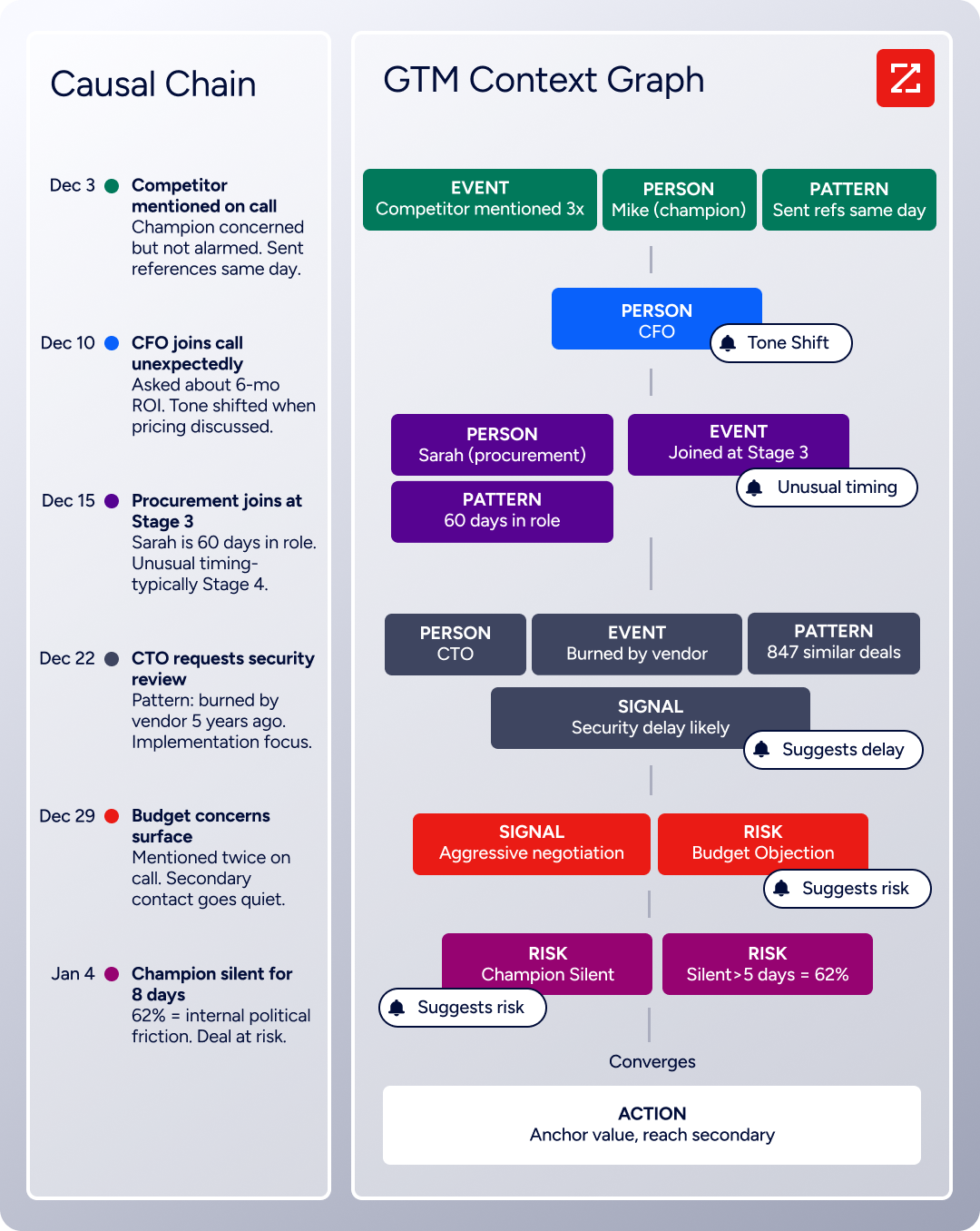
As ZoomInfo's Chief Product Officer Dominik Facher writes: "The CRM recorded the state change. It has no record of why it happened." The GTM Context Graph captures the decision context behind deal movement.
This intelligence reaches sellers through GTM Workspace, where prioritized accounts, AI-drafted outreach, and deal execution converge. It reaches marketers and RevOps through GTM Studio, where audience definition and campaign orchestration happen in natural language. For teams that build their own tools, APIs and MCP expose the same intelligence to any application.
ZoomInfo offers a permanent free tier through ZoomInfo Lite with access to the B2B database, 10 monthly export credits, and WebSights Lite. A 7-day free trial with no credit card required provides full platform access. Paid plans use custom-quoted, consumption-based pricing.
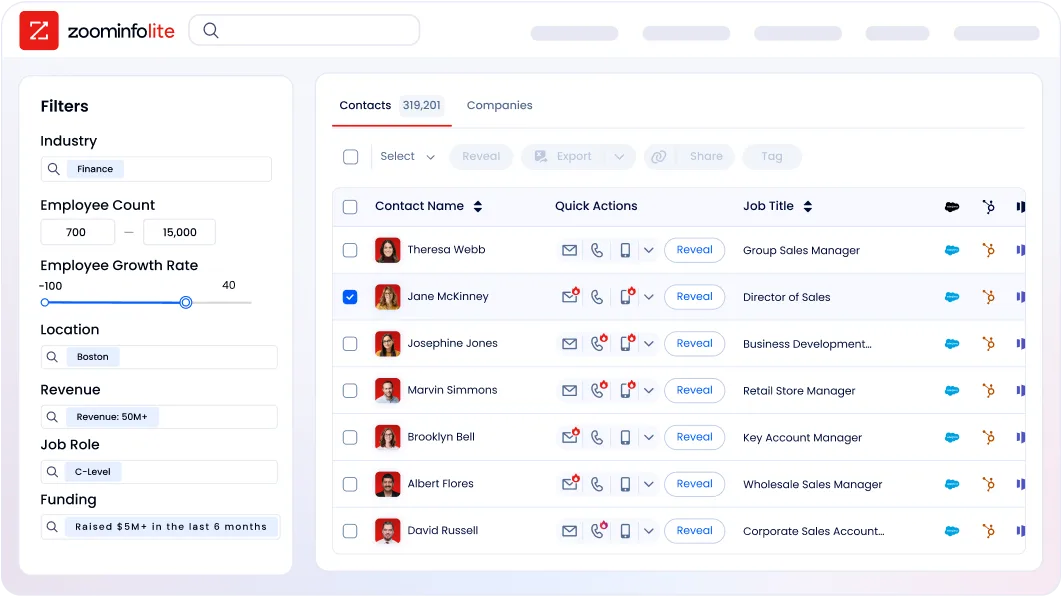
Smartsheet uses ZoomInfo as their single source of truth: "Without ZoomInfo, it would be extremely difficult, if not impossible, to achieve our business objectives. Without it, we wouldn't be able to understand the market, have the right contact data, and make meaningful connections." (Smartsheet Case Study)
SugarCRM and ZoomInfo: How They Work Together
Aspect | SugarCRM | ZoomInfo |
|---|---|---|
Primary purpose | Manage existing customer relationships and pipeline | Find new buyers and provide market intelligence |
Data source | Internal: CRM activity + ERP order history | External: 500M contacts, 100M companies, intent signals |
Intelligence type | Retrospective: what customers have purchased | Predictive: who is researching your category |
ERP integration | 180+ native ERP connectors | Not applicable (complements ERP data with market data) |
Prospecting data | Not included | 135M+ verified phone numbers, 200M+ verified emails |
Buyer intent signals | Not included | 210M IP-to-org pairings, 6T+ monthly keyword signals |
Contact enrichment | Requires third-party add-ons | Native enrichment with 95% accuracy |
AI capabilities | ERP-driven account prioritization and guided workflows | GTM Context Graph, AI-drafted outreach, signal monitoring |
Free tier | 7-day trial only | Permanent free tier (ZoomInfo Lite) + 7-day trial |
Target industries | Manufacturing, wholesale, distribution | All B2B industries |
Best for | Relationship management with existing accounts | Identifying and reaching new prospects |
Final Verdict
SugarCRM and ZoomInfo solve different problems in the same go-to-market workflow. The choice isn't between them; it's whether you need one, the other, or both.
Choose SugarCRM if your primary challenge is managing existing customer relationships in manufacturing, wholesale, or distribution. Its ERP-native intelligence through Sugar sales-i gives reps visibility into buying patterns, reorder cycles, and cross-sell opportunities drawn from transactional data.
The platform's customizability and on-premises deployment option suit mid-market B2B companies with complex sales processes, compliance requirements, or specific industry workflows. SugarCRM works best when your reps manage large account bases and need guidance on which existing relationships to prioritize.
Add ZoomInfo if you also need to find new buyers, enrich stale CRM data, or detect when companies outside your current accounts are entering a buying cycle. ZoomInfo's verified contact database, buyer intent signals, and AI execution tools fill the gap between managing relationships and building pipeline.
With its direct integration to Sugar, enriched data and signals flow into the CRM your reps already use, so ZoomInfo's intelligence becomes actionable inside SugarCRM without switching systems.
Get started with ZoomInfo here.
For B2B sales teams in manufacturing and distribution, the strongest setup often combines both: SugarCRM for relationship and ERP intelligence, ZoomInfo for prospecting and market intelligence. Together, they cover the full cycle from finding a buyer to expanding the account.
SugarCRM FAQ
What is SugarCRM used for?
SugarCRM is a B2B sales and customer relationship management platform built for manufacturing, wholesale, and distribution companies. It manages the sales pipeline, automates workflows, tracks customer interactions, and (through Sugar sales-i) surfaces buying patterns from ERP data.
The platform helps reps prioritize accounts, prepare for meetings, and identify cross-sell and upsell opportunities within existing customer relationships.
How much does SugarCRM cost?
Sugar Sell starts at $59/user/month for the Standard tier, $85/user/month for Advanced, and $135/user/month for Premier. All plans require annual billing and a 15-user minimum, meaning the lowest possible annual commitment is $10,620.
AI features like intelligent lead prioritization, generative AI, and sentiment analysis require the Premier tier or a separate purchase. Sugar Market and Sugar Serve pricing is not publicly listed.
Does SugarCRM offer a free plan?
No. SugarCRM offers a 7-day free trial but no permanently free plan. The 15-user minimum on all paid plans means teams with fewer than 15 reps still pay for 15 licenses. This makes it structurally different from platforms like ZoomInfo, which offers a permanent free tier through ZoomInfo Lite with access to its B2B database and 10 monthly export credits.
What ERP systems does SugarCRM integrate with?
SugarCRM supports over 180 ERP integrations including SAP, Oracle, Epicor, Syspro, Sage, and Procede. In January 2026, SugarCRM announced a pre-integrated Sugar for Syspro offering that connects manufacturers' shop floor data with the sales CRM out of the box.
ERP integration is central to SugarCRM's value, particularly through Sugar sales-i, which analyzes ERP order data to surface buying patterns and cross-sell opportunities.
Is SugarCRM easy to use?
SugarCRM has a notable learning curve, particularly for non-technical users. G2 and Capterra reviewers consistently describe the setup of custom workflows, automations, and reports as difficult without technical expertise. The interface is described as less intuitive than modern CRMs like HubSpot.
However, the no-code configuration tools let administrators customize modules and workflows without developer involvement, and SugarClub provides adoption frameworks and training resources.
Can SugarCRM be deployed on-premises?
Yes. Unlike most modern CRM vendors, SugarCRM supports on-premises deployment through Sugar Enterprise (starting at $85/user/month with a 10-user minimum) alongside its cloud offering on SugarCloud (hosted on AWS).
This matters for regulated industries or companies with data sovereignty requirements. Customers can choose their AWS data region (Australia, Germany, United Kingdom, or United States) for cloud deployment, and migration between on-premises and cloud is supported.
Does SugarCRM include prospecting or contact data?
No. SugarCRM manages relationships with contacts and companies already in your system, but it does not provide a database of new prospects, verified phone numbers, or business email addresses for outbound outreach.
Teams needing prospecting data typically pair SugarCRM with a B2B intelligence platform like ZoomInfo, which provides 500M contacts, 135M+ verified phone numbers, and 200M+ verified business emails, with direct integration to Sugar.
What industries is SugarCRM best for?
SugarCRM targets manufacturing, wholesale, and distribution as its primary industries.
Published customer results come predominantly from these verticals: Creative Foam (automotive manufacturing), FSIoffice (office supply wholesale), WaterCo (pool and spa manufacturing), and Sun State International Trucks (auto parts distribution). Secondary industries include financial services, construction, and business services.
More SugarCRM comparisons:
