
If you're comparing ToutApp vs. Yesware, you should know that one no longer exists as an independent product. ToutApp was acquired by Marketo in April 2017, then absorbed into Adobe when Marketo was acquired for $4.75 billion in 2018. What remains is Marketo Sales Connect, a niche add-on inside Adobe's marketing cloud.
That changes the comparison. But the questions behind the search are still valid:
Do you need a tool that lives inside your inbox, or a platform that tells you who belongs in your inbox in the first place?
Is your primary challenge sending and tracking emails, or finding the right people to send them to?
Are you looking for a lightweight extension for individual reps, or an intelligence layer for your go-to-market team?
How important is knowing when a prospect is actively researching solutions like yours?
Do you want to manage email sequences, or do you want AI that handles account research, outreach drafting, and CRM updates for you?
In short, here's what we recommend:
ToutApp (now Marketo Sales Connect) was a sales engagement platform built for reps who needed email tracking, templates, multi-touch campaigns, and a built-in dialer without leaving Gmail, Outlook, or Salesforce. At its peak, ToutApp served 100,000+ salespeople across 400+ enterprise customers including Atlassian, Dropbox, and Tableau. Its founder, TK Kader, positioned ToutApp as "software actually made for closers", and the platform earned a reputation for speed and simplicity. Today, toutapp.com redirects to Adobe's Marketo Sales Connect product page, and the product serves organizations already inside the Adobe Marketo Engage ecosystem.
Yesware is an inbox-native sales engagement tool that lets reps track emails, build campaigns, and manage templates without leaving Gmail or Outlook. With 1.4 million+ installs and a 60-second setup, it remains one of the more accessible sales tools available. Yesware was acquired by Vendasta in October 2022 and continues operating independently. It fits small to mid-sized teams that need email engagement tracking at a reasonable price. However, its only CRM integration is Salesforce, and it struggles with high-volume outbound operations.
Both ToutApp and Yesware were built to solve the same problem: help salespeople send better emails and know when prospects engage. But email tracking and templates only answer the question "did they open it?" They don't answer the more important question: "should I have emailed them in the first place?"
ZoomInfo is an AI go-to-market platform built on a large B2B database: 500M contacts, 100M companies, 135M+ verified phone numbers, and 200M+ verified business emails. Where ToutApp and Yesware help you track outreach after you hit send, ZoomInfo tells you who to contact, when to engage, and what to say, then acts on that intelligence. Its GTM Context Graph processes 1.5B+ data points daily, combining your CRM records, conversation transcripts, and behavioral signals with ZoomInfo's B2B data to reveal not just what's happening in a deal, but why. Sales reps access this through GTM Workspace, marketers and RevOps through GTM Studio, and engineering teams through APIs and MCP.
If you're ready to move beyond tracking email opens and start understanding which accounts are worth pursuing, see how ZoomInfo works.
ToutApp vs. Yesware vs. ZoomInfo at a glance
ToutApp (Marketo Sales Connect) | Yesware | ZoomInfo | |
|---|---|---|---|
Current status | Acquired; folded into Adobe Marketo Engage | Active; owned by Vendasta since 2022 | Public company (NASDAQ: GTM) |
Core function | Email tracking, templates, sales campaigns | Email tracking, templates, campaigns, prospecting | AI go-to-market intelligence and execution |
B2B contact database | None | 100M+ contacts (add-on) | 500M contacts, 135M+ verified phone numbers |
Buyer intent signals | None | None | 210M IP-to-org pairings, 6T+ keyword pairings monthly |
Email client support | Gmail, Outlook (Windows only) | Gmail, Outlook | Gmail, Outlook, plus native platform |
CRM integration | Salesforce, Marketo Engage | Salesforce only (Enterprise tier) | Salesforce, HubSpot, Microsoft Dynamics |
AI capabilities | ML-driven template recommendations | AI engagement recommendations (in development) | GTM Context Graph, AI agents, AI-drafted outreach |
Built-in dialer | Yes (Premium/Enterprise) | No | Yes |
Pricing | No longer sold standalone | Custom-quoted | |
Best for | Existing Adobe/Marketo customers | Individual reps and small teams | Revenue teams that need data, intelligence, and execution |
ToutApp's acquisition changed the equation
ToutApp's story matters because it shows what happens when a focused sales tool gets absorbed into a larger ecosystem.
During its independent years (2011-2017), ToutApp earned loyalty. The platform was fast, the Gmail and Salesforce integrations were reliable, and the $49/user/month price undercut competitors like Outreach and Salesloft. Users reported that ToutApp outperformed Salesloft, Found.ly, and Outreach at a lower price point. The company raised $24.6 million in funding, including a $15M Series B led by Andreessen Horowitz, and attracted enterprise customers like Atlassian, Citrix, and Siemens.
Then came the April 2017 Marketo acquisition. The deal made strategic sense: 61% of ToutApp's enterprise customers already used Marketo. But the acquisition price reportedly would not produce a significant return for investors, and the product's trajectory narrowed. Adobe sunsetted the LinkedIn Sales Navigator integration in September 2021 with no replacement. Product development slowed. What was once a standalone platform became a retention feature for Adobe's enterprise install base.
Source: ToutApp
For anyone not already in the Marketo ecosystem, ToutApp is no longer a real option. That makes this comparison about Yesware versus the broader question of what a modern sales team actually needs.
Yesware wins on simplicity and accessibility
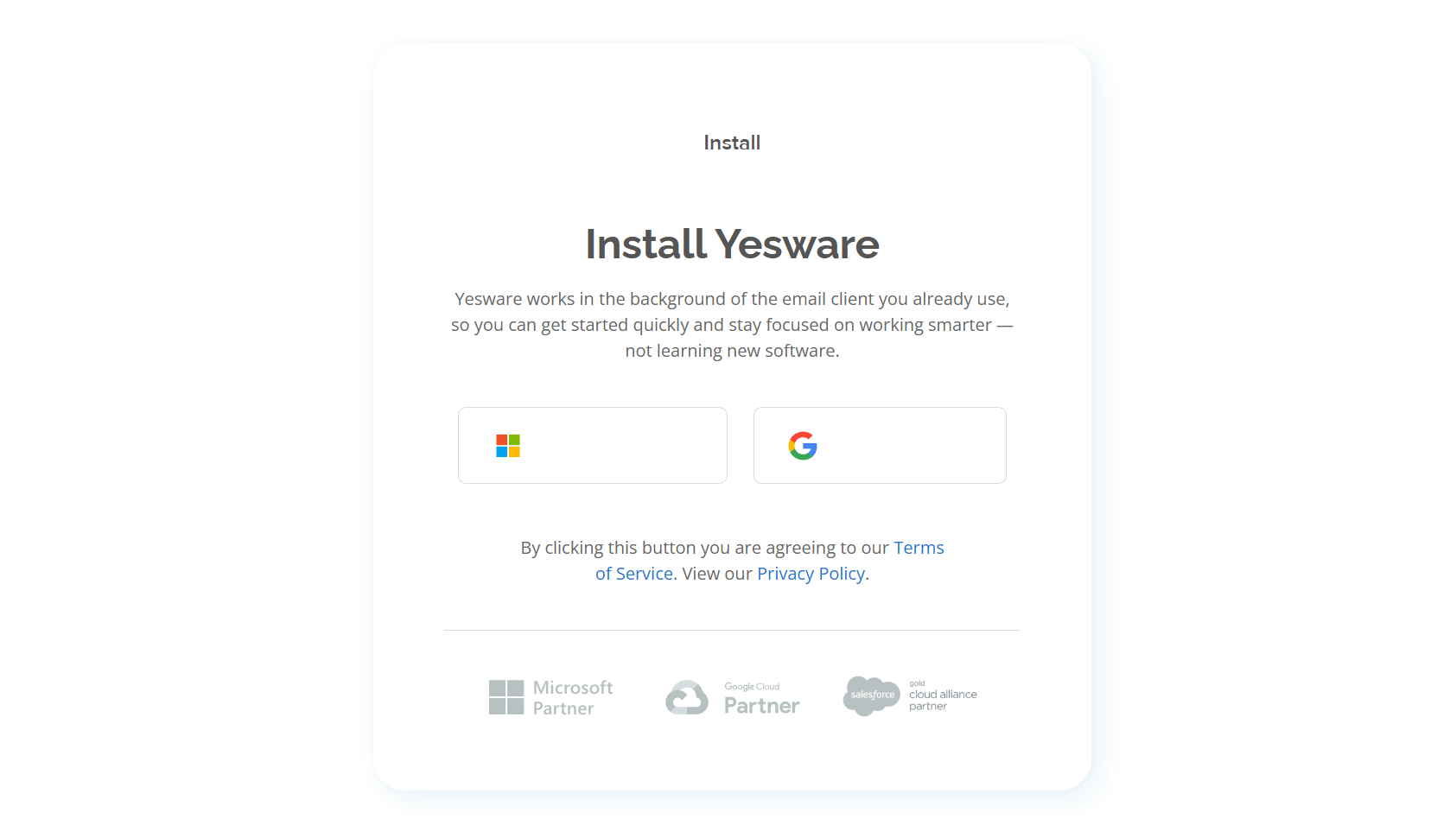
Yesware's strength is that it disappears into your existing workflow. Install the Chrome extension or Outlook add-in, and you're tracking emails within minutes. No new platform to learn, no onboarding process, no workflow disruption.
Source: Yesware
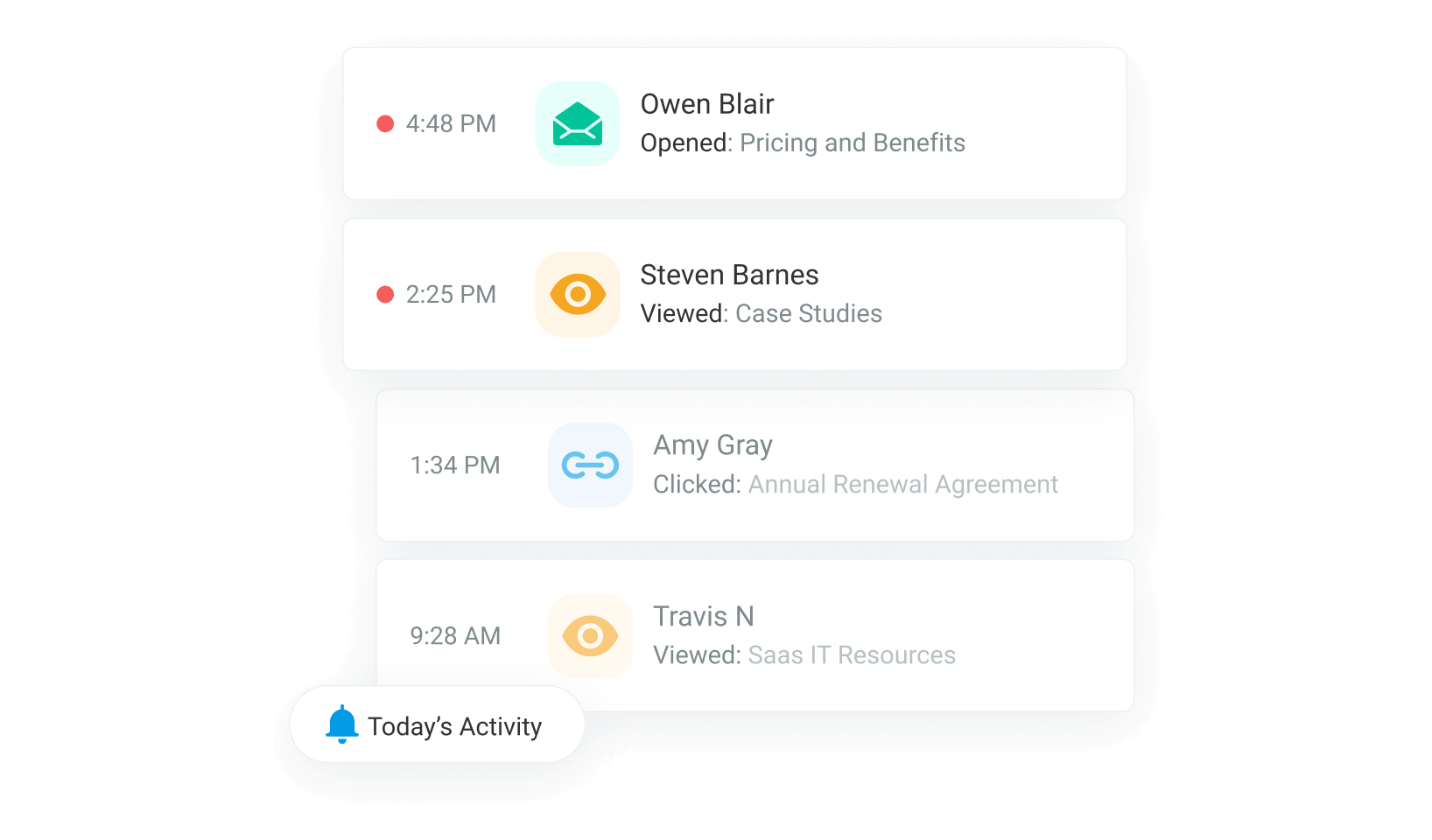
The email tracking works well. When a prospect opens your email, you get a real-time desktop notification showing when they opened it and on what device. The Activity Feed summarizes engagement history across all your contacts. For reps who need to know when to follow up, this visibility is useful.
Source: Yesware
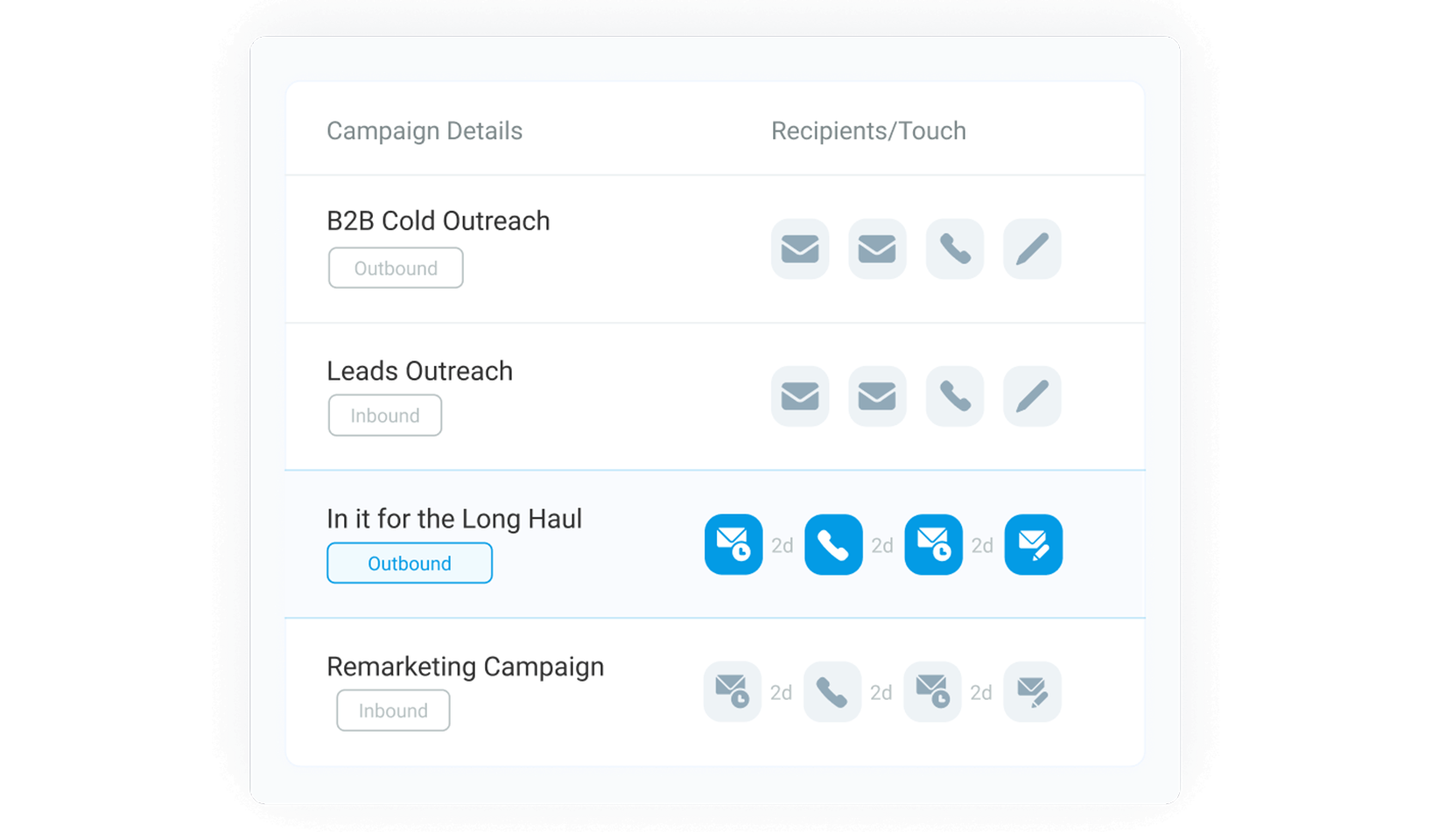
Templates and campaigns are where Yesware earns its keep for teams. Reps can build multi-channel campaigns combining automated emails, phone call reminders, LinkedIn touches, and custom tasks. The system removes recipients automatically when they reply or book meetings, preventing the awkward "did you get my last email?" follow-up to someone who already responded.
Source: Yesware
The pricing is accessible too. A permanent free plan supports up to 5 users with basic tracking. The Pro plan at $15/seat/month (annual) unlocks unlimited tracking. The Premium plan at $35/seat/month adds team features and unlimited campaigns. Even the Enterprise plan at $65/seat/month, which includes full Salesforce integration, costs a fraction of what dedicated sales engagement platforms charge.
But Yesware's simplicity has a ceiling. The only CRM integration is Salesforce, and only at the Enterprise tier. False open tracking from corporate firewalls and security tools is the most common complaint in user reviews. Managing cadences can be cumbersome, and the platform slows down when sending high volumes of emails. It's not well suited for SDR teams processing hundreds of leads monthly.
Both platforms share the same blind spot
ToutApp and Yesware were designed to optimize what happens after you decide to email someone. They track opens, manage templates, automate follow-up sequences. That's valuable, but it assumes you already know who to contact, when they're ready to buy, and what message will land.
In practice, most sales teams don't have reliable answers to those questions. They build prospect lists from outdated databases, guess at timing based on intuition, and personalize outreach from a LinkedIn profile they skimmed for thirty seconds. Then they use tools like Yesware to track whether anyone opened the email. When open rates are low, the instinct is to tweak the subject line. Often, the real problem is that the list was wrong.
ToutApp's own history bears this out. Founder TK Kader identified that 65% of a salesperson's time went to busywork caused by ineffective software. ToutApp cut some of that busywork by making email faster. But the deeper inefficiency was never about email speed. It was about spending time on the wrong prospects.
Neither ToutApp nor Yesware can tell you which accounts are actively researching solutions. Neither can show you the buying committee inside a target account. Neither can alert you when a prospect's company receives new funding, hires a VP of Sales, or starts evaluating your competitor. These are the signals that separate productive outreach from noise.
ZoomInfo starts where email engagement tools stop
ZoomInfo operates at a different layer. Instead of optimizing email sends, it identifies which accounts deserve your attention and gives you the intelligence to engage them.
The foundation is data. ZoomInfo maintains 500M contacts, 100M companies, 135M+ verified phone numbers, 120M direct-dial phone numbers, and 200M+ verified business email addresses. This data is verified through a pipeline that combines automated ML scanning of 28 million site domains daily, third-party partner data, a community of 200,000+ ZoomInfo Lite users who share data back, and 300+ human researchers. In a Fortune 500 competitive RFP analyzing 25 million contacts across vendors, the independent consultant concluded that "no other competitor came even close."
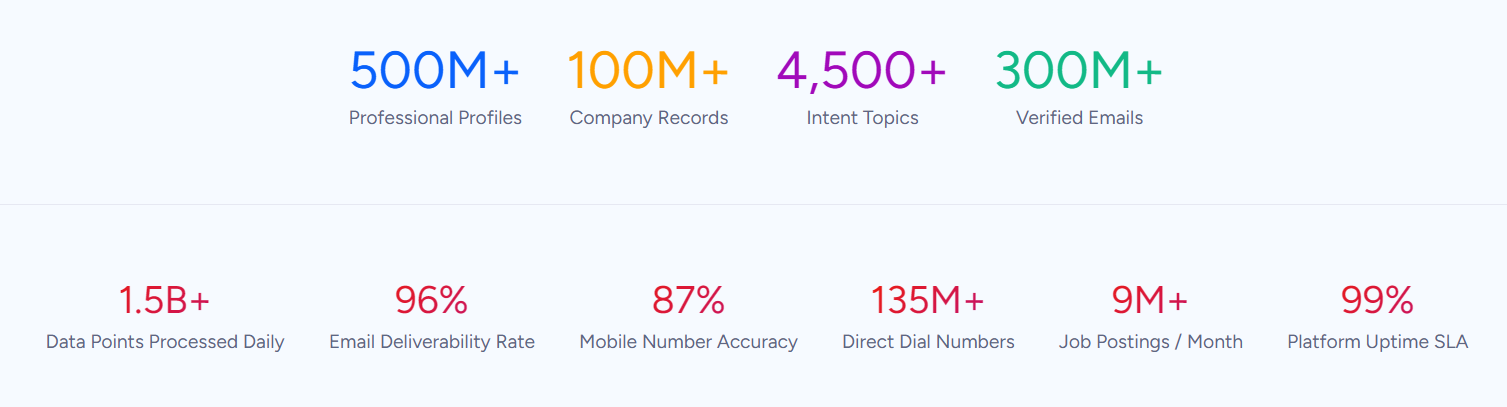
For comparison, Yesware's Prospector add-on offers access to 100M+ B2B contacts. ToutApp had no prospecting database at all, relying on whatever data existed in the connected CRM. ZoomInfo's database is five times larger than Yesware's, with verified phone numbers and emails that Yesware doesn't match in scale or verification depth.
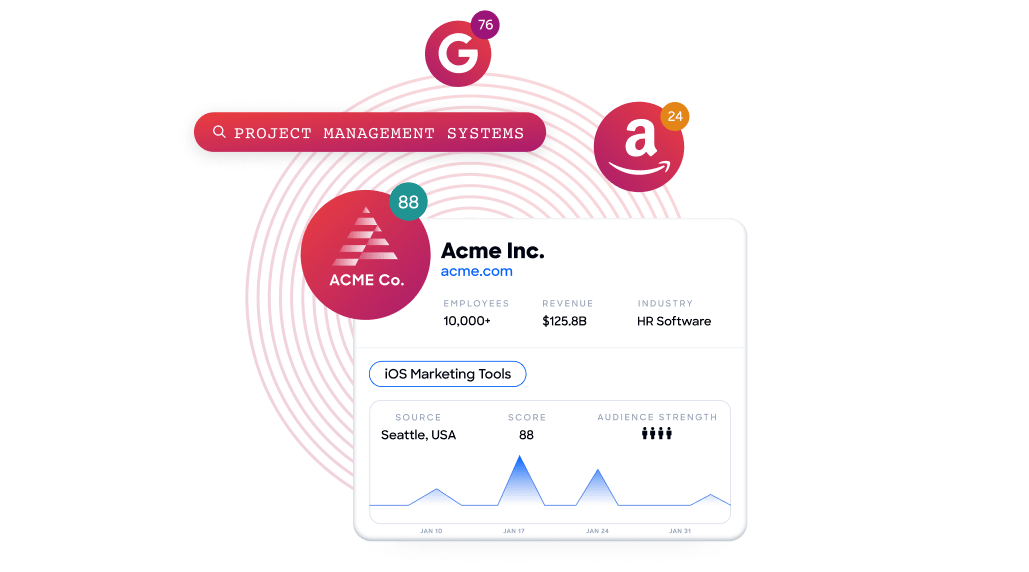
But the data is only the starting point. ZoomInfo's Buyer Intent tracks signals from 210 million IP-to-Organization pairings and 6 trillion+ new keyword-to-device pairings sourced monthly to identify when companies are actively researching topics related to your product. Guided Intent, exclusive to ZoomInfo, identifies topics historically correlated with deal success rather than requiring manual topic selection. Instead of guessing which prospects might be interested, you see which ones are already looking.
"It's not just the data itself. It's more about the right data at the right time to help us reach out with the right message across that full buyer journey." (Chelsea Kenyon, Senior Director of Digital Strategy, Redwood Logistics)
Intelligence versus tracking: different problems, different tools
The core difference between ZoomInfo and inbox-based engagement tools isn't feature count. It's what each platform knows about your prospects.
ToutApp tracked email opens, link clicks, attachment reads, and website visits after a prospect clicked an email link. This was useful. If a prospect opened your email three times and visited your pricing page, you had a strong signal to call. Yesware provides similar visibility, with real-time notifications on opens, clicks, and attachment views.
But this tracking only works after you've already engaged someone. It measures reactions to your outreach. It doesn't tell you what's happening before your first email.
ZoomInfo's GTM Context Graph captures signals across the entire buying journey, processing 1.5B+ data points daily. It combines your CRM records with conversation intelligence, intent signals, and behavioral data to reveal why deals move or stall. As ZoomInfo's CPO Dominik Facher writes: "The CRM recorded the state change. It has no record of why it happened." The GTM Context Graph fills that gap.
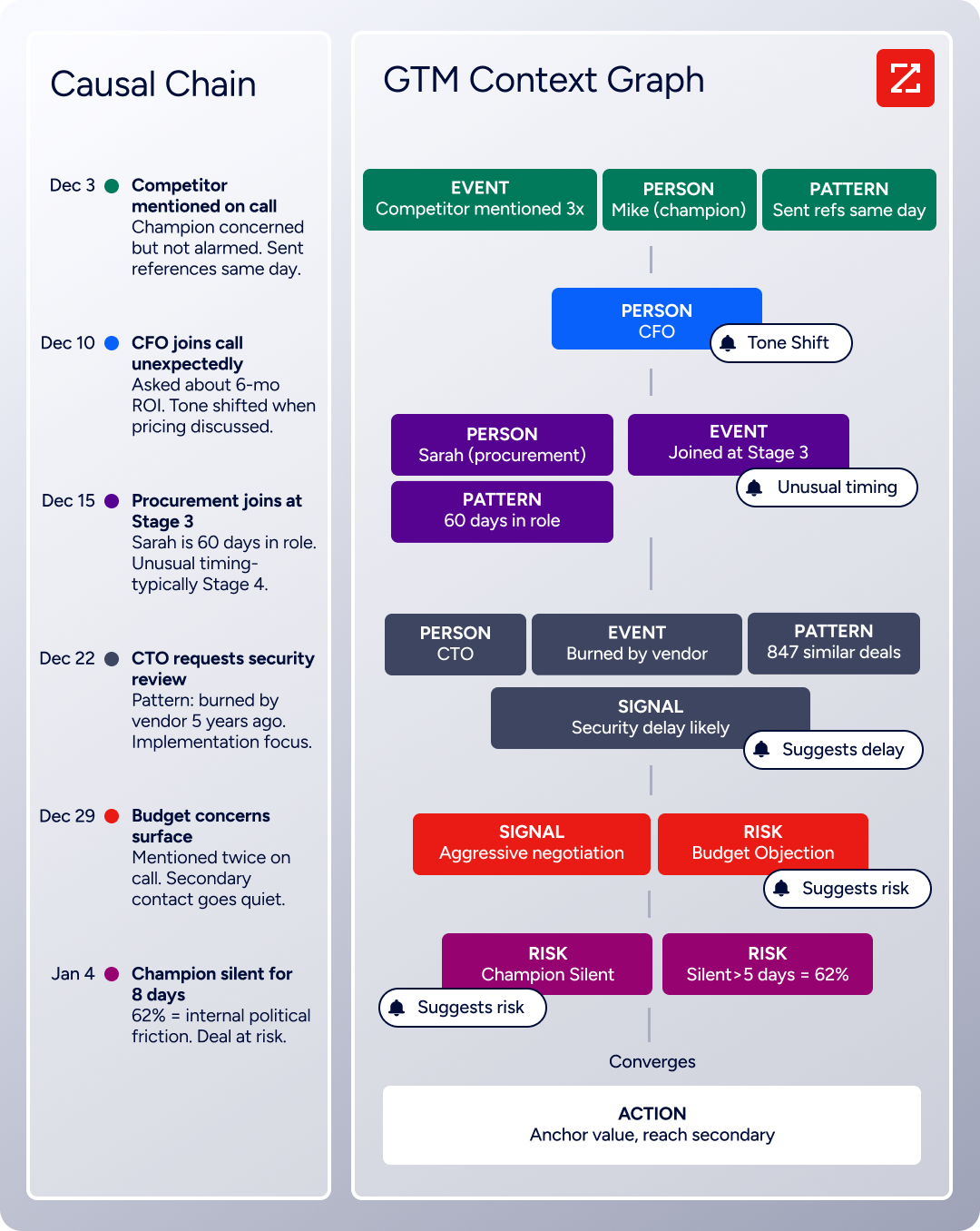
In GTM Workspace, sellers see a prioritized feed of accounts based on buying signals, not just email opens. AI agents handle account research, draft outreach that references specific deal context, and update CRM fields automatically. The AI is built on Anthropic's Claude and draws on ZoomInfo's full dataset.
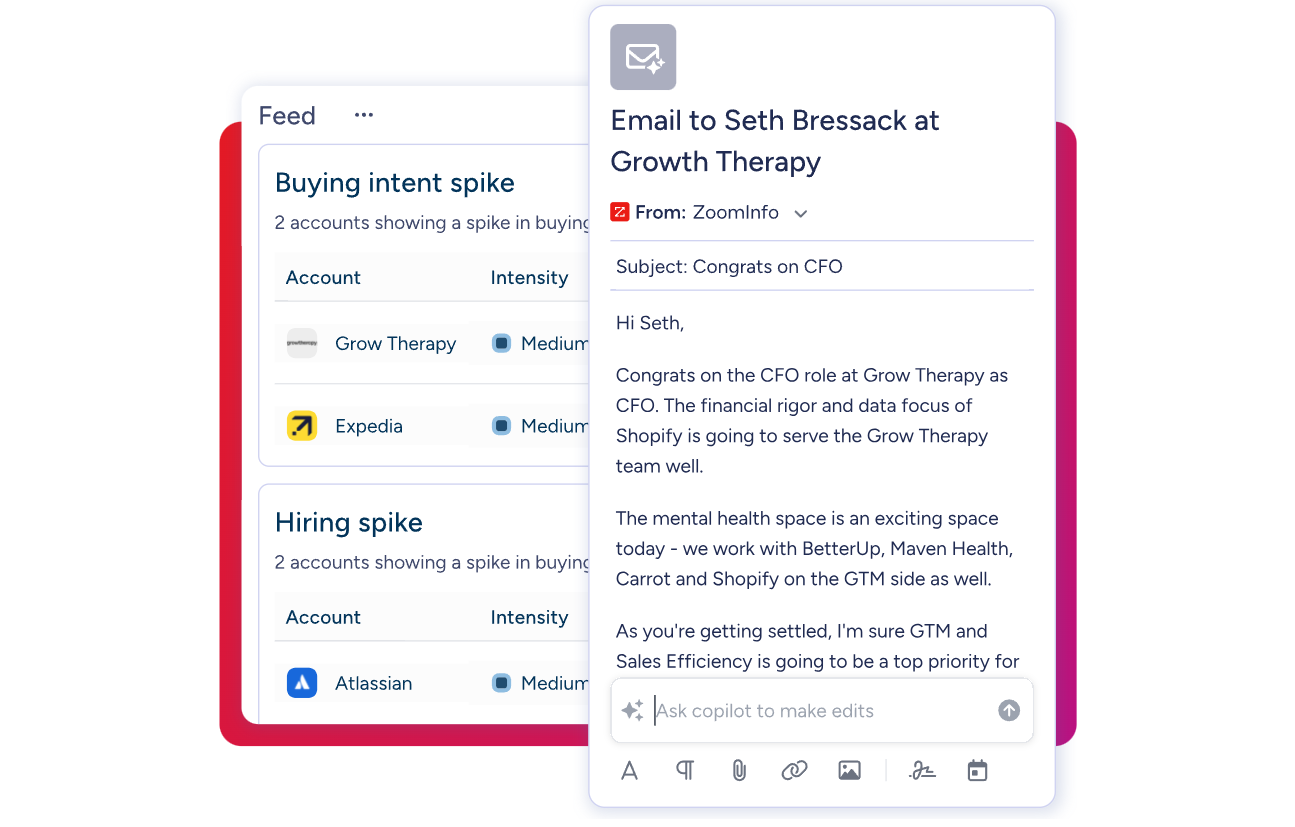
"That combination of our internal CRM data, external signals, and AI that's given all that context has helped us craft very specific account- and persona-based messages. And people have responded to them right away." (Toby Carrington, Chief Business Officer, Seismic)
Campaign and outreach execution compared
ToutApp's Sales Campaigns feature, launched in January 2016, was one of the first to treat email, phone, and social media as steps in a single automated sequence. Reps could build multi-step workflows where automated email steps fired without intervention and manual steps prompted the rep when the time came. The Command Center dashboard gave reps a single view of all active campaigns, and a built-in dialer with local presence calling meant phone steps didn't require switching tools.
Yesware's campaigns take a similar approach, supporting automated emails, manual emails, phone call reminders, LinkedIn InMails, custom tasks, and Sales Navigator connection requests. One difference: Yesware sends emails from your own Gmail or Outlook server, not a third-party server, which improves deliverability. The platform also includes a Meeting Scheduler that eliminates back-and-forth scheduling emails, with Round Robin functionality on the Enterprise plan to distribute bookings across team members.
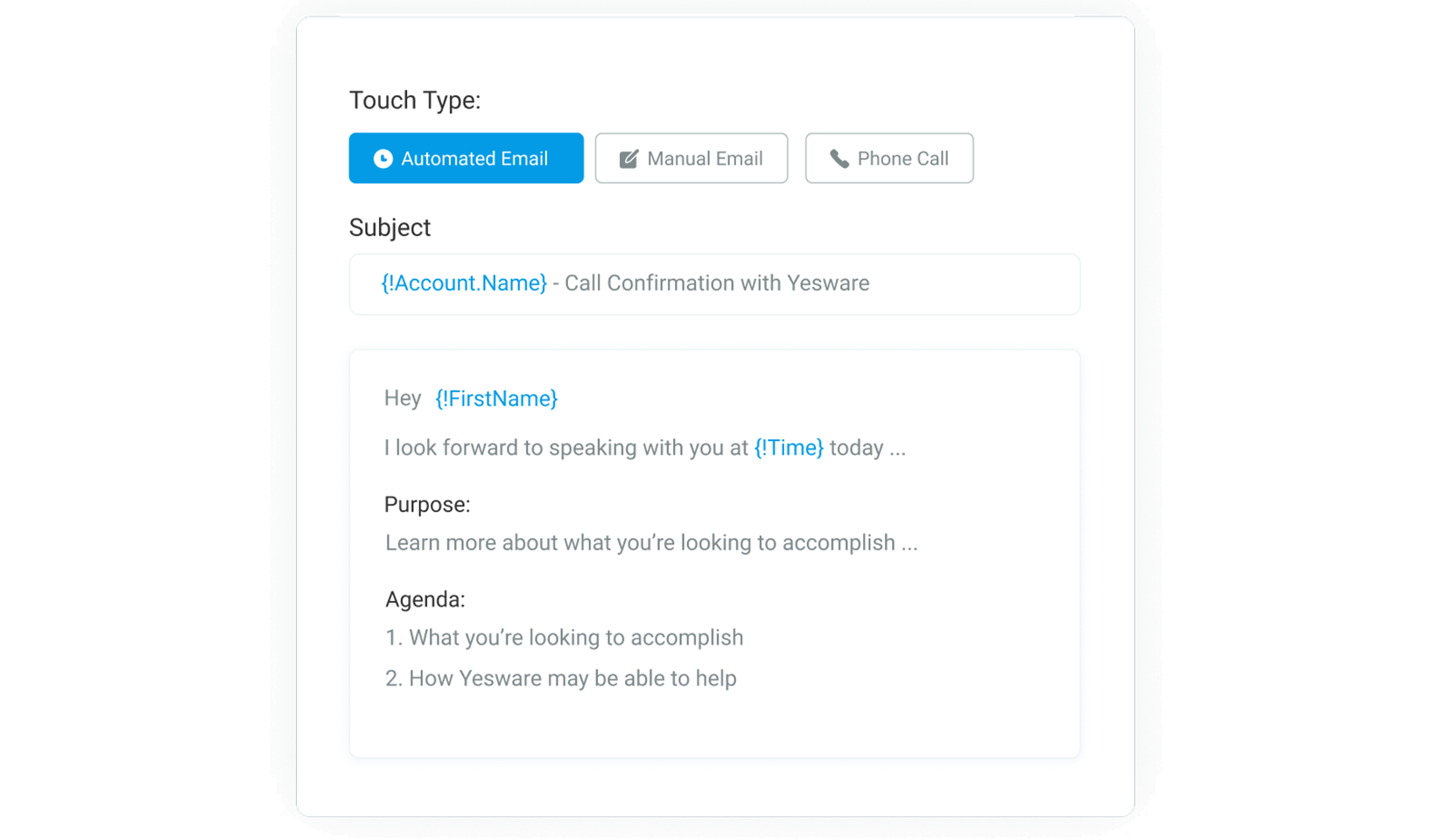
Source: Yesware
ZoomInfo approaches outreach differently. Rather than building sequences manually, GTM Workspace shows sellers a feed of in-market buyers matched to their target criteria, with suggested actions on every signal. When a target account starts researching your competitor, downloads a relevant whitepaper, or hires a new VP, you don't just get a notification. You get a suggested action with context. For broader campaigns, GTM Studio lets marketers and RevOps teams design multi-channel plays that launch in 30 minutes instead of three weeks, targeting accounts that match proven win patterns.
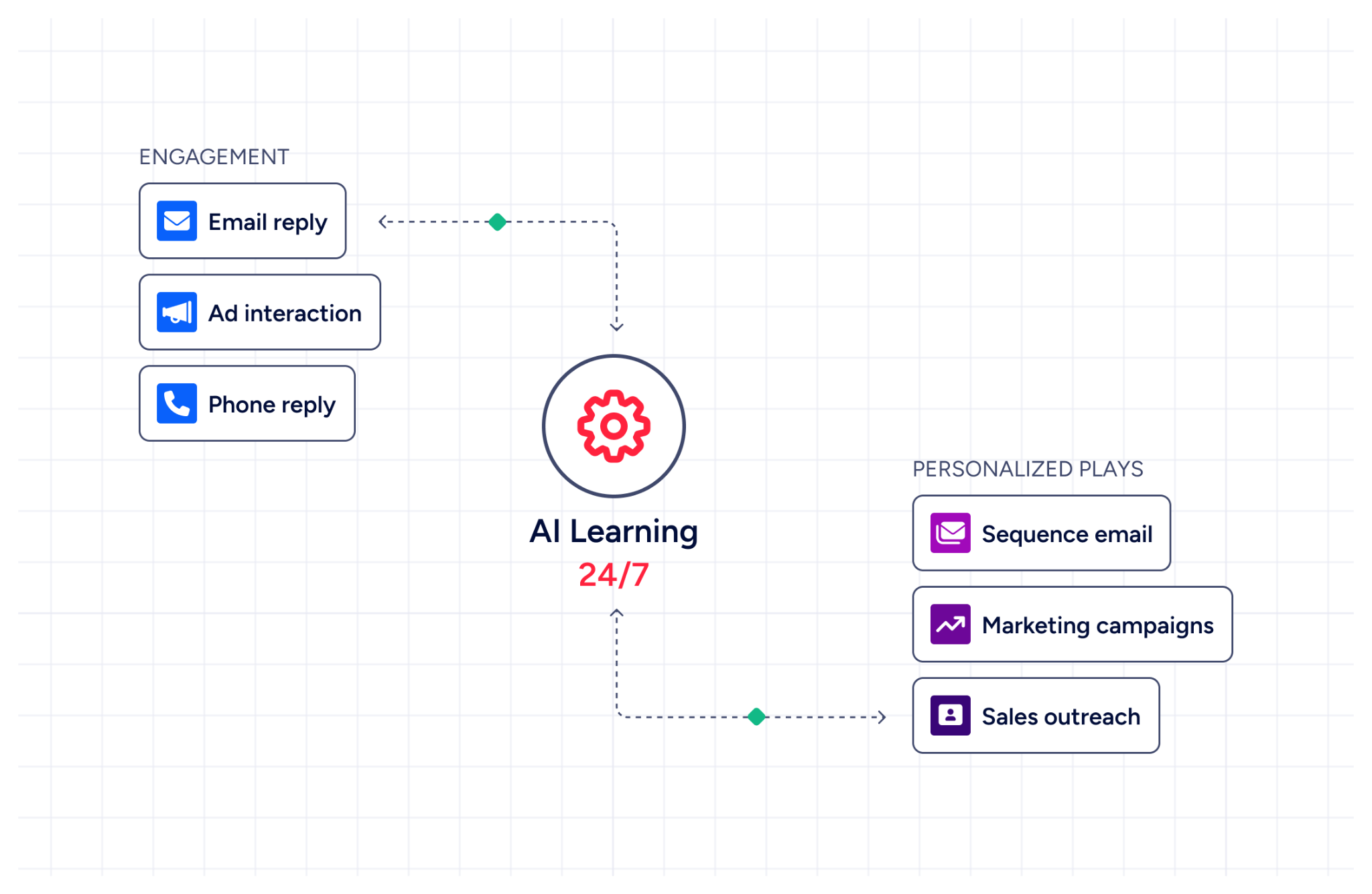
ZoomInfo also integrates with dedicated sales engagement platforms through its partnership with Salesloft, where ZoomInfo Buying Signals sync to Salesloft Rhythm for AI-prioritized engagement. Teams that want a dedicated sequencing tool can still get ZoomInfo's intelligence powering the sequences.
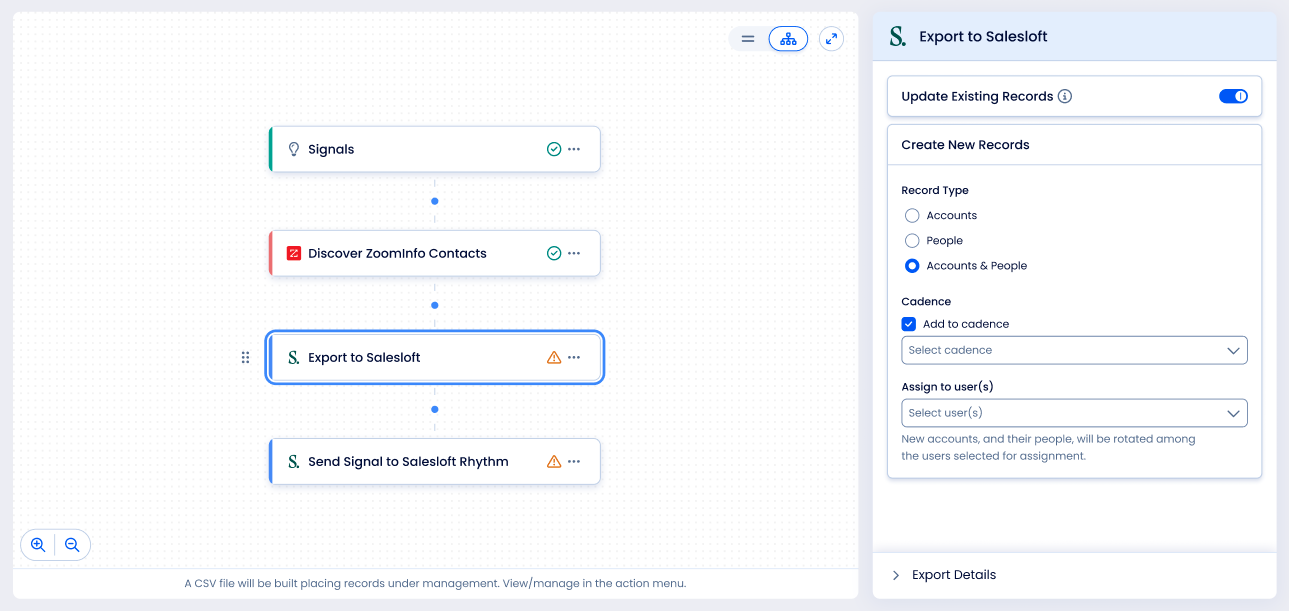
"ZoomInfo's not just a contact data company anymore. They've built a full system of execution. GTM Intelligence actually works the list, writes the outreach, triggers the play, and helps drive predictable growth." (Ian Brodie, CEO & Co-Founder, Levanta)
CRM integration and data quality
CRM integration was one of ToutApp's strengths. The Salesforce integration launched in February 2012 and let reps send tracked emails from within Salesforce while routing through their own email servers. All engagement data synced automatically to the CRM. ToutApp also supported HubSpot, Microsoft Dynamics, Highrise, Batchbook, and Capsule.
Yesware's CRM story is narrower. Salesforce integration is only available on the Enterprise plan at $65-85/seat/month. There's no HubSpot integration, no Dynamics integration, no other CRM support. For teams not on Salesforce, or teams that can't justify the Enterprise tier, Yesware's CRM capabilities don't exist. Users also report that CRM integration does not always work reliably.

Source: Yesware
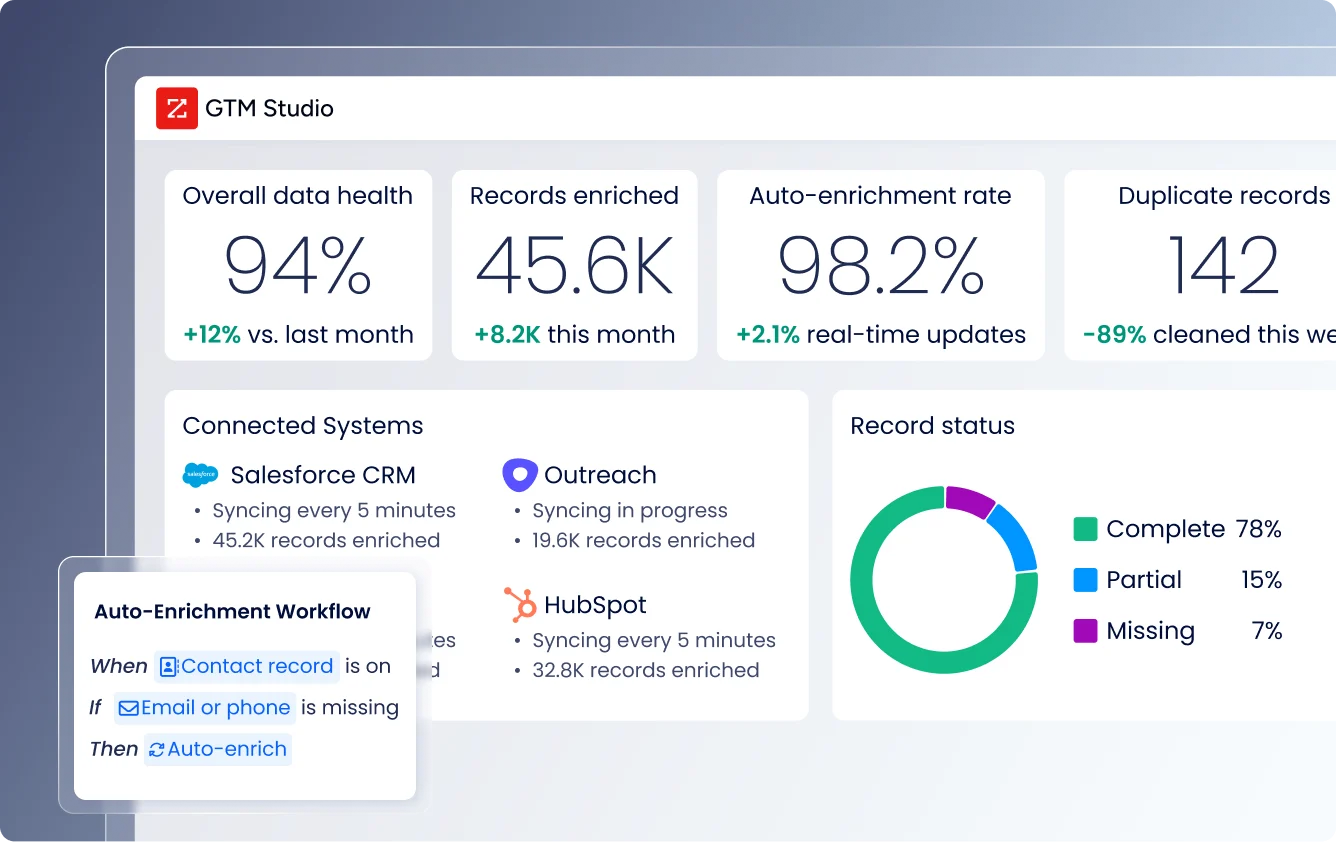
ZoomInfo integrates natively with Salesforce, HubSpot, and Microsoft Dynamics, plus 120 partner integrations across CRM, marketing automation, sales engagement, and data warehouse categories. But the bigger difference is what ZoomInfo does with CRM data. Rather than logging email activity, ZoomInfo's Operations product provides automated deduplication, verification, and multi-vendor enrichment that blocks bad data at entry. Momentive cut speed-to-lead from 20 minutes to 60 seconds using these capabilities.
ToutApp and Yesware treat CRM as a place to log activity. ZoomInfo treats CRM as a data asset that needs continuous maintenance and enrichment.
Analytics tell different stories
All three platforms offer analytics, but each answers different questions.
ToutApp's analytics tracked email opens, link clicks, attachment reads, website visits, and template performance at both the rep and team level. The template analytics showing which messages drove the most engagement were particularly valued. However, users described the broader reporting as "clunky" with limited customization. The tracking had accuracy problems too, with some users citing roughly 35% inaccuracy rates on email open tracking.
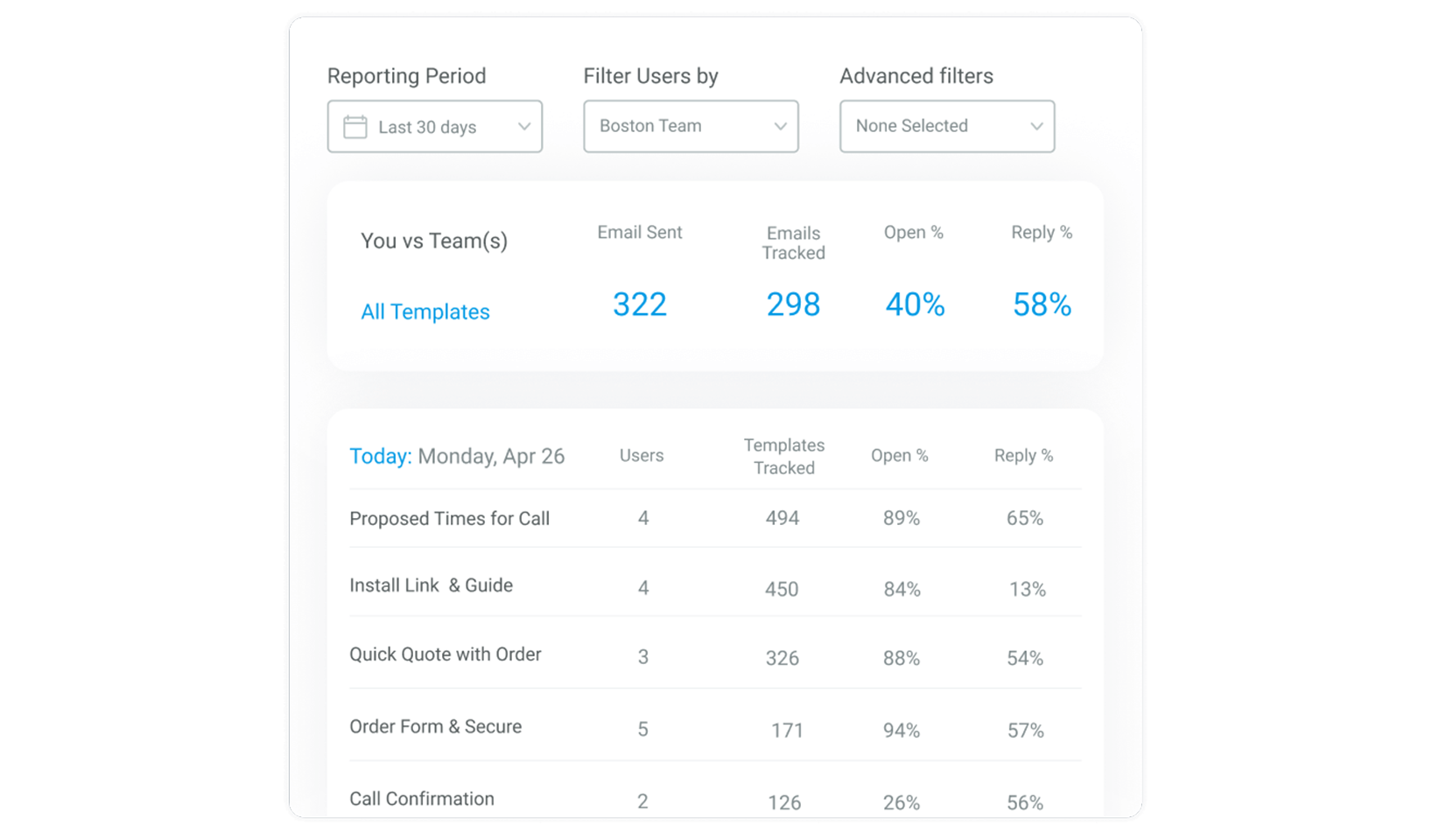
Yesware provides weekly email performance metrics including open rates, reply rates, and engagement trends. The Recipient Engagement Report summarizes how each contact has interacted with your emails over time, and template reports identify which templates generate the highest open and reply rates. Enterprise customers get Salesforce reporting dashboards. But like ToutApp, Yesware struggles with false open tracking from corporate firewalls and antivirus programs that scan emails and trigger tracking pixels.
Source: Yesware
ZoomInfo's analytics cover more ground. Rather than measuring email engagement alone, the platform tracks signals across the full go-to-market motion. GTM Studio's analytics track engagement, funnel progression, and top-performing segments. Chorus analyzes every sales call, meeting, and email to identify winning behaviors, deal momentum, and churn risk. The result: you're not just measuring whether someone opened an email. You're measuring whether the right accounts are progressing through your pipeline and why.
Pricing reflects each platform's scope
ToutApp's historical pricing was straightforward: $49/user/month for the Premium tier, with custom Enterprise pricing. It offered a 14-day free trial with no credit card required. This pricing no longer exists. Buyers must now evaluate Adobe Marketo Engage plans through Adobe's enterprise sales channel.
Yesware's pricing is the most transparent of the three. The Free plan supports up to 5 users with limited tracking. Pro at $15/seat/month (annual) adds unlimited tracking. Premium at $35/seat/month unlocks team features and unlimited campaigns. Enterprise at $65/seat/month adds full Salesforce integration. Annual billing saves 21-24% compared to monthly rates. The key limitation: Salesforce integration only exists at the Enterprise tier, and there are no mid-term downgrades or refunds.
ZoomInfo uses custom-quoted pricing based on seats, credit volume, features, and contract length. There's no published price list. However, ZoomInfo offers two free entry points: ZoomInfo Lite, a permanent free tier with 10 monthly export credits and access to the B2B database, and a 7-day free trial with no credit card required.
The price difference reflects scope. Yesware is an email productivity tool priced accordingly. ZoomInfo replaces multiple point solutions (contact data, intent data, conversation intelligence, sales engagement). Teams evaluating ZoomInfo should compare its cost not against Yesware alone, but against the combined cost of those separate tools.
ToutApp vs. Yesware vs. ZoomInfo: Which should you choose?
The right choice depends on what's actually limiting your sales performance.
Choose ToutApp (Marketo Sales Connect) if:
You're already an Adobe Marketo Engage customer
Sales-marketing alignment within the Adobe ecosystem is your priority
You need sales engagement that coordinates with marketing automation campaigns
You're comfortable with a product that receives limited independent investment
Choose Yesware if:
Your primary need is tracking email engagement and automating follow-up
You're a small team or individual rep who values simplicity over features
Budget is tight and you need a functional tool under $50/seat/month
You use Gmail or Outlook and Salesforce as your primary tools
You don't need buyer intent data, contact databases, or conversation intelligence
Choose ZoomInfo if:
You need to know which accounts to pursue, not just track the ones you're already emailing
Buyer intent signals, verified contact data, and AI-driven outreach would change how your team sells
You want a single platform that covers prospecting, intelligence, engagement, and analytics
Your team uses Salesforce, HubSpot, or Microsoft Dynamics and needs CRM enrichment
You're ready to move from reactive email tracking to signal-driven selling
See how ZoomInfo works with a free trial.
The sales engagement category that ToutApp and Yesware helped pioneer was built on a real insight: salespeople waste too much time on administrative work. But the larger waste was never about email mechanics. It was about spending effort on the wrong accounts. ZoomInfo addresses both problems, giving your team the intelligence to focus on the right opportunities and the tools to act on them.
"Without ZoomInfo, it would be extremely difficult, if not impossible, to achieve our business objectives. Without it, we wouldn't be able to understand the market, have the right contact data, and make meaningful connections." (Thor Sanderson, Senior Manager of Sales Technology Enablement, Smartsheet)
ToutApp vs. Yesware vs. ZoomInfo FAQ
Is ToutApp still available as a standalone product?
No. ToutApp was acquired by Marketo in April 2017 and absorbed into Adobe when Marketo was acquired for $4.75 billion in 2018. The product now exists as Marketo Sales Connect, a sales engagement add-on within Adobe Marketo Engage. The original toutapp.com domain redirects to Adobe's Marketo Sales Connect product page. It serves only organizations already using Marketo Engage.
What happened to Yesware after the Vendasta acquisition?
Yesware was acquired by Vendasta in October 2022 and continues operating independently. The platform keeps its inbox-native approach with Gmail and Outlook extensions, serving over 6,000 teams. Under Vendasta, Yesware is developing AI engagement recommendations and integrated sales workflows, with agency owners able to resell Yesware through the Vendasta Marketplace.
Which platform has the best email tracking accuracy?
All email tracking tools that use pixel-based tracking face the same limitation: corporate firewalls, antivirus programs, and email security tools can trigger false opens. ToutApp users reported roughly 35% inaccuracy rates on open tracking. Yesware's most common user complaint is false open tracking from the same causes. ZoomInfo sidesteps this problem by focusing on buyer intent signals and behavioral data rather than relying on email open tracking.
Can Yesware replace a B2B contact database?
Yesware's Prospector add-on provides access to 100+ million B2B contacts with job title, seniority, location, and company filters. However, it works as a supplementary feature, not a primary data platform. ZoomInfo maintains 500M contacts with 135M+ verified phone numbers and 200M+ verified business emails, backed by 300+ human researchers and multi-source verification that reaches up to 95% accuracy on first-party data.
Which platform is best for teams that need both prospecting data and email engagement?
ZoomInfo is the only platform that combines a B2B contact database, buyer intent signals, AI-powered outreach, and CRM enrichment in one system. Yesware covers email engagement with a basic prospecting add-on. ToutApp never included a contact database. Teams using Yesware alongside a separate data provider are paying for two platforms to do what ZoomInfo does in one.
How do the platforms compare on CRM support?
ToutApp historically supported Salesforce, HubSpot, Microsoft Dynamics, and several smaller CRMs. Yesware only integrates with Salesforce, and only at the Enterprise tier ($65-85/seat/month). ZoomInfo integrates with Salesforce, HubSpot, and Microsoft Dynamics natively, plus 120 partner integrations across CRM, marketing automation, sales engagement, and data warehouse categories.
Which platform is easiest to set up?
Yesware is the fastest to deploy, with a 60-second install and no technical skills required. ToutApp was similarly lightweight as an inbox extension. ZoomInfo is a broader platform with more onboarding investment, though its redesigned 30-to-90-day onboarding program produced a 25% improvement in customer satisfaction scores. ZoomInfo Lite provides a free, no-commitment entry point for teams that want to explore the data before committing.
Do any of these platforms offer buyer intent data?
Only ZoomInfo provides buyer intent signals. Its Intent product tracks signals from 210 million IP-to-Organization pairings and processes over 6 trillion new keyword-to-device pairings monthly. Guided Intent, exclusive to ZoomInfo, identifies topics historically correlated with deal success. Neither ToutApp nor Yesware offers any form of buyer intent tracking beyond email engagement metrics.
More Yesware comparisons:
