
Trellus occupies a specific niche: it's an AI-powered parallel dialer that embeds inside the sales engagement platforms reps already use. Instead of forcing teams onto a new platform, it layers cold calling, real-time coaching, and call analytics on top of tools like Salesloft, Outreach, and HubSpot through a Chrome extension. For SDR teams drowning in tab-switching and dead rings, the pitch is compelling.
To write this Trellus review, we analyzed it in detail. It's the right choice if:
You already use a supported SEP and want to add parallel dialing without switching platforms
You need to increase cold call volume at a fraction of what standalone dialers charge
You want real-time AI coaching during live calls, not just post-call analysis
Your team is remote and needs a virtual sales floor to recreate in-office energy
You value fast onboarding over extensive feature configuration
However, Trellus might not be the best choice if:
You need verified contact data, direct-dial phone numbers, and buyer intent signals before you ever pick up the phone
You want conversation intelligence that captures deal context across your entire revenue org
You require multi-channel orchestration across email, ads, chat, and phone
Your GTM strategy depends on knowing who to call and why, not just dialing faster
You need a platform with native CRM integration and AI account research
In this case, consider ZoomInfo: an AI-powered GTM platform built on a large B2B dataset (500M contacts, 100M companies, 135M+ verified phone numbers, and 200M+ verified business emails).
ZoomInfo's GTM Context Graph processes 1.5B+ data points daily, fusing that data with your CRM records, conversation transcripts, and behavioral signals to show not just who to call, but why they're worth calling now. Sellers access that intelligence through GTM Workspace, marketers and RevOps build plays in GTM Studio, and developers connect through APIs and MCP.
We've included a detailed look at ZoomInfo later in this review for teams that need intelligence and execution, not just a faster dialer. If you're ready to explore a full GTM platform, start with ZoomInfo's free trial here.
What is Trellus?
Trellus is an AI-powered parallel dialer founded in 2020 by Craig Bonnoit and Ajinkya Nene, both former MIT researchers.
The company started as a real-time conversational coach for enterprise messaging, then pivoted to sales coaching after joining Y Combinator's Winter 2022 batch. The founders discovered that cold calling was an underserved pain point as email effectiveness declined.
The product ships as a Chrome extension that embeds inside supported sales engagement platforms, including Salesloft, Outreach, HubSpot, Apollo, Salesforce, Zoho, VanillaSoft, Amplemarket, and Orum. Rather than replacing those tools, Trellus converts them into parallel dialers with AI coaching, call analytics, and voicemail automation.
Headquartered in New York, Trellus is a small, YC-backed company with roughly 7 employees. Its customers include Cognism, Deel, Vodafone, Snyk, Monex, MariaDB, Ambition, and Vena, suggesting traction in mid-market B2B SaaS, fintech, and enterprise software. The company holds SOC 2 Type II certification, worth noting for a team this small.
Trellus Pros & Cons
Pros | Cons |
|---|---|
Embeds directly inside existing SEPs with no tab-switching | Chrome-only; doesn't work on Firefox, Safari, or non-browser dialers |
Parallel dialing at lower cost than standalone dialers | Requires a supported SEP; no standalone CSV-upload dialing mode |
Real-time AI coaching fires during live calls, not after | 300ms connection delay on parallel dial pickup |
Fast onboarding via Chrome extension install | No SMS outreach capability |
Automated voicemail drop and number health management | Few public reviews on G2 and other review sites |
Includes LinkedIn inbox management on all plans | Enterprise coaching and analytics locked behind custom pricing |
SOC 2 Type II certified | Small team (~7 employees) raises support scalability questions |
Trellus Review: How It Works & Key Features
Parallel Dialer: Trellus dials up to 5 lines simultaneously inside your existing SEP.
The Parallel Dialer is Trellus's core feature.
Source: Trellus
It places multiple outbound calls simultaneously from within a rep's existing sales platform. When any line connects to a live person, Trellus bridges the rep into that conversation; remaining lines are dropped. The goal: "take the context switching and dial tones out of your life to spend more time talking to real people."
The dialer works on top of the SEP's existing contact lists and task queues, so reps don't need to import contacts. Trellus automatically logs call outcomes, dispositions, and notes to the CRM. When a call reaches voicemail, Trellus drops a pre-recorded message and moves to the next number. The platform also supports dialing from Google Sheets and Clay.
Number health matters at volume. Trellus addresses this with automated spam list monitoring and phone number rotation during sessions. The Parallel plan includes 8 managed numbers with spam remediation.
One trade-off: the FAQ acknowledges a 300-millisecond connection delay at pickup, caused by VoIP constraints. This creates a brief hesitation when a prospect answers. Trellus notes this latency is "dropping with every update."
Real-Time Call Coaching: AI guidance that fires during the call, not in a post-call review.
Real-Time Call Coaching was Trellus's original product before the parallel dialer became the primary hook.
It continuously transcribes the call and runs language models that analyze the conversation for intent and context. When the system detects a relevant moment (an objection, a competitor mention, a pacing issue), it sends a visual alert with a suggestion.
Coaching features include objection handling prompts, competitor battle cards, speaking pace alerts, suggested questions, and a pre-call prospect research summary. After the call, it automatically drafts a follow-up email based on the transcription.
Teams can customize coaching suggestions and add their own objection handlers, so the system reflects their messaging rather than generic defaults. Trellus calls this a way to "codify best practices into real-time guidance to ensure every member of your team dials as well as your best."
The recommendations improve over time as more reps use Trellus: the model learns more sales scenarios, filters noise, and surfaces cues reps can use.
Call Analytics & Tracking: Automatic scoring of every call, not a sampled fraction.
Trellus's Call Analytics scores 100% of calls automatically, replacing the typical process where managers sample a handful of recordings each week.
Source: Trellus
The system tracks talk-time ratios, sentiment, interruption frequency, filler word usage, discovery quality, and objection handling approaches.
For managers, Trellus provides rep and team comparison views that benchmark performance and show trends over time. It also generates objection reports across the team, helping identify messaging gaps rather than individual rep issues.
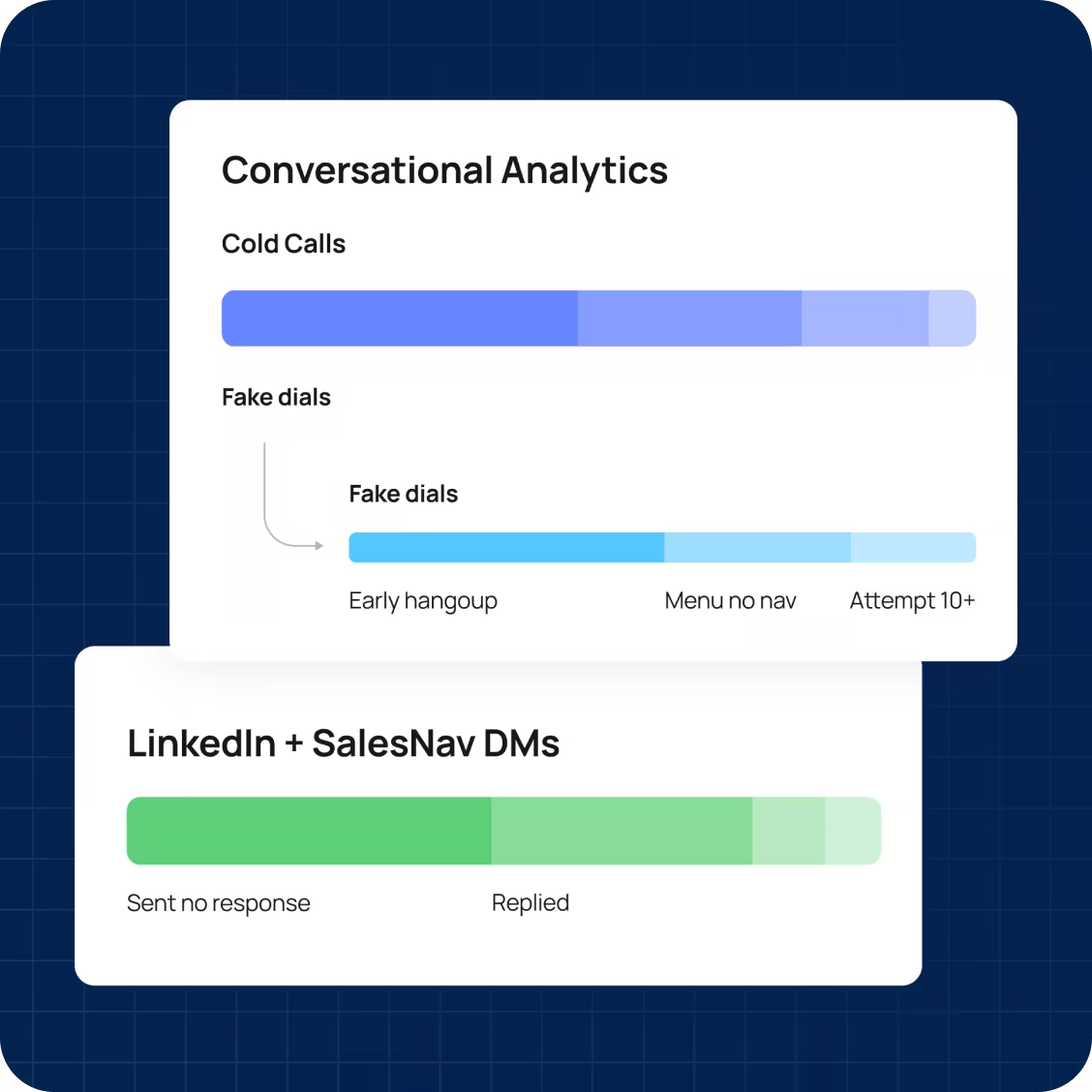
Trellus distinguishes quality metrics from vanity metrics, positioning its analytics against tools that show activity dashboards without examining whether that activity reflects real selling effort. It detects "fake dials and low effort activity" and surfaces behavioral measures that correlate with conversion.
Custom reporting and AI modeling are available on the Business plan for teams that need structured performance management.
Voice Agents & AI Bots: Practice against AI prospects and automate inbound call handling.
Trellus offers Voice Agents that serve two purposes: rep training and inbound automation.
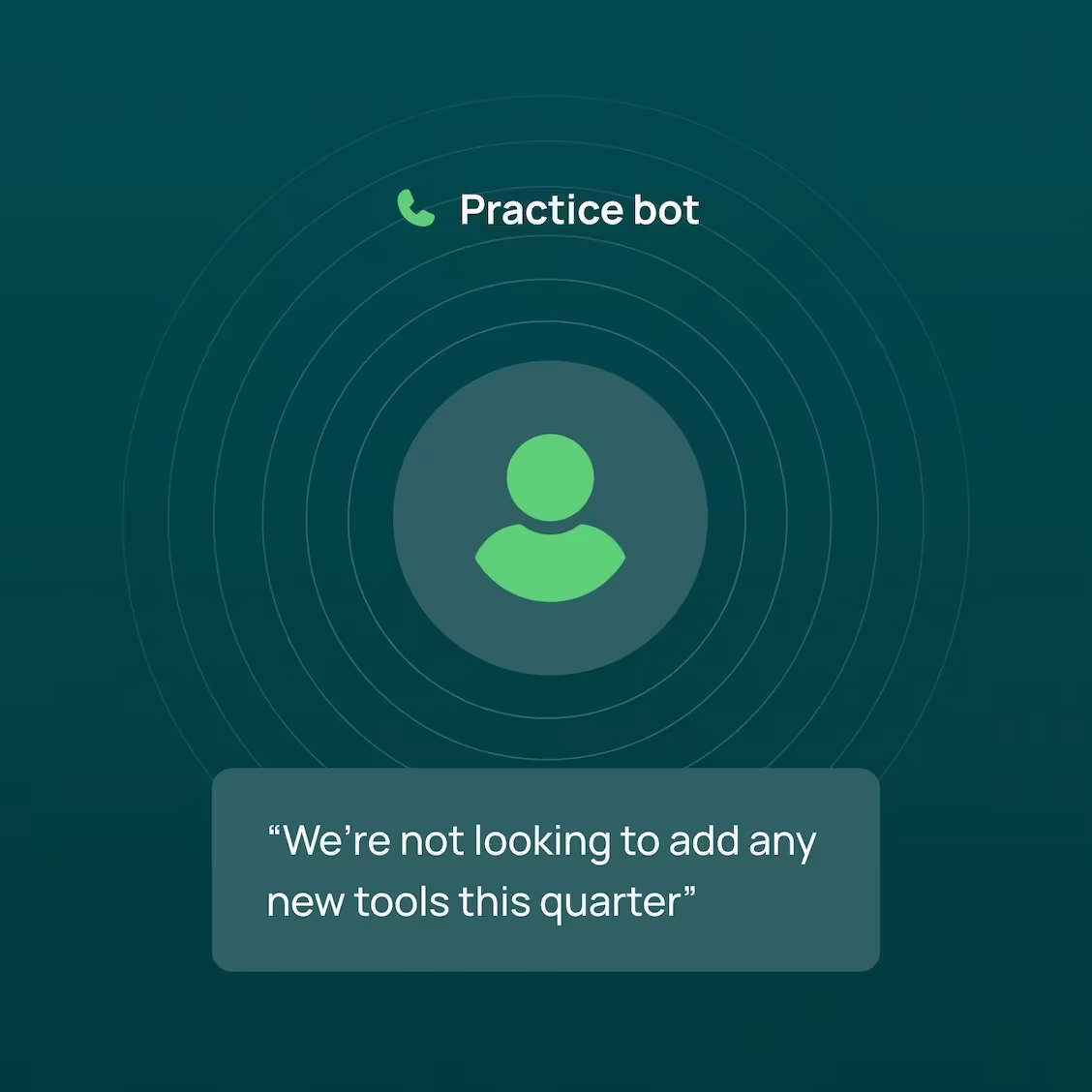
On the training side, Practice Voice Bots let reps hold live conversations with AI agents that behave like real prospects.
Source: Trellus
Managers create these bots from the team's own recorded call library in seconds, so the AI inherits the objections and personality types the team actually encounters. New hires can practice cold calls at any hour without needing a senior rep or manager. The Parallel plan includes unlimited AI practice calls.
On the inbound side, Trellus deploys AI voice agents for appointment setting, FAQ deflection, and intake data collection. These connect to existing phone infrastructure via RingCentral, Twilio, and other VoIP providers and operate 24/7. For fast response, bots can call a prospect immediately after a form submission.
Additional Features: Sales Floor and Superhuman for LinkedIn.
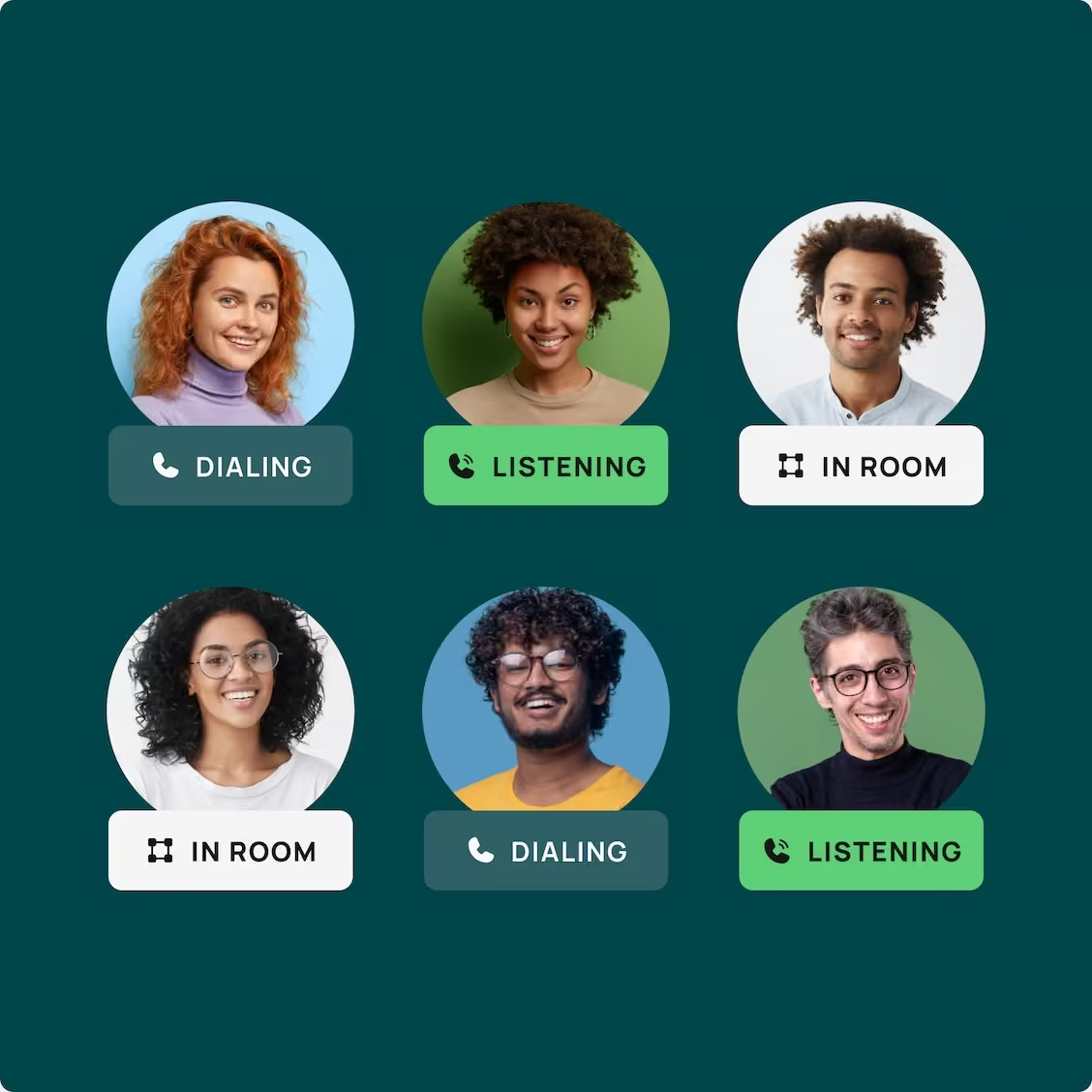
The Sales Floor creates a virtual team environment for remote or hybrid teams, allowing managers and reps to listen to live calls, trade tips, and celebrate wins. It runs in two modes: structured call blitzes for coordinated team sessions and an always-on ambient mode for continuous presence.
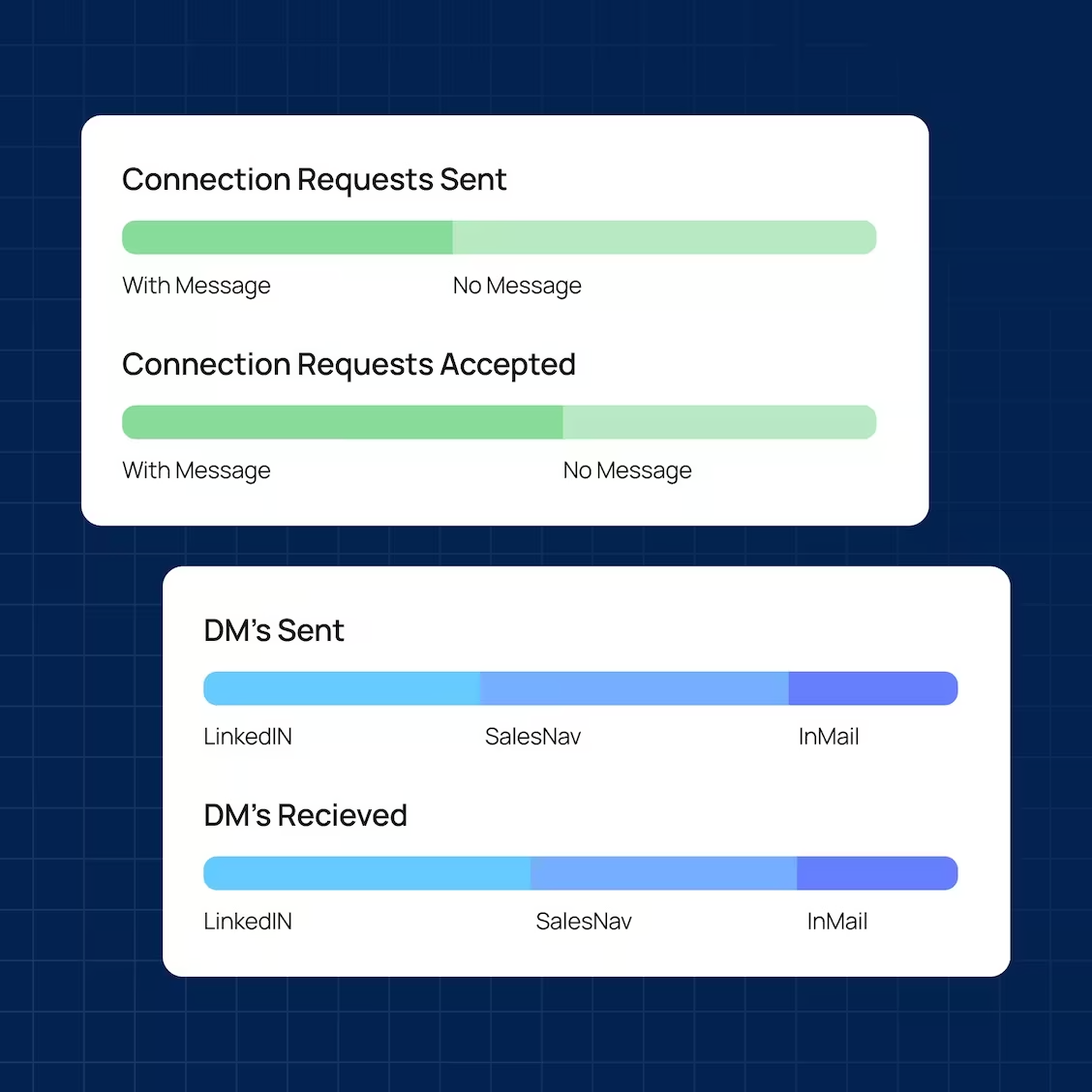
Superhuman for LinkedIn consolidates LinkedIn standard messaging and Sales Navigator messages into a single inbox with keyboard shortcuts, snooze, and auto-fill snippets. It's included on the BYOD plan at $59.99/month and aimed at prospectors who manage LinkedIn outreach alongside cold calling.
Source: Trellus
Pricing: Self-serve tiers from $59.99/month with custom enterprise pricing.
Trellus uses a per-seat, monthly subscription model with three self-serve individual tiers and one custom-quoted team tier:
Power (BYOD) at $59.99/month: Requires an existing phone system from HubSpot, Apollo, Salesloft, or Outreach. Includes single-line power dialing and Superhuman for LinkedIn. No voicemail drop, no additional phone numbers, no parallel dialing.
Power at $99.99/month: Adds support for Google Sheets and Clay, voicemail drop, and 5 additional phone numbers with spam remediation. Still single-line only.
Parallel at $149.99/month: Adds multi-line parallel dialing, unlimited AI practice calls, and 8 additional phone numbers with spam remediation. The most feature-complete self-serve plan.
Business (Custom pricing): Includes everything in Parallel plus customizable AI research, real-time coaching configuration, team analytics, conversational intelligence, and custom reporting.
All individual plans are month-to-month with no annual lock-in. Business/enterprise orders default to 12-month terms that auto-renew; cancellation requires 30 days' notice. Purchases are non-refundable.
Trellus offers a free trial via its Chrome Web Store listing, though the trial duration is not disclosed. There is no permanently free tier.
Where Trellus Falls Short
Trellus solves a real problem for SDR teams running cold call sequences, but several limitations show a platform built for call volume rather than full go-to-market coverage.
No Contact Data or Intelligence Layer: Trellus dials faster, but it doesn't help you figure out who to dial. There's no built-in contact database, no buyer intent signals, no company intelligence, and no way to identify which prospects are in-market.
Before Trellus adds value, someone else has to build the target list with valid phone numbers. For teams without a separate data provider, this is a dependency Trellus doesn't address.
Chrome Extension Architecture: Trellus lives entirely inside a Chrome extension, which means it doesn't work on Firefox, Safari, or any non-browser environment.
It also cannot function as a standalone dialer: teams without a supported SEP (Salesloft, Outreach, HubSpot, Apollo, Salesforce, or a handful of others) cannot use the product at all. This limits the product to teams already committed to a supported SEP.
Single-Channel Execution: Trellus handles phone calls and LinkedIn messages. It has no SMS capability, no email sequencing, no ad targeting, and no website chat. For teams running multi-channel outbound (where a missed call triggers an SMS, which triggers an email), Trellus covers one channel and part of another.
Limited Conversation Intelligence Depth: The call analytics scores calls and tracks behavioral metrics, but within individual SDR sessions, not across the full revenue cycle.
There's no deal-level intelligence connecting call outcomes to pipeline stages, no buying committee mapping, and no cross-team visibility into how conversation patterns correlate with closed-won deals. Managers see rep performance; they don't see deal context.
Small Team and Thin Review Base: With roughly 7 employees, the responsive support that testimonials praise is a function of founder proximity. Customers call the Trellus team "incredibly helpful and responsive", but that level of access gets harder to maintain as the customer base grows. The thin review base on third-party sites also makes it hard for buyers to validate Trellus independently.
Enterprise Features Behind a Wall: Real-time coaching customization, team analytics, conversational intelligence, and custom reporting are all Business tier features at undisclosed pricing. Teams evaluating Trellus for performance management can't get a price comparison without talking to sales.
These limitations reflect Trellus's deliberate focus: make cold calling faster and less painful inside the tools reps already use. But for teams whose GTM challenge extends beyond dial volume (knowing who to call, understanding why they should call now, and connecting call outcomes to deal progression), a broader platform may be necessary.
Top Trellus Alternative for Full GTM Execution: ZoomInfo
ZoomInfo addresses Trellus's limitations by operating at a different scope.
Where Trellus adds a dialing layer on top of existing tools, ZoomInfo provides the data, intelligence, and execution tools that power the full go-to-market motion: identifying the right prospects, understanding why they're worth pursuing now, executing outreach, and analyzing what happened.
Comprehensive B2B Data: ZoomInfo provides the contact data and direct-dial phone numbers that make every call worth placing.
Before a single call is dialed, someone needs verified phone numbers.
ZoomInfo maintains 500M contacts, 135M+ verified phone numbers, 120M direct-dial phone numbers, and 200M+ verified business email addresses across 100M companies. A multi-source verification pipeline backed by 300+ human researchers achieves up to 95% accuracy on first-party data.
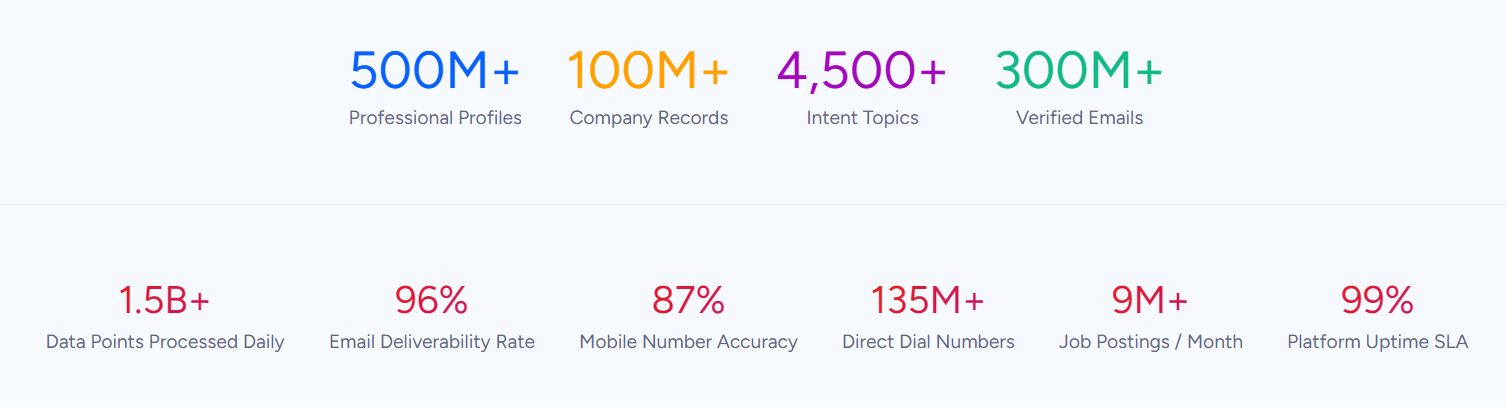
For cold calling teams, the practical difference: the direct dial actually rings and reaches the intended person.
Beyond phone numbers, ZoomInfo provides 300+ company attributes for segmentation, department org charts with decision-makers identified, and contact tracking with job-change alerts. Instead of dialing through a list and hoping, reps know who they're calling, what the company looks like, and whether the contact is still in the same role.
External validation backs this up. In a Fortune 500 competitive RFP analyzing 25 million contacts across vendors, an independent consultant concluded that "no other competitor came even close." ZoomInfo is also a Leader in the Gartner Magic Quadrant for ABM Platforms, a Leader in the Forrester Wave for Intent Data Providers, and holds 133 No. 1 rankings on G2.
"ZoomInfo gives us the information we need to execute. We don't have to go through and spend our time digging. It's already there, so we can be three steps ahead." (Vensure)
GTM Context Graph: Intelligence that captures why deals move, not just that they moved.
Trellus tells reps what to say during a call. ZoomInfo's GTM Context Graph tells them why they should be making that call in the first place.
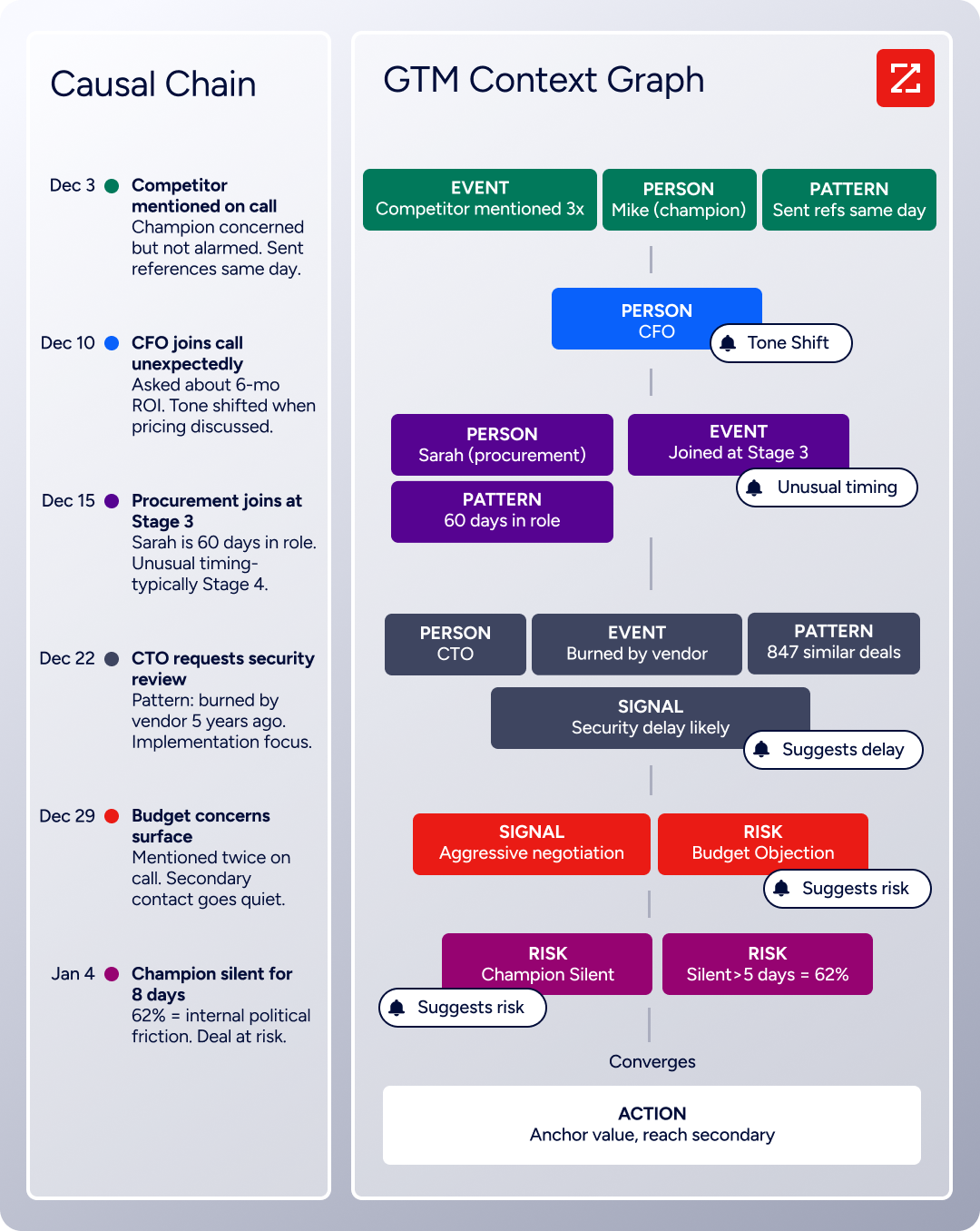
The GTM Context Graph is ZoomInfo's central intelligence system, processing 1.5B+ data points daily. It fuses ZoomInfo's B2B data with a customer's CRM records, conversation transcripts from Chorus (ZoomInfo's conversation intelligence tool), email interactions, and behavioral signals into a single graph that captures not just what happened in a deal, but why.
For example, a CRM records that a deal moved from Stage 3 to Stage 4. But as ZoomInfo's Chief Product Officer Dominik Facher writes: "The CRM recorded the state change. It has no record of why it happened."
Perhaps the CFO joined the last call and asked about six-month ROI, and that's what accelerated the deal. The GTM Context Graph makes this context machine-readable, so AI can find patterns across thousands of deals and connect signals to outcomes.
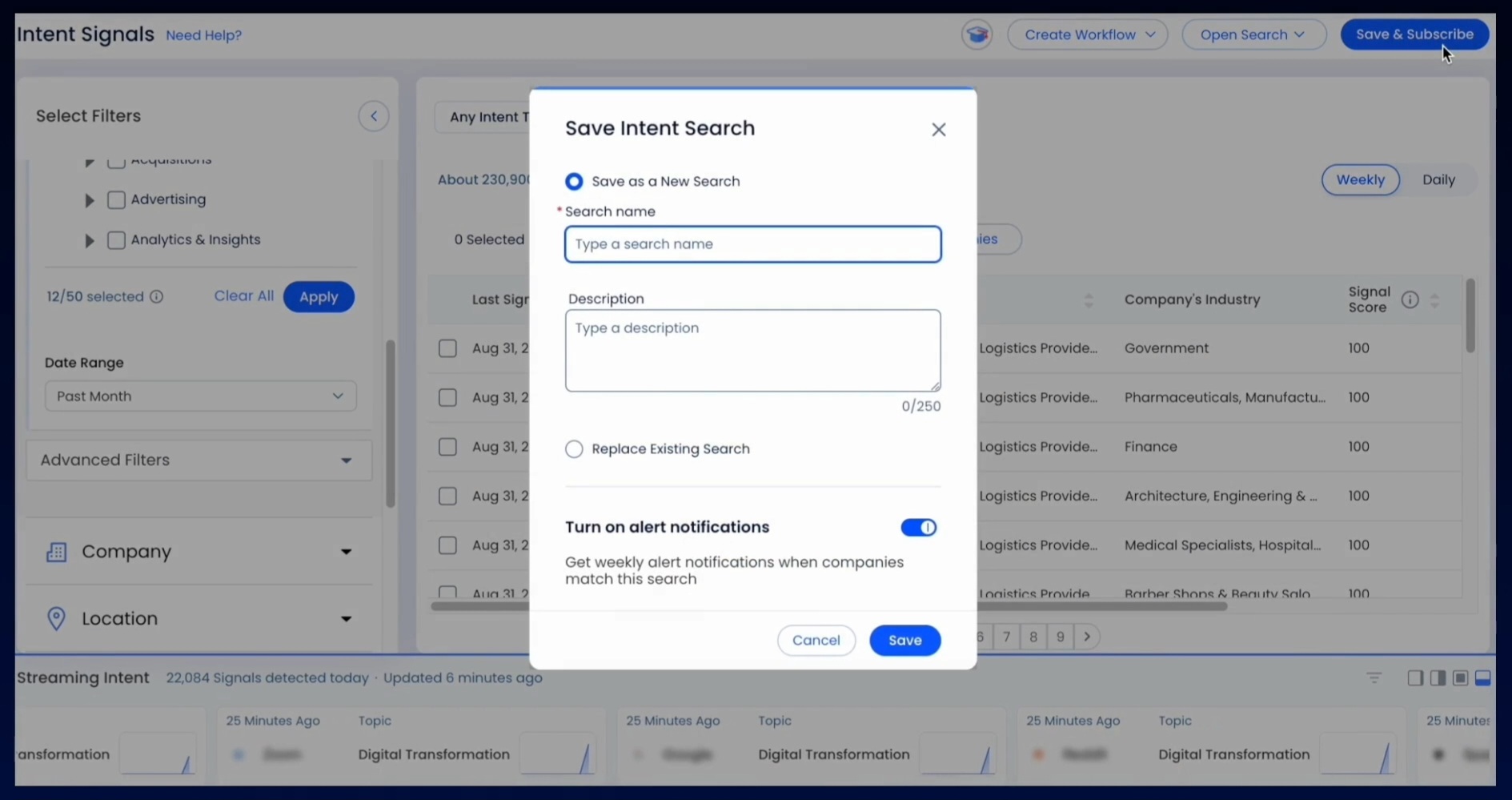
This extends to buyer intent. ZoomInfo Intent tracks signals from 210 million IP-to-Organization pairings and 6 trillion+ keyword-to-device pairings monthly. Guided Intent, a ZoomInfo exclusive, identifies topics historically correlated with deal success rather than requiring manual topic selection.
Source: ZoomInfo
Combined with WebSights (which identifies anonymous website visitors by company), teams know which accounts are researching solutions before a competitor reaches them.
"That combination of our internal CRM data, external signals, and AI that's given all that context has helped us craft very specific account- and persona-based messages. And people have responded to them right away." (Seismic)
Conversation Intelligence with Chorus: Full-cycle deal context, not just call-level metrics.
Trellus scores individual calls.
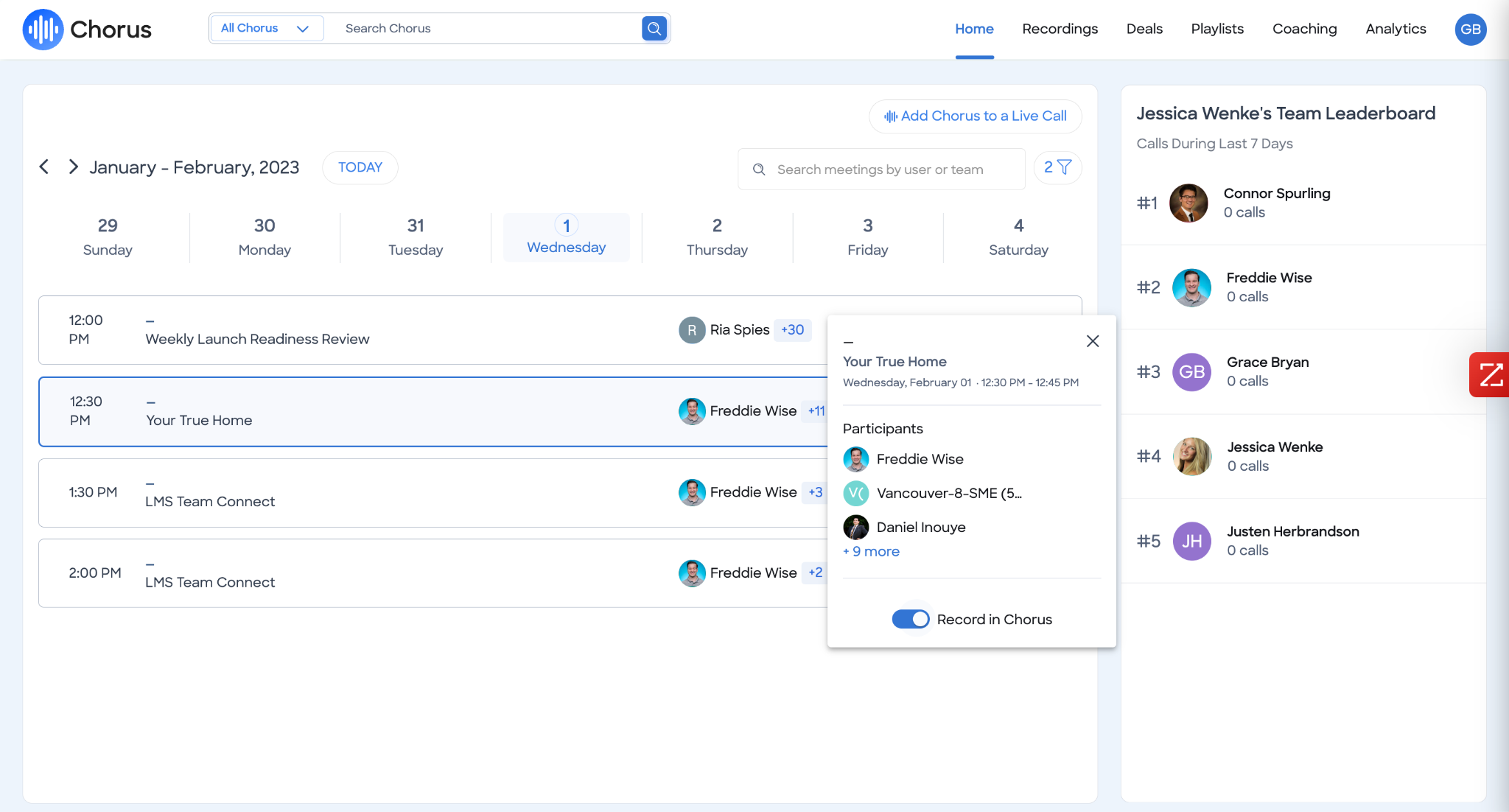
ZoomInfo's Chorus captures and analyzes all customer calls, meetings, and emails to build deal-level intelligence across the revenue organization.
Chorus goes beyond talk ratios and filler word counts. It automatically records and transcribes every interaction, then extracts AI insights: competitive mentions and their implications, stakeholder sentiment shifts, deal momentum changes, and coaching opportunities.
Source: ZoomInfo
Connected Intelligence shows ZoomInfo's contact profile and relationship history for every call participant, so a manager reviewing a conversation sees the full context without checking a separate system.
For deal forecasting, Chorus provides auto-captured CRM sync, momentum tracking, and churn risk detection. For coaching, it generates scorecards, enables clip sharing, and identifies winning behaviors across the team. For market intelligence, it extracts customer language patterns at scale, feeding product, marketing, and engineering teams with voice-of-customer data.
This conversation layer feeds the GTM Context Graph: Chorus analyzes every call, meeting, and email not just for what was said, but for why it matters to the deal. That reasoning flows into GTM Workspace, GTM Studio, and any tool connected via API or MCP.
GTM Workspace and Universal Access: One workspace for sellers, with the same intelligence available everywhere.
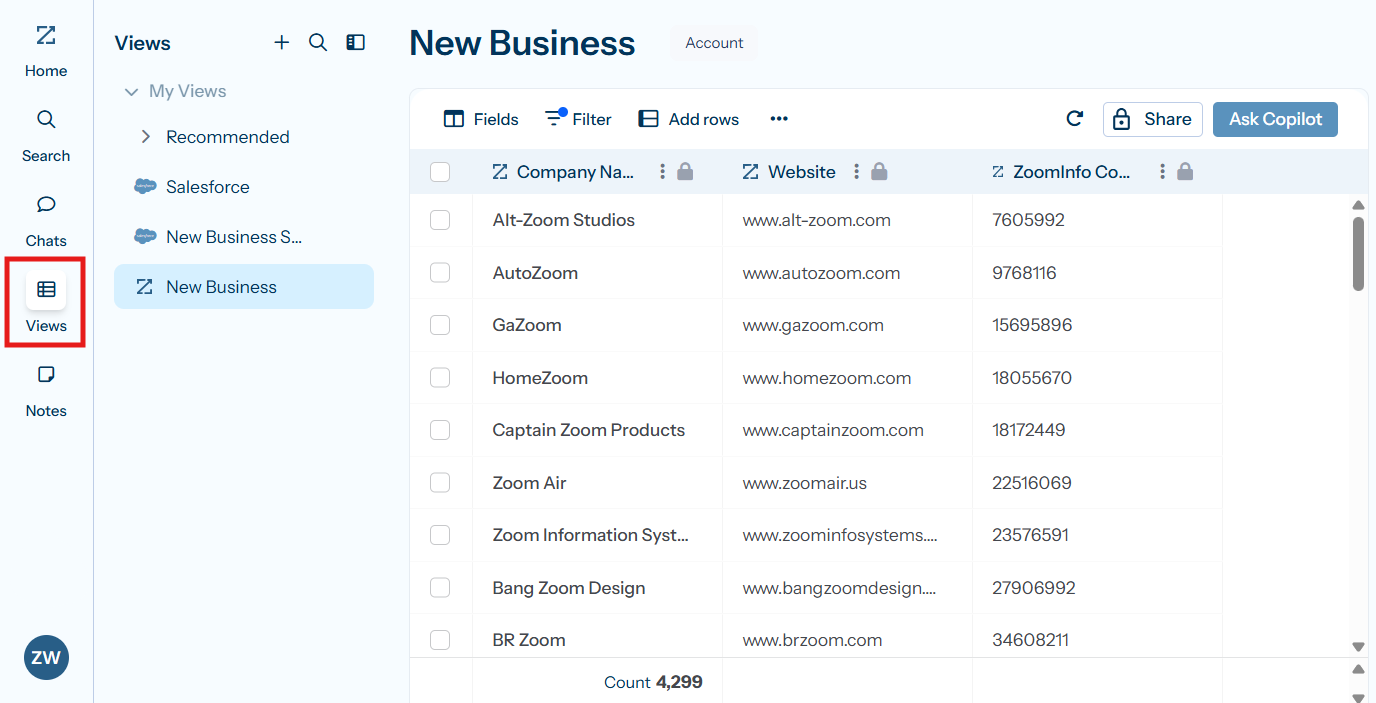
GTM Workspace is ZoomInfo's AI-powered workspace for sellers.
It consolidates prioritized accounts, AI-drafted outreach, deal execution, and CRM updates into one place, replacing the need to toggle between tools. AI agents handle account research, signal monitoring, and follow-up drafting, drawing on ZoomInfo's data and the GTM Context Graph.
Source: ZoomInfo
For marketers and RevOps, GTM Studio provides an AI-powered canvas where audience building, campaign orchestration, and pipeline measurement happen in natural language. Expansion plays that used to take 3 weeks now launch in 30 minutes.
For teams that build beyond ZoomInfo's own products, APIs and MCP expose the same intelligence to any custom agent, internal tool, or partner platform. API access is included in all relevant plans. All three access methods draw from one GTM Context Graph: the same data, the same reasoning, the same model. Where you work doesn't limit the intelligence available.
"Anything that minimizes our team's need to switch contexts is beneficial. ZoomInfo offers a unified view, eliminating the need to navigate between systems." (Spekit)
ZoomInfo Pricing: Custom-quoted plans with a permanent free tier and 7-day trial.
ZoomInfo uses a custom-quoted, seat-and-credit-based subscription model.
Pricing depends on number of users, monthly credit volume, features, and contract length. Sales plans come in Professional, Advanced, and Enterprise tiers, each adding more intent signals, AI features, and integrations.
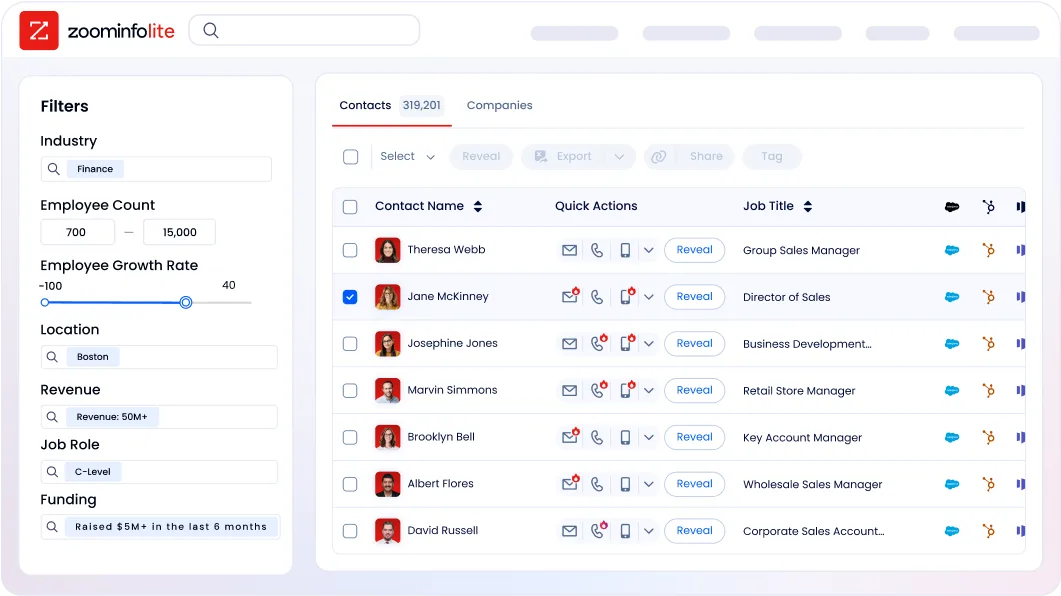
ZoomInfo Lite is a permanent free tier (not a trial) with access to the B2B database, 10 monthly export credits, individual and company searches, the Chrome extension, and WebSights Lite for up to 10 website visitor reveals per day. A 7-day free trial of core features is also available, no credit card required.
Trellus or ZoomInfo: Comparison Summary
Aspect | Trellus | ZoomInfo |
|---|---|---|
Primary focus | Embedded parallel dialer with AI coaching | AI-powered GTM platform |
Contact data | None; requires external data source | 500M contacts, 100M companies, 135M+ verified phone numbers, 200M+ verified emails |
Buyer intent signals | Not available | Intent data from 210M+ IP-to-Org pairings, Guided Intent |
Conversation intelligence | Call-level scoring and analytics | Full-cycle deal intelligence via Chorus |
Real-time call coaching | AI prompts during live calls | AI-generated account briefs and outreach via GTM Workspace |
Parallel dialing | Up to 5 simultaneous lines inside SEP | Sales automation via Salesloft partnership |
Channels | Phone and LinkedIn | Phone, email, ads, chat, website visitor ID |
CRM integration | Auto-logs call outcomes via Chrome extension | Native integrations with Salesforce, HubSpot, Dynamics; 120+ marketplace apps |
AI capabilities | Coaching, practice bots, voicemail drop | GTM Context Graph, AI agents, account research, outreach drafting |
Free option | Free trial (duration undisclosed) | Permanent free tier (ZoomInfo Lite) + 7-day trial |
Pricing | $59.99-$149.99/month self-serve; custom for teams | Custom-quoted based on seats and credits |
Security | SOC 2 Type II | ISO 27001, ISO 27701, SOC 2 Type II, TRUSTe GDPR/CCPA |
Best for | SDR teams focused on increasing cold call volume | Revenue teams needing data, intelligence, and multi-channel execution |
Final Verdict
The choice between Trellus and ZoomInfo depends on where your GTM bottleneck lives.
Choose Trellus if your team already has the data, already has the target lists, and already runs sequences in a supported SEP. Your problem is call volume: reps spend too much time listening to dial tones and switching between tabs.
Trellus solves that problem at a lower price than standalone parallel dialers. The Chrome extension means reps stay in their familiar environment, and real-time coaching adds in-call intelligence that post-call tools can't match. For SDR teams that just need to dial more and dial better, Trellus delivers.
Choose ZoomInfo if your challenge goes beyond call volume. If your team needs to know who to call, why to call them now, and how to connect call outcomes to deal progression across the revenue cycle, ZoomInfo provides the data, intelligence, and execution tools that Trellus doesn't address.
With 120M direct-dial phone numbers, buyer intent signals, conversation intelligence through Chorus, and AI execution through GTM Workspace, ZoomInfo covers the full cycle from prospect identification to closed-won analysis. It's a larger investment, but it replaces the need for multiple point solutions across data, intelligence, and execution.
Get started with ZoomInfo here.
Trellus makes cold calling faster. ZoomInfo makes the go-to-market motion smarter. For teams that have already solved the "who" and "why" questions and need help with "how fast," Trellus is a focused, cost-effective answer. For teams that need to solve all three, ZoomInfo is the platform that connects them.
Trellus FAQ
Does Trellus work as a standalone dialer?
No. Trellus requires an existing supported sales engagement platform (Salesloft, Outreach, HubSpot, Apollo, Salesforce, Zoho, VanillaSoft, or Amplemarket) to function. It embeds inside these platforms as a Chrome extension and cannot work as a standalone CSV-upload dialer. Teams without one of these SEPs would need to adopt one before using Trellus.
ZoomInfo, by contrast, provides a seller workspace (GTM Workspace) with built-in prospecting, account intelligence, and outreach, plus a Salesloft partnership for sales automation.
How much does Trellus cost?
Self-serve plans range from $59.99/month (Power BYOD, single-line dialing) to $149.99/month (Parallel, multi-line dialing with 8 managed numbers). The Business tier for teams is custom-quoted. All individual plans are month-to-month with no annual lock-in. Purchases are non-refundable. Trellus is cheaper than standalone parallel dialers like Orum or Nooks, which typically start at $300+ per rep per month.
Does Trellus provide contact data or phone numbers for prospecting?
No. Trellus is a dialing and coaching tool, not a data provider. It does not include a contact database, verified phone numbers, or buyer intent signals. Reps need to source their contact data from a separate platform or from their SEP's built-in data.
ZoomInfo provides 500M contacts and 135M+ verified phone numbers as the foundation of its platform, along with buyer intent data and company intelligence.
What is the connection delay on Trellus parallel dialing?
Trellus acknowledges a 300-millisecond connection delay at pickup when using parallel dialing, caused by VoIP constraints. This creates a brief silence when a prospect answers, which can affect first impressions. Trellus says this latency decreases with each update.
Does Trellus offer real-time coaching during calls?
Yes. Real-time coaching was Trellus's original product and remains a core feature. The system transcribes calls live and shows AI-driven prompts for objection handling, competitor battle cards, speaking pace adjustments, and suggested questions. Teams can customize coaching with their own talk tracks and objection handlers. Coaching customization requires the Business plan.
Can Trellus handle SMS or multi-channel outreach?
No. Trellus supports phone calls and LinkedIn messaging only. There is no native SMS capability, no email sequencing, and no advertising channel. Teams running multi-channel outbound sequences will need additional tools alongside Trellus.
ZoomInfo supports multi-channel orchestration across email, phone, ads, chat, and website visitor identification through its GTM Studio and marketing products.
What browsers and platforms does Trellus support?
Trellus is a Chrome extension and works only in Google Chrome. It is not compatible with Firefox, Safari, Edge, or non-browser-based dialing environments. The extension must be installed from the Chrome Web Store. There is no mobile app or desktop application.
Does Trellus integrate with CRMs?
Trellus automatically logs call outcomes, dispositions, and notes to the CRM through the SEP it's embedded in. For example, when dialing from within Salesloft, call data syncs back to the connected CRM. However, Trellus does not offer direct native CRM integrations or an API for custom data flows.
ZoomInfo provides native integrations with Salesforce, HubSpot, and Microsoft Dynamics, plus an Enterprise API and MCP server for programmatic access to its data and intelligence.
