
If you're comparing Upland and ZoomInfo, you're evaluating how to strengthen your go-to-market operations from two different angles.
Upland offers a portfolio of specialized cloud products that help enterprises manage knowledge, automate content workflows, respond to RFPs, run email campaigns, and handle project management. ZoomInfo provides the B2B data and intelligence that tells your team who to sell to, when to reach out, and what to say.
These platforms don't compete head-to-head. They solve different problems for overlapping audiences. The real question is which problem matters more to your organization right now.
In short, here's what we recommend:
Upland Software delivers over 20 cloud software products organized across sales, contact center, IT, marketing, HR & legal, business operations, and project management. Its strength is helping enterprises manage internal knowledge, automate document workflows, and run content-driven processes like RFP responses and email campaigns.
Serving more than 1,100 enterprise customers including Nestle, HP, Dell, and GE HealthCare, Upland works best for organizations that need specialized tools for specific operational challenges rather than a single platform.
ZoomInfo is an AI GTM Platform built on a data foundation of 500M contacts, 100M companies, 135M+ verified phone numbers, and 200M+ verified business email addresses. Its GTM Context Graph, which processes 1.5B+ data points daily, unifies this data with your CRM records, conversation transcripts, and behavioral signals to reveal the full context of your accounts.
That context gives AI the fuel to show not just what happened, but why it happened, and which actions to take next. With that intelligence, your team can run sales from the GTM Workspace for sellers, build GTM plays from GTM Studio for marketers and RevOps, or power their own tools through the API and MCP in any other front-end.
These platforms address different layers of the enterprise GTM stack. Upland manages knowledge, content, and operational workflows. ZoomInfo powers the intelligence and data that drive pipeline and revenue. See how ZoomInfo works here.
Upland vs. ZoomInfo at a glance
Upland Software | ZoomInfo | |
|---|---|---|
Core Focus | Enterprise knowledge, content & workflow software | B2B data intelligence and GTM execution |
Product Scope | 20+ specialized cloud products | Unified AI GTM Platform |
Primary Value | Operational efficiency across departments | Pipeline generation and buyer intelligence |
Target Buyer | IT, marketing, contact center, project management, sales ops | Sales, marketing, RevOps, GTM engineers |
Data Asset | Enterprise knowledge bases and content libraries | |
AI Capabilities | AI-powered knowledge search, document capture, content creation | GTM Context Graph, AI-powered prospecting, outreach, and orchestration |
Revenue | ||
Pricing | Custom quotes per product | Custom-quoted, seat-and-credit-based |
Free Tier | Not publicly available | ZoomInfo Lite (permanent, no credit card) |
Best For | Enterprises needing specialized operational tools | Revenue teams needing buyer intelligence and GTM execution |
The core difference: Operational tools vs. GTM intelligence
The difference between these platforms is what they're built to do.
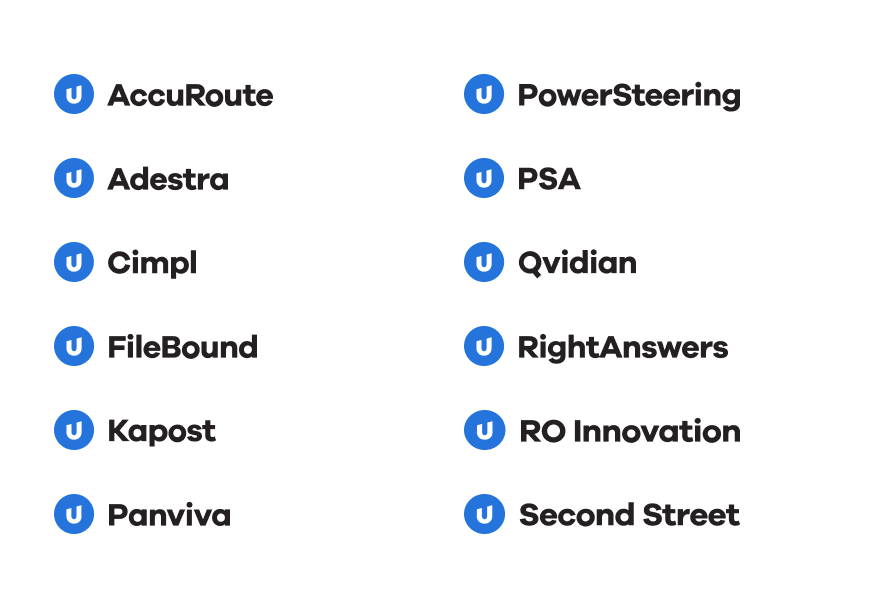
Upland Software was founded in 2010 by Jack McDonald as an acquisition vehicle for enterprise cloud software companies. Over the following decade, it completed 31 acquisitions, assembling a portfolio of specialized products that each solve a distinct enterprise problem.
Qvidian handles RFP responses. Panviva manages knowledge for regulated contact centers. Adestra runs email marketing campaigns. Eclipse PPM manages project portfolios. Each product operates independently, built for a specific function.
Source: Upland Software
This acquisition-driven model means Upland is less a single platform and more a library of specialized tools. The company positions itself as delivering "best-of-breed, cloud-native products with AI innovations" for Fortune 2000 and major mid-size organizations.
It's now pivoting toward AI-powered knowledge and content management, with incoming CEO Sean Nathaniel focused on positioning Upland as "a core intelligence layer for the agentic enterprise".
ZoomInfo was founded in 2007 by Henry Schuck on a single conviction: go-to-market teams need accurate, comprehensive B2B data.
Source: ZoomInfo
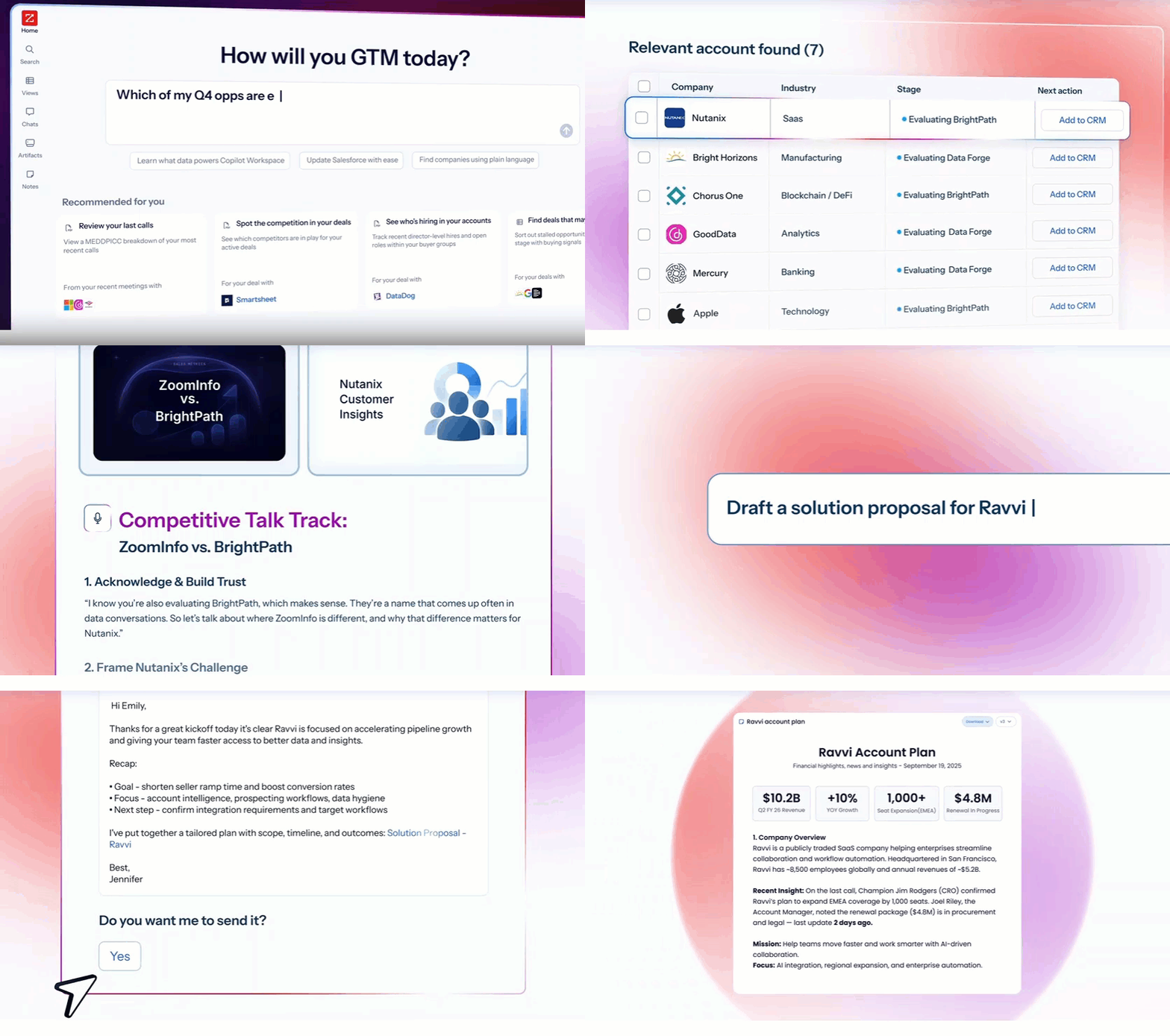
That conviction shaped everything that followed: nearly two decades of building a B2B data platform, acquiring conversation intelligence through Chorus, and developing the GTM Context Graph that fuses first-party and third-party data into an intelligence layer that captures why deals move or stall.
Where Upland assembles specialized tools for different departments, ZoomInfo builds a single intelligence layer that powers the entire revenue operation. The choice between them depends on which problem your organization needs to solve.
Upland's strength: Specialized tools for enterprise operations
Upland's value lies in solving specific operational problems that no single-platform vendor typically addresses.
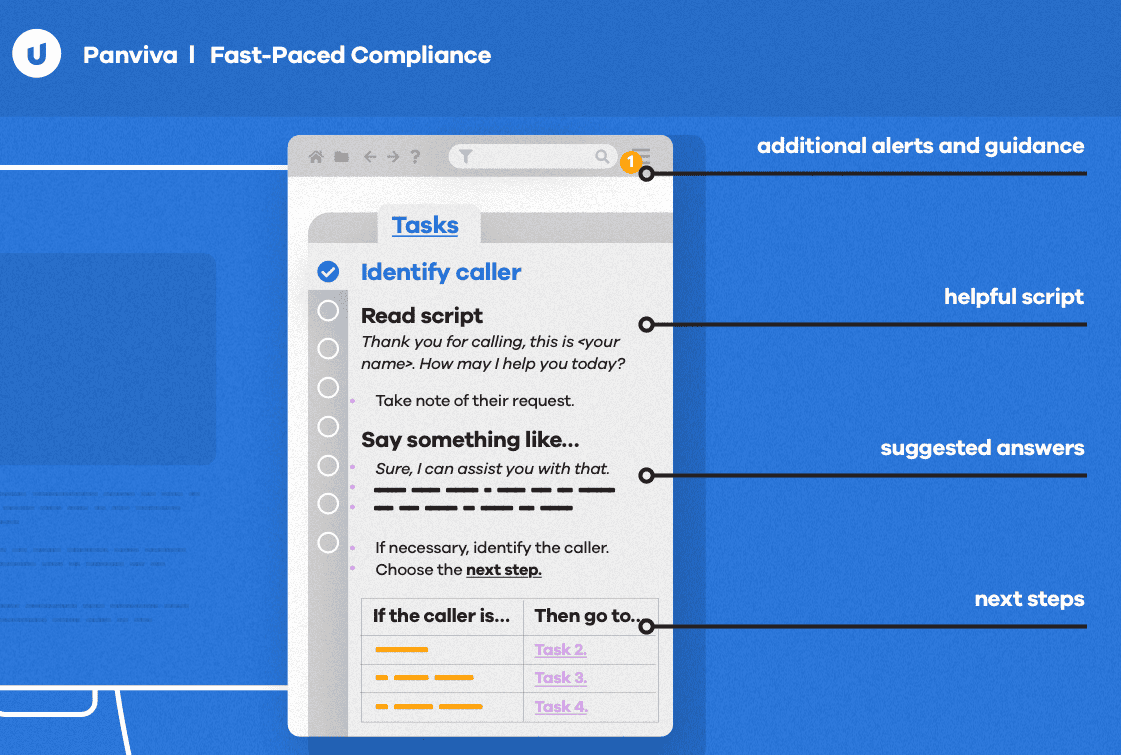
Knowledge management for regulated industries. Panviva delivers compliant, omnichannel knowledge management for contact centers in regulated industries. Its Sidekick AI assistant lets agents ask questions in plain English and receive answers from approved content, respecting existing permission structures.
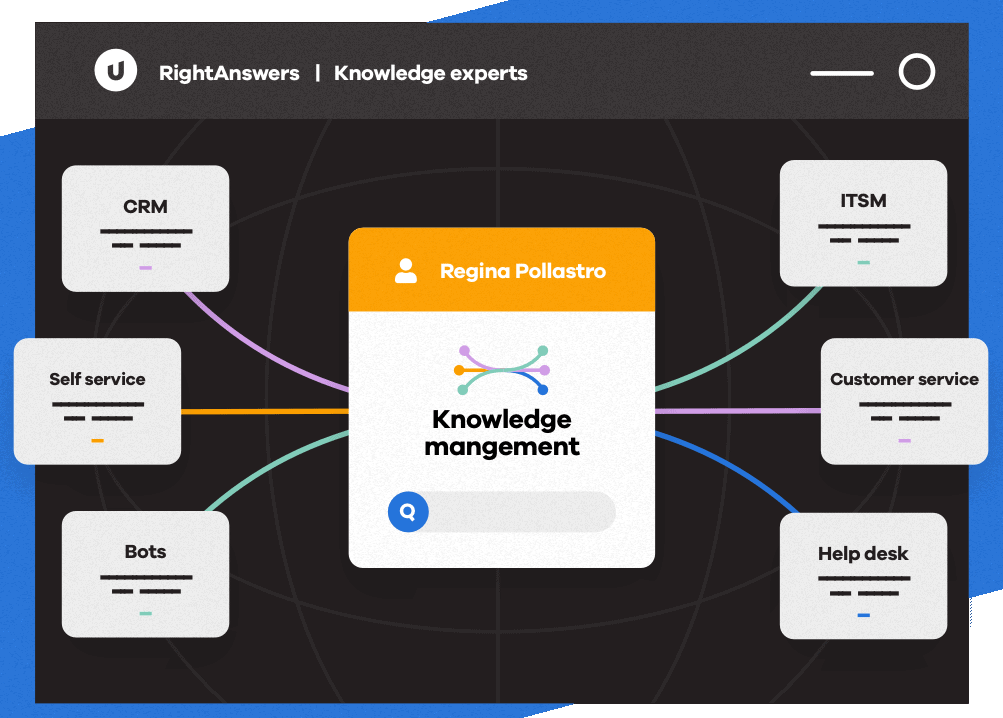
RightAnswers provides AI-powered knowledge management for enterprise help desks, with 23 years of KM experience and capabilities like federated search across disparate knowledge sources.
Source: Upland Software
Proposal and RFP automation. Qvidian automates the RFP response process by centralizing proposal content, using AI to match questions with relevant answers, and drafting new responses with generative AI. For proposal teams that spend weeks assembling responses manually, Qvidian cuts that cycle. The product was recognized in the Gartner Market Guide for RFP Response Management Applications.
Email marketing and audience engagement. Adestra provides multichannel marketing automation with AI-driven segmentation and personalization.
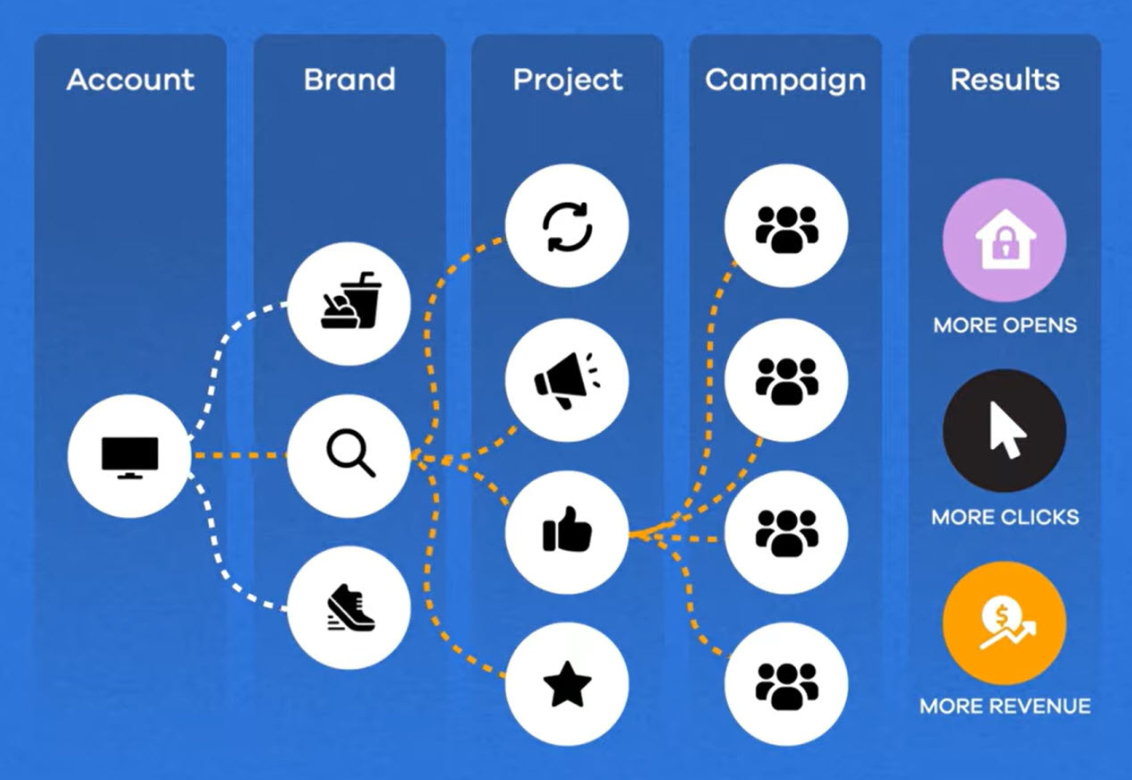
Source: Upland Software
Enterprise AI enablement. BA Insight connects 90+ enterprise applications to AI systems through Retrieval Augmented Generation, making organizational knowledge available to platforms like Microsoft Copilot and Azure AI Cognitive Search. For enterprises investing in AI infrastructure, BA Insight bridges scattered internal data and the AI models that need to access it.
Project and services management. Eclipse PPM and PowerSteering handle project portfolio management, while PSA automates professional services delivery.
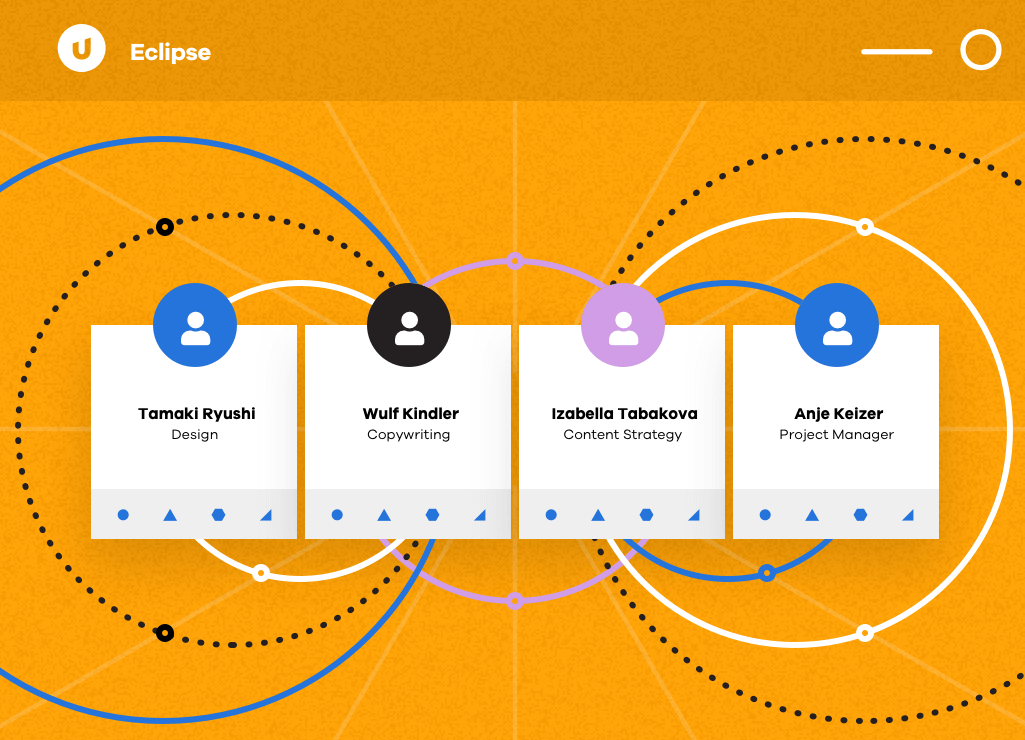
Source: Upland Software
That breadth comes with a trade-off. Each product was acquired separately, which means each has its own interface, its own integration requirements, and its own learning curve. There is no shared data layer connecting Qvidian's proposal content to Panviva's knowledge base to Adestra's email campaigns. Buyers typically adopt one or two Upland products to solve specific problems, not the full portfolio.
ZoomInfo's strength: B2B intelligence that powers the revenue engine
ZoomInfo solves a different problem. Rather than managing internal content and workflows, it provides the external intelligence that tells revenue teams where to focus and how to act.
The data foundation. ZoomInfo operates the largest B2B data platform available: 500M contacts, 100M companies, 135M+ verified phone numbers, 120M direct-dial phone numbers, and 200M+ verified business email addresses.
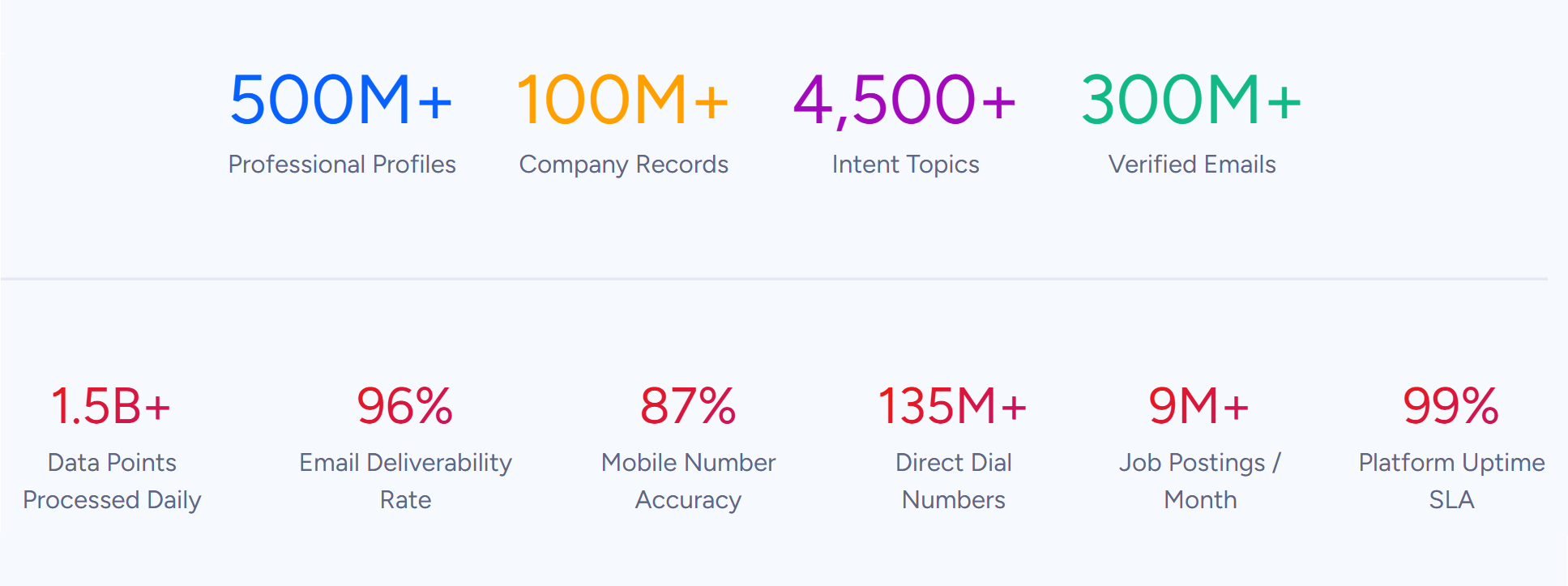
Source: ZoomInfo
This data is verified through a multi-source pipeline backed by 300+ human researchers and reaches up to 95% accuracy on first-party data. In a Fortune 500 competitive RFP analyzing 25 million contacts across vendors, an independent consultant concluded that "no other competitor came even close."
This data spans three dimensions: identity data (who buyers are and how to reach them), company context (org charts, technographics covering 30,000+ technologies across 30M+ companies, and more), and dynamic signals (buyer intent data tracking 210 million IP-to-Organization pairings and 6 trillion+ keyword-to-device pairings monthly).

Source: ZoomInfo
The GTM Context Graph. What separates ZoomInfo from a static database is the GTM Context Graph, which processes 1.5B + data points daily. It fuses ZoomInfo's B2B data with a customer's CRM records, conversation intelligence from Chorus, email interactions, and behavioral signals into a single intelligence layer.
As CPO Dominik Facher explains: "The CRM recorded the state change. It has no record of why it happened." The GTM Context Graph captures that context, connecting signals and outcomes across thousands of deals to inform every downstream action.
Three ways to access the data. GTM Workspace gives sellers prioritized accounts, AI-drafted outreach, and deal execution in one place. Seismic's sales team boosted productivity by 54% and saved 11.5 hours per week using it.
GTM Studio gives marketers and RevOps a canvas where audience building, campaign orchestration, and pipeline measurement happen in natural language. Expansion plays that used to take 3 weeks now launch in 30 minutes. And APIs and MCP expose the same intelligence to any custom agent, internal tool, or partner platform.
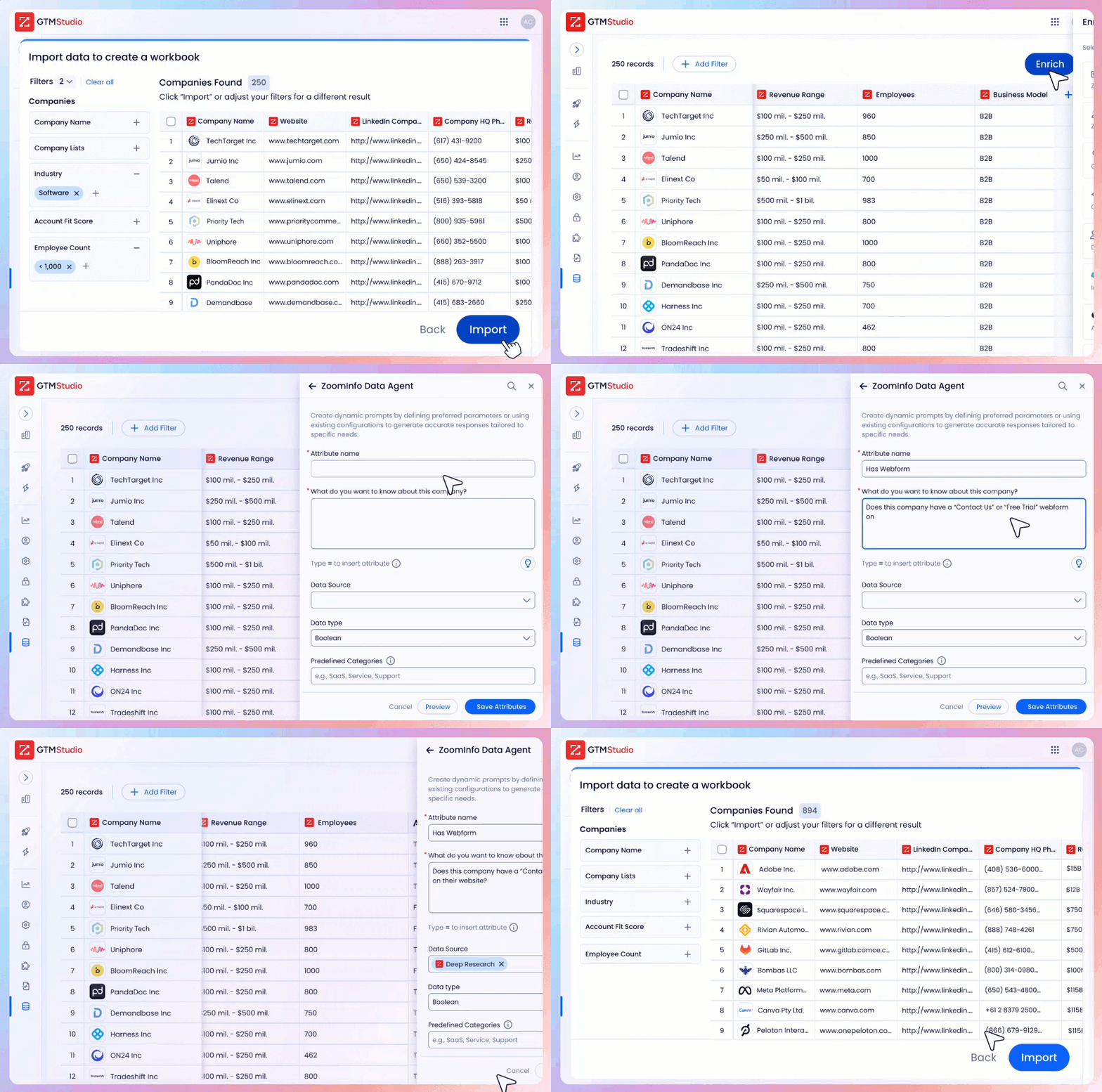
Source: ZoomInfo
The result is an intelligence layer that powers prospecting, pipeline management, account-based marketing, CRM enrichment, and deal execution from a single data foundation.
Where they overlap: Sales and marketing
Despite their different approaches, both platforms touch sales and marketing workflows. The overlap is narrow but worth examining.
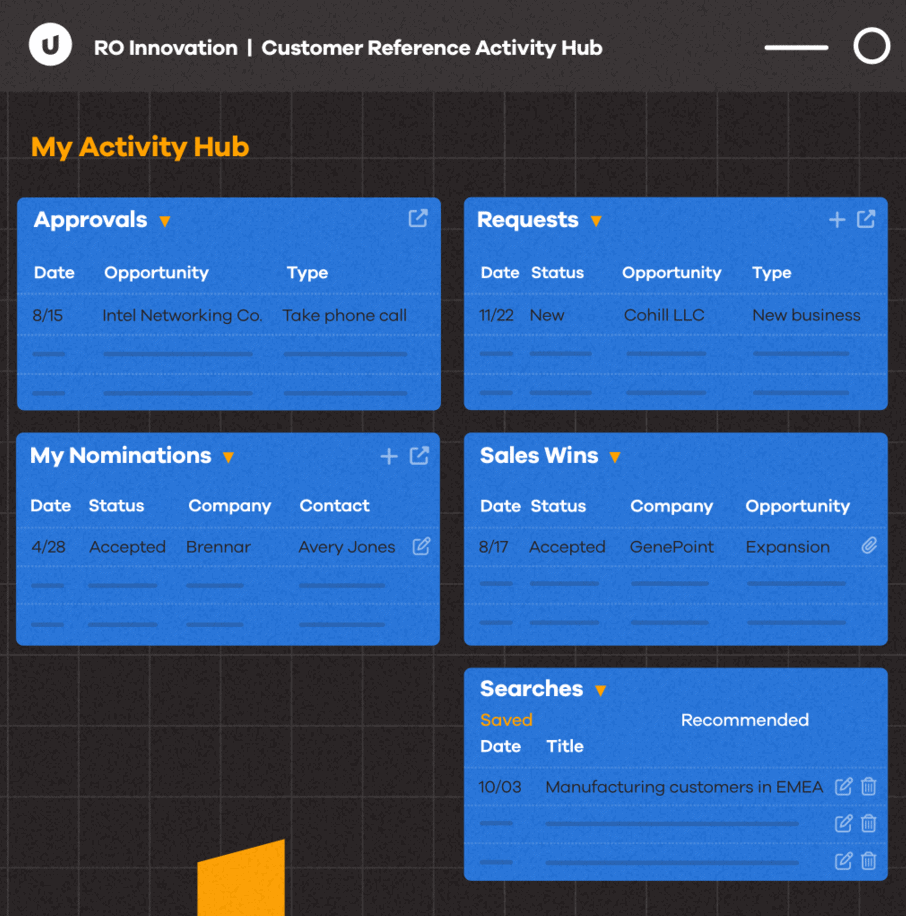
Sales enablement. Upland approaches sales through content and proposals. Qvidian helps teams respond to RFPs faster. RO Innovation manages customer references to accelerate deal cycles. InGenius integrates phone systems with CRM platforms for contact center efficiency. These tools support the sales process by improving the materials and infrastructure around it.
Source: Upland Software
ZoomInfo approaches sales through intelligence and execution. Its data tells reps which accounts to target. The GTM Context Graph tells them why those accounts are in-market right now. GTM Workspace delivers AI-drafted outreach based on the specific concerns raised in recent conversations.
Thomson Reuters increased closed-won deals by 40% and achieved 115% average quota attainment monthly using ZoomInfo.
The difference is upstream vs. downstream. ZoomInfo identifies who to sell to and generates pipeline. Upland's sales tools help manage the content and process once a deal is in motion.
Marketing automation. Upland's Adestra handles email campaign creation, personalization, and delivery. It's a capable email marketing platform with data enrichment tools and AI-driven segmentation.
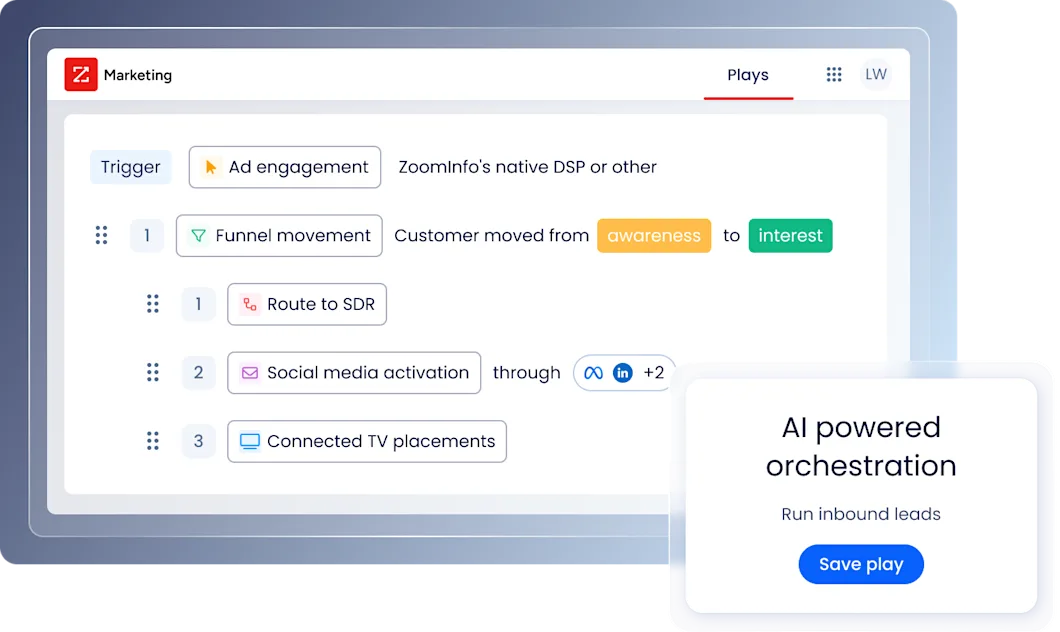
ZoomInfo's marketing capabilities operate at a different level. ZoomInfo Marketing is an account-based marketing platform with a native demand-side platform for display advertising, contact-level website visitor identification, and intent signal stacking across first-party and third-party data.
Source: ZoomInfo
Customers report 900% CTR increases and 61% increases in opportunities. FormComplete reduces web forms to a single field while auto-appending the rest, with Smartsheet reporting a 40%+ increase in form fills and 84% increase in MQLs.

Source: ZoomInfo
Adestra excels at email execution and personalization. ZoomInfo Marketing identifies which accounts to target, across which channels, based on buying signals, then executes automatically.
AI approaches reflect different missions
Both platforms invest in AI, but their applications reflect their different missions.
Upland's AI focus is on enterprise knowledge. The company has formed an internal AI Council and is building what it calls "the world's first AI enablement platform" through BA Insight. The practical applications focus inward: Panviva's Sidekick uses AI to surface compliant answers for contact center agents.
Source: Upland Software
RightAnswers uses generative AI to create knowledge articles and NLP for more accurate search results. Qvidian uses AI to match RFP questions with relevant content and draft new responses. Second Street uses AI-powered trivia quiz generation.
These are useful applications within their domains, but they operate independently. Upland's AI helps individual products work better; it doesn't create a shared intelligence layer across the portfolio.
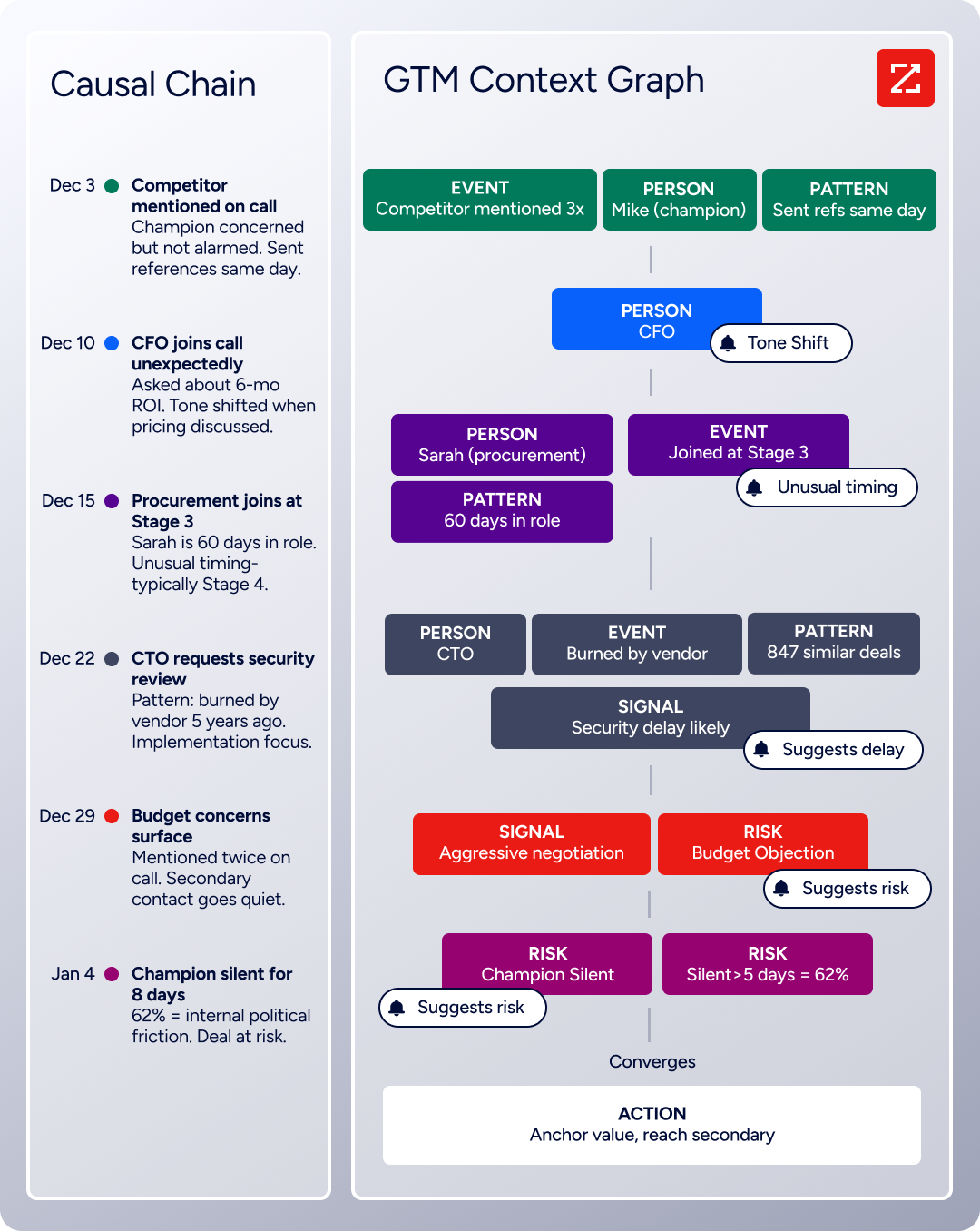
ZoomInfo's AI is built on a single intelligence layer. The GTM Context Graph processes 1.5B + data points daily, combining ZoomInfo's third-party data with first-party CRM data, conversation intelligence, and behavioral signals.
Source: ZoomInfo
This graph powers AI across every product: GTM Workspace's AI agents research accounts and draft personalized outreach; GTM Studio's AI builds audiences from natural language and launches plays that improve as prospects respond; and the same intelligence flows through APIs and MCP into any external tool.
The structural difference matters. ZoomInfo's AI improves as a system because every signal, every conversation, and every outcome feeds back into one graph. Upland's AI improves individual products in isolation.
Pricing and investment model
Neither platform publishes standardized pricing, which makes direct comparison difficult.
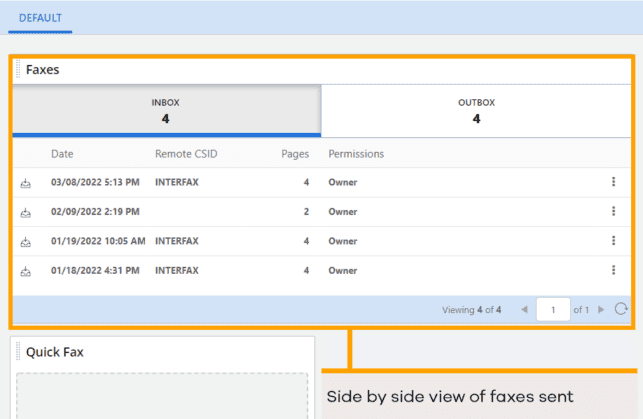
Upland does not disclose pricing for most products on its website. Organizations must contact Upland directly or request product-specific demos for quotes. The exception is InterFAX, which offers usage-based pricing through an online calculator.
Source: Upland Software
Given that Upland targets Fortune 2000 and major mid-size organizations with average annual recurring revenue per major account exceeding $25,000, expect enterprise-level pricing. Buyers typically purchase individual products, not the full portfolio, so costs depend on which solutions you need.
ZoomInfo uses a custom-quoted, seat-and-credit-based subscription model. Pricing varies by number of users, credit volume, features, and contract length. The platform is organized into Sales, Marketing, and Chorus product lines, each with tiered plans (Professional, Advanced, Enterprise for Sales; Marketing Demand, ABM Lite, ABM Enterprise for Marketing).
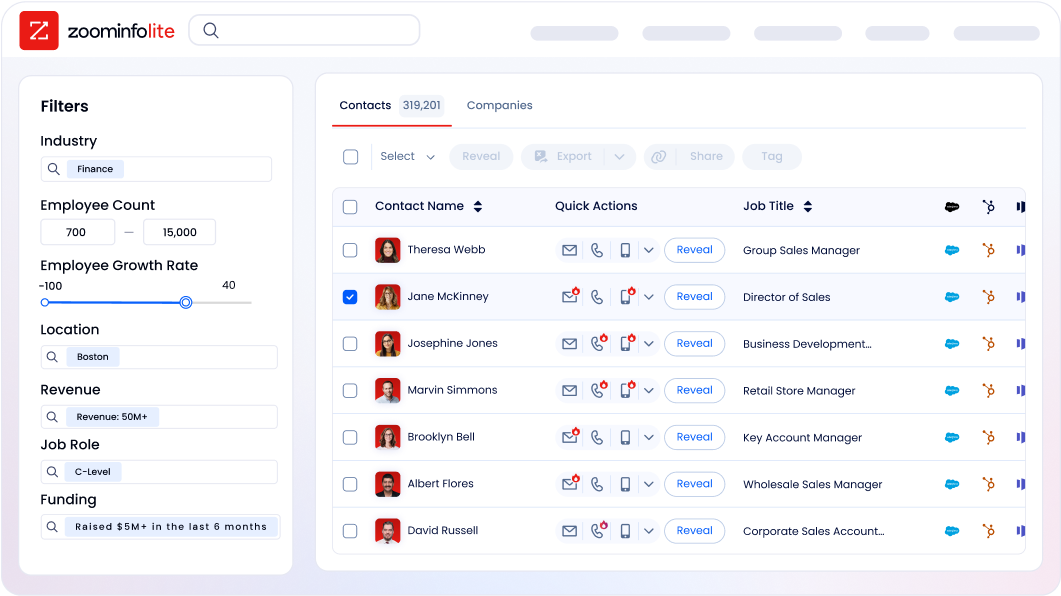
ZoomInfo offers two free entry points: ZoomInfo Lite, a permanent free tier with access to the B2B database and 10 monthly export credits, and a 7-day free trial of the full platform.
Source: ZoomInfo
The investment models differ in kind. With Upland, you buy specific tools for specific problems. With ZoomInfo, you invest in a data and intelligence layer that powers your entire revenue operation. The ROI calculation for Upland centers on operational efficiency within a given function.
The ROI for ZoomInfo centers on pipeline generation and revenue growth, with documented outcomes like Snowflake's 200% higher conversion rates on top-scoring accounts and Seismic's 39% of pipeline attributed to ZoomInfo signals.
Integration and ecosystem
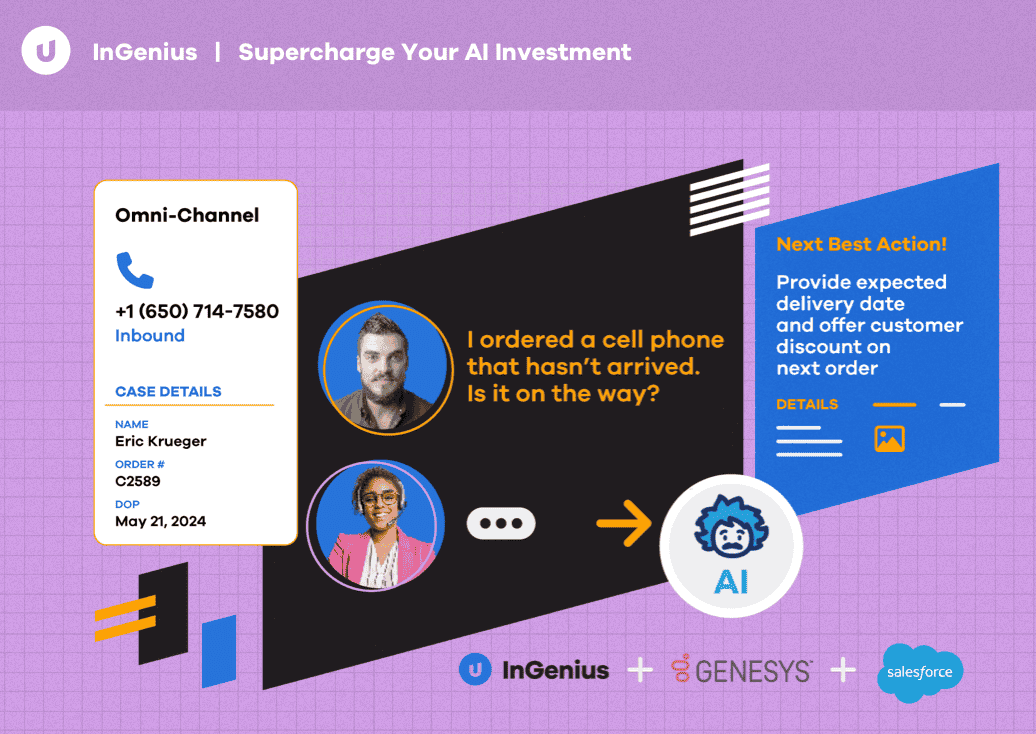
Upland's integration approach varies by product. Each product has its own integration capabilities reflecting its use case. InGenius integrates with Salesforce, ServiceNow, and Microsoft Dynamics 365 for CTI. BA Insight connects to 90+ enterprise applications for knowledge management.
Source: Upland Software
Cimpl integrates with 250+ systems including Oracle, SAP, and Workday. However, there is no shared integration layer across the Upland portfolio. Each product maintains its own connectors and APIs.
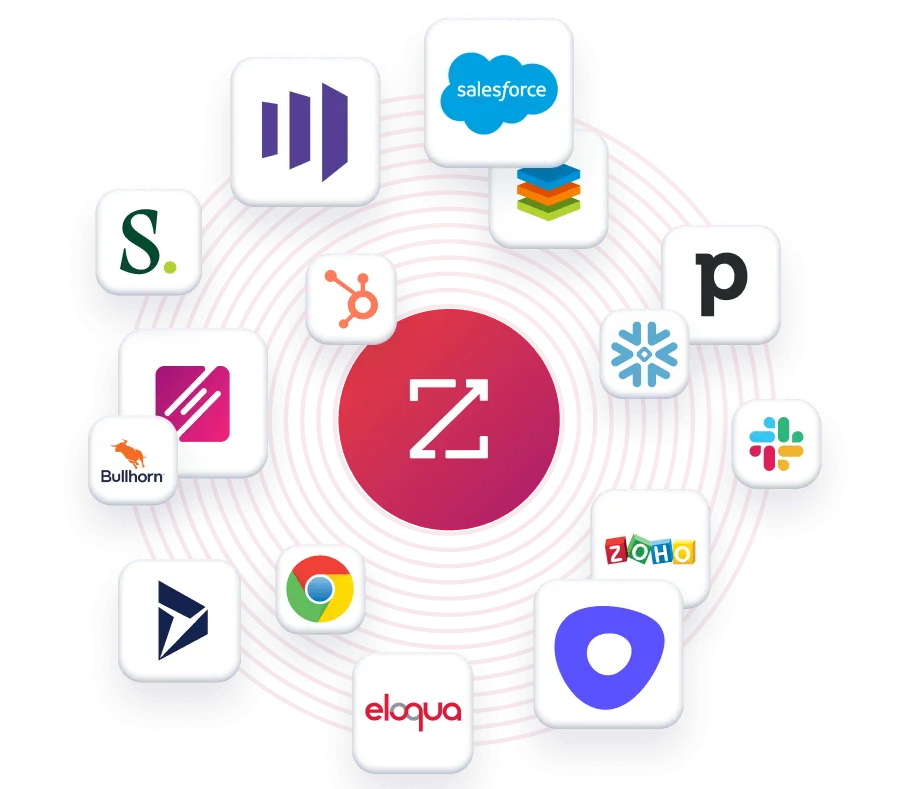
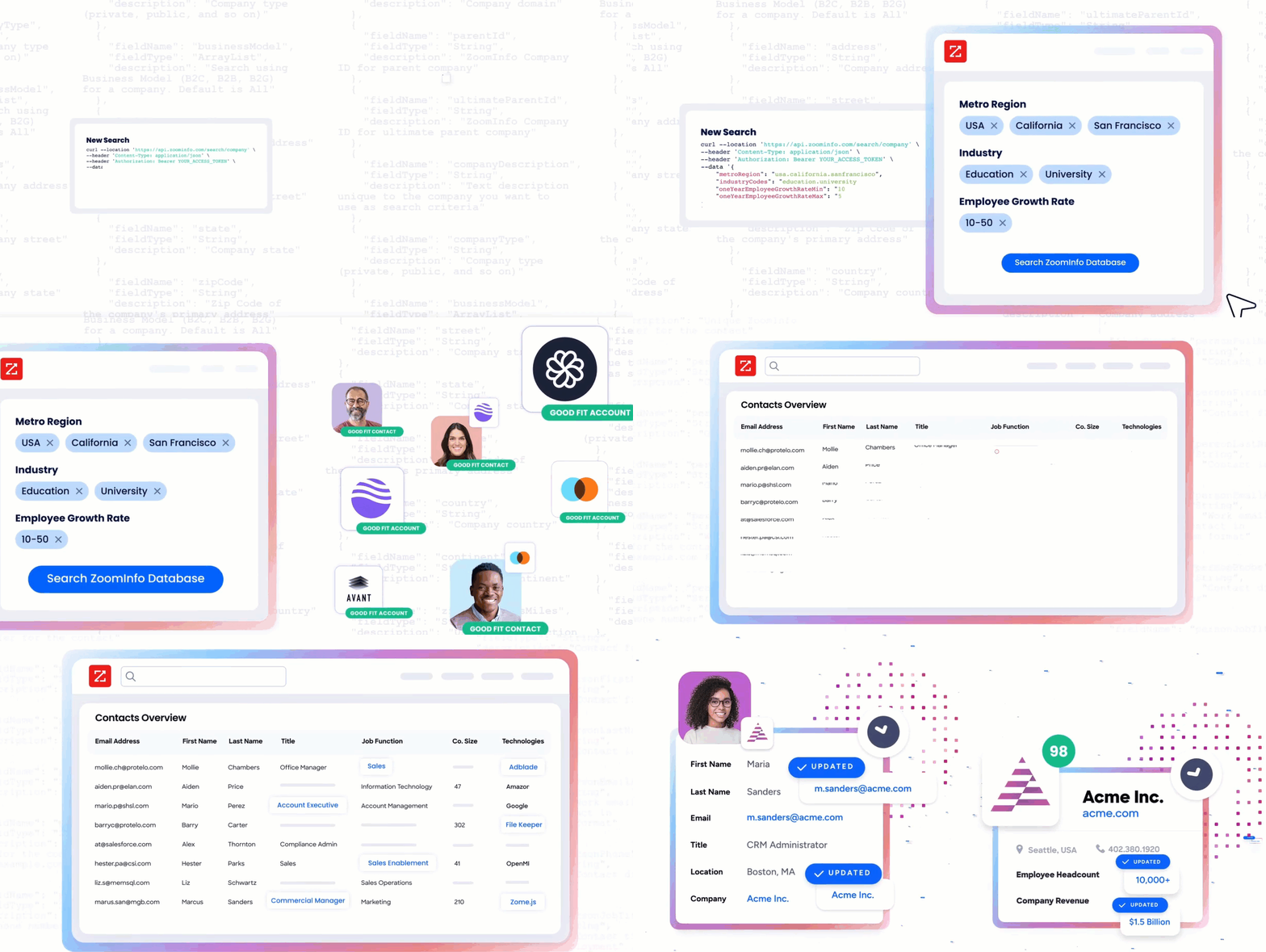
ZoomInfo's integration ecosystem is unified by design. The ZoomInfo App Marketplace lists 120+ partner integrations across CRM, marketing automation, sales engagement, data warehouses, and communications platforms. Featured integrations include Salesforce, HubSpot, Snowflake, and Microsoft Dynamics 365.
Source: ZoomInfo
Cloud Partners enable direct data ingestion into AWS, Google Cloud, Snowflake, and Databricks. The Enterprise API and MCP server extend the same intelligence into any application or AI agent, with API Access included in all relevant plans.
Source: ZoomInfo
The key difference: ZoomInfo's integrations all draw from one data foundation and one intelligence layer. Every connected system receives the same data and context. Upland's integrations are product-specific, meaning there's no shared intelligence flowing between an InGenius CTI integration and a Qvidian proposal workflow.
Security and compliance
Both platforms maintain enterprise-grade security, as expected for companies serving Fortune 2000 customers.
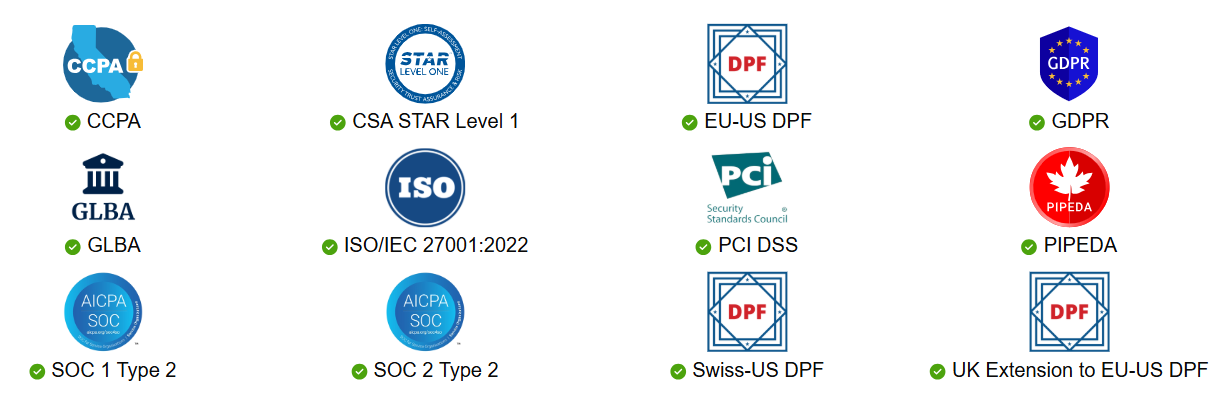
Upland maintains HIPAA compliance, PCI DSS Level 1 certification, ISO 27001 accreditation, and SOC 2 auditing across relevant products (particularly InterFAX). The company emphasizes that its AI strategy prioritizes managing AI risk with internal review and approval processes. Panviva's Sidekick respects existing permission structures, serving agents only answers from content they're authorized to view.
Source: Upland Software
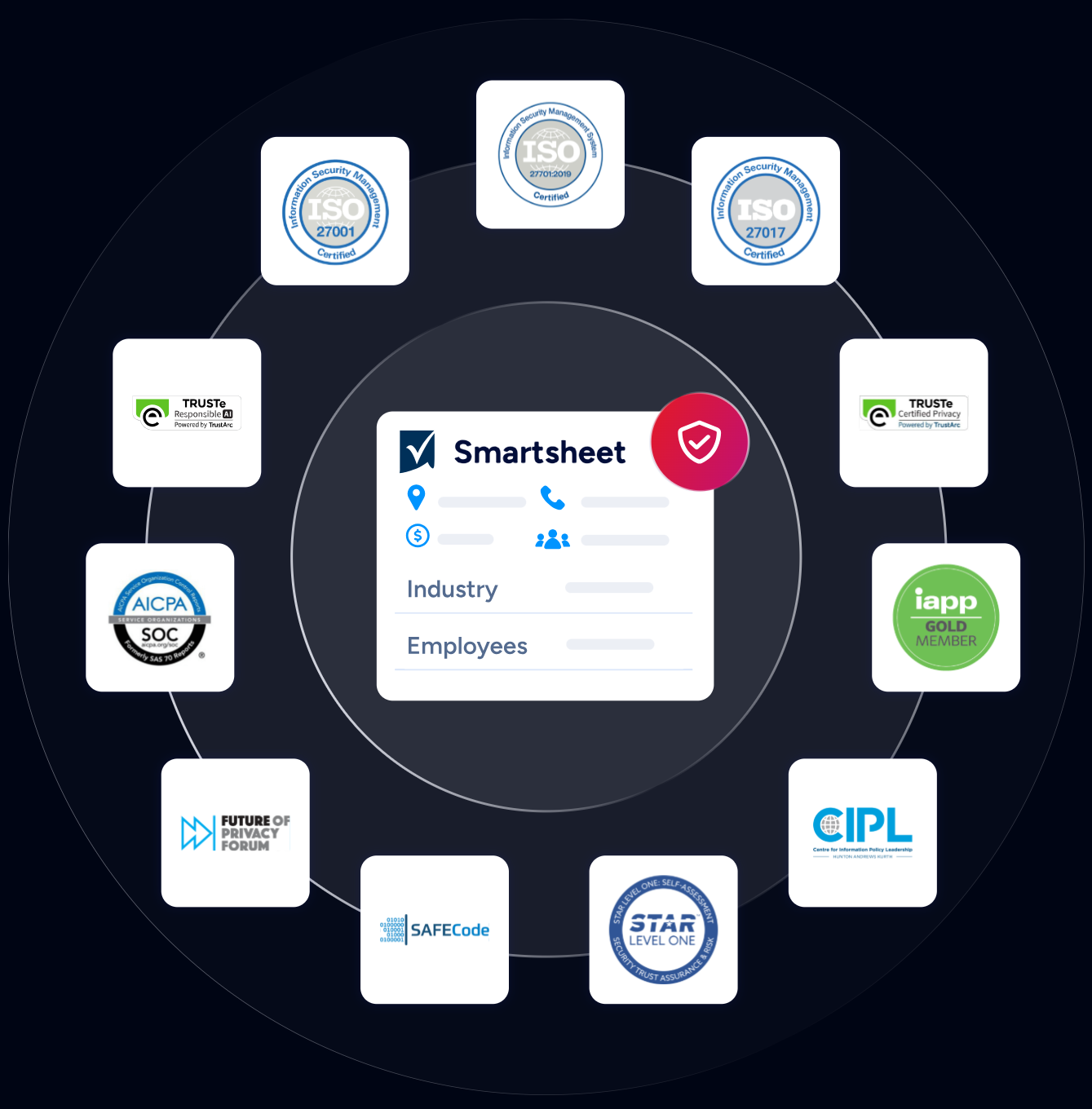
ZoomInfo maintains a certification stack renewed annually: ISO 27001, ISO 27701, SOC 2 Type II, TRUSTe GDPR Practices Validation, and TRUSTe CCPA Practices Validation.
Source: ZoomInfo
ZoomInfo is a registered data broker in California and Vermont and maintains a dedicated Trust Center. Because ZoomInfo processes B2B contact data at scale, its privacy compliance infrastructure is critical and externally validated.
Market recognition
Upland earned over 40 badges in G2's Spring 2026 Market Reports and was recognized as a Major Player in the IDC MarketScape for Worldwide General-Purpose Knowledge Discovery Software. Individual products hold recognition in their respective categories.
ZoomInfo holds 133 No. 1 rankings on G2 across Sales Intelligence, Buyer Intent, Data Quality, and Account Data Management. It's a Leader in the Gartner Magic Quadrant for ABM Platforms (2024 and 2025), a Leader in the Forrester Wave for Intent Data Providers, and the only vendor positioned in Gartner's Customers' Choice quadrant with a 4.7/5.0 average rating.
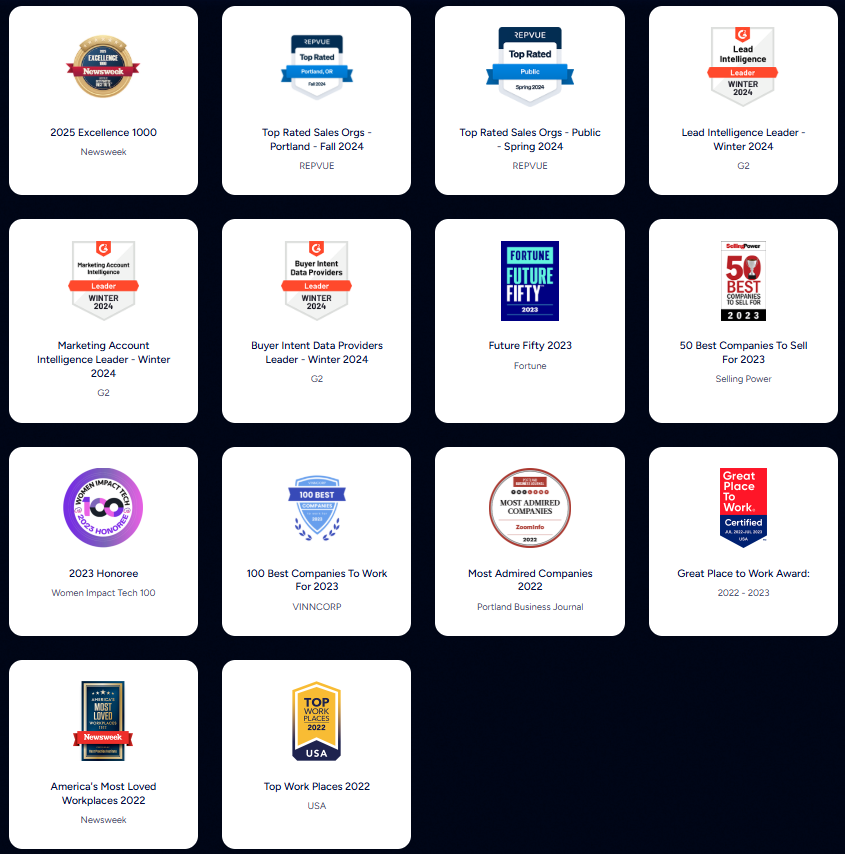
Both platforms have strong recognition, but in different categories. Upland wins badges across its diverse product portfolio. ZoomInfo dominates the categories related to B2B data, sales intelligence, and go-to-market execution.
Upland vs. ZoomInfo: Which should you choose?
Because these platforms solve different problems, the choice depends on what your organization needs most.
Choose Upland if:
You need specialized tools for specific enterprise functions (knowledge management, RFP automation, email marketing, project management, supply chain execution)
Your primary challenge is managing internal knowledge and content workflows across regulated or complex environments
You want AI-powered knowledge tools for contact centers or enterprise search
You need solutions like compliant knowledge management (Panviva), proposal automation (Qvidian), or enterprise AI search (BA Insight) that ZoomInfo doesn't offer
Your budget targets individual operational improvements rather than a GTM intelligence platform
Choose ZoomInfo if:
Your primary challenge is finding, reaching, and converting buyers
You need accurate B2B contact data, direct dials, and verified emails to power prospecting and outreach
Buyer intent signals and account prioritization are critical to your sales process
You want a single intelligence layer connecting your CRM, conversation intelligence, and market signals through the GTM Context Graph
You need AI-powered pipeline generation and account-based marketing with cross-channel orchestration
You want to access the same data and intelligence in any tool through APIs and MCP
A free starting point matters: ZoomInfo Lite lets you explore the platform before committing
Consider both if:
Your organization has distinct needs across operational efficiency and revenue intelligence. A company could use Upland's Qvidian to automate RFP responses while using ZoomInfo to identify which accounts to pursue in the first place.
A contact center could use Panviva for agent knowledge management while the sales team uses ZoomInfo's GTM Workspace for prospecting and deal execution. These platforms don't conflict; they address different layers of enterprise operations.
The question isn't which platform is better. It's which problem is more urgent: managing the knowledge, content, and workflows that support your business operations (Upland), or powering the data and intelligence that drive your revenue (ZoomInfo). For most revenue-focused organizations evaluating these two, the answer comes down to whether your bottleneck is operational process or buyer intelligence.
Upland vs ZoomInfo: FAQ
1. What is the difference between Upland and ZoomInfo?
Upland is an enterprise software portfolio of 20+ specialized cloud products for knowledge management, RFP automation, email marketing, and project management. ZoomInfo is a B2B data and GTM intelligence platform built on 500M+ contacts and 100M+ companies, used to find, prioritize, and reach buyers. They serve different functions: Upland manages internal operations, ZoomInfo powers external sales and marketing intelligence.
2. Is ZoomInfo better than Upland Software?
Neither platform is strictly "better" — they solve different problems. ZoomInfo is the stronger choice for sales, marketing, and RevOps teams that need B2B contact data, buyer intent signals, and pipeline generation. Upland is the stronger choice for enterprises that need specialized tools for knowledge management, RFP responses, or content workflows.
3. How much does ZoomInfo cost?
ZoomInfo uses a custom-quoted, seat-and-credit-based subscription model, with pricing based on number of users, credit volume, features, and contract length. It's organized into Sales, Marketing, and Chorus product lines, each with tiered plans (e.g., Professional, Advanced, and Enterprise for Sales).
4. How much does Upland Software cost?
Upland does not publish pricing for most of its products. Organizations need to contact Upland directly or request a product-specific demo for a quote. Given its focus on Fortune 2000 and mid-size enterprise customers, pricing is typically enterprise-level and varies by which of its 20+ products you need.
5. Does ZoomInfo have a free plan?
Yes. ZoomInfo Lite is a permanent free tier that includes access to the B2B database and 10 monthly export credits, with no credit card required. ZoomInfo also offers a 7-day free trial of its full platform. Upland does not offer a publicly available free tier.
6. What is Upland Software used for?
Upland Software is used for enterprise knowledge management, RFP and proposal automation, email marketing, project portfolio management, and contact center workflows. Its product portfolio includes tools like Qvidian (RFP automation), Panviva (compliant knowledge management), and Adestra (email marketing).
7. Can you use Upland and ZoomInfo together?
Yes. The two platforms address different layers of enterprise operations, so many organizations use both. For example, a company might use Upland's Qvidian to automate RFP responses while using ZoomInfo to identify which accounts to target in the first place.
8. Which is better for sales teams: Upland or ZoomInfo?
ZoomInfo is built specifically for sales teams, providing verified contact data, buyer intent signals, and AI-drafted outreach through its GTM Workspace. Upland supports sales indirectly through tools like Qvidian (proposal automation) and RO Innovation (customer reference management), but it isn't a sales intelligence platform.
Weighing Upland against ZoomInfo? See how it stacks up elsewhere:
