
Choosing between Varicent and CaptivateIQ for incentive compensation management comes down to five questions:
Do you need to manage thousands of sellers across complex global hierarchies, or are you scaling from hundreds of reps with plans that change quarterly?
Does your compensation team have the technical skill to configure a customizable platform, or do you need a no-code interface your ops team can own?
How important is it that territory planning, quota setting, and commission payouts live in one system?
Are you replacing a legacy platform (or spreadsheets) and need enterprise audit controls, or are you prioritizing speed of implementation?
Is the account data feeding your sales plans as complete and accurate as the plans themselves?
In short, here's what we recommend:
Varicent is the choice for large enterprises with complex compensation structures. With over 20 years in SPM, a calculation engine Forrester rated highest for processing power, and the only evaluated solution with an in-depth set of AI capabilities, Varicent handles multi-tier hierarchies, split crediting, retroactive adjustments, and regulatory audit trails that simpler tools cannot.
The trade-off is a steep learning curve: G2 reviewers cite complex table dynamics and a specialized development language that demands dedicated technical resources.
CaptivateIQ suits mid-market and enterprise teams that want compensation management without the technical overhead.
Founded in 2017 and backed by Sequoia Capital, Accel, and ICONIQ Growth, CaptivateIQ combines incentive compensation and sales planning in a no-code interface built on its SmartGrid engine, which processes 10M+ source transactions in 12 seconds.
But initial setup still takes significant time and resources, and the platform lacks native iPaaS connectors like Zapier and Workato.
Both platforms solve the commission calculation and sales planning problem. But neither solves the problem upstream of every territory plan, quota target, and coverage model: the quality of the account data feeding those decisions. Territory designs based on incomplete company data miss revenue. Quotas set without market intelligence produce unfair targets. That gap is where ZoomInfo comes in.
ZoomInfo is a B2B data and GTM platform that gives revenue teams the account intelligence both Varicent and CaptivateIQ depend on but don't create.
With 500M contacts, 100M companies, 135M+ verified phone numbers, and 200M+ verified business email addresses, ZoomInfo provides the firmographic, technographic, and intent data needed to design accurate territories, set fair quotas, and identify where sales capacity should go.
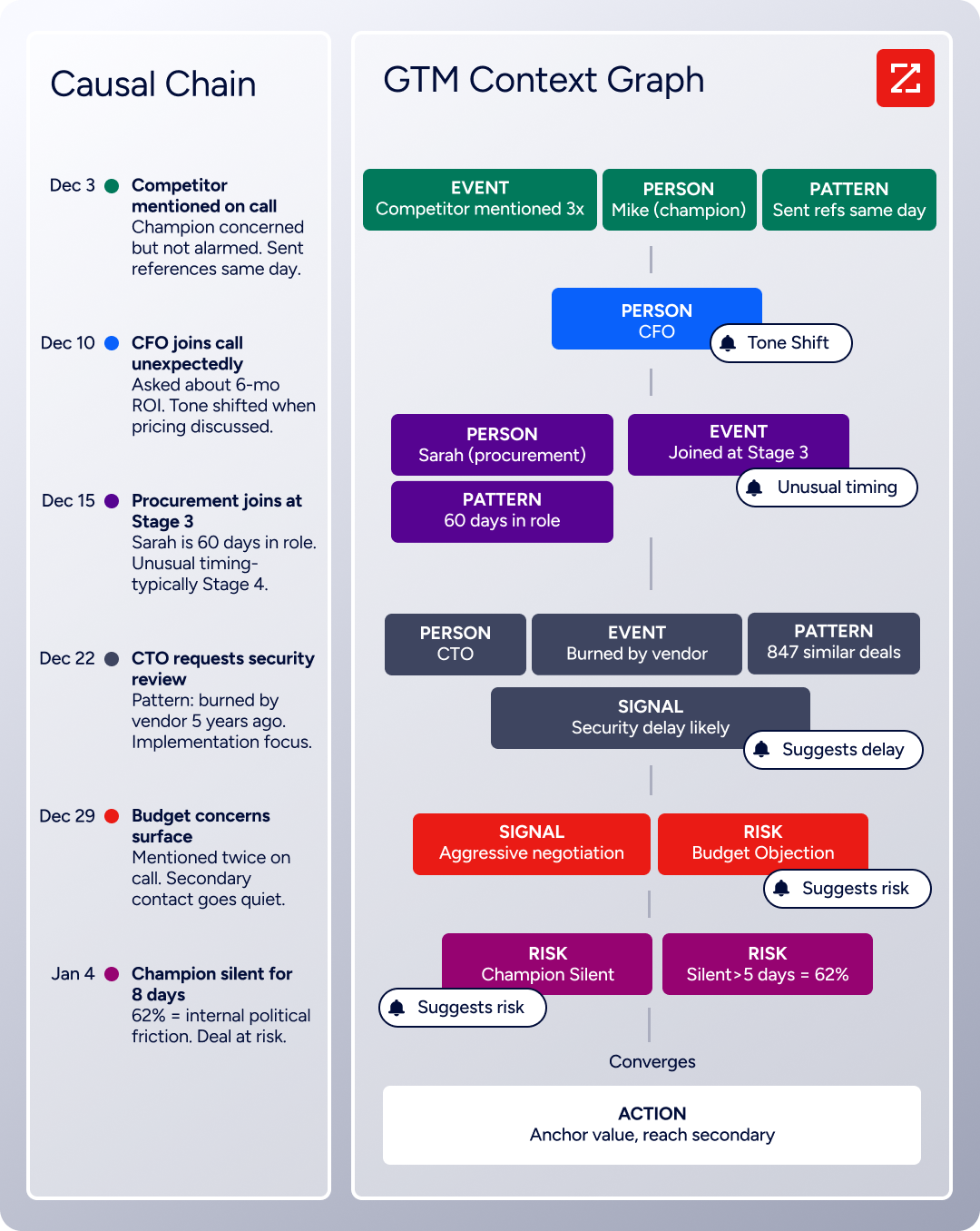
Its GTM Context Graph processes 1.5B+ data points daily, fusing B2B data with CRM records, conversation intelligence, and buying signals to show which accounts are in-market and why deals move.
For organizations using either Varicent or CaptivateIQ, ZoomInfo ensures the data powering those platforms matches the rigor of the compensation logic built on top of it.
If building your sales performance stack on verified account intelligence sounds right, see how ZoomInfo works with your GTM platform.
Varicent vs. CaptivateIQ at a glance
Varicent | CaptivateIQ | ZoomInfo | |
|---|---|---|---|
Primary focus | Enterprise SPM and ICM | ICM + sales planning | B2B data intelligence and GTM |
Founded | |||
Ideal buyer | Large enterprise, regulated industries | Mid-market to enterprise | Any revenue team needing account data |
Plan complexity | Multi-tier global hierarchies, insurance, financial services | Complex plans via no-code SmartGrid | N/A (data layer, not ICM) |
Sales planning | Territory, quota, capacity, segmentation | Territory, quota, capacity | Territory and market intelligence |
AI capabilities | Four AI assistants (Designer, Research, Sales Planning, ELT) | Three AI agents (Comp Builder, Comp Ops, Rev Planning) + Catalyst ML | GTM Context Graph, intent signals, AI agents |
Pricing | Custom quote only | Custom quote only | Custom quote; |
Free trial | No | No | |
Analyst recognition | (highest scores in 16 criteria) | (highest scores in 12 criteria) |
Enterprise maturity vs. modern agility
Varicent and CaptivateIQ represent two generations of sales performance management. The differences run deeper than features.
Varicent has been in the incentive compensation business since 2005. By 2010, it was named Canada's fastest-growing company and recognized on Deloitte's Fast 500 as the Fastest Growing Software Company in North America.
An IBM investment in 2012 brought enterprise distribution and processing improvements, followed by a founder-led buyback in 2020 backed by Great Hill Partners and Spectrum Equity.
That buyback restored agility: the company grew from 120 to 700+ employees, acquired Symon.AI for its data intelligence capabilities, and rebuilt the platform around AI-native architecture.
Forrester noticed, calling Varicent a company with "a sense of urgency to innovate that matches the level of a startup" alongside its long track record.
CaptivateIQ arrived a decade later. Founded in 2017 by three co-founders from sales operations and finance backgrounds, the company was accepted into Y Combinator in 2018, raised $164.6 million across multiple rounds, and reached a $1.25 billion valuation by 2022.
CaptivateIQ's rise grew from a specific frustration: as its Series C announcement noted, "compensation leaders were tracking and managing sales data using outdated legacy software or, in the worst cases, a single spreadsheet."
The heritage difference matters in practice. Varicent's twenty years of handling enterprise complexity (insurance producer compensation, COBOL system modernization, multi-currency global payouts) gives it a depth of configurability that newer platforms haven't had time to develop. CaptivateIQ's clean-sheet design let it avoid the technical debt that accumulates in older platforms, trading historical depth for a more accessible interface. Both approaches have merit; the right one depends on where your organization sits on the complexity spectrum.
Commission calculation engines handle scale differently
This is the core of both platforms, and both are strong.
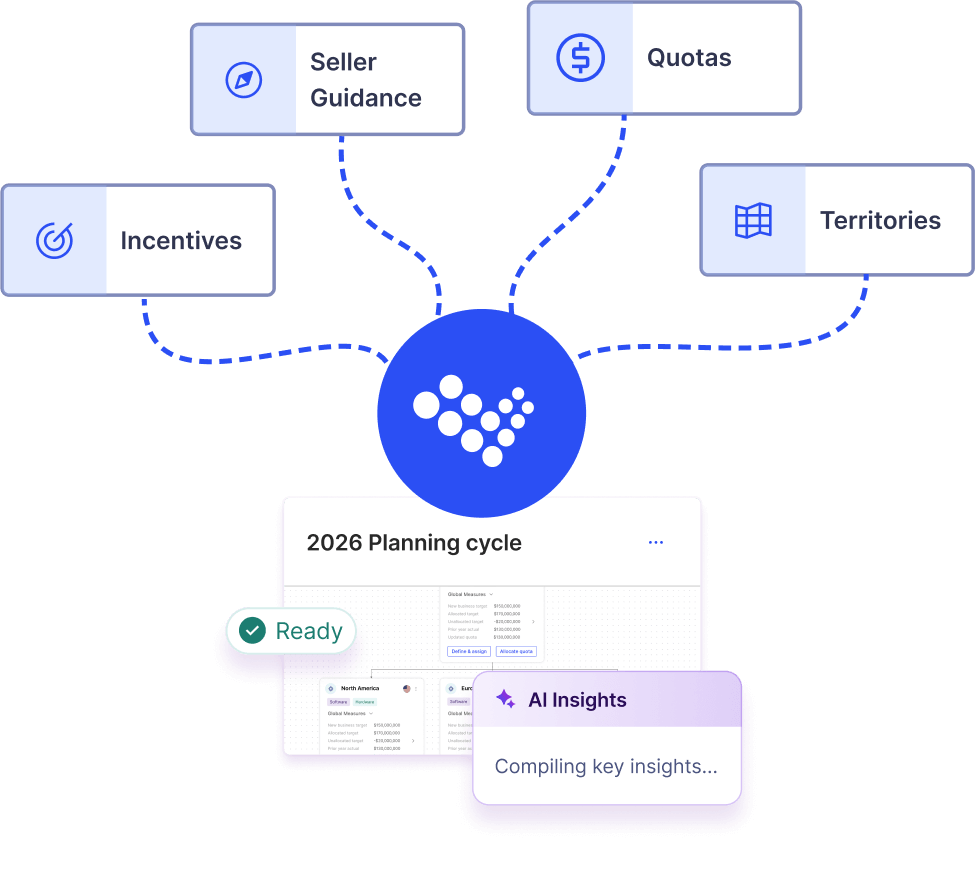
Varicent's calculation engine earned Forrester's highest score in "calculation processing" in the Q1 2025 Wave.
The platform manages thousands of sellers, complex global hierarchies, and millions of transactions.
The engine handles multi-tier hierarchies, split crediting, retroactive adjustments, and cross-product crediting natively.
Source: Varicent
However, G2 reviewers report "lengthy load times and delays" and slow calculation times, particularly with complicated plans. Adding more calculation layers compounds the issue. The power is real, but so is the processing overhead on complex configurations.
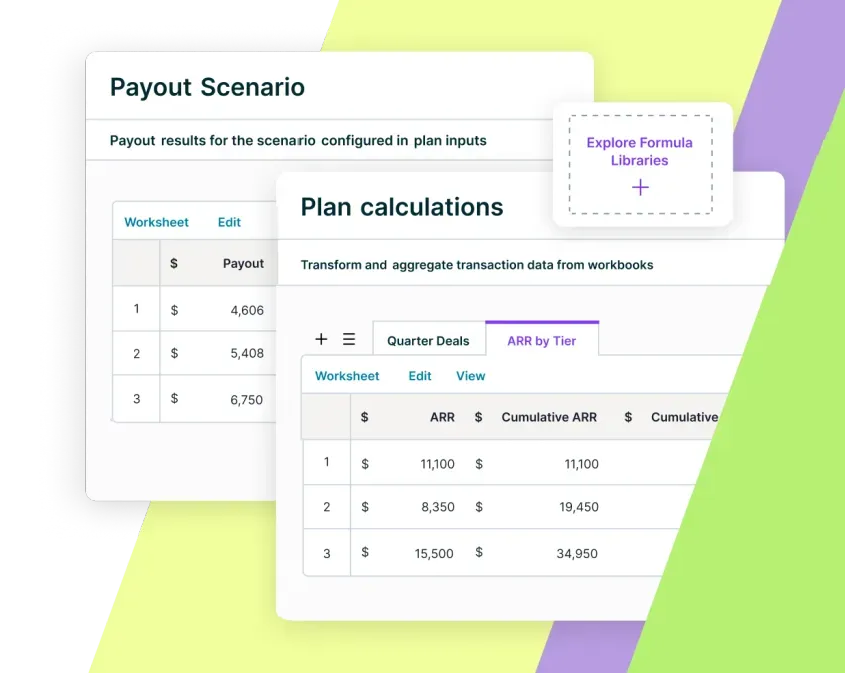
CaptivateIQ's SmartGrid engine takes a different approach, bundling data ingestion (ELT) directly with the calculation layer.
Source: CaptivateIQ
It processes worksheets with 10M+ source transactions in 12 seconds and powers over 6.25 trillion calculations per month across the platform.
Because ELT is bundled in-platform, compensation teams can ingest, transform, and calculate data without external ETL pipelines or engineering support. But G2 reviewers flag slow page load times when working with large commission models, noting that pages sometimes query the database in real time even when underlying data only refreshes daily.
The bottom line: Varicent handles more structural complexity (deeper hierarchies, more plan types, insurance-specific scenarios). CaptivateIQ processes data faster for the complexity it supports. Neither is universally faster; it depends on the shape of your compensation plans.
Sales planning is now a shared battleground
Both platforms have moved beyond commission calculation into territory design, quota setting, and capacity planning. This expansion matters because buyers no longer need to evaluate separate planning tools alongside their ICM platform.
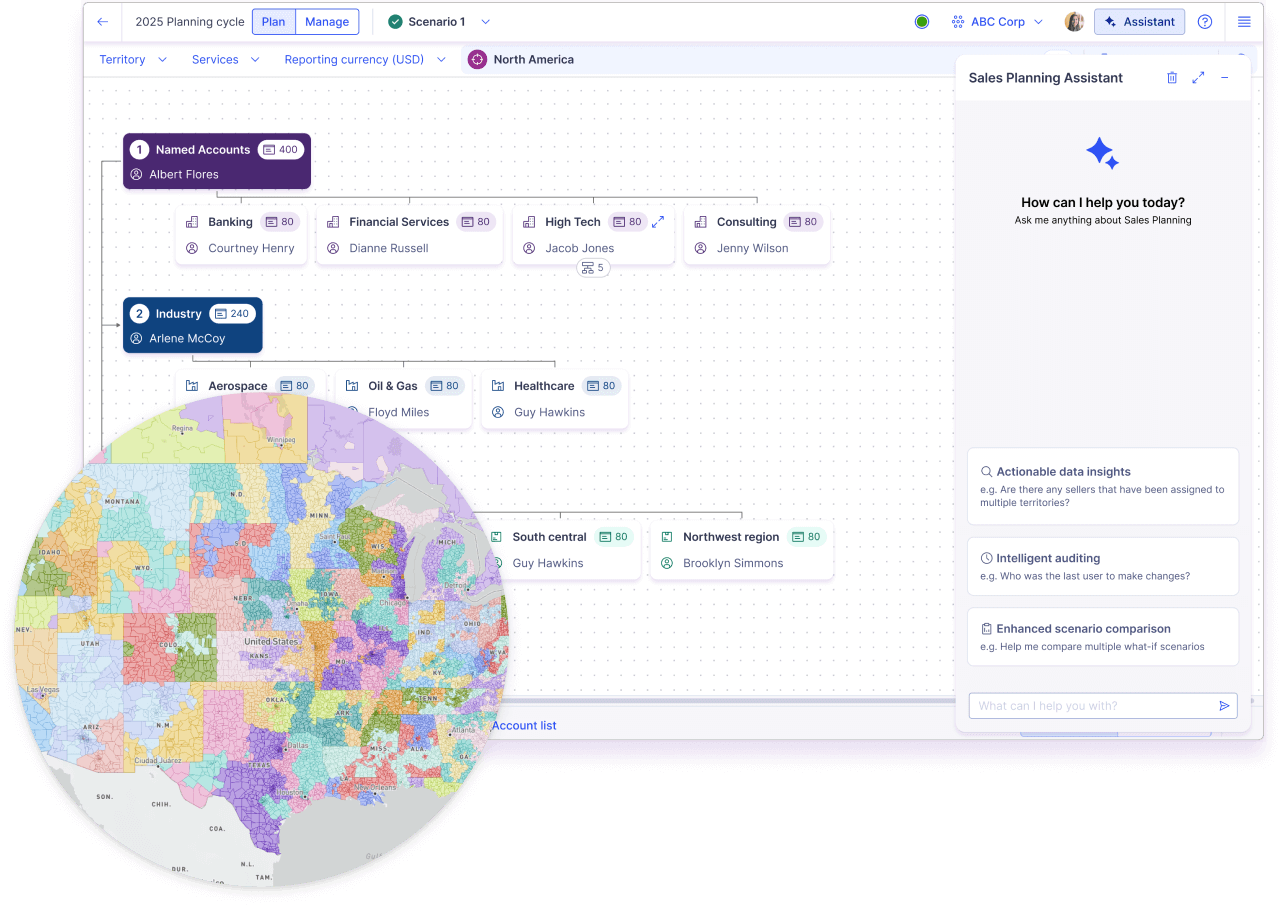
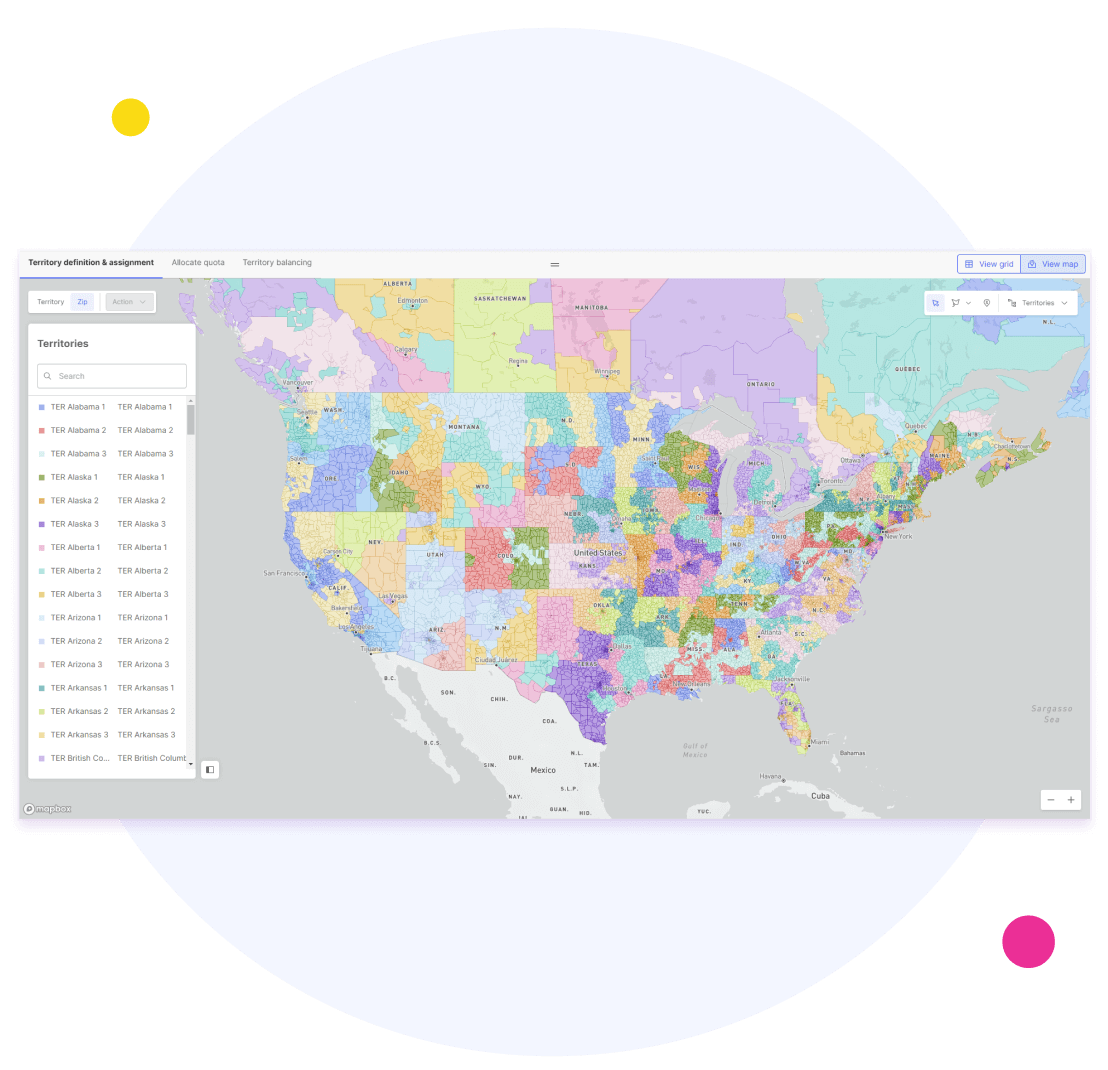
Varicent Sales Planning is the more mature offering. It supports complex territory modeling across multiple hierarchies with inheritance rules and inclusion/exclusion definitions for overlapping structures.
Source: Varicent
A precedence-based rules engine handles named account assignment automatically, and map-based visualization supports geographic boundary and named-account territory design.
Source: Varicent
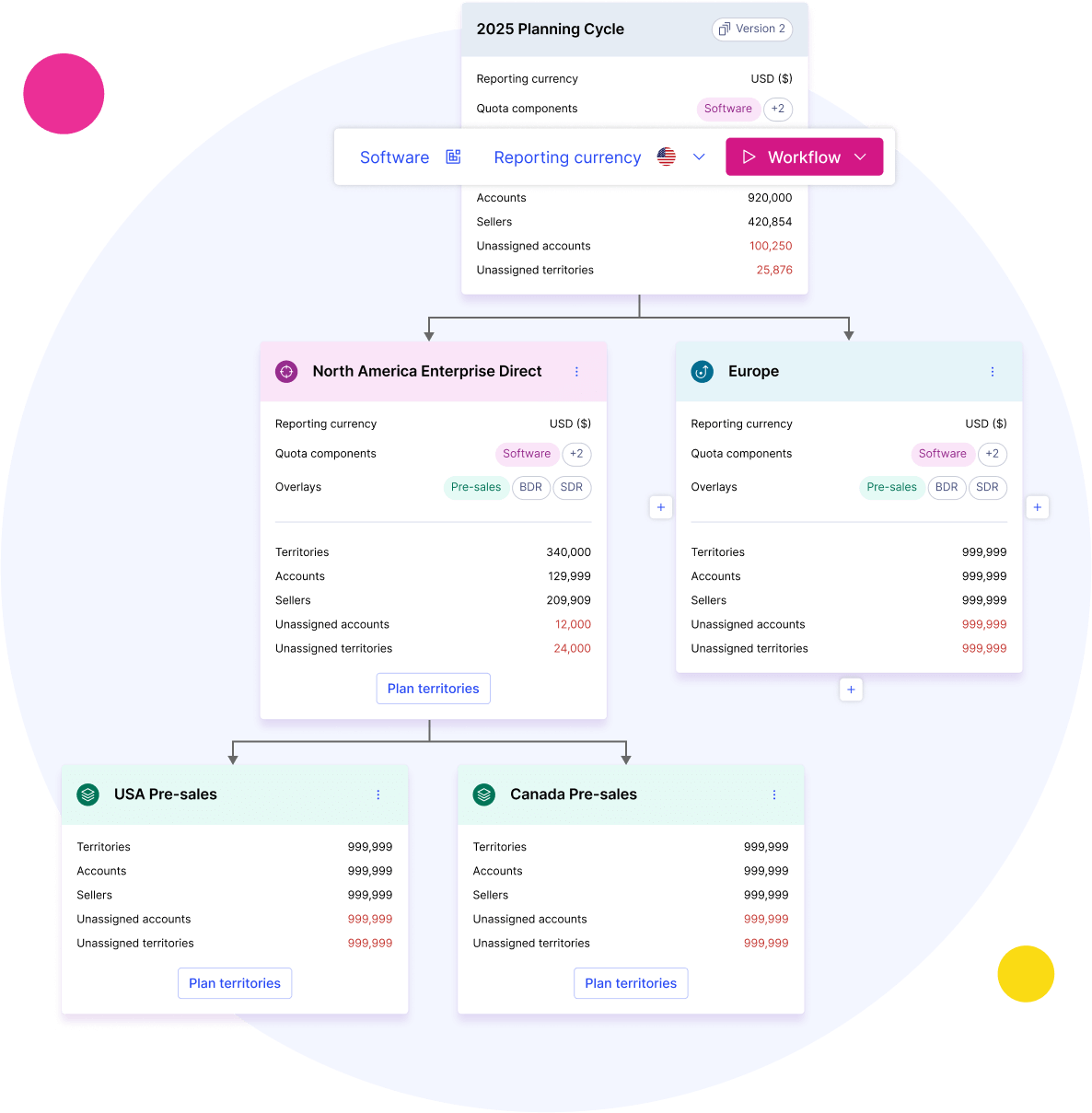
Quotas can be set top-down or bottom-up, allocated with seasonality, and filtered from any hierarchy level.
Source: Varicent
CaptivateIQ Planning is newer but built on the same SmartGrid foundation as its incentive product. It covers headcount/capacity planning, quota setting, and territory/account carving in a connected workspace.

Source: CaptivateIQ
The differentiator is the closed loop: quota changes in Planning automatically sync to Incentives, eliminating the reconciliation burden that plagues teams using separate planning and ICM tools.
Both approaches share a common limitation: their territory and quota models are only as good as the account data feeding them. A territory plan built on stale company data will misallocate coverage. A quota set without understanding which accounts are in-market will produce unfair targets. This is a data problem, not a planning problem, and it sits upstream of both platforms.
AI capabilities: both Forrester Leaders, different architectures
Both Varicent and CaptivateIQ were named Forrester Wave Leaders in Q1 2025 for Sales Performance Management Solutions for Incentive Compensation. Both received high marks for AI. But their approaches differ.
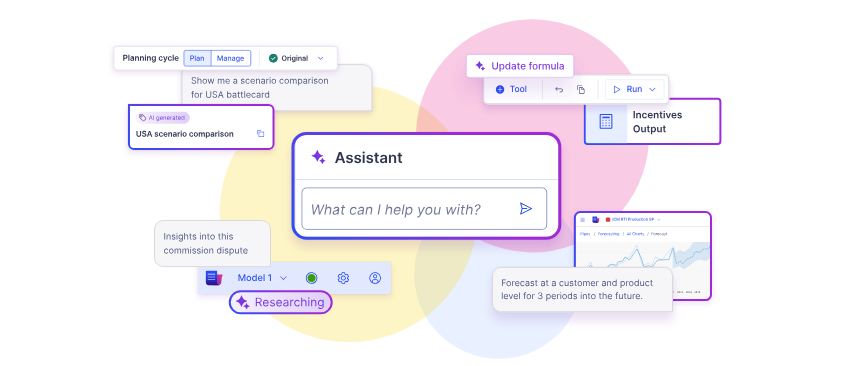
Varicent positions itself as "the only AI-Native SPM platform on the market." Forrester called it "the only solution evaluated with an in-depth set of AI capabilities." CEO Marc Altshuller puts it this way: "Most AI tools make individual work faster. We're focusing on what makes the entire system better." Four named AI assistants cover different workflows:
Designer Assistant helps admins build, test, and adjust incentive plans
Research Assistant resolves seller disputes by analyzing full plan logic
Sales Planning Assistant supports territory and quota scenario modeling
ELT Assistant automates data pipeline construction and validation
Source: Varicent
Varicent's AI is integrated with the compensation logic itself. The Research Assistant understands plan rules, quotas, credit rules, and payout mechanics because it operates within the platform's core, not on top of raw data.
CaptivateIQ earned the highest possible score on "advanced AI capabilities" in the same Forrester evaluation. Its AI strategy centers on three named agents launched in May 2026:
Comp Builder Agent builds compensation plans from natural language descriptions
Comp Ops Agent explains payouts and manages approvals (includes Plan Doc Explainer and Statement Explainer sub-agents)
Rev Planning Agent configures territory assignments from natural language goals.
CaptivateIQ also offers Catalyst, a predictive ML modeling layer for attainment forecasting, payout anomaly detection, and account scoring. Models are trained on customer-specific data rather than generic industry benchmarks.

Source: CaptivateIQ
Both invest heavily. CaptivateIQ's agents are in limited beta with GA planned for later in 2026. Varicent's assistants are more established in production. In either case, the AI quality depends on the data quality feeding the system.
Seller transparency and dispute resolution
Shadow accounting (reps building their own spreadsheets to verify commissions) drains selling time and erodes trust. Both platforms aim to eliminate it.
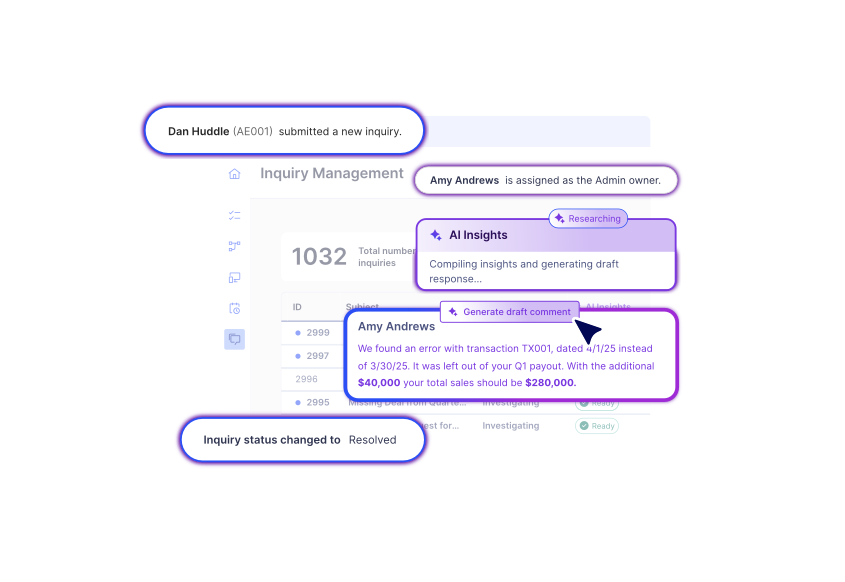
Varicent's Seller Insights gives reps access to performance dashboards, commission statements, and real-time earnings visibility.
Source: Varicent
When disputes arise, the Research Assistant reviews the inquiry in context, assembles relevant plan details, and drafts a response for admin review.
CaptivateIQ takes a similar approach through its AI payee agents. The platform generates "explainable statements" that trace every payout back to plan clauses and underlying transactions, converting calculation logic into plain-English narratives.
Reps can run natural-language what-if analysis and receive predictive payout forecasts.
Both platforms deliver real improvements in seller trust. The difference is architectural: Varicent's Research Assistant operates within the full plan logic (understanding rules, not just numbers), while CaptivateIQ's agents generate explanations by tracing the calculation dependency chain. For reps, both produce faster, clearer answers about how their pay was calculated.
The data gap both platforms inherit
Here's the problem neither Varicent nor CaptivateIQ addresses: the quality of the data feeding their systems.
Both platforms ingest data from CRMs, ERPs, and HRIS platforms. Both have ELT capabilities to transform that data. But neither creates the underlying account intelligence.
They calculate on whatever data they receive. If CRM records are incomplete (and Forbes estimates 91% of CRM data is incomplete), the downstream consequences compound:
Territory plans built on stale company data miss new offices, acquisitions, and headcount changes. A territory that looked balanced six months ago may be wildly uneven today.
Quotas set without market intelligence don't reflect which accounts are growing, shrinking, or in-market. Fair quotas require current TAM data, not just CRM history.
Coverage models without org chart data can't identify buying committees, leading to single-threaded selling and missed expansion opportunities.
Incentive plans designed without intent signals reward activity rather than opportunity, paying commissions on accounts that were never realistic prospects.
This isn't a planning tool problem. It's a data problem. And it sits upstream of every territory, quota, and commission calculation that Varicent or CaptivateIQ runs.
ZoomInfo closes the data gap
ZoomInfo occupies a different position in the sales performance stack. It doesn't compete with Varicent or CaptivateIQ on commission calculations or plan design. Instead, it provides the account and market intelligence that makes those calculations and designs accurate.

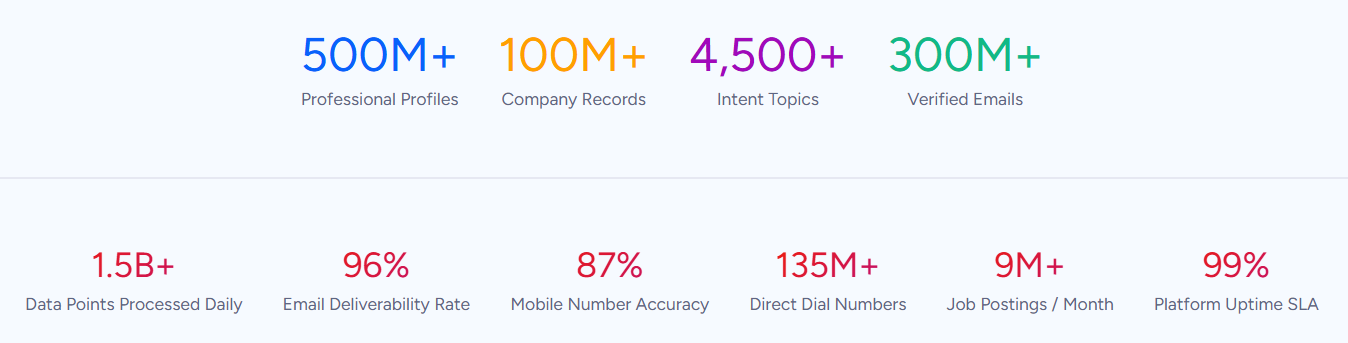
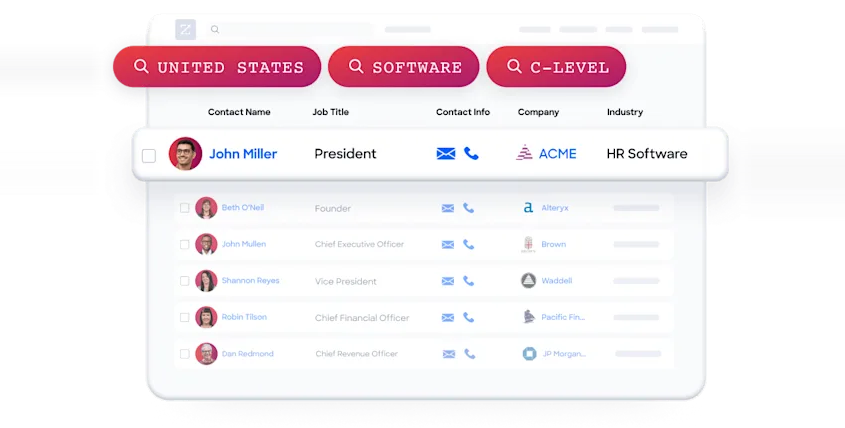
ZoomInfo operates the largest B2B data platform available: 500M contacts, 100M companies, 135M+ verified phone numbers, 120M direct-dial phone numbers, and 200M+ verified business email addresses.
Source: ZoomInfo
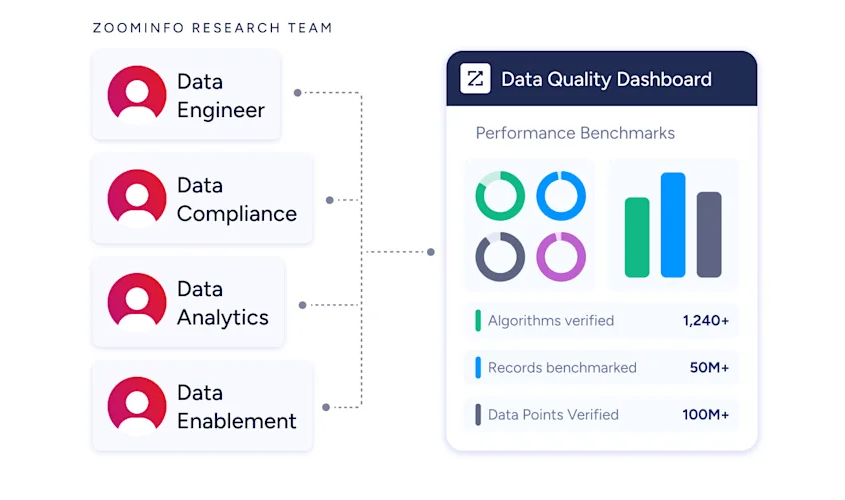
This data comes from a multi-source pipeline backed by 300+ human researchers and verified to up to 95% accuracy on first-party data.
Source: ZoomInfo
In a Fortune 500 competitive RFP analyzing 25 million contacts across vendors, the independent consultant concluded that "no other competitor came even close."
For teams using Varicent or CaptivateIQ, ZoomInfo data improves three planning inputs:
Territory design. ZoomInfo's firmographic data (industry, headcount, revenue, company locations, and parent-child hierarchy relationships) gives territory planners current, verified account attributes rather than whatever was last updated in the CRM.
Technographic profiles covering 30,000+ technologies across 30+ million companies enable tech-stack-based territory segmentation that CRM data alone cannot support.
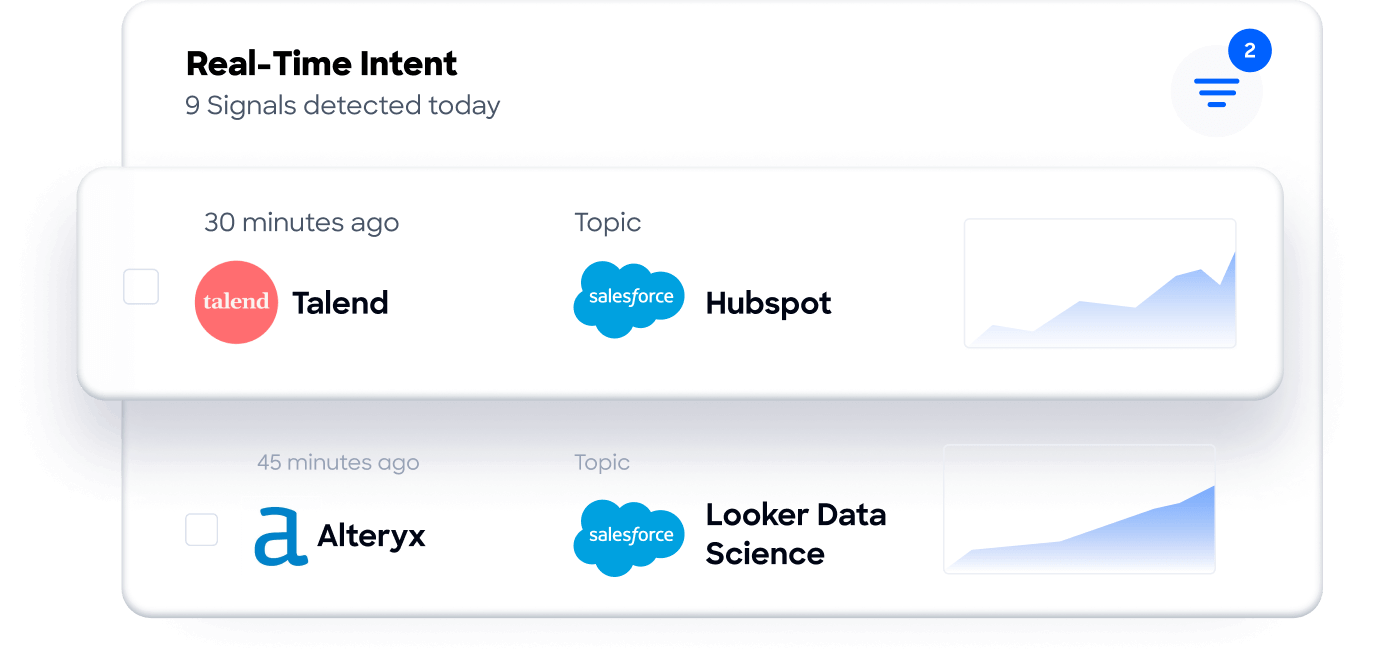
Quota setting. ZoomInfo's intent data reveals which accounts are actively researching solutions, giving quota planners a real-time view of market demand rather than historical assumptions.
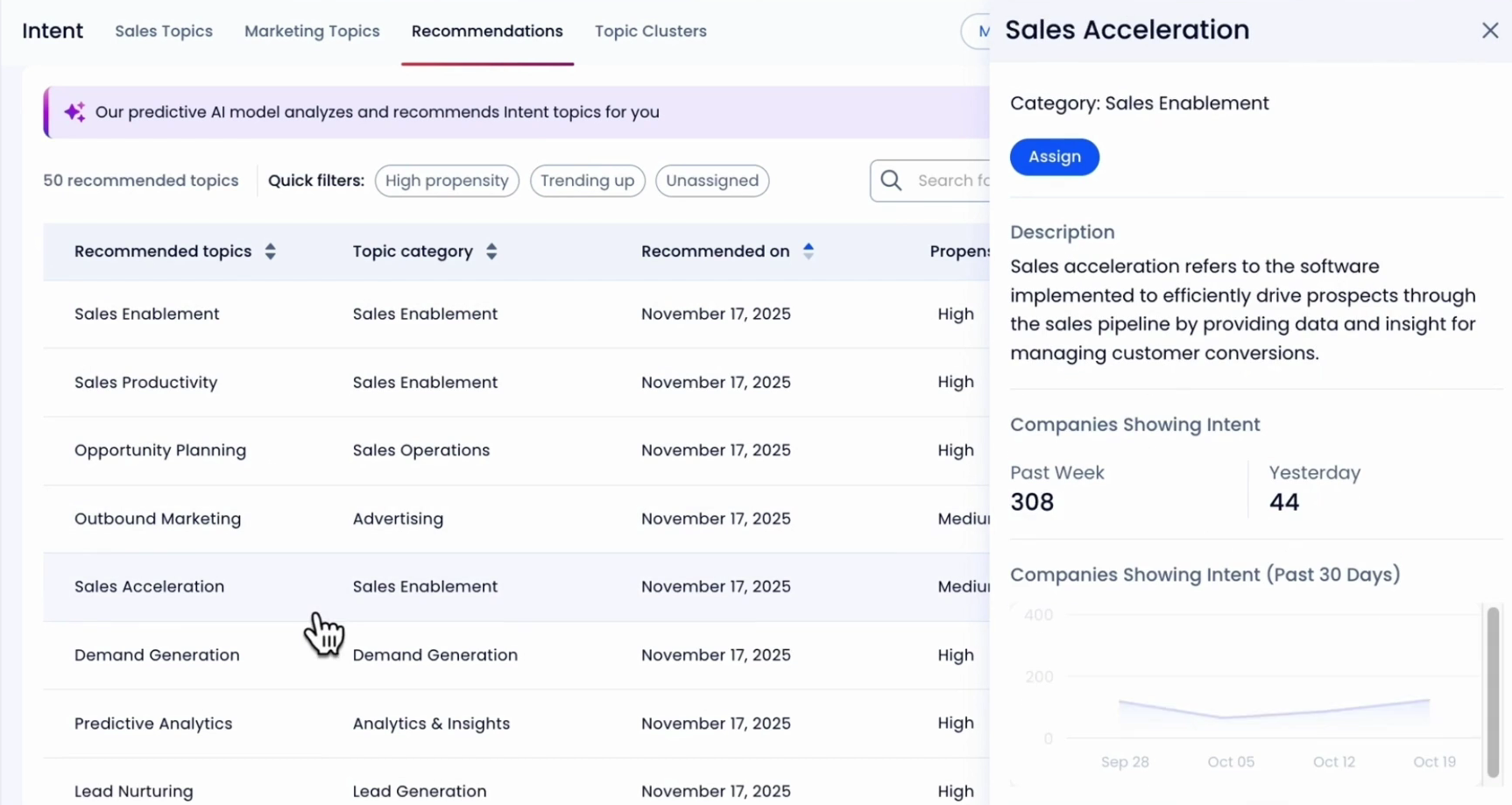
Guided Intent, exclusive to ZoomInfo, identifies topics historically correlated with deal success rather than requiring manual topic selection.
Source: ZoomInfo
Coverage modeling. ZoomInfo's org chart data, department-level contacts, and 300+ company attributes help identify the full buying committee at target accounts, so coverage models reflect the real selling motion rather than single-contact CRM records.
Source: ZoomInfo
The GTM Context Graph takes this further. It fuses ZoomInfo's B2B data with a customer's CRM records, conversation intelligence, and behavioral signals to capture not just what happened in a deal, but why it happened.
Source: ZoomInfo
When your SPM platform knows that accounts with specific signal combinations close at 2x the rate, your territory plans and quota allocations can reflect that pattern.
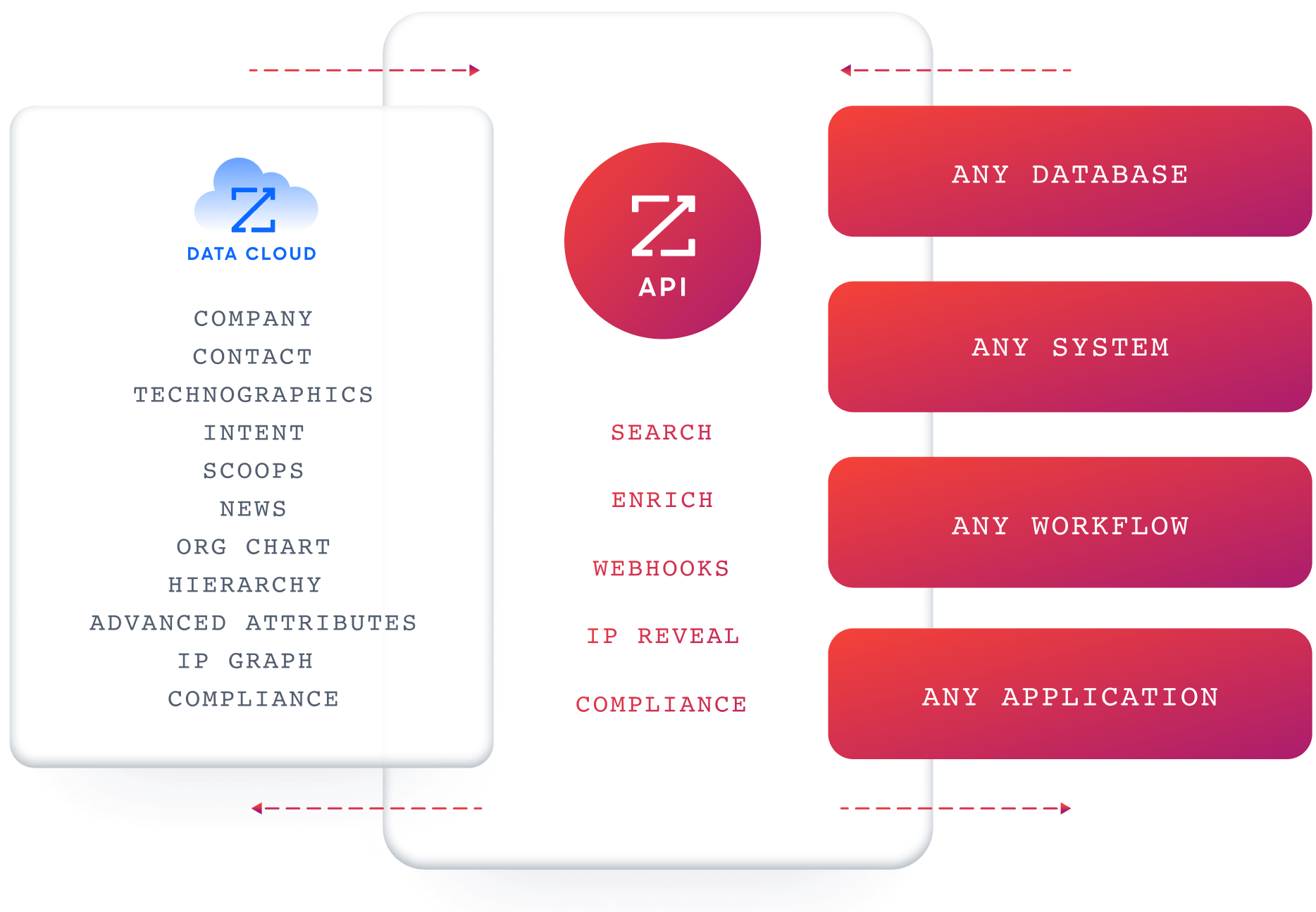
ZoomInfo's data reaches your SPM platform through multiple paths: native CRM integrations (which then feed Varicent and CaptivateIQ's data connectors), the Enterprise API for direct data delivery, and MCP for AI agent access. API access is included in all relevant plans.
Source: ZoomInfo
"We're right in the middle of re-architecting all of our data. ZoomInfo has been a major thought leader and partner in how we approach segmentation, territory planning, and hierarchy clarity." (Palo Alto Networks)
Pricing models are equally opaque
All three platforms require custom quotes, but the pricing structures differ.
Varicent does not publish prices. Its model charges per-Entitlement, with one Entitlement required per Payee for Incentive Compensation and per Person on Quota for Territory & Quota Planning. All payments are non-refundable.
One contract provision worth noting: if a renewal order isn't executed before the subscription expires, Varicent converts to rolling 90-day terms at a 30% fee increase over the prior rate.
Optional VIP Support tiers (Essential, Enhanced, and Elite) add dedicated technical account managers at additional annual cost. Professional services and implementation are scoped and billed through separate Statements of Work.
CaptivateIQ also doesn't publish prices. Pricing depends on "the number of payees, the complexity of compensation plans, and the integrations required", plus a one-time setup fee.
Three separately priced products (Incentives, Planning, and Catalyst) each carry their own subscription cost. ASC-606 reporting is an add-on. Premier and Elite Support tiers are available at additional cost, with commission plan configuration support excluded from the basic tier.
Contracts auto-renew with 30 days' notice required to prevent renewal, and CaptivateIQ may change fees at renewal with 45 days' advance notice.
ZoomInfo uses a consumption-based pricing model that scales around data access, API consumption, and AI activity.
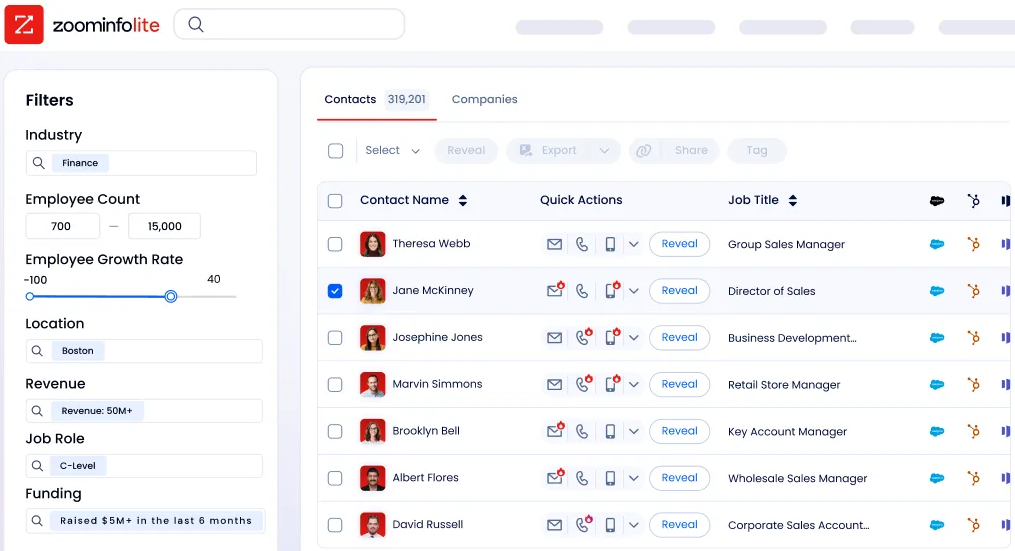
Unlike Varicent and CaptivateIQ, ZoomInfo offers free entry points: ZoomInfo Lite is a permanent free tier with access to the B2B database and 10 monthly export credits, and a 7-day free trial provides full feature access. No credit card required for either.
Source: ZoomInfo
None of the three will tell you what they cost before a sales conversation. But ZoomInfo is the only one that lets you use the product before that conversation happens.
Implementation and learning curves reflect design philosophies
Varicent requires the most upfront investment. G2 reviewers describe complex table dynamics and a need for coding knowledge or dedicated technical resources for routine plan changes.
TrustRadius users note the software requires familiarity with its data model before becoming productive.
Varicent addresses this with structured onboarding: implementation and configuration led by Varicent Technical Experts, with coaching templates, video libraries, and one-on-one sessions. Major implementation partners include Deloitte, KPMG, Accenture, and Argano.
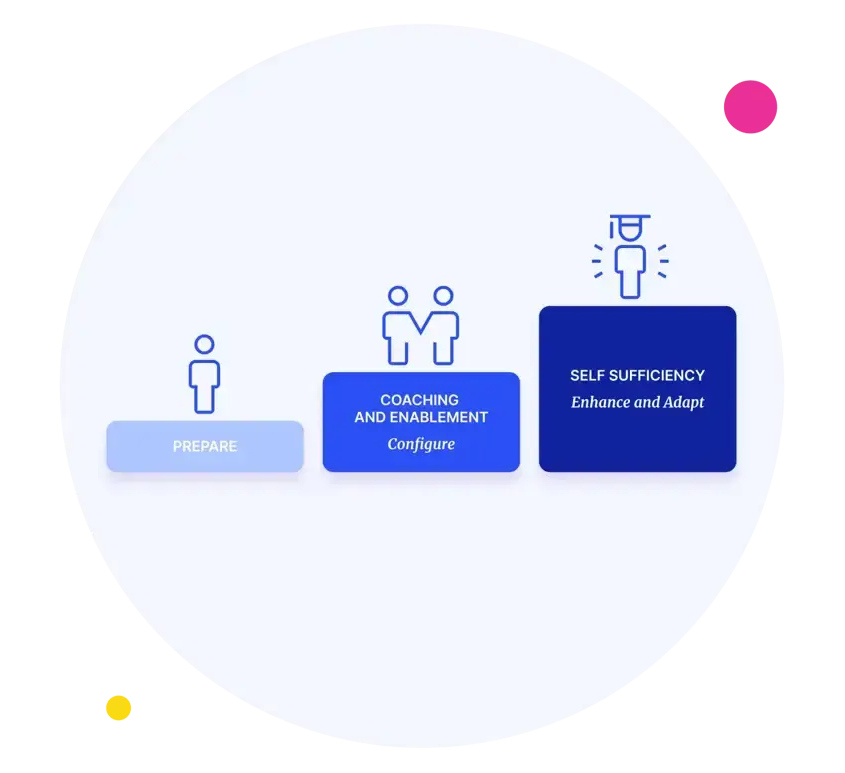
Source: Varicent
The G2 badge for "Easiest Setup" in Mid-Market suggests the experience is improving, but complex enterprise deployments remain substantial projects.
CaptivateIQ markets itself as faster. The pricing page claims organizations can be "up and running in a matter of weeks instead of months." The Guided Plan Builder walks administrators through plan setup step by step.
But G2 reviewers note that the "blank canvas" flexibility means initial setup takes real time for teams unfamiliar with how plans should be structured. Complex deployments can take 4-6 months. Capterra users describe the navigation as navigable once learned but not obvious upfront.
ZoomInfo deploys the fastest, partly because it solves a different (and more contained) problem. GTM Workspace "deploys in weeks, not months."
The company redesigned its onboarding program to span 30 to 90 days, producing a 25% improvement in customer satisfaction scores and winning Rocketlane's Golden Comet award for Best Customer Onboarding Team of 2024.

Source: ZoomInfo
ZoomInfo University provides role-specific learning paths for Sales, Marketing, and Admin users.
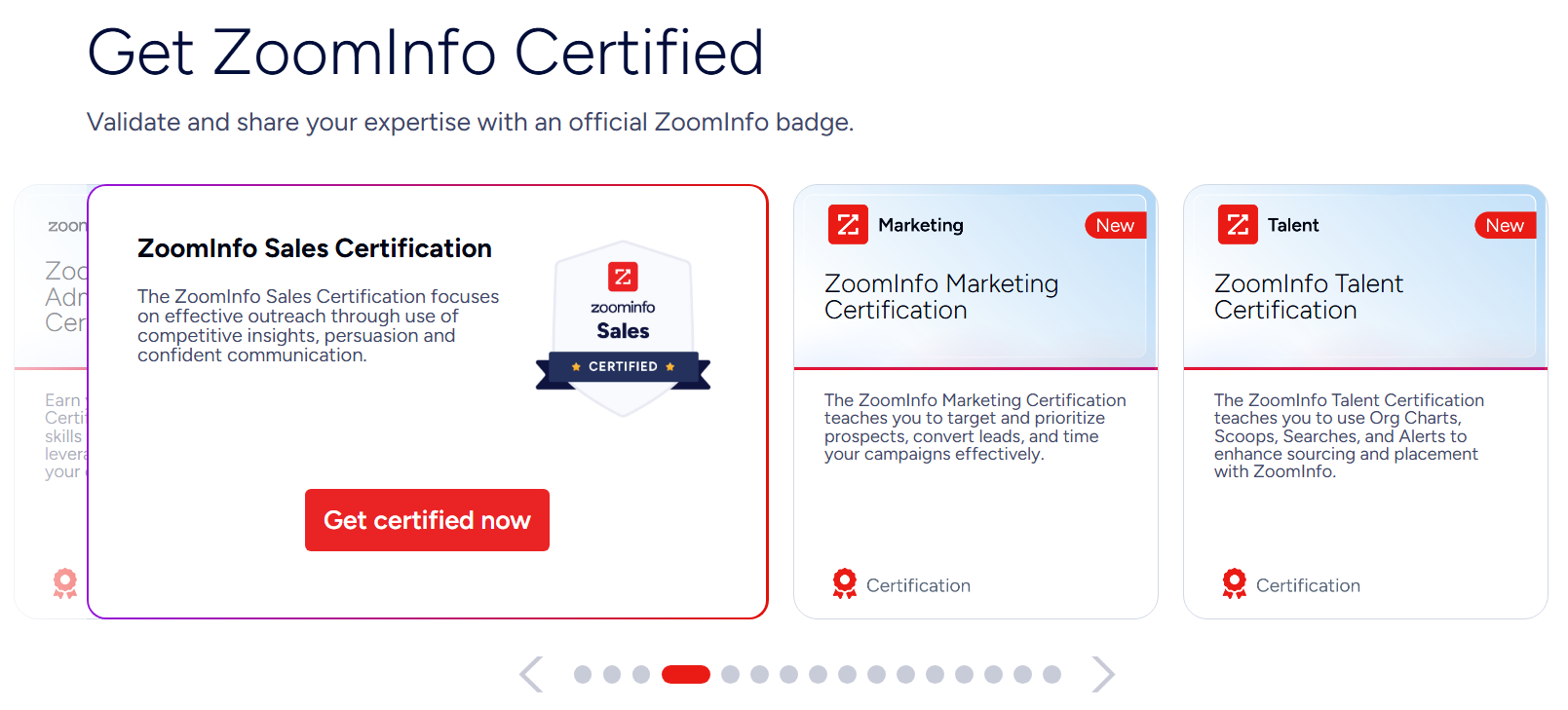
Source: ZoomInfo
Varicent vs. CaptivateIQ vs. ZoomInfo: Which should you choose?
These three platforms occupy different positions in the sales performance stack. The right choice depends on where your biggest gap sits.
Choose Varicent if:
You manage thousands of sellers across complex, multi-tier global hierarchies
Your industry requires audit trails and regulatory compliance (financial services, insurance)
Your compensation plans include retroactive adjustments, multi-currency payouts, and producer-specific structures
You have dedicated technical resources to configure and maintain the platform
You need territory planning with map-based visualization and named account assignment logic
Choose CaptivateIQ if:
Your compensation team needs to own plan changes without IT or developer involvement
You want incentive compensation and sales planning connected in a single data model
You're scaling from hundreds of reps and need fast time to value
Predictive modeling and ML-powered forecasting (via Catalyst) are priorities
You want strong rep-facing transparency to reduce shadow accounting
Use ZoomInfo with either platform if:
You want territory plans built on verified, current account data rather than stale CRM records
You need intent signals to inform which accounts should receive higher quotas and more coverage
Your sales planning depends on accurate firmographic, technographic, and org chart data
You're building a sales performance stack where the data layer is as strong as the compensation logic
Start with ZoomInfo Lite for free, or request a demo to see how ZoomInfo data powers smarter sales planning.
Accounts monitored using ZoomInfo-powered scores showed 90% higher opportunity open rates and 2x higher customer conversion rates. (Snowflake)
The best sales performance stacks don't treat data and compensation as separate problems. Varicent or CaptivateIQ handles plan design, commission calculations, and seller experience. ZoomInfo ensures the account intelligence feeding those systems is verified and current. Together, they close the gap between what your incentive plans assume and what your market actually looks like.
Varicent vs. CaptivateIQ vs. ZoomInfo FAQ
What is the key difference between Varicent and CaptivateIQ?
Varicent is a 20-year enterprise SPM platform built for complex, multi-tier global compensation structures with a specialized development model and deep configurability. CaptivateIQ is an ICM platform founded in 2017 that combines commission management and sales planning in a no-code interface, targeting mid-market and enterprise teams that want flexibility without heavy technical dependencies. Both were named Forrester Wave Leaders in Q1 2025 for Sales Performance Management Solutions for Incentive Compensation.
How does ZoomInfo relate to Varicent and CaptivateIQ?
ZoomInfo is not a commission calculation or incentive compensation tool. It is a complementary data intelligence platform that provides the account, company, and market data that territory plans, quotas, and coverage models depend on. ZoomInfo's firmographic, technographic, intent, and org chart data enriches CRM records, which then feed into Varicent or CaptivateIQ for compensation and planning workflows. The two categories address different problems in the same revenue stack.
Which platform handles more complex compensation plans?
Varicent has the deeper track record for structural complexity. Its calculation engine earned Forrester's highest score for processing power, and customers like CDW manage 6,000 payees across 125 plans in a single system. CaptivateIQ handles complex plans through its SmartGrid engine (processing 10M+ source transactions in 12 seconds) and supports up to 7,000 unique simultaneous plans, but has had less time to develop the configurability Varicent offers for insurance-specific scenarios, COBOL system migration, and multi-tier retroactive adjustments.
Do both Varicent and CaptivateIQ offer sales planning?
Yes. Both platforms now cover territory design, quota setting, and capacity planning alongside incentive compensation. Varicent's sales planning is more mature, with map-based territory visualization, precedence-based named account assignment, and complex multi-hierarchy modeling. CaptivateIQ's planning is newer but shares a data model with its incentive product, meaning quota changes automatically sync to commission structures without manual reconciliation.
Which platform is easier to implement?
CaptivateIQ is generally faster to deploy for mid-market organizations, with a guided plan builder and no-code interface. Its marketing claims "weeks instead of months," though G2 reviewers note complex deployments can take 4-6 months. Varicent requires more technical resources upfront and uses a structured onboarding model backed by implementation partners like Deloitte, KPMG, Accenture, and Argano. Neither platform offers a free trial or self-serve onboarding.
How do the AI capabilities compare between Varicent and CaptivateIQ?
Both platforms received top AI marks from Forrester. Varicent offers four named AI assistants covering plan design, dispute resolution, sales planning, and data pipeline automation. Forrester called it "the only solution evaluated with an in-depth set of AI capabilities." CaptivateIQ earned the highest possible score on AI capabilities from the same evaluation and offers three AI agents for plan building, compensation operations, and revenue planning, plus a Catalyst ML layer for predictive modeling trained on each customer's own data. CaptivateIQ's agents launched in May 2026 and remain in limited beta.
Is there a free option for trying any of these platforms?
Neither Varicent nor CaptivateIQ offers a free trial or free plan. Both require contacting sales for a custom quote. CaptivateIQ provides interactive product tours via Navattic. ZoomInfo is the only platform among the three with free entry points: ZoomInfo Lite is a permanent free tier with 10 monthly export credits, and a 7-day free trial provides broader feature access with no credit card required.
Why would I need ZoomInfo if my CRM already feeds data into Varicent or CaptivateIQ?
CRM data decays quickly and is often incomplete. ZoomInfo provides continuously verified account data covering 500M contacts and 100M companies, with up to 95% accuracy on first-party data. It also provides intent signals showing which accounts are in-market and technographic profiles covering 30,000+ technologies across 30+ million companies. This data enriches CRM records before they flow into Varicent or CaptivateIQ, producing more accurate territory plans, fairer quotas, and better coverage models than CRM data alone can support.
More Varicent and CaptivateIQ comparisons:
