
Verint is an enterprise CX automation platform that deploys more than 50 specialized AI bots across contact center workflows, from self-service containment and real-time agent coaching to workforce scheduling, quality assurance, and speech analytics.
If you're evaluating Verint or already running it, the question isn't whether it does a lot (it does), but what each capability covers, how it works, and where access depends on your contract. This breakdown maps every feature area, the mechanics behind each, and where the platform's scope ends.
Verint's feature set has you covered if:
You operate a large contact center and need AI-powered self-service handling voice, chat, SMS, and messaging channels from a single IVA
You want automated quality evaluation covering 100% of interactions instead of the typical 1-3% manual sample
You need workforce forecasting, scheduling, and intraday management with agent self-service schedule flexibility
You run a financial services operation requiring compliant recording and surveillance of trading communications across voice, mobile, and Microsoft Teams
You want real-time coaching that nudges agents during live calls with next-best-action guidance, compliance reminders, and cross-sell prompts
You need speech and text analytics that transcribe and categorize every interaction to surface root causes, trending topics, and compliance risks
You'll reach the edges of its capabilities if:
You need a B2B contact and company database to fuel outbound prospecting or account-based sales motions
You want buyer intent signals showing which companies are researching your category before they contact you
You need to identify anonymous website visitors and connect them to verified contact records for outreach
You want marketing orchestration, display advertising, or multi-channel campaign management alongside your CX operations
You want to try the platform before committing, with no published pricing or self-serve entry available
For those needs, the reference point is ZoomInfo: a GTM platform built on 500M contacts, 100M companies, 135M+ verified phone numbers, and 200M+ verified business emails. Its GTM Context Graph fuses B2B data with CRM records, conversation intelligence, and behavioral signals into a single intelligence layer, with access through APIs, MCP, GTM Workspace, and GTM Studio.
After the feature breakdown, this article covers where Verint stops and how ZoomInfo fills those gaps.
Verint Platform Overview
Source: Verint
Verint calls itself "The CX Automation Company", targeting enterprise contact centers that want to cut costs and improve customer experience through AI without replacing existing telephony infrastructure.
The platform serves roughly 10,000 customers in more than 175 countries, including Fiserv, Instacart, Navy Federal Credit Union, Novo Nordisk, Sky, and Wayfair. More than 80% of the Fortune 100 are customers, and about 4 million agents use the platform.
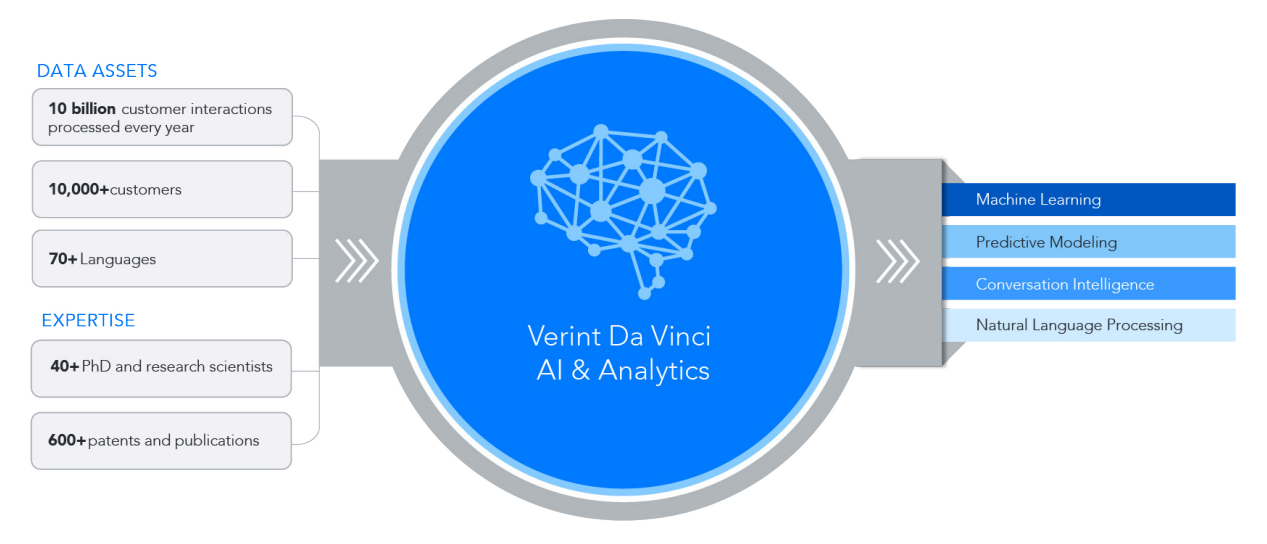
Two layers form the foundation: Verint Da Vinci AI, a model-agnostic AI engine combining commercial, open-source, and proprietary models behind service APIs, and the Engagement Data Hub, which unifies interaction data, experience data, and workforce performance data to train Verint's bots. On top of those layers sit the platform's capability areas:
Capability Area | What It Does |
|---|---|
Self-service IVA across voice and digital channels, plus autonomous AI agents for end-to-end task completion | |
Speech, text, and interaction analytics across 100% of customer conversations | |
GenAI-powered knowledge retrieval and summarization for agents and bots | |
Real-time coaching, call wrap-up, smart transfer, and knowledge surfacing during live interactions | |
Automated evaluation and scoring of 100% of agent and bot interactions | |
Forecasting, scheduling, intraday management, agent self-service, hiring, and back-office work allocation | |
Compliant recording, surveillance, and analytics for trading and regulated financial communications | |
Physical security, video surveillance, and fraud investigation for banks and credit unions |
Verint does not publish pricing. All engagement flows through Contact Sales or a Get a Demo form, with contracts negotiated on scope, user count, and consumption.
The platform deploys on-premises, in the cloud, or in hybrid environments, and most bots can deploy in 30 days on top of existing infrastructure. Here is the full tour.
Verint Conversational and Agentic AI
The Intelligent Virtual Assistant (IVA) is the self-service engine at the center of Verint's conversational AI. It handles customer interactions across voice, chat, SMS, and messaging channels from a single deployment, so organizations don't need separate bots per channel.
Source: Verint
The IVA uses a hybrid AI approach that combines NLU models (backed by 90,000 built-in intents) with generative AI, and operators control when each applies.
That control matters in regulated industries like banking and insurance, where certain responses must follow scripted compliance paths rather than open generation.
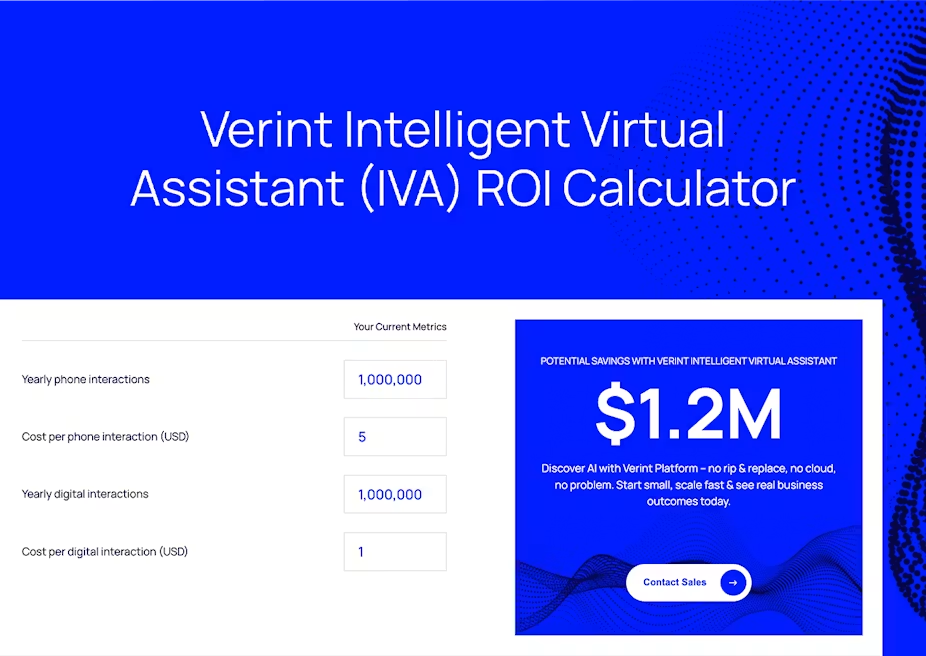
Beyond FAQ deflection, AI Agents handle end-to-end transactions autonomously: booking appointments, processing payments, updating accounts. These agents resolve issues rather than route them to a human. Pre-trained agents covering hundreds of industry use cases ship with built-in ROI tracking dashboards per bot.
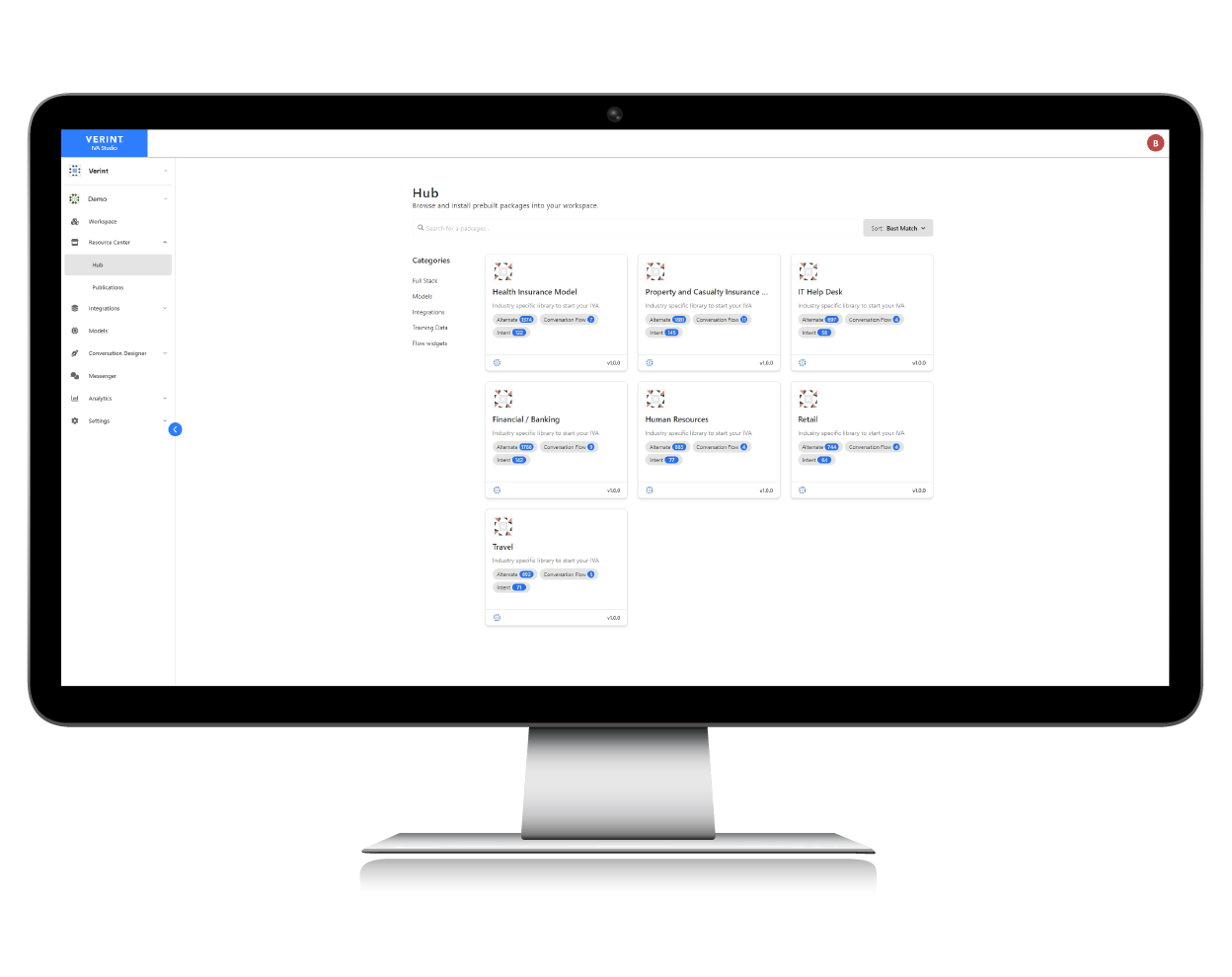
IVA Studio is the low-code, drag-and-drop environment for building, managing, and testing conversational flows, with pro-code access for advanced customization.
Source: TrustRadius
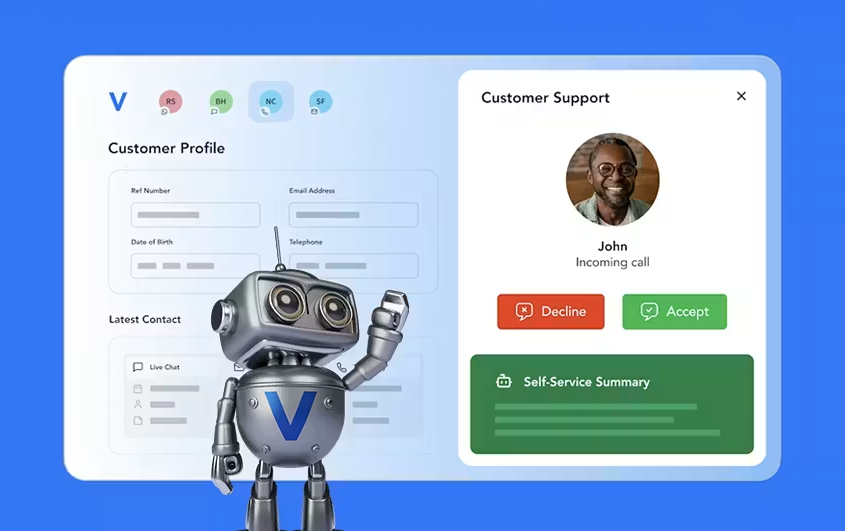
For voice, Verint IVA Voice augments existing IVR infrastructure without requiring full replacement, so organizations can modernize at their own pace.
Source: Verint
The IVA supports any commercial or third-party LLM alongside Verint's proprietary models and includes image recognition: customers can share photos for the IVA to identify a product's make and model.
Verint Agent Copilot Bots
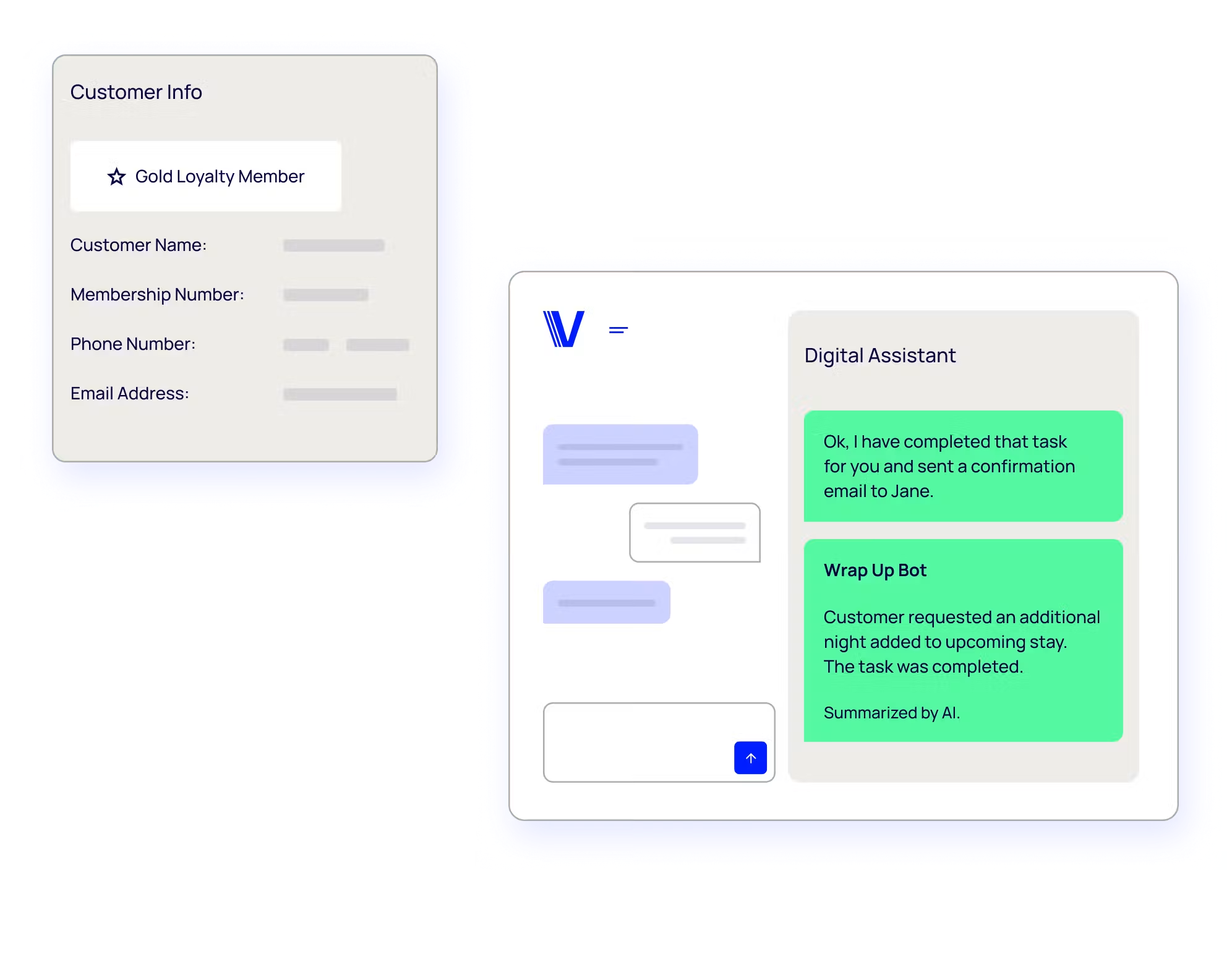
The Agent Copilot Bots are task-specific AI bots that run alongside human agents during live interactions. Each bot targets one task and delivers one measurable outcome, making ROI attribution clear before scaling.
Source: Verint
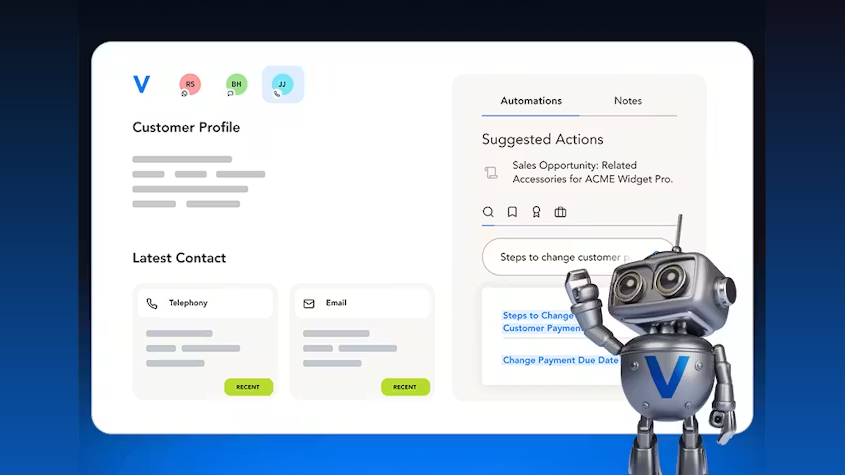
Coaching Bot delivers in-the-moment guidance during live calls without disrupting the conversation. It covers next-best-action recommendations, soft skills prompts, sales assistance, compliance adherence (100% adherence is the design target), and retention coaching.
Source: Verint
The bot trains on each customer's interaction and agent data in the Verint Data Hub, so its coaching reflects patterns that actually drive outcomes for that organization.
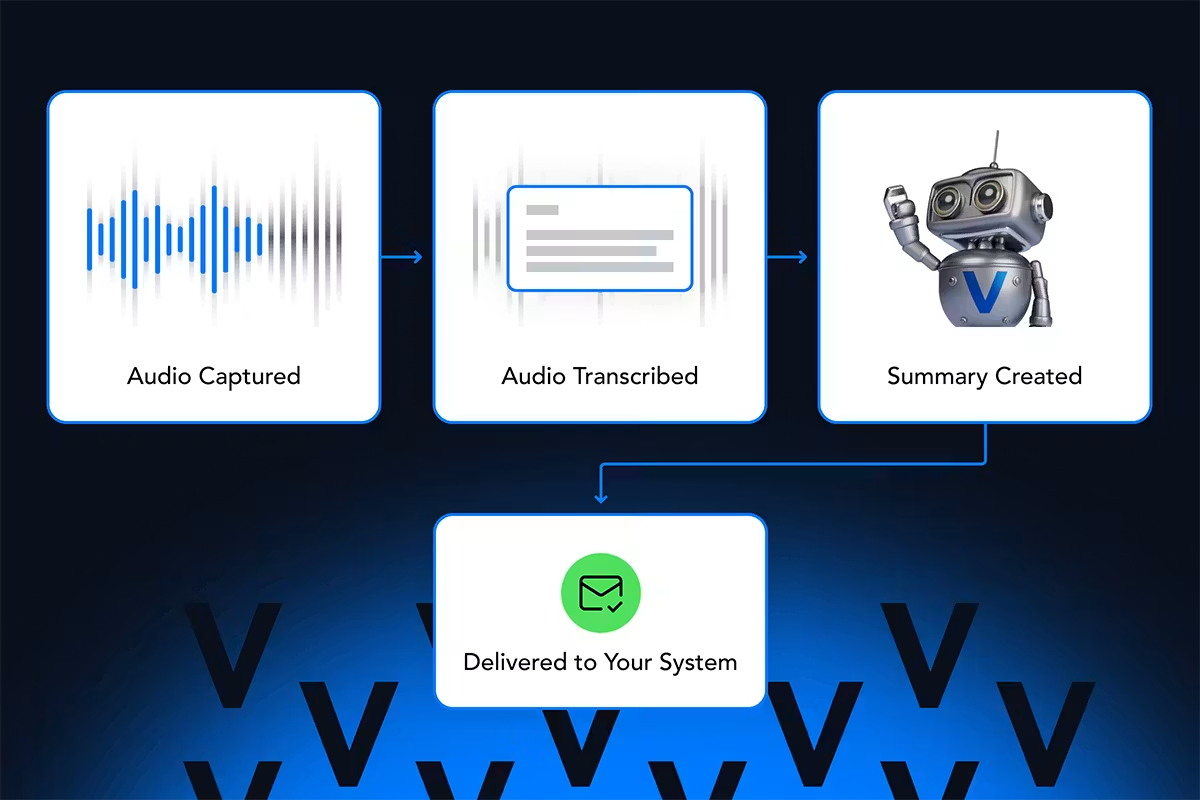
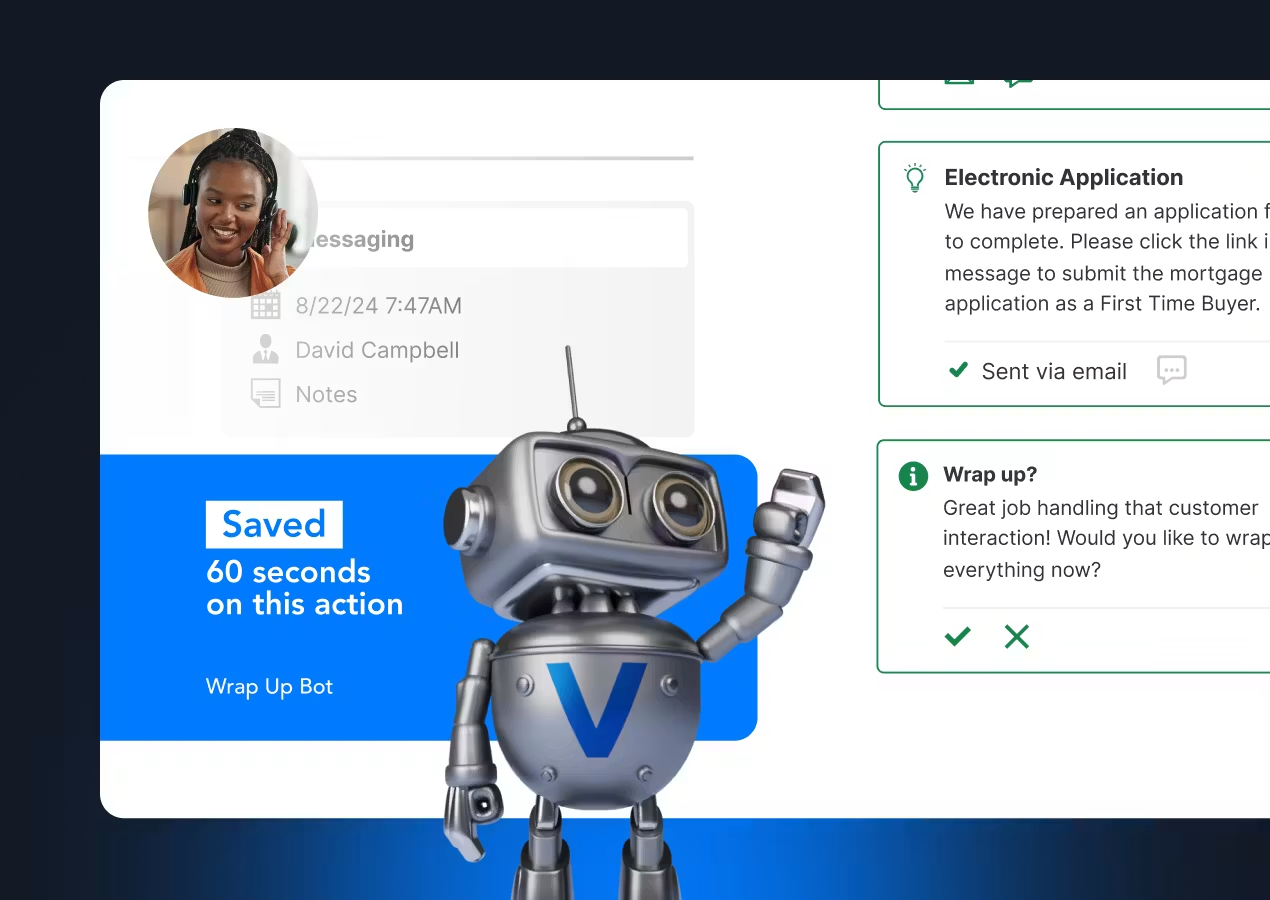
Wrap Up Bot generates post-interaction summaries using GenAI and delivers them to the system of record within seconds of a call ending. It operates across 80+ languages, supports voice and digital channels, and deploys in on-premises, cloud, or hybrid environments.
Source: Verint
Smart Transfer Bot analyzes context at the point of transfer to determine the next best action and passes full interaction history to the receiving agent, reducing handle time at the start of the transferred call.
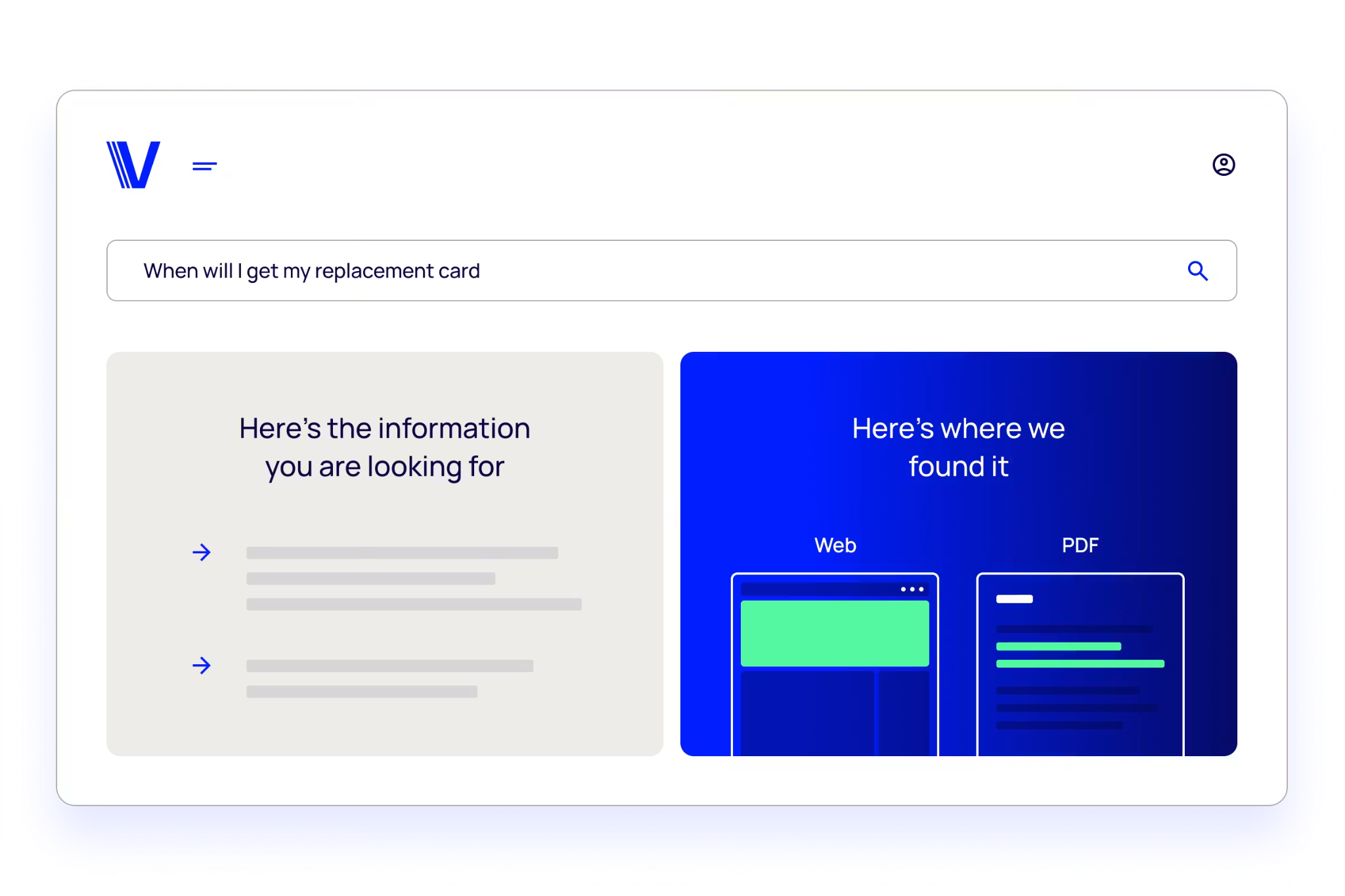
Knowledge Automation Bot uses GenAI to synthesize search results into a single concise answer, requiring no additional content authoring.
Source: Verint
The Agent Virtual Assistant uses context from third-party applications to complete transactions on behalf of the agent. All copilot bots deploy in 30 days with no operational disruption and sit on top of the agent's existing desktop without replacing CRM, telephony, or CCaaS infrastructure.
Verint CX Analytics
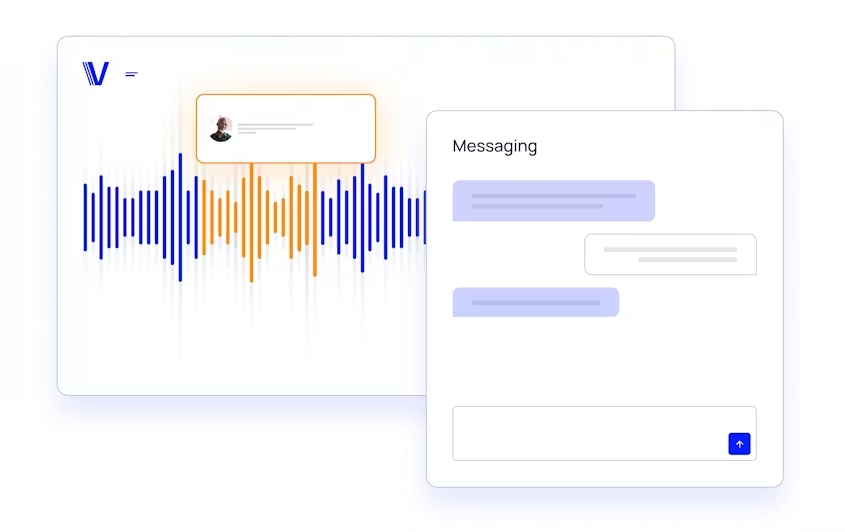
Verint CX Analytics analyzes every customer interaction across voice, chat, email, social media, and digital channels. The suite runs on two engines (one for speech, one for text) and merges their outputs into a single analytics view.
Source: Verint
Speech Analytics transcribes and analyzes 100% of recorded calls. The underlying Exact Transcription Bot trains continuously on organization-specific vocabulary and produces over 90% comprehension accuracy with speaker-separated transcription.
Source: Verint
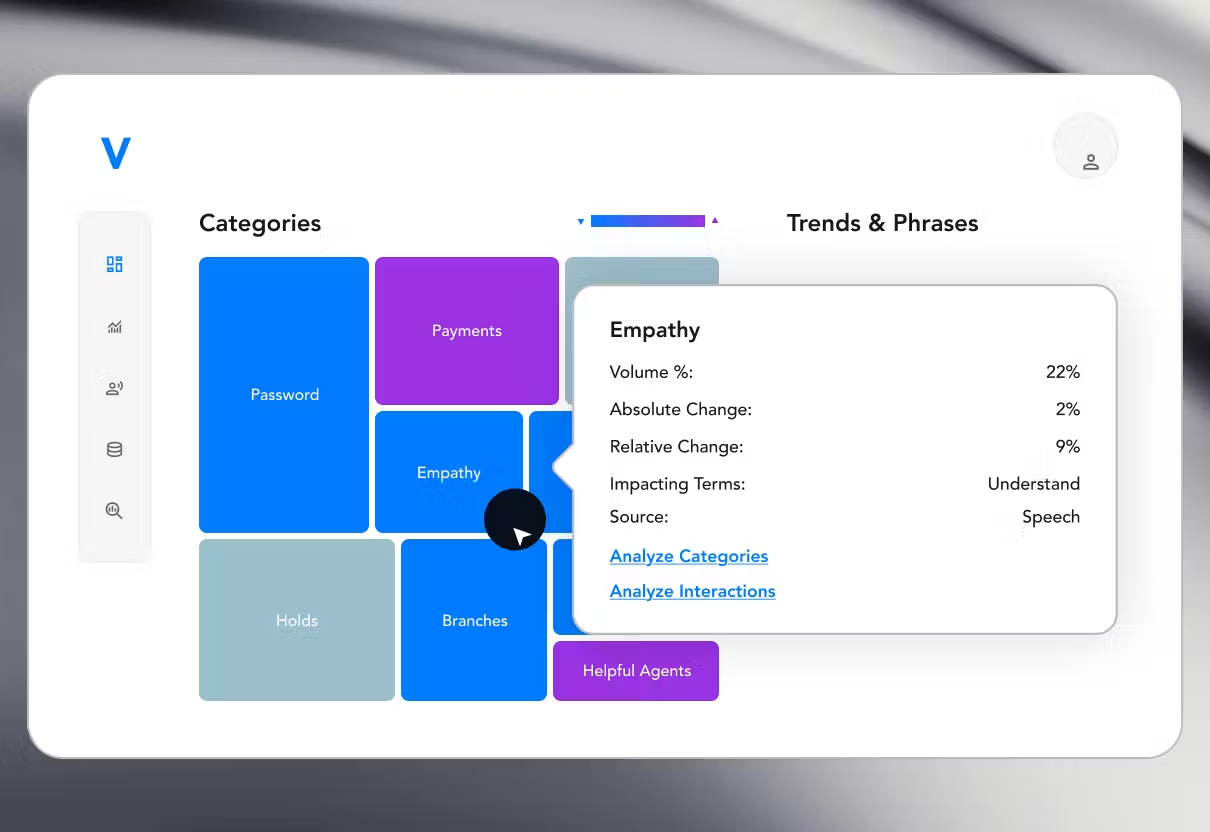
On top of the transcription layer, the system auto-discovers words, phrases, categories, and themes, runs sentiment analysis on every interaction, generates visual call maps, provides push-button root cause analysis, and detects emerging trends. GenAI generates call summaries automatically.
Text Analytics uses a separate engine built for written channels: web chat, email, social media, and call notes. It delivers channel-specific metrics including overtalk, silence, idle time, and message count.
Interaction Analytics connects sentiment, categories, and alerts from both engines into a single cross-channel view. The value shows in how analysts use the data: the Genie Bot lets analysts ask natural-language questions about a subset of calls and get GenAI-powered answers immediately. What previously took weeks of manual analysis compresses to minutes.
The Data Insights Bot serves business users without analyst skills, automatically discovering trends and anomalies through conversational queries.
Source: Verint
Desktop and Process Analytics tracks how employees spend time at workstations to identify process inefficiencies.
An Analytics Marketplace, included at no additional charge for Speech Analytics and Text Analytics customers, provides rolling access to new reports, categories, and updated models.
Verint Knowledge Automation
Verint Knowledge Automation addresses a specific bottleneck: agents waste time hunting for answers across disconnected repositories, which lengthens handle times and frustrates customers. Verint's approach skips the traditional months-long knowledge consolidation project.
Source: Verint
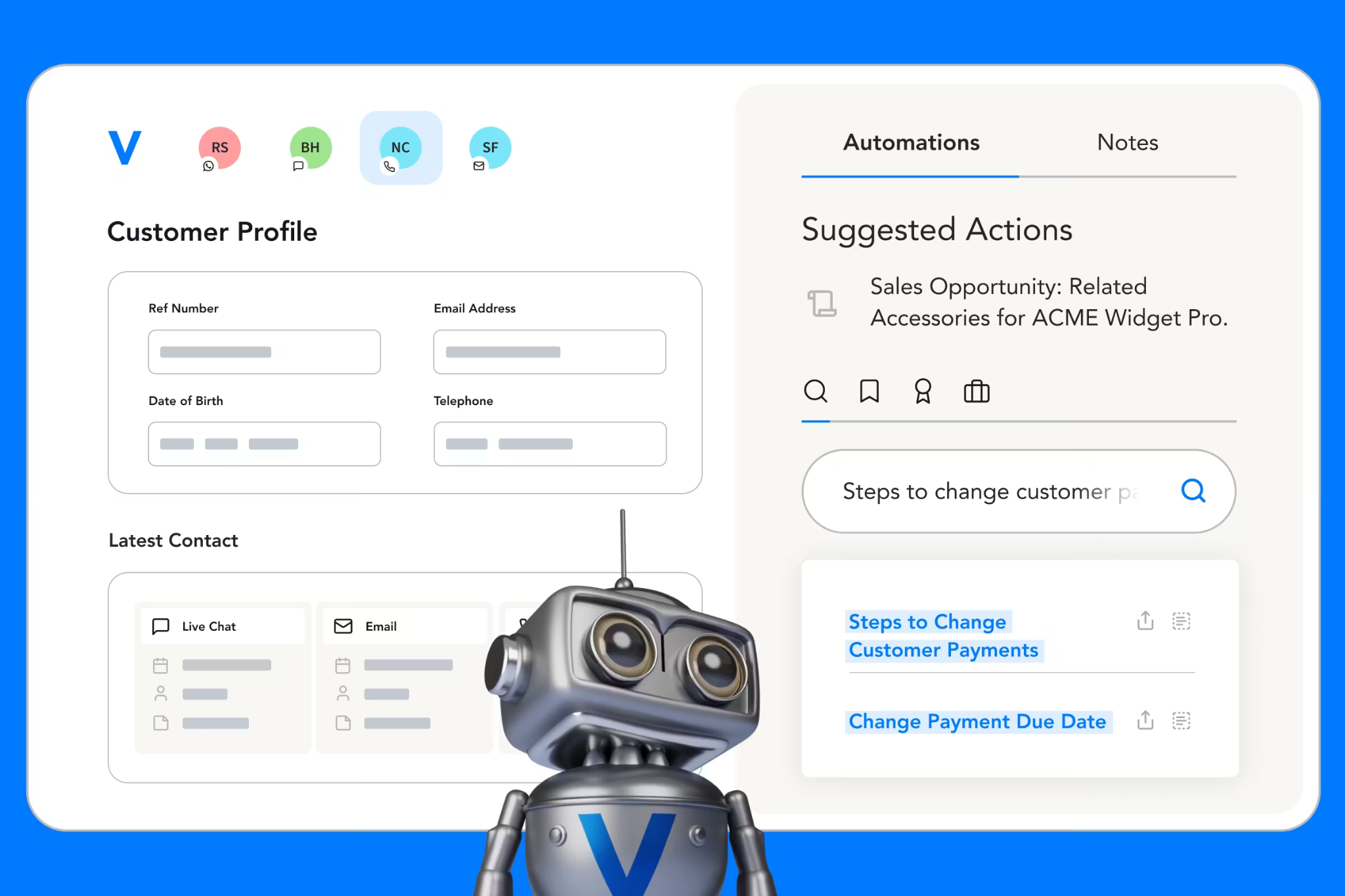
The Knowledge Automation Bot works in three steps. It spiders content from approved sources enterprise-wide regardless of format, uses generative AI to summarize an answer from the most relevant sources, and presents the answer alongside original source links for traceability.
The lookup takes seconds, delivered through a single search bar that works with any agent desktop.
The key architectural decision: no content migration, re-curation, or re-architecting required. The bot connects to existing enterprise content from day one and deploys within 30 days. This separates it from traditional knowledge management platforms that require months of content consolidation before delivering value.
Two supporting capabilities surround the core bot. The Knowledge Creation Bot identifies gaps in the knowledge base and auto-generates new articles to fill them.
The Knowledge Suggestion Bot surfaces context-specific knowledge during live interactions without the agent initiating a search. The system operates across 30+ languages and handles hundreds of thousands of content objects.
Verint Quality Automation
Verint Quality Automation replaces the typical 1-3% manual QA sample with automated evaluation of 100% of interactions across voice, chat, email, and digital channels. The core product is the Verint Quality Bot.
The bot works in three stages. Supervisors define evaluation criteria in natural language, and the bot uses GenAI to cut the effort and cost of building evaluation forms.\
It then scores voice and digital interactions automatically on script adherence, agent empathy, compliance, and other criteria. When a quality threshold trips, the system assigns coaching sessions automatically, closing the loop between evaluation and improvement.
The bot evaluates both human agent and bot interactions, providing a single quality view as bot-handled volumes increase. Scoring outputs feed an agent skillset database with question-level insight into empathy, script adherence, and compliance.
The Quality Bot's outputs also feed directly into the Coaching Bot, CX/EX Scoring Bot, and Data Insights Bot for closed-loop quality management.
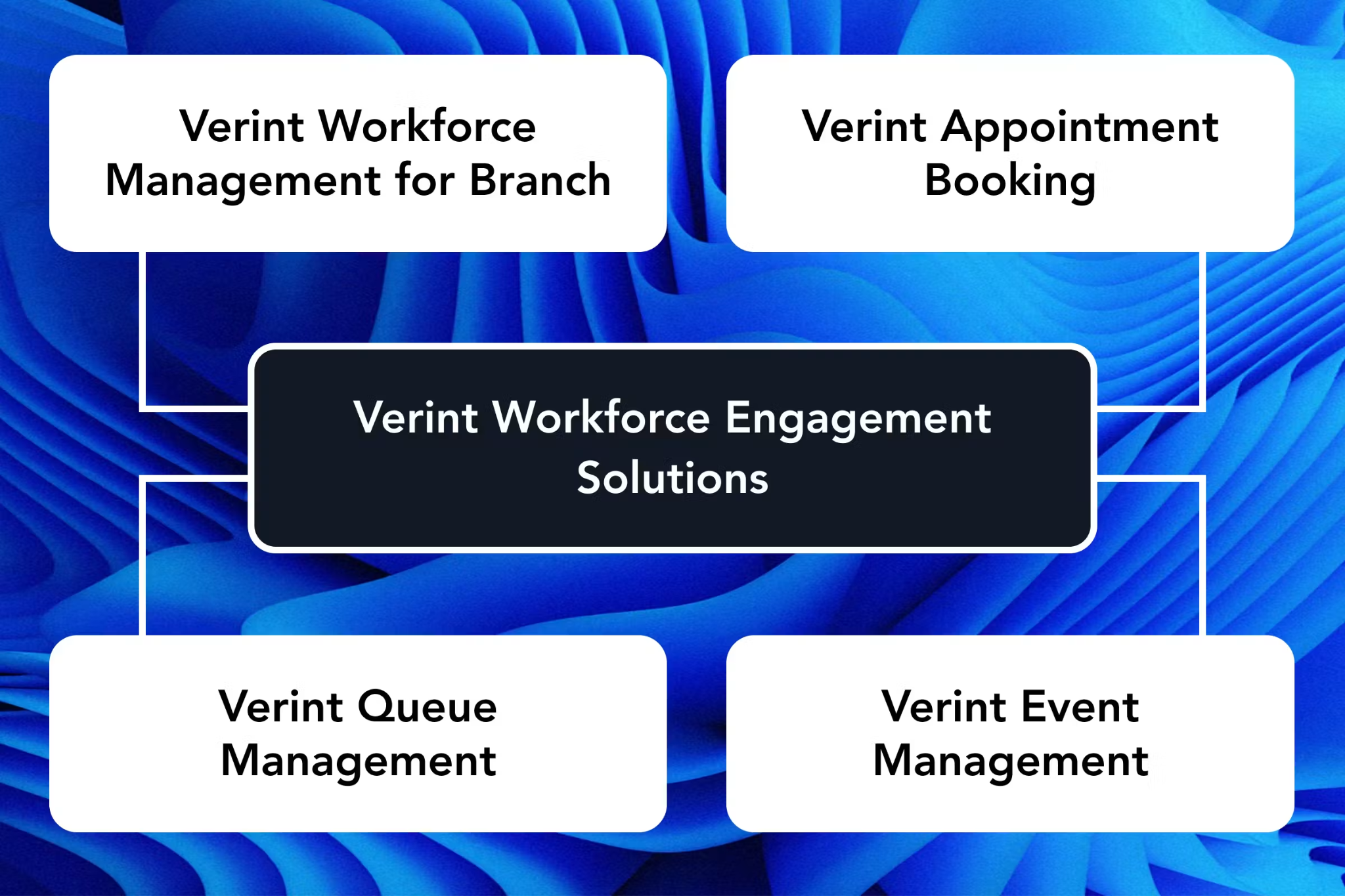
Verint Workforce Engagement
Verint Workforce Engagement covers the full staffing lifecycle: forecasting, scheduling, intraday management, agent self-service, hiring, coaching, and back-office work allocation. It targets the tension between adequate staffing and headcount costs.
Source: Verint
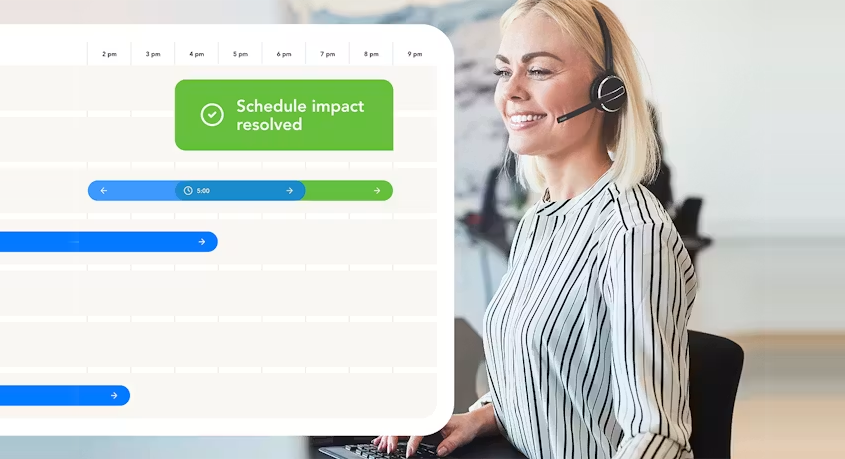
AI-powered forecasting predicts interaction volumes and capacity requirements across channels and skills, including long-range planning horizons. Optimized schedules match agents with the right skills to demand, and Workforce Excellence adapts in real time, surfacing intraday risks before they hit SLAs with prioritized recommendations.
TimeFlex Bot is the agent self-service scheduling layer. Agents make schedule changes within automated business rules, without supervisor approval.
Source: Verint
Interviewing Bot screens candidates against top-performer characteristics before hire.
Work Allocation Bot prioritizes and assigns back-office work to employees with matching skills for multi-touch, multi-step processes. The Data Insights Bot adds WFM dashboards and natural language queries for workforce data.
Workforce Management for Branch extends scheduling and multi-skilling to physical branch networks, a differentiator for banking and retail customers managing both contact center and branch operations.
Verint Financial Compliance
Verint Financial Compliance is a specialized module for trading and financial services organizations subject to MiFID II, MiFID III, Dodd-Frank, MAR, and FCA PS25/23 regulations. Emerging AI regulations such as the EU AI Act and Digital Operational Resilience Act (DORA) add requirements around AI transparency and auditability.
The module has four integrated layers.
Capture records, secures, and archives regulated interactions across trader voice (IPC, BT dealerboards), IP telephony, mobile, and unified communications platforms including Microsoft Teams and Cisco.
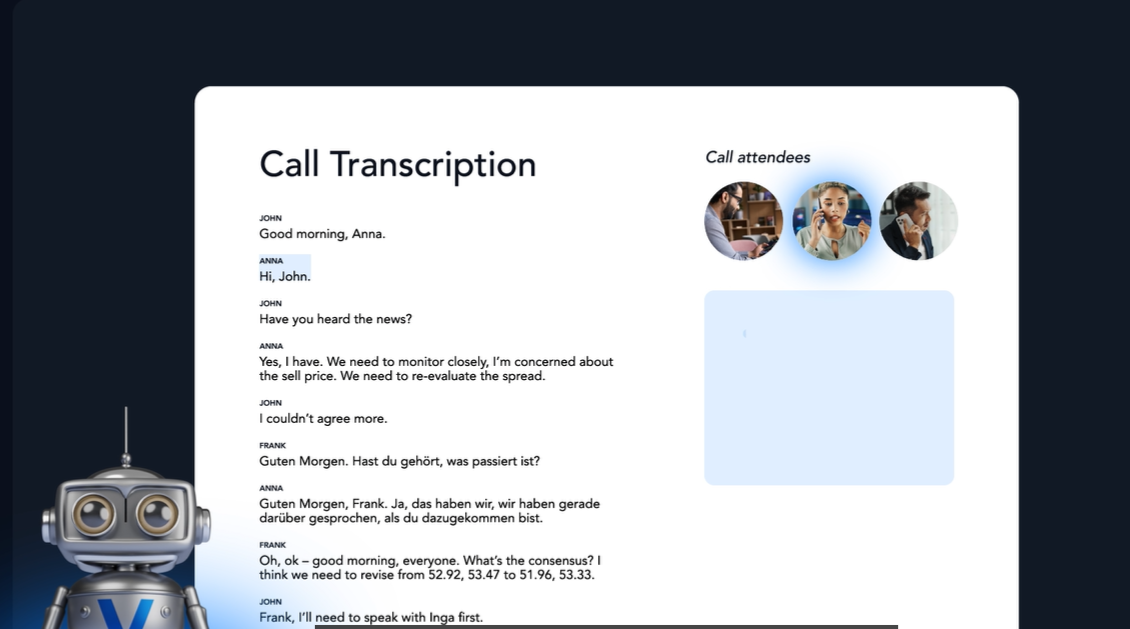
Communications Analytics applies AI-powered speech recognition pre-trained for financial markets terminology with multi-lingual support to identify compliance and conduct breaches.
Source: Verint
AI Insights extracts intelligence for regulatory information requests and provides explainable, auditable AI outputs to satisfy DORA transparency requirements.
Mobile Recording captures regulated mobile calls, texts, and digital interactions.
The platform is certified by Microsoft for Microsoft Teams Compliance Recording, covering all communication features including persistent chat.
Customers include Saxo Bank, OFI Asset Management, NinetyOne, and Winterflood Securities. Strategic partners include Microsoft, Cisco, IPC, BT, Symphony, Zoom, SteelEye, and Wordwatch.
Verint Fraud and Security Solutions
Verint Fraud and Security Solutions is a physical security and fraud investigation platform for banks and credit unions. Verint holds the #1 position in fraud investigation for financial institutions, serving 7 out of 10 top financial institutions and more than 3,000 banks and credit unions.
The product line includes enterprise-class Network Video Recorders (NVRs) supporting up to 64 cameras, Video Management Software (EdgeVMS) for centralized administration, remote video investigation, real-time monitoring, and case management, IP cameras built for banking environments, and encoders/decoders that integrate legacy analog cameras into the IP network.
Op-Center provides enterprise-wide NVR administration with automated alerts when recording failures occur at any branch.
Video Inspector gives investigators remote, enterprise-wide video access without on-site visits.
Central Data Services handles transactional intelligence aggregation and investigation workflow.
Video Xchange provides cloud-based evidence sharing for internal teams and law enforcement. EdgeVMS as a Service (EVaaS) offers a subscription model that lowers upfront capital costs.
Verint Open Platform: Da Vinci AI and the Engagement Data Hub
Two foundational layers sit underneath every capability area described above. They deserve attention because they determine how Verint's bots learn, improve, and avoid vendor lock-in.
Verint Da Vinci AI functions as a bot factory. Verint Labs builds, trains, and embeds AI models once, drawing from commercial, open-source, and proprietary AI. Those models power the full catalog of specialized bots.
Because model selection sits behind service APIs, Verint can swap in a superior model when one emerges, and customers benefit with no code changes. Each bot trains on the customer's own data for its specific domain, not generic pre-training data.
The engine processes 10 billion customer interactions per year and is backed by 500+ patents and patent applications.
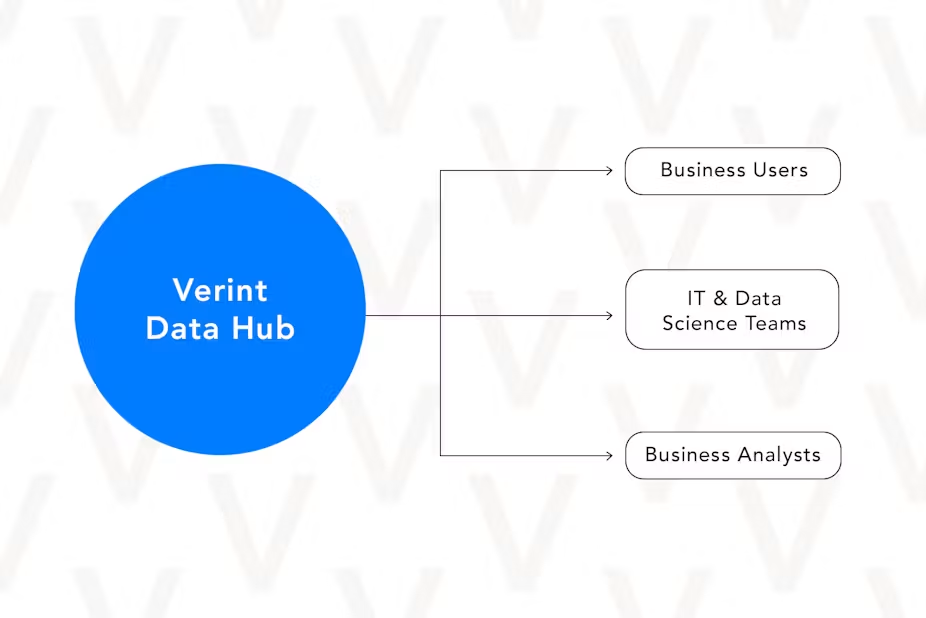
The Engagement Data Hub is included in every Verint application and acts as the training ground for all bots. Every application populates data into the Hub; the Hub feeds structured training data back to bots, creating a compounding improvement loop.
Source: Verint
It unifies three data types: interaction data (transcripts and recordings), experience data (surveys and feedback), and workforce performance data. Outside data can be linked or ingested using dozens of prebuilt adaptors.
Specialized bots on this infrastructure include the CX/EX Scoring Bot (scores conversation dynamics in every call, predicting customer retention and loyalty), the Call Risk Scoring Bot (analyzes 60+ data points from telecom metadata and assigns real-time fraud risk scores), and the PII Redaction Bot (identifies and masks PII from recordings and transcripts).
A Forrester composite study found 391% ROI over three years, $42M in cost savings, and a 23% reduction in employee turnover from the platform.
Verint Integrations, API, and Ecosystem
The Verint Open Platform overlays on existing CCaaS, CRM, and telephony stacks rather than replacing them. The Verint Open Ecosystem provides hundreds of built-in adaptors for ACD/telephony, CRM, HCM, ERP, and data lake/warehouse systems.
Telephony and CCaaS partners include Five9 (100+ joint customers, 75,000+ subscribers), Cisco (Webex Contact Center, Webex Calling), Avaya, and Talkdesk. CRM integrations cover Salesforce and Microsoft Dynamics (via EliteConnect partner). The platform is listed on AWS Marketplace.
The Verint Marketplace hosts over 350 listings of extensions, Da Vinci AI services, and partner-built integrations. The Verint Developer Portal provides cross-product APIs with consistent security patterns and documentation. Traffic to the portal grew 225% between 2022 and 2023.
Platform-level APIs use OAuth 2.0 client credentials grant for application-to-application integration, with SAML, LDAP, Active Directory, and SCIM 2.0 also supported. API access provisioning requires working with a Verint Customer Success Manager.
Verint Community exposes a separate, stable REST API with over 150 endpoints, and a .NET REST SDK is available on GitHub.
Where Verint Stops: The Gaps
Verint centers on the contact center: automating customer interactions, coaching agents, managing workforce, evaluating quality, and analyzing conversations. That focus produces depth within the contact center perimeter, but it also means the platform does not reach several capability areas that go-to-market and revenue teams need.
No B2B contact or company database. Verint does not include a database of contacts, companies, direct dials, or verified business emails. It serves organizations whose customers contact them, not organizations that need to find and reach new prospects. A team looking to fuel outbound sales, build targeted prospect lists, or enrich CRM records with verified contact data will find nothing in Verint for that job.
No buyer intent signals. Verint analyzes what happens during customer interactions but does not track which companies research specific topics across the web before they make contact. There is no intent signal layer, no keyword-to-company mapping, and no way to prioritize outreach based on research behavior.
No website visitor identification for outbound. Verint does not identify anonymous website visitors or connect them to contact records for sales outreach. The platform's web capabilities serve self-service (IVA-powered chat and messaging), not visitor identification for prospecting.
No marketing orchestration or ABM. The platform does not include campaign management, display advertising, audience building, account-based marketing, or multi-channel marketing automation. Marketing teams running demand generation alongside CX operations need a separate platform.
No published pricing or self-serve entry. Verint does not publish pricing, offer a self-serve free trial, or provide a free tier. Both the pricing page and plans page return 404 errors. Entry requires a sales conversation and a signed agreement.
How ZoomInfo Covers the Gaps
The gaps share a common thread: Verint serves the contact center workflow where customers come to you. ZoomInfo serves the go-to-market workflow where you go to customers. For organizations that need both, the two platforms address different problems.
ZoomInfo's B2B Data Platform: The contact and company database Verint does not include
ZoomInfo operates the largest B2B data platform available: 500M contacts, 100M companies, 135M+ verified phone numbers, 120M direct-dial phone numbers, and 200M+ verified business email addresses.
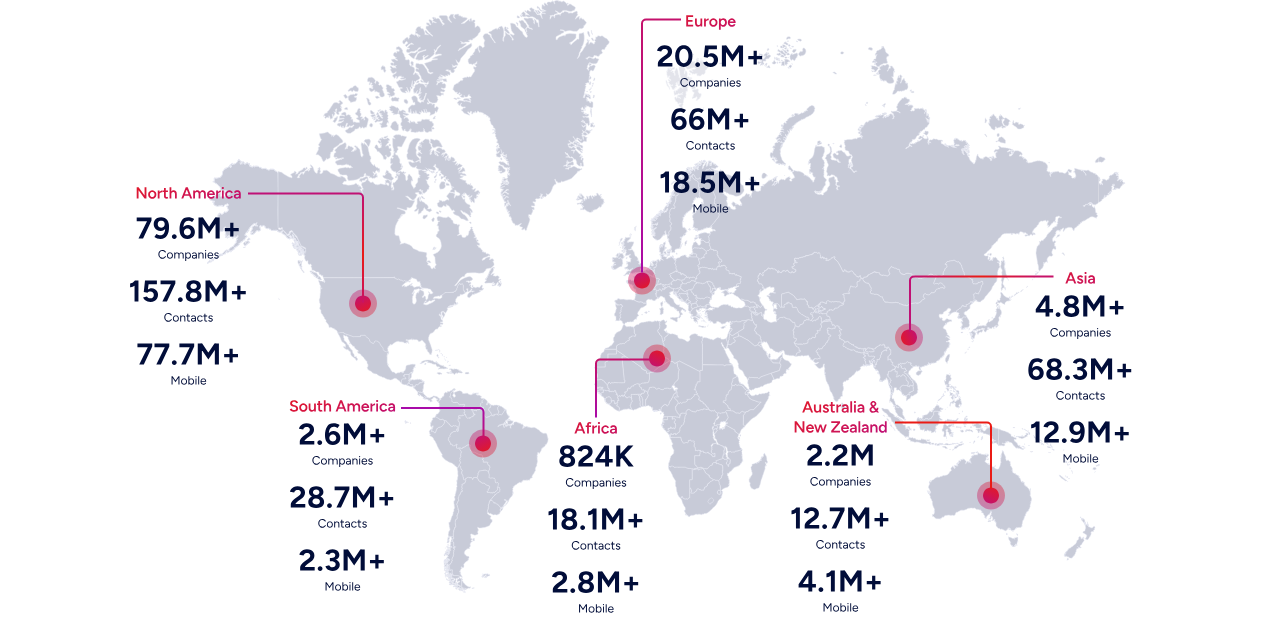
The data flows through a verification pipeline backed by 300+ human researchers and automated ML scanning 28 million site domains daily, reaching up to 95% accuracy on first-party data.
For teams whose contact center operations reveal market opportunities (upsell signals from support calls, churn risk patterns, competitive mentions in conversations), ZoomInfo provides the verified contacts, 300+ company attributes, department org charts, and contact tracking with job-change alerts needed to act on those signals through outbound sales.
In a Fortune 500 competitive RFP analyzing 25 million contacts across vendors, an independent consultant concluded that "no other competitor came even close."
ZoomInfo Intent and WebSights: Signals that show who is in-market before they call
ZoomInfo Intent tracks 210 million IP-to-Organization pairings and 6 trillion+ new keyword-to-device pairings sourced monthly, revealing which companies actively research topics related to your product across the web.
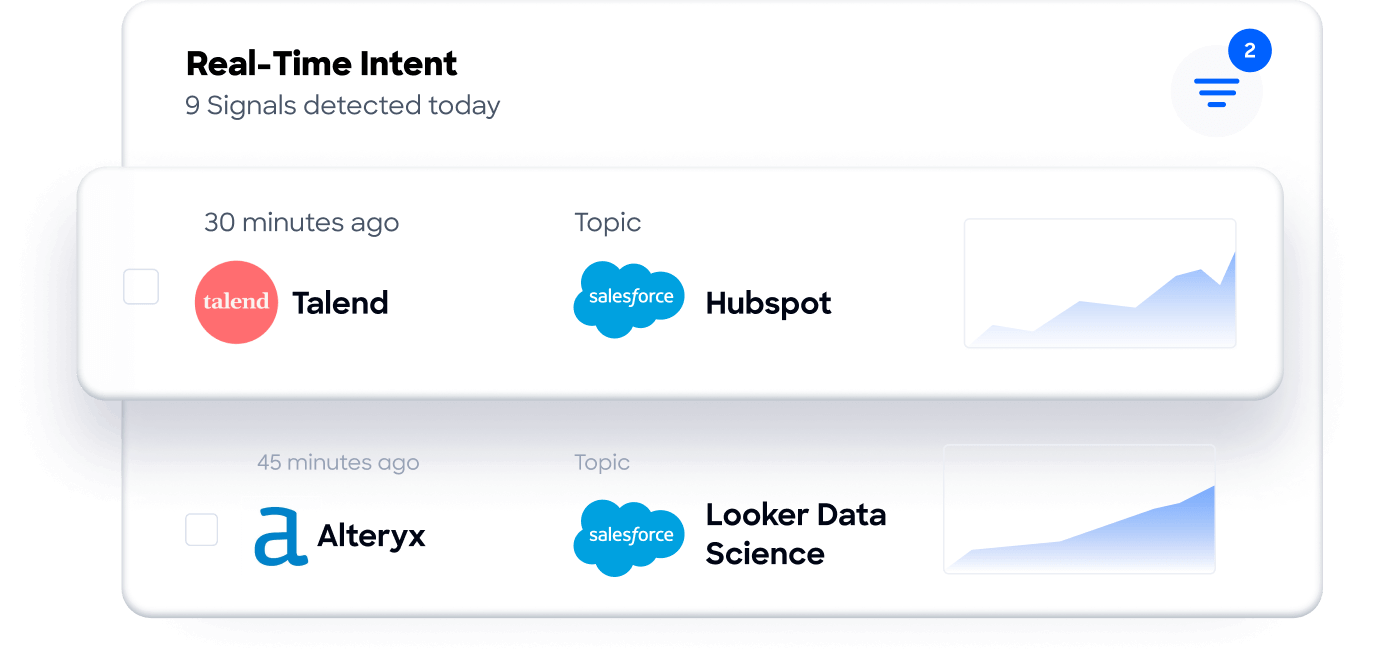
Guided Intent, exclusive to ZoomInfo, identifies topics historically correlated with deal success rather than requiring manual topic selection.
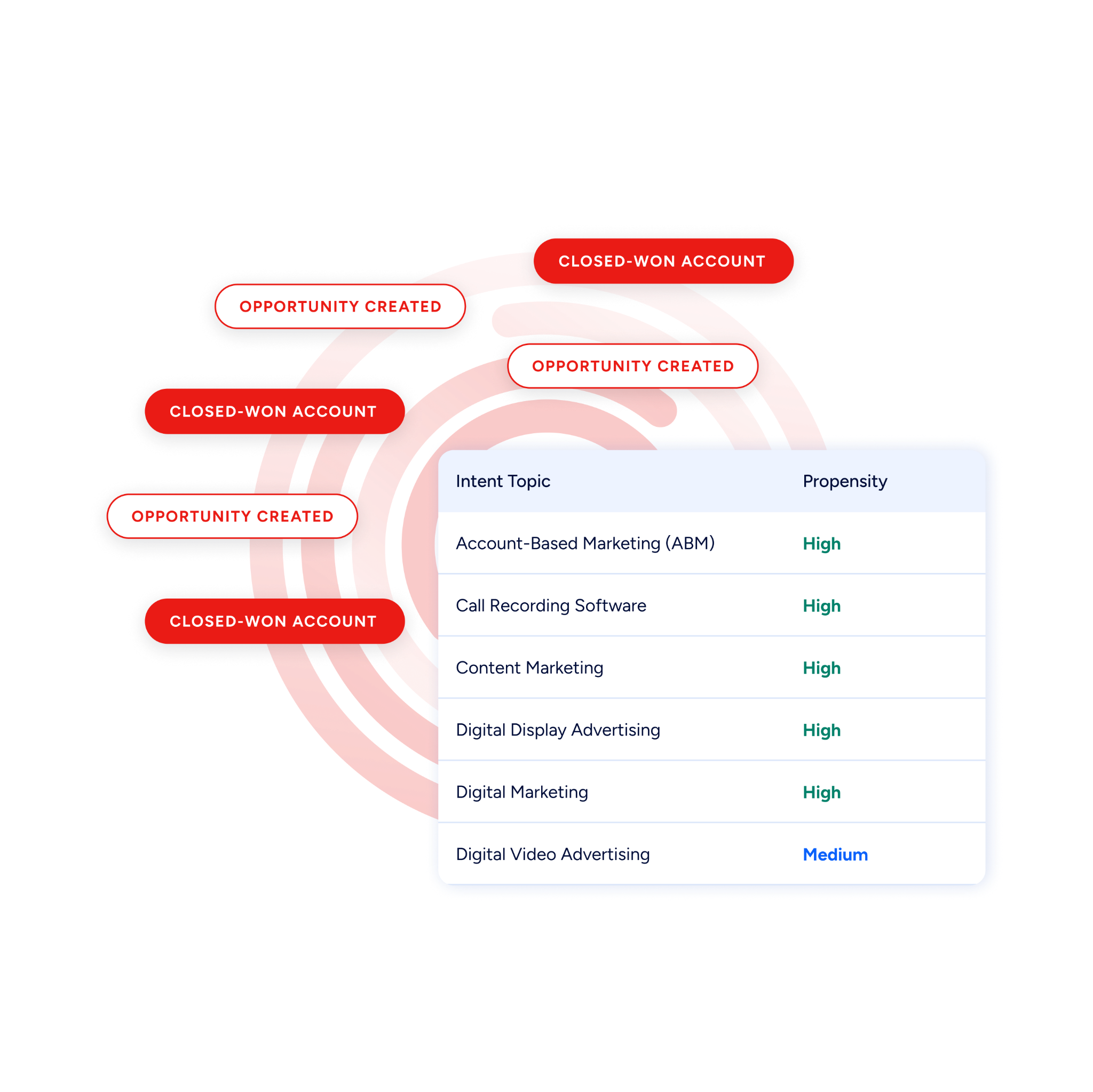
Where Verint's analytics tell you what happened during a customer interaction, ZoomInfo's intent data tells you who is researching your category before they contact you. On the website side, WebSights resolves anonymous website traffic to companies with Automatic Traffic Filtering that distinguishes real visitors from bots.
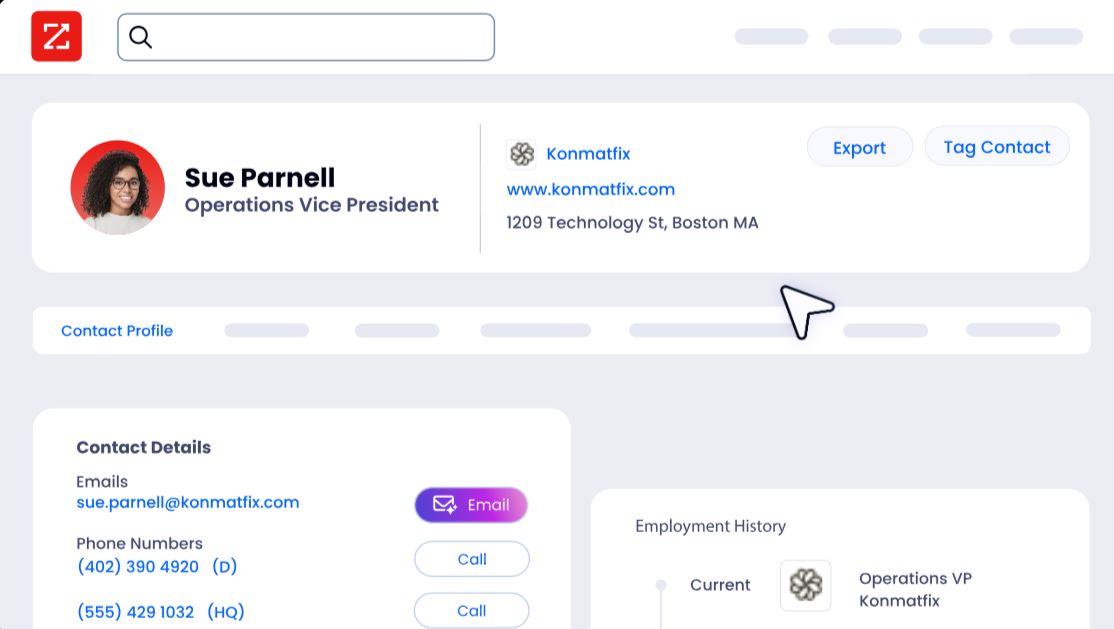
ZoomInfo Marketing provides contact-level site visitor identification that shows who specifically visited, not just which company.
ZoomInfo GTM Studio: Marketing orchestration and ABM that Verint does not touch
GTM Studio addresses the marketing orchestration gap directly. Marketers, RevOps teams, and GTM engineers can build audiences in natural language, enrich with first- and third-party data, define triggers, and activate plays across channels (email, calls, display ads, direct mail, LinkedIn, Meta, Connected TV) without engineering support.
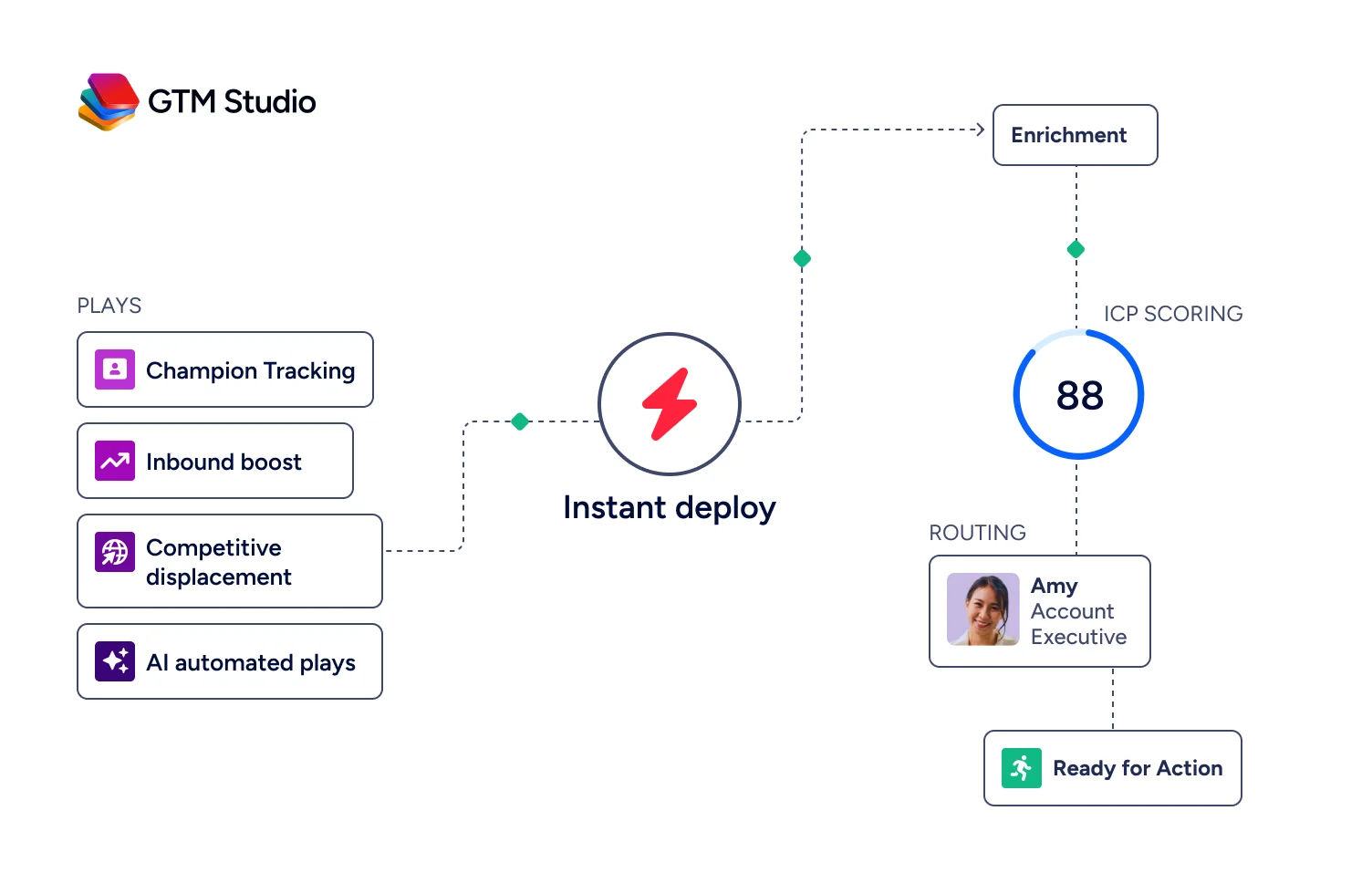
Pre-built GTM plays cover inbound acceleration, champion tracking, competitive displacement, and ICP targeting. Expansion plays that used to take 3 weeks now launch in 30 minutes.
ZoomInfo Marketing includes a native Demand-Side Platform that deploys display ads based on 300+ company attributes, FormComplete for reducing forms to a single field while auto-appending data, and Account Fit Scoring using predictive AI to score accounts 0-100 based on company attribute patterns.
ZoomInfo GTM Workspace and the GTM Context Graph: Intelligence that connects CX signals to revenue action
GTM Workspace is ZoomInfo's seller front-end, built on the GTM Context Graph.
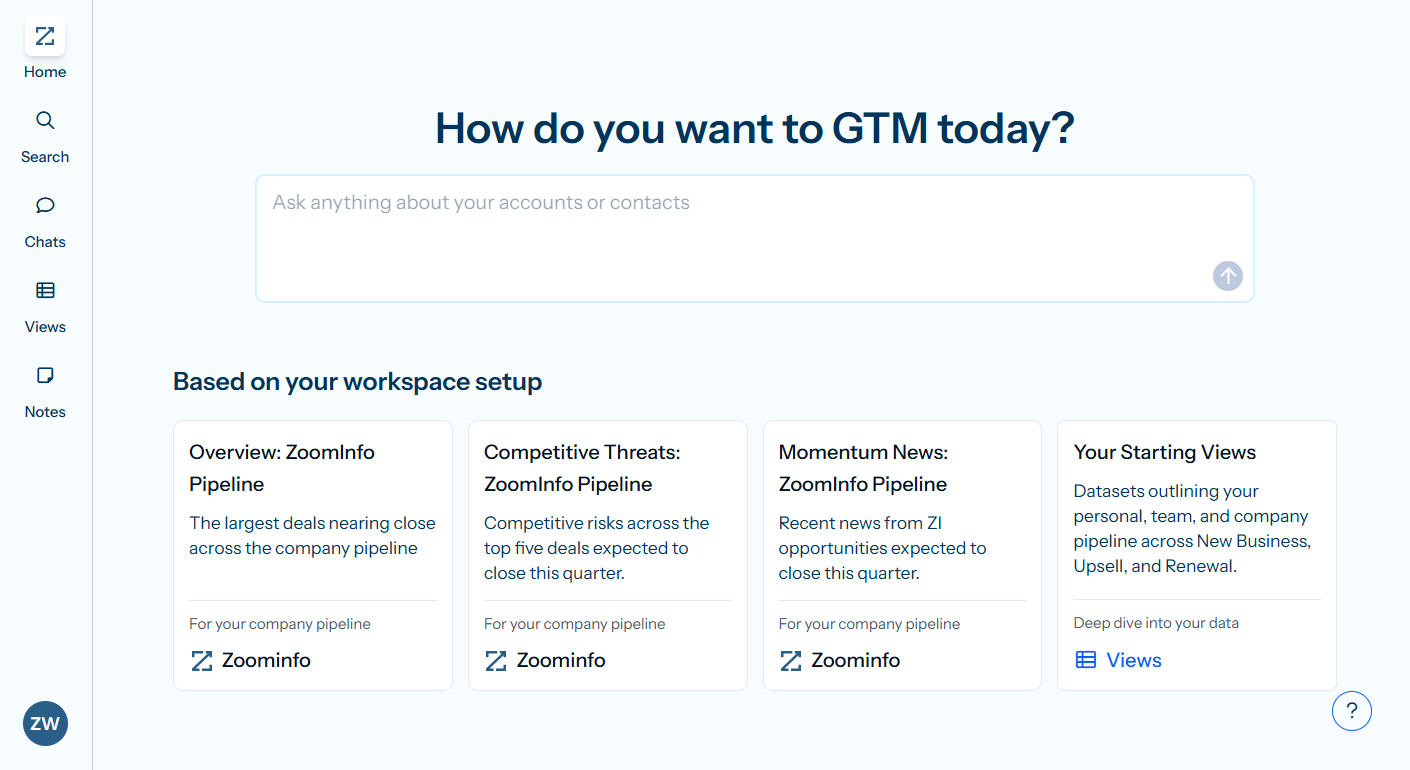
The graph processes 1.5B+ data points daily by fusing ZoomInfo's B2B data with a customer's CRM records, conversation intelligence from Chorus, email interactions, and behavioral signals.
It provides a full Book of Business view across CRM, ZoomInfo data, and market intelligence, with AI agents automating account research, outreach, CRM updates, and signal monitoring.
An Action Feed streams in-market buyers matched to target criteria with pre-drafted actions on every signal.
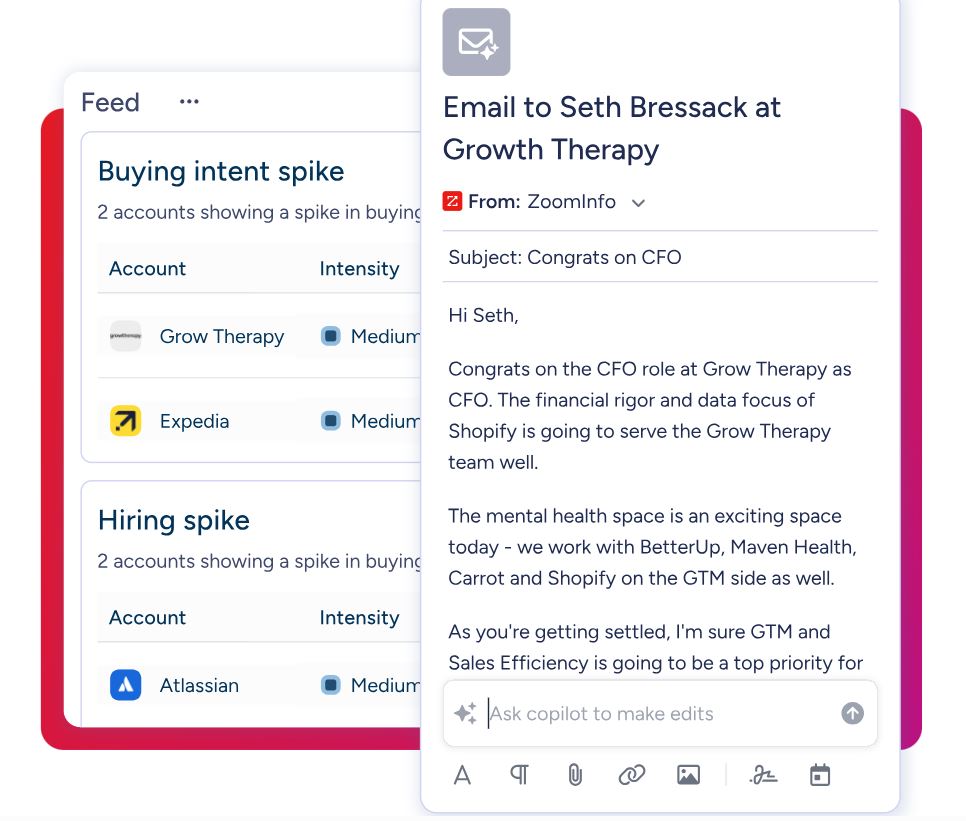
Where Verint's analytics surface what happened during customer conversations, the GTM Context Graph reasons about why deals move or stall, connecting conversation patterns to outcomes across thousands of deals.
ZoomInfo's Free Entry Points: A way to evaluate before committing
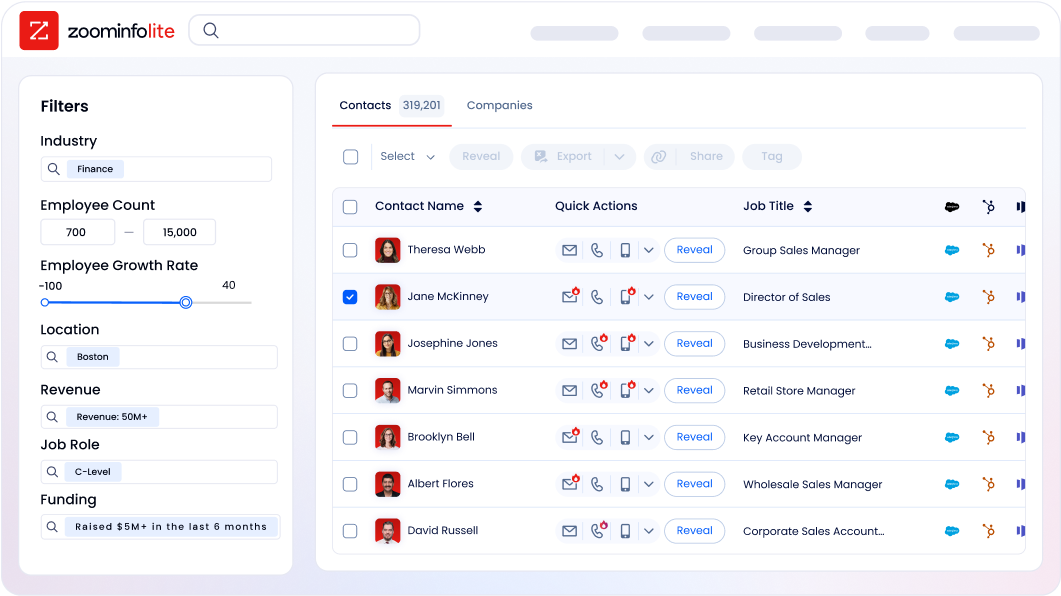
ZoomInfo offers what Verint does not: a path into the platform without a sales conversation. ZoomInfo Lite is a permanent free tier with access to ZoomInfo's B2B database, 10 monthly export credits, individual and company searches, a Chrome extension, and WebSights Lite with up to 10 website visitor reveals per day.
A separate 7-day free trial provides broader access with no credit card required.
Seismic's sales team attributed 39% of active pipeline to opportunities identified or influenced by ZoomInfo signals, boosted productivity by 54%, and saved 11.5 hours per week per seller. (Seismic Case Study)
Final Summary
Verint is an enterprise contact center automation toolkit: 50+ specialized AI bots covering self-service containment, real-time agent coaching, post-call summarization, quality evaluation at 100% interaction coverage, workforce forecasting and scheduling, speech and text analytics, knowledge automation, financial compliance recording, and physical security for banking.
The open platform architecture overlays on existing CCaaS and telephony without requiring replacement and deploys at enterprise scale. It serves organizations whose primary challenge is handling the volume and quality of inbound customer interactions.
It does not extend into the go-to-market layer: no B2B contact database, no intent signals, no website visitor identification for outbound, no marketing orchestration, and no self-serve entry point.
If your organization runs both a contact center and an outbound revenue motion, that go-to-market layer is what ZoomInfo covers.
Its 500M-contact, 100M-company database supplies verified emails and direct dials for outbound prospecting. ZoomInfo Intent surfaces accounts researching your category from 6 trillion+ keyword-to-device pairings monthly. GTM Studio gives marketing teams multi-channel orchestration and ABM capabilities. GTM Workspace turns signals and data into prioritized seller actions.
And the GTM Context Graph fuses it all into a single intelligence layer that reasons about why deals move, not just that they moved.
See what that adds to your stack: start with ZoomInfo Lite for free, or request a demo to explore how verified contacts and intent signals connect to your revenue motion.
FAQ
Does Verint include a B2B contact database for prospecting?
No. Verint is a CX automation platform built for contact centers handling inbound customer interactions. It does not include a database of contacts, companies, phone numbers, or business email addresses for outbound sales. Organizations that need to find and reach new prospects pair their CX stack with a go-to-market platform.
ZoomInfo provides 500M contacts, 100M companies, and 120M direct-dial phone numbers for that job.
Can Verint track buyer intent signals?
Verint's CX Analytics suite analyzes customer interactions after they happen, surfacing trends, sentiment, and compliance signals from voice and text channels. It does not track which companies research specific topics across the web before making contact. ZoomInfo Intent tracks signals from 210 million IP-to-Organization pairings and 6 trillion+ keyword-to-device pairings monthly to reveal in-market buyers before outreach begins.
Which Verint bots can deploy in 30 days?
Verint states that most bots can deploy in 30 days on top of existing infrastructure, including the Coaching Bot, Wrap Up Bot, Knowledge Automation Bot, Smart Transfer Bot, and Quality Bot. The platform's open architecture means deployment does not require replacing CRM, telephony, or CCaaS systems.
More complex implementations (multi-module rollouts, custom integrations, financial compliance environments) typically involve phased deployment with professional services.
Does Verint publish pricing?
No. Both the pricing and plans pages on verint.com return 404 errors. All commercial engagement flows through Contact Sales or Get a Demo forms, with contracts negotiated on scope, user count, and consumption. Professional services (onboarding, consulting, managed services, training) cost extra. Self-paced training through Verint Academy is included at no additional charge for SaaS customers.
What happened with the Verint and Calabrio merger?
Thoma Bravo completed its acquisition of Verint in November 2025 and merged it with Calabrio (another Thoma Bravo portfolio company). The stated goal is creating "the industry's most comprehensive AI-powered CX platform." Product rationalization timelines and Verint-Calabrio integration details have not been publicly disclosed since the company went private. Calabrio-legacy customers have a parallel support path through the Calabrio Success Center.
Does Verint offer a free trial or free tier?
No. Verint does not offer a self-serve free trial or a free tier. Prospective customers cannot access the platform without a signed agreement. ZoomInfo, by contrast, offers ZoomInfo Lite (a free tier with 10 monthly export credits and database access) and a 7-day free trial with no credit card required.
Can Verint's IVA work with any LLM?
Yes. The Verint IVA supports any commercial or third-party LLM alongside Verint's proprietary models through the Da Vinci AI architecture. Model selection sits behind service APIs, so Verint can swap in a superior model without code changes. Operators control when to use NLU models versus generative AI, blending both approaches to balance conversational quality with compliance requirements.
Does Verint support marketing automation or account-based marketing?
No. Verint covers the contact center and CX automation stack but does not include campaign management, display advertising, audience building, account-based marketing, or multi-channel marketing orchestration. Organizations that need marketing automation alongside CX operations use a separate platform.
ZoomInfo's GTM Studio provides natural-language audience building, multi-channel play orchestration, and a native Demand-Side Platform for display ads based on 300+ company attributes.
