

Visitor Queue made a simple promise: show you which companies visit your website when 98% leave without filling out a form. For B2B sales teams watching anonymous traffic come and go, that promise carried real appeal.
The platform offered IP-based company identification, decision-maker contact data, and website personalization, all at prices below most competitors.
But there's an important update first. In January 2026, Visitor Queue was acquired by Leadinfo, a European visitor intelligence platform within the team.blue group. The visitorqueue.com domain now redirects to Leadinfo, and existing customers have been migrated to Leadinfo's platform.
If you're researching Visitor Queue today, you're evaluating a product that no longer operates independently.
That said, the underlying technology and approach still matter for buyers weighing their options. Based on our analysis, Visitor Queue was a reasonable choice if:
You needed affordable, no-contract website visitor identification
Your team was small and valued unlimited user access without per-seat fees
You wanted quick setup with same-day results
Your sales motion relied on knowing which companies browsed your site
You operated primarily in North America with sufficient website traffic (500+ monthly company visits)
However, Visitor Queue was not a good fit if:
You needed individual-level visitor identification, not just company names
Your target accounts had remote or hybrid workforces (which degrade IP-based identification)
You wanted buyer intent signals beyond basic page-view data
You required enterprise security certifications like SOC 2 or ISO 27001
You needed a complete go-to-market platform connecting prospecting, outreach, and deal intelligence
In this case, consider ZoomInfo: an AI-powered GTM platform that goes well beyond website visitor identification. ZoomInfo's WebSights feature identifies anonymous visitors at the company and contact level, then feeds that data into an intelligence system spanning 500M contacts, 100M companies, 135M+ verified phone numbers, and 200M+ verified business emails. Where Visitor Queue showed you which companies visited, ZoomInfo shows you who visited, what they're researching across the web, and how to reach the right people at those accounts.
We've included a detailed look at ZoomInfo later in this review for teams that need more than visitor identification alone. If you're ready to see what a full GTM intelligence platform looks like, you can start with ZoomInfo's free trial here.
What is Visitor Queue?
Visitor Queue was a B2B website visitor identification and website personalization platform founded in 2017 in London, Ontario, Canada.
CEO Nick Hollinger created it after working as a marketing manager at a B2B company, where he tried several visitor identification tools and found them lacking in usability. He spent three years researching the concept before launching with co-founder Taras Zubyak.
The platform was bootstrapped with no external funding and grew to roughly $1.2M in annual revenue and 300 customers by 2024. Notable customers included Microsoft, Blackberry, JLL, and Upfluence. In 2019, Visitor Queue was ranked 10th on the Latka 100 list of fastest-growing SaaS companies.
The platform had three modules: Identify (IP-based company identification with contact data), Personalize (dynamic website content based on visitor firmographics), and Benchmark (website analytics compared against 3,000+ other websites).
It targeted B2B sales and marketing teams, particularly SMBs in North America.
The Leadinfo acquisition in January 2026 combined Leadinfo's 9,000+ European customers with Visitor Queue's North American base. CEO Hollinger stated that "joining forces with Leadinfo means our customers will benefit from expanded resources, faster innovation and deeper platform capabilities."
Visitor Queue Pros & Cons
Pros | Cons |
|---|---|
Accessible pricing starting at $31/month | Company-level identification only, not individual visitors |
Unlimited users on all plans, no per-seat fees | IP-based identification degrades with remote and hybrid workforces |
Fast setup (tracking script installs in minutes) | Data accuracy varies, especially with VPN users |
Decision-maker contact data included natively | Pricing escalates quickly as identified company volume grows |
Website personalization add-on available | Limited automation (single Zapier trigger event) |
No credit card required for 14-day free trial | No enterprise security certifications (SOC 2, ISO 27001) |
Native integrations with Salesforce, HubSpot, Slack | Acquired by Leadinfo; no longer operates independently |
Visitor Queue Review: How It Works and Key Features
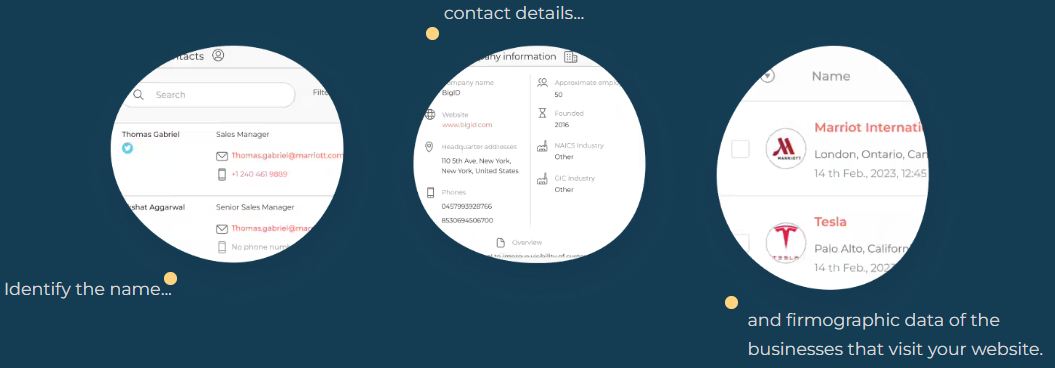
Identify: Visitor Queue's core feature turns anonymous website traffic into named company leads with contact data.
Visitor Queue's Identify feature follows a five-step process. You create an account (no credit card required), paste a JavaScript tracking script into your website's <head> tag, and the platform begins converting anonymous IP addresses into company names using data enriched from LinkedIn, FullContact, and Hunter.
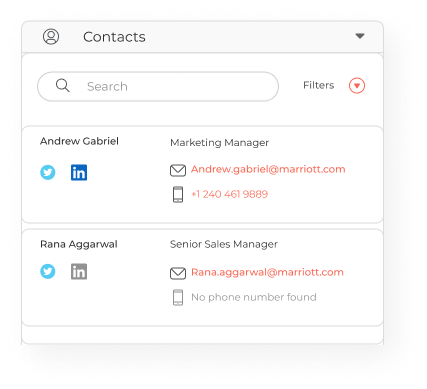
Each identified company record includes company name, location, contact information, and social media profile links. The platform also surfaces Key People Information: names, job titles, departments, phone numbers, LinkedIn profiles, and email addresses for decision-makers at the visiting company.
Source: Visitor Queue
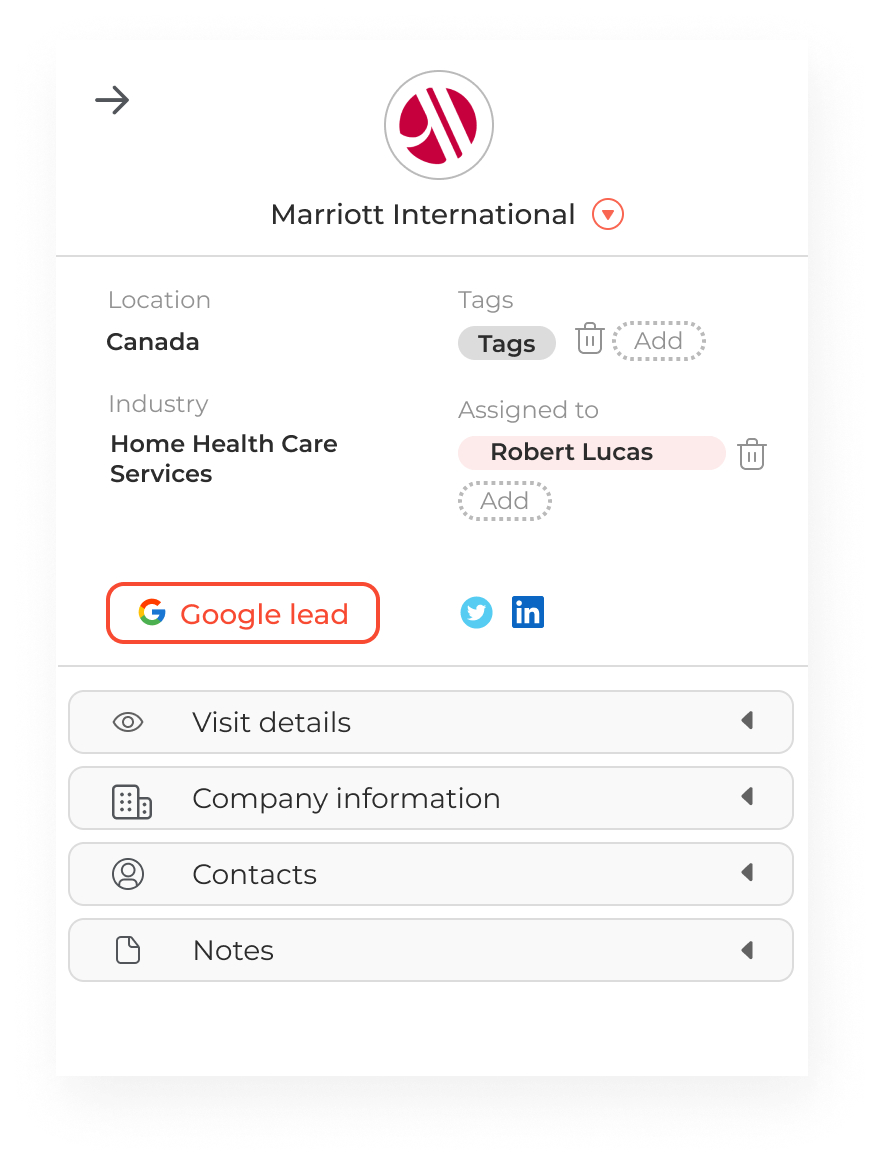
On the behavioral side, Visitor Queue logs pages visited, time spent on site, traffic source, and session duration for each company visit. Sales reps see not just who visited, but what they looked at. A company that spent time on your pricing page is warmer than one that bounced from the homepage.
Source: Visitor Queue
Lead management features include customizable lead queues, account filters by geography or pages visited, auto-assignment of leads to specific team members, and scheduled email notifications at hourly, daily, weekly, or monthly intervals. Leads can be hidden, archived, exported, or forwarded to any email inbox.
A real differentiator was the unlimited users on all plans policy. Competitors like Lead Forensics charge per seat, which adds up for larger sales teams. Visitor Queue let entire teams access the data at no extra cost.
Personalize: Visitor Queue offered dynamic website content tailored to each visiting company's firmographic profile.
The Personalize module addressed a common problem: every visitor to your website sees the same content, regardless of whether they're a 10-person startup or a Fortune 500 enterprise.
Personalize let you define rules based on industry, company size, headquarters location, or traffic source, then automatically display different headlines, case studies, CTAs, and page layouts to each visitor segment.
The editing interface used a WYSIWYG editor with drag-and-drop content placement, requiring no coding. What made this feature distinctive was its integration with the Identify module.
Most standalone personalization platforms (Optimizely, VWO) require you to manually define audiences from behavioral data or CRM uploads. Visitor Queue automatically resolved a visitor's IP to a company profile and fed that into personalization rules in real time.
The module was priced as a $160/month add-on on top of any base plan, and the platform claimed that page load speed was not affected by the personalization layer.
Benchmark: Website analytics compared against industry peers from a dataset of 3,000+ websites.
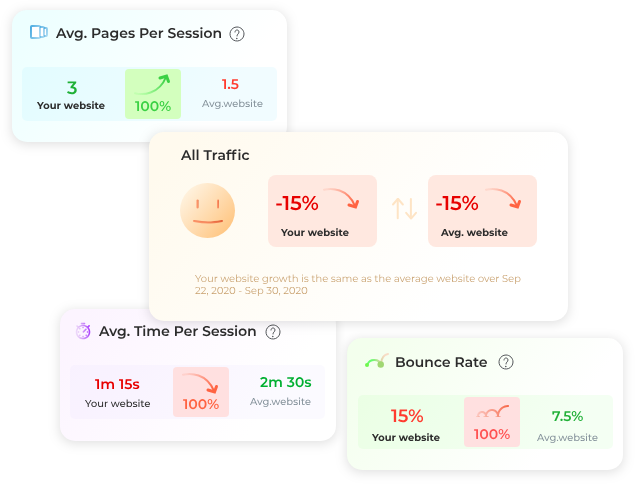
The Benchmark feature provided context that standard analytics tools lack. Google Analytics shows your own bounce rate, session duration, and traffic mix, but gives no frame of reference for whether those numbers are good or bad for your industry.
Source: Visitor Queue
Benchmark drew from 3,000+ websites in Visitor Queue's customer base to produce B2B-specific comparisons. The feature tracked user engagement, bounce rates, and traffic sources against industry averages, identified underperforming channels, and delivered highlights via email on a weekly or monthly schedule.
The practical value was diagnostic: if your organic bounce rate is above the industry norm, you can use Identify to see which companies are bouncing, then use Personalize to serve more relevant content. That closed-loop workflow across all three modules was Visitor Queue's strongest argument.
Integrations: Native connections to major CRMs and 3,000+ apps via Zapier.
Visitor Queue offered native integrations with Salesforce, HubSpot, Slack, SugarCRM, Google Analytics, Google Sheets, AWS S3, and Salesloop. Through Zapier, it connected to 3,000+ additional apps including Pipedrive, Zoho CRM, Insightly, and ClickUp.
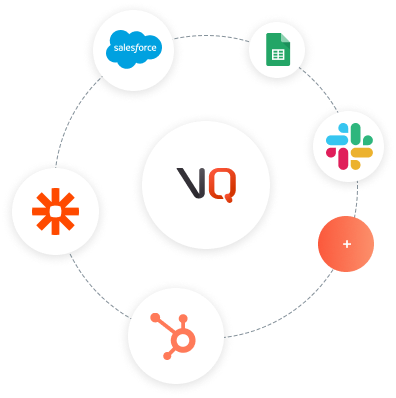
Source: Visitor Queue
A REST API was also available for custom integrations. However, the Zapier integration was limited to a single trigger event (new visitor logged), which restricted the sophistication of automated workflows. You couldn't, for example, trigger an action when a specific company visited your pricing page three times in a week.
Pricing: Usage-based tiers with all features included.
Visitor Queue used a straightforward pricing model scaled by the number of unique companies identified per month. All paid plans included all features, with unlimited users. The only variable was the monthly company cap.
Annual billing rates (USD/month):
Unique Companies / Month | Price (USD/month, annual) |
|---|---|
100 | $31 |
300 | $71 |
500 | $87 |
1,000 | $151 |
2,000 | $239 |
5,000 | $375 |
10,000 | $599 |
Annual billing saved approximately 20% compared to monthly billing. The Website Personalization add-on cost an additional $160/month. A 14-day free trial required no credit card.
No long-term contracts were required, and plans were available on both monthly and annual billing. However, all purchases were non-refundable.
Where Visitor Queue Falls Short
Visitor Queue served a specific niche well, but several limitations defined its ceiling. These aren't failures; they're consequences of building a focused, affordable tool for a narrow use case.
Company-level identification only. Visitor Queue identifies the company behind a website visit, not the specific person. Capterra reviewers described this as "looking for a needle in a haystack."
You might learn that a Fortune 500 company visited your pricing page, but with thousands of employees, the company name alone doesn't tell you who to call.
The Key People feature surfaces decision-makers at the identified company, but those contacts aren't necessarily the ones who actually visited your site.
IP-based identification breaks down with remote work. The entire identification method depends on corporate IP ranges. When employees work from home, coffee shops, or through VPNs, their visits resolve to ISPs rather than their employer.
With remote and hybrid work now standard for most knowledge workers, a growing share of B2B website traffic is invisible to IP-based tools. This is a structural limitation of the technology, not a fixable bug.
Pricing escalation punishes success. While the entry price is accessible, several Capterra reviewers noted that costs escalated quickly as their traffic grew. A company identifying 100 visitors per month pays $31; one identifying 2,000 pays $239.
For high-traffic B2B websites running active marketing campaigns, the per-company pricing model means the more effective your marketing, the more your identification tool costs.
Data quality inconsistency. G2 reviewers reported variable accuracy, with some records matching reality precisely and others containing clear errors, particularly from VPN users and shared networks.
For a tool whose value depends on data accuracy, inconsistent quality erodes trust in the leads it delivers.
No buyer intent signals. Visitor Queue tells you who visited and what pages they viewed, but it doesn't track broader buying behavior.
There's no visibility into whether a company is researching your product category across the web, evaluating competitors, or showing the multi-signal buying behavior that distinguishes real prospects from casual browsers. Page views on your site are one signal; they're not the full picture.
No enterprise security certifications. No SOC 2, ISO 27001, or comparable third-party security certifications appear in Visitor Queue's public documentation. For companies in regulated industries or with strict vendor security requirements, this was a disqualifying gap.
Acquired and absorbed. The Leadinfo acquisition ended Visitor Queue's independent existence. Customers have been migrated to Leadinfo, and the Visitor Queue brand is no longer operating. Buyers evaluating this category should weigh their options with this transition in mind.
These limitations point to a broader gap: Visitor Queue treated website visitor identification as a standalone function. For teams that need identification connected to a larger intelligence and execution system, a more complete platform fills the space Visitor Queue left open.
Beyond Visitor Identification: ZoomInfo
ZoomInfo addresses Visitor Queue's limitations not by building a better visitor identification tool, but by making visitor identification one component of a full GTM platform.
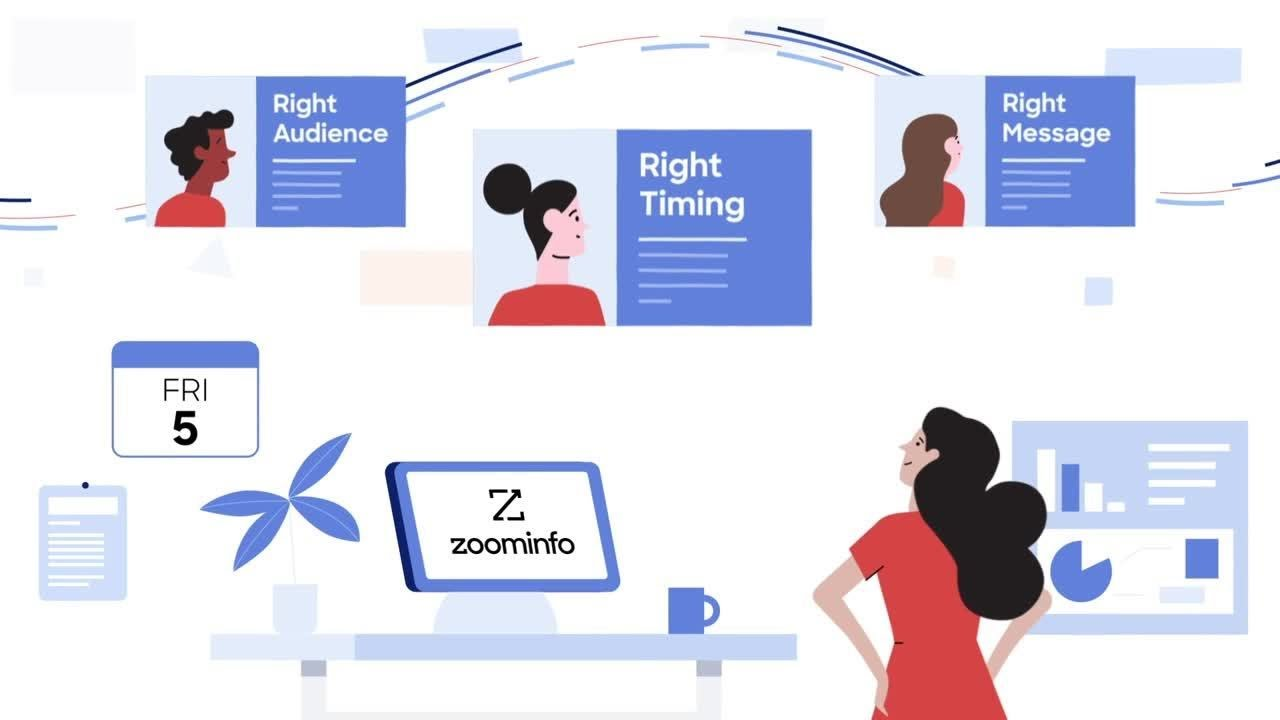
The platform combines verified B2B data, an intelligence layer (the GTM Context Graph) that fuses that data with your first-party signals, and execution tools like GTM Workspace, GTM Studio, and APIs/MCP.
Where Visitor Queue identified companies and left teams to figure out next steps, ZoomInfo connects identification to the data, signals, and tools needed to convert visitors into pipeline.
Comprehensive B2B Data: ZoomInfo is built on the largest verified B2B dataset in the industry.
Visitor Queue surfaced company names and contact data enriched from LinkedIn, FullContact, and Hunter. ZoomInfo operates at a different scale: 500M contacts, 100M companies, 135M+ verified phone numbers, 120M direct-dial phone numbers, and 200M+ verified business email addresses.
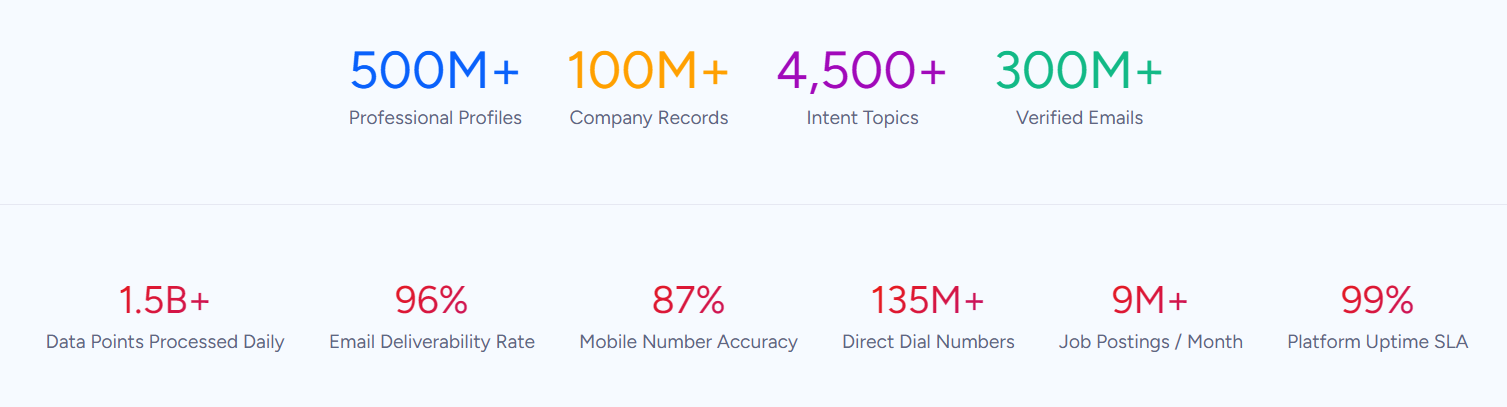
That data is verified through a multi-source pipeline that includes automated ML scanning of 28 million site domains daily, third-party partner data covering 95 million businesses, and an in-house Data Training Lab of 300+ human researchers. First-party data reaches up to 95% accuracy.
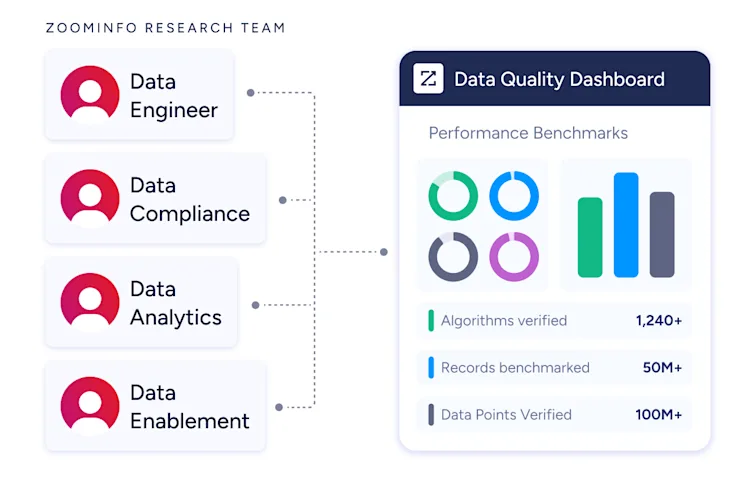
Source: ZoomInfo
The practical difference: when ZoomInfo identifies a company visiting your website, you're not guessing which contact to reach. You get verified direct dials, business emails, org charts, and departmental structures so you can reach the right people immediately.
ZoomInfo also covers 300+ company attributes for segmentation (firmographics, technographics, and corporate hierarchy data), giving sales teams context before they pick up the phone.
This data advantage isn't self-reported. In a Fortune 500 competitive RFP analyzing 25 million contacts across vendors, the independent consultant concluded that "no other competitor came even close."
Vensure's VP of Revenue Operations: "ZoomInfo gives us the information we need to execute. We don't have to go through and spend our time digging. It's already there, so we can be three steps ahead." (Vensure)
Website Visitor Tracking: ZoomInfo identifies visitors at the contact level, not just the company level, with automatic bot filtering.
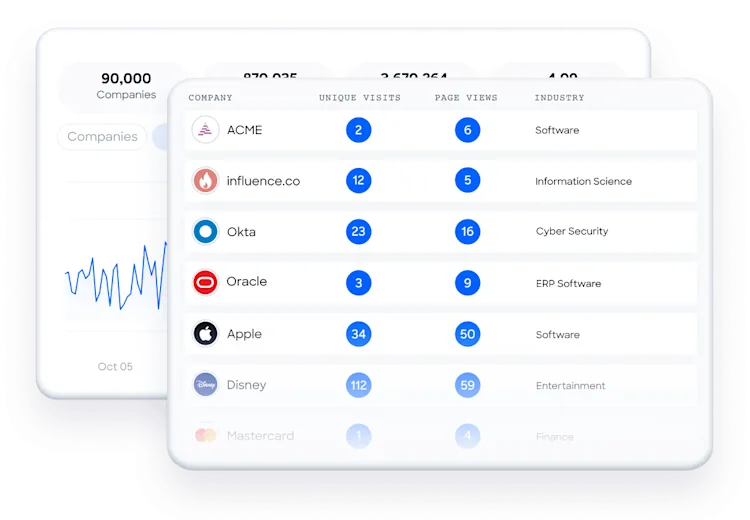
ZoomInfo's WebSights feature resolves anonymous website traffic to companies, similar to Visitor Queue's core function. But it goes further in two ways.
Source: ZoomInfo
First, ZoomInfo identifies buying team members at the visiting company and provides direct contact information, shortening the path from "someone visited" to "here's who to call."
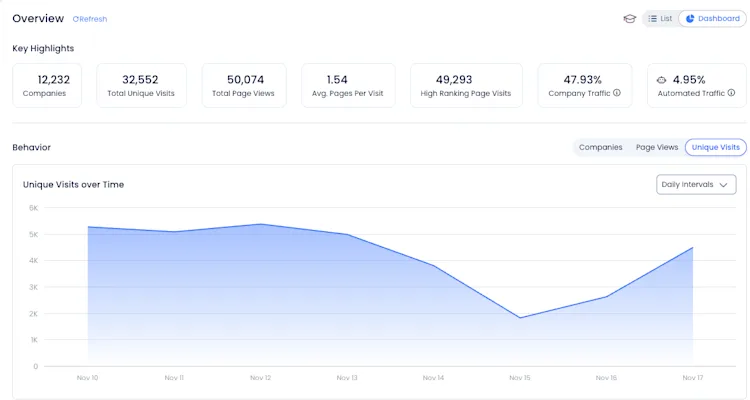
Second, WebSights includes Automatic Traffic Filtering that separates real human traffic from bot traffic, a problem Visitor Queue users had to manage by manually filtering ISPs, universities, and crawlers.
Source: ZoomInfo
WebSights feeds directly into ZoomInfo's broader intelligence system. A website visit becomes one signal among many, combined with intent data, technographic changes, and engagement history, so teams can judge whether a visit represents buying interest or routine browsing.
Buyer Intent and Signals: ZoomInfo tracks buying behavior across the web, not just on your website.
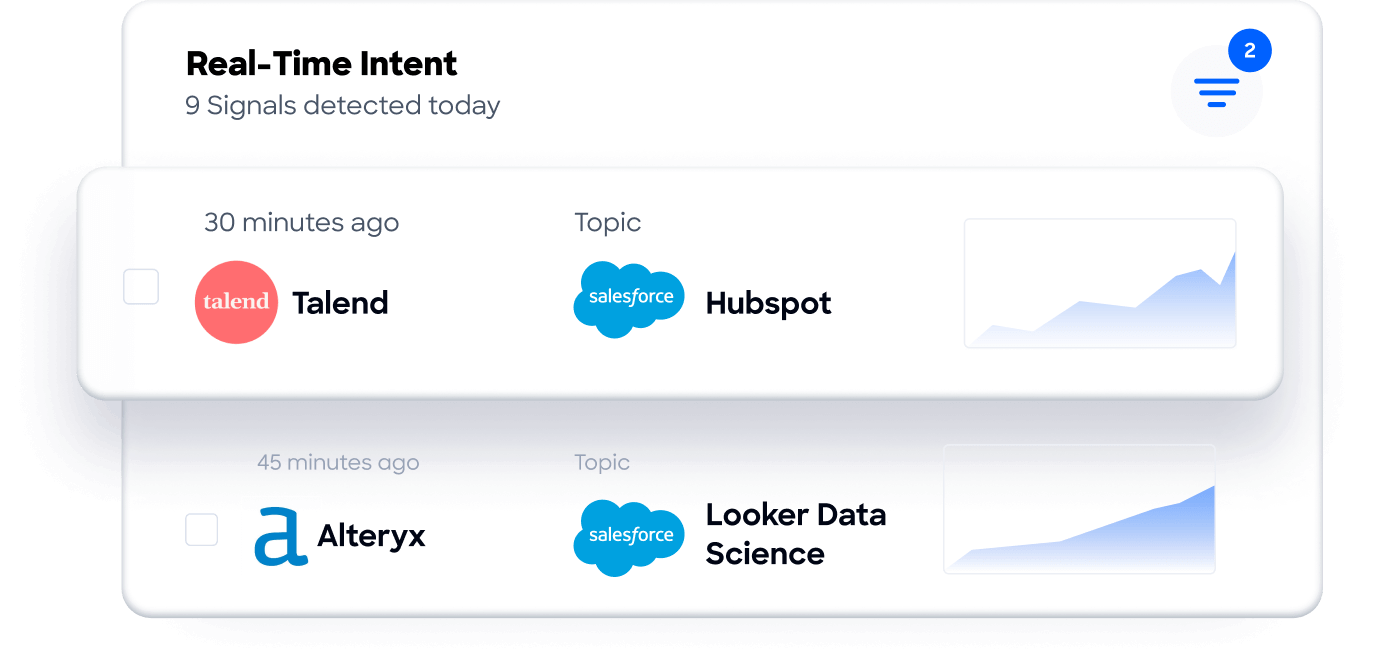
Visitor Queue tracked what companies did on your website. ZoomInfo tracks what they're doing across the internet.
ZoomInfo Intent monitors signals from 210 million IP-to-Organization pairings and 6 trillion+ new keyword-to-device pairings sourced monthly to identify when accounts are actively researching topics related to your product.
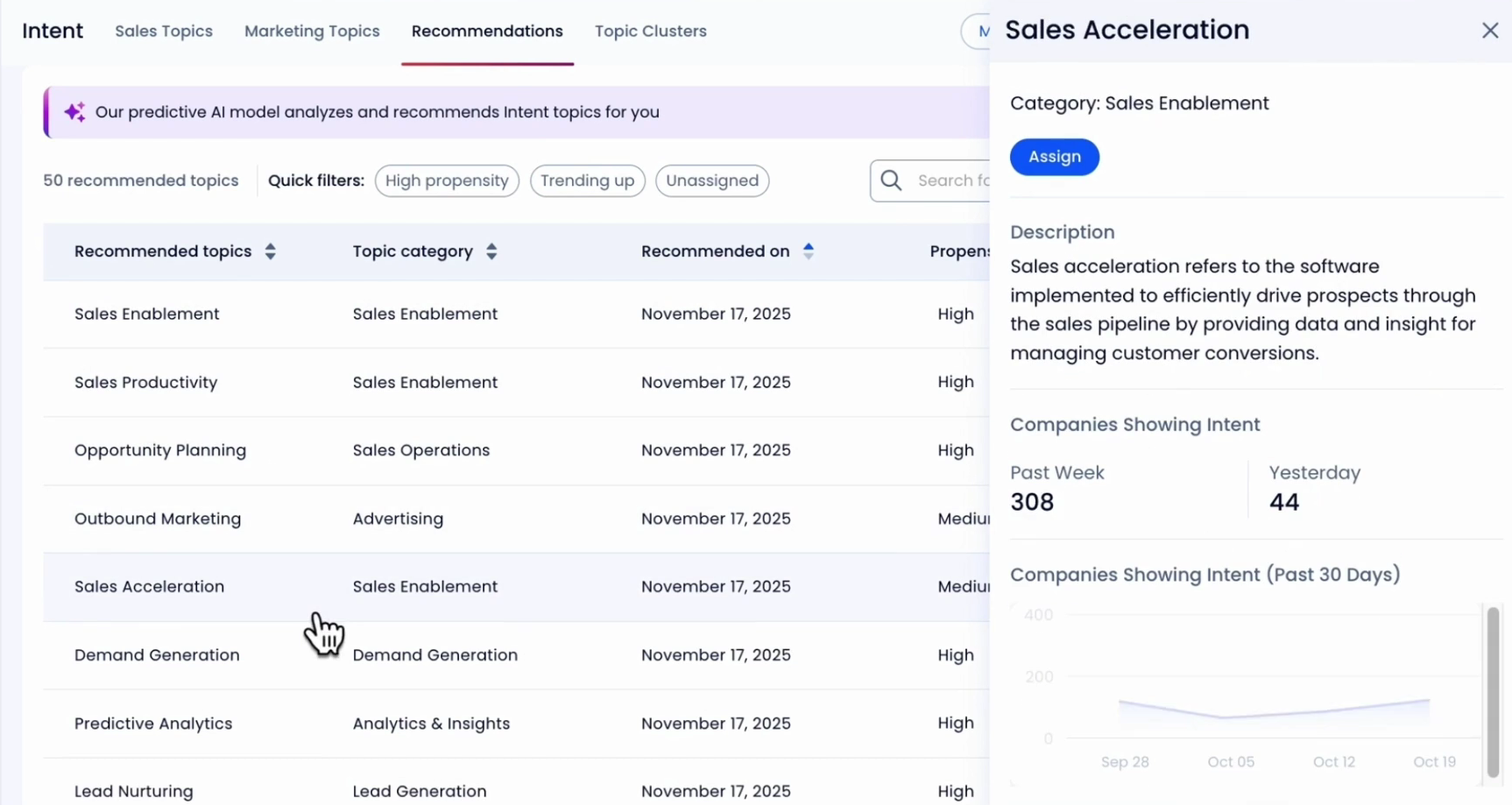
Guided Intent, a ZoomInfo exclusive, identifies the research topics historically correlated with deal success rather than requiring manual topic selection. Instead of guessing which keywords matter, the system learns from your actual closed-won deals.
Source: ZoomInfo
This shifts the value from reactive (a company visited your site, now follow up) to proactive (a company is showing buying signals across the web, engage them before they visit a competitor).
ZoomInfo was named a Leader in Forrester's Wave for Intent Data Providers in B2B (Q1 2025), receiving the highest possible scores across eight criteria.
Seismic attributed 39% of active pipeline to opportunities identified or influenced by ZoomInfo signals. Their Chief Business Officer: "That combination of our internal CRM data, external signals, and AI that's given all that context has helped us craft very specific account- and persona-based messages. And people have responded to them right away." (Seismic)
AI-Powered Execution: ZoomInfo's GTM Workspace and GTM Studio turn intelligence into action.
Visitor Queue delivered data. What teams did with that data (the outreach, the CRM updates, the campaign targeting) was their problem to solve.
ZoomInfo closes that gap through two native front-ends powered by the GTM Context Graph, an intelligence layer that fuses ZoomInfo's data with your first-party signals, processing 1.5B+ data points daily.
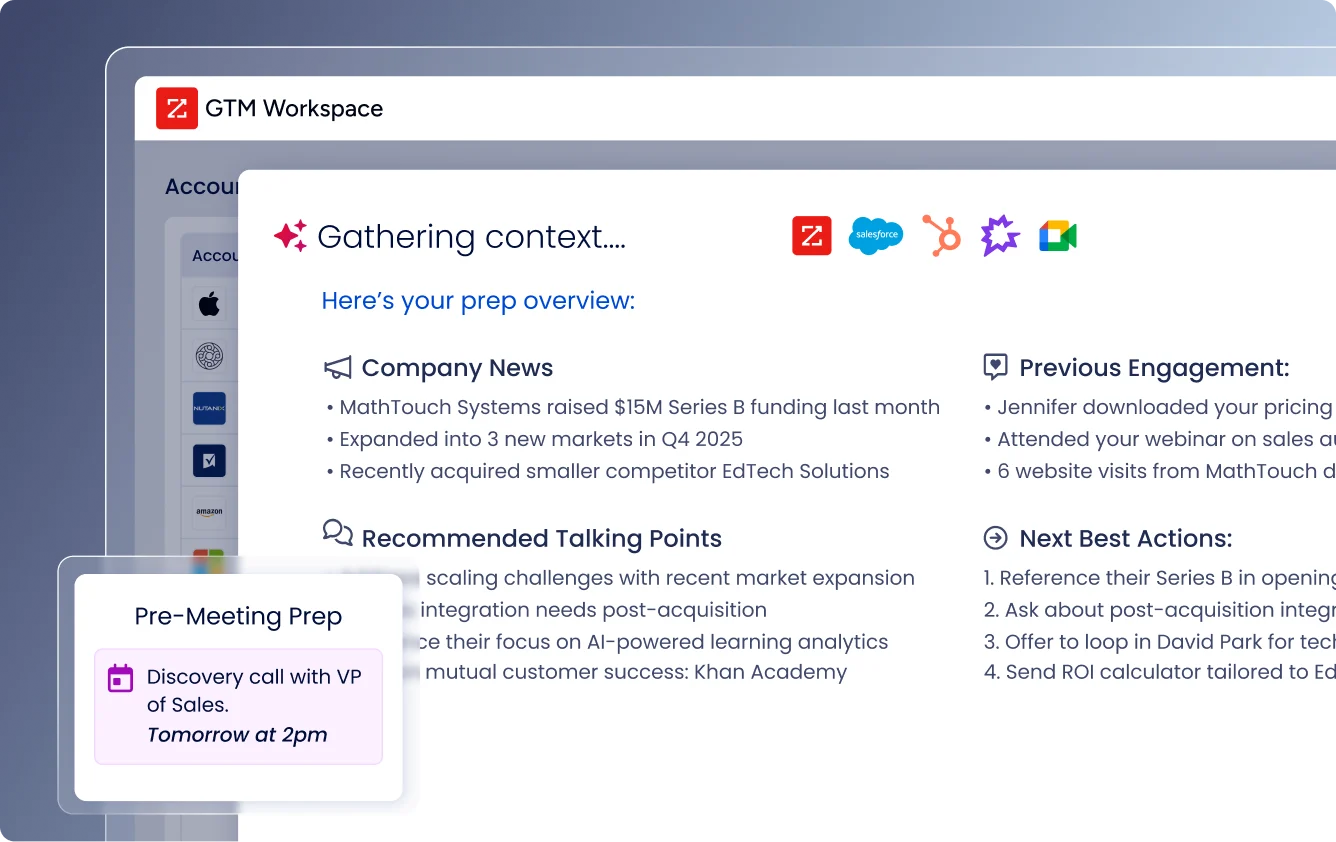
GTM Workspace gives sellers a single screen where prioritized accounts, AI-drafted outreach, and deal execution converge. AI agents handle account research, outreach drafting, CRM updates, and signal monitoring.
Source: ZoomInfo
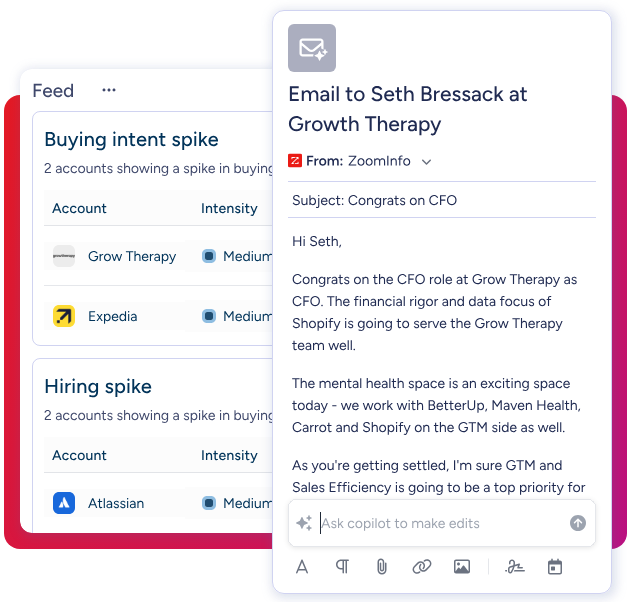
Sellers see an Action Feed of in-market buyers matched to their target criteria, with pre-drafted actions on every signal.
Source: ZoomInfo
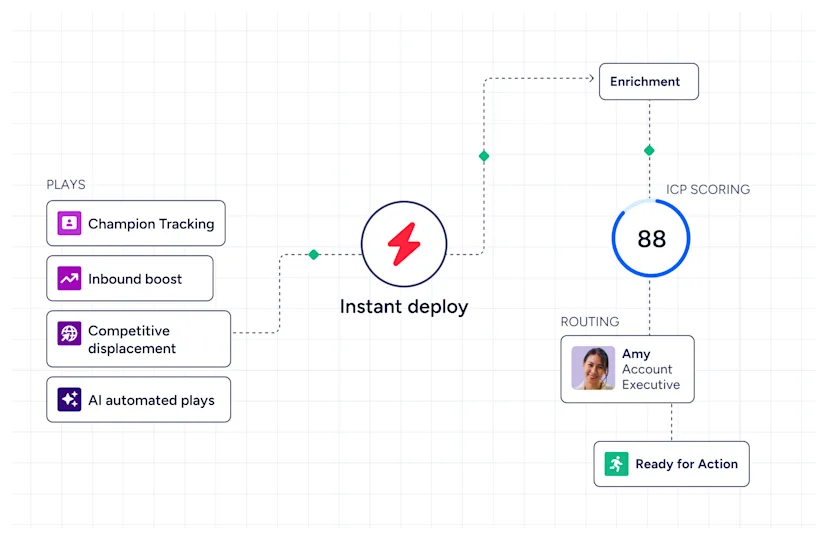
GTM Studio serves marketers and RevOps teams with an AI-powered canvas for building audiences in natural language, launching multi-channel plays, and measuring pipeline impact without engineering support. Expansion plays that used to take 3 weeks now launch in 30 minutes.
Source: ZoomInfo
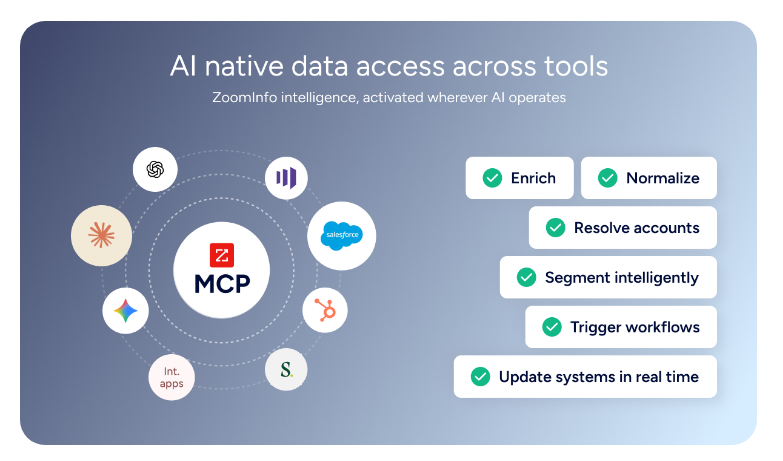
For teams that build their own tools, APIs and MCP expose the same intelligence to any custom agent, internal tool, or partner platform.
Source: ZoomInfo
Spekit's RevOps Manager Ben Perceval: "Anything that minimizes our team's need to switch contexts is beneficial. ZoomInfo offers a unified view, eliminating the need to navigate between systems." (Spekit)
Enterprise Security and Compliance: ZoomInfo holds the certifications regulated industries require.
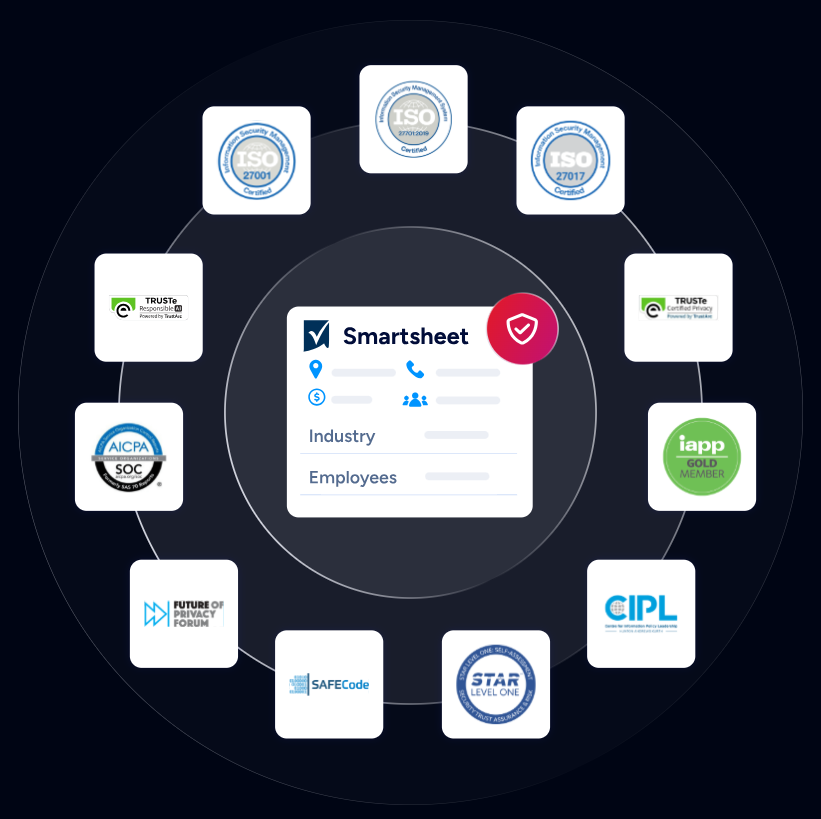
Where Visitor Queue's compliance posture was limited to GDPR and CCPA self-attestation, ZoomInfo maintains a certification stack renewed annually: ISO 27001, ISO 27701, SOC 2 Type II, TRUSTe GDPR Practices Validation, and TRUSTe CCPA Practices Validation.
Source: ZoomInfo
The company is a registered data broker in California and Vermont and maintains a dedicated Trust Center.
For buyers in financial services, healthcare, or other regulated industries, these certifications are often a baseline requirement for vendor approval. Visitor Queue's lack of third-party security certifications was a hard stop for many enterprise evaluations.
Pricing: Custom-quoted with a permanent free tier and a 7-day trial.
ZoomInfo uses a consumption-based pricing model, so there are no published prices to compare directly against Visitor Queue's $31-$599 tiers. Pricing depends on usage patterns, number of users, credit volume, features, company size, and contract length.
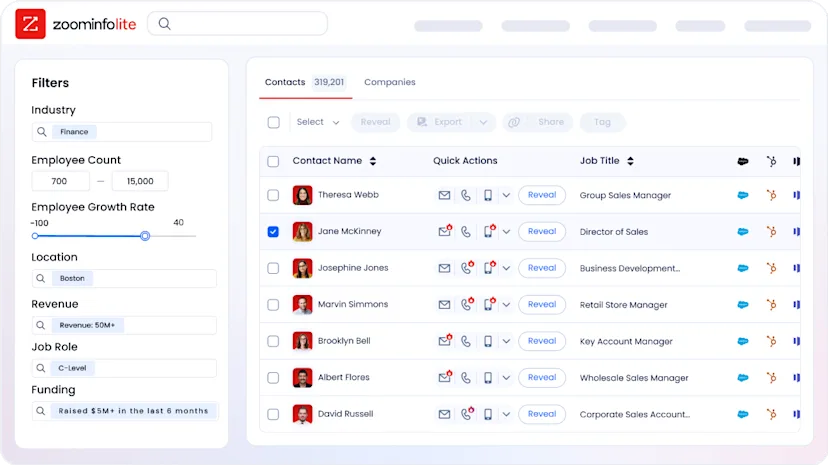
Two free entry points exist. ZoomInfo Lite is a permanent free tier (not a trial) that includes access to ZoomInfo's B2B database, 10 monthly export credits, individual and company searches, the ReachOut Chrome Extension, and WebSights Lite with up to 10 website visitor reveals per day.
Source: ZoomInfo
A separate 7-day free trial provides broader platform access with no credit card required.
ZoomInfo costs more than Visitor Queue did. It also does more. The relevant comparison isn't price per month but return per dollar: teams using ZoomInfo report 54% productivity gains, 200% higher conversion rates on top-scoring accounts, and 39% of pipeline attributable to ZoomInfo signals.
Visitor Queue or ZoomInfo: Comparison Summary
Visitor Queue | ZoomInfo | |
|---|---|---|
Primary focus | Website visitor identification | AI-powered GTM platform |
Identification method | IP-to-company (company-level) | IP-to-company plus contact-level identification |
Data scale | Enriched from LinkedIn, FullContact, Hunter | 500M contacts, 100M companies, 135M+ verified phones, 200M+ verified emails |
Buyer intent signals | Page views on your website only | Web-wide intent tracking from 210M IP-to-Org pairings |
Website personalization | Yes ($160/month add-on) | Not a standalone feature; ABM and display advertising address the use case |
AI capabilities | None | GTM Context Graph, AI agents, AI-drafted outreach, predictive scoring |
CRM integrations | Salesforce, HubSpot, Slack, SugarCRM, Google Sheets | 120+ marketplace integrations including Salesforce, HubSpot, Dynamics 365, Snowflake |
Security certifications | GDPR/CCPA self-attestation | ISO 27001, ISO 27701, SOC 2 Type II, TRUSTe GDPR/CCPA |
Free option | 14-day trial (no credit card) | Permanent free tier (ZoomInfo Lite) plus 7-day trial |
Pricing | $31-$599+/month based on identified companies | Custom-quoted, consumption-based |
User limits | Unlimited on all plans | Seat-based on paid plans; Lite is free for individual use |
Current status | Acquired by Leadinfo; no longer independent | Public company (NASDAQ: GTM); $1.25B annual revenue |
Best for | SMBs wanting affordable, simple visitor identification | Teams needing GTM intelligence with execution tools |
Final Verdict
The choice between these platforms depends on what you need from visitor identification data.
Visitor Queue was a good fit for small B2B teams that wanted a low-cost, no-friction way to see which companies visited their website. It did one thing clearly and priced it accessibly.
For teams with modest traffic, a simple sales motion, and no need for enterprise security or multi-signal intelligence, it delivered real value. With the Leadinfo acquisition, Visitor Queue no longer operates as an independent product.
Choose ZoomInfo if you need website visitor identification connected to a broader intelligence and execution system.
ZoomInfo makes sense when knowing which company visited is just the starting point, and what you actually need is verified contact data for the right people at that company, intent signals showing which accounts are actively in-market, and AI tools that turn those signals into outreach and pipeline.
The platform serves teams ready to invest in a complete go-to-market capability rather than a single-purpose identification tool.
Get started with ZoomInfo here.
The underlying question is whether website visitor identification is a standalone workflow or one input into a larger system. Visitor Queue treated it as the former. ZoomInfo treats it as the latter, and builds the infrastructure to make every signal (website visits included) more valuable by connecting it to everything else your team knows about an account.
Visitor Queue FAQ
What happened to Visitor Queue?
Visitor Queue was acquired by Leadinfo, a European B2B visitor intelligence platform within the team.blue group, in January 2026. The visitorqueue.com domain now redirects to Leadinfo's website, and existing Visitor Queue customers have been migrated to the Leadinfo platform. Visitor Queue no longer operates as an independent product.
How does Visitor Queue identify website visitors?
Visitor Queue uses IP address reversal to match anonymous website visitors to company records. A JavaScript tracking script captures the visitor's IP address, then the platform resolves that IP to a company name and enriches the record with firmographic data, social profiles, and decision-maker contact details sourced from LinkedIn, FullContact, and Hunter. The identification works at the company level, not the individual level, meaning you learn which company visited but not which specific person.
How accurate is Visitor Queue's identification?
Accuracy varies by network. When employees visit from a corporate office with a registered IP range, identification tends to be reliable. But visits from home offices, VPNs, shared networks, or mobile devices often resolve to ISPs rather than companies, making them unidentifiable. G2 and Capterra reviewers reported mixed experiences, with some records matching precisely and others containing errors. The platform's identification rate is approximately 30% of total website visitors.
How much does Visitor Queue cost?
Visitor Queue's pricing was based on the number of unique companies identified per month. Annual plans ranged from $31/month for 100 companies to $599/month for 10,000 companies. All paid plans included all features with unlimited users. The Website Personalization add-on cost an additional $160/month. No long-term contract was required.
ZoomInfo uses custom-quoted, consumption-based pricing but offers a permanent free tier (ZoomInfo Lite) and a 7-day free trial.
Can Visitor Queue identify individual people, not just companies?
No. Visitor Queue identifies companies, not individuals. It uses IP-to-company resolution, so the output is a company name with associated firmographic data.
The Key People feature surfaces decision-makers at identified companies, but these are contacts associated with the company record, not confirmation that those specific individuals visited your site.
ZoomInfo's WebSights feature also identifies companies, but ZoomInfo's broader platform provides verified contact data for specific buyers and buying team members at those companies.
Does Visitor Queue work for B2C businesses?
No. Visitor Queue's IP-based identification only resolves to business entities, not individual consumers. Residential IP addresses resolve to ISPs, not to the person browsing. The platform was built for B2B companies selling to other businesses.
What integrations does Visitor Queue support?
Visitor Queue offered native integrations with Salesforce, HubSpot, Slack, SugarCRM, Google Analytics, Google Sheets, AWS S3, and Salesloop. Through Zapier, it connected to 3,000+ additional apps. A REST API was available for custom integrations. The Zapier connection was limited to a single trigger event (new visitor logged), which restricted automation sophistication. ZoomInfo offers 120+ marketplace integrations plus Enterprise APIs and MCP access for custom builds.
Is Visitor Queue GDPR compliant?
Visitor Queue maintained GDPR and CCPA compliance documentation, including a published Data Processing Agreement. The tracking script collected non-personally identifiable information (IP address, pages viewed, time spent), which was then enriched using publicly sourced data. Individual data access and deletion requests could be submitted through a dedicated data control page. However, no third-party security certifications (SOC 2, ISO 27001) were publicly documented.
