
Comparing Vivun vs. HubSpot is like comparing a flight simulator to an airline. One trains you for the critical moment; the other runs the operation. They solve different problems, and understanding that distinction is where most buyers go wrong.
Before choosing, ask yourself:
Do you need help during live sales calls, or a system that manages your entire customer lifecycle?
Is your sales team struggling with in-call preparation, or with pipeline visibility and marketing-to-sales handoffs?
Are you looking for an AI teammate on every call, or an AI layer that automates marketing, sales, and service workflows?
Does your team already have a CRM and need real-time selling support, or are you building your go-to-market infrastructure from scratch?
How important is the quality of B2B data feeding whichever tool you choose?
In short, here's what we recommend:
Vivun (Hero by Vivun) is an AI sales teammate built for live selling. It assembles pre-call briefs from CRM data, call history, and account signals. During the call, it listens and surfaces competitive positioning, proof points, and discovery prompts on the rep's screen in real time. After the call, it writes the follow-up email, updates the CRM, and tracks action items. But Hero focuses on the call itself. It doesn't manage your pipeline, run marketing campaigns, or handle customer service. And its most distinctive features (voice whisper, voice on call, and avatar on call) are locked to the Enterprise tier.
HubSpot is a customer platform spanning marketing automation, CRM, sales tools, customer service, content management, and commerce. Its Breeze AI layer runs across all six hubs, powering a Prospecting Agent that drafts outreach, a Customer Agent that resolves support inquiries, and a Data Agent that answers natural-language questions about your CRM. With 288,706 customers across 135+ countries, HubSpot operates at scale. But breadth means complexity: per-seat, per-hub pricing with mandatory onboarding fees at Professional and Enterprise tiers, and several AI features still in Beta.
Both platforms improve how sales teams perform, but from opposite ends. Vivun helps reps win the three-second window when a buyer asks a hard question. HubSpot helps organizations manage the months-long journey from first touch to closed deal. Yet both depend on something neither provides on its own: the B2B intelligence feeding them. A pre-call brief is only as good as the data behind it, and a CRM is only as useful as the records inside it.
ZoomInfo is an AI GTM platform backed by 500M contacts, 100M companies, 135M+ verified phone numbers, and 200M+ verified business emails. Its GTM Context Graph processes 1.5B+ data points daily, connecting this data with your CRM records, conversation transcripts, and behavioral signals to show what's happening across your accounts. That context shows AI not just what happened, but why, and what to do next. Your team can run sales from the GTM Workspace, build GTM plays in GTM Studio, or pipe intelligence into their own tools through the API and MCP, including HubSpot. ZoomInfo doesn't replace your CRM or your call intelligence tool. It makes both more effective by ensuring the data underneath is complete, verified, and connected.
If B2B intelligence is the missing layer in your GTM stack, see how ZoomInfo works.
Vivun vs. HubSpot vs. ZoomInfo at a glance
Vivun (Hero by Vivun) | HubSpot | ZoomInfo | |
|---|---|---|---|
Core function | AI sales teammate for live calls | CRM and customer platform | B2B data + AI GTM intelligence |
Primary user | AEs, SEs, sales leaders | Marketing, sales, service, ops teams | Sales, marketing, RevOps, GTM engineers |
AI approach | Sales Reasoning Model (structured reasoning) | Breeze AI (agents across all hubs) | GTM Context Graph (data + signal fusion) |
Pre-call prep | Automatic brief from CRM + call history | Manual or AI-assisted research | AI-generated account briefs from 500M+ records |
Live call support | Real-time answer surfacing | Not available | Not available |
Post-call automation | CRM write-back, follow-up drafts | Sequences and workflows | Signal-triggered outreach and CRM updates |
CRM | Integrates with Salesforce, HubSpot | Native Smart CRM (built-in) | Integrates with Salesforce, HubSpot, Dynamics |
B2B data | No proprietary data | Contact records from user input | 500M contacts, 100M companies, intent signals |
Marketing automation | No | Full marketing hub | ABM, display ads, audience orchestration |
Starting price | $20/month (Individual) | Free CRM; paid from $15/seat/month | Free tier (ZoomInfo Lite); paid plans custom-quoted |
Free trial | Permanent free tier | 7-day trial + permanent Lite tier |
These tools solve different problems
Vivun, HubSpot, and ZoomInfo sit at different points in the sales workflow. Choosing between them starts with understanding where your team's gap is.
Vivun (Hero vy Vivun) lives inside the sales call.
Its product is organized around three moments: before the call (automated deal brief), during the call (real-time answer surfacing), and after the call (CRM updates and follow-up drafts).
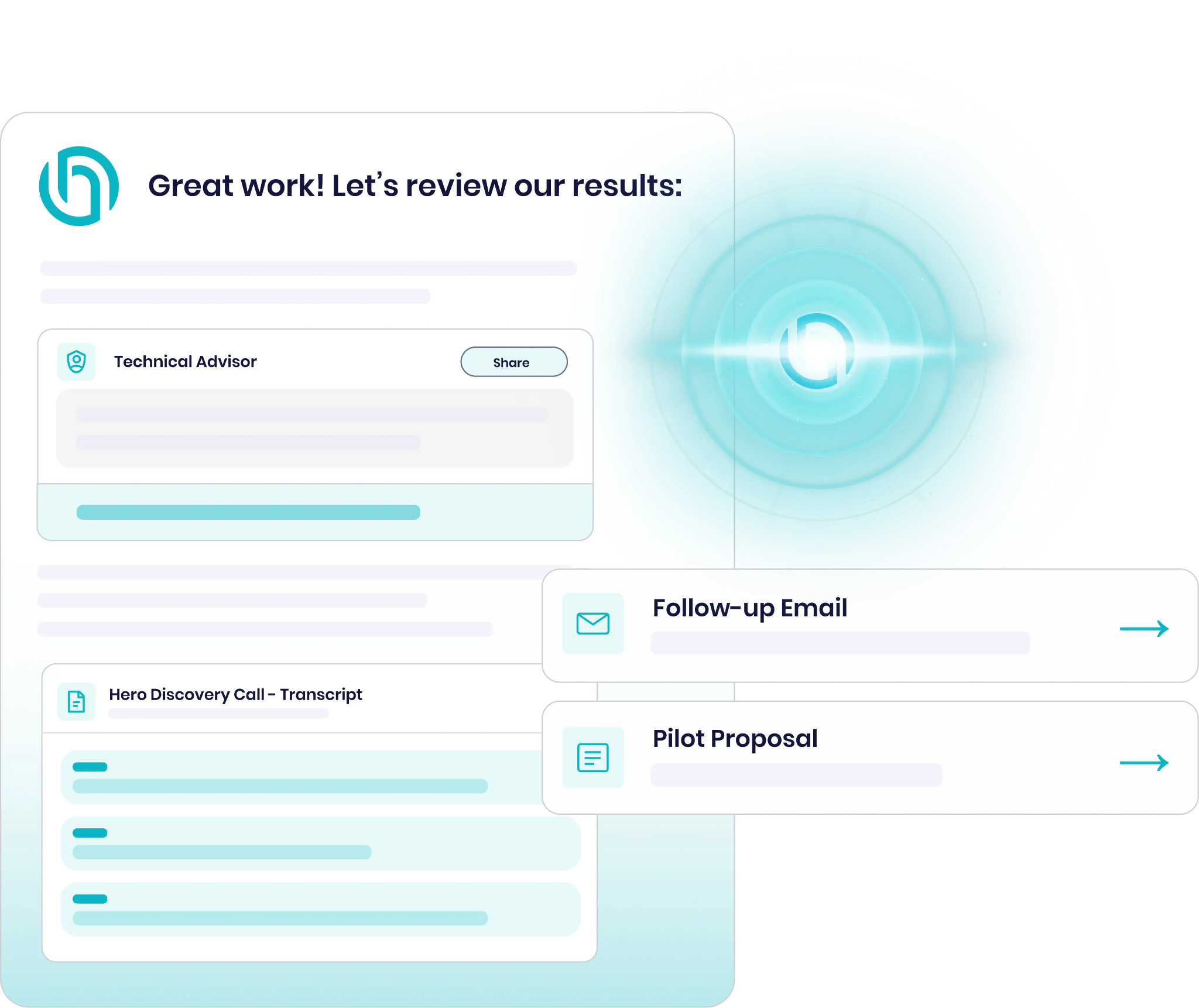
Source: Vivun
Hero's Sales Reasoning Model maps deal stage, stakeholder roles, and methodology before retrieving information. The battle card it surfaces for a CISO differs from the one it surfaces for a CFO on the same deal.
This matters when reps face complex technical questions or competitive scenarios in real time. It matters less if your team's problem is finding the right accounts to call, or managing the pipeline after those calls.
HubSpot covers the full customer journey, from first website visit to closed deal to ongoing service.
Its Smart CRM is the shared data layer connecting Marketing Hub (lead generation, email campaigns, social), Sales Hub (pipeline management, sequences, CPQ), Service Hub (ticketing, knowledge base, customer health), and four other hubs.
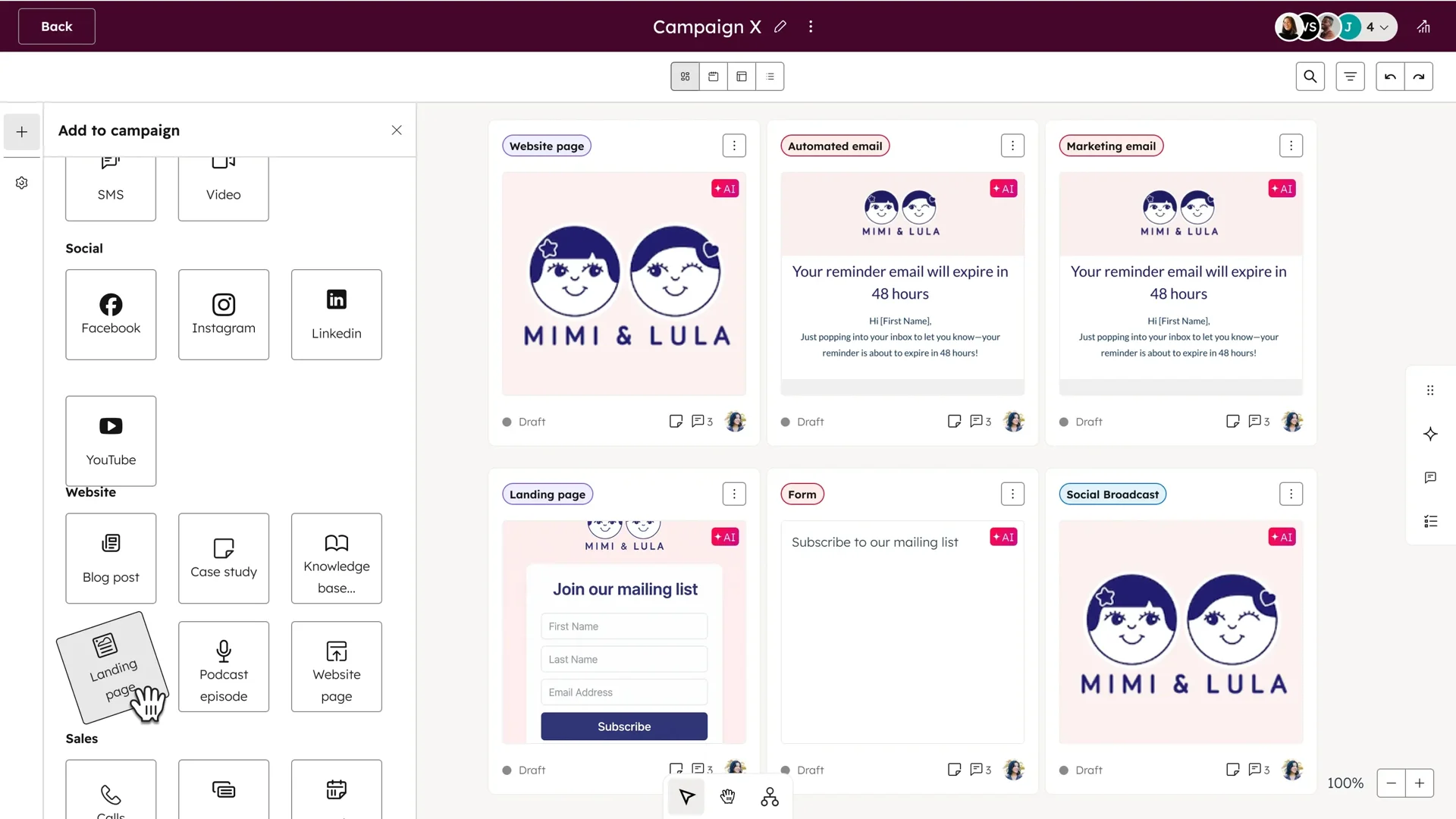
Source: HubSpot
This breadth helps if you're building or consolidating your GTM infrastructure. But HubSpot doesn't sit in the live call with your rep. It manages what happens around calls, not during them.
ZoomInfo provides the intelligence layer underneath both.
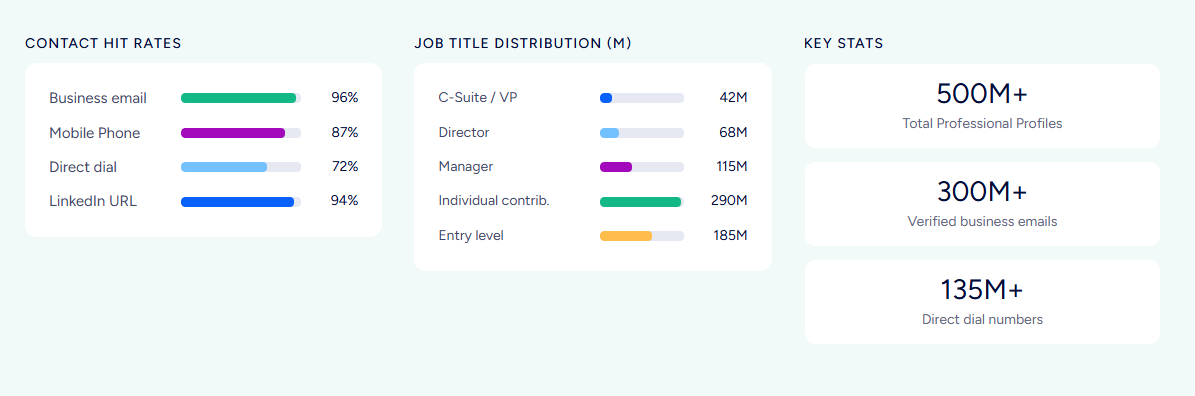
Its 500M contacts and 100M companies give sales teams verified data, whether they're preparing for a call in Vivun, enriching records in HubSpot, or building prospect lists in GTM Workspace.
The GTM Context Graph goes further, connecting third-party data with your CRM records, conversation history, and intent signals to reveal why deals move or stall.
"ZoomInfo's not just a contact data company anymore. They've built a full system of execution. GTM Intelligence works the list, writes the outreach, triggers the play, and helps drive predictable growth." (Ian Brodie, CEO & Co-Founder, Levanta)
Three approaches to AI in sales
All three platforms use AI, but for different purposes.
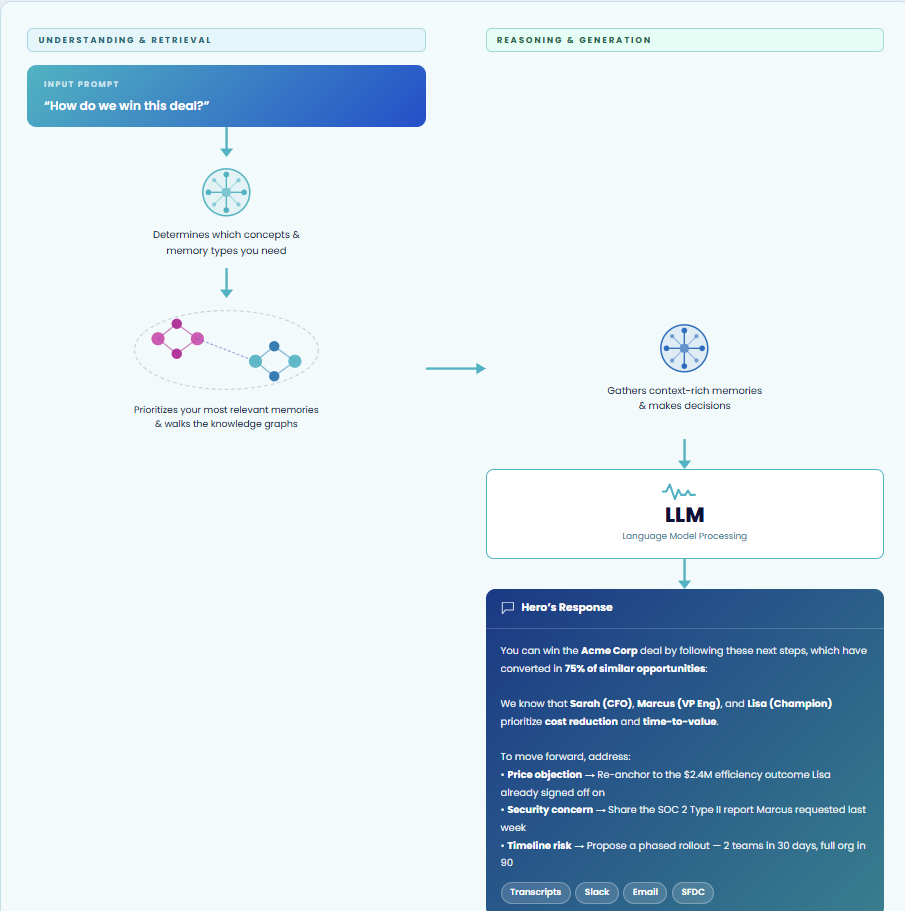
Vivun's Sales Reasoning Model is domain-specific and structured.
Rather than running a nearest-neighbor vector search (the approach most AI tools take), it follows a five-stage reasoning sequence: understand the question, analyze deal context, connect signals, build a stakeholder-specific output, and explain the reasoning chain.
Source: Vivun
Vivun holds three US patents covering this architecture and positions it against the "model wrapper" approach common in sales AI: "Patented methods. Not a model wrapper." The result is answers grounded in deal-specific context with source attribution and confidence scoring. When the model isn't confident, it says so.
The limitation is scope. The SRM handles the selling conversation. It doesn't find new prospects, score accounts against your ICP, or orchestrate multi-channel campaigns.
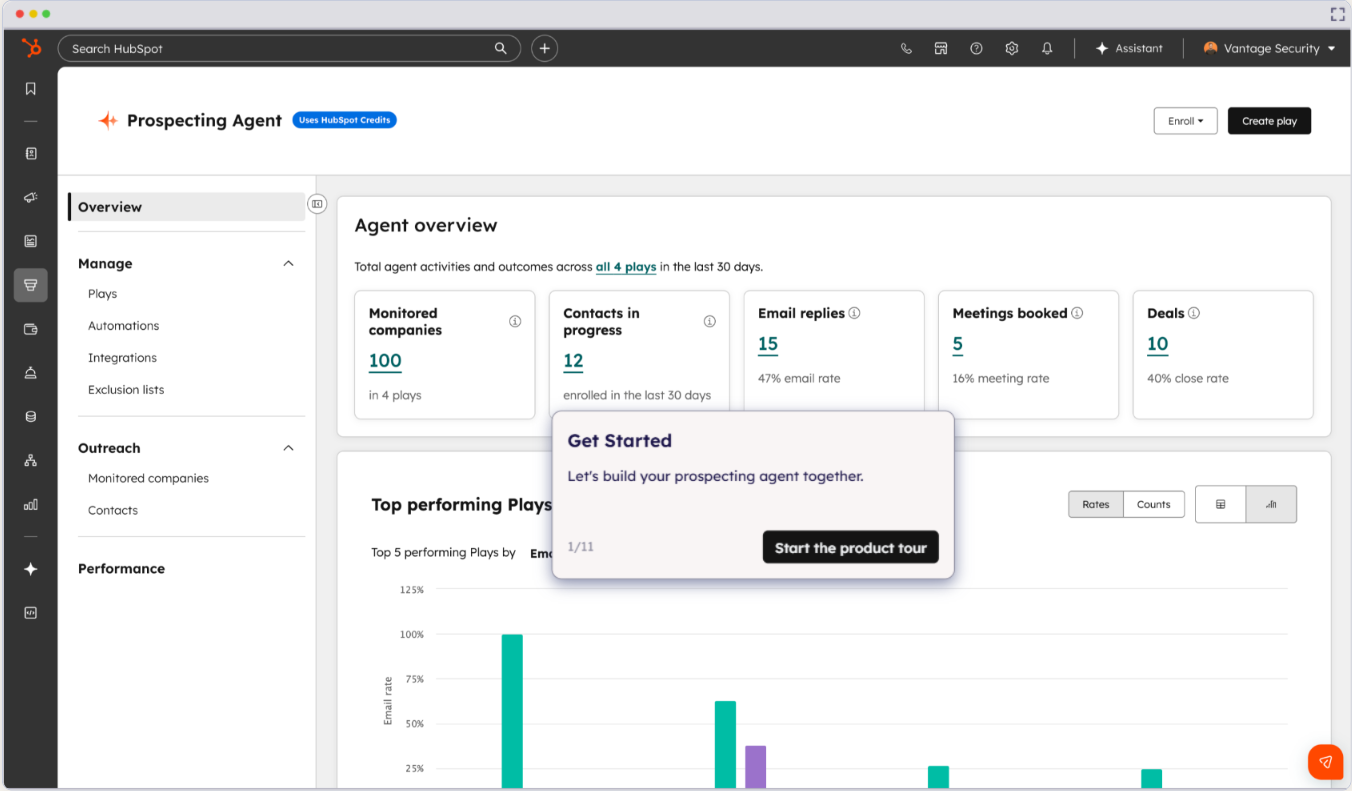
HubSpot's Breeze is an AI layer running across six product hubs.
The Prospecting Agent monitors buying signals and drafts outreach. The Customer Agent handles support inquiries across chat, email, WhatsApp, and phone, resolving over 50% of conversations autonomously according to HubSpot.
Source: HubSpot
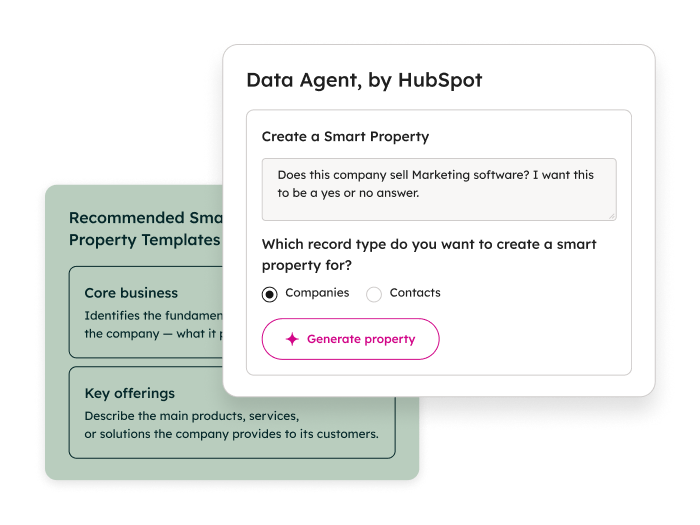
The Data Agent answers natural-language questions about CRM records. Breeze draws its advantage from HubSpot's unified data layer. Because marketing, sales, and service share the same CRM, the AI has context across the customer journey.
Source: HubSpot
The trade-off: several Breeze features (AI-Powered Segmentation, Personalization, Marketing Studio, Knowledge Base Agent) are still listed as Beta. And Breeze AI agents run on HubSpot Credits, a consumption-based system where exceeding your monthly allotment means buying more capacity.
ZoomInfo's GTM Context Graph is the intelligence layer.
It processes 1.5B+ data points daily, fusing ZoomInfo's B2B data with a customer's CRM records, conversation intelligence, and behavioral signals. As ZoomInfo's CPO Dominik Facher explains: "The CRM recorded the state change. It has no record of why it happened."
The GTM Context Graph captures that missing context: why a deal accelerated (executive sponsorship secured), why a champion went quiet (internal budget battle), and what patterns from thousands of similar deals suggest will happen next.
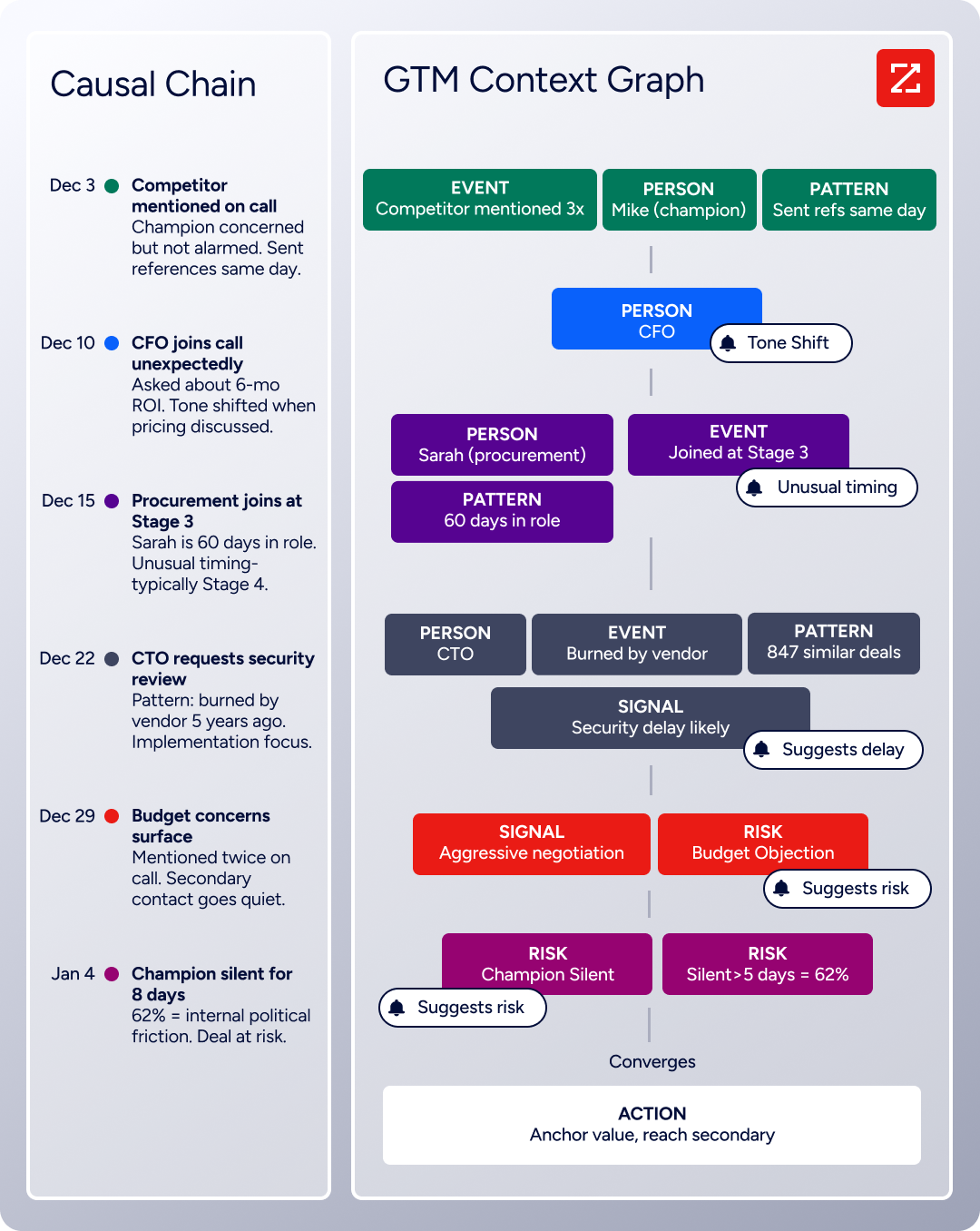
This intelligence powers GTM Workspace, where AI agents handle account research, outreach, and signal monitoring for sellers. It powers GTM Studio, where marketers build and launch GTM plays in natural language. And it's available via APIs and MCP in any third-party tool, including HubSpot's CRM and AI agents like Claude.
"That combination of our internal CRM data, external signals, and AI that's given all that context has helped us craft account- and persona-based messages. And people have responded to them right away." (Toby Carrington, Chief Business Officer, Seismic)
Data quality determines everything downstream
This is where the comparison gets structural. Every AI-powered sales tool is constrained by the data it can access. An AI pre-call brief assembled from an incomplete CRM is an incomplete brief. An AI-drafted outreach email sent to an unverified address bounces. A deal forecast built on stale pipeline data is a guess.
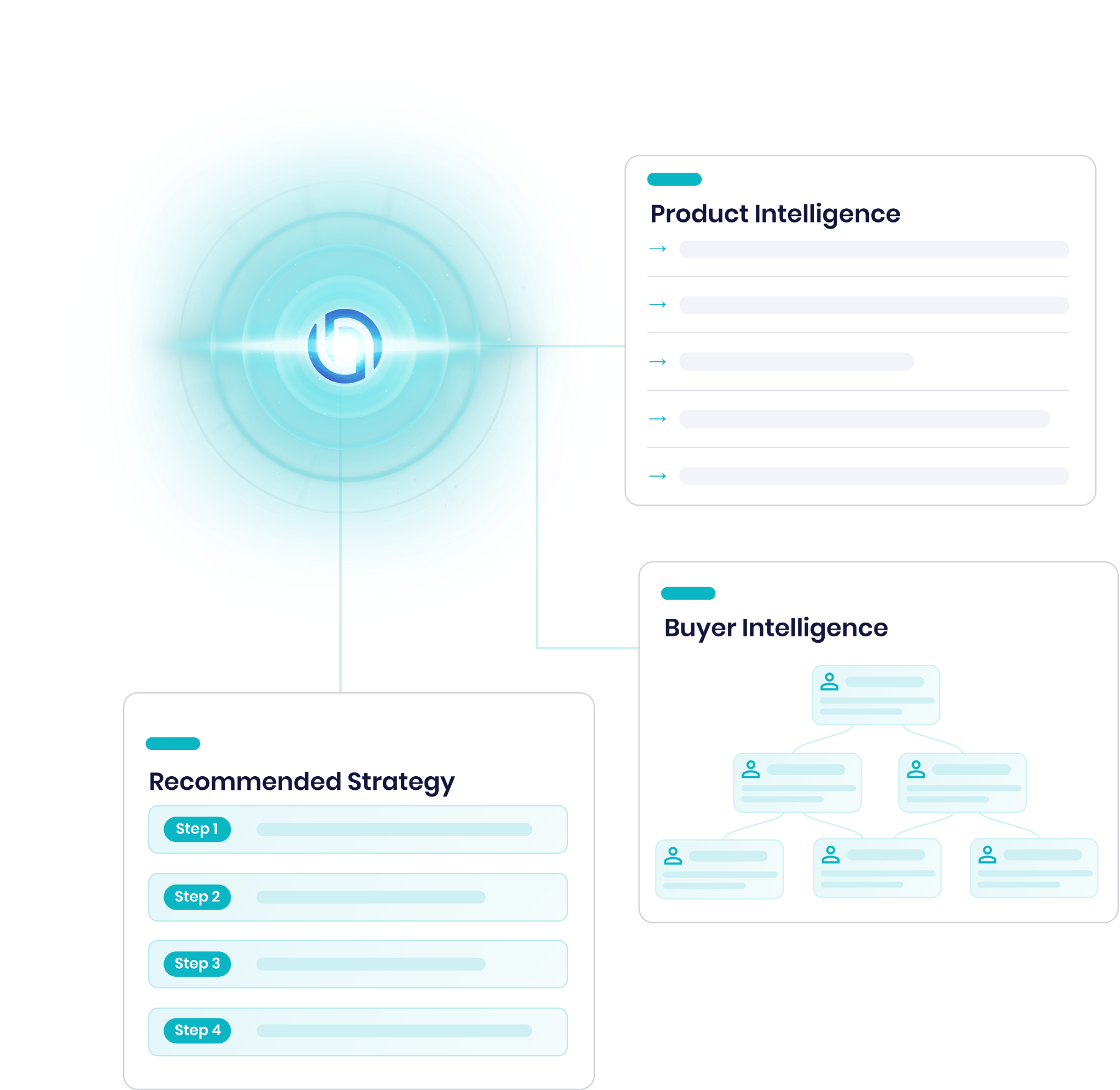
Vivun draws from whatever data lives in a customer's CRM, call recordings, and email threads. Hero connects to Salesforce, HubSpot, Gong, Chorus, Slack, Google Workspace, Zoom, and Microsoft Office to assemble context.
Source: Vivun
Hero's intelligence is only as complete as those systems. If your CRM has gaps in contact coverage, incomplete company records, or outdated deal fields, Hero's pre-call brief inherits those gaps.
HubSpot stores customer data in its Smart CRM and enriches records using AI and its own data sources.
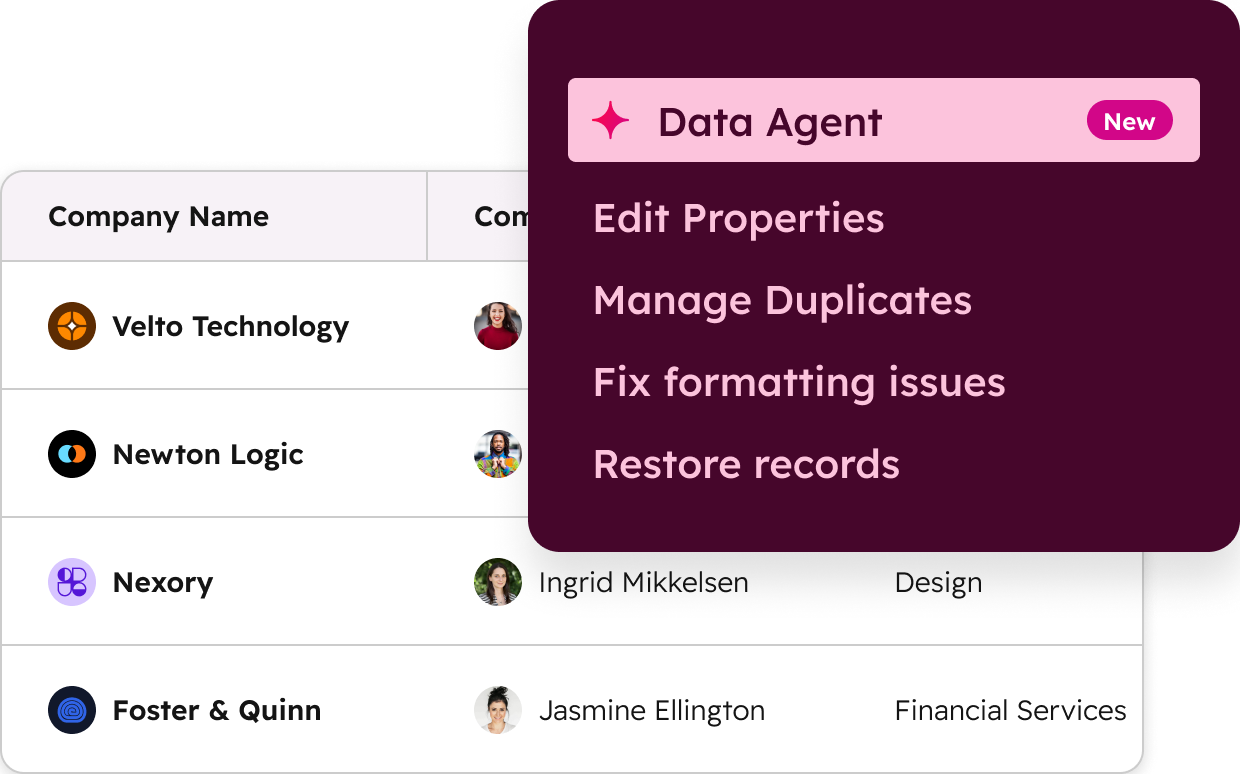
The Data Agent can pull information from email threads and calls, uploaded documents, and web sources.
Source: HubSpot
The platform supports up to 15 million contacts (expandable to 50 million). But HubSpot's data layer is first-party. The records in your CRM reflect who you already know, not the addressable market you haven't reached.
ZoomInfo operates the largest B2B data platform, covering three dimensions: identity data (500M contacts, 135M+ verified phone numbers, 200M+ verified business email addresses), company context (100M companies with industry, revenue, org charts, and technographics), and signals that reveal when accounts are in-market.
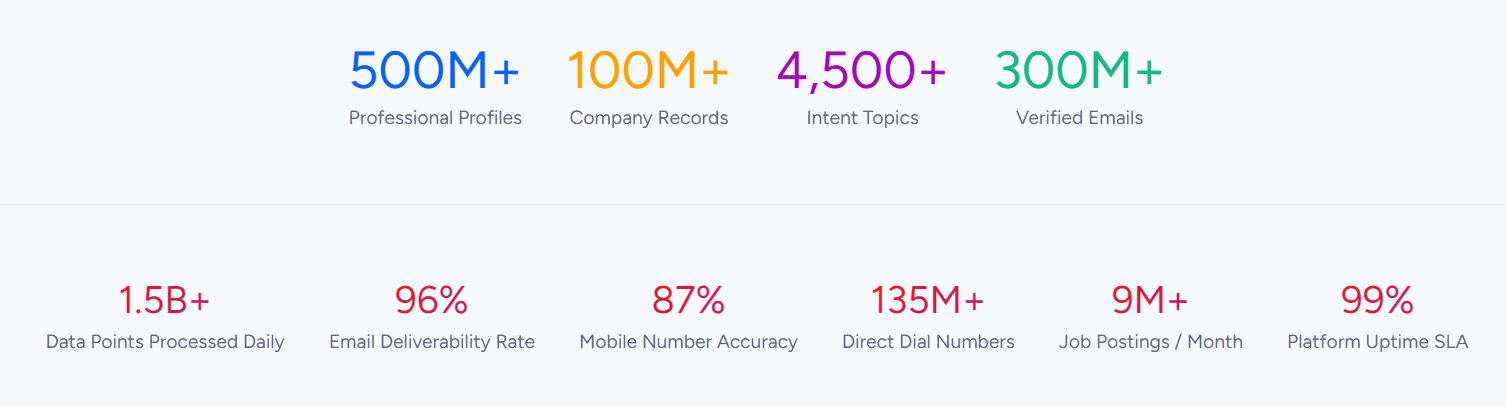
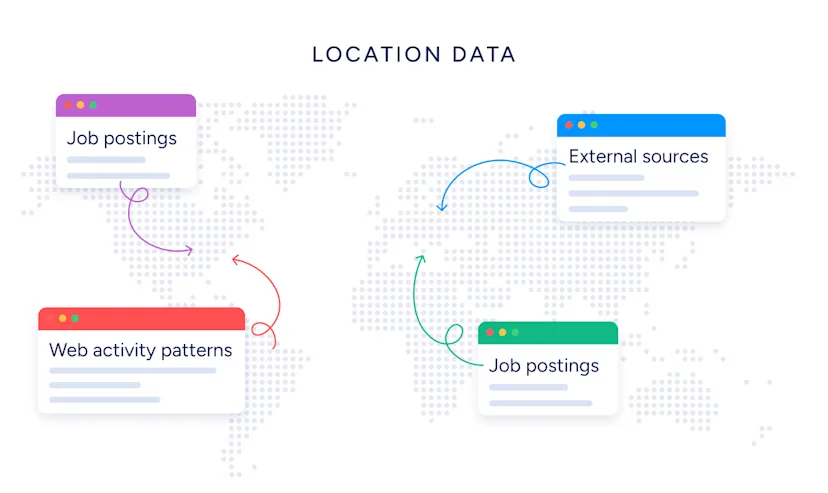
This data comes from a multi-source pipeline: automated ML scanning 28 million site domains daily, third-party partner data covering 95 million businesses, a community of 200,000+ Lite users who share data back, and 300+ human researchers. First-party data reaches up to 95% accuracy.
The gap matters at scale. In a Fortune 500 competitive RFP analyzing 25 million contacts across vendors, the independent consultant concluded that "no other competitor came even close." Forrester named ZoomInfo a Leader in Intent Data Providers for B2B (Q1 2025), with the highest possible scores across eight criteria.
"ZoomInfo gives us the information we need to execute. We don't have to spend our time digging. It's already there, so we can be three steps ahead." (William Kenimer, Vice President of Revenue Operations, Vensure)
Vivun wins in the live call moment
If your team's challenge is what happens during the conversation, Vivun is built for that problem.
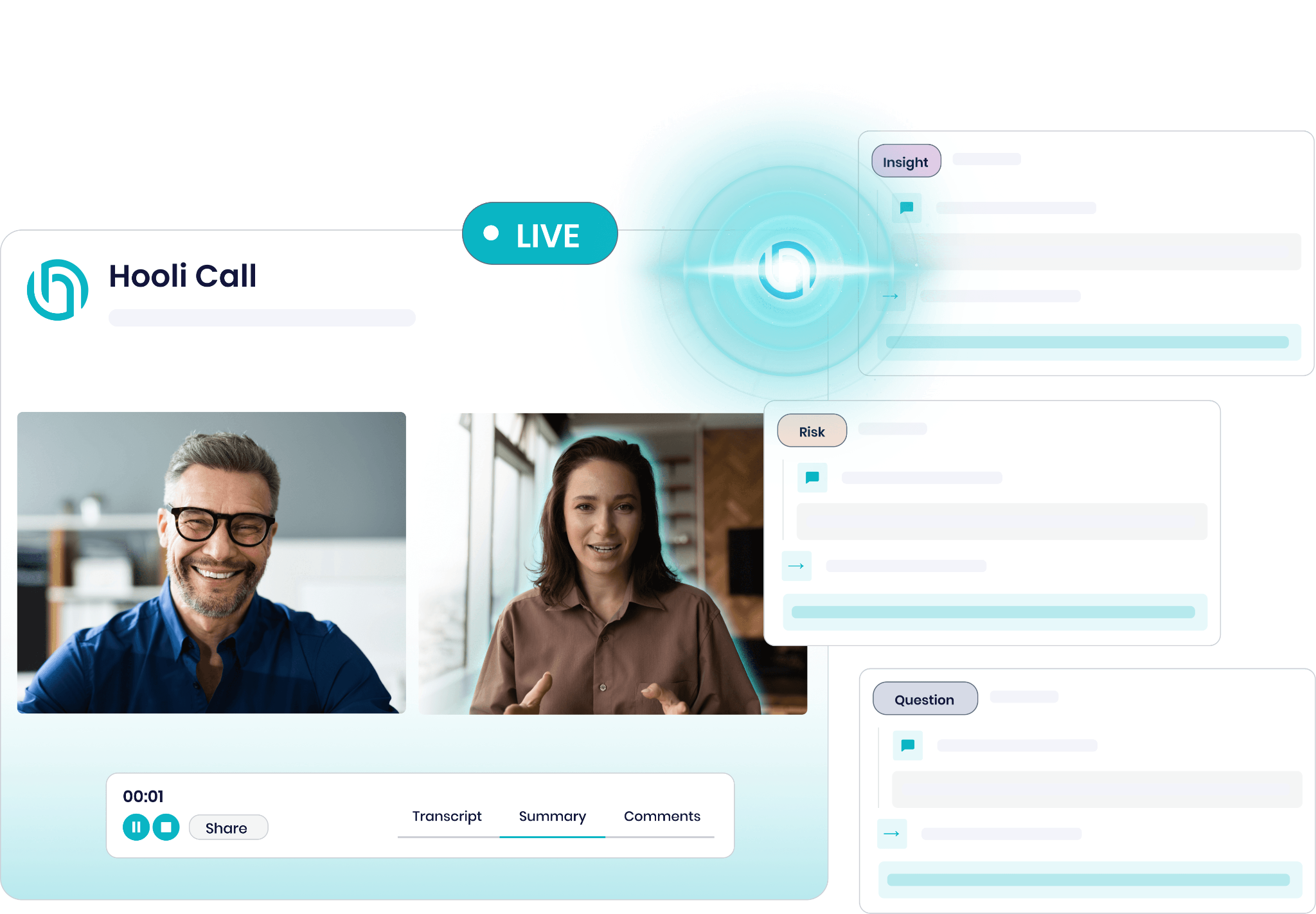
Hero listens to the call in real time and surfaces answers as triggers occur: a competitor name is mentioned, a pricing question comes up, a deal risk signal appears. It detects context and pulls the relevant battle card, proof point, or pricing detail onto the rep's screen. Reps don't type queries or navigate menus. The tool runs passively, visible only to the seller, like a well-informed colleague passing notes.
Source: Vivun
The discovery coaching feature suggests the next question based on what's been said and what hasn't, keeping calls focused and preventing the feature-dump trap that derails technical sales conversations. Risk detection flags single-threaded deals, absent success criteria, and emerging objections while the buyer is still on the line.
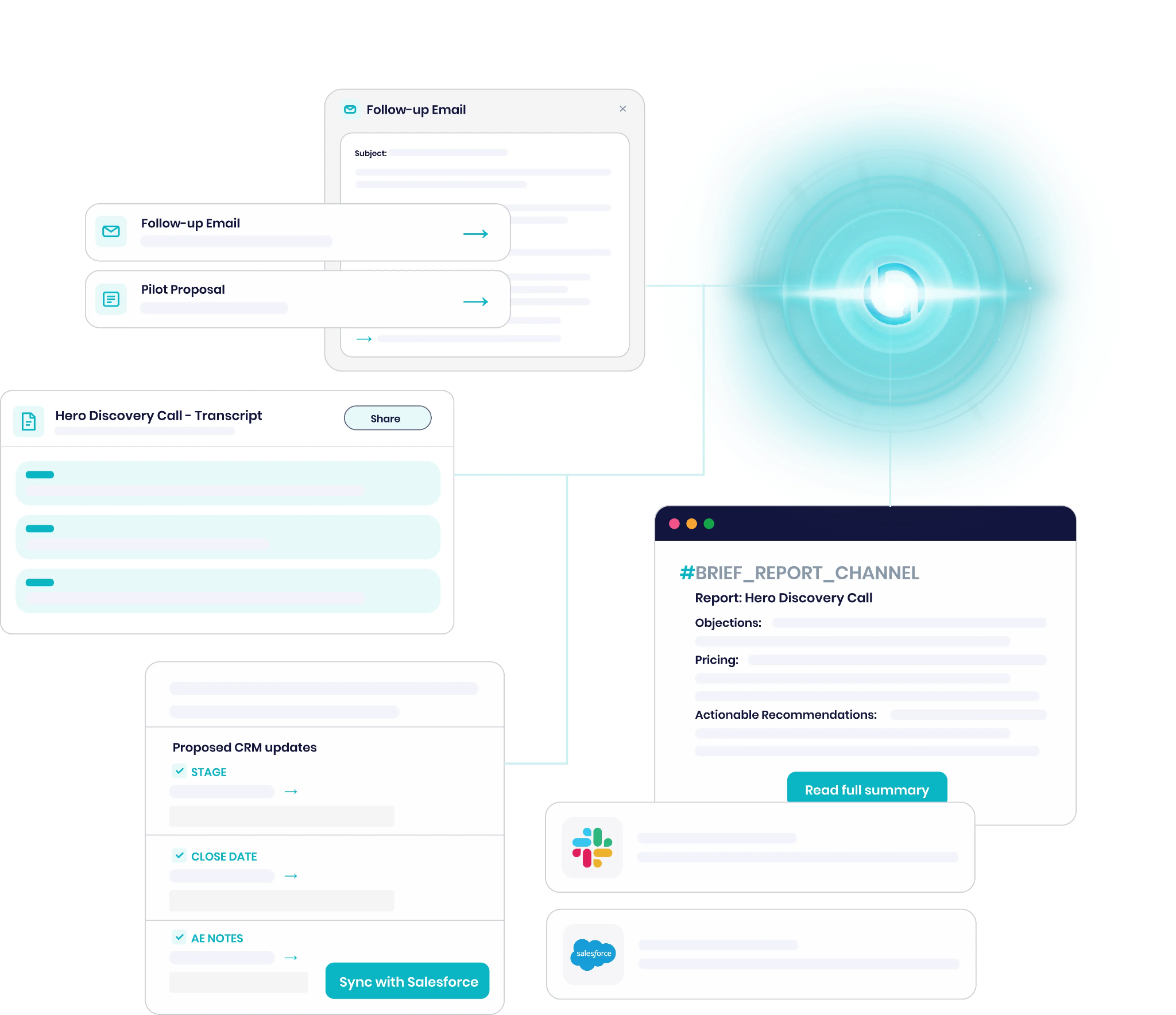
After the call, Hero generates a structured summary, follow-up email draft, and automatic CRM updates within seconds. Sellers report reclaiming 6 to 8 hours per week from this automation alone.
Source: Vivun
Neither HubSpot nor ZoomInfo offers real-time, in-call intelligence. HubSpot's Conversation Intelligence records and transcribes calls for post-hoc coaching. ZoomInfo's Chorus captures calls and extracts competitive insights and coaching patterns. Both analyze what happened after the fact. Hero changes what happens while it's happening.
The trade-off: Hero's best features are gated. Voice whisper mode, voice on call, and avatar on call are Enterprise-only. Individual plan users ($20/month) get no CRM integration, no calendar sync, and no Slack connection. The Team plan ($40/month per user) adds CRM and collaboration but excludes voice features. And Hero's integration list is still growing, with Clari listed as "coming soon."
HubSpot wins in platform breadth
If your team needs to build or consolidate the infrastructure around selling, HubSpot covers more ground than either Vivun or ZoomInfo.
HubSpot's six hubs share a single Smart CRM. A lead captured by marketing automation flows into the sales pipeline, which connects to the service desk when that lead becomes a customer.
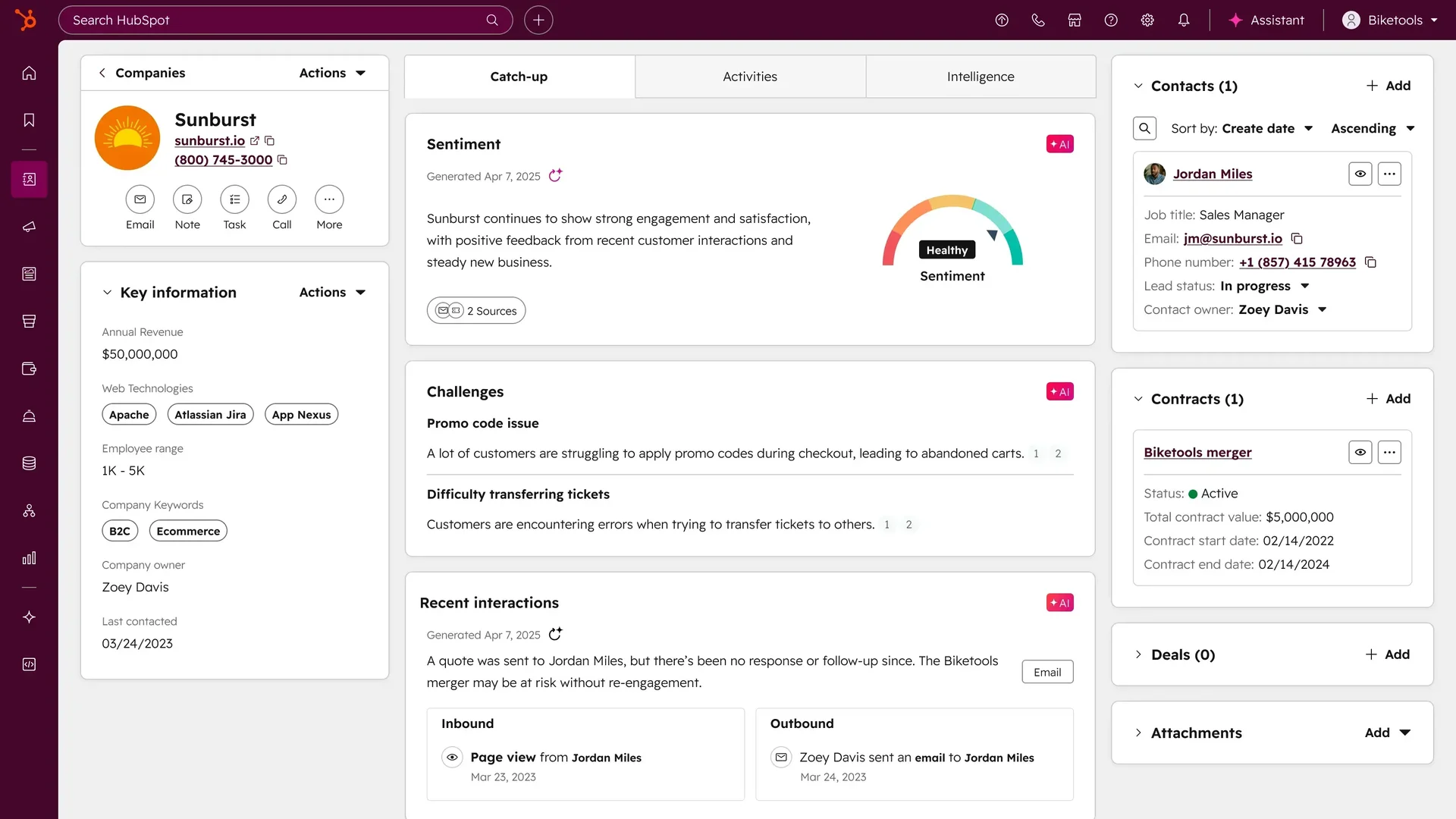
Marketing teams run email campaigns, social media, and landing pages from the same platform where sales manages deal pipelines, sequences, and CPQ. Service teams handle ticketing and knowledge bases and customer health scores in the same workspace.
Source: HubSpot
This unified architecture is HubSpot's advantage. When a prospect fills out a form, their marketing engagement history is visible to the sales rep who calls them. When a customer files a support ticket, the service agent sees every deal they've closed and every marketing email they received.
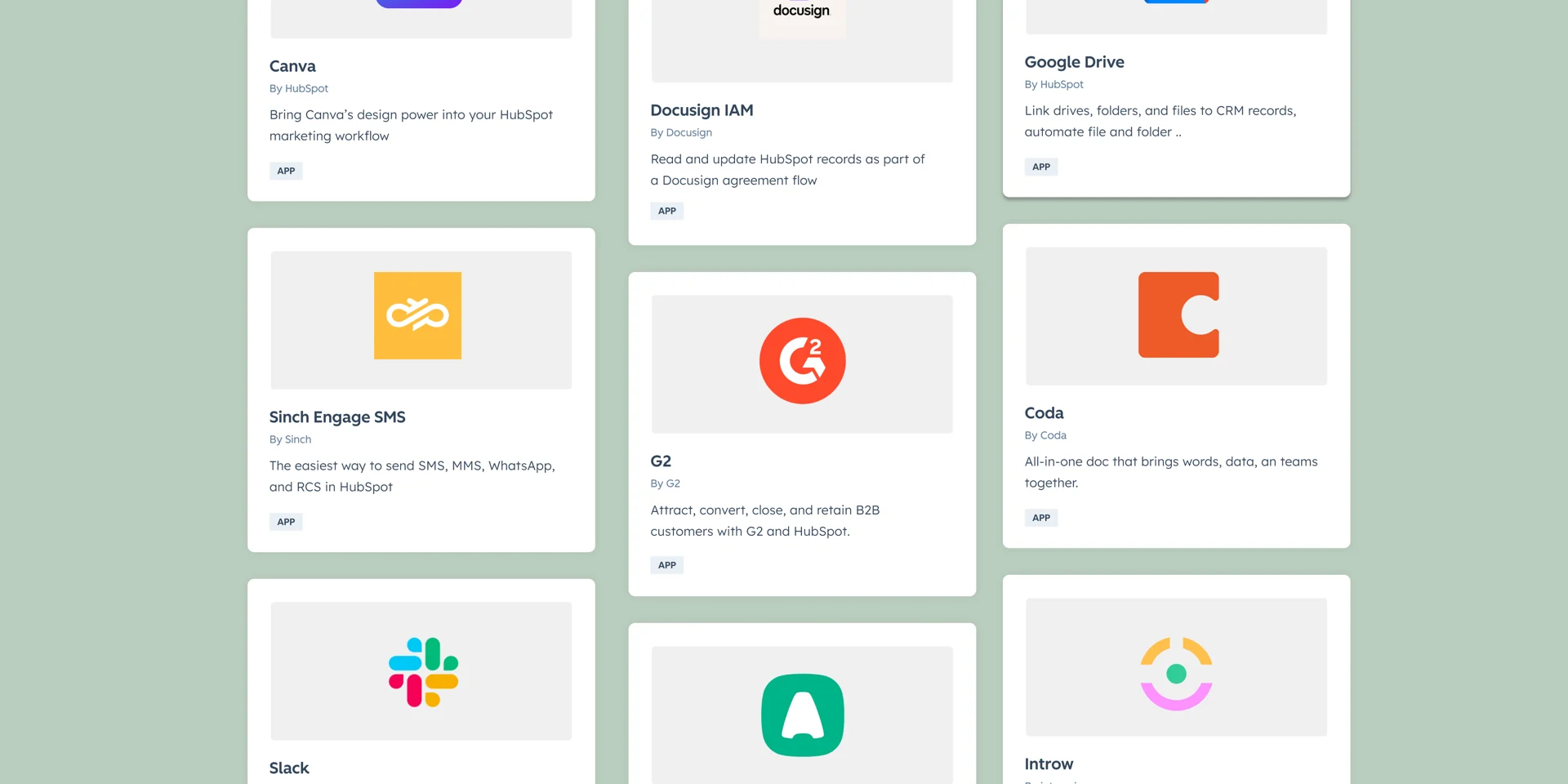
The App Marketplace extends this with over 2,000 integrations and 2.5 million active installs. ZoomInfo is one of those integrations, enriching HubSpot CRM records with verified contact and company data.
Source: HubSpot
The complexity trade-off is real. HubSpot's per-seat, per-hub pricing means costs compound as teams grow. When subscribing to multiple hubs at different tiers, all Core Seats are billed at the highest tier's rate. Professional-tier hubs carry mandatory onboarding fees ranging from $1,500 to $7,000. And while HubSpot's free CRM is useful for getting started, the gap between free and Professional is steep: Marketing Hub Professional jumps to $800/month on annual billing, plus a $3,000 one-time onboarding fee.
ZoomInfo provides the intelligence layer both tools need
Here's the argument for ZoomInfo: both Vivun and HubSpot are application layers.
They process data and present it to users. ZoomInfo is the intelligence layer that makes that data complete and actionable.
For teams using HubSpot, ZoomInfo is a direct integration that enriches CRM records with verified contact data, company attributes, and intent signals. Without enrichment, HubSpot's CRM contains only what your team entered manually or captured through forms. ZoomInfo fills the gaps: org charts, direct-dial phone numbers, technographic profiles, and buying signals that show which accounts are researching solutions like yours.
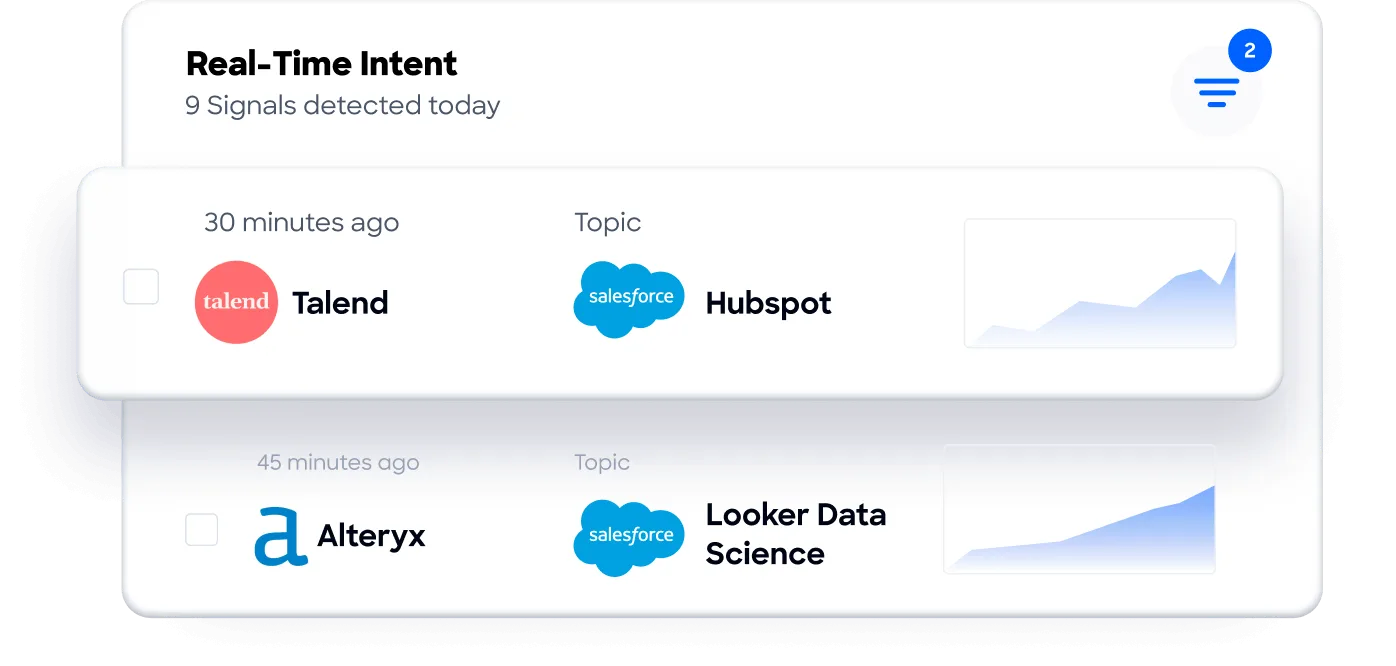
Buyer Intent data tracks signals from 210 million IP-to-Organization pairings and 6 trillion+ keyword-to-device pairings sourced monthly.
For a detailed look at how HubSpot and ZoomInfo stack up as standalone platforms, see our HubSpot vs ZoomInfo comparison.
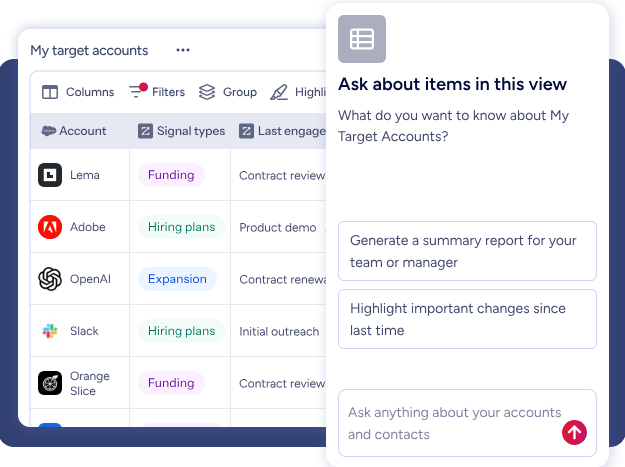
For teams using Vivun, ZoomInfo's data makes Hero's pre-call briefs richer. Hero assembles briefs from CRM and call history. ZoomInfo enriches those CRM records before Hero reads them, so the brief includes verified contact details, company hierarchy, tech stack, and competitive signals Hero wouldn't otherwise have.
ZoomInfo is more than a data pipe. GTM Workspace is a selling workspace where AI agents handle account research, outreach, and signal monitoring. Seismic's sales team attributed 39% of pipeline to opportunities identified or influenced by ZoomInfo signals, while sellers saved 11.5 hours per week and increased productivity by 54%.
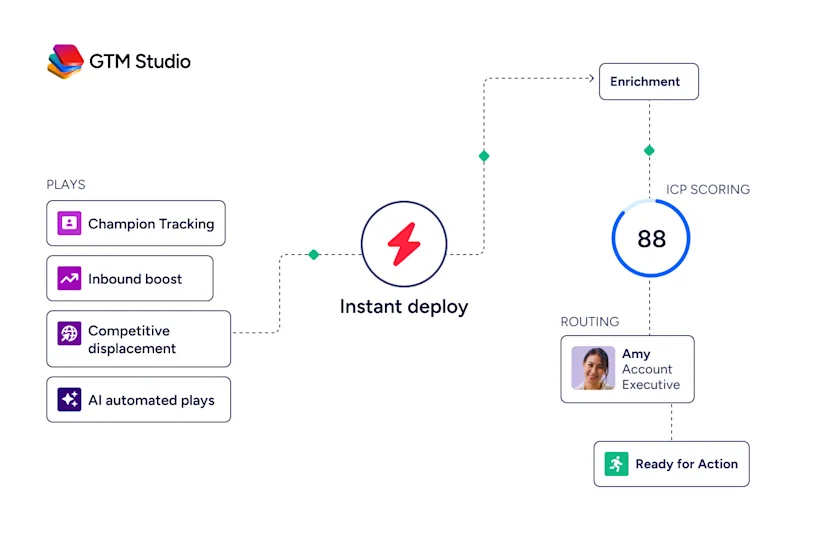
GTM Studio gives marketers and RevOps teams a workspace where expansion plays that used to take 3 weeks now launch in 30 minutes.
For teams building custom tools or AI agents, ZoomInfo's MCP server and Enterprise API expose the same intelligence to any application. The data powering ZoomInfo's own products becomes accessible inside Claude, ChatGPT, or any proprietary system.
"Without ZoomInfo, it would be difficult (if not impossible) to achieve our business objectives. Without it, we wouldn't be able to understand the market, have the right contact data, and make meaningful connections." (Thor Sanderson, Senior Manager of Sales Technology Enablement, Smartsheet)
Pricing reflects different scopes
The pricing structures reveal what each platform is built for.
Vivun is the cheapest entry point. The Individual plan is $20/month with a 28-day free trial, no credit card required. The Team plan is $40/month per user, adding CRM integration, Slack, email, and shared workspaces. Enterprise pricing is custom. Vivun also uses a credit-based consumption layer for higher-value capabilities, though credit costs are not disclosed publicly. Contracts default to 12-month terms with 60-day non-renewal notice.
HubSpot spans a wide price range depending on which hubs and tiers you need. The free CRM is permanent and functional. Sales Hub Starter is $15/seat/month. Sales Hub Professional is $100/seat/month with a $1,500 one-time onboarding fee. Marketing Hub Professional is $800/month with a $3,000 onboarding fee. Enterprise tiers run $150/seat/month for Sales and up to $3,600/month for Marketing. Breeze AI agents consume HubSpot Credits (included monthly by tier, purchasable as add-ons at $0.01 per credit or $10 per 1,000/month).
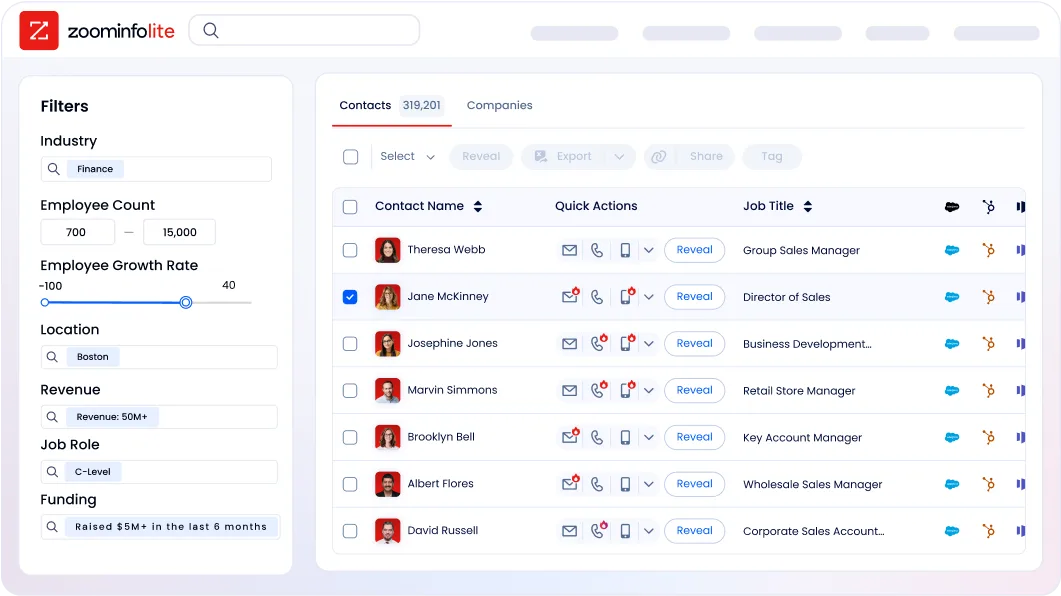
ZoomInfo uses custom-quoted, consumption-based pricing with no published price points. ZoomInfo Lite is a permanent free tier with access to the B2B database, 10 monthly export credits, and WebSights Lite. Paid plans (Professional, Advanced, Enterprise) are negotiated based on seats, credit volume, and features. A 7-day free trial with no credit card gives full platform access.
For a 10-person sales team evaluating all three: Vivun's Team plan would run about $400/month. HubSpot Sales Hub Professional would run $900/month in seat costs alone (plus the one-time onboarding fee, plus additional per-seat costs if mixing tiers with other hubs). ZoomInfo's cost depends on the package but typically involves an annual enterprise agreement.
Integration and ecosystem comparison
How these platforms connect to the rest of your tech stack matters as much as what they do alone.
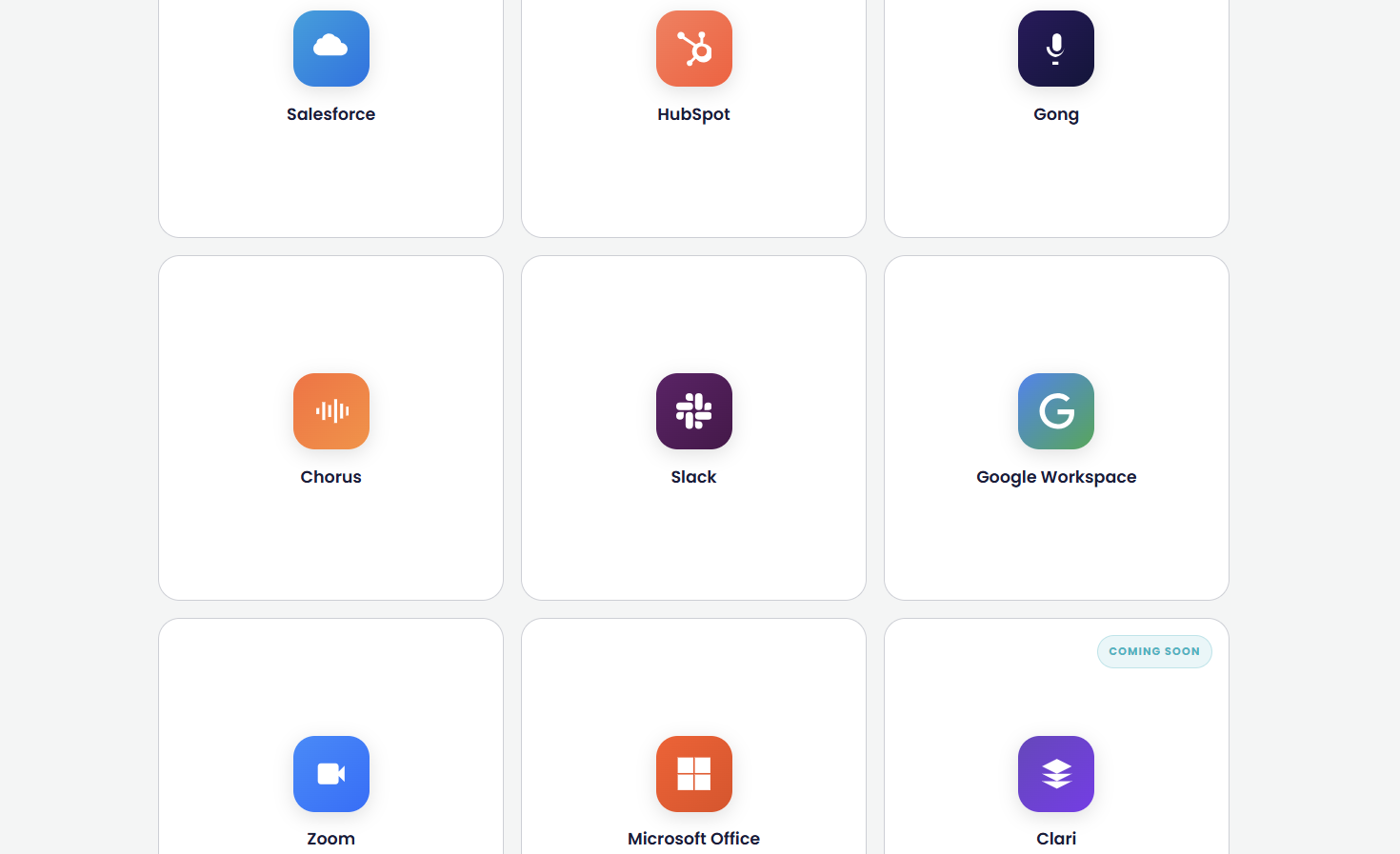
Vivun integrates with Salesforce, HubSpot, Gong, Chorus, Slack, Google Workspace, Zoom, and Microsoft Office. Setup reportedly takes minutes rather than days. CRM write-back is automatic for Team and Enterprise plans but unavailable on the Individual plan.
Source: Vivun
Historical backfill from conversation intelligence tools is Enterprise-only. The integration list is still growing, with Clari noted as "coming soon". Vivun has not documented a public API or webhook framework for third-party integrations.
HubSpot has the largest ecosystem of the three: over 2,000 app integrations with 2.5 million active installs, a REST API covering the full CRM data model, official SDKs for six languages (PHP, Java, Ruby, Go, TypeScript, Python), and a developer platform with CLI tools, VS Code extensions, and an MCP server.
Source: HubSpot
HubSpot connects natively to Salesforce, Microsoft Teams, Slack, Zoom, Gmail, Outlook, LinkedIn, and dozens more. The date-based API versioning system guarantees 18-month support windows per version.
ZoomInfo operates a Marketplace with 172+ partners, native integrations with Salesforce, HubSpot, and Microsoft Dynamics, and Cloud Partners delivering data into AWS, Google Cloud, Snowflake, and Databricks.
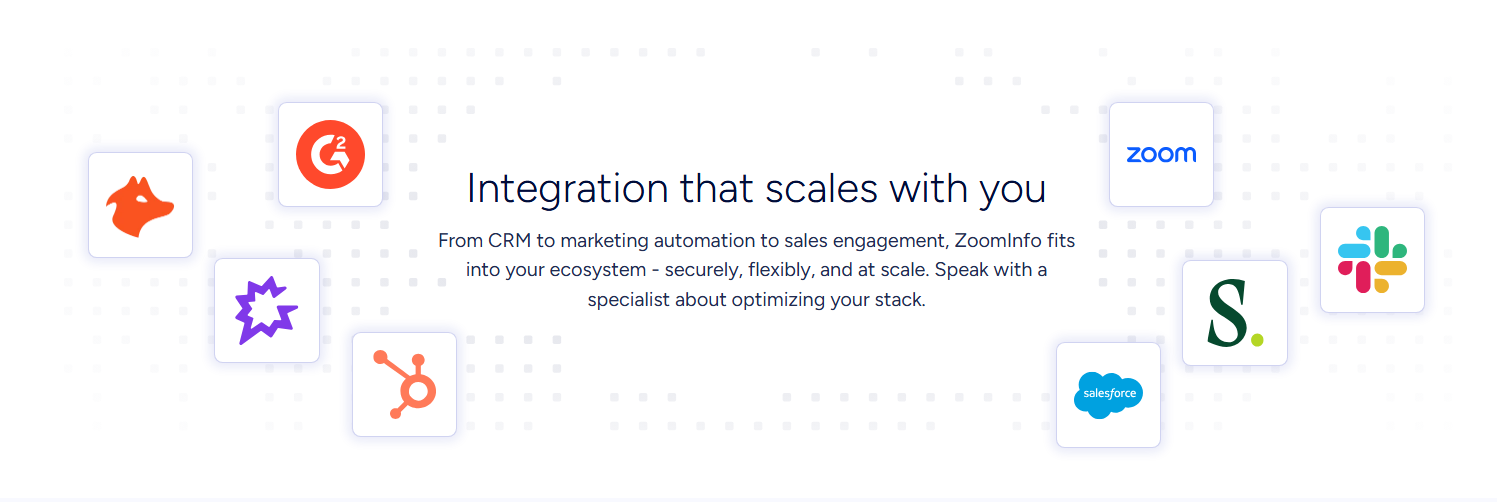
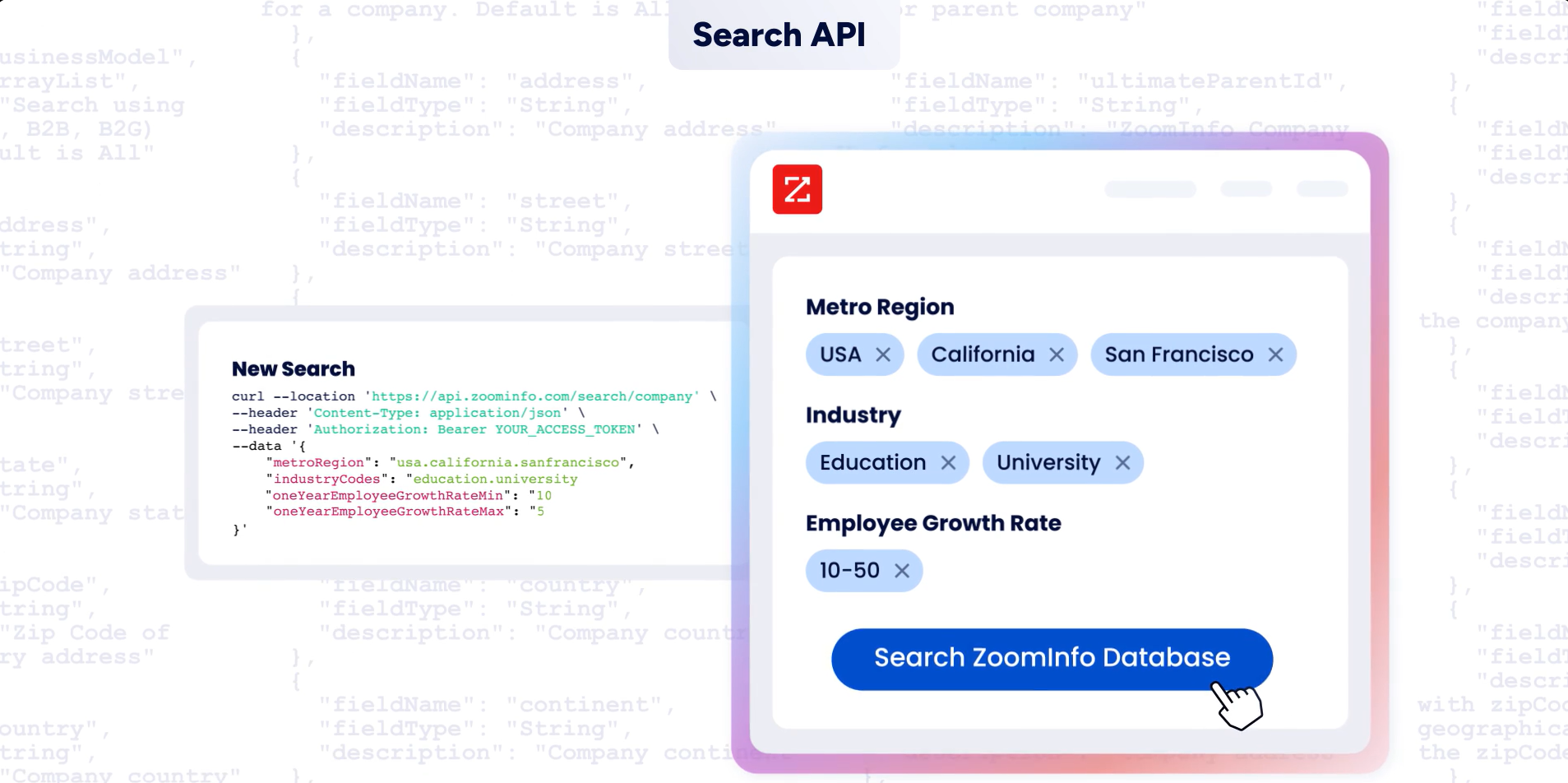
The Enterprise API covers search, enrichment, AI intelligence, and audience management. The MCP server currently supports Claude and ChatGPT, letting AI agents query ZoomInfo's data in natural language. API access is included in all relevant plans.
Security and compliance across the three
For enterprise buyers, security posture matters.
Vivun holds SOC 2 Type I and II, ISO 27001, ISO/IEC 42001:2023, GDPR, and CCPA certifications. The ISO 42001 certification (covering responsible AI governance) is rare among AI sales tools. Vivun does not train on client data, with each deployment running as an isolated instance. The company discloses its full third-party AI subprocessor list (OpenAI, LiveKit, Deepgram, and others), which is uncommon transparency.
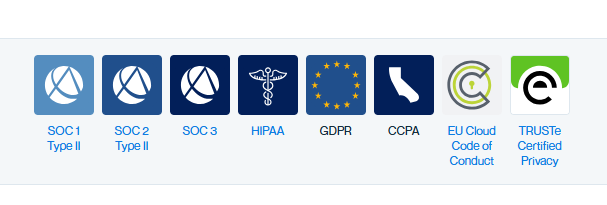
HubSpot holds SOC 2 Type II, SOC 3, and HIPAA attestation and is GDPR and CCPA compliant. HubSpot encrypts data with AES-256 at rest and TLS 1.2/1.3 in transit. An EU Data Center is available for data residency requirements. HubSpot publishes AI model cards detailing how each AI system interacts with customer data.
Source: HubSpot
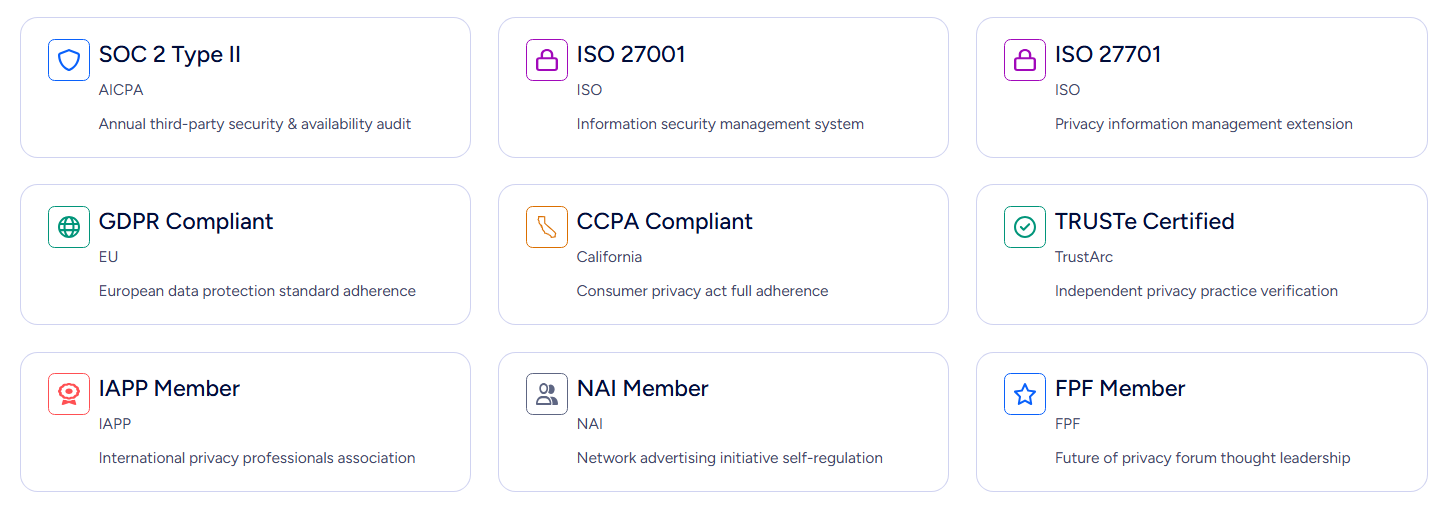
ZoomInfo maintains ISO 27001, ISO 27701, SOC 2 Type II, TRUSTe GDPR and CCPA certifications, all renewed annually. As a data provider, ZoomInfo is a registered data broker in California and Vermont, with compliance built into the data layer. A dedicated Trust Center provides transparency into data handling practices.
Vivun vs. HubSpot vs. ZoomInfo: Which should you choose?
The answer depends on which problem you're solving first.
Choose Vivun (Hero) if:
Your reps face complex, multi-stakeholder deals where in-call confidence determines outcomes
You already have a CRM and conversation intelligence tools in place
Your team needs a pre-call brief, real-time competitive intelligence, and post-call automation
You want fast deployment with minimal IT involvement
You're willing to invest in Enterprise tier for voice and avatar features
Choose HubSpot if:
You need to build or consolidate your GTM infrastructure in one platform
Marketing, sales, and service alignment across a shared CRM is your priority
You want AI automation across the customer lifecycle, not just during calls
Your team benefits from a free tier and a gradual upgrade path
Platform breadth matters more than point-solution depth
Choose ZoomInfo if:
The quality and completeness of your B2B data is the bottleneck for your sales team
You need verified contacts, direct dials, and buying signals your CRM doesn't have
You want AI-powered prospecting and deal intelligence through GTM Workspace
Your marketers and RevOps teams need to build and launch GTM plays without engineering tickets
You want your intelligence layer accessible in any tool (HubSpot, Salesforce, AI agents) via API and MCP
Try ZoomInfo free and see why ZoomInfo is the GTM data layer trusted by over half the Fortune 500.
The strongest GTM stacks use these tools together rather than choosing one. ZoomInfo provides the verified data and intelligence foundation. HubSpot manages the customer relationship and automates the marketing-to-service workflow. For teams running complex enterprise sales cycles, Vivun's Hero adds real-time support in the moments where deals are won or lost.
The question isn't which tool is best. It's which gap in your current workflow is costing you the most revenue, and which tool closes it.
"It's not just the data itself. It's more about the right data at the right time to help us reach out with the right message across that full buyer journey." (Chelsea Kenyon, Senior Director of Digital Strategy, Redwood Logistics)
Vivun vs. HubSpot vs. ZoomInfo FAQ
What is the core difference between Vivun, HubSpot, and ZoomInfo?
Vivun (Hero) is an AI sales teammate that assists reps before, during, and after live calls with real-time answer surfacing, pre-call briefs, and automatic CRM updates. HubSpot is a customer platform with CRM, marketing automation, sales tools, and service capabilities, all sharing a unified data layer. ZoomInfo is a B2B data and intelligence platform providing 500M contacts, 100M companies, intent signals, and an AI-powered GTM Context Graph that reveals why deals move or stall.
Can I use these tools together?
Yes, and many teams do. ZoomInfo integrates with HubSpot to enrich CRM records with verified contact data, company context, and intent signals. Vivun (Hero) also integrates with HubSpot as a CRM source. ZoomInfo's data enrichment makes both HubSpot's CRM records and Hero's pre-call briefs more complete. ZoomInfo's intelligence is also accessible via APIs and MCP in any third-party tool.
Which platform is cheapest for a small sales team?
Vivun's Individual plan starts at $20/month per user with a 28-day free trial. HubSpot offers a permanent free CRM tier with basic sales tools, and paid Sales Hub starts at $9/seat/month on an annual plan. ZoomInfo offers a permanent free tier (ZoomInfo Lite) with 10 monthly export credits and access to the B2B database. For paid plans, ZoomInfo uses custom-quoted pricing.
Which platform has the best AI capabilities?
Each platform's AI excels in a different area. Vivun's Sales Reasoning Model is strongest for real-time, in-call intelligence, applying structured reasoning specific to deal stage and stakeholder roles. HubSpot's Breeze AI covers the broadest surface, with agents for prospecting, customer service, and data analysis across the platform. ZoomInfo's GTM Context Graph provides the deepest intelligence, fusing B2B data with CRM records and conversation signals to reveal why deals move or stall across thousands of accounts.
Does Vivun replace a CRM like HubSpot?
No. Vivun (Hero) requires a CRM to function. It integrates with Salesforce and HubSpot to pull deal data for pre-call briefs and write back updates after calls. Hero does not manage contacts, pipelines, marketing campaigns, or customer service. It is a specialized tool that augments existing CRM and conversation intelligence workflows.
How does ZoomInfo's data compare to HubSpot's built-in data?
HubSpot's Smart CRM stores first-party data from your own interactions: form fills, email engagement, deal records. ZoomInfo provides third-party B2B intelligence (500M contacts, 100M companies, 135M+ verified phone numbers, 200M+ verified business emails) plus buyer intent signals, technographics, and org charts. ZoomInfo verifies its data through a multi-source pipeline including 300+ human researchers and reaches up to 95% accuracy on first-party data. The two complement each other: ZoomInfo enriches the records HubSpot manages.
Which platform is best for enterprise sales teams running complex deals?
All three serve enterprise sales, but at different layers. ZoomInfo provides the data foundation and account intelligence enterprise teams need for prospecting, territory planning, and signal-driven engagement. HubSpot provides the CRM infrastructure for managing complex deal pipelines across marketing, sales, and service. Vivun provides real-time call support for the moments when deals are won or lost, particularly in multi-stakeholder, technical sales cycles where reps face complex questions on every call.
What are the free options for each platform?
Vivun offers a 28-day free trial on the Individual plan with no credit card required. HubSpot offers a permanent free CRM tier with basic tools across all hubs, capped at 2 user seats. ZoomInfo offers both a 7-day free trial with full platform access and a permanent free tier (ZoomInfo Lite) with 10 monthly export credits and access to the B2B database.
More Vivun and HubSpot comparisons:
