
Choosing between WalkMe and Assima for enterprise software adoption comes down to a few questions:
Do you need to guide employees through live applications in real time, or train them in a simulation environment before they touch production?
Is your organization running SAP, or do you manage a tech stack spanning multiple vendors?
Are you looking for a full digital adoption platform with analytics and automation, or a training tool that produces interactive application simulations?
Do you have dedicated administrators who can build and maintain in-app guidance, or do you need something your L&D team can operate with their existing skills?
How important is it that training content survives application updates without manual rework?
In short, here's what we recommend:
WalkMe is the enterprise digital adoption platform that guides employees inside the applications they use every day.
Now a wholly-owned SAP subsidiary, WalkMe overlays step-by-step guidance, workflow automation, and AI-powered assistance on top of any web or desktop application, without modifying the underlying software.
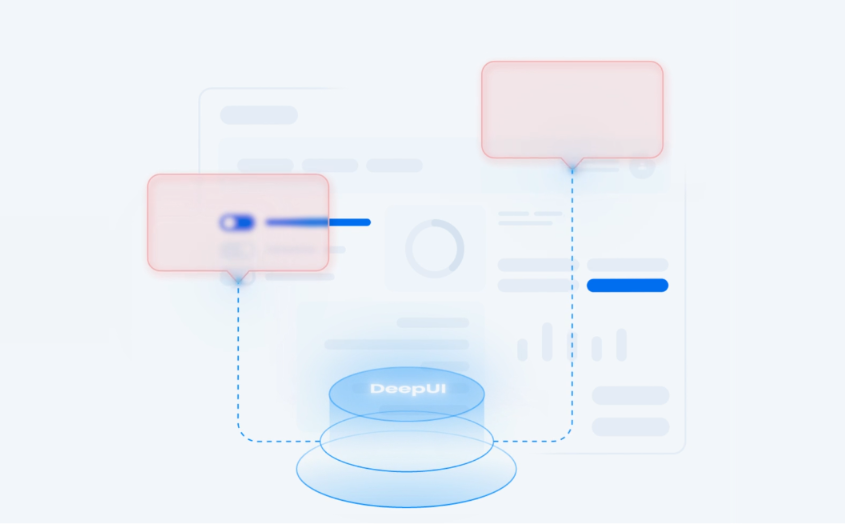
Its DeepUI technology detects UI changes and adapts published guidance automatically, so software updates don't trigger a maintenance scramble.
However, WalkMe carries a steep learning curve for administrators, opaque enterprise pricing, and a post-acquisition tilt toward SAP that may concern organizations running non-SAP stacks.
Assima approaches the same problem from the opposite direction. Instead of guiding users inside live systems, Assima's 4x patented cloning technology creates interactive replicas of enterprise applications where employees can practice workflows without risk to production.
This simulation-first approach excels at pre-go-live training for major ERP rollouts, with documented 70% training cost reductions and 90% rework reduction versus screenshot-based tools.
The trade-off: Assima is priced for large enterprises, has no free trial, and its public review presence is thin compared to category leaders.
Both platforms tackle enterprise software adoption, but from different angles. WalkMe guides users through live systems after deployment. Assima trains users in simulated systems before deployment. What neither addresses is the quality of data flowing through those systems. Bad data undermines adoption efforts regardless of how well employees are trained.
ZoomInfo is a GTM platform that ensures the CRM and sales systems your teams adopt contain accurate information.
With 500M contacts, 100M companies, 135M+ verified phone numbers, and 200M+ verified business email addresses, ZoomInfo powers the data layer inside the enterprise applications (Salesforce, HubSpot, Microsoft Dynamics) that WalkMe and Assima help users navigate.
Its GTM Context Graph processes 1.5B+ data points daily, combining ZoomInfo's intelligence with your CRM records, conversation transcripts, and behavioral signals so your teams act on verified data rather than stale records.
For organizations investing in software adoption, ZoomInfo addresses the other half of the ROI equation: making sure the data employees interact with is complete and current.
If ensuring your CRM data is as reliable as your software training sounds valuable, see how ZoomInfo works.
WalkMe vs. Assima vs. ZoomInfo at a glance
WalkMe | Assima | ZoomInfo | |
|---|---|---|---|
Core approach | In-app guidance overlays on live systems | Interactive application simulations | B2B data intelligence for GTM systems |
Primary problem solved | Post-deployment software adoption | Pre-go-live workforce training | CRM and sales data accuracy |
Target buyer | IT leaders, Change Management, HR | L&D leaders, IT directors | Sales, Marketing, RevOps |
Enterprise app coverage | Any web or desktop application | SAP, Oracle, Salesforce, Workday, homegrown apps | Salesforce, HubSpot, Microsoft Dynamics, 120+ integrations |
AI capabilities | WalkMe AI with contextual assistance | Not prominently featured | GTM Context Graph with AI-powered recommendations |
Free trial | No standard free trial | No free trial | 7-day free trial + permanent free tier |
Pricing | Custom enterprise contracts | Custom enterprise contracts | Consumption-based, custom-quoted |
Key differentiator | DeepUI auto-adapts to UI changes | 4x patented cloning produces editable simulations | Largest B2B data platform |
Two fundamentally different approaches to software adoption
WalkMe and Assima solve the same problem (employees struggling to use enterprise software) but their methods have almost nothing in common.
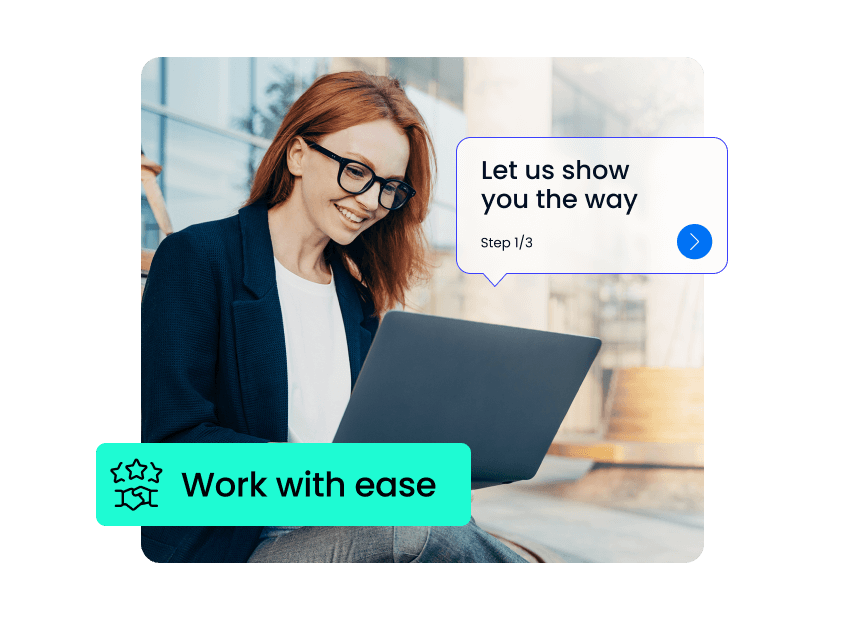
WalkMe operates inside live applications. When an employee opens Salesforce or SAP and doesn't know how to complete a task, WalkMe's overlay appears with step-by-step guided flows, contextual tooltips, and validation safeguards on the screen.
Source: WalkMe
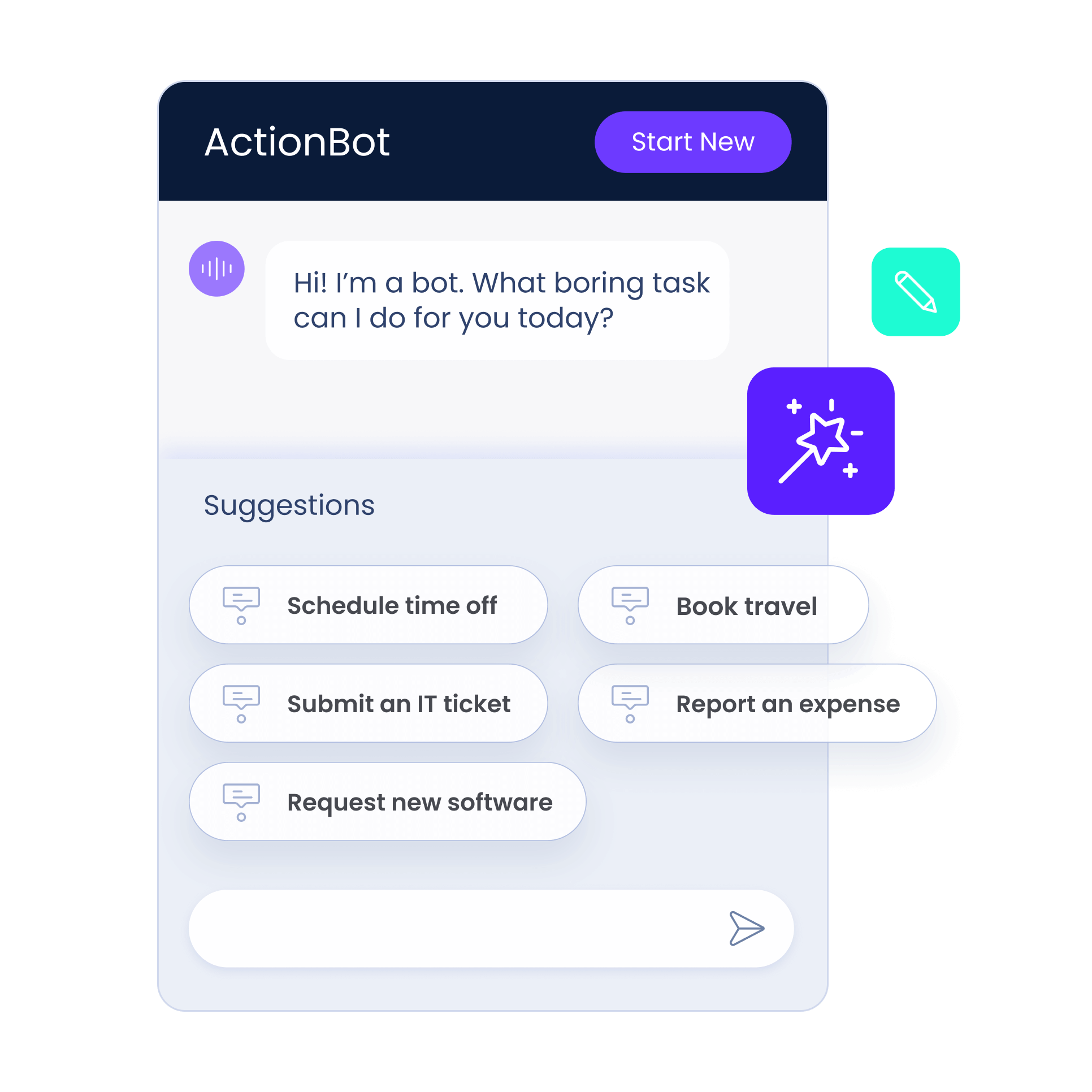
The guidance supports conditional branching and error-handling, so it adapts to whatever path the user takes. WalkMe can also automate repetitive tasks by clicking buttons, selecting menus, and advancing screens on the user's behalf.
Source: WalkMe
This "learn while doing" approach gives employees help at the moment they need it. No training sessions to schedule, no separate environment, no gap between learning and applying.
Assima operates outside live applications. Before an employee touches production SAP or Oracle, they practice in an interactive clone that looks and behaves like the real system.
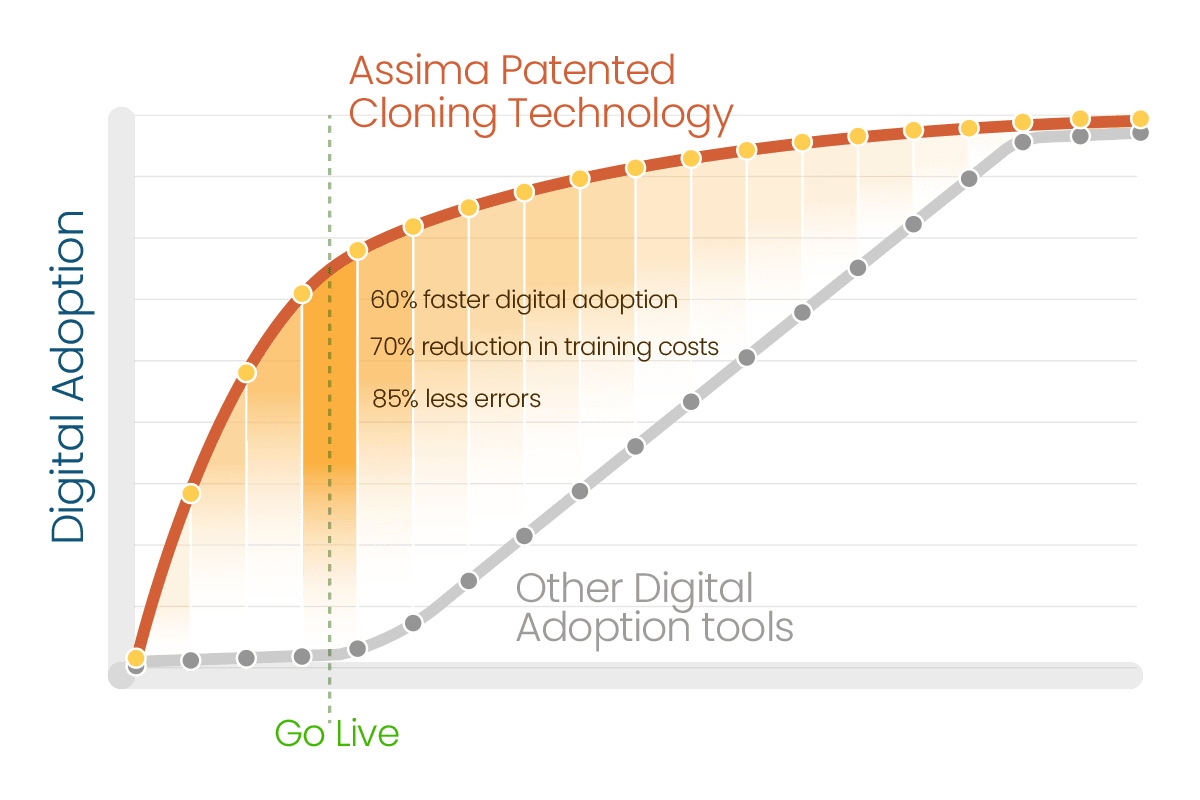
Users click buttons, scroll, enter data into fields, and navigate dropdowns, all in a safe environment where mistakes carry no consequences.
This "practice first, then go live" approach is valuable in high-stakes environments: healthcare systems handling patient data, financial platforms processing transactions, or any scenario where a production mistake is expensive.
Assima can even train users on systems still under development, separating training readiness from IT delivery timelines.
The choice between them often depends on timing. If you're rolling out a new ERP to 50,000 users next quarter and need them competent by day one, Assima's simulation training makes sense. If your ERP is already deployed and users are struggling with daily workflows, WalkMe's in-app guidance provides immediate relief. Many large enterprises need both: simulation training before go-live, then in-app support afterward.
How each platform survives application updates
Enterprise applications update constantly. Salesforce releases three times a year. SAP pushes regular patches. Every update threatens to break training content and in-app guidance. How WalkMe and Assima handle this matters.
WalkMe's answer is DeepUI. DeepUI uses AI to read application interfaces the way a human would (visual elements, layout structure, and text) rather than relying on brittle DOM paths or element IDs.
Source: WalkMe
When an application updates its UI, DeepUI re-identifies elements by their semantic meaning. ENGIE reported eliminating the need to test and correct over 100 digital adoption solutions for each new Salesforce release.
The practical result: application updates no longer trigger a maintenance cycle. Published guidance keeps working without human intervention.
Assima's answer is object-level editing. Because Assima captures UI elements as editable objects rather than screenshots, changes propagate across all affected screens.
When a field label changes in SAP, you edit it once in Assima and the correction appears in every lesson that references it. No re-recording required.
Both approaches cut maintenance compared to traditional methods. WalkMe's advantage is automation: DeepUI handles changes without human intervention. Assima's advantage is precision: authors can update content exactly as needed, preview the results, and publish on their timeline.
The SAP ecosystem shapes both platforms' futures
SAP's influence over both WalkMe and Assima is impossible to ignore.
WalkMe is now an SAP subsidiary. SAP completed its acquisition of WalkMe in September 2024 for approximately $1.5 billion. WalkMe is embedded natively into SAP applications with a WalkMe Standard tier built into SAP subscriptions.
SAP's stated goal: "WalkMe X's AI capabilities will supercharge SAP's copilot Joule with context-aware and proactive help across workflows."
For SAP customers, this is good news: tight integration, bundled licensing, and a clear roadmap. For organizations running non-SAP stacks, it raises questions about long-term product priorities.
WalkMe's public messaging emphasizes continued support for Salesforce, Workday, ServiceNow, and other applications, but the strategic gravity has shifted.
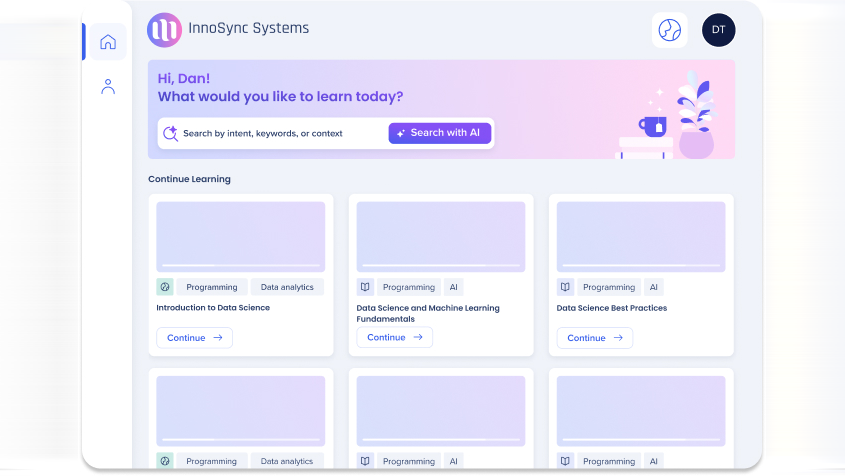
WalkMe also launched Learning Arc, an AI-native digital learning product positioned as the designated successor to SAP Enable Now (which reaches end of maintenance November 30, 2030). This moves WalkMe from digital adoption into enterprise training, entering Assima's territory.
Source: WalkMe
Assima positions itself as the vendor-independent alternative. Assima runs dedicated pages for Oracle UPK Alternative and SAP Enable Now Alternative, targeting organizations migrating off these tools. A City of Fort Worth UPK replacement contract validates this displacement strategy.
With SAP Enable Now's end-of-maintenance approaching, organizations face a choice: follow SAP's recommendation and adopt WalkMe Learning Arc, or choose an independent solution like Assima that isn't tied to any single vendor's ecosystem.
The data inside your enterprise systems matters as much as adoption
WalkMe ensures employees can navigate Salesforce correctly. Assima ensures they've practiced before touching it. Neither addresses a fundamental problem: the quality of data inside those systems.
Forbes estimates 91% of CRM data is incomplete. Sales reps trained on Salesforce workflows still can't close deals if the contacts are wrong, the phone numbers are disconnected, and the company data is stale. Training employees to use bad data efficiently doesn't improve revenue.
ZoomInfo solves this by operating as the data intelligence layer underneath enterprise sales and marketing systems.
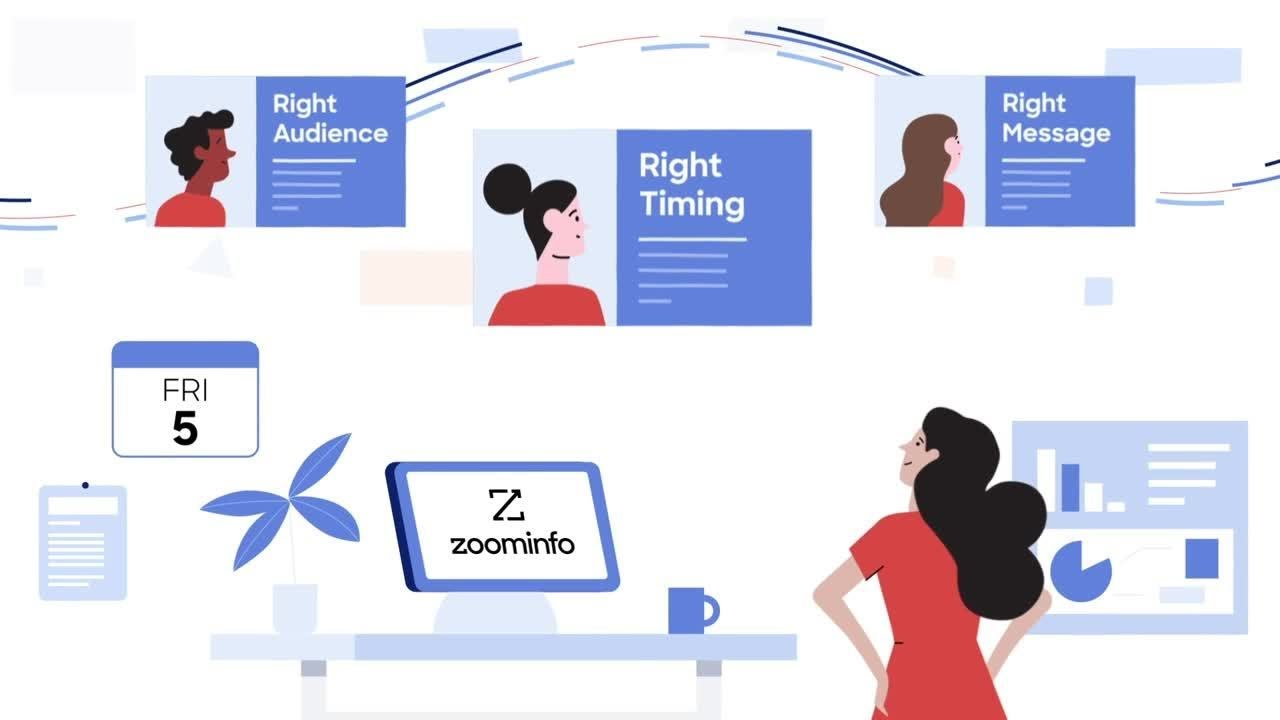
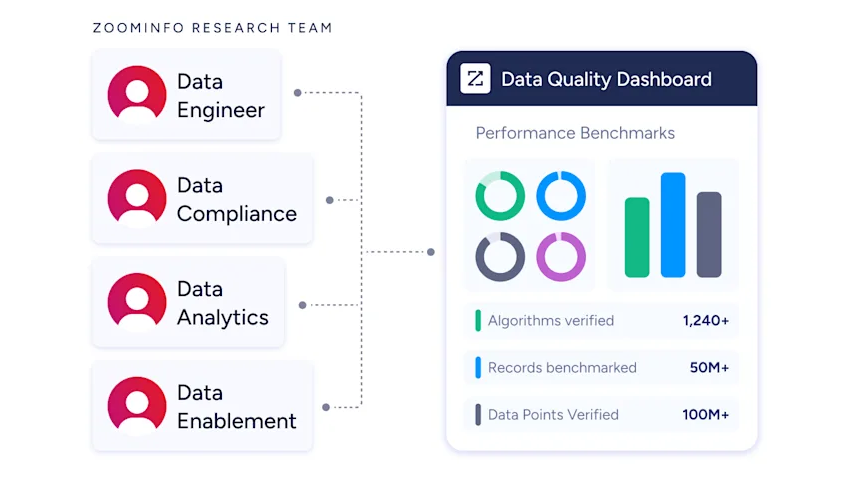
The platform maintains 500M contacts, 100M companies, 135M+ verified phone numbers, and 200M+ verified business email addresses, verified through a multi-source pipeline backed by 300+ human researchers achieving up to 95% accuracy on first-party data.
Source: ZoomInfo
In a Fortune 500 competitive RFP analyzing 25 million contacts across vendors, the independent consultant concluded that "no other competitor came even close."
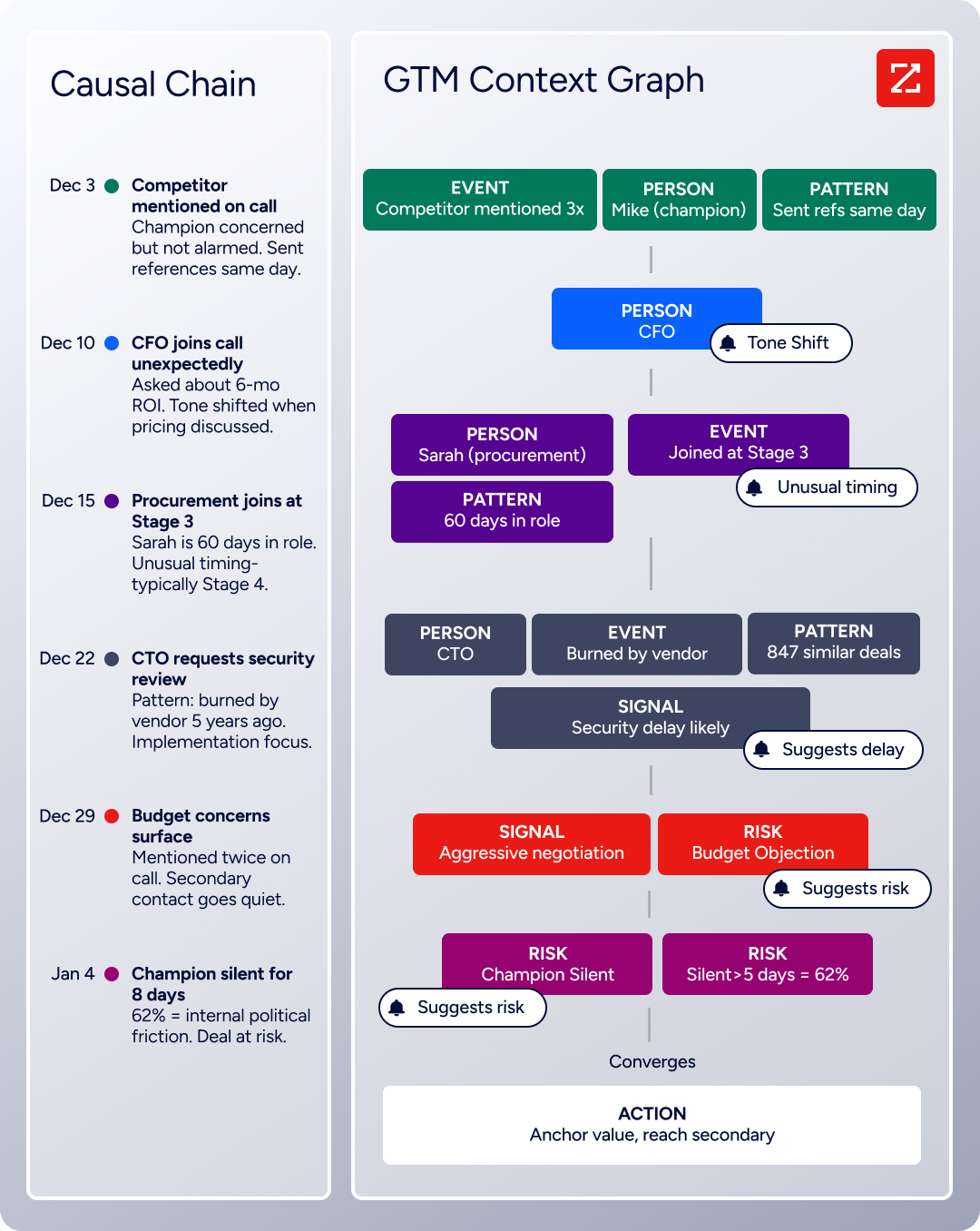
ZoomInfo's GTM Context Graph processes 1.5B+ data points daily, combining ZoomInfo's third-party intelligence with a customer's own CRM records, conversation transcripts, and behavioral signals.
Source: ZoomInfo
The result: a single intelligence layer that captures not just what happened in a deal, but why. Teams can access this through the GTM Workspace for sellers, GTM Studio for marketers and RevOps, or APIs and MCP in any front-end.
For enterprises investing in WalkMe or Assima, ZoomInfo addresses the other side of the software ROI equation. Adoption of systems containing incomplete data still leaves revenue on the table.
"ZoomInfo gives us the information we need to execute. We don't have to go through and spend our time digging. It's already there, so we can be three steps ahead." (Vensure)
Analytics and measuring adoption ROI
All three platforms promise measurable returns. Their approaches to proving it differ.
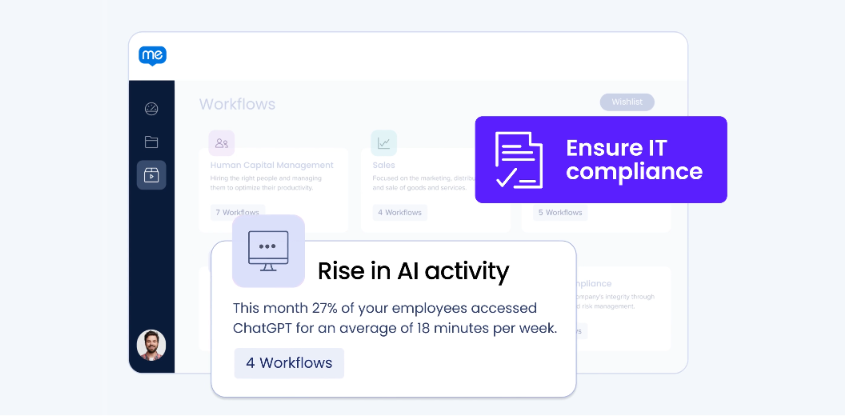
WalkMe provides the deepest adoption analytics. App Discovery & Analytics captures how employees use software across every web application (including shadow IT and unsanctioned AI tools) without requiring per-app integrations.
Source: WalkMe
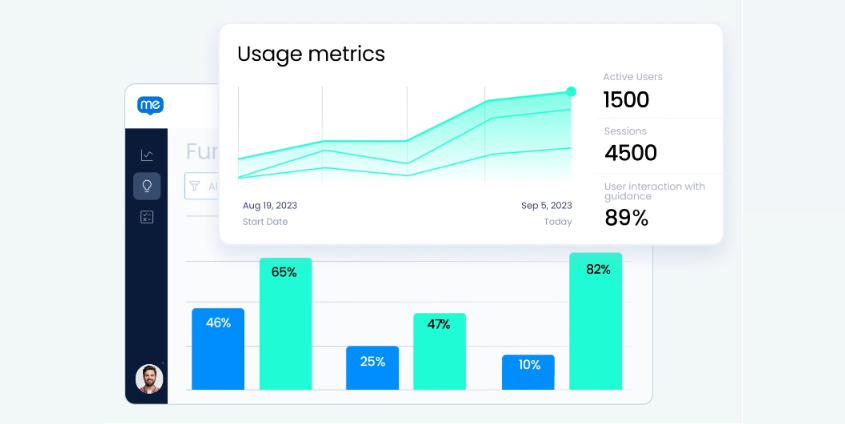
WalkMe Insights maps user interactions against defined workflows, identifying where people get stuck or abandon tasks.
Source: WalkMe
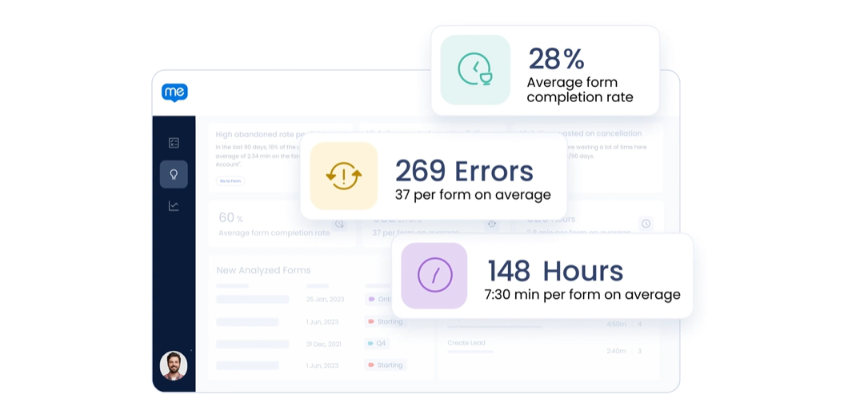
Form Analytics tracks field-level data: completion rates, time per field, errors, and drop-off points.
Source: WalkMe
Discovery License Optimization overlays financial data to surface unused software licenses.
Assima offers click-level tracking that captures actions and content usage in real time, with no coding required. However, the analytics layer has room to grow.
A professional trainer on Capterra flagged that "the reporting and analytics section can be improved to provide more insights for training needs."
ZoomInfo measures impact through pipeline and revenue metrics rather than adoption metrics. Seismic attributed 39% of active pipeline to opportunities identified or influenced by ZoomInfo signals, reported 54% productivity gains, and saved 11.5 hours per week per seller.

Source: ZoomInfo
GTM Workspace users report boosting pipelines by 23% and booking nearly 60% more meetings per week. These are direct revenue outcomes, the real test of whether enterprise software investments pay off.
"It's not just the data itself. It's more about the right data at the right time to help us reach out with the right message across that full buyer journey." (Redwood Logistics)
Pricing reflects different markets and models
None of these platforms publish standard prices. All three require sales conversations and custom quotes. But their pricing structures reveal different priorities.
WalkMe uses a subscription license model negotiated per deal. Pricing depends on the number of End Users, Builders, and Target Applications in each contract. Per the WalkMe MLSA, fees are non-refundable and contracts are non-cancelable for the full term.
TrustRadius reviewers consistently cite WalkMe as expensive, with add-ons making budgeting difficult. For SAP customers, a WalkMe Standard tier is included in SAP subscriptions, with WalkMe Premium available for extended customization.
Assima reportedly costs approximately CA$2,500 per user/month according to third-party data, though Assima has not verified this figure.
A regional manager on Capterra noted that "separate licenses for each technology like SAP, Microsoft, Oracle, SharePoint" add cost for organizations with diverse application environments. No free trial is available; the only entry point is a demo booking.
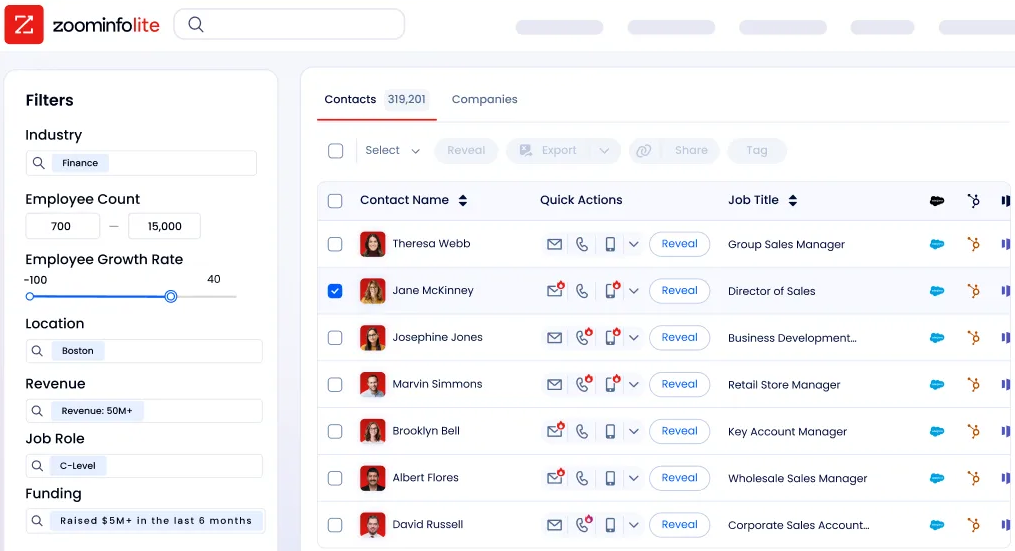
ZoomInfo uses a consumption-based pricing model scaled around seats, credits, and AI activity. Unlike WalkMe and Assima, ZoomInfo offers two free entry points: a 7-day free trial with full platform access, and a permanent free tier called ZoomInfo Lite with 10 monthly export credits, no credit card required, and no time limit.
Source: ZoomInfo
Total cost of ownership for WalkMe and Assima extends beyond license fees. WalkMe requires dedicated administrators and, for complex deployments, a Center of Excellence approach to scale programs. Assima's Enhanced Services and AssimaU onboarding program represent additional implementation costs beyond the core software.
Implementation and learning curves
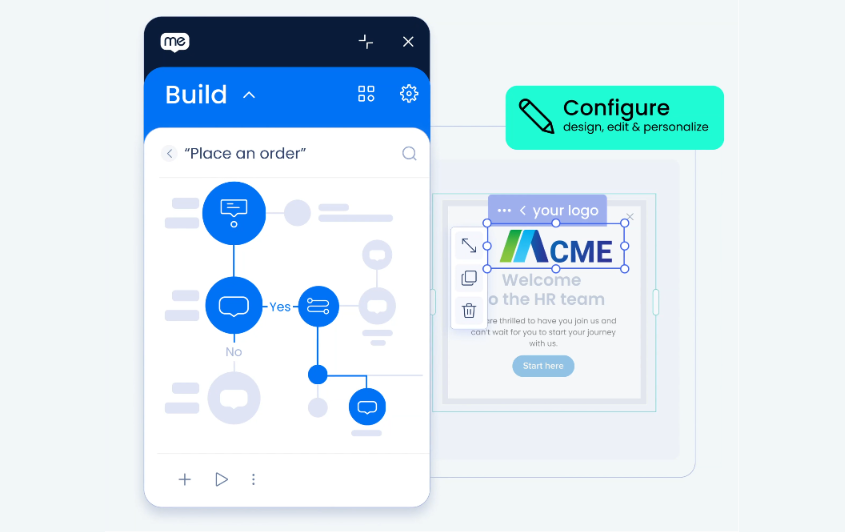
WalkMe requires the most administrative investment of the three. The WalkMe Editor is an Electron-based desktop application paired with a browser extension.
Source: WalkMe
Building basic walkthroughs is straightforward, but G2 reviewers flag a steep learning curve for advanced configurations involving complex selectors and dynamic elements.
WalkMe offers structured certification through the Digital Adoption Institute, including a Builder Basics Bootcamp (5-week cohort with weekly live instructor sessions) and AI-assisted content building tools.
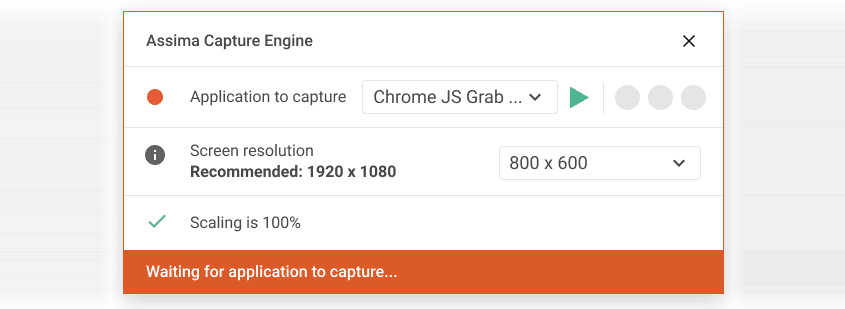
Assima requires a different kind of investment. The capture-edit-publish workflow is conceptually simple: click through a process in the live application, edit the captured objects, publish to your LMS via SCORM 1.2, SCORM 2004, or LTI 1.3.
Source: Assima
But building complex cross-application simulations demands time and expertise. An offering manager on Capterra noted that the "Train" component's usability could be improved.
Assima's AssimaU Jumpstart Program provides structured onboarding with a dedicated Customer Success Manager, covering security configuration, content templates, and training sessions.
ZoomInfo has a moderate learning curve given the breadth of its platform. ZoomInfo redesigned its onboarding from 30 to 90 days, structured across planning, technical implementation, education, and adoption phases.
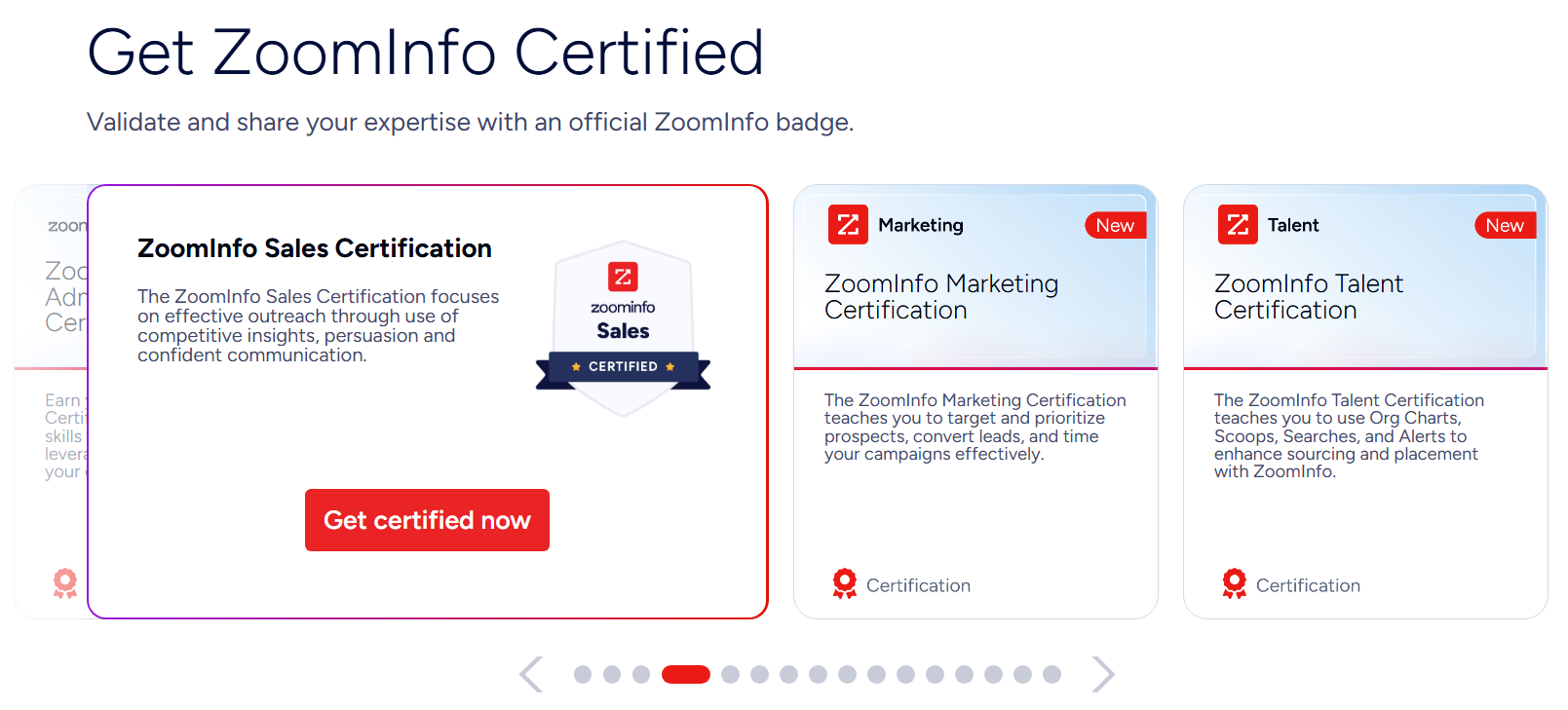
The redesign produced a 25% improvement in customer satisfaction scores. ZoomInfo University provides role-specific learning paths for Sales, Marketing, Administrator, and Customer Success teams.
Source: ZoomInfo
Security and compliance for regulated industries
All three platforms serve regulated enterprises and hold relevant certifications, though coverage varies.
WalkMe has the broadest compliance portfolio: ISO 27001, ISO 27701, ISO 27017, ISO 27018, ISO 27799, SOC 2 Type II, SOC 3, CSA STAR, GDPR, CCPA, and WCAG 2.1 AA.
Its FedRAMP Ready status makes WalkMe one of the few digital adoption platforms qualified for US federal government deployment.
Assima holds ISO 27001 and ISO 27701 certifications, with data encrypted at rest and in transit and a Bring Your Own Key encryption option.
Its architecture provides an inherent security advantage: capturing a process only captures user interface objects, not source code or database content, and production systems are never touched.
One-click PHI/PII anonymization lets healthcare and financial services organizations scrub sensitive data from training materials quickly.
ZoomInfo maintains ISO 27001, ISO 27701, SOC 2 Type II, TRUSTe GDPR and CCPA certifications, all renewed annually. ZoomInfo is a registered data broker in California and Vermont and operates a dedicated Trust Center.
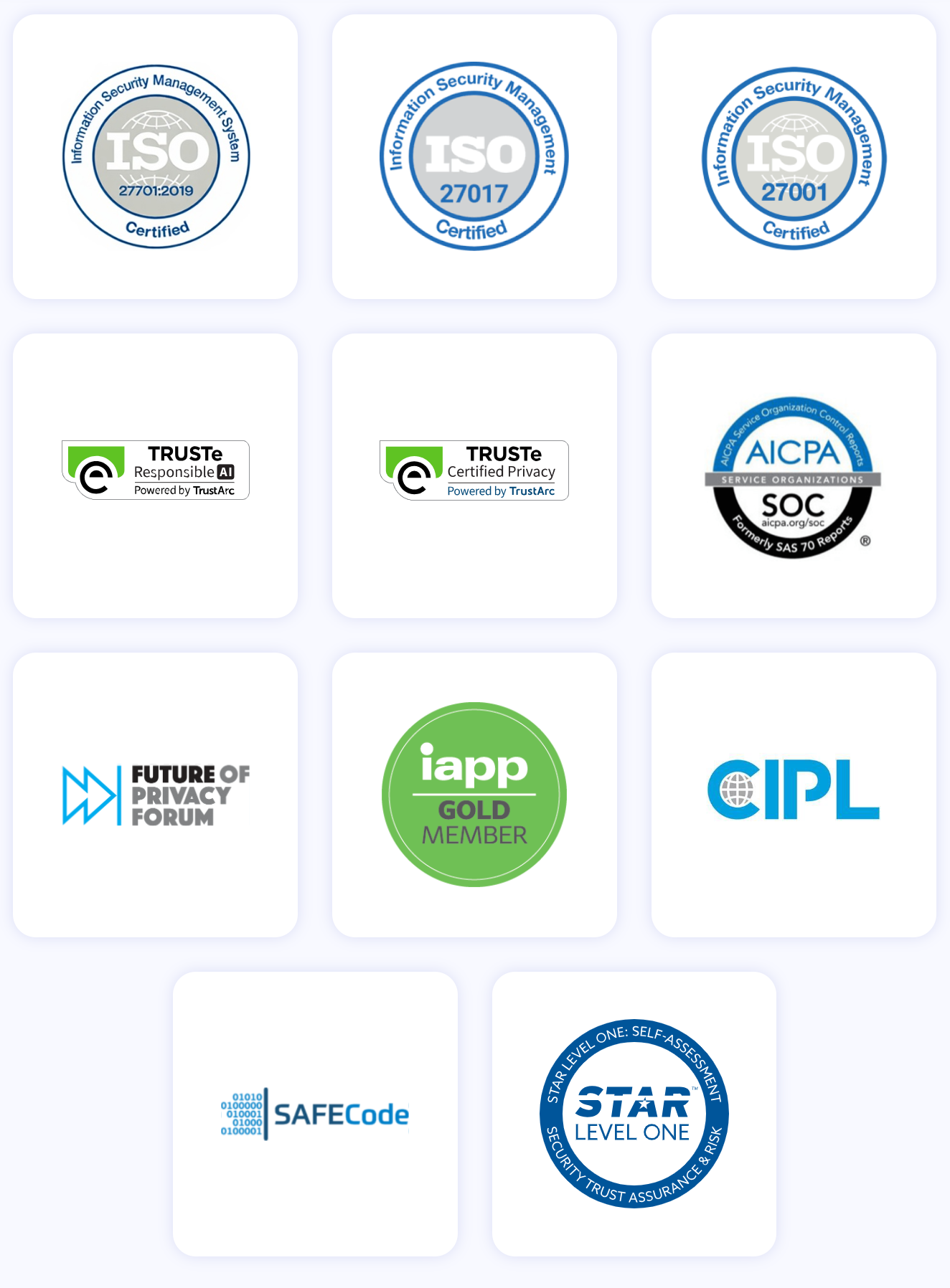
For healthcare or financial services, Assima's PHI/PII anonymization and IBM FS Cloud certification address sector-specific compliance requirements. For government agencies, WalkMe's FedRAMP status is the differentiating credential.
WalkMe vs. Assima vs. ZoomInfo: Which should you choose?
Each platform addresses a different piece of the enterprise software challenge. Choosing well means understanding which piece matters most for your situation.
Choose WalkMe if:
You need to drive adoption across a diverse tech stack of already-deployed applications
Your organization runs SAP and wants guidance embedded in the SAP ecosystem
You want analytics showing where employees struggle across workflows
Reducing IT support tickets and improving data entry quality are immediate priorities
You have the administrative resources to build and maintain in-app guidance at scale
Choose Assima if:
You're preparing for a major ERP or CRM rollout and need employees trained before go-live
Simulation training is critical for your use case (healthcare, finance, aviation)
You need to replace Oracle UPK or SAP Enable Now with a vendor-independent alternative
Training must be localized across multiple languages without re-recording content
PHI or PII data in training materials must be anonymized for compliance
Choose ZoomInfo if:
You need accurate, verified data flowing into the CRM and sales systems your teams use
Your sales reps are trained on Salesforce but working with incomplete contacts and stale company data
You want AI-powered intelligence that shows which accounts to pursue and why
Your go-to-market teams need a single data layer across prospecting, marketing, and account management
You want to start exploring for free before committing to enterprise pricing
Start with ZoomInfo Lite for free, or try the full platform for 7 days.
"ZoomInfo is our one source of truth for account data, and even more so for contact data. There's no other provider in the market that provides you with that level of detail." (Smartsheet)
WalkMe and Assima answer the question "can our people use this software?" ZoomInfo answers "is the data inside this software worth using?" For enterprises investing in their technology stack, both questions deserve attention.
WalkMe vs. Assima vs. ZoomInfo FAQ
What is the core difference between WalkMe and Assima?
WalkMe is a digital adoption platform that overlays guidance on top of live enterprise applications, helping users in real time as they work. Assima is a systems training platform that creates interactive, editable clones of enterprise applications for users to practice in before they touch production. WalkMe focuses on post-deployment support and workflow automation. Assima focuses on pre-go-live training and simulation.
How does ZoomInfo relate to WalkMe and Assima?
ZoomInfo solves a different but related problem. While WalkMe and Assima help employees use enterprise software correctly, ZoomInfo ensures the data inside those systems (especially CRM platforms like Salesforce) is accurate and complete. ZoomInfo maintains 500M contacts, 100M companies, and 200M+ verified business email addresses, powering the data layer that sales and marketing teams depend on daily.
Which platform handles the broadest range of enterprise applications?
WalkMe works across any web or desktop application without requiring native integrations, thanks to its DeepUI technology. Assima's cloning technology also works on any web-based, desktop, or cloud enterprise application, with named support for SAP, Oracle, Salesforce, Workday, ServiceNow, EPIC, Cerner, Guidewire, and homegrown applications. ZoomInfo integrates with 120+ partner applications through its App Marketplace, including Salesforce, HubSpot, and Microsoft Dynamics 365.
How does WalkMe's SAP acquisition affect non-SAP customers?
WalkMe continues to support Salesforce, Workday, ServiceNow, Microsoft Dynamics, and other non-SAP applications. However, its product roadmap and sales priorities increasingly center on the SAP ecosystem. WalkMe Standard is now bundled into SAP subscriptions, and WalkMe Learning Arc is the designated successor to SAP Enable Now. Organizations running non-SAP stacks should evaluate whether WalkMe's long-term direction aligns with their needs.
Which platform is best for a major ERP rollout?
Assima is designed for this scenario. Its simulation-based training lets employees practice on interactive clones of the new ERP before go-live, and content can be authored before production systems are complete. Schneider Electric used Assima to train 130,000 users across 18 countries, achieving a 30% annual training cost reduction. WalkMe complements this by providing ongoing in-app guidance after the rollout is complete.
Do any of these platforms offer a free trial or free plan?
WalkMe does not offer a standard free trial publicly. Assima does not offer a free trial; the only entry point is a demo booking. ZoomInfo offers both a 7-day free trial with full platform access and a permanent free tier (ZoomInfo Lite) with 10 monthly export credits, no credit card required.
How do WalkMe and Assima handle multilingual training?
WalkMe supports in-app guidance personalized by user language and location. Assima's Total Language Localizer can translate entire lessons, including the application UI, into any Windows-supported language without re-recording. Schneider Electric used this capability across 18 countries to deliver training in local languages from a single content source.
Which platform offers the strongest analytics?
WalkMe provides the most detailed adoption analytics, including application usage across the entire tech stack, workflow completion and drop-off analysis, field-level form analytics, and software license utilization reports. Assima tracks user actions at the click level but its reporting layer has been flagged by reviewers as needing improvement. ZoomInfo focuses on go-to-market analytics: pipeline impact, deal progression, and account intelligence.
More WalkMe comparisons:
