
Choosing between WalkMe and Spekit for your revenue team comes down to five questions:
Do you need adoption help across your entire software stack, or only for your sales team?
Is your goal training employees on complex software, or equipping reps with sales knowledge during live deals?
Do you have a team to build and maintain in-app guidance, or do you need something your enablement team can manage without technical expertise?
Is your tech stack centered on SAP, or on Salesforce and conversation intelligence tools like Gong?
Is the data flowing through your tools as strong as the tools themselves?
In short, here's what we recommend:
WalkMe is the enterprise digital adoption platform for organizations managing complex software across thousands of employees. Its DeepUI technology reads application interfaces and adapts when they change, while in-app guidance, workflow automation, and analytics work across any web or desktop application. Now a wholly-owned SAP subsidiary, WalkMe carries enterprise-grade compliance (FedRAMP Ready, ISO 27001, SOC 2 Type II) and serves 27% of the Fortune 500. But its pricing, steep admin learning curve, and increasingly SAP-focused roadmap make it a heavy investment for teams that mainly need sales enablement.
Spekit is the AI sales enablement platform designed to make every rep perform like your best rep. Instead of guiding employees through generic software processes, Spekit delivers sales knowledge, coaching, and content inside the tools reps already use (Salesforce, Gong, Gmail, and Outlook) through a Chrome Extension that requires no tab switching. But its value depends on Salesforce as the CRM backbone, its analytics and reporting lag behind executive expectations, and pricing requires a sales conversation.
Both platforms help your team work better inside their tools. But the best guidance falls flat when the data in those tools is incomplete, stale, or missing the context behind why a deal is moving or stalling. That's where ZoomInfo fits in.
ZoomInfo is the AI-powered GTM platform that provides the B2B intelligence your revenue team's tools depend on. With 500M contacts, 100M companies, 135M+ verified phone numbers, and 200M+ verified business emails, ZoomInfo's data powers every stage of the sales motion. The GTM Context Graph processes 1.5B+ data points daily, combining this data with your CRM records, conversation transcripts, and behavioral signals to reveal not just what happened in a deal, but why. Whether you choose WalkMe or Spekit for enablement, ZoomInfo ensures the intelligence flowing through your tools is accurate and complete, accessible through GTM Workspace for sellers, GTM Studio for marketers and RevOps, or APIs and MCP in any front-end.
If B2B intelligence sounds like the missing layer in your revenue stack, see how ZoomInfo works.
WalkMe vs. Spekit vs. ZoomInfo at a glance
WalkMe | Spekit | ZoomInfo | |
|---|---|---|---|
Primary function | Digital adoption for any enterprise app | AI sales enablement | B2B intelligence & GTM execution |
Target audience | IT, HR, Change Management, all employees | Sales enablement teams, revenue reps | Sales, marketing, RevOps |
Deployment scope | Any web or desktop application | Salesforce, Gong, Gmail, Outlook via Chrome Extension | Platform + API/MCP in any tool |
AI capabilities | Contextual assistance, workflow automation, next best actions | Proactive sales coaching, content recommendations, deal context | GTM Context Graph, buyer intent, AI-drafted outreach |
In-app guidance | Walk-Thrus, SmartTips, ShoutOuts | Speks, Spotlights, Learning Paths, embedded enablement | GTM Workspace with specialized AI agents |
CRM integration | Overlay on any CRM (no native sync) | Native Salesforce bidirectional sync | Native Salesforce, HubSpot, Dynamics 365 |
Learning curve | Steep for admins; minimal for end users | Minimal; G2 #1 in ease of setup | Moderate; structured 90-day onboarding |
Pricing | Enterprise custom quotes | Custom quotes; no public pricing | Consumption-based; permanent free tier available |
Best for | Large enterprises managing adoption across complex tech stacks | Mid-market to enterprise sales teams needing in-workflow enablement | Revenue teams needing data, intelligence, and GTM execution |
Different missions, different architectures
WalkMe and Spekit both deliver in-app guidance, but they solve different problems.
WalkMe is a horizontal platform. It works on top of any enterprise application (SAP, Salesforce, Workday, ServiceNow, Microsoft Dynamics, custom internal tools) without requiring those applications to expose an API or cooperate in any way.
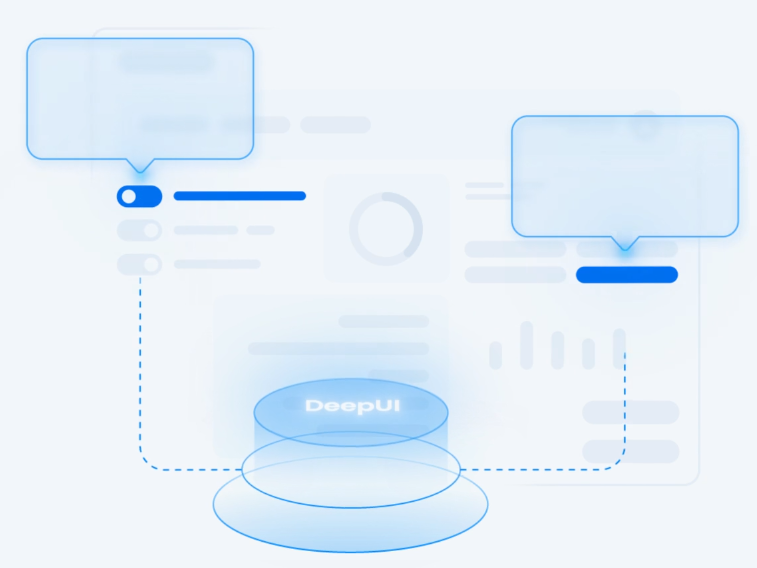
The underlying technology, DeepUI, reads application interfaces the way a person would: recognizing buttons, fields, and navigation elements by visual context rather than brittle code references.
Source: WalkMe
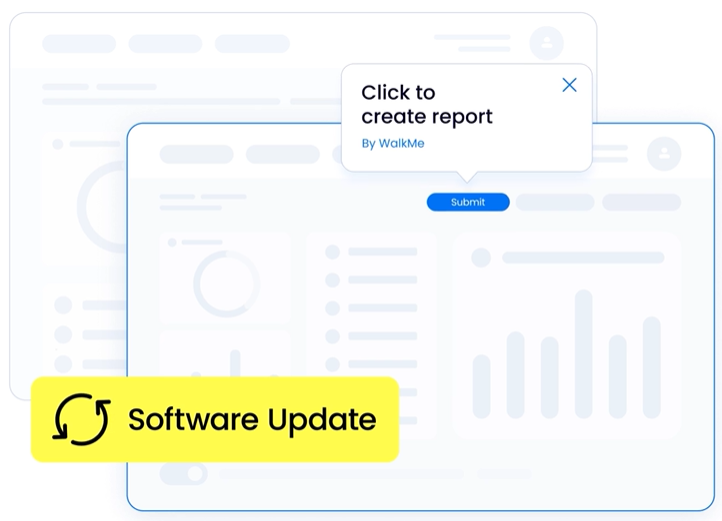
When Salesforce pushes an update that reshuffles its interface, WalkMe's guidance adapts automatically.
Source: WalkMe
This breadth means WalkMe is not a sales tool. It's an adoption layer for the entire enterprise: IT deploying new ERP systems, HR rolling out onboarding workflows, finance teams navigating procurement software.
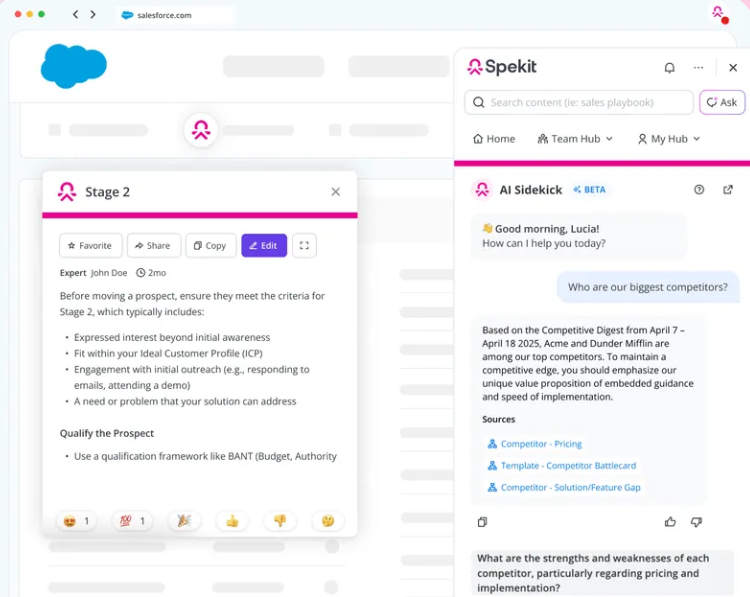
Spekit is a vertical platform built for revenue teams. Rather than working on any application, it integrates with the tools sales reps already live in: Salesforce (native, one-click, two-way sync), Gong (joined the Gong Collective in November 2025), Gmail, and Outlook.
Source: Spekit
Content is organized around "Speks" (bite-sized knowledge cards that surface inside these tools through a Chrome Extension and embedded enablement layer). A rep drafting a follow-up email in Gmail sees deal context, competitive positioning, and coaching recommendations without opening another tab.
The architectural choice shapes everything downstream. WalkMe can guide an employee through any software process in any department. Spekit can tell a sales rep exactly what to say when a competitor comes up mid-call.
WalkMe excels at enterprise-wide software adoption
WalkMe's value shows most clearly in large-scale technology rollouts.
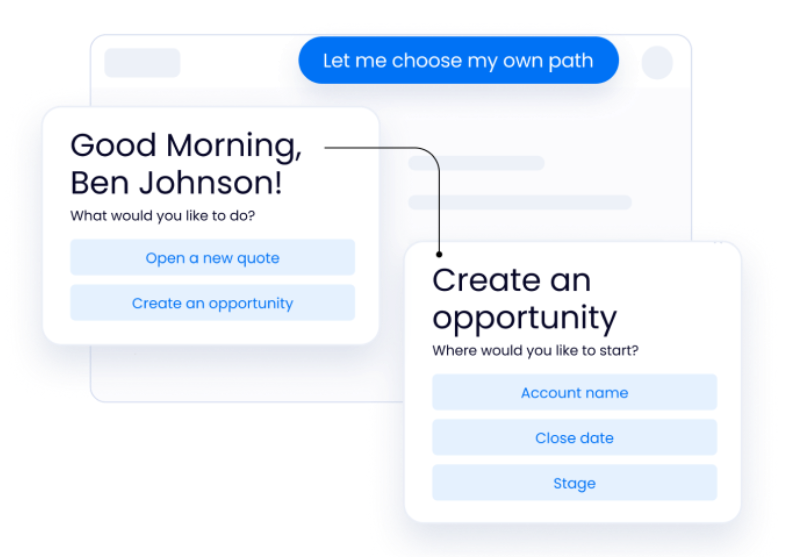
When an organization migrates 10,000 employees to SAP S/4HANA, the training challenge is enormous. WalkMe's in-app guidance (Walk-Thrus for step-by-step flows, SmartTips for contextual tooltips, and ShoutOuts for proactive notifications) appears inside the application itself, guiding employees through unfamiliar workflows at the moment they encounter them.
Source: WalkMe
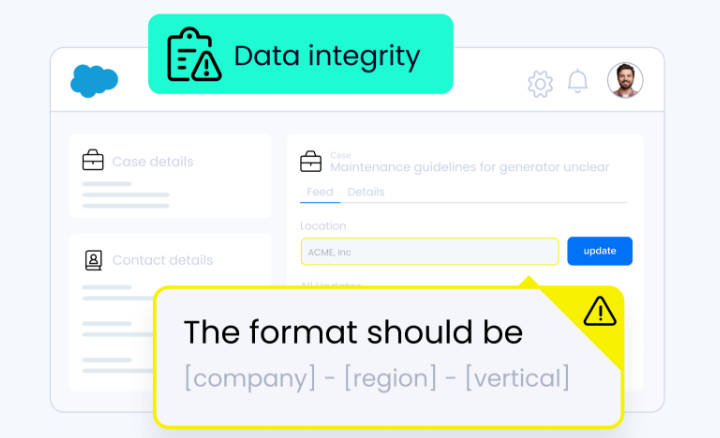
The guidance supports conditional branching and error handling, so the same Walk-Thru can accommodate different user paths through a complex process. Validation safeguards intercept errors at the point of data entry, protecting downstream data integrity.
Source: WalkMe
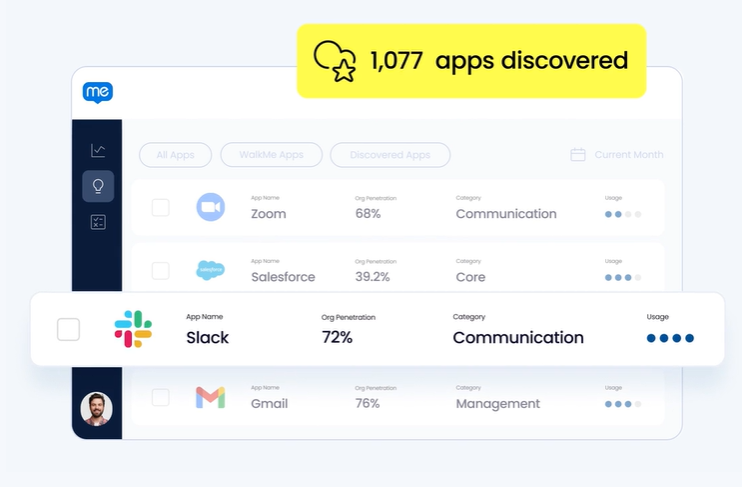
The analytics layer adds visibility. App Discovery & Analytics reveals which applications employees actually use, which they abandon, and where they get stuck, across SaaS, shadow IT, AI tools, and homegrown systems, with no per-app integrations required.
Source: WalkMe
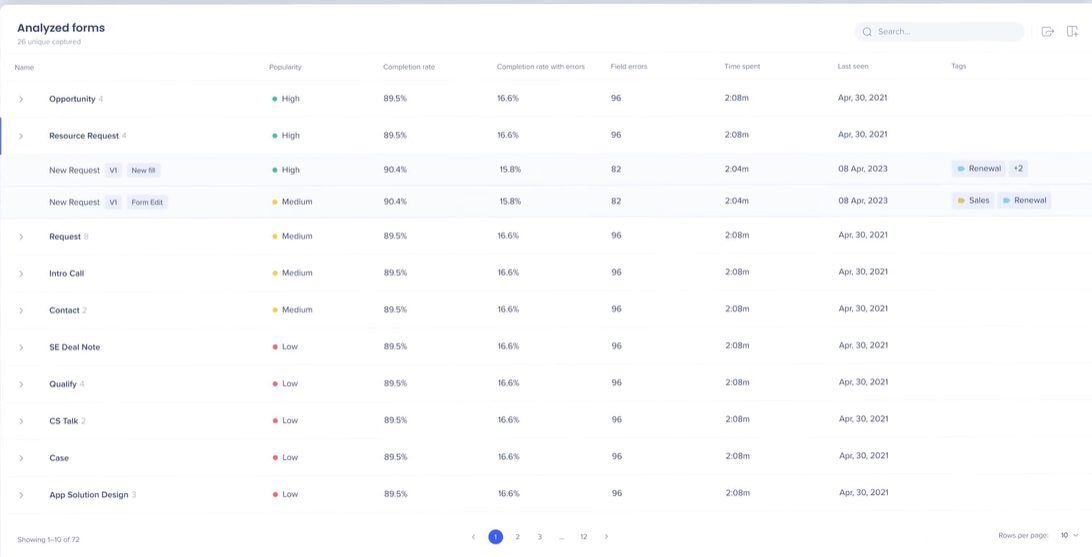
Form Analytics captures field-level data: completion rates, time per field, error patterns, and drop-off points. Discovery License Optimization maps usage data against license spend to surface unused or underused software.
Source: WalkMe
The SAP acquisition deepened the enterprise focus. WalkMe is now embedded natively into SAP applications with a Standard tier included in SAP subscriptions, giving it distribution across SAP's 300,000+ enterprise customers. The newly launched WalkMe Learning Arc is an AI-native digital learning product and the designated successor to SAP Enable Now, with SAP Enable Now reaching end of maintenance November 30, 2030.
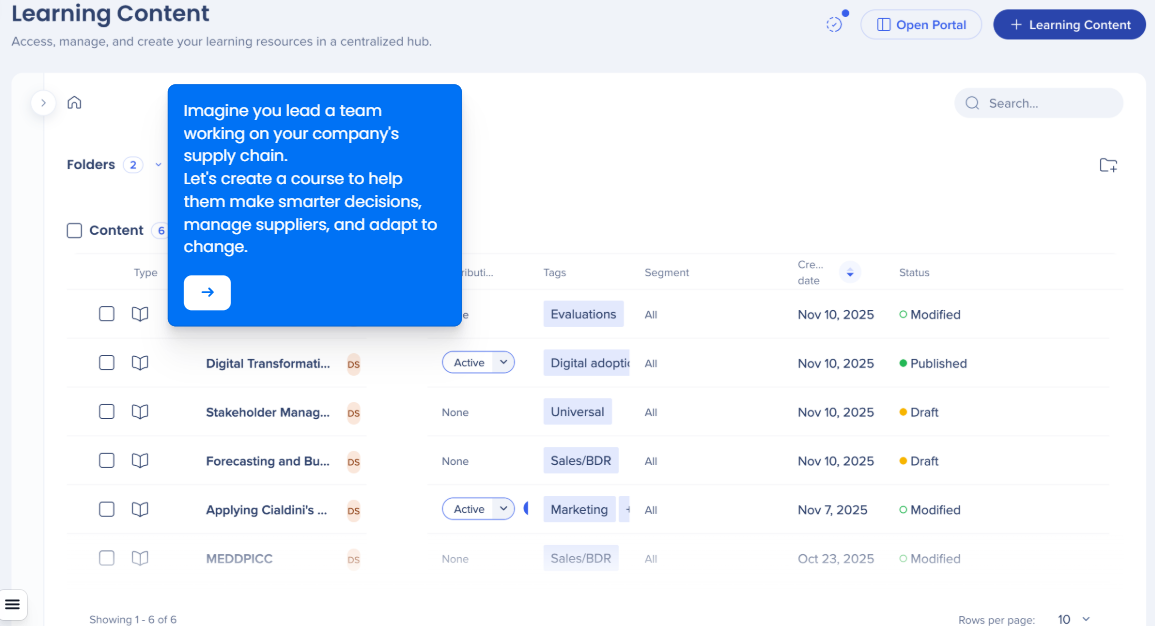
Source: WalkMe
For organizations not running SAP, the acquisition raises a question about long-term product direction. WalkMe still supports Salesforce, Workday, ServiceNow, and other platforms, but strategic priorities increasingly center on the SAP ecosystem.
Spekit wins for sales-specific enablement
Spekit is built around one principle: enablement content should reach reps inside the tools where selling happens, not in a separate portal they have to remember to visit.
Spekit calls this "just-in-time enablement", a philosophy it claims to have pioneered in 2018. In practice, a rep working in Salesforce sees relevant battlecards, messaging guidance, and coaching tips attached to the fields and stages they're updating.
A rep reviewing a Gong call recording gets AI-generated action items and content recommendations based on what was discussed. A rep drafting an email in Gmail sees deal context from Salesforce and call intelligence from Gong without switching tabs.
The AI Sidekick ties this together. Unlike a chatbot that waits for questions, Sidekick monitors deal stage, buyer behavior, rep activity, and conversation context to surface guidance proactively. When a competitor comes up on a call, the relevant battlecard appears.
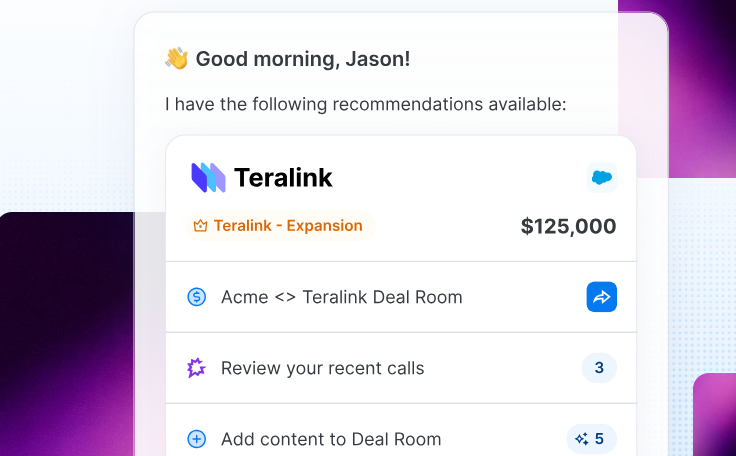
Source: Spekit
When a deal advances to a new stage, exit criteria and play guidance surface in the rep's current view. The coaching draws from the company's approved GTM knowledge, not generic AI training data.
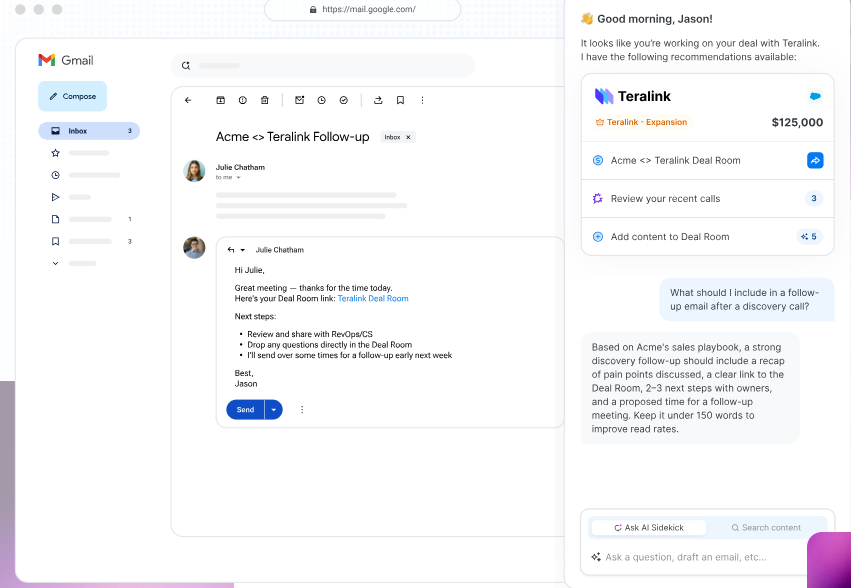
Source: Spekit
Spekit also handles a problem most enablement platforms create: content decay. The Governance Dashboard flags outdated material, tracks content freshness, and propagates updates from a single source of truth across all touchpoints at once. When competitive positioning changes, every surface (Sidekick answers, Learning Paths, Deal Rooms) reflects the update without anyone making the edit manually.
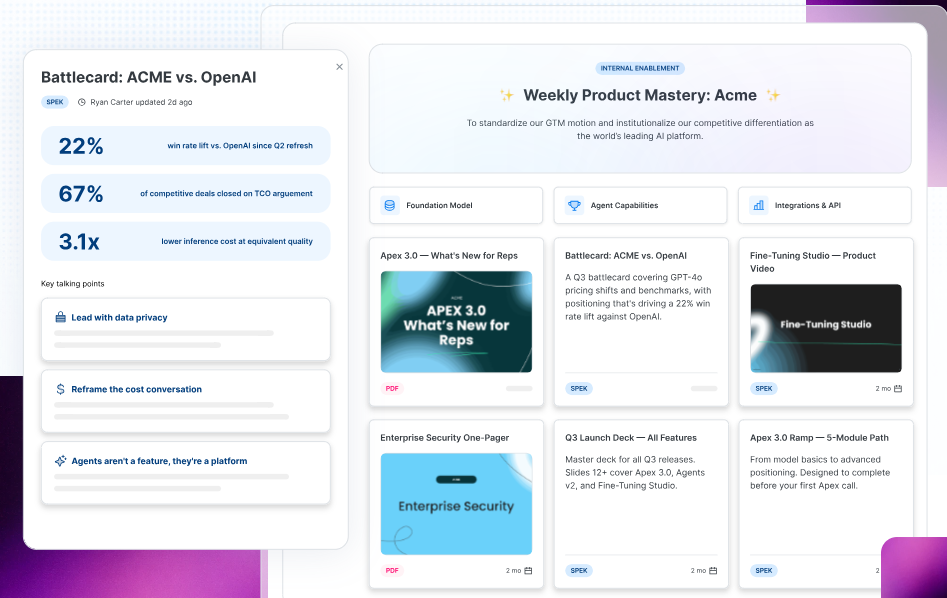
Source: Spekit
Where Spekit hits limits is outside its sales focus. G2 reviewers flag analytics and reporting as insufficient for executive-level reporting, and multi-language support scores only 7.8/10 on G2, constraining global deployments. Teams migrating from Confluence or legacy platforms report no automated importer tool, making initial content migration time-intensive.
AI capabilities serve different goals
Both platforms invest in AI, but the applications are distinct.
WalkMe AI is built for general-purpose enterprise assistance. It reads what's on a user's screen through DeepUI, understands the current workflow context, and delivers next-best-action recommendations, automated task completion, writing and reading assistance, and input validation, all across any application.
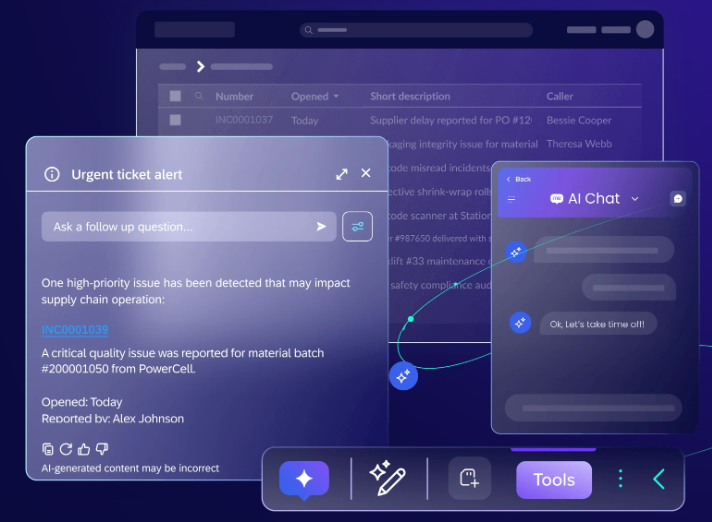
Source: WalkMe
The AI can complete multi-step workflows via front-end automation without API integrations, using a conversational interface that translates natural language requests into automated actions across systems.
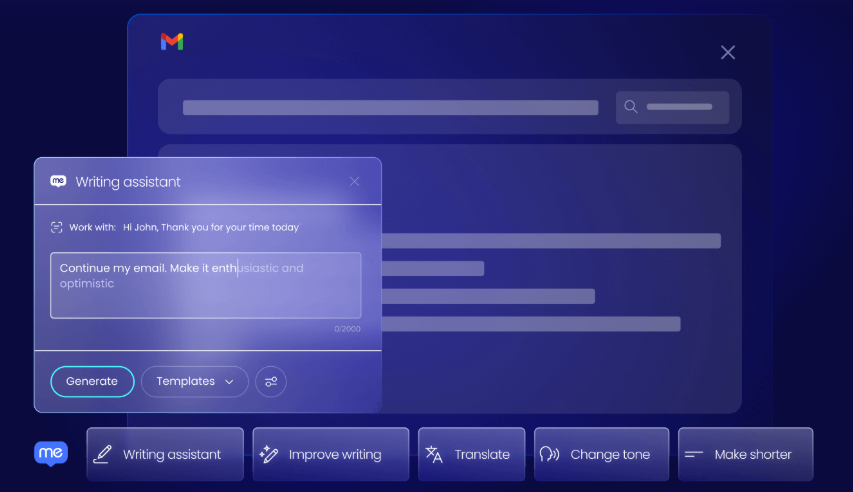
Source: WalkMe
WalkMe AI also includes memory that learns from user actions and preferences (opt-in) to sharpen suggestions over time. The AI draws on over a decade of enterprise DAP data. WalkMe processes over 7 billion interactions between people and software every year, giving it a large dataset for understanding how humans navigate enterprise applications.
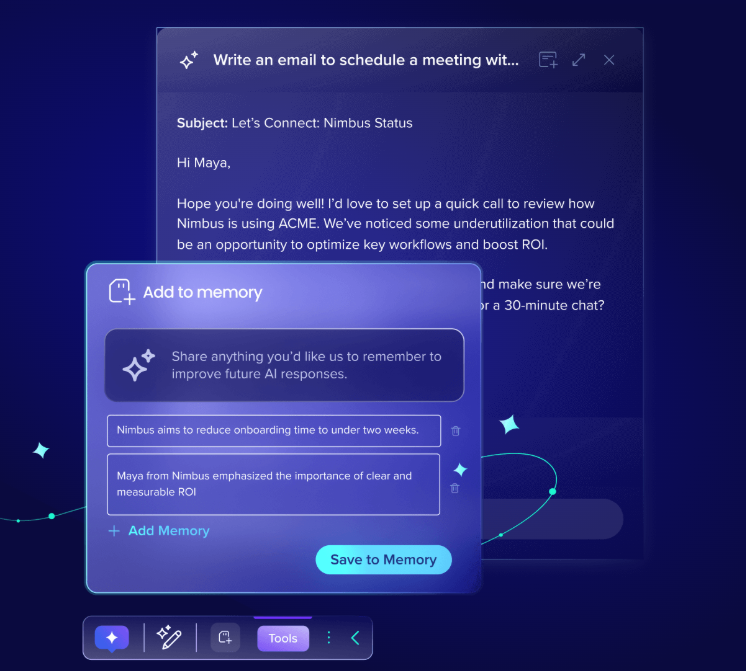
Source: WalkMe
Spekit's AI Sidekick focuses on sales execution. It connects two data sources: deal context (Salesforce opportunity data plus Gong call transcripts) and the company's governed GTM knowledge base. The result is coaching and content recommendations specific to this deal, this buyer, and this moment. After every call, Sidekick reviews Gong transcripts to identify key moments and action items, then recommends relevant knowledge or competitive content based on what was discussed.
The AI also performs tasks for reps. Agentic Actions draft follow-up emails from live deal context, generate executive summaries from Gong call intelligence, and create Deal Rooms preloaded with stage-appropriate content, all without the rep leaving their current tool.
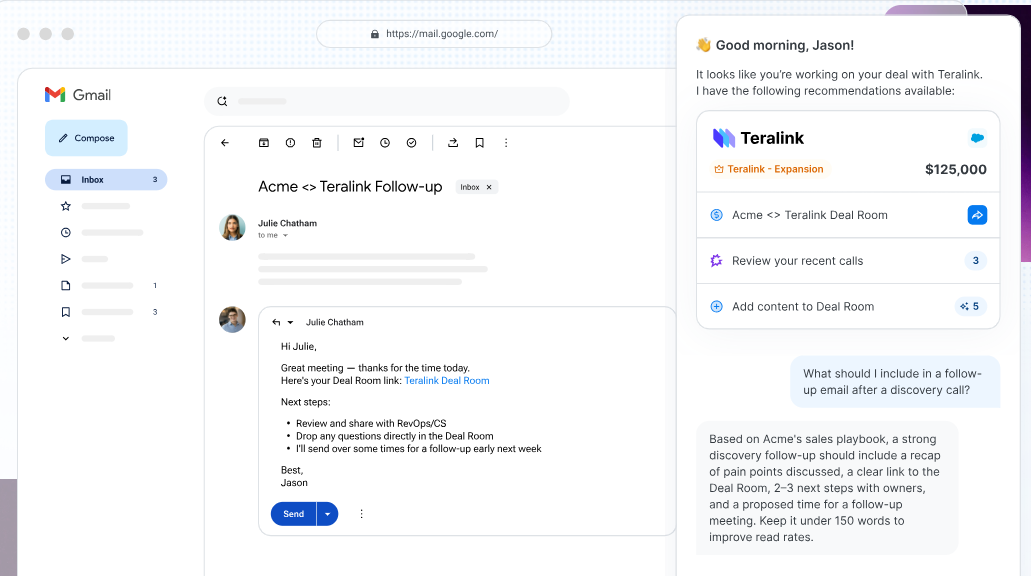
Source: Spekit
The difference: WalkMe AI helps any employee use any software better. Spekit AI helps sales reps close deals faster by connecting knowledge, deal context, and automated action in one flow.
The intelligence gap neither platform fills
WalkMe guides employees through software. Spekit coaches reps with sales knowledge. But neither platform provides the B2B data and buyer intelligence that makes either approach produce revenue.
Consider what happens without it. A rep opens Salesforce and sees guidance on how to update an opportunity field (WalkMe) or coaching on what messaging to use at this deal stage (Spekit). But the contact records in the CRM are two years old. Half the buying committee is missing. The intent signals that would reveal whether the account is actively researching competitors don't exist. The guidance is sound, but it's operating on incomplete information.
This is where ZoomInfo fits, not as a replacement for WalkMe or Spekit, but as the intelligence layer that feeds them.
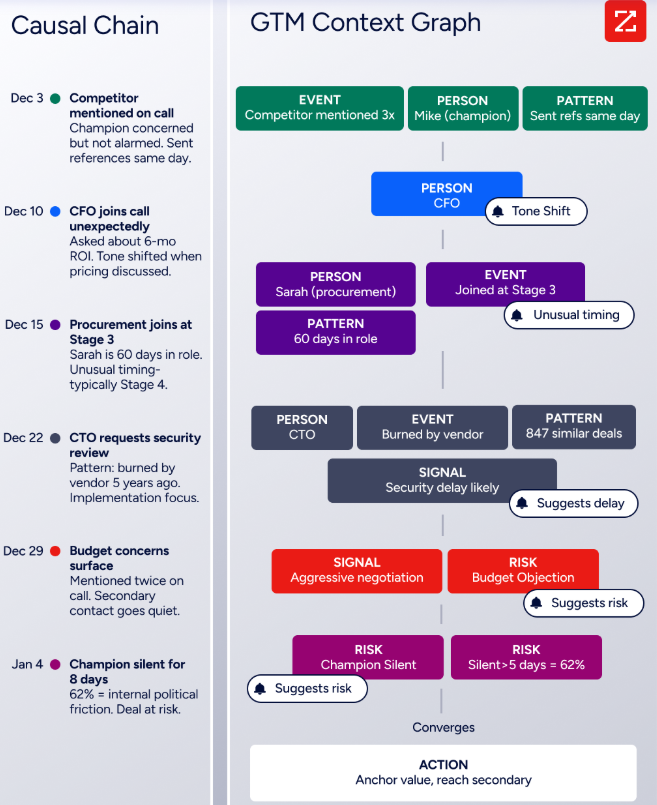
ZoomInfo's GTM Context Graph combines ZoomInfo's B2B data with your CRM records, conversation transcripts, and behavioral signals. The result isn't just better data; it's contextual reasoning about why deals move or stall. As CPO Dominik Facher writes: "The CRM recorded the state change. It has no record of why it happened." The GTM Context Graph captures that context: which stakeholder entered the deal, what they asked about, how their questions map to patterns behind closed-won deals in your segment.
Source: ZoomInfo
For revenue teams already using an enablement platform, ZoomInfo solves specific problems: direct dials that ring instead of bouncing, verified emails that land in inboxes instead of destroying your sender reputation, intent signals that reveal when accounts are actively researching your category, and org charts that map the full buying committee instead of the one contact your rep met at a conference.
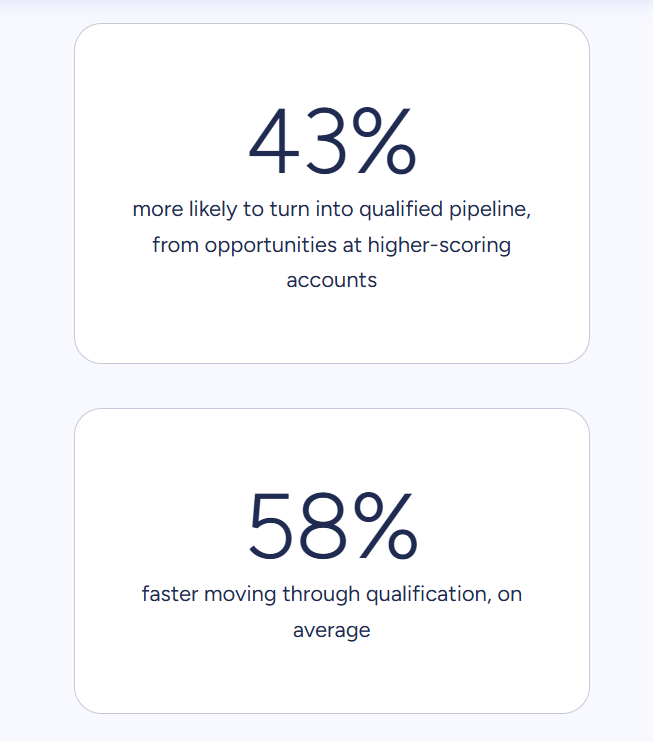
The combination is particularly effective with Spekit. Spekit is a ZoomInfo customer, and the results are documented: opportunities at higher-scoring ZoomInfo accounts were 43% more likely to turn into qualified pipeline and moved 58% faster through qualification.
Source: ZoomInfo
"Anything that minimizes our team's need to switch contexts is beneficial. ZoomInfo offers a single view, eliminating the need to navigate between systems." (Ben Perceval, RevOps Manager, Spekit)
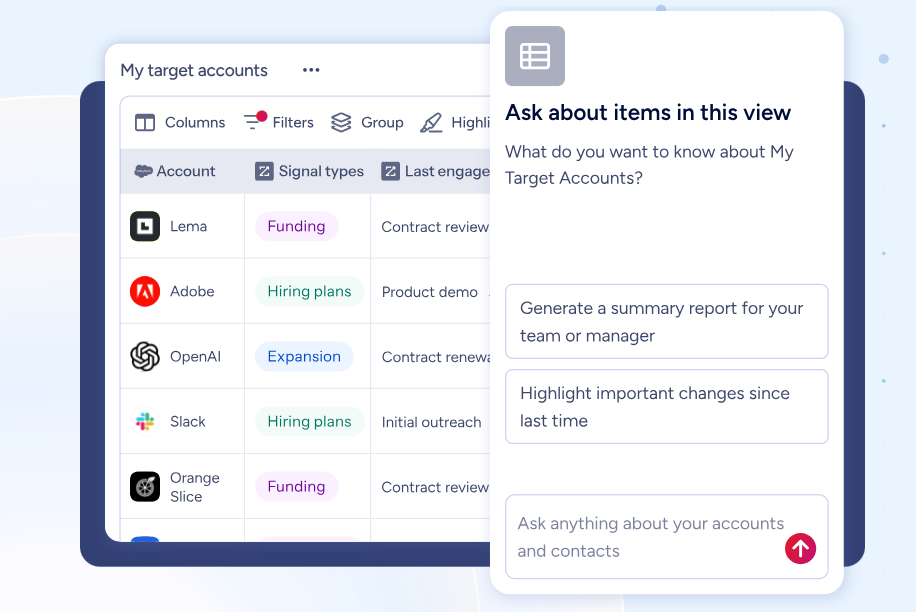
ZoomInfo's intelligence reaches teams through three channels. GTM Workspace gives sellers AI-powered account research, prioritized signals, and drafted outreach in one surface.
Source: ZoomInfo
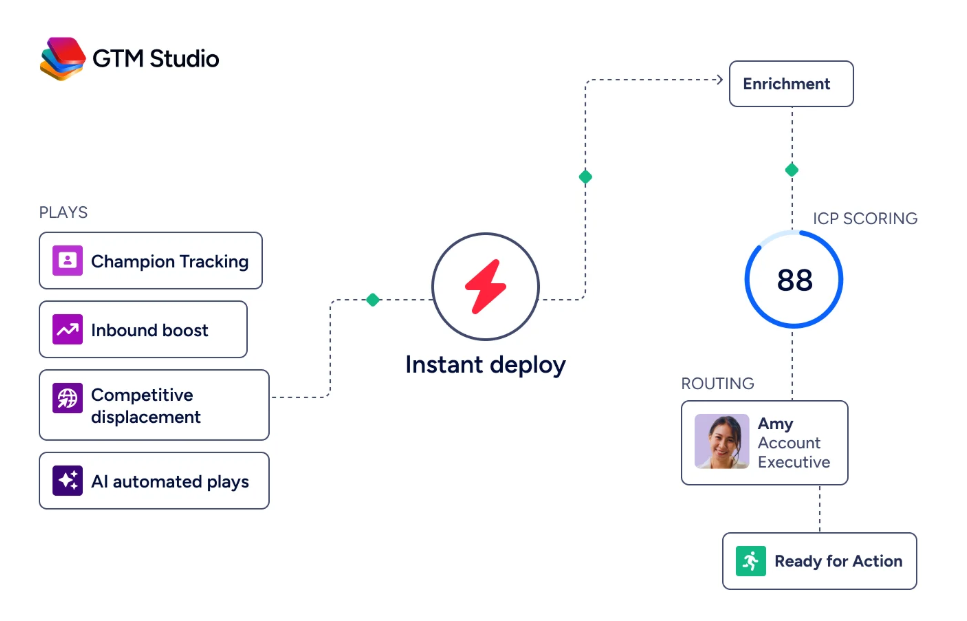
GTM Studio lets marketers and RevOps build audiences in natural language and launch multi-channel plays without engineering tickets. APIs and MCP deliver the same intelligence into any third-party tool, custom agent, or workflow, including enablement platforms.
Source: ZoomInfo
Pricing and commercial models
Neither WalkMe nor Spekit publishes pricing. Both require a sales conversation.
WalkMe uses a subscription license model based on a negotiated "Permitted Number" of users and/or target applications. Contracts are non-cancelable for the full term, with fees non-refundable except for WalkMe's material uncured breach. For SAP customers, a WalkMe Standard tier is included in SAP subscriptions, with WalkMe Premium available for customization. AI features consume SAP AI Units, a separate consumption currency. TrustRadius reviewers consistently cite WalkMe as expensive, with multi-year contracts and add-ons making budgeting difficult.
Spekit's pricing is similarly opaque. The pricing page shows only a demo request form. From the Master Services Agreement, the structure is per-seat or seat-banded, with fees set per signed Order Form. Contracts auto-renew for 12-month periods, and early termination requires paying all remaining fees through the end of the term. Professional services (implementation, migration) are scoped and priced separately.
Neither platform offers a free trial or free plan. WalkMe has no standard trial. Spekit offers a guided product tour but no self-serve signup.
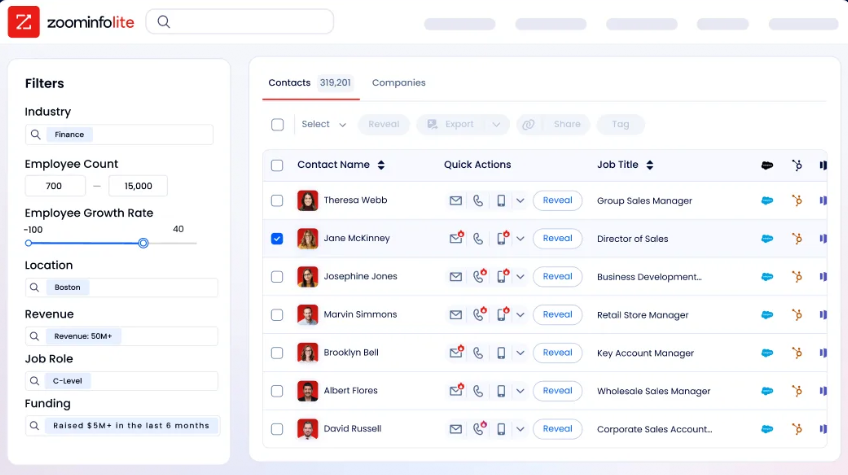
ZoomInfo offers more accessible entry points. ZoomInfo Lite is a permanent free tier (no credit card, no time limit) with access to ZoomInfo's B2B database, 10 monthly export credits, the Chrome extension, and WebSights Lite. A separate 7-day free trial provides broader access to the full platform. Paid plans use consumption-based pricing scaled around seats, credits, and feature tiers, with API access included in all relevant plans.
Source: ZoomInfo
Implementation and learning curves
The time from purchase to value differs significantly.
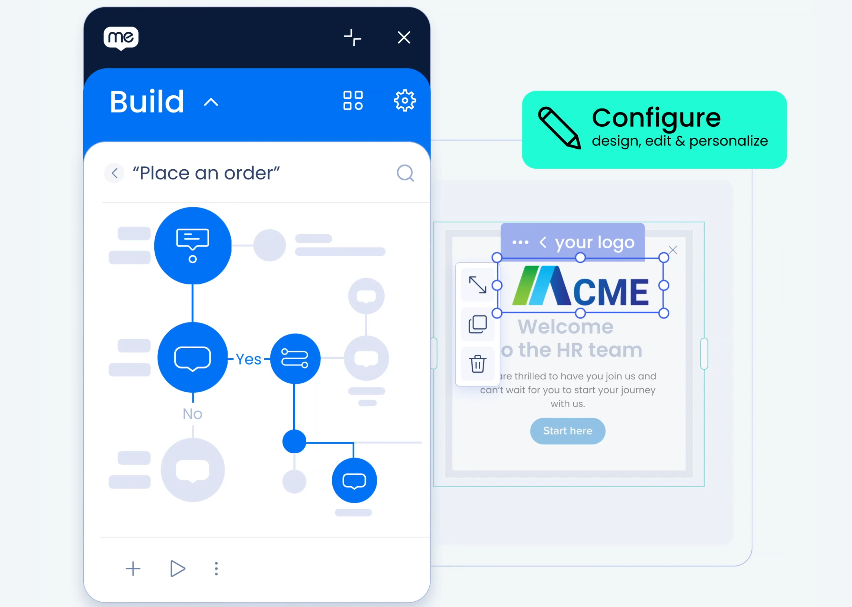
WalkMe requires the largest implementation investment. The WalkMe Editor is an Electron-based desktop application paired with a browser extension. Content creators ("Builders") use it to point-and-click on UI elements and define guidance steps, triggers, and conditions. For straightforward Walk-Thrus and SmartTips, non-developers can handle the process. For complex enterprise workflows involving branches, splits, and user conditions, the learning curve is steep.
Source: WalkMe
G2 reviewers flag the high learning curve for advanced configurations. WalkMe recommends a Center of Excellence approach and offers formal training through the Digital Adoption Institute, including a WalkMe Fundamentals course, an Essentials program, and a 5-week Builder Basics Bootcamp with weekly live instructor sessions.
Spekit deploys faster. The platform claims 30% faster implementation than competing enablement solutions and holds G2's #1 rankings in ease of setup, ease of implementation, and fastest time to ROI. Implementation follows four stages: sync or bulk-migrate content from Google Drive, SharePoint, or Confluence; generate missing content with AI templates; publish and deploy the Chrome extension; and track engagement with built-in dashboards.
The trade-off is scope. Spekit deploys faster because it does fewer things. It doesn't try to cover every enterprise application across every department. It focuses on the sales stack: Salesforce, Gong, Gmail, Outlook. That focus means less configuration, less admin overhead, and faster time to value for revenue teams.
A dedicated Customer Success Manager is assigned from day one. Multiple customer testimonials highlight executive-level involvement in support, including direct engagement from the CEO on product direction and customer issues.
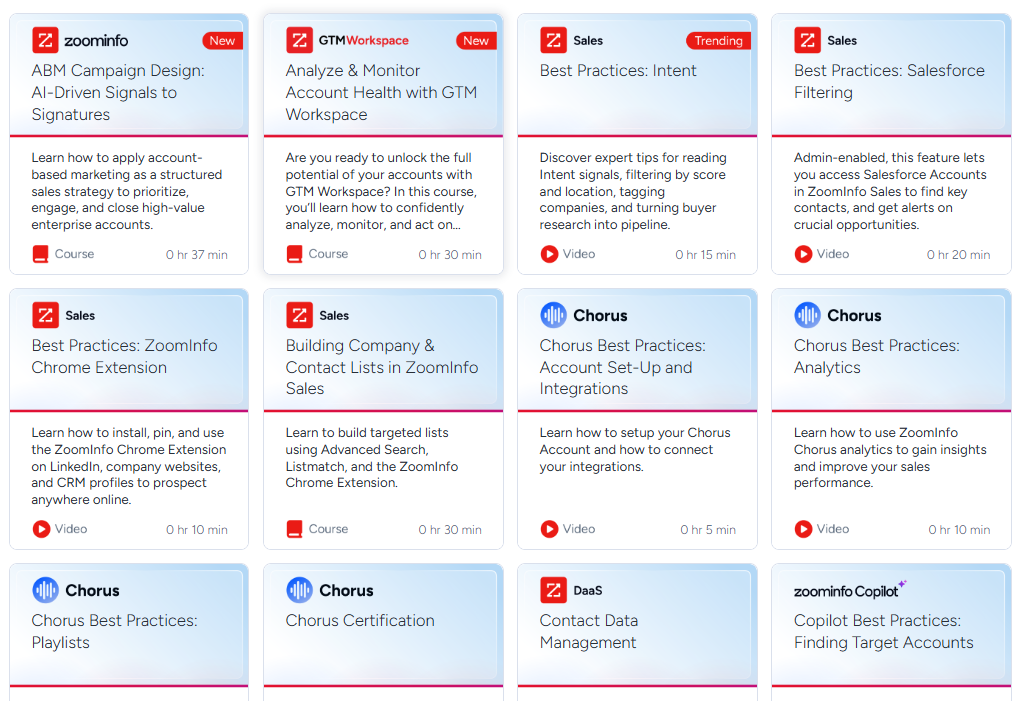
ZoomInfo sits between the two on implementation complexity. The platform redesigned its onboarding program from 30 to 90 days, structured across planning, technical implementation, education, and adoption phases. The redesign produced a 25% improvement in customer satisfaction scores. ZoomInfo University provides role-specific learning paths for Sales, Marketing, Administrator, and Customer Success teams.
Source: ZoomInfo
WalkMe vs. Spekit vs. ZoomInfo: Which should you choose?
The choice between WalkMe and Spekit depends on what problem you're solving. ZoomInfo is the intelligence layer that makes either more effective.
Choose WalkMe if:
You're managing software adoption across thousands of employees and multiple enterprise applications
Your primary challenge is training and change management for complex systems like SAP, Workday, or ServiceNow
You have a dedicated digital adoption team with the capacity to build and maintain in-app guidance
You need enterprise-grade compliance (FedRAMP, ISO 27001, SOC 2 Type II) or public sector readiness
Your organization already runs SAP applications and can benefit from the embedded WalkMe Standard tier
Choose Spekit if:
Your primary need is sales enablement: coaching, competitive intelligence, and content delivered in the flow of work
Your CRM is Salesforce and your conversation intelligence tool is Gong
You want fast implementation with minimal admin overhead
Your sales team needs AI-powered coaching and Deal Rooms, not just software walkthroughs
You value high daily active usage over breadth of application coverage
Add ZoomInfo if:
You need verified B2B data powering your CRM and sales tools
Your reps waste time researching accounts manually instead of selling
Stale or incomplete CRM data undermines your coaching and enablement investments
You want AI that understands why deals move, not just what happened
You need an intelligence layer that works inside any tool, including WalkMe and Spekit
Start with ZoomInfo Lite for free, or request a demo of the full platform.
WalkMe and Spekit solve different problems well. WalkMe drives software adoption across the enterprise. Spekit accelerates sales execution in the flow of work. But both perform best when the data inside your revenue tools is accurate, complete, and contextually rich. That's the layer ZoomInfo provides, and unlike either enablement platform, you can start using it today for free.
"That combination of our internal CRM data, external signals, and AI that's given all that context has helped us craft very specific account- and persona-based messages. And people have responded to them right away." (Toby Carrington, Chief Business Officer, Seismic)
WalkMe vs. Spekit vs. ZoomInfo FAQ
What is the fundamental difference between WalkMe and Spekit?
WalkMe is a Digital Adoption Platform that provides in-app guidance, workflow automation, and analytics across any enterprise application (SAP, Salesforce, Workday, ServiceNow, and custom tools). It serves entire organizations, not just sales teams. Spekit is an AI Sales Enablement Platform focused on revenue teams, delivering coaching, competitive intelligence, and content inside Salesforce, Gong, Gmail, and Outlook. WalkMe helps employees use software correctly; Spekit helps reps sell effectively.
How does ZoomInfo relate to WalkMe and Spekit?
ZoomInfo is not a competitor to either platform. It's the intelligence layer that makes both more effective. WalkMe and Spekit help your team use their tools better; ZoomInfo ensures the B2B data, buyer signals, and account intelligence flowing through those tools are accurate and complete. ZoomInfo provides 500M contacts, 100M companies, 135M+ verified phone numbers, and 200M+ verified business emails, plus a GTM Context Graph that processes 1.5B+ data points daily to reveal why deals move or stall.
Which platform is easier to implement?
Spekit is faster to deploy. G2 ranks it #1 in ease of setup and fastest time to ROI, with implementation reportedly 30% faster than competing enablement solutions. WalkMe requires a larger investment: advanced configurations involve a steep learning curve, and the platform recommends a Center of Excellence approach with formal training programs including a 5-week bootcamp. ZoomInfo falls in between, with a structured 90-day onboarding program and a free tier that lets teams start exploring immediately.
Does WalkMe only work with SAP now?
No. WalkMe continues to support Salesforce, Workday, ServiceNow, Microsoft Dynamics, and any web or desktop application through its DeepUI technology. However, the September 2024 SAP acquisition shifted strategic priorities toward the SAP ecosystem. WalkMe is now embedded natively in SAP applications with a Standard tier included in SAP subscriptions, and the WalkMe Learning Arc is the designated successor to SAP Enable Now (reaching end of maintenance November 30, 2030).
Can Spekit work outside of Salesforce?
Spekit integrates with Gong, Gmail, Outlook, Slack, and other browser-based tools through its Chrome Extension. However, its deepest value (deal context, stage-based coaching, bidirectional data sync, and embedded enablement) is built around Salesforce as the CRM backbone. Teams using HubSpot or other CRMs get reduced value from the deal intelligence features. Multi-language support is also limited, with G2 scoring Spekit at 7.8 out of 10 in that area.
Which platform has better AI capabilities?
Both offer AI, but for different purposes. WalkMe AI delivers general-purpose contextual assistance across any application: next-best-action recommendations, workflow automation, writing assistance, and input validation, built on over 7 billion annual human-software interactions. Spekit AI Sidekick specializes in sales execution: proactive deal coaching, content recommendations based on Gong call transcripts and Salesforce opportunity data, and automated follow-up generation grounded in the company's approved messaging. WalkMe AI is broader; Spekit AI goes deeper for sales.
How do the pricing models compare?
Neither WalkMe nor Spekit publishes pricing. Both require a sales conversation and use non-cancelable annual contracts. WalkMe uses per-user/per-application subscription licenses, with reviewers consistently citing it as expensive. Spekit uses per-seat pricing with auto-renewing annual terms. Both charge separately for professional services. ZoomInfo offers more accessible options: a permanent free tier (ZoomInfo Lite) with 10 monthly export credits, a 7-day free trial, and consumption-based pricing for paid plans.
Can I use ZoomInfo together with WalkMe or Spekit?
Yes, and that is the recommended approach. Spekit is already a ZoomInfo customer, with documented results showing opportunities at higher-scoring ZoomInfo accounts 43% more likely to convert into qualified pipeline and moving 58% faster through qualification. ZoomInfo's data and intelligence flow into any tool through APIs and MCP, making it compatible with any enablement platform in your stack.
More WalkMe comparisons:
