
Choosing between Workato and Zapier for business automation comes down to five questions:
Are you automating simple app-to-app handoffs, or do you need to orchestrate enterprise processes across dozens of systems?
Does your team have the technical depth to build advanced workflows, or do you need something anyone can pick up in an afternoon?
Is your automation budget flexible enough for enterprise pricing, or do you need predictable, task-based costs?
Are you deploying AI agents that need governed access to business systems, or are simpler automations sufficient?
Do you need the automation platform itself to generate business intelligence, or just to move data between tools that do?
In short, here's what we recommend:
Workato is the enterprise automation platform for organizations that need to connect complex systems with governance and security. Named a Leader in the Gartner Magic Quadrant for iPaaS for eight consecutive years, Workato provides over 1,200 pre-built connectors, enterprise security (SOC 2 Type II, ISO 27001, HIPAA, PCI DSS), and an agentic AI platform for deploying AI agents with audit trails and role-based controls. However, Workato's pricing is opaque and enterprise-oriented, the learning curve is steep (especially for custom connectors), and the platform is built for IT teams and technical business users, not casual automators.
Zapier is the automation platform for teams that need to connect apps fast without engineering support. With over 8,000 integrations (the largest library in the market), a no-code builder that non-technical users can learn in minutes, and a generous free tier, Zapier has earned the trust of 3.4 million companies worldwide. But Zapier's task-based pricing escalates quickly at volume, complex multi-step workflows can hit practical ceilings, and it still carries a reputation as a small-business tool despite its enterprise push.
Both platforms move data between applications. But automation is only as valuable as the data flowing through it. For go-to-market teams, the question isn't just how to connect your CRM to your email tool. It's whether you're acting on the right accounts, with the right contacts, at the right time. That's where ZoomInfo fits in.
ZoomInfo is an AI-powered GTM platform built on a B2B data foundation of 500M contacts, 100M companies, 135M+ verified phone numbers, and 200M+ verified business emails. Its GTM Context Graph processes 1.5B+ data points daily, combining this data with your CRM records, conversation transcripts, and behavioral signals to reveal the full context of your accounts. That context shows not just what happened, but why it happened, and what to do next. Your team accesses it through GTM Workspace for sellers, GTM Studio for marketers and RevOps, or APIs and MCP that pipe it into any other tool in your stack.
If better go-to-market intelligence sounds like the missing ingredient in your automation stack, see how ZoomInfo works.
Workato vs. Zapier vs. ZoomInfo at a glance
Workato | Zapier | ZoomInfo | |
|---|---|---|---|
Primary function | Enterprise iPaaS and workflow automation | No-code app automation | AI-powered GTM intelligence platform |
Integrations | 1,200+ pre-built connectors | 8,000+ app integrations | 120+ marketplace integrations, plus API and MCP access |
Target user | IT, RevOps, enterprise business teams | Individual contributors, SMB operators, growing enterprises | Sales, marketing, RevOps, GTM engineers |
AI capabilities | Agent Studio, Enterprise MCP, Genies for agent orchestration | Agents, Chatbots, AI steps in workflows, MCP (beta) | GTM Context Graph, AI account research, AI-drafted outreach |
Learning curve | Steep, especially for advanced configurations | Minimal for basic use; moderate for complex flows | Moderate; structured 90-day onboarding |
Free option | Developer Sandbox (no time limit, ~$1,000 in credits) | Free plan (100 tasks/month, forever) | ZoomInfo Lite (free forever, 10 monthly exports) |
Pricing model | Platform edition + usage-based (not publicly disclosed) | Task-based tiers starting at $19.99/month | Custom-quoted, seat-and-credit-based |
Security | SOC 2 Type II, ISO 27001, HIPAA, PCI DSS, GDPR | SOC 2 Type II, GDPR, CCPA | ISO 27001, ISO 27701, SOC 2 Type II, GDPR, CCPA |
Best for | Complex enterprise integration and AI agent orchestration | Fast, accessible automation across a broad app ecosystem | Feeding accurate B2B data and buying signals into your GTM workflows |
Workato is built for enterprise complexity, Zapier for speed and simplicity
The difference between Workato and Zapier starts with who they were built for.
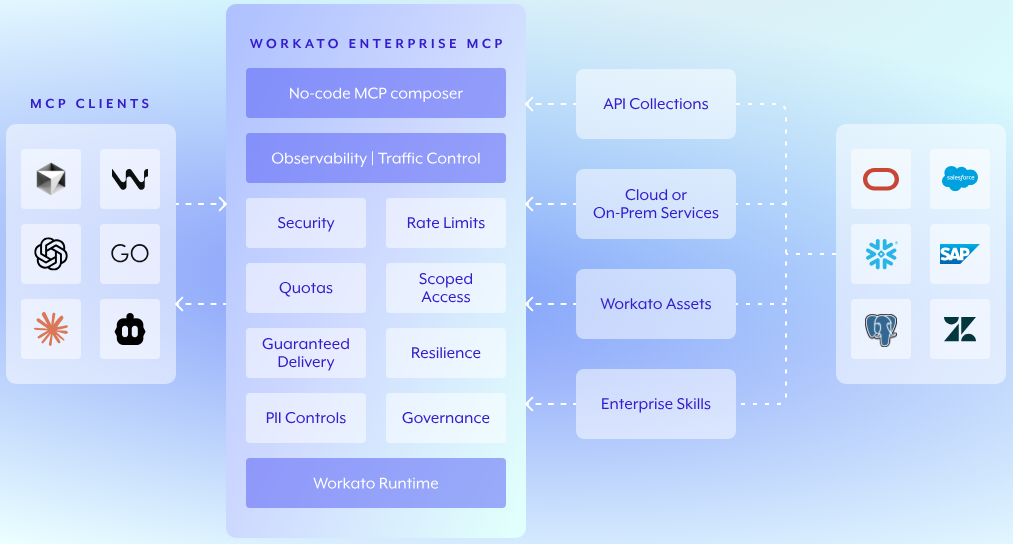
Workato emerged from the enterprise middleware world.
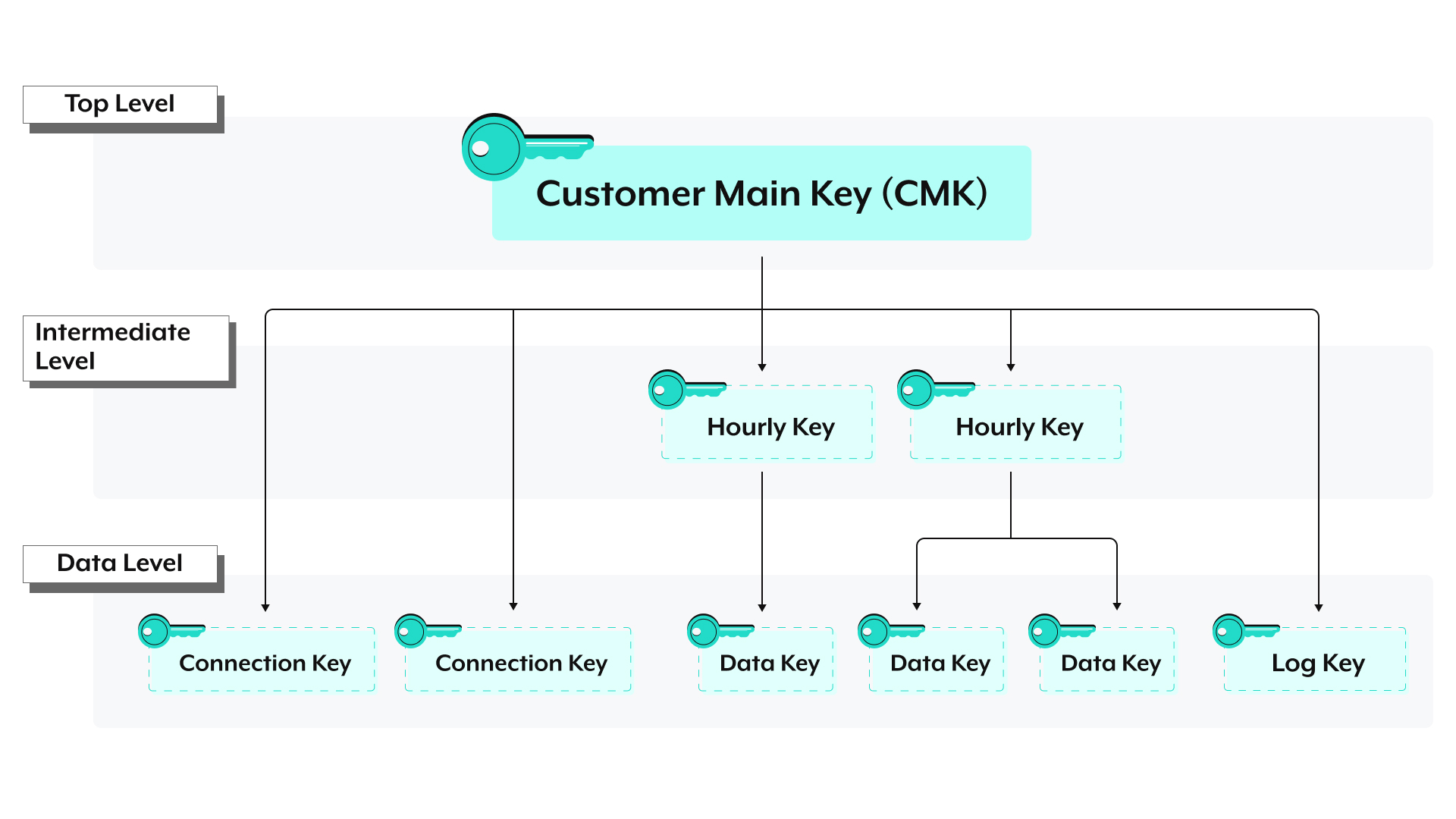
Its four co-founders previously built TIBCO BusinessWorks, one of the foundational integration platforms of the 2000s. That heritage shows in every design decision: role-based access control, hourly encryption key rotation, recipe-level concurrency management, and a governance model that IT teams can audit.
Source: Workato
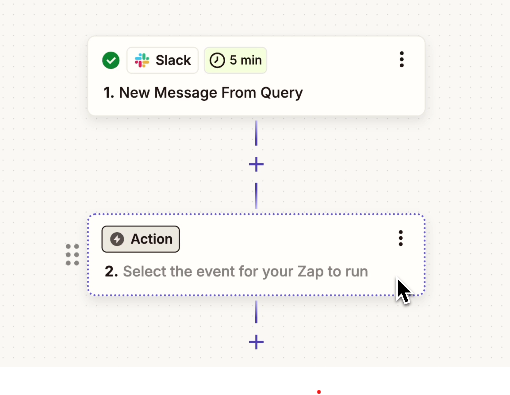
Zapier started at the opposite end.
Three University of Missouri alumni built it in 2011 because they kept building the same connectors between apps for different freelance clients. The product reflects that origin: pick a trigger app, pick an action app, connect them in minutes. Zapier has been profitable since 2014 with roughly $2.68 million in total funding, a fact that speaks to how efficiently the product serves its market.
Source: Zapier
For go-to-market teams, this translates into a practical choice.
If your RevOps team needs to orchestrate lead routing across Salesforce, Marketo, Slack, and a custom data warehouse with audit trails, Workato is designed for that complexity. If your marketing manager needs new Typeform submissions to create HubSpot contacts and Slack notifications, Zapier does it in ten minutes.
Integration breadth vs. integration depth
Zapier's 8,000+ integrations win over Workato's 1,200+ connectors. That's not a close race. If you need to connect a niche project management tool to an obscure email service, Zapier almost certainly has both.
But the number of integrations tells you less than you'd think.
Workato's connectors go deeper into enterprise systems. Connecting to Salesforce through Zapier gives you standard triggers and actions. Connecting through Workato gives you access to complex objects, bulk operations, and custom API configurations that enterprise workflows demand.
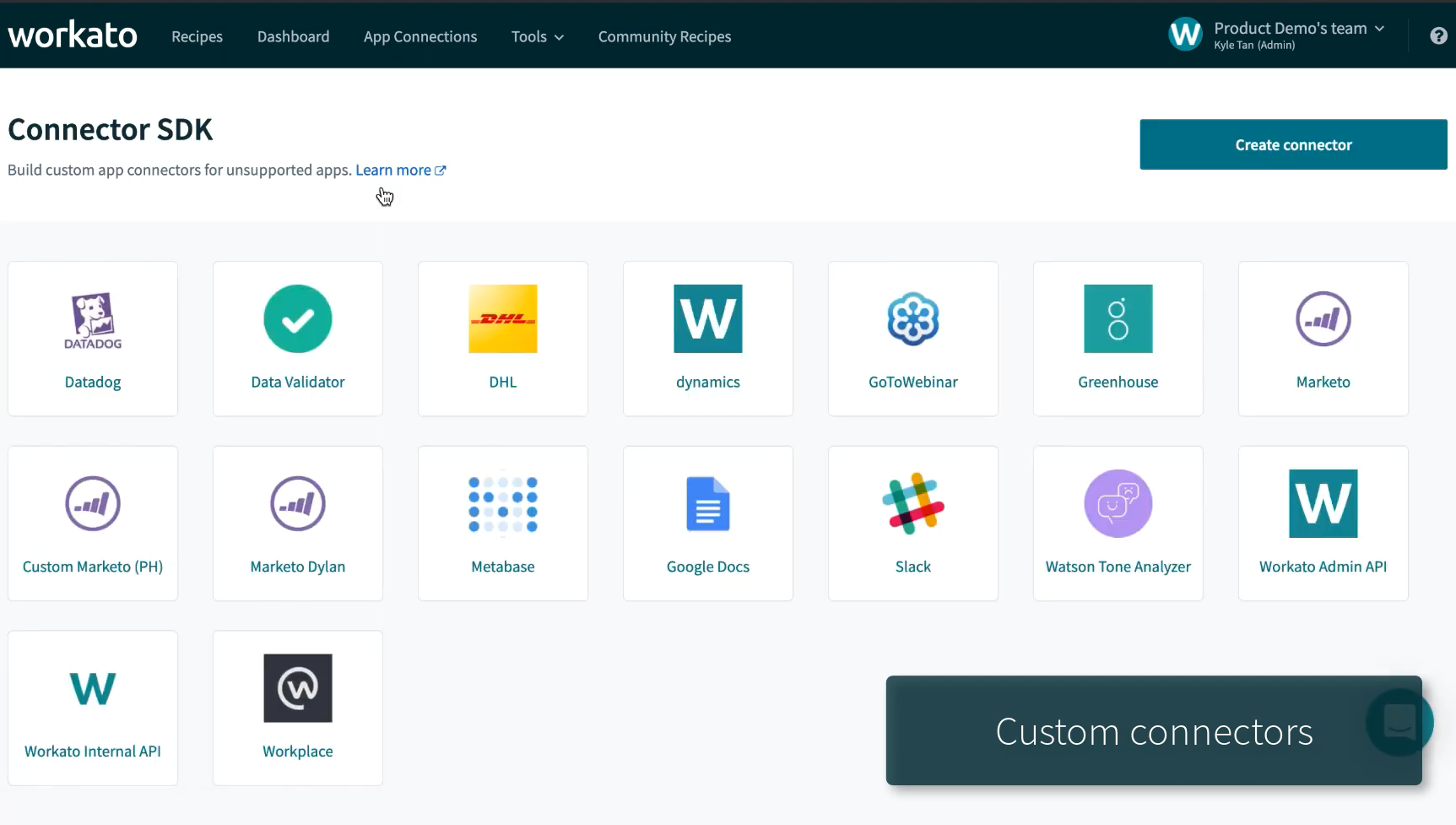
The Connector SDK lets teams build custom connectors for proprietary systems, a common requirement in large organizations running ERP systems or custom databases.
Source: Workato
Zapier has responded to this depth gap with Functions (currently in beta), a browser-based IDE that lets developers write custom logic within Zapier's infrastructure. It's an acknowledgment that the no-code model has limits, and a signal that Zapier is pursuing technical users it previously left to competitors.
Source: Zapier
For GTM teams, both platforms connect to the tools that matter: Salesforce, HubSpot, Slack, Marketo, and the major sales engagement platforms. The integration breadth question becomes critical only when your stack includes niche tools or when you need deep, multi-object access to enterprise systems.
The agentic AI race: different starting lines
Both Workato and Zapier are betting on agentic AI, but their approaches reflect their different roots.
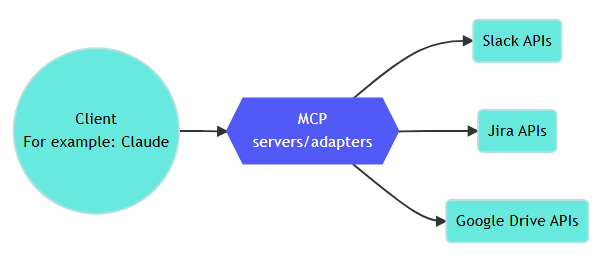
Workato positions itself as the "Enterprise MCP for Agentic AI".
Its Agent Studio lets teams build AI agents (called "genies") that take actions across enterprise systems, with verified user access that authenticates each end user with their own credentials.
The MCP Gateway gives AI models a standardized connection layer to access business tools through Workato's integration infrastructure, and Agent Orchestration enables multi-agent workflows where specialized agents delegate tasks to each other. Workato reports a 700% increase in AI usage after deploying Enterprise MCP.
Source: Workato
Zapier Agents take the typical Zapier approach: make it accessible.
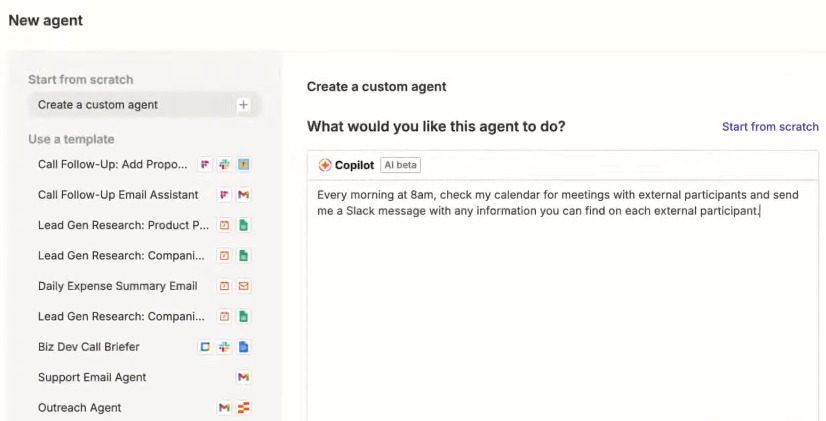
Users build agents through natural-language instructions, equip them with actions from 8,000+ apps, and deploy them from a straightforward interface. Zapier MCP (also in beta) offers over 30,000 searches and actions through a single MCP endpoint. The strength is immediacy: one customer noted that "Zapier is already connected to all of these different apps," so agents inherit the entire integration library instantly.
The practical difference: Workato's agentic platform is designed for IT-governed, cross-departmental agent deployment where compliance and audit trails are non-negotiable. Zapier's agents are designed for the operator who wants to stand up a lead qualification agent or meeting prep assistant this afternoon.
Source: Zapier
Neither platform, however, generates the intelligence that makes agents useful in a go-to-market context. An agent can route leads, draft emails, and update CRM records, but it cannot tell you which accounts are researching your category, who the decision-makers are, or why a deal is stalling. That requires a data and intelligence layer beneath the automation.
ZoomInfo provides the intelligence that automation platforms deliver
Here's the gap that neither Workato nor Zapier fills: they move data between systems, but they don't generate the data that makes go-to-market motions work.
A Zapier Zap can create a Salesforce lead when someone fills out a form. Workato can orchestrate a multi-step sequence that enriches that lead, routes it to the right rep, and triggers a personalized email. Both are valuable.
But neither platform can tell you whether that lead's company is actually in-market, who else on the buying committee you should contact, or that the CFO just joined a competitor evaluation call.
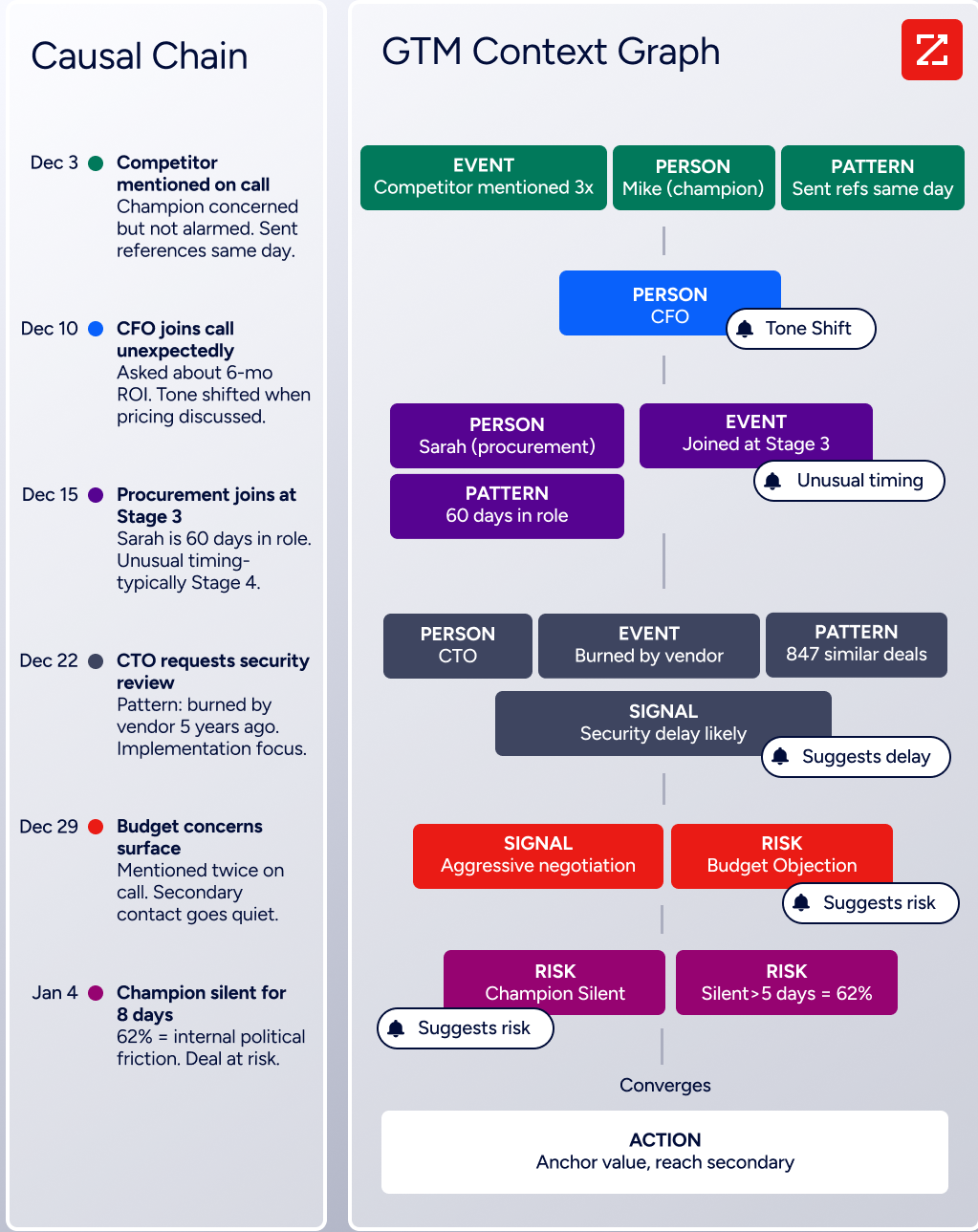
That's what ZoomInfo's GTM Context Graph provides.
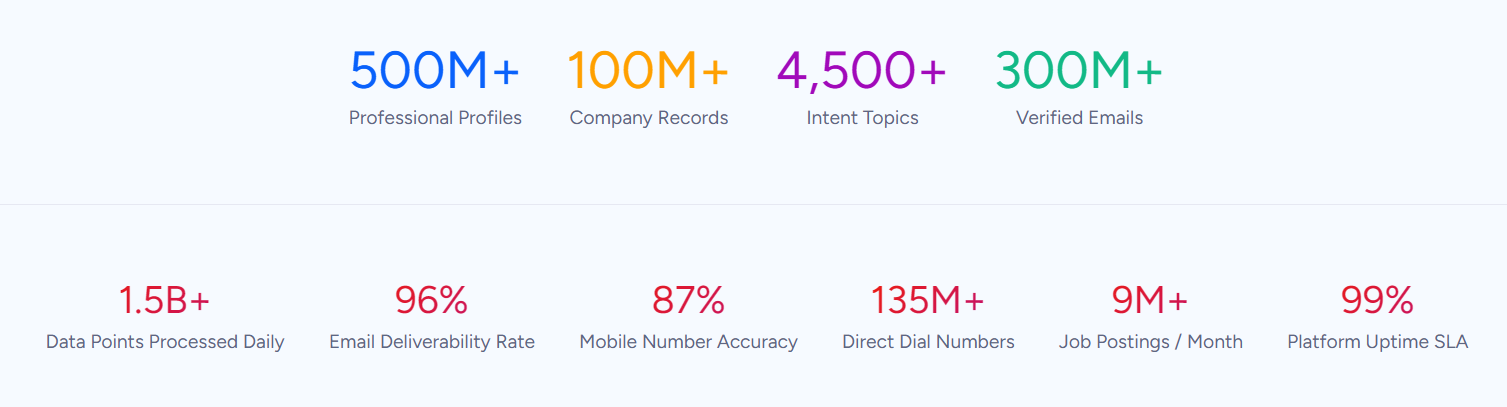
Built on the largest B2B dataset in the industry (500M contacts and 100M companies, 135M+ verified phone numbers, and 200M+ verified business emails), it processes 1.5B+ data points daily, combining this third-party data with your CRM records, conversation transcripts, and behavioral signals. The result is context that captures not just what happened in a deal, but why.
That reasoning separates "send an email to this lead" from "send this specific message to this specific person because their company just showed intent signals, the VP of Engineering changed jobs, and their tech stack includes your competitor's product."
Source: ZoomInfo
ZoomInfo delivers this intelligence through three channels.
GTM Workspace gives sellers AI-powered account prioritization and drafted outreach in one place, where customers like Seismic report 54% productivity gains and 39% of pipeline attributed to ZoomInfo signals.
GTM Studio lets marketers and RevOps teams describe audiences in natural language and launch multi-channel plays, with expansion plays that used to take three weeks launching in 30 minutes.
And for teams already invested in Workato or Zapier, ZoomInfo's Enterprise API and MCP server pipe the same intelligence directly into those platforms, so your existing automations act on verified data rather than whatever happens to be in your CRM.
Pricing philosophies reveal different markets
Workato, Zapier, and ZoomInfo each price differently, and the models tell you who they're built for.
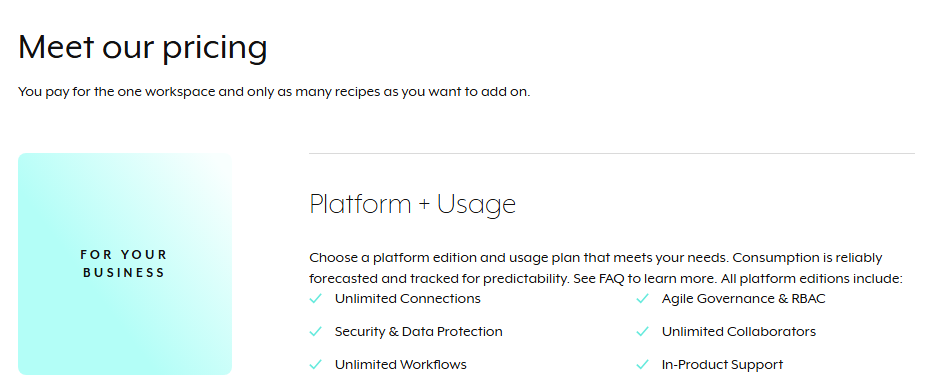
Workato uses a platform edition plus usage-based model across four tiers: Standard, Business, Enterprise, and Workato One.
All editions include unlimited connections, workflows, and collaborators. Specific pricing is not publicly disclosed; you'll need to talk to sales. They offer a Developer Sandbox with no time limit and approximately $1,000 in credits. Workato's Capped Recipes model, introduced in July 2025, addresses cost predictability: once a recipe hits its consumption cap, Workato absorbs any additional task usage for that billing period.
Source: Workato
Zapier starts with a permanent free plan (100 tasks/month), with paid plans beginning at $19.99/month for 750 tasks on the Professional tier. The Team plan starts at $69/month for 2,000 tasks and includes SAML SSO and up to 25 users. Enterprise pricing is custom.
The critical detail: extra tasks beyond your plan cost 1.25x the normal per-task rate. For high-volume automations, this adds up.
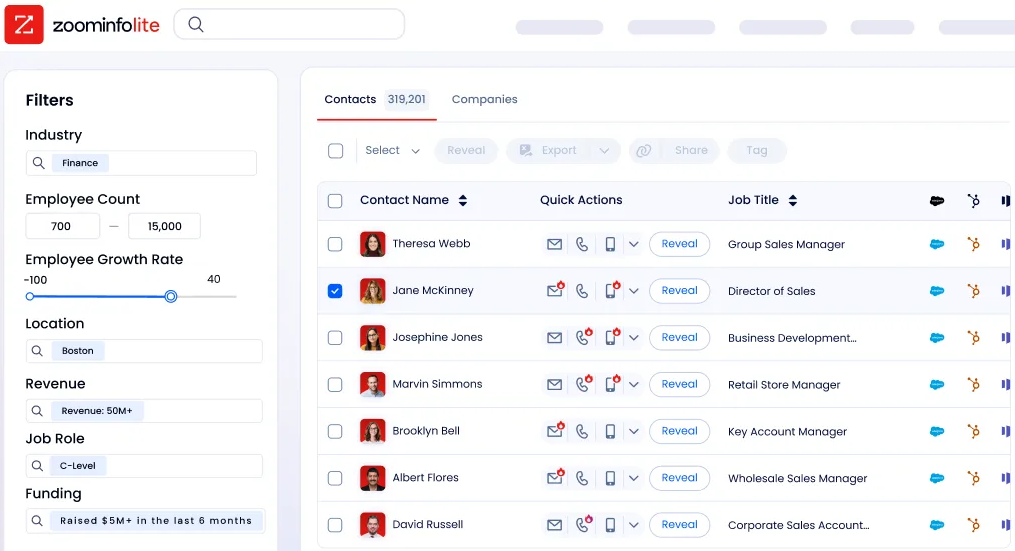
ZoomInfo uses a custom-quoted, seat-and-credit-based subscription model with no published prices.
The free entry point is ZoomInfo Lite, a permanent free tier with access to ZoomInfo's B2B database and 10 monthly export credits. A 7-day free trial provides access to broader features. ZoomInfo is shifting toward consumption-based pricing tied to data access, API consumption, and AI activity.
Source: ZoomInfo
The takeaway: Zapier is the most accessible starting point, with clear pricing that scales predictably for moderate usage. Workato requires a sales conversation but offers predictability through its capped pricing model.
ZoomInfo is a separate investment, one that pays for itself when the data flowing through your automations is accurate and actionable. Snowflake, for example, uses ZoomInfo data in its Account Propensity Scoring model and reports 90% higher opportunity open rates and 2x higher customer conversion rates on ZoomInfo-powered scores.
Security and compliance: enterprise readiness varies
For regulated industries and large enterprises, security certifications are table stakes. But the depth of each platform's security posture matters.
Workato holds the broadest certification stack among the three: SOC 2 Type II, SOC 1 Type II, ISO 27001, ISO 27701, ISO 42001, PCI DSS Level 1, HIPAA, and NIST 800-171A.
Features like hourly key rotation, container isolation, and BYOK encryption reflect an architecture designed for financial services, healthcare, and government. Workato also offers Virtual Private Workato, a dedicated AWS VPC deployment for organizations that require complete infrastructure isolation.
Source: Workato
Zapier covers the essentials: SOC 2 Type II, SOC 3, GDPR, GDPR UK, and CCPA, with AES-256 encryption at rest and TLS 1.2 in transit.
Enterprise accounts can restrict third-party AI integrations and are automatically opted out of AI model training. The Trust Center centralizes compliance documentation. For most mid-market and growing enterprises, this coverage is sufficient. For heavily regulated industries, the gap with Workato is real.
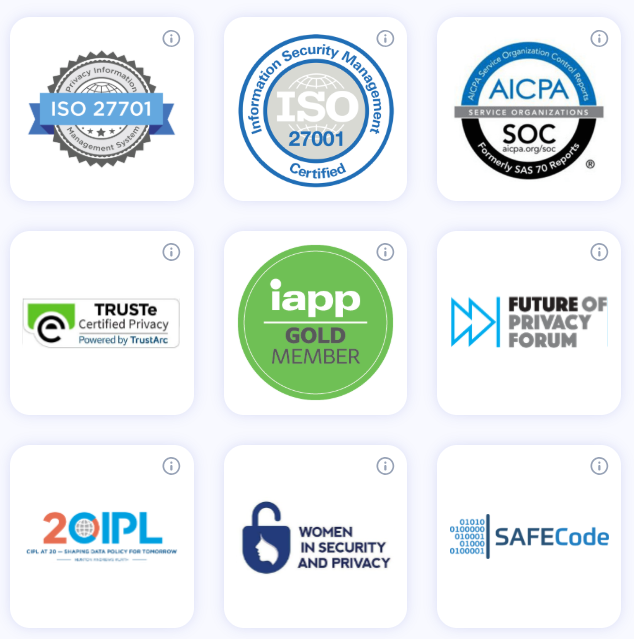
ZoomInfo maintains ISO 27001, ISO 27701, SOC 2 Type II, TRUSTe GDPR and CCPA validations, all renewed annually. As a registered data broker handling B2B contact data, ZoomInfo's compliance posture is designed around data privacy regulations governing personal business information.
How the three work together
These platforms aren't competing for the same budget line. They solve different problems, and the most effective GTM stacks use them together.
Here's a concrete example: A prospect visits your pricing page. ZoomInfo's WebSights identifies the company and matches the visit against intent signals from 210 million IP-to-Organization pairings. The GTM Context Graph recognizes that this company matches your closed-won patterns: similar tech stack, recent funding, and the VP of Engineering just moved into the role.
From there, the intelligence flows into your automation layer. Through the ZoomInfo Enterprise API, the enriched account data pushes into a Workato recipe that routes the lead to the right rep by territory, creates a Salesforce opportunity, and triggers a Salesloft sequence.
Or, through ZoomInfo MCP connected to a Zapier Agent, the same intelligence triggers a simpler workflow: CRM record creation, Slack notification to the account owner, and a personalized follow-up draft.
The intelligence platform (ZoomInfo) tells you who to pursue and why. The automation platform (Workato or Zapier) executes the actions across your systems. Together, they create a GTM motion that is both informed and efficient.
Workato vs. Zapier vs. ZoomInfo: Which should you choose?
The right choice depends on what's actually limiting your team today.
Choose Workato if:
You're connecting complex enterprise systems (ERPs, data warehouses, on-premises databases) with strict governance requirements
Your organization needs role-based access control, audit trails, and compliance certifications beyond SOC 2
You're deploying AI agents that require verified user access and multi-agent orchestration at enterprise scale
You have technical users (IT, RevOps engineers) who can invest in learning a capable platform
Your automation workloads run at high volume and require batch processing with concurrency controls
Choose Zapier if:
You need to connect apps quickly without engineering support
Your team includes non-technical operators who need to build and manage their own automations
You value breadth of integrations, with 8,000+ apps available
Your budget requires predictable, transparent pricing with a viable free tier
You want AI agents and chatbots that inherit a large integration library instantly
Choose ZoomInfo if:
Your automation workflows are only as good as the data flowing through them, and you need verified B2B contacts, intent signals, and account intelligence
You want AI that understands why deals move or stall, not just AI that shuffles data between systems
Your sales team needs prioritized accounts with AI-drafted outreach based on real buying signals
Your marketing and RevOps teams need to build and launch GTM plays without engineering tickets
You want intelligence that works in ZoomInfo's own products or in any third-party tool via API and MCP
Try ZoomInfo Lite for free, or request a demo to see the full platform.
The most effective GTM organizations don't choose between automation and intelligence. They build a stack where ZoomInfo provides the data and context, and Workato or Zapier acts on it across every system in their tech stack. Accurate data, multiplied by efficient automation, is how pipeline gets built.
Workato vs. Zapier vs. ZoomInfo FAQ
What is the core difference between Workato, Zapier, and ZoomInfo?
Workato is an enterprise integration platform (iPaaS) that connects complex business systems with governance, security, and AI agent orchestration.
Zapier is a no-code automation platform that connects 8,000+ apps for fast workflow automation.
ZoomInfo is a B2B intelligence platform that provides verified contact data, company insights, intent signals, and AI-powered GTM context. They solve different problems and work well together.
Which is cheaper: Workato or Zapier?
Zapier is far more accessible on price. Its free plan provides 100 tasks per month forever, and paid plans start at $19.99 per month. Workato does not publish pricing and requires a sales conversation, though it offers a free Developer Sandbox with approximately $1,000 in credits and no expiration.
For high-volume enterprise use, Workato's Capped Recipes model provides cost predictability by absorbing overages once a recipe hits its cap.
Can ZoomInfo work with Workato or Zapier?
Yes. ZoomInfo's Enterprise API and MCP server allow its B2B data and intelligence to flow directly into Workato recipes or Zapier Zaps.
This means your automation workflows can act on verified contact data, intent signals, and account intelligence from ZoomInfo rather than relying on whatever data exists in your CRM.
Which platform has more integrations?
Zapier leads with 8,000+ app integrations, the largest library in the automation market. Workato offers 1,200+ pre-built connectors with generally deeper access to enterprise systems. ZoomInfo offers 120+ marketplace integrations plus API and MCP access, focused on CRM, marketing automation, sales engagement, and data warehouse platforms.
Which platform is better for deploying AI agents?
Workato's Agent Studio provides enterprise AI agent deployment with verified user access, multi-agent orchestration, and audit trails. Zapier Agents offer faster, more accessible agent setup with instant access to 8,000+ app actions.
ZoomInfo's GTM Workspace includes AI agents built for sales execution, with account research, outreach drafting, and signal monitoring powered by the GTM Context Graph. The right choice depends on whether your priority is governance, accessibility, or GTM-specific intelligence.
Do I need all three platforms?
Not necessarily, but the most effective GTM stacks combine intelligence with automation.
ZoomInfo provides the data and buying signals that tell you which accounts to target and why. Workato or Zapier automates the actions across your systems.
Automation without quality data means you're efficiently executing against incomplete information. Data without automation means your team still does the manual work of routing, updating, and triggering workflows.
Which platform has the strongest security certifications?
Workato holds the broadest set among the three, including SOC 2 Type II, ISO 27001, ISO 27701, ISO 42001, PCI DSS Level 1, HIPAA, and NIST 800-171A. Zapier covers SOC 2 Type II, SOC 3, GDPR, and CCPA. ZoomInfo maintains ISO 27001, ISO 27701, SOC 2 Type II, and validated GDPR and CCPA practices.
For regulated industries like healthcare and financial services, Workato's certification depth and options like Virtual Private Workato (dedicated AWS VPC) provide the strongest compliance coverage.
Which platform is easiest to get started with?
Zapier is the easiest, with a no-code builder most users can learn in minutes and a free plan that requires no credit card. ZoomInfo Lite offers free, permanent access to B2B data with 10 monthly exports. Workato's Developer Sandbox provides full platform access but the learning curve is steeper, particularly for custom connectors and advanced configurations.
