
Choosing between Zoho CRM vs. Close for your sales team often comes down to five questions:
Do you need a full business platform covering sales, marketing, and operations, or a focused tool built for closing deals?
Is your team small enough that every rep makes 50+ calls a day, or large enough that you need territory management and cross-department workflows?
How important is it that your CRM data stays accurate and your pipeline stays full of the right prospects?
Do you want to customize every module and layout yourself, or would you rather start selling immediately with minimal setup?
Are you comparing CRMs because you need a better way to manage deals, or because you need a better way to find them?
In short, here's what we recommend:
Zoho CRM is the platform for growing businesses that want one system to run sales, marketing, support, and operations. With 300,000+ businesses worldwide and pricing that starts with a free plan for up to 3 users, Zoho packs enterprise features into SMB pricing. Its Canvas Design Studio lets you redesign record views without code, Blueprint enforces your sales process step by step, and Zia AI handles everything from lead scoring to churn prediction. The tradeoff: that breadth creates complexity. Advanced configuration takes real time, and teams without a dedicated admin may struggle to use the platform fully.
Close is the CRM for small B2B sales teams that spend their days on the phone and in email. Built-in calling, SMS, and email mean reps never leave the CRM to reach a prospect. A Power Dialer and Predictive Dialer keep high-volume callers productive, and the platform claims to be 50% faster than Pipedrive, HubSpot, and Salesforce. Close serves 9,500+ teams globally and has been bootstrapped and profitable since 2013. The tradeoff: Close stays narrow on purpose. There's no marketing automation, limited customization on lower tiers, and SMS works only in selected countries.
Both platforms manage your sales process well. But neither solves the problem upstream of every CRM: finding the right people to sell to, knowing when they're ready to buy, and understanding what will move them to act. That's where ZoomInfo comes in.
ZoomInfo is a go-to-market intelligence platform built on B2B data at scale: 500M contacts, 100M companies, 135M+ verified phone numbers, and 200M+ verified business email addresses. Its GTM Context Graph processes 1.5B+ data points daily, combining this data with your CRM records, conversation transcripts, and behavioral signals to show not just what's happening in your pipeline, but why deals move or stall. Sellers use GTM Workspace, where AI agents research accounts, draft outreach, and surface the next best action. Marketers and RevOps teams use GTM Studio to build and launch plays in natural language. For teams that want ZoomInfo's data inside their existing tools, API and MCP deliver the same data to any front end, including Zoho CRM and Close.
If you want to see how ZoomInfo can strengthen your sales pipeline, start with a free trial.
Zoho CRM vs. Close vs. ZoomInfo at a glance
Zoho CRM | Close | ZoomInfo | |
|---|---|---|---|
Core purpose | All-in-one CRM and business platform | Communication-first CRM for sales teams | GTM intelligence platform |
Built-in calling | Via Zoho Voice / PhoneBridge integration | Native power dialer, predictive dialer, call recording | Intelligent dialing and AI-drafted outreach via GTM Workspace |
AI capabilities | Zia: lead scoring, churn prediction, 7 pre-built agents | AI Call Assistant, AI Enrich, email rewriting | GTM Context Graph, AI agents for research and outreach, intent signals |
B2B data | CRM data only (no prospecting database) | CRM data only (no prospecting database) | 500M contacts, 100M companies, 135M+ verified phone numbers |
Customization | Canvas, Blueprint, custom modules, Kiosk Studio | Limited on lower tiers; focused on speed | Configurable via GTM Studio plays and API/MCP |
Free plan | Yes (3 users) | No (14-day trial) | Yes (ZoomInfo Lite, permanent) |
Starting price | ~$14/user/month | $9/seat/month (Solo, annual) | Custom pricing |
Integrations | 1,100+ via Zoho Marketplace | 100+ native and Zapier integrations | 120+ marketplace integrations, API/MCP for any tool |
Best for | Growing businesses needing sales, marketing, and operations in one system | Small B2B teams making high-volume outbound calls | Teams that need accurate prospect data, buying signals, and AI-driven execution |
Different tools for different problems
These three platforms address different stages of the same revenue challenge.
Zoho CRM answers: "How do I manage my entire customer lifecycle in one place?" It covers lead capture, deal tracking, quoting, invoicing, support tickets, and marketing campaigns. For a company that wants to consolidate its tech stack, Zoho's ecosystem of 60+ integrated applications means fewer subscriptions and fewer integration headaches.
Close answers: "How do I help my sales reps close more deals faster?" It strips away everything that isn't directly about selling. No marketing automation. No support desk. No invoicing. Instead, it gives reps a single screen where they can call, email, text, and update deals without switching tabs.
ZoomInfo answers the question that comes before both: "Who should my team be selling to, and when?" A CRM is only as useful as the data inside it. ZoomInfo fills that gap with verified contact data, intent signals that reveal when companies are researching solutions, and AI that turns those signals into prioritized actions. The intelligence flows into any CRM through integrations or ZoomInfo's own seller workspace.
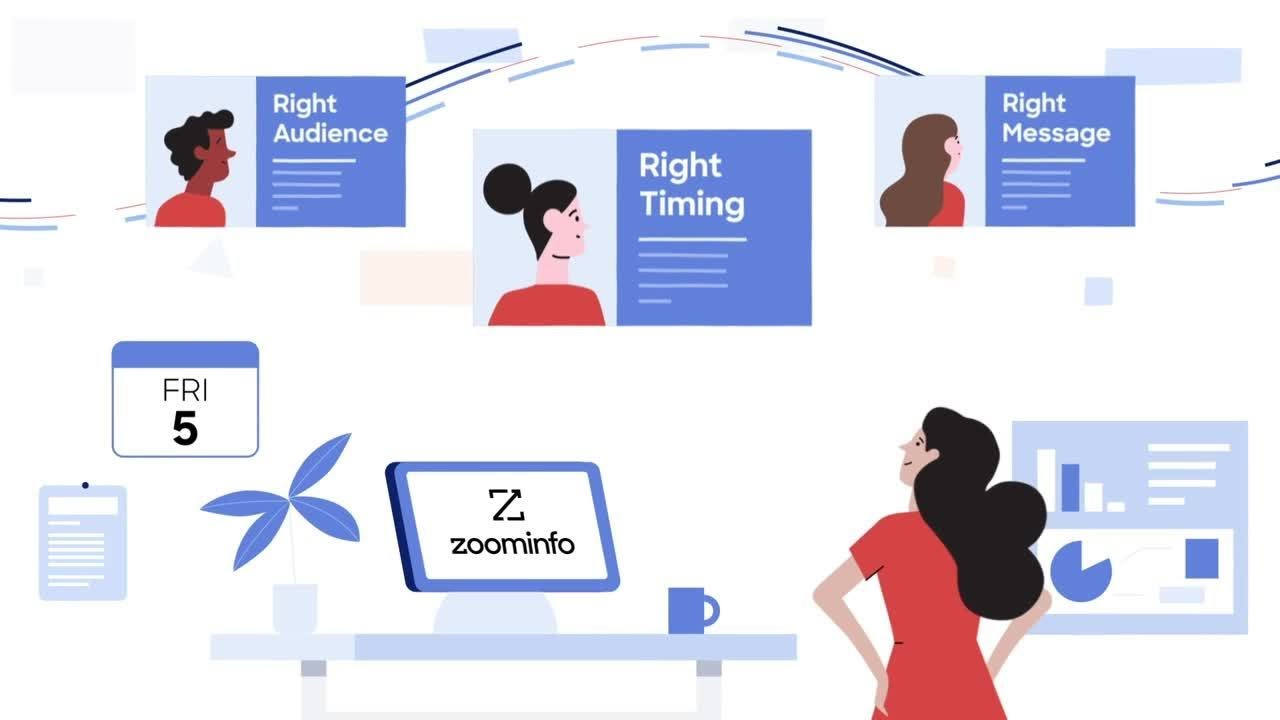
The distinction matters because many teams buy a CRM expecting it to generate pipeline. CRMs don't generate pipeline. They manage it. The teams that grow fastest pair strong CRM execution with strong prospect intelligence.
Zoho CRM offers the widest feature set at the lowest price
Zoho CRM's value is hard to argue with on paper. For roughly $14/user/month on the Standard plan, you get sales automation, workflow rules, AI agents, cadences, custom reports, and sales forecasting. Move up to Enterprise (about $40/user/month) and you unlock territory management, journey orchestration, customer portals, Zia AI predictions, and up to 200 custom modules.
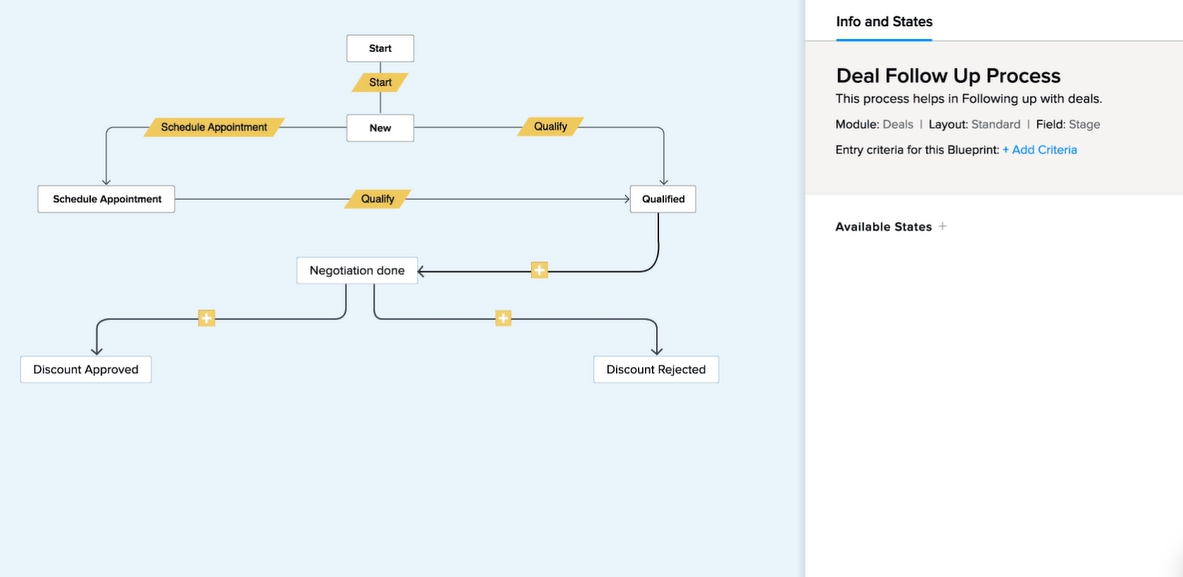
The depth goes further than most CRMs at this price. Blueprint enforces your sales process so reps can't skip required steps.
Source: Zoho
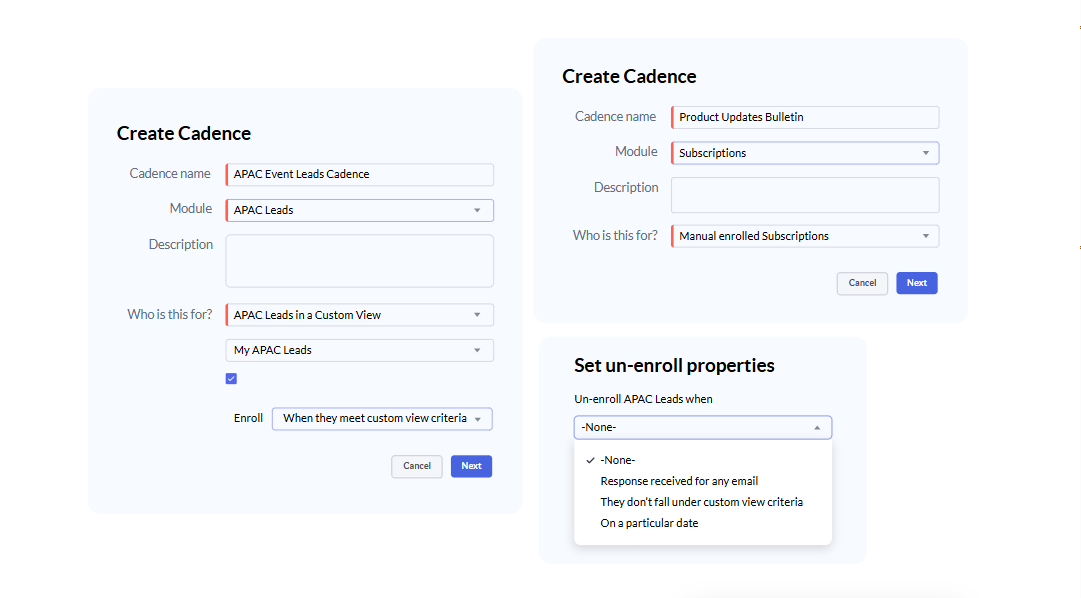
Cadences orchestrate multichannel follow-up sequences across email, phone, tasks, and WhatsApp. Canvas Design Studio lets you redesign any record view with a drag-and-drop editor, and CPQ handles product configuration, pricing rules, and quote generation from the Professional tier onward.
Source: Zoho
The catch is that Zoho's breadth creates a learning curve. G2 reviewers consistently note that while basic use is accessible, advanced configuration demands real time. Capterra reviewers echo this, saying that customization requires patience and admin expertise. For teams with a dedicated CRM administrator, Zoho's flexibility pays off. For teams without one, much of that power may go unused.
Close wins on speed and simplicity for sales teams
Close was born from a sales team's frustration with existing CRMs. The founders built an internal CRM tool for their sales-as-a-service company, Elastic Sales, which closed 300+ deals for 10 different startups. That origin shows in every design choice: the platform is built for reps who spend their days reaching out, following up, and closing.
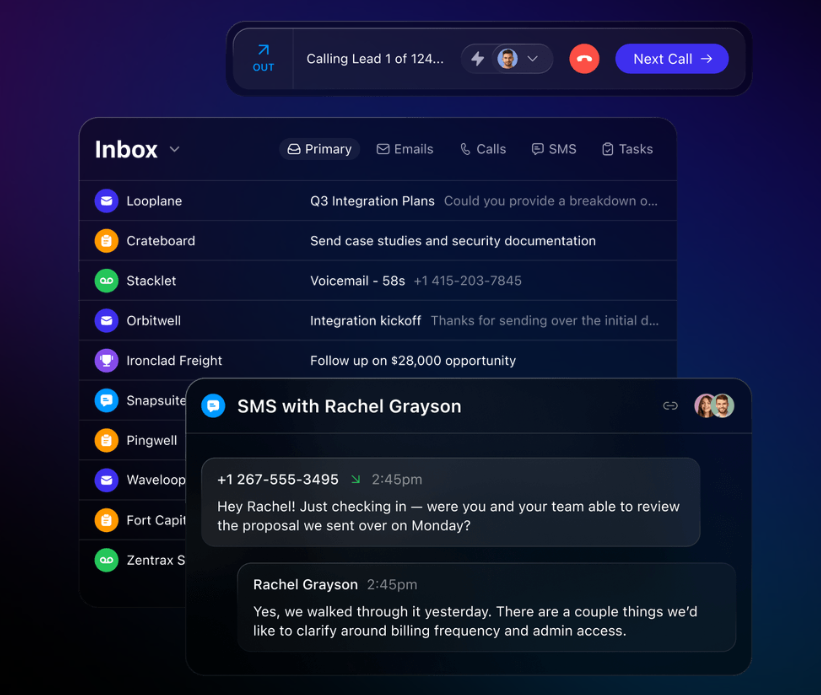
Communication is Close's clearest advantage over Zoho CRM. Calling, SMS, and email are native to the CRM, not integrations that require separate setup.
Source: Close
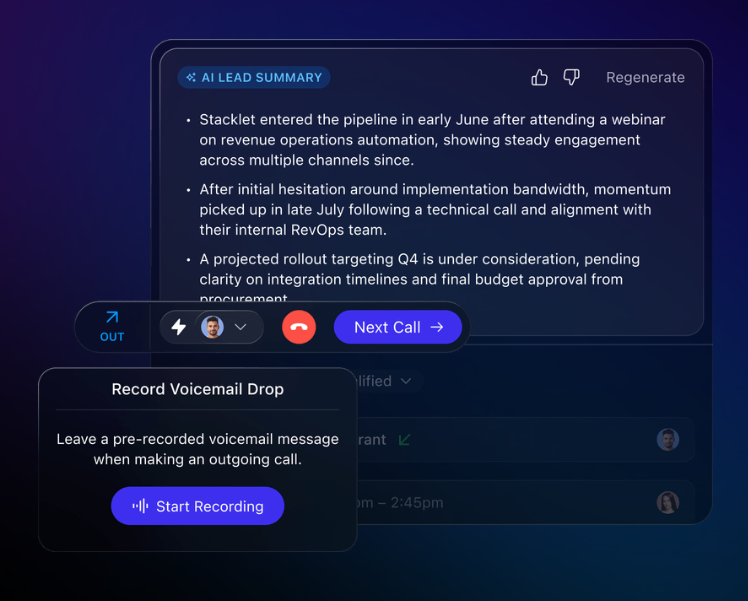
The Power Dialer sequences through a call list automatically. The Predictive Dialer calls multiple numbers at once and connects reps only when someone answers. Call coaching features include whisper and barge for managers listening in real time.
Source: Close
The result: Close users spend less time administering their CRM and more time talking to prospects.
But Close's simplicity is also its constraint. The platform lacks native marketing automation, offers limited custom fields on lower tiers, and doesn't support the complex CRM objects that larger organizations need. Capterra reviewers note that Close clearly targets SaaS sales teams, making it less suitable for retail, services, or other models focused on post-sale client management.
ZoomInfo solves the problem that CRMs can't
Zoho CRM and Close both depend on a critical assumption: that you know who to sell to. Zoho helps you manage the process after you've identified your prospects. Close helps you reach them once they're in your system. Neither tells you which companies are researching solutions like yours right now, who the decision-makers are, or what they care about.
ZoomInfo fills this gap. Its B2B data platform covers 500M contacts and 100M companies, verified through a process that combines automated ML scanning of 28 million site domains daily, 300+ human researchers, and a network of 200,000+ ZoomInfo Lite users who share data back. The data reaches up to 95% accuracy on first-party records.

Source: ZoomInfo
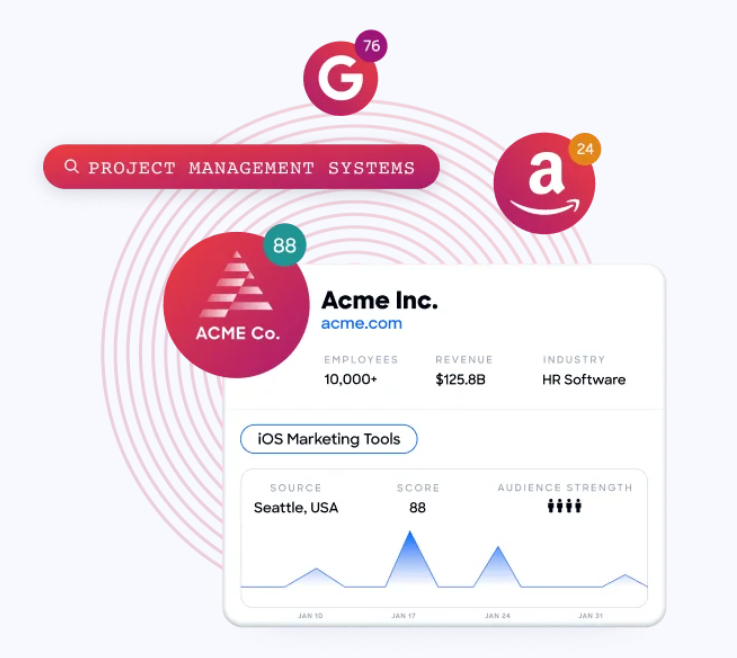
Beyond contact data, ZoomInfo Intent tracks buying signals from 210 million IP-to-Organization pairings and 6 trillion+ new keyword-to-device pairings sourced monthly. Guided Intent, exclusive to ZoomInfo, identifies the topics historically correlated with closed-won deals rather than requiring you to guess which keywords matter.
Source: ZoomInfo
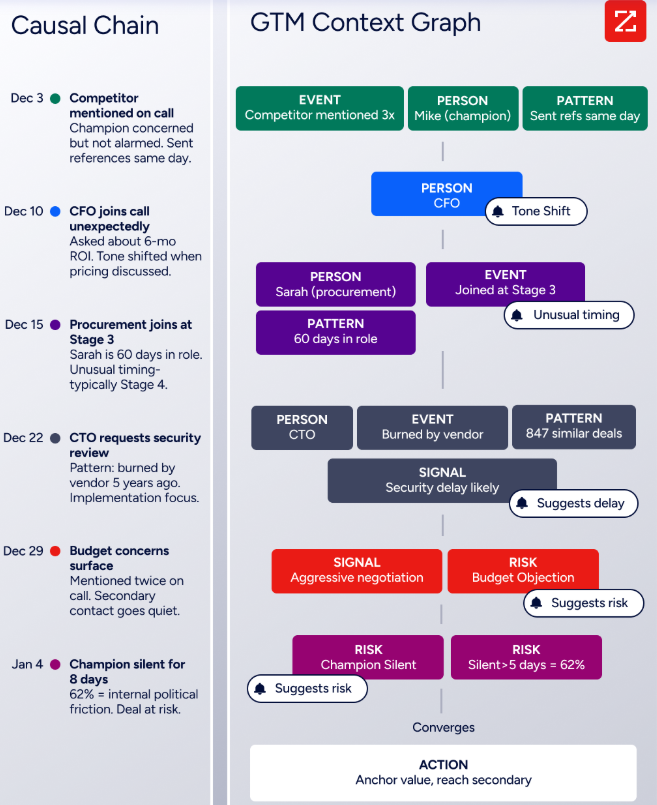
This data powers the GTM Context Graph, which processes 1.5B+ data points daily by unifying ZoomInfo's third-party data with your CRM records, conversation transcripts, and behavioral signals. The result is an intelligence layer that captures not just what happened in a deal, but why those outcomes happened.
Source: ZoomInfo
For a sales team using Zoho CRM or Close, adding ZoomInfo means every rep walks into every call with better information: verified direct dials that connect, company intelligence that reveals the org chart and tech stack, and intent signals that flag when a prospect is ready to buy.
Seismic's sales team attributed 39% of active pipeline to opportunities identified or influenced by ZoomInfo signals, reported 54% productivity gains, and saved 11.5 hours per week per seller. (Seismic Case Study)
AI capabilities take different approaches
All three platforms have invested in AI, but each applies it to a different problem.
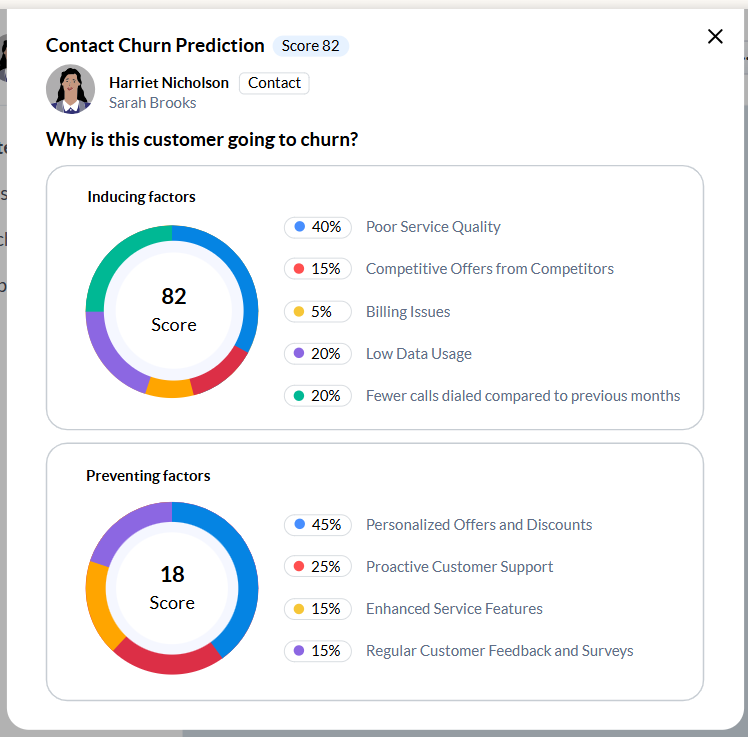
Zoho CRM's Zia spans the entire CRM. Zia scores rank leads by conversion likelihood. Churn prediction flags at-risk customers. Seven pre-built agents handle tasks from lead nurturing (SDR agent) to deal analysis and sales coaching. Zia can create CRM modules from natural language descriptions and build workflow rules from plain-language prompts. For teams that want AI to configure and operate their CRM, Zia goes deep.
Source: Zoho
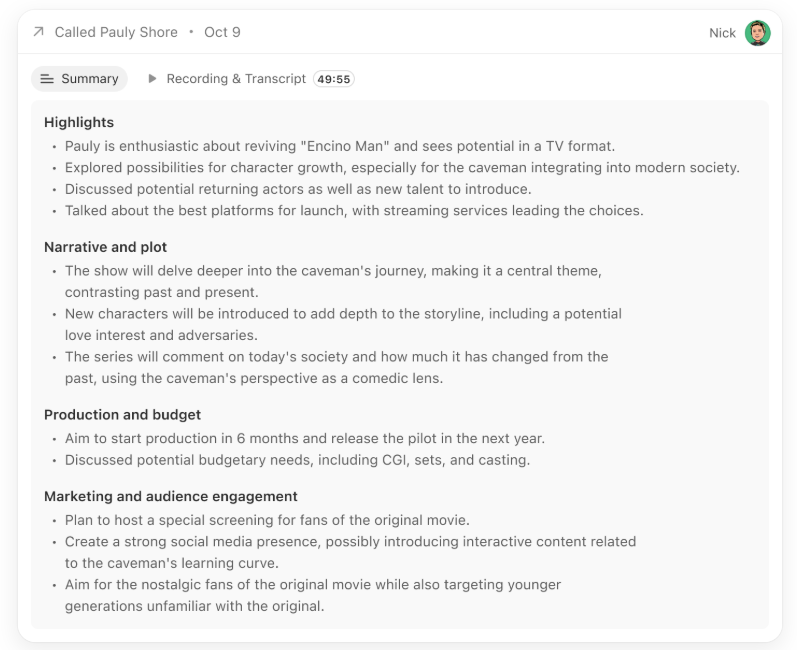
Close's AI focuses on the daily work of selling. The AI Call Assistant transcribes and summarizes calls in over 20 languages. AI Enrich pulls data from the web to fill in lead and contact fields at $0.05 per enrichment, with confidence scoring that shows how reliable each result is. The email rewriting assistant adjusts tone and drafts follow-ups. Close also launched an MCP Server connecting the CRM to AI assistants like Claude and ChatGPT.
Source: Close
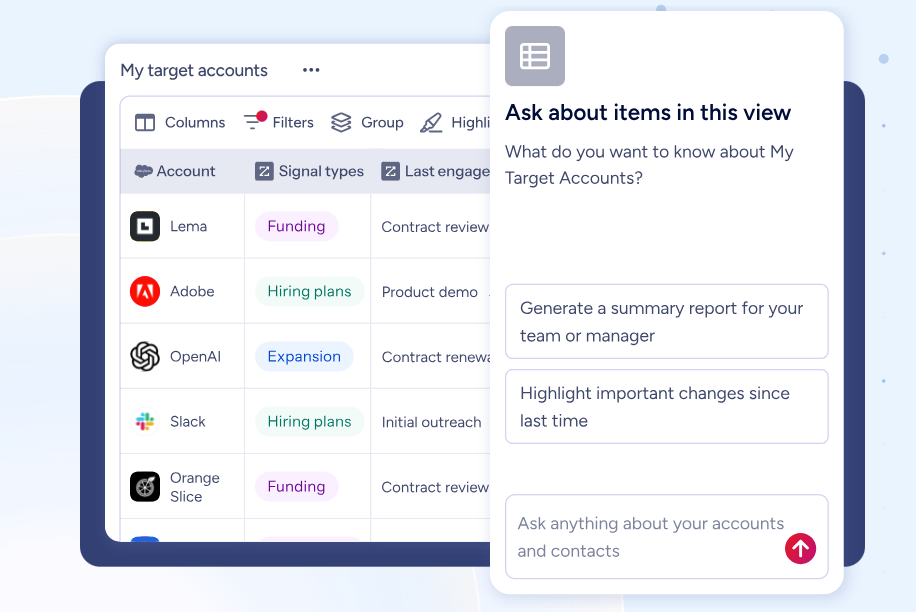
ZoomInfo's AI operates at a different level. The GTM Context Graph doesn't just analyze your CRM data. It reasons across your CRM, conversation intelligence, intent signals, and ZoomInfo's B2B database at once. In GTM Workspace, AI agents research accounts, draft personalized outreach from full account context, monitor buying signals, and surface next best actions.
Source: ZoomInfo
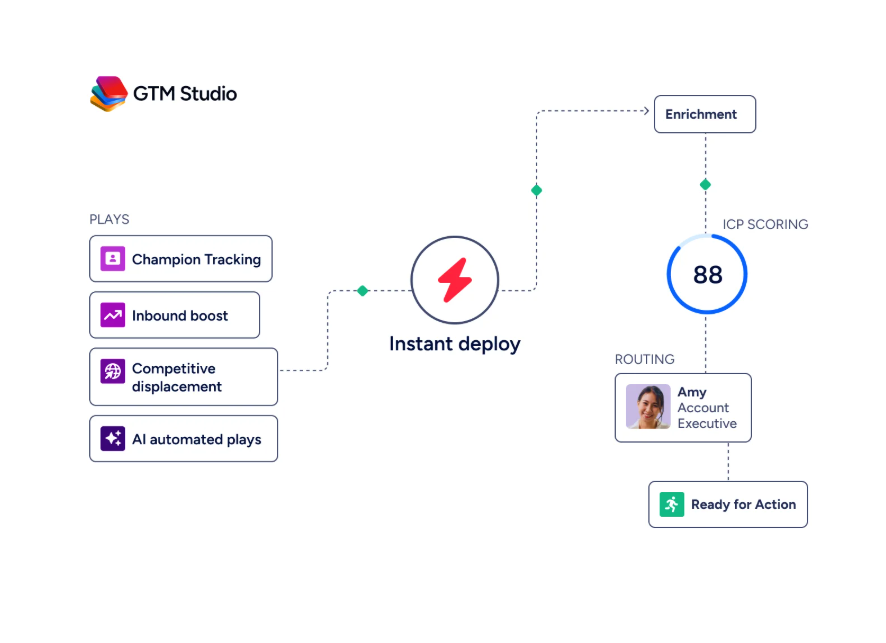
In GTM Studio, marketers describe audiences in natural language and launch multi-channel plays that improve as prospects respond.
Source: ZoomInfo
The difference shows in practice. Zoho's Zia helps you work smarter inside your CRM. Close's AI cuts the manual work of selling. ZoomInfo's AI tells you which accounts to prioritize and why, then helps you act on that intelligence across every channel.
"ZoomInfo's not just a contact data company anymore. They've built a full system of execution. GTM Intelligence works the list, writes the outreach, triggers the play, and helps drive predictable growth." (Ian Brodie, CEO & Co-Founder, Levanta)
Communication tools reveal each platform's focus
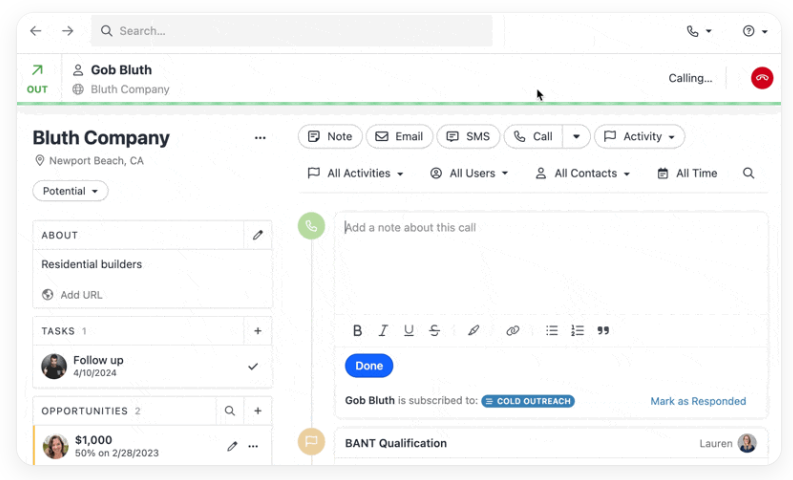
Close leads here. One-click calling from any lead page, call recording with 30-90 day retention, voicemail drop, call transfer with whisper and barge, and international calling to nearly 200 countries are all built in.
Source: Close
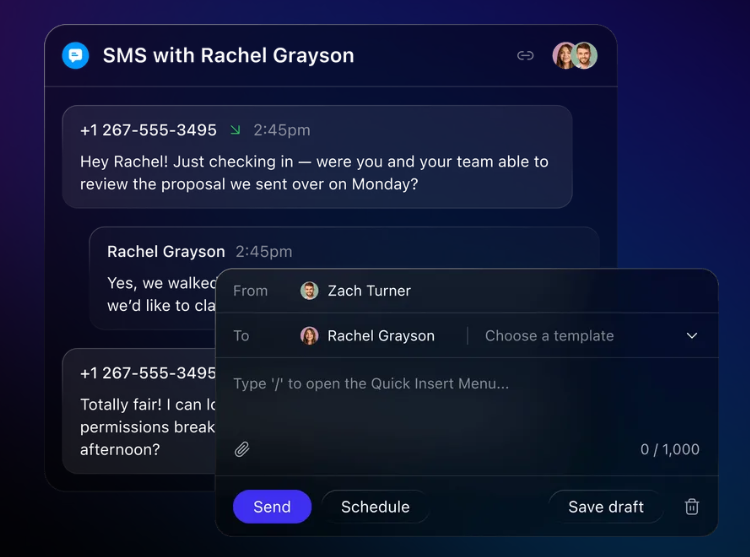
SMS achieves 90%+ open rates with 45% reply rates. Email includes two-way sync, bulk campaigns with personalization, scheduling, and open tracking. For a 10-person sales team making outbound calls all day, Close replaces what would otherwise require three or four separate tools.
Source: Close
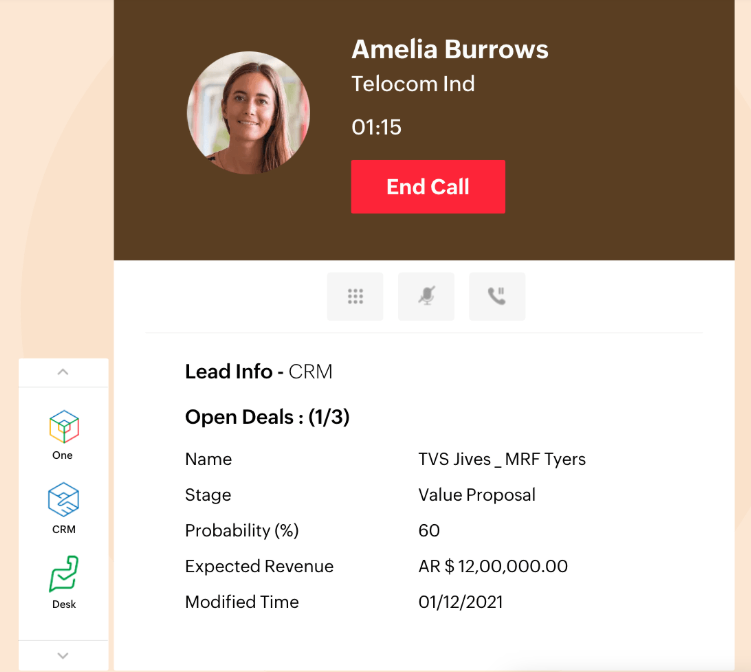
Zoho CRM takes a broader but less integrated approach. Phone calls run through Zoho Voice or any compatible cloud telephony provider via PhoneBridge. Email syncs with your existing client.
Source: Zoho
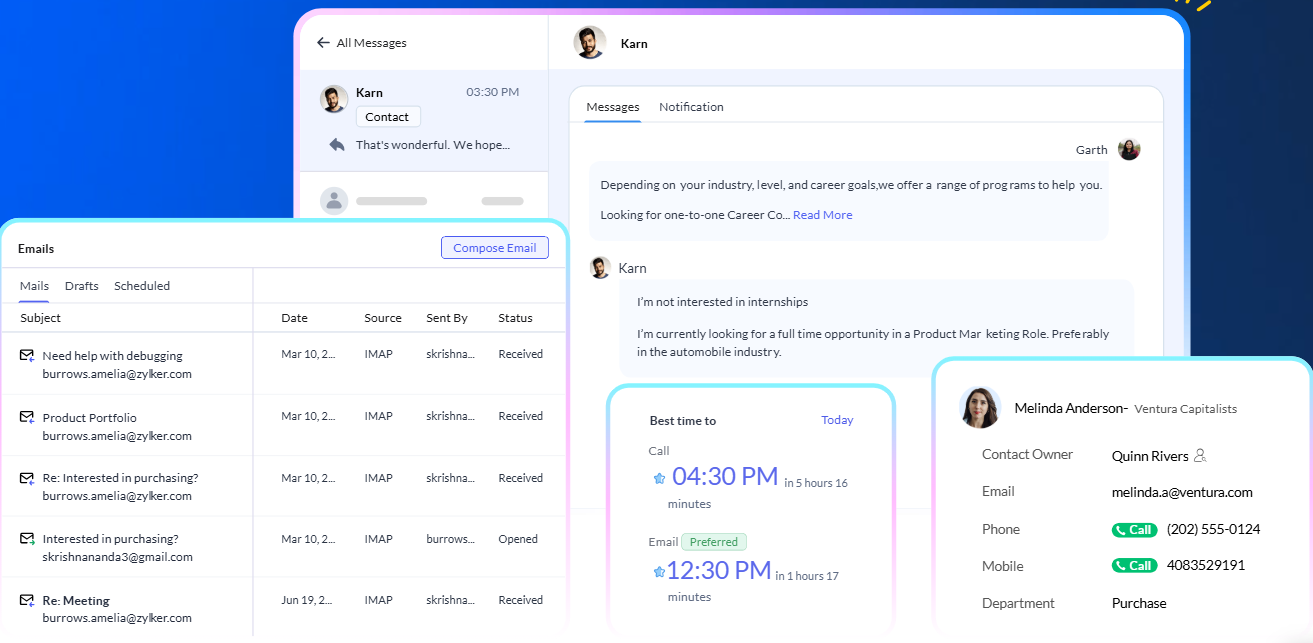
The platform adds Facebook, X (Twitter), WhatsApp Business, LINE for Business, and SMS as tracked channels. On Enterprise and Ultimate plans, Zia applies call transcription, sentiment analysis, and emotion detection to recorded calls. SalesSignals sends real-time notifications when prospects engage across any channel. The coverage is wider than Close's, but calling isn't as tightly woven in or as fast to use.
Source: Zoho
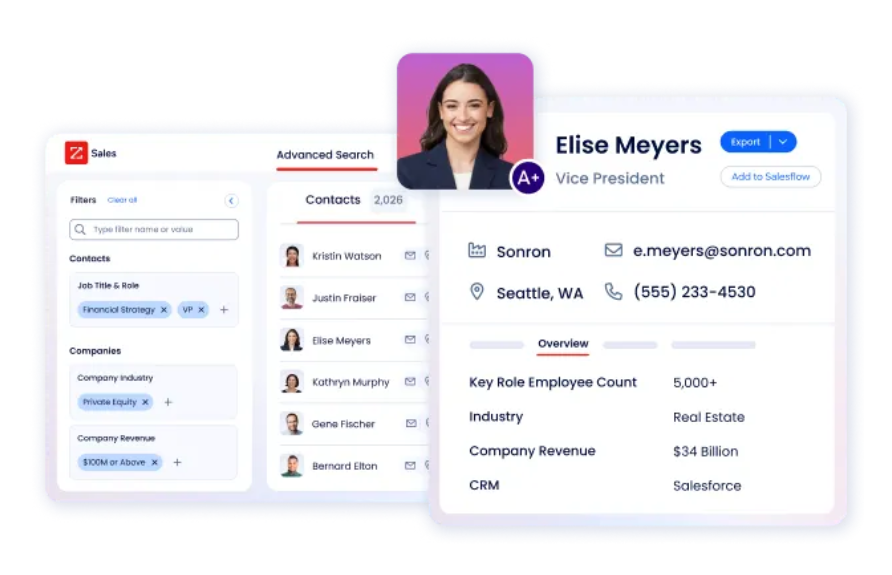
ZoomInfo approaches communication differently. Rather than being the tool you send messages from, ZoomInfo is the intelligence that makes those messages land. 120M direct-dial phone numbers mean your reps connect on the first attempt more often.
Source: ZoomInfo
200M+ verified business email addresses mean fewer bounces and better deliverability. GTM Workspace includes AI-generated outreach and intelligent dialing, and the data flows into Close, Zoho CRM, or any other platform your team already uses.
Automation and process management compared
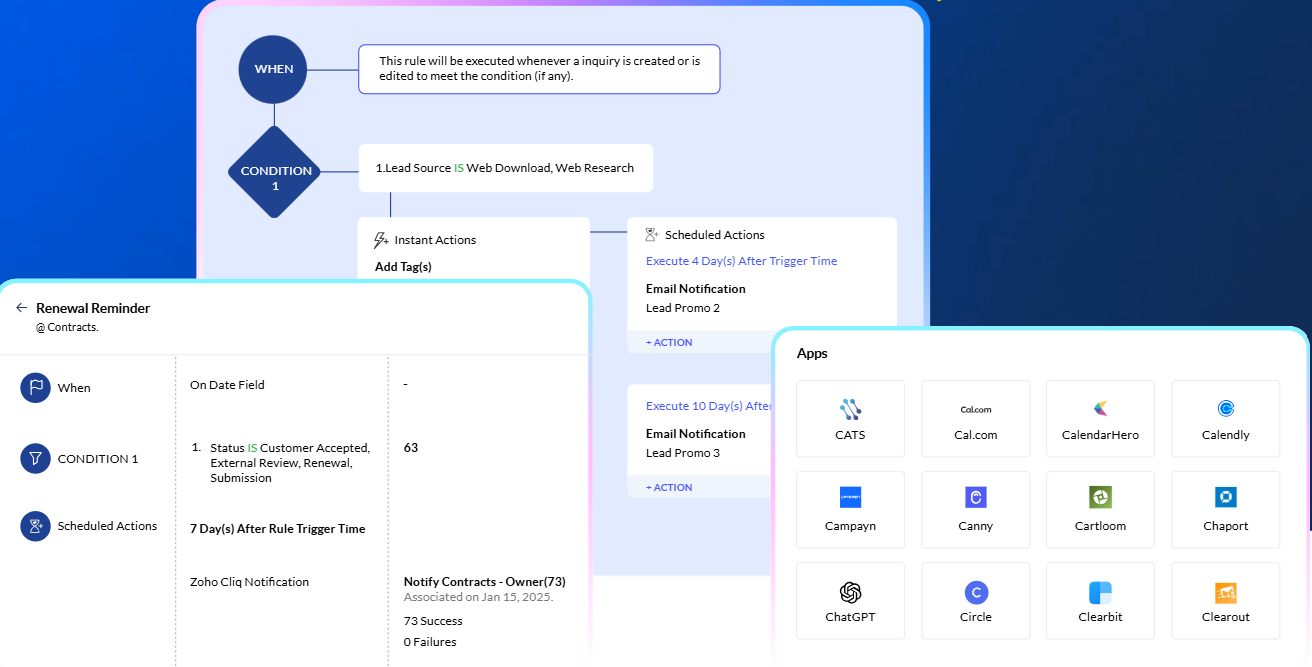
Zoho CRM has the most layered automation system of the three. Workflow Rules handle trigger-based actions (up to 2,500 rules per org). Blueprint goes further by preventing reps from advancing a deal unless they've completed required steps, entered required fields, or obtained required approvals. Cadences automate multichannel follow-up sequences.
Source: Zoho
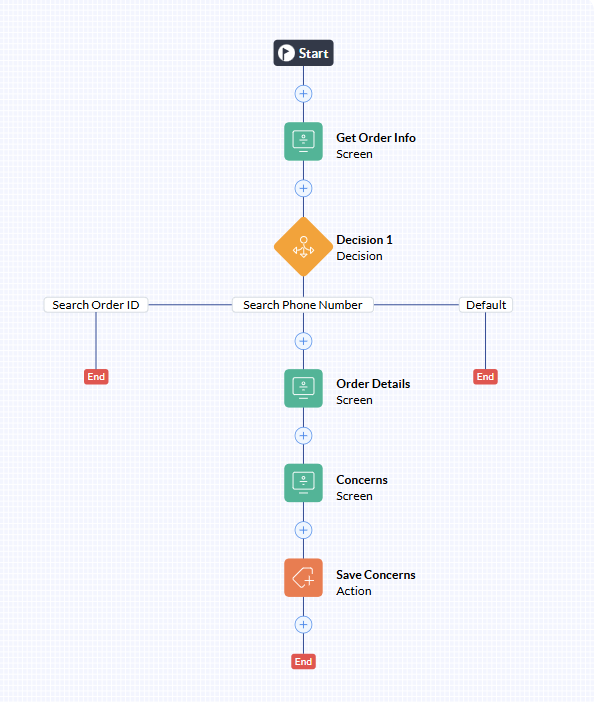
CommandCenter orchestrates customer journeys across departments. And Kiosk Studio builds custom interactive UI flows without code. For organizations that need process governance (not just automation), Zoho's layered approach is hard to match at this price.
Source: Zoho
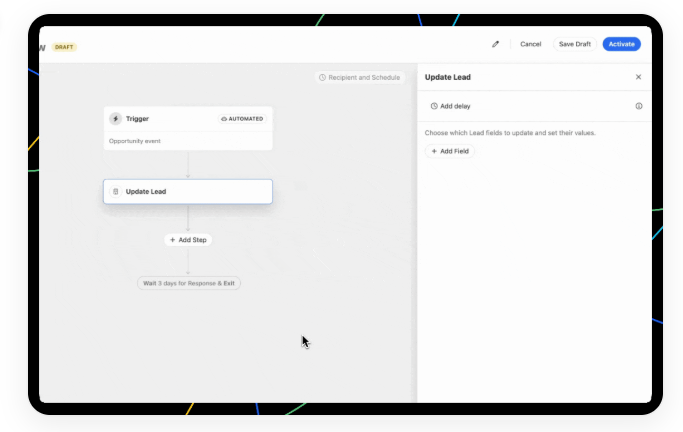
Close keeps automation simpler. Workflows automate follow-ups, task creation, lead routing, and CRM data updates, triggered by events like lead creation, opportunity changes, or form submissions. Each workflow supports delays and communication windows with timezone detection.
Source: Close
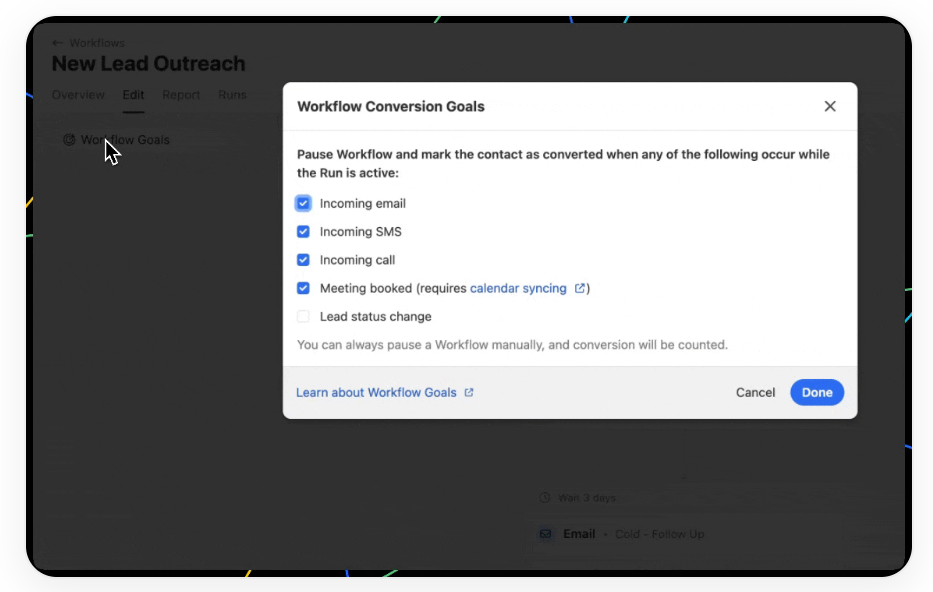
Workflow Goals pause sequences automatically when prospects respond, so reps don't follow up with someone who already replied. Workflows are available only on Growth and Scale plans ($99+/seat/month), which means Essentials users get no automation at all.
Source: Close
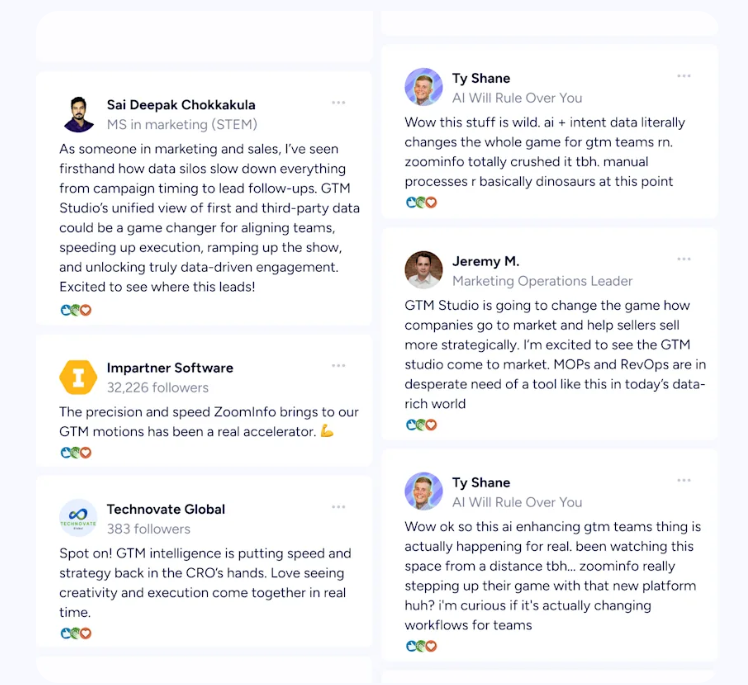
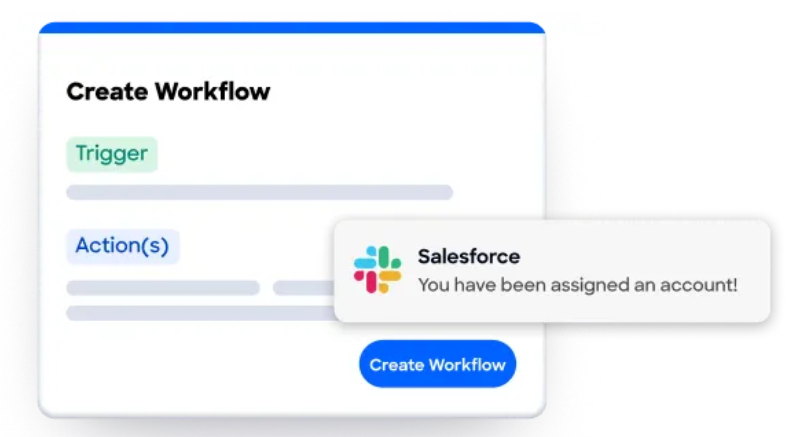
ZoomInfo automates at the intelligence layer. GTM Studio lets RevOps teams build and launch plays that run around the clock, triggered by intent signals, job changes, funding events, or competitive mentions. Expansion plays that used to take 3 weeks now launch in 30 minutes.
Source: ZoomInfo
Workflows in ZoomInfo's Operations product automate enrichment, lead routing, and CRM updates based on buying signals. These automations feed directly into whatever CRM your team uses, keeping your Zoho or Close data current and your reps focused on the right prospects.
Source: ZoomInfo
"It brings time back to our day, something we're all begging for. And it helps us reach the company's goals and get more clients faster." (William Kenimer, Vice President of Revenue Operations, Vensure)
Pricing structures reflect different bets
Zoho CRM is the most transparent and affordable. The free plan supports 3 users with core CRM features. Paid plans start at roughly $14/user/month (Standard, annual) and scale to about $52/user/month (Ultimate). Every plan offers month-to-month billing with no contracts required. Add-on costs exist for premium support, additional storage, and portal users, but the base pricing covers a lot of ground. A 10-person team on Enterprise would cost roughly $400/month. Zoho also promotes month-to-month contracts as a differentiator against competitors that lock buyers into multi-year agreements.
Close uses per-seat pricing with clear tiers. The Solo plan starts at $9/month (annual) for a single user with up to 10,000 leads. Essentials costs $35-49/seat/month for small teams. Growth at $99-109/seat/month adds workflows, Power Dialer, and AI features. Scale at $139-149/seat/month includes predictive dialer, role-based permissions, and custom objects. Beyond subscription fees, Close charges variable usage costs for calling (per-minute via Twilio), SMS, and phone number rentals. AI tools cost extra: Call Assistant runs $0.02/minute, AI Enrich costs $0.05 per field. A 10-person team on Growth would pay $990-1,090/month in seat costs alone, before telephony usage.
ZoomInfo uses custom, consumption-based pricing with no published rates. Costs scale with seats, credit volume, features, and contract length.
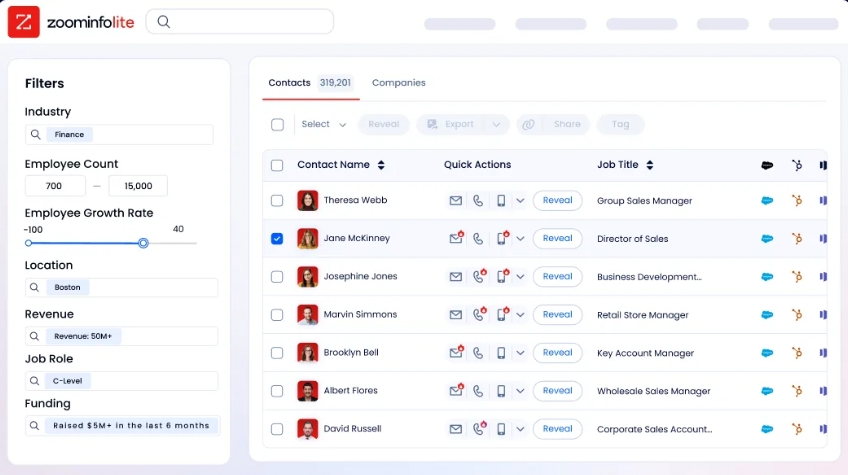
Annual contracts are standard. ZoomInfo is priced for enterprise and upper mid-market buyers, and its per-contact cost improves with scale. The investment pays off when you weigh the value of verified data, intent signals, and AI-driven execution against the cost of reps wasting time on outdated contacts and cold outreach to uninterested prospects. A permanent free tier, ZoomInfo Lite, gives access to the B2B database with 10 monthly export credits and basic features at no cost.
Source: ZoomInfo
Integration and ecosystem comparison
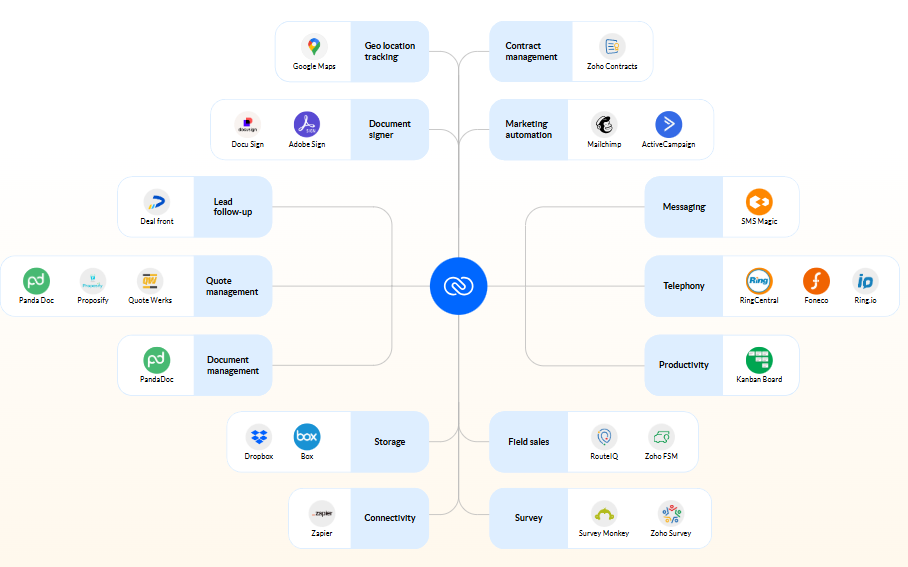
Zoho CRM has the deepest ecosystem. Beyond 1,100+ pre-built integrations in the Marketplace, Zoho CRM connects natively with Zoho Books, Zoho Campaigns, Zoho Analytics, Zoho Desk, and Zoho Projects. For teams already using Zoho products, the CRM becomes the hub of an integrated business system. For teams outside the Zoho ecosystem, G2 users report integration friction when connecting to non-Zoho systems, particularly in complex enterprise environments.
Source: Zoho
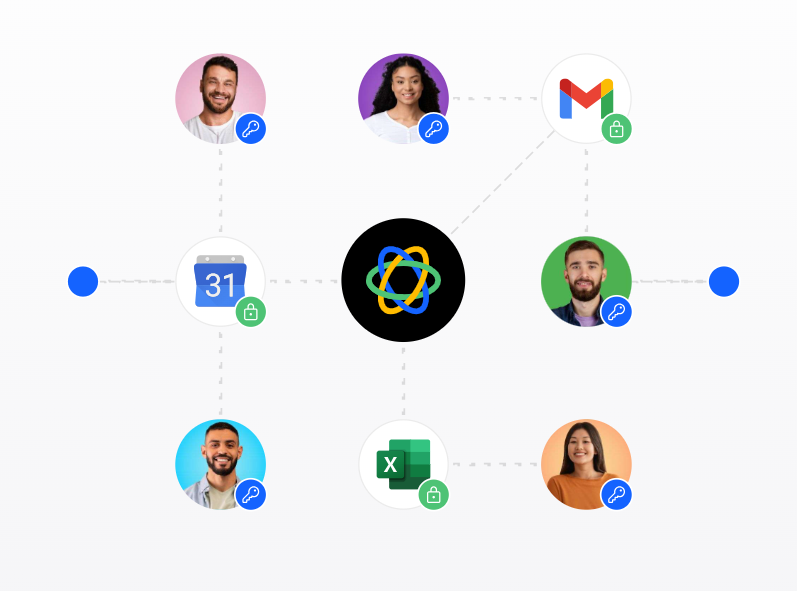
Close provides 100+ integrations including native, no-code, and Zapier options covering the tools sales teams use most: Calendly, Zoom, Slack, and Microsoft 365. The REST API supports custom integrations with webhook notifications, event logs, and OAuth authentication. Close's MCP Server connects the CRM to AI assistants. The ecosystem is smaller than Zoho's, but it covers what small sales teams actually need.
Source: Close
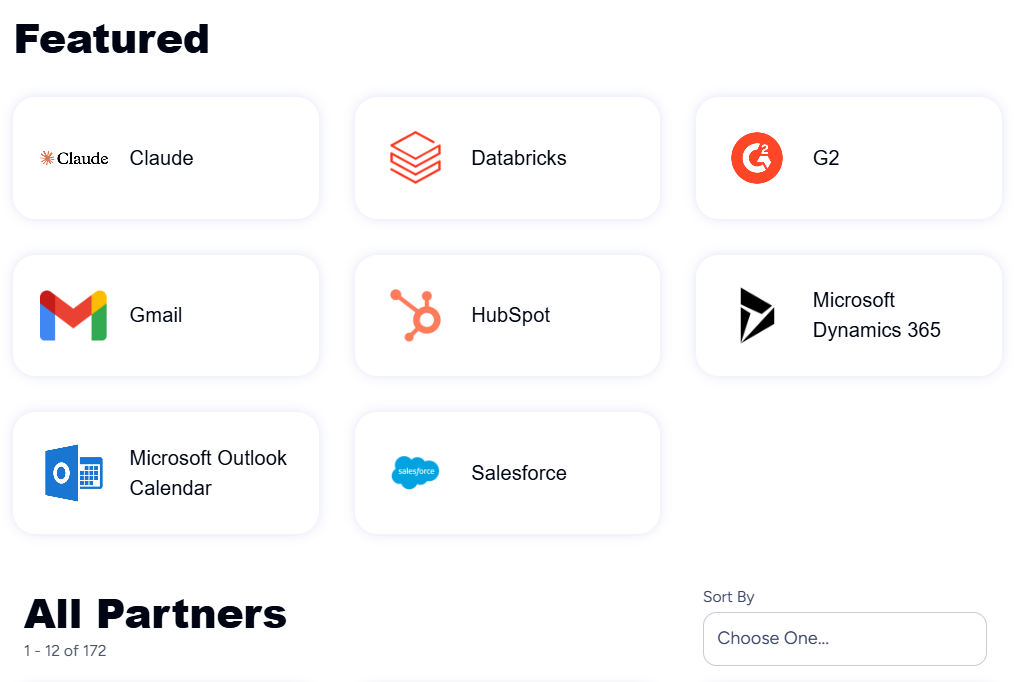
ZoomInfo integrates with major CRM and engagement platforms, including Salesforce, HubSpot, Microsoft Dynamics 365, and Zoho, through its App Marketplace of 120+ integrations.
Source: ZoomInfo
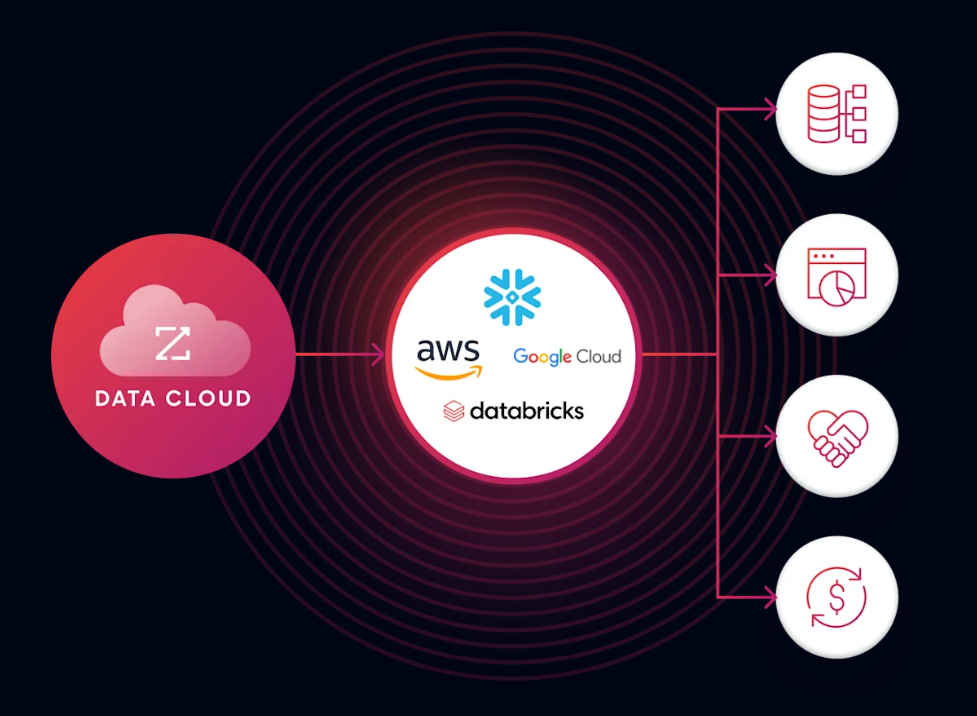
The Enterprise API provides programmatic access to ZoomInfo's data and GTM Context Graph. API access is included in all relevant plans, and the MCP server lets AI agents and custom applications query ZoomInfo data natively. Cloud Partners deliver data directly into AWS, Google Cloud, Snowflake, and Databricks.
Source: ZoomInfo
"The plug-and-play aspect of the API means I can integrate it very easily into any process and get information at a moment's notice." (Jerry Wilson, Senior Marketing Intelligence Analyst, BDO Canada)
Security and compliance posture
All three platforms take security seriously, but the depth varies.
Zoho CRM carries a broad certification portfolio: ISO/IEC 27001, ISO/IEC 27701, ISO/IEC 27017, ISO/IEC 27018, SOC 2 Type 2, SOC 1 Type 2, and SOC 2 + HIPAA Type 2. The platform is GDPR compliant with dedicated compliance features and supports HIPAA as a Business Associate.
Zoho runs its own data centers across the US, EU, India, Japan, China, Australia, Canada, Saudi Arabia, and South Africa, giving customers control over data residency. Privacy is central to its identity: bootstrapped since 1996, no customer data sold to advertisers.
Source: Zoho
Close maintains SOC 2 Type 2 compliance covering all five trust service principles, GDPR compliance as both Data Controller and Data Processor, and CCPA compliance. The platform commits to never sharing customer data with third parties without consent and provides HTTPS encryption and webhook signature verification for API security.
ZoomInfo holds ISO 27001, ISO 27701, SOC 2 Type II, TRUSTe GDPR, and TRUSTe CCPA certifications, all renewed annually. As a company that handles B2B contact data at scale, ZoomInfo operates as a registered data broker in California and Vermont and maintains a dedicated Trust Center.
Source: ZoomInfo
Zoho CRM vs. Close vs. ZoomInfo: Which should you choose?
The right choice depends on what's actually limiting your sales performance today.
Choose Zoho CRM if:
You need a full business platform covering sales, marketing, support, and operations
Your team includes 10+ people across multiple departments
You want customization and process enforcement without enterprise pricing
You're already using (or plan to use) other Zoho products
You have the admin resources to configure and maintain a feature-rich system
Choose Close if:
Your sales team is small (1-25 people) and outbound-heavy
Reps spend most of their day on calls and email
Speed and simplicity matter more than customization
You want built-in calling, SMS, and email without third-party tools
You need a CRM that's productive on day one with minimal training
Choose ZoomInfo if:
Your biggest bottleneck is finding the right prospects, not managing them
You need verified contact data and direct dials that connect
Knowing when accounts are in-market would change how your team sells
You want AI that reasons across your pipeline data, conversation history, and market signals
You need intelligence that works inside your existing CRM, not a replacement for it
Start with ZoomInfo Lite for free, or request a demo to see the full platform.
The most effective teams don't treat this as either-or. They pair strong CRM execution (whether Zoho CRM's breadth or Close's speed) with the prospect intelligence and buying signals ZoomInfo provides. A CRM manages your pipeline. ZoomInfo fills it with the right opportunities at the right time. Together, they build a sales system where reps spend less time searching and more time selling.
Zoho CRM vs. Close vs. ZoomInfo FAQ
What is the fundamental difference between Zoho CRM, Close, and ZoomInfo?
Zoho CRM is a full business platform covering sales, marketing, support, and operations with customization and process enforcement. Close is a communication-first CRM built for small B2B sales teams that need built-in calling, SMS, and email without switching tools. ZoomInfo is a B2B data and intelligence platform that provides verified contact data for 500M contacts and 100M companies, buying intent signals, and AI-driven execution to help teams find and engage the right prospects.
Which platform is cheapest for a small sales team?
Zoho CRM offers the lowest entry point with a free plan for up to 3 users and paid plans starting at about $14/user/month. Close starts at $9/month for a single user on the Solo plan, but most teams need the Essentials plan at $35-49/seat/month, plus variable calling and SMS costs. ZoomInfo uses custom pricing but offers ZoomInfo Lite as a permanent free tier with 10 monthly export credits for individual prospecting.
Can ZoomInfo work with Zoho CRM or Close?
Yes. ZoomInfo integrates with major CRM platforms, and API access is included in all relevant plans. ZoomInfo's data can enrich records in either CRM, providing verified contact information, company data, and buying signals. The MCP server also lets AI agents query ZoomInfo data from within other tools.
Which platform has the best built-in calling features?
Close leads in native calling, with a built-in Power Dialer, Predictive Dialer, call recording, voicemail drop, whisper, barge, and international calling to nearly 200 countries. Zoho CRM offers calling through Zoho Voice or third-party telephony providers via PhoneBridge. ZoomInfo provides intelligent dialing through GTM Workspace and, more importantly, the verified direct-dial phone numbers (135M+ verified, 120M direct dials) that make every call more likely to connect.
Which platform is best for teams that need both sales and marketing tools?
Zoho CRM is the strongest option for teams needing both in one system, with built-in marketing automation, social media management, and native integration with the broader Zoho ecosystem of 60+ applications. Close has no marketing capabilities. ZoomInfo's GTM Studio serves marketers and RevOps teams with audience building, multi-channel orchestration, and account-based marketing, but it focuses on GTM intelligence rather than traditional marketing automation.
How do the AI capabilities compare across the three platforms?
Zoho CRM's Zia covers predictive lead scoring, churn prediction, email sentiment analysis, and seven pre-built agents including an SDR agent and sales coach. Close's AI focuses on call transcription and summaries, data enrichment at $0.05 per field, and email rewriting. ZoomInfo's AI operates at a broader level, with a GTM Context Graph that reasons across CRM data, conversation intelligence, and market signals to surface prioritized accounts, buying committees, and AI-drafted outreach through GTM Workspace.
Which platform provides B2B prospecting data?
Only ZoomInfo provides a native B2B prospecting database, with 500M contacts, 100M companies, 135M+ verified phone numbers, and 200M+ verified business emails. Zoho CRM and Close both manage existing prospect data but do not include third-party prospecting databases. Teams using Zoho or Close typically rely on a separate data provider like ZoomInfo to fill their pipeline.
Which platform is best for enterprise organizations?
Zoho CRM scales to enterprise use with territory management, up to 500 custom modules on the Ultimate plan, 99.99% uptime SLA, and support for 50,000+ users in a single org. Close is designed for small to mid-sized teams and lacks the customization enterprise buyers typically require. ZoomInfo serves enterprise and upper mid-market organizations with 35,000+ companies (including Adobe, Snowflake, and Thomson Reuters), and its GTM Context Graph handles the data volumes and complexity that enterprise sales teams work with.
More Zoho CRM comparisons:
