

Choosing between ZoomInfo and Highperformr for your go-to-market intelligence comes down to five questions:
Do you need a full GTM platform covering sales, marketing, and operations, or a focused tool built around social selling and intent signals?
Is your priority verified B2B data at scale, or real-time social engagement signals from LinkedIn and X?
Do you need conversation intelligence, ABM, and multi-channel orchestration built in, or is social publishing with lead identification enough?
Are you an enterprise team that needs analyst-validated, compliance-certified infrastructure, or a mid-market team looking for a fast signal-to-outreach loop?
Do you want to power custom AI agents and third-party tools with your data via APIs and MCP, or work within a single platform interface?
In short, here's what we recommend:
Highperformr is a social-first GTM intelligence platform that combines social media publishing, employee advocacy, and real-time intent signals from LinkedIn and X into one workflow. With 450M+ contacts and 54M companies in its database (expanding to 700M+ contacts via waterfall enrichment), it helps RevOps and marketing teams surface buying signals from social engagement, track job changes, monitor competitor interactions, and route enriched leads to CRM. Its unlimited-user pricing model and fast onboarding (as quick as one day for SMBs) make it accessible for growing B2B teams. But social coverage is limited to LinkedIn and X, enterprise pricing isn't public, and the company is pre-Series A with no analyst recognition yet.
ZoomInfo is an AI GTM platform built on the largest B2B data foundation in the industry: 500M contacts, 100M companies, 135M+ verified phone numbers, and 200M+ verified business email addresses. Its GTM Context Graph, which processes 1.5B+ data points daily, unifies this data with your CRM records, conversation transcripts, and behavioral signals to reveal not just what happened in your accounts, but why. Teams access this intelligence through GTM Workspace for sellers, GTM Studio for marketers and RevOps, or the API and MCP in any third-party tool. ZoomInfo's custom pricing and broader feature set require more investment, but its verified accuracy (up to 95% on first-party data) and enterprise track record with 35,000+ customers make it well suited for teams that need full GTM coverage.
Both platforms help sales teams find and engage the right buyers. The difference is scope: Highperformr focuses on social signals and publishing as the entry point to prospecting, while ZoomInfo provides the data foundation, intelligence layer, and multi-channel execution for the entire go-to-market motion.
ZoomInfo vs. Highperformr at a glance
Highperformr | ZoomInfo | |
|---|---|---|
Core Focus | Social-first GTM signals and engagement | AI GTM Platform |
Database Size | ||
Verified Phone Numbers | Not specified | |
Primary Signal Source | LinkedIn and X social engagement | 210M IP-to-Org pairings, 6T+ keyword pairings monthly, plus social and CRM signals |
Social Publishing | Built-in with AI content generation | Not included |
Conversation Intelligence | Not included | Chorus (native) |
ABM / Advertising | Not included | |
AI Agent Access | Internal AI agents (Prospectr, Engagr, Outreachr) | |
CRM Integrations | Salesforce, HubSpot, Pipedrive (Enterprise tier) | Salesforce, HubSpot, Dynamics 365, 120+ marketplace integrations |
Pricing Transparency | Published for social plans; credits-based for GTM | Custom-quoted; free Lite tier available |
Company Stage | ||
Analyst Recognition | None | Gartner MQ Leader (ABM), Forrester Wave Leader (Intent Data) |
Best For | Mid-market B2B teams using social selling | Enterprise and mid-market teams needing full GTM intelligence |
The core difference: Social-first signals vs. full GTM intelligence
The difference between these platforms is where the intelligence starts and how far it extends.
Highperformr was built on the premise that social media behavior is the most timely source of buying intent.
Founded in July 2023 by Srivatsan Venkatesan and Ramesh Ravishankar (both former Freshworks executives who built the Freshsales CRM), the platform launched as a GenAI-powered social media management tool before pivoting toward GTM intelligence.
That origin still shapes its architecture: social publishing, employee advocacy, and audience analytics feed directly into lead identification and enrichment.
The company calls itself the "System of Intelligence" in a company's GTM tech stack, using first-party social signals to surface buyers that traditional intent data misses.
This social-first approach has a real advantage. When a prospect comments on a competitor's LinkedIn post, shares content about a problem your product solves, or changes jobs to a target account, Highperformr detects that behavior and attaches it to an enriched contact profile.
Most traditional intent vendors work with anonymous web visit data. Highperformr works with named, verified individuals engaging on social platforms.
ZoomInfo started from a different premise.
Founded in 2007 by Henry Schuck, the company spent nearly two decades building the largest B2B data platform in the industry, verified by 300+ human researchers and validated by Gartner, Forrester, G2, and independent Fortune 500 evaluations.
That data foundation (contacts, companies, phone numbers, emails, company attributes, technographics, org charts) is the starting point, not the destination.
On top of this data, ZoomInfo built the GTM Context Graph, an intelligence layer that combines its third-party B2B data with customers' CRM records, conversation intelligence from Chorus, email interactions, and behavioral signals.
The graph captures not just what happened in a deal, but why it happened, letting AI surface connections between signals and outcomes instead of alerting on keyword triggers alone.
The result:
Highperformr provides a tight loop from social engagement to lead enrichment to outreach.
ZoomInfo provides the full infrastructure (data verification, contextual intelligence, multi-channel execution) across every GTM function.
Highperformr focuses on social selling and signal detection
Highperformr organizes its platform around five pillars: Intent Signals, Engagement, Analytics, Orchestration, and CRM Enrichment. The thread connecting them is social: content published on LinkedIn and X generates audience data, that audience data surfaces ICP leads, and those leads flow into enrichment and outreach workflows.
The intent signals layer tracks job changes, new hires, promotions, past champion movements, social media interactions, and competitor engagement.
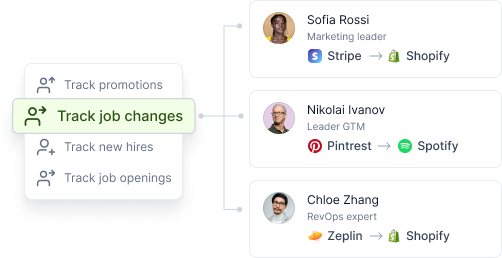
Source: Highperformr
Three AI agents handle the workflow: Prospectr for lead surfacing, Engagr for context and personalization, and Outreachr for automated execution.
The CompKillr feature detects when target buyers engage with rival vendors and triggers response plays with verified contact details claiming less than 5% bounce rate.
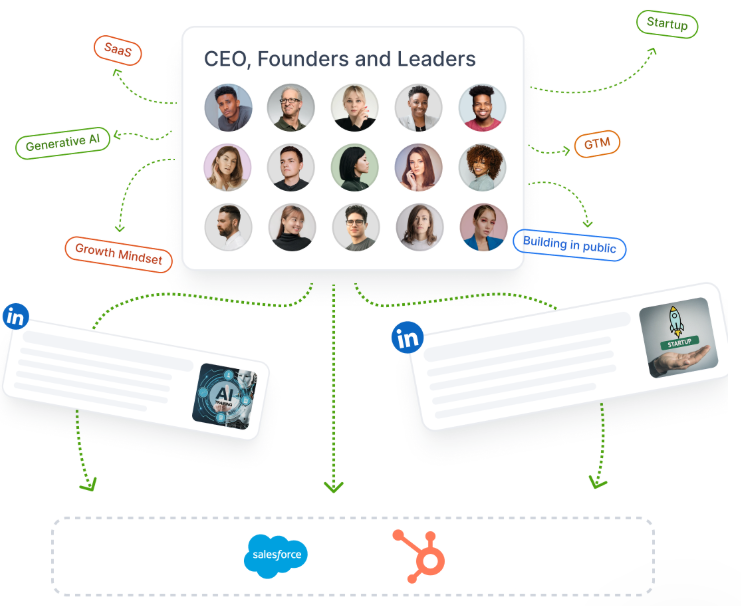
Source: Highperformr
The social engagement layer includes a Kanban-style content planner, AI-powered post generation matched to each user's writing style, employee advocacy tools that repurpose brand content for individual employee accounts, and audience intelligence that identifies ICP leads from your social engagers.
The Social AI Copilot can generate a month's worth of posts from keywords, news, or trending topics.
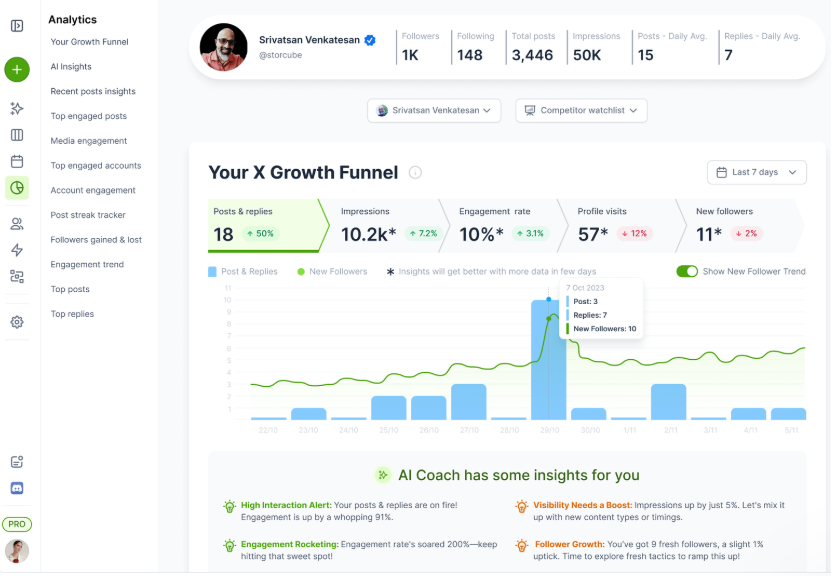
Source: Highperformr
For CRM hygiene, Highperformr offers an AI agent called Janitr that auto-enriches CRM fields, standardizes values, and tracks champion movements in real time.
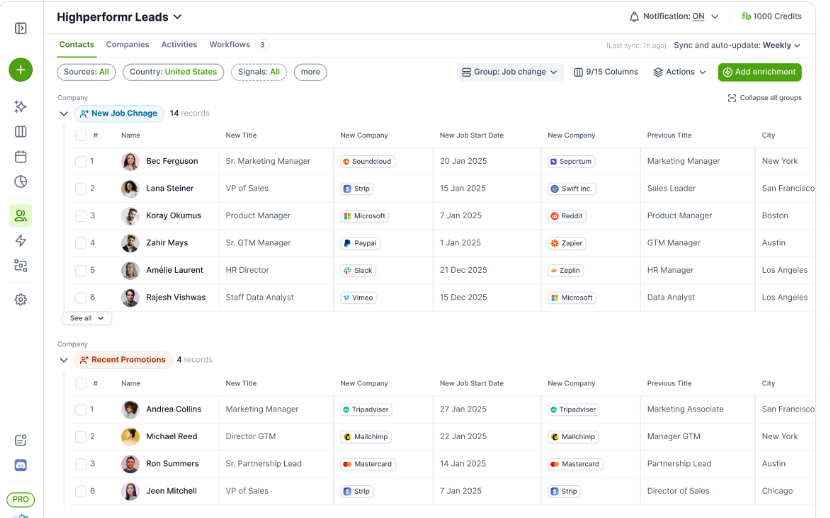
Source: Highperformr
The platform uses waterfall enrichment from multiple providers, reaching 700M+ contacts through its partner network. Reverse-IP resolution maps anonymous website visitors to named accounts.
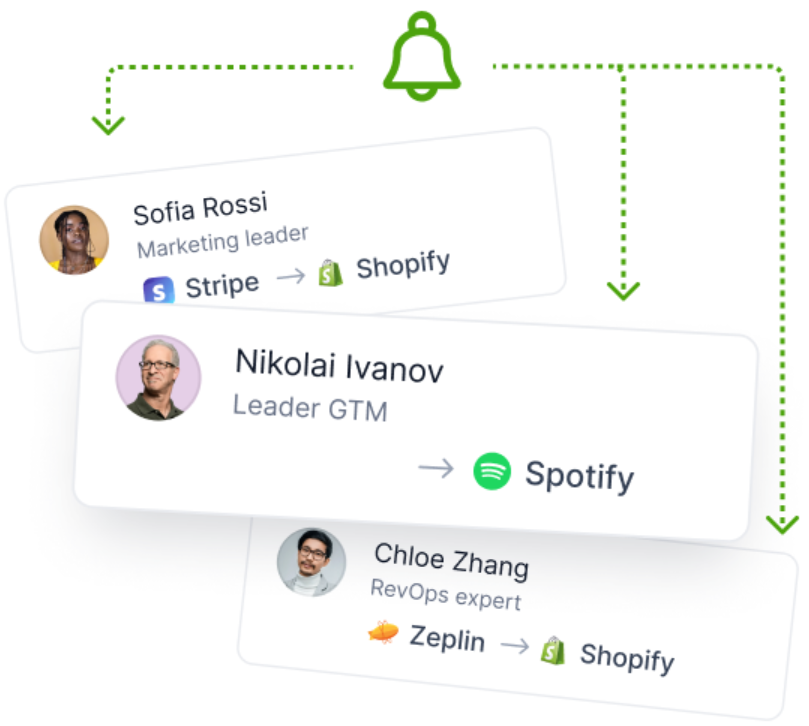
Source: Highperformr
Documented results include Everstage achieving 40% higher response rates, 25% more ABM campaign responses, and 60+ hours saved per month, and Hot Cognition seeing a 67% increase in LinkedIn engagement with a 49% ICP match rate from social-audience-sourced leads.
The limitations are clear. Social coverage covers LinkedIn and X only. No Facebook or Instagram support, which limits marketing teams with audiences on Meta platforms.
The platform lacks conversation intelligence, ABM advertising, and a native DSP. CRM integrations are locked to the Enterprise tier on the social publishing side, and Enterprise pricing is not publicly disclosed.
ZoomInfo provides full GTM coverage across data, intelligence, and execution
ZoomInfo operates at a different scale. The data layer spans 500M contacts, 100M companies, 135M+ verified phone numbers, 120M direct-dial phone numbers, and 200M+ verified business email addresses, with global coverage including 34M+ company profiles and 200M+ professional profiles outside North America.
Data flows through a collection and verification system combining automated ML scanning of 28 million site domains daily, third-party partner data, a community of 200,000+ users who share data back, and 300+ human researchers.
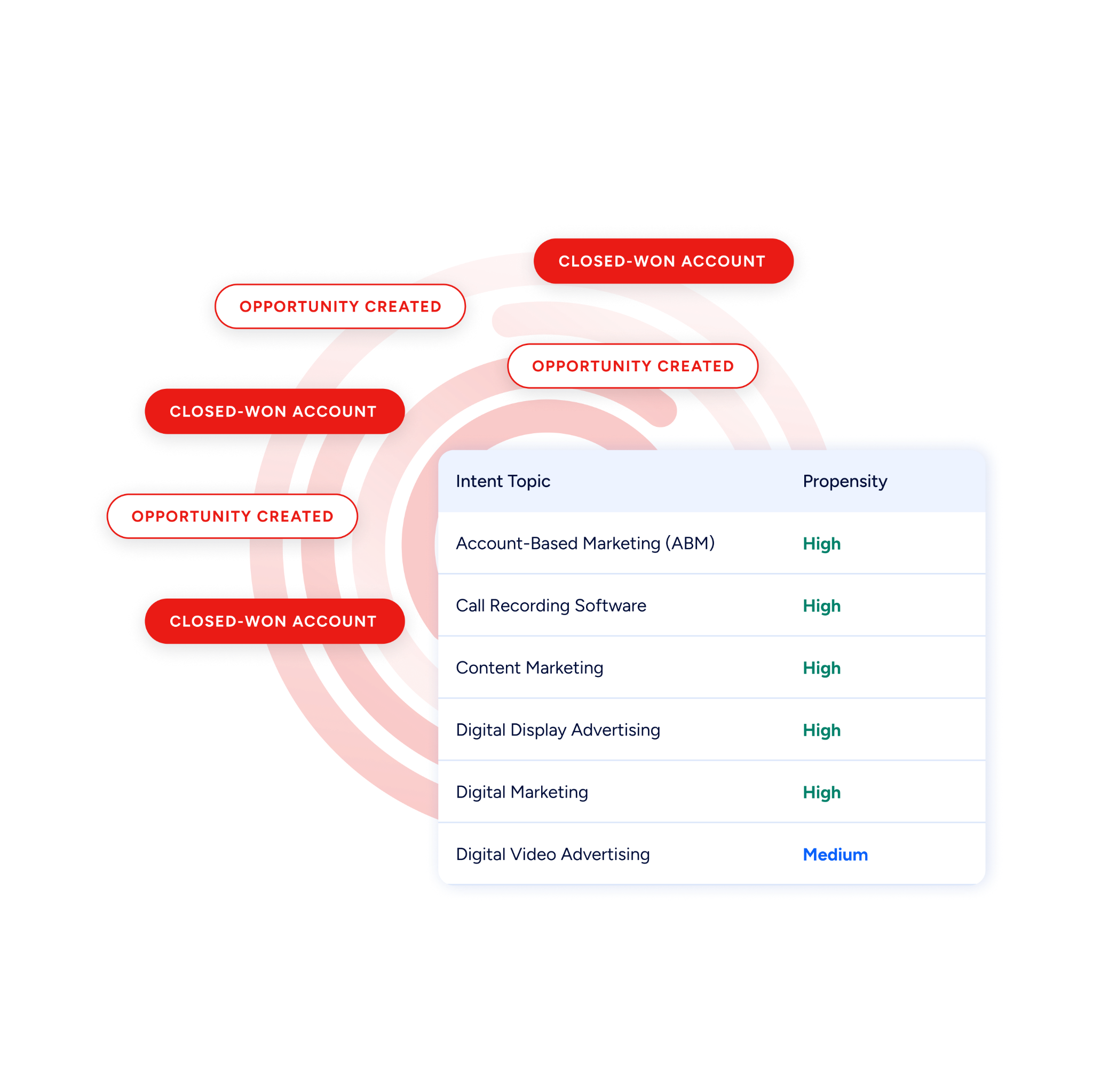
Beyond raw data, ZoomInfo's Buyer Intent tracks signals from 210 million IP-to-Organization pairings and 6 trillion+ new keyword-to-device pairings sourced monthly.
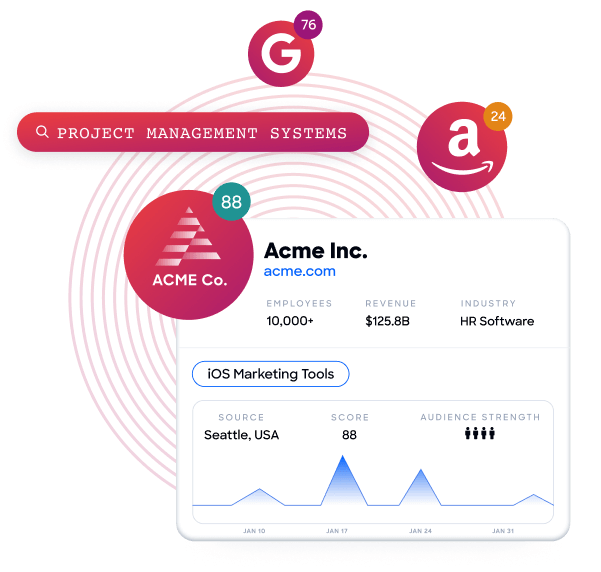
Guided Intent, exclusive to ZoomInfo, automatically identifies topics that historically correlate with deal success, rather than requiring you to guess which keywords matter.
The GTM Context Graph processes 1.5B+ data points daily and unifies all of this with customer CRM records, conversation transcripts from Chorus (ZoomInfo's conversation intelligence product), email threads, and product usage data.
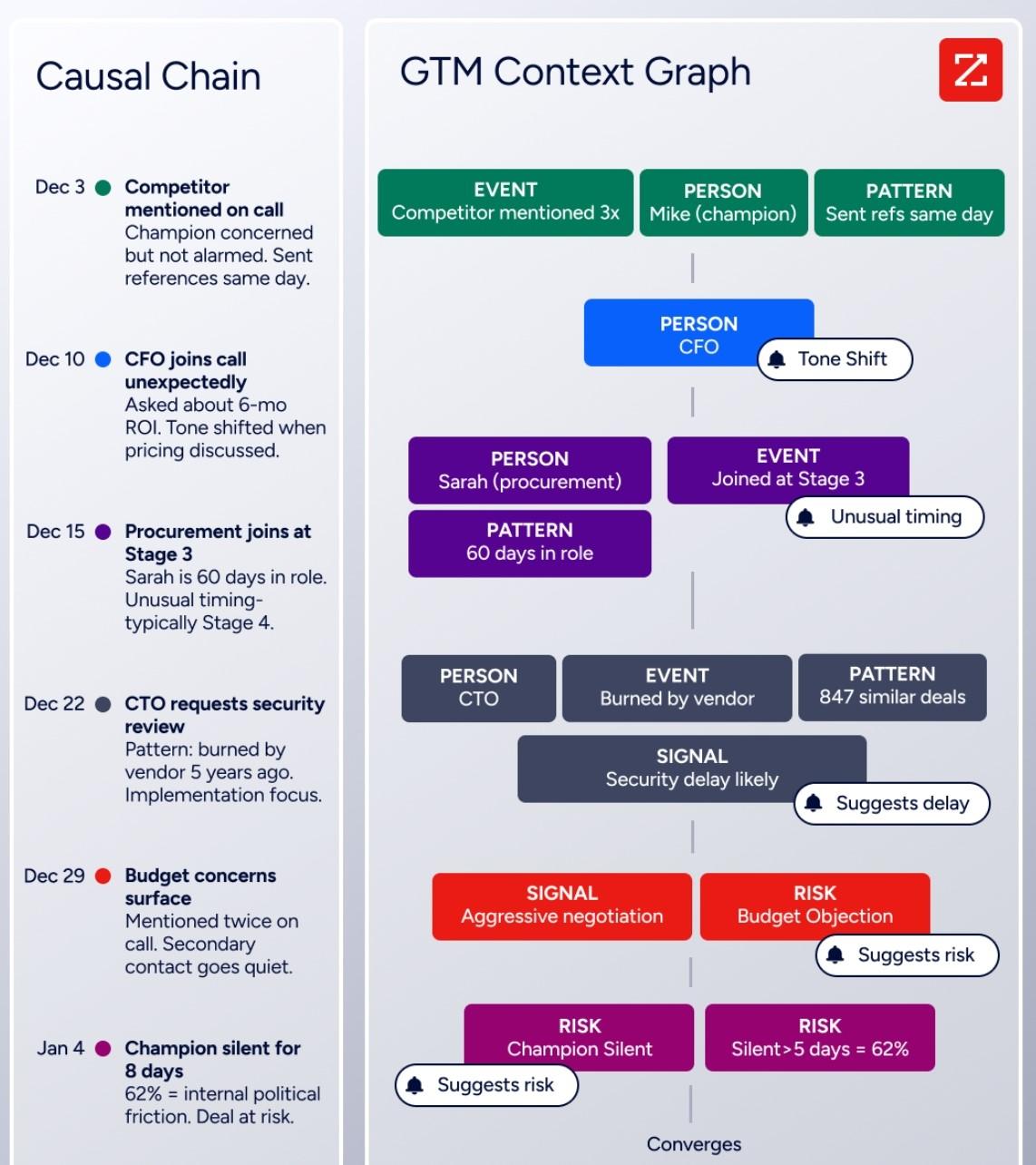
As ZoomInfo's CPO Dominik Facher put it: a CRM records that a deal moved from Stage 3 to Stage 4, but it has no record of why. The GTM Context Graph captures that context, connecting signals and outcomes across thousands of deals to sharpen predictions over time.
Teams access this intelligence through three paths. GTM Workspace gives sellers a single interface with prioritized accounts, AI-drafted outreach, and deal execution.
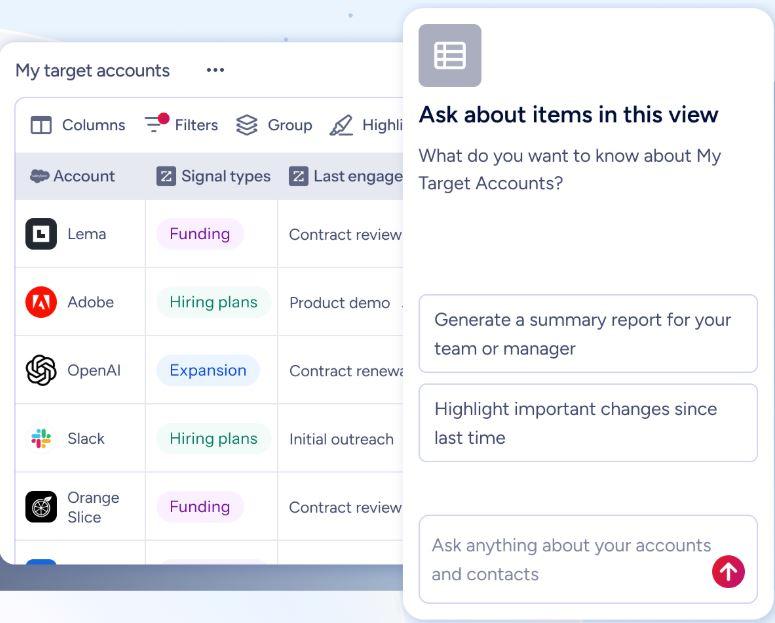
GTM Studio lets marketers and RevOps teams build audiences using natural language, launch multi-channel plays, and measure pipeline impact.
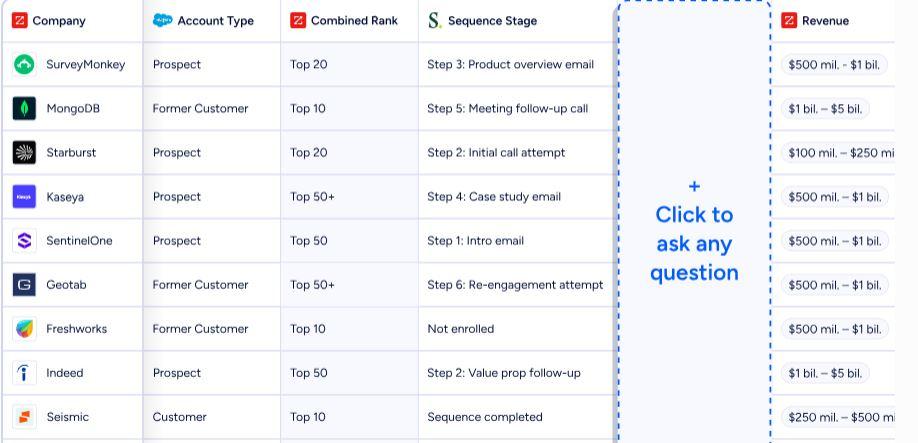
APIs and MCP expose the same intelligence to any custom agent, internal tool, or partner platform, from Anthropic Claude to proprietary systems.
The marketing layer includes a native demand-side platform for display advertising across major networks, plus audience targeting on LinkedIn, Meta, and Connected TV.
FormComplete reduces web forms to a single field by auto-appending data, with Smartsheet reporting a 40%+ increase in form fills and 84% increase in MQLs.
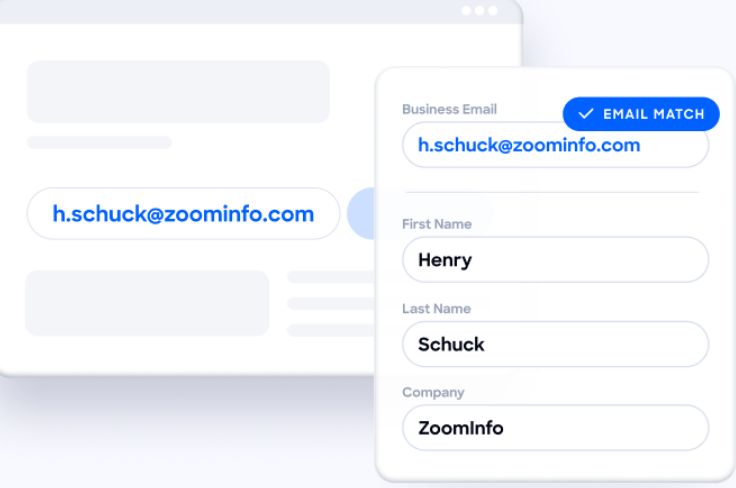
The operations layer provides automated deduplication, multi-vendor enrichment from approximately 60 vendors, and lead routing with territory rules.
ZoomInfo's enterprise credentials are well documented: Gartner Magic Quadrant Leader for ABM Platforms (2024 and 2025), Forrester Wave Leader for Intent Data Providers, 133 No. 1 rankings on G2, and results from customers like Seismic (54% productivity gain, 39% of pipeline attributed to ZoomInfo signals) and Snowflake (200% higher conversion rates on top-scoring accounts).
Data coverage and quality
The data comparison shows differences in both scale and verification depth.
Highperformr reports 450M+ contacts and 54M companies in its native database, expanding to 700M+ contacts through waterfall enrichment from 100+ partner and data sources. The platform claims bounce rates under 5% through automated verification. Phone numbers are available, though the total count of verified numbers isn't published.
Highperformr's data advantage is its social layer. By tracking who engages with what content on LinkedIn and X, Highperformr adds behavioral context that static databases lack. This helps identify prospects who are thinking about relevant topics, even if they haven't triggered traditional intent signals.
ZoomInfo maintains 500M+ contacts and 100M+ companies, with specific verification numbers: 135M+ verified phone numbers, 120M+ direct-dial phone numbers, and 200M+ verified business email addresses. The verification pipeline includes automated ML scanning of 28 million site domains daily and 300+ human researchers. First-party data reaches up to 95% accuracy.
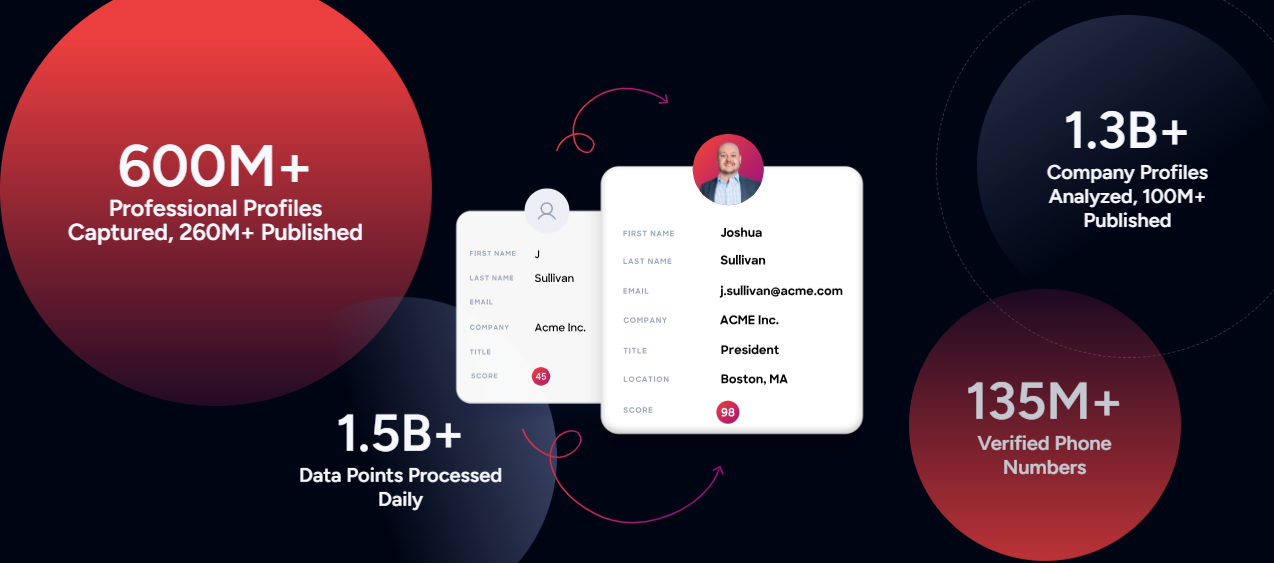
The depth extends beyond contacts. ZoomInfo profiles the tech stacks of 30+ million companies across 30,000+ technologies, provides org chart mapping with parent-child hierarchies, and delivers nine vertical datasets covering franchise ownership, restaurant operations, and commercial fleet intelligence.
The difference between these datasets is not just size but verification methodology.
Highperformr relies on partner waterfall enrichment and social signal correlation.
ZoomInfo runs a multi-source pipeline that was independently validated when a Fortune 500 consultant analyzing 25 million contacts across vendors concluded "no other competitor came even close".
Intent signals and buying intelligence
Both platforms detect buying signals, but from different sources with different coverage.
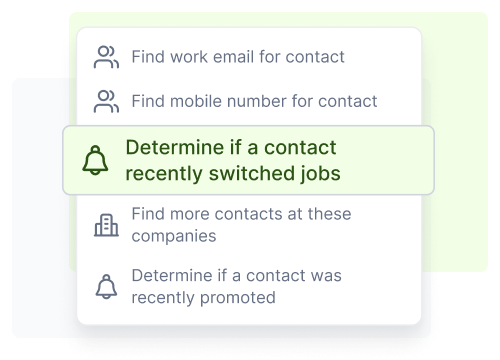
Highperformr draws intent primarily from social behavior. The platform tracks job changes within hours of detection, monitors who prospects interact with on LinkedIn and X, scans company profiles for hiring and expansion signals, and identifies when target buyers engage with competitor content.
The account intent scoring uses AI research agents to produce configurable, explainable scores by analyzing annual reports, third-party data, job openings, and social activity.
Source: Highperformr
The strength of this approach is attribution clarity. Most intent data providers deliver anonymous signals (a company researched a topic) without identifying the specific person.
Highperformr's social signals attach to named, verified individuals with enriched contact data. When your competitor's LinkedIn post gets a comment from a VP at a target account, Highperformr tells you who that VP is, what their role looks like, and how to reach them.
The limitation is signal breadth. Social activity on LinkedIn and X captures only a slice of buying behavior. Many buyers research vendors through web searches, review sites, webinars, and content syndication, none of which Highperformr's social signals detect.
ZoomInfo operates a multi-source intent engine. ZoomInfo Intent tracks signals from 210 million IP-to-Organization pairings and 6 trillion+ new keyword-to-device pairings sourced monthly, capturing web research activity across thousands of B2B topics.
Guided Intent goes further by automatically identifying which topics historically correlate with closed-won deals in your segment, rather than requiring you to guess which keywords matter.
WebSights resolves anonymous website traffic to companies, with Automatic Traffic Filtering that separates real visitors from bots. Job change tracking, funding events, competitive mentions, and technology adoption signals are all part of the signal layer.
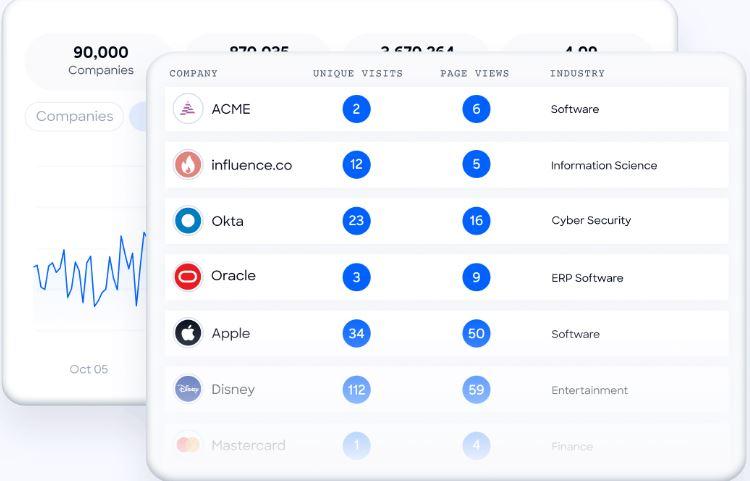
The key difference is that ZoomInfo's intent signals feed into the GTM Context Graph, which correlates them with CRM activity, conversation intelligence, and historical deal patterns to show why signals matter.
A spike in web research about your category becomes more actionable when the graph connects it to the fact that the account's champion just got promoted and their last call with your team included budget questions.
Orchestration and workflow automation
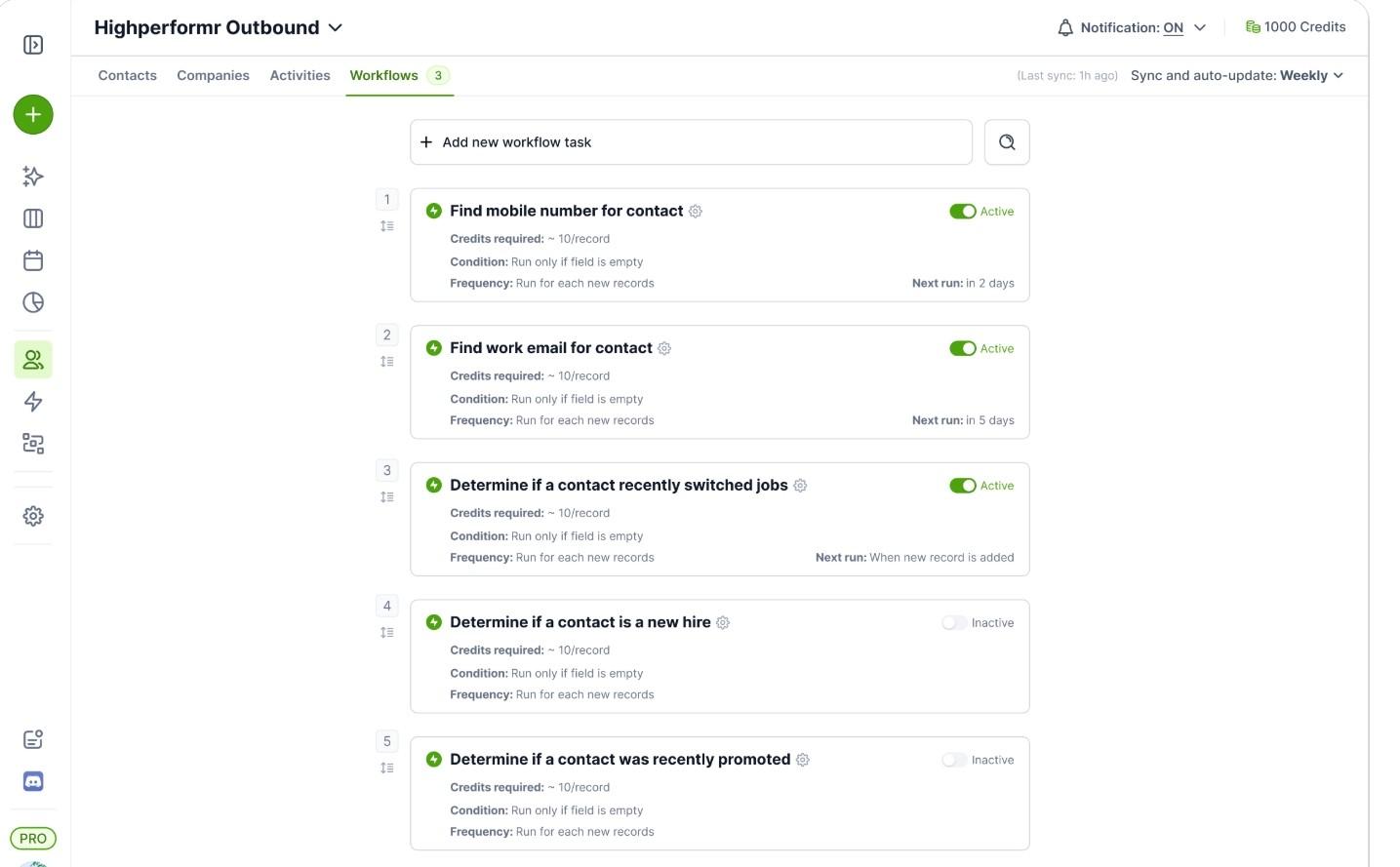
Highperformr provides a signal-driven orchestration system with five documented workflow patterns: real-time enrichment on CRM ingestion, lead prioritization, job change automation, social content research, and personalized conversation starter generation.
Source: Highperformr
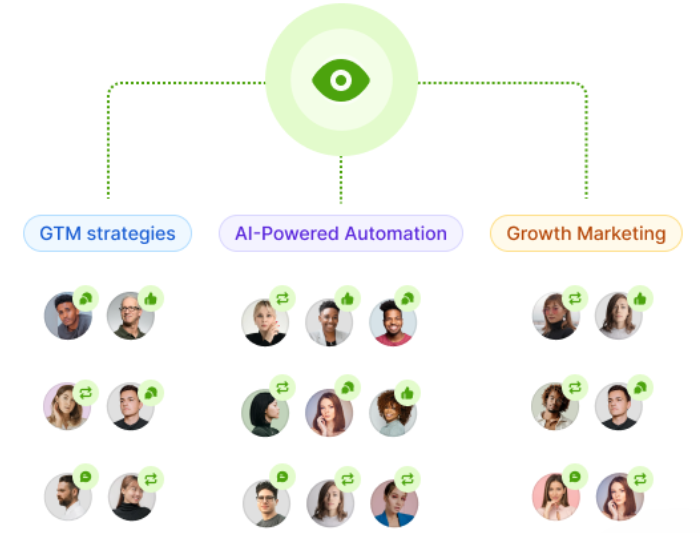
The Multithreading Sales feature identifies buying committees and enriches all stakeholders with signals and contact info.
Source: Highperformr
Workflows fire on first-party signals rather than manual exports, and the same system handles both inbound and outbound.
The platform claims 30% more qualified meetings from live intent insights. But Highperformr is not a full outbound sequencer. Customers like Everstage use it alongside sequencing tools like Outreach or Salesloft for execution.
ZoomInfo provides orchestration at two levels. GTM Studio lets RevOps teams build audiences in natural language, define triggers, and activate multi-channel plays (email, calls, ads, direct mail) without engineering support.
Pre-built GTM plays for inbound acceleration, champion tracking, competitive displacement, and ICP targeting launch in one click.
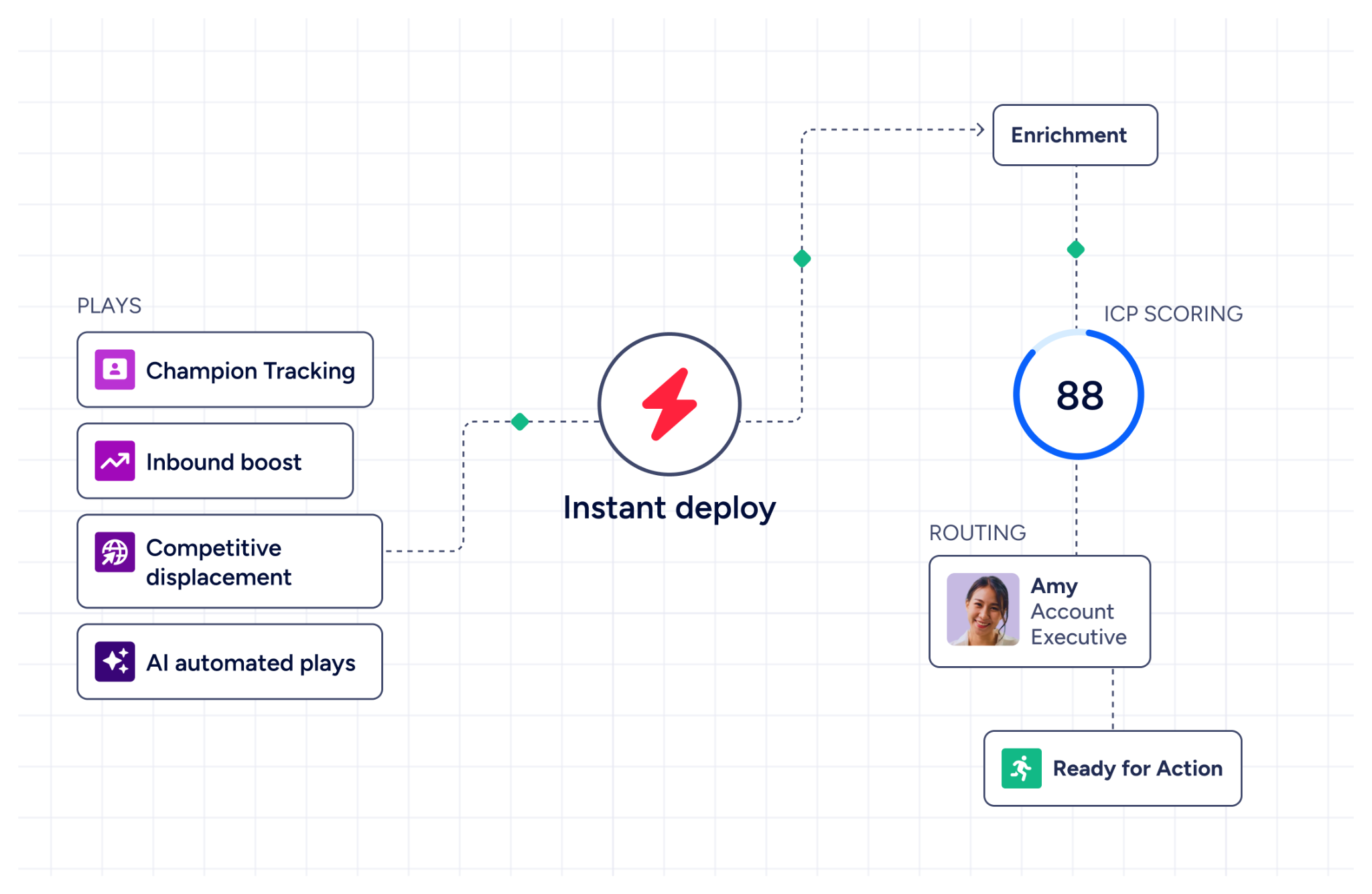
ZoomInfo reports that expansion plays that used to take three weeks now launch in 30 minutes.
For sellers, GTM Workspace consolidates prioritized accounts, AI-drafted outreach, and deal execution into a single view. AI agents handle account research, outreach drafting, CRM updates, and signal monitoring.
The Action Feed delivers a live stream of in-market buyers with pre-drafted actions for each signal.
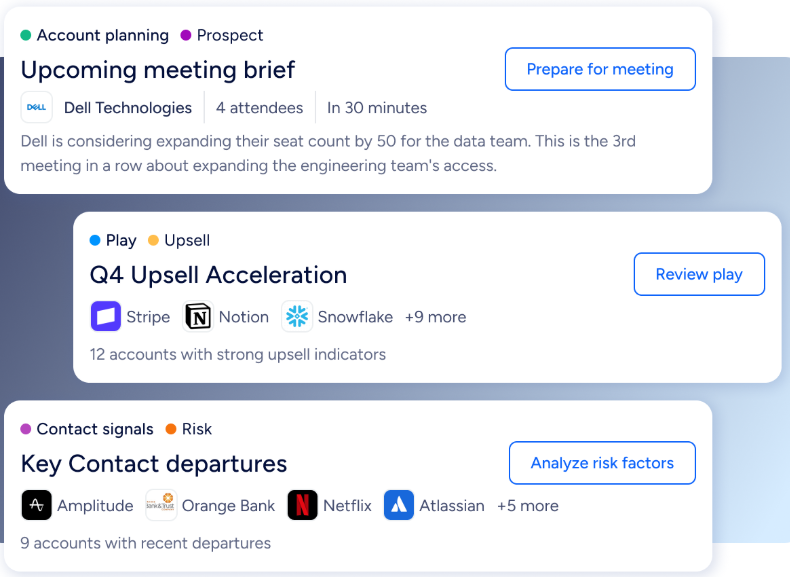
ZoomInfo also partners with Salesloft for sales engagement execution, feeding buyer signals directly into sequencing workflows.
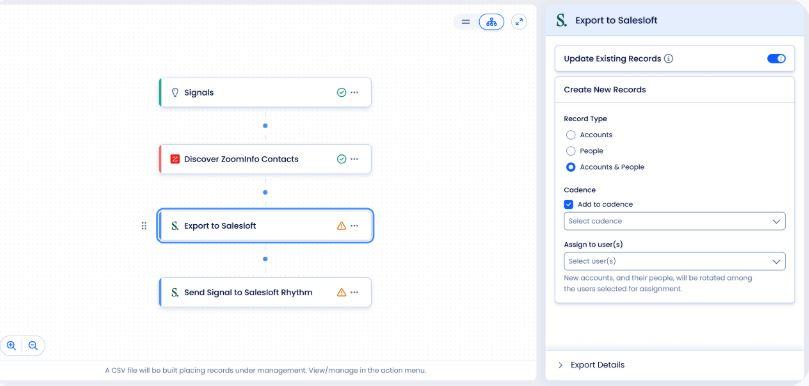
The combination creates a signal-to-sequence flow where intent data triggers personalized outreach the moment a prospect starts researching.
The scope difference matters.
Highperformr automates the path from social signal to enriched lead to CRM task.
ZoomInfo automates the full GTM workflow from signal detection through multi-channel execution, with intelligence flowing between sellers, marketers, and RevOps through a shared layer.
Pricing and commercial models
Highperformr offers two separate pricing structures. Social Publishing uses subscription tiers: Free ($0, 1 user, 1 profile), Pro ($18/month or $17/month annual, 1 user, 2 profiles), Team ($117/month or $97/month annual, unlimited users, 25 profiles), and Enterprise (custom pricing, unlimited users, 100 profiles).
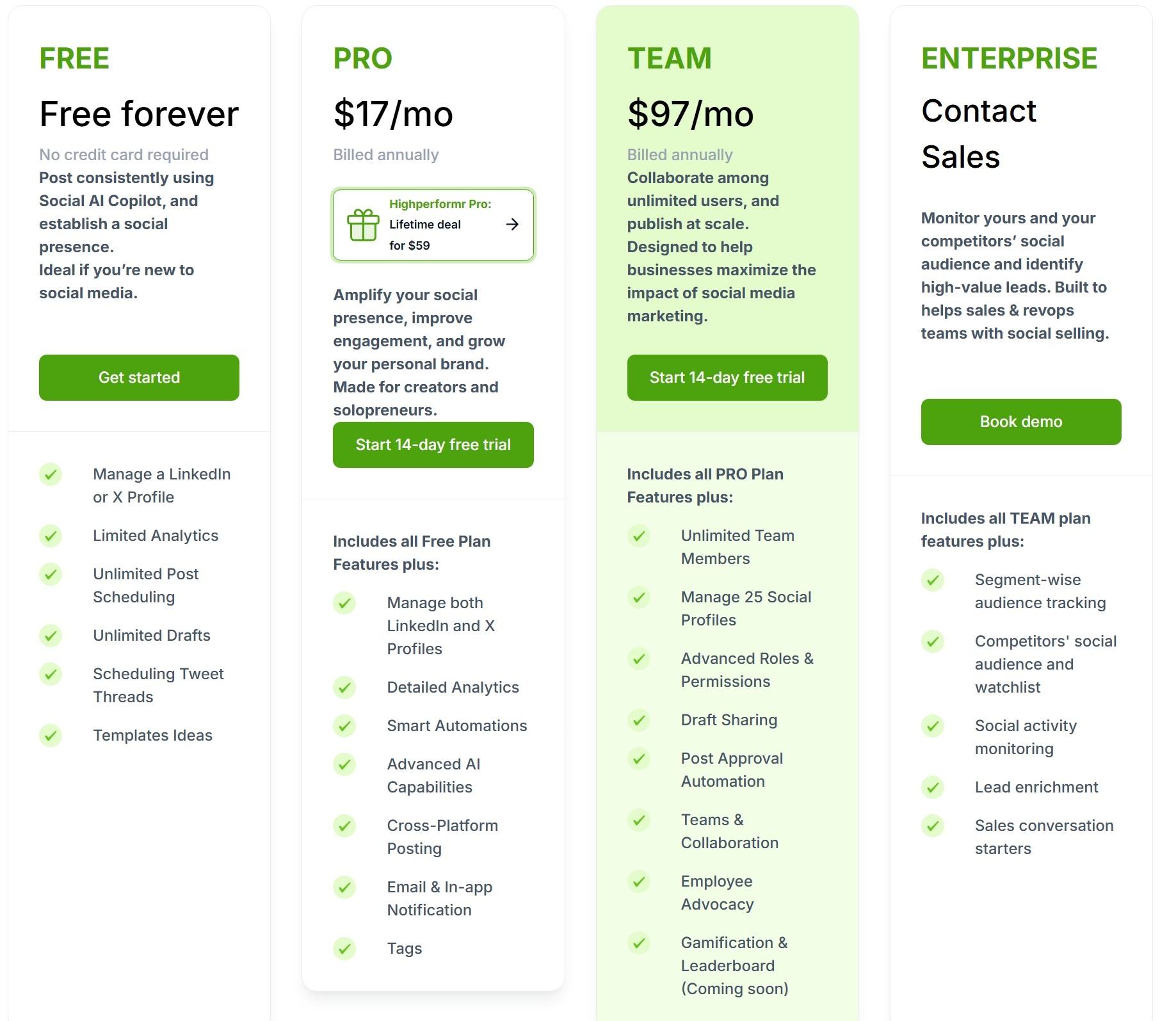
Source: Highperformr
The GTM Automation layer uses a credits system: Plan A at $97 for 10,000 credits (1 month) and Plan B at $1,049 for 100,000 credits (12 months), though eligibility is limited to startups under 100 employees or less than $10M raised, and SMBs under 50 employees or less than $2M revenue.

Source: Highperformr
A lifetime deal is available for social publishing: $59 one-time for Solo/Creator, $229 one-time for Startup Team. The unlimited-user model on Team and Enterprise plans helps larger teams avoid per-seat costs, and the 14-day free trial requires no credit card.

Source: Highperformr
Enterprise pricing for the full intelligence and RevOps features is not published and requires a sales conversation. CRM integrations are Enterprise-only on the social publishing side. Credits power everything across the GTM platform, from enrichment to signal tracking to AI drafting.
ZoomInfo uses custom-quoted, seat-and-credit-based subscription pricing with no publicly listed dollar amounts. Pricing depends on the number of users, credit volume, features, company size, and contract length. The platform offers three product lines, including Sales and Marketing, each with three tiers, plus standalone Chorus and Chat products.
ZoomInfo provides two free entry points. ZoomInfo Lite is a permanent free tier (no time limit, no credit card) with access to the B2B database, 10 monthly export credits, WebSights Lite, the Chrome extension, and HubSpot integration.
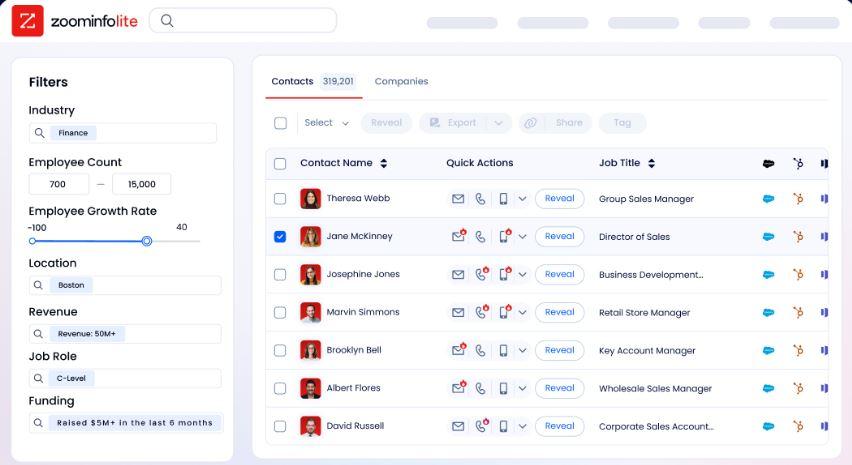
A separate 7-day free trial provides access to core platform features.
The pricing philosophies reflect each platform's market. Highperformr publishes accessible pricing for social publishing and offers credit-based plans for growing teams, with enterprise features behind a sales conversation.
ZoomInfo's custom pricing reflects the enterprise buying process and the breadth of what's being purchased, though unpublished prices can slow initial evaluation.
Security, compliance, and vendor stability
Both platforms maintain SOC 2 Type II and ISO 27001 certifications. Beyond that baseline, the profiles diverge.
Highperformr adds GDPR Article 28 and CCPA compliance, with all data encrypted end-to-end and stored in secure cloud infrastructure in the U.S.. Enterprise clients can request region-specific storage, SSO and SCIM enforcement, and SIEM integration. The platform states that customer data is never used to train public models.
As a seed-funded company with $3.5M raised and no disclosed Series A, Highperformr raises a vendor stability question for enterprise procurement teams. No Gartner, Forrester, or other analyst recognition exists yet.
The customer base consists primarily of India-headquartered B2B SaaS companies in the 100 to 1,000 employee range.
ZoomInfo holds a broader certification stack, all renewed annually: ISO 27001, ISO 27701, SOC 2 Type II, TRUSTe GDPR and CCPA validations. The company is a registered data broker in California and Vermont and maintains a dedicated Trust Center.
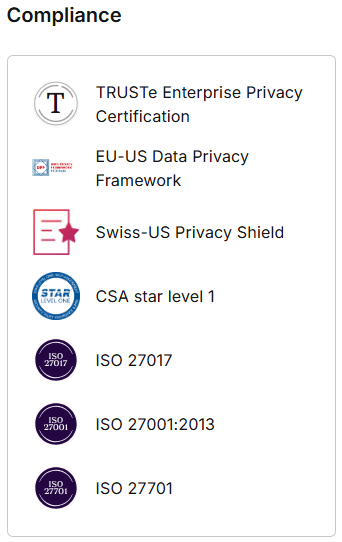
As a public company (NASDAQ: GTM) with $1.25 billion in annual revenue and $455 million in free cash flow, ZoomInfo's stability is well established. Enterprise customers include Adobe, Microsoft, Snowflake, PayPal, JPMorgan, and Bank of America, and the company has 35,000+ customers worldwide with 1,921 spending $100K+ annually.
For teams in regulated industries or enterprises with strict vendor evaluation processes, this gap in maturity and validation matters.
Implementation and time to value
Highperformr emphasizes fast onboarding. The platform states that SMBs can connect their CRM, import data, and go live within one day, with Plan B teams typically completing onboarding in under a week via guided sessions.
RateGain's Operations Lead put it simply: "Most tools we tried slowed us down with setup. Highperformr AI just worked."
Support includes email and in-app chat with first replies under one business day, critical issue prioritization within 4 hours, and dedicated account managers for enterprise clients. The platform reports average uptime exceeding 99.9%.
ZoomInfo requires a larger implementation investment, proportional to its broader scope. The company redesigned its onboarding from 30 to 90 days, structured across planning, technical implementation, education, and adoption phases, producing a 25% improvement in customer satisfaction scores. GTM Workspace can deploy in weeks, not months.
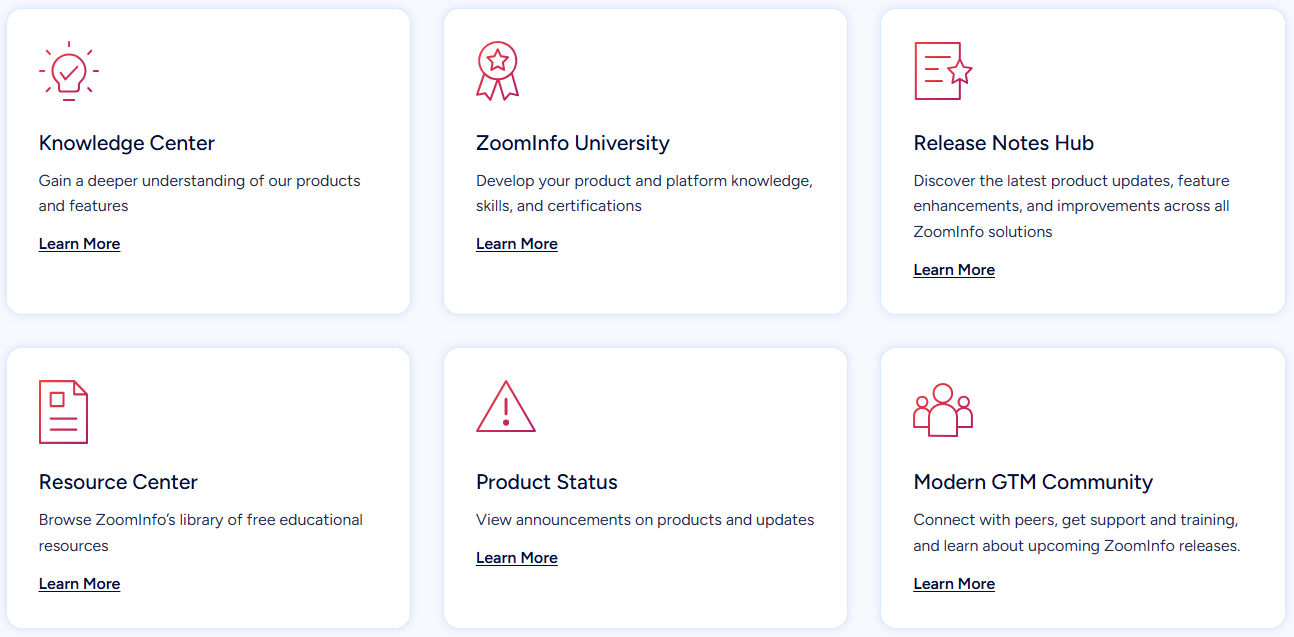
ZoomInfo University provides role-specific learning paths, product certifications, live webinars, and on-demand courses. Direct support is available via the Help Center, phone support, and professional services through ZoomInfo Labs.
The trade-off is straightforward.
Highperformr gets teams running faster because there's less to configure.
ZoomInfo takes longer because there's more to unlock, from conversation intelligence setup to multi-channel play design to API integrations.
Teams that need only signal detection and social selling will value Highperformr's speed. Teams building full GTM infrastructure will find ZoomInfo's onboarding investment worthwhile.
ZoomInfo vs. Highperformr: Which should you choose?
The choice depends on what your GTM motion needs today and where it's heading.
Choose Highperformr if:
Social selling is central to your outreach strategy and LinkedIn is where your buyers engage
You want social publishing, employee advocacy, and lead identification in a single tool
Your team is small enough to benefit from unlimited-user pricing without per-seat costs
You need fast time-to-value with same-day or same-week onboarding
You're a growing B2B startup or mid-market company that doesn't need ABM advertising, conversation intelligence, or enterprise API infrastructure
You want social signal intelligence that names the specific person engaging, not just the company
Your budget favors published pricing for a focused tool
Choose ZoomInfo if:
You need verified contact data at scale, including 120M direct-dial phone numbers and 200M+ verified business emails
Your GTM motion spans multiple channels (email, phone, display ads, LinkedIn, Connected TV) and multiple teams (sales, marketing, RevOps)
You want AI that shows why your deals move or stall, not just alerts on signals, through the GTM Context Graph
Conversation intelligence (Chorus) and ABM with a native DSP are part of your requirements
Enterprise compliance, analyst validation, and vendor stability matter for your procurement process
You're building GTM infrastructure that needs to scale with a growing organization
Get a ZoomInfo free trial here!
Both platforms address a real problem: B2B teams waste time on unqualified prospects and miss buyers who are ready to engage.
Highperformr solves this by watching social behavior and turning engagement into enriched leads quickly.
ZoomInfo solves it by providing the verified data, contextual intelligence, and multi-channel execution that enterprise GTM teams require.
For teams whose primary outreach channel is LinkedIn and whose buying cycle starts with social engagement, Highperformr's focused approach delivers clear value at an accessible price.
For teams that need the full picture (who the buyer is, what their company looks like, what signals they're showing across web and social, what happened in every prior conversation, and which channel will reach them) ZoomInfo provides coverage that focused tools don't match.
The right choice depends on whether your GTM motion needs a sharp social signal tool or a complete intelligence platform. Both can generate pipeline. The question is which motion matches your team's size, budget, and ambitions.
