
Choosing between ZoomInfo and LinkedIn for B2B sales intelligence comes down to five questions:
Do you need verified contact data (direct dials, business emails) or access to a professional network for relationship-based selling?
Is your priority building targeted prospect lists at scale or finding warm introduction paths through mutual connections?
Do you need a go-to-market platform with intent data and orchestration, or a social selling tool backed by the world's largest professional network?
How important is it that your sales intelligence integrates with your CRM, marketing automation, and outbound workflows?
Are you willing to invest in a custom-quoted enterprise platform, or do you prefer transparent per-seat pricing?
In short, here's what we recommend:
LinkedIn is the world's largest professional network with over 1 billion members in 200+ countries. Professionals self-report their job titles, companies, and career moves, making LinkedIn a reliable source for identifying decision-makers and understanding org structures. Through Sales Navigator, LinkedIn gives sales teams 50+ advanced search filters, 50 InMail credits per month, and relationship intelligence features like TeamLink that surface warm introduction paths through colleagues' connections. Sales Navigator starts at $119.99/month for Core, with Advanced at $159.99/month.
ZoomInfo is an AI-powered GTM platform built on a large data foundation: 500M contacts, 100M companies, 135M+ verified phone numbers, and 200M+ verified business emails. Its GTM Context Graph processes 1.5B+ data points daily and unifies this data with your CRM records, conversation transcripts, and behavioral signals to show the full context of your accounts. That context lets AI show not just what happened, but why, and which actions to take next. Your team can work from the GTM Workspace for sellers, run plays from GTM Studio, or feed their own tools through the API and MCP.
Both platforms serve B2B sales teams, but they approach the problem from different angles: LinkedIn gives you a network, ZoomInfo gives you a data and intelligence engine.
ZoomInfo vs. LinkedIn at a glance
LinkedIn (Sales Navigator) | ZoomInfo | |
|---|---|---|
Core Approach | Professional network + social selling | B2B data platform + AI GTM intelligence |
Data Source | First-party (members self-report) | Multi-source (verified by 300+ researchers + ML) |
Contact Records | 1B+ member profiles | 500M contacts, 100M companies |
Direct Dials | Not provided | 135M+ verified phone numbers |
Verified Emails | InMail only (within platform) | 200M+ verified business emails |
Intent Data | Limited buyer intent signals | Intent from 210M+ IP pairings |
Technographics | Not available | 30,000+ technologies across 30M+ companies |
AI Features | Account IQ, Lead IQ, Message Assist | GTM Context Graph, GTM Workspace (AI agents), GTM Studio |
Outreach Method | InMail (50/month on Core) | Direct dial, email, multi-channel workflows |
CRM Integration | Advanced Plus only (custom pricing) | Included across plans |
Starting Price | $119.99/month (Core) | Custom-quoted |
Best For | Relationship-based selling, warm intros | Data-driven prospecting, multi-channel outreach |
The core difference: Network intelligence vs. data intelligence
The distinction between these platforms is where their data comes from and what you can do with it.
LinkedIn operates the world's largest professional network.
Its data is first-party: over 1 billion members create profiles, update their job titles, and share career moves. This creates a self-maintaining database that stays accurate for the information members choose to disclose. When a VP of Sales changes companies, they update their LinkedIn profile, often before any other database reflects the move.
The platform captures 1.8 million updates every minute and reviews 63M+ decision-maker profiles, giving sales teams a real-time view of the professional landscape.
But LinkedIn's data has a structural boundary: it contains only what members post publicly or share within the network.
You won't find verified direct-dial phone numbers, business email addresses you can use outside the platform, technographic data about a company's software stack, or intent signals showing which companies are researching solutions like yours. LinkedIn keeps engagement within its walled garden through InMail, so your outreach depends on the platform itself.
ZoomInfo takes the opposite approach. Instead of relying on professionals to self-report, ZoomInfo aggregates data from multiple sources: automated ML scanning of 28 million site domains daily, third-party partner data covering 95 million businesses, a community of 200,000+ users who share business contact info back into the system, and an in-house Data Training Lab of 300+ human researchers.
The result is 120M direct-dial phone numbers and 200M+ verified business email addresses that sales teams can use in any channel: cold calls, email sequences, direct mail, or multi-channel campaigns.
The data extends beyond contacts. ZoomInfo tracks the technology stack of 30+ million companies across 30,000+ technologies, monitors buyer intent signals from 210 million IP-to-Organization pairings, and provides 300+ company attributes. This view powers the GTM Context Graph, which fuses ZoomInfo's third-party data with a customer's CRM records, conversation intelligence, and behavioral signals to show why deals move or stall.
The difference shows up in daily work.
A LinkedIn user searches for a VP of Marketing at a target account, reads their profile, and sends an InMail. A ZoomInfo user searches for the same person, gets their direct phone number and verified email, sees that their company is researching competitors (intent data), recently adopted a new marketing automation tool (technographics), and has three open VP-level roles suggesting expansion (hiring signals).
The LinkedIn user has a contact. The ZoomInfo user has a qualified opportunity with context.
LinkedIn excels at relationship-based selling
LinkedIn Sales Navigator has a clear advantage when selling depends on relationships, warm introductions, and understanding a prospect's professional context.
TeamLink reveals when teammates have first-degree connections with target prospects, enabling warm introductions instead of cold outreach. Canada Post closed a deal worth over 2x their initial Sales Navigator investment using TeamLink to find an introduction path. For organizations where trust and personal connections drive purchasing decisions, this network intelligence is hard to replicate.
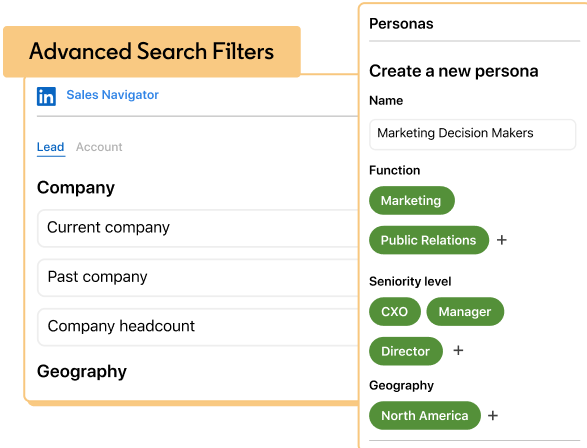
Sales Navigator's 50+ advanced search filters let users find prospects by function, seniority, years at company, geography, and buyer intent signals. The filters are organized into groupings (Buyer Intent, Best Path In, and Recent Updates), with results updating in real time. The search benefits from LinkedIn's first-party data: when someone updates their profile to reflect a new role, the change appears immediately.
Source: LinkedIn
The platform's AI features focus on account and lead intelligence.
Account IQ delivers AI-generated summaries of target accounts, while Lead IQ provides insights on individual prospects. Both use GPT models from OpenAI, with LinkedIn stating that data is not shared with OpenAI or used for training. Message Assist (available on Advanced and Advanced Plus) drafts personalized InMail outreach based on prospect context.
LinkedIn also provides real-time alerts when saved leads change jobs, receive promotions, or engage with content. A Forrester study found Sales Navigator paid for itself in less than 6 months, with users saving 65 hours annually from CRM integration features. The average Sales Navigator user made 4x more connections to Director+ level leaders than non-users.
Source: DemandGenReport
Where LinkedIn falls short is in data you can take off-platform.
Sales Navigator does not provide direct-dial phone numbers or verified business emails. Outreach happens through InMail (50 credits per month on Core), which requires the prospect to check their LinkedIn messages. Not every contact responds to InMails, which can make the process time consuming. And while personalized InMail outreach improves response rates up to 5x compared to standard messaging, the channel is still limited to prospects who are active on LinkedIn.
ZoomInfo leads in data depth and multi-channel execution
ZoomInfo treats sales intelligence as a data and workflow problem, not a networking problem.
The platform's data advantage starts with verified contact information. With 120M direct-dial phone numbers and 200M+ verified business email addresses achieving up to 95% accuracy on first-party data, sales reps can call prospects directly or send emails that land, rather than waiting for a prospect to check their LinkedIn inbox.
In a Fortune 500 competitive RFP analyzing 25 million contacts across vendors, an independent consultant concluded that "no other competitor came even close."
Beyond contact data, ZoomInfo layers intent signals, technographics, and company intelligence that LinkedIn doesn't offer.
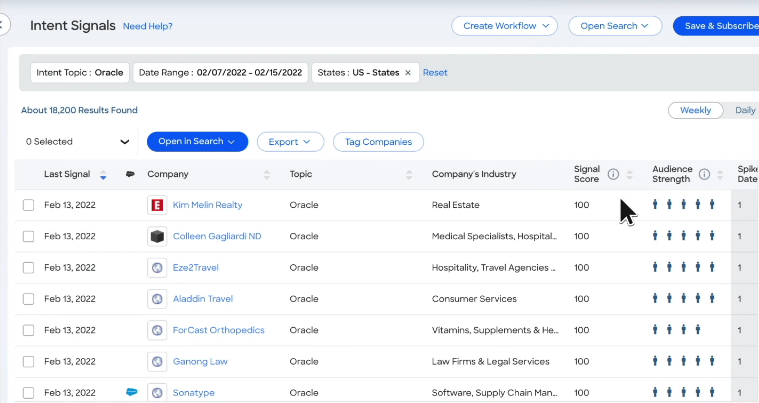
Buyer Intent tracks signals from 6 trillion+ new keyword-to-device pairings sourced monthly, showing which companies are researching solutions in your category. Guided Intent, exclusive to ZoomInfo, identifies topics historically correlated with deal success rather than requiring manual topic selection. Technographic data profiles 30,000+ technologies across 30M+ companies, letting sales teams target companies using a competitor's product or a complementary technology.
Source: ZoomInfo
The GTM Context Graph is where ZoomInfo goes beyond what a contact database provides. It fuses ZoomInfo's B2B data with a customer's CRM records, conversation intelligence from Chorus, and behavioral signals to capture not just what happened in a deal but why it happened.
The result: AI that can identify which accounts match your win patterns, which stakeholders are blocking or championing deals, and what follow-up should address based on concerns raised in conversations.
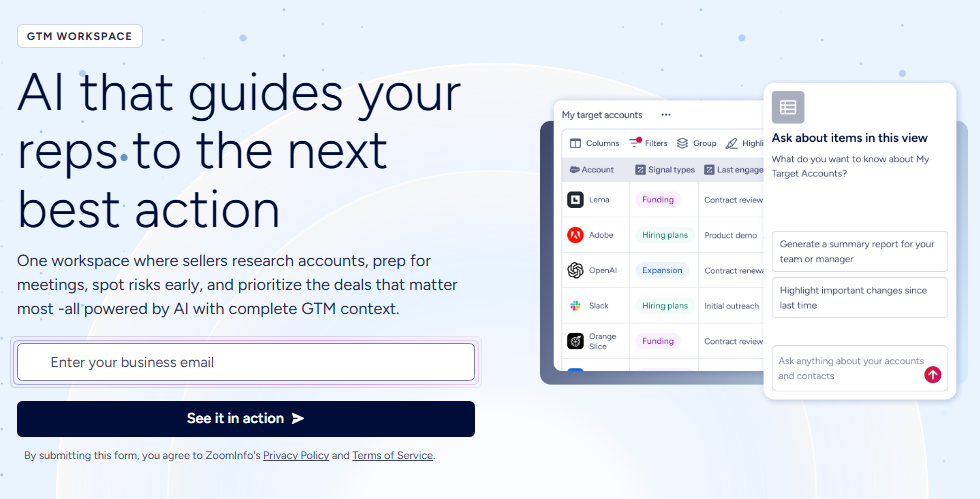
GTM Workspace puts this intelligence in front of sellers in one place. AI agents handle account research, generate follow-ups, monitor signals, draft outreach, and update CRM fields. Customer results include Seismic boosting productivity by 54% and saving 11.5 hours per week, with 39% of pipeline attributed to ZoomInfo signals. Databricks reached prospects 50% faster. Thomson Reuters increased closed-won deals by 40%.
Source: ZoomInfo
For marketers and RevOps, GTM Studio is an AI-powered orchestration canvas where teams build audiences using natural language, enrich data, define triggers, and activate plays across channels, without engineering support. Expansion plays that used to take 3 weeks now launch in 30 minutes.
Outreach capabilities: InMail vs. multi-channel
How you reach prospects is where these platforms diverge most.
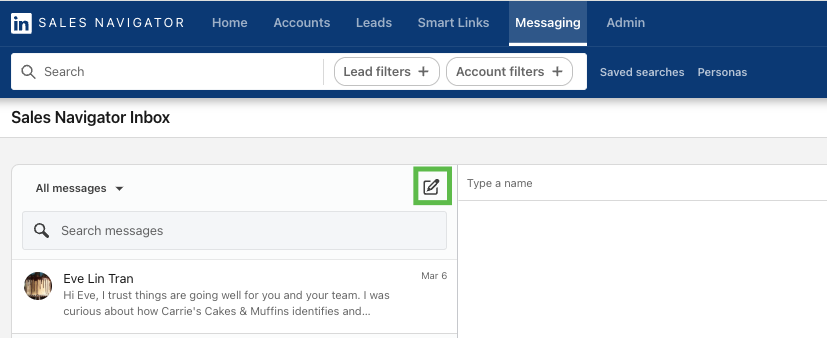
LinkedIn keeps outreach within its network. Sales Navigator provides 50 InMail credits per month, with credits returned if recipients respond within 90 days.
InMails can include attachments up to 200 MB and must be sent individually to maintain quality. For teams that rely on social selling, this focused channel works well. Personalized outreach improves InMail response rates up to 5x, and 78% of buyers say personalized introductions increase purchase likelihood.
Source: LinkedIn
The limitation is volume and channel diversity.
Fifty InMails per month means careful prioritization. There's no way to call a prospect through Sales Navigator, no email address to use in an outbound sequence, and no ability to trigger automated multi-step campaigns. If a prospect doesn't respond to InMail, your options within LinkedIn are limited to connection requests and content engagement.
ZoomInfo provides the data for multi-channel outreach.
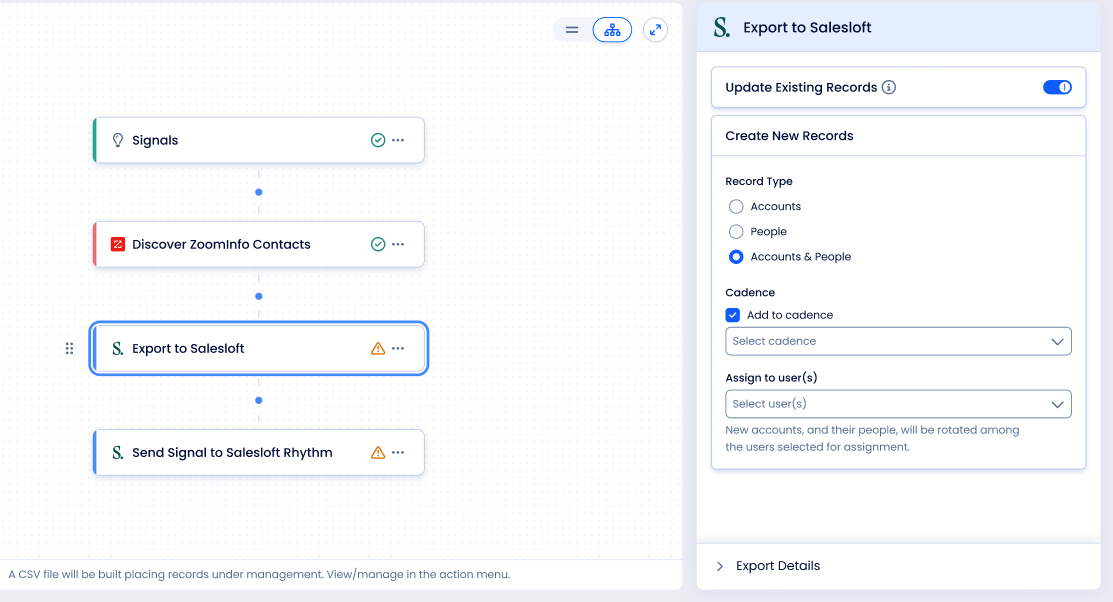
With verified direct-dial phone numbers and business emails, sales teams can reach prospects through cold calls, email sequences, LinkedIn (separately), direct mail, and automated workflows. ZoomInfo's Workflows feature triggers automated outreach based on buying signals: when a target account shows intent, visits your website, or experiences a leadership change, the system can route the account to a rep, add contacts to a sequence, or trigger an ad campaign.
Source: ZoomInfo
The Salesloft partnership connects ZoomInfo's buyer data into Salesloft's sequencing engine, so intent data triggers personalized multi-touch outreach automatically. For marketing teams, ZoomInfo's native Demand-Side Platform deploys display ads based on 300+ company attributes, and FormComplete reduces web forms to a single field while auto-appending the rest.
Smartsheet reported a 40%+ increase in form fills, 84% increase in MQLs, and 59% increase in win rate using these capabilities.
The practical difference: LinkedIn is one channel (InMail within the network). ZoomInfo provides the data to power every channel at once.
AI and intelligence features
Both platforms invest in AI, but their approaches reflect their underlying architectures.
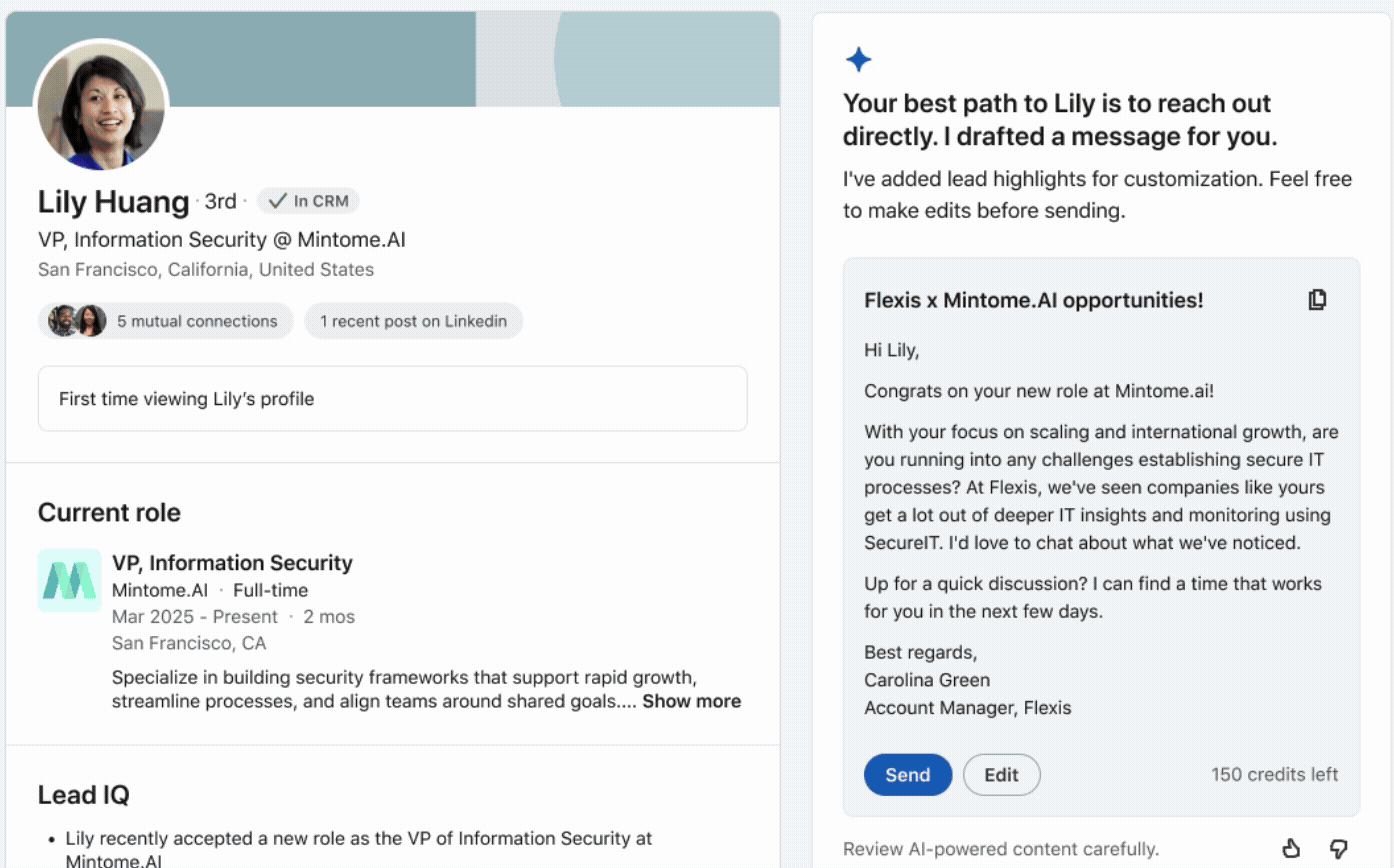
LinkedIn's AI features help users navigate its network. Account IQ provides AI-generated account summaries synthesizing LinkedIn's first-party data with public information. Lead IQ does the same for individual prospects. Message Assist drafts personalized InMails using prospect context.
LinkedIn is also beta testing Sales Assistant, an agentic AI that delivers top leads daily, maps paths into accounts, and automates prospecting. The company expects it to free up 11.5 hours per week. These features are useful, but they operate within LinkedIn's data boundaries: the network's first-party profiles and engagement signals.
Source: LinkedIn
ZoomInfo's AI draws on a broader data foundation.
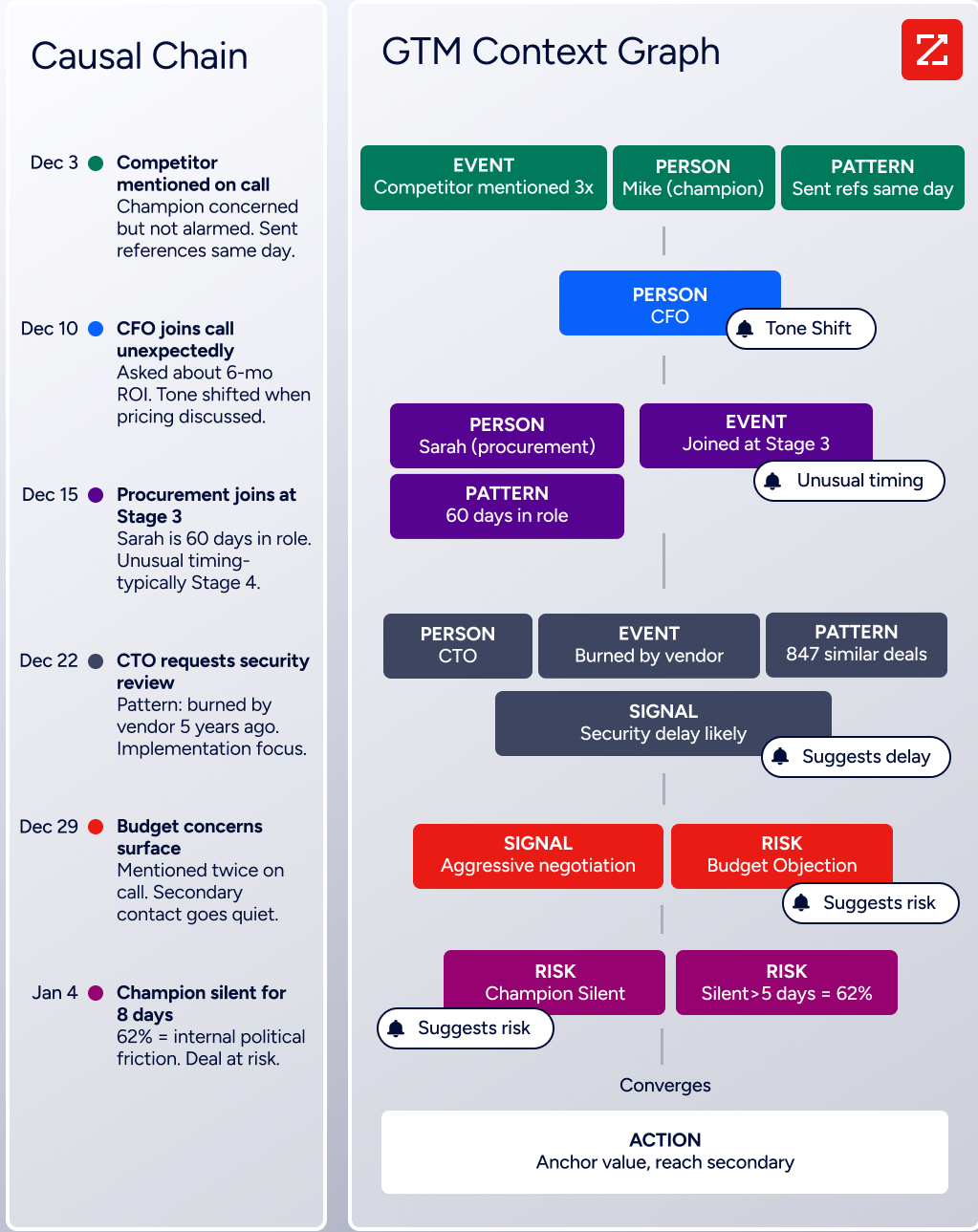
The GTM Context Graph fuses third-party B2B data with a customer's CRM records, conversation transcripts from Chorus, email threads, and behavioral signals. This creates a layer that connects signals across data sources. A CRM records that a deal moved stages, Chorus captures what the CFO said on the last call, intent data shows a research spike. The GTM Context Graph connects these signals to explain why the deal moved and what should happen next.
In GTM Workspace, AI agents generate account briefs by pulling CRM history, company news, ZoomInfo signals, and stakeholder context into summaries in seconds. The Action Feed delivers a live stream of in-market buyers matched to target criteria, with pre-drafted actions on every signal. In GTM Studio, marketers describe audiences in natural language and launch multi-channel plays targeting accounts that match proven win patterns.
ZoomInfo also exposes its intelligence through APIs and MCP (Model Context Protocol), so the same data and reasoning can power any custom agent or third-party application. LinkedIn's intelligence stays within LinkedIn.
Source: ZoomInfo
Pricing and cost structure
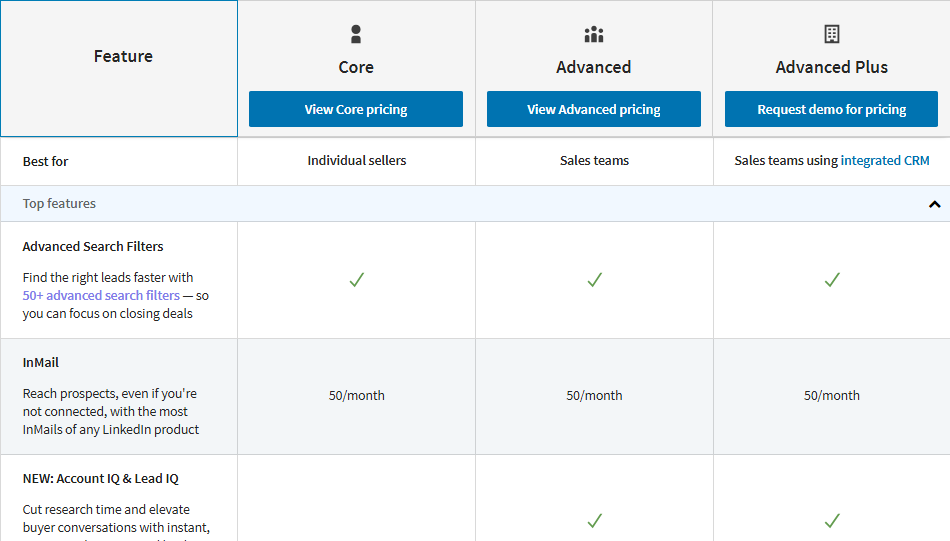
LinkedIn Sales Navigator offers transparent per-seat pricing across three tiers:
Core: $119.99/month or $1,079.88/year (individual sellers). Includes 50+ search filters, 50 InMails/month, Relationship Explorer, alerts, and CSV upload.
Advanced: $159.99/month or $1,799.88/year (sales teams). Adds Account IQ, Lead IQ, Message Assist, TeamLink, Smart Links, and team reporting.
Advanced Plus: Custom pricing (requires 10+ sellers). Adds CRM integrations with Salesforce, HubSpot, Dynamics, and Oracle, plus a dedicated account team and custom ROI reporting.
The pricing is predictable: you know what each seat costs, with no credit systems or usage-based fees beyond InMail limits. However, users note that pricing can be high, particularly for smaller teams, and full CRM integration requires the custom-priced Advanced Plus tier.
Source: LinkedIn
ZoomInfo uses a custom-quoted, seat-and-credit-based subscription model.
Pricing depends on number of users, monthly credit volume, feature tier (Professional, Advanced, or Enterprise), and contract length. Annual contracts are standard. The credit system is straightforward: 1 credit = 1 export of a professional or company profile. Searching and viewing data within ZoomInfo does not consume credits.
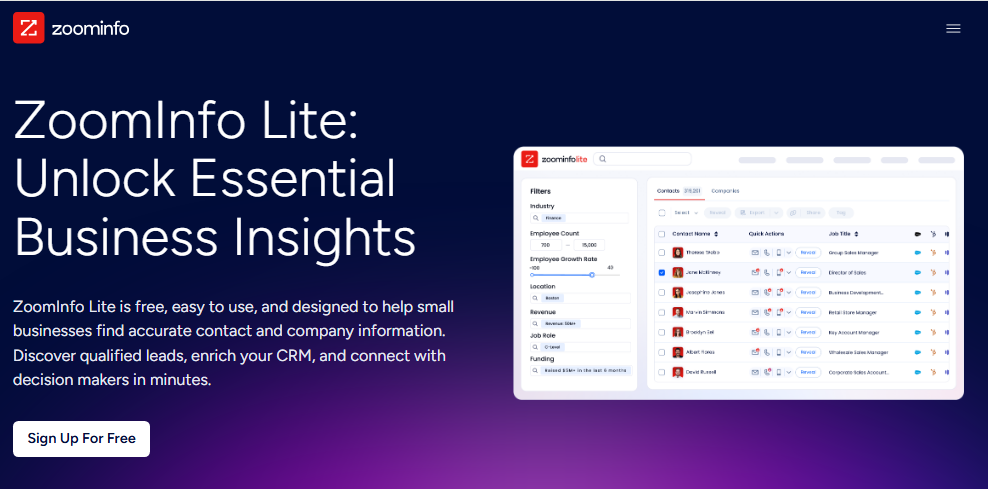
ZoomInfo offers two free entry points: ZoomInfo Lite, a permanent free tier with 10 monthly export credits and access to the B2B database (no direct dials or full intent signals), and a 7-day free trial of the full platform.
Source: ZoomInfo
The cost comparison isn't straightforward because the platforms include different things.
A Sales Navigator Advanced seat at $159.99/month gives you search, InMail, and AI insights within LinkedIn's network. A ZoomInfo seat gives you verified contact data exportable to any system, intent signals, technographics, workflow automation, and AI-driven account intelligence.
For teams that need only LinkedIn-based social selling, Sales Navigator is the more affordable option. For teams building multi-channel outbound programs, ZoomInfo's broader capability set may deliver stronger ROI despite higher investment. Snowflake achieved 200% higher conversion rates on top-scoring accounts using ZoomInfo data, and Seismic attributed 39% of active pipeline to ZoomInfo signals.
CRM integration and technical ecosystem
LinkedIn Sales Navigator integrates with CRMs primarily through the Advanced Plus tier.
This includes Embedded Profiles and Embedded Experiences for Salesforce, HubSpot, Microsoft Dynamics 365, and Oracle, bringing Sales Navigator data into CRM workflows. CRM Sync provides Auto-Save, Activity Writeback, and ROI Reporting. Users report saving 15 minutes per day from these integrations.
However, meaningful CRM integration requires the most expensive tier (Advanced Plus, custom pricing).
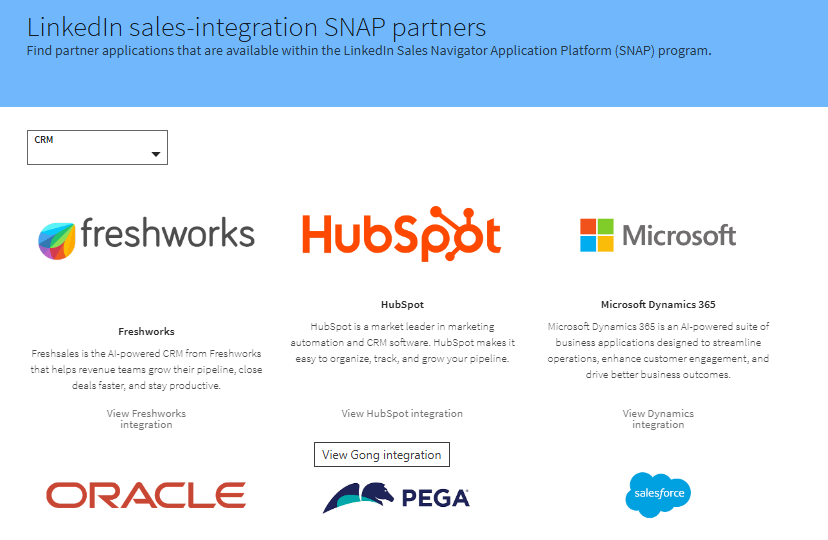
Core and Advanced users can save leads and export to CSV, but they don't get bidirectional CRM sync, embedded profiles, or automated activity logging. LinkedIn's SNAP partner program connects with business intelligence and sales engagement platforms, though the program is currently not accepting new applications.
Source: LinkedIn
ZoomInfo includes CRM integration across its plans, with depth increasing by tier.
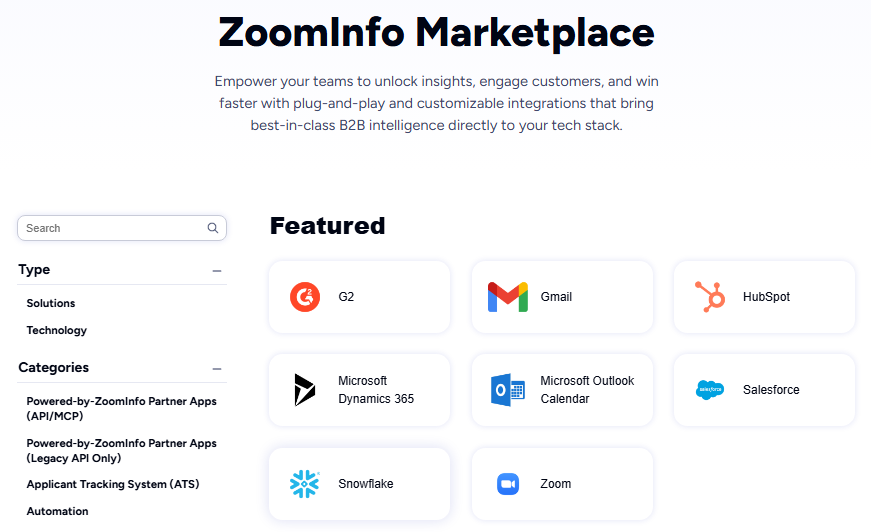
The App Marketplace lists 120+ partner integrations spanning CRM, marketing automation, sales engagement, revenue intelligence, data warehouse, and communications. Featured integrations include Salesforce, HubSpot, Microsoft Dynamics 365, Snowflake, and more.
ZoomInfo's Enterprise API provides programmatic access to its data across four areas: Search & Enrich, Copilot AI Intelligence, Marketing Audience Management, and Engagements. API access is included in all relevant plans. The MCP server connects AI models to ZoomInfo data as a native tool, with no custom coding beyond one-time configuration.
Cloud Partners enable direct data ingestion into AWS, Google Cloud, Snowflake, and Databricks. MarketSpark used ZoomInfo's Data Cube via AWS S3 to identify 30,000 prospect companies and generate 5x revenue opportunities.
Source: ZoomInfo
The integration difference matters for teams that build workflows around their data. LinkedIn's intelligence lives primarily within LinkedIn. ZoomInfo's intelligence can flow into any system a team uses.
Security and compliance
Both platforms maintain security postures appropriate for enterprise buyers.
LinkedIn holds ISO 22301 (Business Continuity), ISO 27001 (Information Security Management), ISO 27018 (Privacy for cloud providers), SOC 2 Type II, and PCI DSS compliance. The platform also maintains GDPR, CCPA, EU-US DPF, and PIPEDA compliance. As a Microsoft subsidiary, LinkedIn benefits from Microsoft's broader security infrastructure. Documentation is available through its Smart Trust Center.
ZoomInfo holds ISO 27001, ISO 27701, SOC 2 Type II, TRUSTe GDPR Practices Validation, and TRUSTe CCPA Practices Validation, all renewed annually. ZoomInfo is a registered data broker in California and Vermont, an important distinction for a company that aggregates and sells contact data. A dedicated Trust Center provides documentation.
Both platforms meet enterprise security requirements. The compliance consideration that differs is data sourcing: LinkedIn's data comes from members who opt in to the network, while ZoomInfo aggregates data from multiple sources with its own privacy compliance framework.
ZoomInfo vs. LinkedIn: Which should you choose?
The choice depends on how your sales team operates, what data they need, and which channels they use to reach buyers.
Choose LinkedIn Sales Navigator if:
Your sales approach relies on relationship-based selling and warm introductions
InMail is an effective outreach channel for your target buyers
You need to research prospects' professional backgrounds, career histories, and shared connections
Your team primarily needs to identify decision-makers and understand organizational structure
You want transparent, predictable per-seat pricing starting at $119.99/month
Your sales cycle benefits from social engagement (commenting, sharing, building presence)
You sell to prospects who are active on LinkedIn and responsive to InMail
Your CRM integration needs are modest (or you're willing to invest in Advanced Plus)
Choose ZoomInfo if:
Your team needs verified direct-dial phone numbers and business emails for multi-channel outreach
Buyer intent data and technographics matter for identifying and prioritizing accounts
You want to know which companies are researching solutions in your category
Your sales motion involves high-volume outbound across phone, email, and ads
You need a layer that fuses CRM, conversation, and behavioral data with B2B intelligence
Integration with your full GTM stack (CRM, marketing automation, sales engagement) is a priority
You want to power custom AI agents or internal tools with B2B data via APIs and MCP
Your organization runs account-based marketing programs alongside sales prospecting
Get a free ZoomInfo trial here!
Many teams use both. LinkedIn Sales Navigator for relationship intelligence and social selling, ZoomInfo for verified contact data, intent signals, and multi-channel execution.
The platforms address different stages and methods of the sales process. LinkedIn helps you understand who someone is and how to reach them through mutual connections. ZoomInfo helps you understand when and why to reach them, with the data to do it through any channel.
The question isn't which platform is better in absolute terms. It's which data and capabilities your team needs to close deals.
If your sales motion depends on personal relationships and network navigation, LinkedIn is the natural fit. If it depends on data-driven targeting, direct outreach, and multi-channel orchestration, ZoomInfo provides the deeper infrastructure. And if your team operates across both motions, the combination covers the full spectrum of B2B sales intelligence.
