
If you're comparing ZoomInfo and Upcell, you're weighing two different approaches to the same starting problem: getting accurate contact data into the hands of sales reps.
The question isn't which is "better." It's whether your team needs a focused prospecting workflow that connects your current tools, or a full go-to-market platform that replaces several of them.
In short, here's what we recommend:
Upcell is a sales prospecting platform that lets reps capture prospects from LinkedIn in one click, enrich them through multiple data providers via API keys, and push structured records to CRM without tab-switching or manual entry. Its system-based pricing with unlimited Chrome extension seats removes per-user cost pressure as teams scale. Customers report 4-6x increases in connect rates and 33% reductions in pipeline costs. However, the platform is currently limited to North America, lacks bulk export capabilities, and depends on LinkedIn as its primary prospecting surface.
ZoomInfo is an AI GTM Platform built on the industry's largest data foundation: 500M contacts, 100M companies, 135M+ verified phone numbers, and 200M+ verified business emails. Its GTM Context Graph (an intelligence layer that processes 1.5B+ data points daily) unifies this data with your CRM records, conversation transcripts, and behavioral signals to show the full context of your accounts. That context feeds AI to reveal not just what happened, but why it happened, and what to do next. With that intelligence, your team can run sales motions from the GTM Workspace for sellers, build GTM plays from GTM Studio for marketers, RevOps, and GTM engineers, or power their own tools through the API and MCP in any front-end.
Upcell solves the prospecting workflow problem. ZoomInfo solves the go-to-market intelligence problem. Your choice depends on how much of that broader picture your team needs.
ZoomInfo vs. Upcell at a glance
Upcell | ZoomInfo | |
|---|---|---|
Core approach | Multi-vendor enrichment orchestration | Proprietary B2B data + AI GTM Platform |
Data ownership | Doesn't sell data; connects your providers | Owns 500M contacts, 100M companies |
Verified phone numbers | Depends on connected providers | 135M+ verified phone numbers |
Intent signals | Not included | Native buyer intent + website visitor tracking |
Conversation intelligence | Not included | Chorus (native) |
Marketing automation | Not included | ABM, display ads, form optimization |
AI capabilities | Not included | GTM Context Graph, AI agents, AI outreach |
Chrome extension | One-click LinkedIn capture | ReachOut extension + mobile app |
Pricing model | System-based, unlimited seats (custom) | Seat-and-credit-based (custom) |
Free tier | Not publicly available | ZoomInfo Lite (permanent free) |
Geographic coverage | North America | Global (34M+ profiles outside NA) |
Best for | Teams optimizing existing data vendor workflows | Teams needing a full GTM intelligence platform |
The core difference: Workflow layer vs. intelligence platform
Upcell was founded in 2023 by B2B data veterans who, by their own account, "built, scaled, and sold in this space".
Upcell positions itself as "infrastructure" between sales teams and their data providers. Instead of selling data, it provides a Chrome extension for capturing LinkedIn prospects and a multi-vendor enrichment engine that connects to providers like People Data Labs, Apollo, RocketReach, and ZoomInfo through API keys.
The pitch: swap providers anytime without changing how reps prospect.
ZoomInfo took the opposite path over nearly two decades.
Founded in 2007 by Henry Schuck, it built the data itself, investing in automated ML systems scanning 28 million site domains daily, a community of 200,000+ users who share data back, and 300+ human researchers. Then it layered intelligence on top: intent signals from 210 million IP-to-Organization pairings, conversation intelligence through Chorus, website visitor identification, and AI orchestration.
The contrast is architectural.
Upcell is a workflow layer that makes your existing data tools work together more efficiently. ZoomInfo is the data, the intelligence, and the execution layer in one platform. Both approaches have merit, but they serve different needs.
Upcell focuses on prospecting workflow and vendor flexibility
Upcell built two products around a simple idea: prospecting should be fast, and data providers should be interchangeable.
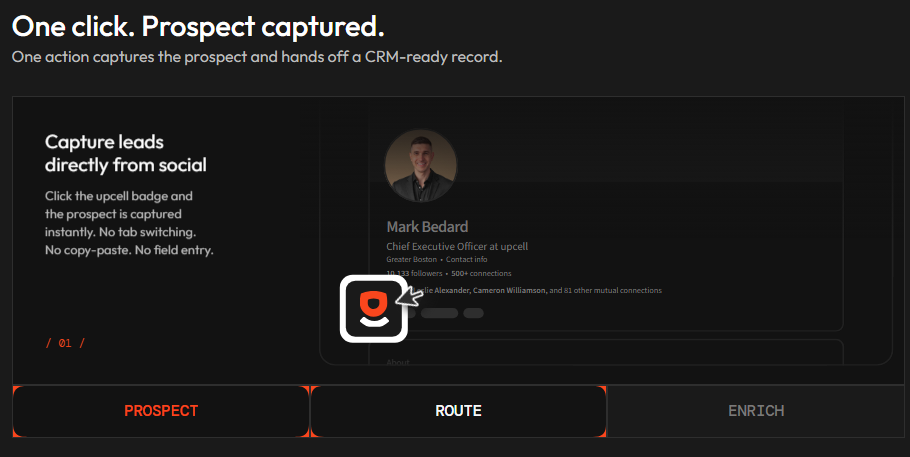
The Prospector Chrome extension lets reps capture contacts from LinkedIn profiles with a single click (no tab switching, no copy-paste, no field entry).
During export, reps can assign ownership, add tags, capture notes, and choose sequences in their engagement tool, then push everything to CRM in one action. The extension includes a hotkey (Alt-C on Windows, Option-C on Mac) for quick exports and integrates with Salesforce, HubSpot, Outreach, and Salesloft.
Source: Upcell
The workflow is deliberately minimal.
Upcell says it's built for reps who just want to sell, and the extension shows up when you need it and disappears when you don't. This simplicity pays off in adoption: customers report 50% increases in prospecting productivity and 4x improvements in workflow efficiency.
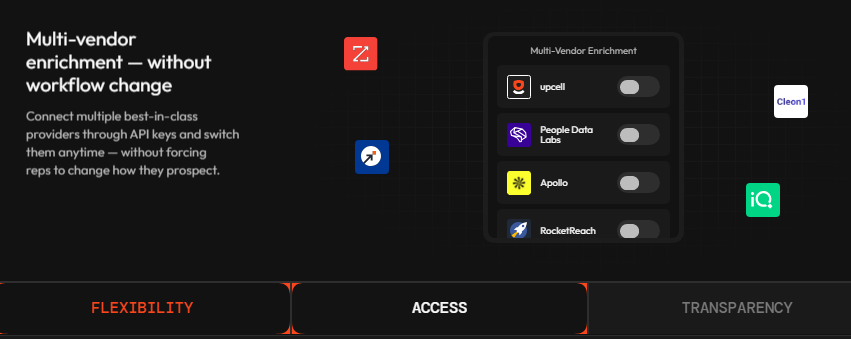
The Enrich product is where Upcell's vendor-agnostic approach becomes clear.
Using a bring-your-own-key model, teams connect their preferred data providers through API keys and combine multiple sources to cover email, mobile phone, and company data fields. The system provides provider performance analytics showing fill rates and success rates by provider, giving RevOps teams visibility into how each provider performs within specific verticals.
Source: Upcell
This transparency is Upcell's distinguishing feature.
Dan McGee at Clutch Security notes that Upcell "gives us full transparency into how each data provider performs in our vertical, so we can make decisions based on real results, not opinions". Clutch achieved a 92% reduction in vendor evaluation time and 2x increase in data coverage.
Mobile data quality through connected providers has been a particular strength. Astrix Security went from below 1% to over 6% connect rates, and Legit Security achieved a 4.7x increase in real conversations on outbound calls.
However, Upcell's scope is intentionally narrow.
The platform doesn't include intent signals, conversation intelligence, marketing automation, or AI account prioritization. It's also currently limited to North America, lacks bulk export features, and works primarily as a LinkedIn add-on rather than a standalone prospecting platform. These are design choices that keep the tool focused, but they define the ceiling of what Upcell can do for your team.
ZoomInfo provides the full GTM intelligence stack
ZoomInfo operates at a different scale. Where Upcell orchestrates other vendors' data, ZoomInfo built the largest B2B dataset in the industry and spent nearly two decades layering intelligence and execution capabilities on top.
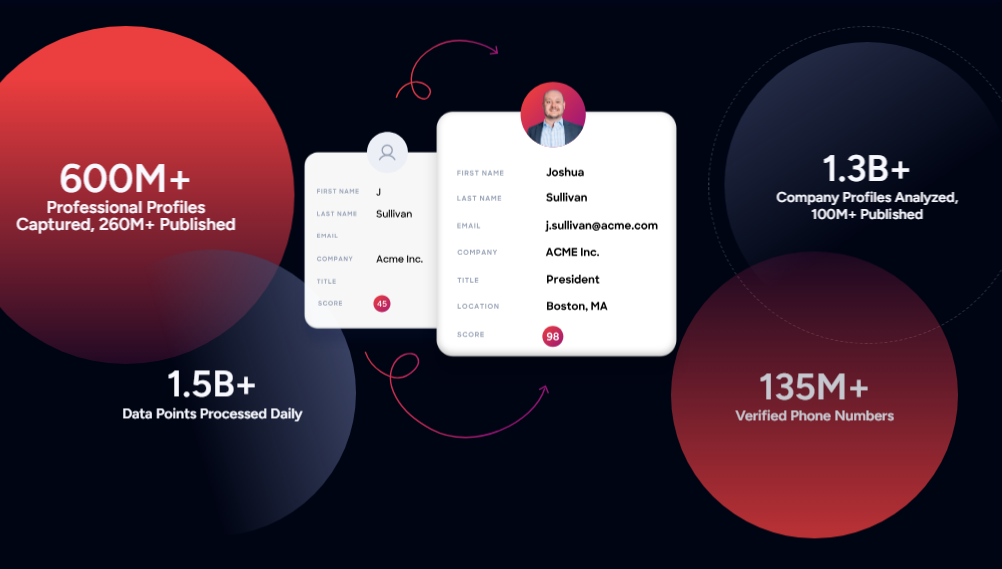
The data foundation spans 500M+ contacts, 100M+ companies, 135M+ verified phone numbers, 120M+ direct-dial phone numbers, and 200M+ verified business email addresses. This isn't aggregate data pulled through API keys. It's verified through a multi-source pipeline: automated ML scanning 28 million site domains daily, third-party partner data covering 95 million businesses, and 300+ human researchers. First-party data reaches up to 95% accuracy.
In a Fortune 500 competitive RFP analyzing 25 million contacts across vendors, the independent consultant concluded that "no other competitor came even close."
Source: ZoomInfo
But data is only the first pillar.
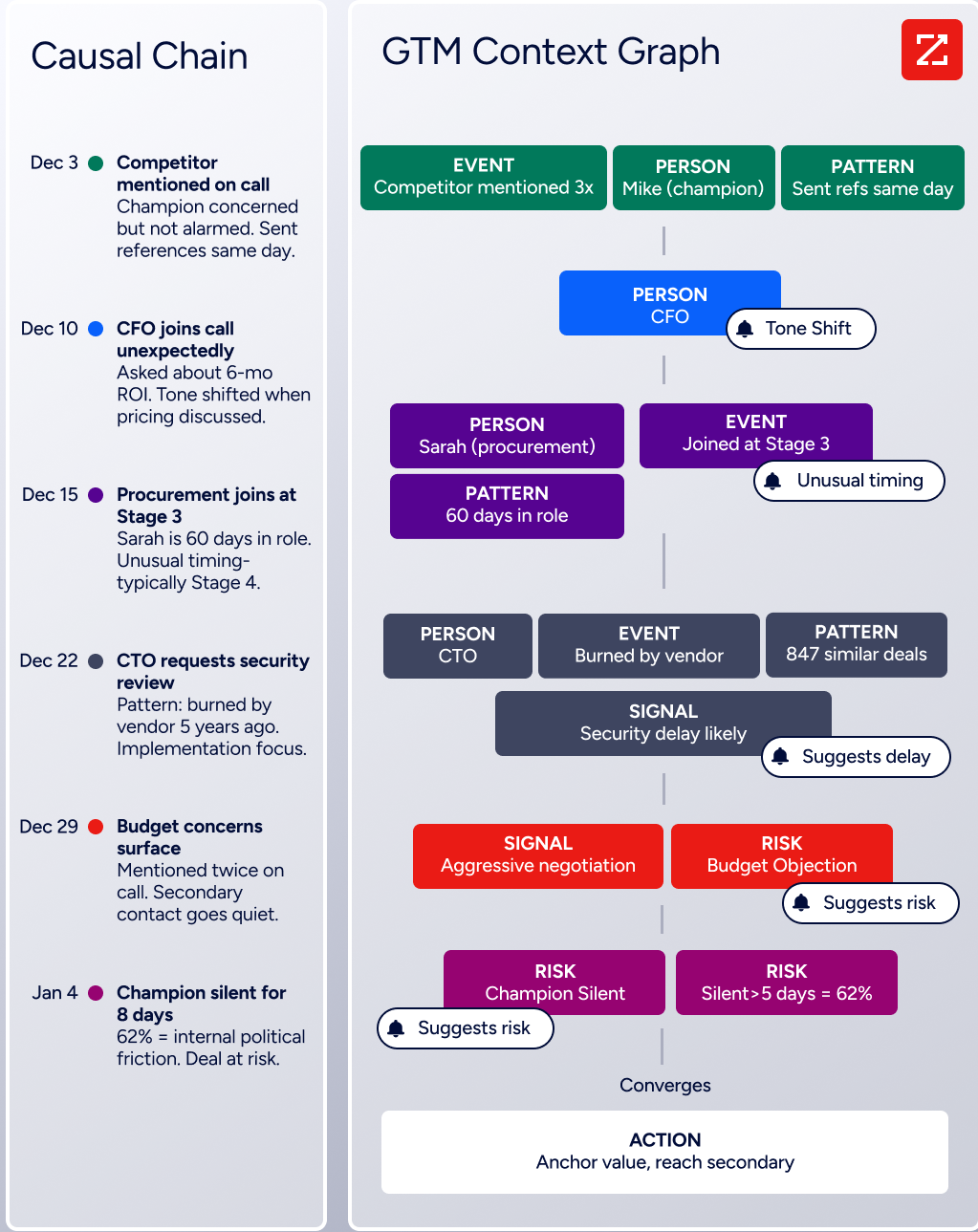
ZoomInfo's GTM Context Graph fuses this B2B data with a customer's CRM records, conversation transcripts, email threads, and behavioral signals into a single intelligence layer that processes 1.5B+ data points daily.
The difference between a data platform and a context graph: a data platform tells you who works where and how to reach them.
The GTM Context Graph reveals why deals move or stall, connecting executive involvement on calls, intent signal spikes, and org chart changes to actual deal outcomes.
Source: ZoomInfo
This intelligence flows through three channels.
GTM Workspace gives sellers a single screen with AI agents that handle account research, generate follow-ups, monitor signals, and draft outreach. Seismic's sales team boosted productivity by 54% and attributed 39% of pipeline to ZoomInfo signals. GTM Studio gives marketers, RevOps, and GTM engineers a canvas where audience definition, campaign orchestration, and pipeline measurement happen in natural language (expansion plays that used to take 3 weeks now launch in 30 minutes). And APIs and MCP expose the same intelligence to any custom agent or third-party platform.
Beyond these core pillars, ZoomInfo includes capabilities Upcell doesn't attempt: Buyer Intent data tracking signals from 6 trillion+ keyword-to-device pairings monthly, WebSights for identifying anonymous website visitors by company, Chorus conversation intelligence with AI-generated call analysis, FormComplete for reducing web forms to a single field, and a native display advertising network.
The trade-off: this breadth requires investment.
ZoomInfo's custom pricing is enterprise-focused, the platform has a learning curve (ZoomInfo redesigned its onboarding from 30 to 90 days to address this), and the full feature set can be more than smaller teams need.
Data approach: Owning vs. orchestrating
The sharpest difference between these platforms is how they handle data, and the implications flow into coverage, verification, and what types of intelligence each can offer.
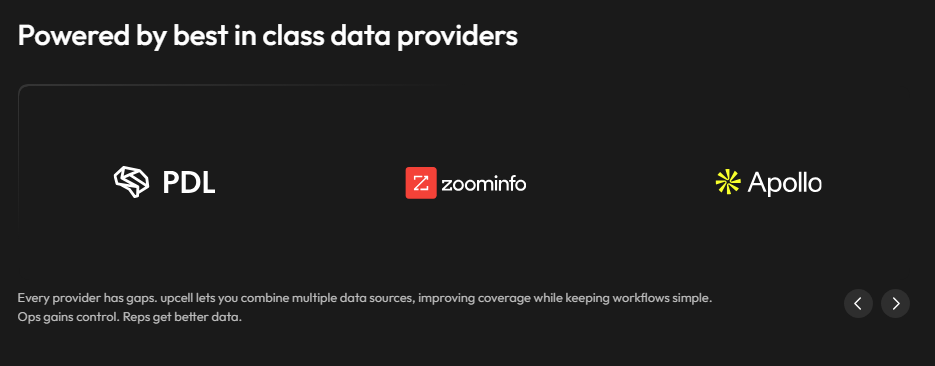
Upcell's bring-your-own-key model connects to data providers you already use (People Data Labs, Apollo, RocketReach, ZoomInfo, and others) through their API keys.
The advantage is vendor flexibility: if one provider's mobile data underperforms in your vertical, you can test new sources, adjust coverage, or switch providers without retraining reps or changing workflows. Provider performance analytics make these decisions data-driven.
The limitation: Upcell's data quality is only as good as the providers you connect.
The platform itself doesn't verify contacts. It routes enrichment requests and reports which provider returned results. Teams still need to evaluate, purchase, and maintain relationships with underlying data vendors. And the total cost includes what you pay Upcell plus what you pay each connected provider for API access.
Source: Upcell
ZoomInfo owns both the data and the verification infrastructure. Its collection system aggregates from automated web scanning, third-party partners, a contributory community, and human researchers, then verifies through NLP, AI, and ML systems.
The result is a dataset that doesn't depend on third-party API keys.
This ownership extends to data types that can't be orchestrated through a bring-your-own-key model. Intent signals from 210 million IP-to-Organization pairings, technographics tracking 30,000+ technologies across 30+ million companies, and website visitor identification are proprietary capabilities built on ZoomInfo's own collection infrastructure.
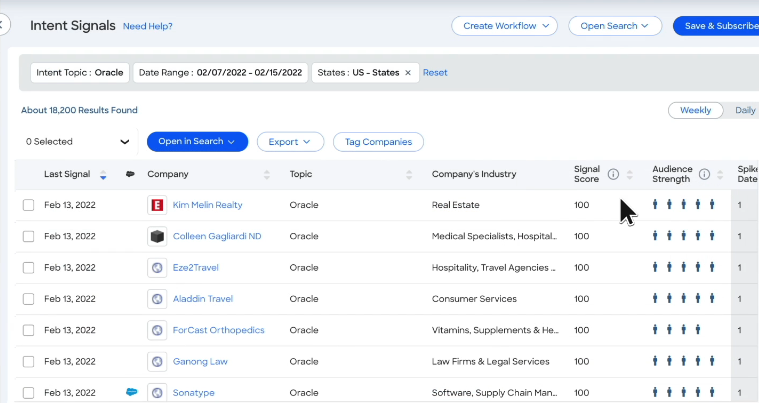
Source: ZoomInfo
ZoomInfo's data also covers global markets: 34M+ company profiles outside North America, 200M+ professional profiles outside NA, and 45M+ mobile numbers outside NA, with international mobile coverage expanded by 1.8 million numbers across six European markets in 2025 alone.
Upcell is currently limited to North America.
For teams with strong data vendor relationships who want flexibility to mix and match, Upcell's orchestration model makes sense. For teams that want a single source of verified data plus intelligence layers built on top, ZoomInfo's ownership model provides depth that orchestration alone can't match.
Pricing models: System-based vs. seat-and-credit
Neither platform publishes fixed prices, but their pricing philosophies differ.
Upcell uses system-based pricing rather than per-seat licensing.
Every deployment includes unlimited Chrome extension seats, so teams can roll out the extension to their entire sales org without incremental per-user costs. Pricing is based on data volume and enterprise requirements, not headcount. Additional usage-based fees apply for data enrichment. All pricing is custom.
This approach appeals to organizations scaling outbound teams quickly. Adding ten new SDRs doesn't trigger a licensing conversation. Customers report 33% reduction in pipeline costs (Harness) and 50% cost savings (Rep.ai), though these savings also depend on the cost of underlying data providers connected through BYOK.
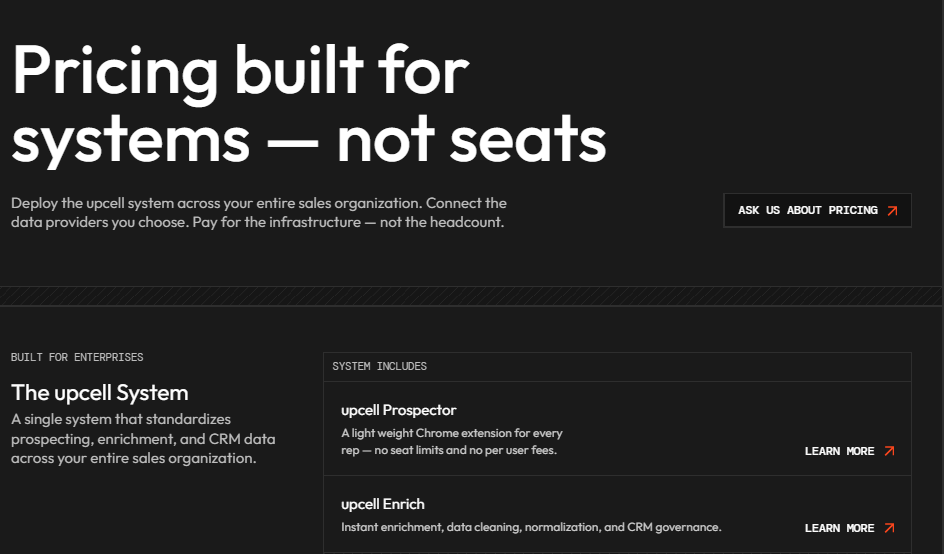
Source: Upcell
ZoomInfo uses a custom-quoted, seat-and-credit-based subscription model. Costs depend on users, monthly credit volume, features, company size, and contract length. ZoomInfo is actively shifting toward consumption-based pricing for enterprise license agreements, API consumption, and AI activity.
ZoomInfo offers two free entry points: ZoomInfo Lite, a permanent free tier with 10 monthly export credits and access to the B2B database, and a 7-day free trial with broader access. Upcell does not publicly offer a free trial or free plan.
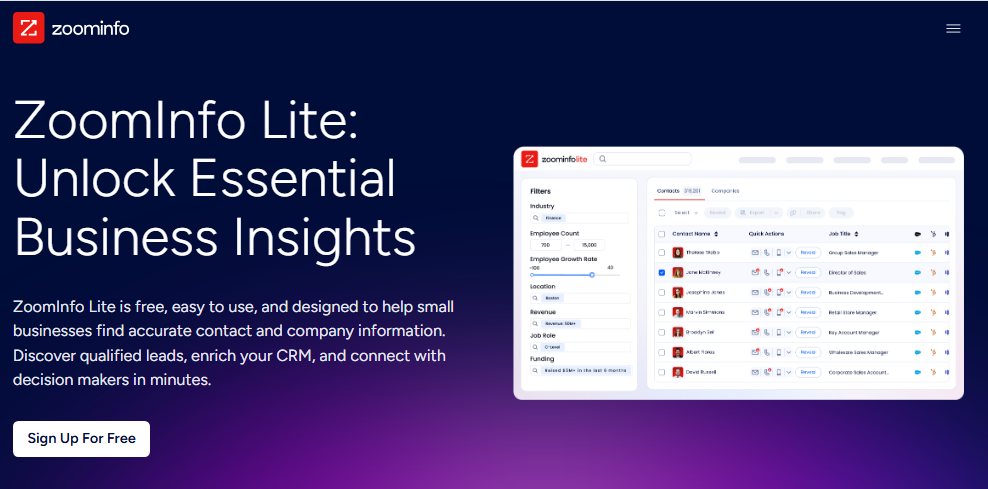
Source: ZoomInfo
The pricing comparison isn't straightforward because the products cover different ground.
Upcell is priced as a workflow and enrichment layer. ZoomInfo is priced as a full intelligence platform that includes data, intent signals, conversation intelligence, marketing automation, and AI tools. Comparing only the prospecting and enrichment function understates what ZoomInfo delivers.
RevOps governance and control
Both platforms address RevOps needs, but at different levels of depth.
Upcell built governance into its prospecting layer. The tagline "Built for reps. Controlled by OPS." reflects this dual design.
Every deployment includes centralized admin controls with role-based permissions, usage analytics, and audit logs. The provider performance analytics give RevOps visibility into which data vendors deliver results and which don't. Records arrive structured, validated, and deduplicated, preventing the messy data buildup that comes from uncontrolled prospecting.
ZoomInfo addresses RevOps governance across a wider surface.
ZoomInfo Operations provides automated deduplication, verification, and multi-vendor enrichment with perimeter protection that blocks bad data at entry. Lead routing uses round-robin, territory rules, and lead-to-account matching using company hierarchies. ZoomInfo Operations also includes multi-vendor enrichment from approximately 60 vendors via a codeless interface, similar to Upcell's BYOK concept but embedded in a broader data quality platform.
GTM Studio extends RevOps capabilities further, enabling audience definition, workflow creation, and play orchestration in natural language. RevOps teams can build and activate GTM plays without engineering tickets.
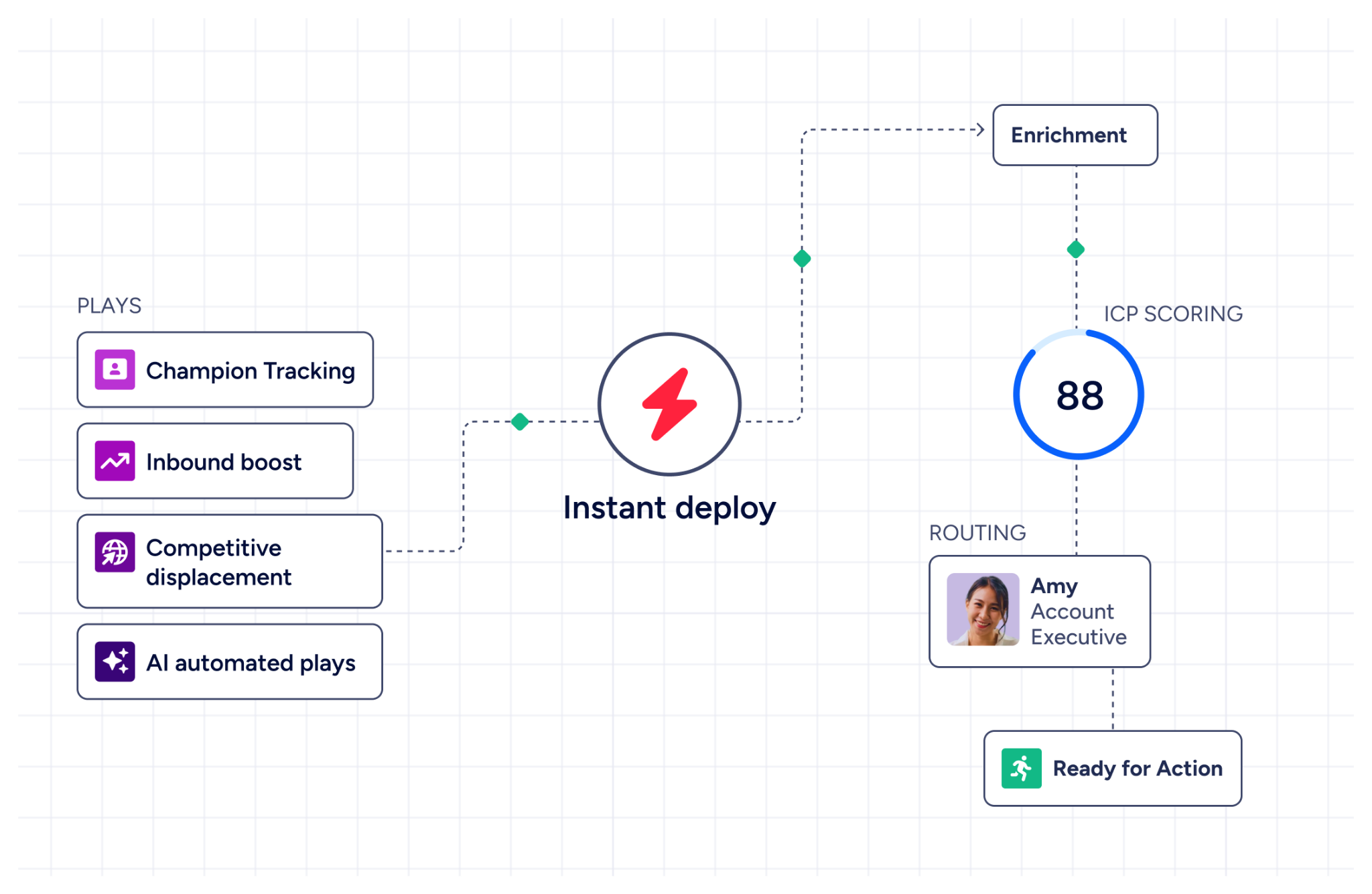
Source: ZoomInfo
The difference: Upcell governs the prospecting workflow. ZoomInfo governs the entire data lifecycle, from enrichment and deduplication through lead routing, intent monitoring, and campaign orchestration.
Integration ecosystem and technical access
Upcell integrates with Salesforce, HubSpot, Outreach, Salesloft, and Gong, plus Google Sheets and Microsoft Excel for data export.
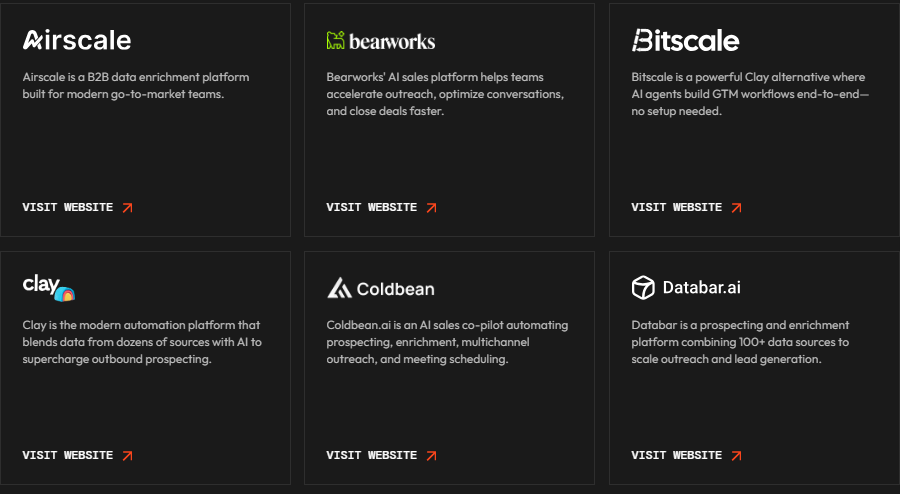
The Data API provides programmatic access to enrichment with endpoints for contact enrichment, email enrichment, social URL enrichment, and usage statistics. Technology partnerships with Clay, Airscale, Bearworks, Bitscale, and others extend the ecosystem.
The integration scope fits a prospecting layer: it connects where reps work and where data flows. But it doesn't extend to marketing automation, advertising platforms, or data warehouses.
Source: Upcell
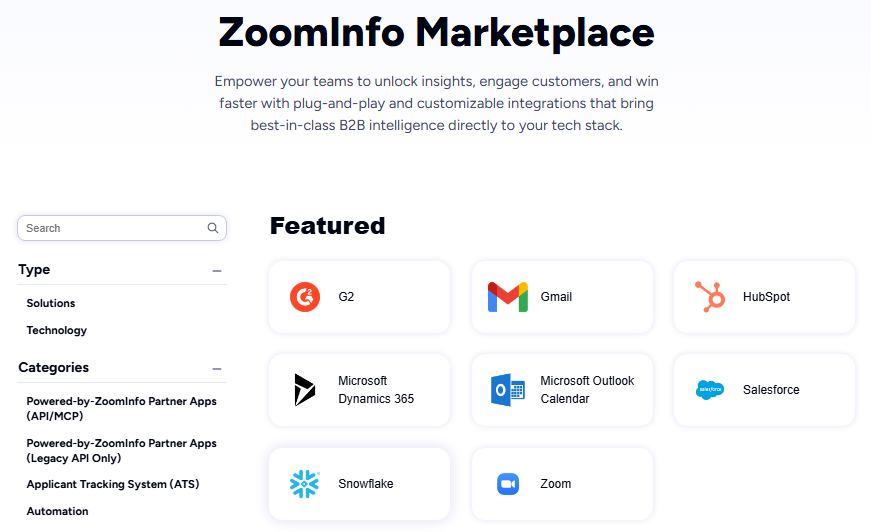
ZoomInfo's App Marketplace lists 120+ integrations across CRM, marketing automation, sales engagement, revenue intelligence, data warehouses, and communications.
Cloud Partners enable direct data ingestion into AWS, Google Cloud, Snowflake, and Databricks. The Enterprise API provides programmatic access to search, enrich, AI intelligence (via GTM Workspace), audience management, and engagement data.
ZoomInfo's MCP server connects AI models directly to ZoomInfo's data. Users interact through natural language in Claude, ChatGPT, or other MCP-compatible tools. This positions ZoomInfo as infrastructure for AI agents, not just a tool with an API.
API access is included in all relevant ZoomInfo plans, reinforcing the open-access approach. For teams building custom GTM workflows, ZoomInfo provides more connection points across more systems.
Source: ZoomInfo
Security and compliance
Upcell states it complies with GDPR and CCPA and uses physical and electronic security measures including firewall protections, encryption, hashing, and access controls. Every deployment includes role-based permissions and audit logs.
However, no information about SOC 2, ISO 27001, or other third-party security certifications is publicly available. Data is stored in the United States, and the company does not market services to residents of Europe, the United Kingdom, or Switzerland.
ZoomInfo maintains certifications renewed annually: ISO 27001, ISO 27701, SOC 2 Type II, TRUSTe GDPR, and TRUSTe CCPA. It's a registered data broker in California and Vermont and maintains a dedicated Trust Center.
For enterprises in regulated industries (financial services, healthcare, government), ZoomInfo's compliance infrastructure addresses requirements that Upcell hasn't publicly documented.
ZoomInfo vs. Upcell: Which should you choose?
The choice between these platforms depends on what problem you're solving.
Choose Upcell if:
You already have data providers you trust and want a better workflow for using them
Your primary pain point is prospecting friction (too many tabs, manual entry, inconsistent data capture)
You want to benchmark provider performance with transparent analytics before committing to long-term contracts
You're scaling SDR/BDR teams and want unlimited seats without per-user licensing pressure
Your market focus is North America and your prospecting happens primarily on LinkedIn
You need a tool that reps adopt immediately without training
You don't need intent signals, conversation intelligence, or marketing automation from the same platform
Choose ZoomInfo if:
You need a verified, proprietary B2B database rather than routing enrichment through third-party keys
Intent signals and buyer behavior tracking are critical to how you prioritize accounts
Your team needs conversation intelligence, website visitor identification, or marketing automation alongside prospecting
You operate globally and need international contact coverage beyond North America
You want AI-powered account research, outreach generation, and deal intelligence through GTM Workspace
RevOps needs to orchestrate GTM plays, enrich data at scale, and route leads automatically through GTM Studio
You're building custom AI agents or workflows that need programmatic access to B2B intelligence via APIs and MCP
Compliance certifications like ISO 27001, SOC 2 Type II, and ISO 27701 are requirements, not preferences
ZoomInfo serves teams that need the data, the intelligence, and the execution platform in one place. Start with ZoomInfo Lite for free access to the B2B database, or request a free trial for broader capabilities.
These platforms don't occupy the same category.
Upcell is a prospecting workflow and enrichment orchestration layer, focused and effective at what it does. ZoomInfo is a full go-to-market intelligence platform with proprietary data, an AI context graph, and execution tools for every GTM function.
If your challenge is getting reps to prospect more efficiently with the data tools you already pay for, Upcell addresses that directly. If your challenge is broader (finding in-market buyers, understanding why deals stall, coordinating sales and marketing around shared intelligence), ZoomInfo provides the depth that a workflow layer alone can't deliver.
Other prospecting and enrichment tools compared:
