
Choosing between Act! vs. HubSpot for your CRM often comes down to these five questions:
Do you need a simple contact manager with built-in email marketing, or a full customer platform spanning sales, marketing, service, and content?
Is your team 1–10 people managing relationships by hand, or a growing organization that needs automation and AI across departments?
Are you looking for an affordable all-in-one tool you can set up yourself, or a scalable platform you'll grow into over years?
How important is the quality of contact data flowing into your CRM, and how do you keep that data accurate over time?
Do you need a CRM that just records what happened, or one that helps you understand why deals move and what to do next?
In short, here's what we recommend:
Act! is the small-business choice for teams that want CRM and email marketing in one package. Founded in 1987 as one of the first contact management applications ever built, Act! has spent nearly 40 years refining how independent professionals and small teams organize contacts, track opportunities, and send email campaigns. With plans starting at $30/user/month, it packs more functionality than you'd expect at that price, including marketing automation at its top tier. The trade-off: a narrower feature set, a user interface that reviewers call dated, and fewer third-party integrations than modern cloud-first platforms.
HubSpot is the customer platform for growing companies that need marketing, sales, service, and content tools working from shared data. With 288,706 customers across 135+ countries and a free CRM tier, HubSpot has become the default for teams that want to start simple and scale without switching platforms. Its AI layer, Breeze, automates tasks from prospecting to customer service. The catch: pricing grows complex as you add Hubs and seats, mandatory onboarding fees at Professional and Enterprise tiers raise upfront costs, and most teams use only a fraction of what they pay for.
Both Act! and HubSpot are strong CRMs. But neither solves a fundamental problem: the quality and completeness of B2B data flowing into your system. A CRM is only as good as what's inside it, and most CRMs capture only a fraction of the context your team needs to win deals. That's where ZoomInfo comes in.
ZoomInfo is a go-to-market platform built on the industry's largest B2B dataset: 500M contacts, 100M companies, 135M+ verified phone numbers, and 200M+ verified business email addresses. Rather than replacing your CRM, ZoomInfo enriches it. Its GTM Context Graph (an intelligence layer that processes 1.5B+ data points daily) fuses this data with your CRM records, conversation transcripts, and behavioral signals to reveal not just what happened in your pipeline, but why. Sellers access this intelligence through GTM Workspace, marketers and RevOps through GTM Studio, and developers through APIs and MCP in any tool. ZoomInfo integrates with both Act! and HubSpot, making either CRM more effective.
If you want to see how ZoomInfo's data and intelligence can improve your go-to-market execution, start with a free trial.
Act! vs. HubSpot vs. ZoomInfo at a glance
Act! | HubSpot | ZoomInfo | |
|---|---|---|---|
Primary function | SMB CRM + email marketing | Full customer platform (CRM, marketing, sales, service, content) | B2B data intelligence + GTM execution |
Starting price | $30/user/month (billed annually) | Free CRM; paid from $15/seat/month | Consumption-based pricing; ZoomInfo Lite (free tier) available |
Contact database | Your contacts only | Your contacts only (up to 15M records) | 500M contacts, 200M+ verified business emails, 135M+ verified phones |
Marketing automation | Built-in (email campaigns, lead scoring at Ultimate tier) | Full suite (email, social, ads, content, SEO) | Account-based marketing with native DSP and intent signals |
AI capabilities | AI History Summary, AI Writing Assistant | Breeze AI agents across all Hubs | GTM Context Graph with AI-powered account intelligence |
Integrations | Outlook, Gmail, Zapier, limited native integrations | 120+ partner integrations, APIs, MCP for any tool | |
Free plan | 14-day trial | Permanent free CRM (2 users) | ZoomInfo Lite (permanent, 10 credits/month) |
Best for | Independent professionals and small teams (1–10 users) | Growing companies scaling across departments | B2B teams that need accurate contact data and deal intelligence |
CRM for small businesses vs. CRM for scaling companies
Act! and HubSpot solve the same core problem (organizing customer data and driving revenue) but they serve businesses at different stages.
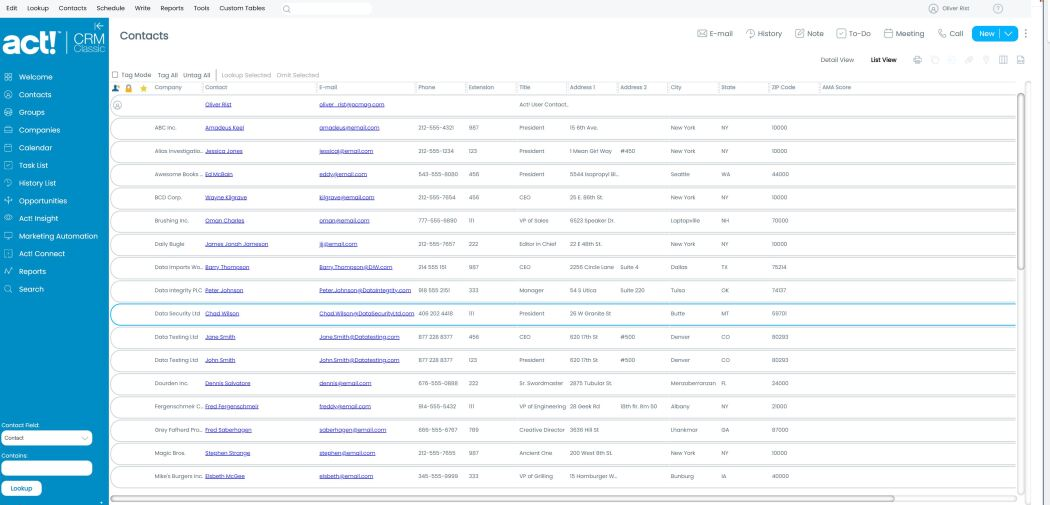
Act! is designed for the professional who wears every hat. An insurance broker managing 5,000 clients. A financial advisor tracking policy renewals. A manufacturing rep who needs contact histories and email campaigns without hiring a marketing team.
Source: Act!
The product reflects this: everything fits in one interface, one subscription, one learning curve. Custom Industry Tables let businesses attach industry-specific data (insurance policies, mortgage details, service contracts) directly to contact records with 11 pre-built templates. No developer required.
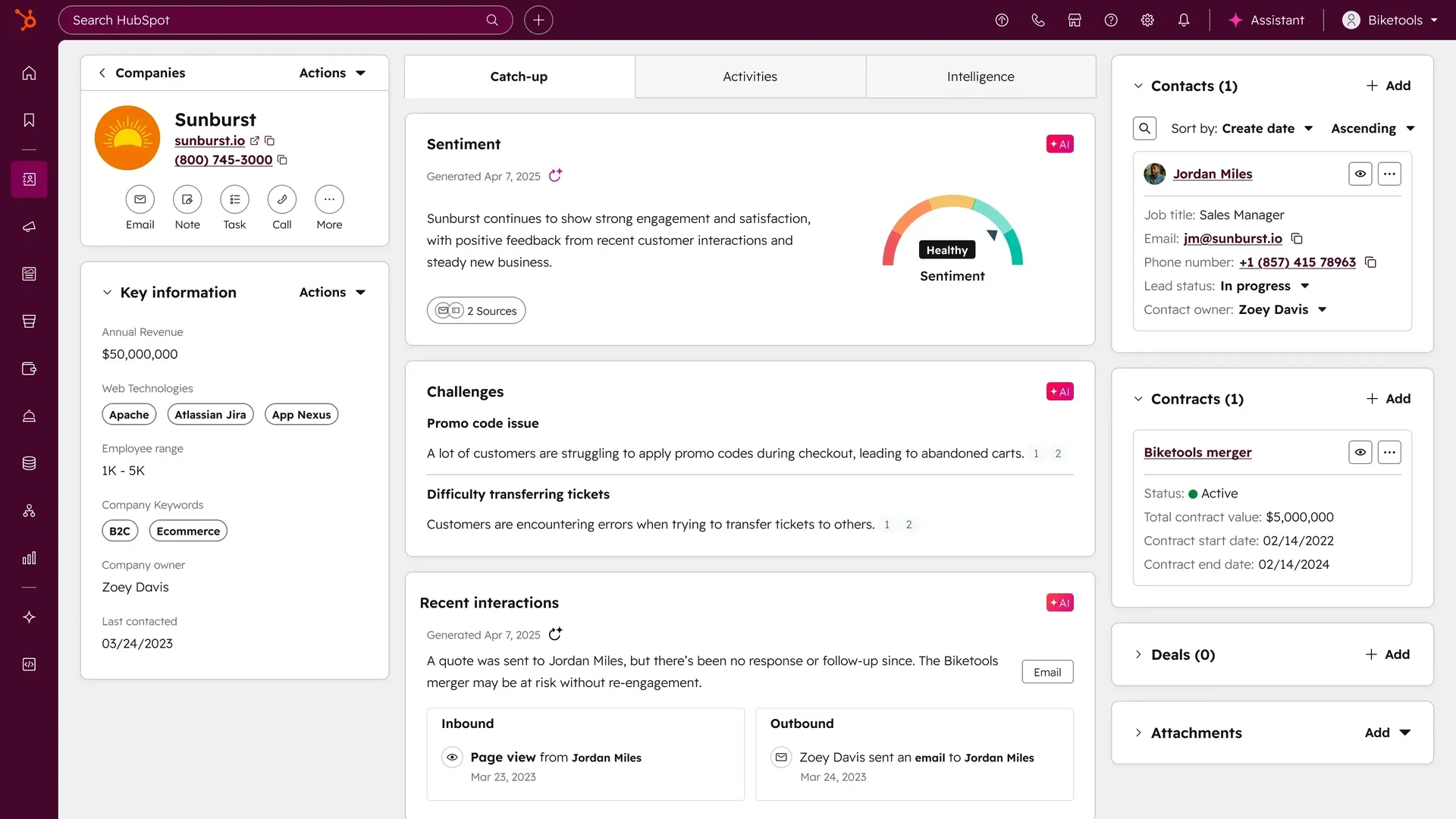
HubSpot is built for the company outgrowing its first tools. What starts as a free CRM for a five-person sales team becomes a full platform connecting marketing campaigns to pipeline to customer service tickets.
Source: HubSpot
The Smart CRM acts as a shared data layer across six Hubs, so when marketing captures a lead, sales sees the full engagement history, and service sees the deal context when a support ticket arrives.
The gap between these two approaches becomes clear at scale. Act! works well for a team of five managing 20,000 contacts. HubSpot works well for a team of 50 managing 200,000 contacts across marketing, sales, and service. The question is which stage your business is at, and whether you need a focused tool or a platform you'll grow into. Teams weighing Act! against other CRMs at similar stages may also want to see how it compares to Salesforce and Zoho CRM.
Marketing automation: bundled simplicity vs. full-suite power
This is where Act! outperforms its price point, and where HubSpot shows its platform breadth.
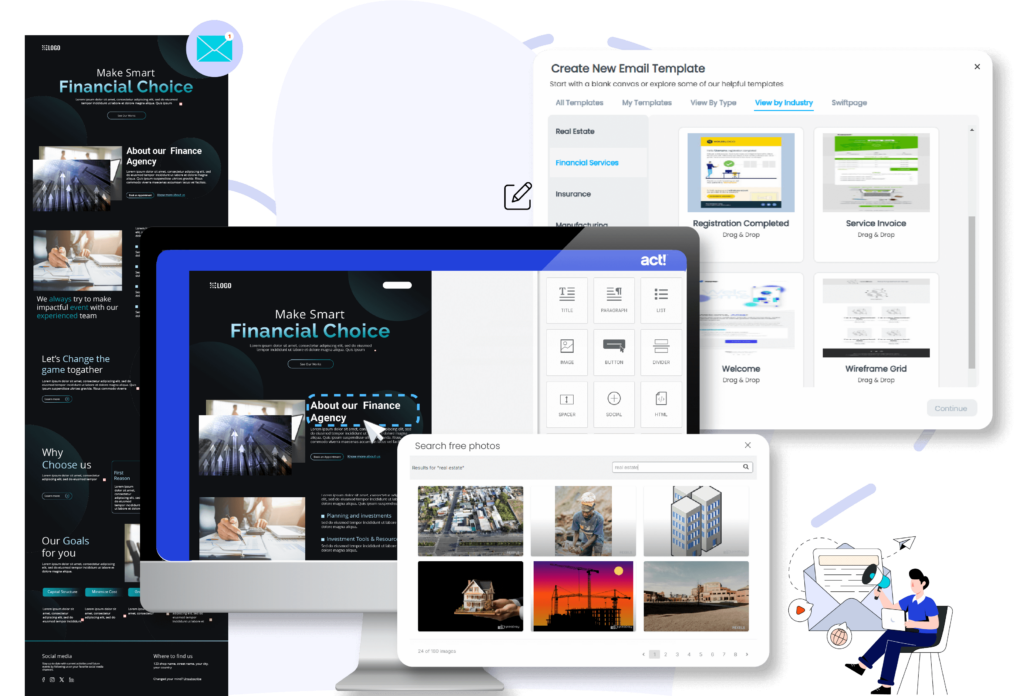
Act! bundles email marketing into every plan. At the Standard tier ($30/user/month), you get 2,500 email sends per month, a drag-and-drop editor with 170+ templates, and drip campaign workflows. Step up to Professional ($45/user/month) and you add response-driven nurture campaigns, landing pages, web forms, and an AI Writing Assistant.
Source: Act!
The Ultimate tier ($60/user/month) unlocks full marketing automation with lead scoring, progressive profiling, website activity tracking, and A/B testing, including 50,000 email sends per month.
For a small business that would otherwise pay $30/month for a CRM plus $20–50/month for Mailchimp or a similar email tool, Act!'s bundled approach saves money. The Automated Marketing-to-CRM Workflow deserves a mention: when a prospect opens an email, clicks a link, or fills out a form, Act! automatically creates and assigns a prioritized sales activity to the right rep. No separate integration. No middleware.
HubSpot's marketing operates on a different scale. Marketing Hub covers email, social media, ads, landing pages, SEO, content marketing, and multi-touch attribution, all connected to the same CRM data.
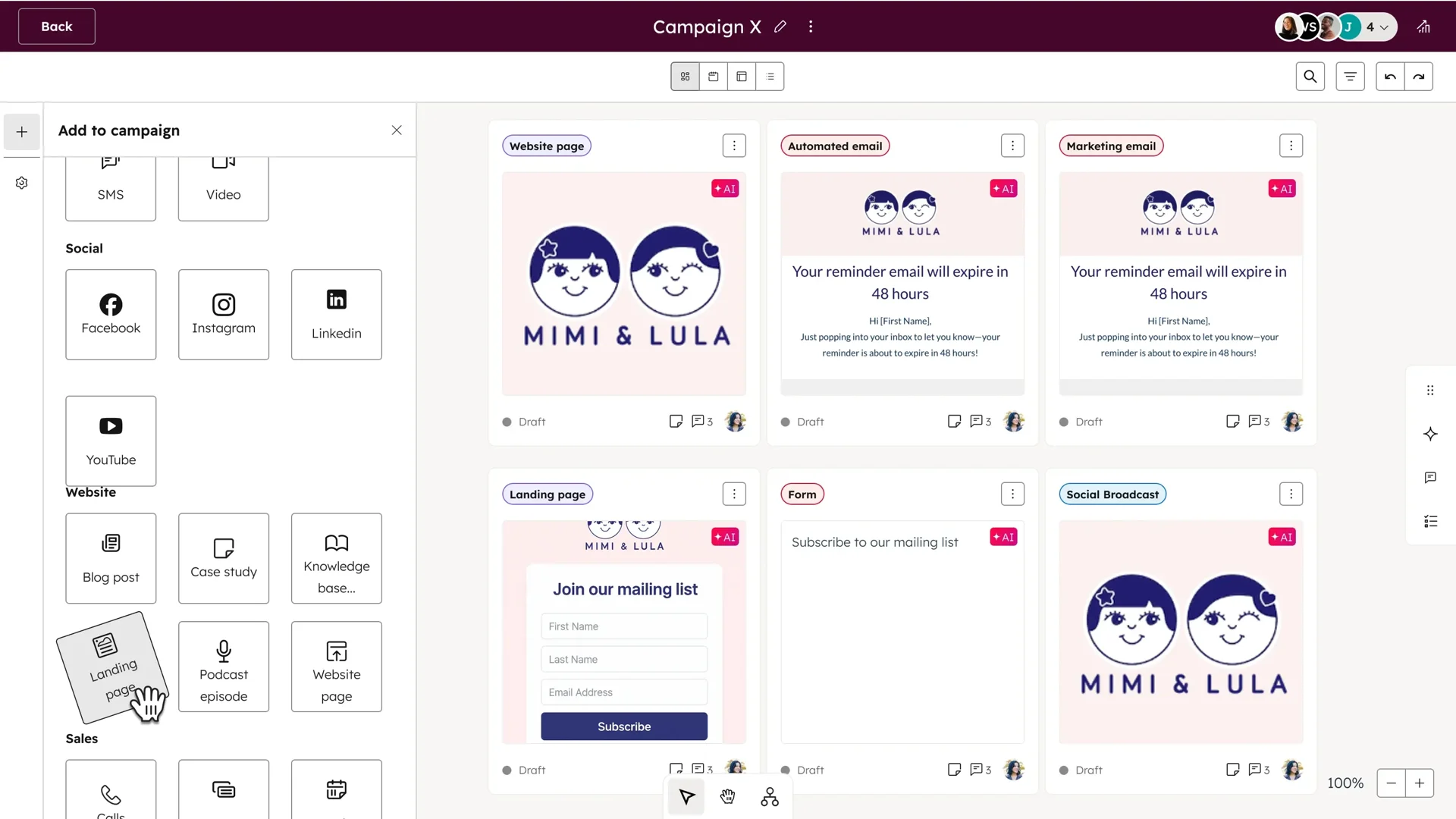
Source: HubSpot
AI-powered audience segmentation, Content Remix for repurposing assets across channels, and a Breeze Social Agent that automates posting are capabilities Act! doesn't offer.
But this breadth costs more. Marketing Hub Professional starts at $800/month (annual billing) with a $3,000 mandatory onboarding fee, and includes only 2,000 marketing contacts. Enterprise jumps to $3,600/month with a $7,000 onboarding fee. For a small business sending 5,000 emails a month to a segmented list, Act!'s $60/month Ultimate plan does the job at a fraction of HubSpot's cost.
Data quality determines CRM success, and most CRMs don't solve it
Here's what neither Act! nor HubSpot addresses well: where does the data in your CRM come from, and how do you keep it accurate?
Act! relies on data you enter manually, import from spreadsheets, or capture through web forms.
HubSpot does the same, with some AI-powered data enrichment that pulls from email threads and company websites.
Both platforms store and organize whatever you put into them. Neither tells you who you're missing, whether the contact info you have is still valid, or which accounts in your market are actively researching solutions like yours.
ZoomInfo fills this gap. With its B2B database of 500M contacts, 200M+ verified business email addresses, and 135M+ verified phone numbers, ZoomInfo provides the raw material that makes any CRM useful.
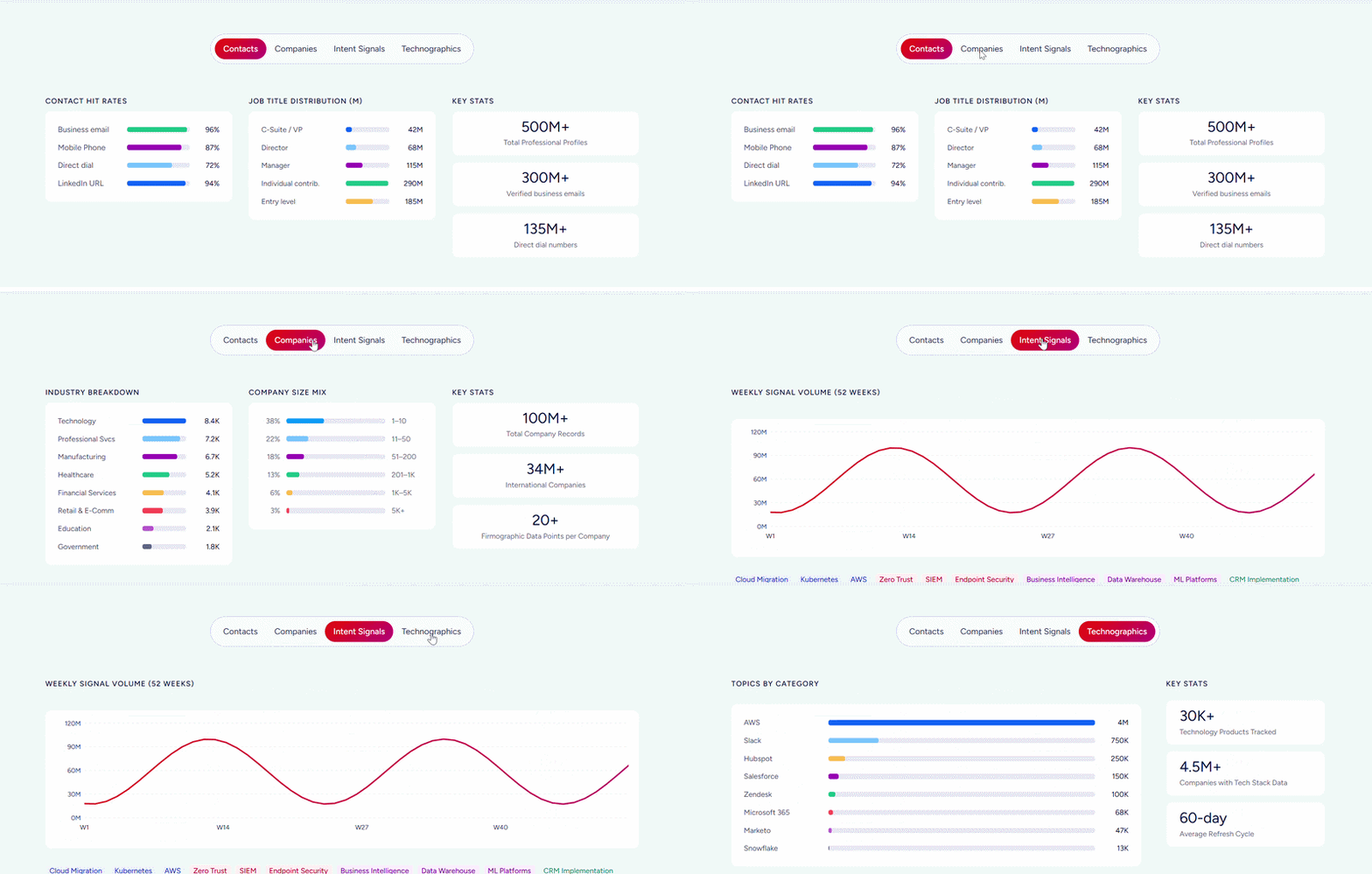
The data comes from multiple sources: automated ML scanning of 28 million site domains daily, a contributory network of 200,000+ users who share data back, and 300+ human researchers verifying accuracy. First-party data reaches up to 95% accuracy.
This goes beyond a contacts database. ZoomInfo tracks company attributes for 100M companies, technographics across 30,000+ technologies, buyer intent signals from 210 million IP-to-Organization pairings, and org charts with verified direct dials.
In a Fortune 500 competitive RFP analyzing 25 million contacts across vendors, the independent consultant concluded that "no other competitor came even close."
ZoomInfo integrates with both Act! and HubSpot to push enriched, verified contact data directly into your CRM. For HubSpot users, ZoomInfo's native integration syncs contacts, companies, and intent signals into HubSpot records. For Act! users, integration runs through the Act! Connections ecosystem.
Either way, the result is a CRM that starts with complete, accurate data rather than whatever your team remembers to enter.
For a closer look at how HubSpot and ZoomInfo compare as go-to-market tools, see our HubSpot vs. ZoomInfo comparison.
"ZoomInfo gives us the information we need to execute. It's already there, so we can be three steps ahead." — William Kenimer, VP of Revenue Operations (Vensure)
AI capabilities: practical tools vs. platform intelligence
All three platforms have invested in AI, but their approaches reflect their different missions.
Act!'s AI is focused and practical. The AI History Summary generates a recap of recent contact interactions (key moments, suggested next steps) and appears when you open a contact record.
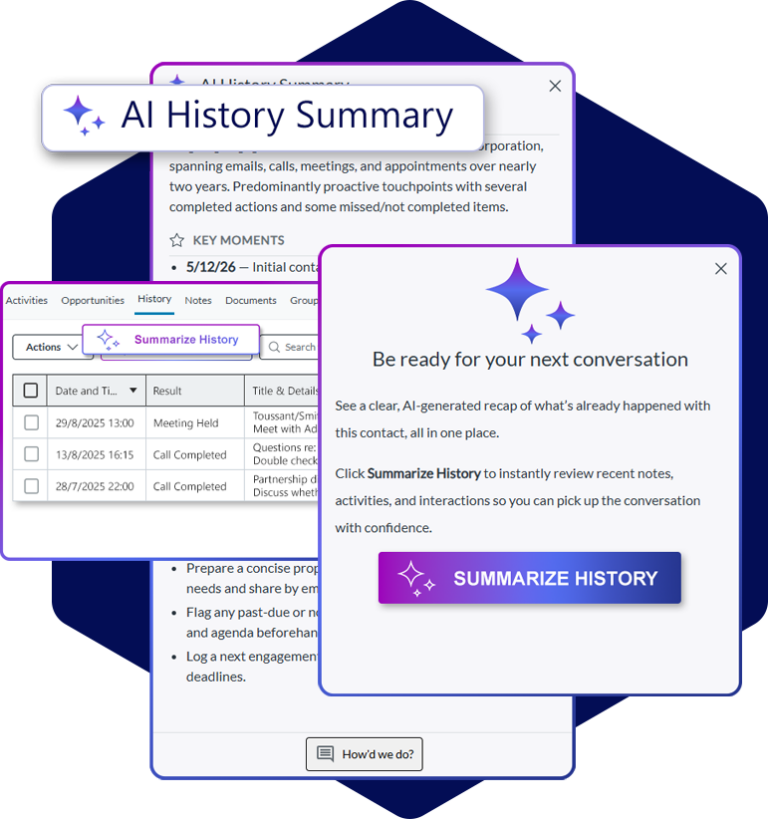
Source: Act!
The AI Writing Assistant helps draft email campaigns and landing page copy. Both are included at the Professional tier ($45/user/month) with no separate AI subscription. Act! designs its AI with a human-in-the-loop philosophy: every suggestion is yours to accept, modify, or ignore.
The roadmap includes Contact Enrichment, AI Automatic Task Extraction, and Voice/Call Ingestion, but these are still planned or exploratory. Compared to what HubSpot and ZoomInfo offer today, Act!'s AI is early-stage.
HubSpot's Breeze AI is broader and more autonomous. The Customer Agent resolves customer inquiries across chat, email, WhatsApp, and voice.
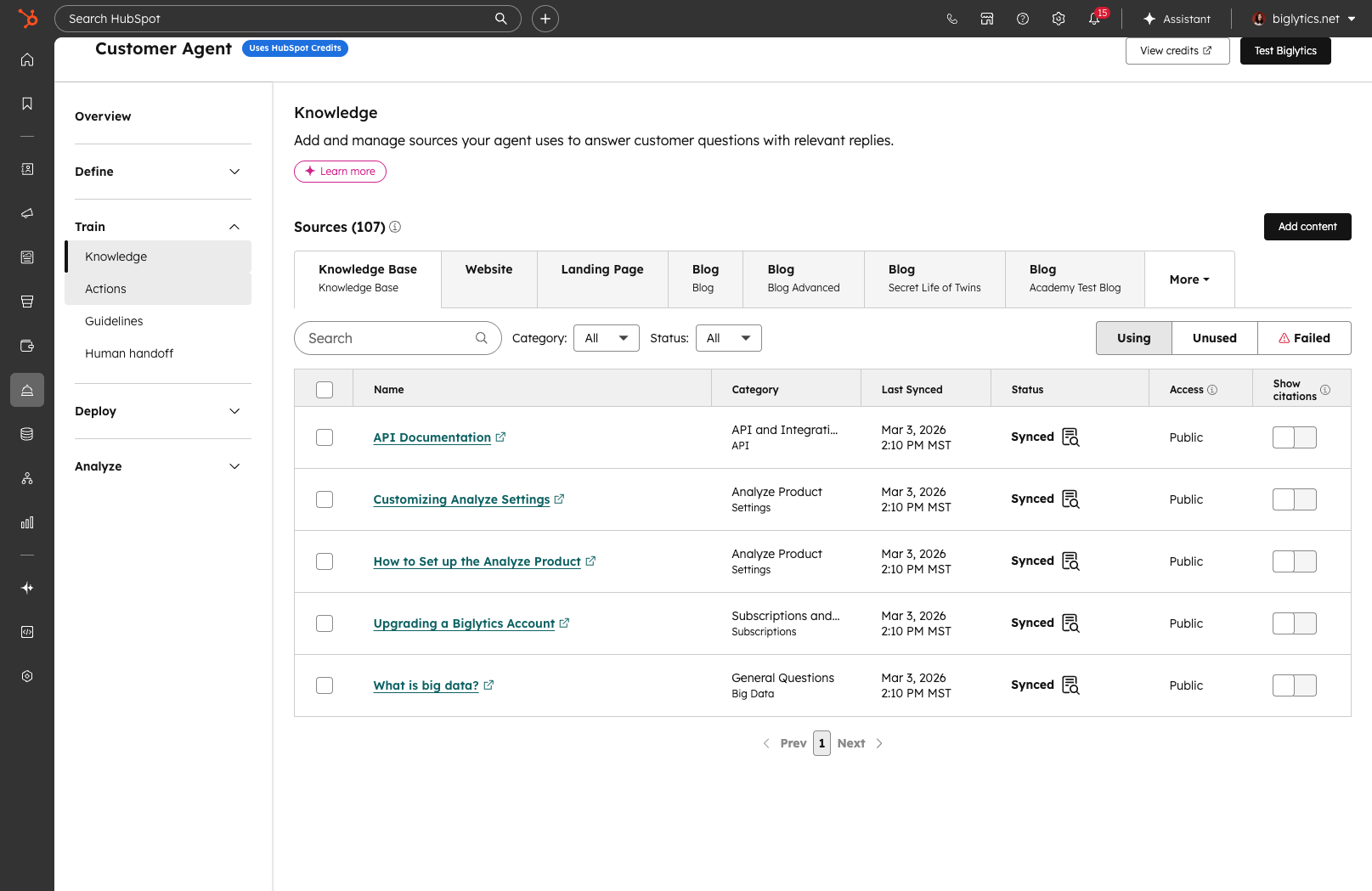
Source: HubSpot
The Prospecting Agent monitors buying signals, drafts personalized outreach, and can run autonomously.
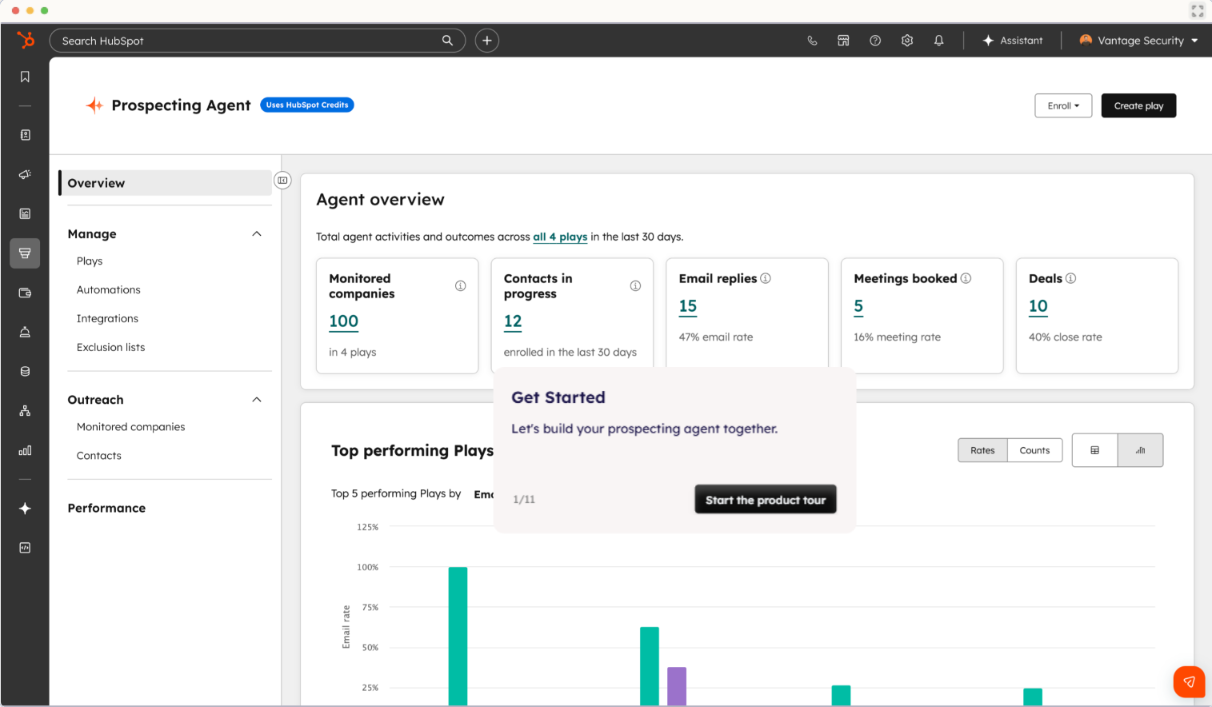
Source: HubSpot
The Data Agent answers natural-language questions about your customer data. Because Breeze runs across all HubSpot Hubs, the AI benefits from shared data context.
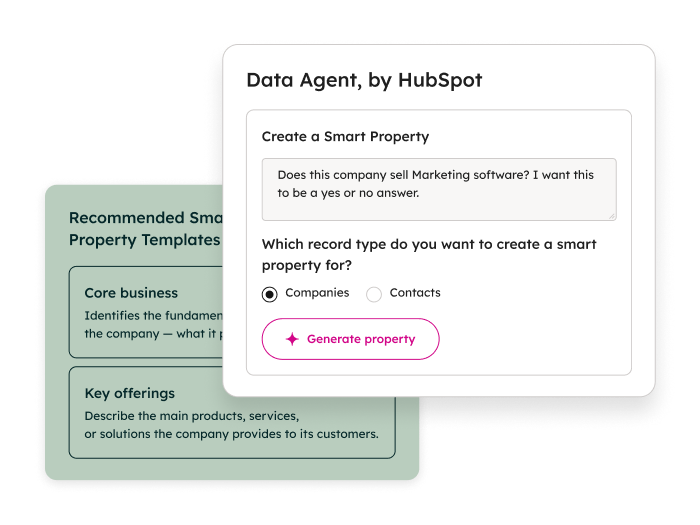
Source: HubSpot
ZoomInfo's intelligence operates at a different level. The GTM Context Graph unifies CRM records, conversation transcripts, intent signals, and behavioral data to explain why deals move or stall.
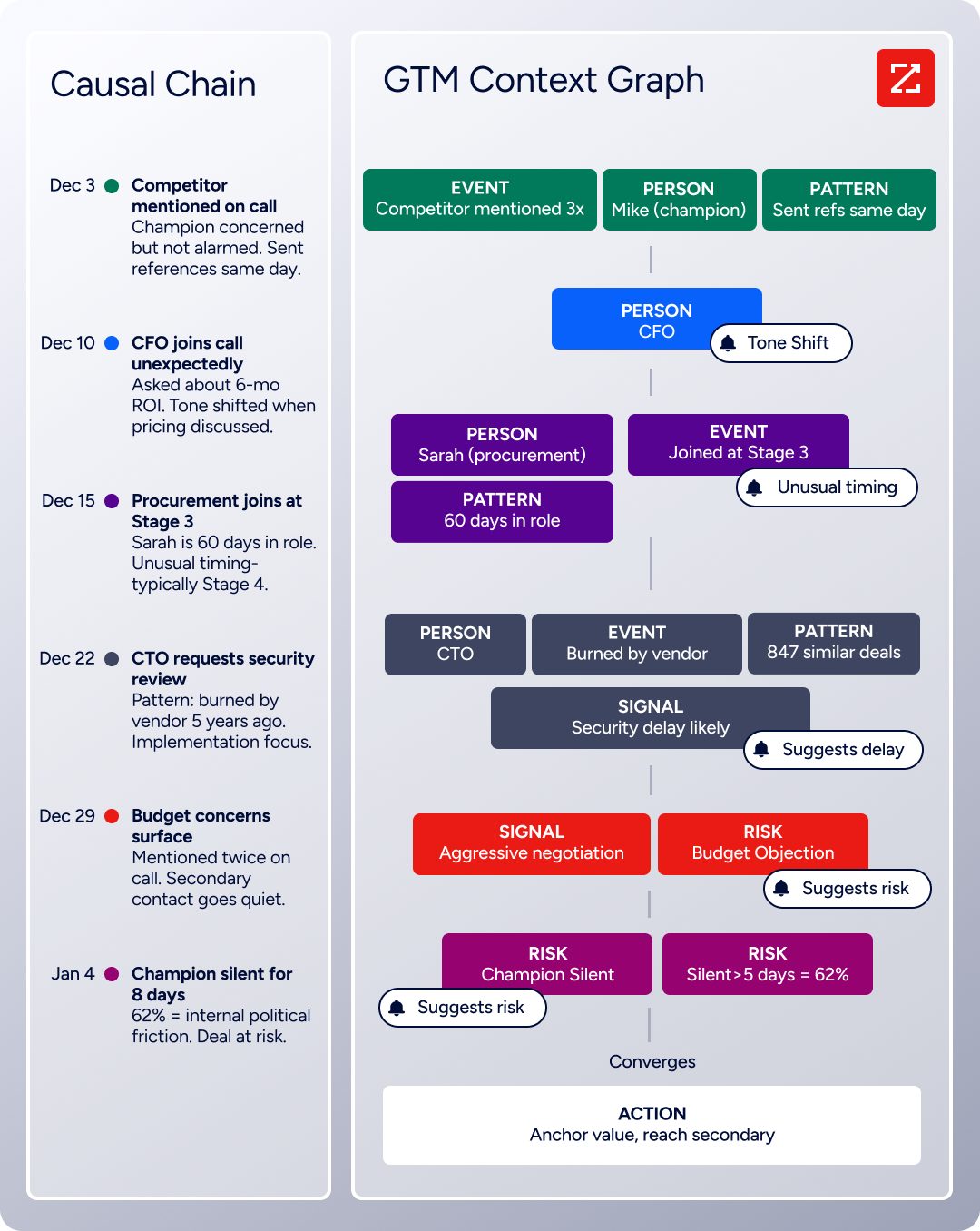
As ZoomInfo's CPO Dominik Facher writes: "The CRM recorded the state change. It has no record of why it happened." The GTM Context Graph captures that context, such as executive sponsorship entering at a specific stage combined with ROI-focused questions matching patterns behind closed-won deals.
In GTM Workspace, this intelligence surfaces as prioritized account feeds, AI-drafted outreach that addresses specific deal concerns, and one-click account briefs pulling CRM history, company news, and stakeholder context into a 10-second summary.
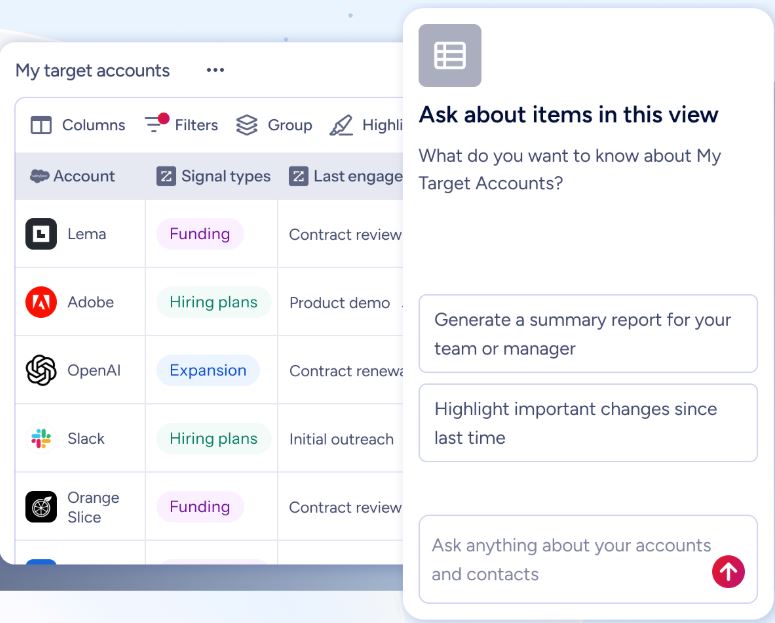
Seismic attributed 39% of active pipeline to opportunities identified or influenced by ZoomInfo signals, and reported 54% productivity gains.
"That combination of our internal CRM data, external signals, and AI that's given all that context has helped us craft very specific account- and persona-based messages. And people have responded to them right away." — Toby Carrington, CBO (Seismic)
Sales pipeline management compared
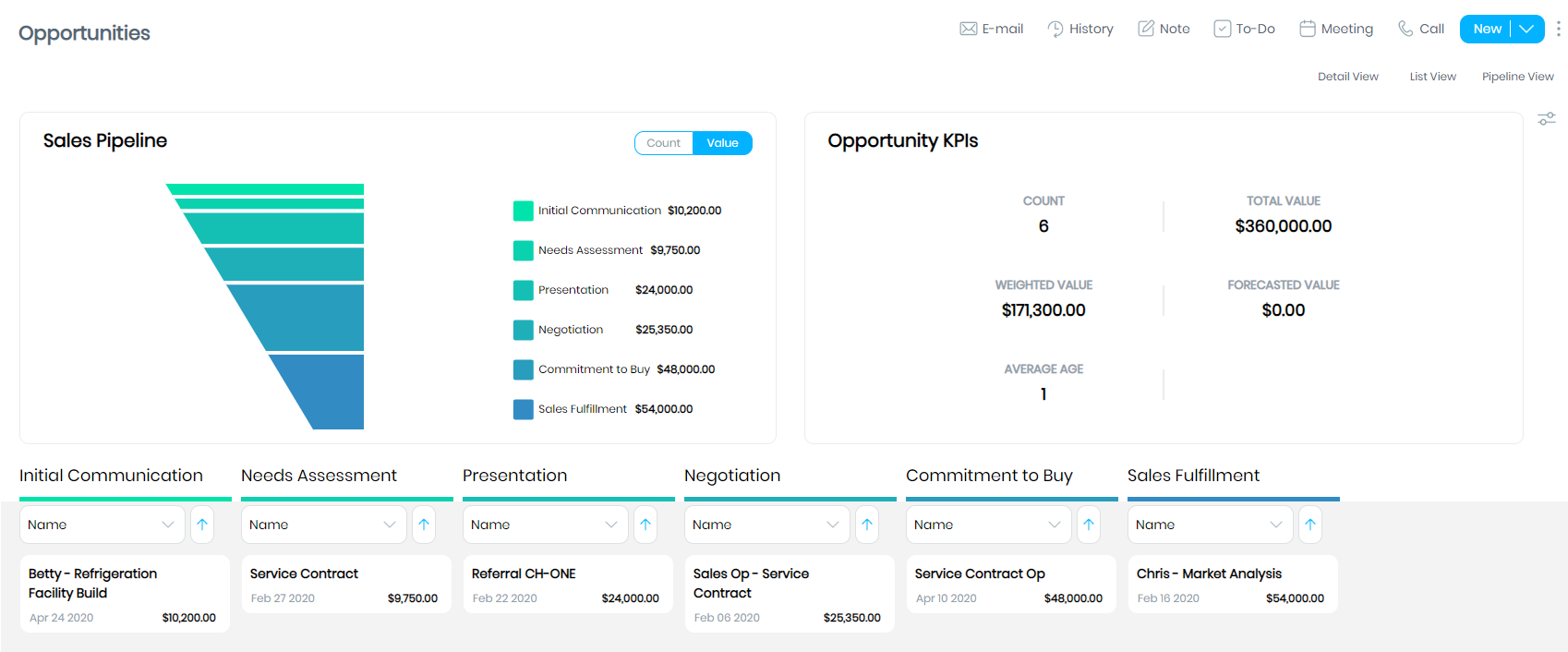
Act!'s pipeline tools cover the essentials. The Sales Pipeline Management View shows every open deal with KPIs (close rate, closed-won value, open deals), filterable by product, rep, territory, deal stage, and region. A Kanban board lets reps drag deals between stages.
Source: Act!
Interactive Quotes let reps create branded quotes, send them with real-time view notifications, and collect payment on the spot through Act! Payments. That quote-to-cash flow (no external portal, no separate payment processor) is a real differentiator for small businesses that need to close and collect quickly.
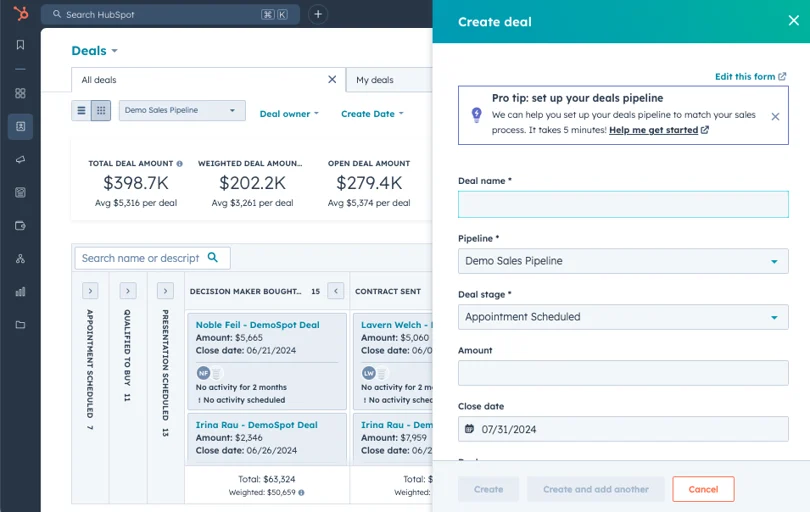
HubSpot's Sales Hub goes deeper. Deal Pipelines support customizable stages, deal scoring, and task assignment.
Source: HubSpot
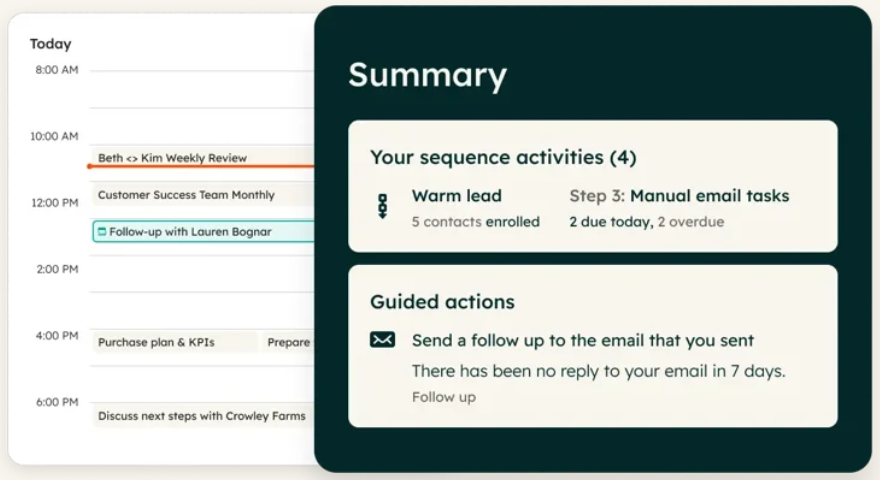
AI Guided Selling surfaces prioritized queues and daily action summaries.
Source: HubSpot
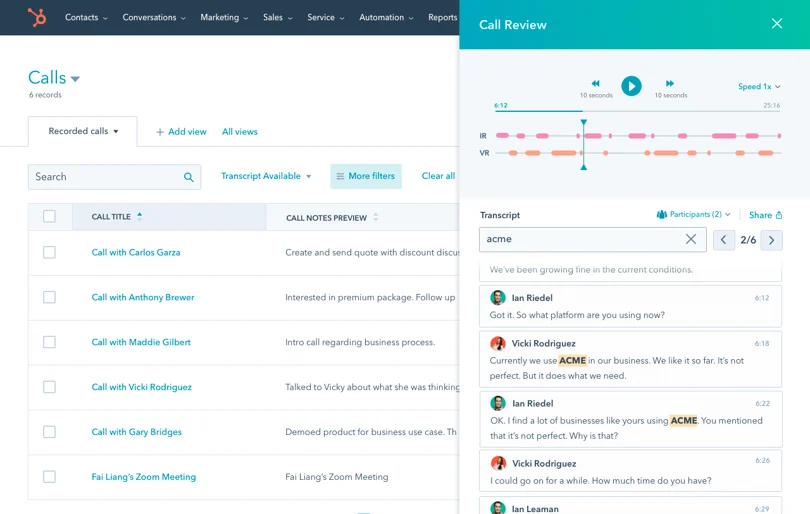
Conversation Intelligence records and transcribes calls for coaching.
Source: HubSpot
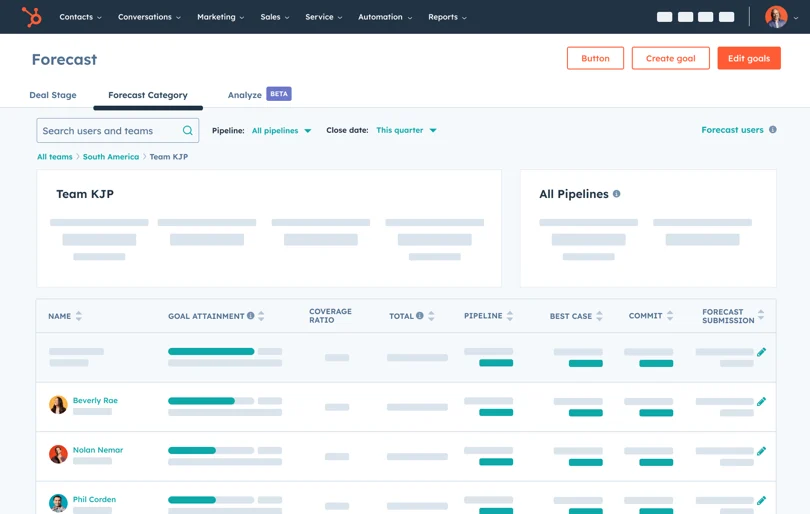
Forecasting provides AI-powered revenue projections.
Source: HubSpot
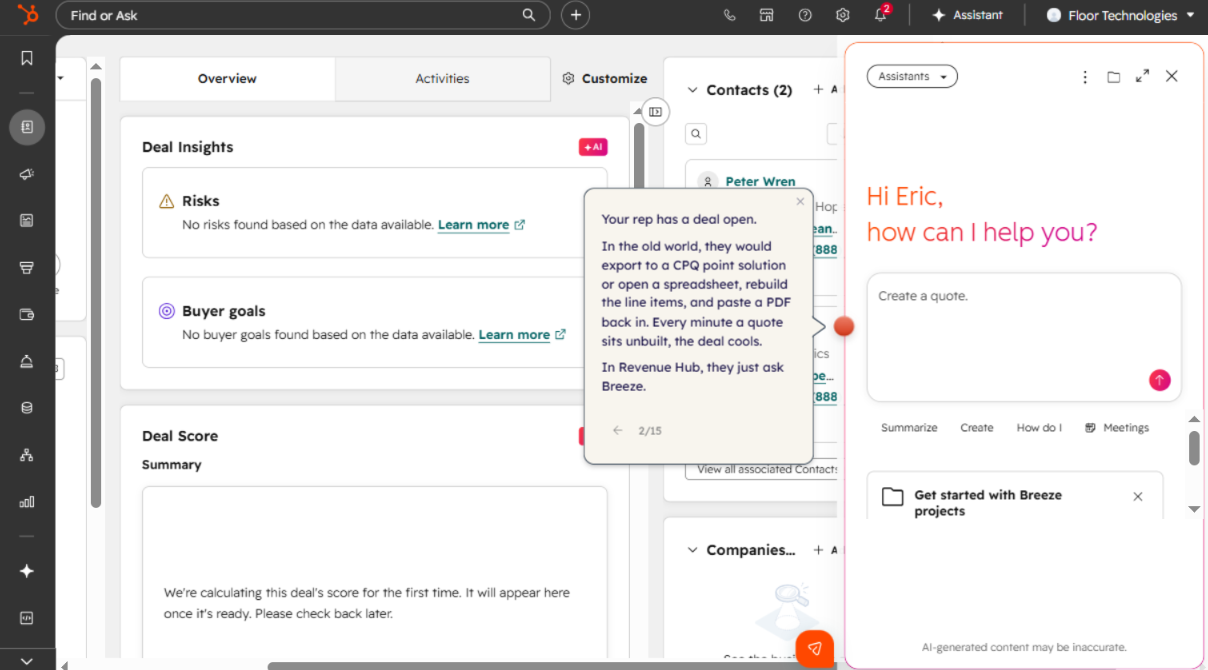
And Commerce Hub handles the quote-to-revenue cycle with CPQ, e-signatures, invoicing, and subscription billing in one flow.
Source: HubSpot
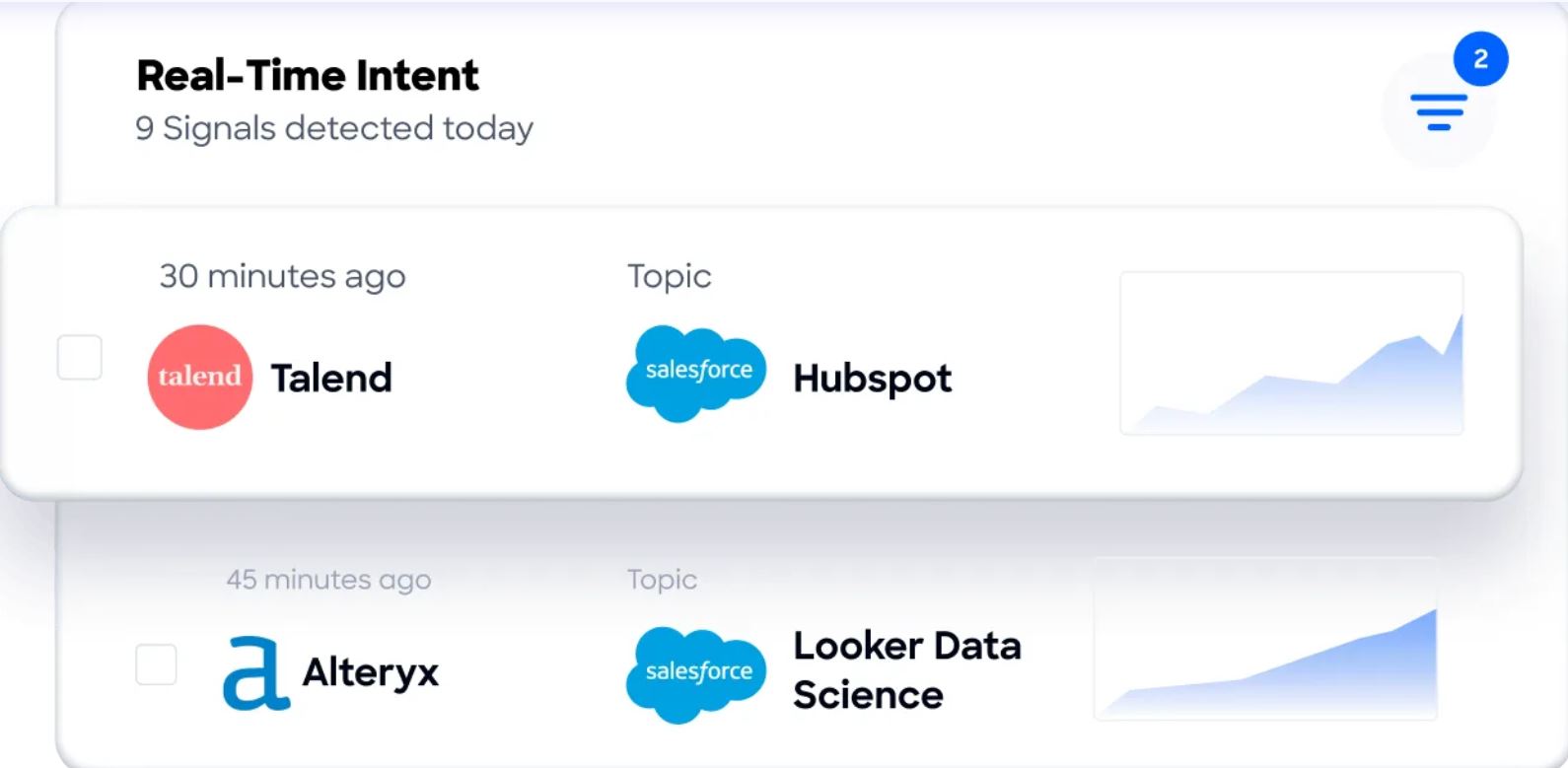
ZoomInfo doesn't replace either CRM's pipeline view. It enriches it. Buyer Intent signals identify when accounts are actively researching solutions.
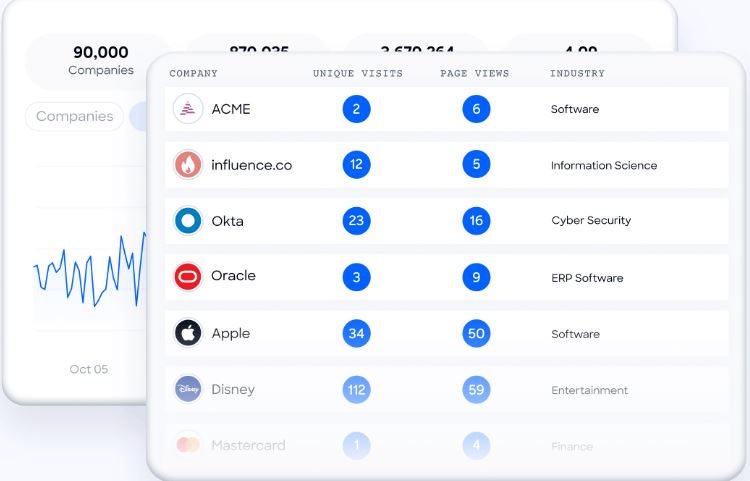
WebSights reveals which companies visit your website before they fill out a form.
Chorus captures every customer call and extracts deal intelligence: who's championing, who's blocking, what competitive mentions predict about deal risk. This context flows into whichever CRM you use, giving reps insight that pipeline stage labels alone can't provide.
Pricing: affordable simplicity vs. scalable complexity vs. custom intelligence
The pricing models reflect three different philosophies about who the customer is and what they need.
Act! keeps it simple. Three tiers, all per-user-per-month billed annually:
Plan | Price | Email Sends | Key Additions |
|---|---|---|---|
$30/user/month | 2,500/month | Full CRM, basic email marketing, interactive quotes, dashboards | |
$45/user/month | 25,000/month | AI features, nurture campaigns, landing pages, accounting integration | |
$60/user/month | 50,000/month | Marketing automation, lead scoring, Custom Industry Tables, customer portal |
No mandatory onboarding fees. Free onboarding with a dedicated Account Manager at every tier. A 14-day free trial to start.
HubSpot is free to start but complex to scale. The free CRM is generous (unlimited contacts, basic tools, 2 users). But as needs grow, costs layer quickly:
Starter Customer Platform: $15/seat/month (annual) bundles Starter editions of all Hubs
Marketing Hub Professional: $800/month + $3,000 onboarding fee
Sales Hub Professional: $90/seat/month (annual) + $1,500 onboarding fee
Marketing Hub Enterprise: $3,600/month + $7,000 onboarding fee
A critical detail: when subscribing to multiple Hubs at different tiers, all Core Seats are billed at the rate of the highest tier. A company mixing Marketing Hub Enterprise with Sales Hub Professional pays Enterprise-tier rates for every seat.
ZoomInfo uses consumption-based pricing. No published prices for paid tiers. Cost depends on users, credit volume, features, and contract length. However, ZoomInfo offers two free entry points: ZoomInfo Lite (permanent free tier with 10 monthly export credits, access to the B2B database, Chrome extension, and WebSights Lite) and a 7-day free trial of the full platform.
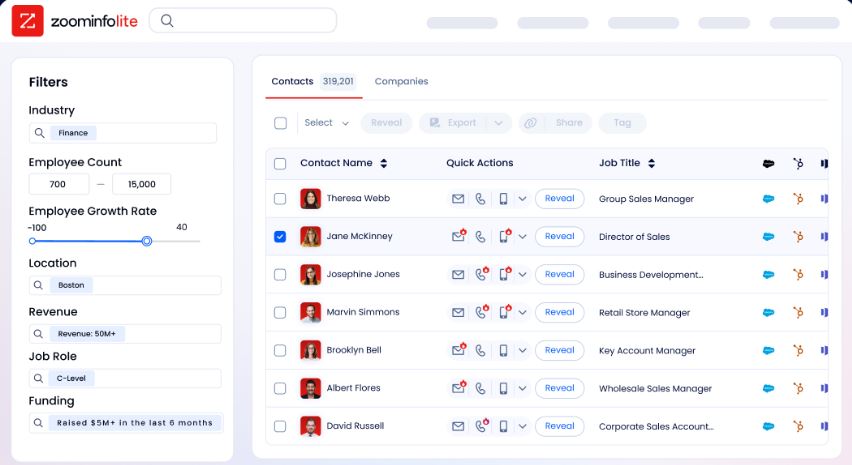
For a solo financial advisor spending $60/month on Act! Ultimately, ZoomInfo sits in a different budget category. For a 50-person sales team already spending $5,000+/month on HubSpot, ZoomInfo's enrichment and intelligence often pay for themselves through higher conversion rates. Snowflake reported 90% higher opportunity open rates and 2x higher customer conversion rates on accounts monitored with ZoomInfo-powered scores.
Integrations and ecosystem size
The integration story reveals each platform's strategy for playing with others.
Act! has a focused integration set. Native connections cover Microsoft Outlook, Gmail/Google, Shopify, BigCommerce, QuickBooks, Xero, FreshBooks, Zendesk, Freshdesk, and social platforms (Facebook Lead Ads, Instagram, X/Twitter). Additional integrations run through Act! Connect via Zapier.
The Act! Sidebar for Outlook lets users view contact records, log emails, and schedule activities without leaving their inbox. An API 2.0 Platform is near GA (Q2 2026), which should expand integration options.
HubSpot dominates here. The App Marketplace offers 2,000+ integrations with 2.5 million active installs. Salesforce, Shopify, Slack, Zoom, Google Workspace, Microsoft 365, and hundreds more connect natively. The developer platform supports custom apps, UI extensions, and programmable automation with JavaScript and Python inside workflows.
For teams with complex tech stacks, HubSpot's ecosystem has no equal.
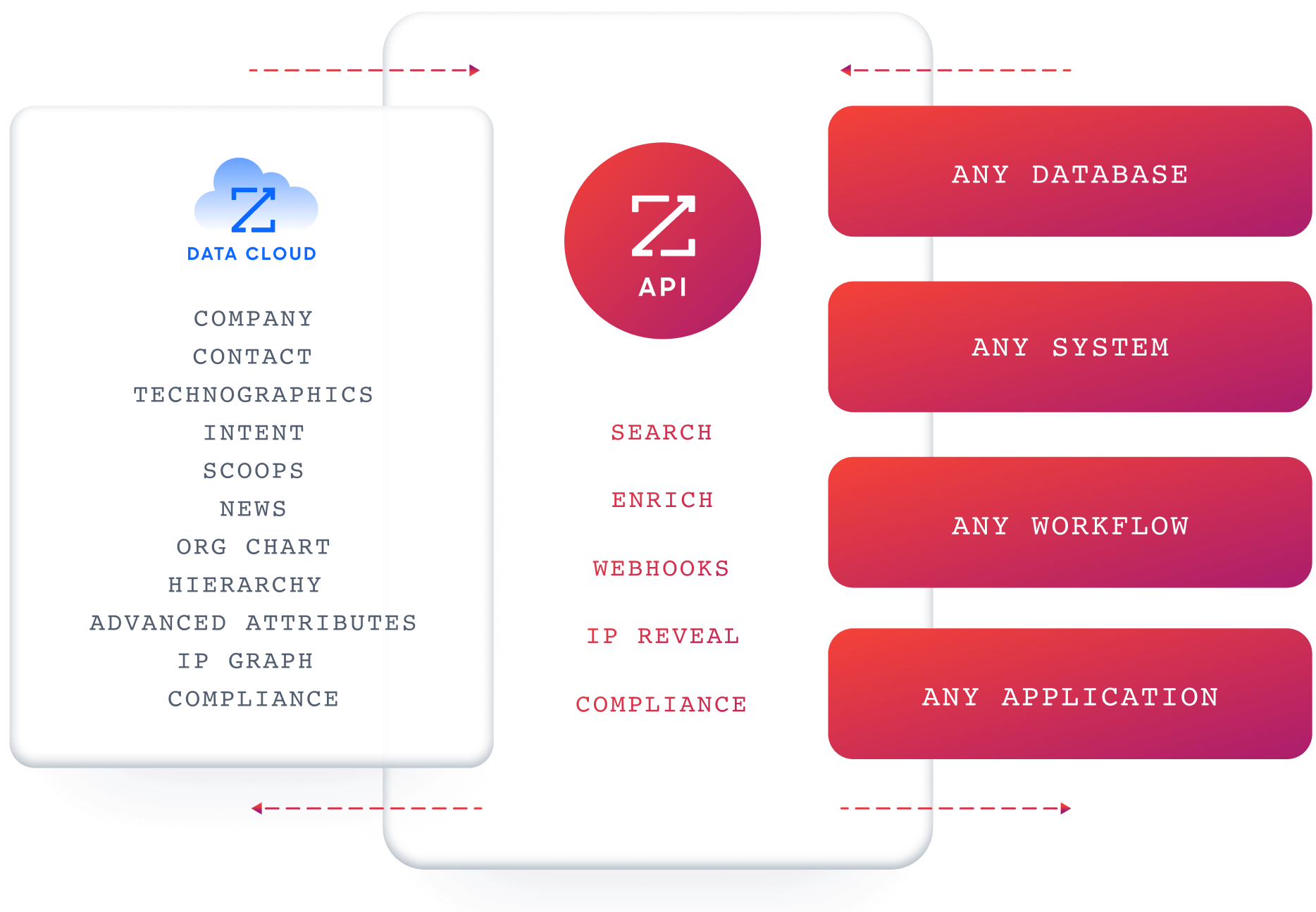
ZoomInfo focuses on depth over breadth. The App Marketplace lists 120+ partner integrations, with strong connections to Salesforce, HubSpot, Microsoft Dynamics 365, Snowflake, Outreach, and Salesloft. The Enterprise API provides programmatic access to ZoomInfo's full data and intelligence, and the MCP server connects AI models directly to ZoomInfo data with no custom coding. API access is included in all relevant plans.
For a small business using Act! with Outlook and QuickBooks, Act!'s integration set covers the basics. For a mid-market company running HubSpot with Salesforce, Slack, and a dozen other tools, HubSpot's marketplace is essential.
For any B2B organization that needs accurate contact data and intelligence flowing into its existing stack, ZoomInfo's API and integration approach ensures the data reaches wherever work happens.
"The plug-and-play aspect of the API means I can integrate it very easily into any process and get information at a moment's notice." BDO Canada achieved an 87% reduction in dashboard update time. (BDO Canada)
Support and onboarding
How each platform handles getting started and solving problems reflects who they're built for.
Act! stands out for personalized support. Every subscription includes a free 45-minute onboarding session with a dedicated Account Manager (a real human, not a chatbot), with a free follow-up session if needed. Software Advice awarded Act! Best Customer Support 2026. Phone and live chat support runs 8:30 a.m. to 8:00 p.m. EST weekdays.
The Ultimate tier includes Enhanced Support with extended hours (including Saturdays), priority queuing, and full feature guidance by phone.
HubSpot tiers its support by plan. Free users get community forums only. Starter adds email and chat. Professional and Enterprise add phone support. HubSpot Academy has certified 200,000+ professionals and offers free courses covering inbound marketing through advanced automation. The content library is extensive, but navigating it takes time.
Complex implementations often depend on the Solutions Partner ecosystem rather than HubSpot's internal team (professional services made up only ~2% of 2025 revenue).
ZoomInfo redesigned its onboarding program from 30 to 90 days, covering planning, technical implementation, education, and adoption. The program earned a 25% improvement in customer satisfaction scores and Rocketlane's Golden Comet award for Best Customer Onboarding Team of 2024. ZoomInfo University provides role-specific learning paths, product certifications, and live webinars.

Act! vs. HubSpot vs. ZoomInfo: Which should you choose?
The right choice depends on your team size, growth stage, and what problem you're solving.
Choose Act! if:
You're an independent professional or small team (1–10 users) managing client relationships
You want CRM and email marketing in one affordable subscription
Your industry needs custom data structures (insurance policies, financial accounts, service contracts)
You value personal onboarding support and a dedicated account manager
Budget simplicity matters more than platform breadth
Choose HubSpot if:
You're a growing company that needs marketing, sales, and service on shared data
You want to start free and scale into more capable tools over time
Your team needs advanced automation, AI agents, and integrations with a large tech stack
You're willing to invest in a platform you'll grow into over years
Multi-channel marketing (email, social, ads, content, SEO) is central to your strategy
Use ZoomInfo alongside either CRM if:
Your sales team needs accurate, verified B2B contact data rather than manually researched lists
You want to know which accounts are actively researching solutions like yours before they fill out a form
Understanding the context behind deal momentum matters as much as tracking that it happened
You need AI that unifies CRM data, conversations, and market signals to recommend next actions
You want intelligence that works in any tool, whether that's Act!, HubSpot, Salesforce, or a custom application
See how ZoomInfo's data and intelligence make any CRM more effective. Start with a free trial.
Act! and HubSpot are both capable CRMs for their target audiences. The choice between them is a question of scale: Act! for small teams that need simplicity and value, HubSpot for growing organizations that need platform breadth.
But whichever CRM you choose, the quality of data flowing into it determines the quality of decisions coming out.
ZoomInfo provides the data foundation, the contextual intelligence, and the access that turns any CRM from a record-keeping system into a go-to-market advantage.
Act! vs. HubSpot vs. ZoomInfo FAQ
What is the main difference between Act!, HubSpot, and ZoomInfo?
Act! is an SMB-focused CRM with built-in email marketing, designed for independent professionals and small teams who want contact management and outreach in one affordable tool. HubSpot is a full customer platform spanning marketing, sales, service, and content for growing companies that need shared data across departments.
ZoomInfo is a go-to-market platform that enriches any CRM with verified contact data, buyer intent signals, and AI-powered deal intelligence.
Which platform is cheapest to get started with?
HubSpot's free CRM is the lowest-cost entry point, offering unlimited contacts and basic tools for up to 2 users with no time limit. Act! starts at $30/user/month with a 14-day free trial. ZoomInfo offers ZoomInfo Lite for free (permanent, with 10 monthly export credits and access to the B2B database) plus a 7-day free trial of the full platform.
However, costs scale differently: Act!'s most expensive tier is $60/user/month, while HubSpot's Marketing Hub Professional starts at $800/month plus a $3,000 mandatory onboarding fee.
Can I use ZoomInfo with Act! or HubSpot?
Yes. ZoomInfo integrates with HubSpot through a native marketplace integration that syncs contacts, companies, and intent signals. Act! connects through its Connections ecosystem. ZoomInfo also provides APIs and an MCP server that can push enriched data into any CRM or application.
The result is a CRM populated with verified, current contact data and intelligence rather than only manually entered records.
Which platform has the best marketing automation?
For small businesses on a budget, Act!'s Ultimate tier ($60/user/month) provides lead scoring, progressive profiling, website activity tracking, and 50,000 email sends per month (a strong set of features for the price). HubSpot's Marketing Hub offers the broadest capabilities (email, social, ads, SEO, content, multi-touch attribution) but starts at $800/month for Professional.
ZoomInfo's marketing approach is account-based: identifying in-market companies with intent signals, running targeted display ads through a native DSP, and orchestrating multi-channel plays through GTM Studio.
Which platform is best for a small team of 1–5 users?
Act! is built for this audience. At $30–60/user/month with no mandatory onboarding fees, free personal onboarding, and CRM plus email marketing in one subscription, it covers the core needs of small teams without complexity. HubSpot's free or Starter tiers also serve small teams well, especially if you anticipate scaling. ZoomInfo Lite can supplement either with free access to verified B2B contact data.
How do Act! and HubSpot compare on AI features?
Act! offers two AI features today: an AI History Summary that generates instant contact briefings, and an AI Writing Assistant for email and landing page content. Additional capabilities (Contact Enrichment, Task Extraction, Voice Ingestion) are on the roadmap. HubSpot's Breeze AI is more mature, with autonomous agents for customer service, prospecting, data analysis, and knowledge base creation running across all Hubs.
ZoomInfo's AI operates through the GTM Context Graph, an intelligence layer that unifies CRM data, conversation transcripts, and market signals to surface what's driving pipeline activity and what actions to take next.
Which platform has the most reliable contact data?
ZoomInfo is the clear leader. Its database covers 500M contacts with 200M+ verified business emails and 135M+ verified phone numbers, maintained by 300+ human researchers and automated verification at up to 95% accuracy. Act! and HubSpot both rely primarily on data you enter or capture yourself, though HubSpot adds some AI-powered enrichment from emails and websites.
In a Fortune 500 competitive evaluation analyzing 25 million contacts across vendors, an independent consultant concluded that no other competitor matched ZoomInfo's data coverage.
Is Act! outdated compared to HubSpot?
Act! carries nearly 40 years of CRM heritage, which is both a strength and a perception challenge. Reviewers note that its interface can feel dated compared to modern cloud-first platforms. However, Act! continues to invest in modernization: the 2025 launch of Act! Advantage expanded the platform into an all-in-one front-office suite with quoting, payments, scheduling, and event management.
For small businesses focused on contact management and email marketing, Act!'s maturity means stability and proven workflows rather than outdated functionality.
