
Choosing between Act! and Zoho CRM often comes down to five questions:
Do you need a CRM that handles email marketing out of the box, or a platform that scales across departments?
Is your team small enough (1-10 people) that a relationship-focused CRM makes sense, or are you building sales infrastructure for a growing organization?
Do you value customization you can configure yourself, or a system that works with minimal setup?
Are you managing existing relationships and repeat clients, or hunting for new business in competitive B2B markets?
How important is it that your CRM connects to a broader ecosystem of business tools?
In short, here's what we recommend:
Act! is built for small businesses that want CRM and email marketing in one subscription. It bundles contact management, drip campaigns, marketing automation, interactive quotes, and payment processing into plans starting at $30/user/month.
For solo practitioners and small teams in insurance, financial services, or professional services who need to stay organized and run campaigns without paying for separate tools, Act! earns its price. The trade-off: a dated interface, limited third-party integrations, and AI features still catching up to competitors.
Zoho CRM serves growing businesses that need a sales platform at a fraction of enterprise CRM pricing. With sales force automation, Blueprint process enforcement, AI predictions through Zia, CPQ, multichannel engagement, and access to 60+ Zoho applications, it gives mid-market teams the tools to build repeatable sales processes.
The learning curve for advanced configuration is steep, and support quality can be inconsistent, but the capability at the price is hard to match.
Both platforms are solid CRMs for their audiences. But neither solves the problem that comes before CRM: knowing who to sell to, when they're ready to buy, and what to say when you reach them. That's where ZoomInfo fits.
ZoomInfo is a GTM platform that lets your sales reps walk into every call knowing why the deal is moving, who's championing it, and what's likely to happen next. Your marketers can describe audiences in plain language and launch plays against accounts matching your proven win patterns. Your leaders can spot deal risk before it shows up in CRM stage fields.
That depth comes from the GTM Context Graph, which combines the largest B2B dataset available (500M contacts, 100M companies, 135M+ verified phone numbers, and 200M+ verified business emails) with your CRM records, conversation transcripts, and behavioral signals.
Your team accesses it through GTM Workspace for sellers, GTM Studio for marketers and RevOps, or APIs and MCP in any front-end. ZoomInfo doesn't replace your CRM. It makes your CRM smarter by filling it with verified data, buying signals, and intelligence that Act! and Zoho CRM don't generate on their own.
If better data and buyer intelligence sound like the missing piece in your sales process, see how ZoomInfo works.
Act! vs. Zoho CRM vs. ZoomInfo at a glance
Act! | Zoho CRM | ZoomInfo | |
|---|---|---|---|
Core function | CRM + email marketing for SMBs | Sales CRM platform | AI-powered GTM platform |
Email marketing | Built-in (2,500-50,000 sends/month) | Requires Zoho Campaigns or third-party | Not a bulk email sender; powers outreach with data and AI |
B2B contact database | Your own contacts only | Your own contacts only | 500M contacts, 200M+ verified emails, 135M+ verified phones |
Buyer intent signals | None | None natively | 210M IP-to-Org pairings, 6T+ keyword signals monthly |
AI capabilities | AI Writing Assistant, AI History Summary | Zia (scoring, predictions, agents, generative AI) | GTM Context Graph, AI agents, AI-drafted outreach |
Sales automation | Drip campaigns, lead scoring (Ultimate tier) | Workflows, Blueprint, Cadences, Journey Orchestration | GTM plays, signal-triggered workflows, multi-channel automation |
Integrations | Limited native; Zapier-based | 120+ integrations + API/MCP access for any tool | |
Starting price | $30/user/month | Free (3 users); paid from ~$14/user/month | Free tier (ZoomInfo Lite); paid plans custom-quoted |
Free trial | 15 days (paid plans); free plan permanent | 7-day trial; ZoomInfo Lite permanent | |
Best for | Small teams managing relationships | Growing sales orgs building process | Revenue teams finding and winning deals |
Act! and Zoho CRM manage relationships differently
Act! and Zoho CRM both track contacts, deals, and activities. How they do it reflects who they were built for.
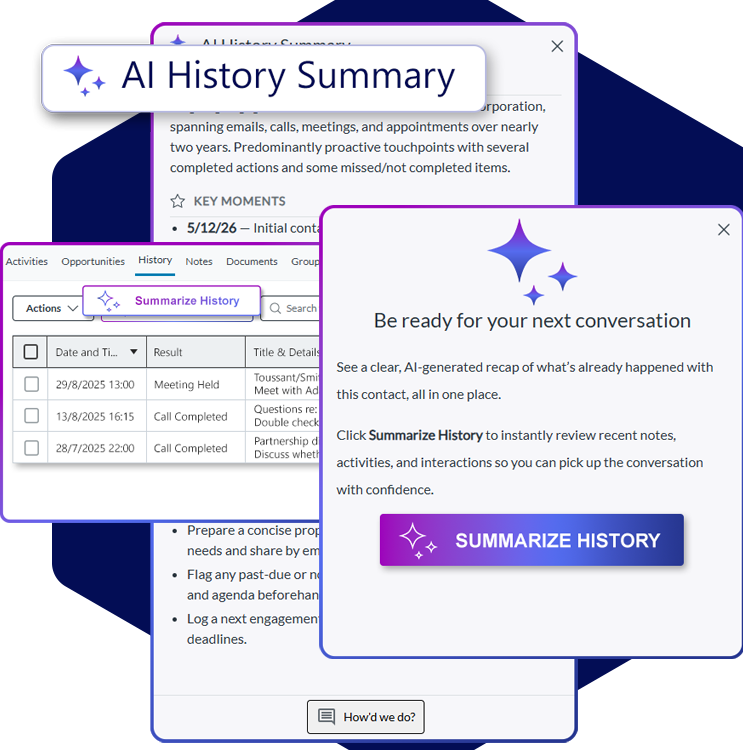
Act! treats every contact as a relationship to nurture. The platform revolves around a contact record that pulls calls, emails, notes, tasks, documents, and quotes into one view. The AI History Summary generates a recap of recent interactions so you can walk into any conversation prepared.
Source: Act!
Custom Industry Tables let you attach policy details, mortgage data, or service contracts directly to contacts, with 11 pre-built templates for common verticals. For an insurance agent tracking 500 clients and their renewal dates, or a financial advisor managing household relationships, this relationship context is the product's strength.
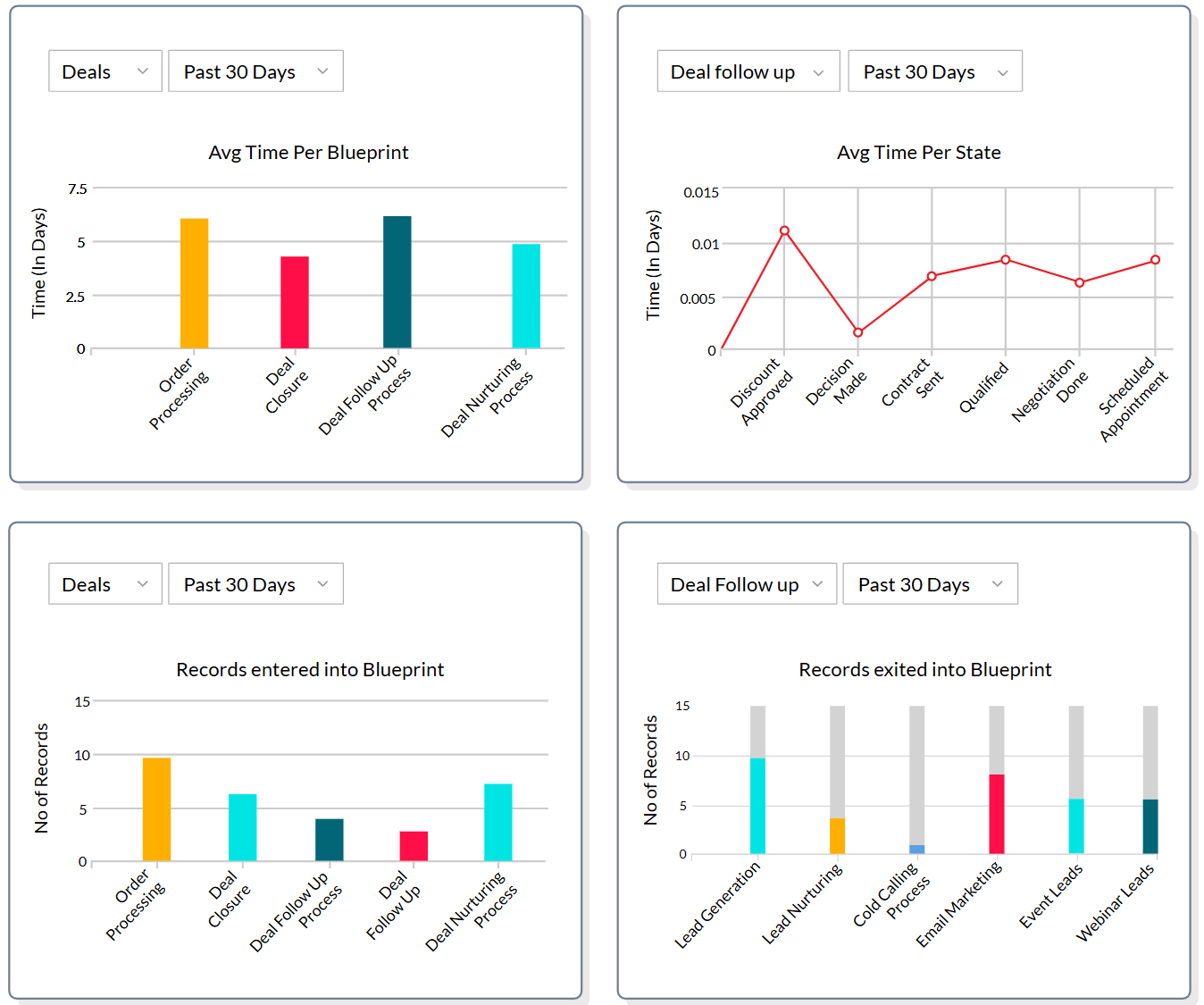
Zoho CRM thinks in terms of process, not people. Its Blueprint feature enforces stage-by-stage sales methodology: reps can't advance a deal without completing required steps, entering required fields, or getting required approvals
Source: Zoho CRM
Cadences coordinate multichannel follow-up sequences across email, phone, tasks, and WhatsApp. CommandCenter orchestrates end-to-end customer journeys with branching logic. For a 20-person sales team where process consistency directly affects close rates, Zoho gives managers the enforcement tools Act! lacks.
The gap widens with scale. Act! handles a solo practitioner's 500-contact database well. Zoho CRM's Module 360 architecture processes over 1 billion events per day and supports 1.5 billion+ records in a single org. One was built for a doctor's office; the other for a company that might one day manage sales across 50 territories.
Email marketing: bundled vs. bolt-on
Act!'s main advantage over Zoho CRM is built-in email marketing. Every subscription includes campaign tools: the Standard tier ($30/user/month) gives you 2,500 sends/month with a drag-and-drop editor and 170+ templates.
The Professional tier ($45/user/month) adds nurture sequences, landing pages, surveys, and an AI Writing Assistant. The Ultimate tier ($60/user/month) unlocks marketing automation with lead scoring, progressive profiling, website activity tracking, and A/B testing.
The practical benefit is a closed loop. When a prospect opens an email, clicks a link, or fills out a form, Act! can automatically create and assign a sales activity to the right rep. No integration to configure, no separate platform to manage. For a five-person team paying for both a CRM and Mailchimp, consolidating into Act! eliminates a subscription and a data sync headache.
Zoho CRM doesn't include email marketing. Bulk campaigns, drip sequences, and marketing automation require Zoho Campaigns, a separate product. The two integrate, but they're distinct subscriptions with separate interfaces.
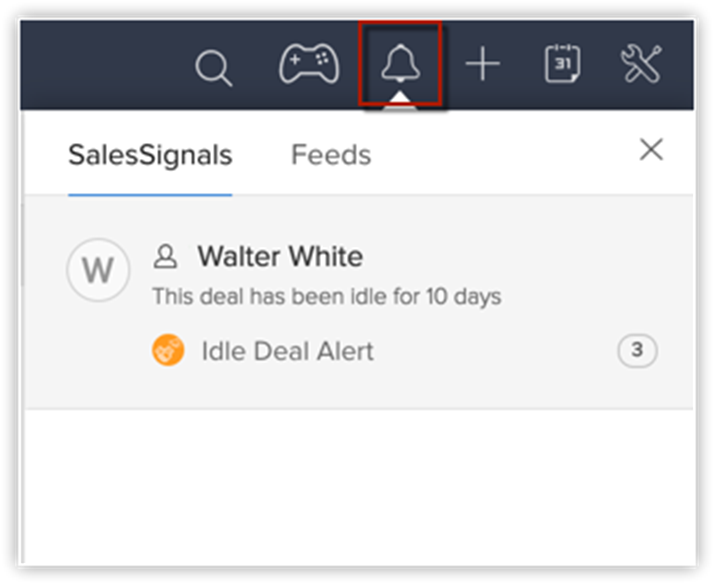
Where Zoho CRM excels is in handling inbound signals: SalesSignals sends real-time notifications when a prospect opens an email, clicks a link, or engages on social media, and Zia's email intelligence adds sentiment analysis, intent detection, and competitor mention alerts. Zoho tracks communication better; Act! includes campaign execution.
Source: Zoho CRM
AI capabilities are heading in different directions
Act!'s AI is early-stage and practical. The AI History Summary generates contact briefings with an overview, key moments, and suggested next steps. The AI Writing Assistant drafts email copy in the template editor. Both come with the Professional tier at no extra usage fee.
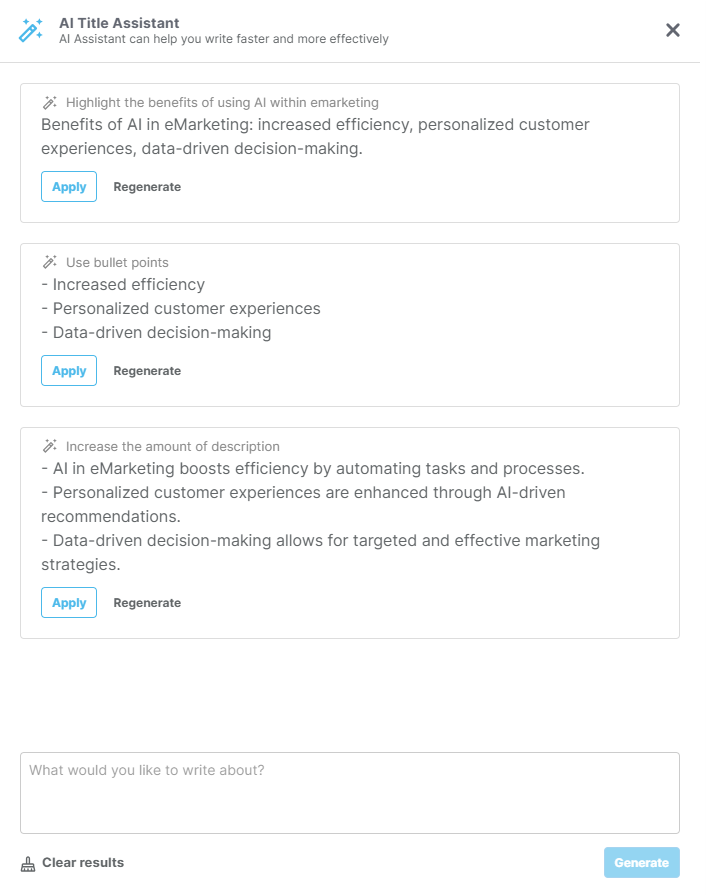
Source: Act!
The roadmap lists Contact Enrichment, AI Task Extraction, Voice Ingestion, and Calendar Intelligence, but these remain planned or exploratory as of mid-2026. Act!'s philosophy is simple: every AI suggestion is yours to accept, modify, or disregard.
Zoho CRM's Zia covers more ground. It handles predictive lead scoring, churn prediction, deal win probability, best time and channel to contact, email sentiment analysis, call transcription and summaries, anomaly detection in forecasts, and generative AI for module creation, workflow building, and report generation.
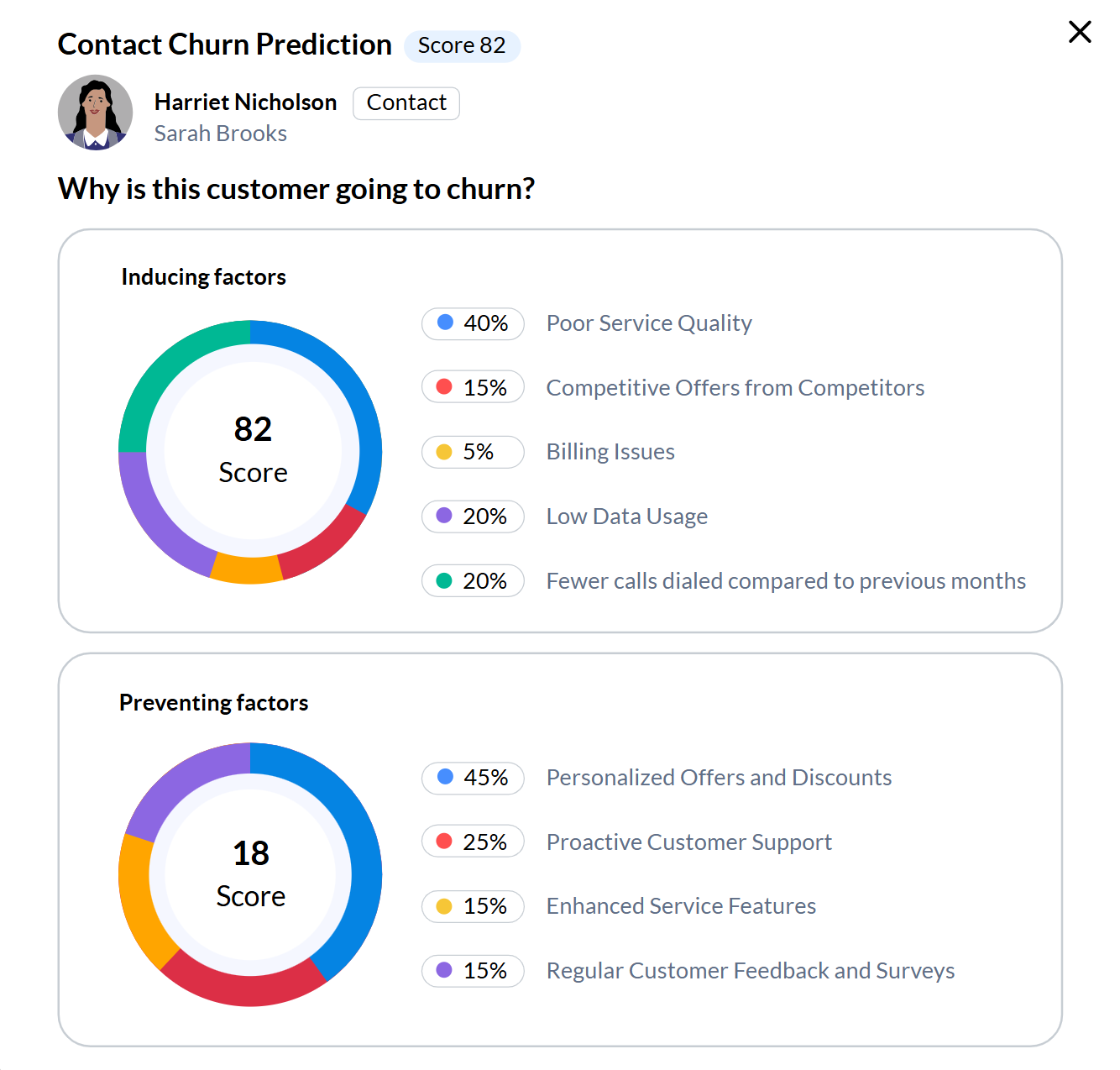
Source: Zoho CRM
The Zia Agents Store offers seven pre-built autonomous agents (SDR, sales coach, deal analyzer, quote generator, follow-up scheduler, revenue growth specialist, deal closure reminder) that operate as "Digital Employees" with their own CRM identities. Zia's predictive and agentic capabilities require Enterprise or Ultimate tiers, but the breadth of AI investment is notable.
ZoomInfo works at a different level. Its AI doesn't analyze what you've already put into your CRM. It generates intelligence your CRM never had. The GTM Context Graph processes 1.5B + data points daily, combining ZoomInfo's B2B data with your CRM records, conversation transcripts, and behavioral signals to capture not just what happened in a deal, but why.
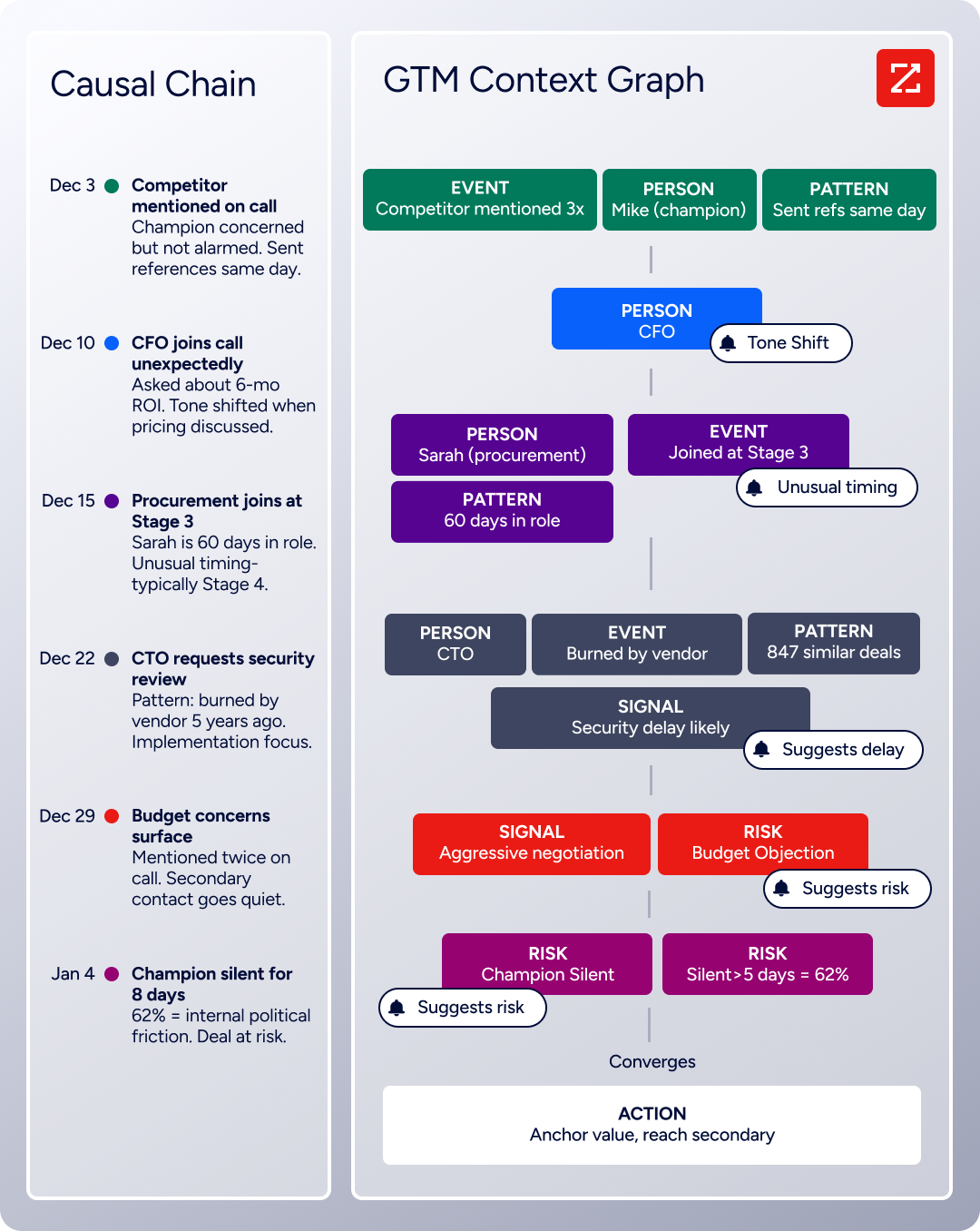
Source: ZoomInfo
GTM Workspace turns this intelligence into AI-drafted outreach that addresses concerns raised in conversations, prioritized account feeds based on buying signals, and one-click account briefs that pull CRM history, company news, and stakeholder context into a 10-second summary.
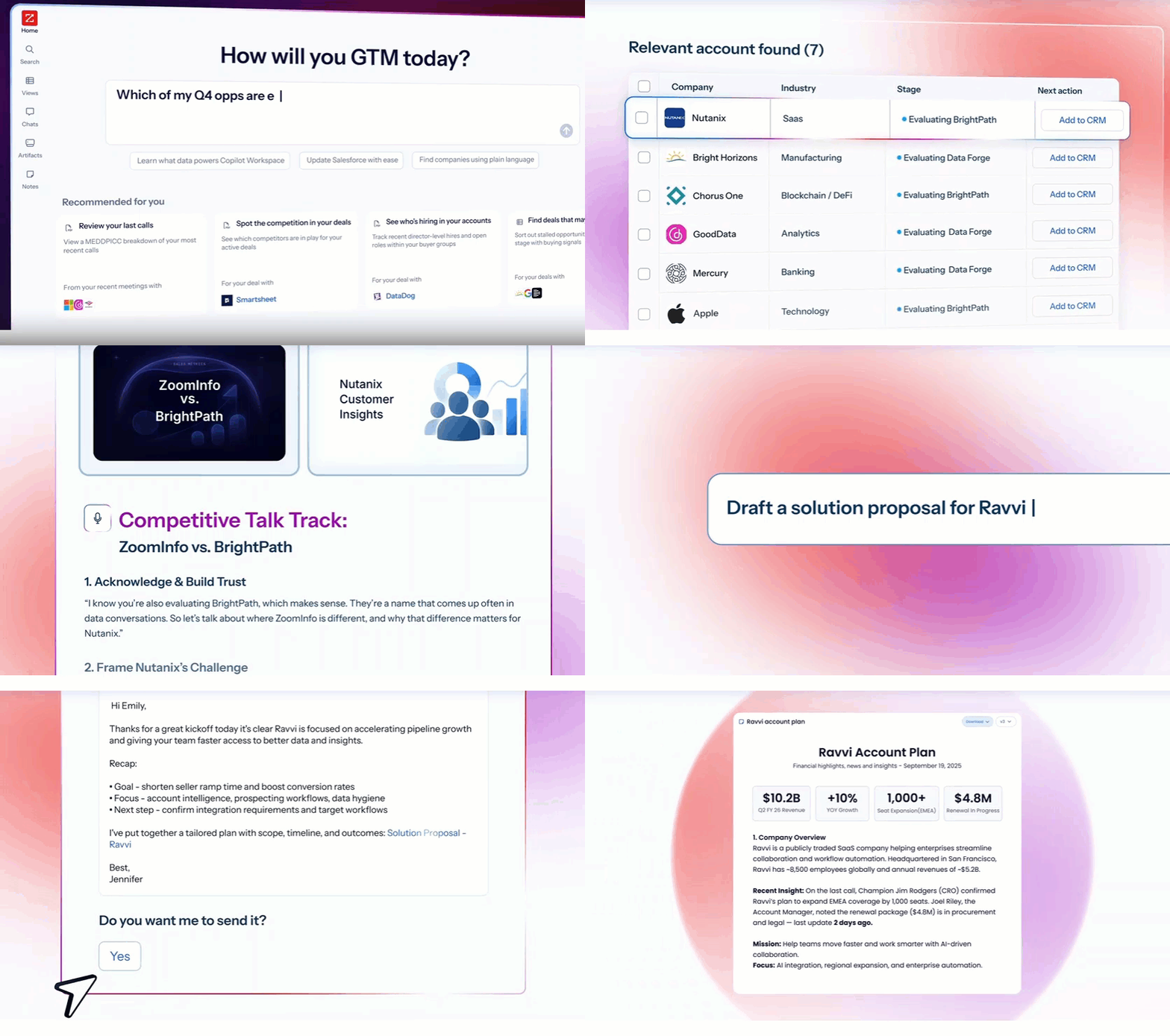
Source: ZoomInfo
Seismic attributed 39% of active pipeline to opportunities influenced by ZoomInfo signals, with reps becoming 54% more productive. (Seismic)
Customization depth reflects different design philosophies
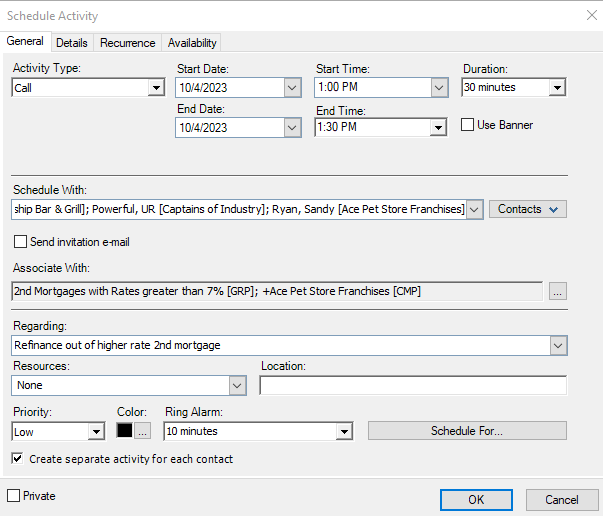
Act! offers practical customization for non-technical users. Custom fields, custom layouts, and Custom Industry Tables with spreadsheet-like data structures let businesses model their workflows without developers.
Source: Act!
An insurance agency can track policies, premiums, and renewal dates attached to each contact. A financial advisor can track household relationships, RMD reminders, and compliance documentation. The customization handles vertical-specific needs without requiring an administrator.
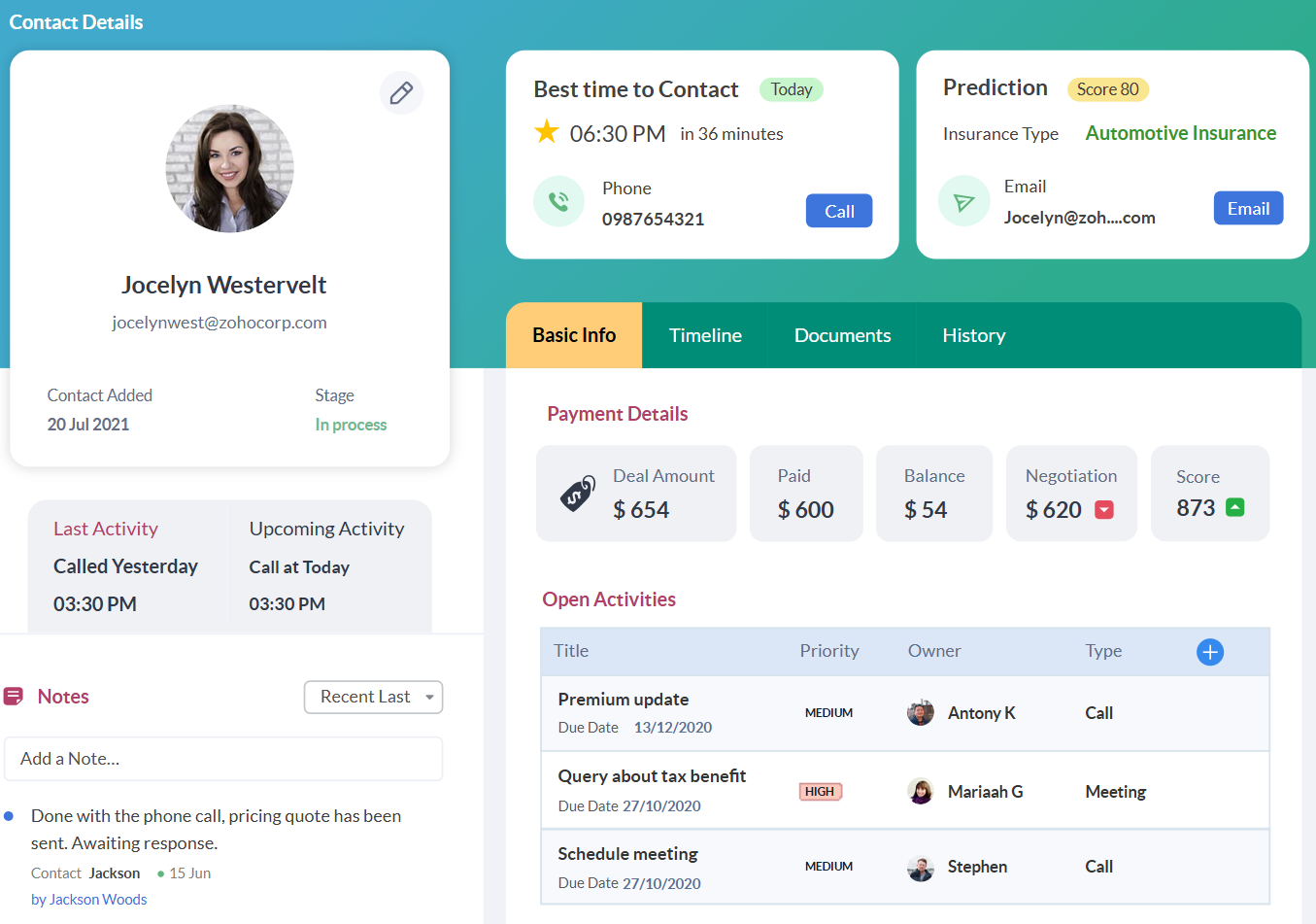
Zoho CRM's customization is a different order of magnitude. Canvas Design Studio gives pixel-level control over CRM interfaces through no-code design (colors, typography, section groupings, layout structure). Kiosk Studio builds custom interactive flows embedded on CRM pages.
Source: Zoho CRM
Wizards replace complex forms with sequential input screens. Up to 500 custom modules on Ultimate means you can reshape the data model to match nearly any business operation. The trade-off is the same one G2 reviewers flag: that depth demands time and, often, a dedicated administrator.
The data gap neither CRM fills
Both Act! and Zoho CRM manage the contacts and deals your team puts into them. Neither generates new prospect data, monitors buying signals, or tells you which companies are researching solutions like yours right now.
Act! has Email List Verification (250-5,000 scans/month depending on tier) and a planned Contact Enrichment feature, but no external B2B database, no intent signals, and no technographic data. Zoho CRM's Zia can score and predict against your existing data, but it doesn't source new contacts or track which companies are in-market.
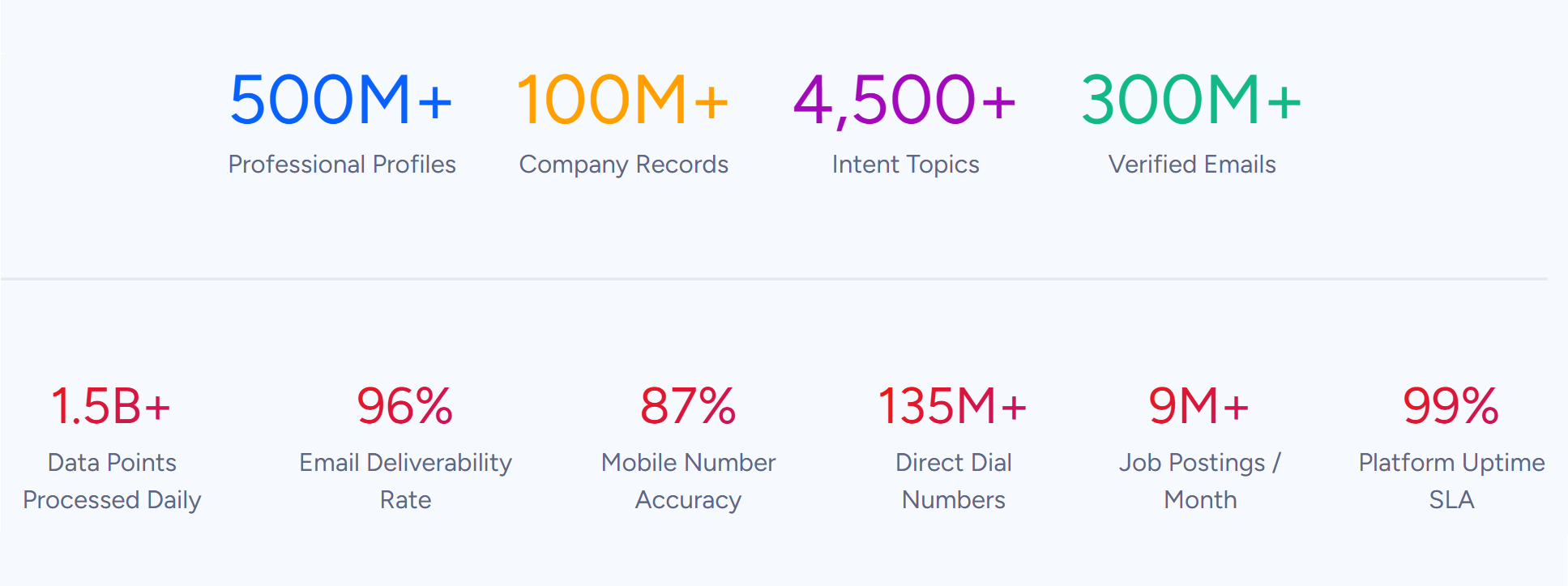
ZoomInfo was built to fill this gap. Its B2B data covers 500M contacts, 100M companies, 135M+ verified phone numbers, and 200M+ verified business emails. 300+ human researchers back a multi-source verification pipeline that reaches up to 95% accuracy on first-party data.
Source: ZoomInfo
Buyer Intent tracks signals from 210 million IP-to-Organization pairings to identify companies researching relevant topics. WebSights resolves anonymous website traffic to companies, including buying team identification. Technographic data profiles the tech stacks of 30+ million companies across 30,000+ technologies.

Source: ZoomInfo
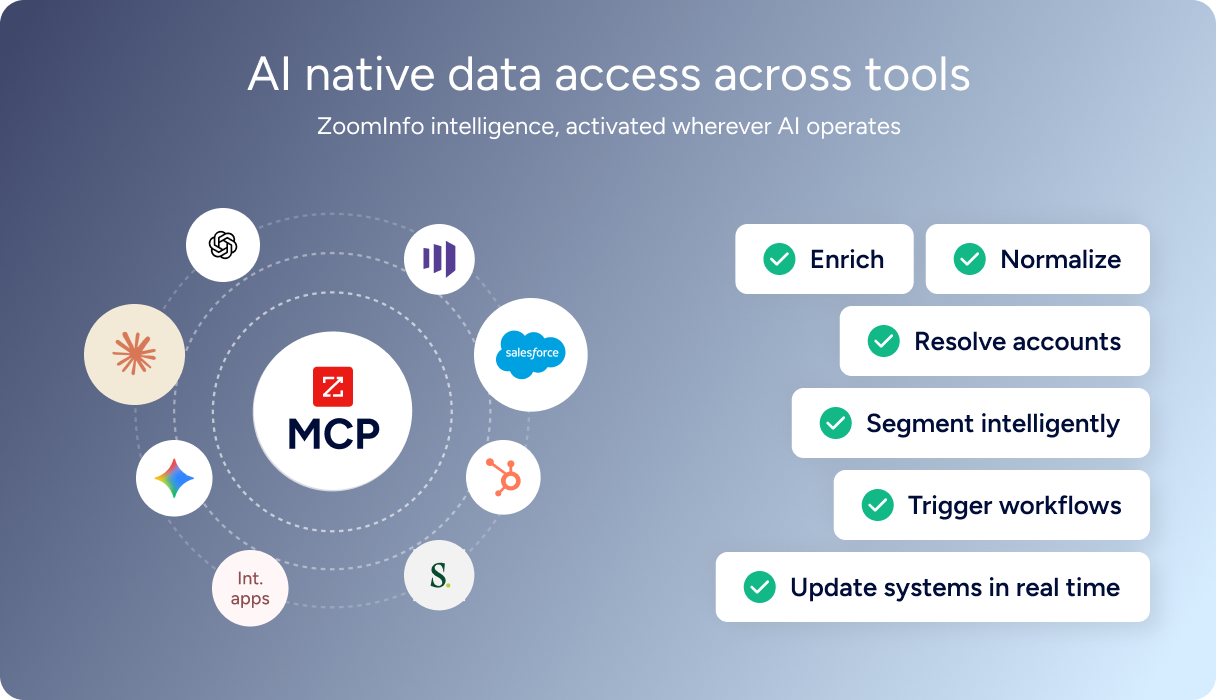
The intelligence isn't locked inside ZoomInfo's interface. APIs and MCP deliver it into any tool, including Zoho CRM or any other system your team uses. This makes ZoomInfo a layer that strengthens whichever CRM you choose, not a replacement for it.
Source: ZoomInfo
"ZoomInfo gives us the information we need to execute. We don't have to go through and spend our time digging. It's already there, so we can be three steps ahead." (William Kenimer, Vice President of Revenue Operations, Vensure)
Integration ecosystems are not comparable
Act!'s integration options are thin. Native connections cover Outlook, Gmail, Shopify, BigCommerce, Eventbrite, Freshdesk, Zendesk, QuickBooks, and Xero. Most other integrations route through Zapier.
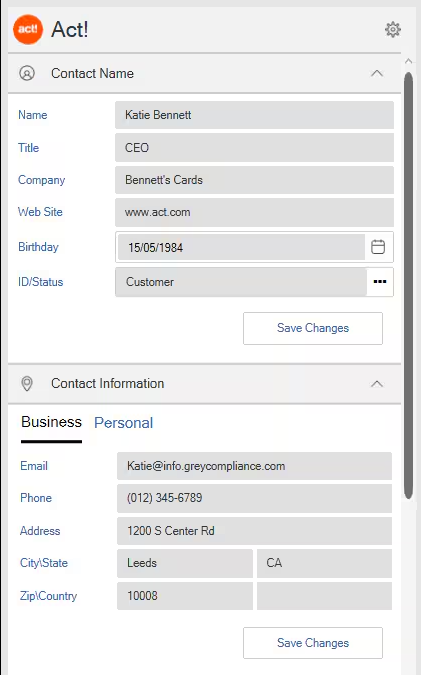
Source: Act!
The API 2.0 Platform (near GA as of Q2 2026) should broaden the ecosystem, but today, G2 reviewers flag third-party integration as a persistent weakness. For small businesses using a few core tools, this works. For teams with a larger tech stack, it creates friction.
Zoho CRM is a different story. The Zoho Marketplace offers 1,100+ integrations, and the real advantage is native compatibility with 60+ Zoho applications. Zoho Desk, Zoho Books, Zoho Campaigns, Zoho Analytics, Zoho Projects, and Zoho Sign all connect without middleware.
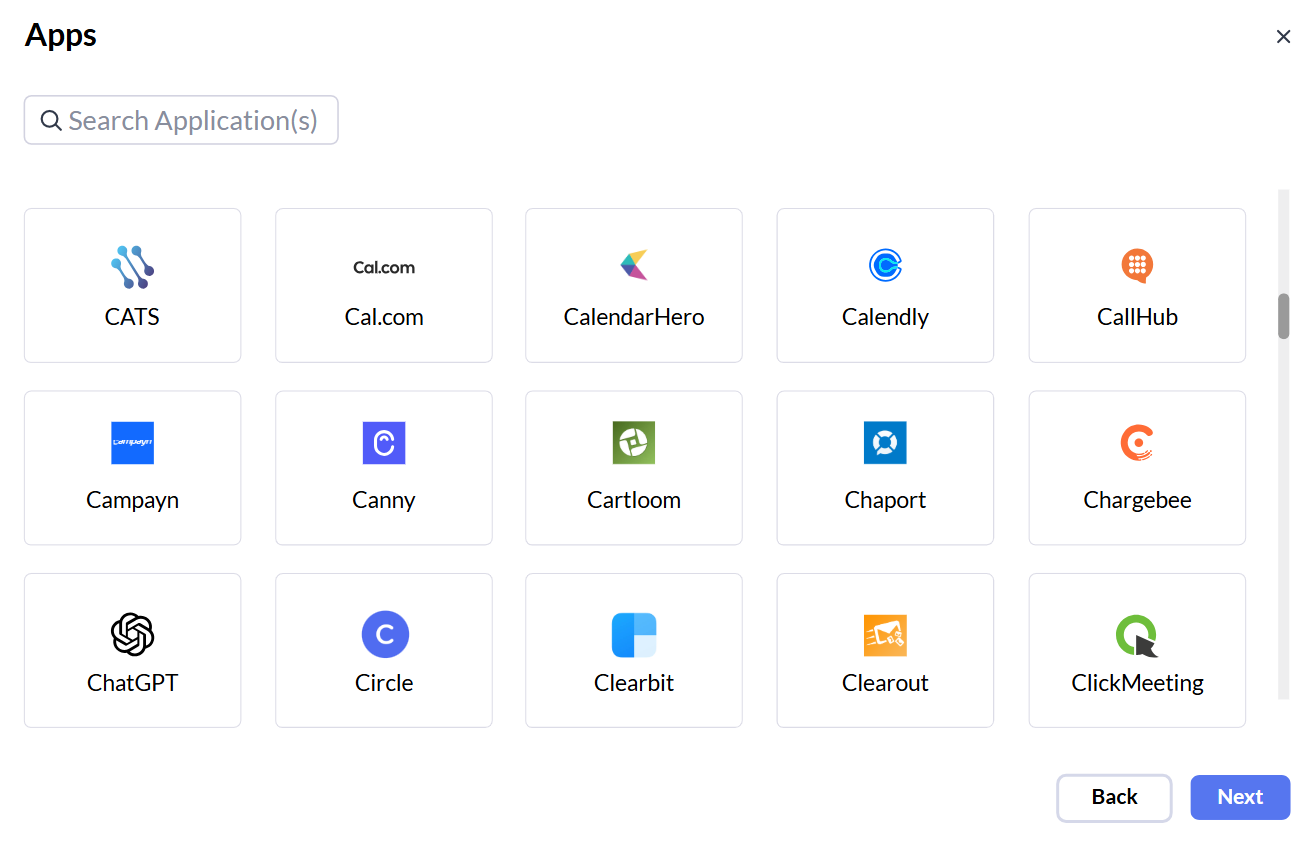
Source: Zoho CRM
For businesses that commit to the Zoho ecosystem, the integration picture is strong. Outside that ecosystem, G2 users report more friction, especially with non-Zoho tools requiring custom API work.
ZoomInfo is platform-agnostic. The App Marketplace includes 120+ integrations with CRMs (Salesforce, HubSpot, Microsoft Dynamics), marketing automation platforms, sales engagement tools, and data warehouses.
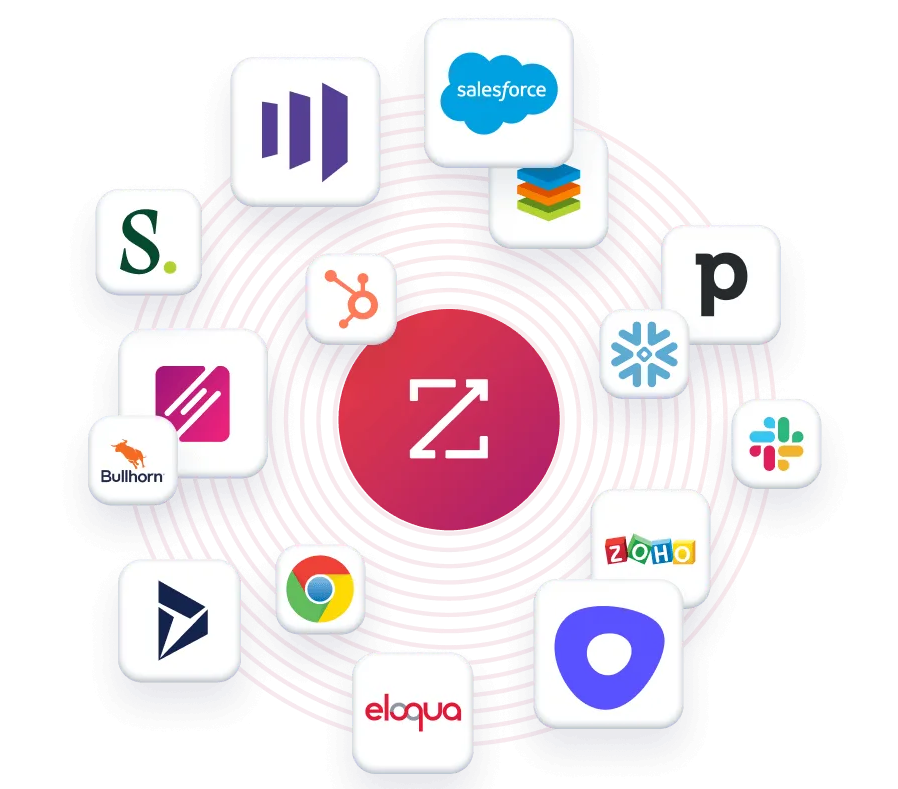
Source: ZoomInfo
The Enterprise API and MCP server make ZoomInfo's data accessible to any tool, any AI agent, and any custom application. Teams using Act!, Zoho CRM, or any other front-end can draw on ZoomInfo's data without switching systems.
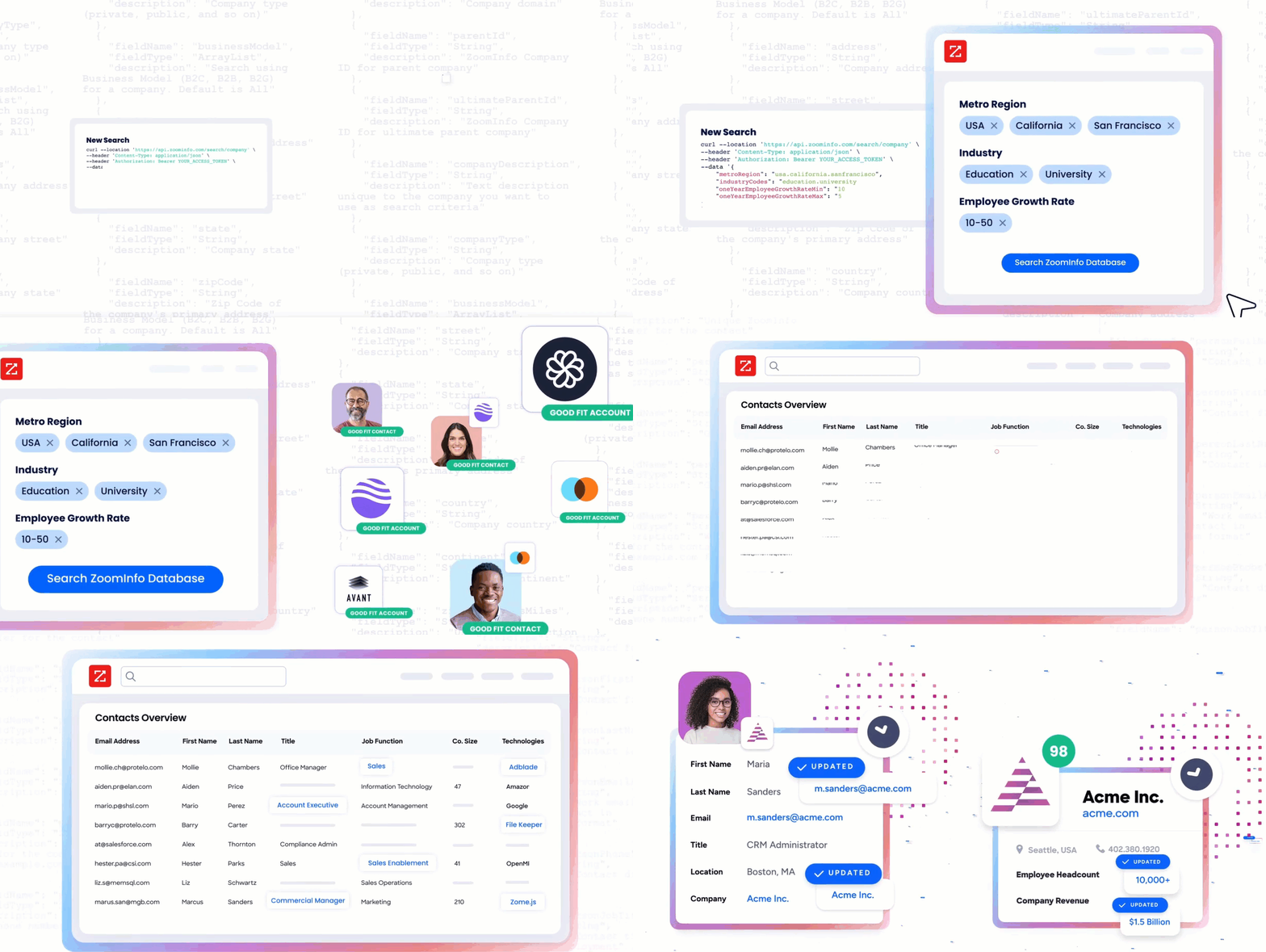
Source: ZoomInfo
"The plug-and-play aspect of the API means I can integrate it into any process and get information at a moment's notice." (Jerry Wilson, Senior Marketing Intelligence Analyst at BDO Canada, whose team cut time spent on data dashboard updates by 87%, BDO Canada)
Pricing structures target different budgets
Act!'s pricing is straightforward. Three tiers, all billed annually:
Plan | Price | Key inclusions |
|---|---|---|
$30/user/month | CRM, 2,500 email sends/month, basic quotes, reports | |
$45/user/month | 25,000 sends, AI features, nurture marketing, accounting integration | |
$60/user/month | 50,000 sends, marketing automation, lead scoring, Custom Industry Tables |
Every subscription includes a free 45-minute onboarding session with a specialist and a 14-day free trial. Additional costs include SMS messaging ($19-$249/month) and Enhanced Support ($10/user/month) for Standard and Professional users.
Zoho CRM starts lower and scales further. A permanent free plan supports 3 users. Paid plans on annual billing range from Standard ($14/user/month) through Ultimate ($52/user/month), with feature gates at each level: Blueprint process automation requires Professional, Zia's predictive AI and territory management require Enterprise, and custom AI/ML models require Ultimate.
Month-to-month contracts are available with no multi-year lock-in, and Zoho offers full refunds within 45 days on annual plans. Premium and Enterprise support tiers are paid add-ons.
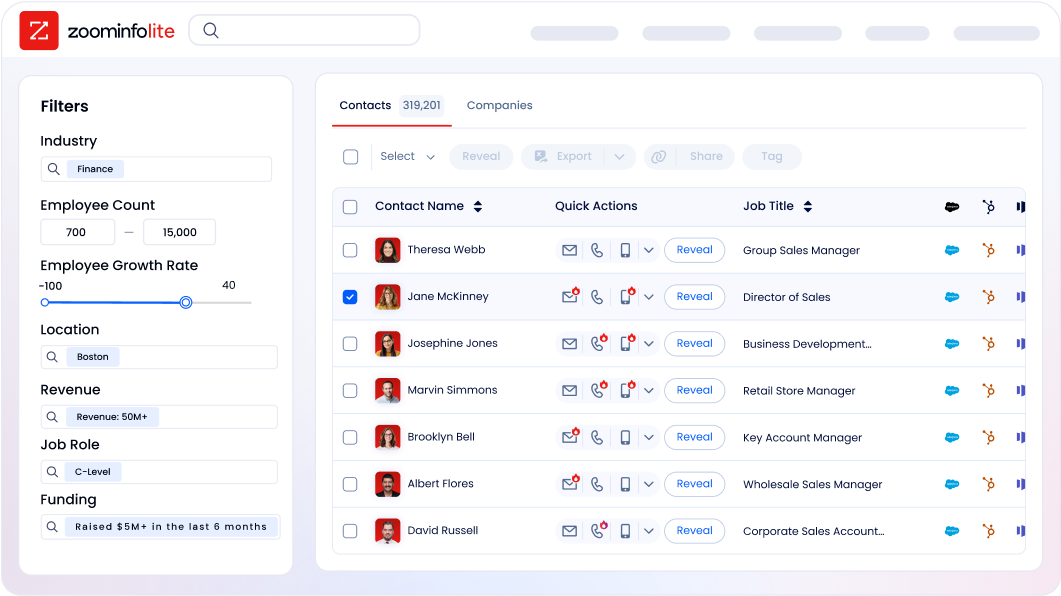
ZoomInfo uses custom-quoted, consumption-based pricing with no published dollar amounts. Plans scale around seats, credits (1 credit = 1 contact export), and feature tiers (Professional, Advanced, Enterprise). ZoomInfo Lite provides a permanent free tier with 10 monthly export credits, access to the B2B database, the Chrome extension, and WebSights Lite.
Source: ZoomInfo
A 7-day free trial is available for paid features. ZoomInfo costs more and targets organizations where better data and intelligence justify the investment.
Support experiences vary
Act! leads with personal support. Every subscription includes a dedicated Account Manager and free onboarding (the company emphasizes "a real human, not a chatbot"). Standard support covers phone and live chat from 8:30 a.m. to 8:00 p.m. EST weekdays.
Enhanced Support adds extended hours (including Saturdays), priority queuing, and feature guidance by phone. The Act! Certified Consultant network provides implementation help for complex setups. For small businesses that want accessible support, Act! delivers.
Zoho CRM includes Classic support (8x5 email) with all paid plans. Premium support (24/5 live chat and phone) and Enterprise support (24/7) are paid add-ons, with Enterprise requiring at least 50 user licenses. Both G2 and Capterra reviewers flag inconsistent response times and resolution quality.
The documentation is extensive, with structured guides, developer docs, and role-specific training programs. Zoho's support model favors self-service over personal touch.
ZoomInfo provides support through a Help Center with a Knowledge Center, ZoomInfo University with role-specific learning paths and certifications, and direct support via phone and contact form.

Source: ZoomInfo
Enterprise plans include dedicated customer service managers. Professional services are available through ZoomInfo Labs. The company redesigned its onboarding program from 30 to 90 days, producing a 25% improvement in customer satisfaction scores.
Act! vs. Zoho CRM vs. ZoomInfo: Which should you choose?
The right choice depends on what problem you're solving.
Choose Act! if:
You're a small team (1-10 people) in a relationship-driven business like insurance, financial services, or professional services
You want CRM and email marketing in one subscription without paying for separate tools
Personal onboarding and accessible support matter more than platform scale
You need to track industry-specific data (policies, renewals, contracts) alongside contacts
Your integration needs are limited to Outlook/Gmail, accounting software, and a few core tools
Choose Zoho CRM if:
You're building a structured, repeatable sales process for a growing team
You need customization, process enforcement (Blueprint), and multichannel engagement
Your tech stack benefits from the broader Zoho ecosystem (Books, Desk, Campaigns, Analytics)
You want enterprise features like territory management, CPQ, and AI predictions at mid-market pricing
Month-to-month contracts and a free entry point matter
If you're looking further upmarket, our Act! vs Salesforce breakdown covers the CRM most teams consider when outgrowing SMB tools.
Choose ZoomInfo if:
Your team needs prospect data, buyer intent signals, and account intelligence to fill the pipeline
You want AI that tells reps who to contact, when to engage, and what to say, backed by verified B2B data
You need a data and intelligence layer that works with your existing CRM, not a replacement for it
Your sales motion is outbound or account-based, and targeting accuracy directly affects close rates
You're building a GTM strategy where data fuels every workflow
Get started with ZoomInfo Lite for free or request a demo.
Act! and Zoho CRM are both capable relationship platforms, each built for a different audience and scale. Act! gives small businesses a complete front-office in one subscription. Zoho CRM gives growing organizations the sales infrastructure to build and enforce process.
ZoomInfo addresses the challenge upstream of both: finding the right buyers, understanding when they're ready, and arming your team with the context to win. Whichever CRM you choose, the quality of data going into it determines the quality of results coming out.
Act! vs. Zoho CRM vs. ZoomInfo FAQ
What is the core difference between Act!, Zoho CRM, and ZoomInfo?
Act! is a CRM and email marketing platform built for small businesses that want contact management and campaign tools in one subscription. Zoho CRM is a sales CRM with process automation, AI predictions, and customization for growing organizations.
ZoomInfo is a GTM platform that provides verified contact data, buyer intent signals, and AI-powered insights to help revenue teams find and win deals. ZoomInfo complements a CRM rather than replacing one.
Which platform is cheapest for a small team?
Zoho CRM has the lowest entry point with a permanent free plan for up to 3 users and paid plans starting at $14/user/month. Act! starts at $30/user/month with email marketing included. ZoomInfo Lite is free with 10 monthly export credits and access to B2B data, though paid plans are custom-quoted and aimed at organizations where better data justifies a higher price.
Does Act! or Zoho CRM include a B2B contact database?
Neither platform includes a third-party B2B contact database. Both manage only the contacts your team enters, imports, or captures through forms. ZoomInfo provides an external database of 500 million contacts, 100 million companies, and 200 million verified business emails that you can search, filter, and export into either CRM.
Which platform has better AI features?
Zoho CRM's Zia is the most extensive CRM-focused AI, covering predictive scoring, churn prediction, email and call intelligence, generative AI for configuration, and seven autonomous agents. Act! has AI History Summary and an AI Writing Assistant, with more features on the roadmap.
ZoomInfo's AI works at the data layer, using the GTM Context Graph to understand why deals move or stall, then delivering AI-drafted outreach, prioritized account feeds, and account research through GTM Workspace.
Can ZoomInfo work alongside Act! or Zoho CRM?
Yes. ZoomInfo complements any CRM. Its API and MCP server deliver data and intelligence into any front-end, and it integrates directly with major CRM platforms. Teams use ZoomInfo to enrich contact records, identify in-market accounts, and power outreach workflows inside whatever CRM they already use.
Which platform is best for email marketing?
Act! is the only one of the three with built-in email campaign tools, including templates, drip campaigns, landing pages, and marketing automation at the Ultimate tier. Zoho CRM requires the separate Zoho Campaigns product for bulk email. ZoomInfo is not an email marketing platform, though GTM Workspace generates AI-drafted outreach and GTM Studio orchestrates multi-channel plays.
How do the platforms handle data security and compliance?
All three hold SOC 2 Type 2 certification. Act! is hosted on AWS with GDPR compliance tools. Zoho CRM holds ISO 27001, ISO 27701, ISO 27017, ISO 27018, SOC 1 and SOC 2 + HIPAA Type 2 certifications, and runs its own data centers across multiple regions.
ZoomInfo holds ISO 27001, ISO 27701, SOC 2 Type II, and TRUSTe GDPR and CCPA validations, and is a registered data broker in California and Vermont.
Which platform scales best as my team grows?
Zoho CRM scales furthest as a CRM, supporting up to 500 custom modules, 250 territories, and 50,000 users in a single organization. Act! is designed for teams of 1-10 and can feel constrained at larger scale. ZoomInfo scales as a data layer, serving enterprises like Snowflake, Seismic, and Thomson Reuters while remaining accessible through ZoomInfo Lite for smaller teams starting with B2B data.
