
Choosing between ActiveCampaign and Act-On for your marketing automation often comes down to five questions:
Are you a growing SMB that needs accessible automation, or a mid-market B2B organization with complex sales cycles?
How important is knowing which accounts are researching solutions like yours before you start marketing to them?
Do you need a platform your lean marketing team can run independently, or one that integrates with enterprise CRM workflows?
Is your budget $200/month or $900/month, and what do you expect in return for that difference?
Are you automating campaigns for contacts you already have, or do you also need to identify the right contacts in the first place?
In short, here's what we recommend:
ActiveCampaign is the stronger choice for SMBs and growing businesses that want marketing automation without enterprise pricing. Its visual automation builder handles branching logic, behavioral triggers, and cross-channel orchestration across email, SMS, and WhatsApp. The AI layer, Active Intelligence, generates campaigns from plain-language prompts and optimizes send times per subscriber.
With 180,000+ customers, 1,000+ integrations, and plans starting at $15/month, ActiveCampaign offers full automation at a price that scales with your contact list. The trade-off: pricing climbs as your database grows, and the built-in CRM works better as a marketing companion than a standalone sales tool.
Act-On targets mid-market and enterprise B2B teams that need marketing automation tied to complex sales processes. Its Active Contact pricing model charges only for contacts you actually email, not your entire database, which can mean savings for companies sitting on large but selectively marketed lists.
Act-On's strength is CRM depth, with native bidirectional integrations for Salesforce, Microsoft Dynamics, SugarCRM, and NetSuite, plus HIPAA compliance for healthcare organizations. However, Act-On starts at $900/month, requires annual contracts, and serves a smaller customer base of roughly 4,000 organizations.
Both platforms excel at nurturing contacts already in your database. But neither solves the problem that comes before automation: knowing which companies are in-market, who the decision-makers are, and when they're ready to hear from you. That intelligence gap is where most B2B marketing automation falls short.
ZoomInfo is a go-to-market platform that provides the intelligence marketing automation platforms lack. It sits on a B2B data foundation of 500M contacts, 100M companies, 135M+ verified phone numbers, and 200M+ verified business emails.
Its GTM Context Graph (processing 1.5B+ data points daily) combines this data with your CRM records, conversation transcripts, and behavioral signals to show not just which accounts are active, but why they're moving.
For marketers, GTM Studio lets you describe audiences in plain language and launch multi-channel plays against accounts matching your proven win patterns. Sellers work from GTM Workspace, and any team can access ZoomInfo's intelligence through APIs and MCP.
ZoomInfo also integrates with both ActiveCampaign and Act-On, so the intelligence it surfaces feeds directly into whichever automation platform you choose.
If knowing who to target and when they're ready to buy sounds like the missing piece in your marketing automation, see how ZoomInfo works.
ActiveCampaign vs. Act-On vs. ZoomInfo at a glance
ActiveCampaign | Act-On | ZoomInfo | |
|---|---|---|---|
Primary focus | Marketing automation + CRM for SMBs | Marketing automation for mid-market B2B | B2B intelligence + go-to-market orchestration |
AI capabilities | Active Intelligence (campaign builder, predictive sending, AI agents) | AI Create, AI Predictive Lead Score, AI Analytics | GTM Context Graph, AI account research, intent signals |
CRM integration | Built-in CRM + 1,000+ integrations | Native Salesforce, Dynamics, SugarCRM, NetSuite | Native Salesforce, HubSpot, Dynamics + 120+ marketplace integrations |
Channels | Email, SMS, WhatsApp | Email, SMS, social, direct mail | Display ads, email, calls, LinkedIn, Meta, Connected TV |
B2B contact data | None (bring your own) | None (bring your own) | 500M contacts, 200M+ verified emails, 135M+ verified phones |
Intent data | None | None | Buyer intent from 210M+ IP-to-org pairings |
Pricing model | Total contacts in database | Active contacts emailed per month | Consumption-based (seats + credits) |
Starting price | $15/month (1,000 contacts) | $900/month (2,500 active contacts) | Custom (free tier available) |
Best for | SMBs wanting automation at accessible pricing | Mid-market B2B teams with complex CRM workflows | B2B teams that need to identify and prioritize the right accounts before marketing to them |
Automation depth: ActiveCampaign leads, Act-On holds its own
ActiveCampaign's automation builder is where the platform earns its reputation.
The visual, drag-and-drop interface supports unlimited actions on Plus plans and above, with conditional branching that routes contacts based on behavior, preferences, and engagement in real time. You can trigger sequences from email clicks, site visits, tag changes, deal stage movements, or custom field updates. Most users with basic automation literacy can build useful workflows within days.
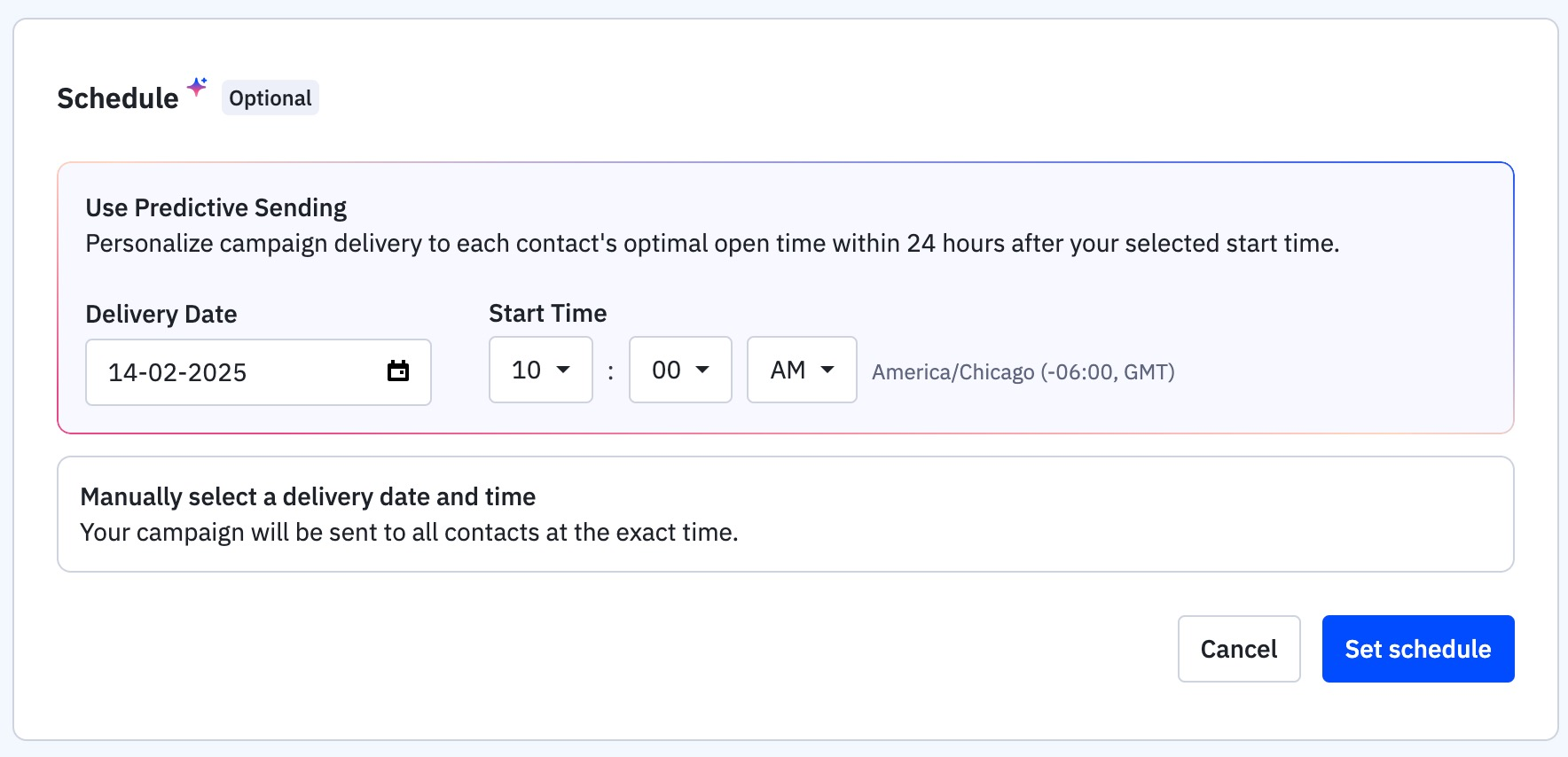
The AI layer adds a dimension Act-On doesn't match. ActiveCampaign's AI Campaign Builder takes a plain-language prompt and generates a full campaign (subject lines, preheader, body, CTAs, images) in seconds. Predictive Sending analyzes each subscriber's engagement history and delivers emails when that person is most likely to open.
Source: ActiveCampaign
These aren't theoretical features. ActiveCampaign reports that AI users save 13+ hours per week.
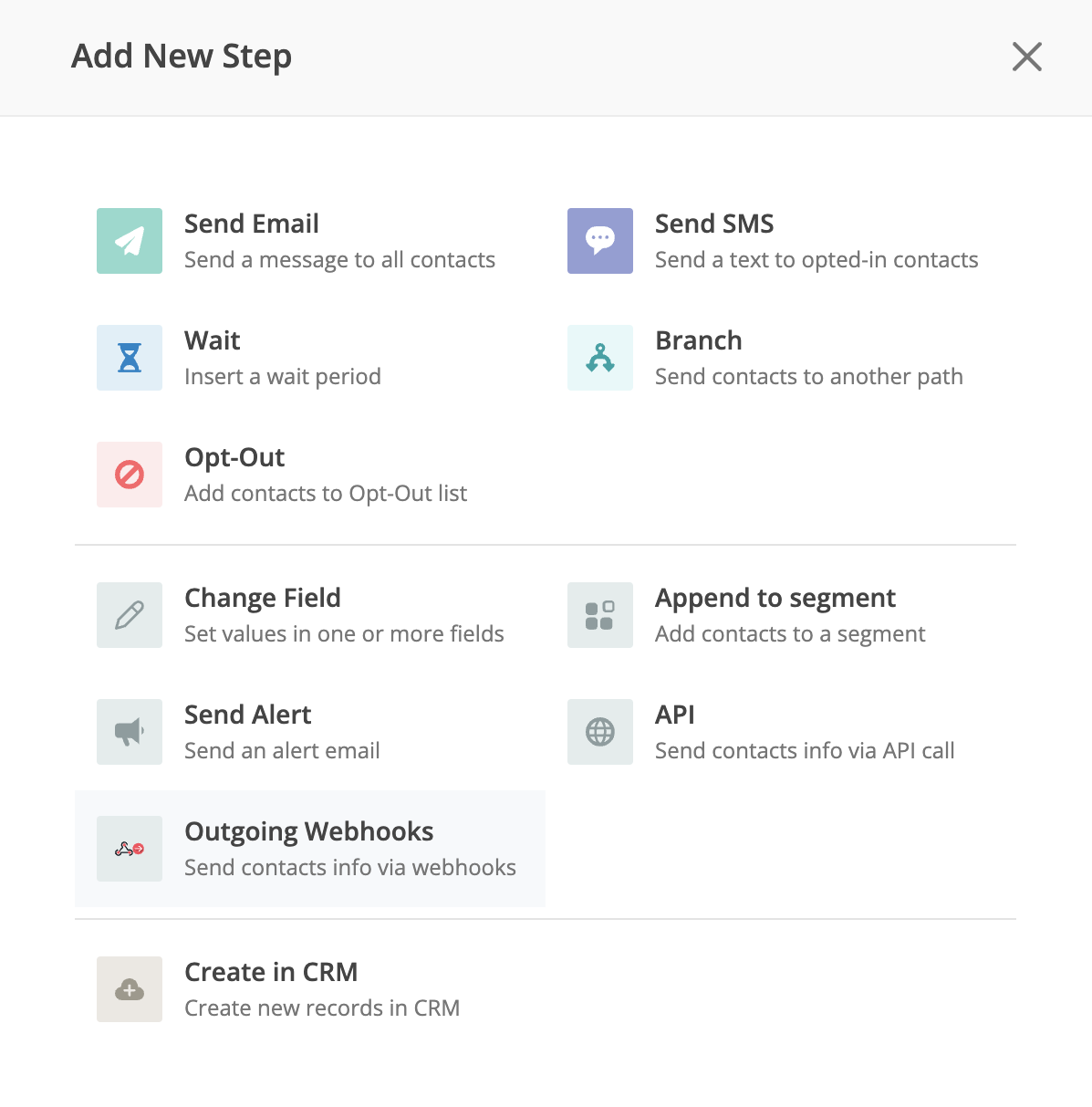
Act-On's Automated Journey Builder takes a more traditional approach.
Workflows move contacts between Start and Exit points through Send Email, Send SMS, Branch, and Wait steps. For structured B2B nurture programs with clear qualification stages, this approach is straightforward and effective.
Source: Act-On
The Adaptive Send feature provides per-contact send-time optimization using behavioral data from up to 25 months back, which is comparable to ActiveCampaign's Predictive Sending.
Where Act-On falls behind is automation breadth. ActiveCampaign offers unlimited automation actions on most paid plans; Act-On's automation building is more constrained in scope and visual sophistication. Gartner's 2024 Magic Quadrant noted Act-On's narrow lead workflow design capabilities as a concern.
For teams running complex, multi-branch automations across several channels at once, ActiveCampaign offers more room to build.
Neither platform tells you who to target
Both ActiveCampaign and Act-On assume you already know who your prospects are.
You bring the contacts. You decide who gets which sequence. You guess which accounts are ready to buy. The platforms automate what happens after those decisions, but they don't help you make them.
This is the gap ZoomInfo fills.
ZoomInfo's Buyer Intent data tracks signals from 210 million IP-to-Organization pairings and 6 trillion+ new keyword-to-device pairings sourced monthly to identify which companies are researching topics related to your solution. Guided Intent (exclusive to ZoomInfo) identifies topics historically correlated with your deal success rather than requiring you to manually select keywords.
The GTM Context Graph goes further. It combines ZoomInfo's third-party intelligence with your CRM records, conversation transcripts, and behavioral data to show not just that an account is active, but why it's moving.
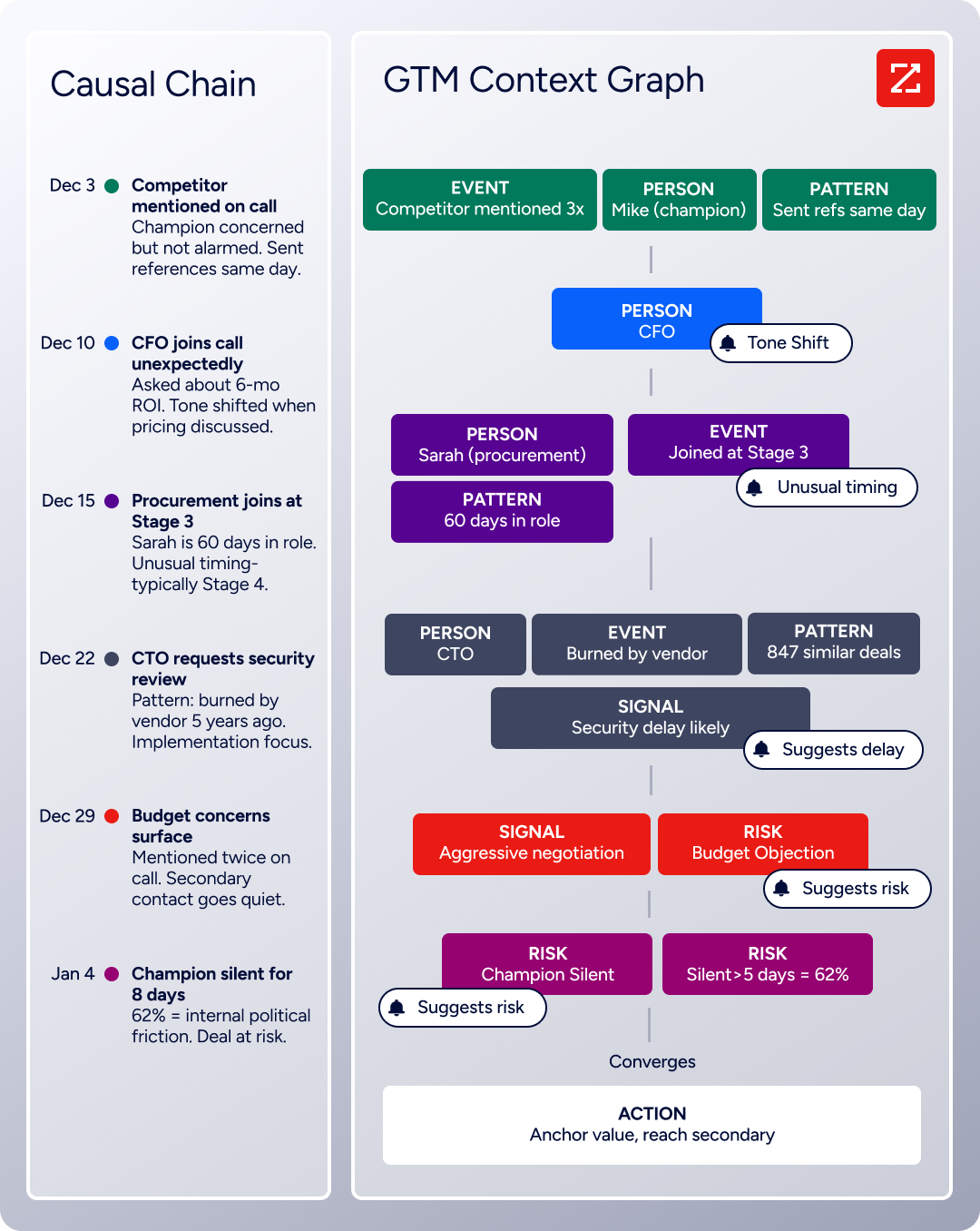
Your CRM records that a deal stage changed. Conversation intelligence captures the CFO asking about six-month ROI on the last call. Intent data shows the company researching three of your competitors. The GTM Context Graph connects all of this, giving marketers real context about which accounts deserve attention and what messaging will land.
For marketing teams, GTM Studio translates that intelligence into action.
Describe an audience in plain language, and GTM Studio builds it from ZoomInfo's verified B2B data. Launch a multi-channel play (display ads, email, calls, LinkedIn, Meta) targeting accounts that match your actual win patterns. Plays run around the clock and adjust based on engagement data. What used to take three weeks to set up now launches in 30 minutes.
"It's not just the data itself. It's more about the right data at the right time to help us reach out with the right message across that full buyer journey." (Chelsea Kenyon, Senior Director of Digital Strategy, Redwood Logistics)
CRM integration: different depths for different needs
Act-On's CRM integration is its strongest advantage over ActiveCampaign.
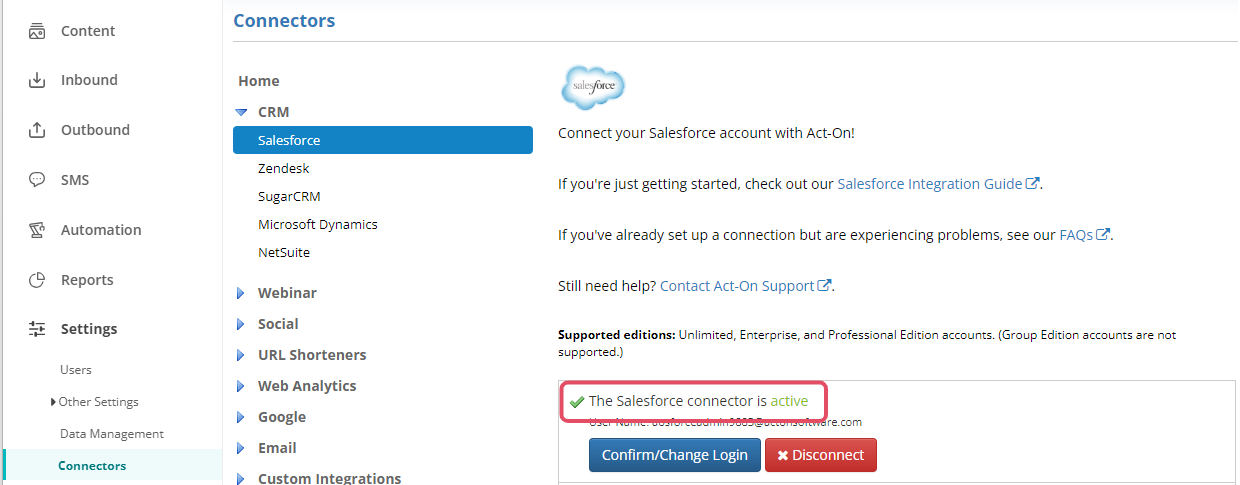
The platform offers native bidirectional integrations with Salesforce, Microsoft Dynamics 365, SugarCRM, NetSuite, and Zendesk Sell, with data flowing both directions through scheduled push/pull syncs. The Salesforce integration runs particularly deep: Act-On embeds its UI directly into the CRM, giving sales reps visibility into a contact's full marketing engagement timeline without leaving Salesforce.
Source: Act-On
ActiveCampaign takes a different approach.
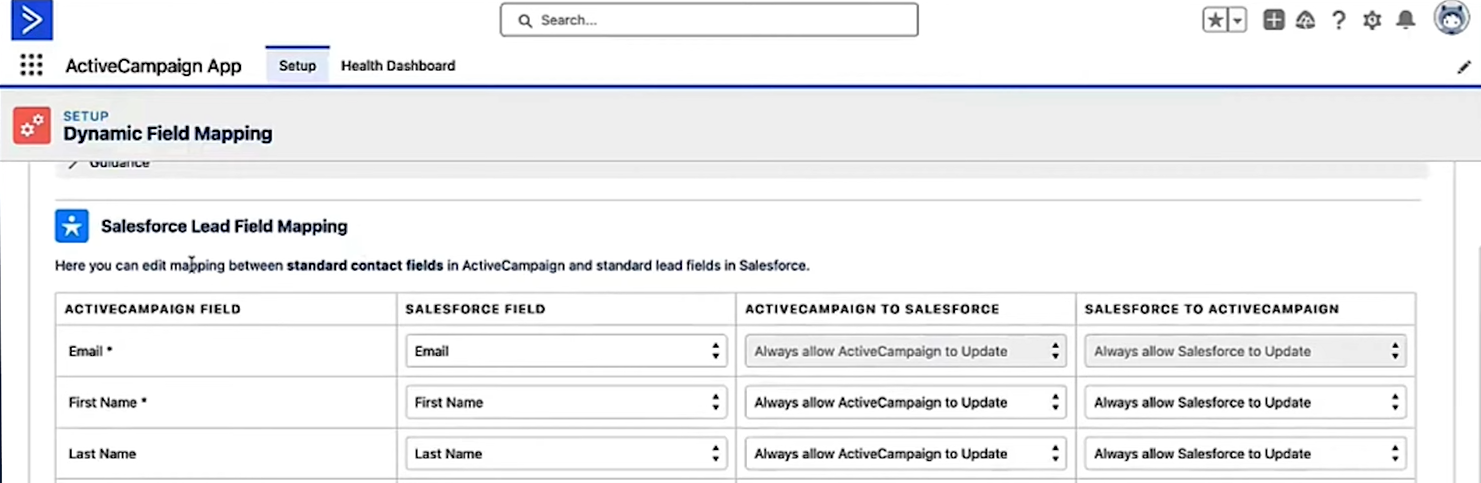
It includes a built-in CRM with visual deal pipelines, lead and deal scoring, task management, and sales routing. For small teams that want marketing automation and CRM under one roof, this is convenient. But the built-in CRM is a marketing companion, not a replacement for Salesforce or HubSpot.
Users who need pipeline forecasting, territory management, or sales analytics will outgrow it. Premium CRM integrations with Salesforce, Microsoft Dynamics 365, and Zendesk Sell are reserved for Enterprise-tier plans.
Source: ActiveCampaign
ZoomInfo integrates with CRMs at a different level.
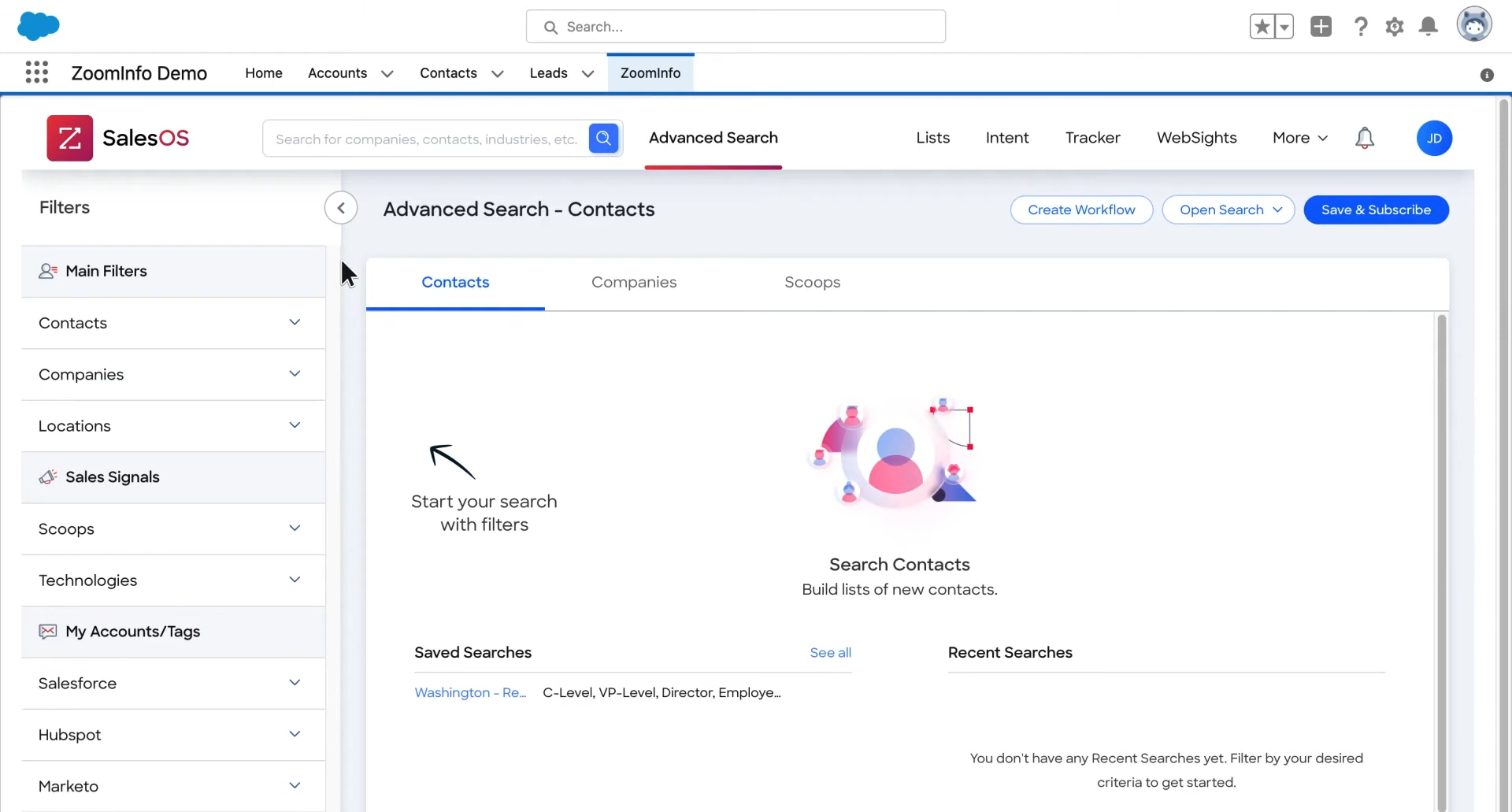
Rather than syncing marketing activity data, ZoomInfo enriches CRM records with verified contact information, company attributes, org charts, technographics, and intent signals.
The Operations product automates deduplication, verification, and multi-vendor enrichment from roughly 60 vendors. Lead-to-account matching uses company hierarchies and domain intelligence. Native integrations with Salesforce, HubSpot, and Microsoft Dynamics ensure the enriched data flows into whatever CRM your team runs.
Source: ZoomInfo
The practical difference: Act-On tells your CRM what marketing emails a contact opened. ZoomInfo tells your CRM who that contact reports to, what technology they use, whether their company just raised funding, and whether they're researching your competitors.
"ZoomInfo is our one source of truth for account data, and even more so for contact data. There's no other provider in the market that provides you with that level of detail." (Thor Sanderson, Senior Manager of Sales Technology Enablement, Smartsheet)
Lead scoring: manual rules versus predictive intelligence
Both ActiveCampaign and Act-On offer lead scoring. Both layer AI on top. But the depth and data sources differ.
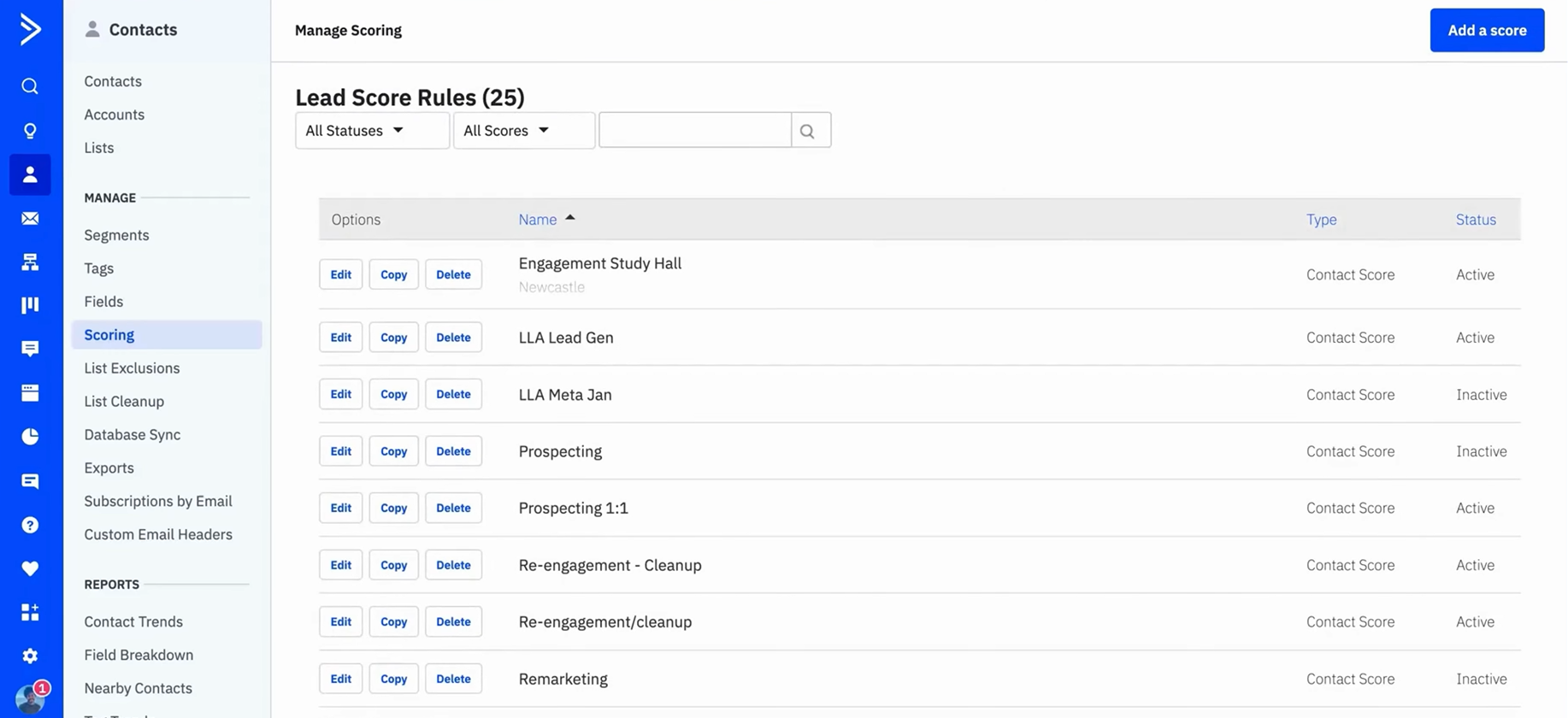
ActiveCampaign supports two parallel scoring systems: contact-level and deal-level scores.
Source: ActiveCampaign
Scores can be static (applied once) or dynamic (updated continuously as behaviors like email replies or deal stage changes occur). The Active Intelligence layer adds win probability analysis, surfacing real-time predictions about which deals are likely to close. This dual scoring approach is unusual for a platform at ActiveCampaign's price point.
Act-On offers both manual rule-based scoring and AI Predictive Lead Score, which uses machine learning to analyze tracked contact behaviors and CRM outcomes.
The AI model examines website and landing page views, webinar attendance, email engagement, form submissions, and CRM opportunity status to predict lead close propensity. Scores update daily. Act-On also supports up to 4 additional scoring sheets beyond the default for different teams, regions, or product lines.
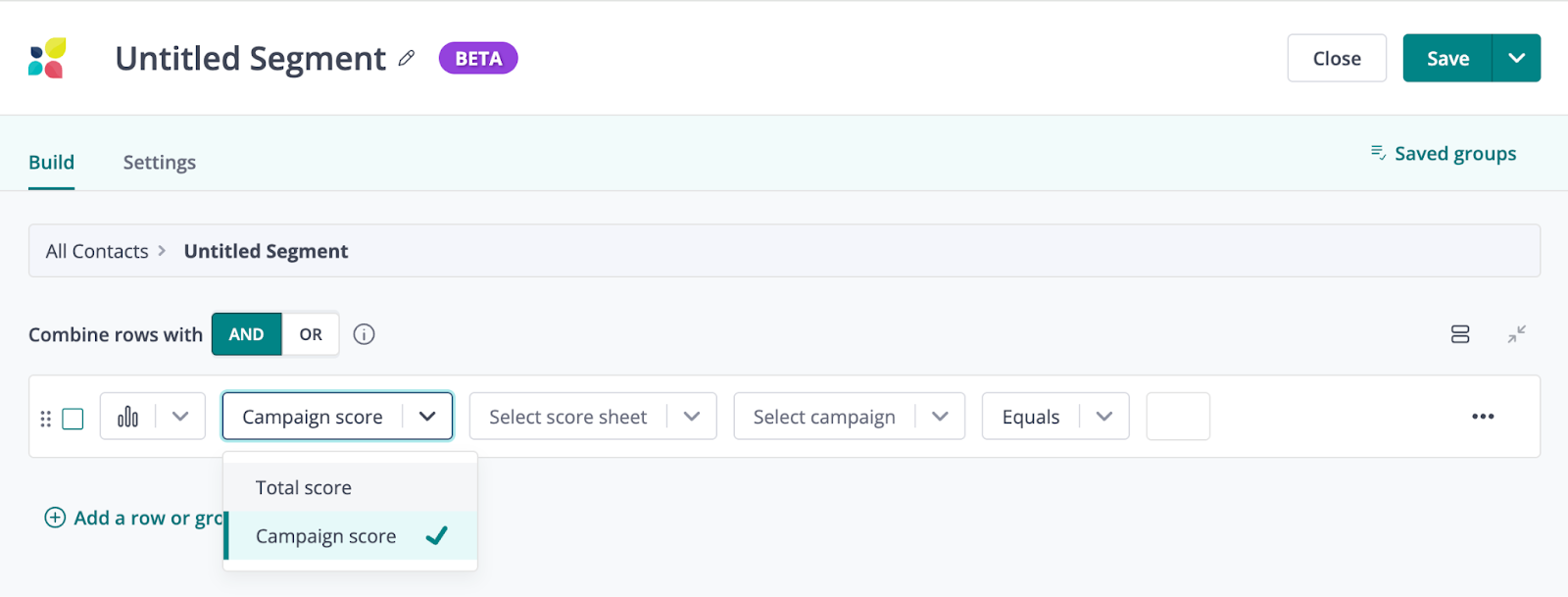
Source: Act-On
Both platforms score contacts based on what those contacts do within your marketing system. They track opens, clicks, page visits, and form fills. What they cannot score is external market activity: whether a company is researching your category, hiring for roles that suggest an upcoming purchase, or showing intent signals across the web.
ZoomInfo's scoring operates on a different data foundation.
Buyer Intent data identifies companies researching relevant topics across the web. Account Fit Score uses predictive AI to score accounts 0-100 based on firmographic patterns that predict conversion.
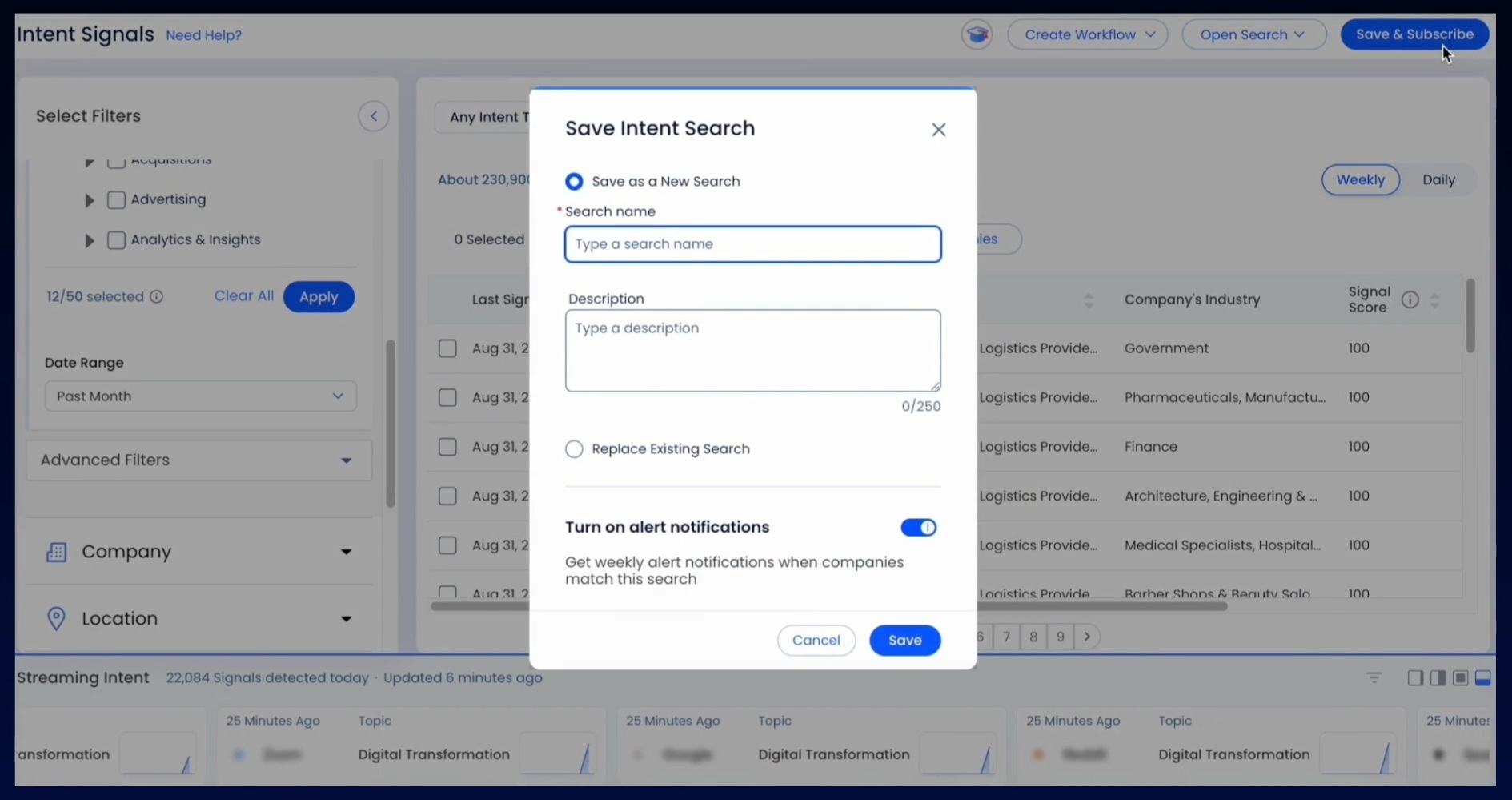
Source: ZoomInfo
Contact Recommendations surface AI-ranked buying committee suggestions by motion (prospecting, deal acceleration, or renewals). These scores aren't based on whether someone opened your last email. They're based on whether their company matches the patterns behind your actual closed-won deals.
"That combination of our internal CRM data, external signals, and AI that's given all that context has helped us craft very specific account- and persona-based messages. And people have responded to them right away." (Toby Carrington, Chief Business Officer, Seismic)
Email deliverability and channel reach
Both ActiveCampaign and Act-On invest in email deliverability, and both make credible claims.
ActiveCampaign reports 99.88% email deliverability internally and 94% in independent testing by EmailToolTester, which also named it the Best Email Marketing Tool of 2025.
The platform routes emails through a private network rather than the public internet, supports dedicated IP management and pre-warmed IPs, and includes a control to filter inflated open metrics from Apple Mail Privacy Protection for cleaner reporting.
Act-On runs its own SMTP servers rather than relying on third-party providers, giving it direct control over deliverability infrastructure.
The platform also offers dedicated deliverability services ranging from one-time consultations to ongoing partnerships for organizations that need hands-on help.
On channel reach, ActiveCampaign has expanded notably. Native support now covers email, SMS (with two-way messaging and a dedicated inbox), and WhatsApp (added through the 2025 Hilos acquisition, with broadcast, 1:1 chat, automated Flows, and a shared inbox). All three channels run from one automation builder using shared contact data.
Act-On covers email, SMS (including international sending on a credit system), social media publishing to LinkedIn and X, and direct mail through its multichannel platform. The InSite web agent adds website personalization for known contacts.
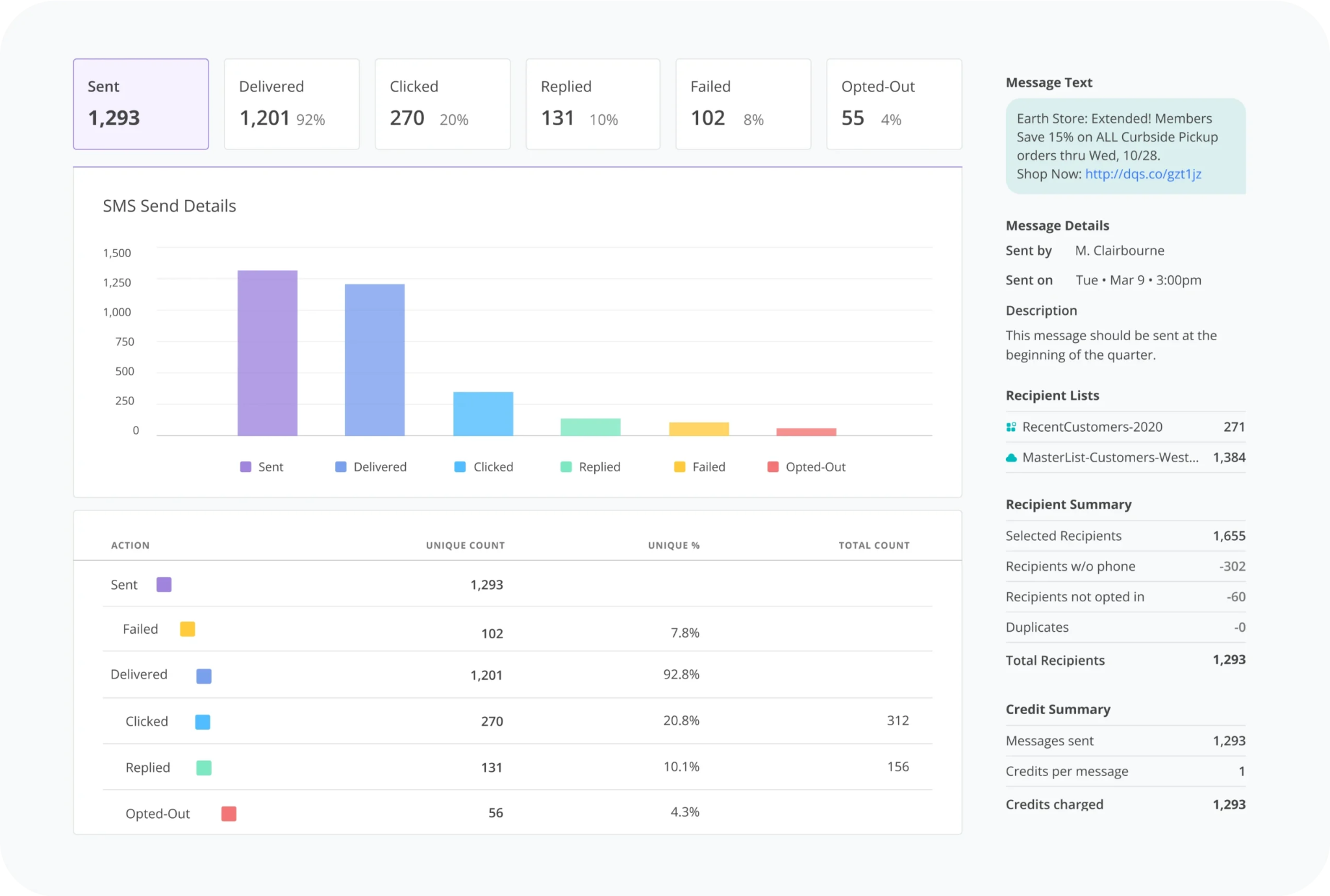
Source: Act-On
One notable capability for enterprise organizations: Act-On's Marketing Automation Network enables division-level communication while maintaining a parent account for corporate-wide messaging.
ZoomInfo operates on different channels entirely.
GTM Studio orchestrates display ads through a native DSP deploying across major networks, email sequences, outbound calls, LinkedIn, Meta, and Connected TV, all triggered by buyer behavior rather than marketing calendar schedules.
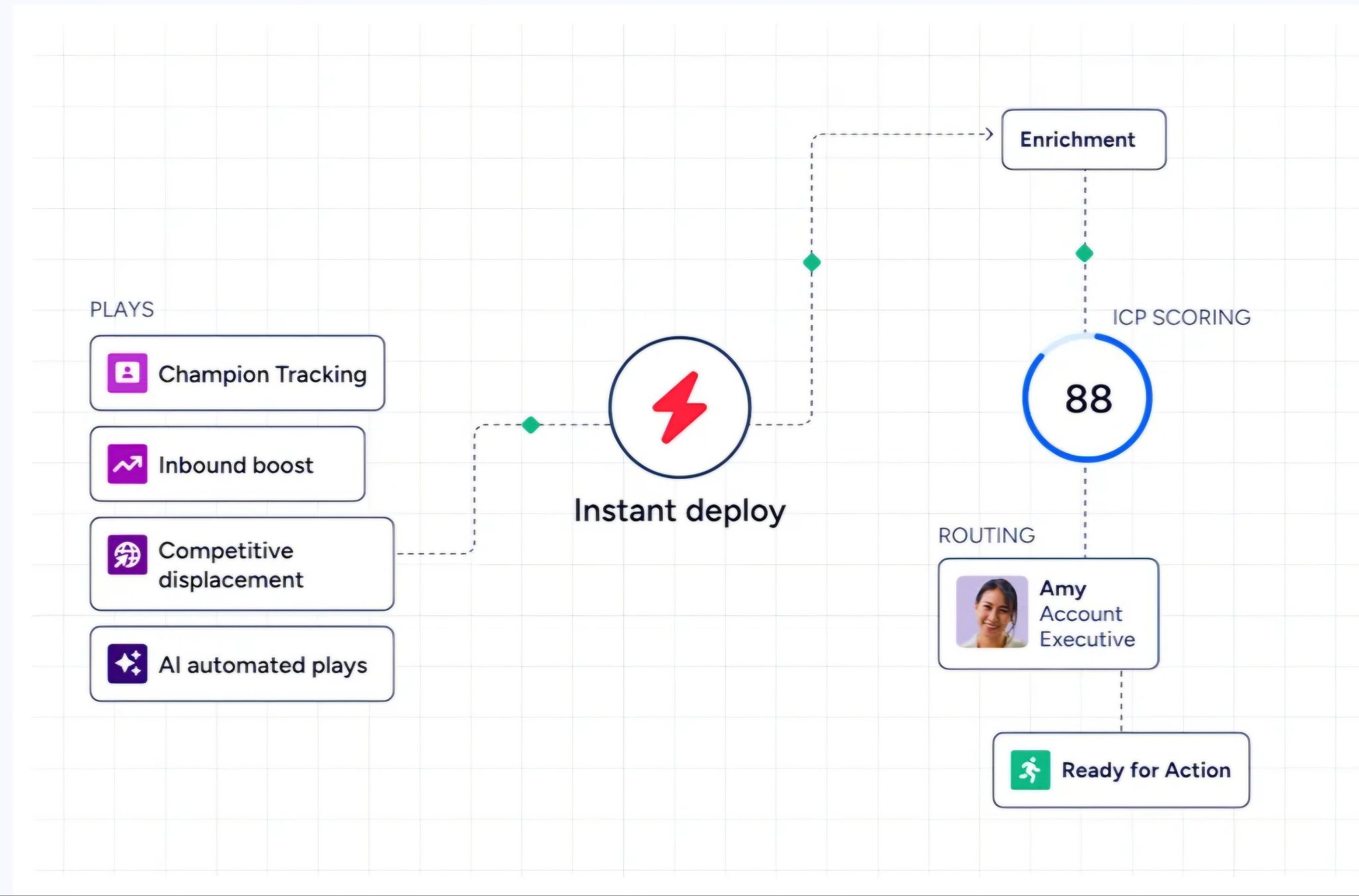
Source: ZoomInfo
The FormComplete feature reduces web forms to a single field while auto-appending verified data, which Smartsheet reported increased form fills by 40%+ and MQLs by 84%.
Pricing reflects who each platform is built for
The pricing structures reveal each platform's target market clearly.
ActiveCampaign charges based on total contacts in your database, starting at $15/month for 1,000 contacts on the Starter plan.
The Starter plan limits you to 1 user, 25,000 contacts maximum, and 5 actions per automation. Most teams will need Plus or higher for unlimited automation actions, landing pages, and AI content generation.
At 10,000 contacts, Starter costs $149/month. Professional and Enterprise tiers add predictive sending, advanced segmentation, and revenue attribution. The 14-day free trial requires no credit card, and a 30-day money-back guarantee reduces risk for new customers.
The trade-off users flag repeatedly: pricing climbs as your contact list grows. G2 reviewers report that pricing has increased over recent years. Since you pay for every contact in your database regardless of whether you email them, a large but selectively marketed list costs more than it should.
Act-On solves that problem with its Active Contact pricing model, charging only for contacts you actually email in a given month.
If you have 5,000 contacts but only email 2,500 of them, you pay for 2,500. The Professional plan starts at $900/month for 2,500 active contacts, with Enterprise pricing available on request. Act-On claims this model can deliver cost reductions of up to 48% compared to competitors like Marketo.
But $900/month is a steep entry point, and Act-On requires annual contracts with automatic 5% annual increases unless you negotiate otherwise. CRM integration, Data Studio, ABM, and SMS marketing are all paid add-ons on the Professional tier. Reviewers across platforms note Act-On is "one of the most expensive tools on the market" when all features are factored in.
ZoomInfo uses custom, consumption-based pricing with no published rates.
A permanent free tier (ZoomInfo Lite) provides access to ZoomInfo's B2B database with 10 monthly export credits, and a 7-day free trial opens up the full platform. Paid plans scale around seats, credit volume, and feature access.
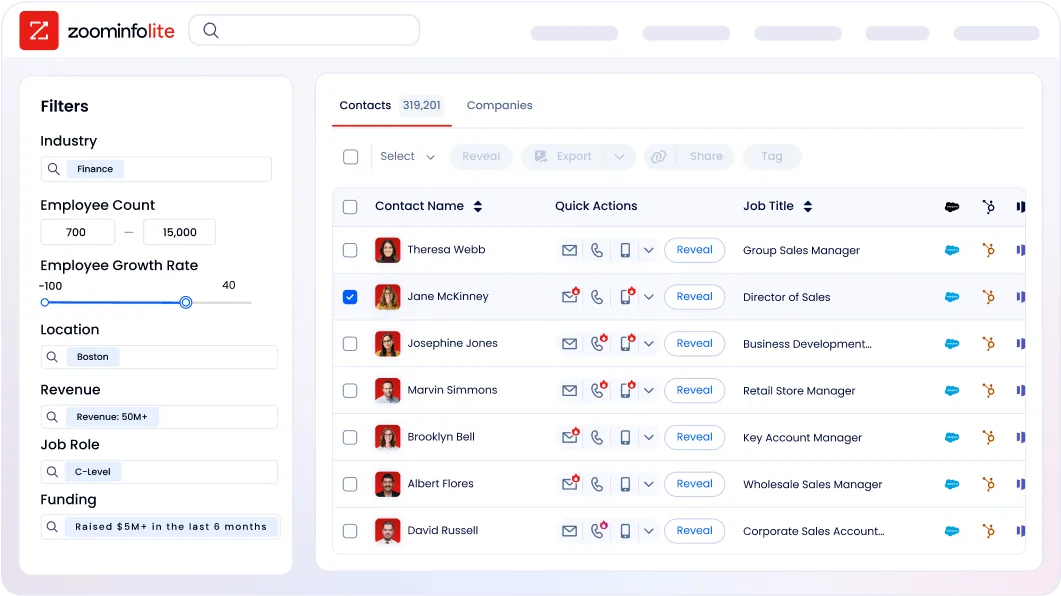
ZoomInfo is a premium investment, but for B2B teams spending real budget on marketing automation without a clear picture of which accounts to target, the upstream intelligence often pays for itself through sharper targeting and reduced waste.
Support and onboarding: Act-On's biggest differentiator
Act-On consistently earns its highest marks for customer support.
Reviewers across G2, Capterra, and TrustRadius describe it as "some of the best support they've had for a SaaS offering." The platform offers live technical support via chat, phone, Zoom, and the support site, with Premium and Premium+ tiers adding faster SLAs and deliverability insights. At Act-On's price point, this level of personal service is expected, and Act-On delivers.
ActiveCampaign offers chat and ticket support on all paid plans, with priority email and chat on Professional plans and a dedicated account team on Enterprise.
The company provides free migration services for contacts, templates, segments, and campaigns from competitor platforms, which lowers switching cost. A 180,000+ member community and certified consultant directory provide additional support channels. However, Capterra reviewers flag occasional inconsistency in support responsiveness.
ZoomInfo takes an enterprise support approach.
A redesigned 90-day onboarding program (planning, technical implementation, education, adoption) produced a 25% improvement in customer satisfaction scores.
ZoomInfo University provides role-specific learning paths, product certifications, and on-demand courses. Enterprise customers receive dedicated customer service managers.

Compliance and security for regulated industries
If you operate in a regulated industry, compliance capabilities narrow your options quickly.
Act-On holds ISO 27001 certification and achieved HIPAA compliance in October 2025, verified by third-party audit.
It's also TX-RAMP Certified for state government data standards. For healthcare organizations, financial institutions, and companies handling protected data, Act-On has done the compliance work.
ActiveCampaign offers HIPAA support on its Enterprise plan, along with SSO, GDPR compliance (DPA, Standard Contractual Clauses), and CCPA compliance.
The platform also supports EU-US, UK, and Swiss Data Privacy Framework compliance.
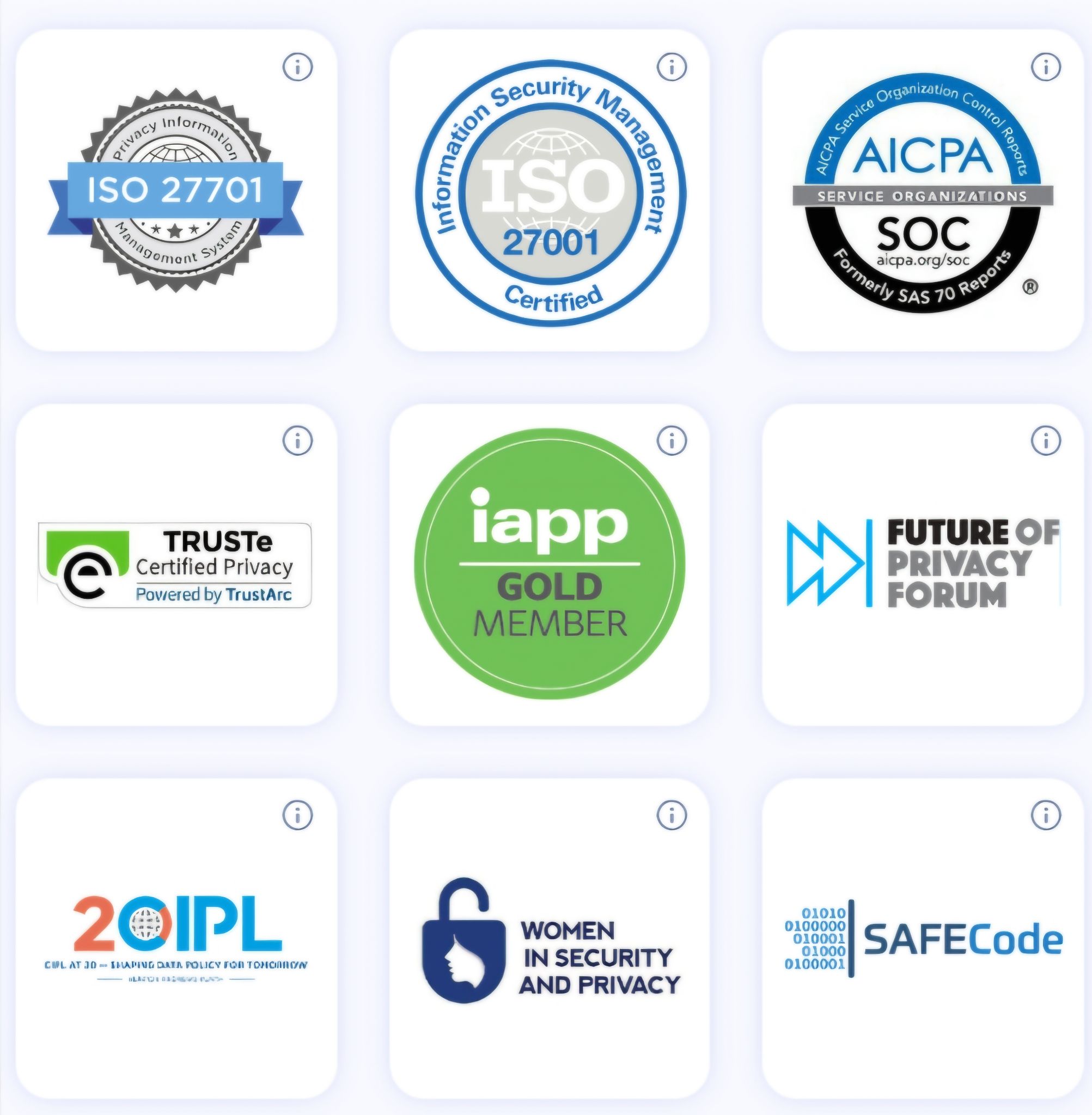
ZoomInfo maintains certifications renewed annually: ISO 27001, ISO 27701, SOC 2 Type II, TRUSTe GDPR and CCPA validations.
Source: ZoomInfo
The company operates as a registered data broker in California and Vermont and maintains a dedicated Trust Center.
ActiveCampaign vs. Act-On vs. ZoomInfo: Which should you choose?
The choice depends on where your biggest gap is: execution, CRM alignment, or upstream intelligence.
Choose ActiveCampaign if:
You're an SMB or growing business that needs automation at accessible pricing
Your team wants email, SMS, and WhatsApp orchestrated from a single platform
You value a visual automation builder with branching logic and AI-assisted campaign creation
You prefer a built-in CRM over managing a separate sales tool
You want to start with a 14-day free trial and scale from $15/month
Choose Act-On if:
You're a mid-market or enterprise B2B organization with complex sales cycles
Native CRM integration with Salesforce or Dynamics is non-negotiable
You have a large contact database but only market to a fraction of it (Active Contact pricing will save you money)
You operate in healthcare or another regulated industry requiring HIPAA compliance
You value hands-on, consultative customer support
Choose ZoomInfo if:
You need to know which companies are in-market before you start marketing to them
Your marketing automation suffers from poor targeting because you lack accurate B2B contact data and buying signals
You want to enrich your CRM with verified contacts, org charts, technographics, and intent signals
You need to orchestrate multi-channel campaigns triggered by buyer behavior, not marketing calendars
You want one intelligence layer that powers your sales, marketing, and RevOps teams through GTM Workspace, GTM Studio, or APIs and MCP in any tool
Start with ZoomInfo Lite for free or request a demo to see the full platform.
ActiveCampaign and Act-On both solve real problems for different audiences. But the hardest problem in B2B marketing isn't automating the email. It's knowing who should receive it, when they're ready, and why they'll care. ZoomInfo provides that intelligence and integrates with both platforms, so you don't have to choose between automation and insight. You can have both.
ActiveCampaign vs. Act-On vs. ZoomInfo FAQ
What is the core difference between ActiveCampaign, Act-On, and ZoomInfo?
ActiveCampaign is a marketing automation platform with a built-in CRM designed for SMBs, offering email, SMS, and WhatsApp automation starting at $15/month.
Act-On is a marketing automation platform targeting mid-market and enterprise B2B teams, with native CRM integrations and Active Contact pricing starting at $900/month.
ZoomInfo is a B2B intelligence platform that identifies which companies are in-market, provides verified contact data for 500M contacts, and orchestrates go-to-market plays. ZoomInfo solves the upstream problem of who to target; ActiveCampaign and Act-On solve the downstream problem of how to engage them.
Which platform is cheaper for a mid-sized contact list?
ActiveCampaign is cheaper at entry. At 10,000 contacts, its Starter plan costs $149/month.
Act-On starts at $900/month for 2,500 active contacts, though its Active Contact model means you only pay for contacts you actually email, which can reduce effective cost if you market to a small portion of your database.
ZoomInfo's pricing is custom-quoted and consumption-based. The right comparison depends on how many contacts you actively market to versus how many sit in your database.
Can ZoomInfo replace ActiveCampaign or Act-On?
No. ZoomInfo and marketing automation platforms serve different functions. ZoomInfo identifies the right accounts and contacts through B2B data, intent signals, and AI intelligence.
ActiveCampaign and Act-On nurture those contacts through email sequences, SMS campaigns, and automated workflows. ZoomInfo integrates with both platforms, so many B2B teams use ZoomInfo alongside their marketing automation tool for a complete pipeline.
Which platform has the best AI capabilities?
Each platform applies AI differently. ActiveCampaign's Active Intelligence generates full campaigns from plain-language prompts and optimizes send times per subscriber using individual engagement history.
Act-On offers AI Predictive Lead Score and AI analytics with natural language querying.
ZoomInfo's GTM Context Graph processes 1.5B+ data points daily and uses AI to identify in-market accounts, recommend buying committee contacts, and generate account intelligence, operating on external market signals that neither ActiveCampaign nor Act-On can access.
Which platform has better CRM integration?
Act-On leads on CRM depth with native, bidirectional integrations for Salesforce, Microsoft Dynamics, SugarCRM, NetSuite, and Zendesk Sell.
ActiveCampaign includes a built-in CRM and integrates with Salesforce, Dynamics, and Zendesk Sell on its Enterprise plan.
ZoomInfo integrates with Salesforce, HubSpot, and Dynamics for a different purpose: enriching CRM records with verified B2B data, org charts, intent signals, and company attributes rather than syncing marketing activity.
Is Act-On worth the price difference over ActiveCampaign?
Act-On's $900/month starting price is justified for mid-market B2B organizations with complex sales processes that depend on native CRM integration, HIPAA compliance, or enterprise-grade support.
For teams that don't need those specific capabilities, ActiveCampaign delivers comparable or stronger automation at a fraction of the cost. Act-On's Active Contact pricing model can offset the price difference for companies with large databases that only email a small subset of contacts.
How does ZoomInfo's buyer intent data work with marketing automation?
ZoomInfo tracks intent signals from 210 million IP-to-Organization pairings and trillions of keyword-to-device pairings to identify companies researching topics relevant to your business. When an account shows buying intent, that signal can trigger a play in GTM Studio or flow into your marketing automation platform through native integrations.
Your ActiveCampaign or Act-On workflows then nurture those accounts with the right messaging at the right time, informed by ZoomInfo's intelligence about what the account is researching and who the key decision-makers are.
Which platform is best for healthcare marketing?
Act-On is the strongest choice for healthcare organizations, with HIPAA compliance verified by third-party audit and ISO 27001 certification.
ActiveCampaign offers HIPAA support on its Enterprise plan.
ZoomInfo maintains SOC 2 Type II and ISO 27001/27701 certifications and is used by healthcare companies for B2B prospecting, though its compliance posture focuses on data privacy rather than protected health information.
