
If you're comparing ActiveCampaign vs. Hatchbuck for your marketing automation and CRM, there's a good chance you're asking the wrong questions first. Before you evaluate automation builders and email templates, these are the questions that determine which tool delivers results:
Do you already know who your ideal buyers are, or are you still figuring out which accounts to target?
Is your primary challenge sending better emails, or finding the right people to send them to?
Do you need a tool your whole team can use without training, or are you willing to invest in a steeper learning curve for stronger automation?
Are you selling B2B, where identifying in-market companies and buying committees is critical, or B2C, where list-based nurturing is the main motion?
Is your contact database already clean and comprehensive, or do you suspect you're missing most of your addressable market?
In short, here's what we recommend:
ActiveCampaign is the stronger of the two marketing automation platforms. Its visual automation builder supports branching workflows that respond to behavioral triggers in real time. With Active Intelligence (an AI layer launched in 2025), marketers can describe goals in plain language and let AI agents build campaigns, suggest segments, and optimize send times.
The platform spans email, SMS, WhatsApp, landing pages, and a built-in CRM, all under one subscription with 1,000+ integrations. The trade-off: pricing climbs as contact lists grow, advanced features take time to learn, and the CRM works better as a marketing companion than a standalone sales tool.
BenchmarkONE (formerly Hatchbuck, rebranded in 2020) is the simpler, more affordable option built for small businesses and marketing agencies. It bundles CRM, email marketing, automation, and landing pages into a single platform where non-technical users can get productive quickly.
Unlimited users on every plan, a permanent free tier, and a tag-based contact scoring system make it a practical choice for teams that want one tool without the complexity. The trade-off: limited email design flexibility, no native SMS or appointment scheduling, and a feature ceiling that appears as companies outgrow the small-business segment.
Both platforms handle the "how" of marketing: sending the right message through the right channel at the right time. But for B2B teams, neither answers the more fundamental question: who should you be targeting, and when are they ready to buy? That's a different problem, and it's where the comparison gets interesting.
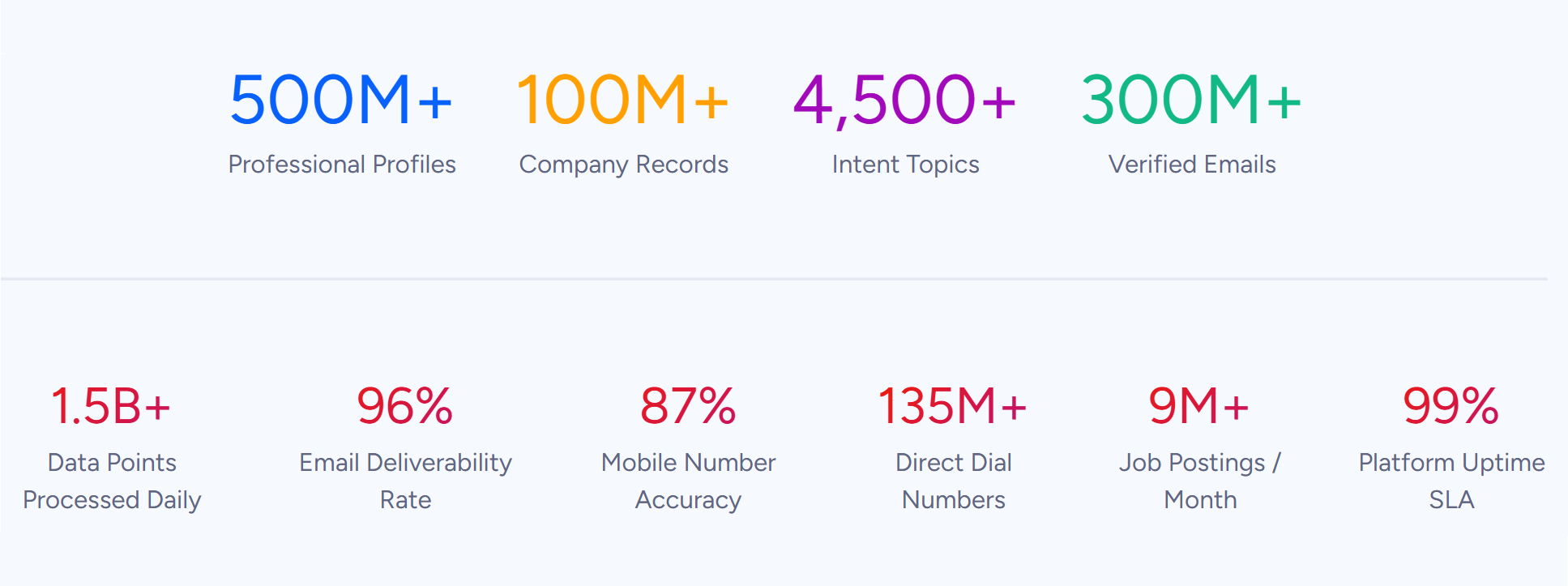
ZoomInfo is a B2B intelligence platform built on a B2B data foundation of 500M contacts, 100M companies, 135M+ verified phone numbers, and 200M+ verified business emails. Its GTM Context Graph processes 1.5B + data points daily and connects this data with your CRM records, conversation transcripts, and behavioral signals to show what's happening across your accounts.
That context lets AI reveal not just what happened, but why it happened and which actions will move deals forward. Your team can sell from GTM Workspace, build campaigns in GTM Studio, or power their own tools through the API and MCP. For B2B companies, ZoomInfo solves the intelligence problem that marketing automation tools assume you've already solved.
If building campaigns on a foundation of verified B2B intelligence sounds like the missing piece, see how ZoomInfo works.
ActiveCampaign vs. BenchmarkONE vs. ZoomInfo at a glance
ActiveCampaign | BenchmarkONE | ZoomInfo | |
|---|---|---|---|
Core function | Marketing automation + CRM | All-in-one CRM + email marketing | B2B intelligence + GTM execution |
Automation depth | Visual builder with branching logic | Linear sequences with tag-score triggers | AI-driven GTM plays across channels |
Contact database | Only contacts you add or capture | Only contacts you add or capture | 500M contacts, 200M+ verified emails |
AI capabilities | Active Intelligence with 12+ AI agents | Basic AI writing tools (Smart Subject Line, Smart Content) | GTM Context Graph with AI agents for research, outreach, and signals |
CRM included | Yes (marketing-focused) | Yes (contact-focused) | Yes (intelligence-driven, via GTM Workspace) |
Buyer intent data | No | No | 210M IP-to-org pairings, 6T+ keyword pairings monthly |
Channels | Email, SMS, WhatsApp | Email only | Email, phone, ads, display, LinkedIn, Connected TV |
Starting price | $15/month (1,000 contacts) | Free (500 contacts) | Free (ZoomInfo Lite); paid plans custom-quoted |
Users included | 1 (Starter) | Unlimited | Varies by plan |
Best for | Growing SMBs needing advanced automation | Small businesses wanting simplicity | B2B teams needing verified data and buying signals |
Marketing automation: power vs. simplicity
ActiveCampaign and BenchmarkONE both automate email-based marketing, but they approach it at different levels of complexity.
ActiveCampaign's visual automation builder is the platform's defining feature. You can design multi-step workflows with conditional branching, if/else logic, wait periods, and triggers that fire based on email engagement, website behavior, form submissions, or CRM activity.
The builder supports unlimited automation actions on Plus plans and above, and it connects to email, SMS, and WhatsApp from a single workflow. Predictive Sending analyzes each contact's engagement history and delivers emails when that person is most likely to open, rather than choosing a single send time for the entire list.
With Active Intelligence, marketers can skip manual setup. Describe a business goal in plain language, and AI agents build configured campaigns (subject lines, content, segmentation, and channel mix included). The system draws on billions of anonymized data points from similar businesses to recommend what to do next. It's an advantage for marketers who have the time to learn the platform's depth.

Source: ActiveCampaign
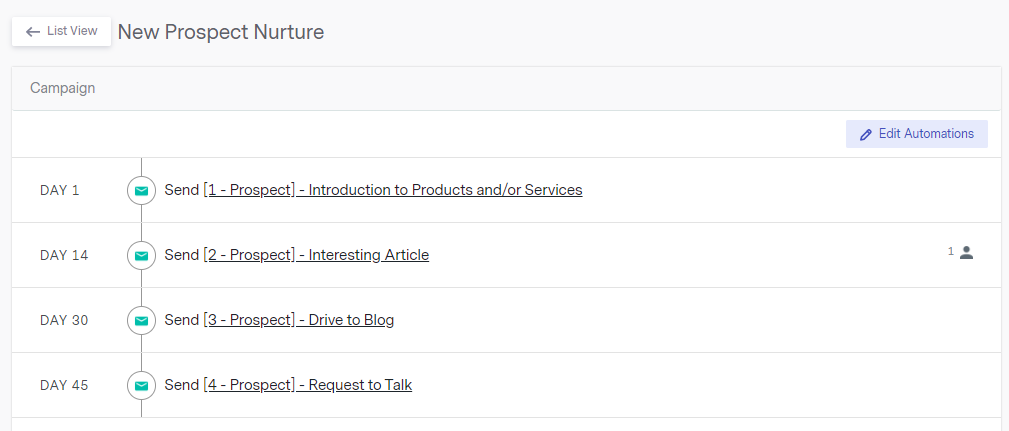
BenchmarkONE keeps things deliberately simpler. Automation runs on five trigger types: form submissions, webpage visits, email link clicks, tag score thresholds, and inbound webhooks.
When a trigger fires, the system can send emails, update contact fields, create tasks, add tags, adjust scores, create deals, or notify a sales rep. Campaigns use day-numbered sequences (send email on day 1, follow-up on day 3) or event-based timing tied to specific dates.
Source: BenchmarkONE
There's no visual branching builder. The automation model is linear sequences, not decision trees. For a two-person marketing team at a 15-person company, this is often enough.
When you need a welcome email to go out on day one, a follow-up on day three, and a sales task if the contact clicks the pricing link, BenchmarkONE handles it without the overhead of learning a visual workflow editor. But for businesses that need multi-path nurture logic, conditional content, or cross-channel coordination, the simplicity becomes a ceiling.
CRM capabilities reflect different audiences
Both platforms include a CRM, but the word "CRM" means different things in each case.
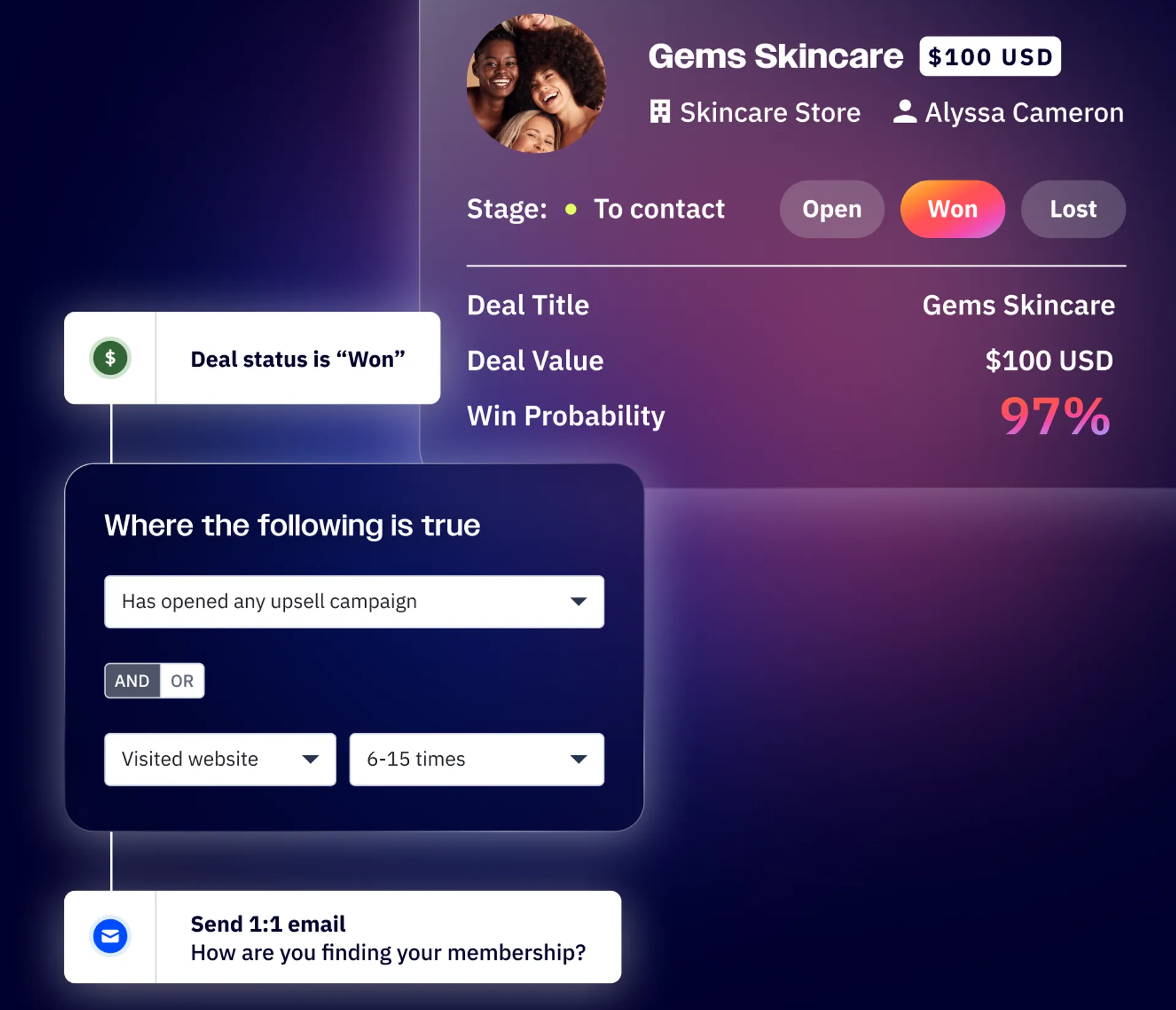
ActiveCampaign's CRM is built around visual sales pipelines with customizable deal stages. Deals, contacts, and marketing data all live in the same system, so a deal record carries the behavioral history of that contact: which emails they opened, which pages they visited, which automations they triggered.
Source: ActiveCampaign
Two-tier scoring tracks both contact-level lead scores and deal-level quality scores independently. Sales routing assigns incoming deals to reps based on round-robin, geography, lead score, or expertise. Win probability analysis (powered by Active Intelligence) predicts deal outcomes in real time.
It's a functional sales CRM, not just a contact database. That said, teams needing deal forecasting, territory management, or pipeline analytics will still find it limited compared to Salesforce or HubSpot's CRM.
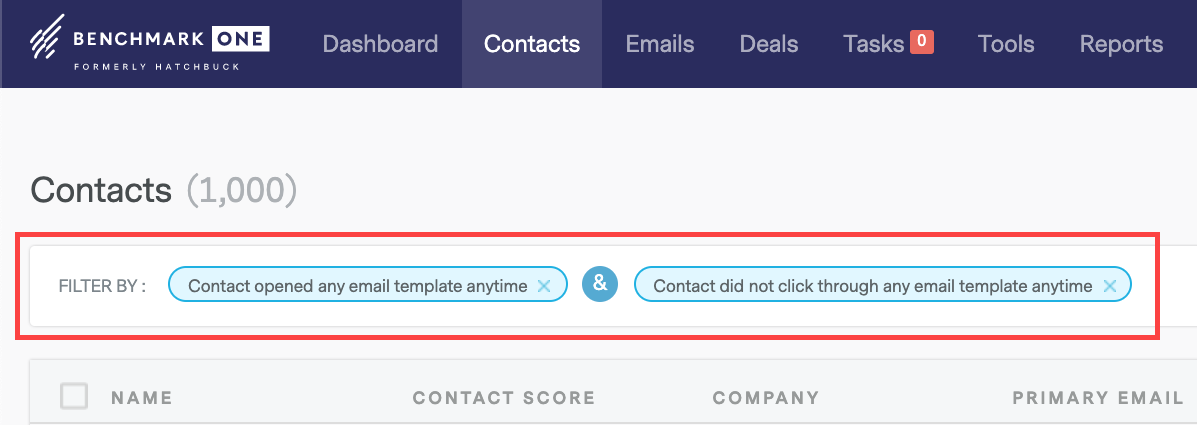
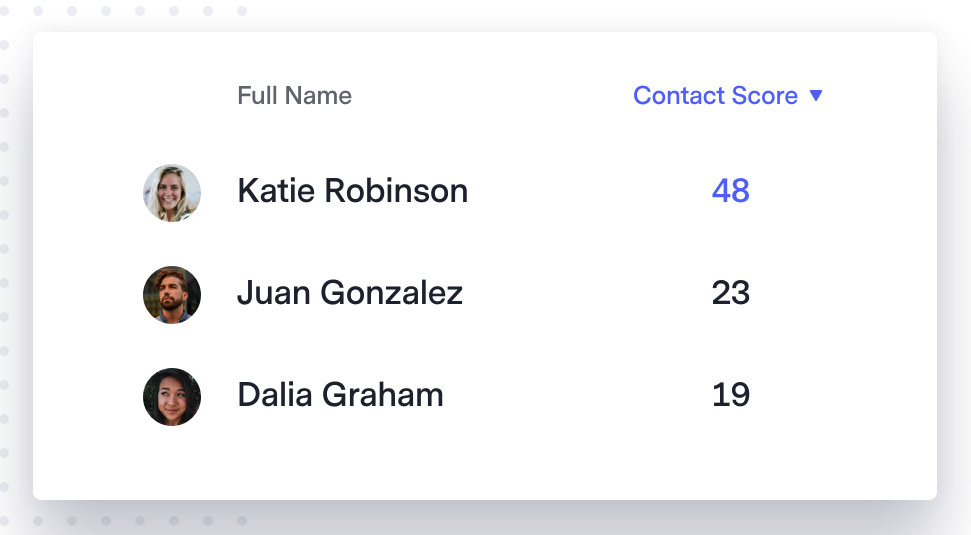
BenchmarkONE's CRM centers on tag-based contact management. Tags accumulate scores each time they're applied, creating a lightweight intent-scoring system. A rolling contact score recalculates nightly based on email opens, link clicks, webpage visits, and form submissions over a configurable 7, 30, or 90-day window. Sales reps can filter contacts by status, sort by score, and work the warmest leads first.
Source: BenchmarkONE
The deals module tracks opportunities through customizable pipeline stages, but the CRM is organized by contacts rather than accounts, which creates friction for B2B teams selling to organizations with multiple stakeholders.
There's no native mobile app, just a mobile web interface available on Pro plans. Gmail and Outlook integrations let reps manage contacts from their inbox, which is where most small-business salespeople spend their day anyway.
Email marketing: depth vs. accessibility
ActiveCampaign earned EmailToolTester's Best Email Marketing Tool of 2025 award, and deliverability is where it stands out. The platform reports 99.88% email deliverability through private network routing, dedicated IP management, and built-in DKIM/DMARC authentication. 93% of surveyed customers say deliverability is better than competitors they've used.
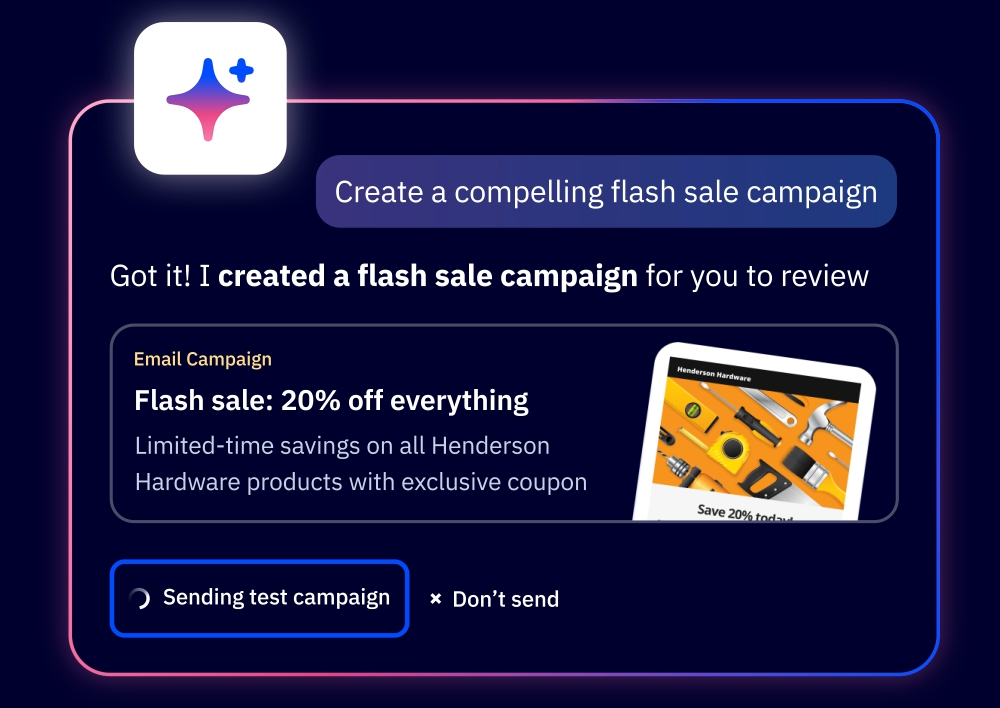
The AI Campaign Builder generates complete campaigns from plain-language prompts, including subject lines, body content, images, and CTAs. Conditional content blocks let a single email display different text to different segments, and predictive content uses NLP to select the best content variant for each contact.
Source: ActiveCampaign
Beyond email, ActiveCampaign provides native SMS (with a 98% open rate and two-way inbox) and WhatsApp messaging powered by the Hilos acquisition, making it the only platform in this comparison offering multi-channel messaging from a single automation builder.
BenchmarkONE provides three email composition paths: a drag-and-drop builder, a plain-text editor, and a raw HTML editor. This covers all skill levels, from the business owner who wants to drag a few blocks together to the agency developer pasting custom HTML.
A/B testing compares two or more templates against the same contact list. Dynamic Content on Pro and Agency plans lets individual sections within a template display only to contacts carrying specific tags, so different audiences see different content from a single send without duplicating lists.
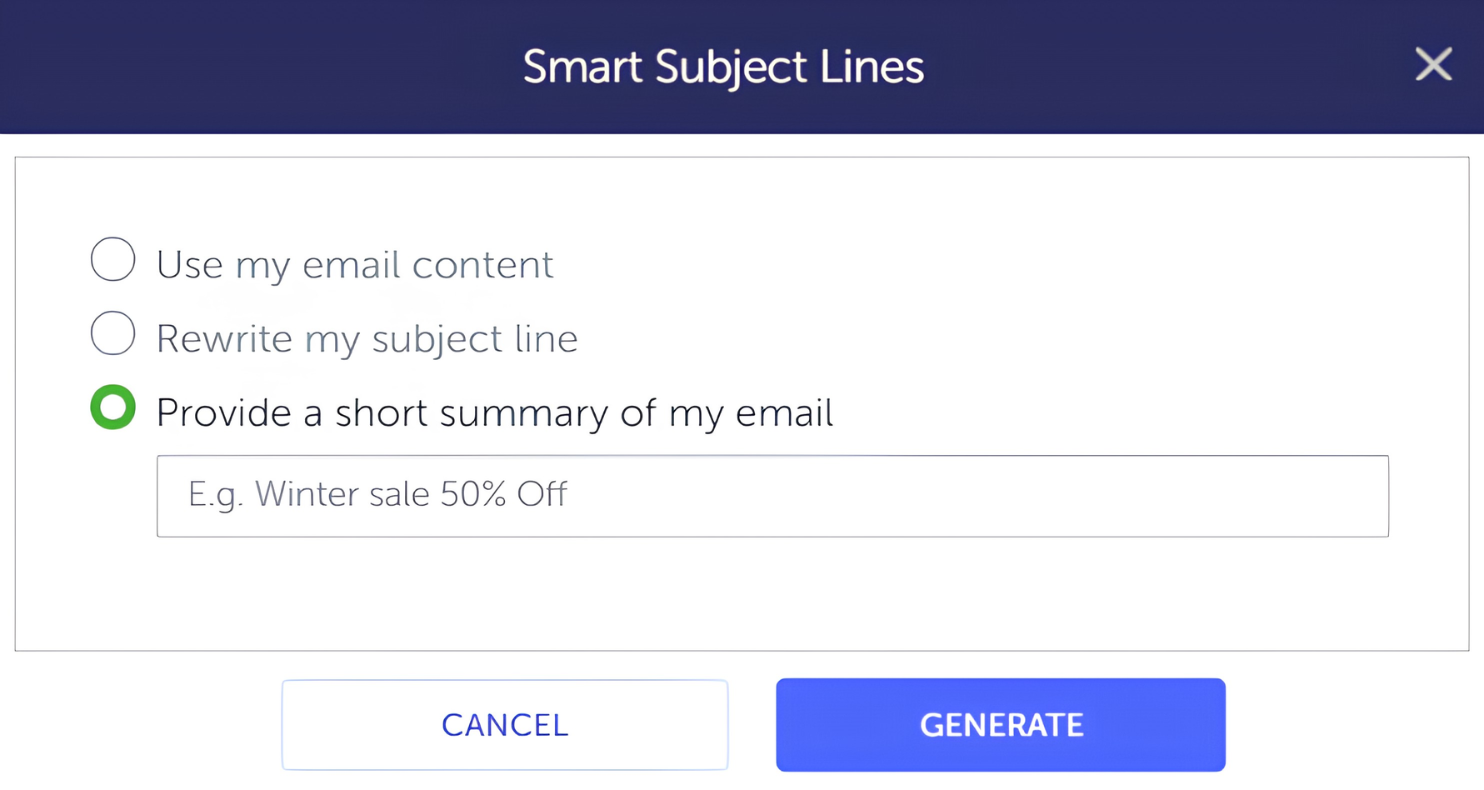
AI writing tools arrived in 2024 with Smart Subject Line and Smart Content. They're functional but basic: single-email generation tools, not the campaign-level AI that ActiveCampaign provides.
Source: BenchmarkONE
The email editor itself draws mixed reviews. Capterra reviewers describe it as "clunky with limited options," noting formatting bugs and an inability to embed video or export templates. BenchmarkONE's only native messaging channel is email, with no SMS or WhatsApp equivalent.
The question neither platform answers: who should you be targeting?
Here's the blind spot both ActiveCampaign and BenchmarkONE share: they only work with contacts you already have.
ActiveCampaign's automation can nurture a lead through a 12-step email sequence timed to their engagement pattern. BenchmarkONE's tag scoring can flag your warmest contacts for immediate follow-up. Both are good at what they do.
But neither platform can tell you which companies in your market are researching solutions like yours right now. Neither can verify that the email addresses in your database are still valid, surface org charts showing who else on the buying committee you should be reaching, or alert you when a target account's CFO changes jobs.
For B2C companies or businesses that generate all their leads through inbound forms, this gap may not matter. But for B2B teams where pipeline depends on identifying and reaching the right buyers at the right companies, it's the difference between marketing to whoever signed up for your newsletter and marketing to the accounts most likely to buy.
This is the problem ZoomInfo was built to solve.
ZoomInfo provides the intelligence foundation
ZoomInfo approaches B2B growth from the opposite direction. Instead of starting with "how do I send better emails," it starts with "who should I be talking to, and why now?"
The platform's B2B data foundation spans 500M contacts, 100M companies, 135M+ verified phone numbers, and 200M+ verified business email addresses, maintained by a multi-source pipeline and 300+ human researchers with up to 95% accuracy on first-party data. But the data is the starting point, not the product.
Source: ZoomInfo
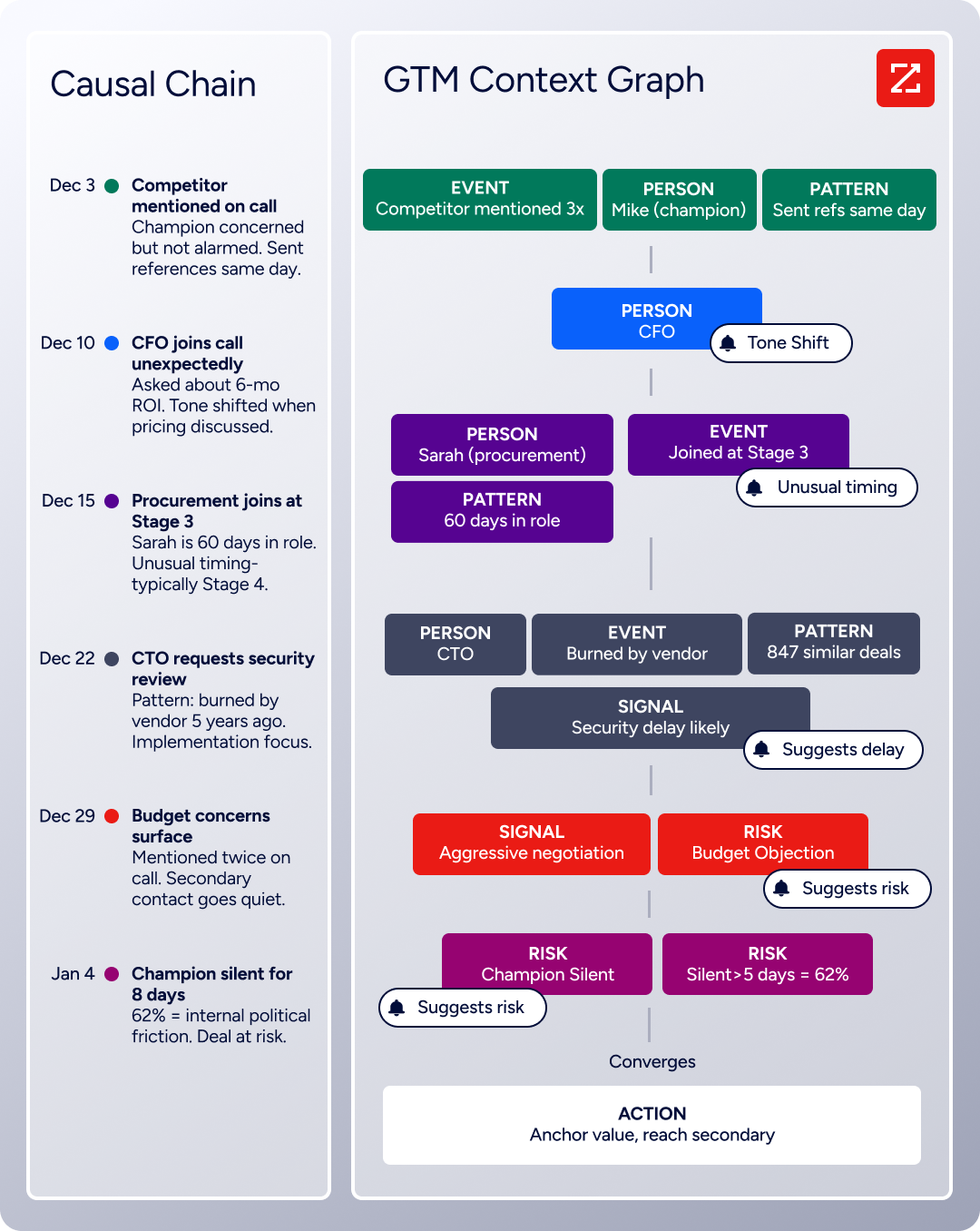
ZoomInfo's GTM Context Graph combines that B2B database with your CRM records, conversation transcripts, email interactions, and behavioral signals into a single intelligence layer. Your CRM records that a deal moved to stage 3. Conversation intelligence transcribes what the VP of Finance said on the last call.
Source: ZoomInfo
Buyer Intent data, drawn from 210 million IP-to-Organization pairings and 6 trillion+ new keyword-to-device pairings monthly, tracks when companies are researching topics related to your solution. The Context Graph connects these signals to show why the deal moved, and what should happen next.
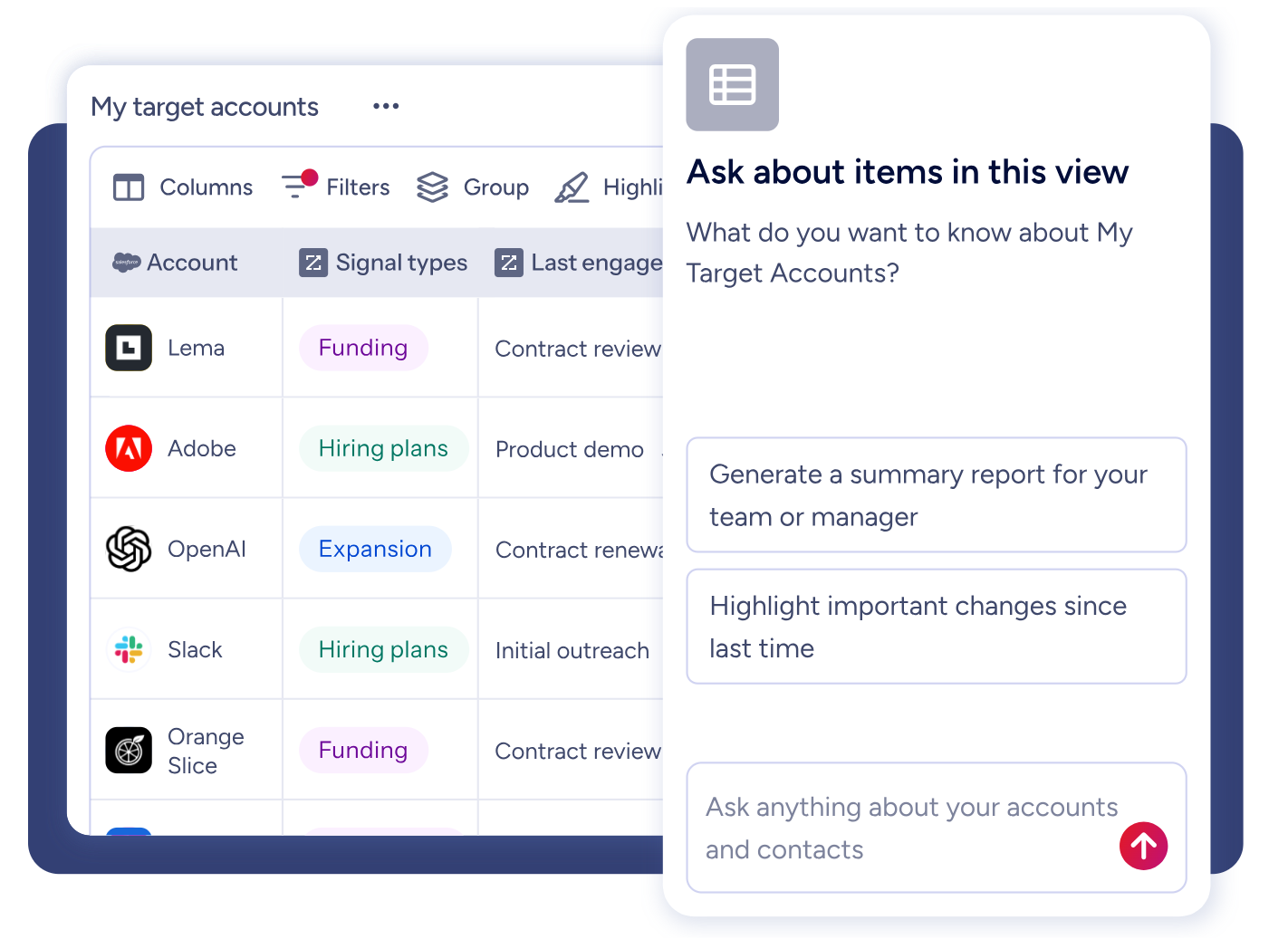
Teams access this intelligence three ways. GTM Workspace gives sellers a place where prioritized accounts, AI-drafted outreach, and deal progress come together.
Source: ZoomInfo
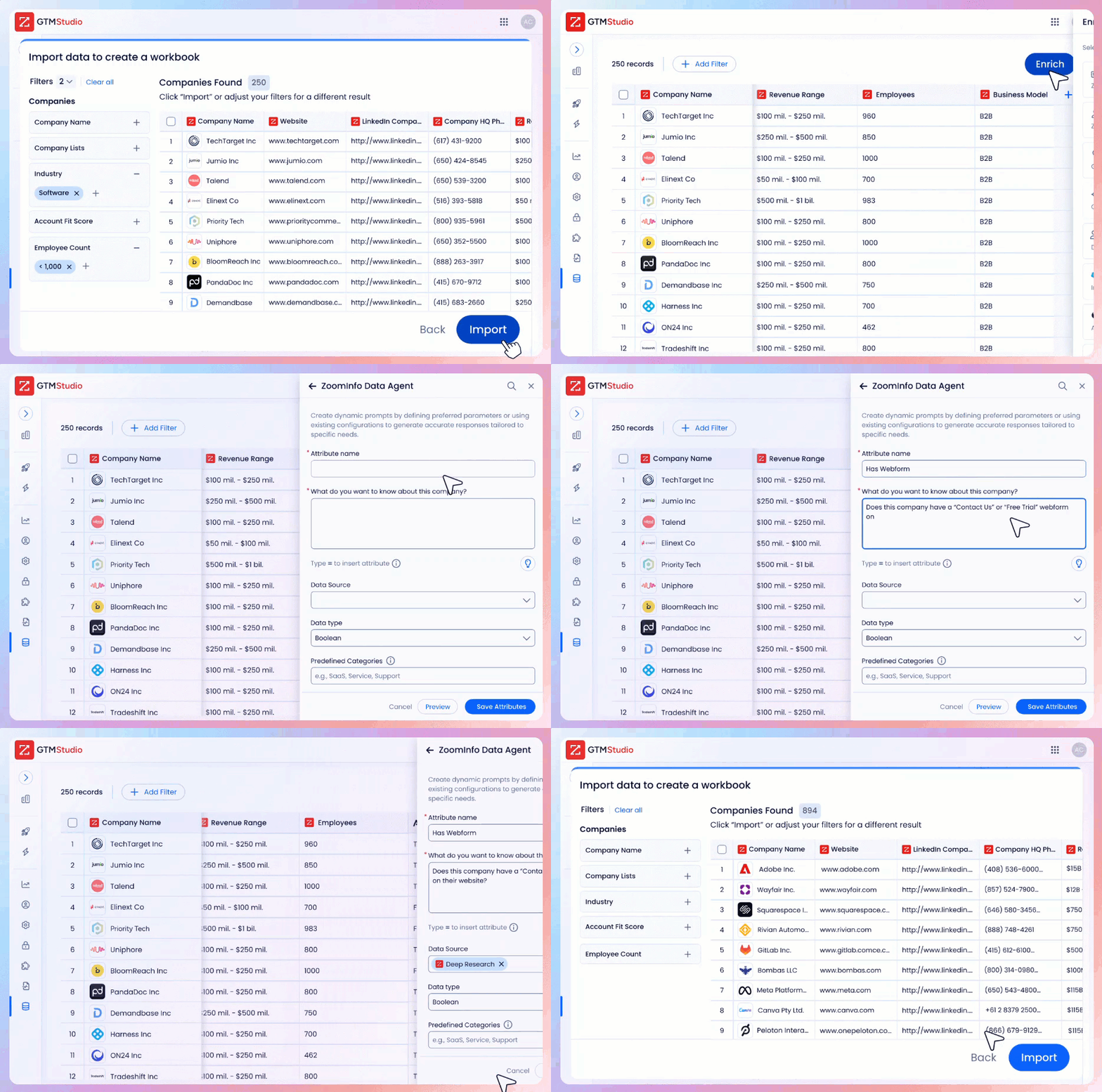
GTM Studio gives marketers and RevOps teams a builder where they define audiences, run campaigns, and measure pipeline using natural language. And for teams building on their own tools, APIs and MCP expose the same intelligence to any custom agent, internal platform, or partner application.
Source: ZoomInfo
"ZoomInfo gives us the information we need to execute. We don't have to go through and spend our time digging. It's already there, so we can be three steps ahead." (Vensure)
How they compare on data and intelligence
This is where the comparison reveals its sharpest contrast.
ActiveCampaign stores only the contacts you import or capture through its forms, landing pages, and integrations. There's no prospecting database, no company intelligence beyond what you enter manually, and no buyer intent signals.
The platform tracks behavioral data on your existing contacts (email engagement, website visits, form submissions), and Active Intelligence uses this data to recommend segments and optimize campaigns. It's effective marketing intelligence, but it's limited to people already in your database.
BenchmarkONE follows the same model. Contacts enter through forms, imports, or the Chrome extension. The rolling contact score tracks engagement across your known contacts, and social profile enrichment auto-populates photos and social links. Useful, but limited to contacts already in the system.
Source: BenchmarkONE
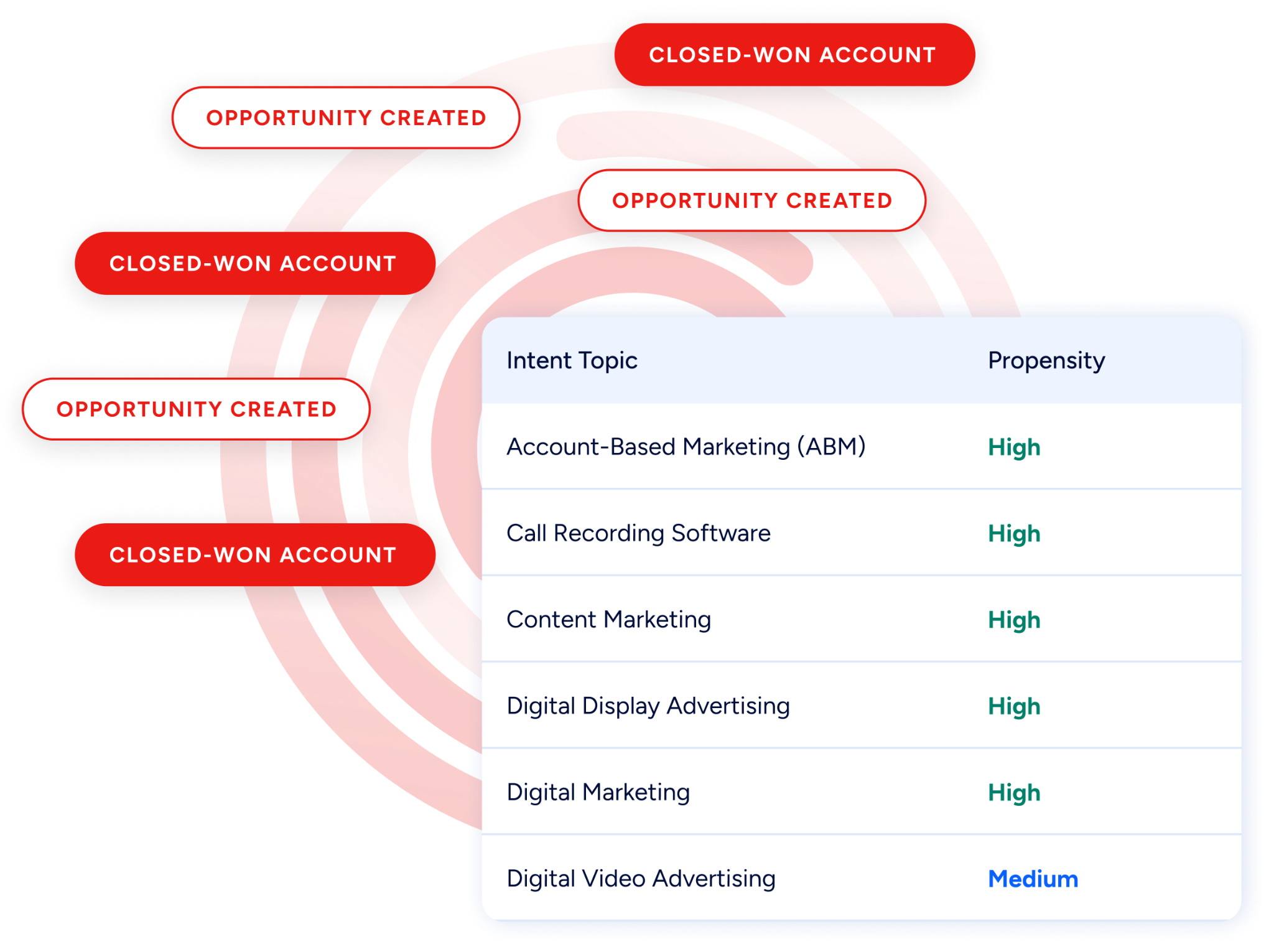
ZoomInfo operates at a different scale. Instead of waiting for prospects to find you, the platform identifies which companies in your market are researching relevant topics through Buyer Intent data.
Source: ZoomInfo
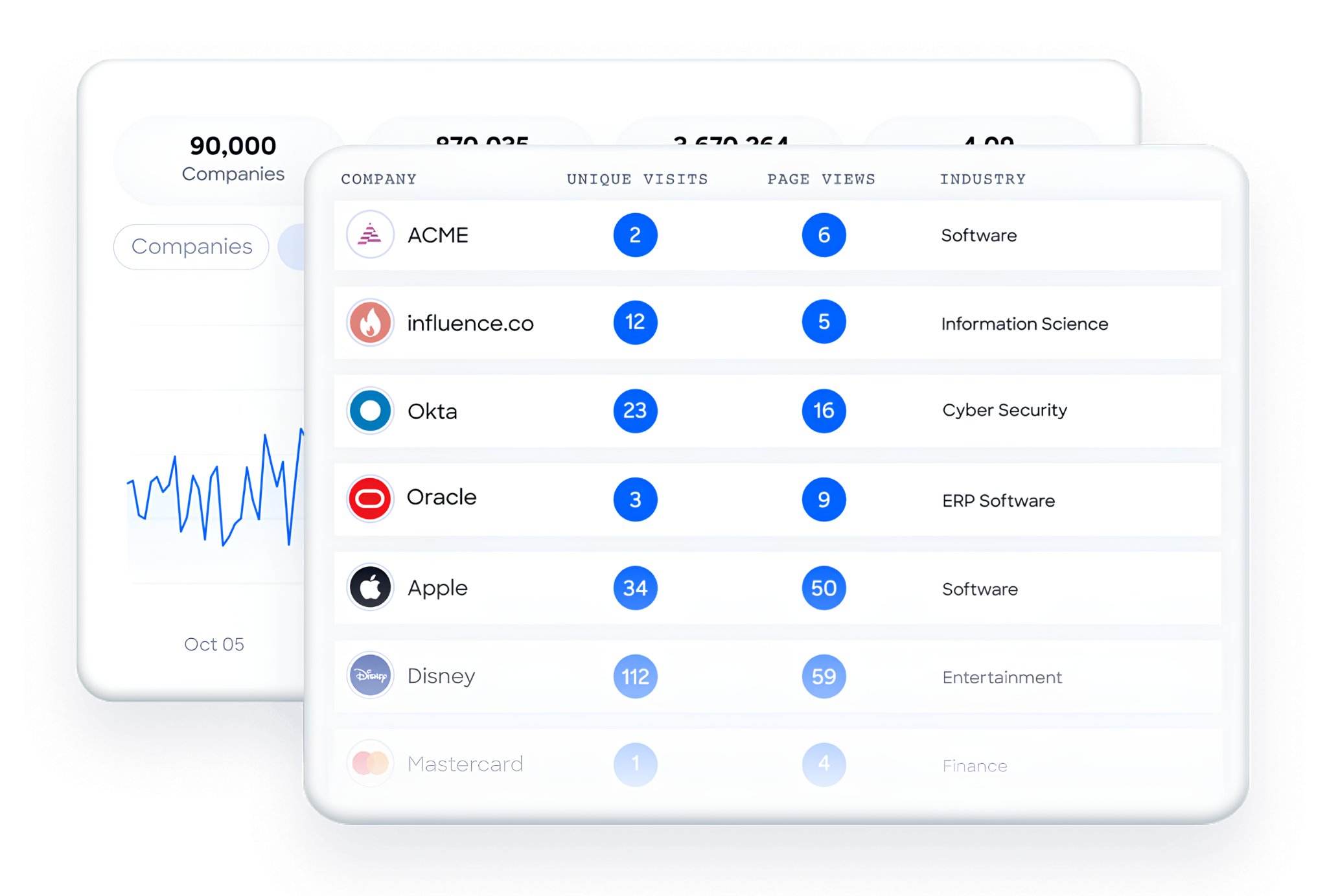
WebSights resolves anonymous website visitors to companies and surfaces the buying team's contact information. Technographics profile the tech stacks of 30+ million companies across 30,000+ technologies. Department org charts map decision-makers with direct dials and verified emails.
Source: ZoomInfo
In a Fortune 500 competitive RFP analyzing 25 million contacts across vendors, the independent consultant concluded that "no other competitor came even close."
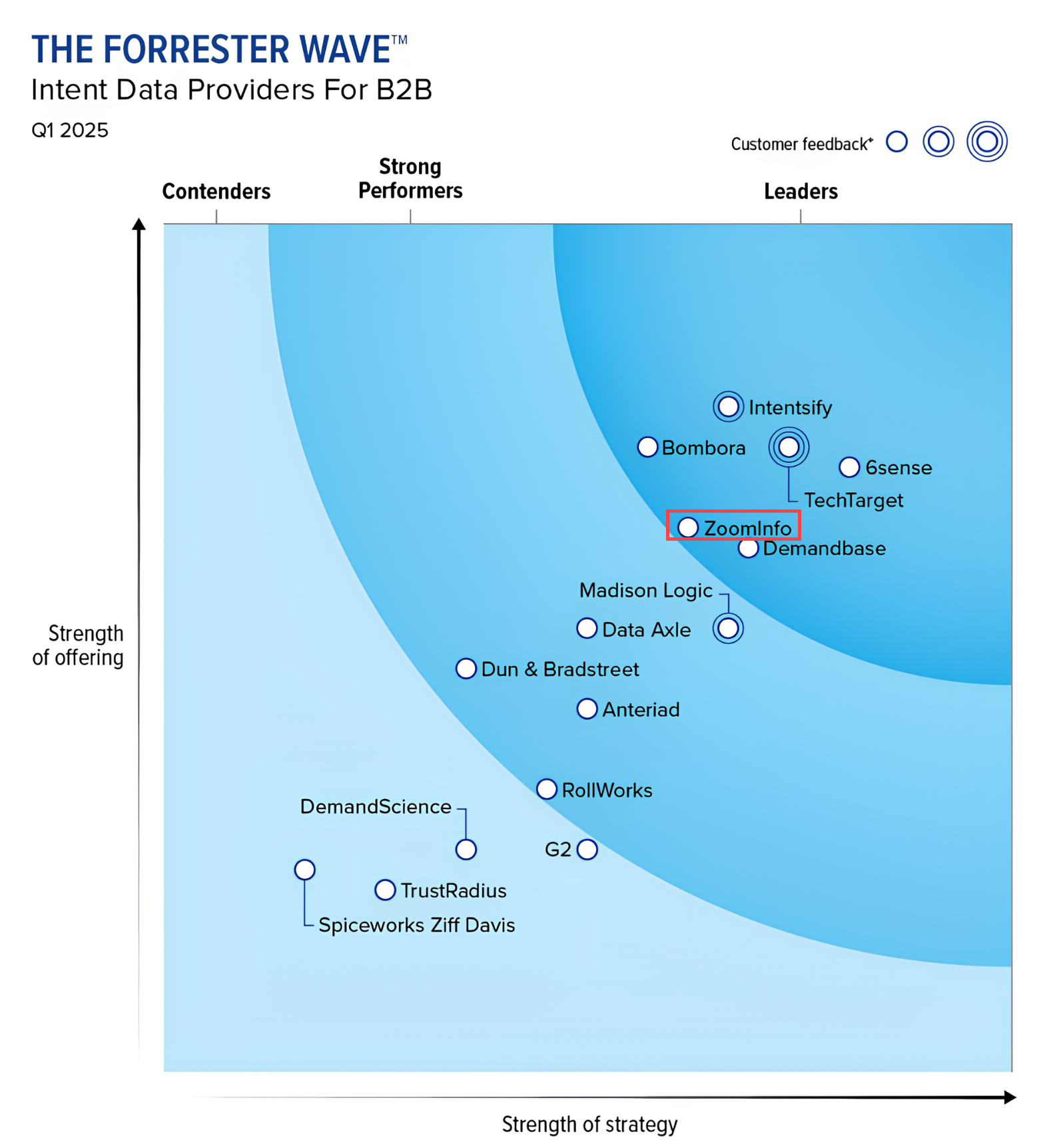
ZoomInfo was named a Leader in Forrester's Wave for Intent Data Providers (Q1 2025), receiving the highest possible scores across eight criteria. Gartner recognized ZoomInfo as the only vendor in the Customers' Choice quadrant with a 4.7/5.0 average rating.
Source: ZoomInfo
For B2B marketing, this isn't a nice-to-have. The contacts in your automation tool represent a fraction of your addressable market. ZoomInfo's data fills the gap.
"It's not just the data itself. It's more about the right data at the right time to help us reach out with the right message across that full buyer journey." (Redwood Logistics)
Integration and ecosystem comparison
How each platform connects to the rest of your tech stack matters, especially as the number of GTM tools in the average company grows.
ActiveCampaign leads in integration count: 1,000+ app integrations spanning CRM, ecommerce, forms, advertising, communication, and analytics tools. Native connections include Shopify, Salesforce, WordPress, Google Ads, Zapier, and Make.
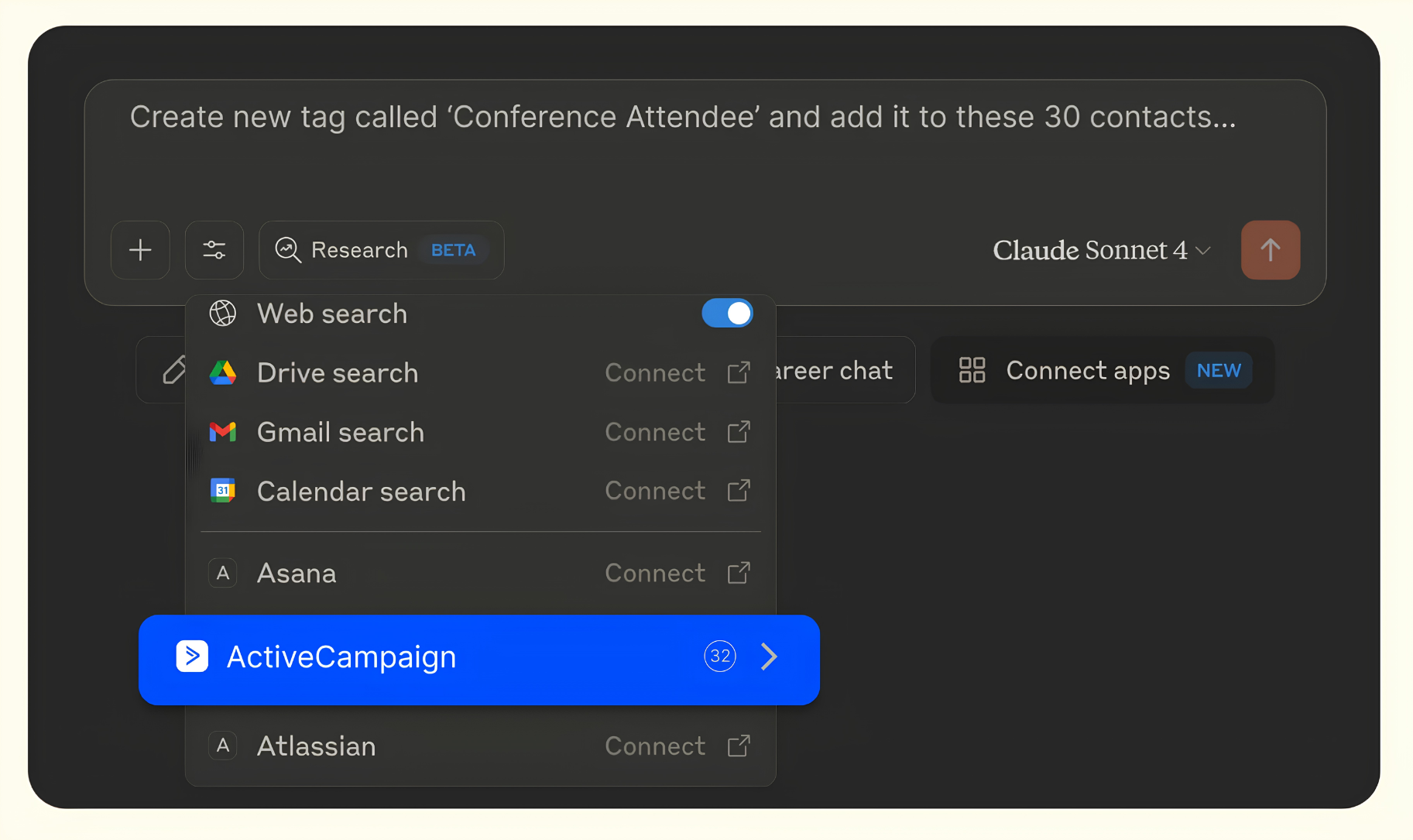
For developers, a REST API covers contacts, deals, campaigns, automations, and more. ActiveCampaign also became the first marketing platform in Claude's official connector directory via MCP, enabling external AI tools to query campaign data and trigger automations.
Source: ActiveCampaign
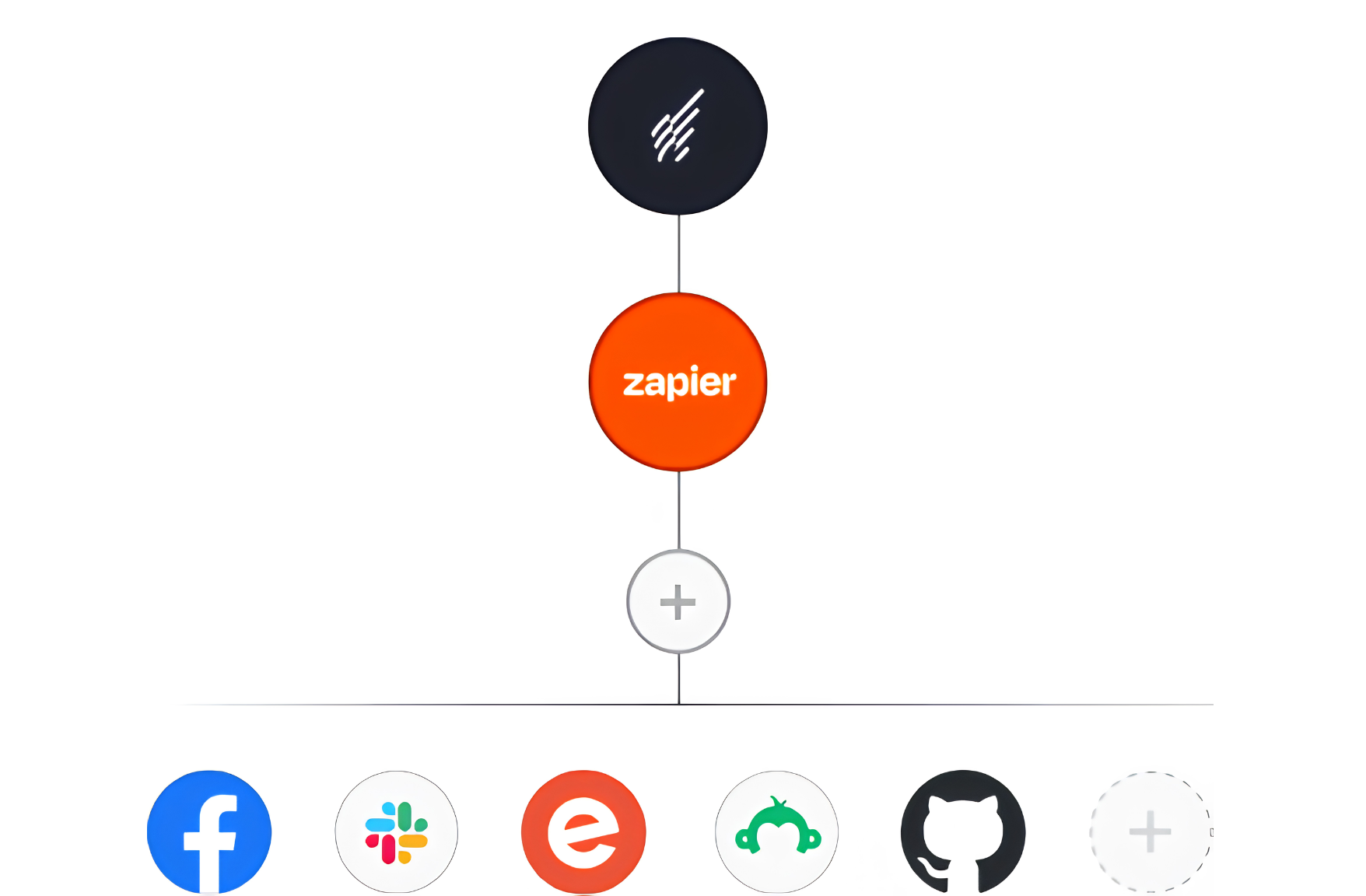
BenchmarkONE relies on Zapier for third-party connections, linking to over 1,500 apps. Native integrations are limited to Gmail, Outlook, a Chrome extension, BCC email capture, IMAP, and FTP import.
Source: BenchmarkONE
A REST API is available on Pro and Agency plans, covering contacts, deals, tags, campaigns, and email performance. It's functional for basic integrations, but the ecosystem is narrow compared to ActiveCampaign.
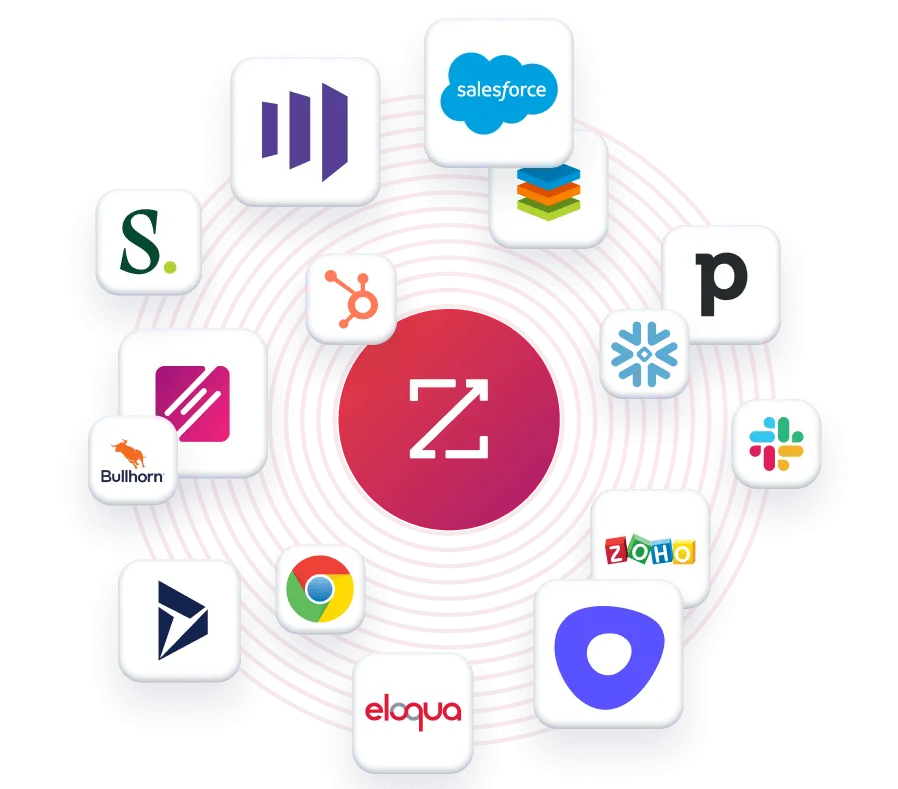
ZoomInfo takes a different approach. The App Marketplace lists 172+ integration partners across CRM, marketing automation, sales engagement, data warehouses, and cloud platforms. Native integrations with Salesforce, HubSpot, and Microsoft Dynamics 365 are native and fully supported.
Source: ZoomInfo
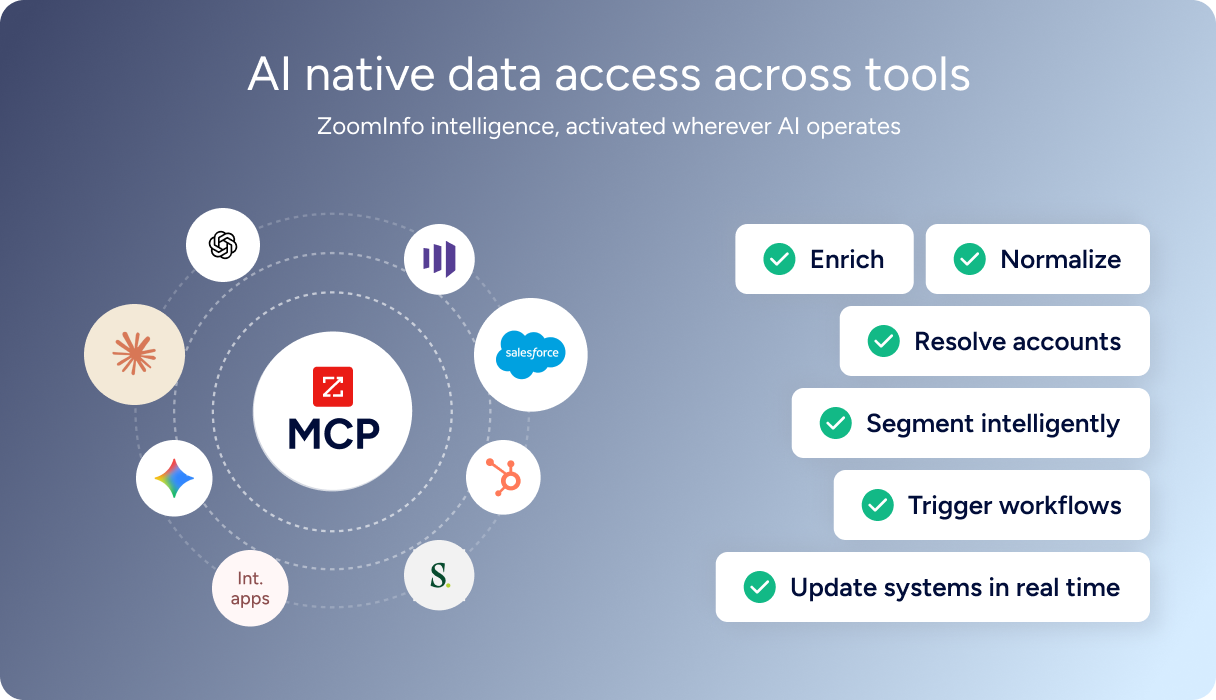
Cloud Partners deliver ZoomInfo data into AWS, Google Cloud, Snowflake, and Databricks. The Enterprise API provides programmatic access to search, enrich, intent, and AI endpoints. The ZoomInfo MCP server connects AI models to ZoomInfo's B2B data as a native tool, supporting Claude, ChatGPT, and any MCP-compatible client.
Source: ZoomInfo
The architectural distinction matters. ActiveCampaign and BenchmarkONE integrate to share contact data and trigger workflows. ZoomInfo integrates to push verified B2B intelligence into whatever tools your team already uses. The same data powering ZoomInfo's own products becomes available in any application via API or MCP.
"The plug-and-play aspect of the API means I can integrate it very easily into any process and get information at a moment's notice." (BDO Canada)
Pricing: what you pay vs. what you get
Each platform prices differently, because each solves a different problem.
ActiveCampaign uses contact-based pricing across four tiers. Plans start at $15/month for 1,000 contacts on the Starter plan, which includes email marketing, basic automation (capped at 5 actions per workflow), and third-party integrations.
The Plus plan removes the automation cap and adds landing pages, AI content generation, and multichannel marketing. Professional adds predictive sending, conditional content, revenue attribution, and priority support. Enterprise adds SSO, HIPAA support, custom reporting, and premium CRM integrations. At 10,000 contacts, Starter costs $149/month.
No permanent free plan exists, just a 14-day free trial (no credit card required) and a 30-day money-back guarantee for first-time subscribers. Pricing has increased by nearly 100% over the past three years, per G2 reviewers.
BenchmarkONE offers a permanent free Lite plan with 500 contacts, 1,000 emails per month, contact management, email marketing, marketing automation, and landing pages.
The Pro plan adds the full CRM, deal pipeline, Gmail/Outlook integration, dynamic content, API access, live support, and a Quickstart onboarding package. Agency pricing is custom and adds co-branding, bundled client accounts, and partner certification.
All plans include unlimited users, which matters for small teams where per-seat pricing is a budget concern. Semi-annual billing saves 10%; annual billing saves 20%. The Price Lock-In Promise guarantees no price increases during your plan term.
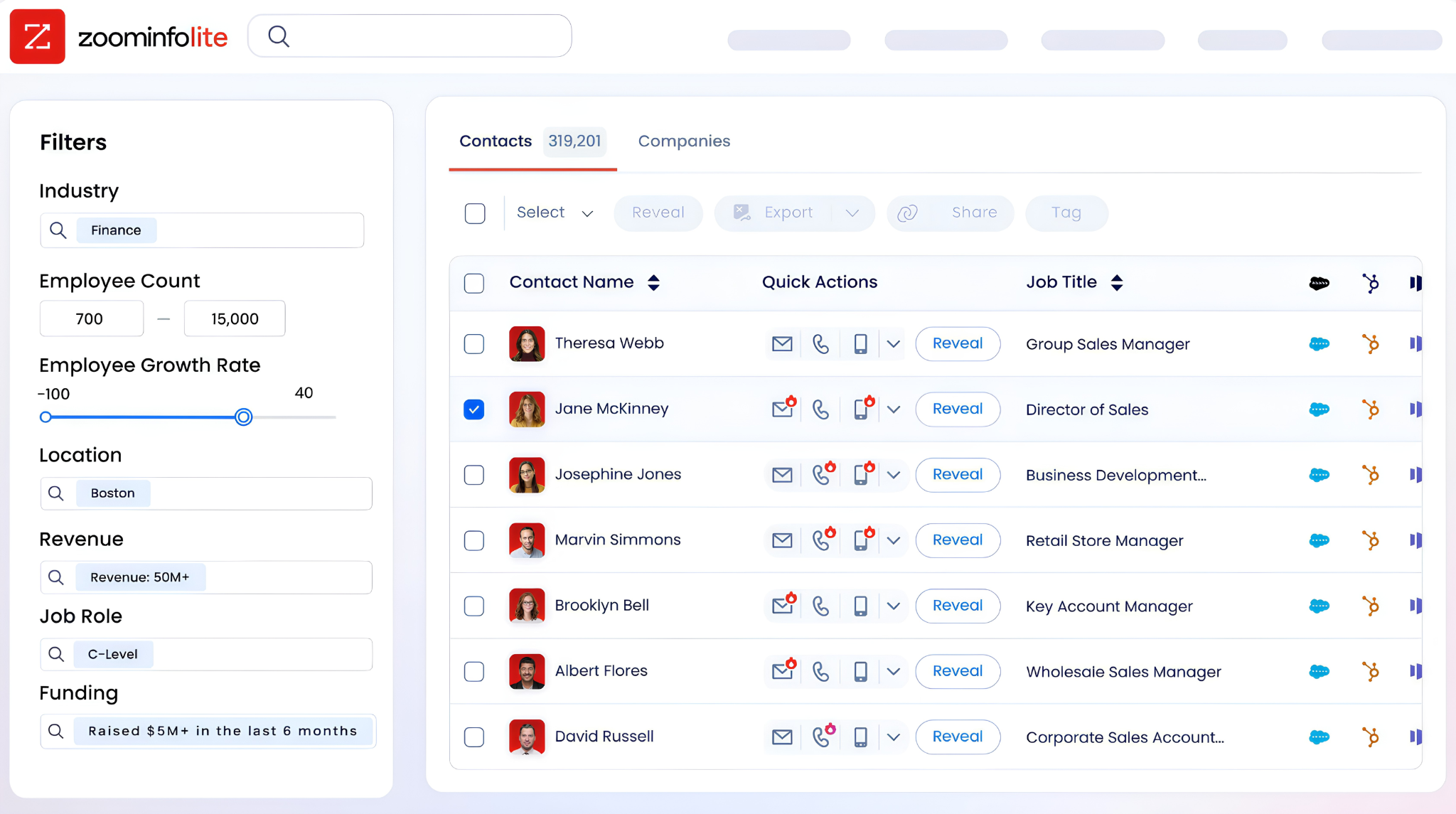
ZoomInfo uses consumption-based pricing with no published prices on paid tiers. ZoomInfo Lite is a permanent free tier with access to the B2B database, 10 monthly export credits, individual and company searches, a Chrome extension, and WebSights Lite (up to 10 website visitor reveals per day).
Source: ZoomInfo
A 7-day free trial provides broader access. Paid plans are organized into Sales (Professional, Advanced, Enterprise), Marketing (Marketing Demand, ABM Lite, ABM Enterprise), and Chorus and Chat as standalone products. Custom quotes reflect usage patterns, seat count, credit volume, and feature access.
Comparing these prices directly is misleading, because they solve different problems. ActiveCampaign and BenchmarkONE charge for the ability to send marketing messages to contacts you already have. ZoomInfo charges for the intelligence that identifies who those contacts should be, whether their data is accurate, and when they're ready to hear from you.
Who wins on ease of use?
BenchmarkONE is the easiest platform to learn. A ten-step Quickstart Checklist walks new users through account setup, contact import, CRM customization, and first email send. Ease of use is the top-cited strength in G2 reviews.
ActiveCampaign is more capable but requires more ramp-up time. Capterra's editorial verdict notes that "some users cite complexity and a steep learning curve."
Basic automations are accessible immediately, but mastering conditional logic, tag architectures, and custom reporting takes real investment. ActiveCampaign offsets this with free migration services, onboarding specialists, a 6,000+ member community, and a learn portal with structured training paths.

Source: ActiveCampaign
ZoomInfo has the broadest feature set and the steepest onboarding investment. The platform redesigned its onboarding from 30 to 90 days, structured across planning, technical implementation, education, and adoption phases.
That redesign produced a 25% improvement in customer satisfaction scores. ZoomInfo University provides role-specific learning paths and certifications. The learning curve is proportional to the platform's scope: there's more to learn because there's more to do.

Source: ZoomInfo
ActiveCampaign vs. BenchmarkONE vs. ZoomInfo: Which should you choose?
The right choice depends on what constrains your growth today.
Choose ActiveCampaign if:
You need marketing automation with branching logic and cross-channel orchestration
Your contact database is healthy and your main challenge is better engagement and conversion
You're willing to invest in learning a capable platform to use it well
Multi-channel marketing (email, SMS, WhatsApp) matters to your strategy
You want AI-powered campaign creation and optimization to extend a small team's output
Choose BenchmarkONE if:
You're a small business or agency that needs an all-in-one CRM and email tool at a low price
Simplicity matters more than advanced features; your team needs to be productive from day one
Unlimited users is important because multiple people need CRM access without per-seat costs
Your sales cycle is straightforward and doesn't require complex multi-path automation
You want a permanent free plan to get started without financial commitment
Choose ZoomInfo if:
You sell B2B and need to know which accounts to target, who the decision-makers are, and when they're in-market
Your current marketing automation tool has good engagement rates, but pipeline isn't growing because you're reaching the wrong people or too few of them
You need verified contact data, buyer intent signals, and company intelligence rather than just email sending
You want an intelligence platform that identifies opportunity, not just one that executes campaigns
You need data and insights that integrate into any tool your team uses, from CRM to custom AI agents
Try ZoomInfo Lite for free or request a demo to see the full platform.
For many B2B teams, the answer isn't one platform instead of the others. ActiveCampaign or BenchmarkONE handles the execution: sending the right message at the right time through the right channel.
ZoomInfo handles the intelligence: identifying who should receive that message, verifying their contact information, and surfacing the signals that tell you when they're ready to hear it. Together, they create a system where intelligence drives execution rather than the other way around.
ActiveCampaign vs. BenchmarkONE vs. ZoomInfo FAQ
What happened to Hatchbuck?
Hatchbuck merged with Benchmark Email in September 2019 and rebranded to BenchmarkONE in April 2020. The product is the same CRM and marketing automation platform, now under the BenchmarkONE name. The legacy login domain at app.hatchbuck.com still works for existing users.
Which platform is cheapest for a small team?
BenchmarkONE offers the lowest entry point with a permanent free plan (500 contacts, 1,000 emails/month) and unlimited users on all plans. ActiveCampaign starts at $15/month for 1,000 contacts but limits Starter plans to one user and five automation actions per workflow.
ZoomInfo Lite is free with 10 monthly export credits and access to the B2B database, but paid plans are custom-quoted for enterprise buyers.
Can I use ZoomInfo together with ActiveCampaign or BenchmarkONE?
Yes. ZoomInfo integrates with 172+ tools through its App Marketplace and supports Zapier, direct API connections, and MCP access.
For ActiveCampaign users, ZoomInfo's verified contact data can enrich your database with accurate emails and phone numbers, while buyer intent signals identify which accounts to prioritize for outreach campaigns. BenchmarkONE connects to external tools through Zapier and its REST API.
Which platform has the best email deliverability?
ActiveCampaign has the best-documented deliverability infrastructure among the three, with a reported 99.88% deliverability rate, private network routing, dedicated IP management, and built-in DKIM/DMARC authentication. EmailToolTester independently reported 94% deliverability and named it the Best Email Marketing Tool of 2025.
BenchmarkONE does not publish specific deliverability metrics or infrastructure details. ZoomInfo is not primarily an email sending platform, though it verifies email addresses at scale using its multi-source data pipeline.
Which platform has the most advanced AI features?
ZoomInfo's GTM Context Graph processes 1.5B + data points daily and powers AI agents that handle account research, outreach drafting, signal monitoring, and CRM updates.
ActiveCampaign's Active Intelligence includes 12+ AI agents covering campaign creation, segmentation, content generation, and send-time optimization. BenchmarkONE offers basic AI writing tools (Smart Subject Line and Smart Content) for email composition but lacks AI-driven campaign orchestration, lead scoring, or predictive analytics.
Do I need a separate CRM if I use any of these platforms?
ActiveCampaign includes a built-in CRM with visual pipelines, deal scoring, and sales routing, though it's designed as a marketing companion rather than a full sales tool. BenchmarkONE includes a contact-based CRM with deal tracking, task management, and contact scoring.
ZoomInfo's GTM Workspace provides an account and deal workspace integrated with Salesforce, HubSpot, and Microsoft Dynamics. For basic needs, any of the three can serve as your primary CRM. For complex B2B sales processes, a dedicated CRM alongside these tools is typical.
Which platform is best for B2B companies specifically?
ZoomInfo is built for B2B go-to-market. Its database covers 500M contacts and 100M companies, buyer intent data identifies in-market accounts, and the GTM Context Graph connects signals from CRM, conversations, and external data to reveal why deals move.
ActiveCampaign serves B2B companies well through its automation depth and CRM, but lacks native prospecting data or intent signals. BenchmarkONE's contact-centric CRM and lack of account-based selling features make it better suited for simpler B2B or B2C relationship marketing.
What integrations does each platform support?
ActiveCampaign has 1,000+ native integrations spanning CRM, ecommerce, advertising, and more, plus a REST API and MCP connector for AI tools. BenchmarkONE relies on Zapier for third-party connections, with native Gmail and Outlook integrations and a REST API on paid plans.
ZoomInfo offers 172+ marketplace integrations, native CRM connectors, Cloud Partner data delivery into AWS/Google Cloud/Snowflake/Databricks, an Enterprise API, and an MCP server for AI-native access.
