
AI sales assistants take over the repetitive parts of selling, research, data entry, scheduling, and follow-up, then point reps to the accounts most likely to buy.
The strongest platforms do two things well at once. They run on accurate, continuously verified B2B data, and they work inside your CRM rather than adding another tab to check.
This guide compares the leading AI sales assistants in 2026 on the criteria that decide real-world value: data quality, native CRM integration, automation depth, and enterprise readiness. Start with the criteria below, then use the comparison table and profiles to match a tool to the gap you need to close.
What Are AI Sales Assistants?
AI sales assistants are software tools that automate repetitive sales work and tell you which prospects to contact. They use machine learning to analyze millions of sales interactions, then recommend who to call, what to say, and when to follow up. Unlike basic CRM tools that just store contact information, AI sales assistants actually guide your next move.
These platforms work inside the tools you already use. They connect to your CRM, email, and phone systems to eliminate manual data entry and research. The AI watches how prospects engage with your outreach, then surfaces the accounts showing real buying interest.
Core capabilities include:
Task automation: Handles data entry, meeting scheduling, and follow-up reminders so you spend time selling instead of updating records
Buyer signal detection: Monitors website visits, content downloads, and intent data to flag accounts actively researching solutions like yours
Conversation intelligence: Records sales calls and pulls out the moments that matter: objections, competitor mentions, next steps
Predictive scoring: Ranks your leads and deals by close probability based on what's worked before
The result is less time prospecting, more time in conversations that actually close.
What Makes the Best AI Sales Assistant Software
The best AI sales assistant combines accurate data with automation that fits how you sell. Tools built on bad contact information waste your time with bounced emails and wrong numbers. Platforms that ignore your existing tech stack force you to work in multiple systems. Teams that wire their AI tools into a verified B2B data layer, like ZoomInfo's GTM Context Graph, reach the same 500M+ contact and 100M+ company foundation through the GTM.AI API and MCP without building data infrastructure from scratch.
You need software that plugs into your CRM without custom development. It should sync data automatically and show insights where your reps already work. The AI recommendations need to be specific enough to act on, not generic suggestions you could figure out yourself.
Key differentiators to look for:
Data foundation: AI is only as good as the contact accuracy and intent signals feeding it
Native CRM integration: Bidirectional sync with Salesforce, HubSpot, or your system of record
Adoption design: Features simple enough that reps use them daily without training
Compliance standards: SOC 2, GDPR, and CCPA certifications for enterprise security requirements
Platforms that nail these basics drive pipeline impact in the first quarter, not the first year.
Comparison Table
Here's how the top AI sales assistant platforms compare:
Platform | Key Strength | AI Focus | Best For |
ZoomInfo | All-in-one AI GTM Platform: 500M+ contacts, 100M+ companies, continuous verification, plus real-time intent | GTM Workspace AI agents prioritize accounts, draft outreach, and enrich CRM records; GTM Context Graph reasons across data and signals | Mid-market to enterprise teams that want data, intelligence, and engagement in one platform |
Salesforce (Einstein + Agentforce) | Native CRM AI layer | Predictive lead scoring and opportunity insights in Sales Cloud, with Agentforce agents for autonomous tasks | Existing Salesforce customers seeking built-in intelligence |
Gong | Revenue AI Operating System (Leader, inaugural 2025 Gartner MQ for Revenue Action Orchestration) | AI agents, customer insights, and automated workflows across the revenue process | Teams focused on unified revenue intelligence and AI-powered automation |
Outreach | AI-powered Revenue Workflow Platform | AI agents and multi-channel orchestration across the sales lifecycle | High-velocity teams needing end-to-end execution from prospecting to forecasting |
Apollo | Combined prospecting database and engagement | AI-generated email drafts and sequence automation | SMB to mid-market teams wanting data and outreach in one tool |
Clari + Salesloft | Merged Dec 2025 into one Revenue Orchestration company (the "Predictive Revenue System") | Forecasting and pipeline inspection (Clari) plus sales engagement, conversation intelligence, and AI agents (Salesloft); integration in progress | Enterprise revenue teams standardizing on one forecast-to-engagement stack |
HubSpot Sales Hub | CRM-native sales tools with Breeze AI | Breeze AI agents for prospecting, customer support, and meeting assistance | Small to mid-market teams already using HubSpot for marketing |
Clay | AI prospecting and GTM data automation | AI research agents ("Claygent") enrich lists across many data sources and trigger workflows | RevOps and growth teams building automated, multi-source prospecting workflows |
6sense | AI account identification and intent-based orchestration | Predictive analytics and AI agents surface in-market accounts and recommend next steps | ABM and demand-gen teams prioritizing accounts by predicted buying stage |
Microsoft Copilot for Sales | AI seller assistant inside Microsoft 365 (Outlook and Teams) | Drafts emails, summarizes meetings, updates CRM; 2026 adds a role-based Sales agent that prioritizes leads and preps meetings | Microsoft 365 teams on Dynamics 365 Sales or Salesforce |
Best AI Sales Assistant Platforms
1. ZoomInfo
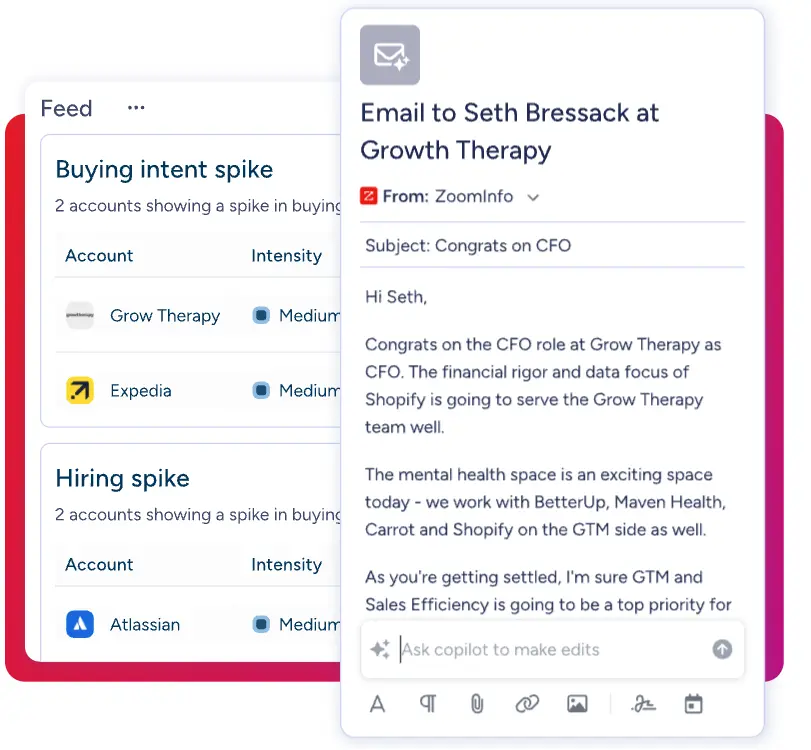
ZoomInfo is an all-in-one AI GTM Platform, and its AI sales assistance runs through GTM Workspace. You get a B2B data foundation of over 500 million contacts and 100 million companies, refreshed continuously from 1.5 billion+ data points processed daily. GTM Workspace AI agents surface prioritized account feeds based on criteria you define, including technographic fit, recent funding, and job changes, which cuts hours of manual list building.
GTM Workspace syncs with Salesforce, HubSpot, Microsoft Dynamics, and sales engagement platforms like Outreach and Salesloft. Its AI agents show you which accounts to target, suggest outreach angles from recent company news, and enrich contact data as prospects enter your pipeline. GTM Studio extends this for marketing, RevOps, and GTM engineers, and GTM.AI opens the same data and intelligence to any tool or AI agent through the API and MCP.
ZoomInfo serves more than 35,000 customers and holds Leader positions in Gartner's Magic Quadrant for ABM Platforms (2024 and 2025) and Forrester's Wave for Intent Data Providers, B2B (Q1 2025). It maintains ISO 27001, ISO 27701, SOC 2 Type II, and GDPR and CCPA compliance. ZoomInfo is free to start with consumption credits based on usage.
Key Features:
Intent signal monitoring: Tracks buyer research activity across thousands of topics to identify accounts actively evaluating solutions in your category
Automated account enrichment: Fills missing CRM fields and updates contact information in real time as records change
Buying committee mapping: Identifies decision-makers and influencers within target accounts based on role, seniority, and department
Sales trigger alerts: Notifies you when accounts experience funding rounds, leadership changes, or expansion announcements
Multi-channel orchestration: Coordinates email, phone, and social outreach through native integrations with engagement platforms
Conversation intelligence: Chorus by ZoomInfo records calls and surfaces deal risks, competitive mentions, and coaching opportunities
Custom signal configuration: Lets you define proprietary intent signals based on your ideal customer profile and buying patterns
Seismic used ZoomInfo's AI to take manual research off its reps, freeing time for live conversations.

"The AI chatbot that's given all that context has helped us craft very specific account- and persona-based messages. And people have responded to them right away."
2. Salesforce Einstein (and Agentforce)
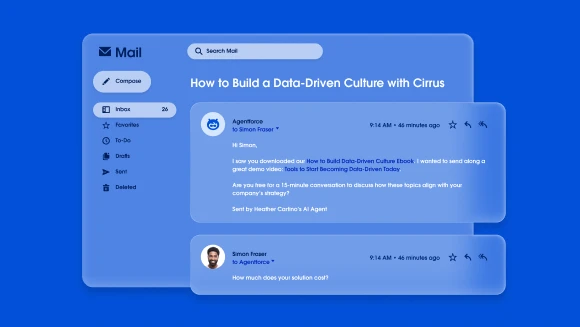
Salesforce Einstein provides AI capabilities embedded directly within Sales Cloud. You don't need separate tools or data transfers. The platform analyzes your historical CRM data to generate predictive lead scores, opportunity health ratings, and next-best-action recommendations. Einstein Activity Capture automatically logs emails and calendar events from Gmail and Outlook into Salesforce records.
Salesforce now layers Agentforce, its agentic AI, on top of Einstein to run autonomous tasks such as prospect research and outreach.
Einstein Conversation Insights transcribes sales calls and extracts key moments, competitor mentions, and customer objections for review. The system integrates with Einstein Forecasting to predict deal close probability and identify pipeline gaps before they impact quota. Email intelligence features suggest optimal send times and subject lines based on past engagement patterns.
Implementation requires existing Salesforce licenses and sufficient historical data for model training. Einstein works across Sales Cloud, Service Cloud, and Marketing Cloud.
Key Features:
Predictive lead and opportunity scoring based on historical win/loss patterns
Automated activity capture from email and calendar systems
Call transcription and conversation analysis
Forecast accuracy predictions and pipeline gap identification
Agentforce agents for autonomous research and outreach, plus next-best-action recommendations in CRM workflows
3. Gong
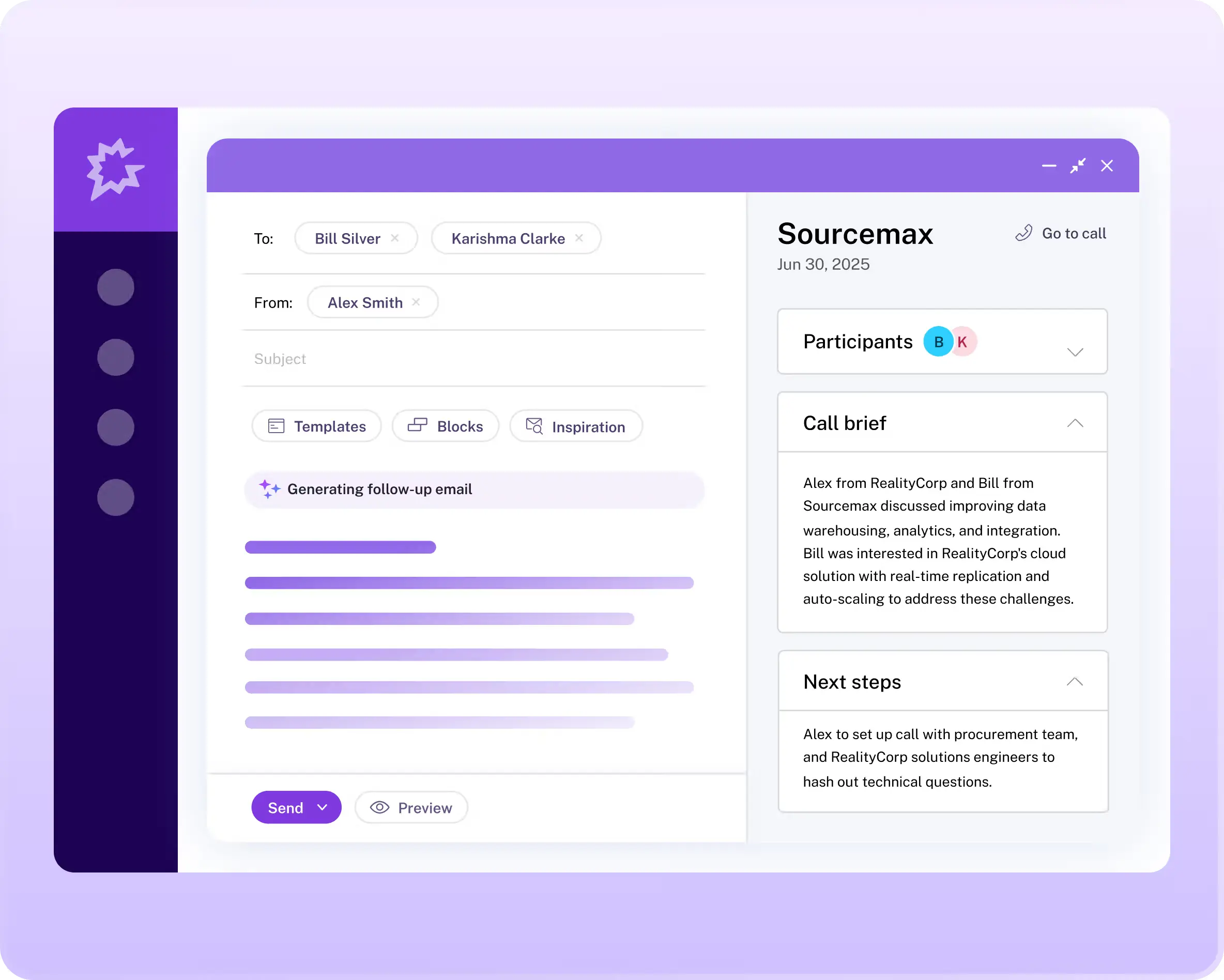
Gong operates as a Revenue AI Operating System that unifies customer insights, AI-powered intelligence, and automated workflows for revenue teams. The platform captures conversations across Zoom, Microsoft Teams, and phone systems, then uses natural language processing to extract deal insights, coaching opportunities, and customer sentiment. Gong was named a Leader in the inaugural 2025 Gartner Magic Quadrant for Revenue Action Orchestration, placing highest in Ability to Execute and furthest in Completeness of Vision.
The platform includes AI Agents such as AI Composer for content generation, AI Tasker for automated task management, and Ask Anything for natural language queries across your revenue data. Specialized applications include Enable Essentials for enablement, Forecast Essentials for pipeline prediction, Gong Engage for multi-channel outreach, and Data Cloud for unified customer intelligence.
Deal intelligence features track whether key stakeholders are engaged, if pricing discussions are progressing, and when champions go silent. Managers receive coaching alerts when reps skip discovery questions or fail to address objections. The system integrates with Salesforce, HubSpot, and other CRMs to correlate conversation data with pipeline outcomes.
Key Features:
Automatic call recording and transcription across meeting platforms
AI Agents including AI Composer, AI Tasker, and Ask Anything for automated workflows
Deal risk identification based on stakeholder engagement and conversation sentiment
Talk track analysis showing which questions and phrases correlate with wins
Competitive intelligence extraction from customer conversations
Coaching alerts for managers when reps miss key steps
Specialized applications for engagement, forecasting, enablement, and data unification
4. Outreach
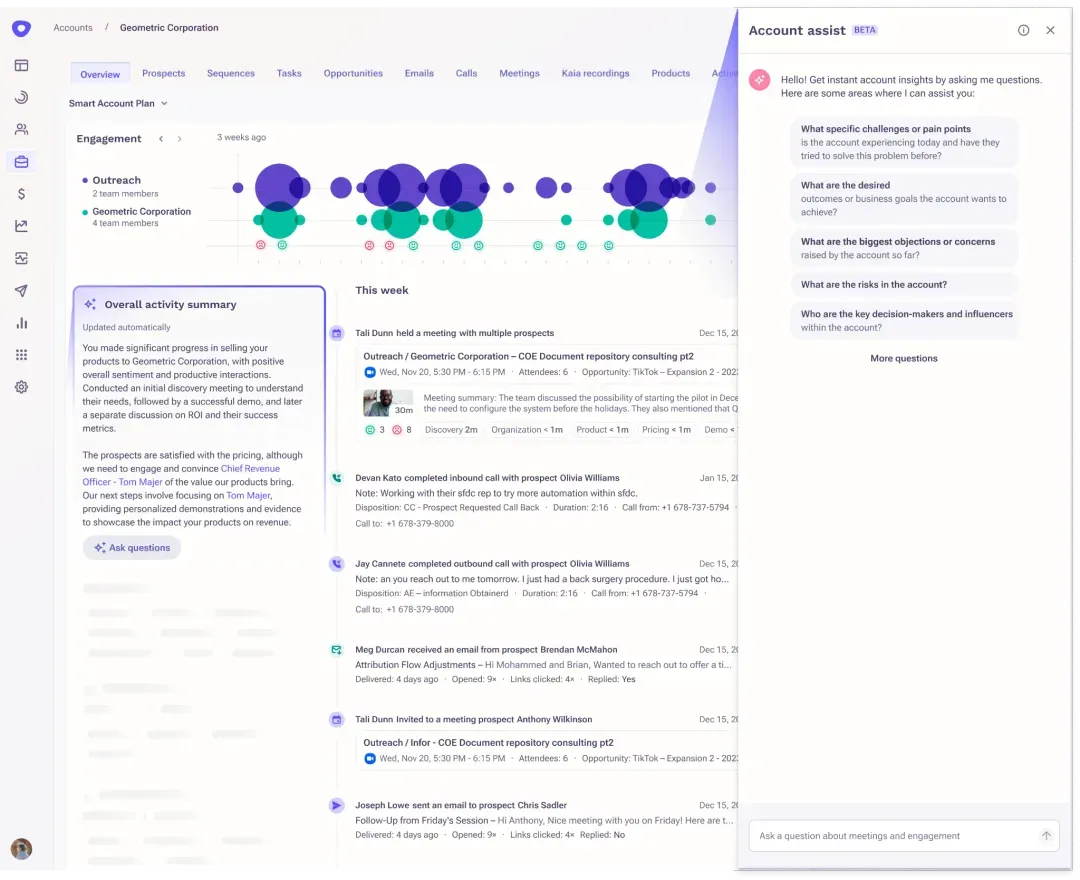
Outreach operates as an AI-powered Revenue Workflow Platform that combines sales engagement, conversation intelligence, deal management, sales forecasting, and revenue intelligence in one end-to-end solution. The platform uses AI to optimize send times, recommend which prospects to prioritize, and suggest next-best actions based on engagement history. You work from a unified inbox that surfaces high-intent prospects and automates follow-up tasks.
The platform now features AI Agents operating on a credit-based consumption model, including the AI Revenue Agent, AI Deal Agent, and AI Research Agent, with an AI Conversation Agent in development. These agents automate research, deal progression, and revenue workflows beyond traditional sequence optimization.
Sequence intelligence analyzes which cadence steps drive responses and recommends adjustments to improve conversion rates. The system scores buyer engagement across all touchpoints to identify accounts showing purchase intent. Outreach integrates with Salesforce, Microsoft Dynamics, and major sales intelligence platforms to enrich sequences with accurate contact data.
Key Features:
AI Agents including AI Revenue Agent, AI Deal Agent, and AI Research Agent for autonomous task execution
Multi-channel sequence automation across email, phone, and social
AI-powered send time optimization and prospect prioritization
Buyer engagement scoring based on email opens, clicks, and replies
Meeting scheduling automation with calendar integration
Integrated conversation intelligence, deal management, and forecasting capabilities
CRM sync for automated activity logging and task creation
5. Apollo
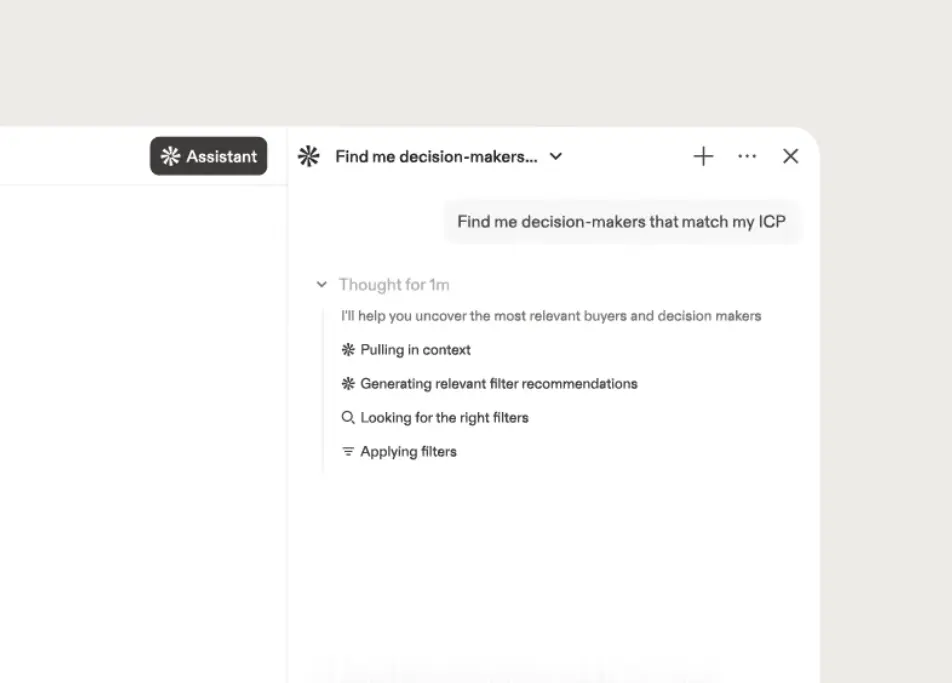
Apollo combines a B2B contact database with sales engagement tools in a single platform. The system provides access to a B2B contact database with email verification, then lets you build sequences and track outreach performance. AI writing assistance generates email drafts based on prospect information and campaign goals.
The platform includes lead scoring, email tracking, and meeting scheduling features. Apollo integrates with Salesforce, HubSpot, and other CRMs to sync contact data and log activities. You can search the database by job title, company size, industry, and technology usage to build targeted prospect lists.
Apollo offers a free tier with limited contacts and features. Paid plans unlock additional data access, sequence steps, and integration capabilities.
Key Features:
B2B contact database with company and contact search capabilities
Email verification and data quality controls
AI-generated email drafts and sequence templates
Multi-channel outreach across email and phone
Lead scoring and engagement tracking
Meeting scheduling and calendar integration
CRM integration for contact sync and activity logging
6. Clari + Salesloft
Clari and Salesloft completed their merger on 3 December 2025 and now operate as one Revenue Orchestration company under CEO Steve Cox, positioned as the "Predictive Revenue System." The combined platform spans forecasting and pipeline inspection (Clari) with sales engagement, conversation intelligence, and deal management (Salesloft). The joint roadmap is still being integrated, so buyers should ask how the two stacks come together in practice.
On the Clari side, the platform captures activity, inspects pipeline, and forecasts revenue, and it flags revenue leak where deals stall or accounts show churn risk. On the Salesloft side, an AI Agents Suite (Account, Opportunity, Email, and Conversation agents) automates multi-channel cadences, prioritizes prospects, and analyzes calls for coaching. Both integrate with Salesforce and Microsoft Dynamics.
Key Features:
Forecasting, pipeline inspection, and revenue-leak detection (Clari)
Multi-channel engagement and cadences across email, phone, and social (Salesloft)
Conversation intelligence for call recording and coaching
Deal management with deal-health scoring
AI agents for research, prioritization, and signal-to-action (Salesloft agents plus Clari's RevAI)
Automated activity capture, with Salesforce and Microsoft Dynamics integrations
7. HubSpot Sales Hub
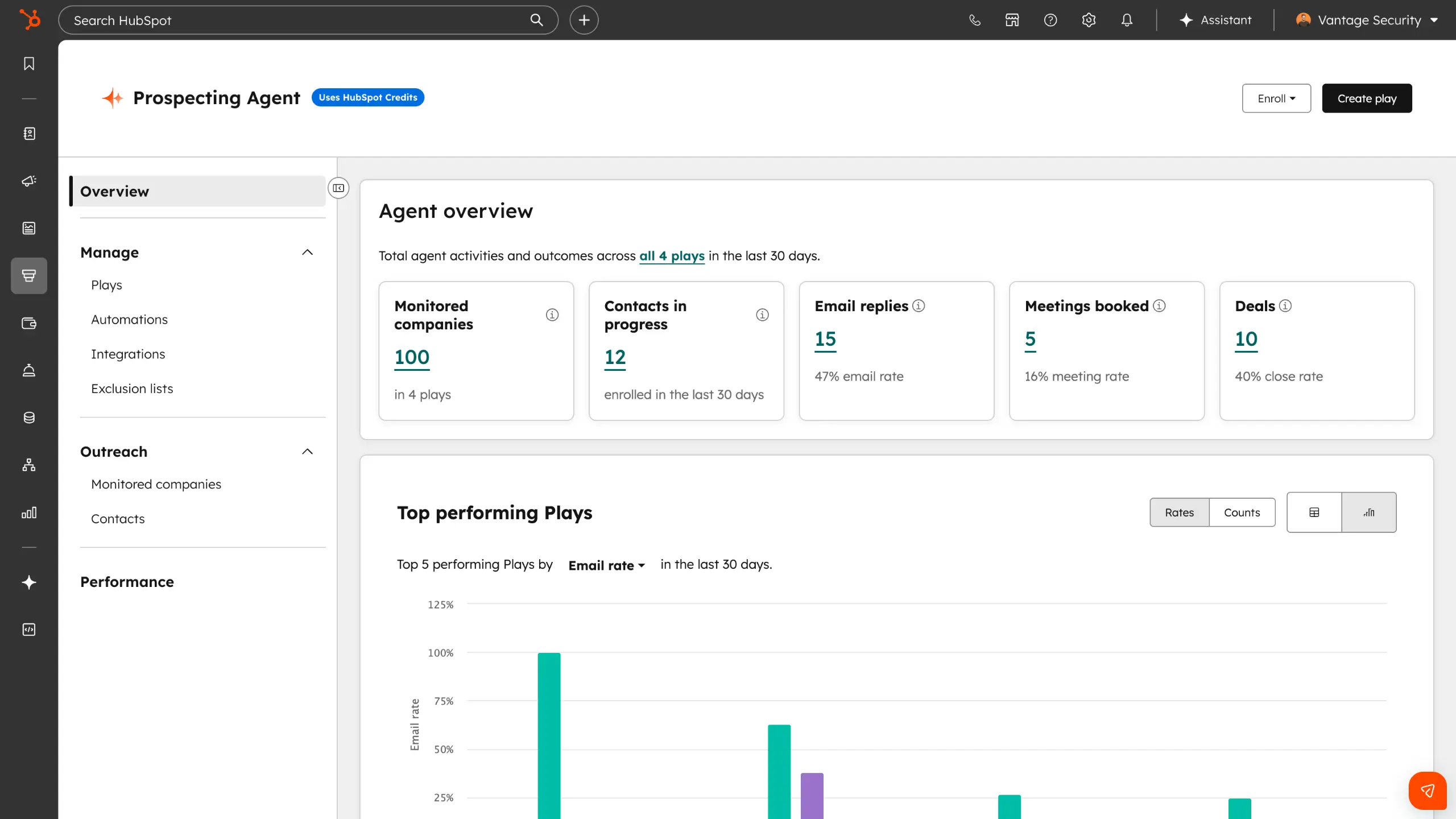
HubSpot Sales Hub provides CRM-native sales tools with AI features powered by Breeze, HubSpot's AI layer. The platform features the Breeze Prospecting Agent for automated research and outreach, the Breeze Customer Agent for 24/7 AI-powered customer support, and an AI Meeting Assistant that handles scheduling and meeting preparation. Predictive lead scoring ranks contacts based on engagement history and fit criteria.
Conversation intelligence features record calls and extract action items, objections, and deal insights. Meeting scheduling tools eliminate back-and-forth by letting prospects book directly from available calendar slots. Sales Hub integrates with HubSpot Marketing and Service Hubs.
The system offers free CRM functionality with paid tiers unlocking advanced automation, reporting, and AI features.
Key Features:
Breeze Prospecting Agent for automated account research and outreach
Breeze Customer Agent for AI-powered customer support
AI Meeting Assistant for scheduling and meeting preparation
AI-powered email writing assistance and send time optimization
Predictive lead scoring based on engagement and fit
Automated email sequences and follow-up workflows
Meeting scheduling with calendar integration
Call recording and conversation intelligence
Native integration with HubSpot Marketing and Service tools
8. Clay
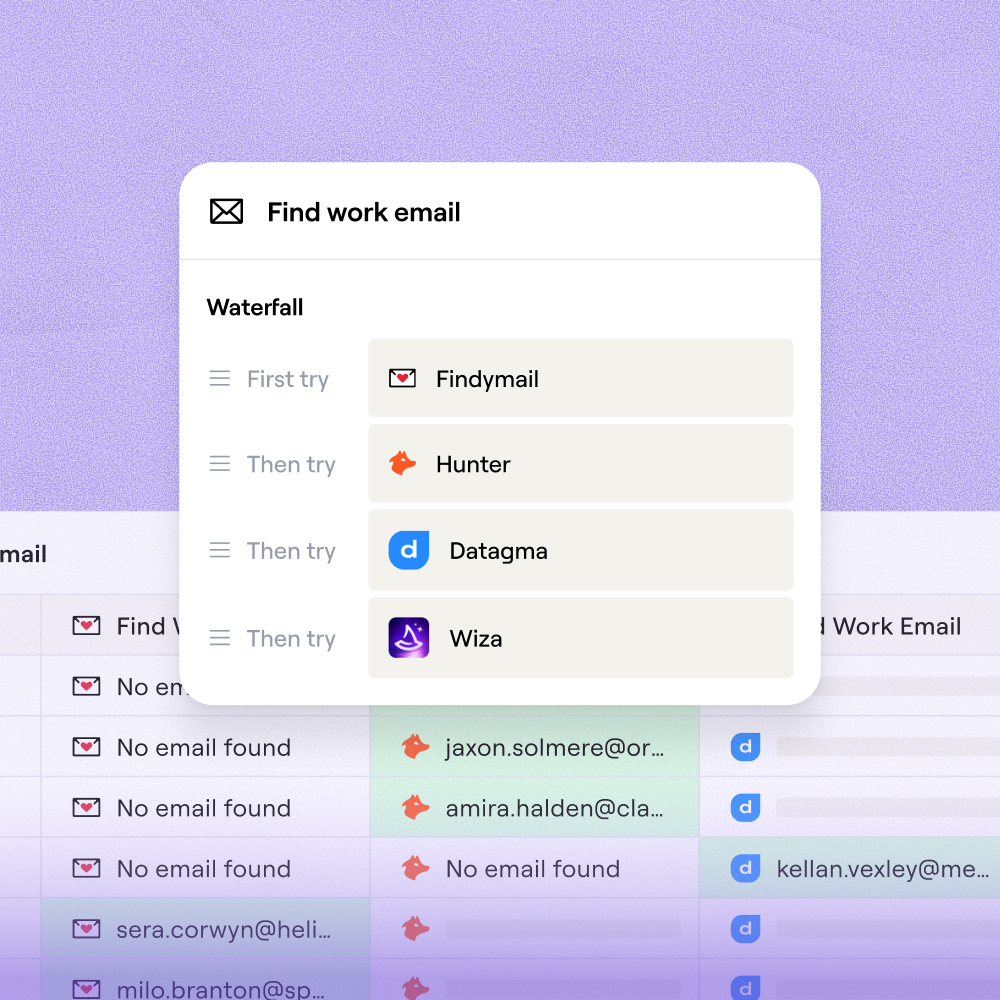
Clay is an AI prospecting and GTM data-automation platform. It pulls from many data providers in a single waterfall, enriches lists, and runs research through AI agents so RevOps and growth teams can build automated prospecting workflows without stitching tools together. Its "Claygent" research agent reads sources and answers questions about each account, then triggers the next step.
Clay is strong when you want flexible, multi-source enrichment and custom logic. It is a build-your-own workflow tool, so it rewards teams with clear processes and some operations resource. It complements, rather than replaces, a verified core data source.
Key Features:
Waterfall enrichment across 100+ data providers in a single lookup
AI research agents ("Claygent") that read sources and answer questions about each account
Signal and trigger monitoring (job changes, hiring, funding, tech installs) to start workflows
AI-drafted, personalized outreach copy built from the enriched data
Workflow automation with conditional logic and lead scoring
Two-way CRM and sequencer integrations (Salesforce, HubSpot, and outbound tools
9. 6sense
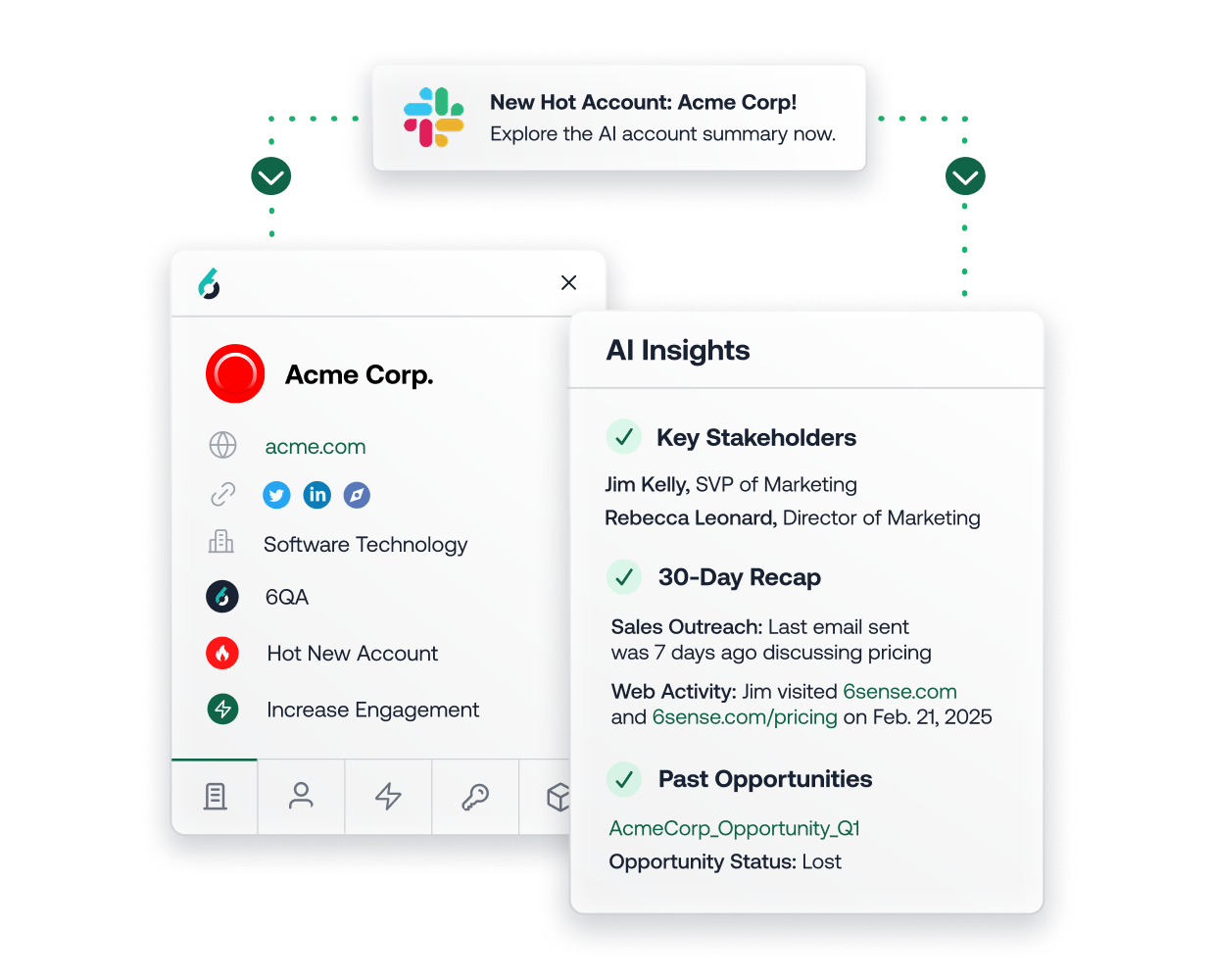
6sense is an AI-driven account identification and orchestration platform. Its predictive analytics estimate which accounts are in-market and what stage of the buying journey they are in, then AI agents recommend the next action and help route accounts to the right play. It is built around ABM and demand generation more than individual seller workflows.
6sense is a fit when marketing and sales want to prioritize accounts by predicted intent and coordinate campaigns against them. As with any predictive tool, results depend on the quality and coverage of the underlying data and identity resolution.
Key Features:
Predictive account and buying-stage identification
Intent data plus anonymous website de-anonymization to reveal in-market accounts
AI agents and orchestration across advertising, email, and sales plays
Account and contact data enrichment for targeting
Prioritization dashboards that surface which accounts to work now
Native integrations with CRM and marketing automation platforms
10. Microsoft Copilot for Sales
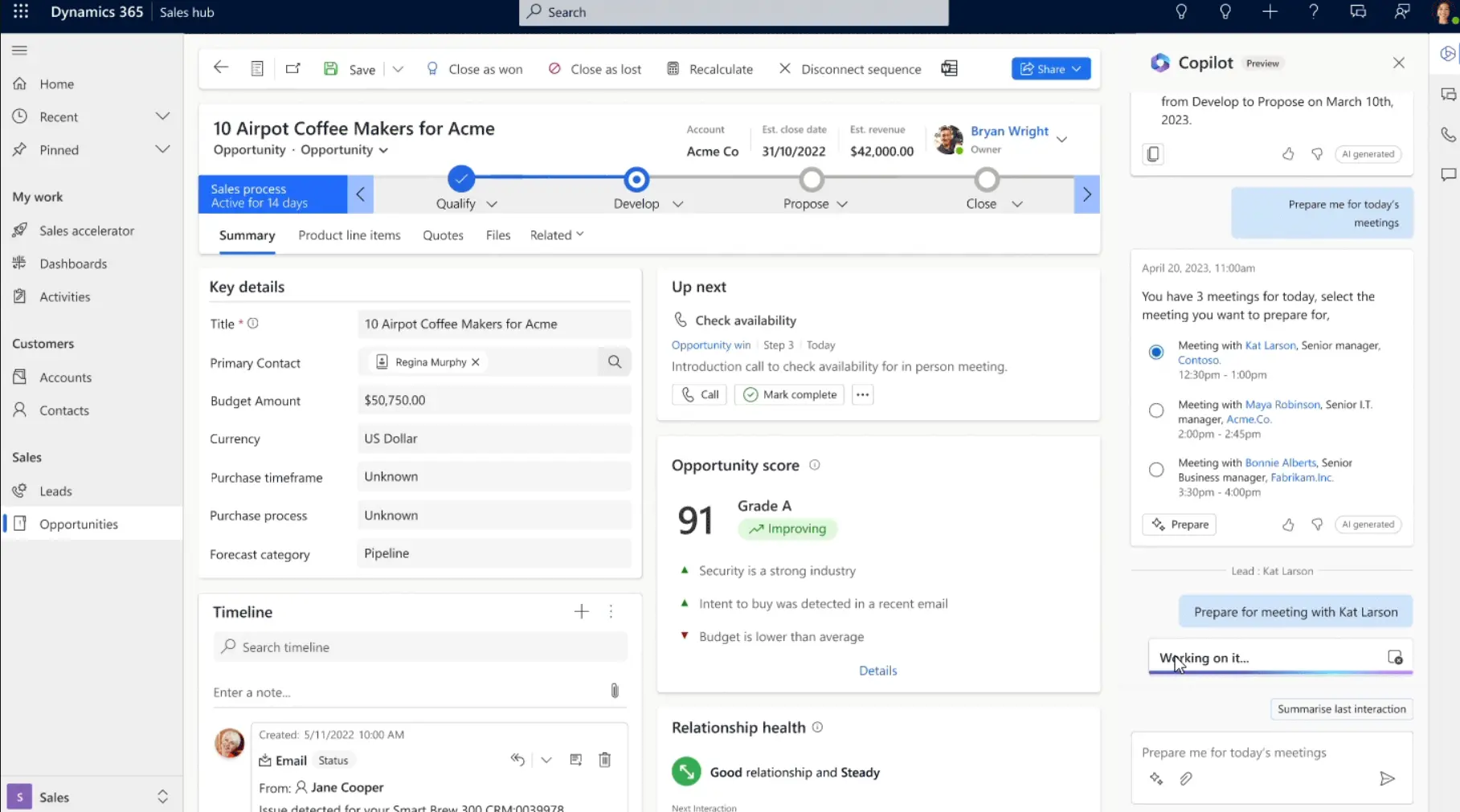
Microsoft 365 Copilot for Sales is an AI assistant for sellers that lives inside the tools they already use, Outlook and Teams. It surfaces CRM context in the inbox, drafts and summarizes emails, captures Teams meeting recaps, and writes updates back to the CRM, which cuts manual data entry. It connects to both Dynamics 365 Sales and Salesforce, so Microsoft-centric teams can add AI without leaving Microsoft 365.
Microsoft's 2026 release wave 1 extends this with a role-based Sales agent that works as a daily command center: it summarizes records, prioritizes and qualifies leads, recommends next steps, and helps sellers prep for meetings across Outlook, Teams, and mobile. Value depends on Microsoft 365 licensing and the quality of the CRM data it reads.
Key Features:
CRM context, email drafting, and meeting recaps inside Outlook and Teams
Save AI meeting notes to Dynamics 365 Sales or Salesforce
Record and opportunity summaries that reduce manual data entry
Role-based Sales agent for lead prioritization and meeting prep (2026 release wave 1)
Part of the Microsoft 365 Copilot family, integrated across Microsoft 365 apps
How to Choose the Right AI Sales Assistant
Start by identifying which problems you're actually trying to solve. Teams struggling with prospecting efficiency need different capabilities than those focused on deal execution or forecast accuracy. Match platform strengths to your specific workflow gaps instead of chasing feature lists.
Data Quality and Coverage
AI recommendations fail when built on incomplete or outdated contact information. Platforms that rely on crowdsourced data or infrequent updates create more work than they eliminate. Verify how B2B data providers source contacts, how often they refresh records, and what coverage they maintain in your target markets.
Look for platforms that publish email deliverability rates and phone number accuracy metrics. Ask about technographic and firmographic data depth if you target accounts based on technology usage or company characteristics. Check whether intent signal sources cover topics relevant to your product category.
CRM and Tech Stack Integration
Sales tools that don't sync with your CRM create data silos and force you to work across multiple systems. Look for bidirectional integrations that update records automatically and surface insights where you already work. Platforms requiring manual exports or custom API development slow adoption and limit value.
Verify native integrations with your CRM: Salesforce, HubSpot, Microsoft Dynamics. Check compatibility with existing sales engagement and conversation intelligence tools. Confirm API availability for custom workflows and data orchestration. Test mobile app functionality if your reps work outside the office.
AI Capabilities and Automation Depth
Marketing claims about AI often exceed actual functionality. Test whether platforms deliver specific recommendations or just surface raw data. Effective AI should prioritize accounts, suggest next actions, and automate repetitive tasks without requiring data science expertise.
Evaluate the specificity of AI recommendations. Generic suggestions like "contact this account" don't help. You need prioritized lists with reasons why each account matters now. Check whether the platform automates data entry, meeting scheduling, and follow-up tasks. Review conversation intelligence depth: transcription alone isn't enough. You need deal insight extraction and risk identification.
Scalability and Enterprise Readiness
Platforms that work for small teams often break at enterprise scale. Evaluate whether tools can handle your data volume, user count, and security requirements. Enterprise buyers need compliance certifications, role-based access controls, and dedicated support.
Confirm SOC 2, GDPR, and CCPA compliance for security and privacy. Review user provisioning and role-based permissions for large teams. Check API rate limits and data processing capacity. Ask about implementation support and ongoing customer success resources.
Why ZoomInfo for AI Sales Assistance
ZoomInfo combines B2B intelligence with AI-powered workflow automation in GTM Workspace, so you do not need separate tools for data and engagement. Its AI agents surface prioritized accounts based on intent signals, automate prospecting research, and guide your next actions inside your existing CRM and sales engagement platforms. That integration reduces tool sprawl and shortens time-to-value.
The data foundation matters. Over 500 million contacts and 1.5 billion+ data points processed daily give the AI the accuracy it needs to deliver reliable recommendations. GTM Workspace brings contact data, intent monitoring, conversation intelligence, and engagement orchestration into one system, and it holds SOC 2 Type II, ISO 27001, ISO 27701, GDPR, and CCPA certifications for regulated industries.
See how ZoomInfo works as your team’s AI sales assistant. Book a demo for sales. Free to start with consumption credits based on usage.
Frequently Asked Questions
What tasks can AI sales assistants automate for sales teams?
AI sales assistants automate data entry, meeting scheduling, follow-up reminders, and prospecting research. They log emails and calls automatically, enrich contact records, and create tasks based on buyer engagement patterns.
How do AI sales assistants identify which prospects to contact first?
AI sales assistants analyze intent signals, engagement history, and account fit to rank prospects. They monitor website visits, content downloads, and research activity to flag accounts actively evaluating solutions, then prioritize based on close probability.
Can AI sales assistants work with Salesforce and HubSpot?
Most AI sales assistant platforms integrate with Salesforce and HubSpot through native connectors. These integrations sync contact data bidirectionally, log activities automatically, and surface insights directly within your CRM interface.
What's the difference between AI sales assistants and website chatbots?
AI sales assistants help your reps work more efficiently by automating tasks and providing deal insights. Website chatbots engage buyers directly through chat interfaces to qualify leads and schedule meetings. One supports sellers, the other engages prospects.
Do AI sales assistants require technical expertise to set up and use?
Enterprise-grade AI sales assistants require initial configuration to connect your CRM and define scoring criteria. After setup, most platforms provide intuitive interfaces that reps can use without technical training or data science knowledge.
Are AI sales assistant platforms secure enough for enterprise use?
Enterprise-grade AI sales assistants maintain SOC 2 Type II, GDPR, and CCPA compliance. These certifications ensure platforms meet security standards for data encryption, access controls, and privacy protection required by regulated industries.
