
If you're comparing Amperity and Adobe Experience Platform, you're evaluating two approaches to the same challenge: turning fragmented customer data into something actionable. But the right choice depends on questions most comparisons skip:
Are you a B2C brand trying to unify consumer data, or a B2B organization trying to find and convert buyers?
Do you need to resolve identities across messy, overlapping first-party records, or do you need verified contact data for people you haven't met yet?
Is your team equipped to manage a 6–18 month enterprise platform implementation, or do you need results in weeks?
Do you have data engineers ready to design schemas and maintain pipelines, or do you need something your marketing team can use directly?
Is your goal personalizing experiences for known customers, or identifying and reaching new prospects?
In short, here's what we recommend:
Amperity specializes in identity resolution for consumer brands. Its patented Stitch engine uses probabilistic and deterministic AI matching to merge fragmented customer records from dozens of sources into unified profiles. For B2C brands with messy, overlapping data across loyalty programs, e-commerce, POS, and CRM systems, Amperity's matching is the strongest in the CDP market. But Amperity is built for consumer data, carries no B2B or account-based marketing capabilities, and requires an enterprise sales engagement with no self-serve entry point.
Adobe Experience Platform (AEP) is the data infrastructure layer beneath Adobe's Experience Cloud suite. It centralizes customer data into Real-Time Customer Profiles, merging online, offline, CRM, and third-party sources into records updated continuously for personalization. For organizations already deep in the Adobe ecosystem, AEP provides a shared data layer that removes the need to sync tools like Real-Time CDP, Journey Optimizer, and Customer Journey Analytics. But this comes at a cost: implementations typically take six to eighteen months, require systems integrator involvement, and lock buyers into a broader Experience Cloud commitment.
Both platforms unify first-party data you already have. But for B2B organizations, the challenge isn't merging records from your loyalty program and e-commerce store. It's finding the right buyers, understanding when they're in-market, and reaching them before competitors do. That requires a different kind of data platform.
ZoomInfo is a B2B go-to-market platform built on 500M contacts, 100M companies, 135M+ verified phone numbers, and 200M+ verified business email addresses. While Amperity and AEP unify data you've already collected, ZoomInfo provides the third-party intelligence B2B teams need to identify and reach buyers they haven't met yet. Its GTM Context Graph combines this data with your CRM records, conversation transcripts, and behavioral signals to show not just what happened in your pipeline, but why deals move or stall. That intelligence reaches sellers through GTM Workspace, marketers and RevOps through GTM Studio, and any third-party tool or AI agent through API and MCP.
If your go-to-market challenge is finding and converting B2B buyers rather than personalizing B2C consumer experiences, see how ZoomInfo works with a free trial.
Amperity vs. Adobe Experience Platform vs. ZoomInfo at a glance
Amperity | Adobe Experience Platform | ZoomInfo | |
|---|---|---|---|
Core focus | B2C identity resolution and customer data unification | Enterprise data platform for customer experience orchestration | B2B go-to-market intelligence and execution |
Primary data type | First-party consumer data (POS, loyalty, e-commerce, CRM) | First-party customer data (online, offline, CRM, third-party) | Third-party B2B data + first-party CRM and conversation data |
Identity resolution | Patented probabilistic + deterministic AI (up to 45 models) | Deterministic identity graph with configurable merge policies | Verified B2B contacts with up to 95% accuracy |
AI capabilities | AmpAI (natural language segments, predictive models) | Adobe Sensei + Agent Orchestrator (10 AI agents) | GTM Context Graph + AI agents in Workspace and Studio |
Implementation time | Weeks to months (varies by data complexity) | 6–18 months typical | Deploys in weeks |
Analyst recognition | Gartner CDP Niche Player (2026) | Gartner DXP Leader (8 consecutive years) | Gartner ABM Leader (2024 & 2025); Forrester Intent Data Leader |
Pricing model | Consumption-based (Amps) | Profile-volume-based (enterprise contracts) | Consumption-based (credits + seats) |
Free tier | Chuck free tier (Databricks only) | No free tier or self-serve trial | ZoomInfo Lite (permanent free) + 7-day trial |
Best for | B2C brands with fragmented consumer data | Large enterprises in the Adobe ecosystem | B2B sales, marketing, and RevOps teams |
These platforms solve different problems
Amperity and Adobe Experience Platform both operate in the customer data platform space, but they serve different segments of it. ZoomInfo isn't a CDP at all. Understanding these distinctions matters more than any feature comparison.
Amperity is built for consumer brands with messy first-party data. Retailers, airlines, hotel chains, and financial institutions accumulate customer records across loyalty systems, e-commerce platforms, point-of-sale terminals, email tools, and call centers. Each system stores its own version of the customer, often with different identifiers, misspellings, and outdated information.
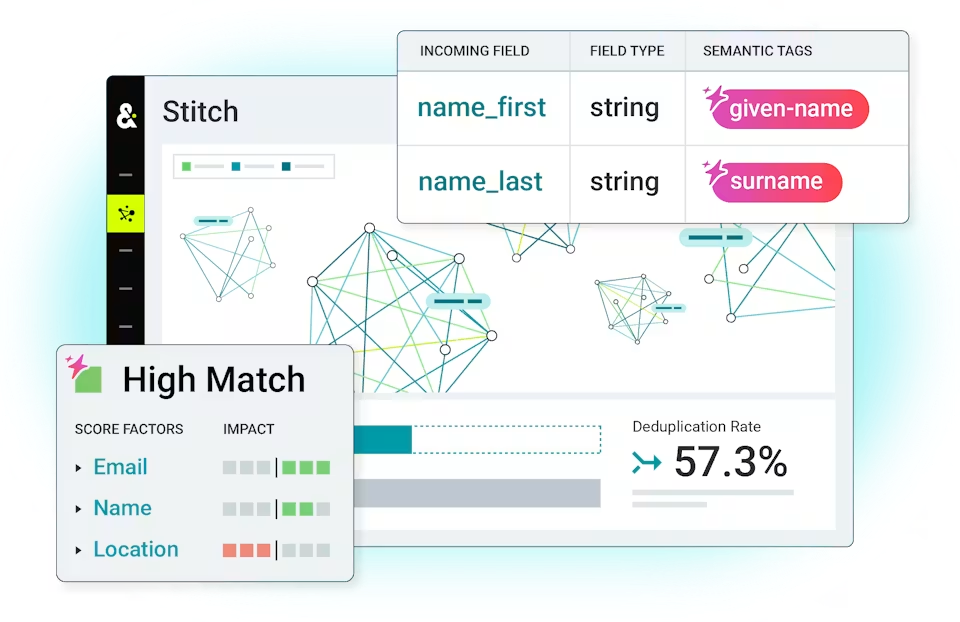
Source: Amperity
Amperity's Stitch engine processes all of this through a seven-stage pipeline that combines probabilistic and deterministic matching to produce a single Amperity ID for each real person.
Adobe Experience Platform serves a different role. It's not primarily a standalone CDP but the data layer beneath Adobe's Experience Cloud. Organizations that already run Adobe Analytics, Marketo Engage, Adobe Target, or Adobe Commerce use AEP to centralize data from these tools (and external sources) into Real-Time Customer Profiles.
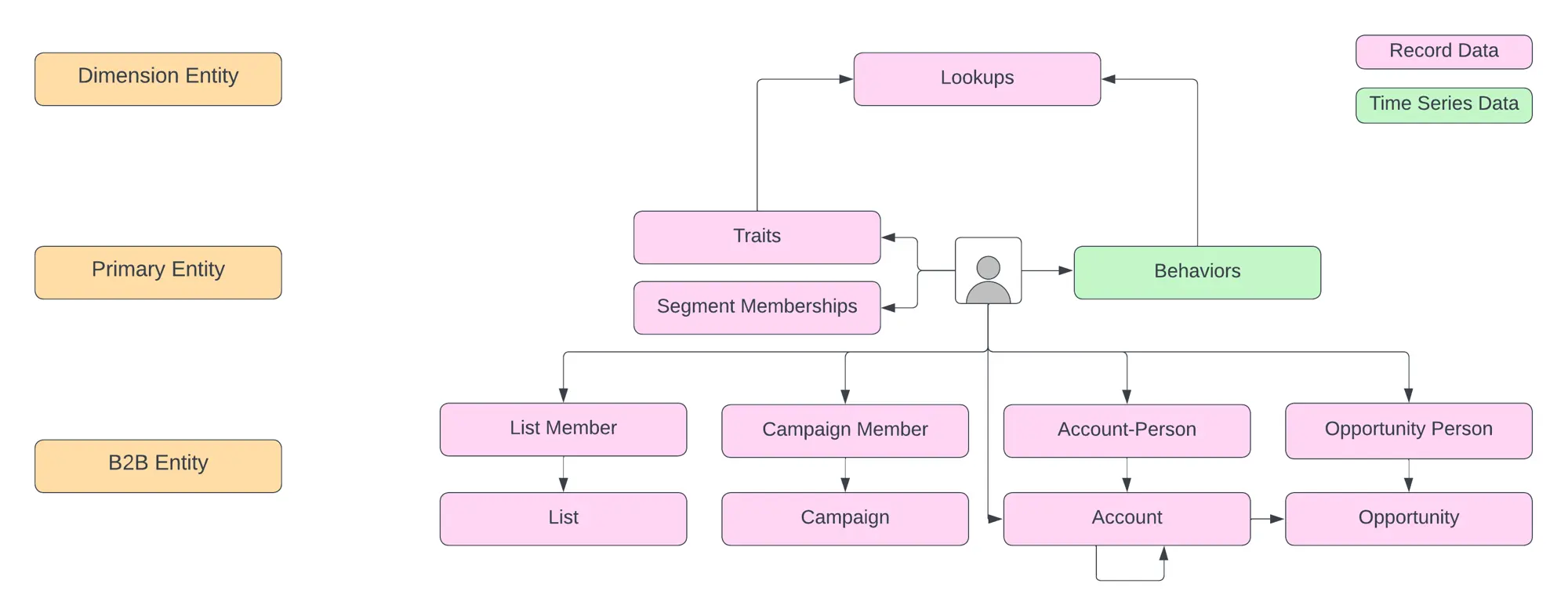
Source: AEP
Its value grows with Adobe ecosystem depth: Real-Time CDP, Journey Optimizer, and Customer Journey Analytics all run on the same data layer without sync overhead. AEP powers over one trillion experiences per year across the brands running on it.
ZoomInfo addresses a problem these platforms weren't designed for. B2B organizations don't struggle primarily with duplicate consumer records. They struggle with finding the right buyers, understanding buying committees, and reaching decision-makers before competitors do.
ZoomInfo's foundation is 500M contacts and 100M companies of third-party verified B2B data, processed through a multi-source pipeline with 300+ human researchers and up to 95% accuracy.
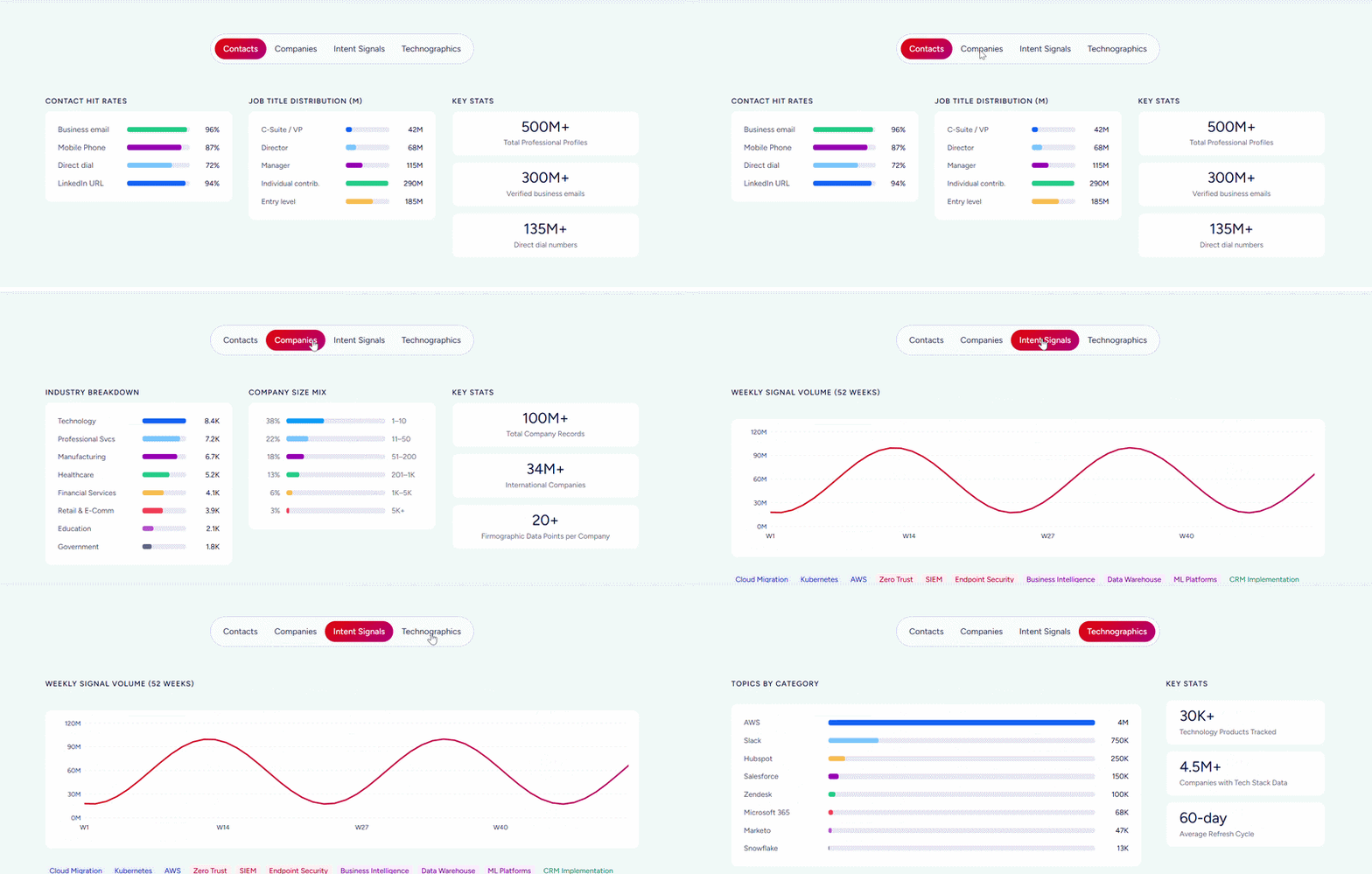
That data, combined with CRM records and conversation intelligence via the GTM Context Graph, tells B2B teams not just who their customers are, but who their next customers should be.
For B2C brands, the choice is between Amperity and AEP. For B2B organizations, ZoomInfo solves the problem neither platform was built to address.
Identity resolution takes three different forms
How each platform resolves "who is this person?" reveals its design priorities.
Amperity's Stitch leads in first-party identity resolution. Gartner's 2026 CDP Magic Quadrant noted that "no platform matches Amperity's ability to probabilistically link records." Stitch runs up to 45 AI models simultaneously, using a blocking strategy to narrow candidate pairs before scoring them across name similarity, email matching, address proximity, phone, and birthdate signals.
The system maintains three concurrent identity graphs (Growth, Trust, and Opportunity) so teams can choose their accuracy-vs.-reach tradeoff depending on the use case.
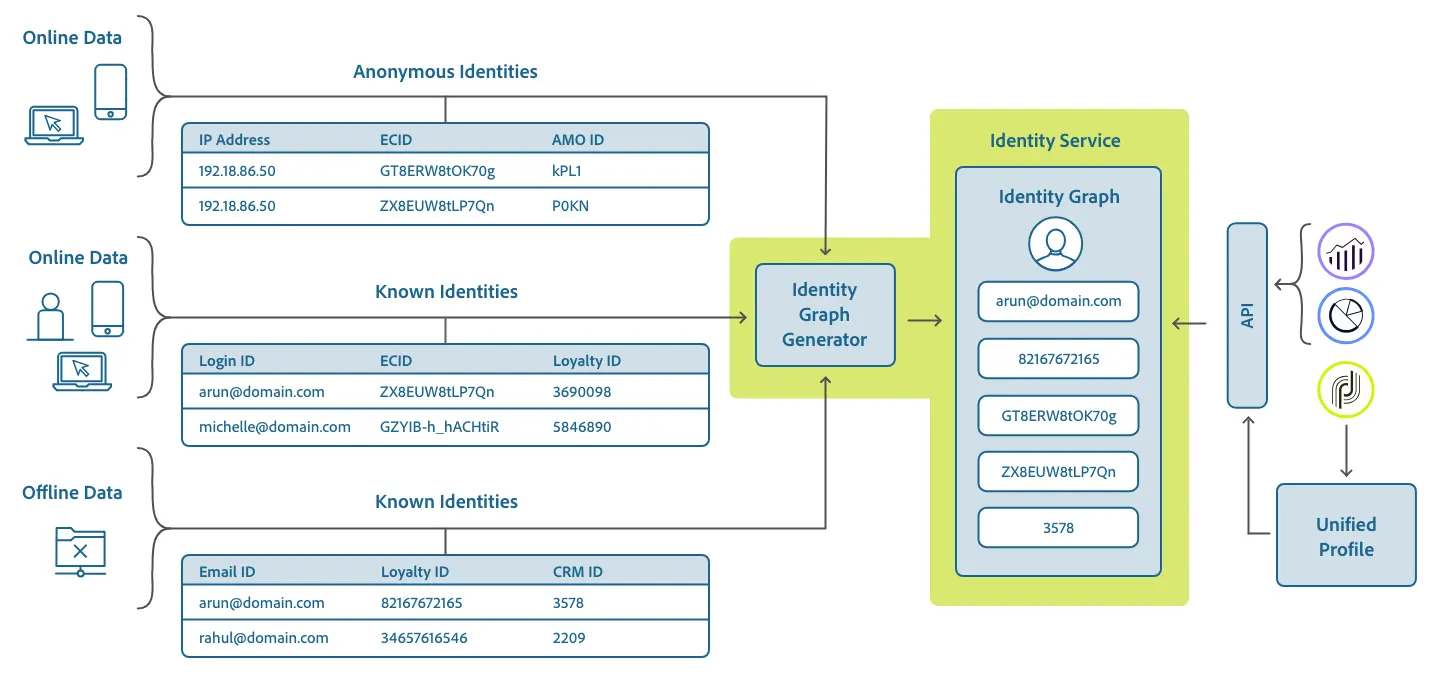
AEP's Identity Service takes a different approach, using deterministic algorithms based on observed co-occurrences of identifiers. When a user logs in (connecting a cookie ID to a CRM ID, for example), Identity Service links those identifiers in a shared identity graph.
Source: AEP
This is precise but depends on authenticated events. It won't probabilistically match "J. Smith" to "Jane Smith" across different systems the way Amperity will. AEP enforces hard guardrails (a maximum of 50 identities per graph, for instance), prioritizing performance predictability over matching breadth.
For organizations with high volumes of known, authenticated traffic, this approach delivers reliable profiles without the ambiguity of probabilistic matching.
ZoomInfo doesn't resolve your internal customer records. Instead, it maintains the largest verified B2B contact database in the market, built through automated ML scanning of 28 million site domains daily, a data-sharing community of 200,000+ members, and 300+ human researchers.
In a Fortune 500 competitive RFP analyzing 25 million contacts across vendors, the independent consultant concluded that "no other competitor came even close." For B2B teams, the identity problem isn't deduplicating records they already have. It's knowing who to reach and having verified contact data to get there.
Snowflake uses ZoomInfo data for at least one-third of the most critical features in their Account Propensity Scoring model, feeding over 70 firmographic and technographic data fields. Accounts monitored using ZoomInfo-powered scores showed 90% higher opportunity open rates and 2x higher customer conversion rates. (Snowflake case study)
Data ingestion and architecture reflect different philosophies
Each platform's approach to getting data in reveals who it was built for.
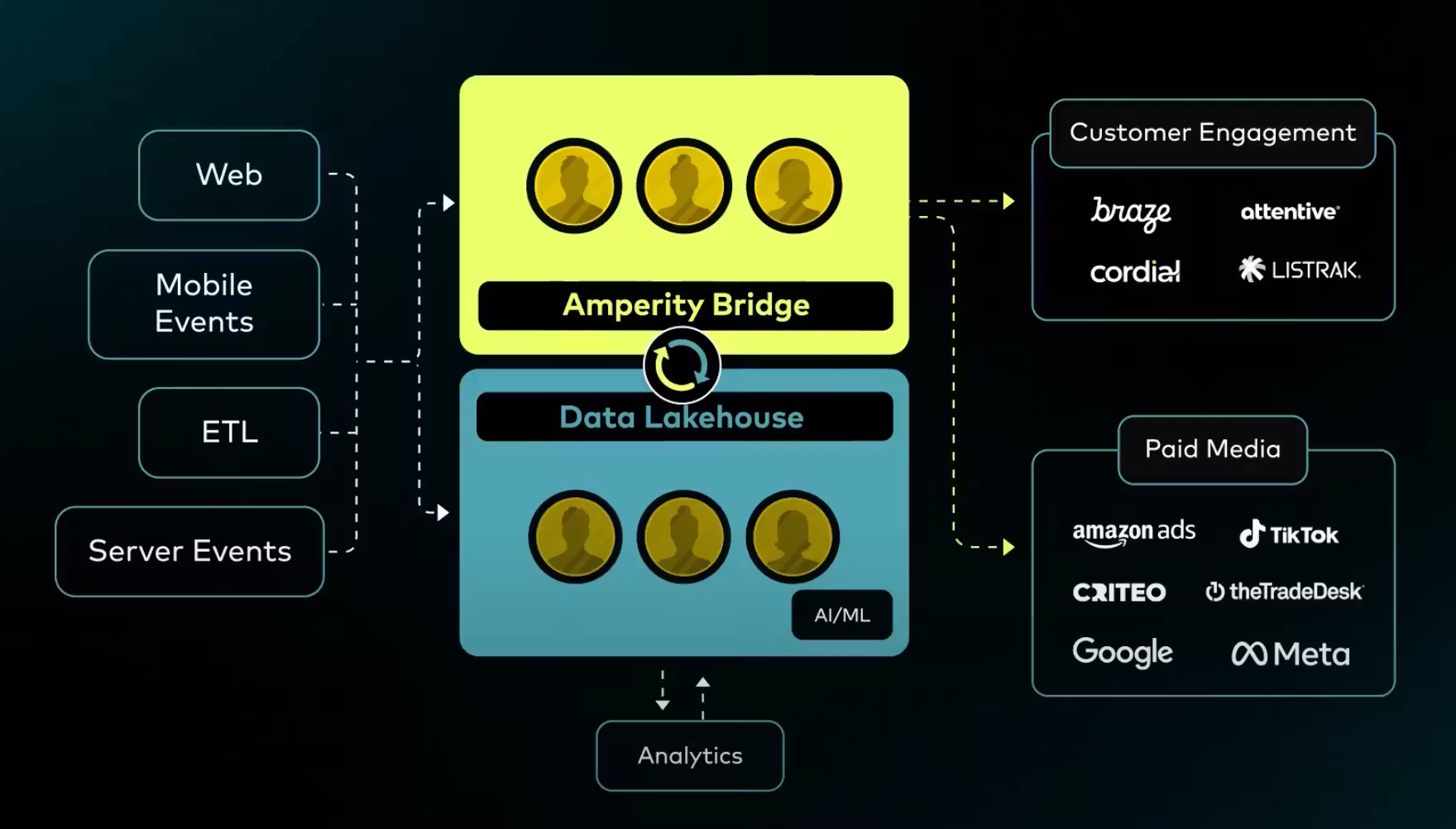
Amperity accepts data in any format through 200+ pre-built source connectors and transforms it in-place using semantic tagging rather than requiring preprocessing. This ELT approach sends raw data directly into Amperity, skipping the more expensive traditional ETL step.
For organizations with data lakehouses, Amperity Bridge enables zero-copy data sharing with Databricks, Snowflake, and BigQuery, so data stays where it lives.
Source: Amperity
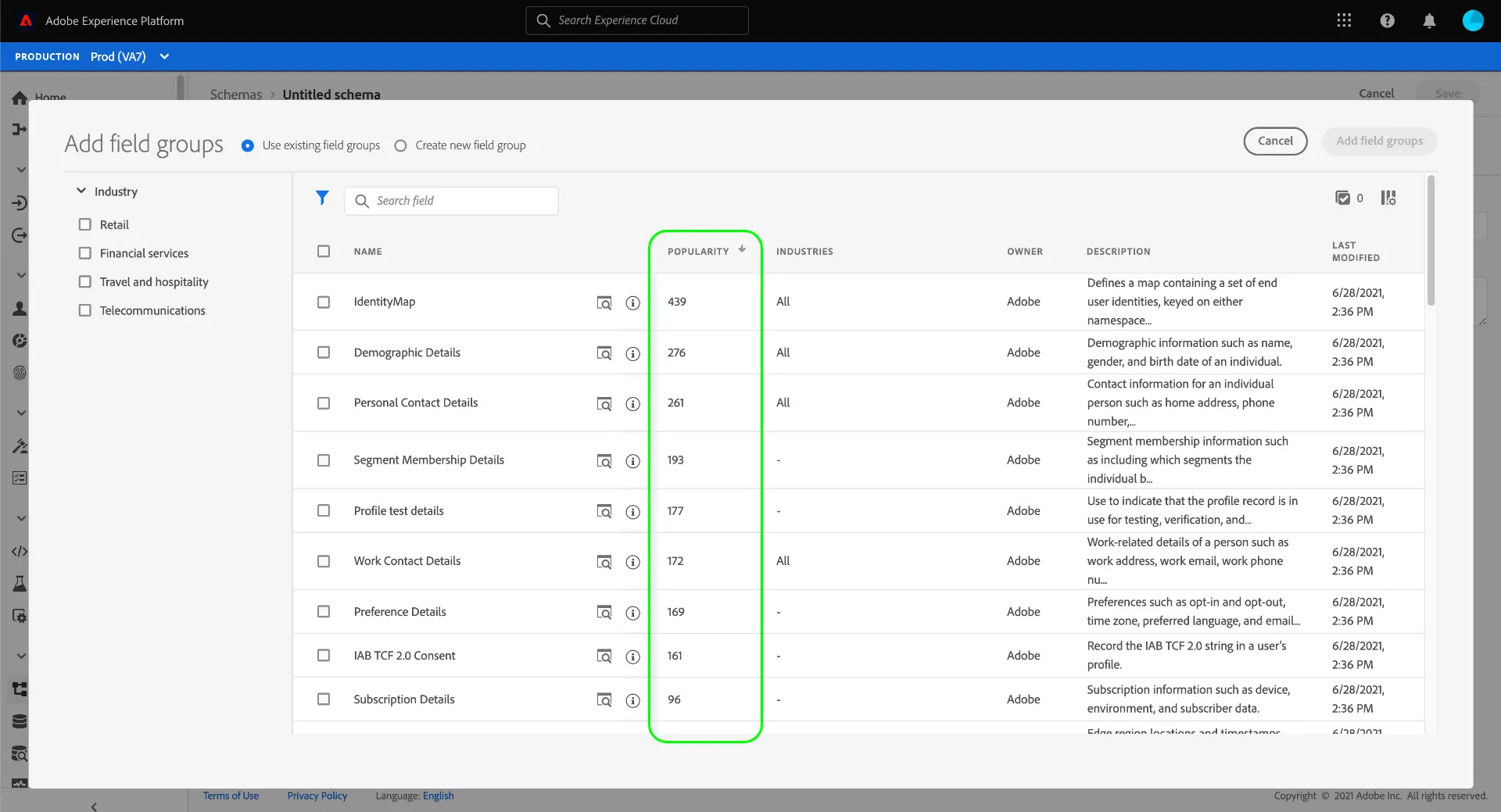
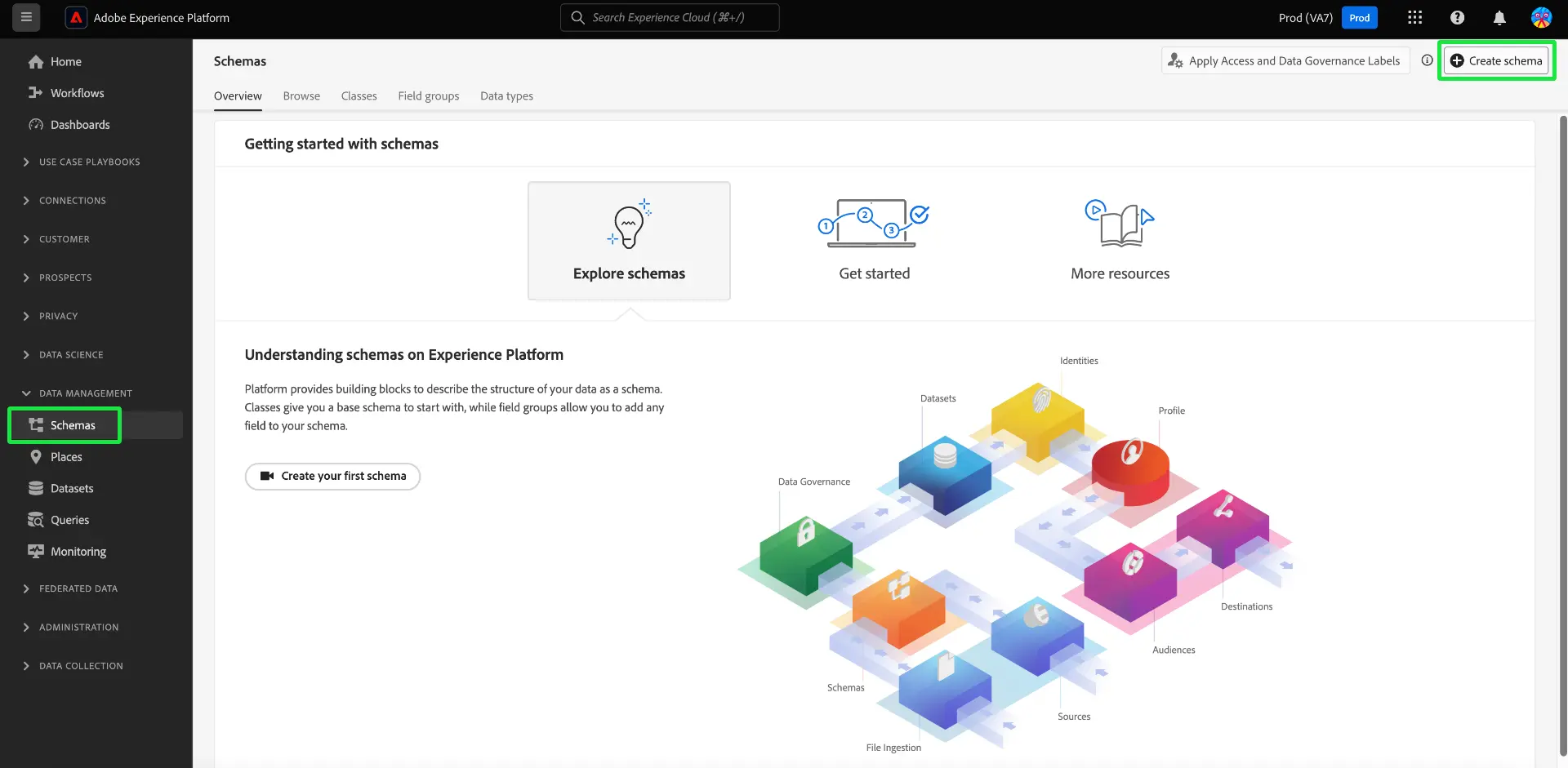
AEP requires all data to conform to Experience Data Model (XDM) schemas before it becomes useful. This standardization pays off downstream (every AEP service operates on the same data contract), but demands upfront schema design.
Source: AEP
AEP supports both streaming ingestion for real-time events and batch ingestion for historical loads. Source connectors span Adobe applications, cloud databases like Snowflake and BigQuery, and streaming platforms like Amazon Kinesis (though advanced enterprise connectors require Real-Time CDP Ultimate licensing).
A Data Prep layer handles field-level mapping and transformation. ML-assisted schema creation can generate XDM schemas from sample data, reducing manual mapping work.
Source: AEP
ZoomInfo inverts the data model. Instead of ingesting your data into a platform, ZoomInfo brings its data to you. The Enterprise API pushes B2B intelligence into any database, system, or workflow.
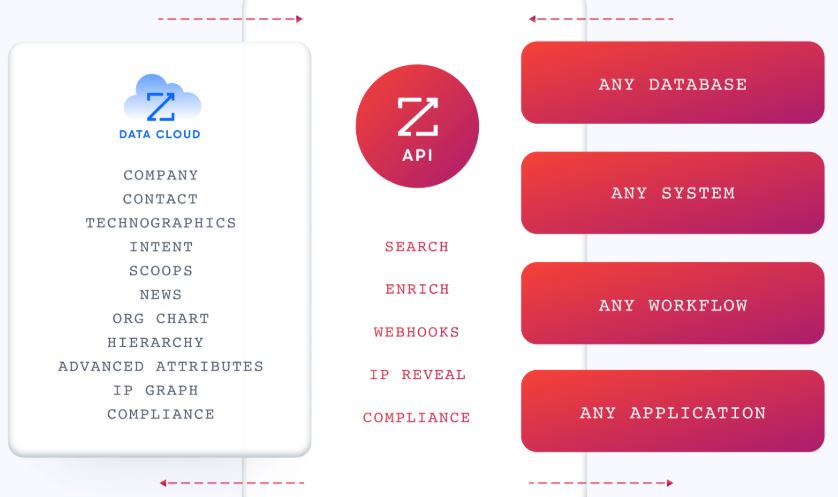
Cloud Partners delivers ZoomInfo data directly into AWS, Snowflake, Databricks, and Google Cloud as structured data sets.
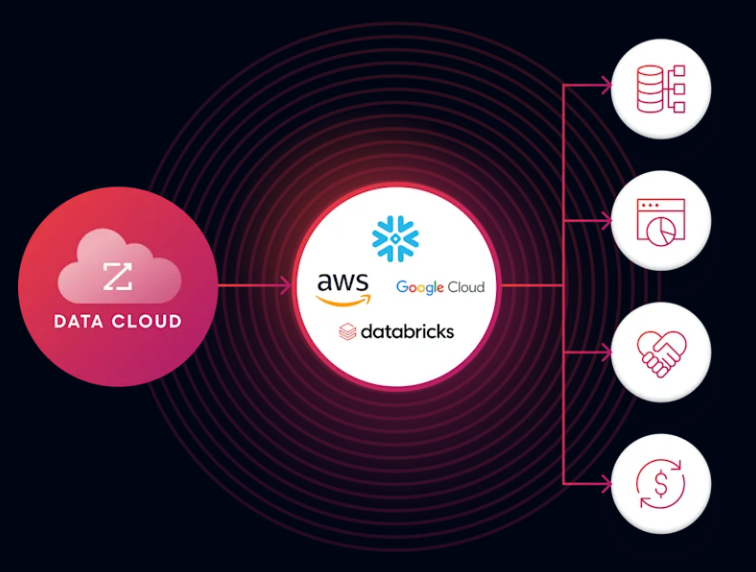
Through the GTM Context Graph, ZoomInfo also ingests your first-party CRM data, conversation transcripts, and behavioral signals, then reasons across both data sources to reveal why deals move or stall.
The architecture serves B2B teams that need intelligence flowing into their existing tools rather than another platform to feed data into.
Audience building and activation take different paths
The path from data to action looks different on each platform.
Amperity's Audience Hub provides a no-code segment editor where marketers build audiences by selecting attributes from the Customer 360, with real-time insights showing customer count, revenue contribution, and channel reachability as segments are defined.
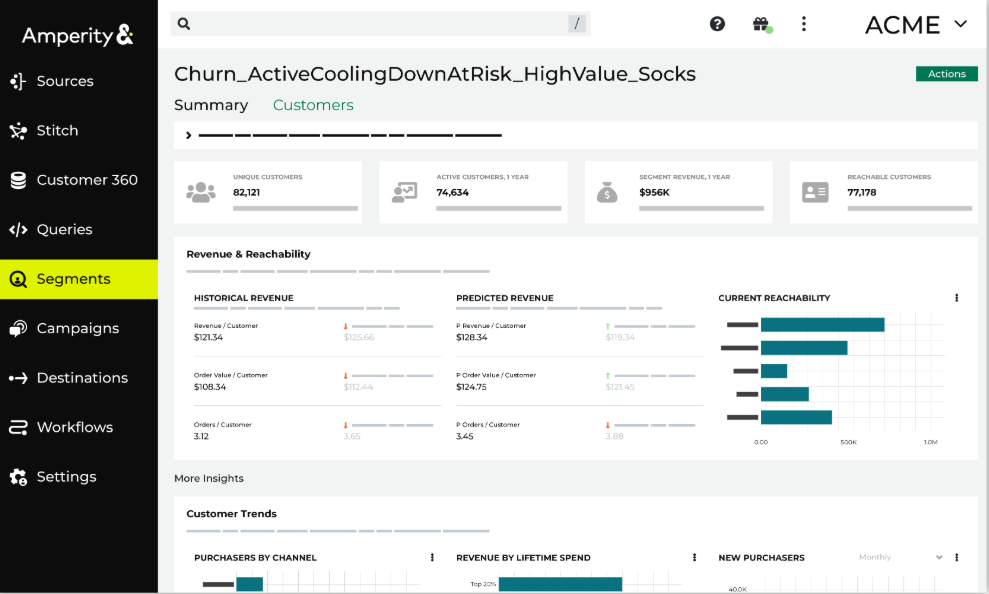
Source: Amperity
Campaigns activate through 200+ destination connectors spanning paid media (Meta Ads, Google Ads, TikTok, The Trade Desk), email platforms (Braze, Klaviyo, Salesforce Marketing Cloud), CRM, and data warehouses.
The Journeys canvas supports visual workflow building with conditional splits, delays, and percent-split A/B testing with control groups.
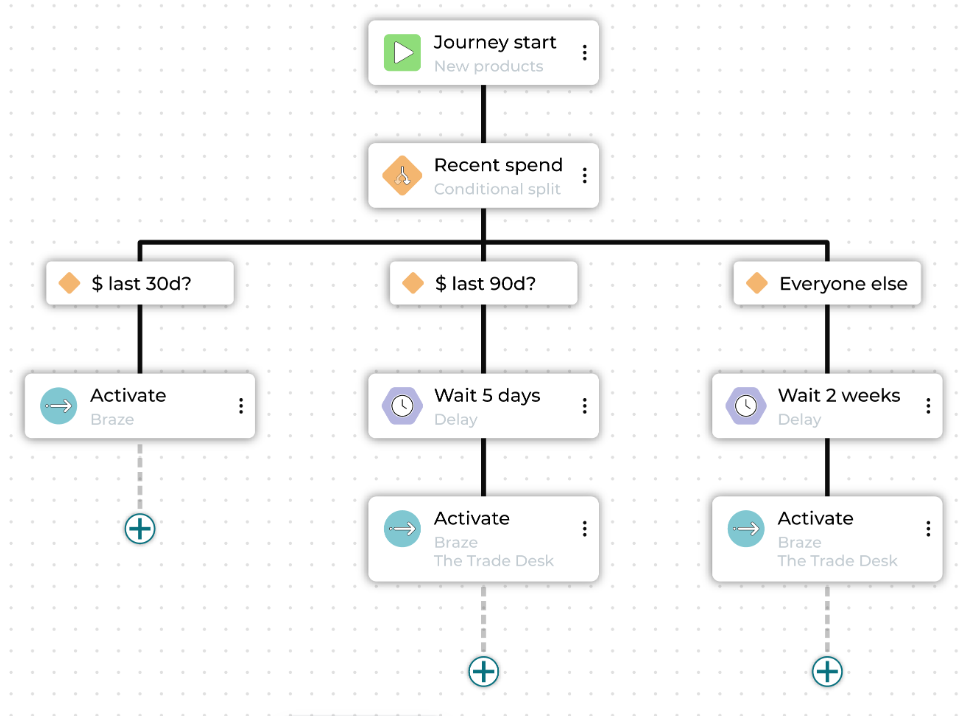
Source: Amperity
AEP's Segmentation Service evaluates audiences through three modes: streaming (near real-time as data arrives), batch (every 24 hours), and edge (sub-millisecond evaluation on Adobe's Edge Network for same-page personalization).
The Segment Builder provides a drag-and-drop interface backed by Profile Query Language (PQL). Federated Audience Composition can query data sitting in external warehouses (Snowflake, Databricks, Redshift) without copying it into AEP.
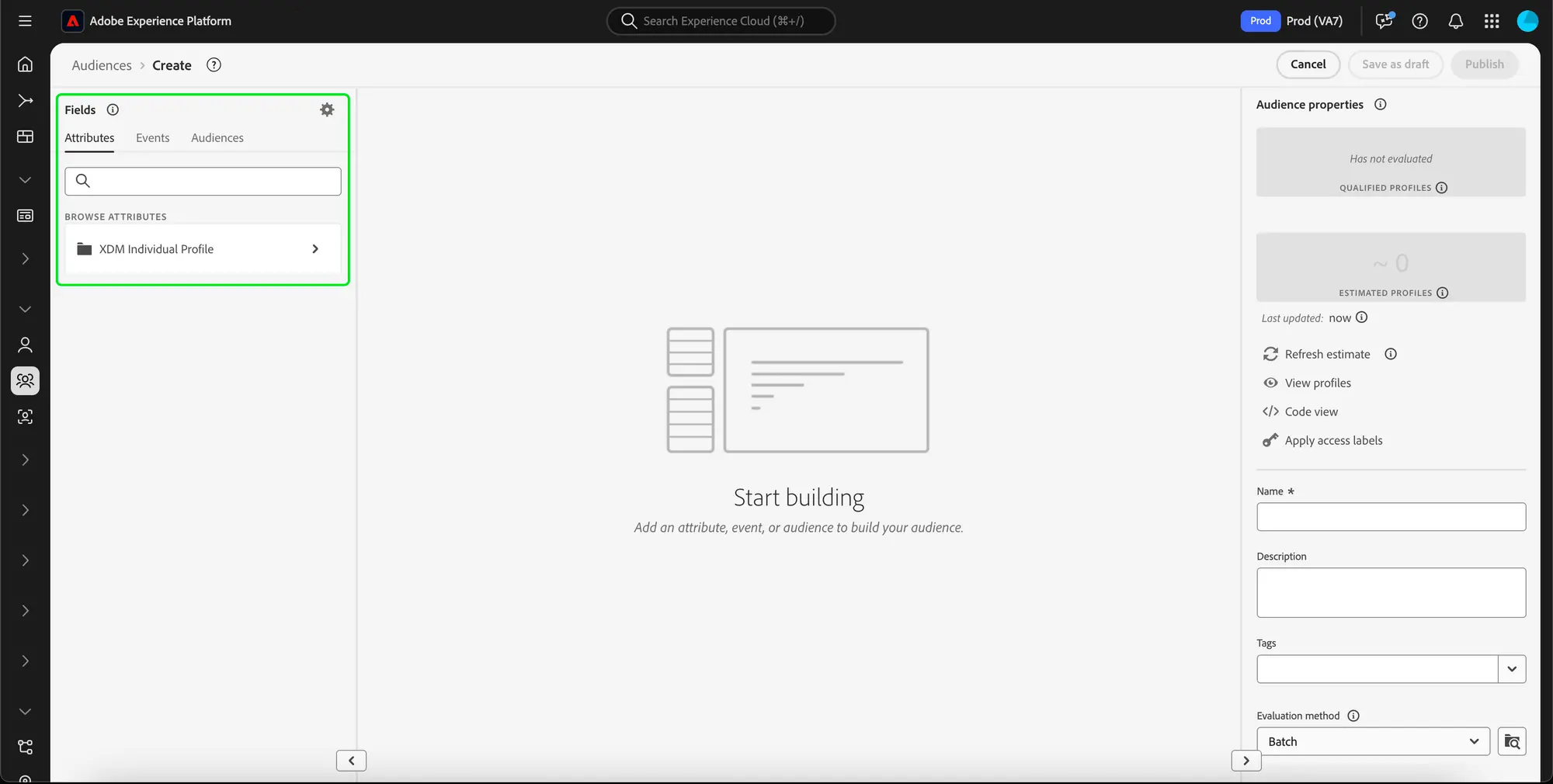
Source: AEP
Activation flows through a destinations catalog covering advertising, analytics, CRM, email marketing, and cloud storage, with a Destination SDK for partners building custom connectors.
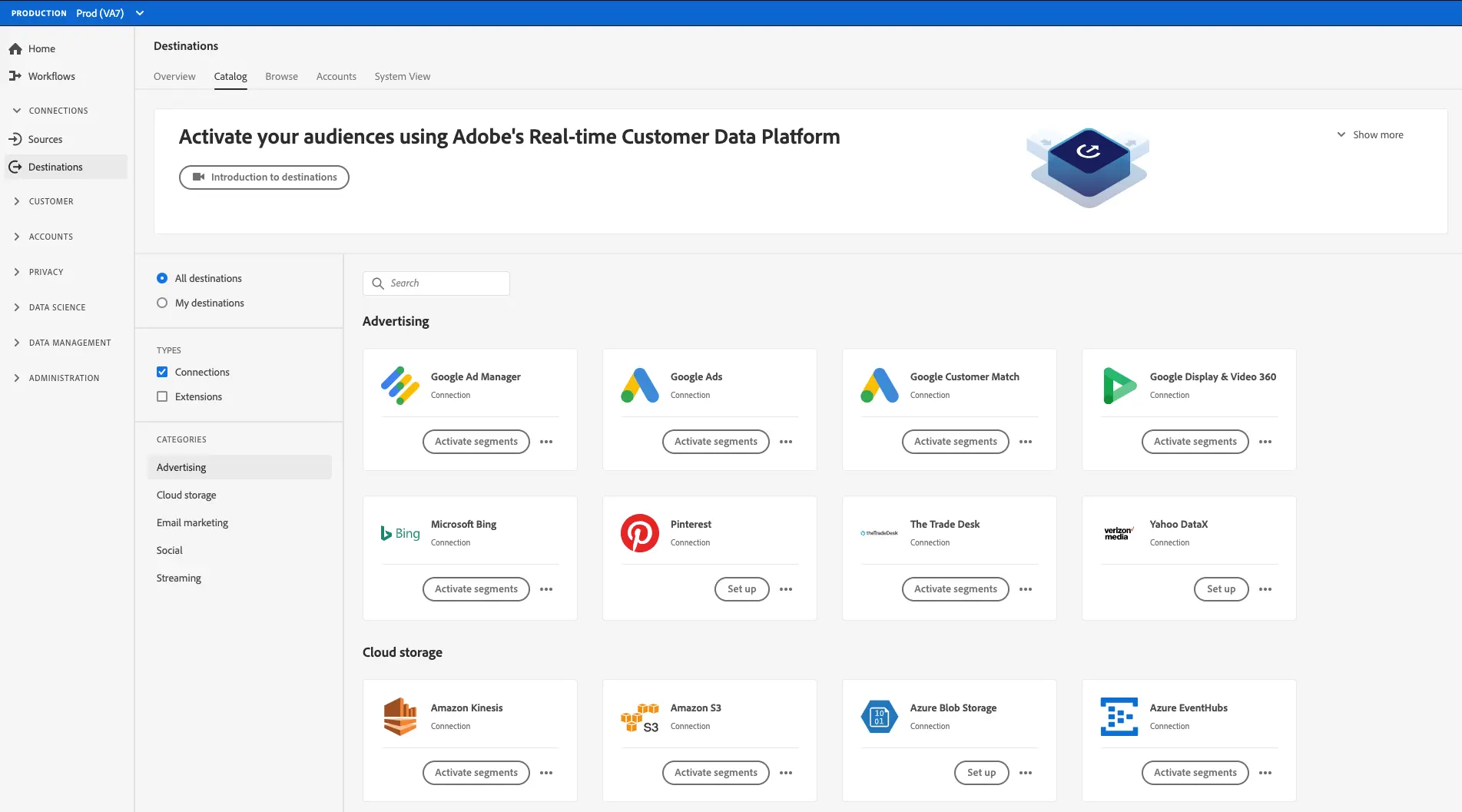
Source: AEP
ZoomInfo builds audiences differently because the starting point is different. Instead of segmenting customers you already know, ZoomInfo identifies prospects you should know. Buyer Intent data tracks signals from 210 million IP-to-Organization pairings to reveal when companies are actively researching solutions in your category.
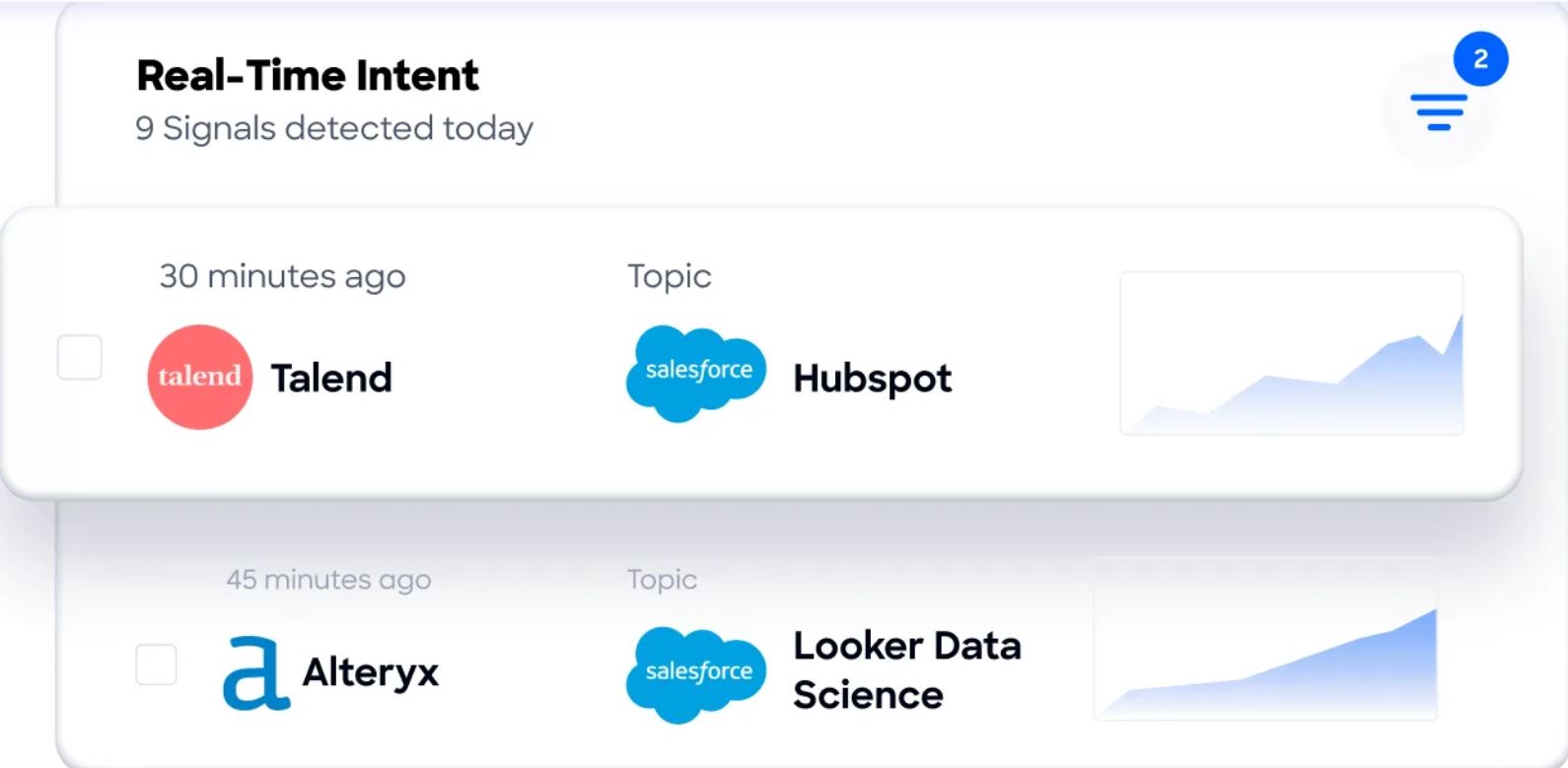
Guided Intent (exclusive to ZoomInfo) identifies topics historically correlated with deal success rather than requiring manual topic selection.
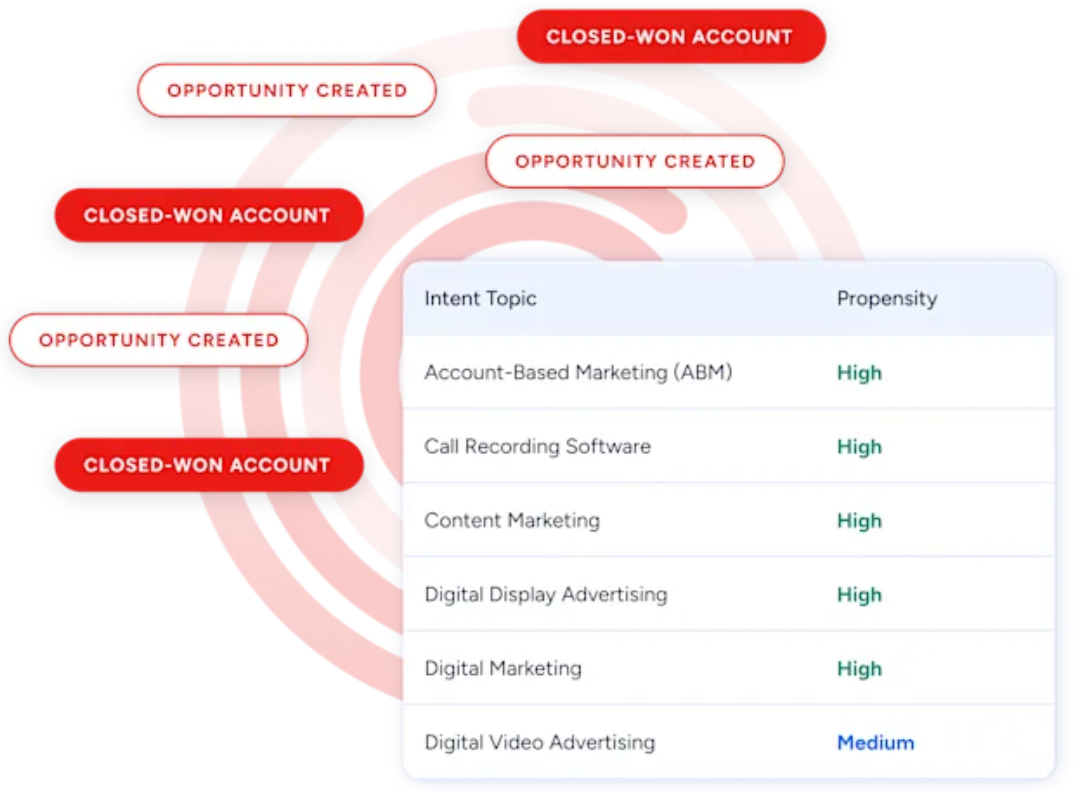
GTM Studio lets marketers describe audiences in natural language, launch multi-channel plays triggered by buyer behavior, and measure pipeline impact. Expansion plays that used to take three weeks now launch in 30 minutes.
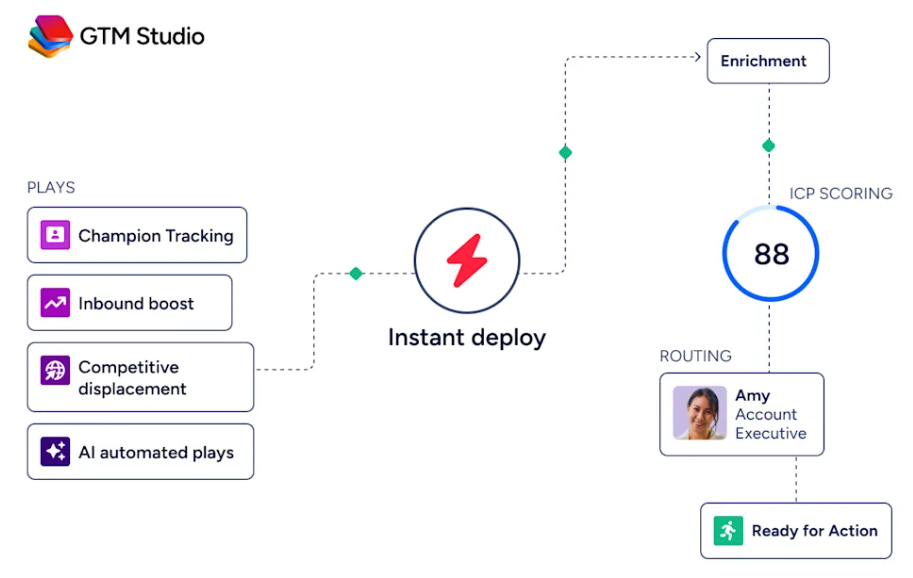
For sellers, GTM Workspace delivers prioritized accounts with AI-drafted outreach tailored to each account's context.
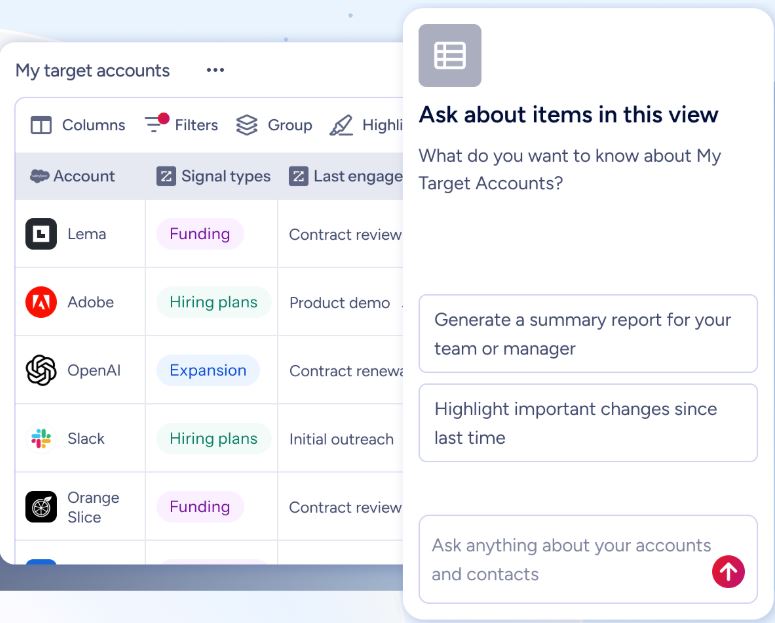
Impartner saw a 45% increase in website engagement and saved 15 hours through automation. "ZoomInfo has literally changed the way we go to market," said Jeremy Melius, Sr. Director of Marketing Operations. (Impartner case study)
AI capabilities point in different directions
All three platforms use AI, but they aim it at different problems.
Amperity's AmpAI is built on the Azure OpenAI Service and embedded across the platform's segment, journey, query, and consumption editors. Marketers can build segments by describing what they want in plain language, and the system generates the underlying logic.
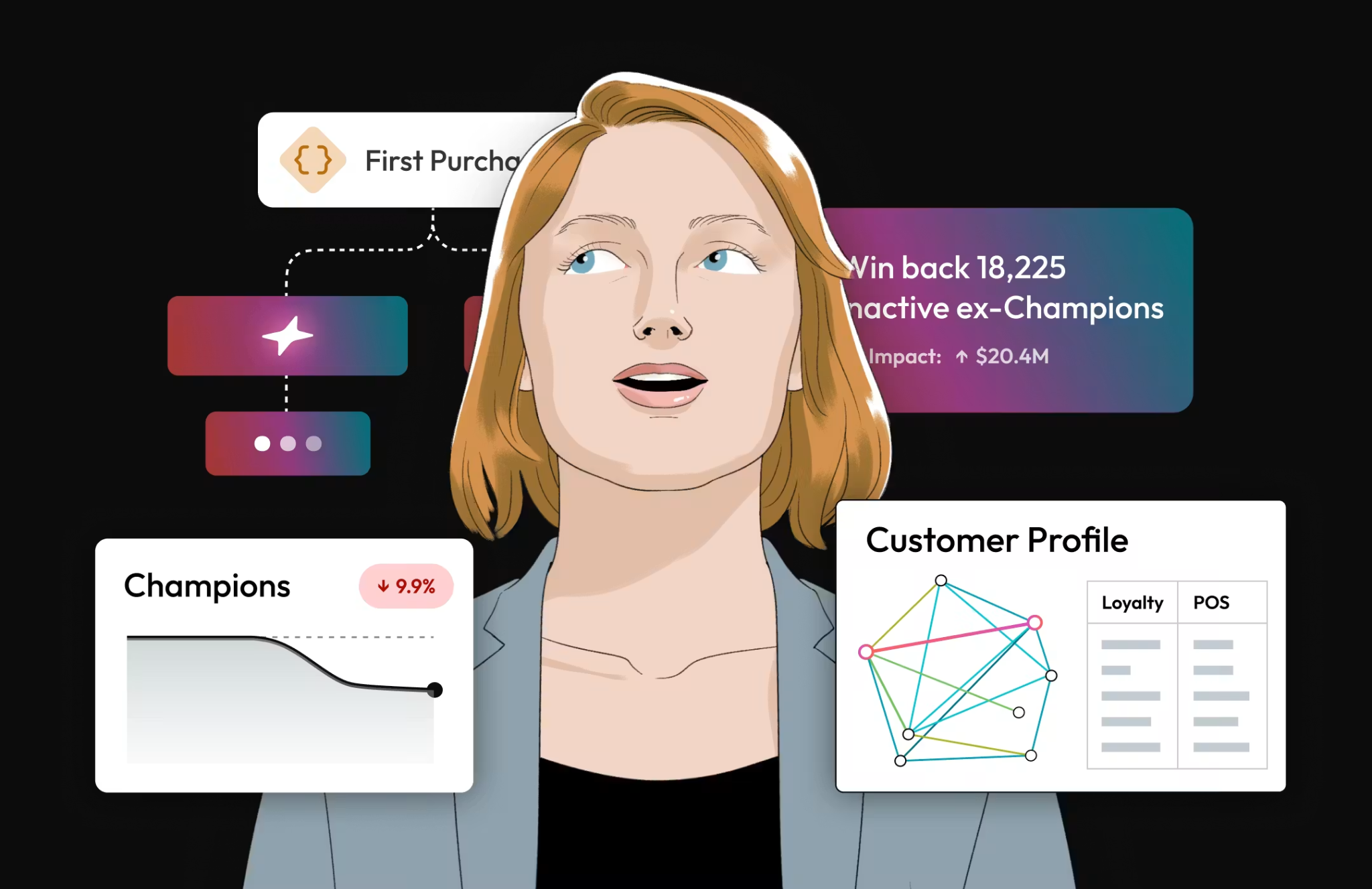
Source: Amperity
Four predictive models (predicted CLV, churn propensity, product affinity, and event propensity) run natively against resolved profiles. Chuck, a command-line AI agent for Databricks, lets data engineers build identity graphs using natural language.
The newest capabilities, including autonomous AI agents that monitor campaign performance and adapt in real time, are still in private beta as of mid-2026. Customers evaluating Amperity for these agentic capabilities are buying a roadmap promise, not a production feature.
AEP anchors its AI strategy on the Agent Orchestrator, announced at Summit 2025. Ten AI agents cover audience creation, journey design, content production, data engineering, experimentation, site optimization, and more.
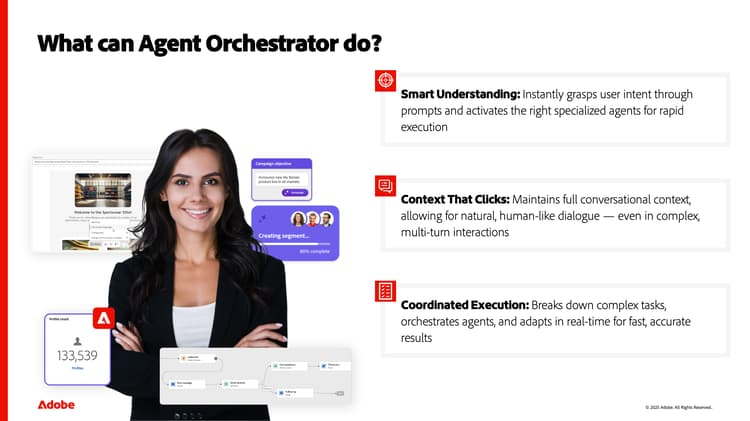
Source: AEP
Adobe Sensei powers Customer AI for churn and propensity scoring, lookalike audience modeling, and anomaly detection in Customer Journey Analytics.
The Agent Orchestrator marks Adobe's shift from managing customer experiences to orchestrating them through AI agents. However, the Agent Orchestrator requires a separate SKU, and several agents remain in preview.
ZoomInfo's AI is built on the GTM Context Graph, which processes 1.5B+ data points daily and tracks how signals connect to deal outcomes.
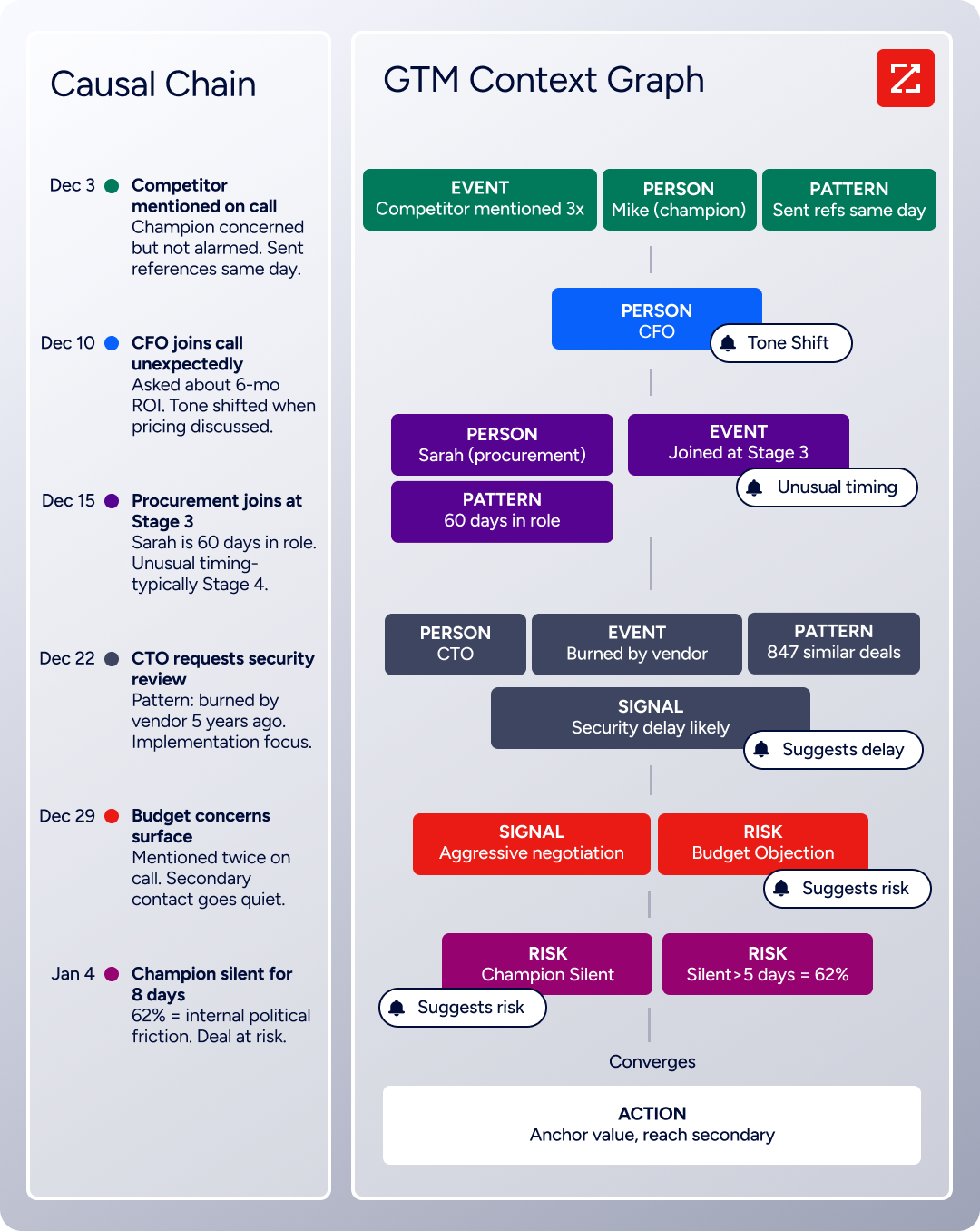
As CPO Dominik Facher writes: "The CRM recorded the state change. It has no record of why it happened." The AI in GTM Workspace (built on Anthropic's Claude) answers three questions for every seller: who to contact, when to engage, and what to say, drawing from CRM history, conversation intelligence, intent signals, and company data at once. T
he distinction matters: Amperity's AI reasons about consumer profiles and segments, AEP's AI automates marketing workflows, and ZoomInfo's AI reasons about go-to-market outcomes.
"That combination of our internal CRM data, external signals, and AI that's given all that context has helped us craft very specific account- and persona-based messages. And people have responded to them right away." Seismic attributed 39% of active pipeline to opportunities identified or influenced by ZoomInfo signals. (Seismic case study)
Pricing models and total cost of ownership
The pricing structures reveal who each platform is built for.
Amperity uses a consumption-based model built around "Amps", a proprietary unit measuring platform usage. Activities that consume Amps include processing records, building segments, running campaigns, and activating data. Storage is metered separately in terabytes, though most customers spend less than 5% of total consumption on storage. Both Standard and Enterprise editions offer identical platform capabilities; the difference is support coverage (6am–6pm PT vs. 24/7) and training access.
No public pricing is disclosed. Premium connectors for advertising platforms like Meta, Google Ads, and TikTok carry an additional flat fee of 25,000 Amps per connector per month. Up to 10% of unused Amps roll over to the next contract term.
AEP pricing is profile-volume-based, metered per 1,000 profiles, with no published rate card. All agreements go through enterprise sales. Real-Time CDP comes in Prime and Ultimate tiers, with Ultimate unlocking advanced source connectors, Destination SDK, and higher data export limits.
A long list of separately priced add-ons includes additional sandboxes, streaming segmentation, computed attributes, Healthcare Shield, Privacy and Security Shield, Data Distiller, and Agent Orchestrator. Implementation services from certified SI partners (Accenture, Deloitte Digital, IBM, EY) routinely add six figures or more.
One Gartner critique: purchasing Adobe's CDP "may also require" an investment in Journey Optimizer, flagging bundle dependency as a concern for buyers wanting modular adoption.
ZoomInfo uses consumption-based pricing scaled around seats and credits. One credit equals one export of a professional or company profile; credits are consumed only when data is exported to a CSV, CRM, or integration, not when searching or viewing. Pricing is custom-quoted across three tiers (Professional, Advanced, Enterprise) for both Sales and Marketing product lines.
ZoomInfo offers a permanent free tier (ZoomInfo Lite with 10 monthly export credits and access to the B2B database) and a 7-day free trial of paid features. Neither Amperity nor AEP offers any self-serve entry point.
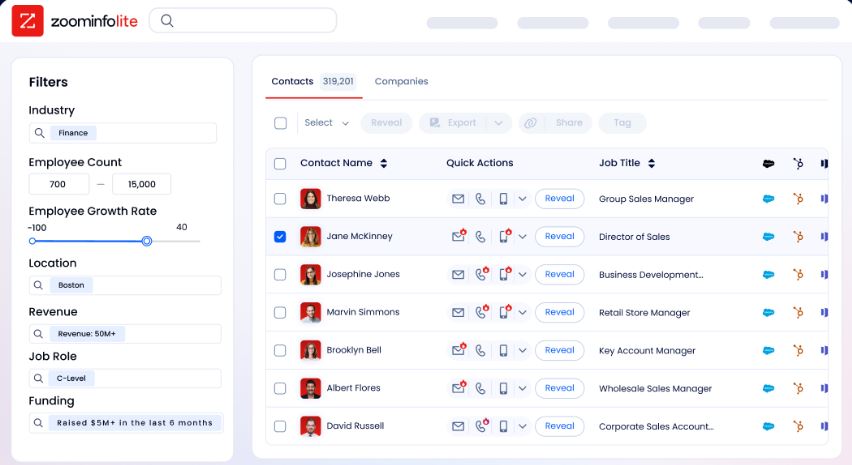
None of these platforms publish dollar amounts. But the access gap is clear: Amperity and AEP require enterprise sales engagements and commitments before you see a single result. ZoomInfo lets you start with Lite for free and evaluate the data before committing.
Implementation complexity and time-to-value
How quickly a platform delivers results determines whether it becomes a strategic asset or a stalled project.
Amperity provides a Learning Lab with role-based training pathways for onboarding.
Organizations without dedicated data engineering capacity will face a steeper ramp.
AEP has the longest path to value. Reviewers describe a steep learning curve requiring training and resource investment before advanced features become usable. Implementation timelines for enterprise deployments routinely run six to eighteen months. The platform is positioned for companies with "well resourced teams, both financially and head count".
XDM schema design alone can take weeks of data engineering effort. Most deployments require a certified SI partner, adding cost and extending timelines further.
ZoomInfo deploys in weeks. CEO Henry Schuck has stated that GTM Workspace "deploys in weeks, not months." ZoomInfo redesigned its onboarding program, producing a 25% improvement in customer satisfaction scores. CRM integrations with Salesforce, HubSpot, and Microsoft Dynamics are native. ZoomInfo University provides role-specific learning paths and product certifications.

For teams that need data now: ZoomInfo users are prospecting within days while AEP implementations are still in schema design.
Integration ecosystems and data access
How each platform connects with your existing tools determines whether it adds value or adds integration work.
Amperity integrates through 200+ pre-built connectors spanning CRM, email, e-commerce, advertising, and data warehouses. Its Amperity Bridge enables zero-copy data sharing with Databricks (via Delta Sharing), Snowflake (via Secure Data Sharing), and Google BigQuery.
The platform recently launched an MCP Server allowing AI assistants like Claude and ChatGPT to query customer data directly. Outbound destinations include Meta Ads, Google Ads, TikTok, Braze, Klaviyo, Salesforce Marketing Cloud, HubSpot, and dozens more.
The Amperity API provides programmatic access to campaigns, segments, workflows, and unified profiles. Third-party iPaaS platforms (Zapier, Make, Workato) are not documented as supported integration paths.
AEP benefits from native integration with Adobe's own application suite. The Adobe Analytics, Marketo Engage, and Adobe Campaign source connectors are built and maintained by Adobe. Outside the Adobe ecosystem, AEP ships connectors for Salesforce, Microsoft Dynamics, and major cloud databases.
The platform is built on RESTful APIs and the open Experience Data Model (XDM), allowing developers and ISVs to build custom integrations. But reviewers on SelectHub note that integrating with non-Adobe software can be difficult.
Consumer-grade automation platforms like Zapier and Make are not documented integration paths; AEP is designed for direct API integration and enterprise pipelines.
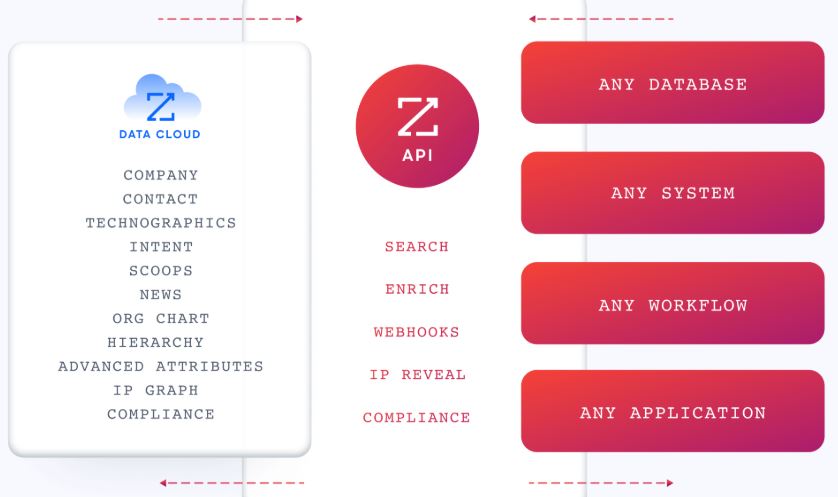
ZoomInfo takes the broadest access approach. The ZoomInfo Marketplace lists 172+ integration partners. Native integrations cover Salesforce, HubSpot, Microsoft Dynamics 365, plus cloud data platforms (AWS, Snowflake, Databricks, Google Cloud). The Enterprise API provides programmatic access with OAuth 2.0 authentication and documented rate limit tiers.
The ZoomInfo MCP server connects directly to Claude, ChatGPT, and any MCP-compatible AI client.
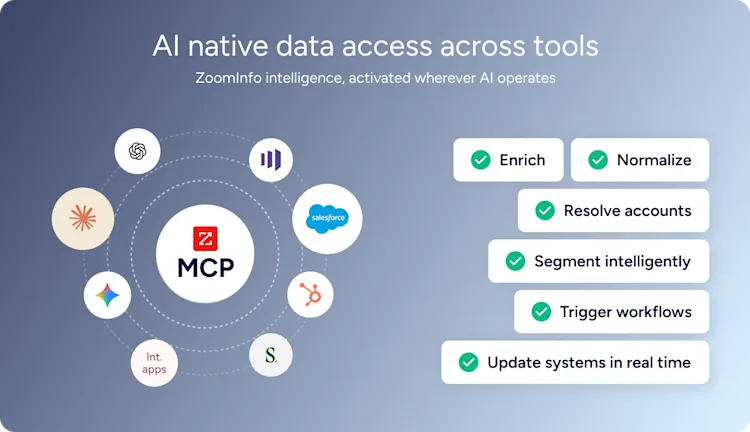
API access is included in all relevant plans, and the Marketplace includes an iPaaS category for workflow automation platforms. The design principle: ZoomInfo's intelligence should be accessible in any tool, not locked inside ZoomInfo's own UI.
"The plug-and-play aspect of the API means I can integrate it very easily into any process and get information at a moment's notice," said Jerry Wilson, Senior Marketing Intelligence Analyst at BDO Canada, who reported an 87% reduction in time spent on data dashboard updates. (BDO Canada case study)
Data governance and compliance
Enterprise buyers in regulated industries need to know how each platform handles data governance.
Amperity holds SOC 2, ISO 27001, HIPAA, GDPR, CCPA, and Australian Privacy Principles certifications. The platform includes a built-in privacy rights workflow engine supporting data subject access requests, record deletion, and selective PII removal for GDPR, CCPA, PIPEDA, and APP compliance.
Role-based access controls and SSO integration protect PII access.
AEP offers the most governance tooling of the three. Its Data Usage Labeling and Enforcement (DULE) framework applies labels at the schema field level, and those labels propagate automatically to every downstream dataset, segment, and activation. Automated policy enforcement blocks policy-violating exports before they occur.
Privacy Service processes deletion and access requests across Adobe Experience Cloud applications from a single interface. The Healthcare Shield add-on extends this to HIPAA readiness. Adobe Experience Cloud holds SOC 2 Type 2, ISO 27001, ISO 27017, ISO 27018, and CSA STAR Level 2 certifications.
ZoomInfo maintains ISO 27001, ISO 27701, SOC 2 Type II, TRUSTe GDPR, and TRUSTe CCPA certifications, all renewed annually. The company is a registered data broker in California and Vermont. A Trust Center documents ZoomInfo's data handling practices. A Compliance API handles data privacy and opt-out management for contacts in the ZoomInfo database.
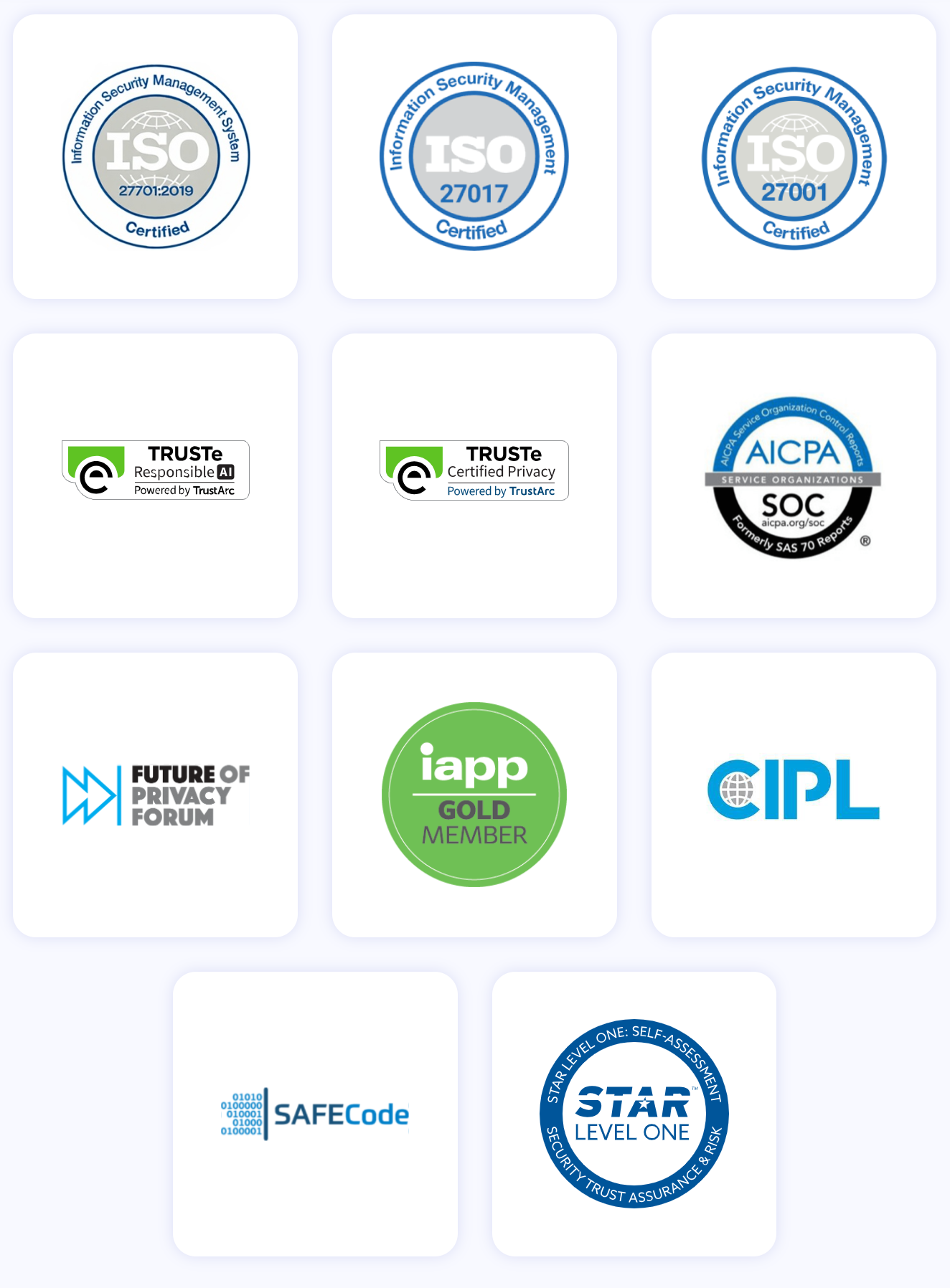
All three platforms take compliance seriously, but the governance focus differs: AEP governs what you can do with data you've collected, Amperity governs unified consumer profiles, and ZoomInfo governs responsible access to third-party B2B intelligence.
Amperity vs. Adobe Experience Platform vs. ZoomInfo: Which should you choose?
The choice isn't about which platform has more features. It's about matching the solution to your actual go-to-market model.
Choose Amperity if:
You're a B2C brand (retail, travel, hospitality, financial services) with fragmented consumer data across many systems
Identity resolution is your primary challenge, and you need to merge millions of messy, overlapping customer records into accurate unified profiles
You have a data lakehouse strategy with Databricks or Snowflake and want zero-copy integration
Your team needs audience building with predictive CLV, churn scoring, and product affinity models
You're willing to invest in an enterprise contract for a platform focused on consumer data unification
Choose Adobe Experience Platform if:
You're a large enterprise already invested in multiple Adobe Experience Cloud products
You need a shared data layer beneath Adobe Analytics, Marketo Engage, Adobe Target, and Journey Optimizer
Your organization has the data engineering resources and budget for a 6–18 month implementation
Data governance with automated policy enforcement is non-negotiable
You want edge-level personalization with sub-millisecond audience evaluation for web experiences
Choose ZoomInfo if:
You're a B2B organization that needs to find and reach buyers, not just unify existing customer records
Verified contact and company data is the foundation your GTM team is missing
You want AI that reasons about deal outcomes (who to contact, when to engage, what to say) rather than just customer profiles
Speed matters: you need a platform that deploys in weeks and produces results immediately
You want intelligence that works everywhere, whether in your CRM, your AI agents, or through built-in tools for sellers and marketers
Try ZoomInfo free to see how it works.
These platforms don't compete directly because they solve different problems for different organizations. Amperity and AEP are built for companies that need to unify first-party customer data at scale, primarily B2C. ZoomInfo is built for B2B teams that need buyer intelligence and the AI to act on it. The right choice depends on your go-to-market model, not a feature checklist.
Amperity vs. Adobe Experience Platform vs. ZoomInfo FAQ
What is the main difference between Amperity, Adobe Experience Platform, and ZoomInfo?
Amperity is a customer data platform specializing in AI-powered identity resolution for B2C consumer brands, merging fragmented records from loyalty programs, e-commerce, POS, and CRM systems into unified customer profiles. Adobe Experience Platform is the enterprise data infrastructure layer beneath Adobe's Experience Cloud, centralizing customer data into real-time profiles for personalization and journey orchestration.
ZoomInfo is a B2B go-to-market intelligence platform providing verified contact and company data, buyer intent signals, and AI-powered execution tools for sales and marketing teams.
Which platform is best for B2B companies?
ZoomInfo is designed for B2B go-to-market. It provides 500M contacts, 100M companies, and 135M+ verified phone numbers alongside buyer intent data and AI sales execution through GTM Workspace and GTM Studio. Amperity has no B2B or account-based marketing capabilities.
Adobe Experience Platform supports B2B use cases through its Real-Time CDP B2B Edition and Journey Optimizer B2B Edition, but it targets B2C customer experience management and requires a large implementation investment.
How do pricing models compare across the three platforms?
All three use custom-quoted enterprise pricing. Amperity charges based on consumption units called Amps, which measure platform activity like processing records, building segments, and activating data. Adobe Experience Platform prices per 1,000 customer profiles with separately priced add-ons for features like Healthcare Shield, Data Distiller, and Agent Orchestrator.
ZoomInfo uses consumption-based pricing around seats and credits, where one credit equals one data export. ZoomInfo is the only platform offering a permanent free tier (ZoomInfo Lite) and a 7-day trial.
Which platform has the strongest identity resolution?
Amperity leads in first-party consumer identity resolution. Its patented Stitch engine runs up to 45 AI models using both probabilistic and deterministic matching, and Gartner has noted that no platform matches its ability to probabilistically link records. Adobe Experience Platform uses deterministic identity stitching based on observed co-occurrences of identifiers during authenticated events.
ZoomInfo doesn't resolve internal customer records but maintains the largest verified B2B contact database in the market, with up to 95% accuracy.
Which platform is fastest to implement?
ZoomInfo deploys in weeks with native CRM integrations for Salesforce, HubSpot, and Microsoft Dynamics. Its redesigned onboarding program produced a 25% improvement in customer satisfaction scores. Amperity's time-to-value varies: Virgin Atlantic unified profiles in under four days, though enterprise deployments with complex data environments take longer.
Adobe Experience Platform has the longest implementation timeline, typically six to eighteen months, requiring XDM schema design and often a certified systems integrator partner.
Can these platforms work together?
Yes. They serve complementary functions. A B2B organization could use ZoomInfo for prospecting, intent signals, and sales execution while using Amperity or AEP for customer experience personalization and retention. Amperity lists Adobe Marketo Engage as a destination connector.
ZoomInfo integrates with Salesforce, HubSpot, Snowflake, and other CRM and marketing tools that connect to both CDPs. The platforms address different stages and audiences in the customer lifecycle.
Which platform has the strongest AI capabilities?
Each platform's AI serves a different purpose. Amperity's AmpAI enables natural-language segment building and includes four predictive models for CLV, churn, product affinity, and event propensity, with autonomous AI agents in private beta. Adobe's Agent Orchestrator features ten AI agents for audience creation, journey design, content production, and more, though several remain in preview and require a separate SKU.
ZoomInfo's AI, powered by the GTM Context Graph processing 1.5B+ data points daily, reasons across CRM data, conversation intelligence, and third-party signals to identify which accounts to target and why deals move or stall.
What analyst recognition does each platform have?
Amperity was named a Niche Player in the Gartner Magic Quadrant for Customer Data Platforms in 2026, with Gartner praising its identity resolution as unmatched. Adobe has been a Leader in the Gartner Magic Quadrant for Digital Experience Platforms for eight consecutive years, though its CDP was moved from Leader to Visionary in the 2025 CDP Magic Quadrant.
ZoomInfo is a Leader in the Gartner Magic Quadrant for ABM Platforms for two consecutive years (2024 and 2025), a Leader in the Forrester Wave for Intent Data Providers B2B, and the only vendor positioned in the Gartner Customers' Choice quadrant in 2025 with a 4.7 out of 5.0 average rating.
More Amperity comparisons and breakdowns:
