
Bigtincan is a leading revenue enablement platform. Recognized as a Gartner MQ Leader for Revenue Enablement Platforms (2025) and a Forrester Wave Leader (Q3 2024), it combines content management, sales readiness, buyer engagement, and its GenieAI suite into a single system for large, field-based enterprise sales teams.
But as your go-to-market needs evolve, Bigtincan's enterprise architecture, long implementation timelines, and contact-based pricing may create friction. Teams that need faster results, specialization in one enablement area, or a lower entry point often look elsewhere. Common reasons include:
Accessing B2B data and AI intelligence to fuel prospecting, pipeline generation, and account-based selling
Getting content governance with revenue-attributed analytics in regulated industries
Implementing structured, plays-based guided selling for scaling GTM teams
Building a coaching-first enablement program with AI roleplay that frees managers from bottleneck coaching
Measuring rep readiness against behavioral benchmarks tied to revenue outcomes
Deploying verified, governed knowledge that reaches reps inside the tools they already use
Delivering AI-powered enablement inside the workflow without requiring a portal visit
This is not about finding a "better" platform. It is about finding the right fit for how your revenue team works. Some organizations will use these tools alongside Bigtincan to strengthen specific capabilities; others will replace it with a focused stack.
The Best Bigtincan Alternatives
Best Alternative for AI-Powered GTM Intelligence and B2B Data We chose ZoomInfo because it delivers the largest B2B data platform (500M contacts, 100M companies), combined with an AI-powered GTM Context Graph that helps revenue teams identify, prioritize, and engage buyers with full account context. |
|---|
Best Alternative for Enterprise Content Governance and Revenue Attribution We chose Seismic because it offers content governance infrastructure and revenue-attributed analytics built for regulated industries that need compliance at the point of content creation and distribution. |
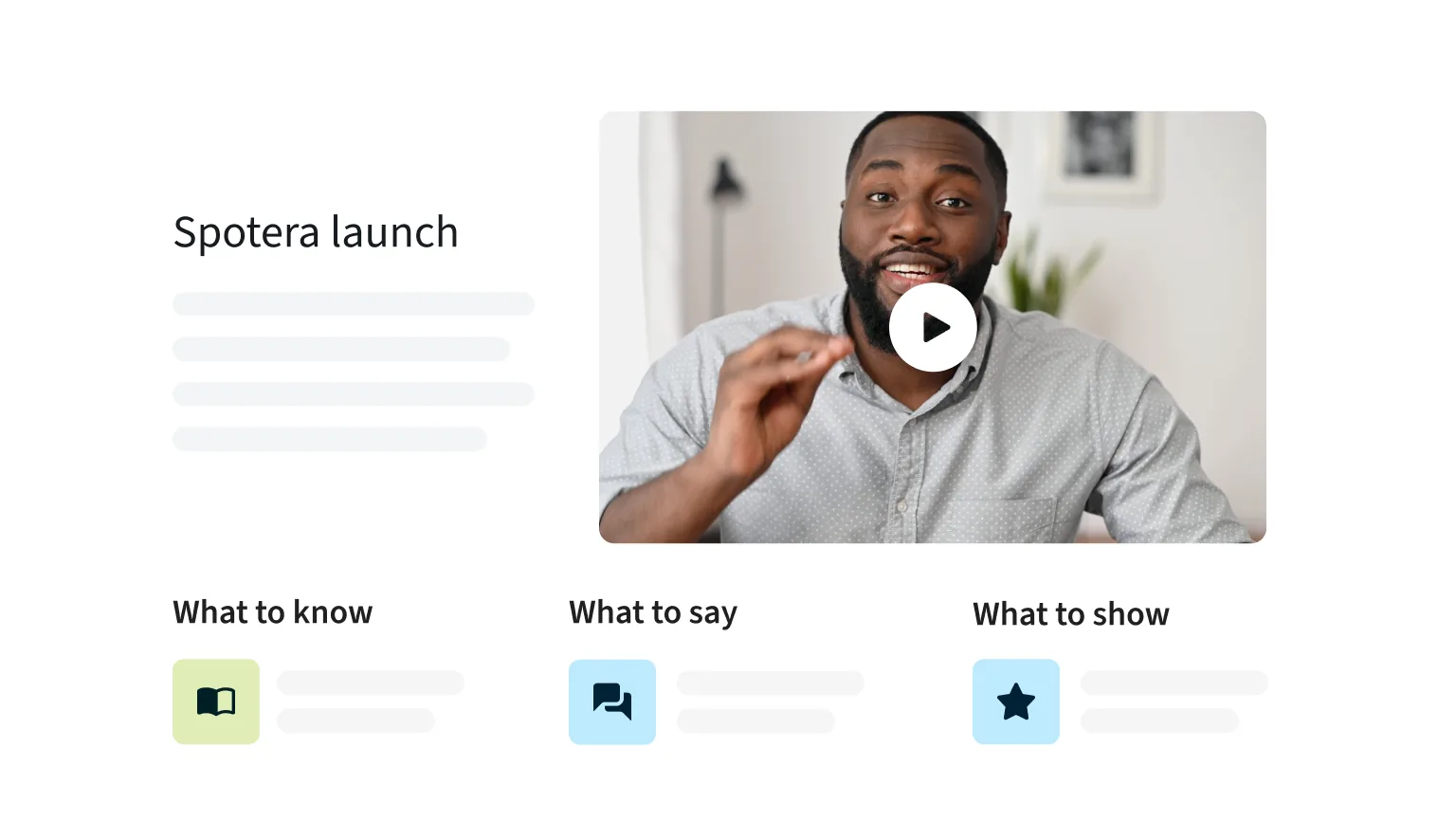
Best Alternative for Guided Selling and Mid-Market Enablement We chose Highspot because its plays-based guided selling approach tells reps exactly what to say, share, and do at every deal stage, with a tiered pricing model that gives scaling GTM teams an accessible entry point. |
Best Alternative for Coaching-First Revenue Enablement We chose Allego because its coaching architecture is native to the platform, with a Live Dialog Simulator that generates lifelike video avatar conversations for AI roleplay, and all AI features included at no additional charge. |
Best Alternative for Revenue Readiness Measurement and Rep-to-Revenue Attribution We chose Mindtickle because its Ideal Rep Profile framework benchmarks every seller against top-performer behaviors and links coaching activity directly to pipeline outcomes, giving enablement leaders CFO-ready proof of training ROI. |
Best Alternative for Verified Knowledge Without Enterprise Implementation Overhead We chose Guru because it delivers verified, governed knowledge inside the tools reps already use, with no content migration prerequisite and implementation measured in days rather than months. |
Best Alternative for In-Workflow AI Enablement Without Portal Friction We chose Spekit because it delivers coaching, content, and deal intelligence directly inside Salesforce, Gong, and Gmail via a Chrome extension, eliminating the portal adoption problem that undermines many enablement investments. |
What is Bigtincan?
Source: Bigtincan
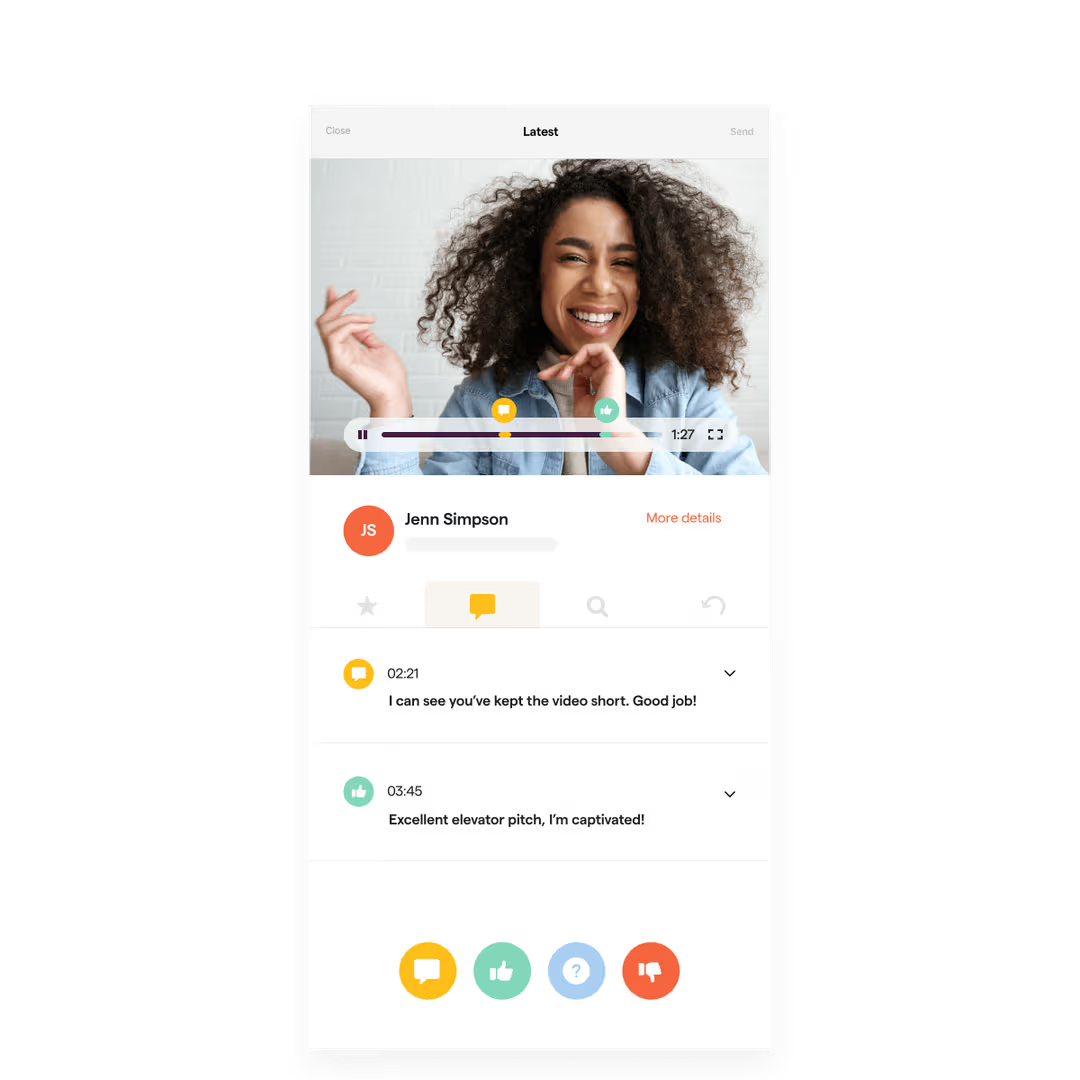
Bigtincan is a revenue enablement platform whose AI connects content, readiness, engagement, and intelligence into a single solution for customer-facing teams. After its merger with Showpad in October 2025, the combined entity calls itself a "revenue effectiveness solution with fully integrated AI."
Its key features include:
Readiness: AI-driven training and coaching with CoachingAI for pitch scoring, RolePlayAI for AI buyer simulations, and AuthoringAI for multilingual content creation
Content: Centralized content management with SearchAI for hallucination-safe semantic search, version control, offline access, and AR/VR interactive experiences
Engagement: Digital Sales Rooms, buyer attention tracking in video calls via MeetingsAI, Conversation Intelligence with VoiceVibes, and Relationship Intelligence via LinksWithin
GenieAI: A full AI suite spanning Genie Assistant, SearchAI, RolePlayAI, CoachingAI, AuthoringAI, and MeetingsAI, governed by SecureGLP for enterprise data security
Apple Enterprise Partnership and device-agnostic offline access for field sales teams
100+ technology integrations including Salesforce, Microsoft Dynamics, HubSpot, Veeva Vault, and Microsoft 365 Copilot
When a company deploys Bigtincan across its revenue organization, everything connects: reps access approved, version-controlled content from any device (even offline), practice pitches with AI coaching that scores vocal delivery and emotional tone, engage buyers through tracked Digital Sales Rooms, and receive automated meeting summaries logged directly to CRM. The platform is particularly strong for regulated industries like life sciences and financial services, where compliance-controlled content sharing and audit trails are essential.
However, Bigtincan's enterprise-scale implementation (roughly three months on average, with an 18-month ROI timeline), sales-assisted-only pricing with no published tiers, and content-migration-first architecture may not suit every revenue team. That is why we focused on platforms that excel where specific teams need specialization or faster time to value.
Looking for B2B intelligence to power your revenue team? ZoomInfo's GTM Context Graph fuses 500M+ contacts with your CRM, conversation intelligence, and buyer signals to reveal not just what's happening in your deals, but why. Learn more about ZoomInfo.
How We Curated Our List of Bigtincan Alternatives
After researching Bigtincan and the revenue enablement market, we found that Bigtincan's all-in-one field-sales approach, while effective for large distributed enterprise teams, may not fit every go-to-market organization. We focused on platforms that excel in specific areas where revenue teams often need more capability:
Fueling prospecting and pipeline with B2B data and AI-powered GTM intelligence
Governing content at regulatory grade with revenue-attributed analytics tied to closed deals
Guiding reps through structured sales plays with accessible mid-market pricing
Scaling coaching throughput with AI roleplay that frees managers from one-on-one bottlenecks
Measuring rep readiness against behavioral benchmarks with CFO-ready revenue attribution
Delivering verified, governed knowledge inside existing tools without enterprise implementation overhead
Reaching reps with AI-powered enablement inside their workflow, not a separate portal
Each tool on this list leads in one of these areas. You might use some alongside Bigtincan to strengthen specific capabilities, or replace it entirely with a focused stack.
DISCLAIMER: We are not covering every tool in the market! Our focus is on highlighting the best alternatives that address some of Bigtincan's limitations for various use cases. The goal is to provide insights into tools that serve specific revenue team needs. |
|---|
1. ZoomInfo: Best Alternative for AI-Powered GTM Intelligence and B2B Data
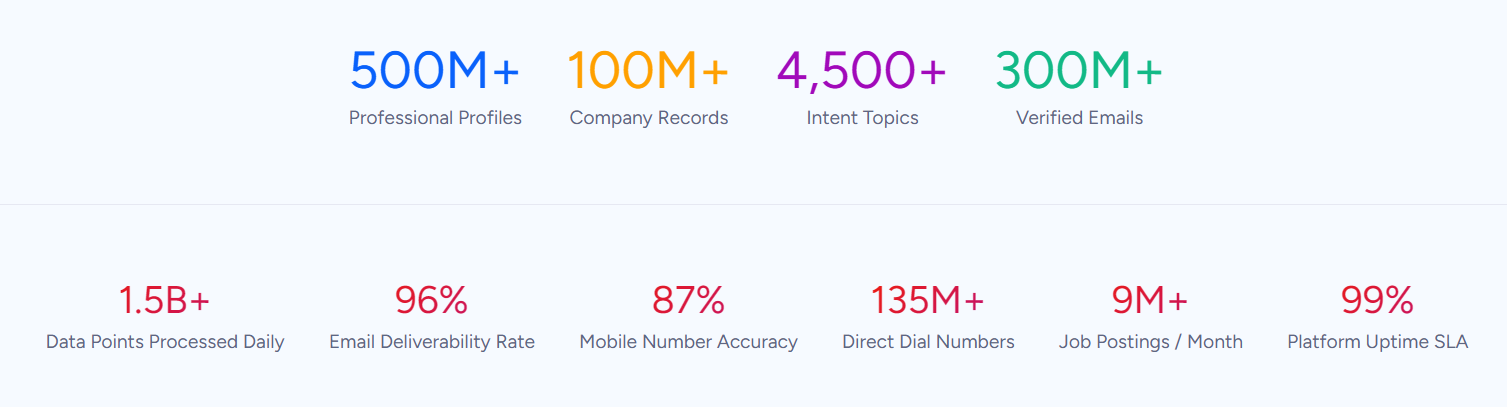
ZoomInfo is an all-in-one AI GTM platform built on a data foundation of 500M contacts, 100M companies, 135M+ verified phone numbers, and 200M+ verified business email addresses. By fusing this data with your CRM records, conversation transcripts, and behavioral signals, ZoomInfo's GTM Context Graph (which processes 1.5B+ data points daily) reveals the full context of your accounts.
Its key capabilities include:
B2B data: 500M contacts, 100M companies, 135M+ verified phone numbers, 120M direct-dial phone numbers, and 200M+ verified business email addresses, verified by 300+ human researchers with up to 95% accuracy on first-party data
GTM Context Graph: An intelligence layer that fuses ZoomInfo's third-party data with your CRM records, conversation intelligence, and behavioral signals to capture not just what happened in a deal, but why it happened
Buyer Intent Data: Tracks signals from 210 million IP-to-Organization pairings and 6 trillion+ new keyword-to-device pairings sourced monthly, with Guided Intent that identifies topics historically correlated with deal success
Universal access: Intelligence delivered through GTM Workspace for sellers, GTM Studio for marketers and RevOps, and APIs and MCP for any third-party tool or AI agent
While Bigtincan focuses on equipping reps with content, coaching, and buyer engagement tools, ZoomInfo solves a different problem: identifying which accounts to pursue, understanding why deals move or stall, and ensuring every rep walks into every conversation with full buyer context.
The two platforms address different layers of the revenue stack, making ZoomInfo both a complement and a broader intelligence platform for teams that have outgrown point-solution data providers.
Why Choose ZoomInfo Over Bigtincan for GTM Intelligence
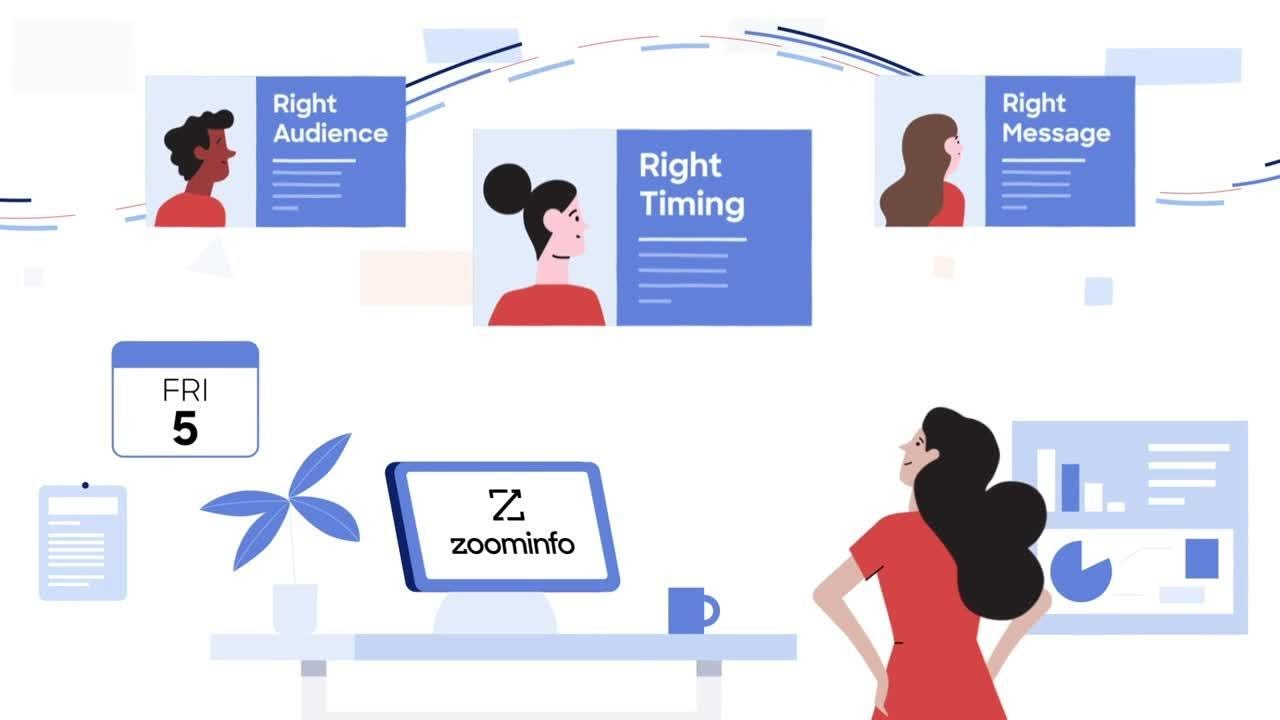
Bigtincan helps your reps present well once they are in a conversation. ZoomInfo ensures they are having the right conversations with the right people at the right time, with intelligence no content library can provide.
B2B Data at a Scale No Enablement Platform Can Match
Bigtincan excels at managing and delivering content to your sales force, but it does not provide the buyer data your team needs to identify, prioritize, and reach accounts. Revenue teams using Bigtincan still need a separate source for prospect contact information, company intelligence, technographics, and org charts.
ZoomInfo operates the largest B2B data platform in the industry, spanning three dimensions: identity data (who buyers are and how to reach them), company context (100M companies with firmographics, org charts, and technographics covering 30,000+ technologies across 200+ categories), and dynamic signals that reveal when accounts are actively in-market.
This data advantage is not self-reported.
In a Fortune 500 competitive RFP analyzing 25 million contacts across vendors, the independent consultant concluded that "no other competitor came even close." ZoomInfo has been named a Leader in the Forrester Wave for Intent Data Providers (Q1 2025), a Leader in the Gartner MQ for ABM Platforms for two consecutive years, and earned 133 No. 1 rankings on G2.
Source: ZoomInfo
ZoomInfo in Action: Your SDR team opens GTM Workspace on Monday morning to a prioritized list of accounts showing intent signals for your product category. Each account comes with verified direct dials, business emails, org charts showing the buying committee, and technographic data revealing what tools they use. Instead of spending hours researching accounts and hunting for contacts, your reps are having informed conversations within minutes, addressing the specific concerns the intelligence layer identified as relevant.
"ZoomInfo gives us the information we need to execute. We don't have to go through and spend our time digging. It's already there, so we can be three steps ahead." (Vensure)
The GTM Context Graph: Intelligence That Understands Why Deals Move
Bigtincan's analytics track content engagement at the deal level and can connect coaching scores to bookings through CRM Scorecard integration. These are valuable signals. But content engagement and pitch quality are downstream indicators; they tell you what happened during a selling interaction, not why the deal is moving (or stalling) in the first place.
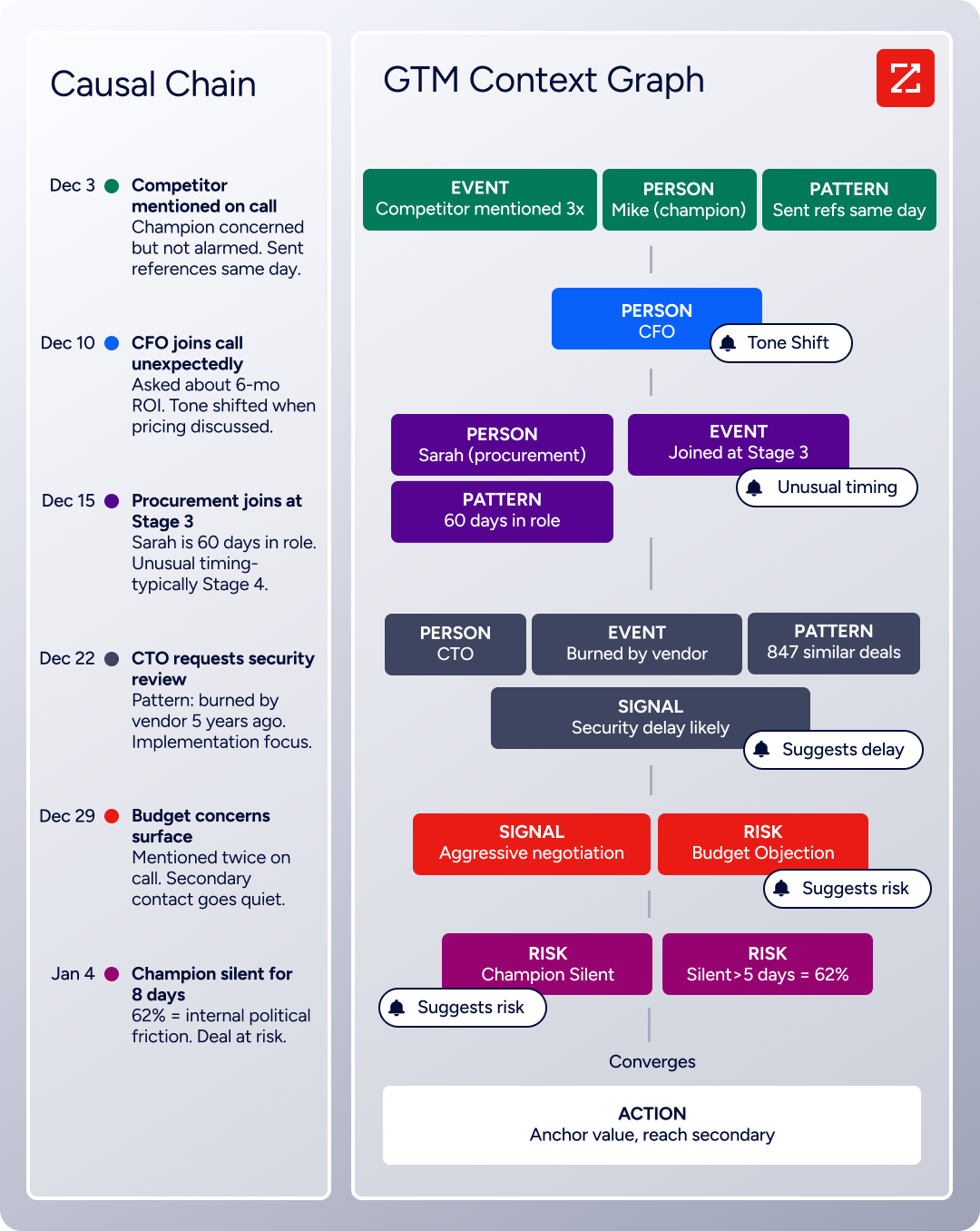
ZoomInfo's GTM Context Graph operates at a different level. It fuses ZoomInfo's third-party data with your CRM records, conversation intelligence from calls and meetings, email interactions, and behavioral signals into a single intelligence layer.
The result: AI that does not just know the CFO joined the last call, but reasons that executive sponsorship entering at this stage, combined with ROI-focused questions, matches the pattern behind closed-won deals in your segment. That reasoning flows into every downstream action: AI-drafted outreach that addresses the specific concern raised on the call, plays targeting accounts whose signal combinations match your actual win patterns, and forecasts weighted by buying evidence rather than stage labels.
As ZoomInfo's Chief Product Officer Dominik Facher writes: "The CRM recorded the state change. It has no record of why it happened." The GTM Context Graph captures that decision context and makes it machine-readable so your AI tools can reason about it.
Source: ZoomInfo
ZoomInfo in Action: Your account executive is preparing for a follow-up call with a prospect whose deal has been stuck at Stage 3 for two weeks. Instead of reviewing CRM notes and guessing what to do next, GTM Workspace shows a complete picture: the VP of Finance joined the last call and asked about six-month ROI (captured by conversation intelligence), the company just hired three new VPs (detected by ZoomInfo's data engine), and their research activity on your competitor's pricing page spiked this week (surfaced by intent signals). The AI drafts a follow-up email that addresses the CFO-level ROI concern directly, referencing a case study with a similar company. The rep walks into the call three steps ahead.
"That combination of our internal CRM data, external signals, and AI that's given all that context has helped us craft very specific account- and persona-based messages. And people have responded to them right away." (Seismic, Toby Carrington, Chief Business Officer)
Universal Access: Intelligence Available in Any Tool, Any Workflow
Bigtincan delivers its value through a proprietary platform that reps must navigate to.
ZoomInfo takes a different approach: the same intelligence is available in GTM Workspace for sellers, in GTM Studio for marketers and RevOps, and through APIs and MCP in any third-party tool or AI agent.
A seller can open GTM Workspace to a prioritized account feed with AI-drafted outreach. A marketer in GTM Studio can describe an audience in plain language, launch a multi-channel play, and watch pipeline impact in real time, with no engineering ticket required. An engineer can plug the same GTM Context Graph into Claude, ChatGPT, or a proprietary internal tool via MCP, getting the same intelligence that powers ZoomInfo's own products. The ZoomInfo MCP server is listed in the Claude directory and currently supports Claude and ChatGPT.
API access is included in all relevant plans, and ZoomInfo has 120+ partner integrations in its App Marketplace spanning CRM, marketing automation, sales engagement, data warehouses, and AI platforms.
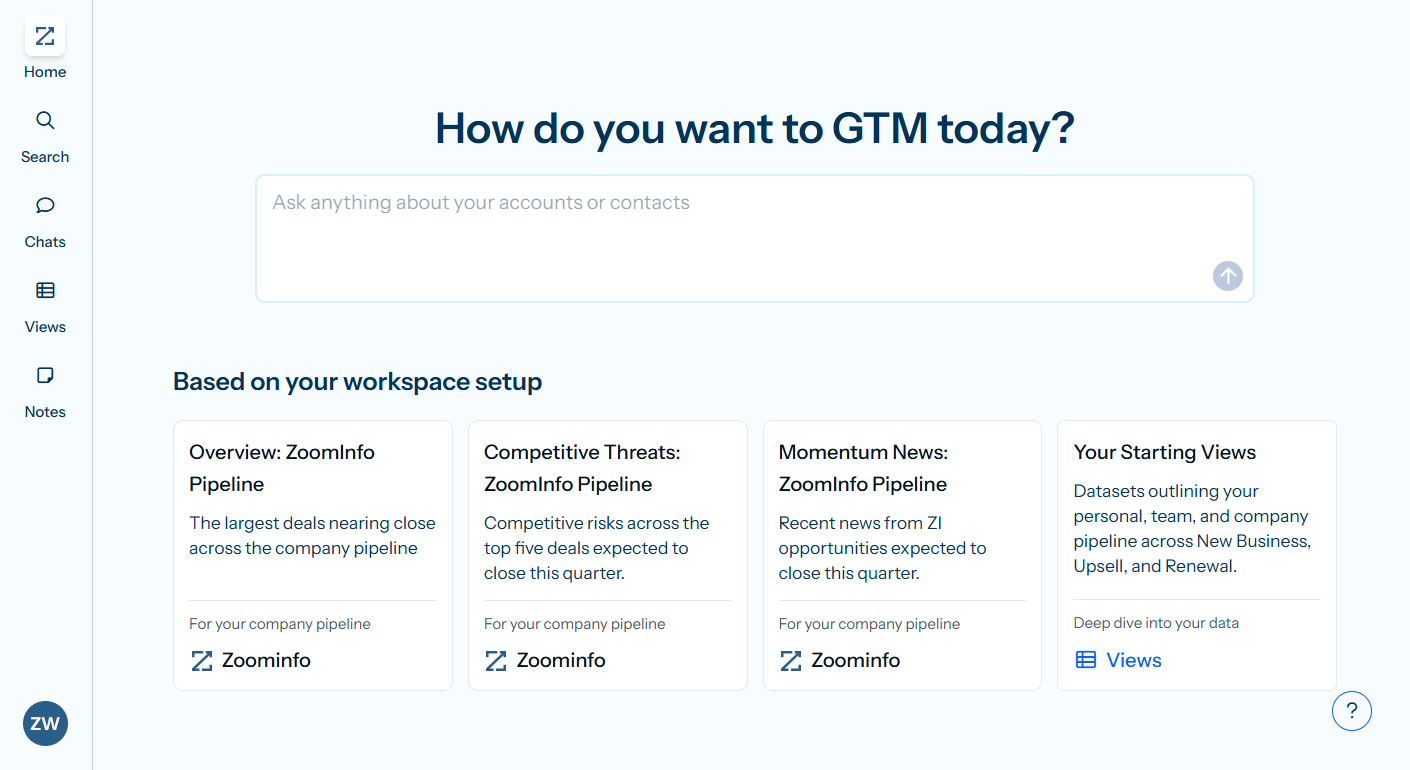
ZoomInfo in Action: Your RevOps team uses GTM Studio to build an audience of companies matching your ICP that show intent signals for your category and recently hired a new VP of Sales. The play launches automatically: display ads hit the account, a personalized email sequence triggers in Salesloft, and the SDR sees the account surface in GTM Workspace with a pre-drafted message addressing the new VP's likely priorities. Meanwhile, your data engineering team has connected ZoomInfo's API to your internal propensity model in Snowflake, enriching every account with firmographics and technographics. One intelligence layer. Every team. Every tool.
NOTE: We also evaluated other B2B data and intelligence providers. Apollo.io offers accessible pricing and a combined prospecting and engagement platform, making it a practical choice for SMB teams building their first outbound motion. Cognism is particularly strong for European market coverage, with phone-verified mobile numbers and GDPR compliance. However, ZoomInfo's data scale, the GTM Context Graph's reasoning capability, and universal access through APIs, MCP, GTM Workspace, and GTM Studio make it the strongest choice for enterprise revenue teams that need both the broadest data foundation and the most capable intelligence layer.
ZoomInfo Pricing
ZoomInfo uses consumption-based pricing with custom quotes. Pricing scales around enterprise license agreements, data access, API consumption, and AI activity.
The platform is organized into three product lines:
Sales plans (Professional, Advanced, Enterprise): From contact and company data to AI-driven account prioritization, buyer intent signals, and AI-generated account summaries
Marketing plans (Marketing Demand, ABM Lite, ABM Enterprise): From audience targeting and intent data to unlimited Display Network campaigns and AI-powered buying group identification
Chorus (conversation intelligence) and Chat (data-powered website chat) are available as standalone products
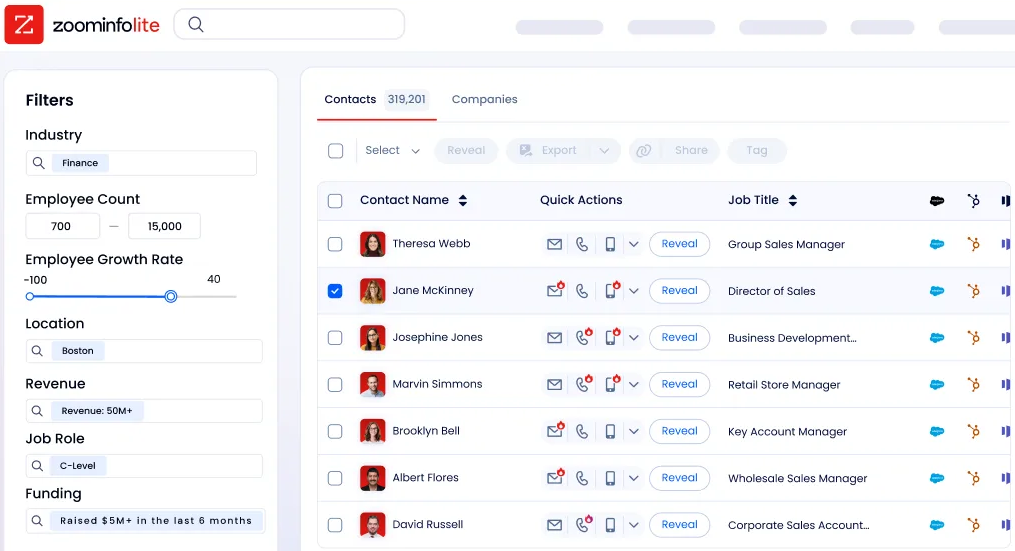
ZoomInfo Lite is a permanent free tier (no credit card, no time limit) that includes access to ZoomInfo's B2B database, 10 monthly export credits, individual and company searches, the ReachOut Chrome Extension, WebSights Lite, and HubSpot integration.
ZoomInfo also offers a 7-day free trial of its full platform, separate from the permanent Lite tier.
Source: ZoomInfo
Who Should Use ZoomInfo?
Choose ZoomInfo if:
Your revenue team's primary bottleneck is identifying and reaching the right buyers with verified contact data, and you need direct dials that actually ring and emails that actually land rather than a 30% bounce rate that damages your sender reputation.
You want AI that understands why your deals move or stall, not just what content buyers clicked, and you need that intelligence to flow into AI-drafted outreach, account prioritization, and pipeline forecasting.
You are building an outbound-first or account-based selling motion and need B2B data (500M contacts, 100M companies) combined with buyer intent signals, technographics, and org charts in a single platform.
You want universal access to your intelligence layer, whether through ZoomInfo's native products, your existing CRM and engagement tools, or custom AI agents via API and MCP, without being locked into any single front-end.
You work in enterprise or upper mid-market B2B and need a platform with proven customer outcomes: Seismic attributed 39% of active pipeline to ZoomInfo signals, Snowflake achieved 200% higher conversion rates on top-scoring accounts, and Databricks reached prospects 50% faster.
Ready to see which accounts are in-market for your solution right now? Start your free trial or request a demo to see the full platform in action.
2. Seismic: Best Alternative for Enterprise Content Governance and Revenue Attribution
Source: Seismic
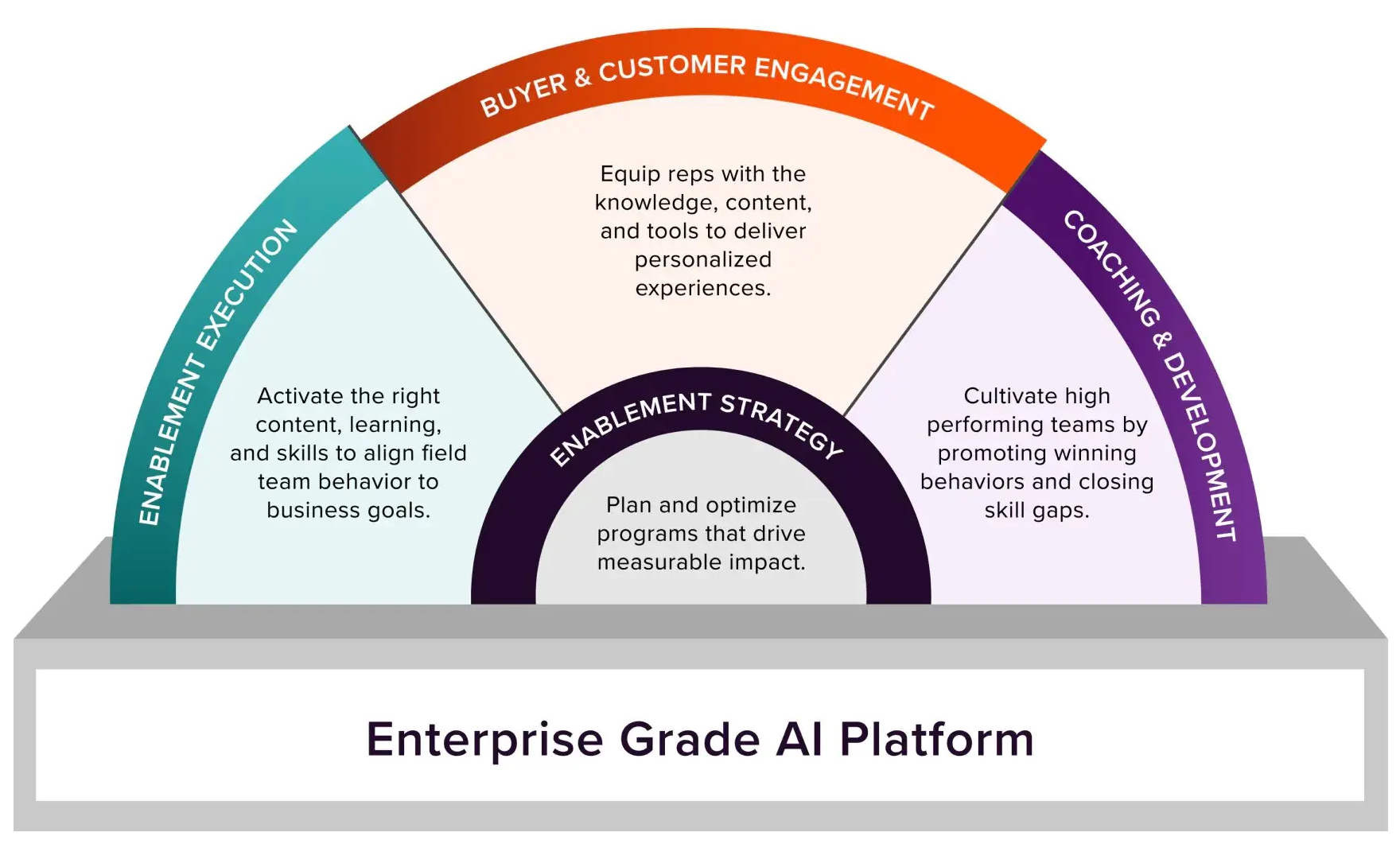
Seismic is a revenue enablement platform anchored around the Seismic Enablement Cloud, a system that brings together sales content management, learning and coaching, meeting intelligence, digital sales rooms, and program strategy in one AI-powered layer.
Its key capabilities include:
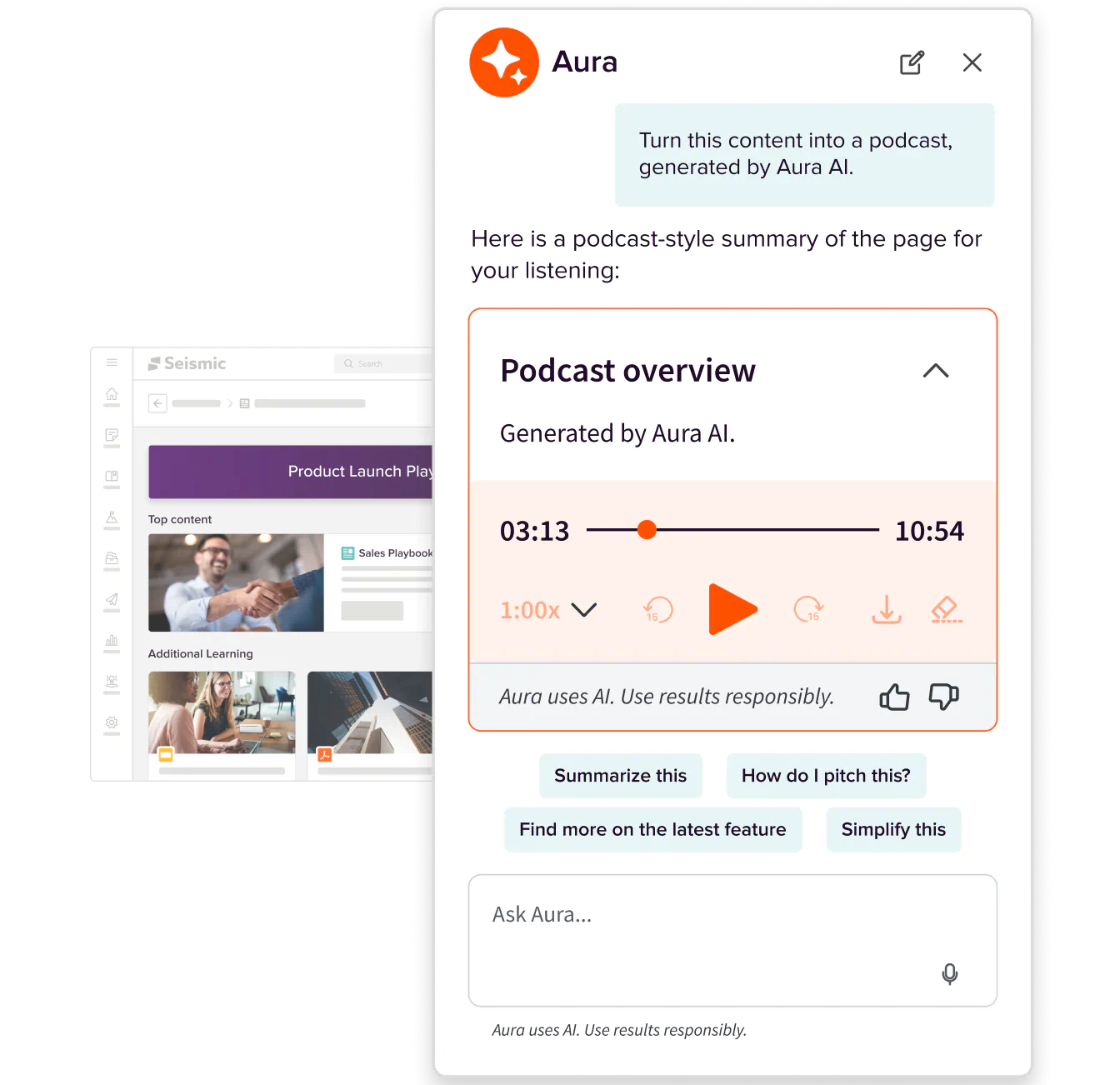
AI-powered content recommendations surfaced inside Salesforce, Microsoft Dynamics, and HubSpot via Aura AI, grounded in deal stage, buyer persona, and historical engagement data
Enterprise content governance with role-based permissions, content expiration workflows, version control, and full audit trails for regulated industries
LiveSend and Digital Sales Rooms with engagement analytics at the individual page, slide, and file level
Revenue-linked content analytics that connect asset engagement directly to CRM pipeline records
150+ integrations spanning Salesforce, Microsoft Dynamics 365, HubSpot, Outreach, Salesloft, Gong, Slack, and Snowflake
A learning and coaching layer with AI-powered role-play, video coaching, and skills assessments linked to quota attainment
Seismic is built for large organizations with complex content governance requirements, particularly in financial services, healthcare, and regulated manufacturing, where compliance failures carry legal consequences rather than just brand risk.
Why Choose Seismic Over Bigtincan for Enterprise Content Governance
Seismic stands out in the following areas:
Revenue-Attributed Content Intelligence
Both Bigtincan and Seismic track content engagement at the deal level. The difference: Seismic closes the attribution loop to actual revenue. Its architecture ties content engagement data directly to CRM pipeline records, giving enablement and marketing teams clear signal on which specific assets moved specific deals forward and which to retire.
Compliance Architecture Built for Regulated Industries
Bigtincan has genuine compliance capabilities, including Veeva Vault integration and audit trails. But Seismic's compliance infrastructure runs deeper: 400+ financial services firms use Seismic, including major asset management and financial advisory firms.
The platform enforces brand-compliant, regulatory-reviewed content at the point of creation and distribution, meaning compliance is built into the content assembly system itself. Seismic also holds ISO 42001 certification (the AI management systems standard) alongside SOC 2 Type II, ISO 27001, and ISO 27701.
CRM-Embedded AI Content Recommendations Grounded in Closed Revenue
Seismic's Aura AI surfaces relevant content inside CRM records automatically, without reps opening a separate portal. The recommendations are grounded in what has historically driven closed revenue, not editorial judgment or recency. Aura also auto-generates content tags and descriptions during upload and detects duplicates, maintaining library hygiene without continuous admin intervention.
Source: Seismic
NOTE: We also evaluated Highspot and Bigtincan itself in this archetype. Highspot is independently strong in mid-market enablement (and is merging with Seismic, announced February 2026), and Bigtincan's GenieAI and field-sales mobile architecture are differentiated for distributed teams. Seismic offers the strongest large-enterprise choice for organizations that need content governance at regulatory grade, revenue-attributed analytics, and deep CRM integration.
Seismic Pricing
Seismic does not publish pricing publicly. All purchases are negotiated through a direct sales process. The platform uses named-user licensing across two separately purchased product lines:
Seismic Content: Two editions (Professional and Enterprise Premier). Professional includes content library, LiveSend, Digital Sales Rooms, LiveInsights analytics, CRM integration, and guided assembly. Enterprise Premier adds LiveDocs, Seismic for Slides, Snowflake access, and advanced data tools.
Seismic Learning: Purchased separately from Content with Standard User and Intranet User license types.
Enterprise deals reportedly range from $20,000 to $120,000+ annually. Seismic has 85 customers at $1M+ ARR. No free tier or self-serve trial is available.
Who Should Use Seismic?
Choose Seismic if:
Your organization is a mid-to-large enterprise with a dedicated enablement function and the headcount to manage content governance, taxonomy, and program administration.
You operate in a regulated industry where content compliance and audit trails are legal requirements, and you need a compliance posture that includes ISO 42001 for AI governance.
You need to prove content ROI to finance leadership with revenue attribution that links asset engagement to CRM pipeline records.
Your CRM is Salesforce or Microsoft Dynamics and you want AI-powered content recommendations surfaced inside existing rep workflows without a separate portal.
3. Highspot: Best Alternative for Guided Selling and Mid-Market Enablement
Source: Highspot
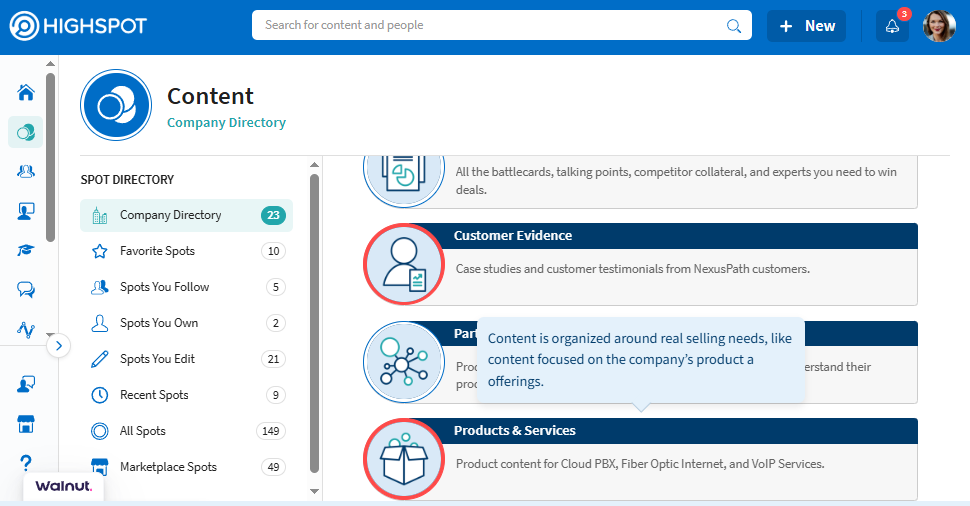
Highspot is a sales enablement platform that packages content, training, coaching, and buyer engagement into one system, with a particular emphasis on structured sales plays that guide reps through exactly what to say, share, and do at every stage of a deal.
Its key capabilities include:
AI-powered Sales Plays and Playbooks that surface the right content, messaging, and training by deal stage and buyer persona directly inside the CRM
Nexus AI content scoring that ranks assets by real buyer engagement data
Deal Agent: a multi-turn AI agent that analyzes live CRM data, buyer engagement signals, and meeting intelligence to recommend specific next steps
AI Role Play with configurable buyer personas and instant scoring tied to the team's existing skill framework
Adaptive Learning that personalizes training paths and lets experienced reps skip mastered material
A tiered pricing model (Equip and Engage / Train and Practice / Coach and Reinforce) that gives scaling teams a genuine entry point
Named a Leader in the 2025 Gartner Magic Quadrant for Revenue Enablement Platforms (highest for Ability to Execute) and the Q3 2024 Forrester Wave, Highspot competes with the largest names in the category while remaining accessible in structure and pricing for mid-market teams.
Note: Highspot and Seismic announced a merger in February 2026, with the combined entity expected to operate as Seismic. Buyers evaluating Highspot should ask about product continuity commitments and migration timelines.
Why Choose Highspot Over Bigtincan for Guided Selling
Highspot stands out in the following areas:
Plays-Based Guided Selling vs. Content-Library Navigation
Bigtincan's content model assumes reps will initiate the search and correctly interpret what they find for a given deal situation. For experienced sellers, that works.
Highspot's Sales Plays and Playbooks operate on different logic: they package content, messaging, objection handling, training, and top-performer call recordings into a structured sequence that tells reps what to do at each stage and for each persona. The system surfaces tailored plays directly in the CRM, and Play Scorecards track adoption and business impact in real time.
This matters most for companies whose GTM motion is still being standardized, where the goal is consistent execution across a diverse team.
Source: Highspot
Accessible Mid-Market Pricing vs. Enterprise-Only Contract Structure
Bigtincan's pricing is entirely sales-assisted, with third-party data suggesting median contracts around $219,000/year. Highspot's three-tier structure lets teams buy what they need and expand. The entry tier includes AI-powered content management, sales plays, Digital Sales Rooms, CRM integration, and Highspot Agents. CRM integrations are included at no extra charge across all tiers.
Contextual AI Deal Intelligence
Deal Agent gives reps full deal context by combining CRM activity, buyer engagement data, email threads, and meeting transcripts. Reps can ask about deal health or what step to take next, and the agent recommends content, drafts follow-ups, and suggests Digital Room updates based on actual deal signals. Highspot customers report 51% improvement in buyer engagement and 24% increase in seller quota attainment.
NOTE: We also evaluated Seismic and Showpad for this archetype. Seismic excels at enterprise-scale content governance for regulated industries but is built for large organizations with mature enablement functions. Showpad, now merged into the Bigtincan entity under Vector Capital, shares the same post-merger uncertainty. Highspot offers the clearest plays-based guided selling approach with an accessible tiered pricing model for scaling GTM teams.
For a direct comparison of how Highspot and Seismic stack up across guided selling, content governance, and enterprise depth, see our Highspot vs Seismic breakdown.
Highspot Pricing
Highspot does not publish per-seat pricing. The company offers three functional tiers:
Equip and Engage: AI-powered content management, sales plays, Digital Sales Rooms, CRM integration, and Highspot Agents
Train and Practice: Adds adaptive learning, AI-assisted training authoring, AI Role Play, and learning path analytics
Coach and Reinforce: Adds Meeting Intelligence, Delivery Intelligence, rep and team scorecards, MCP Server, and Highspot for Salesforce Agentforce
CRM integrations are included at no additional charge across all tiers. Enterprise capabilities (advanced governance, customer-managed encryption, multi-CRM support, 24/7/365 support) are available as add-ons.
Who Should Use Highspot?
Choose Highspot if:
Your GTM team is scaling from 50 to 500 sellers and needs a structured enablement foundation that guides reps through plays rather than requiring them to navigate a content library on their own.
You want AI-powered training, coaching, and deal intelligence embedded in the same system as content management, without stitching together a separate LMS, coaching tool, and content platform.
Your sales managers are stretched too thin to coach every deal individually, and you need Deal Agent and Meeting Intelligence to surface coaching opportunities without manual call review.
You are mid-market or growth-stage and cannot justify Bigtincan's enterprise-tier pricing, but you want analyst-validated enablement capabilities (Gartner and Forrester Leader) rather than a lightweight point solution.
4. Allego: Best Alternative for Coaching-First Revenue Enablement
Source: Allego
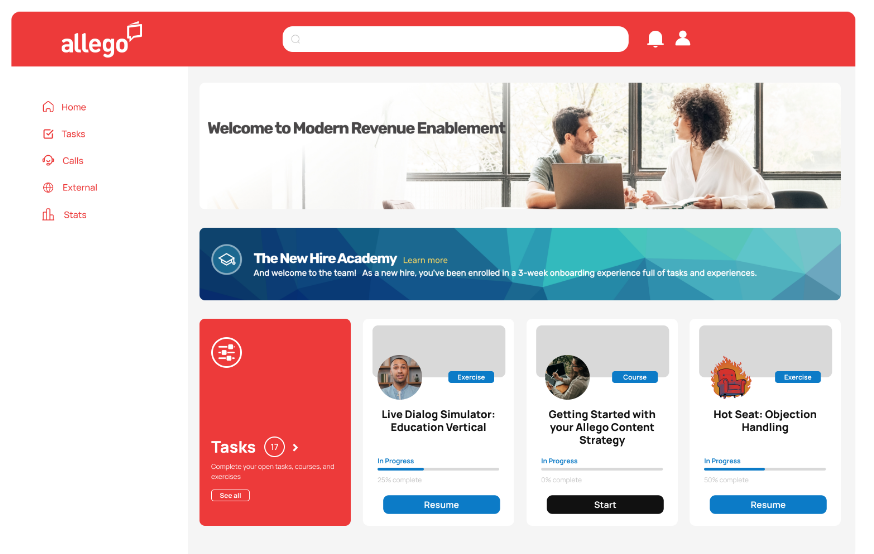
Allego is a revenue enablement platform that has been coaching-led since its founding in 2013, built from the ground up around video learning and rep practice rather than assembled from acquisitions.
Its key capabilities include:
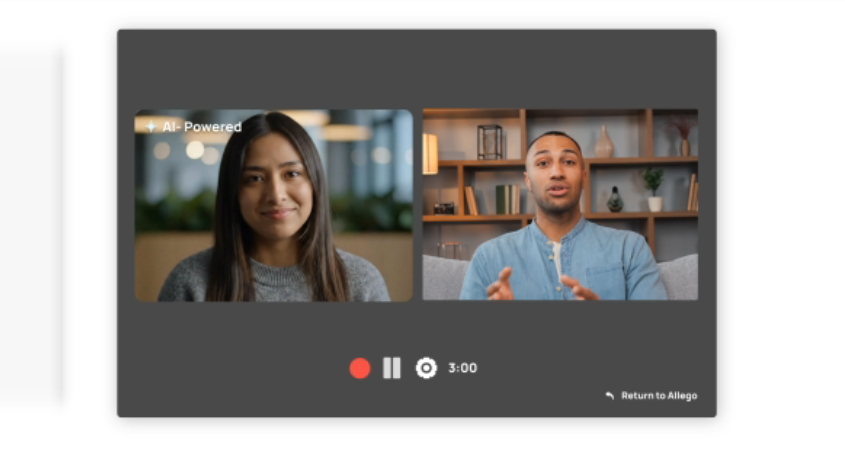
Live Dialog Simulator: an agentic AI roleplay engine that generates a lifelike video avatar for unscripted, back-and-forth buyer conversation practice
Video-native asynchronous learning and manager coaching via time-stamped feedback on recorded practice submissions
Conversation Intelligence that connects recorded call analysis back to specific training modules
Sales Content Management with a Universal Content Connector syncing assets from SharePoint, Google Drive, and Adobe Experience Manager
Digital Sales Rooms with Deal Navigator for buyer engagement tracking
All AI capabilities included at no additional charge across every tier
FINRA/SEC Rule 17a-4 and FDA 21 CFR Part 11 compliance for regulated industry deployments
Allego is the right Bigtincan alternative for organizations whose core constraint is coaching throughput and rep readiness.
Why Choose Allego Over Bigtincan for Coaching-First Enablement
Allego stands out in the following areas:
Organic Platform Architecture vs. Acquisition-Assembled Stack
Bigtincan's breadth is largely the product of acquisitions from 2018 to 2021 (Zunos, Veelo, ClearSlide, Brainshark), plus the October 2025 Showpad merger under Vector Capital's private equity ownership. Each acquired product had its own codebase and engineering culture.
Allego was built as a single product from one founding hypothesis: that sales reps could practice and get certified asynchronously via video submissions, and that this model would grow into the full enablement workflow. The company claims up to 50% reduction in software spend because the platform replaces tools rather than aggregating them.
The Live Dialog Simulator: A Different Approach to AI Roleplay
Bigtincan's RolePlayAI runs configurable audio or text-based conversations with AI buyer personas. Allego's Live Dialog Simulator takes a different approach: it generates a lifelike video avatar that engages in a real-time, back-and-forth video conversation with the rep. The avatar adapts in real time and cannot be gamed by memorizing a branching script path. It supports 32 languages, 71 voices and accents, and scoring in 59 languages.
Allego has backed this with a neuroscience study in partnership with Dr. Carmen Simon exploring how the brain processes feedback during AI-led roleplay.
Source: Allego
All AI Included at Base Price, No Usage Overages
Allego states that all AI capabilities are included in every tier at no additional charge with no usage-based costs or surprise add-ons. Premium Success Services are also included with every deployment. Bigtincan's GenieAI is available across tiers, but the feature differentiation between Essential and Elite is not publicly disclosed, and GenieAI Pro is a premium upsell.
NOTE: We also evaluated Highspot and Seismic as coaching-first alternatives. Both are Leaders in the Gartner Magic Quadrant and Forrester Wave, but their coaching capabilities are one pillar among several rather than the platform's founding identity. Allego is the better choice for teams whose core constraint is coaching throughput, where the Live Dialog Simulator and the organic coaching architecture are difficult to replicate in a platform where those features were added rather than built.
If you're weighing Allego against Highspot for coaching-first enablement, our Allego vs Highspot comparison breaks down how their coaching architectures and AI roleplay approaches differ.
Allego Pricing
Allego uses a per-user, per-month pricing model billed annually upfront. No list prices are published; all contracts require a custom quote. Standard contract length is three years paid annually, with shorter options available.
Per-seat, annually billed with custom quote required
Standard users at full rate; channel/partner users and non-revenue roles at reduced rates
All AI features included at no additional charge
Premium Success Services included with every deployment
Optional managed services and a buyout program for customers locked into competing vendor contracts
Who Should Use Allego?
Choose Allego if:
Your core bottleneck is coaching throughput: you need continuous, scalable practice and feedback, and your current setup depends too heavily on manager time.
You are consolidating three or more separate tools (LMS, coaching platform, conversation intelligence, or content management) and want a platform built from one codebase rather than assembled through acquisitions.
You want AI-powered roleplay that puts reps in a lifelike video-based buyer conversation rather than a text prompt interface, and you need that capability across multilingual teams.
You are in financial services, life sciences, or a similarly regulated industry and need a platform that holds FINRA/SEC Rule 17a-4 and FDA 21 CFR Part 11 compliance out of the box.
You want AI features included in the base contract without a separate SKU or usage-cap negotiation.
5. Mindtickle: Best Alternative for Revenue Readiness Measurement and Rep-to-Revenue Attribution
Source: Mindtickle
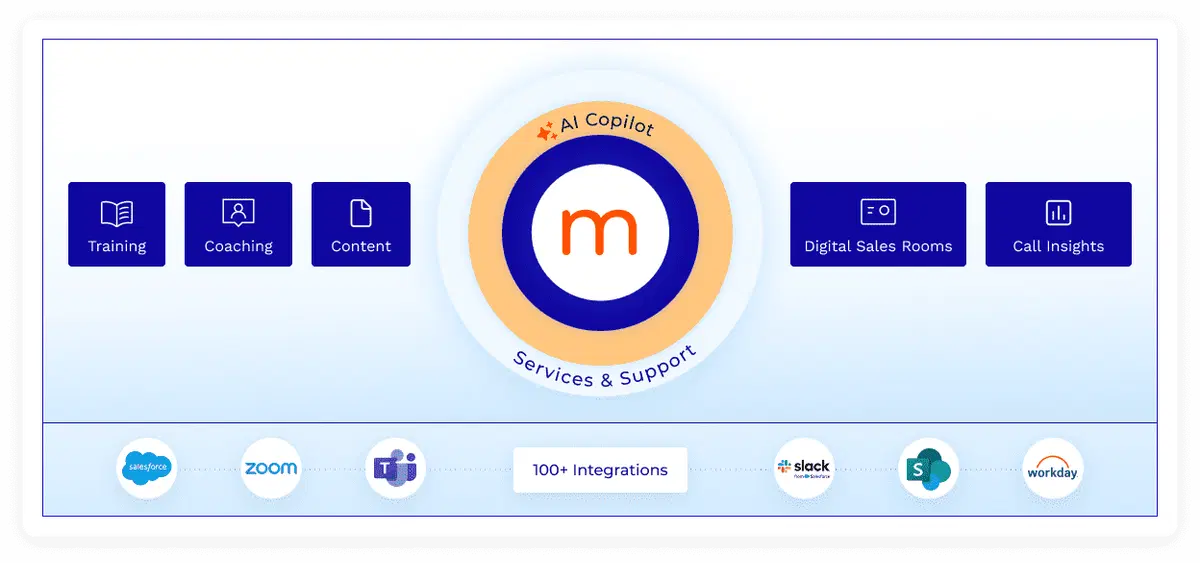
Mindtickle is a revenue enablement platform built around a formal readiness architecture: an Ideal Rep Profile framework that benchmarks every seller against top-performer behaviors and links coaching activity directly to pipeline outcomes.
Its key capabilities include:
Sales Readiness Index and Ideal Rep Profile (IRP) that defines top-rep performance across skills, behaviors, and knowledge, then measures every rep in real time
Call AI (Conversation Intelligence) that captures, scores, and analyzes sales conversations, and links call behaviors to specific training content
Revenue-linked readiness analytics connecting rep readiness scores to CRM-sourced pipeline metrics (quota attainment, win rates, deal cycle length)
AI Sales Role Play with dynamic, non-scripted simulations generated from live CRM deal context
ElevateOS: an agentic operating layer deploying autonomous AI agents across coaching, deal guidance, and content creation
Why Choose Mindtickle Over Bigtincan for Revenue Readiness Measurement
Mindtickle stands out in the following areas:
Formal Readiness Framework That Replaces Guesswork With Behavioral Measurement
Bigtincan's readiness tools focus on pitch quality signals: vocal clarity, pace, filler words, and "vibe" analysis. These are legitimate coaching inputs, but they tell managers how a rep delivers, not whether a rep understands the product or handles objections at a level that correlates with winning.
Mindtickle's Readiness Index starts with the Ideal Rep Profile: a formal competency architecture with pre-built role templates for AEs, SDRs, and SEs. The platform continuously assesses every rep using data from training completions, call scores, coaching sessions, and role-play performance, producing a composite readiness score at individual, team, and business unit levels.
Conversation Intelligence That Closes the Loop Between Call Behavior and Training Gaps
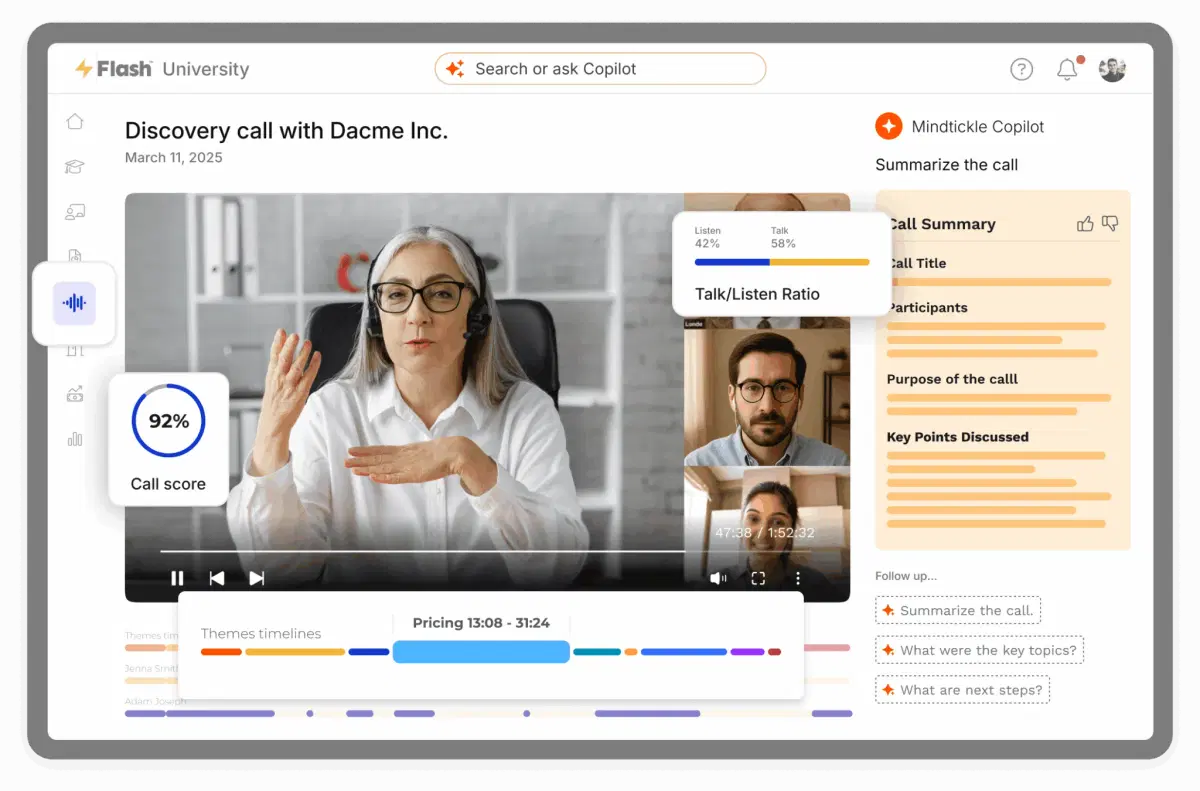
Mindtickle's Call AI automatically scores each recorded call against pre-configured winning behavior benchmarks, identifies competitor mentions and objection patterns, and connects observed call behaviors to the specific training modules the rep has or has not completed.
When a rep consistently struggles with a specific objection type, Call AI surfaces that as a skill gap tied to the relevant training modules and automatically triggers a coaching assignment.
Source: Mindtickle
Faster Time-to-Value for Growing Sales Organizations
Bigtincan's average implementation runs roughly three months, with an average ROI timeline of 18 months, and the content migration process is described as "frustrating and time-consuming" in G2 reviews.
Mindtickle's implementation path starts with readiness infrastructure rather than content migration. The services page offers a "Get Started Quickly" tier designed for faster time-to-value. Reps can begin coaching, completing role-plays, and generating readiness scores while content is still being migrated.
NOTE: We also evaluated Allego and Showpad. Allego excels at video coaching delivery and asynchronous pitch practice for distributed teams but focuses more narrowly on video-based skill validation than the full readiness measurement infrastructure Mindtickle provides. Showpad has completed its merger with Bigtincan, making it effectively part of the same platform. Mindtickle offers the strongest revenue readiness measurement and rep-to-revenue attribution for teams whose primary need is scoring and improving rep preparedness across the organization.
Mindtickle Pricing
Mindtickle does not publish list pricing. All contracts require a custom quote. The platform is sold as a per-user annual subscription across four tiers:
LMS Package: Core learning management with Courses, Assessments, Certifications, Readiness Index, and AI Copilot
Readiness Package: Adds Spaced Reinforcement, one-way AI Virtual Role-Plays, and Coaching Rooms
Enable Package: Adds Asset Hub (sales content management) and Digital Sales Rooms
Transform Package: Full platform including Call AI (Conversation Intelligence)
Two-way Interactive AI Role Play requires a separate add-on. Premium Support and Professional Services are billed separately. Contracts auto-renew annually with a 30-day cancellation window and up to a 5% annual price increase cap.
Who Should Use Mindtickle?
Choose Mindtickle if:
Your primary enablement challenge is measuring whether reps are genuinely prepared before they engage buyers, and your current stack gives you completion rates rather than behavioral readiness scores tied to revenue.
You need to demonstrate enablement ROI in revenue terms (quota attainment, win rates, ramp time) and your CFO or CRO no longer accepts content utilization metrics as proof.
You need measurable coaching and readiness outcomes quickly, and cannot afford the three-month content migration cycle that Bigtincan's architecture requires before delivering early value.
You want conversation intelligence that connects what reps say on calls to the specific training they have completed (or skipped), automatically triggering coaching interventions.
You run mid-market to enterprise sales in Technology, Medical Devices, Automotive, Consumer Goods, or Chemical verticals, where complex products and long sales cycles make rep readiness measurable at a skill-behavior level.
6. Guru: Best Alternative for Verified Knowledge Without Enterprise Implementation Overhead
Source: Guru
Guru is an AI-powered knowledge management platform that structures, governs, and continuously verifies company knowledge so employees and AI tools receive accurate, trusted answers when they need them.
Its key capabilities include:
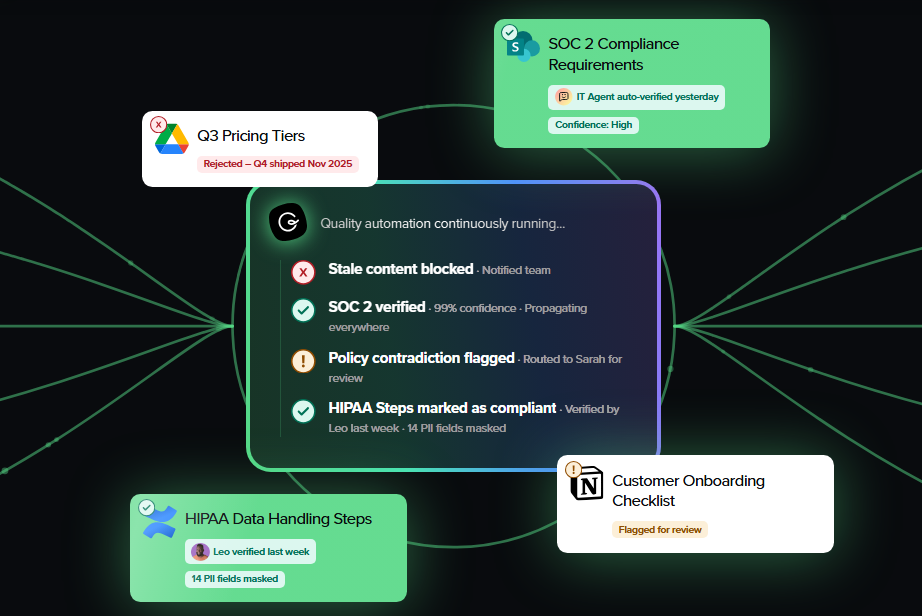
Expert-verified knowledge Cards with automated expiration prompts and designated subject matter expert ownership
In-workflow knowledge delivery via browser extension that surfaces verified answers inside Salesforce, Gmail, Outreach, Zendesk, and any web application
AI-powered Knowledge Agents deployable for sales, support, HR, or engineering teams with cited, permission-aware answers
Automated Knowledge Quality system with daily agent-driven verification runs across 14+ data fields
MCP Server connectivity allowing external AI tools (Claude, ChatGPT, Microsoft Copilot) to query Guru's governed knowledge base
100+ pre-built Source connectors including Salesforce, Confluence, Slack, Google Drive, Zendesk, and SharePoint
Guru is strongest for mid-market and enterprise organizations where knowledge is fragmented across Slack threads, wikis, CRMs, and email, and where the cost of outdated information is real enough to justify a dedicated knowledge governance platform.
Why Choose Guru Over Bigtincan for Verified Knowledge Delivery
Guru stands out in the following areas:
Implementation in Days, Not Months, With No Content Migration Prerequisite
Bigtincan's most consistent user feedback is that onboarding is slow and content migration is painful, with an average implementation timeline of roughly three months and an 18-month ROI timeline.
Guru's model inverts this. Knowledge Cards can be created incrementally, and Guru's 100+ Source integrations index content from existing tools (Confluence, Google Drive, Slack, Notion, Zendesk) without those tools being abandoned or their content physically relocated. Teams can go from sign-up to live in-workflow knowledge delivery in days.
Content Freshness Through Expert Ownership and Automated Verification
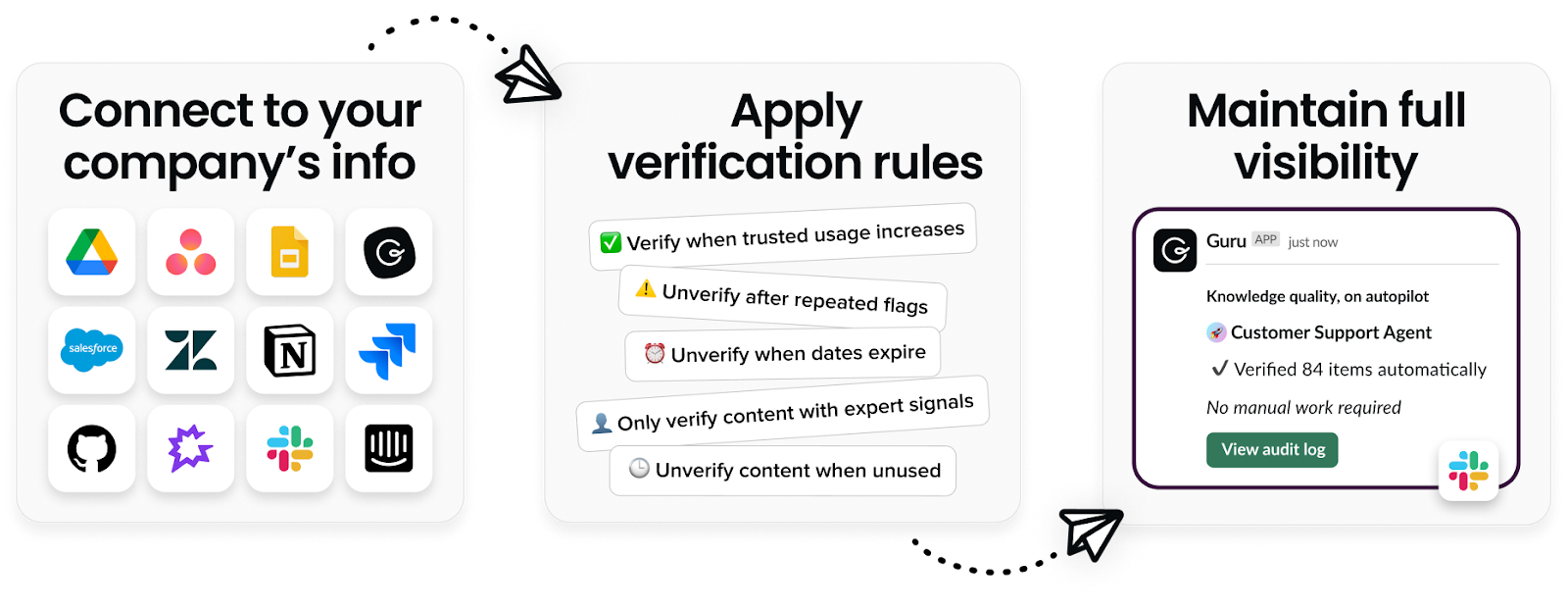
The classic failure mode of any knowledge base is content decay. Bigtincan has version control that prevents old file versions from circulating, but content freshness still depends on human policing. Guru's differentiation is architectural: every Knowledge Card has a designated subject matter expert who receives automated verification prompts.
Guru's Knowledge Quality Automation runs daily verification cycles, applying rules across behavioral signals and content-based criteria to verify trusted content and flag stale content. Guru notes that traditional verification processes cover only 8-12% of organizational content at any given time; its agent-driven system is designed to reach 100%.
Source: Guru
A More Accessible Entry Point
Bigtincan publishes no pricing and has no self-serve trial. Third-party data suggests median enterprise contract values around $219,000 per year. Guru's pricing is also custom, but positioned at a categorically different price point. Guru also bundles its Expertise layer (AI and KM strategy services, implementation support, change management) into its package pricing rather than billing it separately.
NOTE: We also evaluated Bloomfire and Tettra. Bloomfire offers a searchable knowledge base with Q&A for content-heavy support organizations, and Tettra is a lightweight wiki for recurring Slack questions in small teams. Guru offers the most complete combination of in-workflow knowledge delivery, expert verification infrastructure, AI-governed Knowledge Agents, and MCP connectivity for teams that need trustworthy knowledge governance without a full field-sales enablement suite.
Guru Pricing
Guru does not publish standard per-seat pricing tiers. Every engagement is a custom enterprise package scoped to the organization's scale and knowledge complexity. The package includes three bundled components:
The Platform (AI Knowledge Layer): AI search, Knowledge Agents, 100+ Source integrations, automated verification workflows, browser extension, Slack and Teams delivery, mobile app, and MCP Server access
The Expertise (AI & KM Strategy Team): Knowledge architecture design, AI agent configuration, integration setup, and change management playbook
The Infrastructure (Enterprise Governance): SOC 2 Type II, HIPAA-readiness, GxP compliance support, SSO/SCIM provisioning, and centralized audit logs
The platform is designed for teams of 10 or more. Both monthly and annual billing cycles are available. A Guru for Good program offers reduced-cost access for eligible 501(c)(3) nonprofits.
Who Should Use Guru?
Choose Guru if:
Your most immediate problem is knowledge decay: support agents giving outdated answers, sales reps working from stale playbooks, or employees repeating questions that already have verified answers scattered across Slack threads or Confluence pages.
You are deploying multiple AI tools and need a single governed knowledge layer that all of them can query via MCP without rebuilding permissions for each tool.
Your team needs in-workflow knowledge delivery (answers surfaced inside Salesforce, Zendesk, or Gmail) rather than a separate portal reps must leave their workflow to consult.
You need a knowledge platform running in days or weeks rather than months, and your organization cannot absorb a multi-month content migration project before seeing first value.
You are a mid-market company (roughly 200 to 5,000 employees) that needs organized, verified knowledge but does not need a full field-sales readiness and buyer engagement suite.
7. Spekit: Best Alternative for In-Workflow AI Enablement Without Portal Friction
Source: Spekit
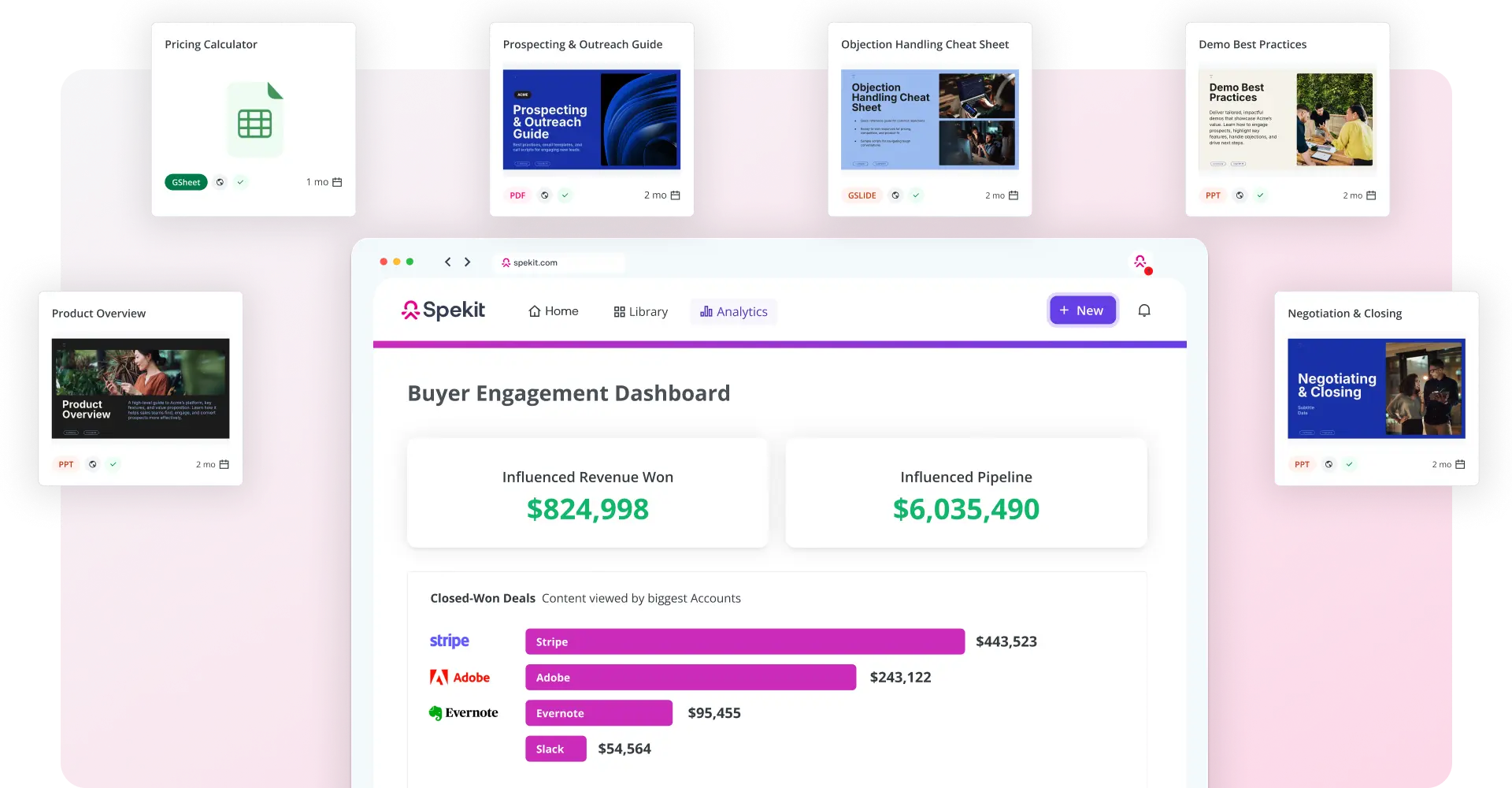
Spekit is an AI sales enablement platform that delivers coaching and content inside every tool reps already use rather than requiring them to navigate to a separate portal. Named a Visionary in the 2025 Gartner Magic Quadrant for Revenue Enablement Platforms.
Its key capabilities include:
AI Sidekick that proactively surfaces battlecards, objection responses, and next-best actions inside Gmail, Gong, Salesforce, and any browser-based tool based on live deal signals
GTM Knowledge Engine with a centralized AI-powered CMS and content auto-maintenance that propagates updates from a single source across every rep-facing surface
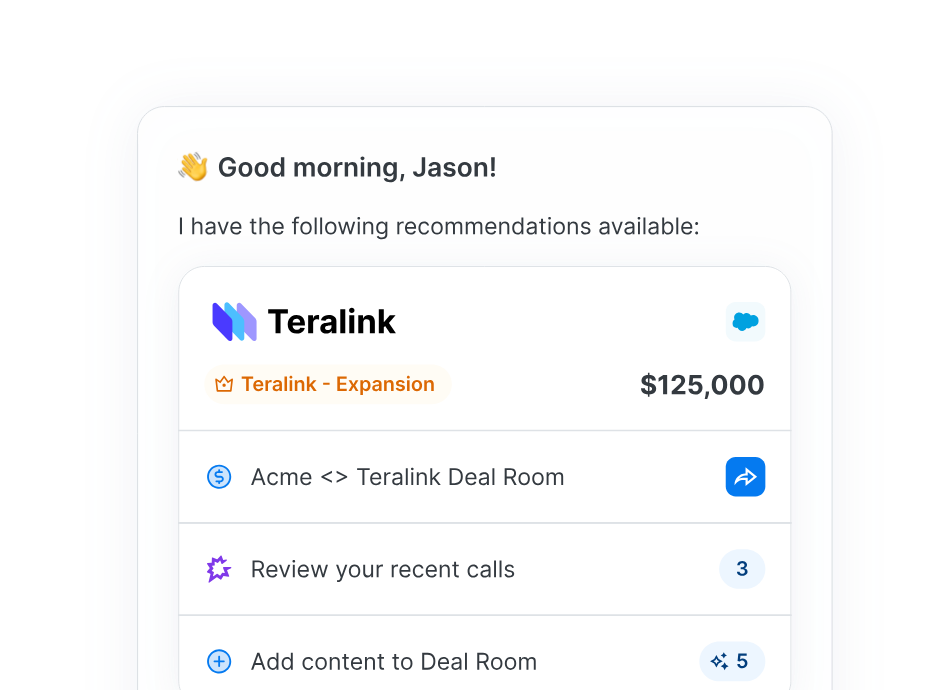
Agentic Actions that automate deal-room creation, follow-up email drafting, and executive summary generation from Gong call transcripts and Salesforce opportunity data
Embedded Enablement attaching approved process guidance to Salesforce fields, deal stage transitions, and RevOps workflow steps
Chrome extension deployment across any browser-based selling tool with no new application to open
No content migration prerequisite: syncs with existing Google Drive, SharePoint, and Confluence repositories
Why Choose Spekit Over Bigtincan for In-Workflow Enablement
Spekit stands out in the following areas:
Proactive AI Guidance vs. Reactive Content Search
Bigtincan's SearchAI and Genie Assistant answer questions, but only when a rep stops to ask. Spekit's AI Sidekick continuously monitors deal stage changes, call transcripts, and Salesforce opportunity signals, then surfaces the right battlecard or content recommendation in the rep's active tool without a prompt.
When a competitor is mentioned on a Gong call, the relevant competitive brief appears. When a deal advances, stage exit criteria surface inside Salesforce.
Source: Spekit
Enablement Delivered in the Flow of Work, Not a Separate Portal
Bigtincan is architecturally a destination: a platform reps must navigate to. Spekit's research found 55% of respondents cited low rep adoption as the primary reason for switching enablement platforms. Spekit's Chrome extension runs as a native overlay inside every browser-based selling tool, so there is no portal to visit and no context switch. The architecture difference drives the adoption difference.
No Content Migration as a Launch Prerequisite
Spekit connects to existing repositories (Google Drive, SharePoint, and Confluence) and syncs content automatically, with AI-powered deduplication for Confluence. The Getting Started page frames the value as "ROI in weeks, not months." Spekit claims 30% faster implementation than competing solutions.
Vendor Stability in a Consolidating Market
Bigtincan is now a merged entity under Vector Capital following the April 2025 take-private and October 2025 Showpad combination. Spekit remains a fully independent private company with approximately $60 million in venture funding. The November 2025 release alone introduced 25+ new features.
NOTE: We also evaluated Highspot and Seismic. Highspot offers strong content governance and enterprise depth, and Seismic brings sophisticated personalization for large content libraries. Spekit offers the most frictionless path to rep adoption for Salesforce-centric revenue teams that need enablement delivered inside the flow of work rather than a portal.
Spekit Pricing
Spekit does not publish pricing publicly. All pricing is quote-based through a direct sales engagement.
Per-seat or seat-banded subscription model
Initial term length negotiated per Order Form; auto-renews for consecutive 12-month periods
Professional Services (implementation, migration assistance) scoped separately
API access governed by a separate API License Agreement
Who Should Use Spekit?
Choose Spekit if:
Your reps work primarily inside Salesforce, Gong, and Gmail, and the core enablement problem is getting them to actually use coaching and content in the moment, not in a portal that requires a context switch.
You have watched previous enablement platform investments fail because reps never adopted the portal, and you need in-workflow delivery as an architectural guarantee.
You need to go live in weeks, not months, and you have existing content in Google Drive, SharePoint, or Confluence that cannot wait for migration before activation.
Your revenue team is 50 to 500 reps in B2B SaaS, technology, HR services, or financial services with Salesforce as the CRM backbone.
The Final Verdict
Bigtincan excels as a revenue enablement platform for large, field-based enterprise sales organizations, but many revenue teams need specialized tools that go deeper in specific areas. Based on our research, here are the best alternatives:
ZoomInfo for AI-powered GTM intelligence, B2B data, and universal access through APIs, MCP, GTM Workspace, and GTM Studio
Seismic for enterprise content governance with revenue-attributed analytics, built for regulated industries
Highspot for plays-based guided selling with accessible mid-market pricing and AI-powered deal intelligence
Allego for coaching-first enablement with the Live Dialog Simulator and all AI included at no additional charge
Mindtickle for formal revenue readiness measurement with Ideal Rep Profiles and rep-to-revenue attribution
Guru for verified, AI-governed knowledge delivery without enterprise implementation overhead
Spekit for in-workflow AI enablement that reaches reps inside the tools they already use
You do not have to choose between Bigtincan and these alternatives exclusively. Many revenue organizations use specialized tools alongside their core enablement platform. Consider your team's most pressing bottleneck (data and intelligence, content governance, coaching throughput, readiness measurement, knowledge management, or workflow adoption) and evaluate the alternative that best addresses it.
Ready to see which accounts are in-market for your solution right now? Start your free trial or request a demo to see the full platform in action.
Bigtincan Alternatives FAQ
Why do businesses look for Bigtincan alternatives?
Bigtincan is a strong revenue enablement platform, but businesses often look for alternatives because of its long implementation timeline (roughly three months on average, with an 18-month ROI timeline), enterprise-only pricing with no published tiers or self-serve trial, and the content migration burden when switching from a prior platform.
Organizations that need faster time to value, specialization in a specific area like data intelligence or coaching, or a more accessible mid-market entry point often evaluate focused alternatives.
What is the best overall Bigtincan alternative?
There is no single best alternative because Bigtincan covers multiple functions across content, readiness, and engagement.
ZoomInfo is the top choice for B2B data intelligence and GTM context that powers the entire revenue motion. Seismic leads for enterprise content governance in regulated industries. Mindtickle is the strongest option for readiness measurement tied to revenue outcomes. The right alternative depends on your team's primary bottleneck.
Is there a free alternative to Bigtincan?
ZoomInfo offers ZoomInfo Lite, a permanent free tier with no credit card and no time limit that includes access to ZoomInfo's B2B database, 10 monthly export credits, company and contact searches, the ReachOut Chrome Extension, and HubSpot integration. ZoomInfo also offers a separate 7-day free trial of the full platform. Most other alternatives on this list do not offer permanent free plans, though several provide demo-based evaluations.
Which Bigtincan alternative is best for mid-market teams?
Highspot offers the most accessible entry point for scaling GTM teams with its three-tier pricing model (Equip and Engage, Train and Practice, Coach and Reinforce). CRM integrations are included at no extra charge, and the company says customers see an average 4x ROI in 15 months. Spekit is another strong mid-market option for teams that need fast deployment and in-workflow enablement without enterprise implementation overhead.
How does ZoomInfo compare to Bigtincan?
ZoomInfo and Bigtincan address different layers of the revenue stack.
Bigtincan focuses on equipping reps with content, coaching, and buyer engagement tools once they are in a conversation. ZoomInfo provides B2B data (500M contacts, 100M companies), buyer intent signals, and AI-powered intelligence that helps teams identify which accounts to pursue, understand why deals move or stall, and engage buyers with full context.
Many organizations use both: ZoomInfo for intelligence and targeting, and an enablement platform for execution.
Which alternative is best for regulated industries like life sciences and financial services?
Seismic has the strongest compliance infrastructure, with 400+ financial services firms using the platform and ISO 42001 certification for AI governance. Allego holds FINRA/SEC Rule 17a-4 and FDA 21 CFR Part 11 compliance for financial services and life sciences deployments. Bigtincan itself has strong regulated-industry capabilities with Veeva Vault integration, so teams in these sectors should evaluate whether they need deeper content governance (Seismic), coaching-first compliance (Allego), or Bigtincan's existing field-sales approach.
For a side-by-side look at how Allego and Seismic approach compliance and enablement in regulated industries, see our Allego vs Seismic comparison.
How difficult is it to migrate from Bigtincan to one of these alternatives?
Migration complexity depends on which Bigtincan capabilities you rely on most.
Platforms like Guru and Spekit eliminate the traditional migration burden entirely by syncing with your existing content repositories rather than requiring content to be re-uploaded. Mindtickle starts with readiness infrastructure rather than content migration, so reps can begin coaching and generating readiness scores while content is still being onboarded.
For teams heavily invested in Bigtincan's content library and Digital Sales Rooms, a migration to Seismic or Highspot would require more planning but offers comparable or deeper functionality in those areas.
Should I be concerned about the Bigtincan-Showpad merger?
The October 2025 merger under Vector Capital's private equity ownership matters for any purchasing decision. The combined entity has a new CEO, a product roadmap being rationalized across two formerly competing platforms, and the typical post-merger dynamics of headcount reduction and potential price increases at renewal.
Teams with multi-year contracts should ask specifically about platform continuity commitments and roadmap consolidation plans. Buyers evaluating Highspot should also note its announced merger with Seismic (February 2026), which raises comparable questions about product continuity.
Looking beyond Bigtincan? Compare the strongest alternatives side by side:
