
Choosing between Bizible (now Adobe Marketo Measure) and HockeyStack for B2B revenue attribution often comes down to five questions:
Do you need attribution data written directly into Salesforce, or a standalone analytics platform your whole team can access?
Is your marketing stack built around Adobe and Marketo Engage, or are you working with different tools?
Do you want a mature, rules-based attribution engine, or an AI-first platform that extends analytics into automated execution?
How much implementation time can you absorb before getting usable data?
Are you solving the attribution problem alone, or do you need the data foundation, buyer signals, and execution tools that make attribution actionable?
In short, here's what we recommend:
Adobe Marketo Measure (formerly Bizible) is the enterprise attribution standard for teams already invested in Salesforce and Adobe Marketo Engage. Its Salesforce-managed package writes attribution data directly into CRM objects, giving revenue teams a shared record inside the tool they already use. Six attribution models run simultaneously, and the machine learning custom model recalculates weights weekly based on closed-deal history. But implementation is slow, privacy-driven tracking gaps keep widening, and the platform reports on what happened without helping you act on what comes next.
HockeyStack is a challenger that treats attribution as one layer of a broader revenue analytics and execution system. It stitches buyer journeys across 20+ GTM tools using cookieless tracking, offers 9 attribution models alongside lift reporting and prescriptive Blueprints, and extends insights into execution through AI agents powered by Nex-LM. The trade-off: HockeyStack is a Series A company with 35 employees, no public pricing, and an agent layer still maturing.
Both platforms answer an important question: which marketing activities drove pipeline and revenue? But attribution alone doesn't close deals. Knowing that a webinar influenced 30% of closed revenue is useful. Knowing which accounts show buying signals right now, who the decision-makers are, how to reach them, and what to say when you do is what moves pipeline. That's a different problem, and it requires a different foundation.
ZoomInfo is an AI GTM platform built on a large B2B dataset: 500M contacts, 100M companies, 135M+ verified phone numbers, and 200M+ verified business email addresses. Rather than starting with attribution and working backward, ZoomInfo starts with the data and intelligence that make every GTM motion more informed. Its GTM Context Graph (an intelligence layer processing 1.5B+ data points daily) combines this data with your CRM records, conversation transcripts, and behavioral signals to show not just what happened, but why. That intelligence powers sellers through GTM Workspace, marketers and RevOps through GTM Studio, and custom tools or AI agents through APIs and MCP.
If you want a platform that goes beyond measuring what already happened and helps you drive what happens next, see how ZoomInfo works.
Bizible vs. HockeyStack vs. ZoomInfo at a glance
Adobe Marketo Measure (Bizible) | HockeyStack | ZoomInfo | |
|---|---|---|---|
Core focus | Marketing attribution in Salesforce | Revenue data intelligence + AI agents | AI GTM platform |
Attribution models | 6 (including ML custom model) | 9 (including lift reporting) | GTM Context Graph + signal-based analytics |
CRM integration | Native Salesforce managed package; Microsoft Dynamics | Salesforce, HubSpot | Salesforce, HubSpot, Microsoft Dynamics + 120 marketplace integrations |
AI capabilities | Attribution AI (Ultimate tier only) | Odin AI Analyst, 12 prebuilt agents, Nex-LM | GTM Context Graph, AI-drafted outreach, AI agents in GTM Workspace and Studio |
B2B contact data | None | Account enrichment (credit-based) | 500M contacts, 135M+ verified phone numbers, 200M+ verified emails |
Buyer intent signals | None native | Third-party intent ingestion + account scoring | Native intent from 210M IP-to-Org pairings, Guided Intent |
Implementation time | Weeks to months | Approximately 1 week to dashboards | Deploys in weeks |
Tracking approach | First-party JavaScript cookies | Cookieless (server-side fingerprinting) | WebSights (company-level visitor ID) + intent signals |
Pricing | Enterprise-negotiated (not published) | Custom-quoted (not published) | Consumption-based; free tier (ZoomInfo Lite) available |
Best for | Marketo Engage/Salesforce teams needing CRM attribution | Mid-market to enterprise teams wanting unified analytics + AI execution | Teams needing data, intelligence, and execution in one platform |
Attribution tells you what worked. Intelligence tells you what to do next.
Bizible and HockeyStack both answer a critical question: which marketing channels and campaigns drove pipeline and revenue?
They answer it well. But attribution is a rearview mirror. It tells you where the wins came from. It doesn't tell you which accounts are in-market right now, who sits on the buying committee, or what message will land with the CFO who just joined the evaluation.
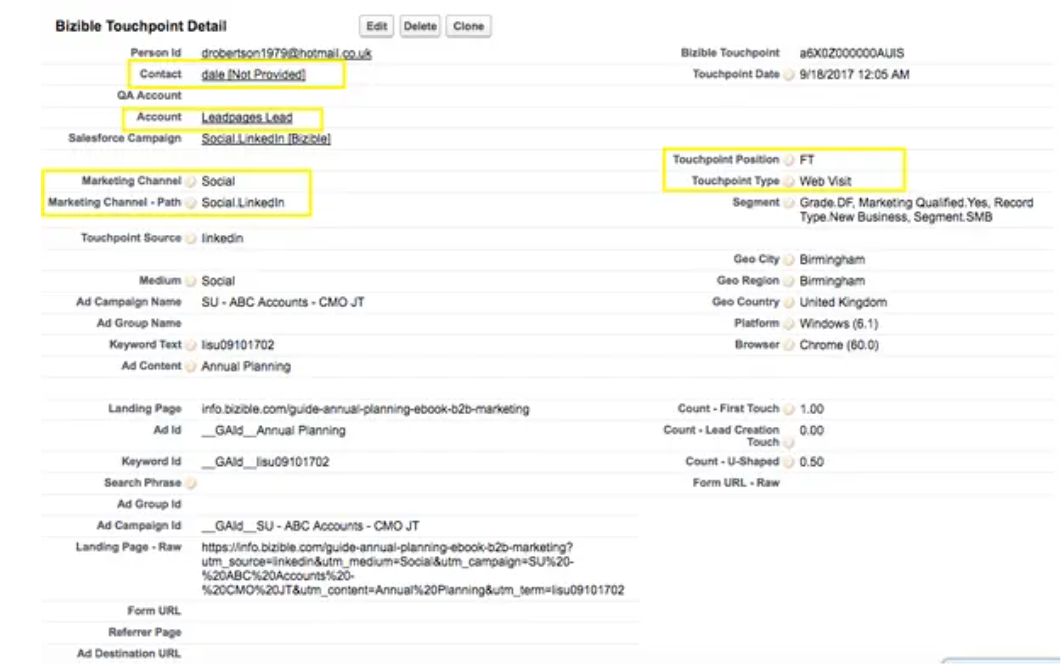
Adobe Marketo Measure writes attribution data into Salesforce as Buyer Touchpoints and Buyer Attribution Touchpoints, giving sales and marketing a shared record of which interactions influenced each deal. That data helps with budget decisions and proving marketing's contribution to revenue.
Source: Adobe
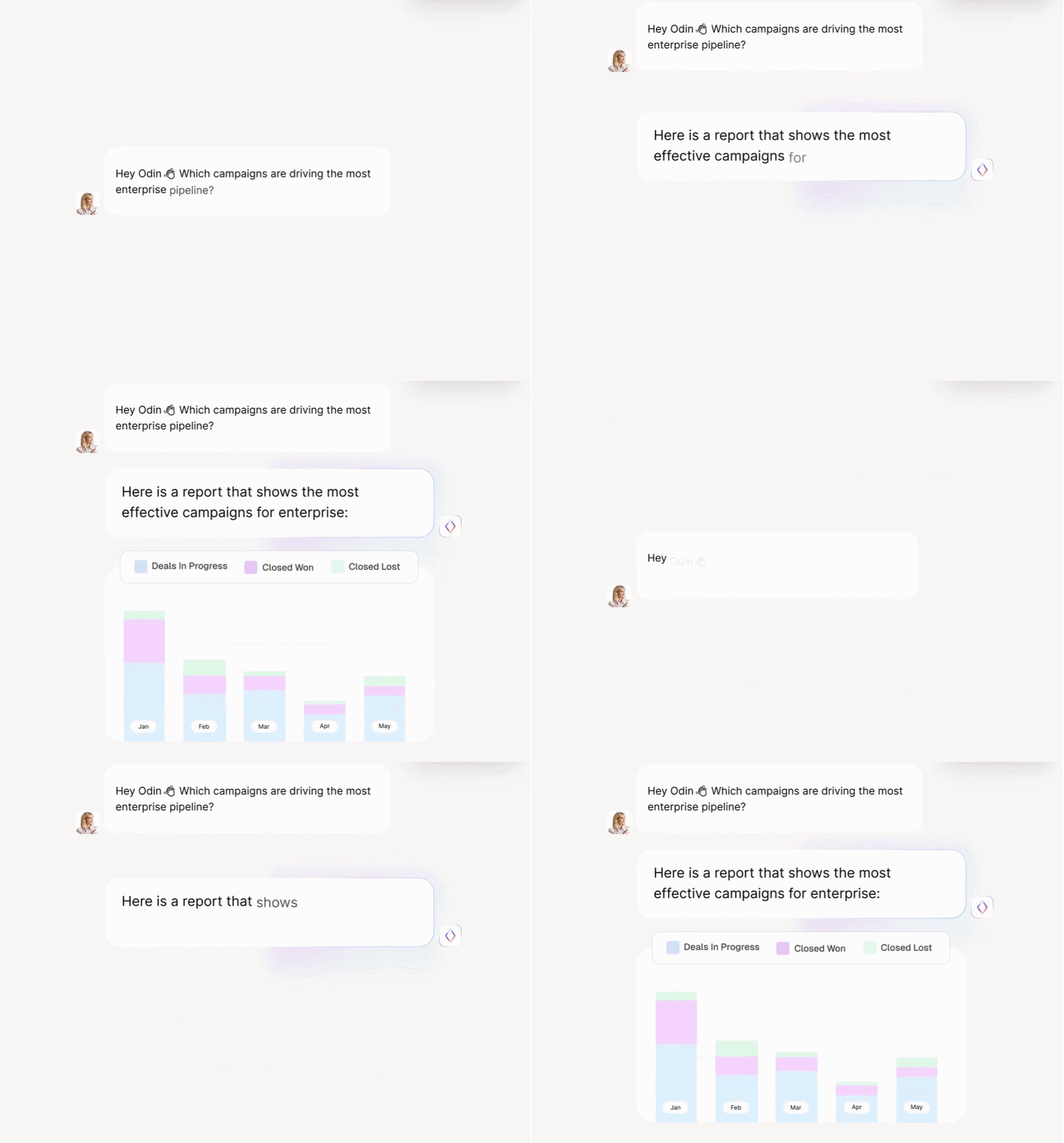
HockeyStack takes a broader view. It unifies attribution with account scoring, buyer journey mapping, and AI-powered recommendations through Odin and its agent library. The goal: move from retrospective reporting toward prescriptive action.
Source: HockeyStack
ZoomInfo operates at a different layer. Instead of measuring marketing's influence after the fact, ZoomInfo provides the data, buyer signals, and execution tools that make every GTM motion more informed from the start.
When a target account starts researching your category, ZoomInfo's intent data (drawn from 210 million IP-to-Org pairings and 6 trillion+ new keyword-to-device pairings monthly) detects it.
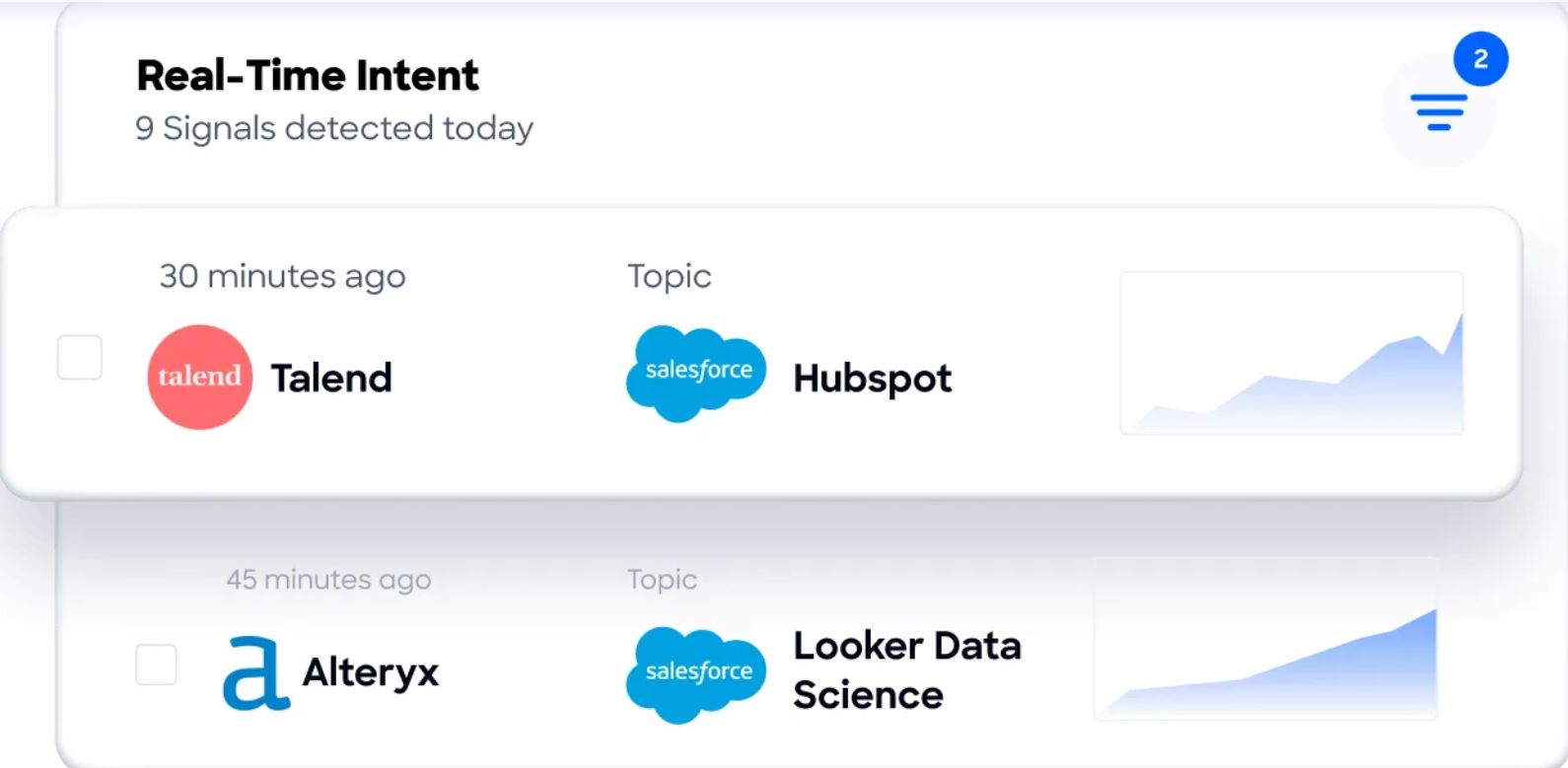
The GTM Context Graph connects that signal with CRM data, conversation history, and org chart intelligence to surface not just what's happening, but why.
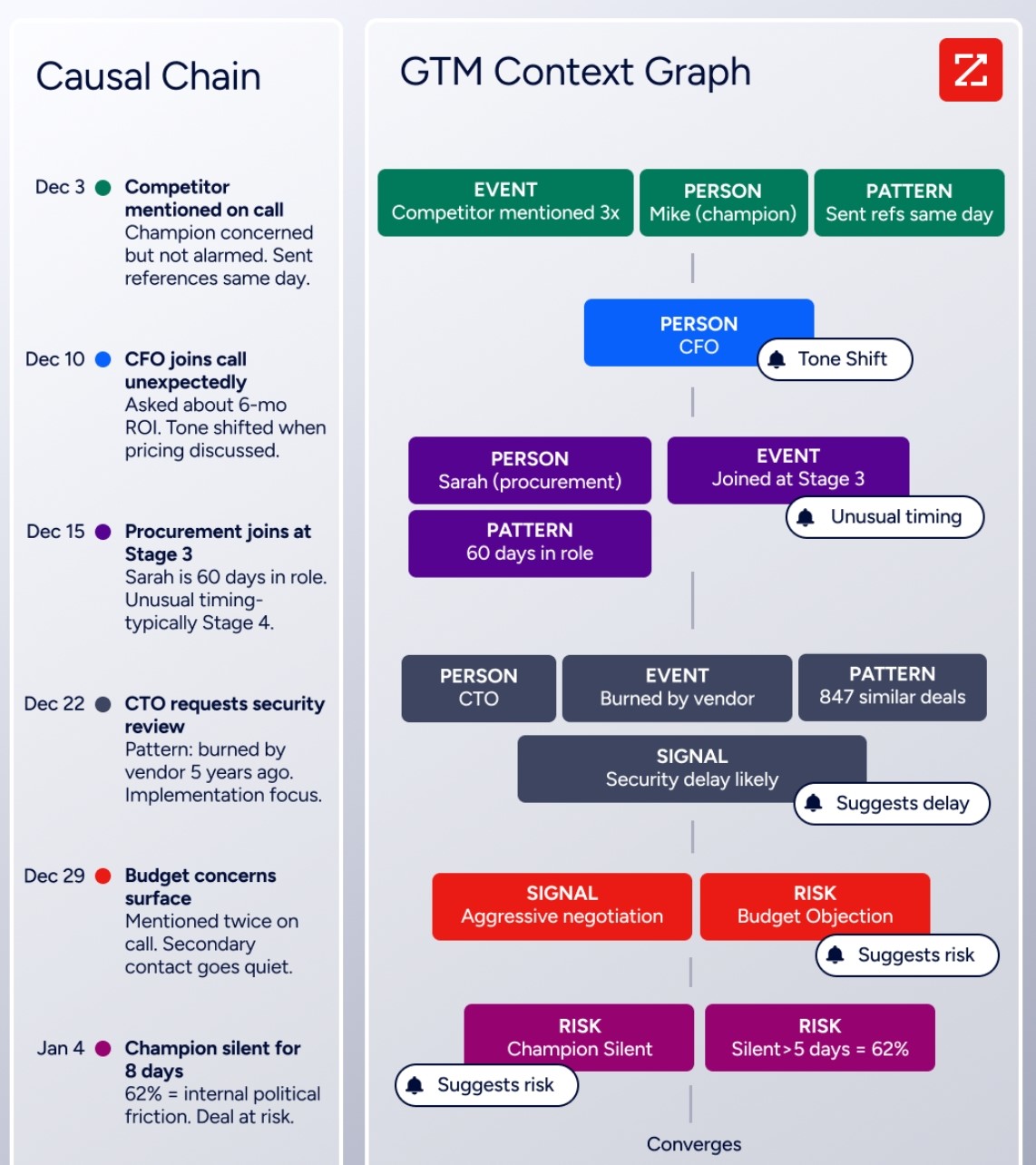
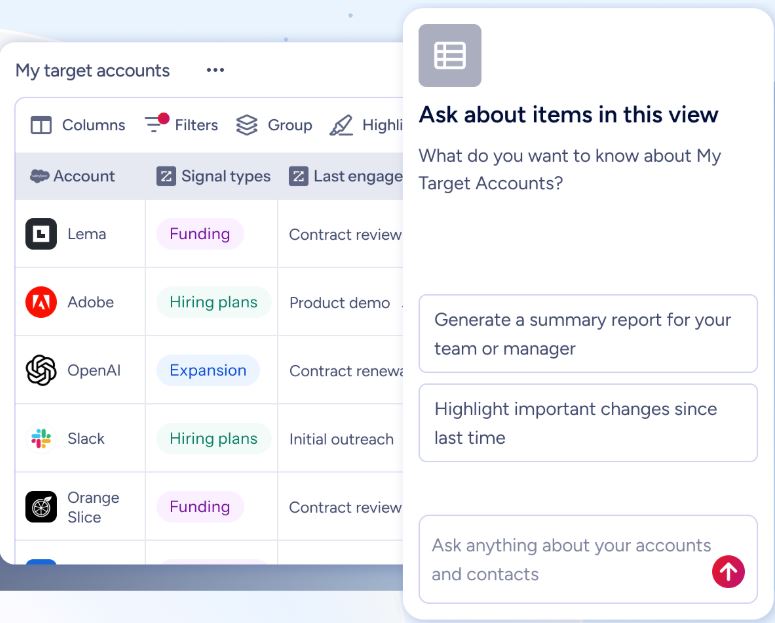
And GTM Workspace puts that intelligence directly into the seller's hands with AI-drafted outreach and prioritized next steps.
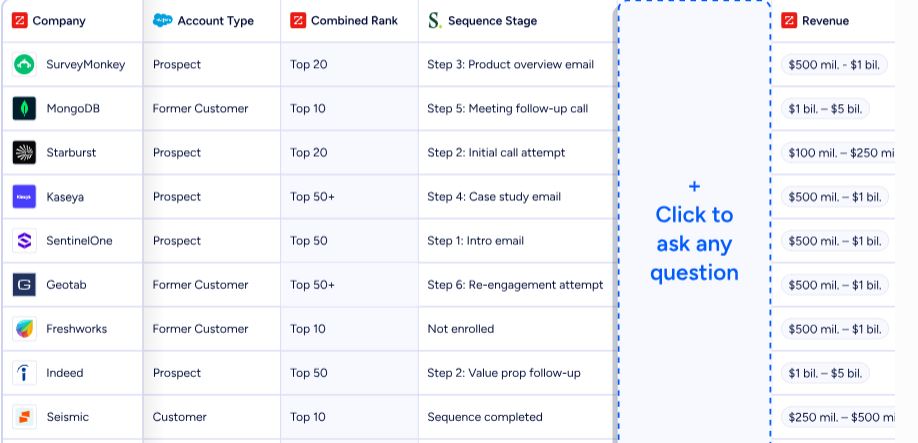
Seismic attributed 39% of active pipeline to ZoomInfo-influenced opportunities and boosted sales productivity by 54%. CBO Toby Carrington: "That combination of our internal CRM data, external signals, and AI has helped us craft very specific account-based messages, and people have responded right away." (Seismic)
CRM integration depth differs significantly
For many revenue teams, the CRM is the system of record. How well an attribution tool integrates with it determines whether the data gets used or ignored.
Adobe Marketo Measure has the deepest CRM integration of any attribution tool. Its Salesforce managed package installs 7 custom objects, custom fields, and 25 stock reports directly into the Salesforce org.
Attribution data lives on Contact, Account, and Opportunity records, visible to reps and reportable by Salesforce admins without a separate login. Microsoft Dynamics is also supported. The integration is non-destructive (Marketo Measure never writes to standard Salesforce objects), reducing installation risk.
That depth comes with complexity. Setting up the managed package requires a dedicated Salesforce user with custom permission sets, sandbox staging before production deployment, and coordination with web developers for JavaScript tracking. G2 reviewers consistently call implementation resource-intensive, often requiring a dedicated Marketing Ops specialist to maintain.
HockeyStack integrates with Salesforce and HubSpot but takes a different approach. Rather than writing custom objects into the CRM, HockeyStack pulls CRM data into its own data layer and delivers insights through its own interface and via a Salesforce iFrame.
The Q2 2025 product update introduced Salesforce Full Sync and a native Salesforce experience for the Nova AI assistant, signaling a push toward tighter CRM integration.
ZoomInfo's CRM integration spans Salesforce, HubSpot, and Microsoft Dynamics, with 120+ marketplace integrations across CRM, marketing automation, sales engagement, and data warehouse categories. But the integration philosophy differs.
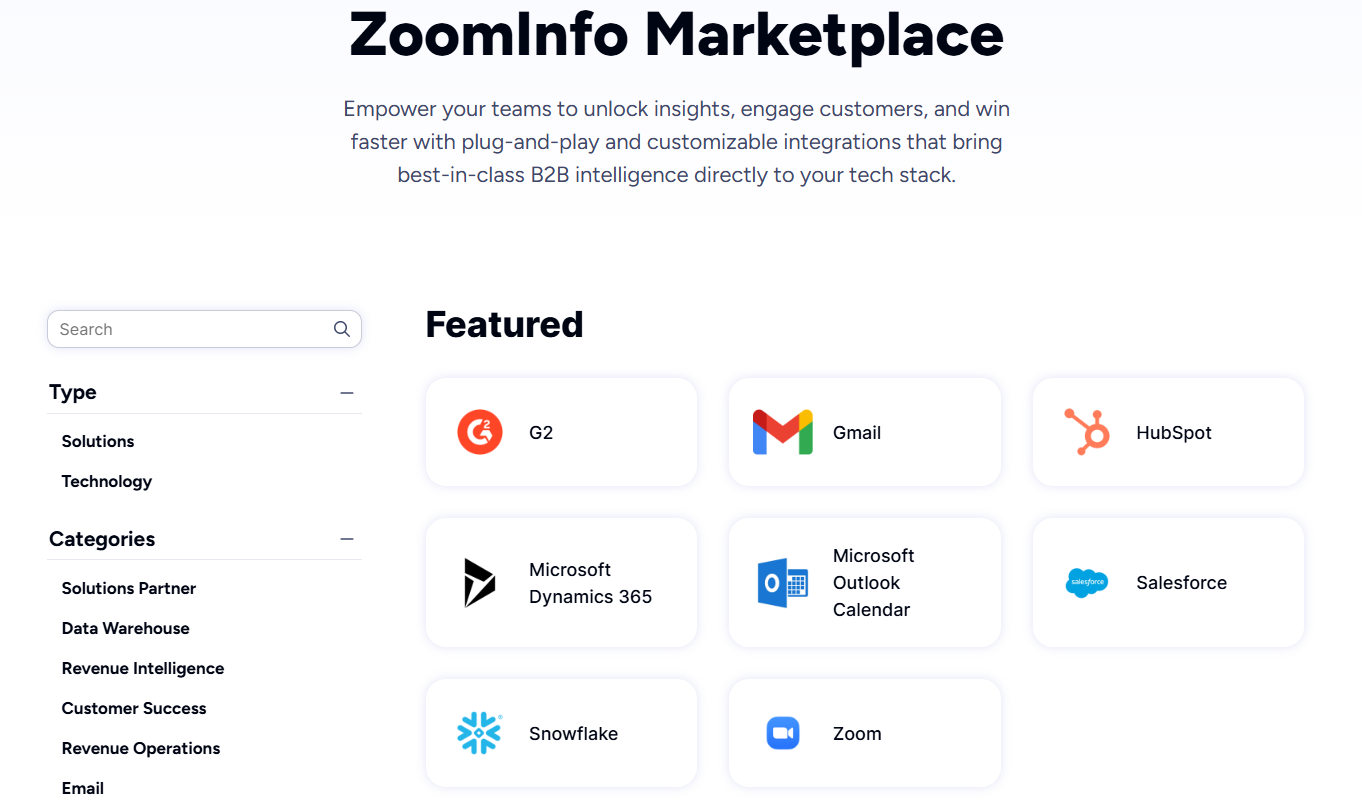
Where Bizible puts attribution data into the CRM and HockeyStack pulls CRM data into its platform, ZoomInfo enriches the CRM with the data and intelligence that inform selling: verified contacts, company intelligence, org charts, intent signals, and AI-generated account summaries.
GTM Workspace then gives sellers a single surface where CRM data, ZoomInfo intelligence, and AI-drafted actions come together without switching tools.
Attribution models: rules-based vs. AI-powered
The attribution model you choose shapes how your team thinks about marketing's contribution. Different models tell different stories from the same data.
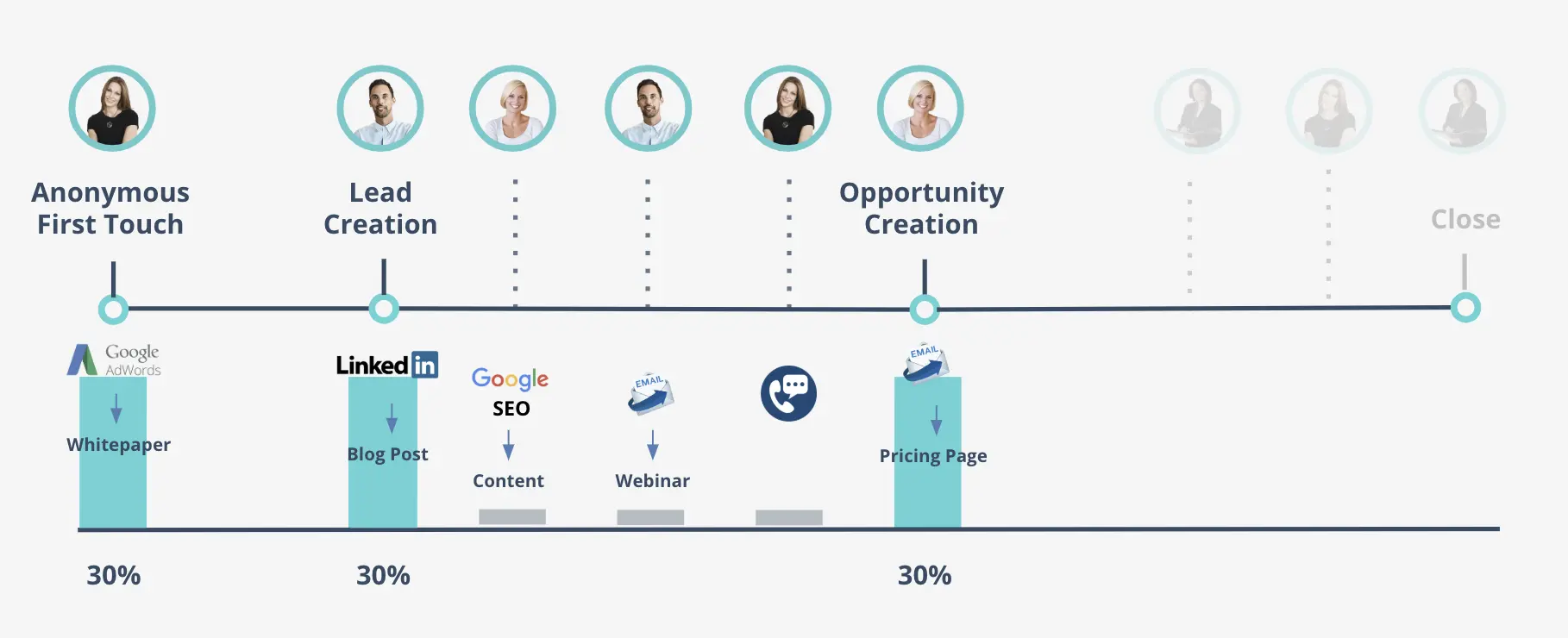
Adobe Marketo Measure offers six attribution models that all run simultaneously: First Touch, Lead Creation, U-Shaped, W-Shaped, Full Path, and a Custom model.
Source: Adobe
The Custom model lets users assign credit percentages to specific funnel stages, and the Machine Learning Model recalculates recommended weights every seven days based on historical closed-deal data.
For enterprise sales cycles with non-linear buyer journeys, the Boomerang Stage feature (available on Tier 2 and above) generates separate touchpoints for every stage re-entry, preserving the full audit trail of a 9-to-12-month deal.
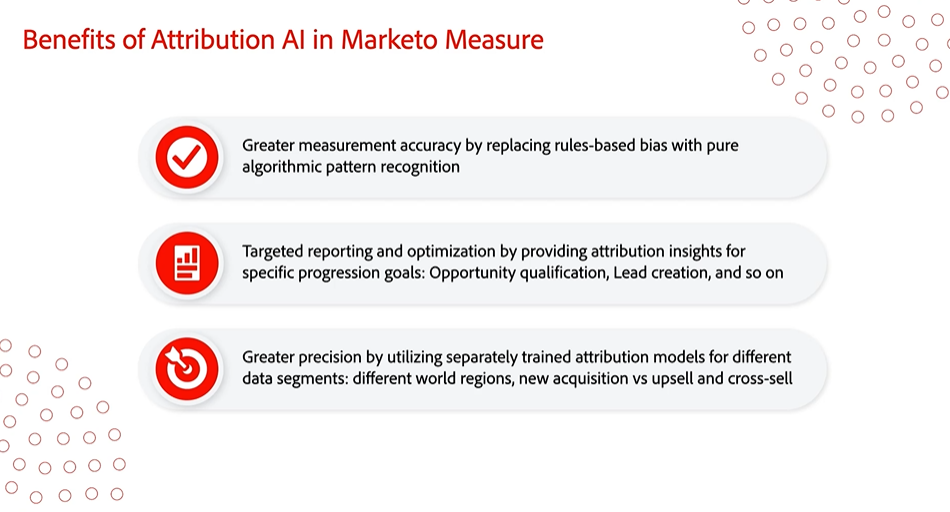
The Marketo Measure Ultimate tier adds Attribution AI, replacing rules-based models with ML-driven credit weighting and incremental scoring that strips out baseline brand effects. But Ultimate requires Adobe Experience Platform (AEP), and there is no migration path from lower tiers. Upgrading means a full reimplementation.
Source: Adobe
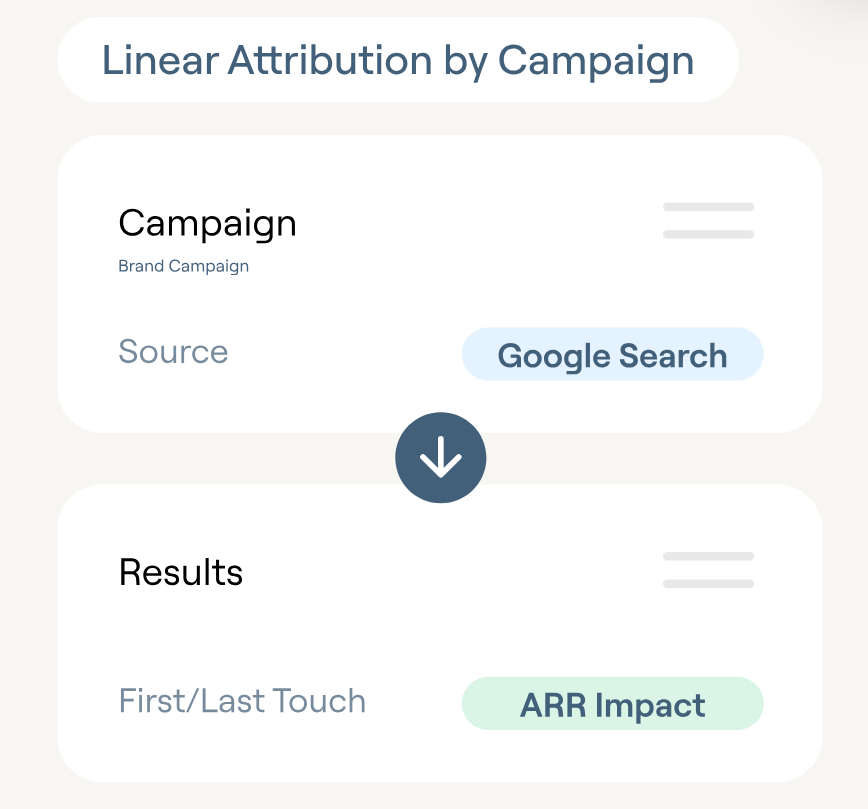
HockeyStack offers 9 attribution models accessible simultaneously, including single-touch and multi-touch options viewable at multiple levels (channel, campaign group, campaign, and ad).
Source: HockeyStack
What distinguishes HockeyStack is its Lift Reporting, which goes beyond correlation-based attribution to "estimate incremental impact", measuring whether marketing activities drove outcomes rather than merely correlating with them.
The platform also combines quantitative touchpoint attribution with qualitative self-reported data ("how did you hear about us?" responses), giving teams two lenses on the same question.
ZoomInfo starts from a different premise. Rather than distributing credit across touchpoints after a deal closes, the GTM Context Graph captures the signals and context behind deal movement in real time. As CPO Dominik Facher writes: "The CRM recorded the state change. It has no record of why it happened."
The GTM Context Graph captures that "why" by unifying conversation intelligence, intent signals, CRM data, and behavioral patterns across every deal.
GTM Studio translates this into AI-powered dashboards tracking engagement, funnel progression, and top-performing segments, while the platform's Account Fit Score uses AI scoring to identify which company attributes predict conversion.
Data and tracking foundations shape what each platform can see
Attribution is only as good as the data feeding it. Each platform approaches data collection differently, and the gaps matter.
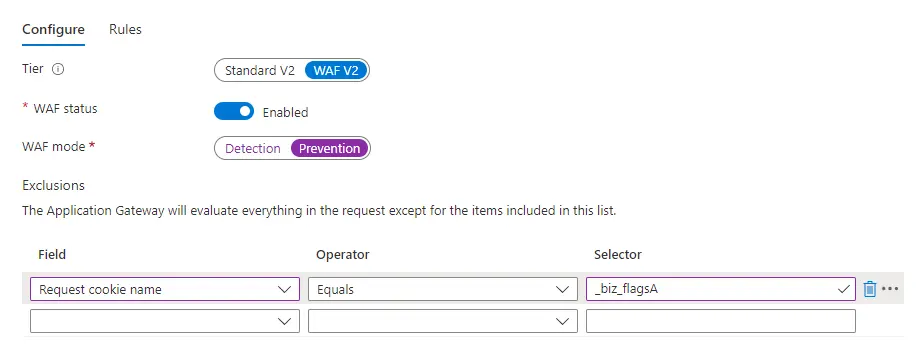
Adobe Marketo Measure captures touchpoints through a JavaScript tracking snippet, CRM integrations, and direct API connections to ad platforms (Google Ads, LinkedIn, Facebook, Bing).
Source: Adobe
It tracks anonymous and known sessions with UTM parameters and referrer data, then classifies every touchpoint into channels using a priority-ordered rule engine. Offline touchpoints (events, direct mail, sales calls) flow in through Salesforce Campaign membership.
The privacy landscape has hurt Marketo Measure. Adobe retired cross-domain tracking and view-through attribution in mid-2024 because of third-party cookie deprecation. The platform relies on first-party JavaScript cookies, which means data loss from ad blockers, Safari ITP, and strict browser privacy settings. G2 reviewers report touchpoints disappearing as browsers tighten privacy rules.
HockeyStack addresses this with cookieless tracking enabled by default, using server-side SHA-256 fingerprinting where IP addresses are deleted before ever being written to disk. This means HockeyStack's buyer journey data doesn't degrade with cookie deprecation.
The platform also ingests data from 20+ GTM tools through native integrations (ad platforms, marketing automation, CRM, ABM/intent providers, data warehouses), stitching it all into a unified account timeline through Atlas, its data layer.

Source: HockeyStack
But neither Marketo Measure nor HockeyStack generates its own B2B contact and company data. They depend on your existing tools and the data flowing through them.
ZoomInfo generates the data. The platform maintains 500M contacts, 100M companies, 135M+ verified phone numbers, and 200M+ verified business email addresses, verified through a multi-source pipeline backed by 300+ human researchers with up to 95% accuracy on first-party data.
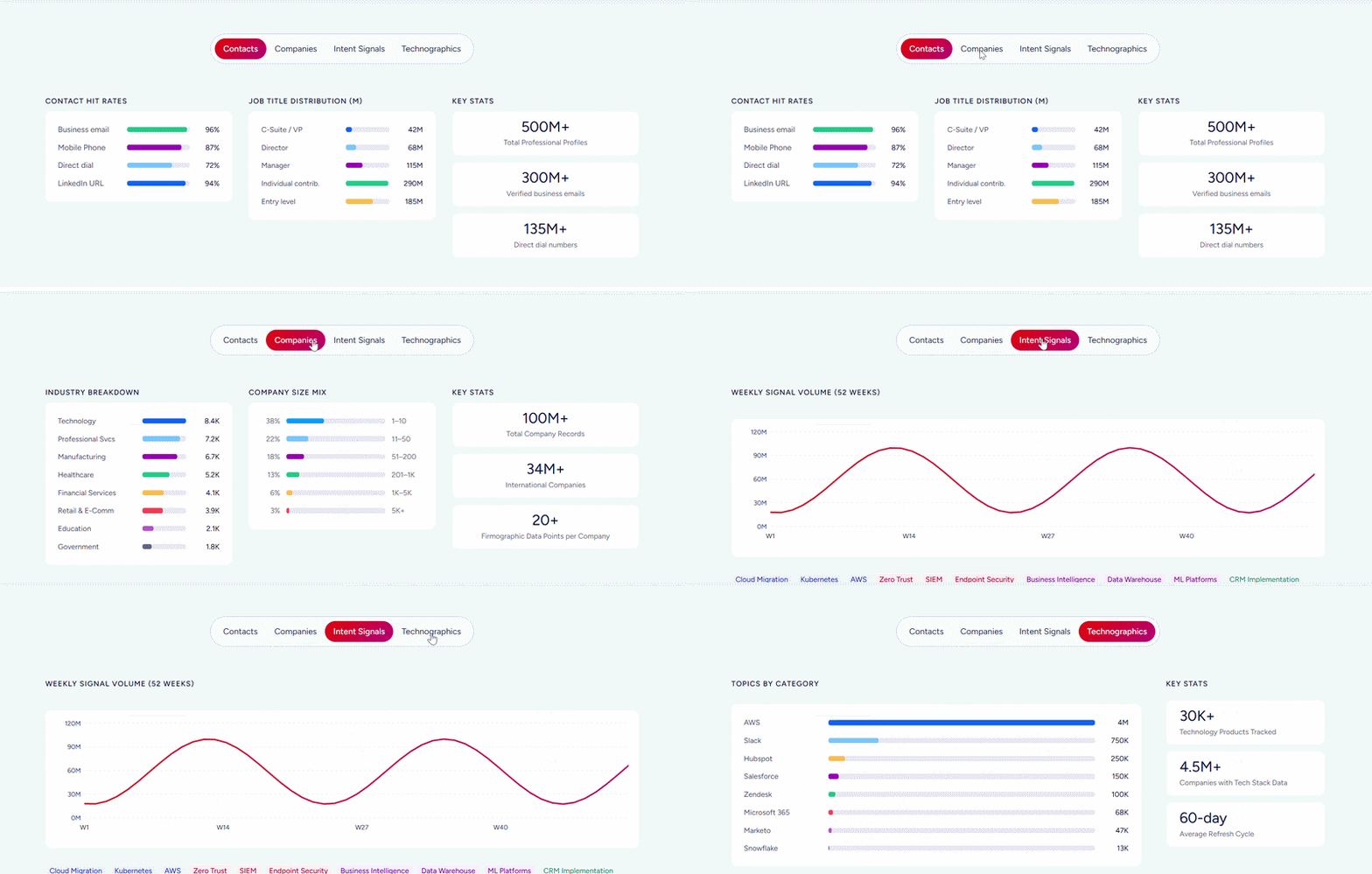
Its intent data tracks signals across 210 million IP-to-Organization pairings.
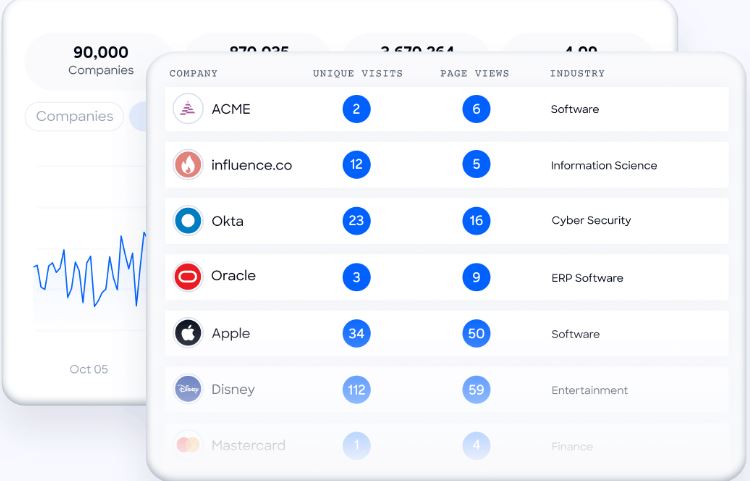
WebSights resolves anonymous website visitors to companies and contacts.
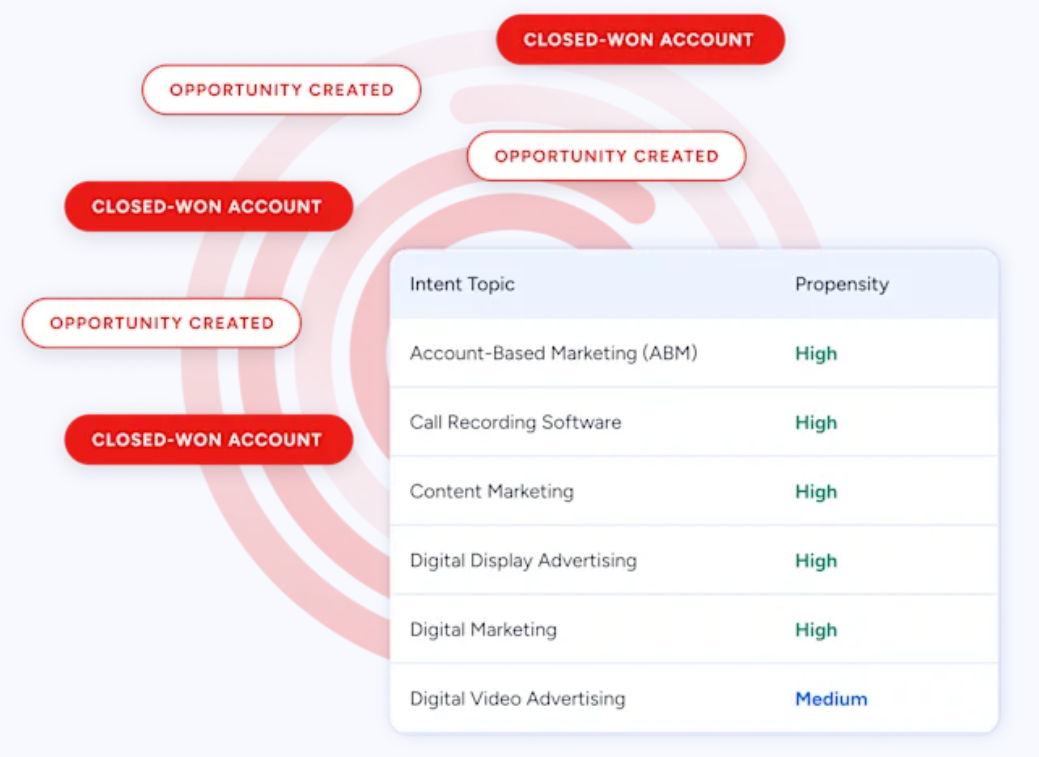
Guided Intent, exclusive to ZoomInfo, identifies topics historically correlated with deal success rather than requiring manual topic selection. This data layer is the foundation for everything else ZoomInfo does.
In a Fortune 500 competitive RFP analyzing 25 million contacts across vendors, the independent consultant concluded that "no other competitor came even close." (Q4 2025 Earnings Call)
AI capabilities reflect different ambitions
All three platforms have invested in AI, but their implementations reveal what each platform is trying to become.
Adobe Marketo Measure's AI lives in Attribution AI, available only on the Ultimate tier. It replaces static rules-based models with ML-driven credit weighting, supports incremental scoring to isolate true channel lift from baseline brand effects, and allows separately trained models for different go-to-market motions. Lower tiers (1-3) have no AI-assisted scoring and are limited to rules-based models.
There are no AI features for generating insights, drafting actions, or automating workflows.
HockeyStack has made AI central to its identity. Odin, its AI analyst, uses a multi-agent orchestration architecture to answer natural-language questions, build reports on demand, and recommend next steps. Results come from deterministic code execution, not generative prediction, reducing hallucination risk. Beyond analytics,
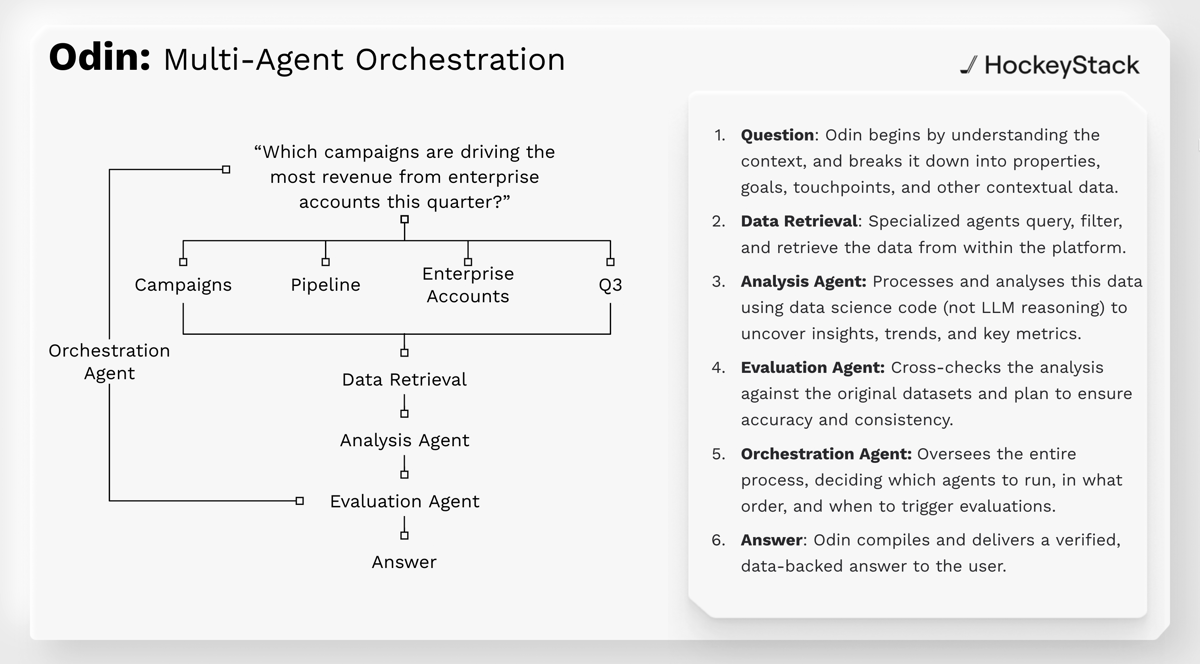
Source: HockeyStack
HockeyStack offers 12 prebuilt AI agents for tasks like resurrecting closed-lost deals, optimizing budgets, coaching reps, and generating pre-call briefs. These agents run on Nex-LM, HockeyStack's LLM built for GTM data. The agent layer is newly launched, though, with limited independent validation beyond HockeyStack's own case studies.
For a deeper look at how these capabilities hold up in practice, see our HockeyStack review.
ZoomInfo's AI covers a wider range of functions. The GTM Context Graph is an AI layer that combines first-party and third-party data to capture patterns across thousands of deals. Inside GTM Workspace, AI agents built on Anthropic's Claude handle account research, draft outreach, monitor signals, and recommend next steps.
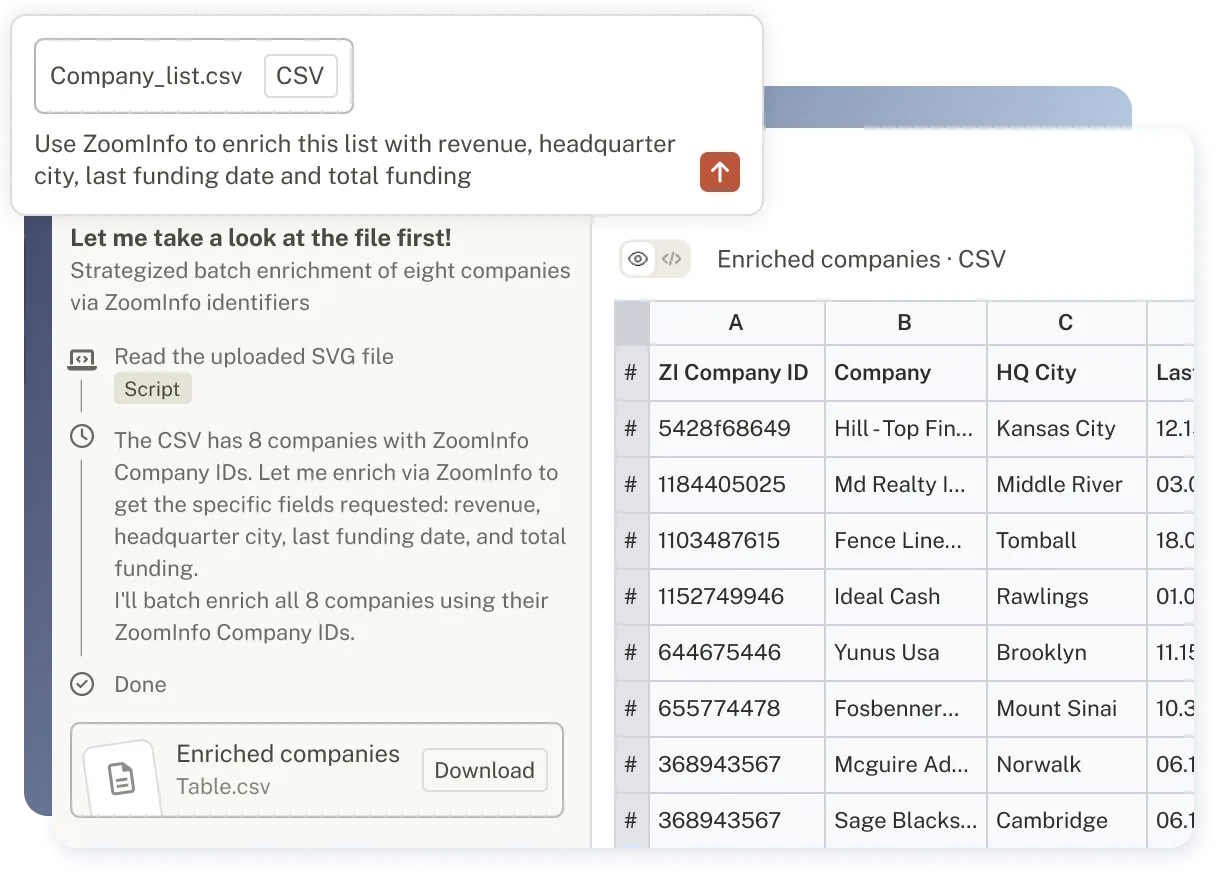
The AI Assistant generates one-click account briefs that pull CRM history, company news, and stakeholder context into a summary in seconds. In GTM Studio, marketers describe audiences in natural language, and AI agents handle enrichment, scoring, routing, and campaign activation. Plays run continuously and improve as prospects respond.
At Spekit, opportunities at higher-scoring accounts were 43% more likely to convert to qualified pipeline and moved 58% faster. RevOps Manager Ben Perceval: "ZoomInfo offers a unified view, eliminating the need to navigate between systems." (Spekit)
Implementation and time-to-value
How quickly a platform delivers usable data shapes whether teams actually adopt it.
Adobe Marketo Measure requires the longest implementation. Setup involves JavaScript deployment across all web properties (with decisions about hardcoding vs. tag management, WAF allowlisting, and multi-domain configuration), Salesforce package installation through sandbox staging, ad platform API connections, and channel classification rules configured via a CSV spreadsheet with strict priority-ordering.
Adobe recommends reviewing channel rules every six months. New customers get hands-on onboarding through a designated Marketo Measure Consultant, but G2 reviewers consistently call the process slow, often requiring weeks to months before reliable attribution data appears.
HockeyStack moves faster. Dice's Director of Marketing Analytics described getting a connected buyer journey and dashboards within one week. The platform provides out-of-the-box dashboard templates that go live as soon as data sources connect, and structured product onboarding documentation walks users through connecting CRM, marketing automation, ad platforms, and website tracking.
That said, every plan includes hands-on success support and custom setups for complex data environments, suggesting that more complex implementations still require hands-on help.
ZoomInfo's GTM Workspace "deploys in weeks, not months", and the company redesigned its onboarding program with a structured 30-to-90-day approach covering planning, technical implementation, education, and adoption. The redesign produced a 25% improvement in customer satisfaction scores and won Rocketlane's Golden Comet award for Best Customer Onboarding Team of 2024.
ZoomInfo University provides role-specific learning paths, certifications, and live webinars for ongoing training.

How each platform fits into your existing stack
No GTM tool operates alone. The question is whether a platform plays well with what you already use or tries to replace it.
Adobe Marketo Measure is architecturally tied to Salesforce (or Microsoft Dynamics) for standard tiers. It pairs naturally with Adobe Marketo Engage, and the tight Marketo Engage + Salesforce integration is where it delivers its strongest results. Ad platform integrations cover Google Ads, Bing Ads, Facebook, and LinkedIn. Chat platform integrations include Drift, Olark, Livechat, and LivePerson.
For teams on unsupported CRMs, Marketo Measure Ultimate can ingest from nearly any CRM through Adobe Experience Platform, but that requires an active AEP license and a full reimplementation.
HockeyStack covers a wider integration surface for an analytics platform: CRMs (HubSpot, Salesforce, ActiveCampaign, Freshsales), ad platforms (Google, LinkedIn, Meta, Bing, TikTok, Reddit, and others), marketing automation (Marketo, Pardot, Eloqua, HubSpot Marketing Hub), ABM/intent providers (6sense, Bombora, Demandbase, G2), data warehouses (BigQuery, Snowflake, Amazon S3, Redshift), and conversation intelligence (Gong) and outbound tools (Apollo).
Its approach is to ingest from everything and become the central analytics layer.
ZoomInfo's integration philosophy differs: it feeds intelligence into your existing tools rather than pulling data out of them. The App Marketplace lists 120+ partner integrations across CRM, marketing automation, sales engagement, data warehouse, and communications categories.
API access is included in all relevant plans, and the MCP server enables any MCP-compatible AI assistant (including Claude and ChatGPT) to access ZoomInfo's data natively. Cloud Partners enables direct data ingestion into AWS, Google Cloud, Snowflake, and Databricks. This means ZoomInfo's intelligence can power any tool in the stack, not just the ones with pre-built connectors.
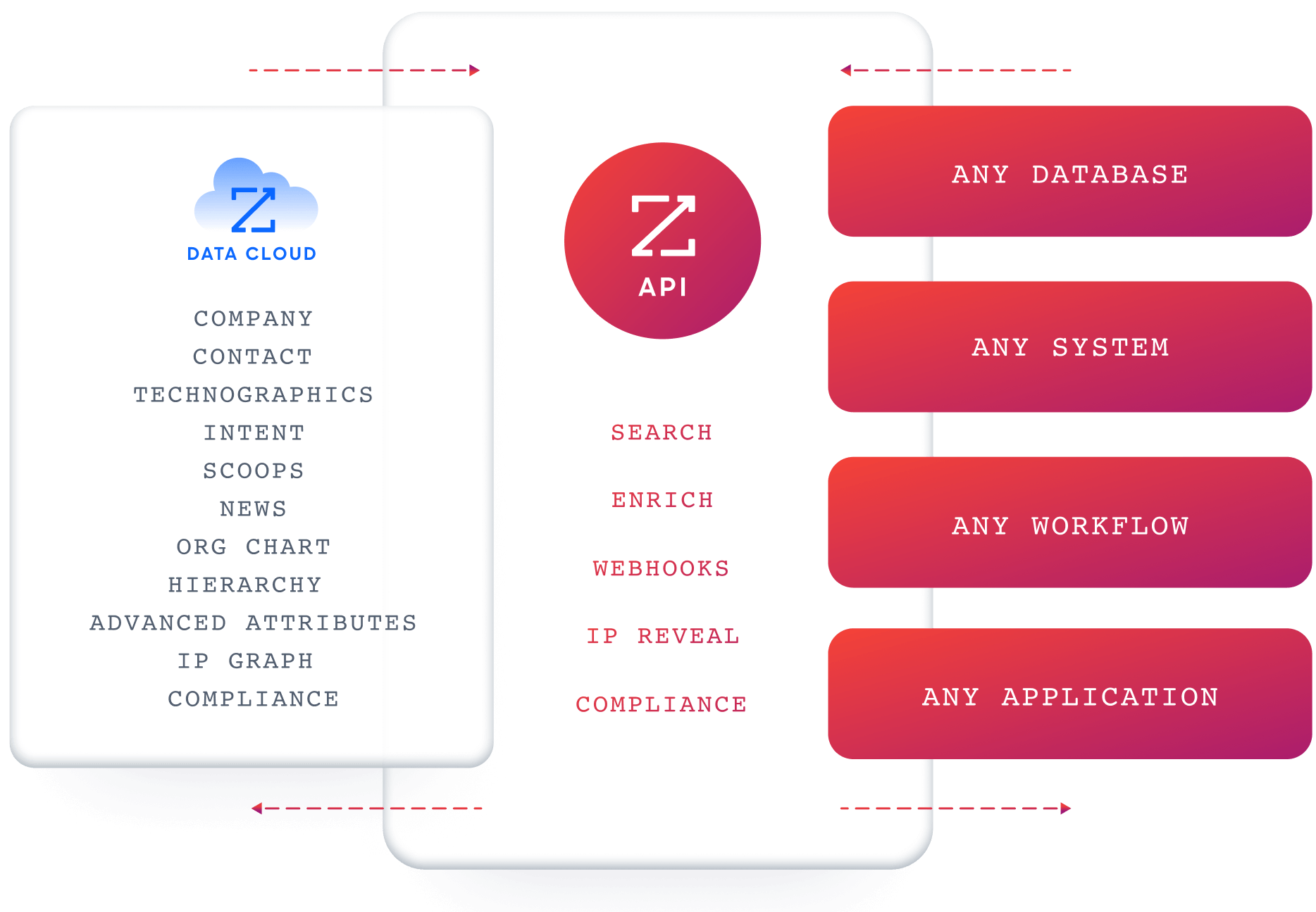
BDO Canada achieved an 87% reduction in dashboard update time. Senior Marketing Intelligence Analyst Jerry Wilson: "The plug-and-play API means I can integrate it into any process and get information at a moment's notice." (BDO Canada)
Pricing transparency and total cost of ownership
None of these platforms publish prices, which makes direct comparison difficult. But the pricing structures reveal something about each platform's target market and total cost of ownership.
Adobe Marketo Measure is sold as an enterprise SaaS subscription tied to Marketo Engage licensing. Pricing scales with contracted volume and is negotiated per deal.
Four tiers exist (Tier 1, Tier 2, Tier 3, and Ultimate), but none carry public pricing. Key cost considerations beyond the license: Marketo Measure Ultimate requires an active AEP license (an additional cost), Salesforce API consumption adds cost for Tiers 1-3, and there is no free trial or free plan. Adobe structures enterprise contracts as annual subscriptions with non-cancelable, non-refundable fees.
HockeyStack uses a custom-quoted, sales-led pricing model. Two named plans exist: GTM Intelligence (reporting, Odin AI, Blueprints, 2 AI agents, scoring, and audience sync) and GTM Execution (everything in Intelligence plus all agents, custom agent builder, and 250,000 agent credits).
Additional costs include Account Intelligence Credits at $0.08 per credit beyond the 10,000 included annually. There is no free trial or free plan, though a free Account Research Tool and interactive demo are available.
For a full breakdown of what each plan includes and how credits work, see our HockeyStack pricing guide.
ZoomInfo's pricing page organizes plans into Sales (Professional, Advanced, Enterprise) and Marketing (Marketing Demand, ABM Lite, ABM Enterprise) tiers, with consumption-based pricing scaled to seats, credit volume, and feature requirements.
ZoomInfo stands out with free entry points: ZoomInfo Lite is a permanent free tier (not a trial) with access to the B2B database, 10 monthly export credits, individual and company searches, the Chrome extension, WebSights Lite (up to 10 website visitor reveals per day), and HubSpot integration.
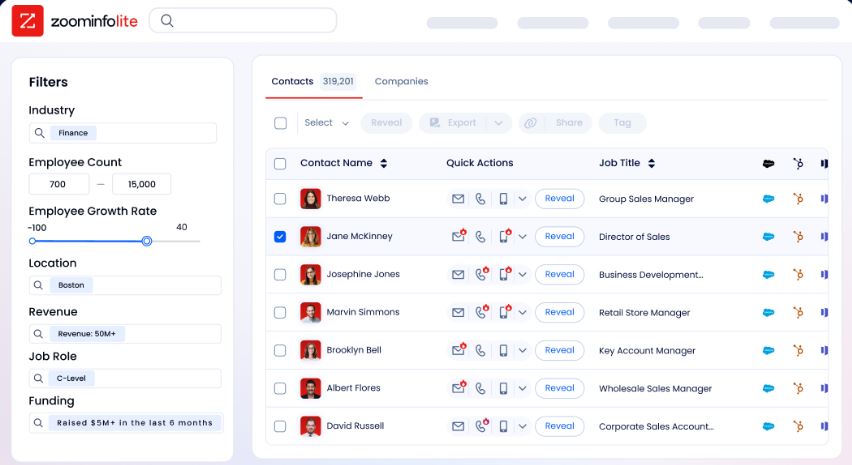
A separate 7-day free trial provides access to core platform features with no credit card required.
When evaluating total cost, consider what each platform replaces. Marketo Measure is a dedicated attribution tool; you still need separate tools for data, intent, prospecting, and execution. HockeyStack can consolidate some analytics and ABM tools (Firstup reportedly achieved "$140K in annual savings" by replacing 6sense and research vendors).
ZoomInfo can replace multiple point solutions across data, intent, prospecting, engagement, conversation intelligence, and marketing orchestration in one platform.
Bizible vs. HockeyStack vs. ZoomInfo: Which should you choose?
The right choice depends on where your biggest gap is: measurement, intelligence, or execution.
Choose Adobe Marketo Measure if:
You're invested in Salesforce and Adobe Marketo Engage
You need attribution data written directly into CRM objects for shared sales and marketing reporting
Your organization has a dedicated Marketing Ops specialist to configure and maintain the platform
Rules-based multi-touch attribution with Boomerang stage tracking is a hard requirement
You're comfortable with a longer implementation timeline for a Salesforce-native data model
Choose HockeyStack if:
You want attribution, account scoring, buyer journeys, and AI analytics in a single platform
Speed of implementation matters and you need dashboards within days, not months
Cookieless tracking is important for your privacy environment
You're interested in AI agents that extend analytics into automated GTM execution
You're comfortable with an early-stage vendor that's iterating quickly
Choose ZoomInfo if:
You need the data foundation (contacts, companies, signals) that makes attribution and every other GTM motion more effective
You want intelligence that tells you not just what happened, but why deals move or stall
Your team needs to act on insights, not just report on them, with AI-drafted outreach, signal-triggered plays, and prioritized account feeds
You want one platform that serves sellers (GTM Workspace), marketers and RevOps (GTM Studio), and developers (APIs and MCP)
You value a proven enterprise platform with 35,000+ customers, verified data at scale, and security certifications including ISO 27001, SOC 2 Type II, and GDPR/CCPA
See how ZoomInfo can power your GTM motion with a free trial, or start with ZoomInfo Lite at no cost.
Attribution platforms answer an important question. But the companies that win don't just measure what worked last quarter. They identify who's in-market right now, reach the right people with the right message, and move deals forward with intelligence their competitors lack. That requires more than attribution. It requires a data and intelligence foundation. ZoomInfo provides it.
Bizible vs. HockeyStack vs. ZoomInfo FAQ
What is the core difference between Bizible, HockeyStack, and ZoomInfo?
Adobe Marketo Measure (Bizible) is a dedicated B2B marketing attribution platform that writes touchpoint data directly into Salesforce, designed for teams invested in the Adobe and Salesforce ecosystem. HockeyStack is a revenue data intelligence platform that combines attribution with AI-powered analytics, account scoring, and autonomous AI agents for GTM execution.
ZoomInfo is an AI GTM platform built on a large B2B dataset (500M contacts, 100M companies), providing the data, buyer signals, and execution tools that power the go-to-market process.
Which platform is best for multi-touch attribution specifically?
For attribution depth, Marketo Measure and HockeyStack are the stronger choices. Marketo Measure offers six simultaneous attribution models with a machine learning custom model and Boomerang stage tracking for complex enterprise sales cycles. HockeyStack provides nine models alongside lift reporting that estimates causal impact, not just correlation.
ZoomInfo approaches revenue intelligence differently, through its GTM Context Graph and signal-based analytics, rather than traditional touchpoint attribution models.
Can HockeyStack replace Bizible for Salesforce-based teams?
HockeyStack integrates with Salesforce and offers a Salesforce iFrame plus full CRM sync, but it does not write custom attribution objects directly into the CRM the way Marketo Measure does. Teams that rely on Salesforce-native attribution reports built against Buyer Touchpoint and Buyer Attribution Touchpoint objects would need to adjust their workflows.
HockeyStack's advantage is faster implementation (approximately one week to dashboards versus weeks to months for Marketo Measure) and broader AI capabilities.
Does ZoomInfo provide marketing attribution?
ZoomInfo approaches the problem of understanding revenue drivers through its GTM Context Graph rather than traditional multi-touch attribution models. The GTM Context Graph combines CRM data, conversation intelligence, intent signals, and behavioral data to capture why deals move or stall. GTM Studio provides AI-powered dashboards tracking engagement, funnel progression, and top-performing segments.
For teams that specifically need touchpoint-level attribution credit distribution, ZoomInfo can complement a dedicated attribution tool like Marketo Measure or HockeyStack by providing the data and signals they analyze.
How do the platforms handle cookie deprecation and privacy changes?
HockeyStack is best positioned, with cookieless tracking enabled by default using server-side fingerprinting and no cookies required. Adobe Marketo Measure relies on first-party JavaScript cookies and retired cross-domain tracking and view-through attribution in mid-2024 because of privacy changes.
ZoomInfo uses company-level website visitor identification (WebSights) and intent signals from IP-to-Organization pairings, which operate independently of browser cookies.
Which platform has the lowest barrier to entry?
ZoomInfo offers ZoomInfo Lite, a permanent free tier with access to B2B data, 10 monthly export credits, search capabilities, and a Chrome extension. It also offers a 7-day free trial of paid features. HockeyStack provides a free interactive demo and account research tool but no free plan or trial. Adobe Marketo Measure has no free trial or free plan, and all access requires enterprise sales engagement.
What is HockeyStack's Odin AI and how does it compare to ZoomInfo's AI capabilities?
Odin is HockeyStack's embedded AI analyst that answers natural-language questions about attribution, budgets, conversions, and campaign performance using a multi-agent orchestration architecture. It generates reports on demand and delivers results through deterministic code execution rather than generative inference.
ZoomInfo's AI covers wider ground: the GTM Context Graph provides the intelligence layer, GTM Workspace includes AI agents for account research, outreach drafting, and signal monitoring, and GTM Studio uses AI for audience building, campaign orchestration, and play optimization.
HockeyStack's AI focuses on analytics and GTM workflow automation; ZoomInfo's AI spans data, intelligence, and execution.
Which platform is best for enterprise B2B companies with complex sales cycles?
All three serve enterprise B2B, but from different angles. Adobe Marketo Measure is built for complex, multi-touch B2B sales cycles with Boomerang stage tracking and deep Salesforce integration, though it requires significant implementation investment. HockeyStack handles enterprise complexity with fast implementation and counts companies like Mastercard, RingCentral, and Rakuten among its users.
ZoomInfo serves 35,000+ companies including Adobe, Snowflake, and JPMorgan, and its combination of verified data, the GTM Context Graph, and execution tools makes it the widest-ranging platform for enterprise GTM teams that need both intelligence and action.
Comparing Bizible and HockeyStack? These related breakdowns go deeper:
