
Teams that run Clay and Clearbit side by side usually hit the same problems within a quarter:
enrichment records sit in two separate systems with conflicting values for the same contact,
a lead enriched in Clearbit carries one job title while Clay's waterfall returns a different one, and nobody knows which is current,
and someone on the ops team is reconciling spreadsheets by hand because neither platform knows what the other found.
However the two platforms ended up coexisting (a team using Clay for outbound waterfall enrichment while Clearbit powers HubSpot's native data layer, different departments choosing different tools, or a migration from standalone Clearbit to Clay still in progress), the longer they operate independently, the more the data diverges and the harder it becomes to trust either system as the source of truth.
Connecting Clay and Clearbit closes that gap.
Clearbit's enrichment data flows into Clay tables so waterfall sequences can incorporate Clearbit's company and contact attributes alongside Clay's other 150+ providers. Contact records enriched in Clearbit can feed Clay workflows, so outbound sequences, CRM syncs, and ICP scoring all draw from one dataset rather than two parallel ones.
Clay offers a native Clearbit integration as one of its marketplace data providers, accessible directly within Clay tables. For teams needing different connection patterns, third-party automation tools like Zapier and Make can bridge the two platforms with event-driven workflows. Each method differs in setup complexity, data coverage, sync direction, and cost.
One problem no connection method solves: the integration routes data between the two platforms, but it does not verify whether the underlying records are accurate, complete, or current.
That is where ZoomInfo comes in. ZoomInfo integrates natively with Clay as a data enrichment provider and appears in the ZoomInfo App Marketplace alongside Clearbit, offering API and MCP access that can feed verified data into any enrichment workflow, so both platforms operate on records that are accurate and complete.
This article covers the Clay-Clearbit integration: which methods are available, what data each one handles, how to set them up, the use cases that justify connecting both platforms, and the limitations to plan for. It also covers how ZoomInfo fits in as a data quality layer that strengthens the records flowing through both Clay and Clearbit.
Integration Overview
Does a native integration exist?
Yes. Clay offers Clearbit as a native data enrichment provider within its marketplace. Users can add Clearbit enrichment columns directly inside Clay tables to enrich company data by IP address, enrich person and company data from work emails, and find contacts associated with companies. The integration costs 8 data credits per enriched cell.
What data can sync?
Company firmographics (industry, employee count, revenue, tech stack, location), person attributes (name, title, role, seniority, social profiles), and contact discovery (finding people at a given company). Clearbit's 100+ B2B attributes covering firmographic, demographic, and technographic data are accessible through the integration.
Is the sync bidirectional?
No. The native integration flows one direction: Clearbit data into Clay. Clay queries Clearbit's enrichment dataset and pulls results into table columns. There is no built-in way to push Clay data back into Clearbit or HubSpot's Breeze Intelligence layer.
Is it real-time or batch?
The native integration processes enrichments row by row as Clay runs the table, operating in near real-time per row. Third-party automation tools like Zapier trigger within 1 to 15 minutes depending on plan tier.
What are the available methods?
Native Clay-Clearbit integration (within Clay's data marketplace), third-party automation (Zapier, Make), and custom API development using both platforms' programmatic interfaces.
Method | Setup Difficulty | Data Flow | Real-time? | Approximate Cost |
|---|---|---|---|---|
Native (Clay Marketplace) | Low | Clearbit to Clay | Near real-time (per row) | 8 Clay data credits/cell + Clay plan |
Zapier | Medium | One-way per Zap | Near real-time (1-15 min) | From $19.99/mo |
Make (Integromat) | Medium | Configurable per scenario | Near real-time or scheduled | From $10.59/mo |
Custom API | High | Fully customizable | Depends on implementation | Developer time + hosting |
One distinction worth settling upfront: Clay's native integration enriches records already in a Clay table, pulling Clearbit data into an existing workflow.
Zapier and Make handle event-driven flows between the two platforms (for example, triggering a Clay enrichment when a new Clearbit-enriched contact appears in HubSpot). Custom API development offers the most flexibility but requires maintaining Clearbit's REST API credentials and Clay's webhook infrastructure independently.
Integration Methods
Native Clay-Clearbit Integration (Clay Marketplace)
How it works: Clearbit is available as a native data provider inside Clay's marketplace of 150+ enrichment sources.
Users add a Clearbit enrichment column to any Clay table, and Clay queries Clearbit's dataset row by row, returning structured company and person attributes directly into the table. The integration supports multiple Clearbit actions: enriching company data from an IP address, enriching person and company data from a work email, and finding contacts associated with companies.
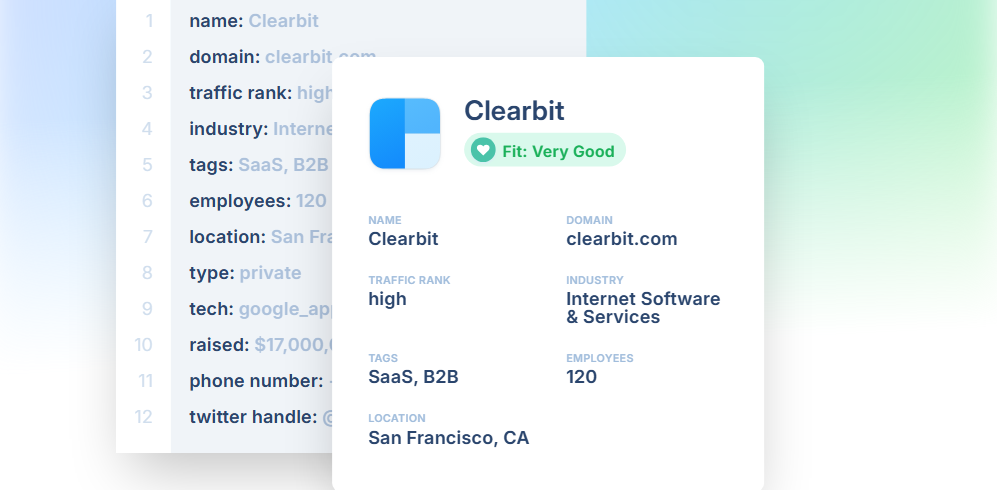
What it syncs: Company attributes (name, domain, industry classification including NAICS, GICS, and SIC codes, employee count, revenue range, tech stack, corporate hierarchy), person attributes (name, title, normalized role and seniority, location, social profiles), and contact discovery (finding people at a given company by domain). Clearbit's 250+ data sources feed these results.
Source: Clearbit
Fits: ongoing enrichment of records inside Clay tables; not a standalone migration or sync tool.
Setup process:
In your Clay table, click "Add Enrichment" on any column and search for Clearbit in the data provider marketplace.
Select the Clearbit action you need: "Enrich Company" (from domain or IP), "Enrich Person" (from work email), or "Find Contacts" (from company domain).
Map the required input field from your table (email address, domain, or IP address) to the Clearbit enrichment column.
Configure which output fields you want returned (company name, industry, employee count, person title, seniority, etc.) and how they map to new or existing columns.
Run the enrichment on a test row to verify data returns correctly and the credit cost matches expectations (8 data credits per enriched cell).
Apply the enrichment to your full table. Clay processes rows sequentially through the Clearbit provider, populating results as they return.
Strengths: No additional subscription or middleware required beyond a Clay plan. Clearbit enrichment sits alongside Clay's other 150+ providers, so teams can layer it into waterfall enrichment sequences where Clearbit serves as one provider in a chain (consuming credits only when it returns a result the previous provider missed). Setup takes minutes, and results flow directly into Clay's downstream workflows (CRM sync, outbound sequencing, ICP scoring).
Limitations: Data flows one direction only (Clearbit into Clay). The integration covers Clearbit's enrichment dataset only; it does not access Clearbit's Buyer Intent or form shortening, which are available exclusively within HubSpot as Breeze Intelligence. Each enriched cell costs 8 Clay data credits, which adds up at scale when enriching large tables across multiple Clearbit actions. Clearbit's standalone APIs are in active sunset following HubSpot's acquisition, so the long-term availability of this integration depends on whether Clearbit continues to serve API requests outside the HubSpot ecosystem.
Best for: GTM teams already using Clay as their primary enrichment and workflow platform that want to add Clearbit's company and person data as one layer in a multi-provider waterfall. Teams using both HubSpot (where Clearbit data lives natively as Breeze Intelligence) and Clay (for outbound workflows) that want a single Clay table incorporating both data sources.
Zapier
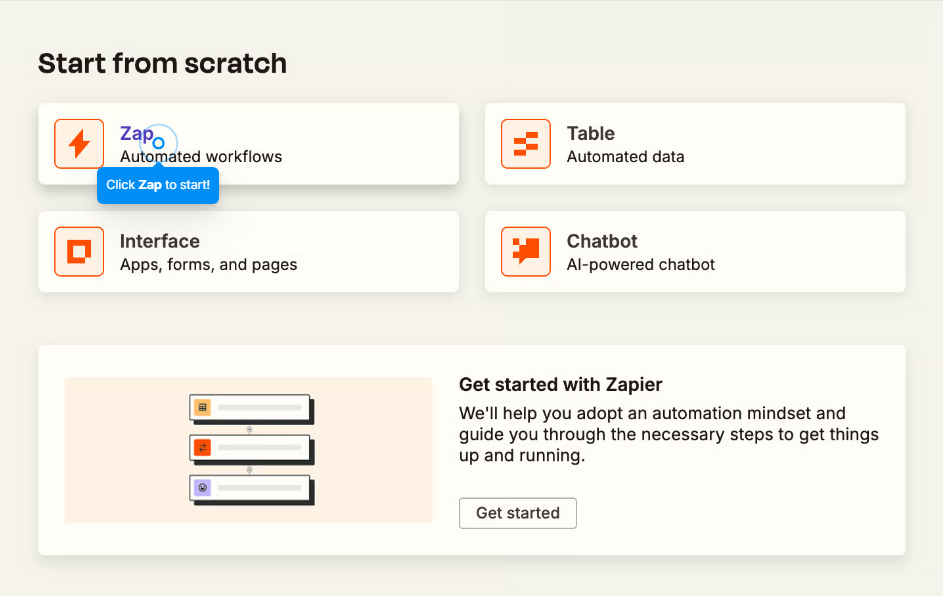
How it works: Zapier connects Clay and Clearbit through event-driven automations called Zaps.
Each Zap pairs a trigger in one app with an action in the other. Both platforms have Zapier integrations (Clay offers a native Zapier connector, and Clearbit has a dedicated Zapier integration). The primary pattern uses Clearbit enrichment triggers or HubSpot contact events to feed data into Clay tables via Clay's webhook endpoints.
Source: Zapier
What it syncs: Depending on available triggers and actions, Zapier can route enriched contact and company data between the two platforms.
A Clearbit enrichment event (new contact enriched, company identified) can trigger a row creation in Clay via webhook. Clay can also send enriched data out to Clearbit-connected systems (like HubSpot) through Zapier's action steps. Field mapping is manual and configurable per Zap.
Fits: ongoing event-driven sync between workflows; not a bulk migration tool.
Setup process:
Create a Zapier account and connect both your Clay and Clearbit (or HubSpot, where Clearbit data now resides) accounts using OAuth.
Choose the trigger app and event. For example, select HubSpot as the trigger with "New Contact" or "Updated Contact" (which carries Breeze Intelligence enrichment data).
Choose Clay as the action app. Select "Send data via Webhook" or use Clay's native Zapier action to create a row in a specific Clay table.
Map fields from the trigger (company name, industry, employee count, contact title) to Clay table columns.
Test the Zap with a sample record to verify the field mapping produces the expected result in your Clay table.
Turn the Zap on. New enrichment events in Clearbit/HubSpot will push data into Clay automatically.
Strengths: No engineering resources required. Enables cross-platform workflows the native Clay-Clearbit integration cannot handle (for example, triggering a Clay outbound workflow when Clearbit identifies a high-intent website visitor in HubSpot). Zapier's filter and formatting steps add conditional logic (only sync contacts matching specific ICP criteria).
Limitations: Each Zap handles one trigger-action pair. Bidirectional sync requires duplicate Zaps and loop-prevention logic. Historical records created before the Zap was activated do not sync. Zapier charges by task count, and high-volume enrichment events accumulate costs. Clearbit's Zapier connector may lose functionality as Clearbit capabilities migrate into HubSpot's native platform.
Best for: Teams running HubSpot with Breeze Intelligence (Clearbit's post-acquisition home) alongside Clay for outbound, who need enriched HubSpot contacts to feed into Clay workflows automatically without manual CSV exports.
Make (Formerly Integromat)
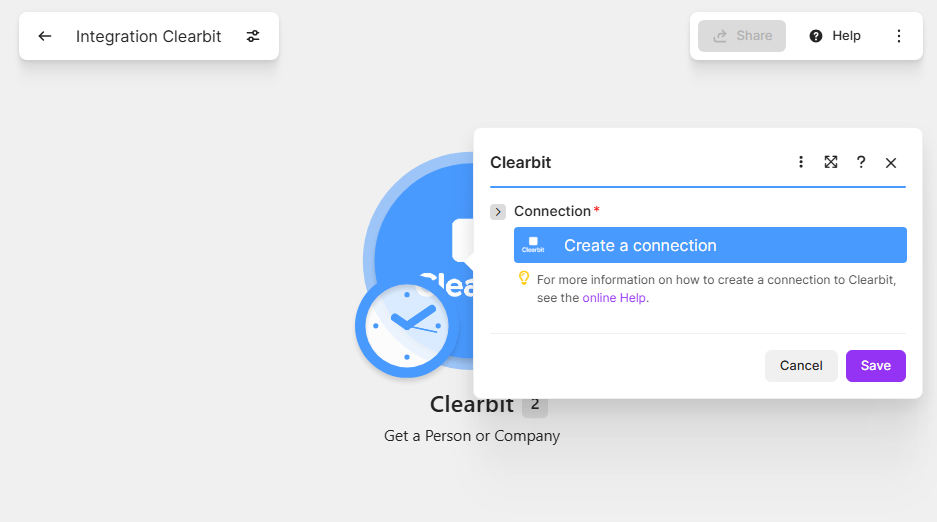
How it works: Make uses a visual scenario builder where modules connect in a flowchart. Each module represents a step: watch for a trigger, transform data, create or update a record. Clearbit is available as a Make module, and Clay can connect through Make's HTTP module using Clay's webhook endpoints. Scenarios can branch, filter, loop, and handle errors, offering more control than Zapier's linear structure.
What it syncs: The same data types as Zapier (enriched contact and company records), with more flexibility in how data transforms between platforms. Make supports iterators for batch processing, routers for conditional paths, and aggregators for combining records before writing to Clay.
Fits: ongoing sync with conditional logic and data transformation; not a migration tool.
Setup process:
Create a Make account and add Clearbit as a connection via OAuth. For Clay, set up an HTTP webhook module pointing to your Clay table's webhook URL.
Build a new scenario. Add the Clearbit module (e.g., "Enrich Person" or "Enrich Company") as the trigger or an intermediate step.
Add an HTTP module configured to POST data to your Clay table's webhook endpoint.
Connect the modules and map fields. Make provides functions for transforming data between platforms (e.g., standardizing industry codes, reformatting phone numbers).
Add error-handling modules to catch failures and log them.
Set the scenario to run on every trigger event or on a time-based schedule.
Strengths: Fine control over data transformation and conditional routing. The visual builder makes complex workflows easier to follow than code. Batch operations and error handling are built in. Per-operation pricing is lower than Zapier at higher volumes.
Limitations: Steeper learning curve than Zapier's guided setup. Clay's Make integration is less documented than its Zapier connector, requiring HTTP module configuration rather than a native app module. Both Clearbit's and Clay's APIs impose rate limits that high-volume scenarios may hit.
Best for: Teams with conditional sync requirements (e.g., only push Clearbit-enriched contacts into Clay if they match specific firmographic criteria, or route different company sizes to different Clay tables). Mid-size teams whose sync volumes make Zapier's per-task pricing expensive.
Custom API Integration
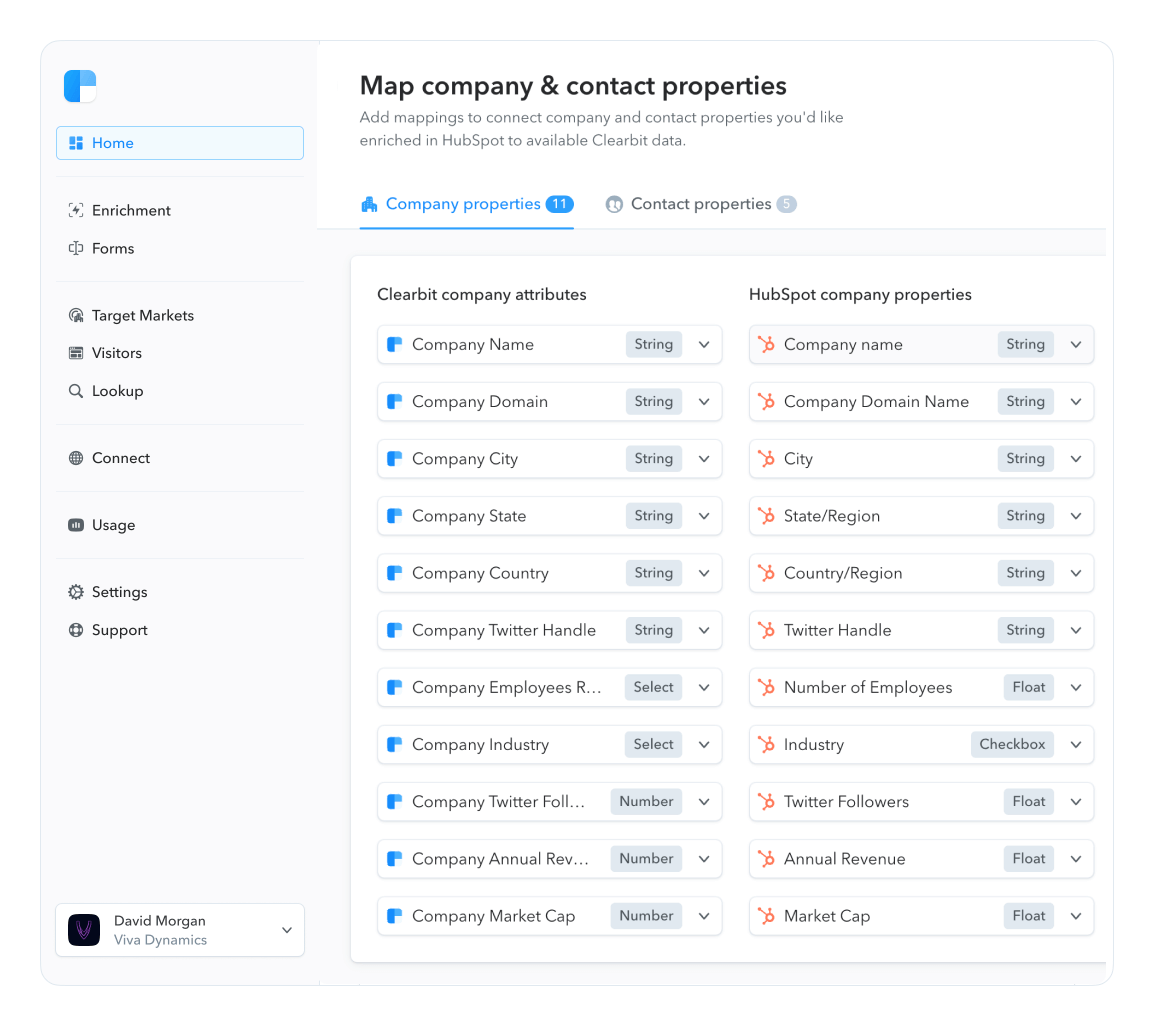
How it works: Clearbit provides REST APIs for person enrichment, company enrichment, and IP-to-company identification (Reveal). Clay accepts data through inbound webhooks on any table and offers an HTTP API enrichment tool for calling external services from within tables.
A custom integration connects these APIs directly, with your own middleware handling authentication, field mapping, transformation, and error recovery.
Source: Clearbit
What it syncs: On Clearbit's side, anything its APIs expose: person attributes, company firmographics, technographics, corporate hierarchy, and IP-to-company resolution. On Clay's side, any data that can be sent via JSON to a webhook endpoint or queried through Clay's HTTP API action.
This is the only method that supports complex sync scenarios like merging Clearbit enrichment results with Clay waterfall data before writing to a CRM.
Fits: either one-time migration or ongoing sync; the only method with no ceiling on either.
Setup process:
Obtain Clearbit API credentials from the Clearbit dashboard (HTTP Basic Auth with API key as username). For Clay, copy the webhook URL from a Clay table configured as a webhook source.
Design the data model mapping between Clearbit's enrichment output fields and Clay's table columns, including field-level transformations.
Build a server-side application that calls Clearbit's enrichment API (person, company, or combined endpoint), transforms the response, and POSTs the result to Clay's webhook URL.
Implement error handling for Clearbit's async enrichment pattern (the API returns 202 for uncached lookups and delivers results via webhook callback).
Add logging and retry logic. Clearbit's rate limit is 600 requests per minute per endpoint; Clay's webhook tables accept up to 50,000 submissions.
Deploy, monitor, and maintain the integration over time.
Strengths: Full control over what syncs, when, and how. Can implement complex business logic (deduplication, conditional enrichment, multi-source merging). No per-record fees from a third-party connector.
Limitations: Requires development resources to build and maintain. Clearbit's standalone APIs are in active sunset following HubSpot's acquisition; the legacy API documentation is now login-gated, and long-term API availability is uncertain. You own the infrastructure, monitoring, and error recovery. Clay's webhook tables have a hard limit of 50,000 submissions per table (Enterprise auto-delete lifts this).
Best for: Teams with sync requirements that no off-the-shelf connector satisfies. Organizations with in-house development resources and a clear plan for handling Clearbit's post-acquisition API changes. Companies needing to merge Clearbit and Clay enrichment data with custom logic before writing to downstream systems.
Key Use Cases
1. Multi-Provider Waterfall Enrichment with Clearbit as a Layer
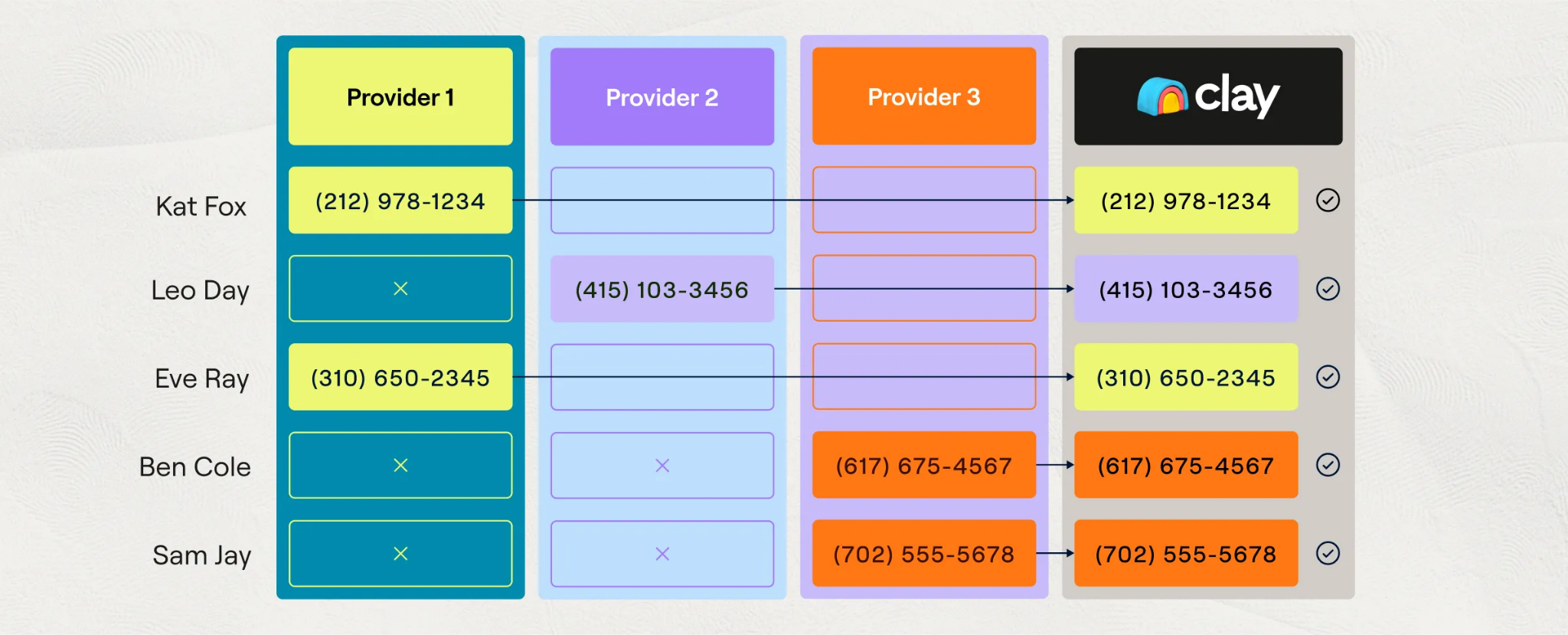
A GTM ops team builds a Clay table with prospect records and configures a waterfall enrichment sequence where Clearbit serves as one provider in a chain alongside others (People Data Labs, Apollo, Lusha).
Clay queries providers in order, stopping at the first valid result. Clearbit's firmographic depth (simultaneous NAICS, GICS, and SIC codes, corporate hierarchy) makes it valuable for industry classification and enterprise lead routing where other providers return less granular data.
Source: Clay
Best integration method: Native Clay-Clearbit integration (Clay marketplace).
2. HubSpot-to-Clay Outbound Pipeline
A marketing team uses HubSpot with Breeze Intelligence (Clearbit's post-acquisition home) for inbound lead enrichment and scoring.
When a lead reaches a certain score, a Zapier Zap pushes the enriched contact into a Clay table, where outbound workflows add personalized AI-generated messaging, sequence the lead through Clay's email sequencer, and sync the result to the CRM. Clearbit's enrichment powers the scoring; Clay handles the outbound execution.
Best integration method: Zapier (event-driven from HubSpot to Clay).
3. Website Visitor Identification to Outbound Workflow
Clearbit's Buyer Intent (now Breeze Intelligence within HubSpot) identifies companies visiting the team's website. A Make scenario monitors HubSpot for new high-intent company identifications, enriches the associated contacts, and pushes them into a Clay table where the outbound team can research further, add enrichment, and launch targeted sequences.
Best integration method: Make (conditional routing based on intent score and ICP criteria).
4. ICP Scoring with Combined Data Sources
A RevOps team maintains an ICP scoring model that depends on attributes from both Clearbit (industry classification depth, corporate hierarchy) and Clay's broader marketplace (technographics from other providers, intent signals, AI research via Claygent). Running Clearbit as a native enrichment within Clay tables lets the team score prospects against a single dataset without managing separate enrichment pipelines.
Best integration method: Native Clay-Clearbit integration (Clay marketplace).
5. Legacy Clearbit Migration to Clay
Teams that previously relied on standalone Clearbit for enrichment and now evaluate Clay as a replacement can use the native integration during transition. Clearbit continues to serve as one data source within Clay's waterfall while the team gradually shifts primary enrichment to Clay's broader provider marketplace. Historical Clearbit data already in HubSpot can be exported and imported into Clay tables for continuity.
Best integration method: Native Clay-Clearbit integration for ongoing enrichment; CSV import for historical data.
Limitations and Considerations
Post-Acquisition Uncertainty
HubSpot acquired Clearbit in December 2023 and rebranded it as Breeze Intelligence at INBOUND 2024. The standalone Clearbit product is in active sunset: HubSpot discontinued the free tools on April 30, 2025, sunset the Logo API on December 8, 2025, and login-gated the API documentation.
Clay's native integration relies on Clearbit's enrichment API continuing to serve requests outside HubSpot. If HubSpot absorbs Clearbit's API into HubSpot-only delivery, this integration path could break.
One-Directional Data Flow
The native integration pulls Clearbit data into Clay. There is no built-in path to push Clay enrichment data back into Clearbit or HubSpot's Breeze Intelligence layer. Teams that need bidirectional data flow between HubSpot (where Clearbit data lives natively) and Clay must set up a separate sync using Zapier, Make, or Clay's native HubSpot integration.
Credit Costs at Scale
Each Clearbit enrichment in Clay costs 8 data credits per cell. A table with 1,000 rows enriched across three Clearbit actions (company, person, and contact finding) consumes 24,000 data credits. On Clay's Launch plan (2,500 data credits/month at $167/month annual), that exceeds the monthly allocation in a single enrichment run.
Teams should weigh whether Clearbit's specific data attributes justify the credit cost versus other providers in Clay's marketplace that may return similar data for fewer credits.
Limited Clearbit Feature Access
Clay's Clearbit integration accesses the enrichment dataset only. Clearbit's other features (Buyer Intent/website visitor identification, form shortening, Smart Properties, Research Intent) are available exclusively within HubSpot and cannot be reached through Clay's marketplace connector. Teams that rely on these features must continue using them within HubSpot alongside Clay.
No Published Accuracy Benchmarks
HubSpot documents dynamic data scoring and human QA for Clearbit/Breeze Intelligence but publishes no specific match rates, accuracy percentages, or coverage by geography or industry. Without running test enrichments on known records, there is no way to benchmark Clearbit's data quality against other providers in Clay's waterfall.
What No Method Fixes: The Data Itself
Every method above routes data between Clay and Clearbit. None of them checks whether the underlying records are accurate, complete, or current. A contact with a stale job title in Clearbit flows into Clay with the same stale title. A company record missing revenue data syncs as reliably as a complete one. The integration ensures both platforms share data; it does not ensure that data is right.
Where ZoomInfo Fits In
Every method in this guide moves data between Clay and Clearbit. None of them improves the data being moved. When the integration is live but enrichment data is still incomplete (outdated job titles, missing direct dials, stale company data, gaps in technographic coverage), the bottleneck is no longer the connector.
That is the gap ZoomInfo closes.
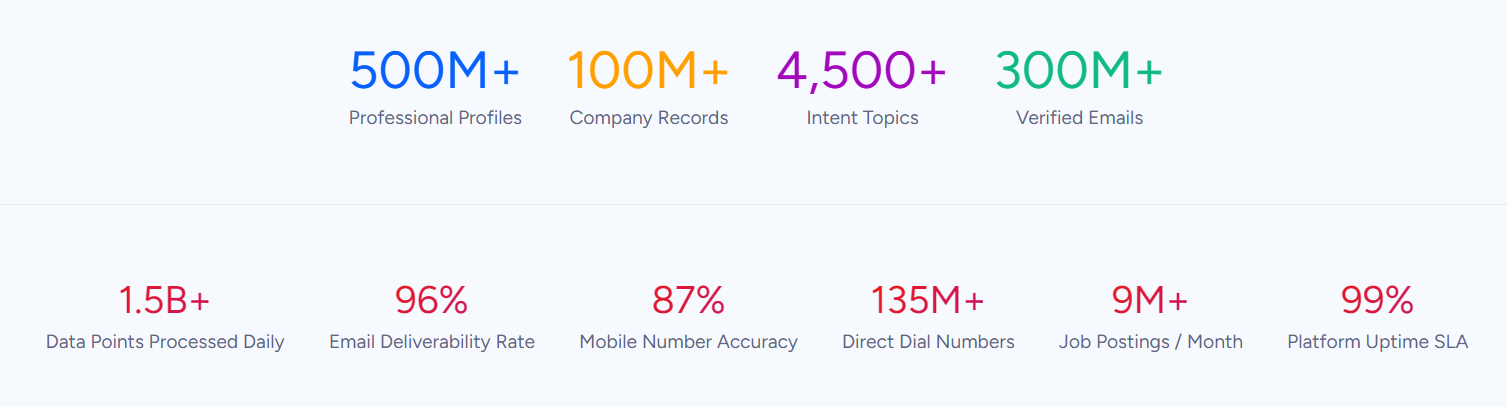
ZoomInfo is an AI-powered GTM platform built on 500M contacts, 100M companies, 135M+ verified phone numbers, and 200M+ verified business email addresses. That data is verified through a multi-source pipeline backed by 300+ human researchers, reaching up to 95% accuracy on first-party data. For teams running a Clay-Clearbit integration, ZoomInfo addresses the data quality layer that no connector handles.
Source: ZoomInfo
ZoomInfo integrates natively with Clay as a data enrichment provider, sitting alongside Clearbit in Clay's marketplace. Within the same Clay table where Clearbit enriches company firmographics and person data, ZoomInfo can enrich contacts with verified direct dials, business emails, employment history, and org charts.
The two providers complement each other in a waterfall: Clearbit's strength in industry classification (simultaneous NAICS, GICS, and SIC codes) pairs with ZoomInfo's depth in contact-level data (120M direct-dial phone numbers, 200M+ verified business email addresses). Teams can configure Clay to query one provider first and fall back to the other, paying credits only when a result is found.
For a full breakdown of how ZoomInfo and Clearbit compare as enrichment providers, see our Clearbit vs. ZoomInfo comparison.
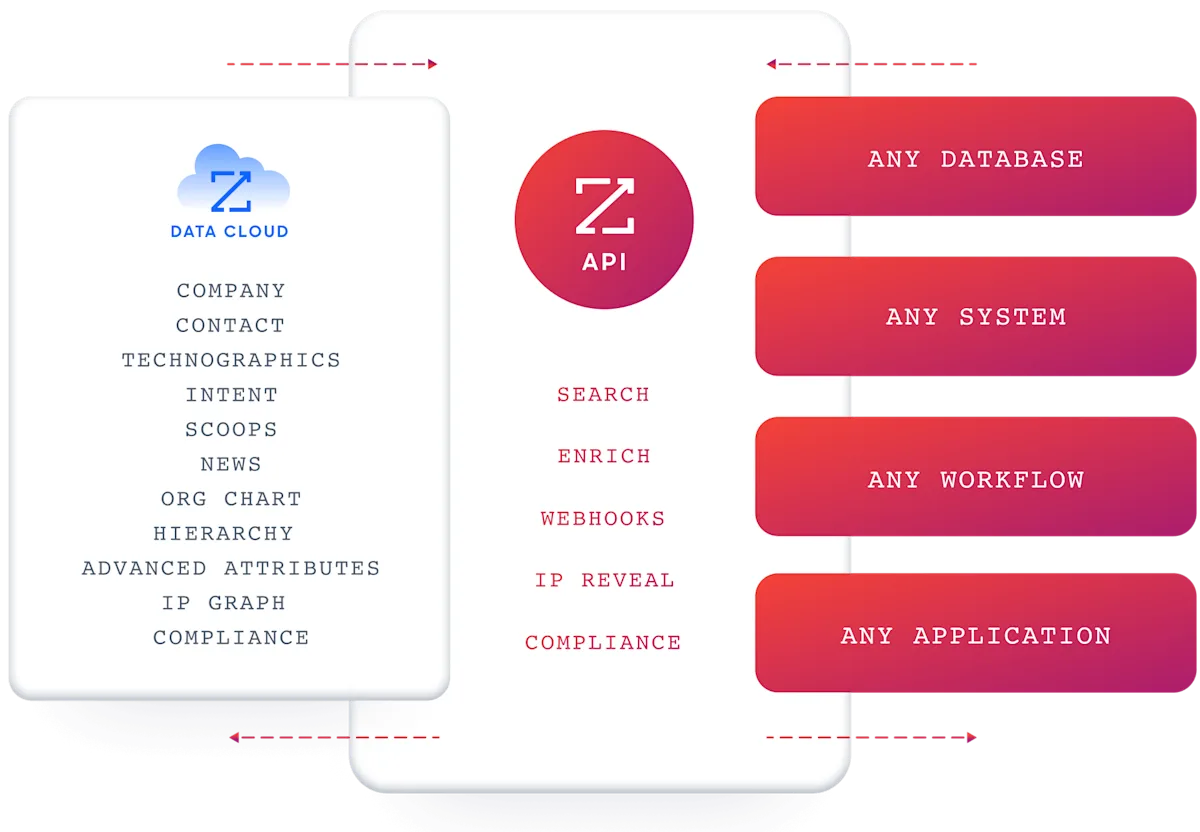
Beyond Clay, ZoomInfo's Enterprise API and MCP server expose the same data to any system or AI agent. For teams that also use HubSpot (where Clearbit data lives as Breeze Intelligence), ZoomInfo's data can feed CRM workflows independently of the Clay-Clearbit integration, so all three platforms draw from a verified source.
Source: ZoomInfo
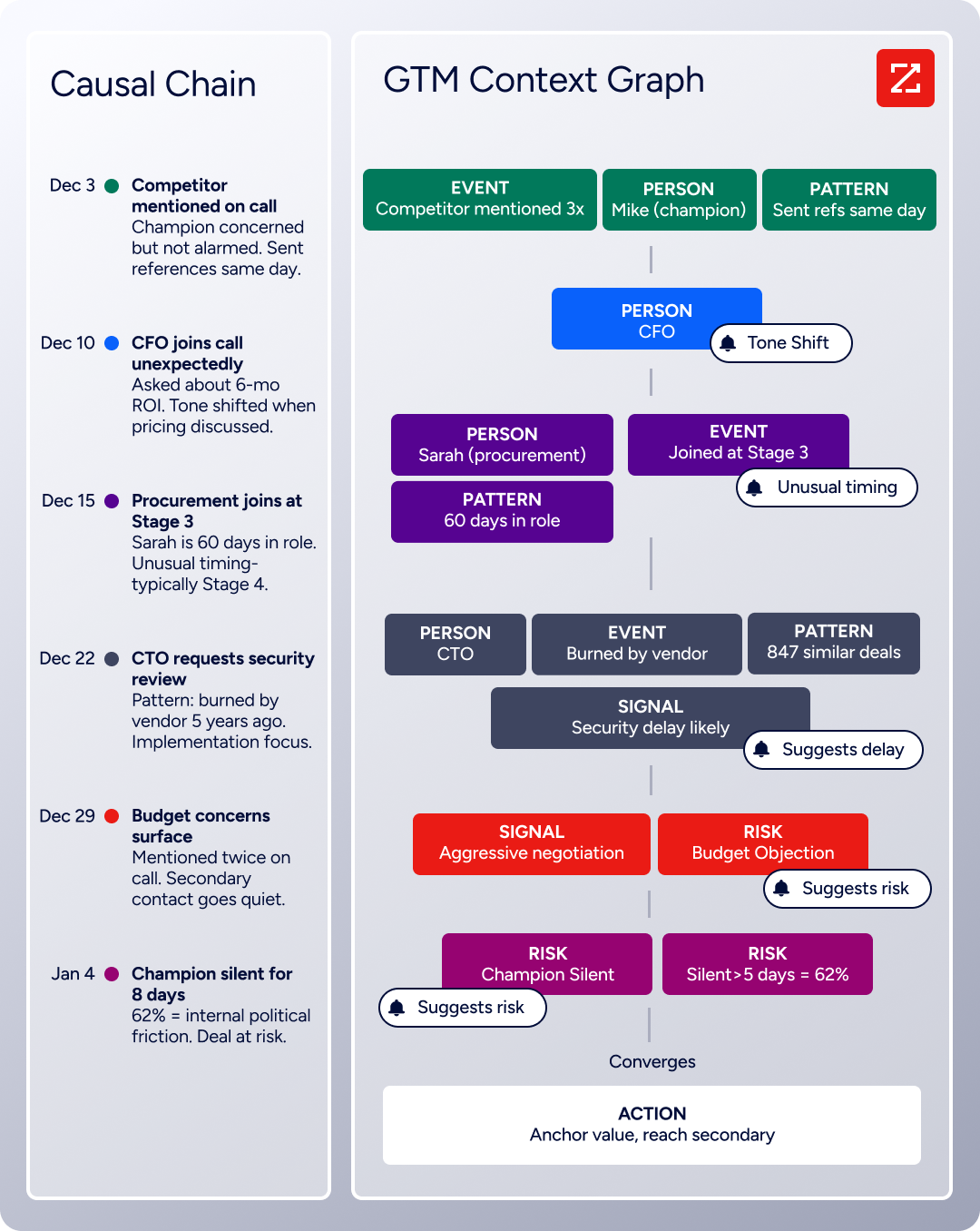
The same data feeds ZoomInfo's GTM Context Graph, which processes 1.5B+ data points daily and combines third-party intelligence with CRM records, conversation transcripts, and behavioral signals to surface not just what happened in a deal, but why.
Source: ZoomInfo
Buyer Intent data from ZoomInfo, tracking signals from 210 million IP-to-Organization pairings, fills a gap that neither Clay nor Clearbit's standalone integration covers. Clearbit's Buyer Intent is locked inside HubSpot. ZoomInfo's intent data can flow into Clay tables through the native integration, letting outbound workflows prioritize accounts that are actively researching relevant solutions.
Seismic's sales team attributed 39% of active pipeline to opportunities identified or influenced by ZoomInfo signals, while boosting productivity by 54% and saving 11.5 hours per week. (Seismic)
Final Verdict
A native integration between Clay and Clearbit exists through Clay's data marketplace, making Clearbit one of 150+ enrichment providers accessible inside Clay tables.
The integration is straightforward for teams already using Clay, but it is one-directional, limited to Clearbit's enrichment data, and carries post-acquisition uncertainty as Clearbit's standalone APIs continue migrating into HubSpot. For most teams, the right choice depends on which platforms sit at the center of their GTM stack and how complex their enrichment needs are.
Teams already using Clay as their primary enrichment platform should add Clearbit as a native provider in their waterfall. Setup takes minutes, and Clearbit's firmographic depth (particularly its multi-standard industry classification) adds a layer that complements Clay's other providers.
Teams running HubSpot with Breeze Intelligence alongside Clay should use Zapier or Make to bridge enriched HubSpot contacts into Clay workflows, keeping the two systems aligned without manual exports.
Organizations with complex data routing requirements (merging Clearbit and Clay enrichment with custom business logic before writing to a CRM) should evaluate a custom API build, but should factor in Clearbit's post-acquisition API uncertainty before investing development resources.
Before committing to a method, clarify why both platforms coexist in your stack.
If the answer is temporary (evaluating Clay as a Clearbit replacement, or migrating from standalone Clearbit to HubSpot-native Breeze Intelligence), keep the sync simple and plan for consolidation. If the answer is structural (Clay handles outbound workflows while Clearbit/Breeze Intelligence powers HubSpot's inbound enrichment), invest in a method that supports ongoing event-driven sync between the two platforms.
Either way, the quality of the data flowing through both systems determines whether the integration delivers value or just replicates gaps across two platforms faster. ZoomInfo, with its native Clay integration, Enterprise API, and MCP access, is the data enrichment layer that keeps both systems accurate while the connector keeps them aligned.
FAQ
Does Clay integrate natively with Clearbit?
Yes. Clearbit is available as a native data enrichment provider in Clay's marketplace of 150+ data sources. Users can add Clearbit enrichment columns directly to Clay tables to enrich company data (from domain or IP address), person data (from work email), and find contacts at a given company. Each enriched cell costs 8 Clay data credits. The integration does not require Zapier, Make, or any third-party middleware.
Will the Clay-Clearbit integration continue working after Clearbit's HubSpot acquisition?
That depends on HubSpot's API strategy. HubSpot acquired Clearbit in December 2023 and rebranded it as Breeze Intelligence. The standalone Clearbit APIs remain accessible to existing subscribers, but free tools have been sunset, API documentation is now login-gated, and new customers are directed to HubSpot.
If HubSpot discontinues Clearbit's standalone API, Clay's native integration would break. Teams should monitor Clearbit's changelog and plan for alternative enrichment providers within Clay's marketplace.
Can I use Clearbit's Buyer Intent data in Clay?
Not through the native Clay-Clearbit integration. Clearbit's Buyer Intent (website visitor identification and intent signals) is available exclusively within HubSpot as part of Breeze Intelligence. Clay's marketplace connector cannot access it.
Teams that need intent signals in Clay should evaluate ZoomInfo's native Clay integration, which includes buyer intent data, or set up a Zapier workflow that routes HubSpot intent signals into Clay tables.
How does ZoomInfo compare to Clearbit as a data provider inside Clay?
Both are available as native enrichment providers in Clay's marketplace. Clearbit excels in firmographic classification depth (simultaneous NAICS, GICS, and SIC codes in a single enrichment record) and corporate hierarchy data.
ZoomInfo offers broader contact-level coverage (500M contacts, 135M+ verified phone numbers, 200M+ verified business email addresses) with a multi-source verification pipeline backed by 300+ human researchers. Many teams run both in a waterfall sequence inside Clay, querying one first and falling back to the other when the first returns no result.
What happens to my Clearbit data in Clay if Clearbit's API goes offline?
Enrichment data already pulled into Clay tables stays intact. New enrichment requests to Clearbit would fail, but Clay's waterfall architecture means other providers in the sequence would still run. No data already in Clay would be lost. Teams should ensure their waterfall includes fallback providers for the same data types Clearbit covers.
Can I sync data from Clay back to Clearbit or HubSpot?
Not through the native Clay-Clearbit integration, which is one-directional (Clearbit into Clay). To push Clay data into HubSpot (where Clearbit data now lives as Breeze Intelligence), use Clay's native HubSpot integration for CRM sync, or set up a Zapier/Make workflow that sends Clay webhook data to HubSpot. Direct write-back to Clearbit's standalone platform is not supported.
How much does the Clay-Clearbit integration cost?
The integration itself has no separate fee. Costs come from two sources: your Clay plan (which sets your monthly data credit and action allocation) and the per-enrichment credit cost. Each Clearbit enrichment in Clay costs 8 data credits per cell. Clay's Launch plan starts at $167/month (annual) with 2,500 data credits.
For teams enriching large tables across multiple Clearbit actions, credit costs can exceed the base plan allocation, requiring top-ups at a 30% premium or an upgrade to a higher credit tier.
Does ZoomInfo improve Clay-Clearbit integration?
ZoomInfo solves the data accuracy problem that no connector addresses.
Contact and company records decay over time as people change jobs, phone numbers go inactive, and company details shift. ZoomInfo enriches records with verified contact data, company attributes, technographics, and intent signals. Its native Clay integration means the same Clay table can pull from both Clearbit and ZoomInfo, creating a richer, more complete dataset than either provider alone.
ZoomInfo's buyer intent data also fills a gap for Clay users who cannot access Clearbit's intent signals (which are locked inside HubSpot).
