
Choosing between ClickDimensions vs. Marketo for your B2B marketing often comes down to these five questions:
Is your organization committed to Microsoft Dynamics 365, or do you run Salesforce or another CRM?
Do you need straightforward campaign execution for a small marketing team, or enterprise-grade automation with multi-touch attribution?
How important is it that your marketing platform knows who to target, not just how to reach them?
Are you willing to staff a dedicated marketing operations administrator, or do you need something your existing team can manage?
Do you want your marketing intelligence locked inside one application, or accessible across every tool your go-to-market team uses?
In short, here's what we recommend:
ClickDimensions (now branded as Click) is the natural choice for small-to-midsize organizations already running Microsoft Dynamics 365 who want marketing automation that lives inside their CRM. Built natively on Dynamics, Click handles email campaigns, lead scoring, landing pages, social scheduling, and journey automation without requiring middleware or third-party connectors.
With 2,500+ customers in 50+ countries and 2.6 billion emails sent in 2023, it is the established marketing layer for the Dynamics ecosystem. However, Click only works with Dynamics 365, its interface draws criticism for feeling dated, and its pricing is entirely opaque.
Adobe Marketo Engage serves mid-market and enterprise B2B organizations running sophisticated, multi-touch marketing programs across long sales cycles. Named a Leader in the 2025 Gartner Magic Quadrant for B2B Marketing Automation Platforms, Marketo delivers extensive campaign orchestration, native ABM capabilities, multi-touch revenue attribution (via Marketo Measure), and an expanding AI toolset.
The trade-offs: a steep learning curve that demands a dedicated administrator, a batch-processing architecture that introduces latency, and enterprise pricing that scales quickly with database size.
Both platforms excel at campaign execution. ClickDimensions makes Dynamics marketing simple. Marketo makes enterprise automation powerful. But neither solves the problem that undermines most B2B marketing programs: knowing which accounts to target, when they're ready to buy, and who on the buying committee to reach. That intelligence gap is where a different kind of platform becomes essential.
ZoomInfo is an all-in-one AI GTM platform that gives your sales reps the context to walk into every call knowing why a deal is moving, who's championing it, and what's likely to happen next.
Your marketers can describe audiences in plain language and launch plays against accounts that match your proven win patterns, without an engineering ticket. Your leaders can spot deal risk before it surfaces in CRM stage fields.
That depth comes from the GTM Context Graph, an intelligence layer built on the most comprehensive B2B dataset in the industry (500M contacts, 100M companies, 135M+ verified phone numbers, and 200M+ verified business emails), unified with your CRM records, conversation transcripts, and behavioral signals.
Your team accesses that intelligence through GTM Workspace for sellers, GTM Studio for marketers and RevOps, or APIs and MCP in any front-end, including the marketing automation platforms you already use.
If turning intelligence into pipeline sounds like the missing piece, see how ZoomInfo works.
ClickDimensions vs. Marketo vs. ZoomInfo at a glance
ClickDimensions (Click) | Adobe Marketo Engage | ZoomInfo | |
|---|---|---|---|
Core function | Marketing automation for Dynamics 365 | Enterprise B2B marketing automation | AI-powered GTM intelligence + marketing orchestration |
CRM compatibility | Dynamics 365 only | Salesforce, Dynamics, Veeva | Salesforce, HubSpot, Dynamics, 120+ integrations |
Best for | SMBs on Dynamics 365 | Enterprise marketing ops teams | Teams that need intelligence before execution |
B2B contact data | Uses what's in your CRM | Uses what's in your CRM | 500M contacts, 200M+ verified emails, 135M+ verified phones |
Buyer intent signals | None | Limited (add-on) | Native intent from 210M IP-to-Org pairings |
ABM capabilities | Basic lead scoring | Full ABM with account-level scoring | ABM with AI signal stacking, account fit scoring, and GTM plays |
AI features | AI email/social copy, AI Workforce agents | GenAI email designer, Dynamic Chat, Agentic Lead Orchestration (announced) | GTM Context Graph, AI-drafted outreach, AI agents across sales and marketing |
Learning curve | Moderate (steeper than expected) | Steep (dedicated admin required) | Moderate (90-day structured onboarding) |
Pricing | Not published; quote required | Not published; contact-volume-based | Not published; consumption-based with free tier |
Free option | No | No | ZoomInfo Lite (permanent free tier) + 7-day trial |
Two execution engines, one intelligence platform
The first thing to understand: ClickDimensions and Marketo solve a different problem than ZoomInfo does.
ClickDimensions and Marketo are campaign execution platforms.
You give them a list of contacts, a message, and a set of rules, and they deliver that message through email, landing pages, forms, and automated journeys. They are good at the "how" of B2B marketing. ClickDimensions does it inside Dynamics 365. Marketo does it at enterprise scale with deeper automation logic.
ZoomInfo operates upstream.
Before you build a campaign, you need to know which companies are worth targeting, which contacts sit on the buying committee, and whether those accounts are actively researching solutions like yours.
ZoomInfo provides that intelligence layer, backed by the most comprehensive verified B2B dataset in the industry, then helps you act on it through its own marketing orchestration (GTM Studio) or by feeding that intelligence directly into the marketing automation platform you already run.
Source: ZoomInfo
The practical implication: ClickDimensions and Marketo can only be as effective as the data you feed them. If your CRM is full of stale contacts, wrong titles, and missing email addresses, even the most sophisticated automation will underperform. ZoomInfo fills that gap at the data layer and adds buyer intent signals that neither ClickDimensions nor Marketo generate on their own.
CRM lock-in shapes the entire decision
ClickDimensions made an architectural bet that defines everything about the product: it lives natively inside Microsoft Dynamics 365.
Not connected to Dynamics. Not synced with Dynamics. Built on Dynamics, using the Dataverse and Azure infrastructure that underpins the CRM itself. Campaign data, contact records, form submissions, and engagement results all reside within the same environment, with no third-party APIs or data transfers required.
Source: ClickDimensions
For Dynamics shops, this is a genuine advantage. There is no sync lag, no middleware to maintain, and no risk of data falling out of alignment between marketing and CRM.
But for anyone not on Dynamics, ClickDimensions does not exist as an option. There is no Salesforce version, no HubSpot version, no CRM-agnostic deployment.
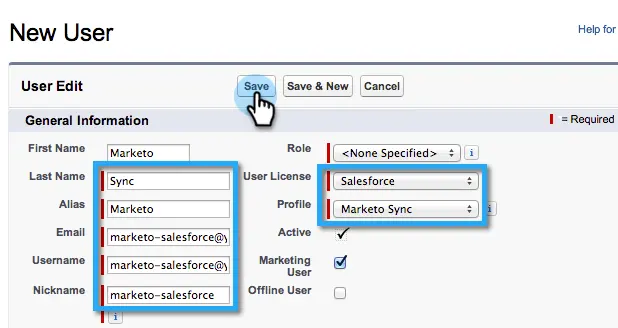
Marketo takes a more open approach, with native bidirectional sync for Salesforce, Microsoft Dynamics, and Veeva CRM.
Source: Marketo
Its LaunchPoint marketplace adds connectors for advertising platforms, webinar tools, analytics, and data providers (including ZoomInfo).
That said, Marketo's advanced integration story is increasingly about the Adobe ecosystem: Adobe Real-Time CDP, Adobe Journey Optimizer B2B Edition, and Adobe Experience Manager. Organizations already invested in Adobe's stack get tighter connections; everyone else gets a capable but less integrated experience.
ZoomInfo sits above the CRM question entirely.
The ZoomInfo App Marketplace lists 120+ integrations across Salesforce, HubSpot, Microsoft Dynamics, Snowflake, Marketo, Eloqua, Outreach, Salesloft, and more. API access is included in all relevant plans, and the MCP server extends that reach to any AI agent. Whatever CRM or marketing automation platform your team uses, ZoomInfo works alongside it.
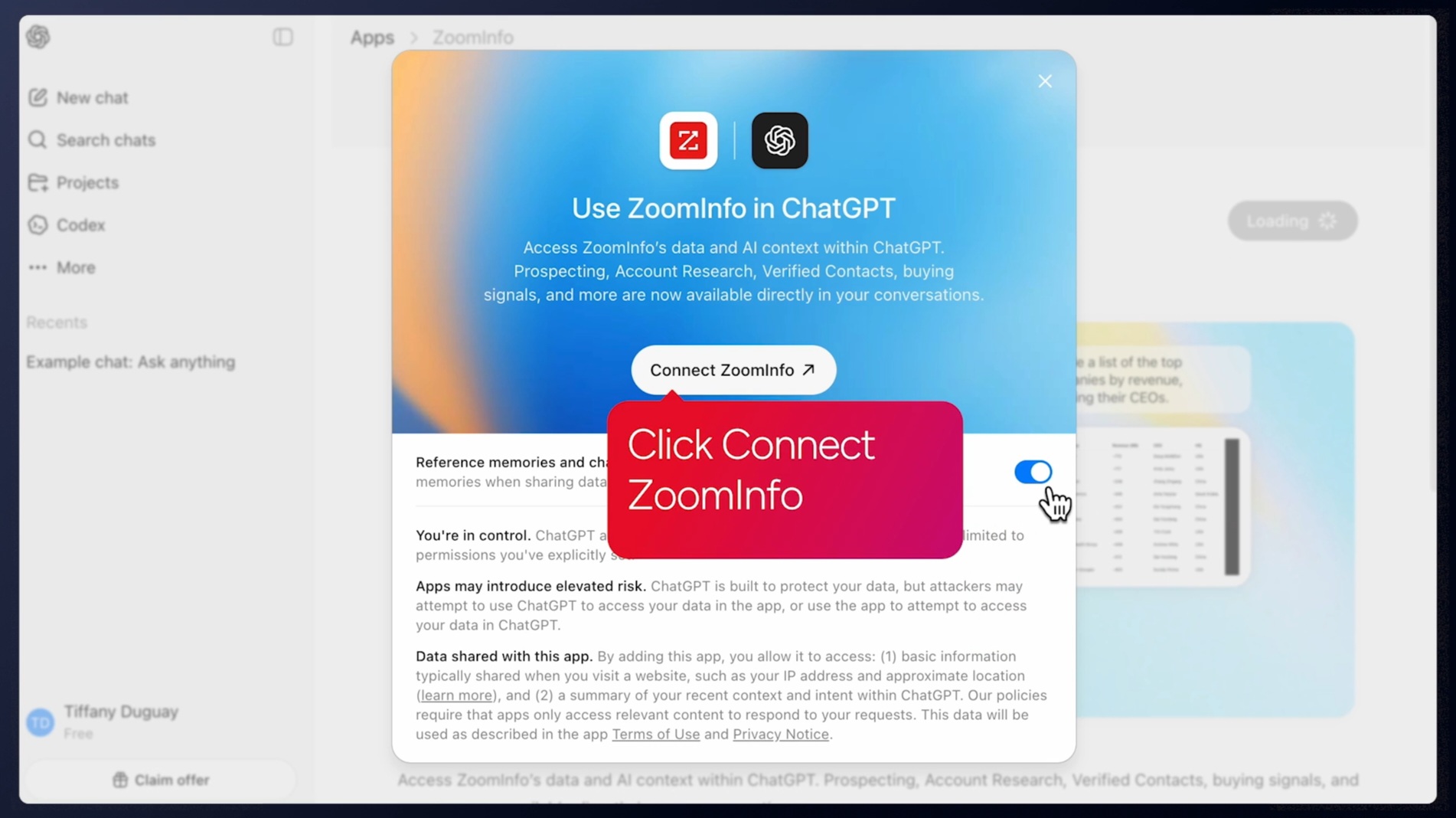
Source: ZoomInfo
"ZoomInfo is our one source of truth for account data, and even more so for contact data. There's no other provider in the market that provides you with that level of detail." (Thor Sanderson, Senior Manager of Sales Technology Enablement, Smartsheet)
Marketing automation depth: simple vs. sophisticated
ClickDimensions provides a complete but straightforward marketing toolkit.
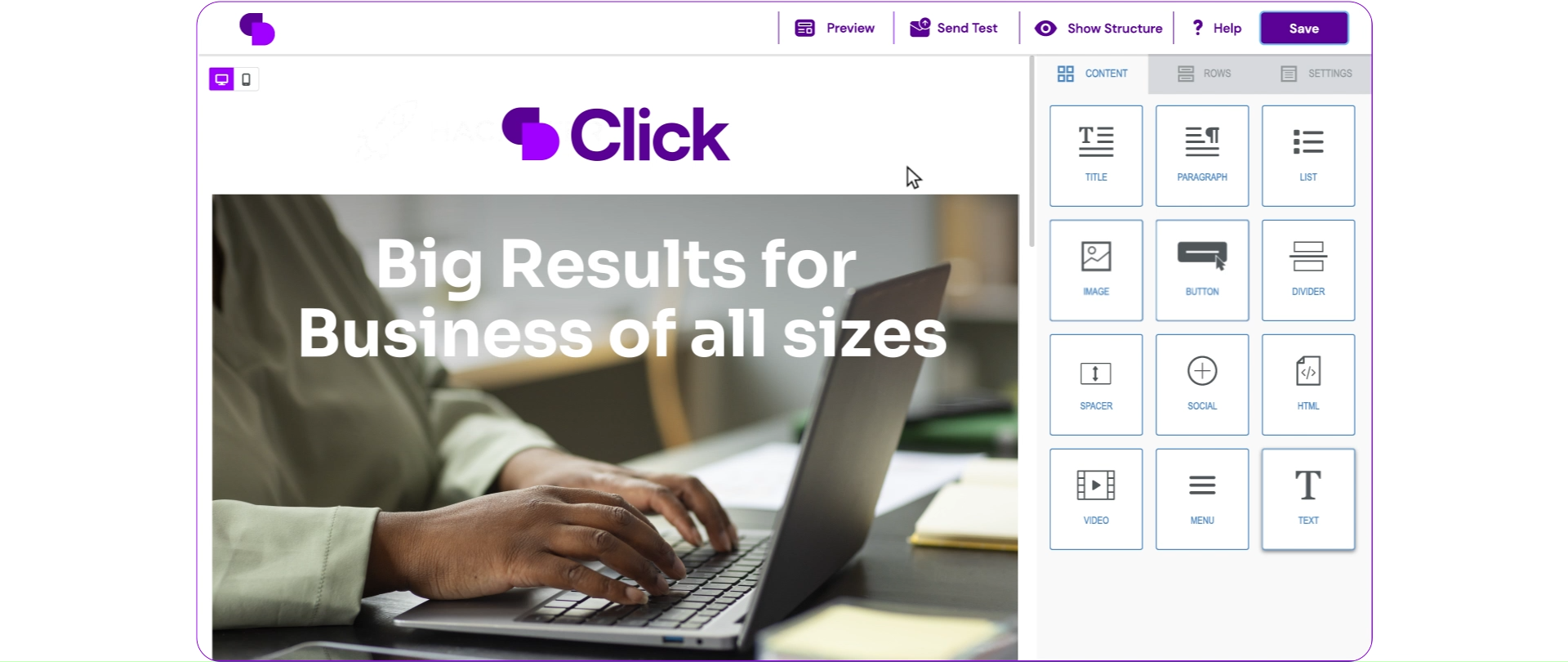
Its drag-and-drop journey builder handles multi-step nurture sequences triggered by form submissions, page visits, and email interactions. The platform includes 250+ pre-built email templates, a landing page designer, web forms that write directly to Dynamics records, surveys, social media scheduling via Click Social, and SMS through integrations with Twilio, BulkSMS, and MessageMedia.
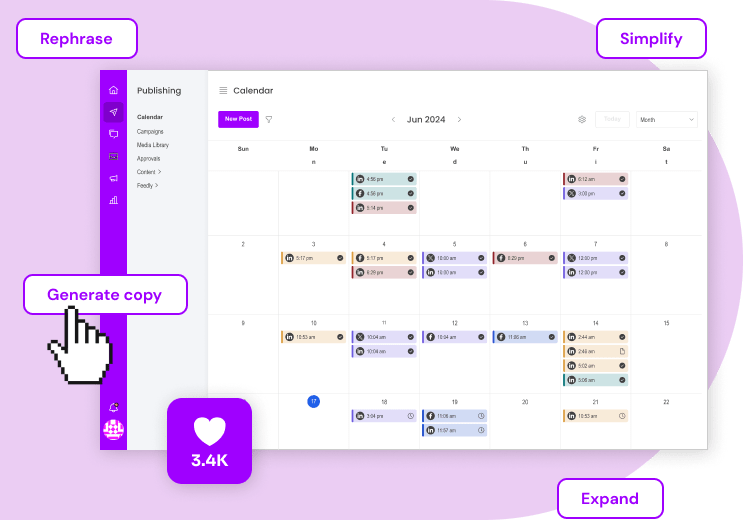
Source: ClickDimension
For a midsize marketing team running newsletters, event promotions, and lead nurture sequences, Click covers the essentials without requiring a specialist.
Where Click hits its limits is complexity. Reviewers on G2 flag that customization options feel "unsatisfactory compared to other automation tools."
The platform does not support the kind of nested program logic, multi-stream content exhaustion, or multi-dimensional scoring models that enterprise teams require. SMS capabilities are called out by Capterra reviewers as needing significant work. And the interface itself, while functional, is described in reviews as having "outdated UX and inconsistent functionality."
Marketo operates at a different level of sophistication.
Its Smart Campaign engine combines trigger-based and batch-based automation in a single object, supporting conditional branching, wait steps, and flow actions that update scores, reassign leads, fire webhooks, and sync CRM fields. Engagement Programs deliver multi-stream nurture with configurable cadences, per-person pause controls, and automatic content exhaustion tracking.
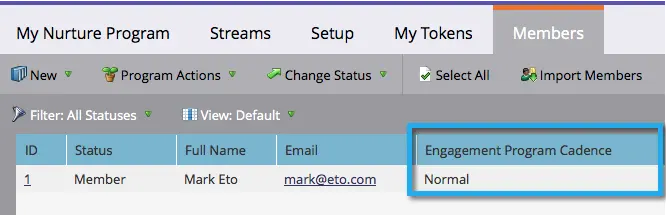
Source: Marketo
The platform supports up to 100 active engagement programs per subscription and assigns each piece of nurture content a 0-100 Engagement Score so marketers can see what's working and what needs replacing.
Marketo also includes native capabilities that ClickDimensions lacks entirely: Interactive Webinars (built-in webinar hosting with no separate subscription), Dynamic Chat (AI-powered chatbot with live escalation), and Marketo Measure (multi-touch revenue attribution with six models running simultaneously).
For enterprise marketing operations teams managing dozens of programs across channels, this depth is what justifies the cost and complexity.
For a comprehensive look at what Marketo offers, see our Marketo review.
ZoomInfo's marketing capabilities through GTM Studio take a different form.
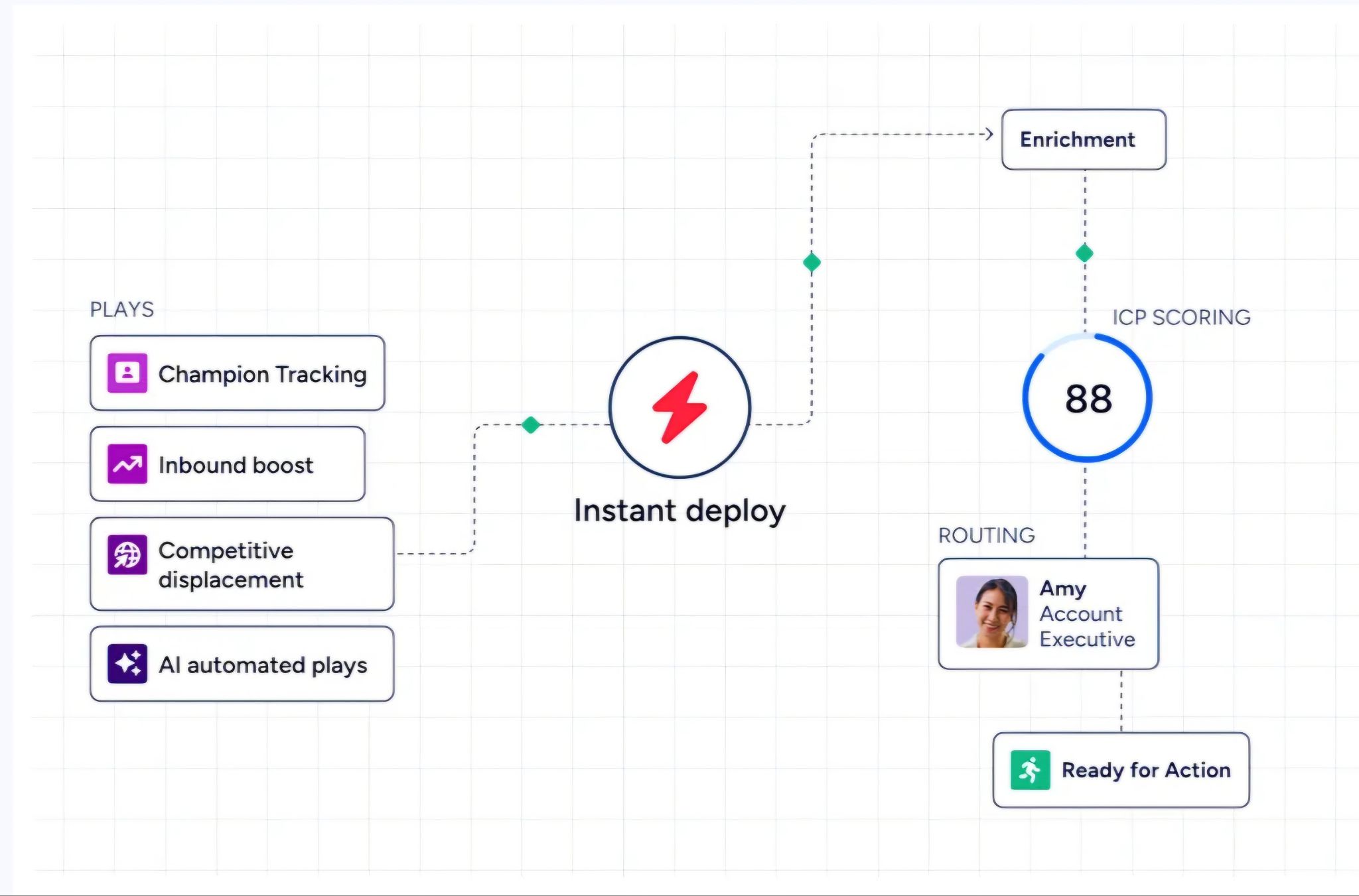
Rather than building email templates and drip sequences, GTM Studio lets marketers describe audiences in natural language, launch multi-channel plays (email, calls, ads, direct mail) triggered by buyer behavior, and measure pipeline impact with AI-powered dashboards. Pre-built GTM plays for inbound acceleration, champion tracking, and competitive displacement launch in one click.
The platform also includes a native demand-side platform for display advertising based on 300+ company attributes and FormComplete, which reduces web forms to a single field while auto-appending the rest from ZoomInfo's database.
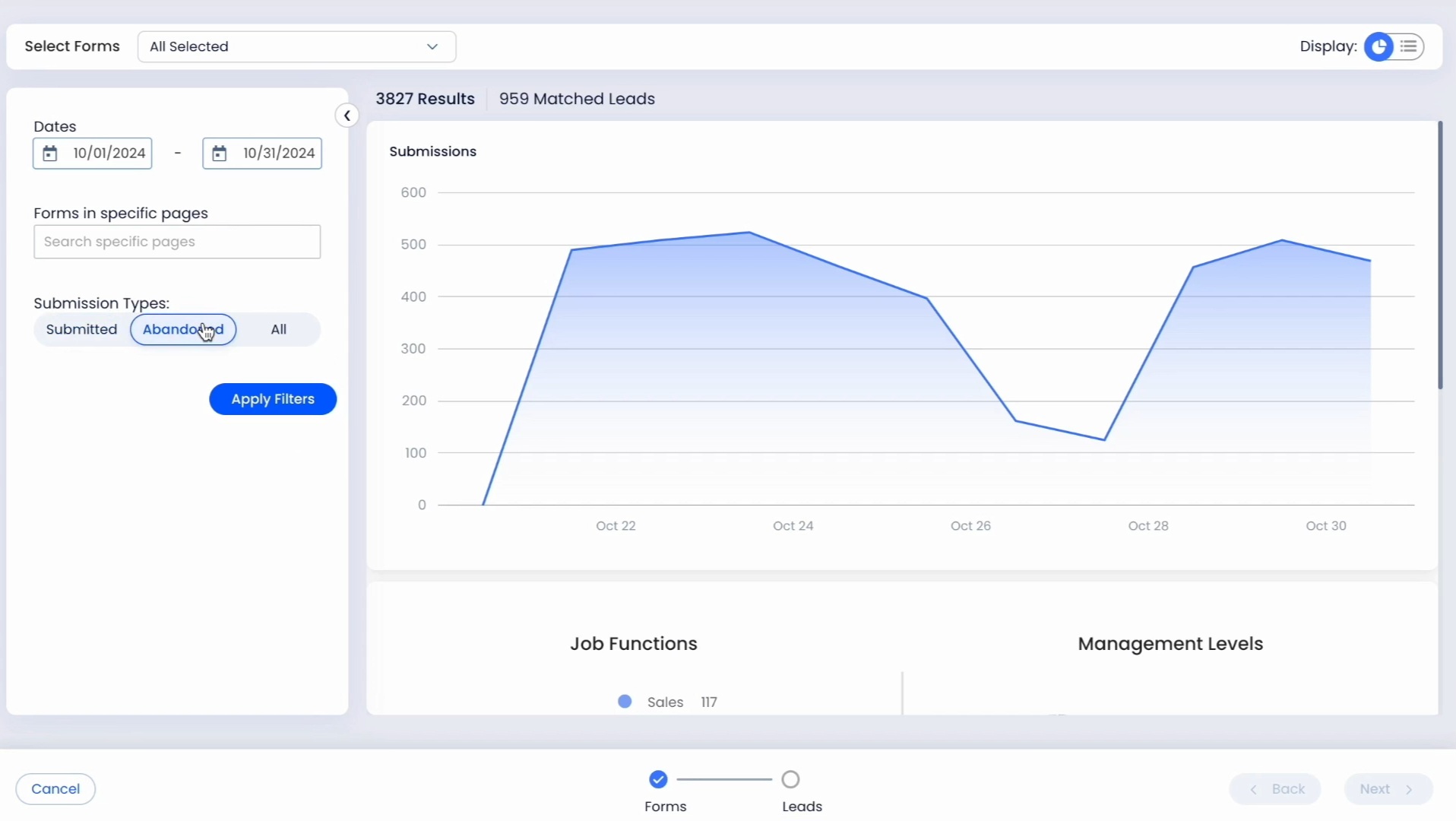
Source: ZoomInfo
The data and intelligence gap neither automation tool fills
This is the structural difference that changes the conversation.
ClickDimensions and Marketo both depend on whatever contact data exists in your CRM.
If your CRM has 10,000 contacts but your total addressable market is 200,000, both platforms will diligently market to the 10,000 and ignore the 190,000 you have not yet identified.
If 20% of those contacts have changed jobs, both platforms will send emails to dead addresses, damage your sender reputation, and report inflated list sizes. Neither platform tells you which accounts are actively researching your category right now.
ZoomInfo changes this equation at three levels.
First, the data itself. ZoomInfo's B2B database spans 500M contacts and 100M companies, verified through a multi-source pipeline backed by 300+ human researchers with up to 95% accuracy on first-party data. In a Fortune 500 competitive RFP analyzing 25 million contacts across vendors, the independent consultant concluded that "no other competitor came even close."
This data includes 120M direct-dial phone numbers, 200M+ verified business emails, firmographics, technographics, org charts, and department structures.
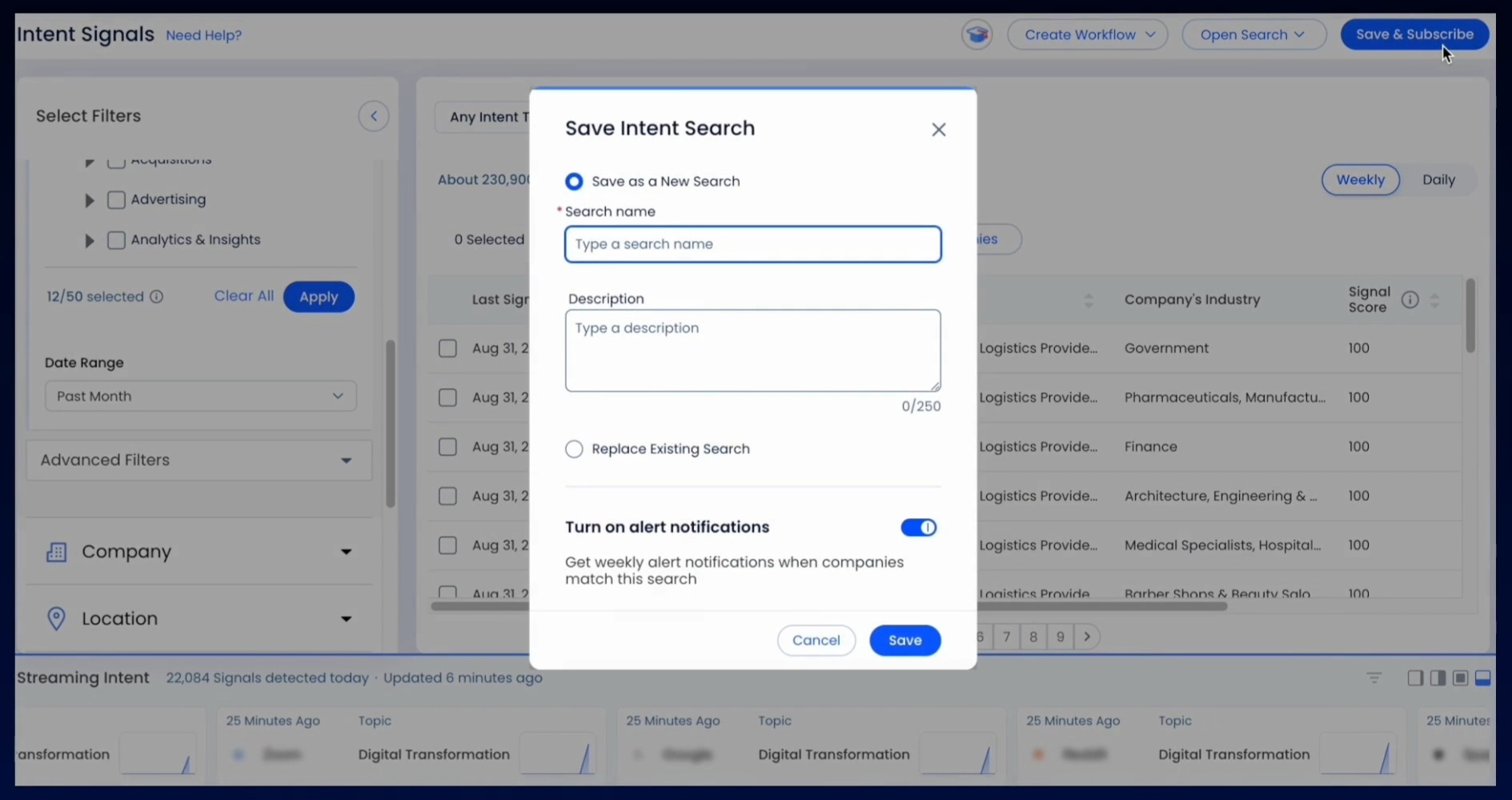
Second, buyer intent signals. ZoomInfo Intent tracks signals from 210 million IP-to-Organization pairings and 6 trillion+ new keyword-to-device pairings sourced monthly. Guided Intent, exclusive to ZoomInfo, identifies topics historically correlated with deal success rather than requiring manual topic selection. Neither ClickDimensions nor Marketo generates intent data natively.
Source: ZoomInfo
Third, the GTM Context Graph. This intelligence layer fuses ZoomInfo's B2B data with a customer's CRM records, conversation transcripts, and behavioral signals.
The result: not just knowing that an account visited your pricing page, but understanding why that visit matters in the context of executive changes, competitive research activity, and engagement patterns that historically precede closed-won deals.
"That combination of our internal CRM data, external signals, and AI that's given all that context has helped us craft very specific account- and persona-based messages. And people have responded to them right away." (Toby Carrington, Chief Business Officer, Seismic)
Lead scoring and account prioritization take different approaches
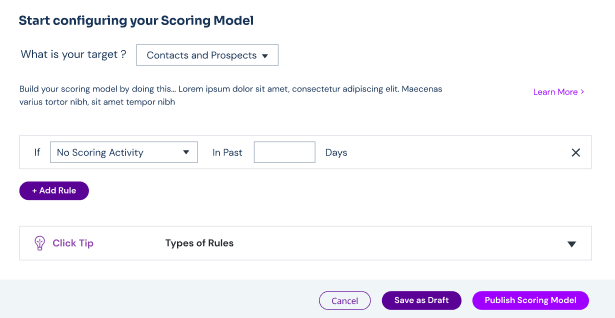
ClickDimensions scores leads using behavioral signals tracked within Dynamics 365.
Its Engagement Scoring system assigns points for email opens, form submissions, information requests, website page visits, and event attendance. When a contact crosses a defined threshold, automation routes them into the appropriate workflow: hot leads into closing sequences, warm leads into continued nurture.
Source: ClickDimensions
Scoring updates happen in real time against CRM records, and viewing a specific web page can trigger automated outreach actions. For organizations running straightforward lead qualification, this works. The limitation: scores are based only on interactions with your own marketing, not on what prospects are doing elsewhere.
Marketo's scoring engine goes deeper.
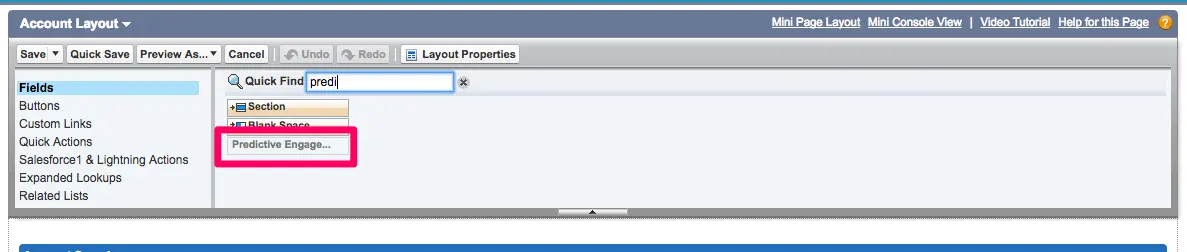
It supports multi-dimensional scoring with separate behavioral and demographic/firmographic scores maintained in parallel. Scoring rules can incorporate decay logic (reducing scores when contacts go inactive), negative scoring (penalizing disqualifying behaviors), and unlimited scoring models.
The Sales Insight module surfaces scores inside Salesforce with a "Stars & Flames" visual system, ranking leads by both absolute score and recent engagement velocity. Marketo's Predictive Engagement Score adds an account-level dimension, dynamically grading accounts by engagement intensity using page views, visit recency, and deal history.
Source: Marketo
ZoomInfo approaches prioritization from a fundamentally different starting point: third-party buyer signals and AI-powered pattern matching.
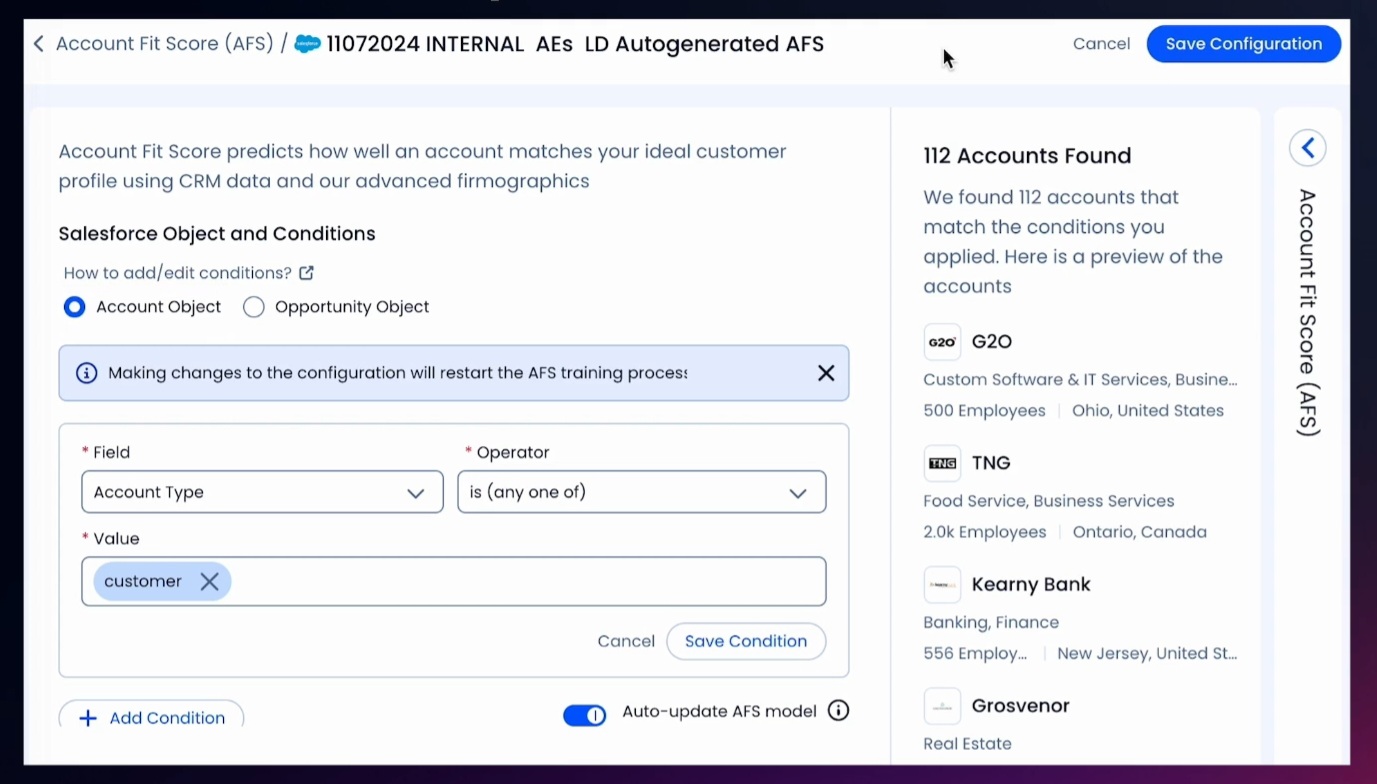
Instead of scoring leads based only on their interactions with your content, ZoomInfo's Account Fit Score uses predictive AI scoring (0-100) to reveal which company attribute patterns predict conversion, based on your actual win/loss data.
Source: ZoomInfo
Layer on intent signals, website visitor identification (which resolves anonymous traffic to specific companies and buying team contacts), and champion tracking, and you get a prioritization engine that catches accounts ClickDimensions and Marketo would miss entirely because those accounts have not yet engaged with your marketing.
"It's not just the data itself. It's more about the right data at the right time to help us reach out with the right message across that full buyer journey." (Chelsea Kenyon, Senior Director of Digital Strategy, Redwood Logistics)
Pricing reflects three different business models
ClickDimensions does not publish pricing.
The website offers only a pricing request form that routes inquiries to sales. The Terms of Service reveal a subscription model with auto-renewal and a notable detail: customers who disable auto-renewal face a 10% surcharge on the Order Form value. Fees are non-refundable, cancellation terms are strict, and unused consulting hours expire at the end of the subscription term.
The total cost of ownership must also account for Microsoft Dynamics 365 licenses, which are a mandatory prerequisite purchased separately.
Marketo's pricing is also custom-quoted, based on database size (per 1,000 contacts).
The platform offers four tiers: Grow, Select, Prime, and Ultimate. Key capabilities are gated by tier: sandboxes require Prime or above, Marketo Measure (attribution) requires Ultimate, and Dynamic Chat's GenAI features require a separate Prime add-on. Add-ons include Sales Insight, Website Personalization, dedicated IP addresses, and additional API calls.
Reviewers on TrustRadius and Capterra note that the cost-to-value equation is only favorable at scale, and database growth directly inflates licensing costs.
For a detailed breakdown of what each tier includes and what to budget for, see our Marketo pricing breakdown.
ZoomInfo uses a consumption-based pricing model with no publicly listed prices.
Pricing scales around seats, credit volume, and AI activity. What distinguishes ZoomInfo is its entry points: ZoomInfo Lite provides permanent free access to the B2B database with 10 monthly export credits, individual and company search, a Chrome extension, HubSpot integration, and WebSights Lite (up to 10 website visitor reveals per day).
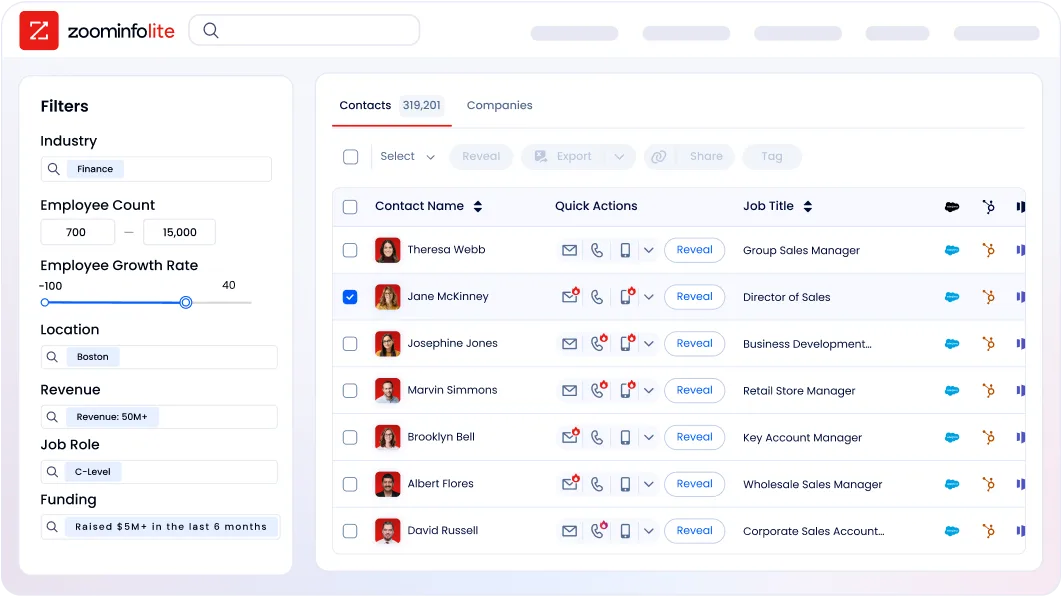
A separate 7-day free trial provides broader access to paid features. Neither ClickDimensions nor Marketo offers a free tier or self-serve trial.
Implementation and learning curve
ClickDimensions positions itself as operational "in weeks".
Each customer receives a dedicated customer success manager, hands-on onboarding, and structured playbooks. The onboarding philosophy is guided: Click's technical experts conduct live discovery sessions to understand goals before designing a training plan. Self-service learning is available through Click Academy, a free e-learning portal with a certification path.
The platform's Dynamics-native architecture means existing Dynamics users encounter familiar interface conventions, lowering the conceptual barrier.
That said, the learning curve is steeper than Click's marketing suggests. G2 reviewers describe a "difficult learning curve, requiring extensive training and expertise to navigate effectively." For lean marketing teams without prior Dynamics experience, the onboarding burden can be significant.
Marketo requires the most investment upfront.
Adobe's own guidance acknowledges that "technical setup and planning can take longer than you think." The platform is built around proprietary constructs (Smart Lists, Smart Campaigns, Programs, Workspaces, Tokens, Engagement Streams) that have no direct equivalent in competing tools, and Adobe maintains a formal Marketo Engage Glossary to help users navigate the terminology.
Implementation typically requires a certified partner, and most organizations need a dedicated Marketo administrator for ongoing management.
Support follows a tiered structure. Standard Online support has a 1-hour SLT for mission-critical issues, while Premier Elite compresses that to 15 minutes. The Adobe Experience League documentation hub is extensive, and the Marketo Nation community provides peer-to-peer knowledge sharing.
ZoomInfo redesigned its onboarding from 30 to 90 days, structured across planning, technical implementation, education, and adoption phases, producing a 25% improvement in customer satisfaction scores.
ZoomInfo University provides role-specific learning paths, certifications, live webinars, and on-demand courses. GTM Workspace is designed to "deploy in weeks, not months", and GTM Studio's natural-language interface reduces the technical barrier for marketers who previously relied on engineering teams to launch campaigns.

AI capabilities are heading in different directions
All three platforms are investing in AI, but with different philosophies.
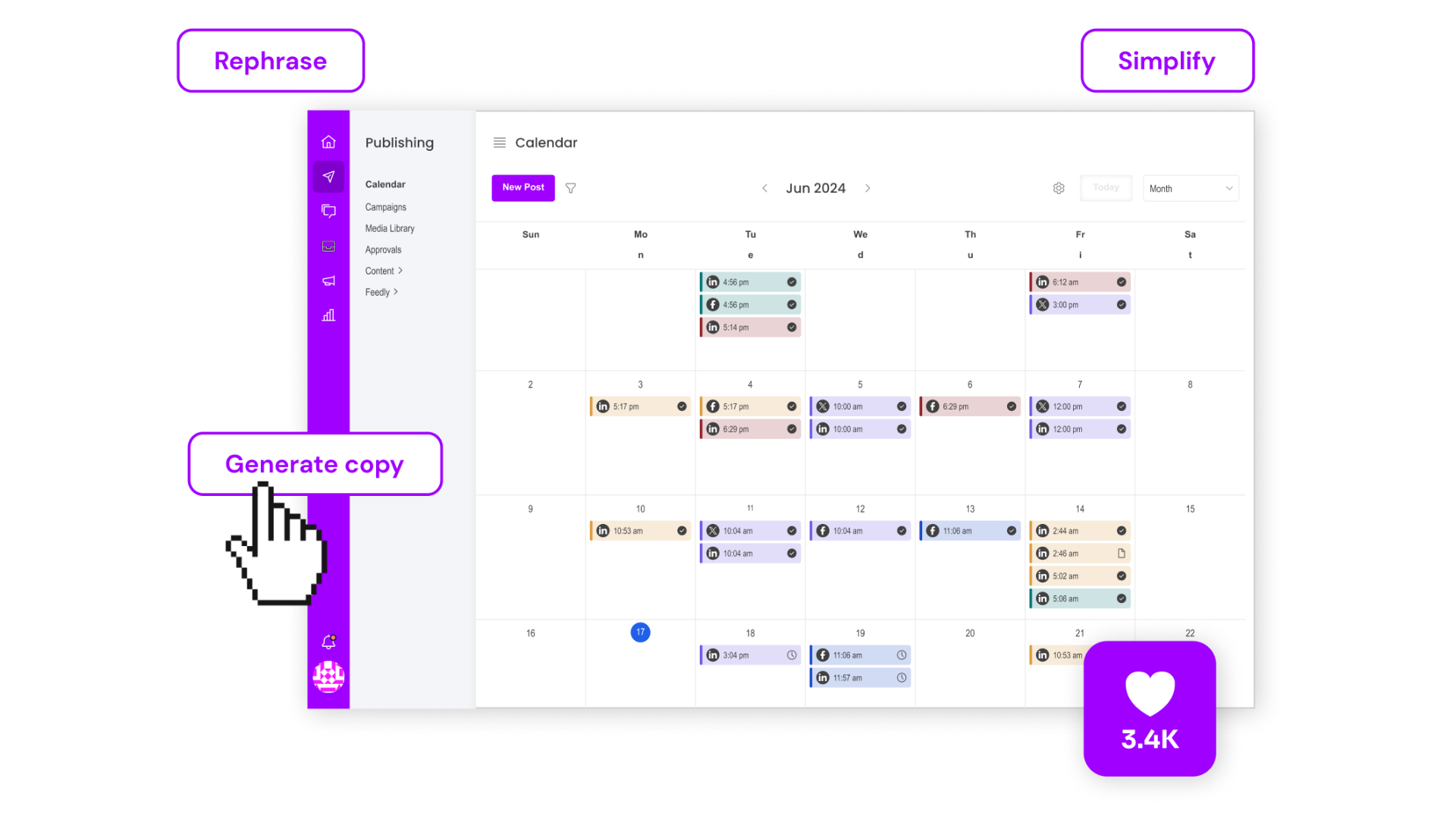
ClickDimensions has launched an AI Workforce consisting of named AI agents: Tim (website chat and lead capture), Clara (internal sales enablement), and Lexi (customer support).
The platform also includes AI copy tools for email and social content generation, and an AI Message Generator for social posts. Click is integrating campaign performance metrics into Microsoft's Copilot ecosystem, laying groundwork for predictive intelligence within the Dynamics environment.
Source: ClickDimensions
Marketo's AI direction is the most ambitious in the marketing automation category.
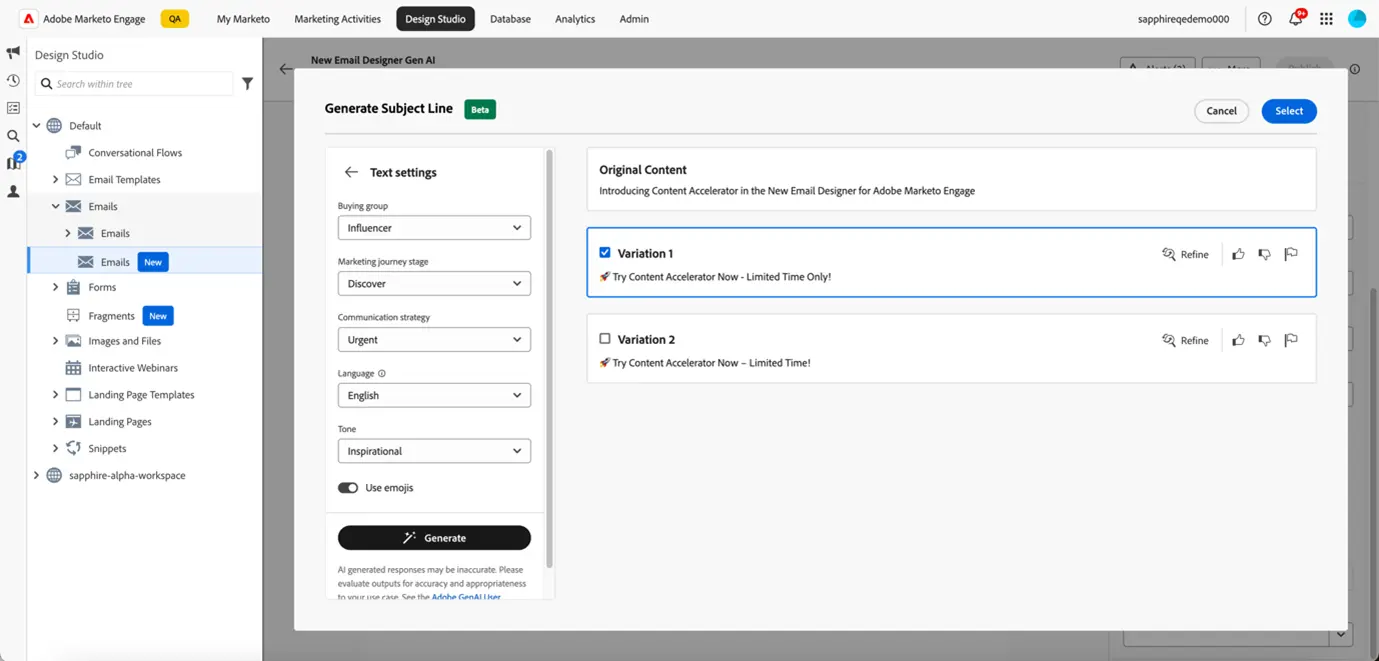
The GenAI-powered Email Designer generates subject lines, copy, and images from structured inputs including buying group role, journey stage, and communication strategy. Dynamic Chat's generative AI answers visitor questions from a pre-approved Response Library, maintaining brand guardrails.
Source: Marketo
The Agentic Lead Orchestration engine (announced at Adobe Summit 2025) promises a visual canvas where marketers collaborate with an AI agent to design, execute, and optimize lead journeys automatically.
ZoomInfo's AI is built on a different foundation: the GTM Context Graph, which processes 1.5B+ data points daily and draws from CRM data, conversation intelligence, intent signals, and behavioral data.
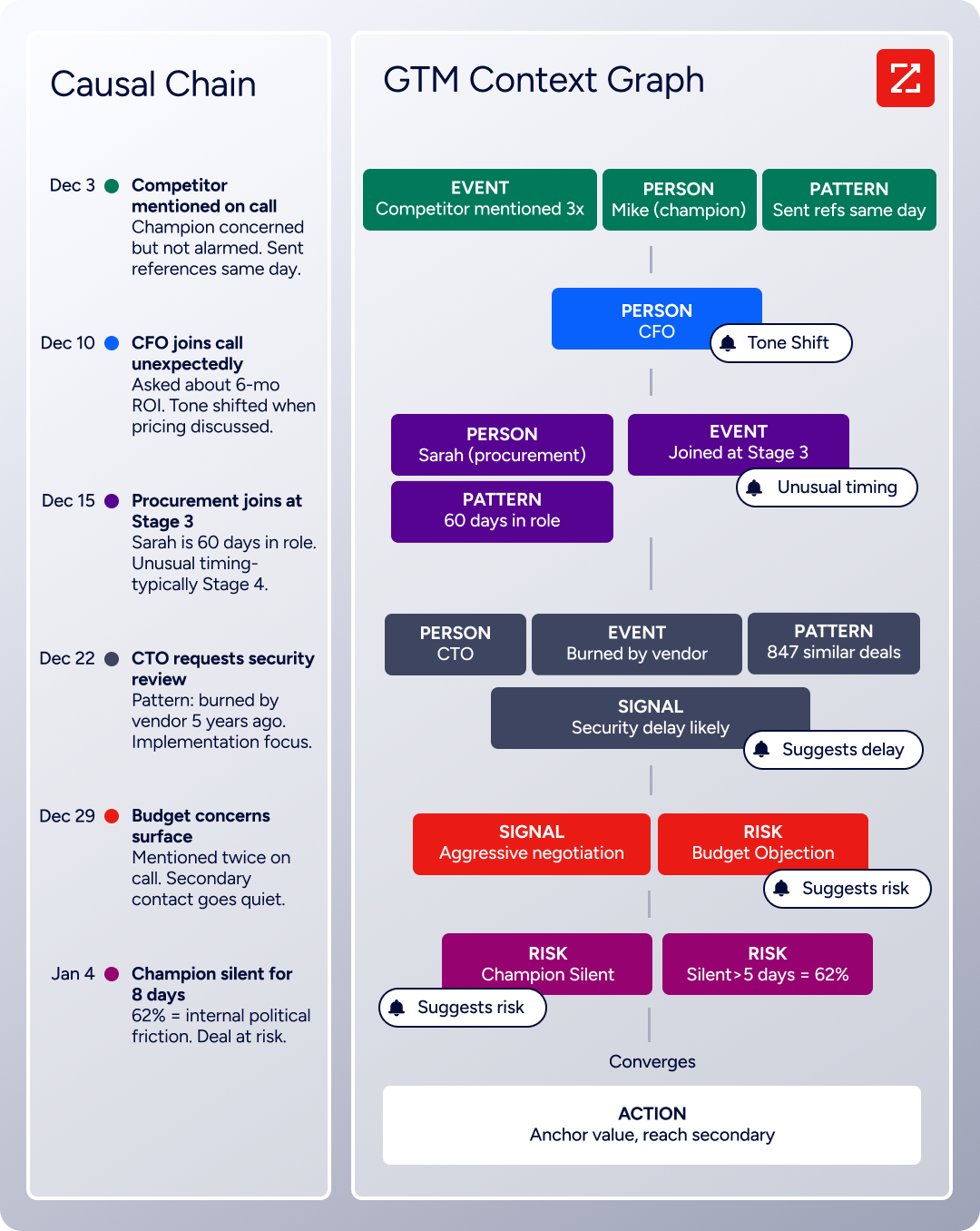
The AI agents in GTM Workspace (built on Anthropic's Claude) handle account research, outreach drafting, CRM updates, and signal monitoring for sellers. GTM Studio's AI agents handle enrichment, scoring, routing, and campaign activation for marketers and RevOps.
The key difference: ZoomInfo's AI draws from both third-party intelligence (the most comprehensive B2B data platform) and first-party data (your CRM, calls, emails), giving it contextual depth that marketing-automation-only AI cannot match.
"ZoomInfo's not just a contact data company anymore. They've built a full system of execution. GTM Intelligence actually works the list, writes the outreach, triggers the play, and helps drive predictable growth." (Ian Brodie, CEO & Co-Founder, Levanta)
ClickDimensions vs. Marketo vs. ZoomInfo: Which should you choose?
The right platform depends on where your biggest gap is: campaign execution, or the intelligence that makes campaigns work.
Choose ClickDimensions if:
Your organization runs Microsoft Dynamics 365 and won't be switching
You need straightforward email marketing, lead scoring, and journey automation
Your marketing team is small and cannot support a complex platform
Keeping all marketing data natively inside the CRM matters for compliance or simplicity
Your budget needs to cover one integrated marketing tool, not an enterprise suite
Choose Marketo if:
You run sophisticated, multi-touch B2B marketing programs at enterprise scale
You need deep automation logic (engagement programs, multi-stream nurture, content exhaustion)
Multi-touch revenue attribution is a priority for proving marketing's pipeline impact
Your team includes (or can hire) a dedicated marketing operations administrator
You're invested in the Adobe Experience Cloud ecosystem
Choose ZoomInfo if:
Your biggest challenge is knowing which accounts to target and when they're ready to buy
You need comprehensive B2B data, buyer intent signals, and account intelligence
You want marketing orchestration that starts with intelligence, not just campaign templates
Your go-to-market team needs one intelligence layer accessible across sales, marketing, and RevOps
You want a platform that works alongside your existing CRM and marketing automation, or can orchestrate campaigns through GTM Studio independently
Start with ZoomInfo Lite for free, or request a demo to see the full platform.
ClickDimensions and Marketo are both effective at what they do: executing B2B marketing campaigns within their respective ecosystems.
But the highest-performing B2B marketing teams don't just execute well. They target the right accounts, with the right message, at the right moment. That requires an intelligence layer that neither campaign execution platform provides on its own, and it's exactly where ZoomInfo changes the math.
ClickDimensions vs. Marketo vs. ZoomInfo FAQ
What is the core difference between ClickDimensions, Marketo, and ZoomInfo?
ClickDimensions is a marketing automation suite built exclusively for Microsoft Dynamics 365, covering email, lead scoring, landing pages, social, and SMS for small-to-midsize organizations.
Marketo is an enterprise B2B marketing automation platform with deep campaign orchestration, ABM capabilities, and multi-touch attribution.
ZoomInfo is an all-in-one AI GTM platform providing comprehensive B2B data (500M contacts, 100M companies), buyer intent signals, and marketing orchestration through GTM Studio and GTM Workspace.
Can ClickDimensions work with Salesforce or other CRMs?
No. ClickDimensions is built natively on Microsoft Dynamics 365 using Dataverse and Azure infrastructure. There is no version for Salesforce, HubSpot, or any other CRM. If your organization does not run Dynamics 365, ClickDimensions is not an option.
Which platform is best for account-based marketing?
ZoomInfo has the strongest ABM capabilities, combining buyer intent data from 210 million IP-to-Organization pairings, predictive account fit scoring, website visitor identification at the contact level, and multi-channel orchestration through GTM Studio.
Marketo offers native ABM with lead-to-account mapping and Predictive Engagement Scoring, plus buying group orchestration through Adobe Journey Optimizer B2B Edition.
ClickDimensions provides basic lead scoring but lacks dedicated ABM features, intent data, or account-level engagement scoring.
Does Marketo integrate with ZoomInfo?
Yes. ZoomInfo is available as a data and ABM integration through Marketo's LaunchPoint marketplace. ZoomInfo's contact data, intent signals, and account intelligence can feed directly into Marketo campaigns, enriching lead records and improving targeting without replacing the marketing automation workflow.
Which platform has the lowest barrier to entry?
ZoomInfo offers the most accessible starting points: ZoomInfo Lite is a permanent free tier with access to the B2B database, 10 monthly export credits, a Chrome extension, and HubSpot integration. A separate 7-day free trial provides access to paid features.
Neither ClickDimensions nor Marketo publishes pricing or offers a free plan. ClickDimensions requires contacting sales for a quote, and Marketo's enterprise pricing typically involves a formal procurement process.
How do the platforms handle email deliverability?
ClickDimensions includes built-in spam filter tests, link scans, and deliverability checks before every send, and engagement data writes back to Dynamics CRM records in real time.
Marketo offers A/B and multivariate testing, champion/challenger auto-optimization for trigger campaigns, and a Deliverability Package add-on.
ZoomInfo addresses deliverability at the data layer: its verified email database (200M+ business emails at up to 95% accuracy) reduces bounces before campaigns even begin, and FormComplete auto-appends verified data to reduce form abandonment while maintaining list quality.
Which platform requires the most technical expertise to operate?
Marketo has the steepest learning curve. Adobe's own documentation acknowledges that setup and planning take longer than expected, and the platform is built around proprietary concepts (Smart Campaigns, Engagement Streams, Tokens) that require dedicated training. Most organizations need a full-time Marketo administrator.
ClickDimensions is simpler but still draws reviewer feedback about a difficult learning curve for lean teams.
ZoomInfo's GTM Studio is designed for marketers to use natural language for audience building and campaign launch, reducing the technical barrier.
Can I use ZoomInfo alongside ClickDimensions or Marketo rather than replacing them?
Yes. ZoomInfo is frequently used as the intelligence and data layer feeding into marketing automation platforms. Its data can enrich the Dynamics CRM that ClickDimensions runs on, or flow into Marketo through the LaunchPoint integration.
ZoomInfo's APIs and MCP server extend this further, allowing any tool or AI agent to access ZoomInfo's data and GTM Context Graph. Many teams use ZoomInfo for targeting and intelligence while keeping their existing platform for campaign execution.
