

Cognism is a B2B data provider that sells verified contact and company data to sales, marketing and RevOps teams. It's best known for phone-verified mobile numbers in the UK and Europe, and for screening phone data against do-not-call lists before a rep can use it.
This guide explains what Cognism is, where its data comes from, what's in the platform, how teams use it day to day and how its credits work. It also covers where Cognism fits in a go-to-market stack, so you can tell whether it's the right sales intelligence tool for your team.
Cognism's Story: From London Startup to Data Provider
Cognism has grown from a London startup into a data provider that says more than 4,000 companies use its data. These are the milestones that shaped it.
Year | Milestone |
2015 | James Isilay and Stjepan Buljat found Cognism in London |
2022 | Cognism raises $87.5M in a Series C round led by Viking Global Investors |
2022 | Cognism acquires Kaspr, a French prospecting data provider |
2025 | Dominic Allon becomes CEO and Chris Evans becomes CRO |
2026 | MCP and API access listed as new on both of Cognism's packages |
Buying Kaspr in 2022 strengthened Cognism's coverage in France and gave it a second source of contact data. In September 2025, Cognism named Dominic Allon as CEO and Chris Evans as CRO, and said it would expand its AI-enabled revenue intelligence suite. Both of its packages now include MCP and API access for AI assistants.
How Cognism Builds Its Data
Cognism describes its data process in five stages, from collecting data points to screening them before they reach a rep.
Collect. Cognism's data engine pulls data points from press releases, company websites, news articles, earnings releases, public registries and validated third-party sources.
Score. AI gives each data point a confidence score.
Verify. Cognism’s phone-verified mobile numbers, branded as Diamond Data, go through extra manual and automated checks. Pro customers can also request verification for a specific contact.
Refresh. Director-level and above contacts are refreshed every 30 days.
Screen. Phone data is checked against 16 do-not-call lists before it's shown or exported. Records that fail are withheld and not charged.
Cognism's comparison materials list the registers it screens against, including the UK's TPS and CTPS, the US and Australian do-not-call lists, and national registers in Germany, France, Italy, Spain, Ireland, Belgium, Croatia, Portugal and Sweden. Cognism also says its data is GDPR and CCPA compliant and that it doesn't collect B2C email addresses, which supports its GDPR positioning.
This process is why Cognism appeals to teams that call into Europe, but it doesn't make the data perfect. Patricia K., an enterprise user on G2, praises its "strong coverage in the European market" but says "data accuracy can sometimes be inconsistent," with some contacts outdated or in new roles. That's the most common complaint in Cognism's G2 reviews.
Coverage also thins outside Europe. TJ G., a sales advisor, says Cognism "may lack a little bit of coverage in North America," and Maxime S., an SDR on Capterra, finds far fewer verified numbers for APAC contacts.
ZoomInfo takes a broader approach to verification, combining automated checks, third-party sources and 300+ human researchers. That reaches up to 95% accuracy on first-party data across 500M contacts and 100M companies worldwide.
What's Inside the Cognism Platform
Cognism is made up of a prospecting web app, a Chrome extension, a CRM Enrichment add-on, and AI access through MCP and an API. This map shows what each part does and which Cognism package includes it.
Product | What it does | Package |
Sales Intelligence web app | Search and build lists with firmographic, technographic and signal filters, AI search, an AI persona builder and AI company research | Standard and Pro |
Chrome extension | Reveal contacts on LinkedIn, Sales Navigator, LinkedIn Recruiter, Salesforce, HubSpot, Outreach and company websites | Standard and Pro |
Phone-verified mobiles | Mobile numbers that go through extra manual and automated checks | Standard and Pro |
Premium mobile data | Higher-quality mobile data, a premium mobile filter and verification on demand | Pro |
Signal data | Hiring, funding, M&A, job changes and technographics for 20,000+ technologies | Standard and Pro |
Intent data | Bombora Company Surge topics (11,000+) that show which accounts are researching a category | Pro |
CSV enrichment | Upload a list and fill in missing contact and company data | Standard and Pro |
CRM Enrichment | Automatically enrich and maintain CRM records | Add-on |
MCP and API | Query Cognism data from AI assistants or connect it to GTM systems | Standard and Pro |
Integrations | Native connections to Salesforce, HubSpot, Microsoft Dynamics, Pipedrive, Outreach, Salesloft, Bullhorn and Zapier | Standard and Pro |
The MCP connector is the newest piece. It gives AI assistants like Claude and ChatGPT read-only access to Cognism data, governed by the same permissions, territories and credit controls as the main account. In Cognism's own MCP demo, a rep asks to "find heads of RevOps at 200–1,000 person fintechs in DACH who have a mobile number," and do-not-call checks run before results come back.
ZoomInfo organizes the same jobs into three products built on one data foundation. GTM Workspace is for sellers, GTM Studio is for marketing and RevOps, and GTM.AI gives AI agents API and MCP access.
How Teams Use Cognism: Four Common Workflows
Most Cognism users fall into one of four workflows. Here's how each one runs inside Cognism, and how the same job works in ZoomInfo.
1. Calling Decision-Makers in Europe
This is Cognism's core use case, built for SDRs whose pipeline depends on cold calling.
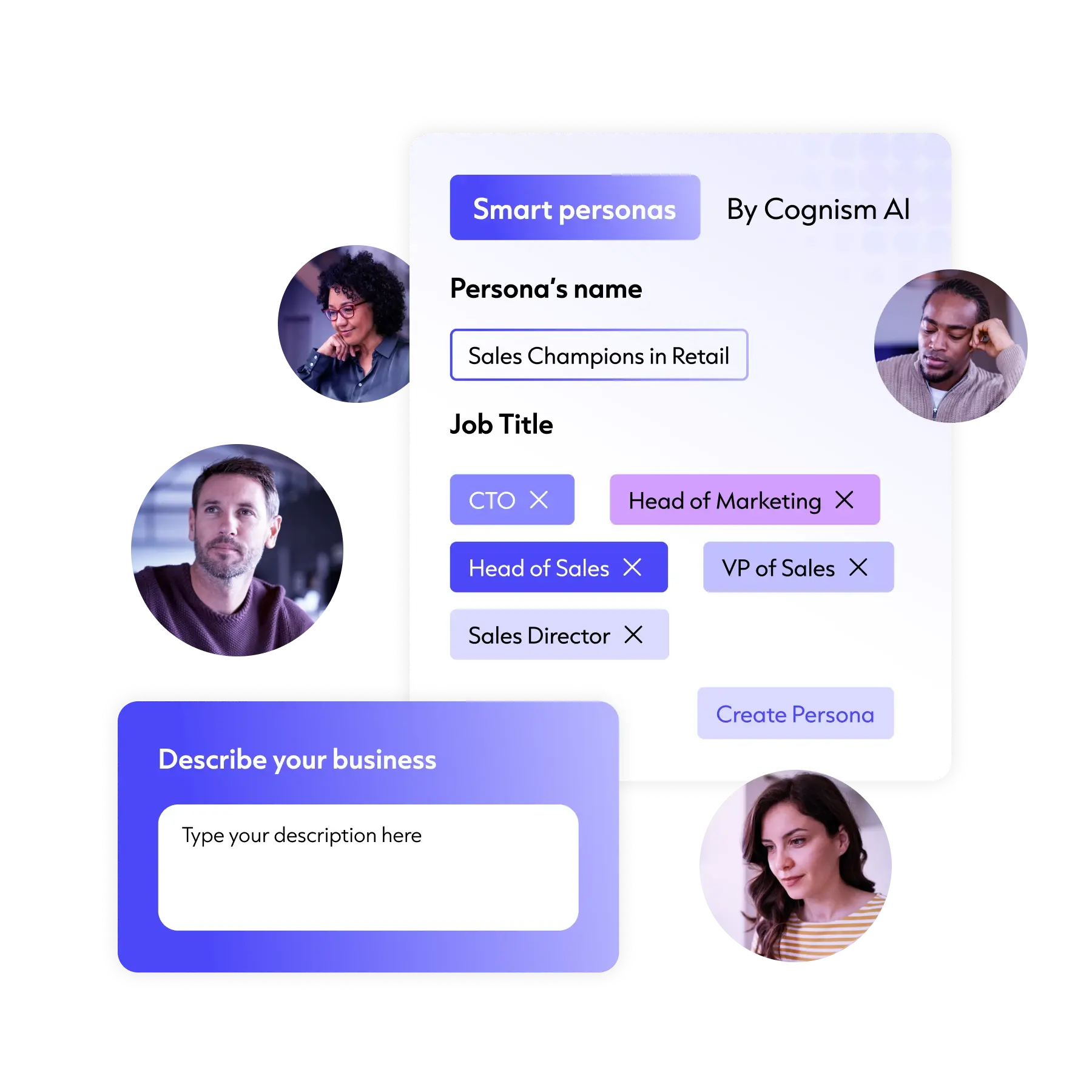
Define the target buyer with the AI persona builder.
Filter by country, seniority and company size, and use the premium mobile filter on Pro.
Reveal mobile numbers, which uses one credit per contact.
Request on-demand verification for high-priority contacts that aren't verified yet.
Push contacts to a sequencing tool like Outreach or Salesloft and start calling.
With ZoomInfo: reps get 120M+ direct-dial phone numbers worldwide and can prioritize, research and draft outreach in GTM Workspace without a separate tool. Outreach used that data to raise connect rates.

"What's most compelling is the emotional boost that a rep gets when they pick up the phone and they know they have a chance."
2. Prioritizing In-Market Accounts
Account executives and ABM teams use signals to decide which accounts to work first. Cognism's intent comes from Bombora, which tracks consent-based content consumption across a cooperative of thousands of B2B websites and flags accounts researching a topic more than usual.
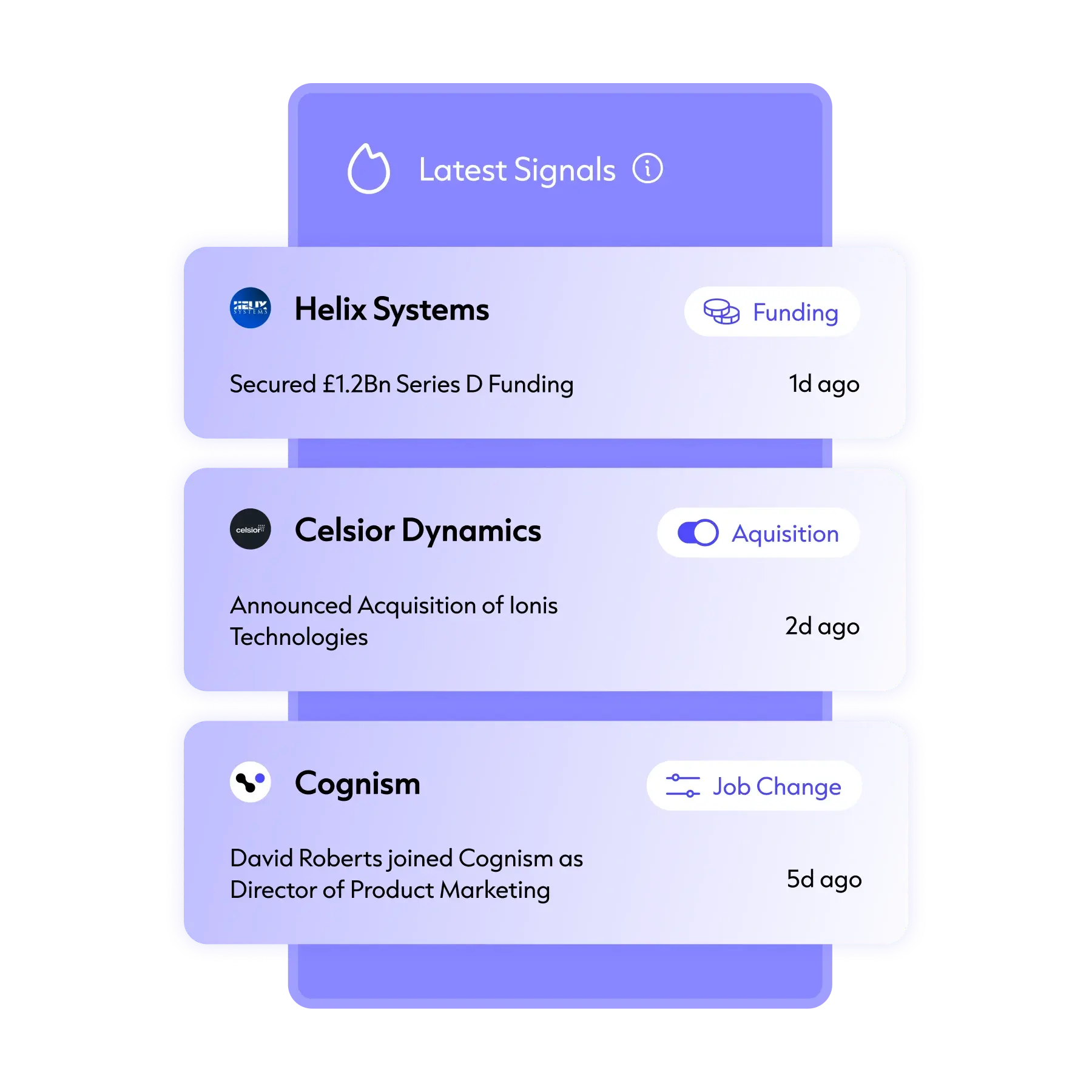
Choose Bombora intent topics that match your category (Pro package).
Filter for accounts showing a surge in research activity.
Layer in hiring, funding and job change signals to judge timing.
Reveal contacts across the buying group and start outreach.
With ZoomInfo: proprietary buyer intent signals and website visitor identification feed the GTM Context Graph, which shows why an account is moving as well as who is in-market.
3. Keeping CRM Data Clean
RevOps teams use Cognism to fill gaps and keep records current.
Connect your CRM, such as Salesforce or HubSpot.
Turn on the CRM Enrichment add-on to enrich and maintain records automatically.
Upload event or webinar lists as CSVs to fill in missing details.
Track credit use, since enrichment draws from the same credits as prospecting.
With ZoomInfo: CRM data enrichment keeps records current through bidirectional sync, and inbound enrichment completes new leads as they arrive.
4. Prospecting Through an AI Assistant
Teams that work in Claude or ChatGPT can now prospect without opening Cognism.
Connect the Cognism MCP connector to the AI assistant.
Ask for accounts or contacts in plain language.
Let Cognism apply do-not-call checks before results come back.
Reveal the contacts you want, using the same credits as the main platform.
With ZoomInfo: GTM.AI brings ZoomInfo data into the same AI assistants, along with intent and CRM context from the GTM Context Graph, so agents can act on deal context as well as contact data.
Cognism Packages and Credits Explained
Cognism sells two prospecting packages, Standard and Pro, and both are quote-based with five seats included. The main differences are mobile data, verification and intent.
Feature | Standard | Pro |
Contact and company data | ✓ | ✓ |
Phone-verified mobile numbers | ✓ | ✓ |
Firmographic, technographic and signal filters | ✓ | ✓ |
AI search, persona builder and company research | ✓ | ✓ |
CSV enrichment | ✓ | ✓ |
MCP and API access | ✓ | ✓ |
Premium mobile data and filter | ✗ | ✓ |
Mobile verification on demand | ✗ | ✓ |
Intent data | ✗ | ✓ |
CRM Enrichment | Add-on | Add-on |
How Cognism Credits Work
Credits are what you spend to get data out of Cognism. Here's how they work:
Revealing a contact costs one credit, whether you reveal it in the web app, the extension, enrichment or the API.
Viewing a contact you've already revealed is free.
API calls are charged per contact, not per field, so requesting more fields doesn't cost more.
Records blocked by do-not-call screening aren't charged.
Each seat includes a credit allocation, and teams can buy more at any point.
That means a team that reveals 2,000 new contacts a month needs at least 2,000 credits a month, plus extra for any enrichment. Credits can go quickly at volume. One SDR on G2 says Diamond Data credits "run out fast if you're doing high-volume outreach," so it's worth modeling usage before you sign.
What Cognism Costs
Cognism doesn't publish prices. Capterra lists a starting price of $1,000 per feature per month, and G2 reviewers report an average discount of 15%. There's no self-serve trial, but you can request a free data sample or take a product tour before talking to sales.
ZoomInfo works differently. Free to start with consumption credits based on usage, ZoomInfo lets teams try the platform before committing.
Where Cognism Fits in Your GTM Stack
Cognism is a data layer. It finds and verifies contacts, then hands them to the other tools your team uses to engage, call and close. Here's what that looks like in practice.
GTM job | Covered by Cognism? | What you'd add alongside Cognism | Covered by ZoomInfo? |
Contact and company data | Yes | Nothing | Yes, 500M contacts and 100M companies |
Verified phone numbers | Yes, phone-verified mobiles | Nothing | Yes, 135M+ verified phone numbers |
Intent data | Yes, Bombora intent on Pro | Nothing | Yes, proprietary intent signals |
Website visitor identification | No | A visitor identification tool | Yes |
Email sequencing and outreach | No | A sales engagement platform | Yes, GTM Workspace |
Call recording and analysis | No | A conversation intelligence tool | Yes, Chorus |
Audiences and campaign plays | No | A marketing orchestration tool | Yes, GTM Studio |
AI agent access | Yes, MCP and API | Nothing | Yes, GTM.AI |
For teams that already run a full stack and mainly need better European phone data, Cognism slots in cleanly. For teams that want fewer tools, the gaps add up quickly.
That's where ZoomInfo differs. It's an all-in-one AI GTM Platform that brings data, intelligence and execution together. Its data foundation covers 500M contacts and 100M companies, including 200M+ professional profiles outside North America. The GTM Context Graph adds an intelligence layer that fuses CRM records, conversation intelligence and behavioral signals to explain why deals move or stall. Teams then act on it in GTM Workspace, GTM Studio or any tool through GTM.AI.
For a full feature-by-feature view, see the Cognism vs. ZoomInfo comparison. If you're weighing more options, see our top Cognism alternatives, our Apollo vs. Cognism comparison or our roundup of sales intelligence tools.
Is Cognism Right for Your Team? Questions to Ask First
The right answer depends on where you sell and what else is in your stack. Work through these questions before a demo.
Where are most of your target accounts? If they're in the UK and Europe, Cognism's phone-verified data is a strong fit. If they're mostly in North America or APAC, test coverage on your own account list first.
How much of your pipeline comes from calling? Premium mobiles and on-demand verification matter most for phone-led teams, and both are in the Pro package.
How many contacts will you reveal each month? Credits are spent per contact, so estimate volume for prospecting, enrichment and API use together.
Do you need intent data? Cognism's intent comes from Bombora and is only in Pro. If you want first-party intent or website visitor data, you'll need another source.
What will you use alongside it? Cognism doesn't include sequencing, call recording or campaign tools, so check what you'll pay for those separately.
Will AI agents use the data? Both packages include MCP and API access. Ask how credits and permissions apply when an agent pulls data.
If your answers point to European calling with an existing stack, Cognism is worth a demo. If they point to global coverage and fewer tools, compare it with other lead generation software that covers more of the workflow.
What Cognism Users Say
Cognism is rated 4.5/5 from 1,372 reviews on G2 and 4.7/5 from 264 reviews on Capterra. Users praise its ease of use, European mobile data and Chrome extension.
One mid-market user says its contact details "always seem to be the most up-to-date and relevant compared to other similar competitors," while Alex W., a territory account manager, notes that "sometimes the emails and phone numbers are not always correct."
Inaccurate or outdated contacts, credit limits and price are the most common complaints. For the full breakdown with real user quotes, read our Cognism reviews.
The Bottom Line on Cognism
Cognism is a focused B2B data provider with real strengths in European phone data and compliance. Its data process, do-not-call screening and new MCP access make it a solid choice for teams that call into the UK and Europe and already run their own engagement stack.
Its limits are just as clear. Coverage thins outside Europe, intent is third-party and Pro-only, and every revealed contact costs a credit. Teams that sell globally or want to cut down on tools usually need more than a data layer.
If that's you, see how ZoomInfo brings global data, proprietary intent and execution into one all-in-one AI GTM Platform. Book a demo.
Frequently Asked Questions About Cognism
What Does Cognism Do?
Cognism provides verified B2B contact and company data. Teams use it to find phone numbers and emails for decision-makers, build prospect lists, enrich CRM records and screen contacts against do-not-call lists.
Where Is Cognism Based?
Cognism is headquartered in London. It was founded there in 2015 by James Isilay and Stjepan Buljat, and Dominic Allon has been CEO since September 2025.
Is Kaspr Part of Cognism?
Yes. Cognism acquired Kaspr, a French prospecting data provider, in 2022 to expand its coverage in France.
How Does Cognism Source Its Data?
Cognism pulls data points from press releases, company websites, news articles, earnings releases, public registries and validated third-party sources. AI scores each data point, phone-verified mobiles get extra manual and automated checks, and director-level contacts are refreshed every 30 days.
Is Cognism GDPR Compliant?
Cognism says its data is GDPR and CCPA compliant. It doesn't collect B2C email addresses, and it screens phone data against 16 do-not-call lists before it's shown, withholding restricted records.
What Is Cognism Diamond Data?
Diamond Data is Cognism's name for its phone-verified mobile numbers, which go through extra manual and automated checks. Phone-verified mobiles come with both packages, and Pro adds premium mobile data and verification on demand.
Is Cognism a CRM?
No. Cognism is a data provider that feeds CRMs like Salesforce, HubSpot, Microsoft Dynamics and Pipedrive, and it sells CRM Enrichment as an add-on.
What's the Difference Between Cognism Standard and Pro?
Both include contact and company data, phone-verified mobiles, AI search, CSV enrichment, and MCP and API access. Pro adds premium mobile data, on-demand mobile verification and Bombora intent data.
Does Cognism Have a Free Trial?
No. Cognism offers a free data sample and a product tour instead of a self-serve trial. Free to start with consumption credits based on usage, ZoomInfo offers a free entry point.
