
Convin has entered the US home services market with a lead capture platform that answers calls, texts, and web inquiries before a homeowner moves on to the next contractor.
The company grew out of an Indian contact center AI business and now promises to turn missed calls and slow follow-ups into booked jobs through three AI channels: phone, SMS, and website chat.
To write this Convin review, we analyzed the platform thoroughly. We think it's a good fit if:
You lose jobs to missed calls during peak hours, after hours, or when technicians are on-site
You want AI to handle inbound phone calls with dispatcher-quality intake
You need automatic text-back for missed calls and web form leads
You want structured lead data (trade type, urgency, ZIP, timing) instead of vague voicemails
You serve residential HVAC, plumbing, or electrical customers in the United States
However, Convin might not be the best choice if:
You need published pricing before engaging a sales team
You require confirmed integrations with ServiceTitan, Housecall Pro, or Jobber
Your business operates outside HVAC, plumbing, or electrical trades
You want a platform with a track record serving US home service companies
You prefer self-serve onboarding over a demo-first sales process
Convin captures inbound demand from homeowners who already need help. But it does not address the other side of growth: finding and reaching commercial prospects who haven't contacted you yet.
For home service businesses expanding into commercial work (property managers, facilities directors, commercial decision-makers), ZoomInfo solves a different problem.
As a B2B go-to-market platform with 500M contacts and 100M companies, ZoomInfo gives commercial-focused teams the data and outbound tools to build pipeline instead of waiting for the phone to ring.
We've included a look at ZoomInfo later in this review for businesses that need outbound commercial prospecting alongside inbound residential capture. You can start with a free trial here.
What is Convin?
Convin (legal entity: Feed Forward Technologies Private Limited) was incorporated in 2020 in Bengaluru, India, by four IIT Delhi alumni.
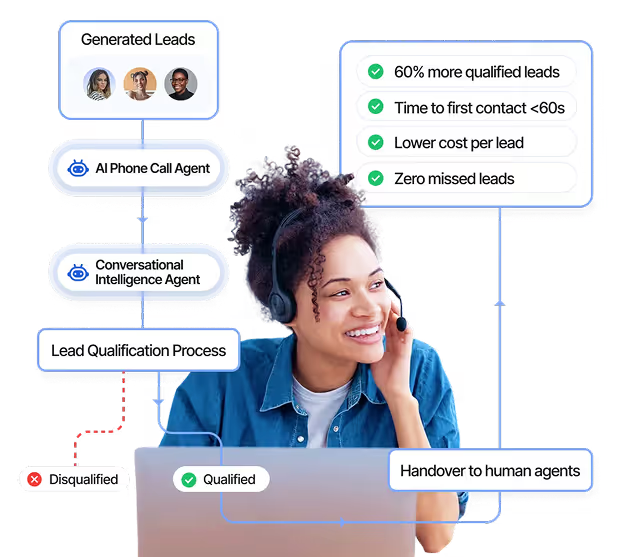
The founding insight, per the company's About Us page, came from watching valuable customer conversation data disappear in enterprise sales processes. Conversations happened, but nobody captured what customers actually said.
The company launched as a contact center intelligence platform that recorded, transcribed, and analyzed calls for sales coaching and quality assurance. That business still serves 80+ enterprise clients in India, including Reliance Nippon, Titan, and Thyrocare. The contact center product holds a 4.9/5 rating across 232 reviews on Capterra.
More recently, Convin expanded into the US home services market with products targeting HVAC, plumbing, and electrical contractors. The pitch: missed calls turn into lost jobs, website forms get answered too late, leads go cold before follow-up, and after-hours inquiries never convert.
Convin frames the customer journey as a funnel (Visitor → Lead → Job), with each of its three products owning a different entry point.
The company has raised approximately $8.94M across three funding rounds, most recently a $6.5M Series A in August 2024 led by India Quotient. The team has approximately 148 employees, headquartered in Bengaluru.
Convin Pros & Cons
Pros | Cons |
|---|---|
AI coverage across phone, SMS, and website | No published pricing (must book a demo) |
24/7 availability with claimed <5-second response time | No confirmed integrations with major FSM platforms |
Structured intake (trade, urgency, ZIP, timing) ready for dispatch | US home services product is still early-stage |
Automatic missed-call text-back and drop-call recovery | Limited to HVAC, plumbing, and electrical trades |
Configurable routing rules and escalation triggers | India-headquartered team serving a US product |
Parent platform has strong reviews (4.9/5 on Capterra) | Those reviews are for the contact center product, not home services |
AI produces structured job summaries, not raw transcripts | Transcription accuracy flagged as inconsistent in parent product reviews |
Convin Review: How it Works & Key Features
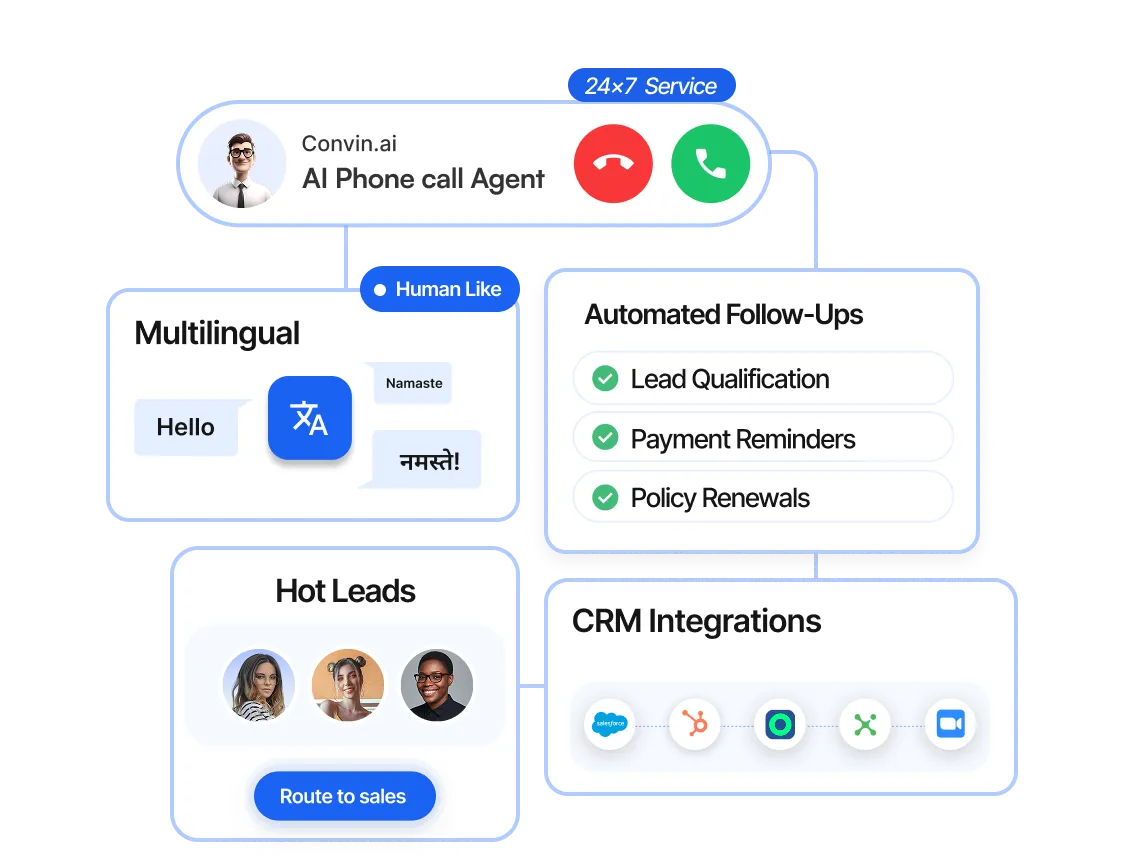
AI Phone Call: Convin answers inbound calls around the clock with structured, dispatcher-ready intake.
AI Phone Call is a voicebot built for home service calls. When a homeowner calls, the AI answers in under 5 seconds, identifies intent and urgency, and runs structured intake: trade type, issue description, ZIP code, and timing.
Source: Convin
Based on that intake, the call routes to one of three outcomes: book an appointment, create a service request, or warm-transfer to a live team member. The warm transfer includes a call summary so the receiving person has full context immediately.
The platform targets five failure modes common in home service phone operations: missed bookings from calls going to voicemail, delayed callbacks that lose jobs, rushed intake producing incomplete information, incorrect routing between departments, and customers repeating their problem at every touchpoint.
If a call drops before completion, the system sends an SMS to continue intake, lets the customer schedule a callback, or routes to a dispatch queue. Every call produces a transcript, summary, and task logged automatically.
Operators can set questions and guardrails per trade (HVAC vs. plumbing vs. electrical), controlling what the AI asks and when it escalates.
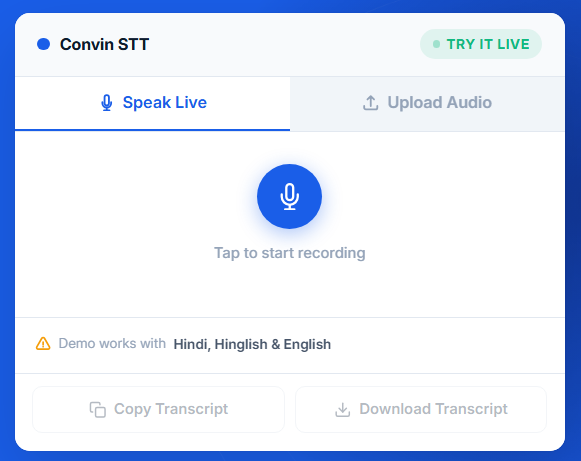
The phone product currently supports English, Hindi, and Hinglish. No Spanish capability is mentioned, a notable gap for US markets with large Spanish-speaking populations.
Source: Convin
AI SMS: Two-way texting automation that qualifies leads, recovers missed calls, and reduces no-shows.
AI SMS handles text-based lead capture through four journey types:
New lead capture replies instantly when a homeowner texts from a Google LSA ad, PPC page, or contact form. The AI captures service type, urgency, ZIP, and timing, then routes to a booking link, dispatch queue, or callback request.
Missed-call text back automatically texts callers whose calls went unanswered. This matters most for contractors whose technicians are on-site and can't answer the phone. The AI captures what the caller needs and books directly or creates a callback request.
No-response follow-ups send timed nudges to leads that went quiet after initial contact, checking for continued intent rather than pushing blindly. The system either books the job, pauses outreach, or escalates.
Confirmations and reminders handle appointment confirmations, pre-appointment reminders, and reschedule requests to reduce no-shows.
What separates Convin's SMS from generic text blasts is adaptability. Traditional SMS sequences send the same messages regardless of what the homeowner said, keep pushing when the person is confused, skip dispatch basics, and tag outcomes inconsistently.
Convin's AI reads each response and adjusts, asking only what dispatch needs: trade, issue, ZIP, urgency, and timing. Each conversation ends with a consistent outcome tag ("booked," "callback," "not in area") and a clean summary pushed into the business's system.
When conversations involve complex scope, pricing pushback, or high-value jobs, the system escalates to a human.
AI Website Widget: Real-time chat and voice on your website that qualifies visitors in under 60 seconds.
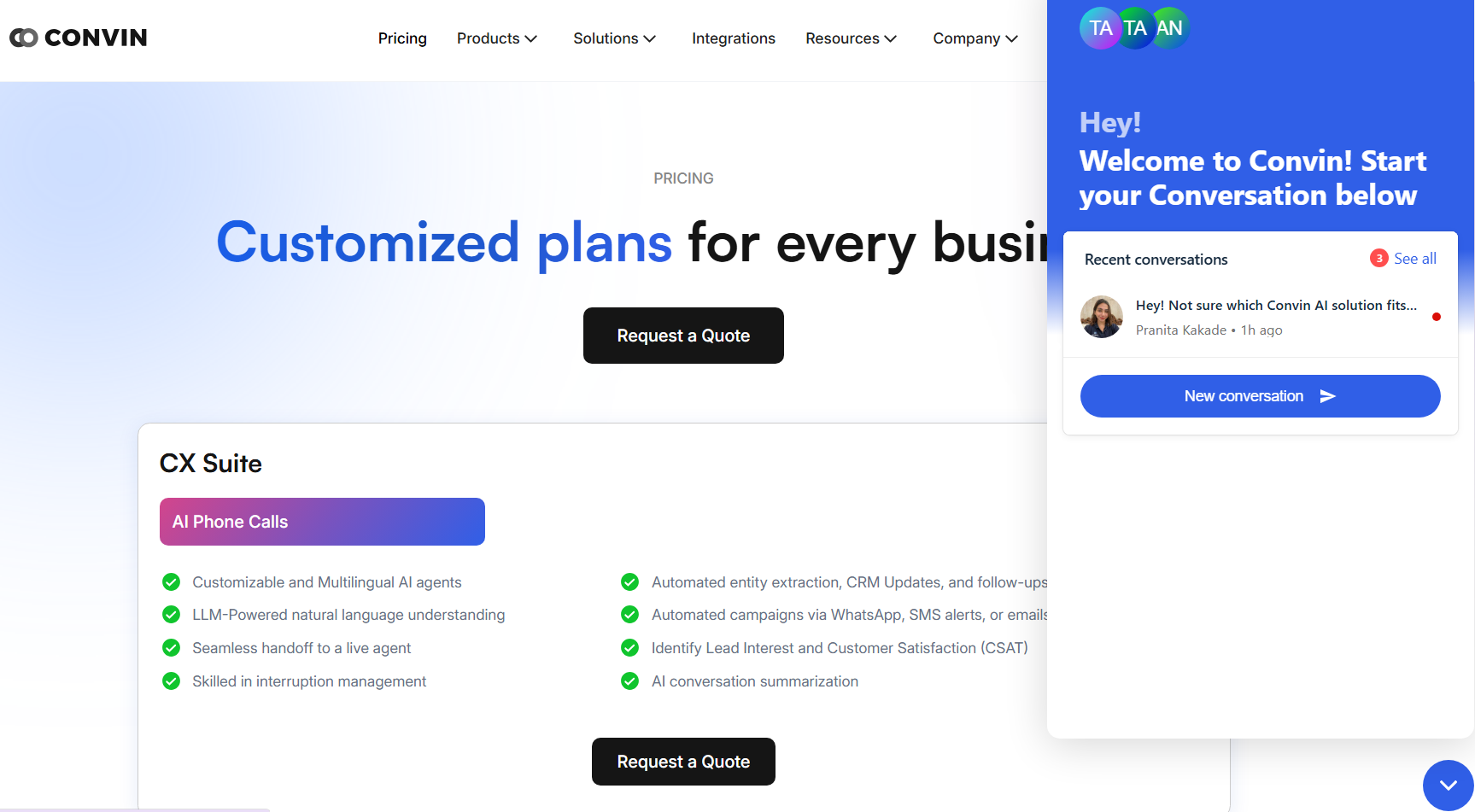
The AI Website Widget embeds on a contractor's website as a chat and voice layer. Convin positions it as a capture and routing tool designed to create a next step, not just conversation.
The widget engages visitors based on behavioral signals, triggering on pricing pages, emergency pages, or service-area pages rather than firing on every page load. It captures six fields: trade and issue type, urgency, service area (ZIP), preferred time window, optional photos or video, and a confirmed next step.
Source: Convin
Convin frames the revenue impact with a direct calculation: a home service business receiving 40 website leads per month that loses 10 to bounce, at an average job value of $350–$800, forfeits $3,500–$8,000 monthly. That's a conversion gap, not a marketing gap.
The widget handles three visitor types differently. Price-checking visitors see safe pricing ranges and get routed to schedule an inspection or callback. Visitors who need service soon answer 2–4 qualification questions and get routed to the correct trade team.
Emergency visitors give only minimum information (phone, address, issue) and go to priority dispatch immediately.
Like the phone and SMS products, the widget produces structured job summaries that sync to the CRM, so dispatch opens leads already knowing what's needed.
Where Convin Falls Short
Convin's three-channel approach covers inbound lead capture well. But several limitations stand out, especially for buyers comparing it to more established options.
No Published Pricing. The pricing page returns a 404 error. Every product page leads to a demo booking form with no tier breakdowns, per-call rates, or fee schedules. Small contractors who want to know costs before committing time to a sales call will find this frustrating.
The only pricing signal is a reference to a now-closed "Early Stage Program" that offered "25% off PSA for life," suggesting a Platform Subscription Agreement as the contract type, with no base price disclosed.
No Confirmed FSM Integrations. Convin's product pages show generic integration graphics under headings like "Connects With the Tools You Already Use" but name no specific field service management platform: not ServiceTitan, not Housecall Pro, not Jobber.
The FAQ confirms CRM updates are possible ("Does it update our CRM? Yes"), but without specific FSM integrations, the AI can't close the loop from intake to calendar booking.
For contractors whose dispatch runs through these platforms, this is a gap to confirm before committing.
Early-Stage US Home Services Product. The home services offering appears to have launched as recently as early 2025. Customer references on the site include Alosant, Atlas, Fiton, Zip
Moving, and Motus Power, a short list consistent with early adoption. No public case studies or testimonials from US HVAC, plumbing, or electrical businesses exist. The 4.9/5 Capterra rating belongs to the Indian contact center product, not the home services platform.
Transcription Accuracy Concerns. Capterra reviewers of the parent contact center product note that "speech-to-text conversion can be a little clumsy" and that "the transcript does not always capture what you say."
For a platform where intake accuracy determines whether dispatch sends the right technician to the right address, this matters. Whether the home services product has improved is not publicly documented.
Limited Trade and Language Coverage. The platform names HVAC, plumbing, and electrical as supported trades.
Pest control, landscaping, roofing, and garage door services go unmentioned. Language support covers English, Hindi, and Hinglish only, with no Spanish capability, a gap in many US markets.
No Outbound Prospecting. Convin handles inbound lead capture only. It does not help businesses find new prospects, reach commercial accounts, or run outbound campaigns.
For companies whose growth depends on more than waiting for the phone to ring, this is a design limitation, not a bug.
These gaps follow naturally from building a new product for a specific vertical. Convin chose to do inbound capture well across three channels rather than spread into outbound, commercial prospecting, or broad trade coverage. But for businesses that need more than inbound capture, the gaps are real.
Building Commercial Pipeline: ZoomInfo
Convin captures demand from homeowners who already know they need help. But many growing home service companies also pursue commercial contracts: property management firms, commercial building owners, general contractors, and facilities teams.
That work doesn't come through Google LSA ads or missed calls. It requires identifying the right companies, finding decision-makers, and reaching them before a competitor does.
This is a different problem from inbound lead capture, and ZoomInfo was built to solve it.
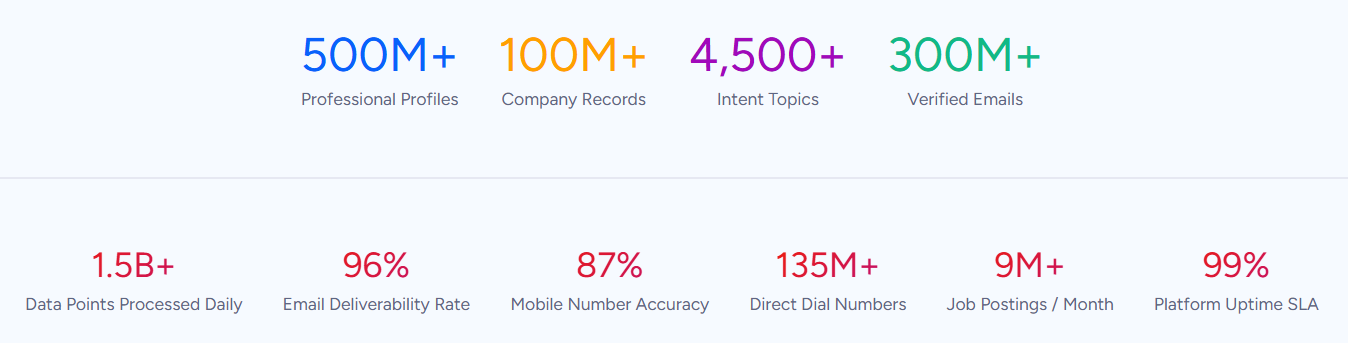
ZoomInfo is a B2B go-to-market platform built on 500M contacts, 100M companies, 135M+ verified phone numbers, and 200M+ verified business email addresses.
Source: ZoomInfo
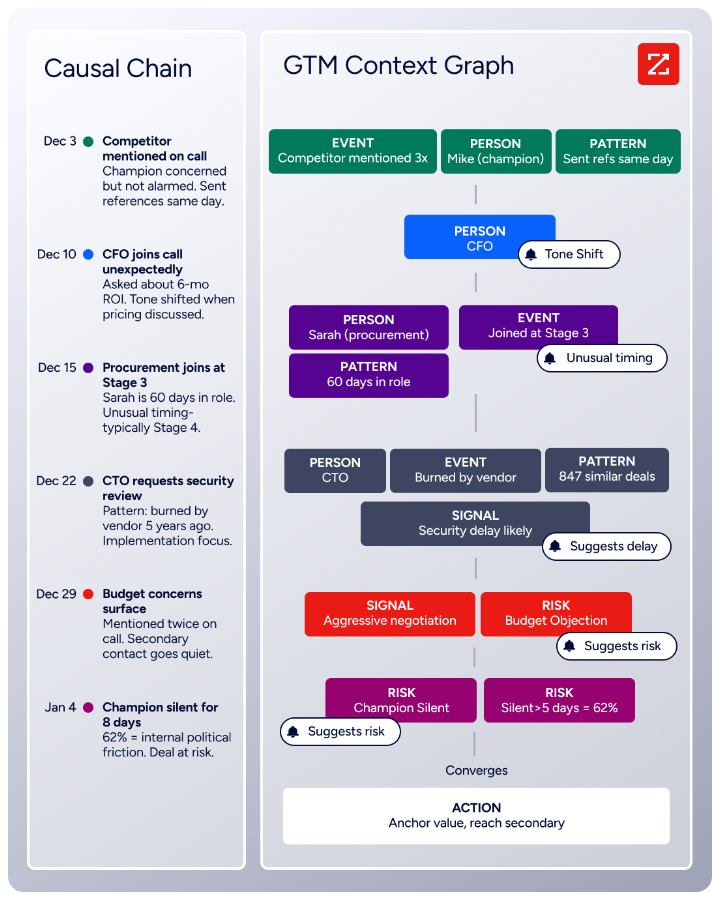
Its GTM Context Graph processes 1.5B+ data points daily, combining this data with your CRM records and behavioral signals to show not just who your prospects are, but why they're ready to buy.
For a home service company moving into commercial work, that means you can answer "who should we sell to?" with data.
B2B Data for Commercial Prospecting: Find the decision-makers behind commercial contracts.
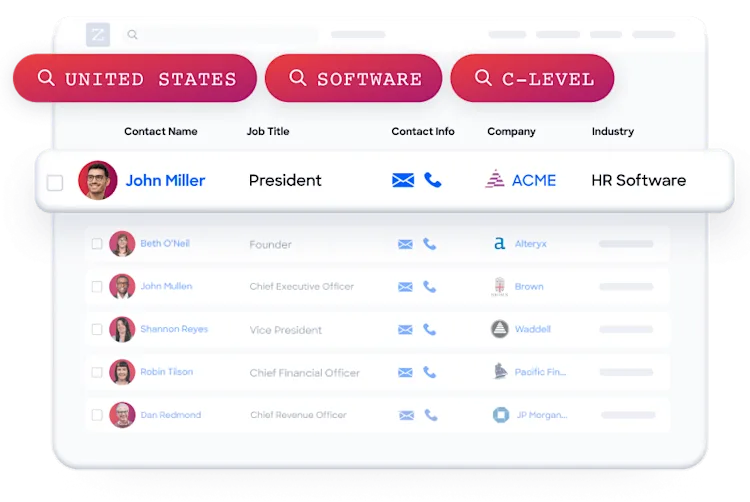
ZoomInfo's Contact & Company Search lets you filter by 300+ attributes, including industry, company size, location, and job title.
Source: ZoomInfo
A commercial HVAC contractor could search for facilities managers at office buildings in their service area, property management companies of a certain size, or general contractors handling commercial builds in their region.
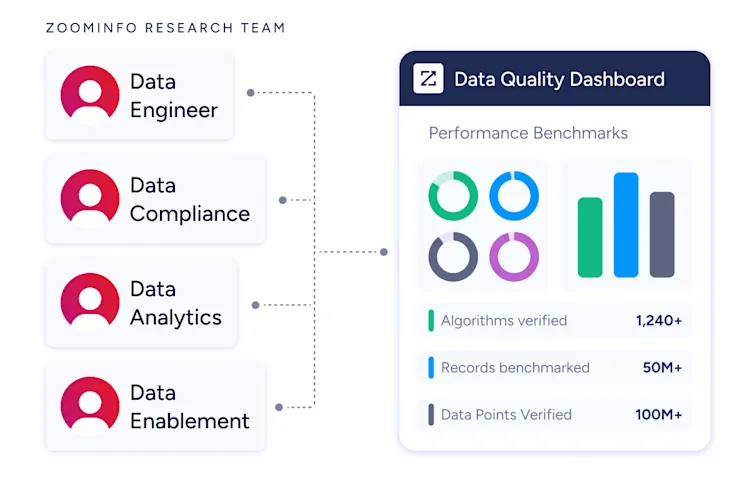
Results include verified direct-dial phone numbers and business email addresses, with up to 95% accuracy on first-party data. This verification comes from a multi-source pipeline backed by 300+ human researchers and automated ML scanning 28 million site domains daily.
Source: ZoomInfo
In a Fortune 500 competitive RFP analyzing 25 million contacts across vendors, an independent consultant concluded that "no other competitor came even close."
For home service businesses, this means you can build targeted lists of commercial prospects in your territory instead of relying on referrals and door-knocking.
"ZoomInfo gives us the information we need to execute. We don't have to go through and spend our time digging. It's already there, so we can be three steps ahead." (Vensure)
Intent Signals and Account Prioritization: Know which commercial accounts are actively looking for services.
ZoomInfo Intent tracks buying signals across 210 million IP-to-Organization pairings and 6 trillion+ new keyword-to-device pairings sourced monthly.
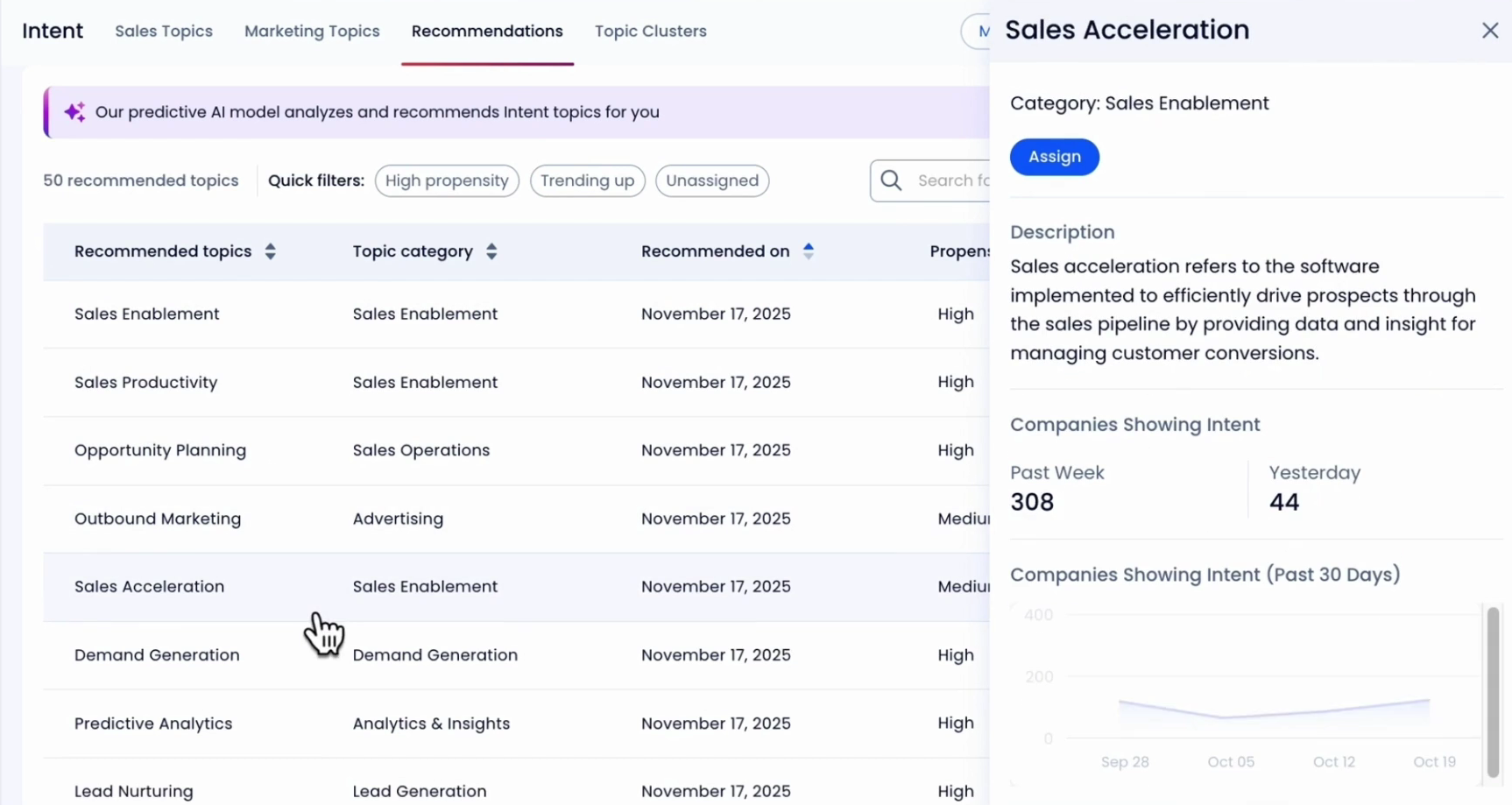
When a commercial property management firm starts researching HVAC maintenance providers or commercial plumbing contractors, the GTM Context Graph connects that activity to account and contact records, surfacing it before the prospect reaches out to anyone.
Source: ZoomInfo
Guided Intent (exclusive to ZoomInfo) identifies topics historically correlated with deal success rather than requiring manual keyword selection.
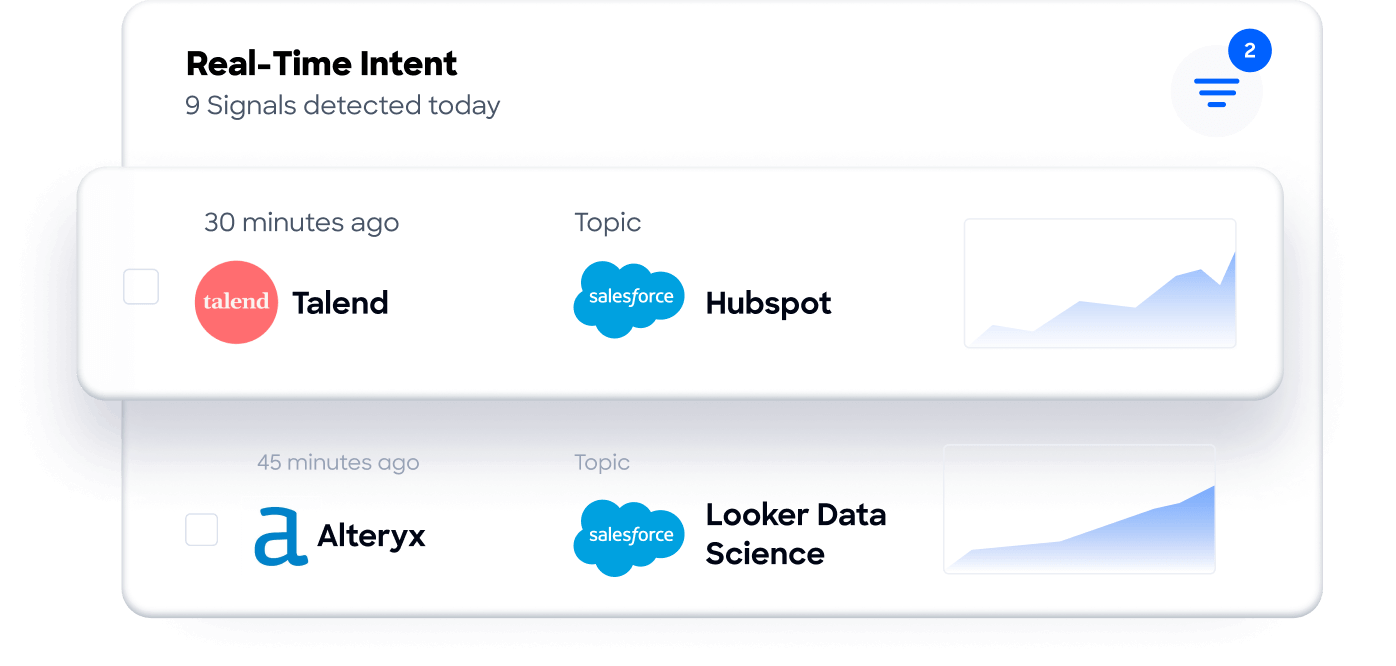
Source: ZoomInfo
Combined with WebSights, which matches anonymous website traffic to companies, you can see which commercial accounts visit your website and what they're researching.
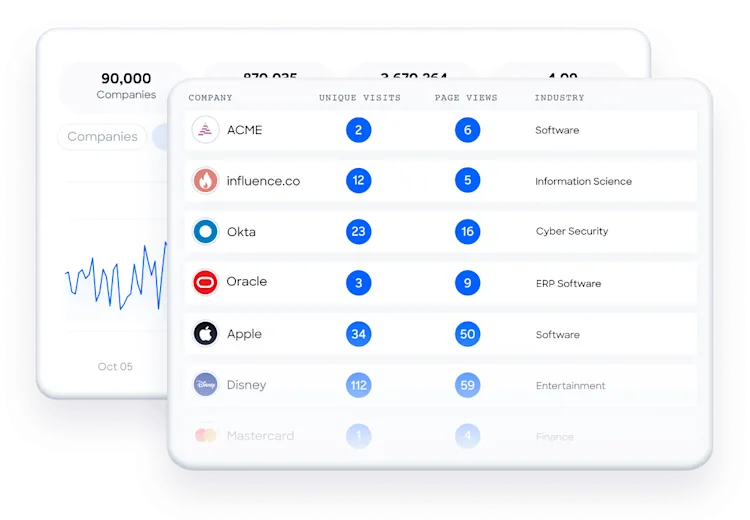
Source: ZoomInfo
This turns prospecting from a volume game into a timing game. Instead of calling every property manager in your metro area, you focus on the ones showing active interest now.
"It's not just the data itself. It's more about the right data at the right time to help us reach out with the right message across that full buyer journey." (Redwood Logistics)
Universal Access: Use ZoomInfo's data inside any tool your team already uses.
ZoomInfo delivers data through three channels: GTM Workspace for sellers who want an AI-assisted work environment, GTM Studio for marketers and operations teams building audience campaigns, and APIs and MCP for teams that want ZoomInfo's data inside third-party tools or AI agents.
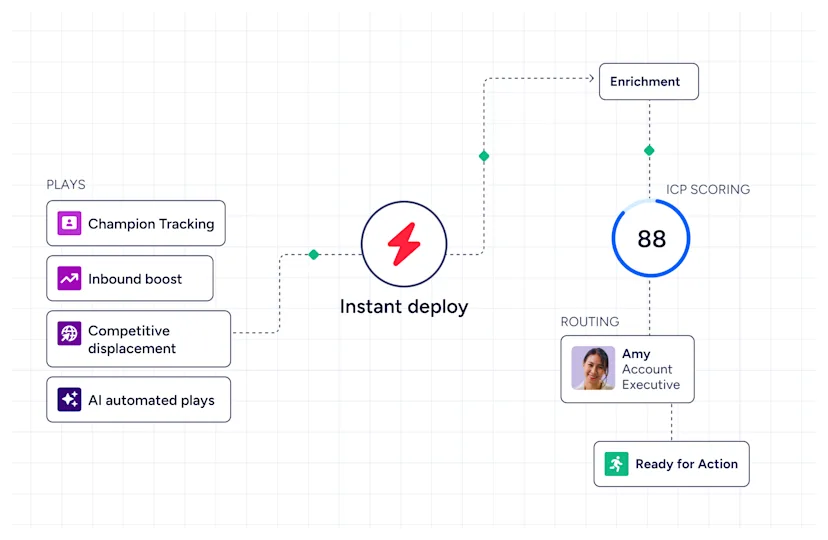
Source: ZoomInfo
This means a home service company doesn't need to abandon its existing CRM or workflow tools. ZoomInfo integrates with Salesforce, HubSpot, and Microsoft Dynamics, and the App Marketplace lists over 120 partner integrations.
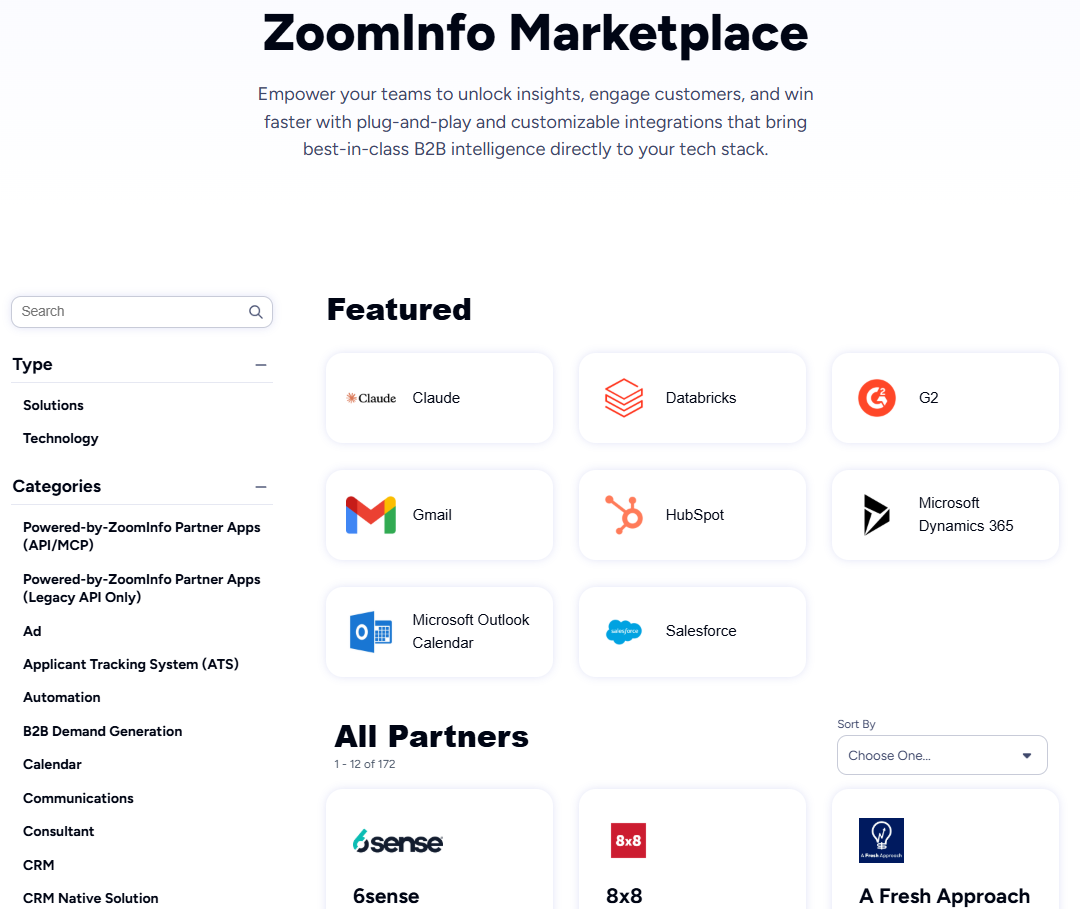
Source: ZoomInfo
For smaller teams getting started, ZoomInfo Lite offers a permanent free tier with access to the B2B database, 10 monthly export credits, and basic website visitor tracking, with no time limit and no credit card required.
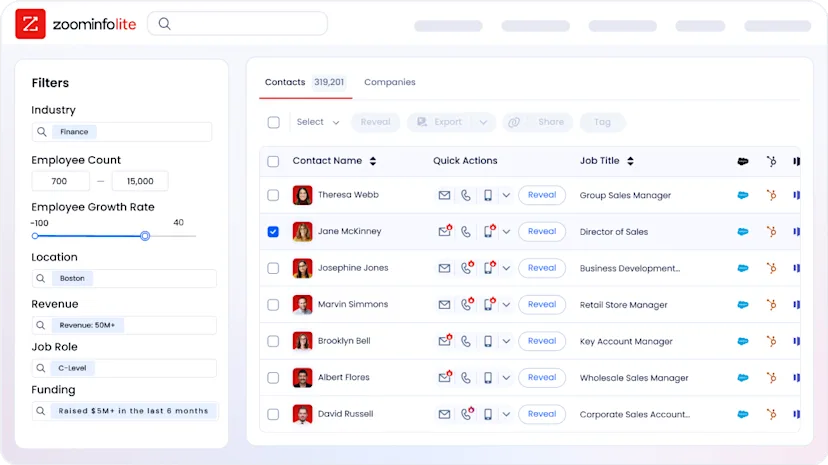
Source: ZoomInfo
Convin and ZoomInfo: When to Use Each
Aspect | Convin | ZoomInfo |
|---|---|---|
Primary function | Inbound AI lead capture for home services | B2B data and outbound prospecting |
Target customer | Residential home service contractors (HVAC, plumbing, electrical) | B2B sales, marketing, and RevOps teams |
Core problem solved | Missed calls, slow follow-up, after-hours lead loss | Finding and reaching commercial decision-makers |
Channels | AI phone, AI SMS, AI website widget | Email, phone, ads, multi-channel orchestration |
Data source | Homeowner inbound inquiries | 500M B2B contacts, 100M companies, intent signals |
Pricing | Not published (demo required) | Consumption-based pricing (free tier available) |
Integration focus | CRM sync (specific platforms not named) | 120+ integrations including Salesforce, HubSpot, Dynamics |
Free option | Not available | ZoomInfo Lite (permanent free tier) and 7-day trial |
Best for | Capturing residential inbound demand | Building commercial outbound pipeline |
Final Verdict
Convin and ZoomInfo serve different parts of a home service business's growth. They are not competitors, and choosing one does not rule out the other.
Choose Convin if your main challenge is losing residential leads to missed calls, slow text replies, and unengaged website visitors. Convin's three-channel AI (phone, SMS, widget) is built for home services intake, producing structured job data that dispatch can act on immediately. It works around the clock without adding headcount.
The platform is still early in its US launch, so request references from contractors in your trade and confirm integration support with your FSM platform before committing.
Choose ZoomInfo if your business is expanding into commercial work and you need to find and reach property managers, facilities directors, general contractors, and other B2B decision-makers.
ZoomInfo's data, intent signals, and prospecting tools let you build commercial pipeline systematically instead of relying on referrals and word of mouth. The free Lite tier lets you explore the data before committing.
Get started with ZoomInfo here.
For home service businesses serving both residential and commercial customers, the two platforms address opposite sides of the growth equation. Convin captures the demand already coming to you. ZoomInfo helps you create demand from commercial accounts that don't know you yet.
Convin FAQ
What does Convin do?
Convin is a lead capture platform for US home service businesses (HVAC, plumbing, and electrical contractors). It answers inbound calls 24/7 with an AI voicebot, automates two-way SMS for lead qualification and missed-call recovery, and embeds an AI chat widget on your website to convert visitors into booked jobs.
All three channels produce structured intake data (trade type, urgency, ZIP code, timing) that dispatch can act on immediately.
How much does Convin cost?
Convin does not publish pricing. The pricing page returns a 404 error, and all product pages lead to a demo booking form. The only pricing signal is a reference to a now-closed "Early Stage Program" offering 25% off a Platform Subscription Agreement.
Buyers must contact Convin's sales team through a demo request to learn about pricing tiers, per-usage costs, and contract terms.
Does Convin integrate with ServiceTitan, Housecall Pro, or Jobber?
Convin's product pages say the platform "connects with the tools you already use" but name no specific FSM platforms. The FAQ confirms CRM updates are possible, but no documented integrations with ServiceTitan, Housecall Pro, Jobber, or other field service management software appear in public materials. Confirm integration support with Convin's team before committing.
Is Convin's AI phone answering available in Spanish?
The AI Phone Call product supports English, Hindi, and Hinglish. No Spanish capability appears on any product page. For US home service businesses in markets with large Spanish-speaking populations, confirm this with Convin's sales team.
Does Convin have a free trial?
No free trial or free tier appears on Convin's website. Access requires contacting the sales team through a demo request. ZoomInfo, by contrast, offers both a permanent free Lite tier and a 7-day free trial with no credit card required.
What trades does Convin support?
Convin names HVAC, plumbing, and electrical as supported trades. Pest control, landscaping, roofing, garage door, and other trades go unmentioned. The intake logic, qualification questions, and routing rules are built around these three trades.
Is Convin an established platform in the US home services market?
Convin's US home services product is new. The company was founded in 2020 as a contact center AI platform in India, where it serves 80+ enterprise clients and holds a 4.9/5 rating on Capterra across 232 reviews.
The US home services expansion came later, with an early-stage program that closed in April 2025. Customer references on the home services site are limited, and no public case studies from US contractors exist.
The parent company has real AI infrastructure (including a 7-billion parameter LLM and research presented at ICASSP), but buyers should evaluate the home services product on its own merits.
How does Convin handle calls that drop or go unanswered?
If a call drops, Convin sends an SMS to continue intake, offers the caller a callback option, or routes to a dispatch queue. For calls that go entirely unanswered (technician on-site, after hours), the AI SMS product sends an automatic text-back to capture what the homeowner needs and route them to booking or a callback. This chain ensures no lead reaches a dead end.
Researching Convin? These comparisons and alternatives help you decide:
