
Customer.io has earned its reputation among product-led SaaS companies by doing one thing well: turning user behavior into automated, personalized messages.
If someone signs up for your product but never finishes onboarding, Customer.io detects that inaction and sends the right nudge at the right time (email, SMS, push, in-app, or WhatsApp). With 9,000+ brands, $100M+ in annual recurring revenue, and 99.98% uptime, the platform has proved it can handle lifecycle engagement at scale.
We analyzed Customer.io end to end. It's the right choice if:
You run a product-led SaaS or digital subscription business with behavioral event data
You need multi-channel lifecycle automation (onboarding, retention, activation, re-engagement)
Your engineering team can instrument events and your marketing team wants to build campaigns on its own
You want one workflow canvas that spans email, SMS, push, in-app, WhatsApp, and LINE
You value a flexible, API-first data model over drag-and-drop simplicity
Customer.io might not be the best choice if:
You lack the technical resources to instrument behavioral events
You need a built-in CRM or sales pipeline
You want mid-range pricing (the jump from $100/month to $1,000/month has no middle tier)
Your primary need is prospecting, outbound sales, or finding new B2B buyers
You're a non-technical marketer who prefers a visual, no-code setup
Customer.io excels at engaging users you already have, but B2B companies also need to fill the top of the funnel with qualified prospects.
That's where ZoomInfo fits. ZoomInfo is a B2B data and go-to-market platform that identifies who to target, with 500M contacts, 100M companies, 135M+ verified phone numbers, and 200M+ verified business emails. By the time a prospect enters your product and Customer.io takes over, your pipeline is already built on verified data.
We've included a look at how ZoomInfo complements Customer.io later in this review. If you're ready to see how B2B data intelligence can strengthen your pipeline, start with ZoomInfo's free trial here.
What is Customer.io?
Customer.io is a customer engagement platform founded in 2012 by Colin Nederkoorn and John Allison, who left ChallengePost (now Devpost) to build it. The original idea was simple: send emails based on what users did or didn't do in your app.
The company started as a website analytics tool but pivoted when early customer interviews revealed that businesses already had analytics. What they needed was the ability to act on behavioral data.
Five companies paid $10/month for the first barely functional version. From there, Customer.io grew steadily: fully remote in 2014, expanded beyond email to push, SMS, and webhooks by 2016, and launched its Visual Workflow Builder in 2020. A Series A from Spectrum Equity followed in March 2022, and by September 2025 the company had crossed $100M+ ARR with 37% year-over-year growth.
Today, Customer.io organizes its platform around five pillars: Journeys for automated campaigns, Audiences for data-driven segmentation, Data & Integrations for first-party data unification, Design Studio for message creation, and Analytics for outcome measurement.
The platform serves 78,000 active users and has sent over 100 billion messages. Its ideal customer is a growth-stage SaaS or digital subscription company that generates behavioral event data and wants to drive lifecycle outcomes (onboarding, activation, retention, cross-sell) without constant engineering involvement.
Customer.io Pros & Cons
Pros | Cons |
|---|---|
Developer-friendly data model with unlimited custom attributes | Steep learning curve for non-technical teams |
Omnichannel orchestration (email, SMS, push, in-app, WhatsApp, LINE) in one workflow | 10x pricing jump from Essentials ($100/mo) to Premium ($1,000/mo) with no middle tier |
Unlimited user seats on all plans | No built-in CRM or sales pipeline tools |
Unlimited API calls on all plans | Design Studio features (reusable components, saved templates, version control) locked to Enterprise |
99.98% uptime and 12B+ daily API calls | Email and community support only on Essentials; chat and onboarding require Premium |
AI Agent with persistent memory and campaign-building capabilities | Analytics depth was limited until Goals launched in April 2026 |
Startup Program offers up to 12 months free for qualifying companies | No permanent free tier (14-day trial only) |
Customer.io Review: How it Works & Key Features
Journeys: Customer.io's automation engine lets you build multi-step, multi-channel campaigns from a single visual canvas.
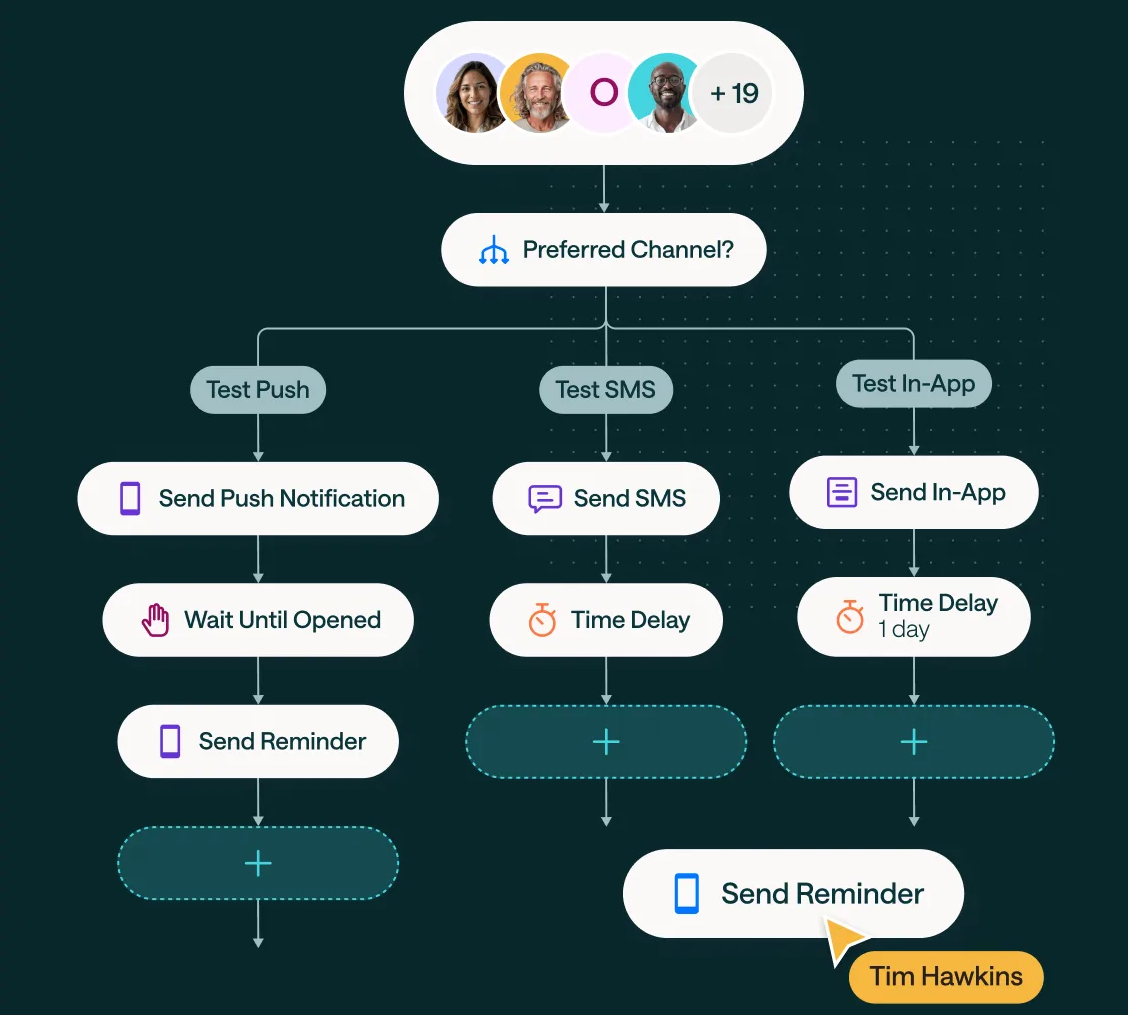
Journeys is the core of Customer.io. You build automated campaigns here that respond to user behavior across every channel the platform supports. The workflow builder uses a drag-and-drop interface. You start by defining a trigger: segment membership, a behavioral event, a date, a form submission, or an incoming webhook.
Source: Customer.io
Once triggered, a person enters the workflow and moves through the steps you've assembled: messages across any supported channel, time delays (fixed waits, time windows, "wait until" conditions), branches (true/false, multi-split, random cohorts), A/B tests, attribute updates, webhook actions to external systems, and LLM actions that call AI models directly within the workflow.
The LLM actions feature, launched in April 2026, is worth noting. You can run an AI prompt against live customer data inside a workflow step and store the output as attributes. This lets you generate personalized content or route users by intent without engineering involvement. Few marketing automation platforms embed AI decision-making directly in the campaign flow.
Journeys handles three sending modes from one workspace: automated campaigns, one-time broadcasts and newsletters, and transactional messages (password resets, order receipts) that bypass marketing suppression lists and fire immediately via API.
Audiences: Dynamic segmentation that updates in real time as customer data changes.
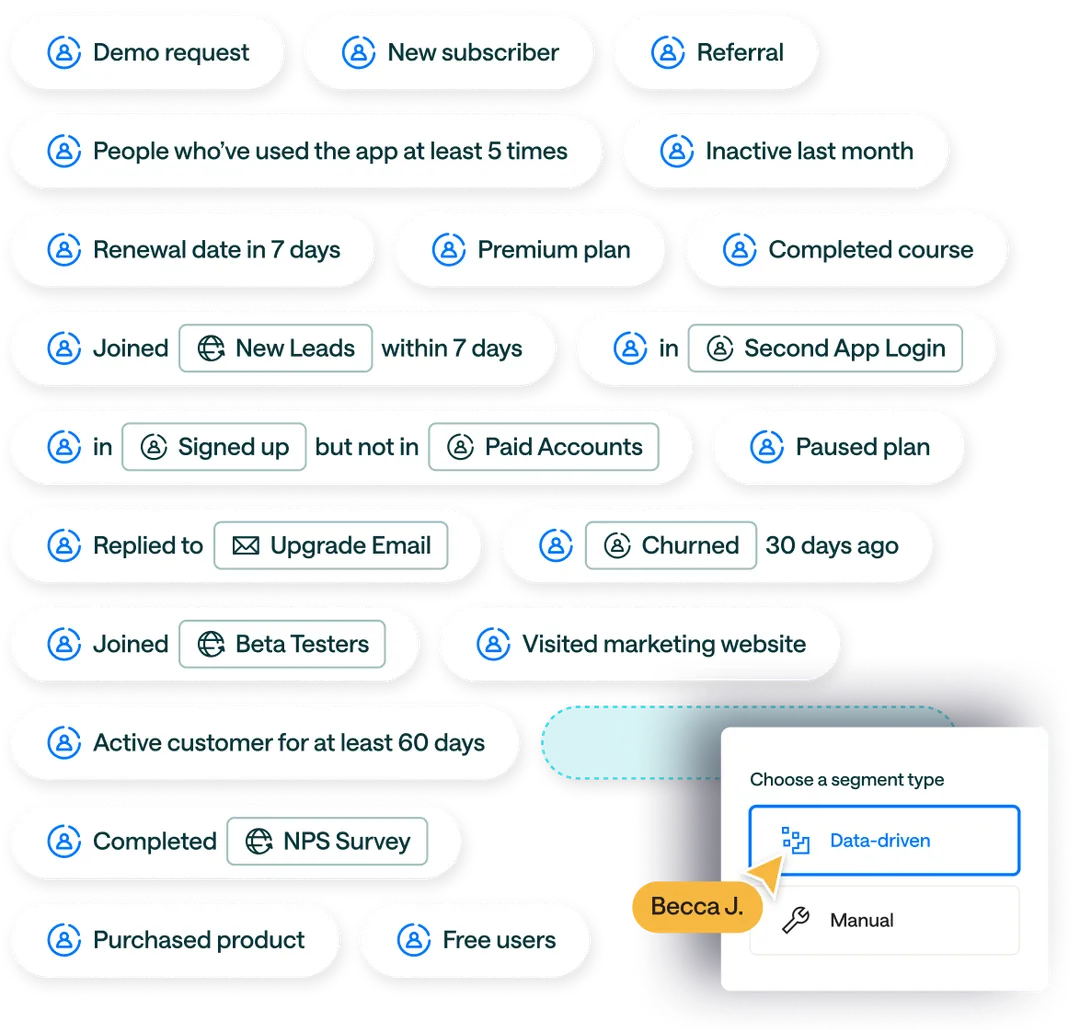
Customer.io's Audiences feature goes beyond static list management. Data-driven segments add people automatically when they match conditions and remove them when they stop matching, keeping audience lists current without manual work.
Source: Customer.io
Segment conditions draw from attributes, events, object relationships, form submissions, page events, devices, and messaging engagement data. You can join conditions with AND/OR logic and nest them into groups for complex boolean expressions.
An AI-powered segment builder lets users describe their use case in plain language and generates conditions automatically. As a safeguard, the AI uses only attribute names, never attribute values or PII.
For paid media, Ad Audience sync connects segments to Meta (Facebook/Instagram), Google Ads, and YouTube, syncing on hourly intervals (daily for Google Ads). The platform hashes data with SHA-256 before transmission, and the Google Ads integration uses Customer Match to build audiences without cookies.
Segments serve multiple roles across the platform: campaign triggers, entry filters, conversion goals, broadcast audiences, and ad network audiences, all from a single definition.
Data & Integrations: An embedded Customer Data Platform that eliminates the need for a separate CDP vendor.
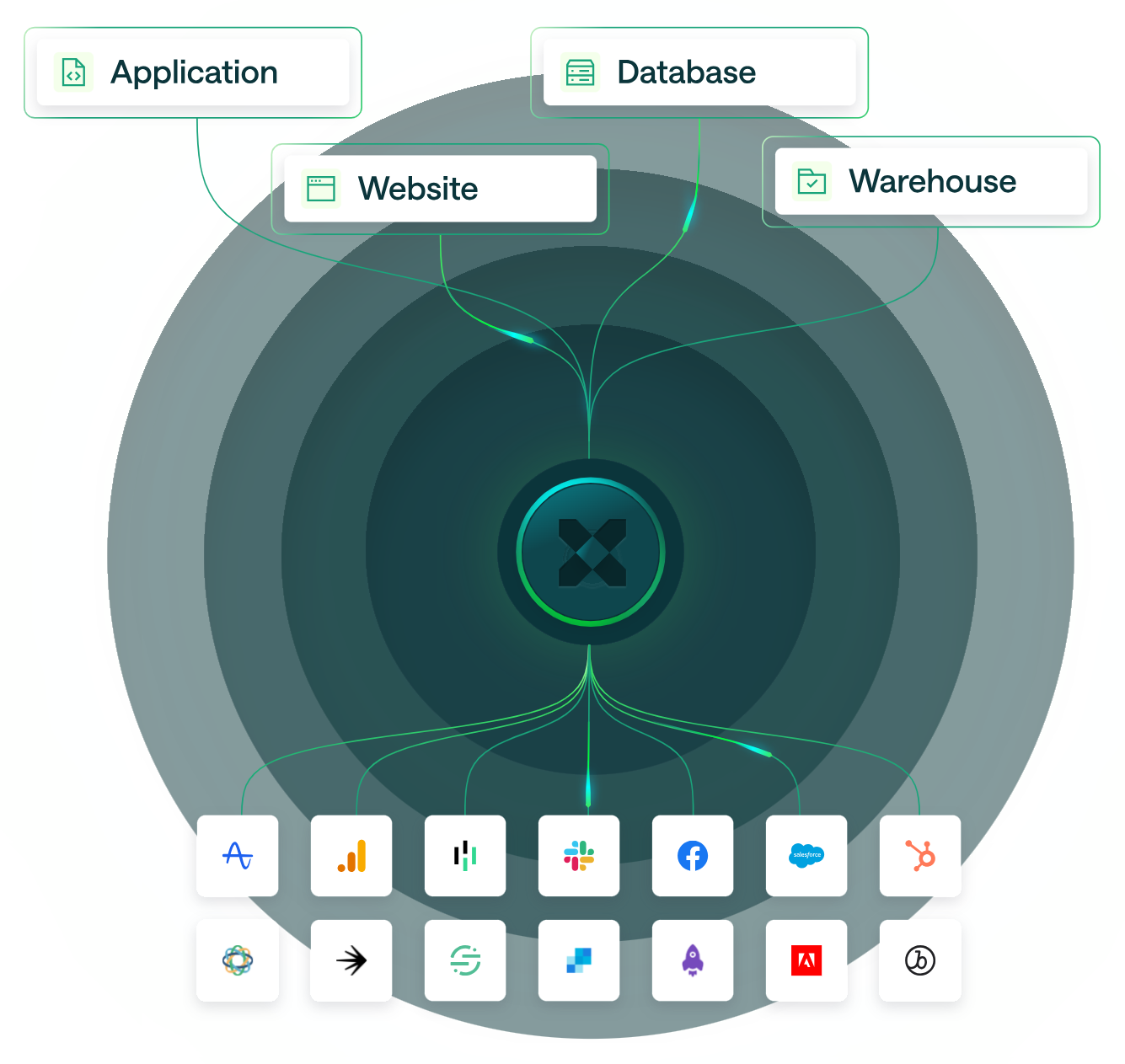
Customer.io positions its Data & Integrations layer as a built-in CDP. Instead of requiring a separate data platform, Customer.io integrates data pipelines into its messaging platform. The same system that ingests customer data also acts on it.
Source: Customer.io
Data flows in through pre-built integrations (Salesforce, HubSpot, Segment, Typeform), Reverse ETL from data warehouses, a Pipelines API for CDP-style data collection, mobile SDKs (iOS, Android, React Native, Flutter, Expo), webhooks, and CSV import.
The platform stores profiles with custom attributes, event histories, nested JSON data, and custom Objects for modeling non-person entities like accounts, subscriptions, or courses.
On the output side, campaign data syncs to Snowflake, Amazon S3, Amplitude, Mixpanel, and more. Data Replay lets teams add a new destination and retroactively resend historical data without new API calls. Unlimited API calls come with every plan, removing cost surprises for high-event-volume products.
A Model Context Protocol (MCP) server lets AI tools like Claude, Cursor, and ChatGPT interact with Customer.io data and campaigns programmatically.
Design Studio: A dual-editor email builder that serves both marketers and developers.
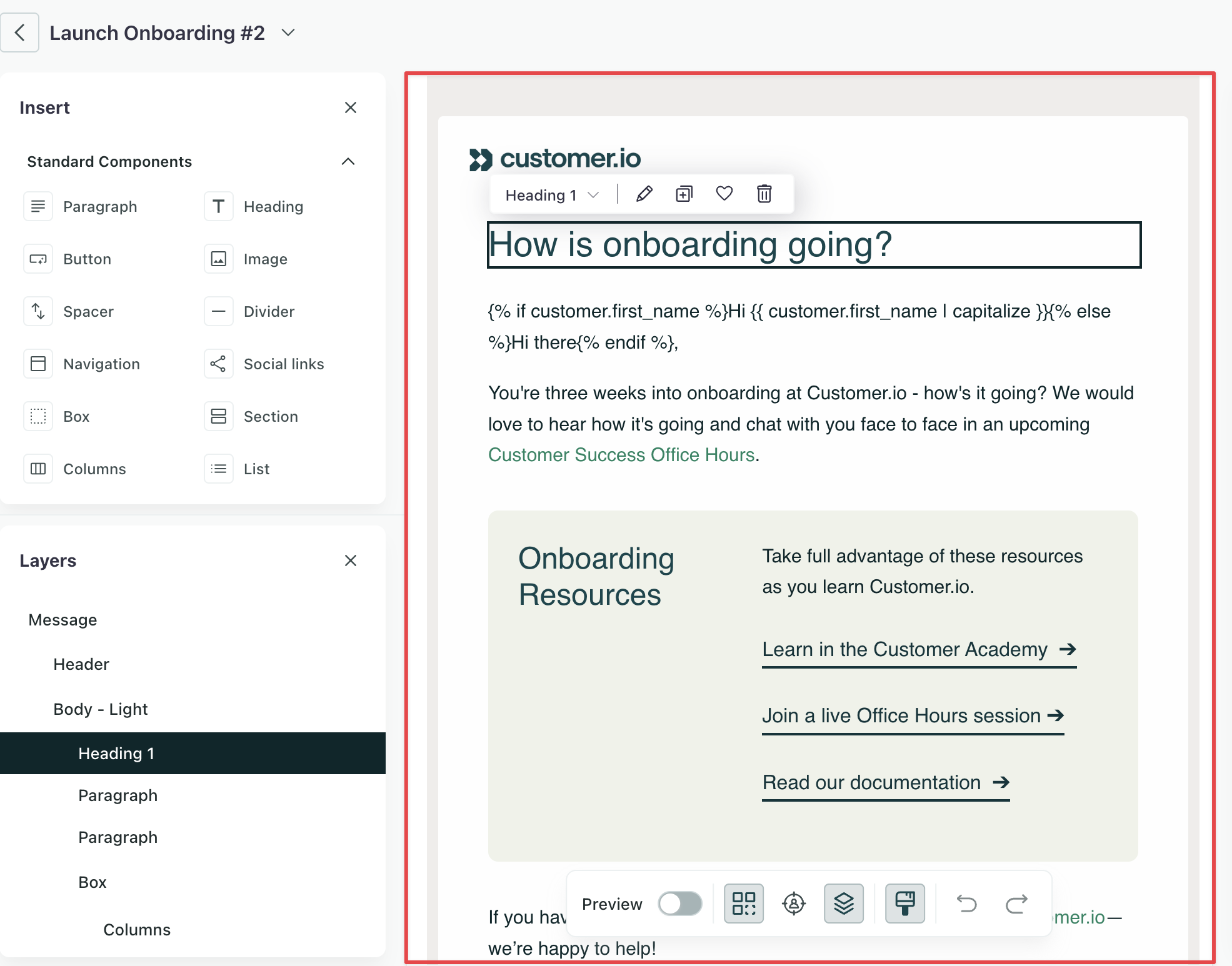
Design Studio addresses the tension between no-code ease and developer control. Users switch between a drag-and-drop visual editor and a full code editor on the same email without losing work.
Source: Customer.io
The code editor includes Emmet syntax support, MSO syntax for Outlook compatibility, and a set of Transformers: MJML compilation, CSS inlining, accessibility fixes, and URL parameter injection. Customer.io is officially listed as a supported MJML editor, so teams already using MJML can work natively.
Quality tools include a SpamAssassin integration for spam filter checks, Deque University accessibility rules with severity classification, dark mode emulation, and Gmail clipping prevention.
Collaboration features let team members see who is editing an email in real time, leave comments, and manage version history with revert capability. Changes stay in draft mode and go live only when published.
However, several Design Studio features are locked to Enterprise: reusable components, saved templates, version control, AI-generated global styles, AI translator, and email content analysis. Teams on Essentials or Premium won't have access to these.
Analytics: Outcome-first measurement that connects campaigns to business results.
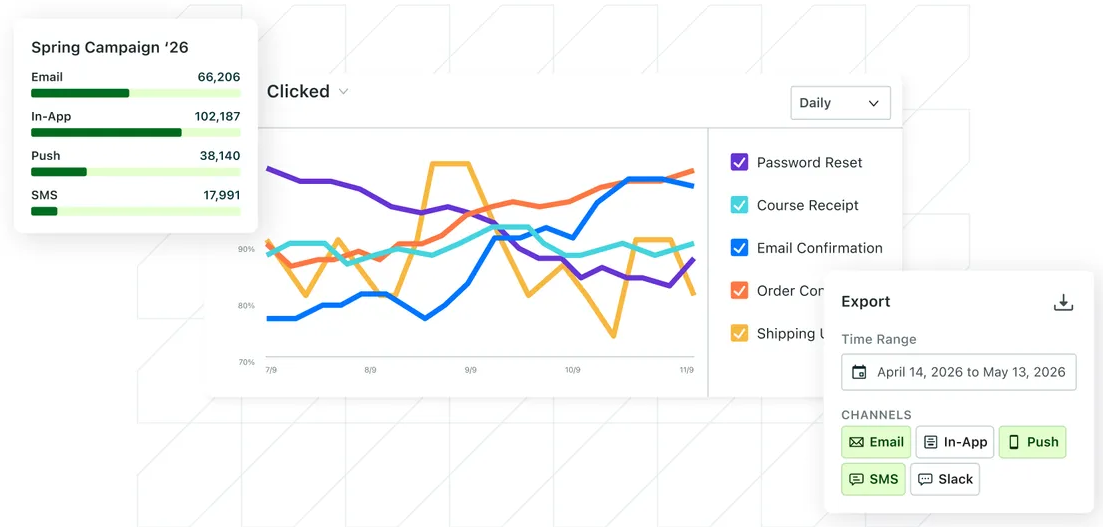
Customer.io's Analytics layer moved beyond message-level metrics with its April 2026 release, which introduced Goals, Universal Search, and a workspace performance dashboard.
Source: Customer.io
Goals are workspace-level objects that define outcomes (a purchase, subscription upgrade, or activation event) independent of any campaign.
A single Goal can connect to many campaigns at once, and the platform counts achievement by people, not events, deduplicating conversions across overlapping campaigns. This solves the double-counting problem when a customer is enrolled in multiple campaigns before converting.
Per-campaign conversion tracking supports event-based actions, segment entry, or segment exit, with attribution tied to message receipt, open, or link click and conversion windows up to 90 days. A/B testing is built into the workflow builder with statistical significance indicators.
The AI Agent lets teams ask natural language questions about campaign performance, and automated survey analysis synthesizes in-app feedback on the Metrics tab.
AI Agent: A conversational AI assistant that builds, analyzes, and monitors campaigns from a single interface.
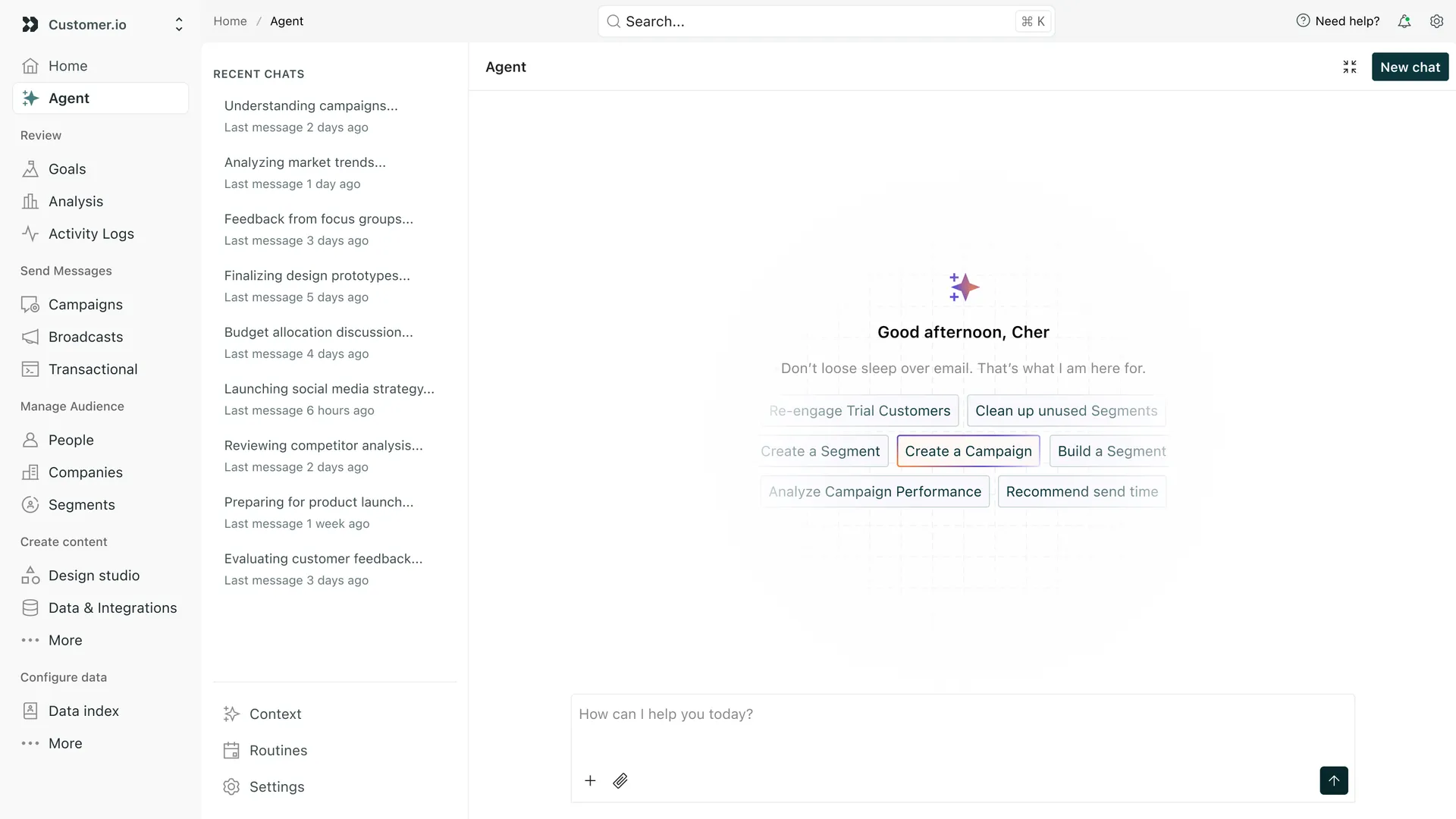
Customer.io's AI Agent (in beta, launched April 2026) goes further than a typical AI copilot. It keeps persistent memory of brand voice, goals, and preferences across sessions, so context carries forward.
Source: Customer.io
The Agent works in three modes. Remember: it learns preferences over time. Build: describe what you want and the Agent constructs a complete campaign (trigger, content, timing, and workflow logic). Analyze: ask how any journey is performing and get data-grounded recommendations.
Routines extend the Agent into scheduled monitoring. You tell the Agent what to watch and how often; it delivers an email summary on schedule. Built-in routine suggestions include deliverability monitoring, broadcast recap, segment hygiene check, and subscriber churn early warning. Routines run in read-only mode and auto-pause after three consecutive failures.
The Agent uses the user's own permissions and asks for confirmation before high-impact actions. Conversation history is saved for 30 days.
Customer.io positions its Agent against platforms that "fragment AI into specialist bots", offering one agent that handles building, analyzing, and monitoring across the entire workflow.
Where Customer.io Falls Short
Customer.io is built for lifecycle engagement, and it does that well. But several limitations surface when you look at the full B2B go-to-market picture.
No Prospecting or Contact Discovery. Customer.io works with contacts you already have. It can't find new prospects, spot in-market buyers, or build outreach lists. B2B companies that need to fill the top of the funnel must use a separate prospecting tool, leaving a gap between lead generation and lifecycle engagement.
No Built-in CRM or Sales Tooling. Customer.io is a messaging and lifecycle automation platform, not a CRM. It lacks deal pipelines, sales-team contact management, and marketing attribution on the level of platforms like HubSpot.
Teams that want combined CRM and marketing automation must bolt Customer.io onto a separate system. For a deeper look at how the two platforms compare, see our Customer.io vs HubSpot breakdown.
Steep Pricing Jump Between Tiers. Pricing jumps from $100/month (Essentials, 5,000 profiles) to $1,000/month (Premium, annual billing required), a 10x increase with no middle tier. Companies that outgrow Essentials face a sharp cost escalation.
The gap matters more because several features (WhatsApp, LINE, data warehouse destinations, managed deliverability, custom role-based permissions) sit behind the Premium tier.
Learning Curve for Non-Technical Teams. Customer.io's strength comes from its data model and Liquid templating engine. Getting full value usually requires close marketing-engineering collaboration or technically proficient marketers. This is a different proposition from drag-and-drop tools like Mailchimp or Klaviyo. The AI Agent helps lower this barrier, but the platform still rewards technical fluency.
Support Tiered by Plan. Essentials customers ($100/month) get only email and community support. Chat support, onboarding help, and dedicated CSMs are reserved for Premium and Enterprise. For teams learning a complex platform, limited support at the entry level can slow adoption.
Design Studio Features Gated to Enterprise. Reusable components, saved templates, version control, AI-generated global styles, AI translator, and email content analysis are all Enterprise-only. Teams on Essentials or Premium may find email creation more limited than expected.
These aren't failures. They reflect a platform optimized for behavioral lifecycle messaging rather than full-funnel go-to-market execution. But they leave a clear gap: Customer.io can engage the customers you have, but it can't help you find the ones you don't.
Complementing Customer.io with ZoomInfo for Full-Funnel GTM
Customer.io handles the post-acquisition side of the customer journey: onboarding, activation, retention, and upsell. But B2B companies need qualified prospects entering the product in the first place. That's where ZoomInfo fits.
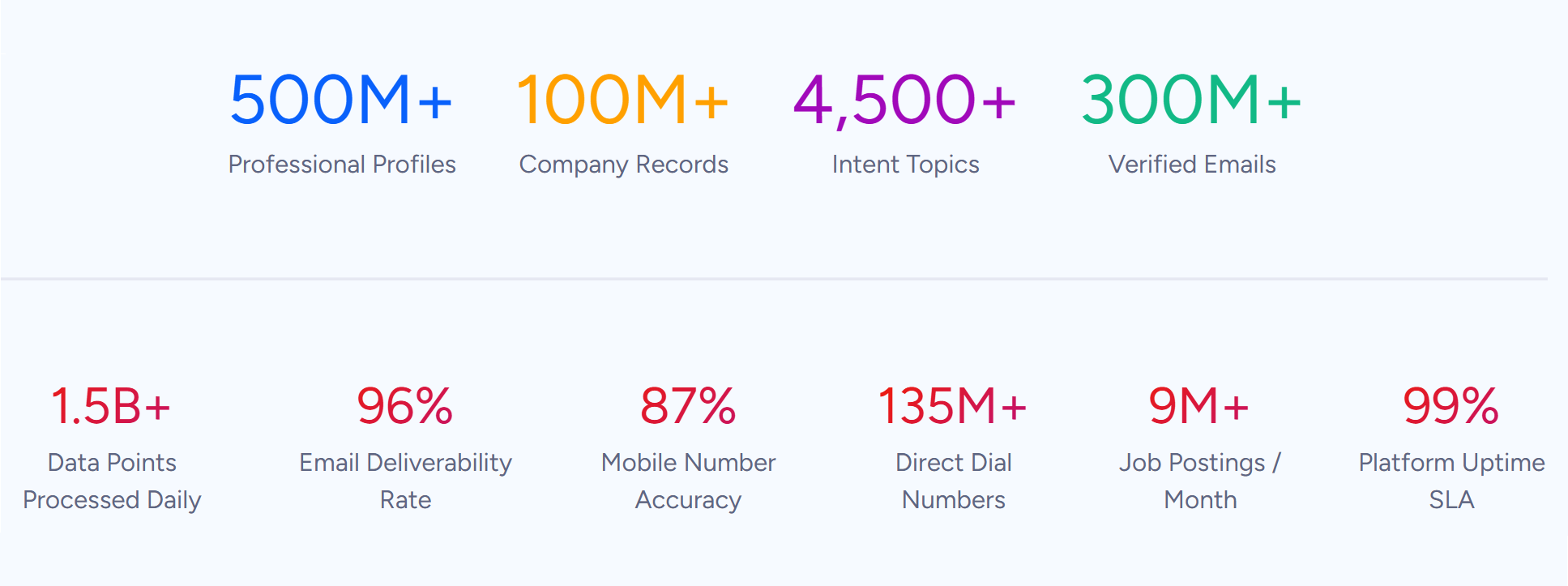
ZoomInfo is a B2B data and go-to-market platform built on 500M contacts, 100M companies, 135M+ verified phone numbers, and 200M+ verified business emails. Where Customer.io answers "how do I engage the users I have?", ZoomInfo answers "who should I target, and how do I reach them?"
Source: ZoomInfo
B2B Data and Prospecting: ZoomInfo provides the contact and company intelligence that Customer.io doesn't offer.
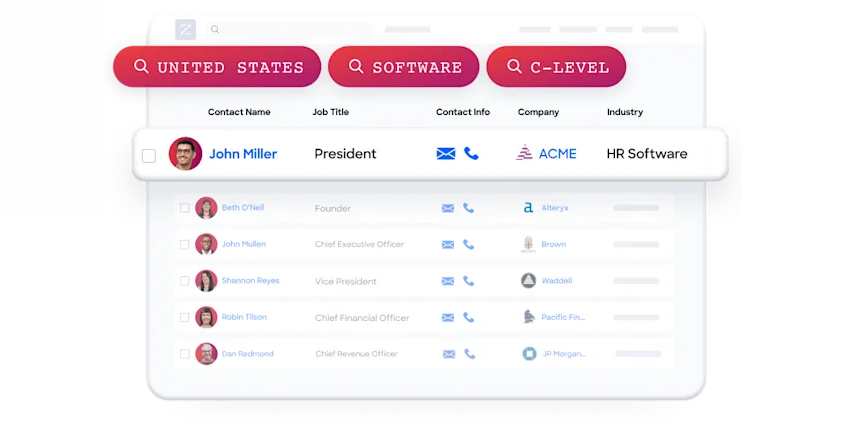
Customer.io requires you to bring your own contacts. ZoomInfo builds the contact list. Contact & Company Search covers 300+ company attributes for market segmentation, department org charts with decision-makers' direct dials and emails, job-change alerts, and one-click CRM export.
Source: ZoomInfo
Data accuracy reaches up to 95% on first-party data, maintained by automated ML scanning 28 million site domains daily and 300+ human researchers.
In a Fortune 500 competitive RFP analyzing 25 million contacts across vendors, an independent consultant concluded that "no other competitor came even close."
Vensure's VP of Revenue Operations: "ZoomInfo gives us the information we need to execute. We don't have to go through and spend our time digging. It's already there." (Vensure)
Buyer Intent and Signal Intelligence: ZoomInfo identifies when target accounts are actively in-market.
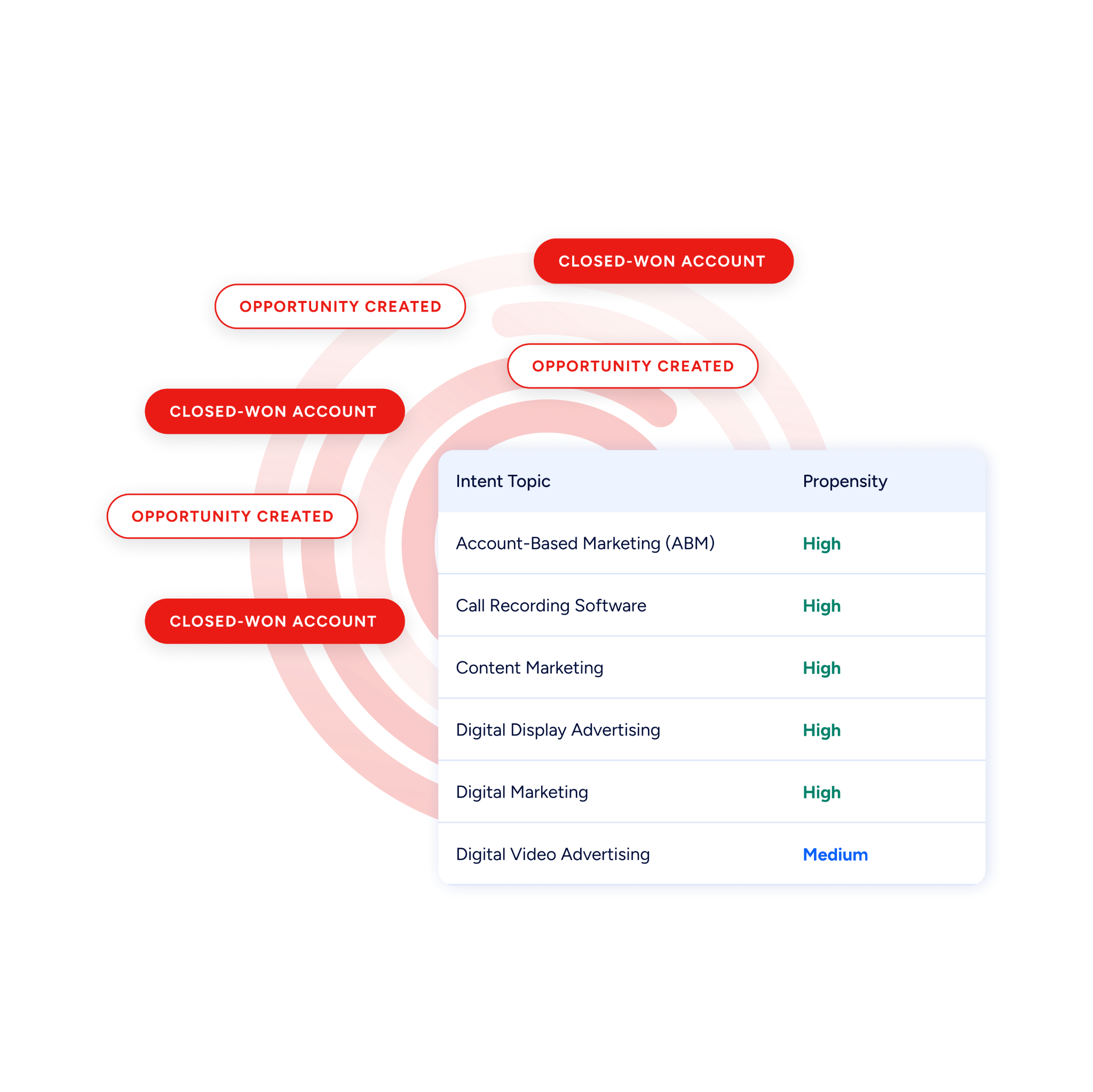
Customer.io detects what users do inside your product. ZoomInfo detects what prospects do before they ever reach it. ZoomInfo Intent tracks signals from 210 million IP-to-Organization pairings and 6 trillion+ keyword-to-device pairings sourced monthly. Guided Intent, exclusive to ZoomInfo, identifies topics historically correlated with closed deals rather than requiring you to pick topics manually.
Source: ZoomInfo
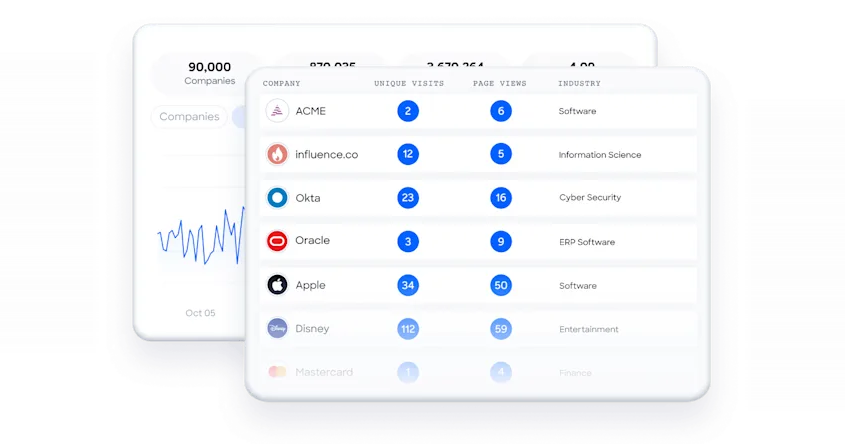
WebSights resolves anonymous website traffic to companies, identifies buying team members and their direct contact information, and uses Automatic Traffic Filtering to separate real visitors from bots.
Source: ZoomInfo
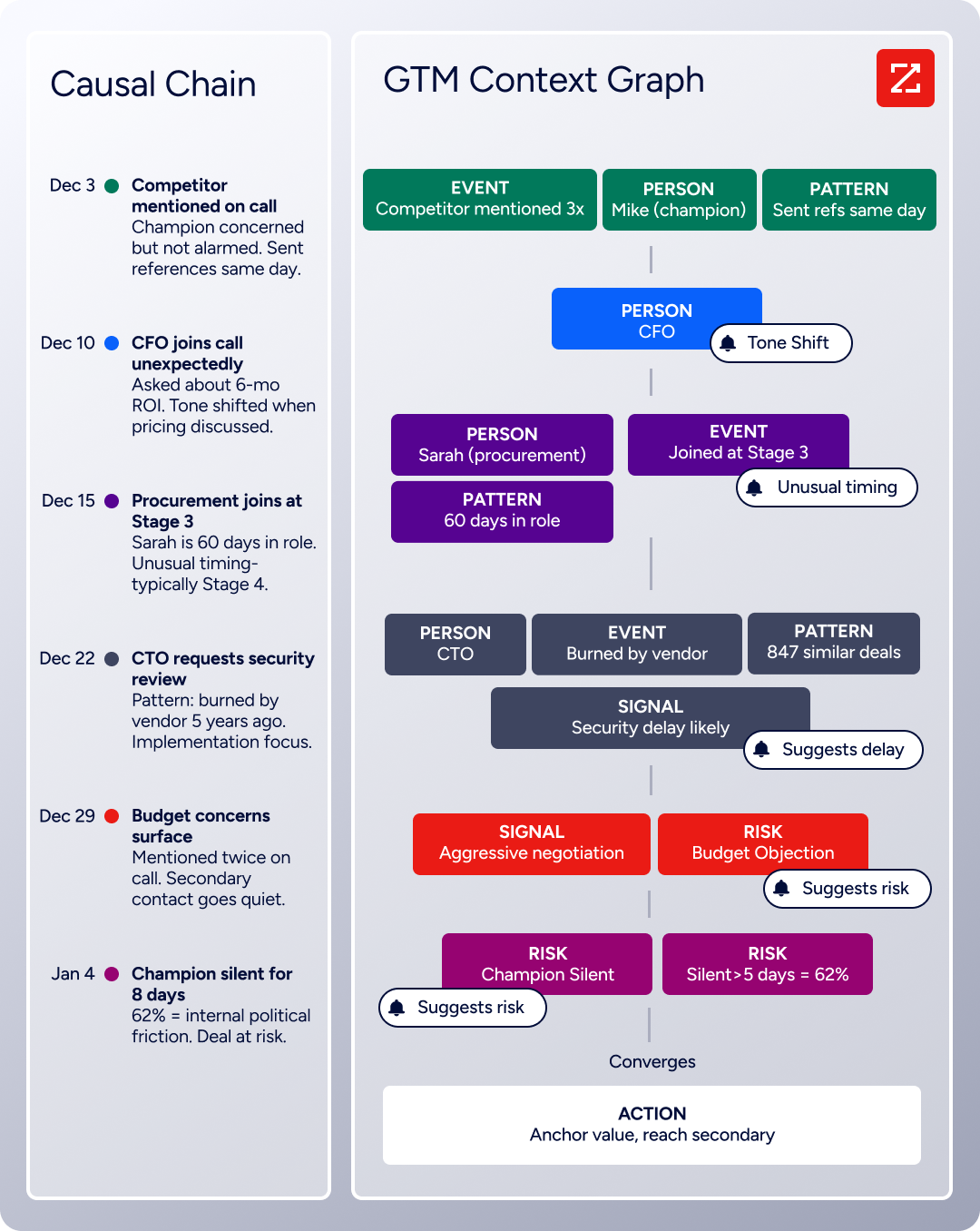
These signals feed into the GTM Context Graph, which combines ZoomInfo's B2B data with a customer's CRM records, conversation transcripts, and behavioral signals. The result is AI that captures not just what happened in a deal, but why it happened.
Source: ZoomInfo
Seismic attributed 39% of active pipeline to opportunities identified or influenced by ZoomInfo signals. Their Chief Business Officer: "That combination of our internal CRM data, external signals, and AI that's given all that context has helped us craft very specific account- and persona-based messages." (Seismic)
GTM Execution: ZoomInfo provides the sales and marketing orchestration layer that Customer.io was never built for.
Customer.io excels at lifecycle messaging once users are in your product. ZoomInfo handles the outbound motions that get them there.
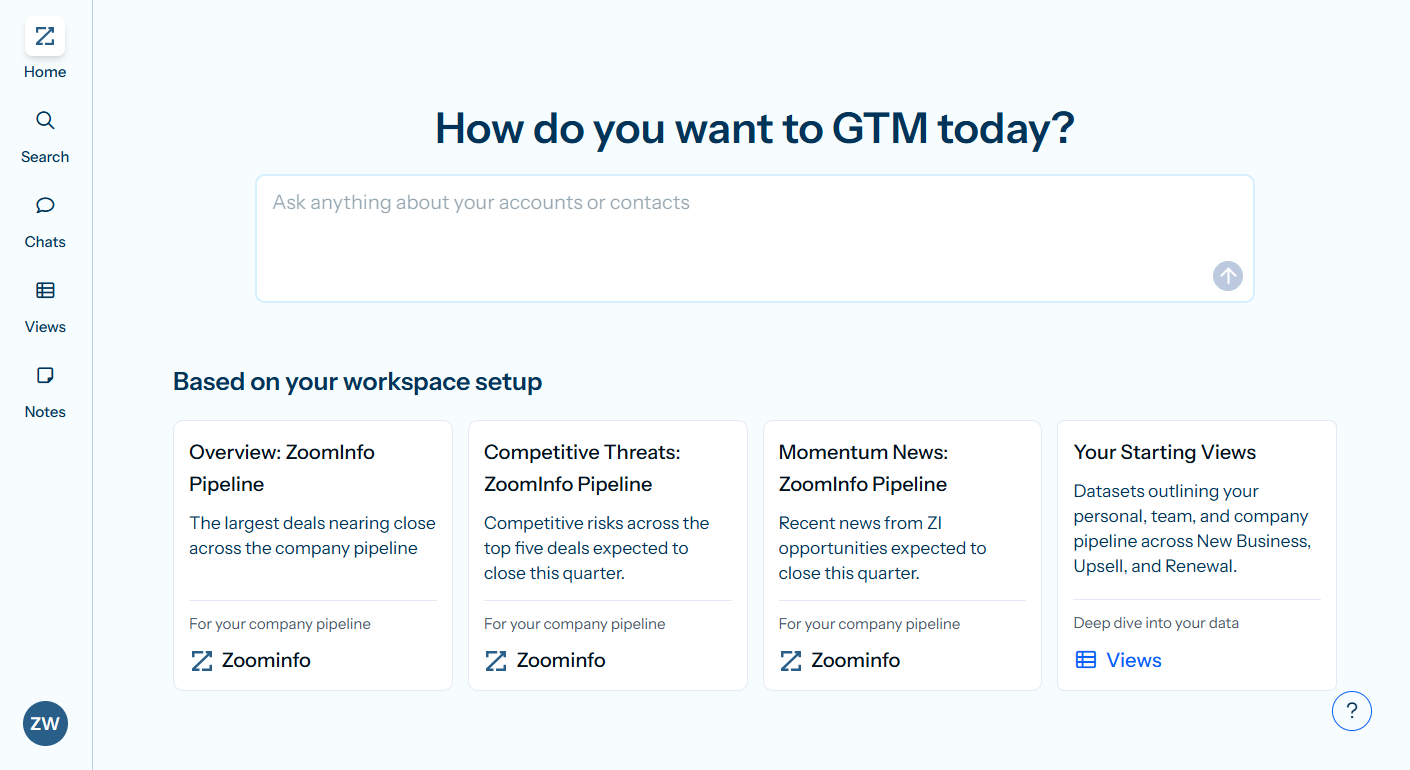
GTM Workspace gives sellers one screen with prioritized accounts, AI-drafted outreach, deal execution, and CRM updates, all informed by the GTM Context Graph.
Source: ZoomInfo
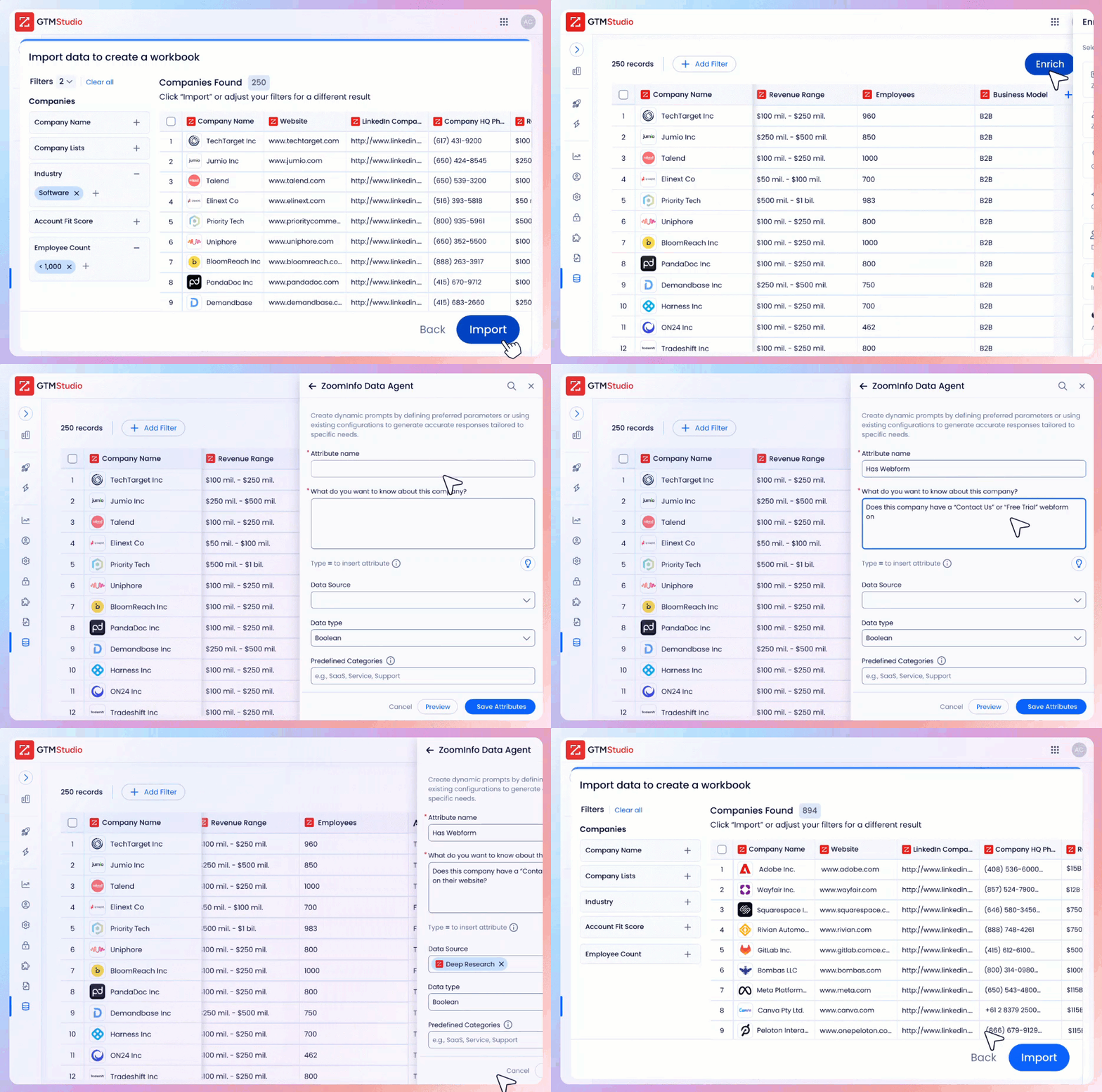
GTM Studio gives marketers and RevOps teams a canvas where they describe audiences in natural language, launch multi-channel plays, and track pipeline impact in real time, without filing engineering tickets.
Source: ZoomInfo
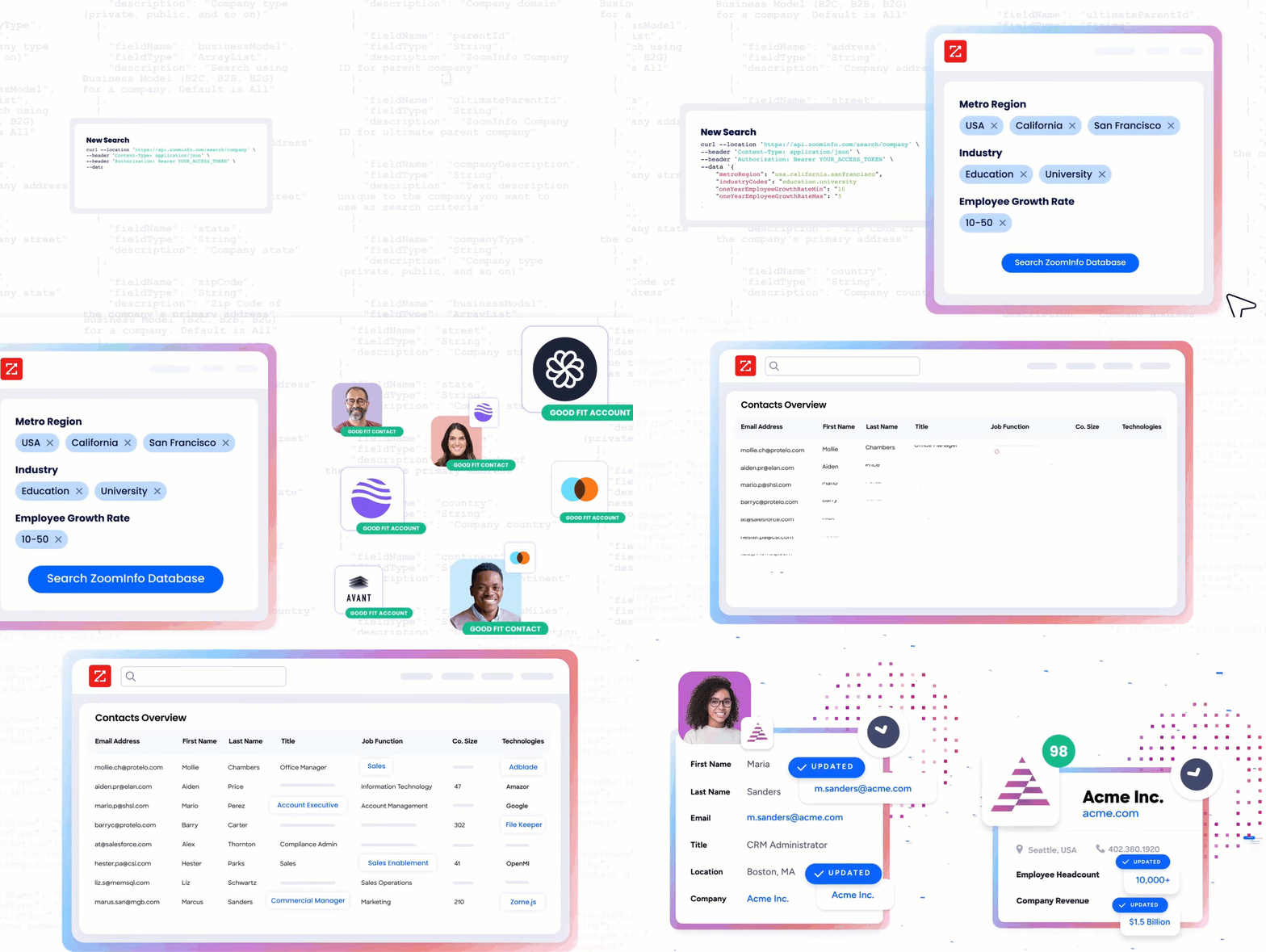
For teams building beyond ZoomInfo's own products, APIs and MCP expose the same data to any custom agent, internal tool, or partner platform.
Source: ZoomInfo
BDO Canada's Senior Marketing Intelligence Analyst: "The plug-and-play aspect of the API means I can integrate it very easily into any process and get information at a moment's notice," achieving an 87% reduction in time spent on internal data dashboard updates. (BDO Canada)
Free Entry Points: ZoomInfo offers both a permanent free tier and a trial.
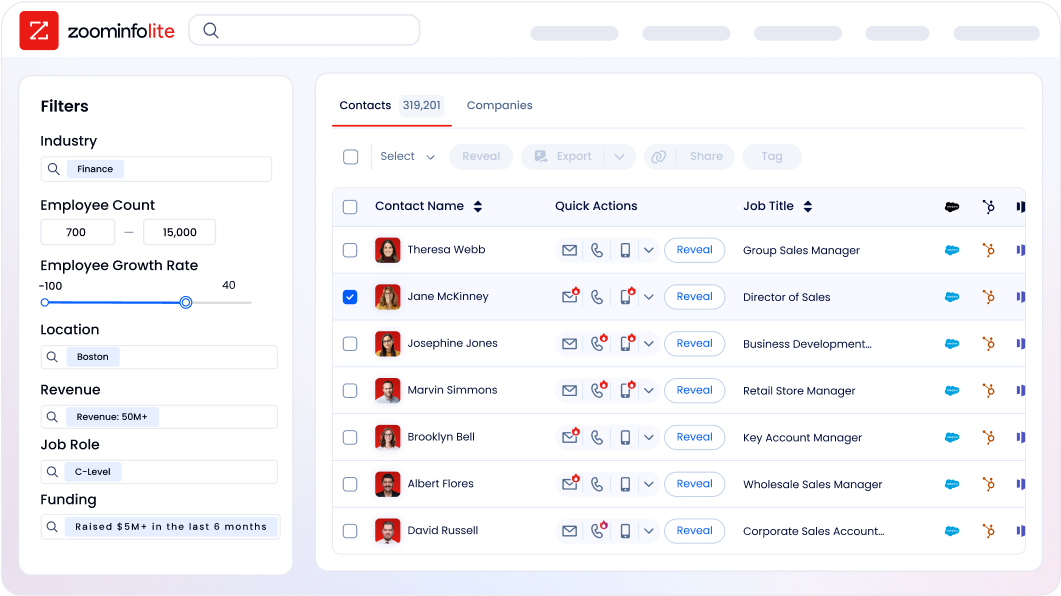
Customer.io has a 14-day free trial with no permanent free plan. ZoomInfo offers ZoomInfo Lite, a permanent free tier with access to its B2B database, 10 monthly export credits, advanced search filters, the ReachOut Chrome Extension, and WebSights Lite (up to 10 website visitor reveals per day). A separate 7-day free trial gives access to core paid features. Neither requires a credit card.
Source: ZoomInfo
Customer.io and ZoomInfo: How They Work Together
Aspect | Customer.io | ZoomInfo |
|---|---|---|
Primary function | Lifecycle messaging and customer engagement | B2B prospecting, data intelligence, and go-to-market execution |
Where it operates | Post-acquisition: onboarding, activation, retention, upsell | Pre-acquisition: prospecting, lead generation, intent detection |
Data source | First-party behavioral events from your product | Third-party B2B intelligence (500M contacts, 100M companies) |
Contact discovery | No; requires you to bring your own contacts | Yes; Contact & Company Search with 300+ attributes |
Buyer intent signals | In-product behavior tracking | External intent from 210M IP-to-Organization pairings |
CRM | No built-in CRM | Integrates with Salesforce, HubSpot, Dynamics; powers CRM enrichment |
Messaging channels | Email, SMS, push, in-app, WhatsApp, LINE | Email, calls, ads, direct mail via GTM Studio |
AI capabilities | AI Agent for campaign building and analysis | GTM Context Graph for account intelligence |
Free tier | 14-day trial only | ZoomInfo Lite (permanent) + 7-day trial |
Best for | Engaging existing users with behavioral automation | Finding, reaching, and converting new B2B prospects |
Final Verdict
Customer.io and ZoomInfo serve different stages of the B2B go-to-market journey. The choice depends on which problem you're solving.
Choose Customer.io if you need a lifecycle engagement platform for users already inside your product. It's built for product-led SaaS companies that generate behavioral data and want to automate onboarding, activation, retention, and re-engagement across email, SMS, push, in-app, WhatsApp, and LINE from one visual workflow.
The flexible data model, unlimited API calls, and AI Agent make it a good fit for technical teams that want to turn user behavior into personalized messaging at scale.
Add ZoomInfo if you also need to fill the top of the funnel with qualified B2B prospects. Customer.io can't tell you who to target or when a company is evaluating solutions in your category.
ZoomInfo's 500M contacts, buyer intent signals, and GTM Context Graph identify the right accounts at the right time, while GTM Workspace and GTM Studio execute the outbound motions that build the pipeline Customer.io then nurtures. Together, they cover the full journey: ZoomInfo finds and engages prospects; Customer.io converts and retains them.
Get started with ZoomInfo here.
A complete B2B go-to-market stack doesn't force a choice between prospecting and lifecycle engagement. It connects both, so every contact that enters your product arrives with context and leaves through a personalized experience.
Customer.io FAQ
What does Customer.io cost?
Essentials starts at $100/month for 5,000 profiles and 1 million emails, billed monthly. Premium starts at $1,000/month with annual billing required. Enterprise pricing is custom. All plans include unlimited user seats and unlimited API calls. Profile overages on Essentials cost $0.009 per profile, and additional email sends cost $0.12 per 1,000 emails.
Does Customer.io have a free plan?
No. Customer.io offers a 14-day free trial (no credit card required) but no permanent free tier. The Startup Program gives up to 12 months free (with 30,000 profiles) to companies that have raised under $10 million in total funding and have never been a Customer.io customer. Over 150 accelerators, including Y Combinator and Techstars, support the program.
What channels does Customer.io support?
Email, SMS, push notifications (iOS and Android), in-app messages, WhatsApp, LINE, notification inbox, and webhook-delivered channels. All channels can be orchestrated from a single visual workflow canvas. WhatsApp and LINE require a Premium or Enterprise plan.
Does Customer.io include a CRM?
No. Customer.io is a messaging and lifecycle automation platform, not a CRM. It does not offer deal pipelines, sales-team contact management, or account-based marketing tools. Teams that need CRM functionality must integrate Customer.io with a separate system (Salesforce, HubSpot, or Attio, for example).
How technical is Customer.io to set up?
Customer.io accommodates both developers and non-developers, but getting full value usually requires technical integration. Non-developers can add people via CSV upload or manual entry; developers use identify/track API calls.
The Liquid templating engine, custom Objects, and event-based triggers reward technical proficiency. The AI Agent lowers the barrier by letting users create campaigns through natural language prompts.
What integrations does Customer.io offer?
Customer.io has a large integration directory covering both data sources and destinations. Notable integrations include Salesforce, HubSpot, Segment, Snowflake, Amplitude, Mixpanel, Google Ads, and Meta/Facebook.
The platform exposes four APIs (Pipelines, Track, App, and Reporting Webhooks), mobile SDKs for iOS, Android, React Native, Expo, and Flutter, and an MCP server for AI tool connectivity. Reverse ETL is available on all plans; data warehouse destinations require Premium or Enterprise.
Can Customer.io help with prospecting or finding new leads?
No. Customer.io engages existing users and contacts; it does not discover new ones. It has no B2B contact database, no buyer intent signals, and no prospecting tools. Companies that need to identify and reach new B2B prospects typically pair Customer.io with a data intelligence platform like ZoomInfo, which provides 500M contacts, 100M companies, and buyer intent data to fill the top of the funnel.
What is Customer.io's AI Agent?
The AI Agent is a conversational assistant inside Customer.io that builds campaigns, analyzes performance, and monitors workspace health through natural language prompts. It keeps persistent memory across sessions so context carries forward.
The Agent uses the user's own permissions and asks for confirmation before high-impact actions. It also supports Routines (scheduled monitoring tasks that deliver email summaries on a recurring basis). The Agent is in beta and available on all plans with varying session limits.
Researching Customer.io? These comparisons and alternatives help you decide:
