
Choosing between Customer.io and Klaviyo for customer engagement comes down to five questions:
Are you a product-led SaaS company triggering messages from in-app behavior, or an ecommerce brand driving revenue from purchase data?
Do you need a developer-friendly data model with Liquid templating and custom objects, or a drag-and-drop system with 60+ pre-built ecommerce flows?
Is your primary challenge lifecycle automation (onboarding, activation, retention), or converting one-time buyers into repeat customers?
Do you need a platform focused on messaging, or one expanding into customer service, reviews, and CRM?
Does your go-to-market team also need B2B intelligence, buyer intent data, and sales prospecting alongside marketing automation?
In short, here's what we recommend:
Customer.io is the platform for product-led and SaaS companies that want to trigger campaigns from real user behavior. Its event-driven data model, Liquid templating, and Visual Workflow Builder give technical marketing teams control over multi-channel journeys across email, SMS, push, in-app, WhatsApp, and LINE.
With 99.98% uptime, unlimited API calls on all plans, and a new AI Agent that builds campaigns from natural language, Customer.io handles scale well. The tradeoff: getting full value requires close collaboration between marketing and engineering, and the jump from the $100/month Essentials plan to the $1,000/month Premium tier is steep.
Klaviyo is built for B2C ecommerce brands, particularly those on Shopify. Its 350+ integrations, 60+ pre-built flows, and native ecommerce data model (abandoned carts, price drops, back-in-stock alerts) make it the default choice for consumer brands focused on repeat purchases and revenue attribution.
Klaviyo has expanded into a full B2C CRM with customer service, AI agents, and analytics. But pricing scales sharply with list size, the most advanced features require Shopify, and B2B or SaaS use cases fall outside its design.
Both platforms solve the same problem: turning customer data into personalized, automated messaging. But they solve it for different audiences. Customer.io is built around behavioral events from software products. Klaviyo is built around transaction data from online stores. If your business straddles B2B and B2C, or if your go-to-market team needs intelligence beyond what either messaging platform provides, there's a third layer worth considering.
ZoomInfo is an AI-powered go-to-market platform that operates upstream of both Customer.io and Klaviyo. While those platforms handle what happens after you have a contact, ZoomInfo helps you find the right contacts first.
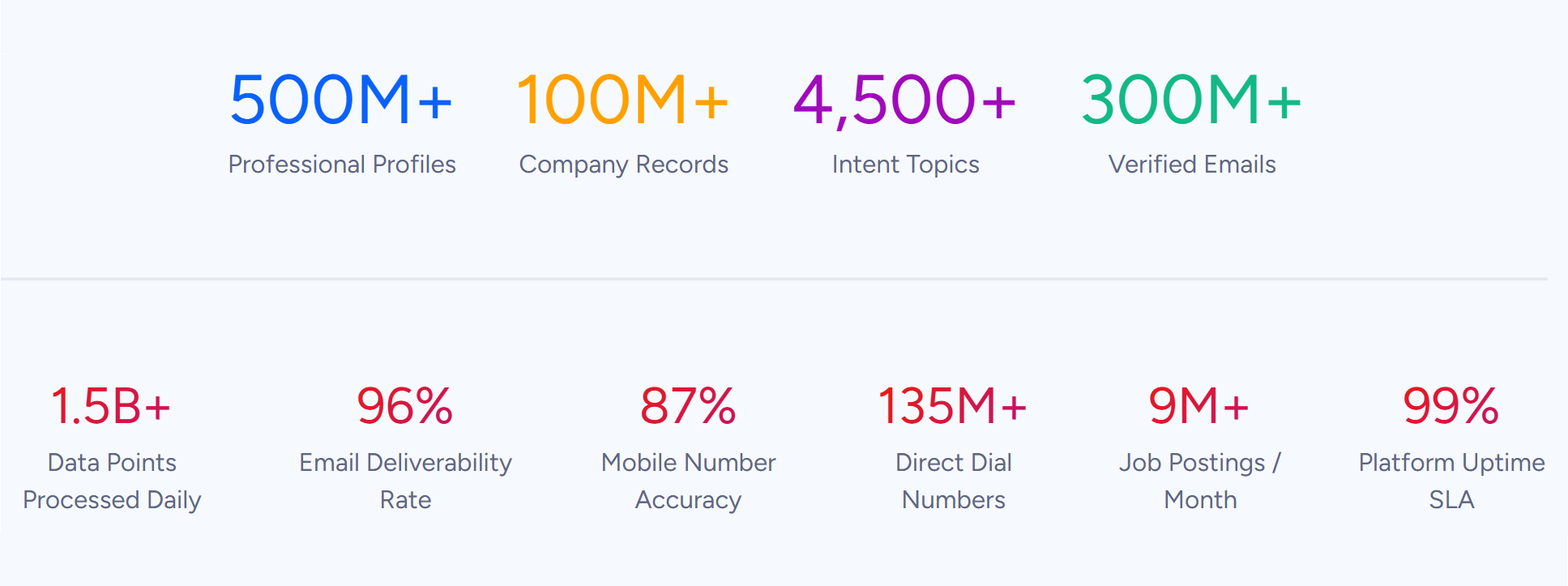
With 500M contacts, 100M companies, 135M+ verified phone numbers, and 200M+ verified business email addresses, ZoomInfo's data fuels the GTM Context Graph, a layer that captures not just what happened in a deal, but why.
Teams access this intelligence through GTM Workspace for sellers, GTM Studio for marketers and RevOps, or APIs and MCP that pipe enriched data into Customer.io, Klaviyo, or any other tool in the stack.
If your go-to-market strategy needs B2B intelligence feeding your marketing automation, see how ZoomInfo connects to your stack.
Customer.io vs. Klaviyo vs. ZoomInfo at a glance
Customer.io | Klaviyo | ZoomInfo | |
|---|---|---|---|
Built for | Product-led SaaS and digital businesses | B2C ecommerce brands | B2B go-to-market teams |
Core strength | Behavioral event-driven automation | Ecommerce revenue automation | B2B data, intent signals, and GTM intelligence |
Channels | Email, SMS, push, in-app, WhatsApp, LINE | Email, SMS, push, WhatsApp, RCS, social | Email outreach, multi-channel plays, API/MCP |
Data model | Event streams + custom objects + Liquid | Ecommerce transactions + lifetime profiles | 500M contacts, 100M companies, intent signals |
AI capabilities | AI Agent (campaign builder, analyzer) | Marketing Agent + Customer Agent (40+ features) | GTM Context Graph + AI agents in Workspace and Studio |
Free plan | 14-day trial (no permanent free tier) | Free plan (250 profiles, 500 emails/month) | ZoomInfo Lite (permanent, 10 credits/month) |
Starting price | $100/month (Essentials, 5K profiles) | ~$45/month (scales with list size) | Custom-quoted (consumption-based) |
Best integration | Data warehouses, CDPs, developer tools | Shopify, WooCommerce, BigCommerce | Salesforce, HubSpot, Dynamics 365, Snowflake |
The data models reveal who each platform is built for
Customer.io and Klaviyo both claim to be "data-driven," but the data they care about is different.
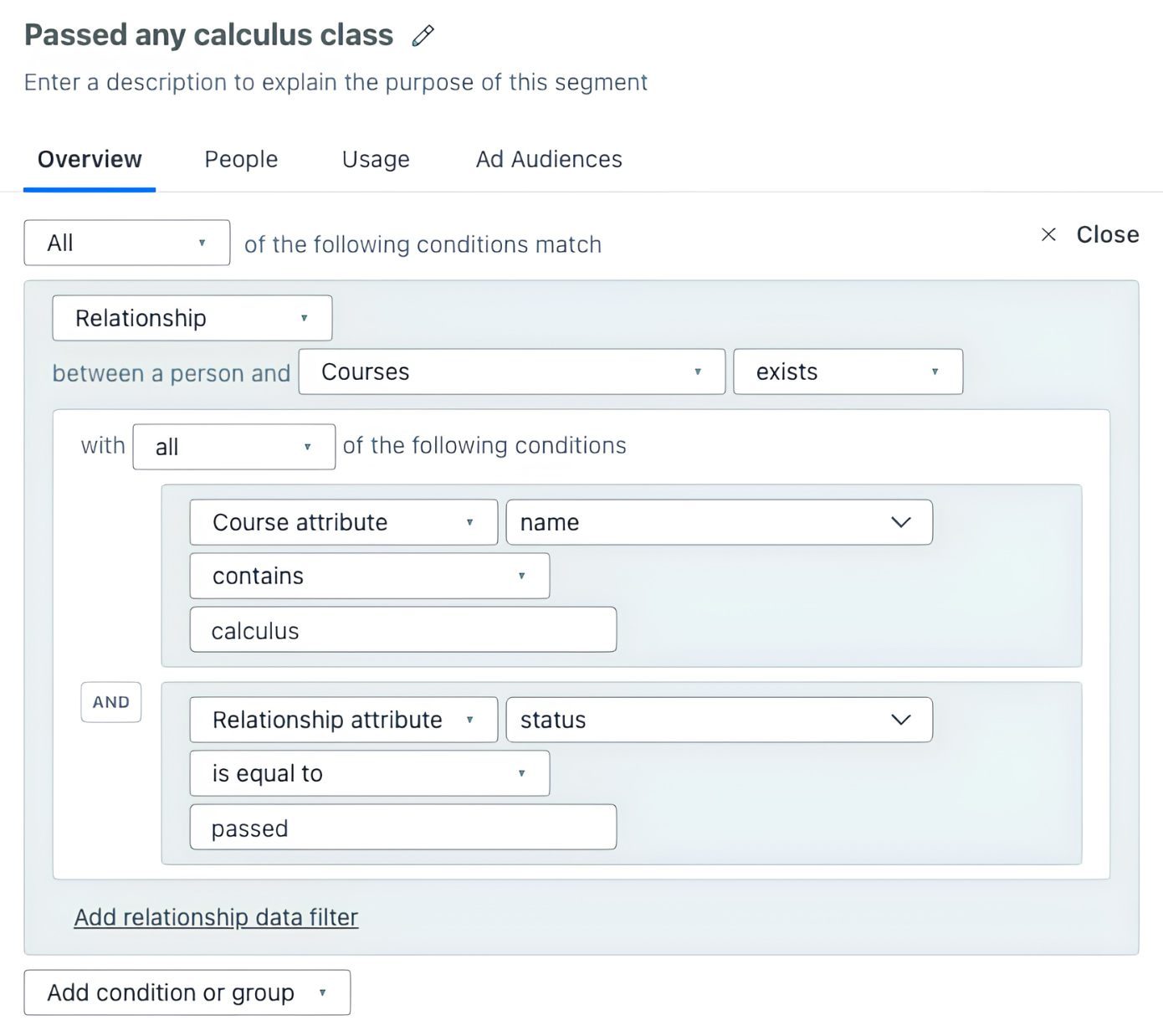
Customer.io is built around behavioral events. When a user completes onboarding step three, triggers a specific API call, or hits a usage threshold in your product, Customer.io captures that event and lets you act on it.
The platform supports custom Objects for modeling non-person entities (accounts, subscriptions, courses), making it flexible enough for complex B2B SaaS data structures. Segmentation conditions use nested AND/OR logic, JSON attributes, and object relationships. This is a data model built by and for teams with engineering resources to instrument their product.
Source: Customer.io
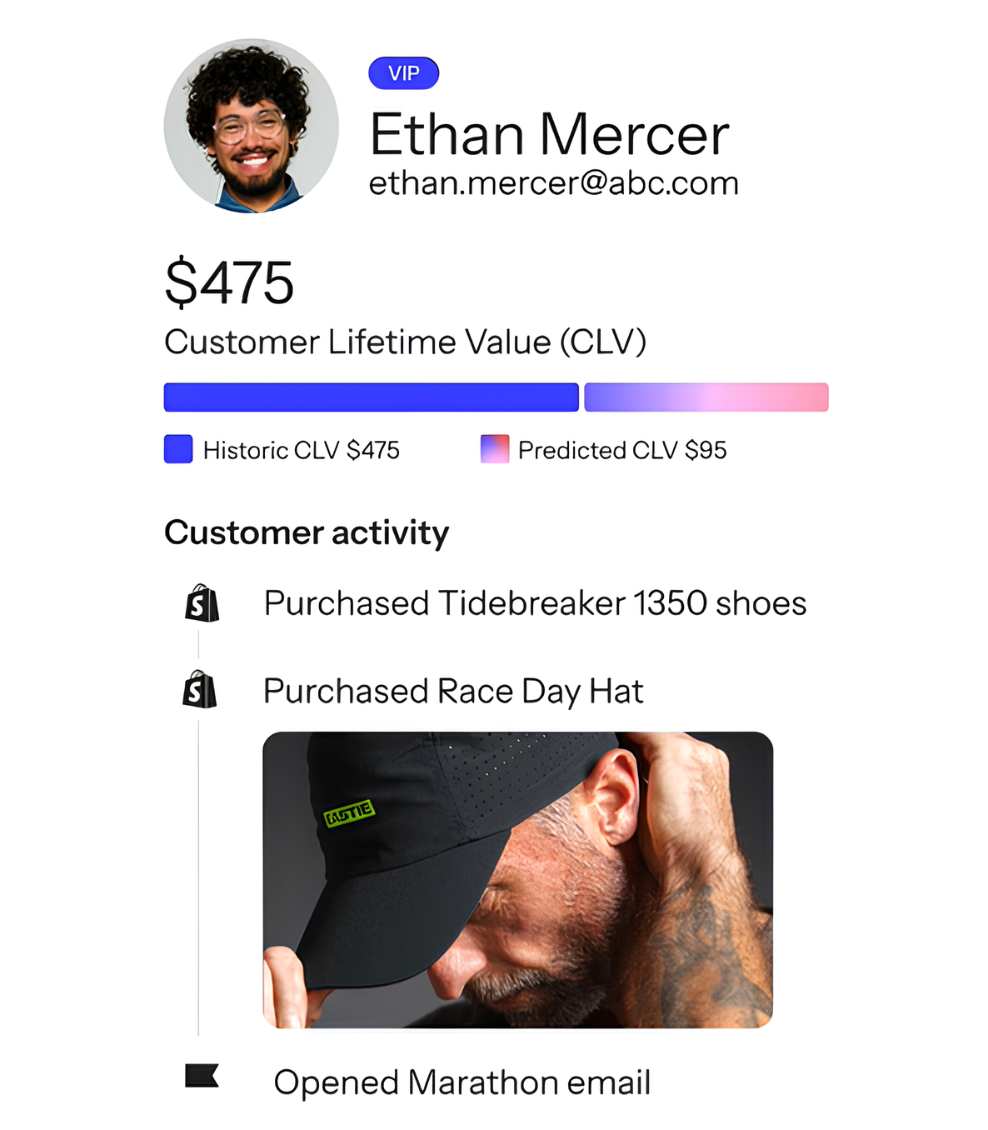
Klaviyo is built around ecommerce transactions. Every customer profile stores browsing behavior, purchase history, order values, product categories, discount usage, and subscription status, with no look-back limits on historical data.
Source: Klaviyo
The 60+ pre-built flows assume your data includes carts, checkouts, products, and SKUs. Predictive analytics (churn risk, CLV, next purchase date) run natively on this transaction data. This is a data model built for retailers.
The distinction matters because it determines what each platform can do out of the box. Klaviyo's abandoned cart flow works the moment you connect Shopify because Shopify's data objects map directly to Klaviyo's expectations. Customer.io's equivalent would require you to define the cart event, instrument it in your codebase, and build the flow from scratch. That's more work, but also more flexibility.
ZoomInfo operates on a different data plane. Its 500M contacts and 100M companies represent business professionals and organizations, not end-user customers.
Source: ZoomInfo
Where Customer.io and Klaviyo track what your existing contacts do, ZoomInfo identifies who you should be talking to, enriches their profiles with company attributes, technographics, org charts, and intent signals, and feeds that intelligence into whatever tools your team uses. The data flows one direction: from ZoomInfo into your CRM, marketing automation platform, or custom applications via API.
Seismic attributed 39% of active pipeline to opportunities identified or influenced by ZoomInfo signals, with reps becoming 54% more productive. (Seismic case study)
Customer.io wins on technical flexibility, Klaviyo wins on ecommerce speed
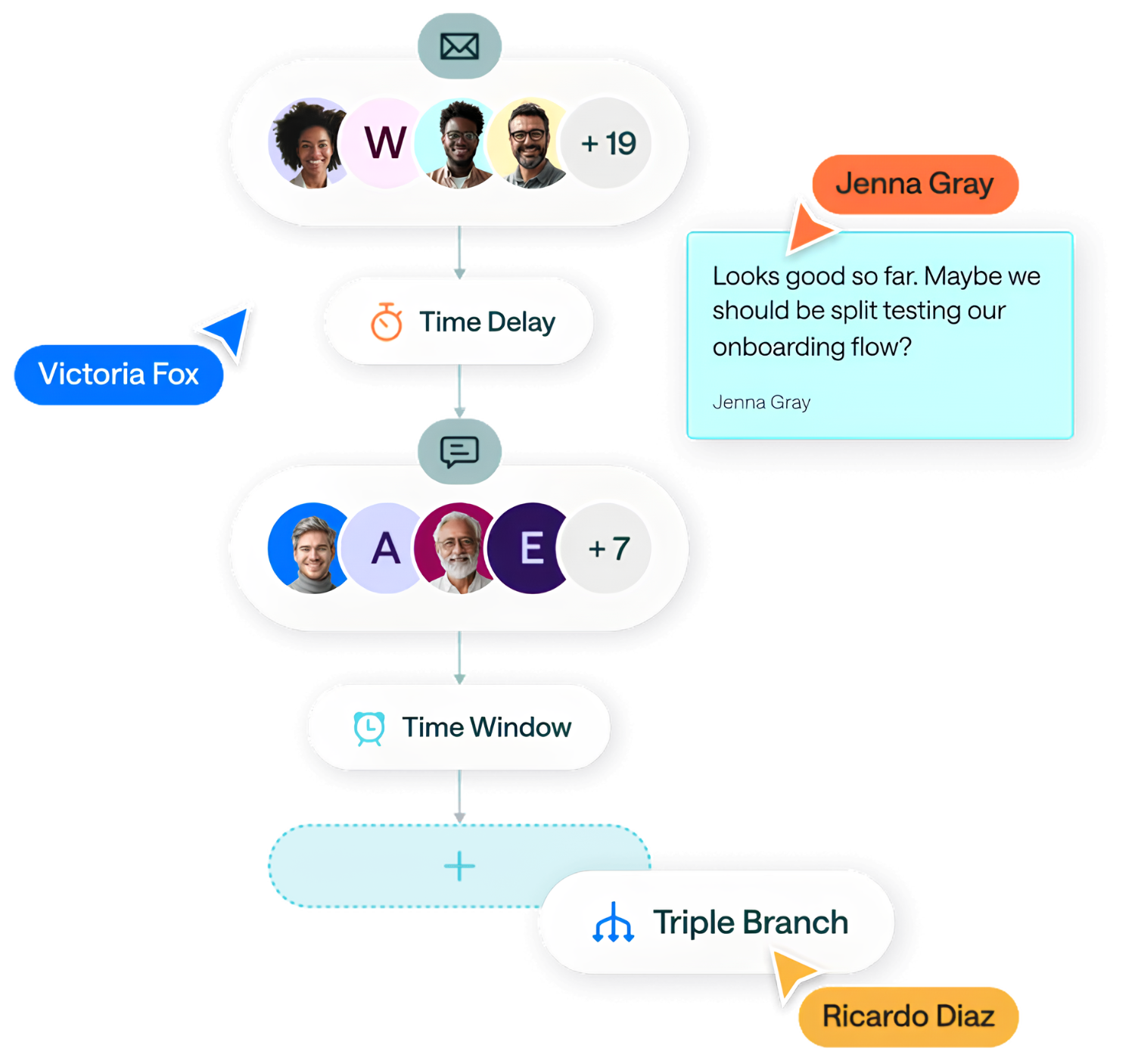
Customer.io's Visual Workflow Builder is where its flexibility shows. A single campaign canvas supports email, SMS, push, in-app, WhatsApp, LINE, and webhook-delivered channels. You can add LLM actions as workflow steps, calling AI models to generate personalized content or routing logic at runtime.
Source: Customer.io
Branching supports True/False, Multi-Split, Random Cohorts, and Exit Blocks. A/B testing and holdout tests are built into the flow, not bolted on.
The flexibility comes with complexity. Liquid templating enables dynamic content that adapts to each recipient, but writing Liquid requires a technical mindset. The platform's campaign recipes provide starting points for welcome emails, cart abandonment, and onboarding, but they're templates to customize, not finished products.
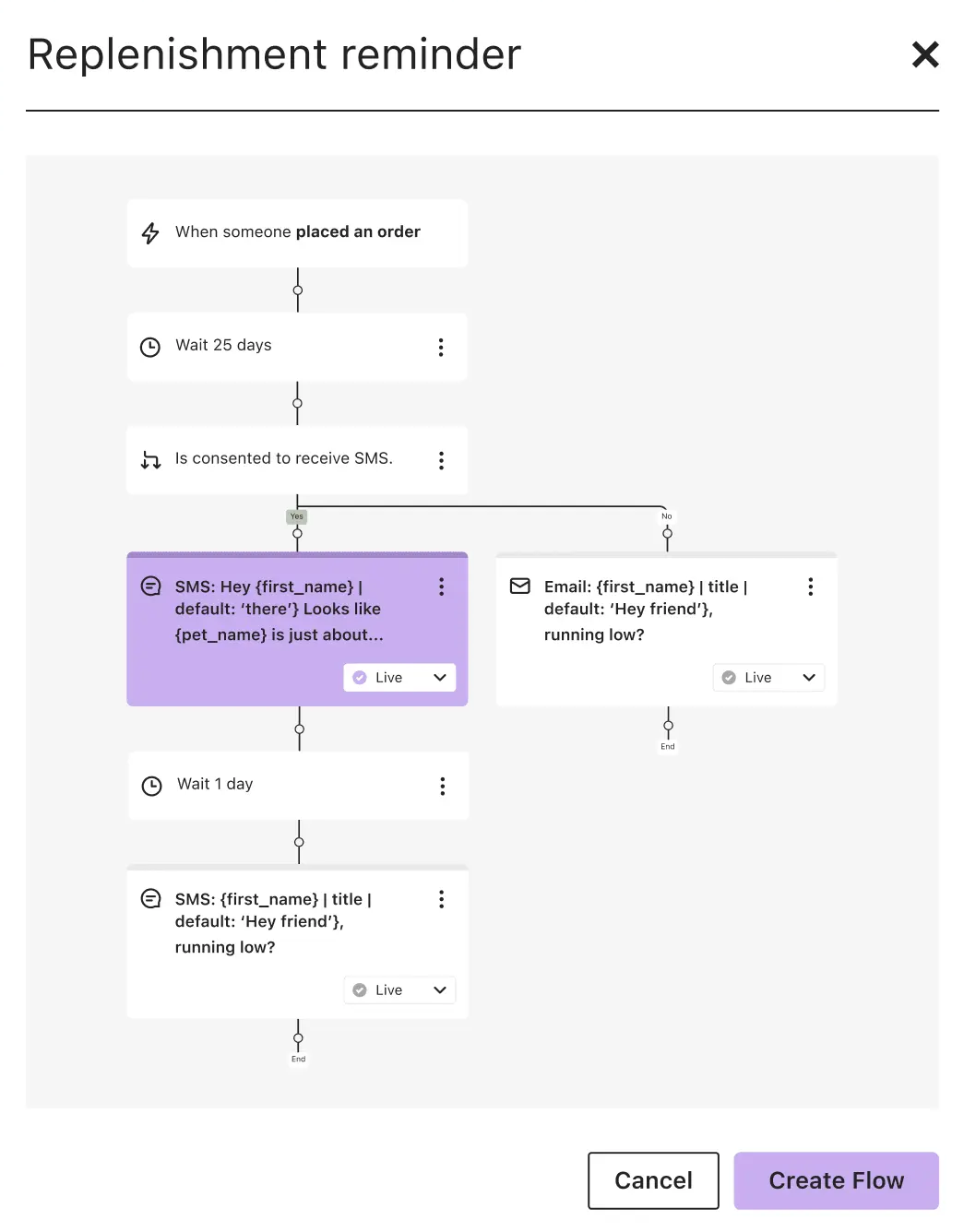
Klaviyo takes the opposite approach. Its flow builder is designed for ecommerce scenarios. Abandoned cart, browse abandonment, welcome series, post-purchase upsell, price drop alerts, back-in-stock notifications, win-back campaigns, and replenishment reminders all have dedicated, pre-built templates with ecommerce-specific conditional split logic.
Flows AI generates a complete multi-step flow from a plain-language description. The 160+ email templates are built around product imagery, shopping CTAs, and revenue tracking.
Source: Klaviyo
Klaviyo's advantage is speed for ecommerce. A Shopify store can connect Klaviyo and have functioning abandoned cart, welcome, and post-purchase flows running within hours. Customer.io's advantage is control for anyone whose use case doesn't fit a standard ecommerce template: SaaS onboarding, fintech KYC flows, mobile app engagement, or subscription lifecycle management.
AI capabilities take different approaches
Both platforms have invested in AI, but their implementations reflect their audiences.
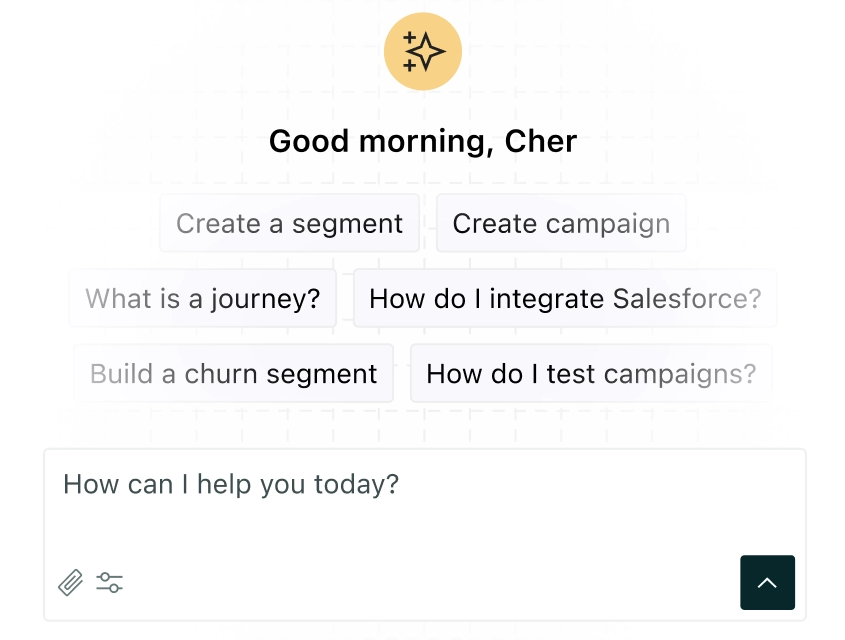
Customer.io's AI Agent (launched April 2026) works as a workspace-aware collaborator. It keeps persistent memory of brand voice, goals, and preferences across sessions, so context builds over time rather than resetting with each conversation.
Source: Customer.io
The Agent can build campaigns end-to-end from a natural language prompt, analyze performance data, and run scheduled Routines (deliverability monitoring, segment hygiene checks, goal conversion reports) without user initiation. Customer.io also offers an MCP server that lets AI tools like Claude and Cursor interact directly with the platform.
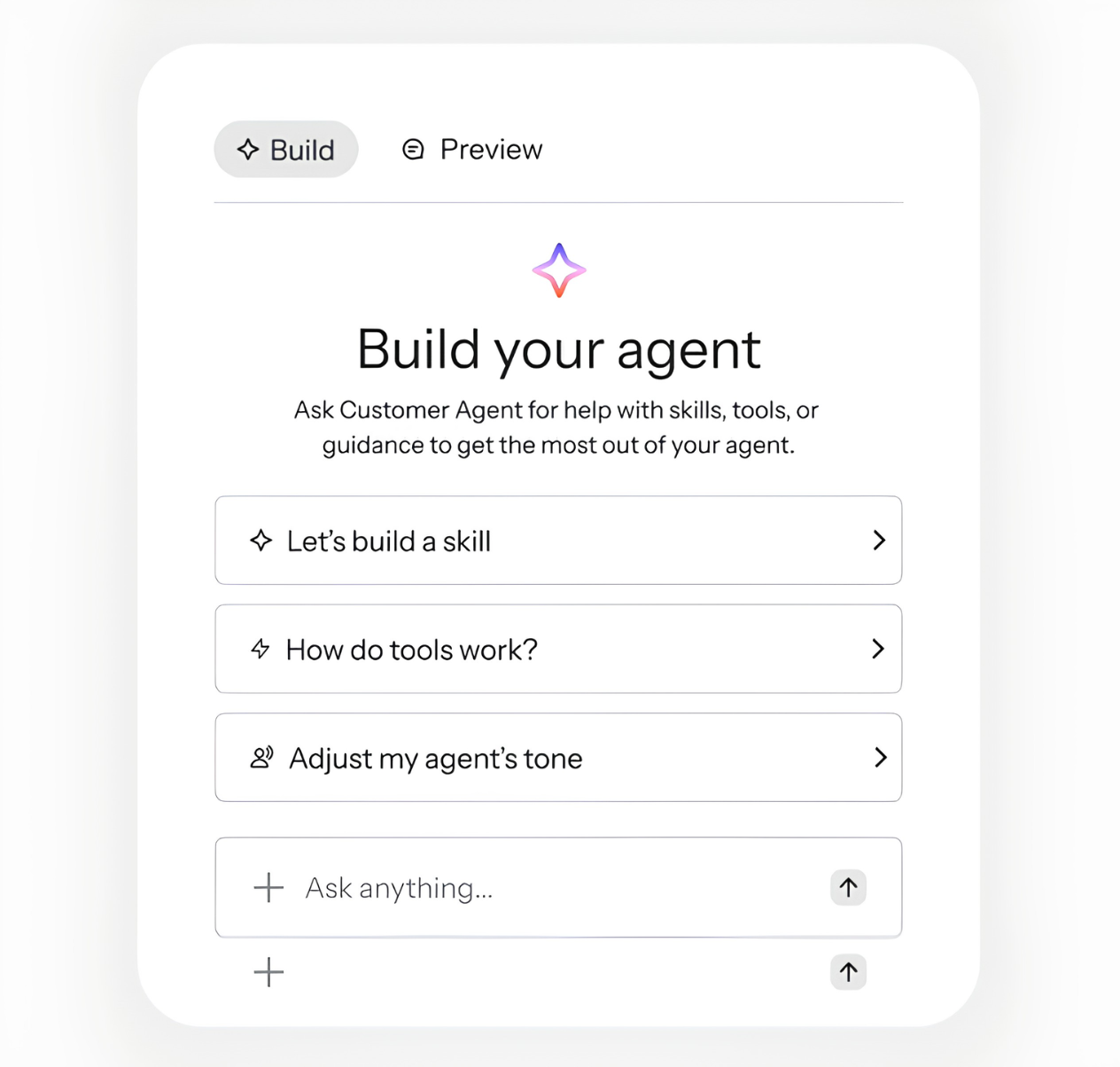
Klaviyo's AI suite, K:AI, spans over 40 features across three modes: predictive (CLV forecasting, churn risk, channel affinity), assistive (copy generation, segment building, image editing), and autonomous (Marketing Agent, Customer Agent).
Marketing Agent scans a brand's website and product catalog, then generates complete campaigns, flows, and signup forms. Customer Agent handles customer service and sales conversations around the clock, with in-chat product recommendations and add-to-cart functionality. Klaviyo also offers an MCP server for external AI tool integration.
Source: Klaviyo
The distinction: Customer.io's AI is built for marketers who want a technical collaborator that learns their workspace. Klaviyo's AI is built for ecommerce operators who want autonomous campaign creation and customer-facing agents that drive revenue.
ZoomInfo's AI operates at the intelligence layer. The GTM Context Graph processes 1.5B+ data points daily, fusing third-party B2B data with a customer's CRM records, conversation transcripts, and behavioral signals.
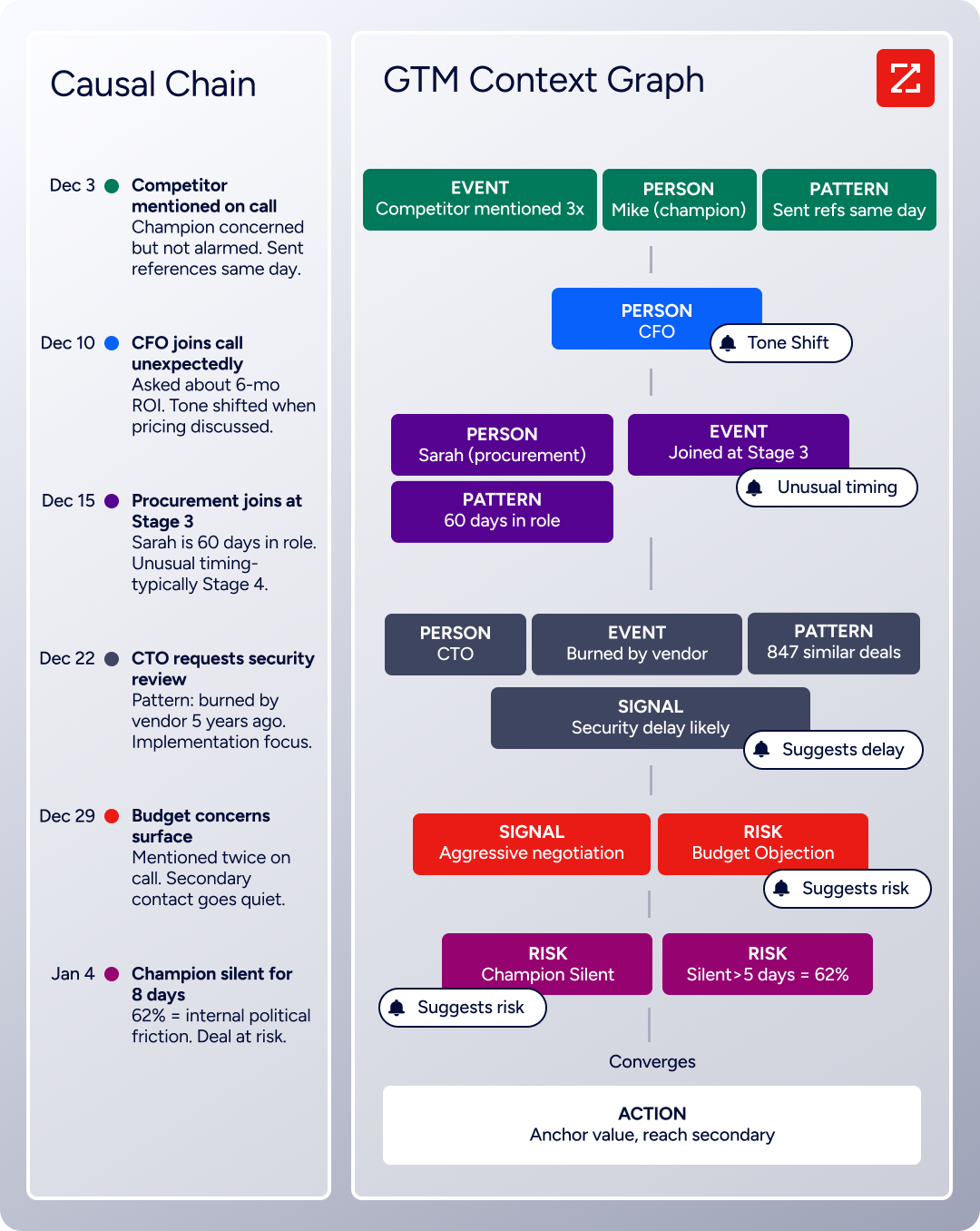
Source: ZoomInfo
AI agents in GTM Workspace handle account research, outreach drafting, and CRM updates. In GTM Studio, marketers describe audiences in natural language and launch multi-channel plays. The AI doesn't generate email copy for end customers; it identifies which accounts to target, which contacts to reach, and what signals suggest they're ready to buy.
Channel coverage comparison
Customer.io and Klaviyo both support omnichannel messaging, but with different emphasis.
Customer.io covers email, SMS, push notifications, in-app messages, WhatsApp, LINE, and webhook-delivered channels. The April 2026 release added WhatsApp as a native channel and LINE as an integration, expanding reach into LATAM, EMEA, and APAC markets.
All channels live within the same workflow canvas, so a single journey can branch across email, push, and WhatsApp based on user behavior. Transactional messages (password resets, order confirmations) bypass marketing suppression lists and fire immediately via API.
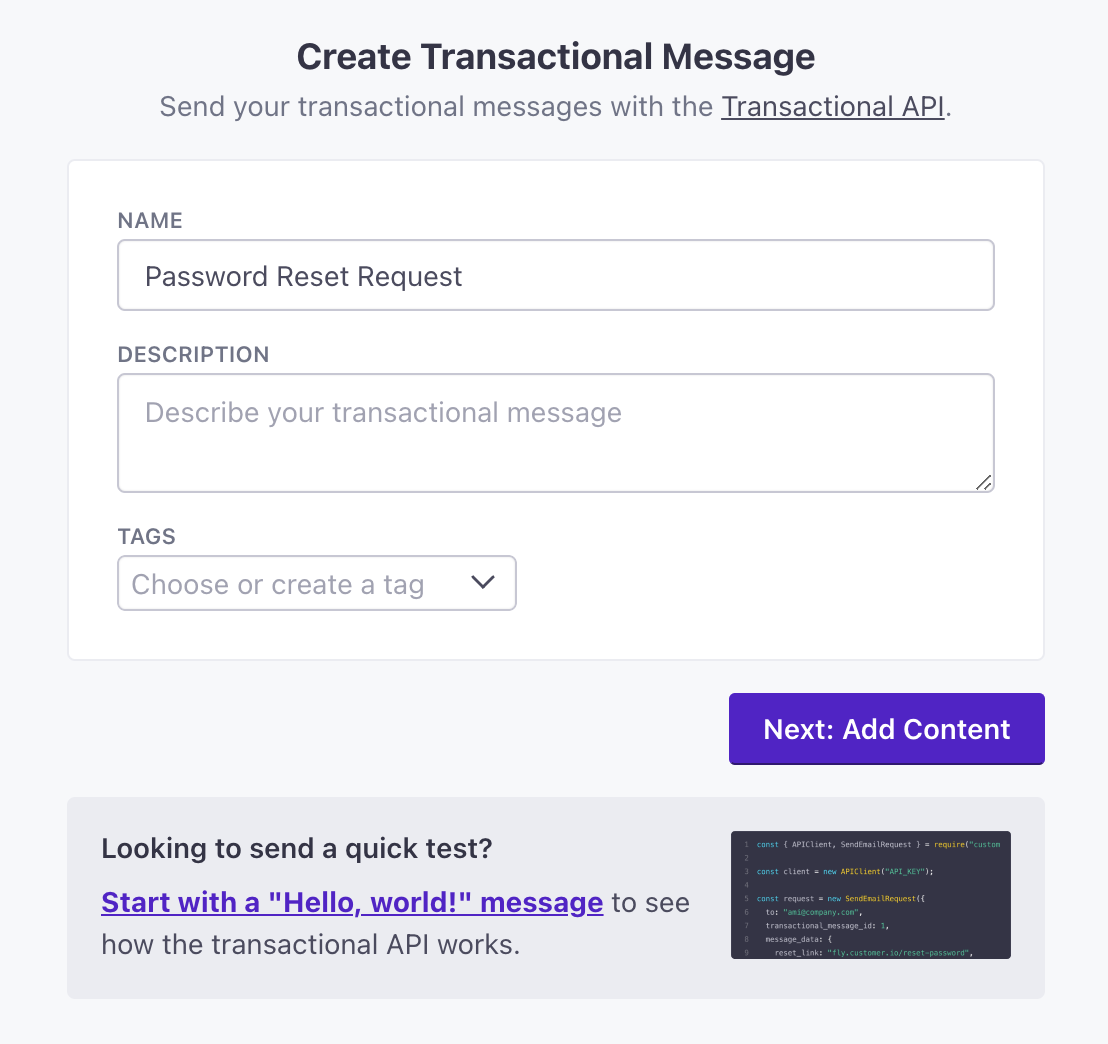
Source: Customer.io
Klaviyo supports email, SMS/MMS, mobile push, WhatsApp, RCS for Business (private beta), and social channels. The Omnichannel Campaign Builder coordinates multi-channel campaigns from one visual interface, with Channel Affinity AI routing each message to the channel most likely to get a response from that customer.
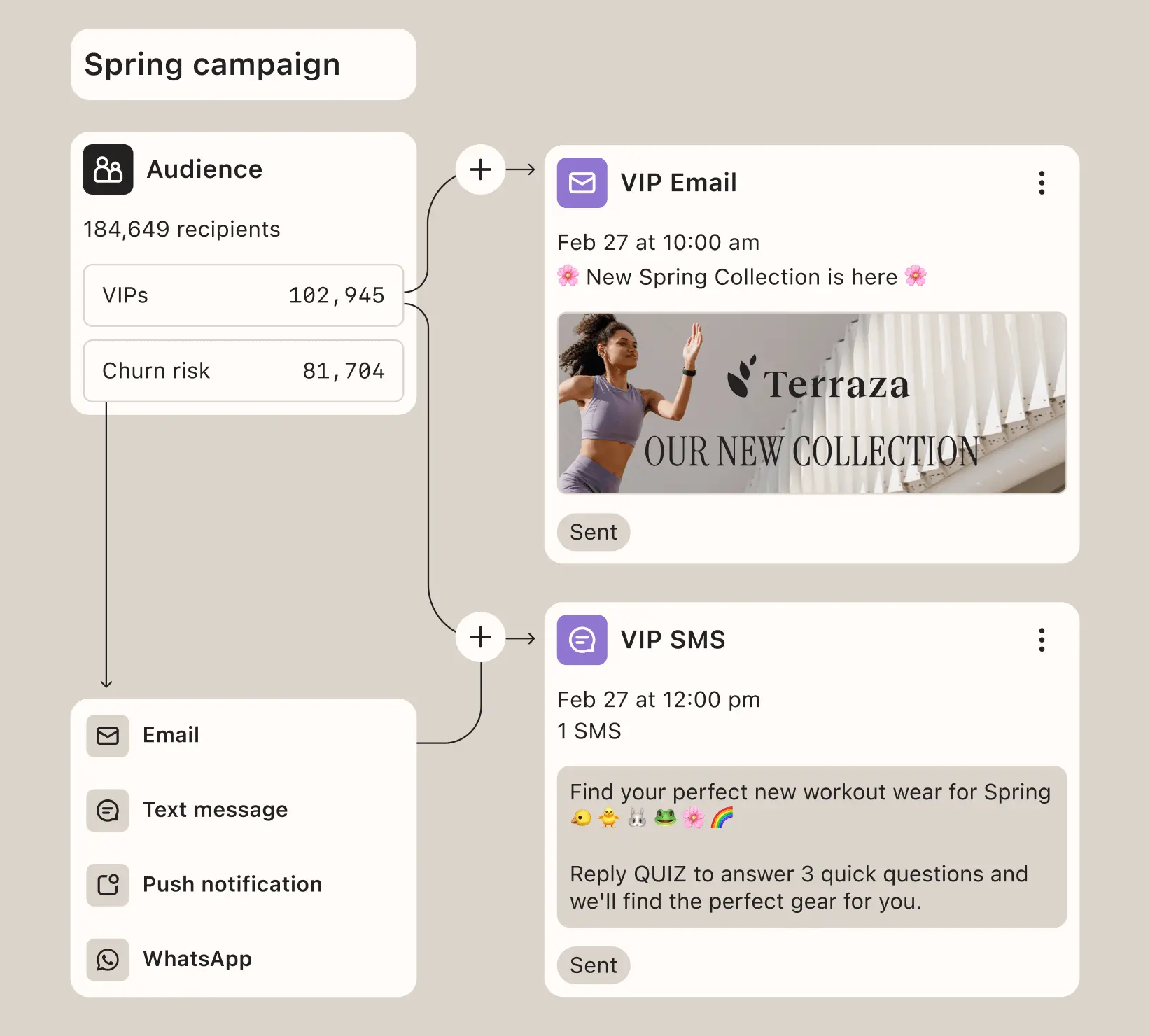
Source: Klaviyo
SMS operates in 22+ countries, and brands using email plus SMS together reportedly see a 19% increase in GMV growth rate versus email alone.
Customer.io's channel advantage is webhook-delivered messaging, which lets you route messages to any external system (direct mail via Lob, custom notification systems, Slack).
Klaviyo's channel advantage is deeper ecommerce integration: SMS Conversations for interactive FAQ handling, RCS for Business with rich media, and a Customer Agent that handles support and sales across web chat, SMS, RCS, and email.
ZoomInfo doesn't send marketing messages to end customers. Instead, it powers multi-channel orchestration through GTM Studio, which triggers display ads, email sequences, SDR routing, LinkedIn, Meta, and Connected TV campaigns based on buyer signals.
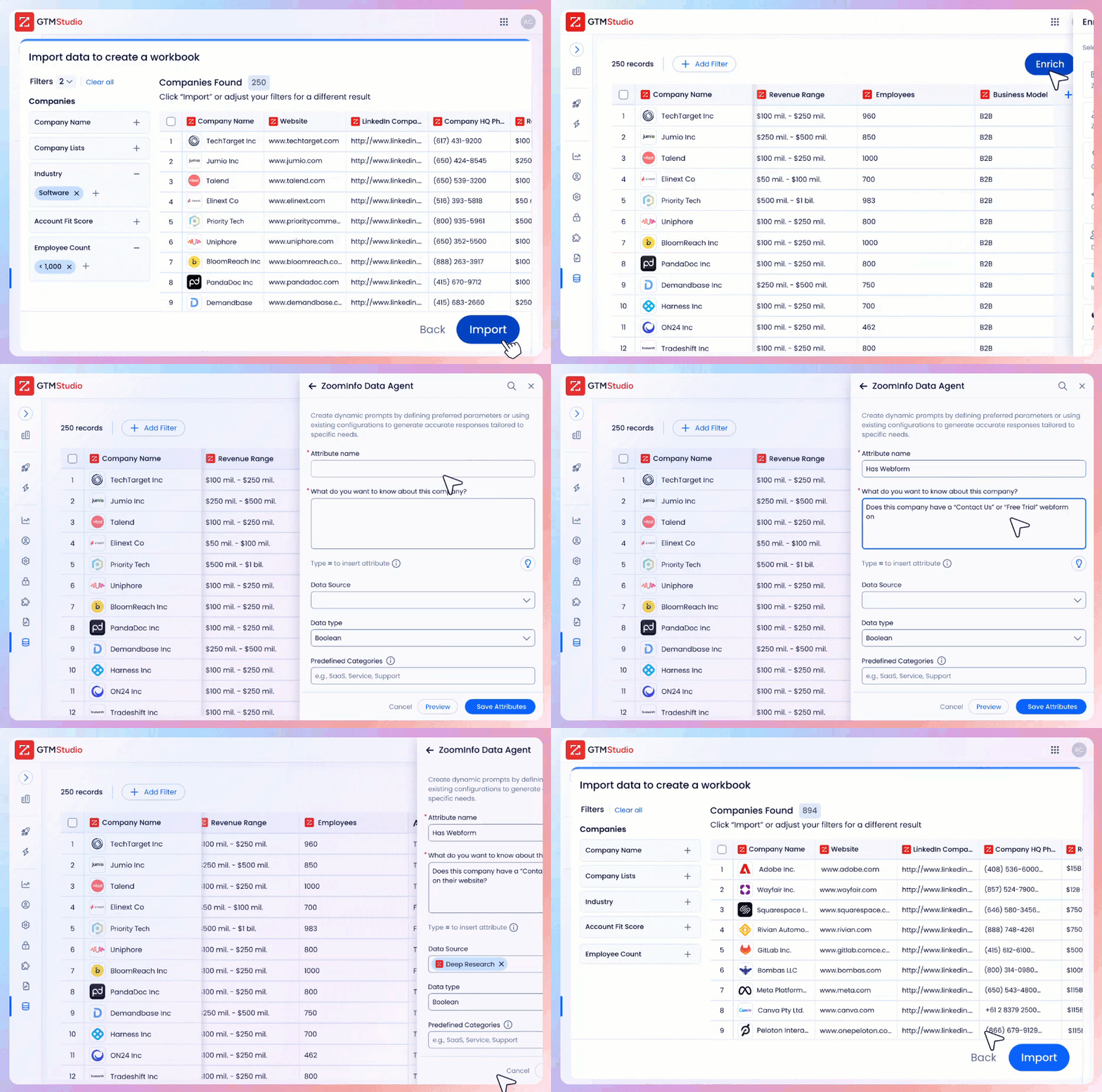
Source: ZoomInfo
Its native Demand-Side Platform deploys display ads based on 300+ company attributes. The logic: ZoomInfo identifies who to reach, Customer.io or Klaviyo handles the messaging.
Segmentation and audience building
Segmentation is where the data model differences become most visible.
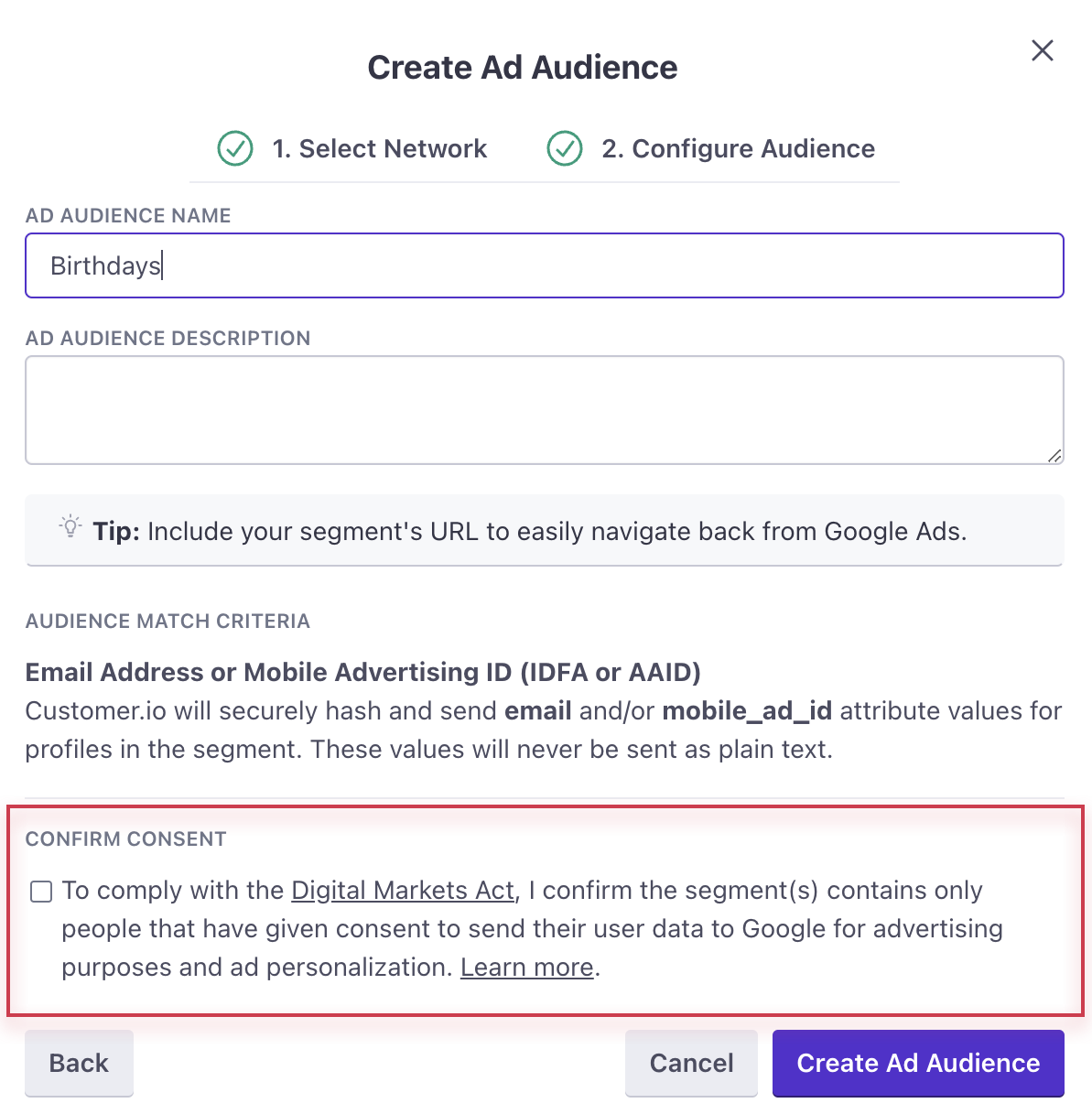
Customer.io's segmentation engine supports data-driven segments that update in real time as attributes, events, and messaging data change. Conditions can filter on attributes, events, object relationships, form submissions, page events, devices, and existing segment membership.
The AI-powered segment builder generates conditions from plain-language descriptions while using only attribute names (never values or PII) for privacy. Segments serve as campaign triggers, entry filters, conversion goals, broadcast audiences, and ad network audiences from a single definition.
Source: Customer.io
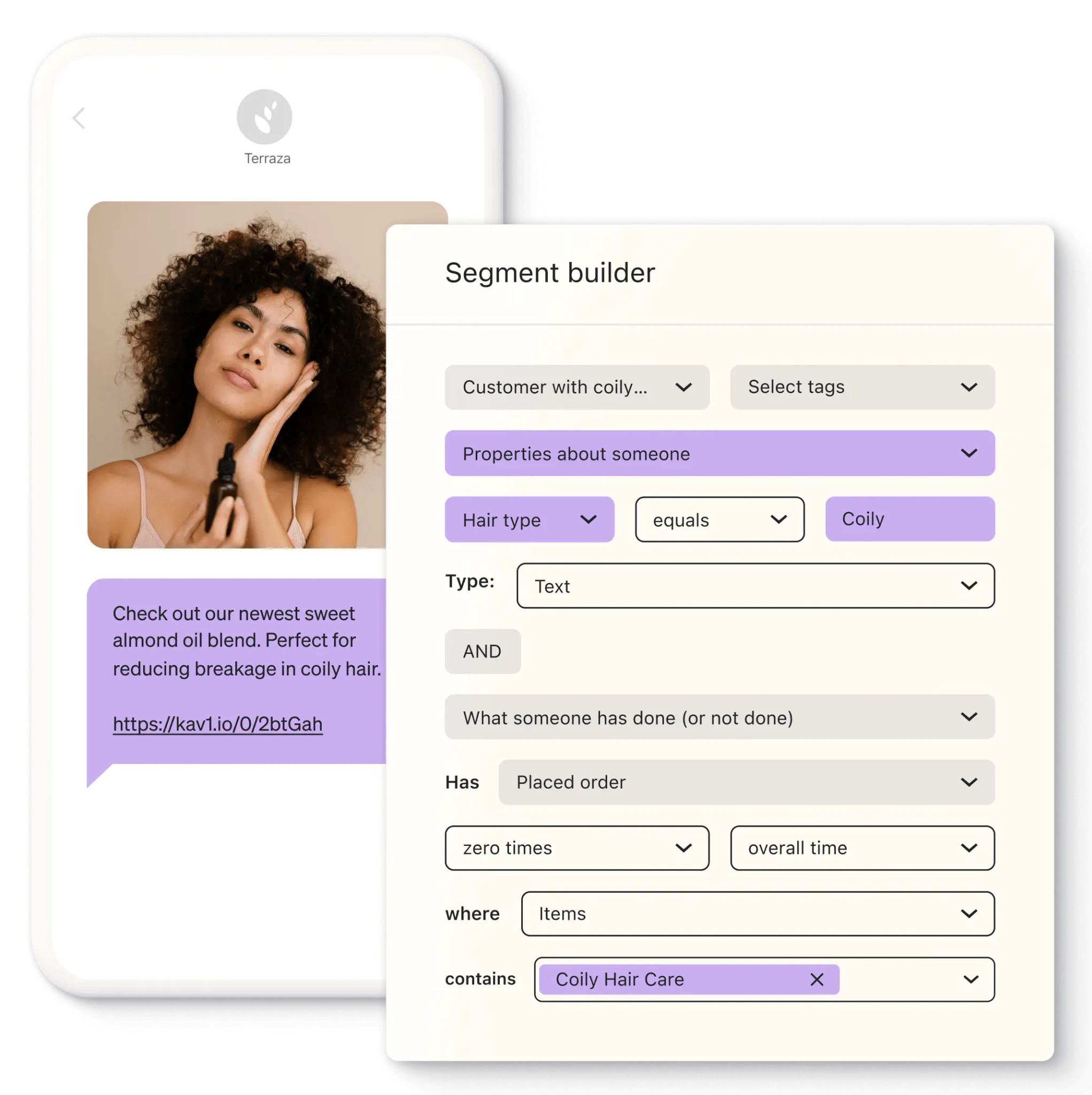
Klaviyo's segmentation is designed for ecommerce depth. You can segment by any data from any source across all time: purchase history, browsing behavior, product categories, discount usage, loyalty points, predicted CLV, churn risk, channel preferences, open support tickets, and unlimited custom properties.
Source: Klaviyo
The segmentation engine includes RFM analysis (grouping customers by recency, frequency, and monetary value) and predictive segments based on machine learning models. Segments sync to advertising platforms for lookalike audiences and retargeting.
Both platforms offer real-time segmentation with no look-back limits. The practical difference: Customer.io segments answer "what did users do in our product?" while Klaviyo segments answer "what did customers buy, and what will they buy next?"
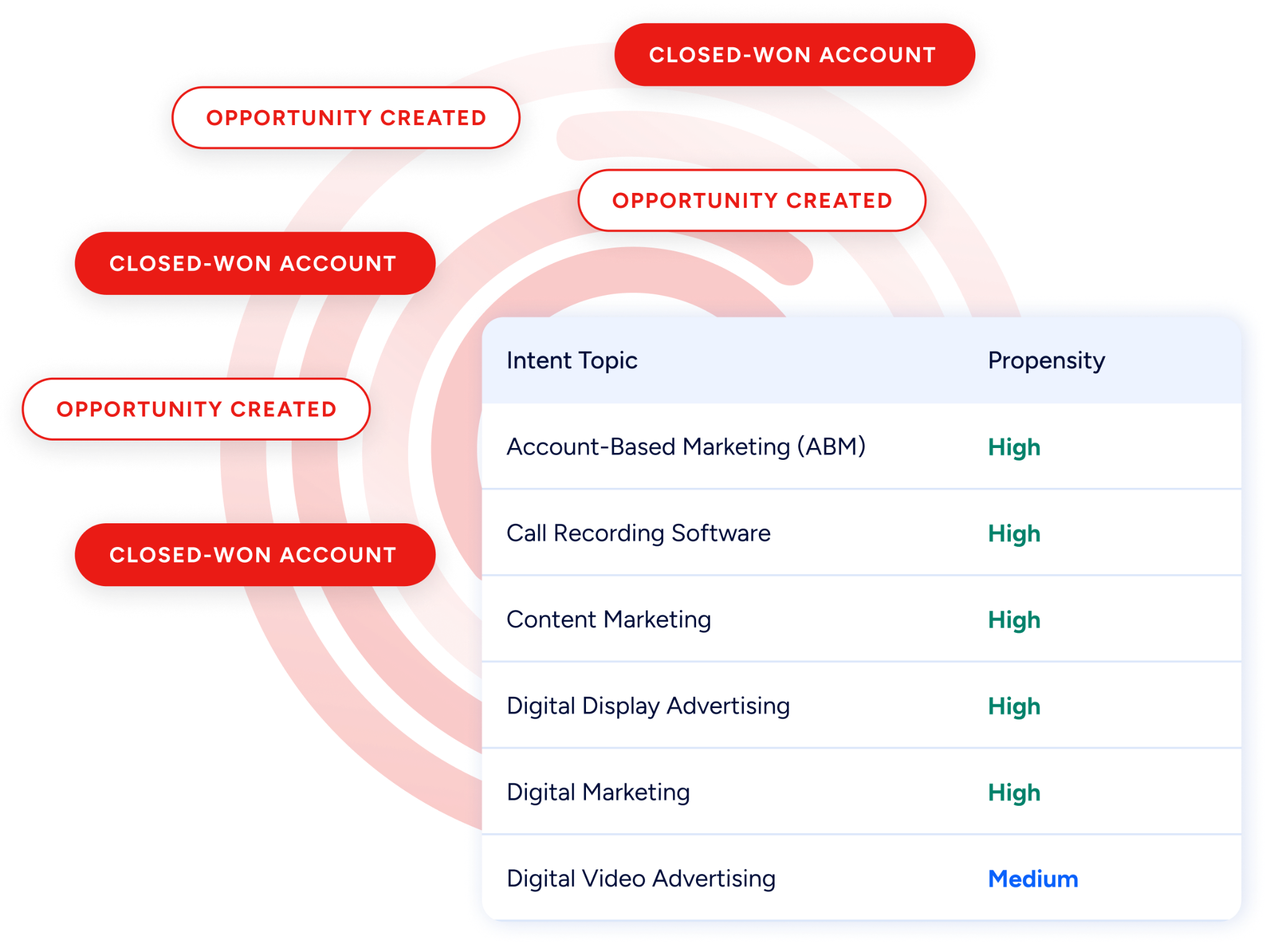
ZoomInfo segments by company and contact attributes: technographics, buyer intent signals, hiring patterns, funding events, and org chart structures. Guided Intent, exclusive to ZoomInfo, identifies topics historically correlated with deal success rather than requiring manual topic selection.
Source: ZoomInfo
The audiences ZoomInfo builds feed into your CRM and marketing platforms, enriching the contact records that Customer.io and Klaviyo then message.
SpringDB saw 2x-3x increases in campaign conversions, a 300% increase in database usability, and 30-50% uplift in average deal size using ZoomInfo's enriched data. (SpringDB case study)
Pricing structures reflect different markets
The three platforms use different pricing models.
Customer.io prices by profile count and email volume. Essentials starts at $100/month for 5,000 profiles and 1 million emails. All plans include unlimited user seats and unlimited API calls. The gap between tiers is significant: Premium starts at $1,000/month (annual billing required) and adds WhatsApp, LINE, data warehouse destinations, managed deliverability, HIPAA compliance, and chat support.
Enterprise is custom-quoted. Additional profiles cost $0.009 each on Essentials; extra emails are $0.12 per 1,000. The Startup Program offers up to 12 months free (30,000 profiles) for companies that have raised under $10M.
Klaviyo uses contact-volume pricing that scales with active profiles. The free plan includes 250 profiles and 500 emails/month. Paid plans start around $45/month and increase with list size. SMS credits are purchased separately.
The Data + Analytics and Service modules are paid add-ons. Professional services and premium support tiers add further cost. Specific pricing requires the interactive calculator on Klaviyo's pricing page.
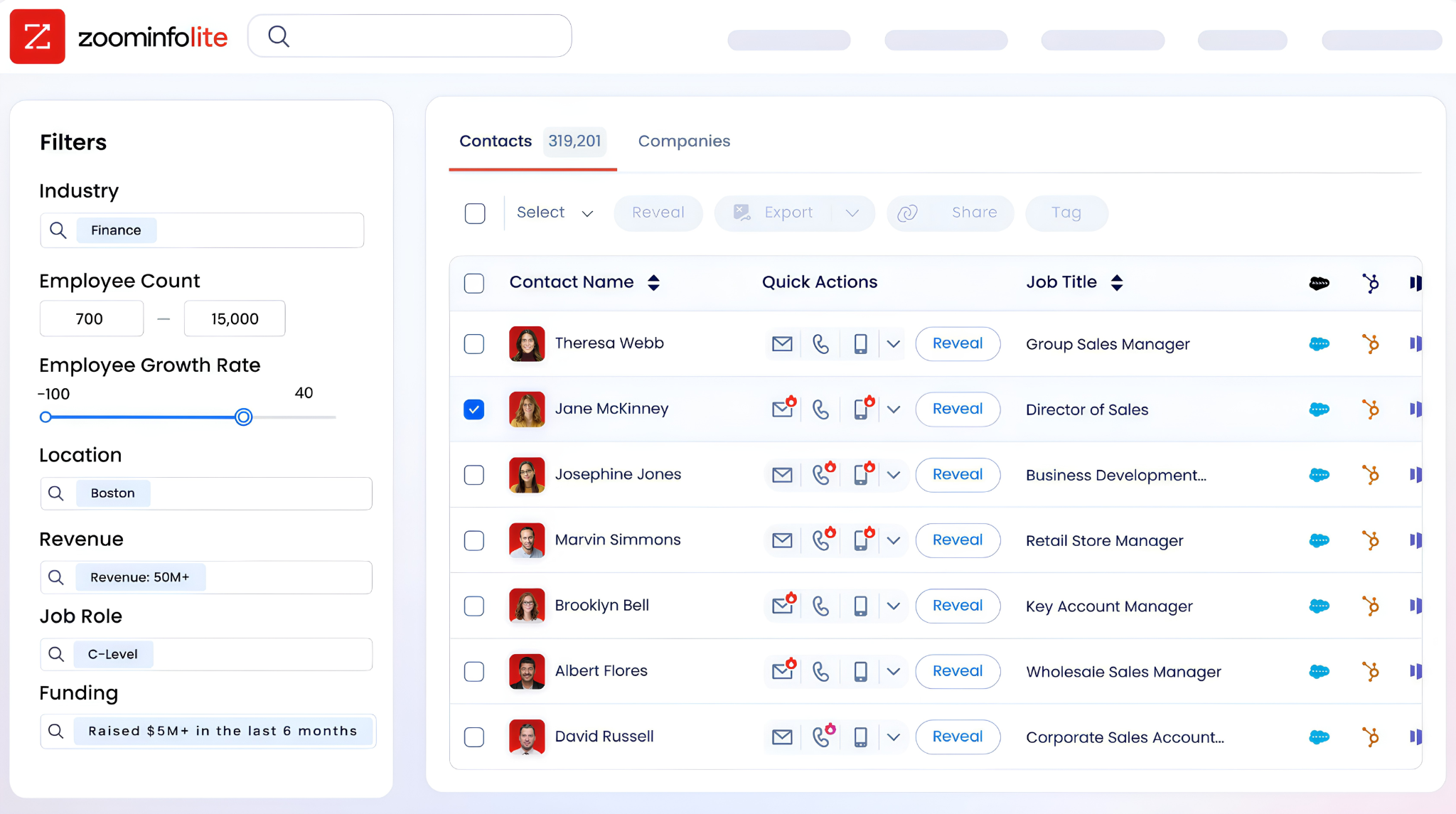
ZoomInfo uses custom-quoted, consumption-based pricing. There are no published dollar amounts for paid tiers. Pricing depends on seats, monthly credit volume, features, and contract length. ZoomInfo Lite is a permanent free tier with 10 monthly export credits and access to the B2B database.
Source: ZoomInfo
A 7-day free trial of the full platform is also available. Credits work on a search-then-enrich model: searching is free, and each new record enriched consumes one credit.
For teams evaluating total cost: Customer.io is predictable if your profile count is stable. Klaviyo costs can climb sharply during high-growth periods when subscriber lists expand quickly. ZoomInfo is a separate budget line, typically funded from sales intelligence or data enrichment budgets rather than marketing automation.
Integration ecosystems show each platform's priorities
Customer.io maintains a large Integration Directory spanning data-in sources and data-out destinations. CRM integrations include Salesforce, HubSpot, and Attio. Analytics destinations cover Amplitude, Mixpanel, and Google Analytics 4.
Source: Customer.io
Data warehouse connections (Snowflake, BigQuery, Redshift, S3) require Premium or above. The platform offers four distinct APIs (Pipelines, Track, App, and Reporting Webhooks) and mobile SDKs for iOS, Android, React Native, Expo, and Flutter. Reverse ETL is available on all paid plans.
Klaviyo operates the Klaviyo App Marketplace with 350+ apps. The strongest integrations are ecommerce-native: Shopify (preferred partner), WooCommerce, BigCommerce, Salesforce Commerce Cloud, Magento, and Wix. The REST API follows the JSON:API specification with official SDKs in Python, PHP, Ruby, and Node.js. Klaviyo also supports SFTP-based bulk data transfer for large migrations.
Source: Klaviyo
ZoomInfo's App Marketplace lists 172+ integrations focused on CRM (Salesforce, HubSpot, Microsoft Dynamics 365), cloud data platforms (AWS, Snowflake, Google Cloud, Databricks), sales engagement tools, and AI tools (Claude, ChatGPT).
Source: ZoomInfo
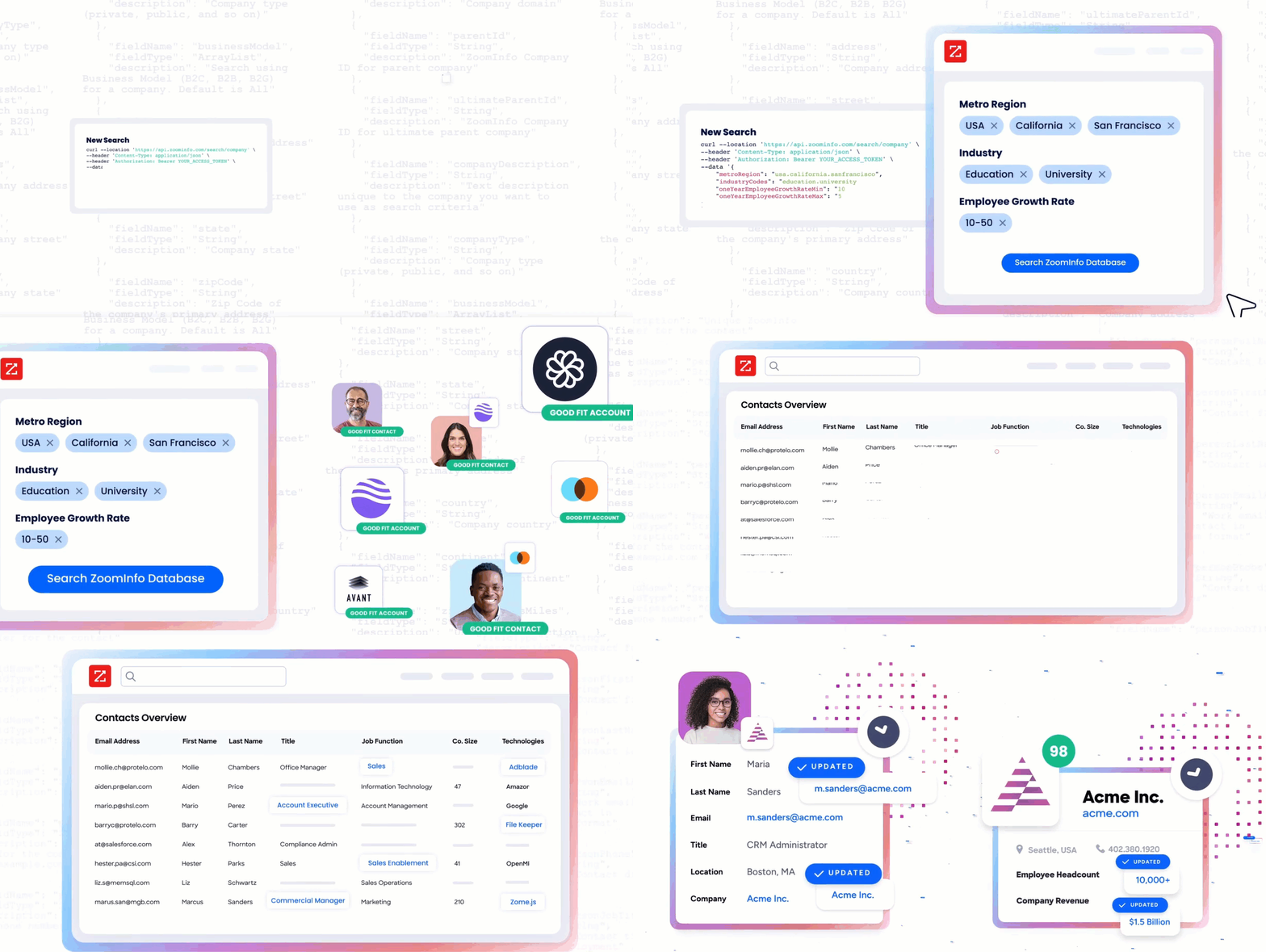
The Enterprise API provides structured access to the full B2B database, and the MCP server lets any MCP-compatible AI tool query ZoomInfo data directly.
Source: ZoomInfo
The integration story maps to use case: Customer.io connects to your product analytics and data infrastructure. Klaviyo connects to your storefront and payments. ZoomInfo connects to your CRM and sales tools. Teams that need all three can layer them: ZoomInfo enriches contacts in the CRM, which syncs to Customer.io or Klaviyo for lifecycle messaging.
Klaviyo expands into service, ZoomInfo into AI-powered sales
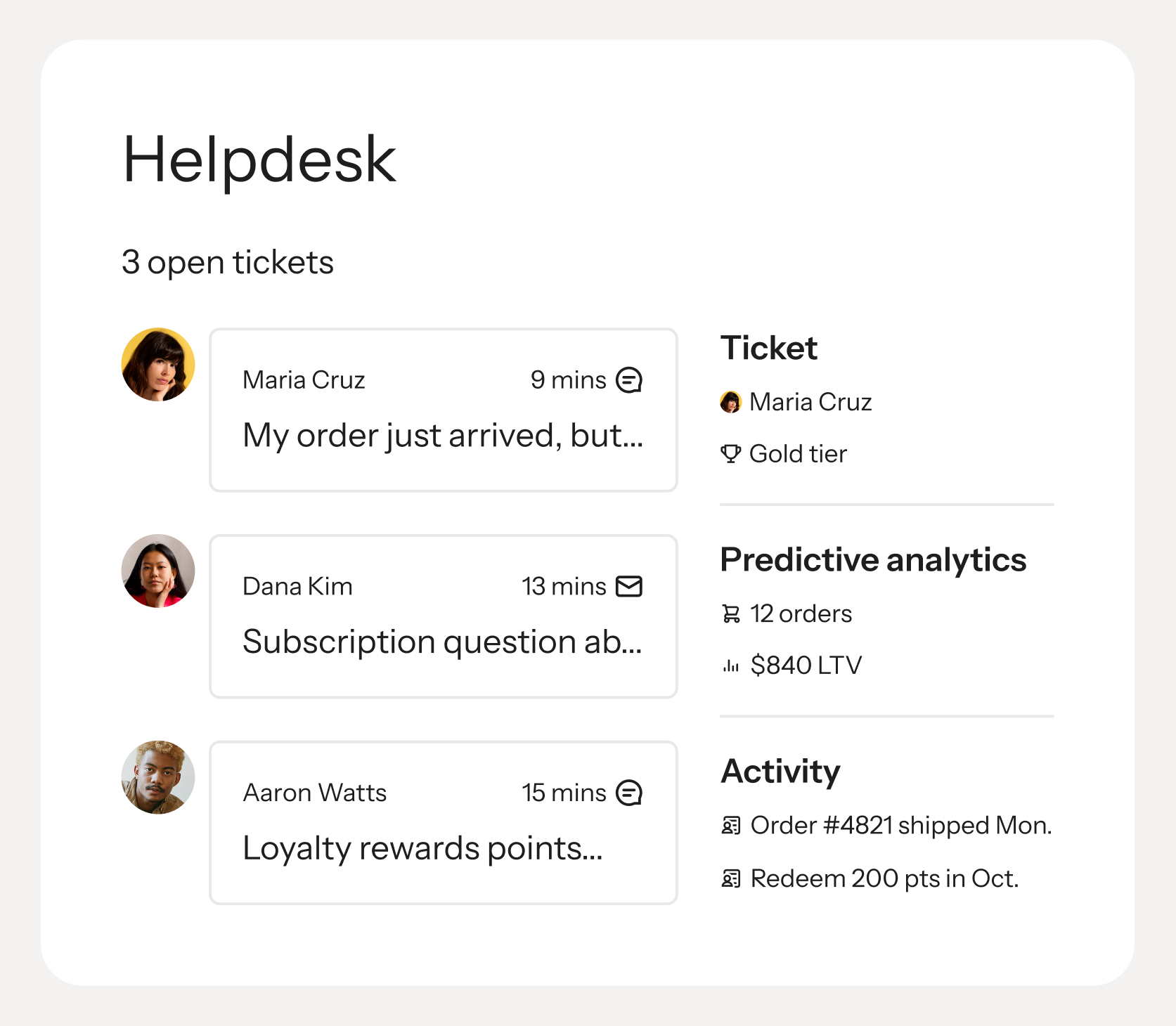
Klaviyo's recent expansion into Klaviyo Service adds customer support directly inside the marketing platform. Customer Hub gives shoppers a branded self-service portal for order tracking, returns, and account management.
Source: Klaviyo
Klaviyo Helpdesk consolidates email, chat, SMS, WhatsApp, and Instagram DMs into a single agent workspace. The structural advantage: when a customer has an open support ticket, promotional campaigns automatically pause, and resolved tickets can trigger win-back flows. Marketing and service share one customer profile.
This is new territory for Klaviyo. Customer Hub is currently Shopify-only and in beta for English-language brands. The helpdesk and customer agent lack the maturity of dedicated platforms like Zendesk or Gorgias. But for ecommerce brands already using Klaviyo for email and SMS, adding service inside the same platform avoids the data fragmentation that comes with bolting on a separate tool.
Customer.io has not expanded into customer service. Its focus remains on lifecycle messaging automation, with the April 2026 release concentrating on AI capabilities, the Design Studio redesign, and outcome measurement through Goals.
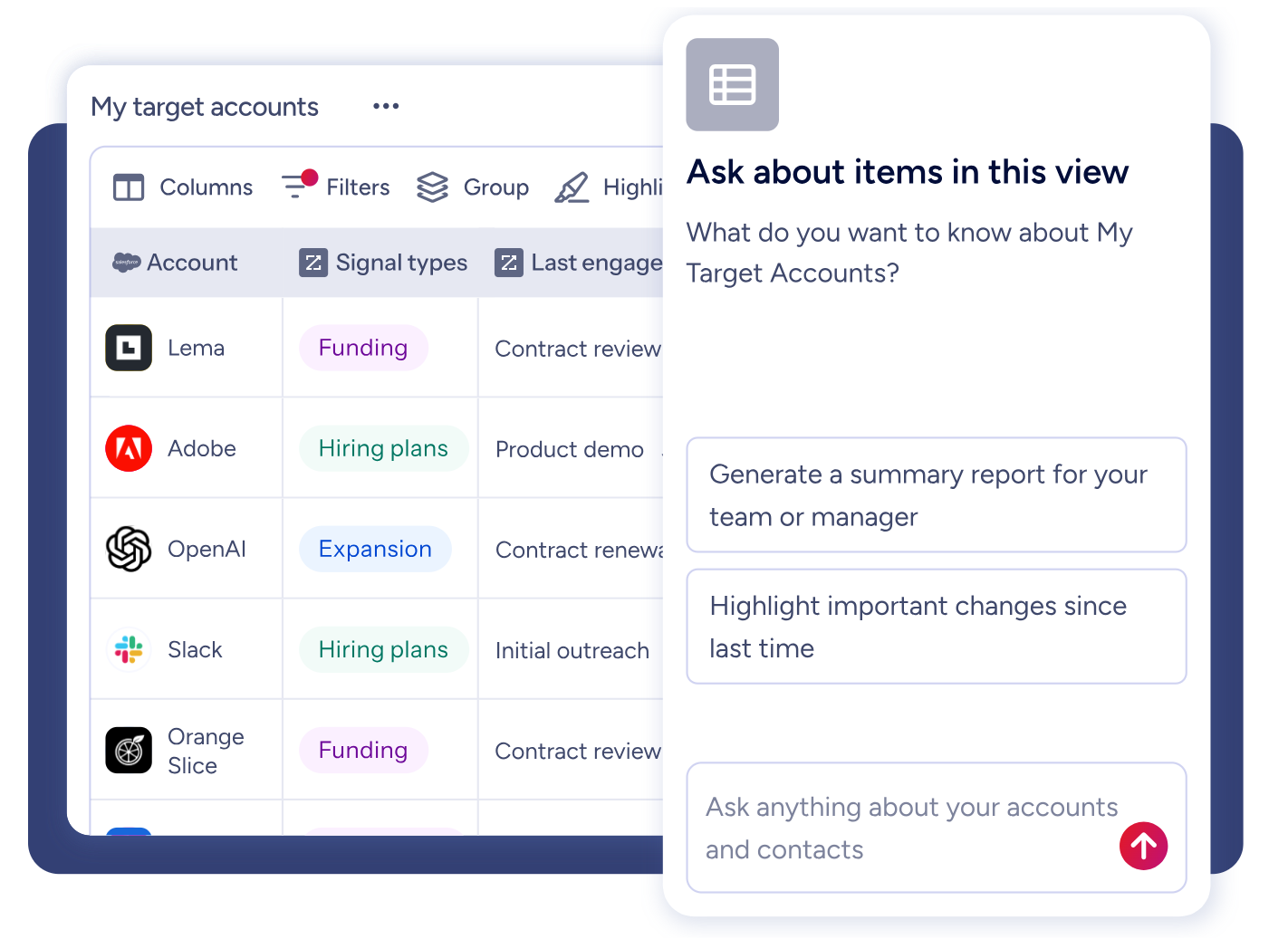
ZoomInfo's expansion moves in the opposite direction. GTM Workspace gives sellers an AI-powered workspace for execution, while GTM Studio gives marketers and RevOps teams the ability to design and launch multi-channel plays in natural language.
Source: ZoomInfo
These aren't marketing automation tools in the Customer.io or Klaviyo sense. They're sales and marketing orchestration tools that operate upstream, identifying who to target and triggering actions across the GTM stack.
Levanta's CEO described the shift: "ZoomInfo's not just a contact data company anymore. They've built a full system of execution. GTM Intelligence actually works the list, writes the outreach, triggers the play, and helps drive predictable growth." (Levanta case study)
Security and compliance comparison
All three platforms take compliance seriously, but their certification stacks reflect their buyer profiles.
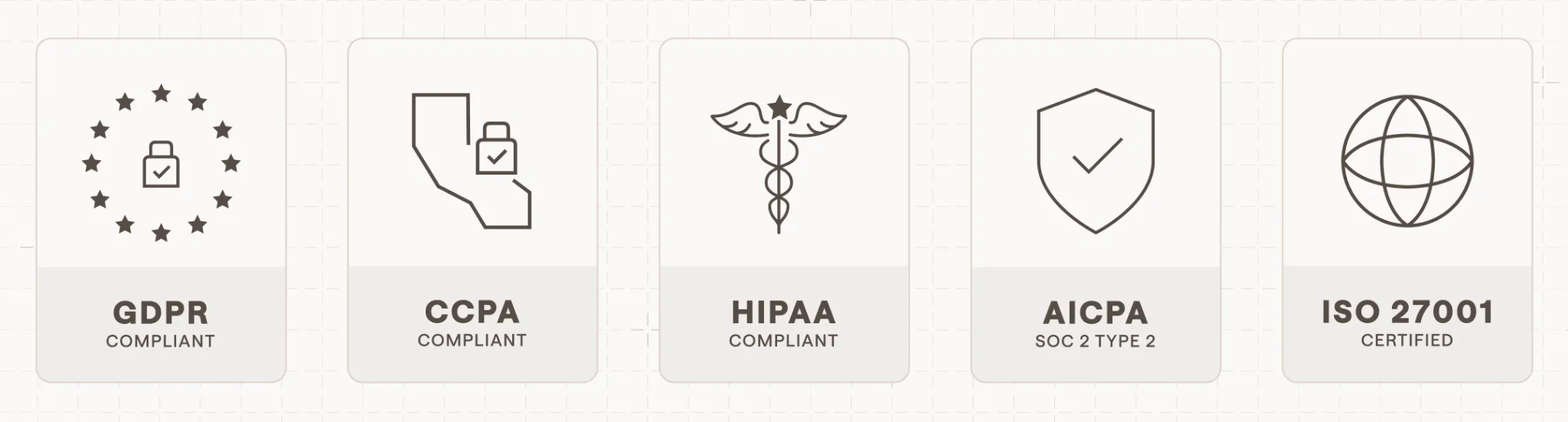
Customer.io holds SOC 2 Type II certification across all plans, with HIPAA compliance available on Premium and Enterprise. GDPR compliance includes a published Data Processing Addendum and Standard Contractual Clauses.
Source: Customer.io
The platform offers US and EU data centers on all plans, 2FA and SSO on all plans, and custom role-based permissions on Premium and above. Dedicated hardware is Enterprise-only.
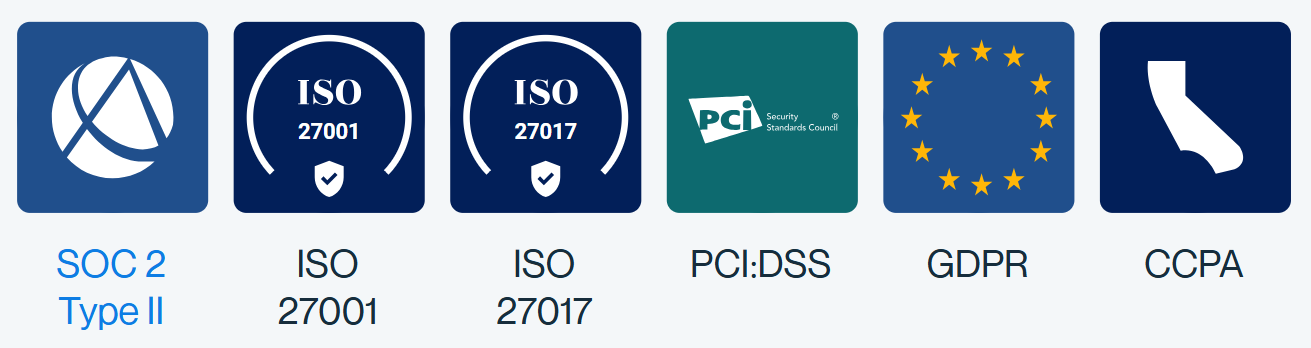
Klaviyo is certified under SOC 2 Type II, ISO 27001, ISO 27017, and PCI DSS. The platform provides a Data Privacy API for programmatic GDPR deletion requests and publishes a list of 27 subprocessors. A public bug bounty program is available.
Source: Klaviyo
ZoomInfo maintains ISO 27001, ISO 27701, SOC 2 Type II, TRUSTe GDPR, and TRUSTe CCPA certifications, all renewed annually. As a registered data broker in California and Vermont, ZoomInfo holds itself to a higher standard of regulatory compliance for data collection and handling. A dedicated Trust Center provides transparency into security practices.
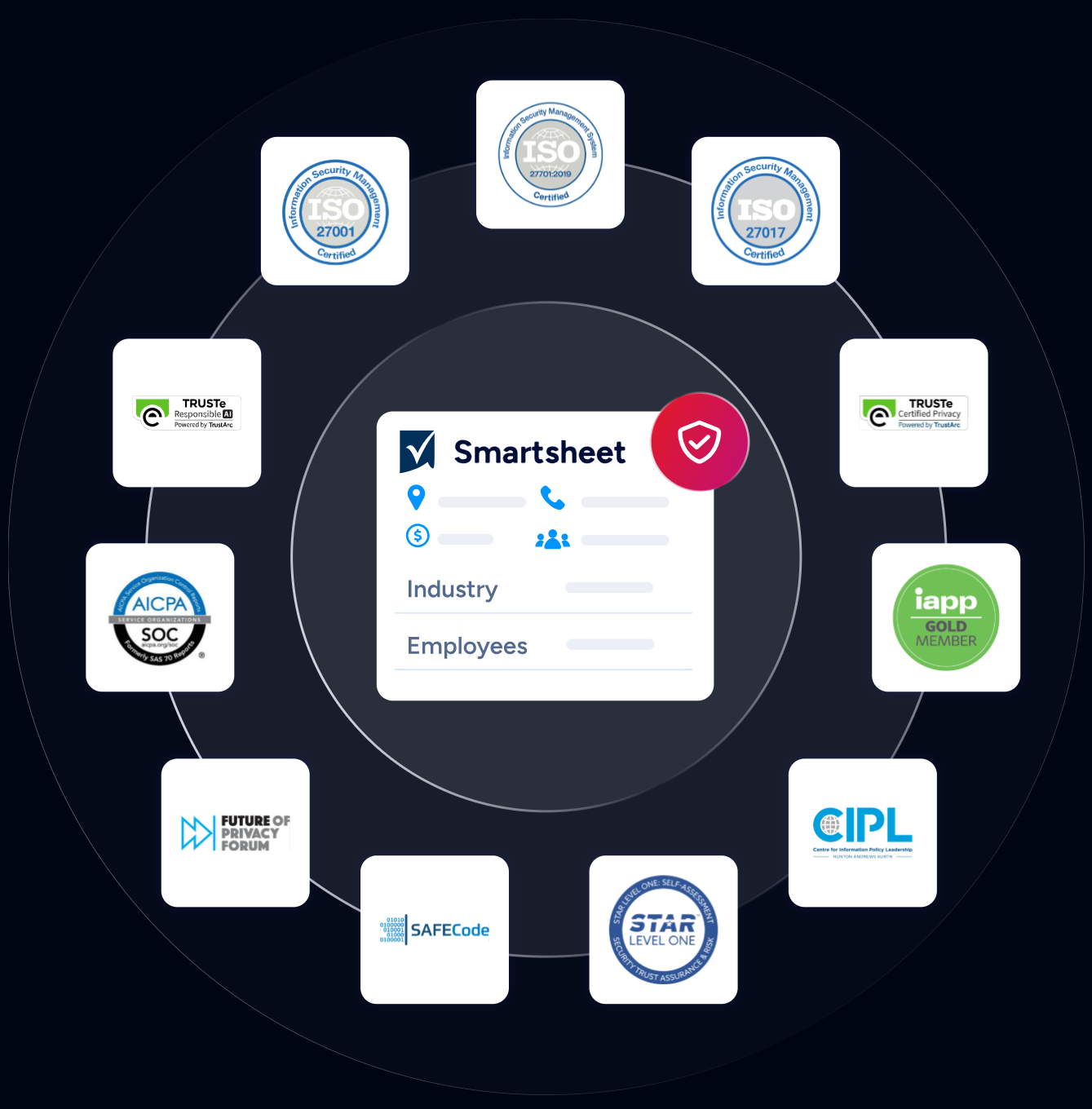
Source: ZoomInfo
For regulated industries (fintech, healthcare), Customer.io's HIPAA compliance and ZoomInfo's ISO 27701 (privacy-specific) certification are relevant differentiators. Klaviyo's PCI DSS certification matters for ecommerce brands handling payment data.
Customer.io vs. Klaviyo vs. ZoomInfo: Which should you choose?
The choice maps to your business model and your go-to-market architecture.
Choose Customer.io if:
You're a product-led SaaS, mobile app, or digital subscription business
Your campaigns need to trigger from in-product user behavior
You have engineering resources to instrument events and customize workflows
You need multi-channel lifecycle automation (onboarding, activation, retention, upsell)
Developer-friendly infrastructure (APIs, Liquid, custom objects, webhooks) matters more than pre-built templates
Choose Klaviyo if:
You run an ecommerce or D2C brand, especially on Shopify
Revenue-driving flows (abandoned cart, post-purchase, win-back) are your priority
You want email, SMS, and customer service in one platform with shared data
Predictive analytics (CLV, churn risk, next purchase date) would inform your marketing
You prefer pre-built templates and AI-generated campaigns over custom engineering
Add ZoomInfo if:
Your go-to-market team needs to identify, enrich, and prioritize B2B accounts
You want buyer intent data and sales intelligence feeding your marketing automation
Your CRM data is incomplete and you need enrichment at scale
You're building AI-powered sales workflows that need real-time B2B data
You want one data layer powering sales, marketing, and RevOps through any tool
Explore ZoomInfo Lite for free or see how the Enterprise API connects to your stack.
Customer.io and Klaviyo are not interchangeable. They're built for different industries, different data models, and different buyer profiles. Choosing between them is less about features and more about whether your business generates behavioral events (Customer.io) or transaction data (Klaviyo).
ZoomInfo sits upstream of both, solving the problem neither addresses: finding and understanding the right accounts and contacts before you message them. For teams that need both B2B intelligence and B2C engagement, the three tools layer cleanly, with ZoomInfo enriching the contacts that Customer.io or Klaviyo then nurture.
Customer.io vs. Klaviyo vs. ZoomInfo FAQ
What is the core difference between Customer.io and Klaviyo?
Customer.io is a behavioral event-driven platform built for product-led SaaS and digital businesses. It triggers campaigns from in-product user actions and supports custom data models with Liquid templating.
Klaviyo is an ecommerce-focused platform built for B2C brands, with native transaction data models, 60+ pre-built ecommerce flows, and deep Shopify integration. Both handle email, SMS, and push, but for different use cases.
Which platform is better for a Shopify store?
Klaviyo is the stronger choice for Shopify. It holds a strategic partnership with Shopify, and its most advanced features (Customer Hub, Customer Agent, locale-aware catalogs) require the Shopify integration.
An IDC study found brands using Klaviyo and Shopify together achieved 73% revenue growth over three years. Customer.io can integrate with Shopify but does not offer the same depth of native ecommerce functionality.
How does ZoomInfo fit into a Customer.io or Klaviyo setup?
ZoomInfo operates upstream of both platforms. It enriches contact records in your CRM with B2B company attributes, technographics, org charts, and buyer intent signals. That enriched data can then sync to Customer.io or Klaviyo for lifecycle messaging. ZoomInfo solves the "who should we be talking to" problem; Customer.io and Klaviyo solve the "what should we say to them" problem.
Which platform has the most generous free plan?
Klaviyo offers a permanent free plan with 250 active profiles and 500 email sends per month, with access to all 350+ integrations. ZoomInfo Lite is a permanent free tier with 10 monthly export credits and access to the B2B database. Customer.io offers a 14-day free trial with no permanent free tier, though its Startup Program provides up to 12 months free for companies that have raised under $10M.
Which platform is best for B2B SaaS companies?
Customer.io is the strongest fit for B2B SaaS. Its event-driven data model, custom objects, and developer-friendly infrastructure are designed for product-led growth companies that need to trigger messages from in-app behavior. Klaviyo positions itself as a B2C CRM and is not designed for B2B use cases.
ZoomInfo complements a B2B SaaS setup by providing the contact and company intelligence that fuels prospecting and account-based marketing.
How do the AI capabilities compare?
Customer.io's AI Agent builds campaigns from natural language prompts with persistent memory that learns workspace preferences over time. Klaviyo's K:AI suite includes 40+ features spanning predictive analytics, generative copy, and autonomous agents (Marketing Agent for campaign creation, Customer Agent for customer service).
ZoomInfo's AI powers the GTM Context Graph, which fuses B2B data, CRM records, and conversation intelligence to surface account insights and recommended actions for sales teams.
Can I use Customer.io and Klaviyo together?
It's possible through API integrations or a shared CDP, but not typical. The platforms serve different use cases.
A more common architecture for businesses with both B2B and B2C audiences is to use Customer.io for product-led SaaS messaging and Klaviyo for ecommerce customer engagement, with a shared CRM or data warehouse connecting them. ZoomInfo can enrich contact data that flows into either platform.
Which platform handles SMS marketing better?
Klaviyo has a more mature SMS offering for ecommerce, with support in 22+ countries, two-way SMS Conversations, transactional versus marketing consent separation, and RCS for Business in private beta.
Customer.io supports SMS across all plans with custom pricing, but treats it as one channel among many rather than a primary revenue driver. Both platforms integrate SMS into their workflow builders alongside email and push.
Other Customer.io matchups worth a look:
