
Datanyze makes a simple promise: find B2B contact data without paying thousands for enterprise software. Its Chrome Extension reveals email addresses and phone numbers on LinkedIn profiles, skipping the complexity of most sales intelligence platforms. For solo sales reps on a tight budget, that simplicity is the point.
To write this Datanyze review, we analyzed it thoroughly. We think it's the right choice if:
You're an individual SDR or solo founder prospecting on LinkedIn
You need affordable contact data and can't justify enterprise pricing
You want a simple tool with no learning curve
Your prospecting is U.S.-focused, particularly in tech industries
You don't need CRM integrations or team collaboration features
However, Datanyze is not a good choice if:
You need CRM integrations to fit into existing sales workflows
Your team requires shared accounts, pooled credits, or centralized reporting
You prospect at high volume and need more than 160 contacts per month
You need intent data, conversation intelligence, or multi-channel engagement
You want API access for programmatic data retrieval
Your prospecting extends beyond U.S. tech companies
In this case, consider ZoomInfo: a sales intelligence platform built on a database of 500M contacts and 100M companies, with buyer intent signals, conversation intelligence, CRM integrations, AI-powered outreach, and the GTM Context Graph that combines your internal data with ZoomInfo's third-party intelligence to show who to contact and why.
We cover ZoomInfo later in this review for sales teams that have outgrown basic contact data tools. If you're ready to explore, you can start with ZoomInfo's free trial.
What is Datanyze?
Datanyze is a B2B contact data tool built around a Google Chrome Extension.
Founded in 2012 by Ilya Semin, Ben Sardella, and Ilya Simon, the company started in technographics, tracking which technologies companies used across their websites to help sales teams identify and prioritize prospects.
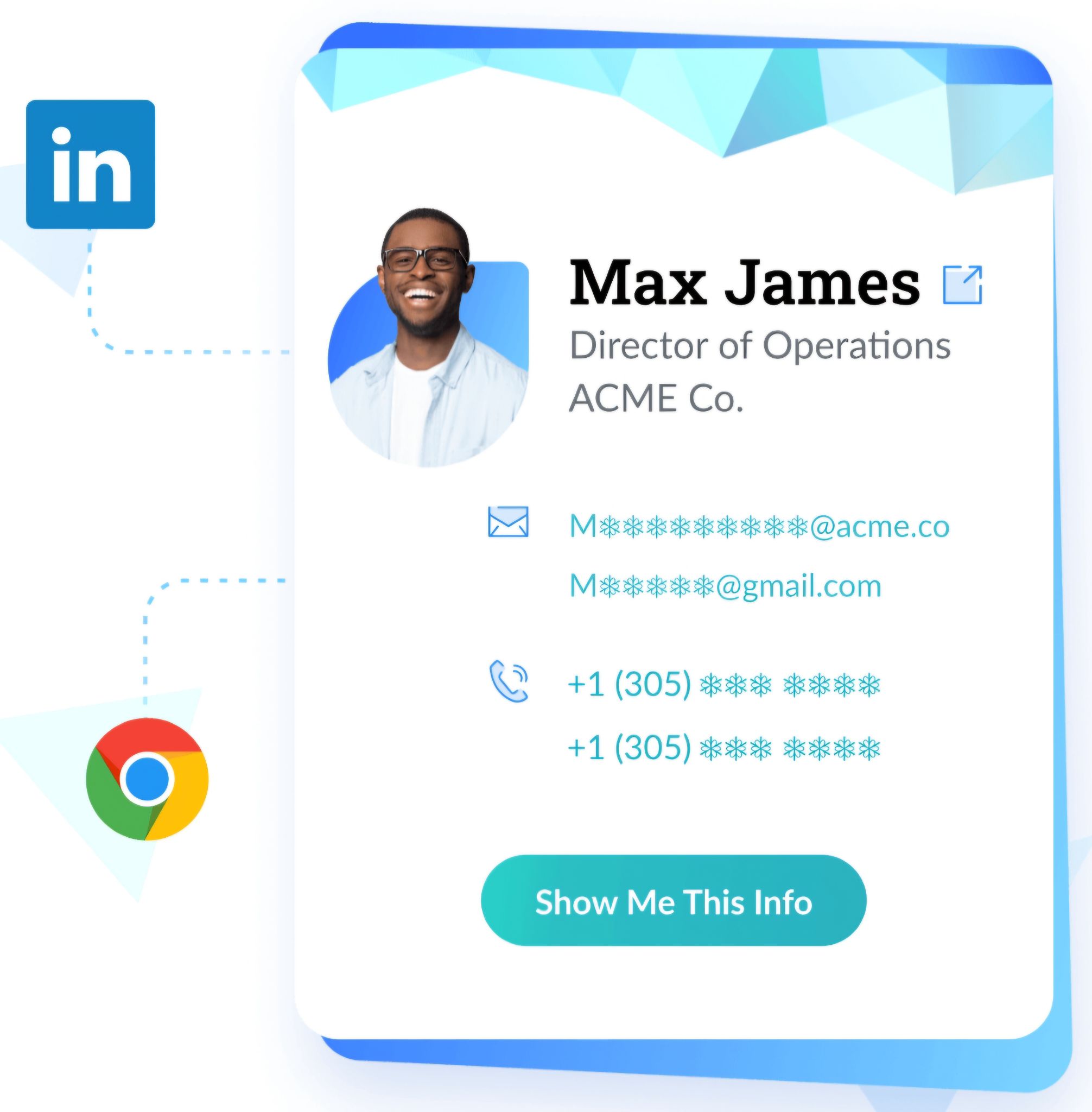
That changed in 2018 when ZoomInfo acquired Datanyze. ZoomInfo absorbed the original technographic capabilities into its core platform and rebuilt the Datanyze brand as a budget contact data tool for individual sales reps and small teams. Today the product does one thing: install the Chrome Extension, browse LinkedIn profiles, and click to reveal verified email addresses and phone numbers.
Source: Datanyze
Datanyze maintains a database of 120M people, 84M email addresses, and 63M direct dial phone numbers. The company positions itself as "Hot Contact Data on Cold Prospects", targeting SDRs, recruiters, solo founders, and budget-constrained organizations that need contact data without the complexity or cost of full sales intelligence platforms.
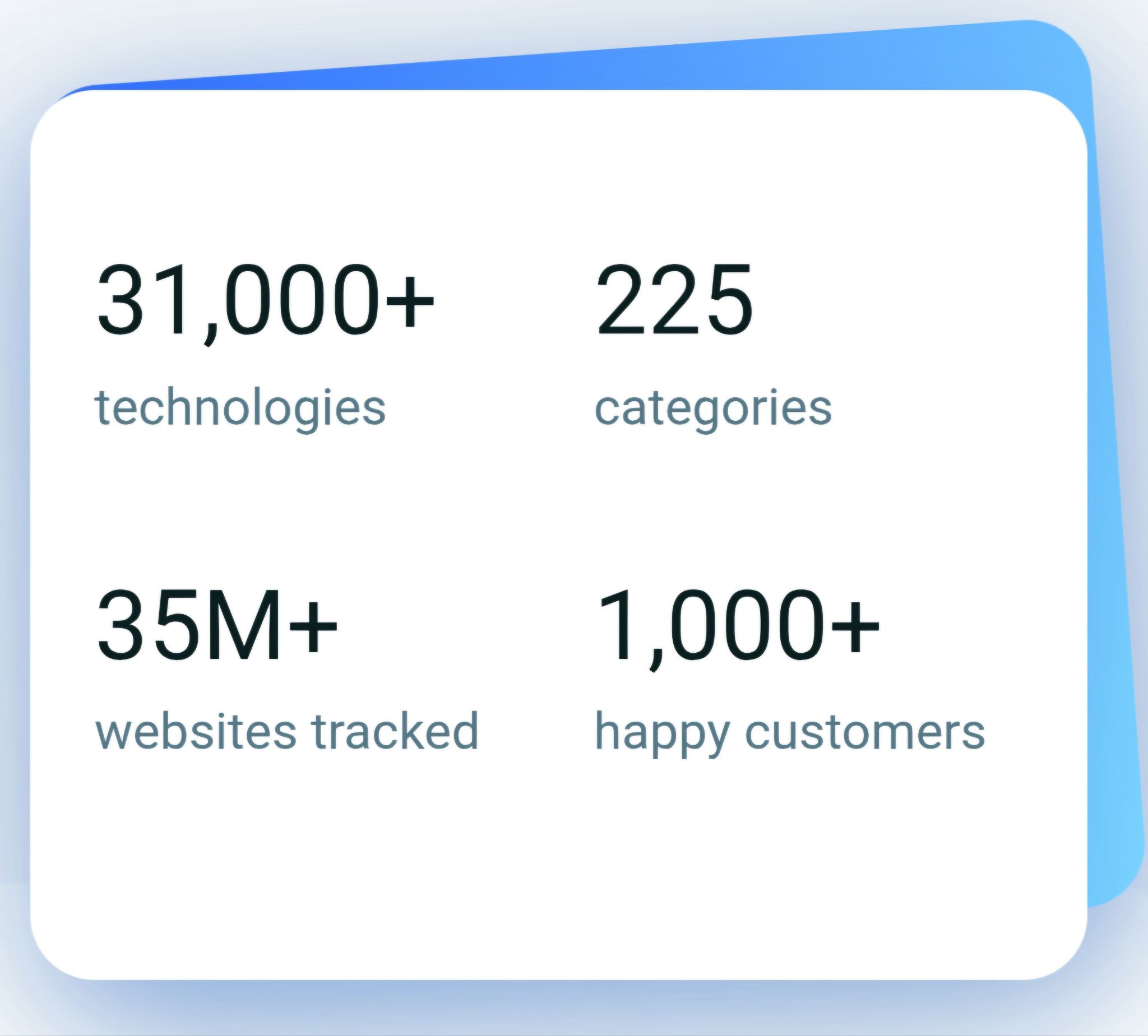
The company also retains its legacy Market Share Reports section, a free tool tracking 31,000+ technologies across 35 million+ websites in 225 categories, though this feature exists separately from the contact data workflow.
Datanyze Pros & Cons
Pros | Cons |
|---|---|
Affordable ($21/month on annual billing) | No CRM integrations available |
Simple two-step workflow | No team accounts or shared credits |
No credit card required for free trial | Chrome-only (no other browser support) |
Credits only consumed on successful reveals | Low credit caps (max 160/month) |
Data accuracy guarantee with refund provision | Revealed contacts locked upon cancellation |
Free Market Share Reports for tech research | No API access |
GDPR and CCPA compliant | Annual plans auto-renew with 10% price increase |
Datanyze Review: How it Works & Key Features
Chrome Extension: Datanyze surfaces contact data directly on LinkedIn profiles without leaving the browser.
The Chrome Extension is the entire product. After you download it from the Chrome Web Store, a Nyze avatar appears on the right side of your screen when you visit a LinkedIn profile or company website.
Source: Datanyze
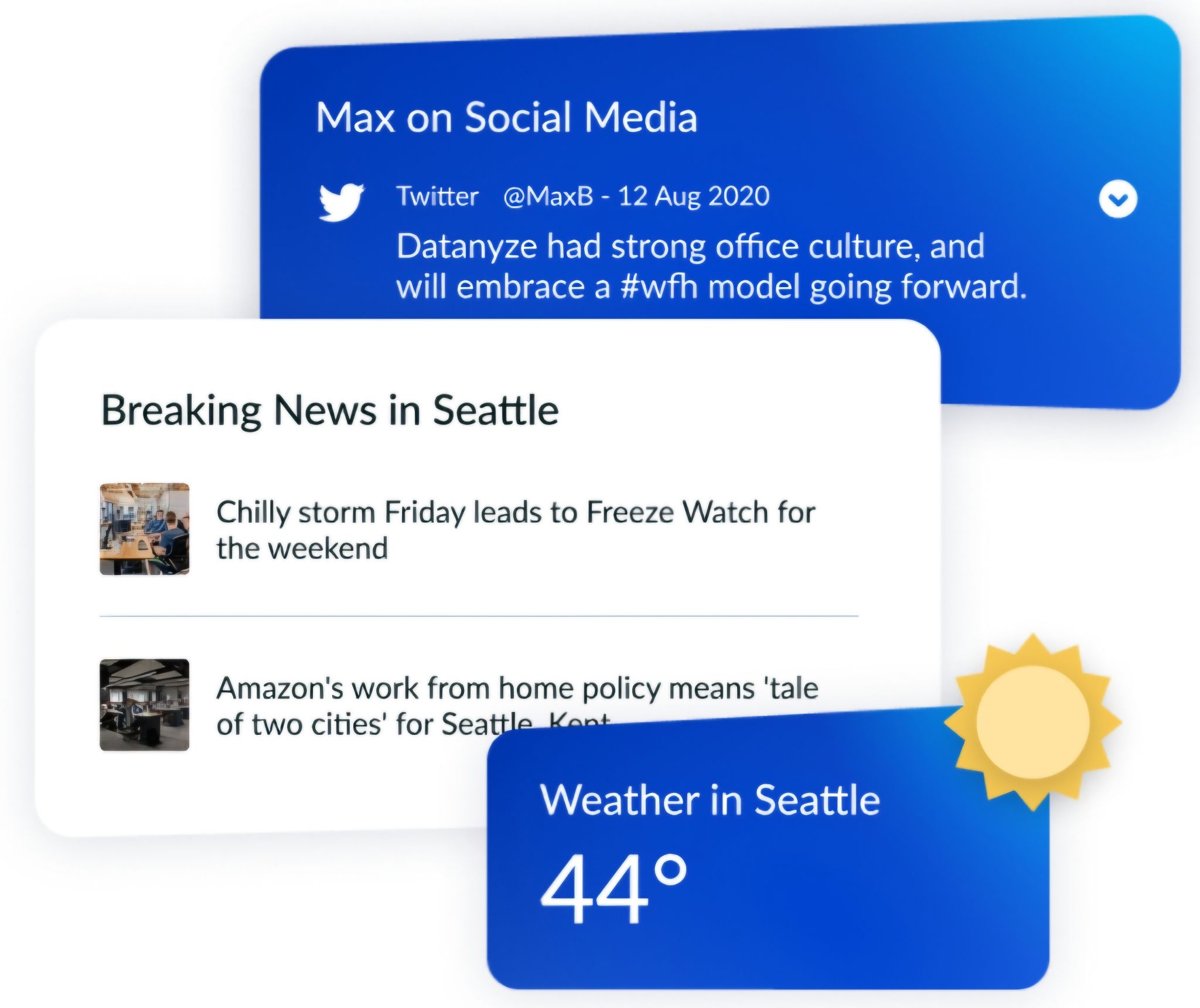
The workflow takes two steps. Browse to a profile, and the extension displays partial contact details. Click "Show me this info," and you spend one credit to reveal the full data: business and supplemental email addresses, direct and mobile phone numbers, job title, management level, department, company, social profiles, and location.
A few things work in your favor. Credits are only charged when you click to reveal, so browsing profiles costs nothing. Viewing a previously revealed contact again doesn't spend another credit. And if Datanyze has no data for a profile, you aren't charged.
On LinkedIn search pages, the extension shows partial details for everyone at once, so you can prospect through results without clicking into each profile.
Contact Database: A 120M-person database with a contractual accuracy guarantee.
Datanyze's database covers 120 million people, 84 million email addresses, and 63 million direct dial phone numbers across 23+ industries including software, finance, healthcare, manufacturing, and government.
Each reveal shows a consistent set of fields: business and supplemental email addresses, direct and mobile phone numbers, job title, management level, department and job function, current company, social network profiles, and location.
Datanyze builds the database from three sources: automated ML scanning of online sources, human research teams that verify accuracy, and third-party data partners. Coverage is strongest in the U.S. market, particularly in tech and online industries, which Datanyze acknowledges.
The accuracy commitment stands out. The Datanyze data guarantee promises a refund for inaccuracies, backed by a contractual 95% accuracy threshold in the Terms and Conditions. If accuracy drops below that mark after a 30-day cure period, users get a prorated refund.
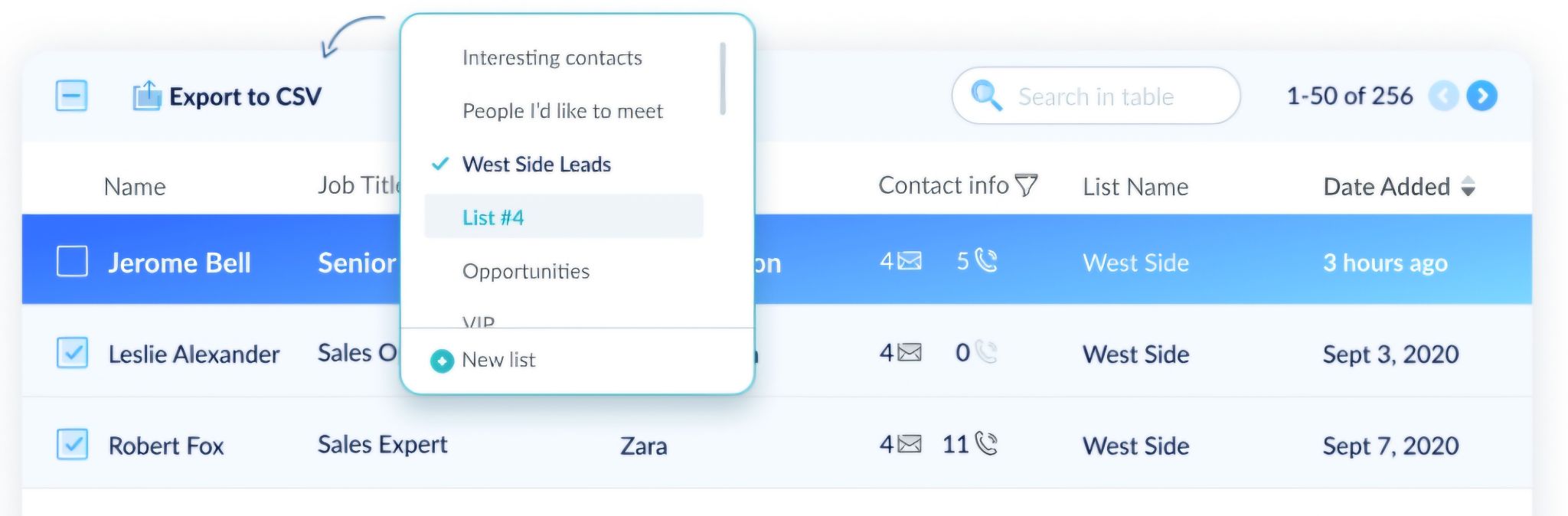
You can save revealed contacts to your dashboard, tag and organize them into lists, and export to CSV.
Source: Datanyze
Market Share Reports: Free competitive intelligence tracking 31,000+ technologies.
The Market Share Reports section is a holdover from Datanyze's pre-acquisition identity as a technographics company.
It tracks 31,000+ technologies across 35 million+ websites in 225 categories, covering web conferencing, e-commerce platforms, marketing automation, business intelligence, and databases.
Source: Datanyze
Anyone can use it without logging in or spending credits. Each category page ranks competing technologies by website share, showing how competitors stack up in that space.
This helps with competitive intelligence and identifying which companies use specific technologies for targeting. However, Datanyze doesn't integrate this technographic data into the contact data workflow. It exists as a separate research tool rather than a filter you can apply when prospecting.
Pricing: Credit-based tiers starting at $21/month, with a 90-day free trial.
Datanyze uses a credit-based model where one credit equals one contact reveal. There are no feature differences between tiers; the only variable is credit volume.
Plan | Monthly | Annual (per month) | Credits |
|---|---|---|---|
Nyze Lite | $0 | N/A | |
Nyze Pro 1 | $29 | 80/month or 960/year | |
Nyze Pro 2 | $55 | 160/month or 1,920/year |
The Nyze Lite free trial provides 10 credits per month for 90 days with no credit card required, though it does require a business email address. After 90 days, access ends entirely.
On annual plans, all credits arrive upfront rather than monthly, giving you flexibility in how you pace your prospecting. The per-credit cost ranges from about $0.36 on monthly Pro 1 down to roughly $0.24 on annual Pro 2.
Important contract details: yearly plans are non-refundable. Annual renewal pricing increases by 10% plus any applied discount, and annual plans require 60-day notice for non-renewal. Unused credits expire at the end of each billing period and do not roll over.
Where Datanyze Falls Short
Datanyze's limitations follow directly from its design choice: a minimal, low-cost contact data layer for individual users. For solo prospectors on LinkedIn, that's a strength. But as needs grow, the gaps show.
No CRM Integrations. The help center states it plainly: "Currently, Datanyze does not offer integrations, but we are working on adding integrations in the near future." You must export every contact to CSV and manually import it into your CRM. For anyone with an established sales workflow through Salesforce, HubSpot, or Pipedrive, this manual step adds friction that compounds with every prospecting session.
No Team Accounts. "While Datanyze does not currently offer team accounts, they will be coming soon." Each person on your team needs their own account with their own credit allotment. There is no shared credit pool, no centralized admin dashboard, and no way for a manager to see team-level activity or reporting.
Low Credit Ceilings. Even on the highest plan, you're limited to 160 contacts per month. You can't purchase additional credit packs beyond the two Pro tiers. A sales rep running daily outreach campaigns can exhaust a month's credits within the first week or two.
Chrome-Only Delivery. The entire product depends on the Chrome Extension. There is no support for Firefox, Edge, or others, and no standalone web application with search or list-building capabilities beyond the extension and directory pages. Users on corporate-managed browsers with extension restrictions are locked out entirely.
Contact Lock-In on Cancellation. The pricing page states that "upon cancellation, all the contacts revealed during a paid subscription will be locked and only made available upon the renewal of a subscription." Contacts you've already paid credits for become inaccessible unless you resubscribe.
No API or Automation. Datanyze documents no public API, and its terms explicitly prohibit automated access without written approval. There's no way to programmatically pull contact data into your own systems or automate enrichment workflows.
Data Only, No Engagement. Datanyze is a contact data layer, not a sales engagement platform. There are no email sequences, no dialer, no outreach automation. Once you export a CSV, you need separate tools for everything that comes after the data.
These gaps aren't oversights. They're the result of building the simplest possible contact data tool at the lowest possible price. But for teams that need their contact data to connect with their CRM, flow into outreach sequences, and scale beyond a handful of reveals per day, these limitations point toward a different kind of platform.
Top Datanyze Alternative: ZoomInfo
ZoomInfo is a sales intelligence platform that addresses every limitation in Datanyze's current product.
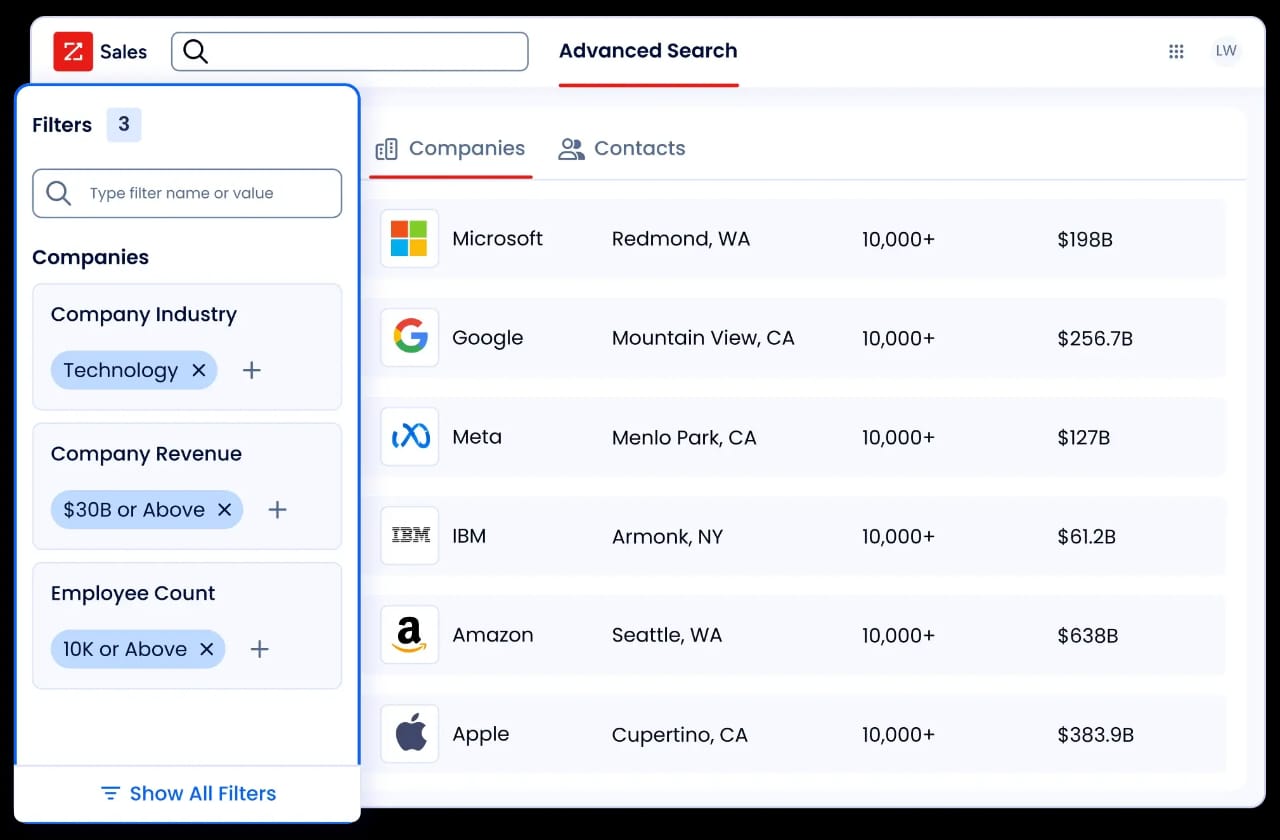
This is no accident: ZoomInfo is Datanyze's parent company and positioned Datanyze as the budget entry point into its ecosystem. Where Datanyze gives you contact data, ZoomInfo gives you the data, the intelligence to interpret it, and the tools to act on it.
Data Scale: ZoomInfo's verified B2B database is several times larger than Datanyze's.
Where Datanyze offers 120M contacts and 63M direct dials, ZoomInfo covers 500M contacts and 100M companies, 135M+ verified phone numbers, 120M direct-dial phone numbers, and 200M+ verified business email addresses.
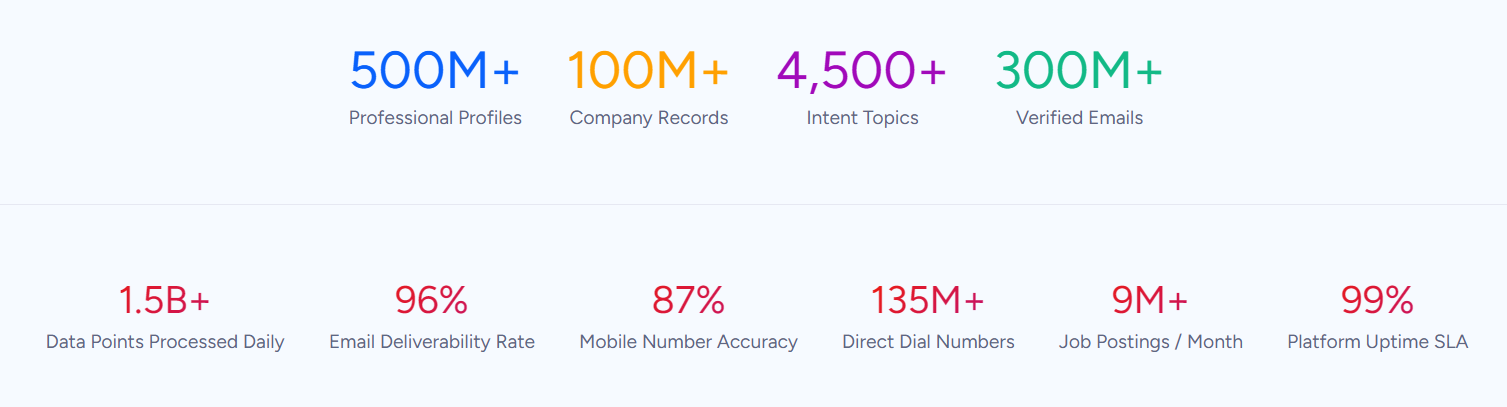
The database covers three areas: identity data (who buyers are and how to reach them), company context (org charts, technographics for 30,000+ technologies across 30M+ companies), and signals that show when accounts are in market.
ZoomInfo verifies data through multiple sources: automated ML scanning of 28 million site domains daily, a Data Training Lab of 300+ human researchers, 200,000+ ZoomInfo Lite users who share data back, and third-party partner data covering 95 million businesses. First-party data reaches up to 95% accuracy.
Global coverage extends well beyond the U.S. tech sector where Datanyze is strongest: 34M+ company profiles outside North America, 200M+ professional profiles outside NA, and 45M+ mobile numbers outside NA.
In 2025, ZoomInfo expanded international coverage by 1.8 million mobile numbers across six European markets and launched nine vertical datasets covering franchise ownership, restaurant operations, and commercial fleet intelligence.
This isn't self-reported scale. In a Fortune 500 competitive RFP analyzing 25 million contacts across vendors, the independent consultant concluded that "no other competitor came even close."
Vensure scaled prospecting with ZoomInfo's data: "ZoomInfo gives us the information we need to execute. We don't have to go through and spend our time digging. It's already there, so we can be three steps ahead." (Vensure case study)
GTM Context Graph: ZoomInfo's intelligence layer shows what happened in a deal and why.
Datanyze shows you a contact's email and phone number.
ZoomInfo's GTM Context Graph, processing 1.5B+ data points daily, combines ZoomInfo's B2B data with a customer's CRM records, conversation transcripts, email interactions, and behavioral signals into a single intelligence layer.
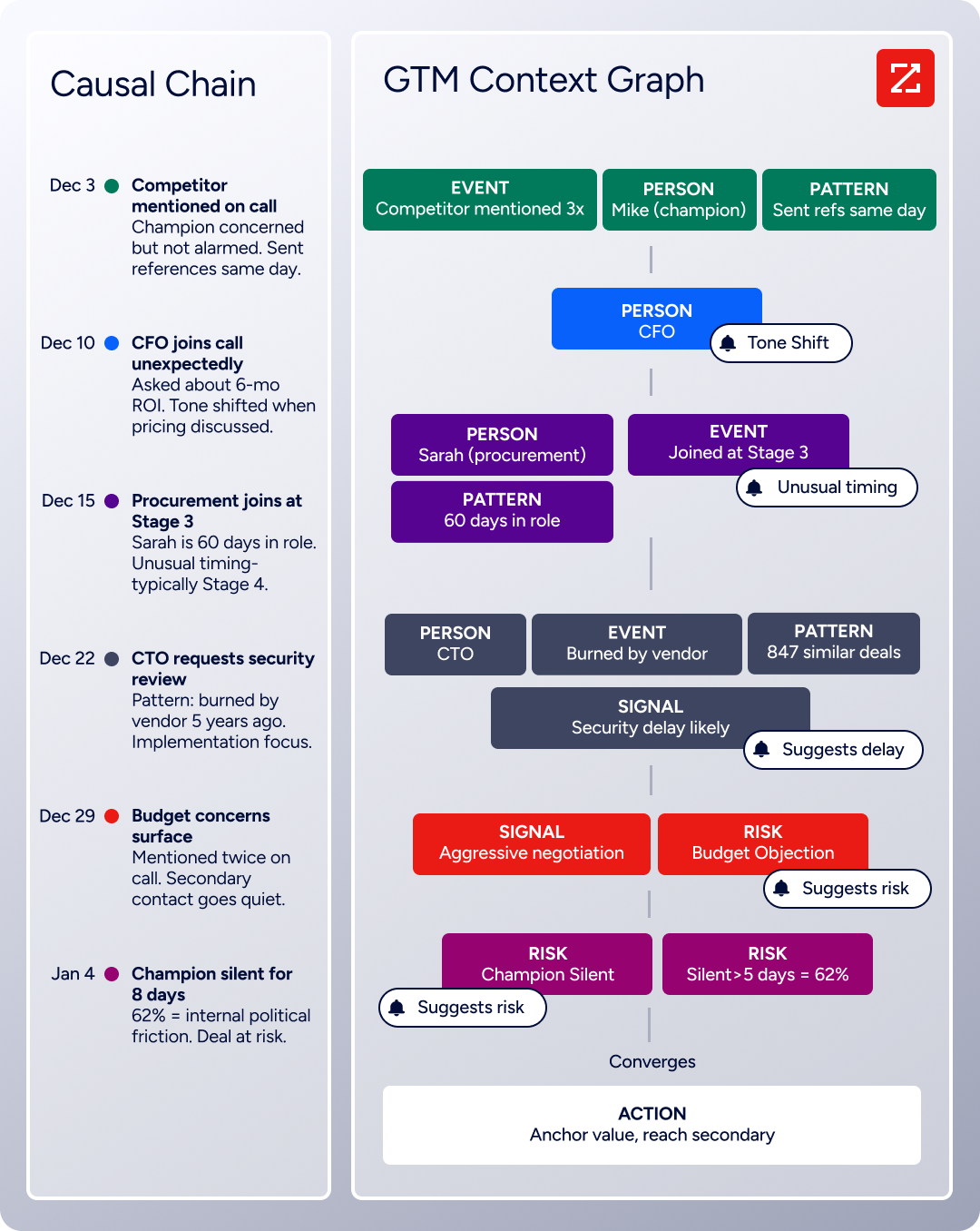
The practical difference: instead of knowing only a prospect's contact details, ZoomInfo surfaces Buyer Intent data from 210 million IP-to-Organization pairings and 6 trillion+ new keyword-to-device pairings sourced monthly to show when a company is actively researching solutions.
Guided Intent, exclusive to ZoomInfo, identifies the topics historically correlated with deal success rather than requiring manual topic selection.
WebSights resolves anonymous website traffic to companies and buying team members, with Automatic Traffic Filtering that distinguishes real visitors from bots.
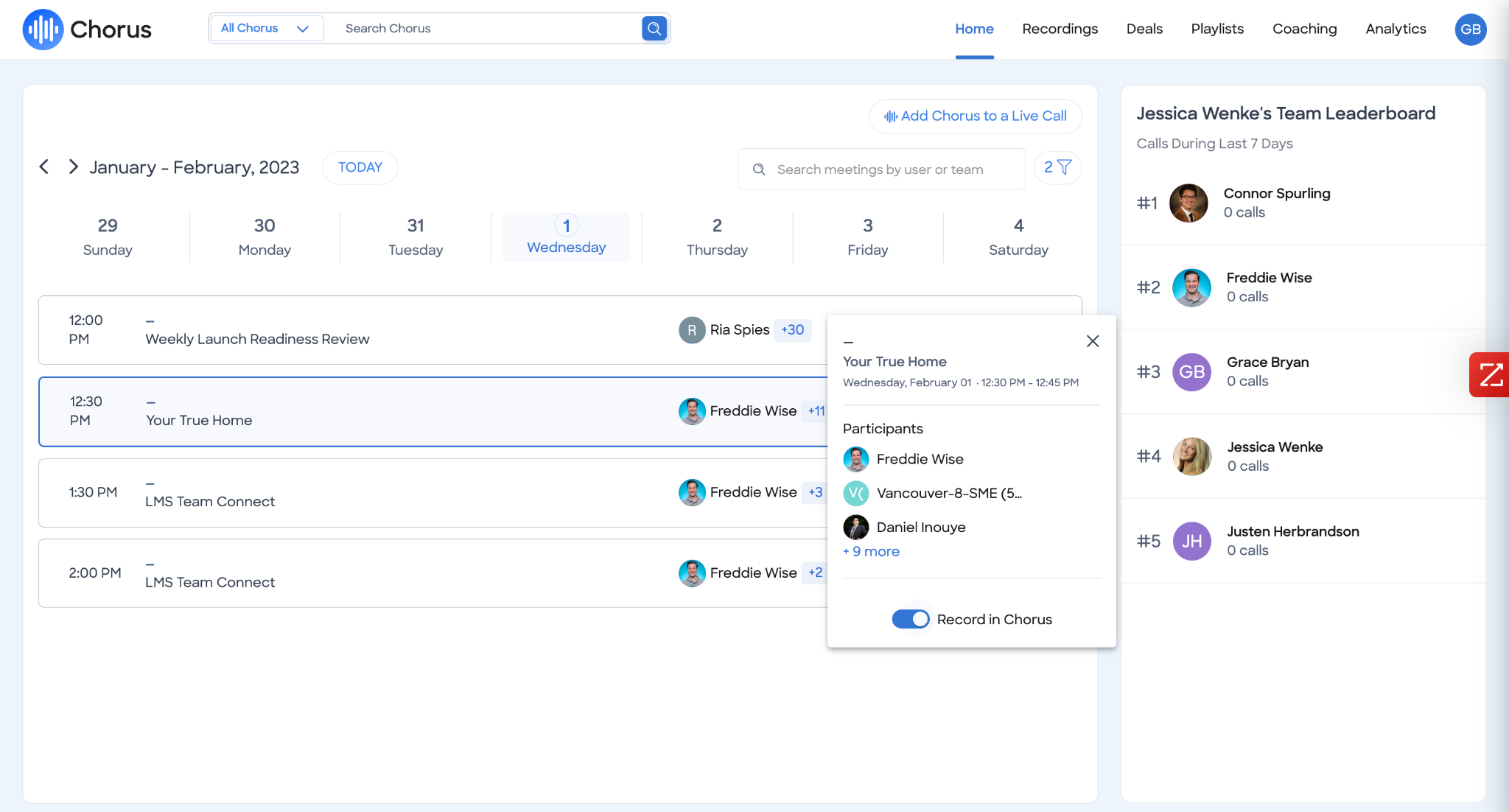
Chorus, ZoomInfo's conversation intelligence product, captures and analyzes customer calls, meetings, and emails, extracting signals behind deal movement: why a deal accelerated, why a champion went quiet, what a competitive mention means for the next step.
Source: ZoomInfo
None of this exists in Datanyze. Datanyze tells you how to reach someone. The GTM Context Graph tells you whether reaching out is worth it, and what to say when you do.
Seismic attributed 39% of active pipeline to ZoomInfo-influenced opportunities and reported 54% productivity gains: "That combination of our internal CRM data, external signals, and AI that's given all that context has helped us craft very specific account- and persona-based messages." (Seismic case study)
Universal Access: ZoomInfo delivers intelligence through native products, APIs, and AI agent protocols.
Datanyze's contact data is available through one channel: the Chrome Extension, with CSV export.
ZoomInfo's intelligence is accessible through three channels that serve different workflows and team roles.
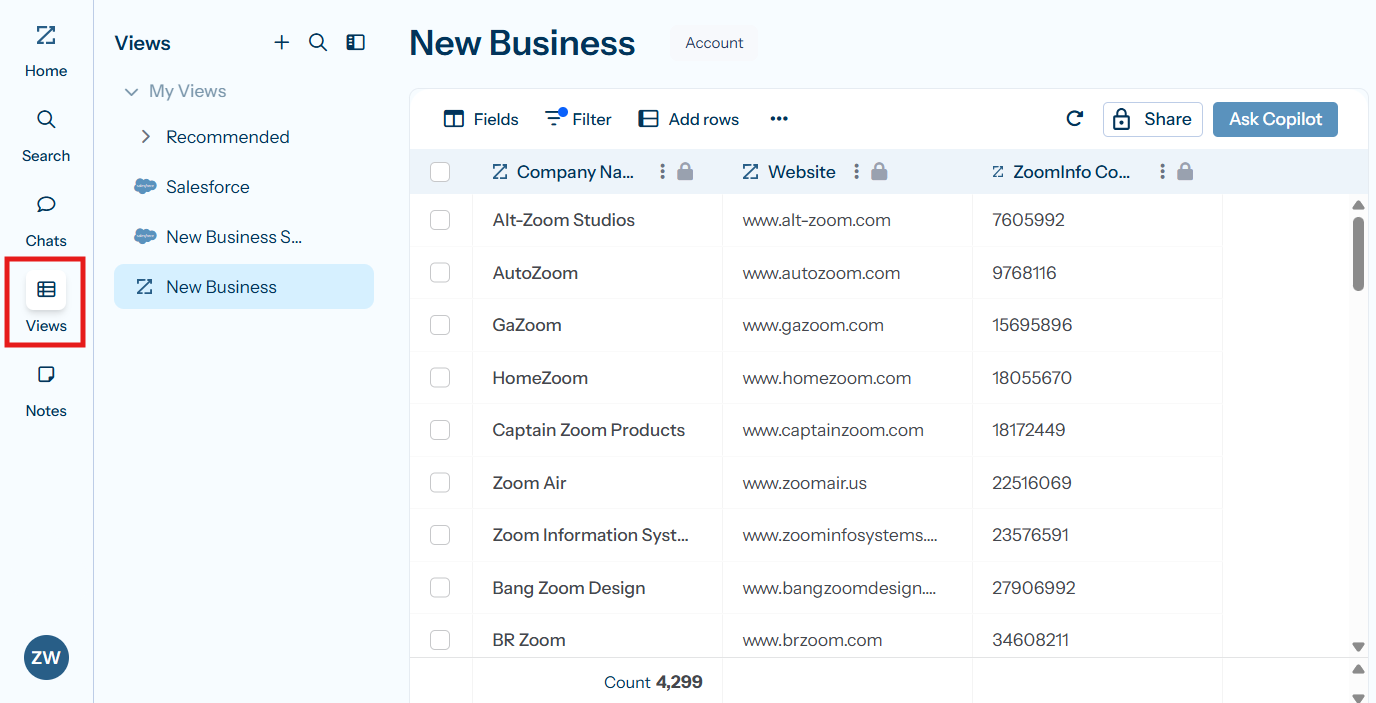
GTM Workspace gives sellers a single view where prioritized accounts, AI-drafted outreach, and deal execution come together. AI agents built on Anthropic's Claude handle account research, signal monitoring, CRM updates, and outreach drafting. The Action Feed streams in-market buyers matched to your criteria, with pre-drafted actions on every signal.
Source: ZoomInfo
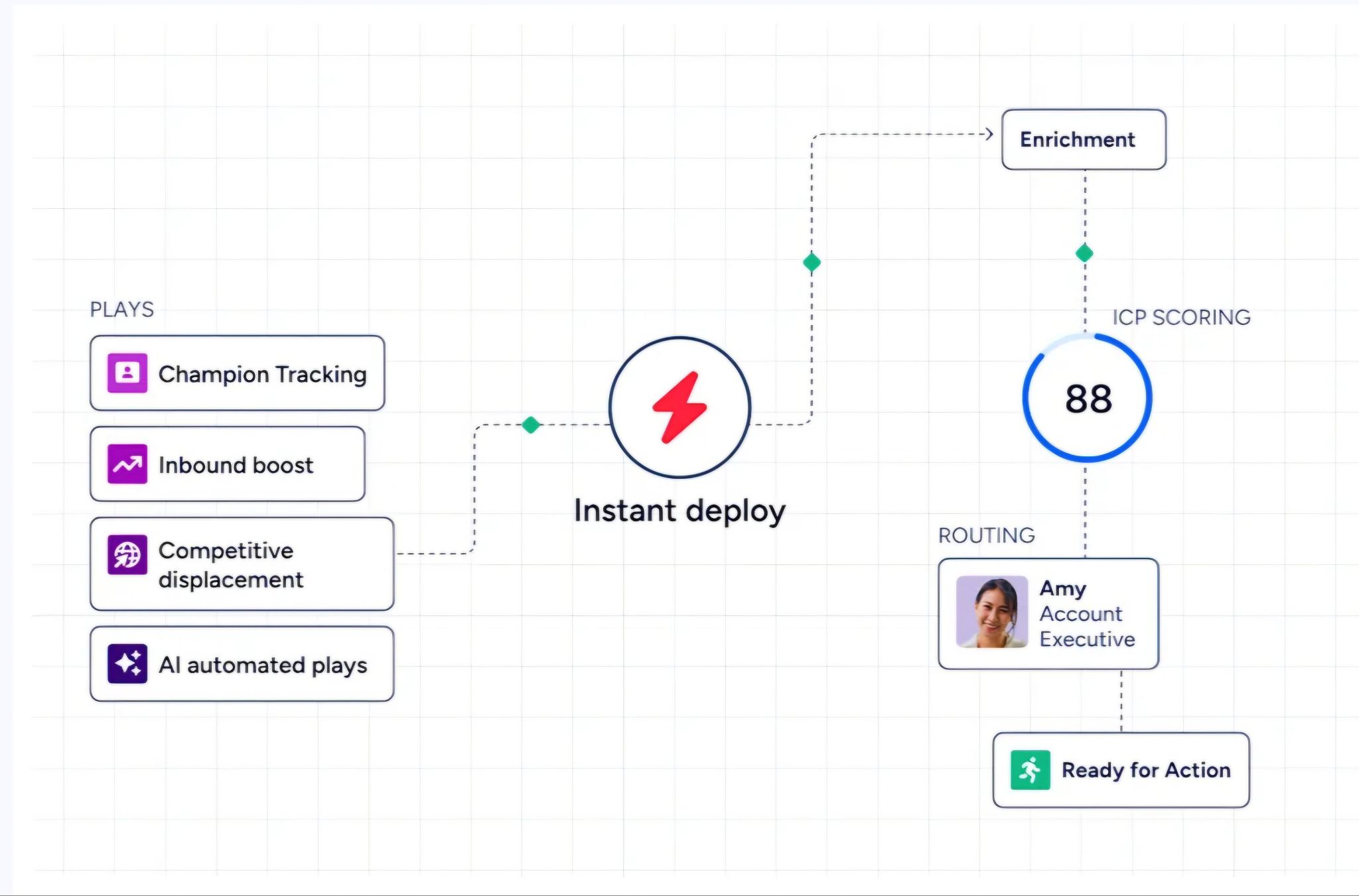
GTM Studio gives marketers, RevOps, and GTM engineers a workspace where they define audiences, orchestrate campaigns, and measure pipeline using natural language. Pre-built plays for inbound acceleration, champion tracking, and competitive displacement launch in one click. Expansion plays that used to take 3 weeks now launch in 30 minutes.
Source: ZoomInfo
For teams that build their own tools, Enterprise APIs and MCP expose the same intelligence to any custom agent, internal tool, or partner platform. The ZoomInfo MCP server connects AI models to ZoomInfo's data through natural language, with no custom coding beyond one-time configuration.
Unlike Datanyze's Chrome-only access, ZoomInfo offers native integrations with Salesforce, HubSpot, Microsoft Dynamics 365, plus 120 partner integrations across CRM, marketing automation, sales engagement, data warehouses, and communications platforms.
BDO Canada's Senior Marketing Intelligence Analyst noted: "The plug-and-play aspect of the API means I can integrate it very easily into any process and get information at a moment's notice," reporting an 87% reduction in time spent updating internal data dashboards. (BDO Canada case study)
Pricing: Custom-quoted with a permanent free tier and 7-day trial.
ZoomInfo uses a consumption-based pricing model as part of its evolving product-led growth strategy.
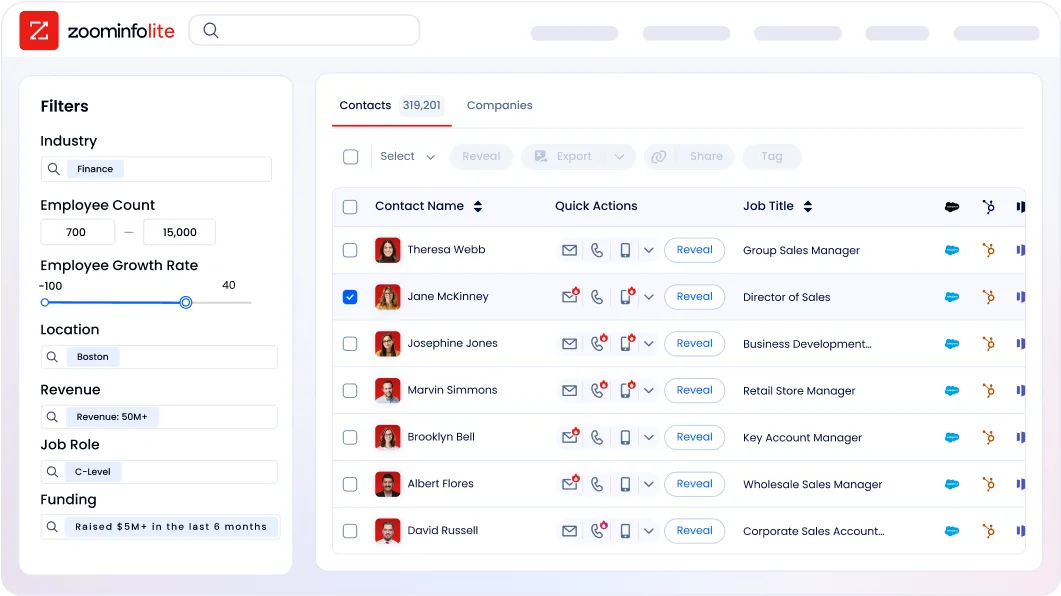
ZoomInfo also currently offers two no-cost entry points. ZoomInfo Lite is a permanent free tier (not a trial) with access to ZoomInfo's database, 10 monthly export credits, the ReachOut Chrome Extension, mobile app, WebSights Lite (up to 10 website visitor reveals per day), built-in email sending, and HubSpot integration. A separate 7-day free trial provides access to core paid features with no credit card required.
Datanyze or ZoomInfo: Comparison Summary
Datanyze | ZoomInfo | |
|---|---|---|
Primary focus | Budget contact data (Chrome Extension) | Sales intelligence platform |
Database size | 120M people, 63M direct dials | 500M contacts, 135M+ verified phones, 200M+ verified emails |
Data accuracy | 95% contractual threshold | Up to 95% on first-party data, multi-source verification |
Intent data | Not available | Buyer Intent from 210M IP-to-org pairings, Guided Intent |
Conversation intelligence | Not available | Chorus (call recording, analysis, deal intelligence) |
CRM integrations | None | Salesforce, HubSpot, Dynamics 365, 120+ integrations |
Team accounts | Not available | Full team collaboration with role-based access |
API access | Not available | Enterprise API, MCP, Cloud Partners |
AI capabilities | None | GTM Context Graph, AI agents, AI-drafted outreach |
Browser support | Chrome only | Chrome extension, web app, mobile app |
Free access | 90-day trial (10 credits/month) | Permanent free tier (ZoomInfo Lite) + 7-day trial |
Paid pricing | $21-$55/month | Consumption-based pricing model |
Credit volume | Max 160/month | Custom allocation based on plan |
Global coverage | U.S.-focused, tech-heavy | 34M+ company profiles outside NA, 45M+ international mobile numbers |
Best for | Solo SDRs on a tight budget | Sales teams, marketing, RevOps at any scale |
Final Verdict
The choice between Datanyze and ZoomInfo comes down to where you are in your sales operations and what you need contact data to do.
Choose Datanyze if you're an individual sales rep or solo founder who needs an affordable way to find email addresses and phone numbers while prospecting on LinkedIn. The Chrome Extension does one thing well: reveal contact data at a fraction of what enterprise tools cost.
If your workflow is "browse LinkedIn, get the contact, export to CSV, outreach separately," and your monthly volume stays under 160 contacts, Datanyze handles that job without added complexity.
Choose ZoomInfo if you need contact data that connects to your CRM, flows into automated outreach, and comes enriched with intent signals, conversation intelligence, and buying committee insights.
ZoomInfo is the right move when your prospecting has outgrown manual CSV exports, when your team needs shared data and coordinated workflows, or when knowing someone's email address isn't enough and you need to know whether they're in market and what matters to them now. The permanent free tier and 7-day trial let you evaluate the platform before committing.
Get started with ZoomInfo here.
Datanyze exists for a specific reason within ZoomInfo's portfolio: to serve budget-constrained buyers who need contact data and nothing more. For that audience, it delivers.
But the moment your needs extend beyond individual LinkedIn prospecting (into team collaboration, CRM workflows, intent-driven prioritization, or AI-powered outreach) the platform you're looking for is the one that built Datanyze's data infrastructure in the first place.
Datanyze FAQ
Is Datanyze free to use?
Datanyze offers a 90-day free trial called Nyze Lite that provides 10 credits per month with no credit card required, though it does require a business email address. This is not a permanent free plan; after 90 days, access ends and previously revealed contacts become inaccessible.
ZoomInfo offers a permanent free tier called ZoomInfo Lite with 10 monthly export credits, a Chrome extension, mobile app, and HubSpot integration that never expires.
How much does Datanyze cost?
Paid plans start at $21/month on annual billing (Nyze Pro 1, 80 credits/month) and go up to $39/month on annual billing (Nyze Pro 2, 160 credits/month). Monthly billing runs $29 and $55 respectively. Annual plans are non-refundable, auto-renew with a 10% price increase, and require 60-day notice for non-renewal. All features are the same across tiers; the only difference is credit volume.
Does Datanyze integrate with CRMs like Salesforce or HubSpot?
No. Datanyze has no integrations with any CRM or external tool. The help center states that integrations are in development but provides no timeline. You must export all contacts to CSV and import them manually. ZoomInfo offers native integrations with Salesforce, HubSpot, Microsoft Dynamics 365, and over 120 other tools through its App Marketplace.
What happens to my contacts if I cancel Datanyze?
Upon cancellation, all contacts revealed during a paid subscription are locked and only become accessible again if you renew. Previously exported CSV files remain yours, but you cannot access the contact data through the Datanyze dashboard or extension until you resubscribe.
Does Datanyze offer team accounts?
No. Datanyze does not support team accounts. Each user must create an individual account with their own credit allotment. There is no shared credit pool, centralized admin dashboard, or team-level reporting. The help center mentions team accounts as "coming soon" but does not provide a date. ZoomInfo supports full team collaboration with role-based access across all its products.
How accurate is Datanyze's data?
Datanyze backs its data with a contractual guarantee: the Terms and Conditions specify a 95% accuracy threshold, with a prorated refund available if accuracy falls below that mark after a 30-day cure period. Datanyze builds the database from automated ML scanning, human research verification, and third-party sources. Coverage is strongest in U.S. tech and online industries; data for other regions and verticals may be less complete.
Can Datanyze be used outside of Chrome?
No. Datanyze is a Google Chrome Extension only. There is no support for Firefox, Edge, Safari, or any other browser. There is no standalone web application, desktop app, or mobile app. Users who cannot install Chrome extensions due to corporate IT restrictions or browser preference have no way to use the product.
Does Datanyze offer intent data or sales engagement features?
No. Datanyze is a contact data tool only. It does not provide buyer intent signals, email sequencing, a phone dialer, outreach automation, or any engagement capabilities. Once you reveal and export a contact, you need separate tools for every step that follows.
ZoomInfo includes Buyer Intent data, conversation intelligence through Chorus, automated workflows, AI-drafted outreach, and multi-channel engagement through its GTM Workspace and integrations with platforms like Salesloft.
