

DealHub is a quote-to-revenue platform that gives B2B sales teams CPQ (Configure-Price-Quote), contract lifecycle management, digital deal rooms, and subscription billing in one package. It earned recognition as Frost & Sullivan's 2024 North America Company of the Year for CPQ Innovation and consistently ranks as the #1 CPQ for Ease of Use on G2.
But as your revenue operations mature, you may find that DealHub's strengths in guided quoting and deal execution don't cover every gap in your go-to-market stack. Maybe you need reporting and audit infrastructure DealHub doesn't yet provide, or a digital sales room without the full CPQ overhead, or a billing platform built natively for SaaS. Maybe you need prospecting intelligence to fill the pipeline before you ever reach the quoting stage.
That's where this guide comes in. We'll explore DealHub alternatives that excel where you need them most, whether you're looking to:
Fuel pipeline with B2B data and prospecting intelligence
Keep quoting, billing, and contracts natively inside your Salesforce CRM
Close deals faster with digital sales rooms and proposals
Access document automation and CPQ without enterprise implementation overhead
Send interactive, web-native proposals that buyers engage with in real time
Run SaaS-native quote-to-cash with embedded buyer checkout
Start quoting for free directly inside your CRM
This isn't about finding a "better" platform. It's about finding the right fit as your revenue operations evolve. Some teams will use these tools alongside DealHub; others will replace it entirely.
The Best DealHub Alternatives
Best Alternative for Prospecting & GTM Intelligence We chose ZoomInfo because it fills the gap upstream of quoting: finding the right buyers, understanding their intent, and executing outreach that DealHub's quote-to-revenue workflow doesn't address. |
|---|
Best Alternative for Enterprise Salesforce-Native Revenue Management We chose Salesforce Revenue Cloud because it delivers CPQ, billing, and contract management natively on the Salesforce data model, eliminating the sync layer that any external CPQ introduces. |
Best Alternative for Deal Rooms Without CPQ Overhead We chose GetAccept because it delivers the digital sales room and proposal experience DealHub's DealRoom offers, but as a focused standalone product with transparent pricing and built-in e-signatures. |
Best Alternative for Accessible Document Automation & CPQ We chose PandaDoc because its no-code CPQ, free tier, and broad CRM compatibility make it the most accessible path from manual quoting to automated proposals for smaller revenue teams. |
Best Alternative for Interactive Web-Native Proposals We chose Qwilr because it turns proposals from static documents into interactive web pages with embedded pricing, video, and section-level engagement analytics that static CPQ outputs can't match. |
Best Alternative for SaaS-Native Quote-to-Cash We chose Salesbricks because it collapses quoting, e-signature, billing, and subscription management into a single checkout link, built for SaaS and AI companies that need same-day deal closure. |
Best Alternative for Free CRM-Native Quoting We chose HubSpot because its Commerce Hub delivers quoting, e-signature, and payment collection at no additional cost for existing CRM users, making it the lowest-friction entry point for teams that don't yet need CPQ complexity. |
What is DealHub?
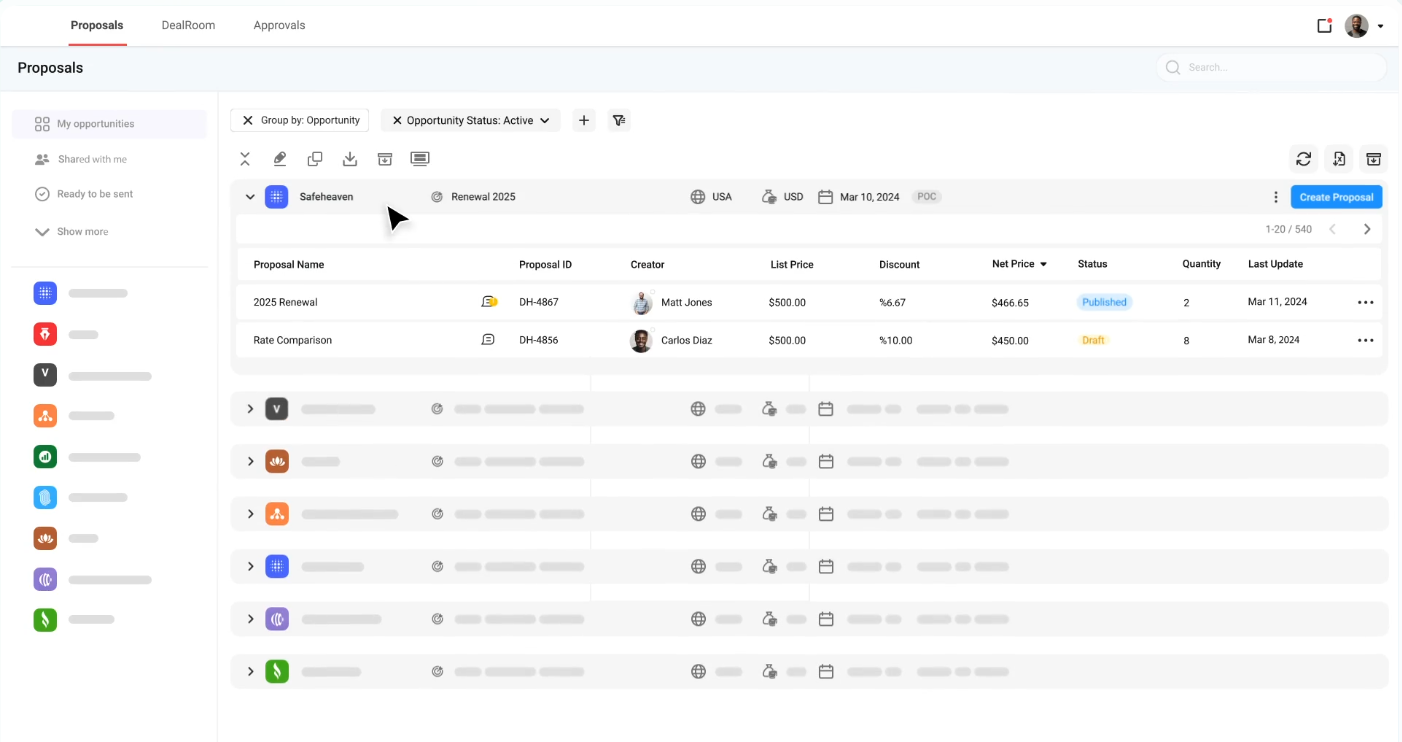
Source: DealHub
DealHub is an AI-powered CPQ, Subscriptions & Usage Billing platform that serves as a quote-to-revenue execution platform for B2B sales organizations. Built for mid-market and enterprise teams managing complex pricing, DealHub consolidates configure-price-quote, contract lifecycle management, digital deal rooms, subscription billing, and revenue recognition into one workflow. Its key features include:
CPQ with guided selling: Playbook-based configuration that walks reps through product selection with if/then logic, narrowing recommendations and surfacing cross-sell opportunities automatically
Contract Lifecycle Management: Dynamic contract templates, clause libraries, redlining, and version comparison with integrated DocuSign e-signatures
DealRoom: Branded digital sales rooms that centralize proposals, contracts, videos, and real-time buyer engagement tracking in one hub
Subscription & Billing: Automated billing for recurring, usage-based, milestone, and hybrid pricing models with ASC 606/IFRS 15 revenue recognition
Headless API Quoting: API-first CPQ for embedding quoting into e-commerce portals and AI agents
Native CRM integrations with Salesforce, HubSpot, and Microsoft Dynamics 365
DealHub's strength is connecting these capabilities through a single data model. When a rep configures a quote using the guided selling playbook, pricing rules apply automatically, approval workflows route to the right stakeholders, and the approved quote populates a branded DealRoom where buyers can review, redline contracts, and sign. That continuity from configuration through billing eliminates the manual handoffs and data reconciliation that plague teams using disconnected tools.
However, as your revenue operations grow, you may need deeper capabilities in specific areas. Capterra reviewers flag limited dashboards and insufficient audit trails as gaps for organizations with SOX compliance requirements. The platform's reporting, while improving with the November 2025 Subskribe acquisition, is still maturing. And DealHub's focus on post-pipeline revenue execution means it doesn't address the upstream challenge of finding and engaging buyers in the first place.
That's why this article focuses on tools that specialize where DealHub's quote-to-revenue scope may not be enough.
Looking for a GTM platform that helps your team find the right buyers, understand their intent, and execute outreach before the deal reaches the quoting stage? Learn more about ZoomInfo and see how B2B intelligence can strengthen your entire revenue motion.
How We Curated Our List of DealHub Alternatives
After testing DealHub and researching the revenue operations market, we found that teams want tools addressing specific needs beyond DealHub's quote-to-revenue workflow. DealHub handles guided quoting, contract management, and subscription billing well, but businesses often need more from:
Identifying and engaging buyers with prospecting intelligence before deals reach the quoting stage
Running CPQ, billing, and contracts natively within Salesforce without managing a separate system
Delivering deal rooms and proposals without adopting full CPQ infrastructure
Accessing document automation and CPQ with transparent pricing and broad CRM compatibility
Creating interactive, web-native proposals that generate engagement data beyond static document tracking
Closing SaaS deals the same day with embedded checkout and subscription billing
Starting professional quoting at no cost inside an existing CRM
Each tool on this list leads in one of these areas. You might use them alongside DealHub or switch entirely; it depends on where your revenue operation needs the most support.
DISCLAIMER: We aren't covering every tool in the market. We focus on the best alternatives that address DealHub's limitations for specific use cases. |
|---|
1. ZoomInfo — Best Alternative for Prospecting & GTM Intelligence
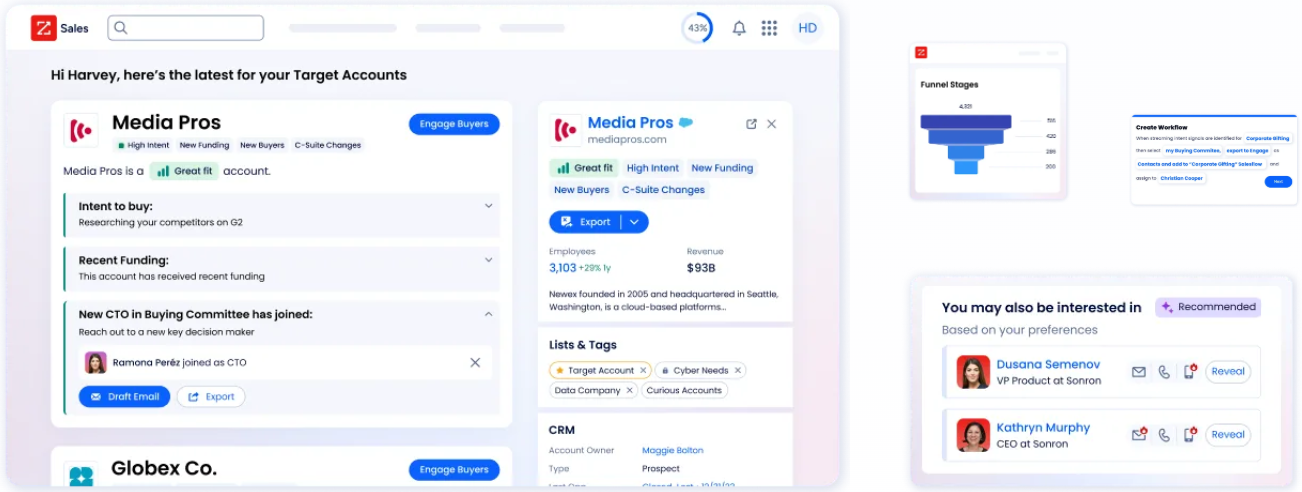
ZoomInfo is an AI-powered GTM platform built on the industry's largest B2B data foundation: 500M contacts, 100M companies, 135M+ verified phone numbers, and 200M+ verified business emails. While DealHub focuses on what happens after a deal enters the pipeline (quoting, contracting, billing), ZoomInfo addresses the upstream challenge: finding the right buyers, understanding when they're in-market, and executing outreach that fills the pipeline DealHub processes downstream. Its key features include:
B2B data: 500M contacts, 100M companies, 135M+ verified phone numbers, 120M direct dials, and 200M+ verified business email addresses with up to 95% accuracy on first-party data
Buyer Intent: ZoomInfo Intent tracks signals from 210 million IP-to-Organization pairings and 6 trillion+ new keyword-to-device pairings sourced monthly
GTM Context Graph: A single intelligence layer that processes 1.5B+ data points daily, combining B2B data with CRM records, conversation transcripts, and behavioral signals to reveal not just what happened in a deal, but why it happened
GTM Workspace: An execution workspace for sellers with prioritized account feeds, AI-drafted outreach, and deal execution tools
APIs & MCP: Access that delivers ZoomInfo's intelligence into any tool, workflow, or AI agent
DealHub automates the quote-to-revenue workflow. ZoomInfo powers the go-to-market motion that generates the pipeline feeding into it, making the two platforms complementary rather than competitive.
Why Choose ZoomInfo Over DealHub for GTM Intelligence
DealHub is a quote-to-revenue platform; it processes deals once they exist. ZoomInfo solves the problem that comes before: finding the accounts most likely to buy, identifying the right stakeholders, and engaging them with targeted outreach.
B2B Data: Find the Right Buyers Before the Deal Begins
DealHub's CPQ starts when a rep already has a prospect in their CRM. But the question most revenue teams face isn't "how do I quote this deal faster?" It's "how do I find more of the right deals to quote?"
ZoomInfo addresses this with the largest B2B data platform in the industry: 500M contacts, 100M companies, 135M+ verified phone numbers, and 200M+ verified business emails.
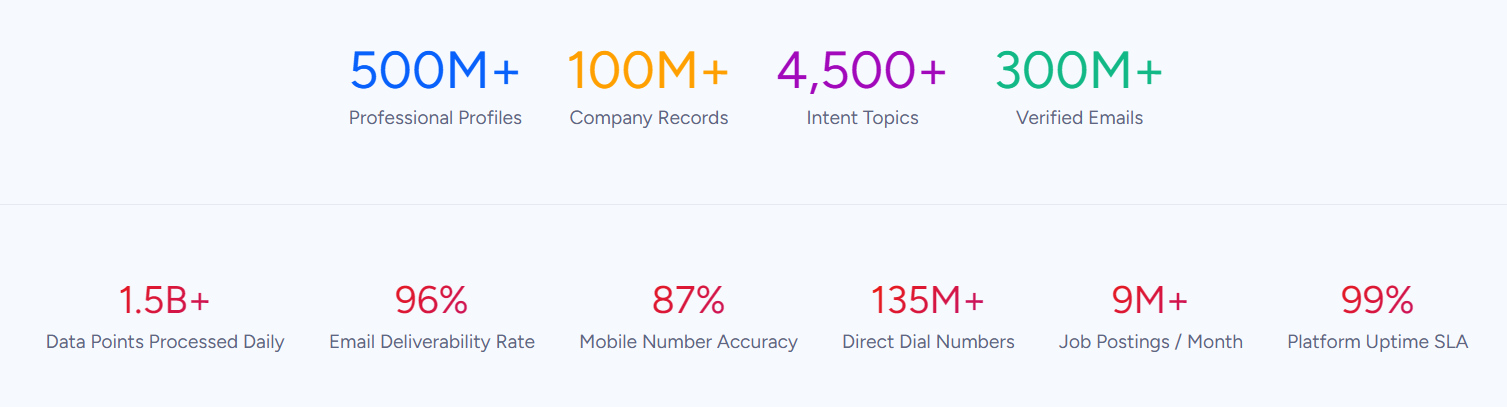
ZoomInfo's data goes beyond basic contact information. With 300+ company attributes, teams can segment their TAM by industry, revenue, headcount, technology stack, and organizational hierarchy. Department org charts reveal decision-makers' direct dials and verified emails. Contact tracking alerts reps when key contacts change jobs, opening warm reintroduction opportunities. In a Fortune 500 competitive RFP analyzing 25 million contacts across vendors, the independent consultant concluded that "no other competitor came even close."
ZoomInfo in Action: Your sales team wants to target VP-level and above decision-makers at SaaS companies with 500-2,000 employees that use Salesforce and are showing hiring signals in revenue operations. ZoomInfo surfaces that exact list with verified direct dials and business emails, then exports them to your CRM automatically. Instead of spending hours on manual research, reps start outreach within minutes with contacts that actually connect.
Buyer Intent & GTM Context Graph: Know Who's Ready to Buy
DealHub tells you how a deal progresses through the pipeline. ZoomInfo tells you which accounts are entering the market before they even reach out.
ZoomInfo Intent tracks research activity from 210 million IP-to-Organization pairings, and Guided Intent (exclusive to ZoomInfo) identifies topics historically correlated with deal success rather than requiring manual topic selection.
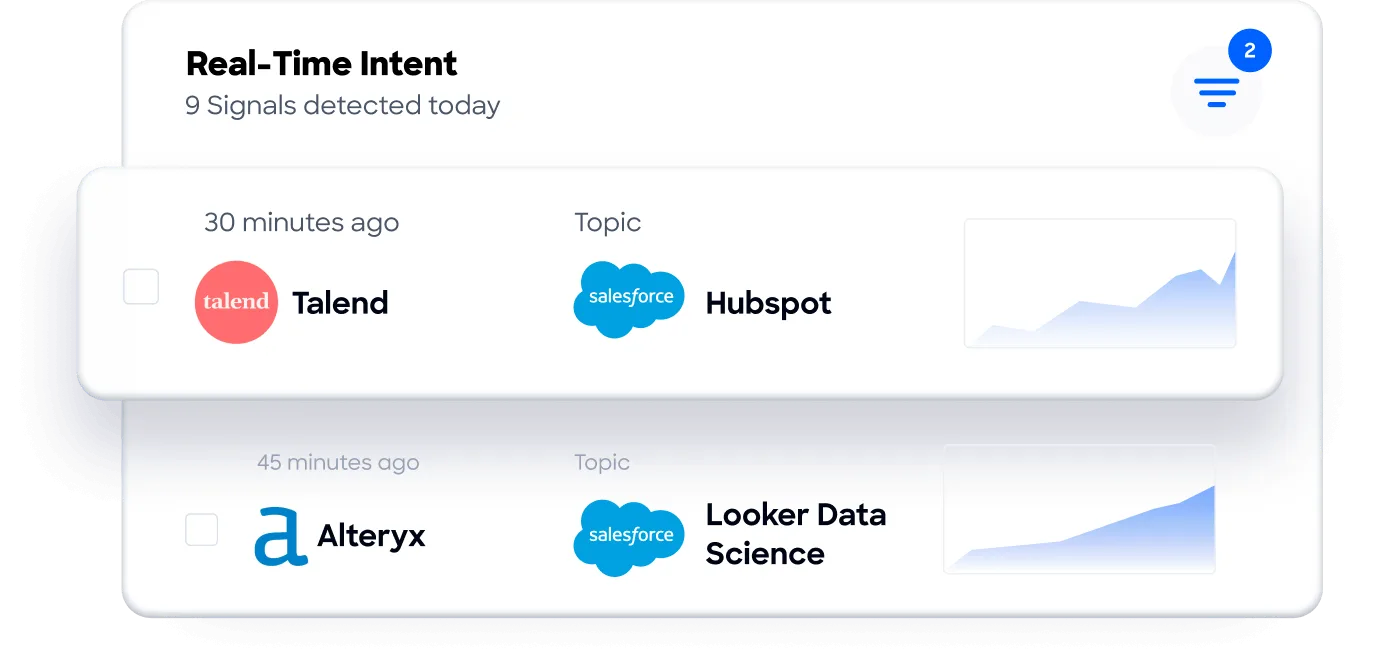
The GTM Context Graph takes this further. It combines ZoomInfo's third-party B2B data with your CRM records, conversation intelligence from Chorus, email interactions, and behavioral signals into one intelligence layer.
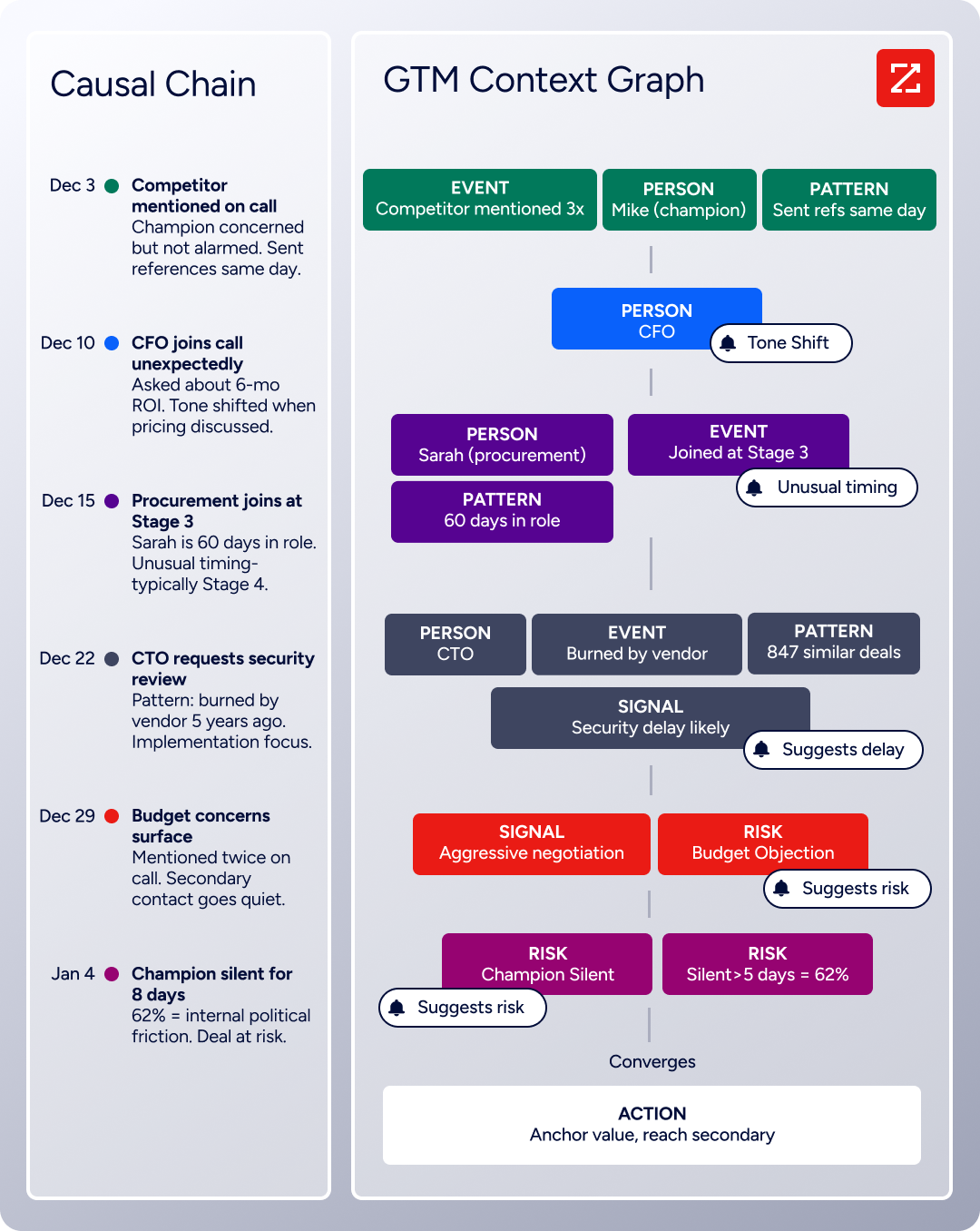
A CRM records that a deal moved stages; the GTM Context Graph captures why it moved, connecting executive sponsorship patterns, competitive mentions, and intent signal spikes to help your team replicate winning patterns across every deal.
ZoomInfo in Action: Three accounts in your ICP are researching "CPQ alternatives" and "subscription billing platforms." ZoomInfo surfaces this intent activity alongside verified contacts in each company's buying committee. Your rep sees that one account's VP of RevOps just joined from a company that was a ZoomInfo customer, creating a warm path. The GTM Context Graph connects these signals, and GTM Workspace drafts personalized outreach addressing the specific pain points each account is researching.
GTM Workspace & GTM Studio: Execution Across Sales and Marketing
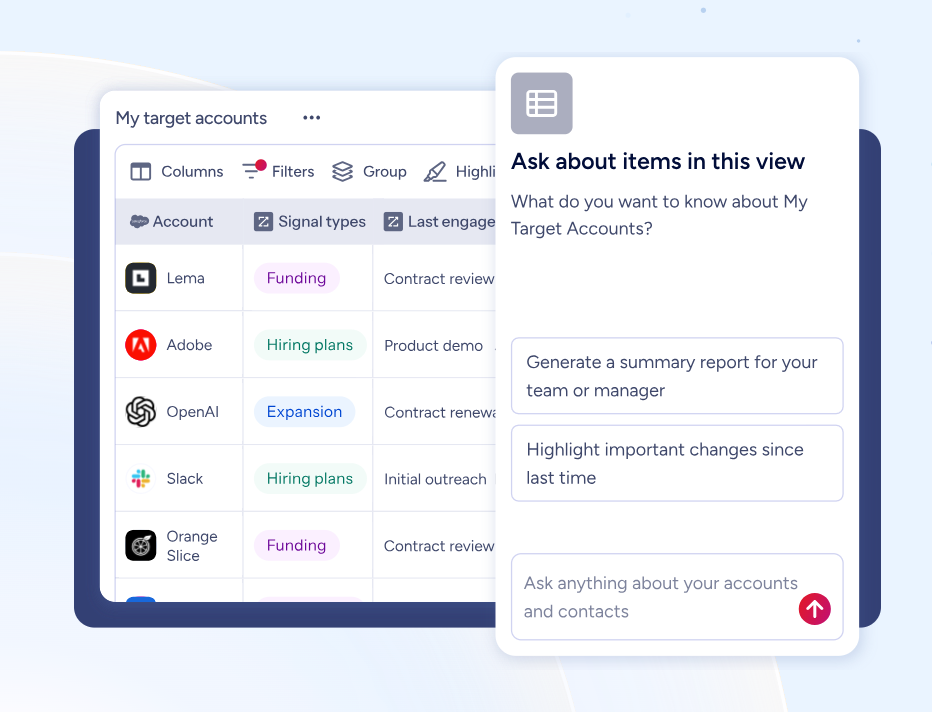
Where DealHub provides a CPQ-centric workspace, ZoomInfo delivers execution environments built for each GTM function. GTM Workspace gives sellers a single interface where prioritized accounts, AI-drafted outreach, deal intelligence, and CRM updates converge.
GTM Studio gives marketers and RevOps teams an orchestration canvas for building audiences, launching multi-channel plays, and measuring pipeline impact in natural language.
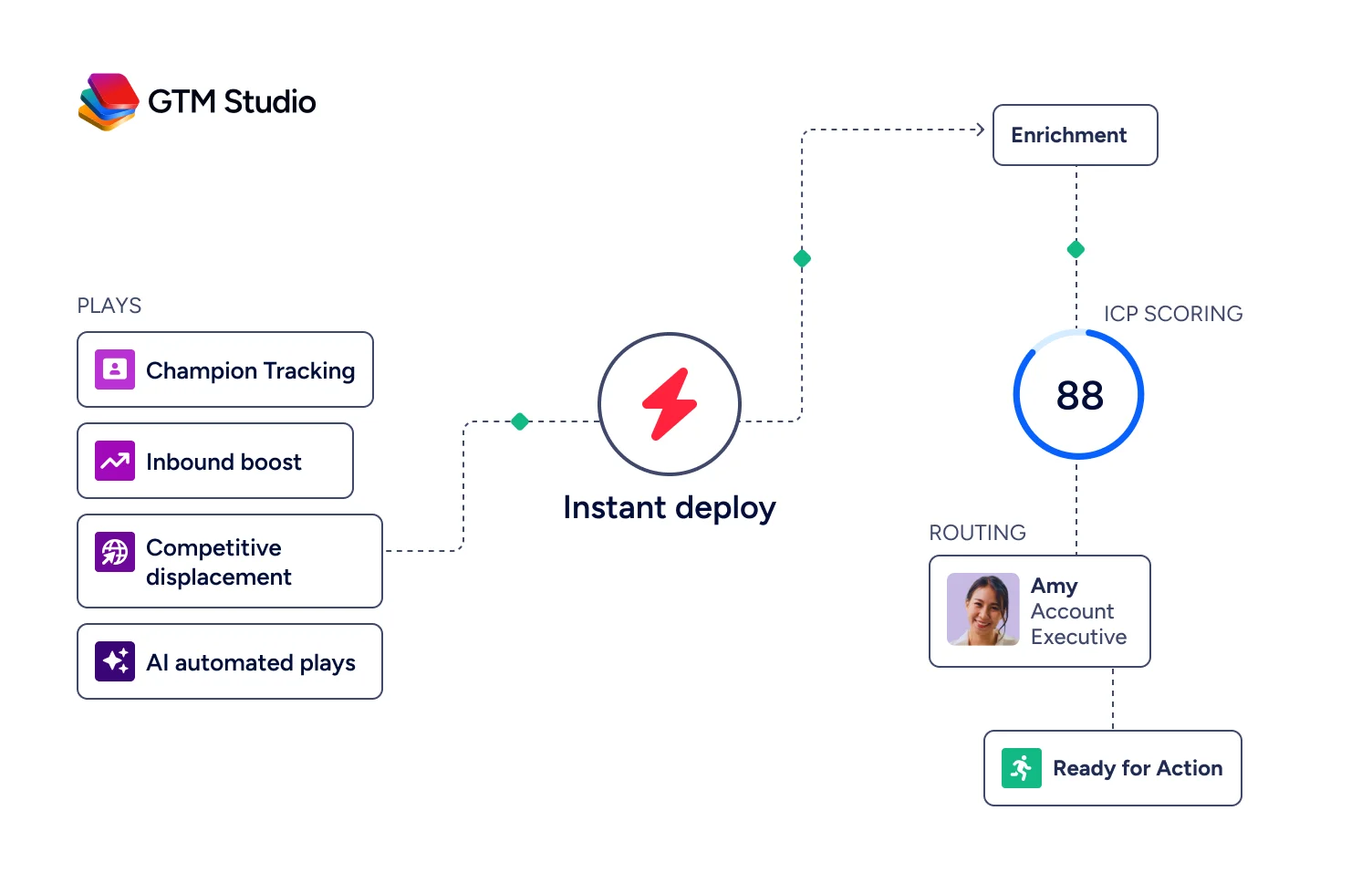
ZoomInfo in Action: A seller opens GTM Workspace to find their Action Feed populated with a new signal: a target account's CTO just liked a competitor's LinkedIn post about CPQ implementation challenges. The AI agent has drafted a personalized email addressing that pain point, referencing a case study relevant to the prospect's industry. Meanwhile, in GTM Studio, a marketer launches a display ad campaign targeting the same account's buying committee with messaging aligned to the seller's outreach. The entire play, from signal to multi-channel execution, runs from one intelligence layer.
Seismic attributed 39% of active pipeline to opportunities identified or influenced by ZoomInfo signals and reported sales teams were 54% more productive.
NOTE: We looked at other B2B data and intelligence platforms, including Apollo.io and Cognism. Apollo.io offers a solid combination of prospecting data and sales engagement at accessible pricing and suits smaller teams well. Cognism is strong for European and EMEA-focused prospecting with mobile-verified contacts. However, ZoomInfo's data scale (500M contacts, 135M+ verified phone numbers), its proprietary GTM Context Graph, and access through APIs, MCP, GTM Workspace, and GTM Studio make it the most complete GTM intelligence platform available.
ZoomInfo Pricing
ZoomInfo uses a consumption-based pricing model tailored to each organization's usage patterns, number of users, credit volume, and feature requirements. The platform is organized into three product lines:
Sales Plans (for prospecting and pipeline acceleration):
Professional: Contact and company data, advanced search, CRM integrations, Chrome extension, AI email generation
Advanced: Adds buyer intent signals, website visitor tracking, champion tracking, automated outreach workflows, and GTM plays
Enterprise: Adds real-time intent signals, advanced workflows, AI-generated account summaries, dedicated customer service manager
Marketing Plans (for ABM and demand generation):
Marketing Demand: B2B data, audience targeting, CRM and MAP integrations, GTM workflows
ABM Lite: Adds ZoomInfo Display Network, LinkedIn/Facebook/Google advertising, AI-driven buying group identification
ABM Enterprise: Unlimited intent topics, unlimited display campaigns, AI-generated lookalikes, predictive account scoring
ZoomInfo also offers ZoomInfo Lite, a permanent free tier (no credit card, no time limits) that provides access to 100M+ verified profiles, 10 monthly export credits, individual and company searches, the ReachOut Chrome Extension, and HubSpot integration.
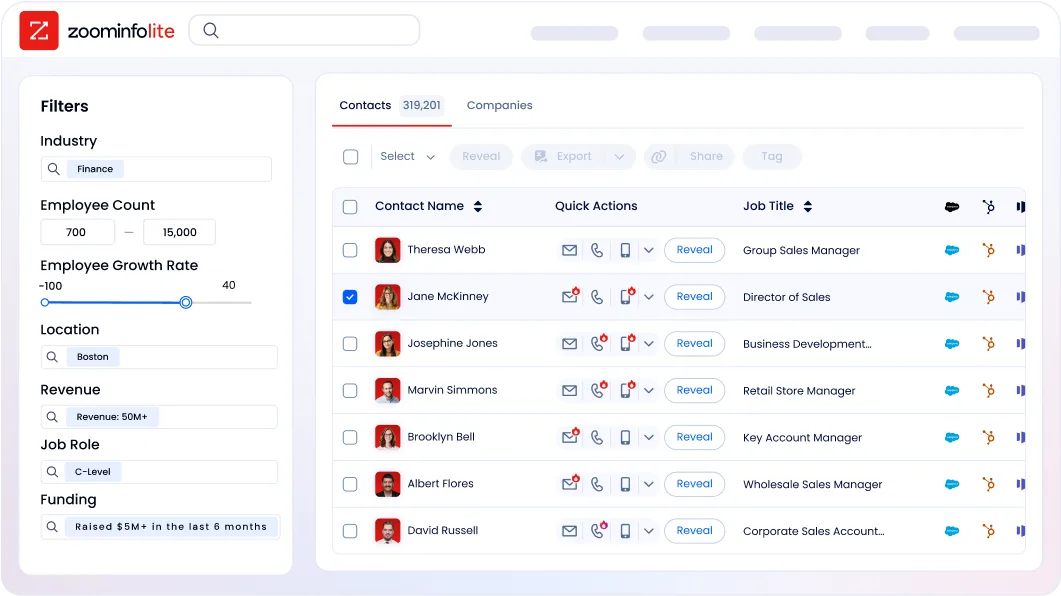
A separate 7-day free trial of the full platform is also available.
API access is included in all relevant plans, and MCP access enables ZoomInfo data inside third-party AI agents including Claude and ChatGPT.
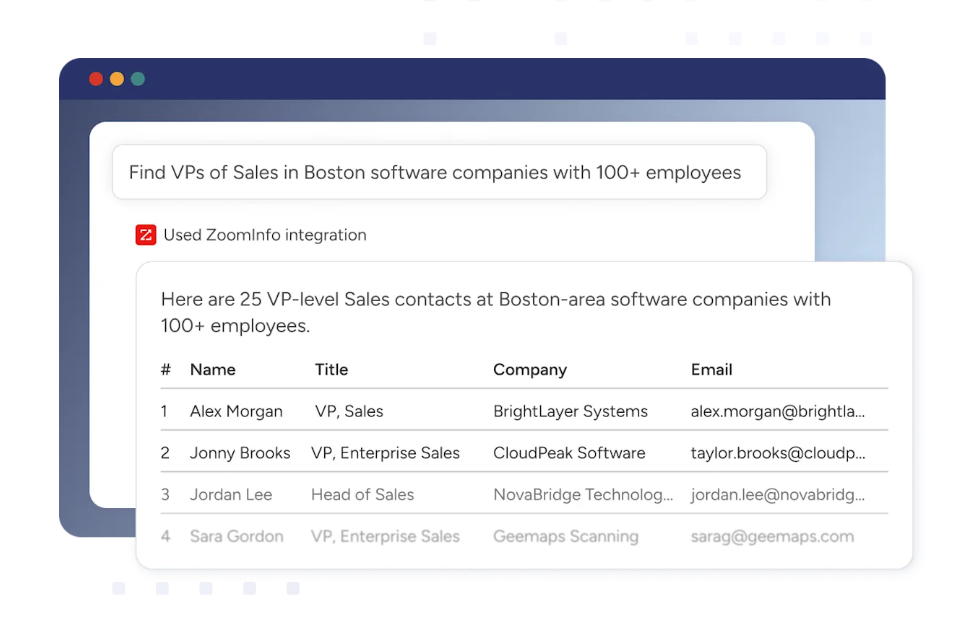
Who Should Use ZoomInfo?
Choose ZoomInfo if:
Your primary revenue challenge isn't quoting speed but pipeline generation: you need to identify the right accounts, understand when they're in-market, and engage the right stakeholders before deals reach the quoting stage.
You want an intelligence layer that connects prospecting data, buyer intent signals, conversation intelligence, and CRM records into a single GTM Context Graph that makes your entire revenue engine smarter, not just your quoting workflow.
You need verified B2B data (500M contacts, 135M+ verified phone numbers, 200M+ verified business emails) to power prospecting, enrichment, TAM analysis, and account-based marketing at scale.
You want to feed your own AI agents, custom tools, or third-party platforms with the same intelligence through APIs and MCP without being locked into a single UI.
Want to see what GTM intelligence can do for your pipeline? Learn more about ZoomInfo and discover how B2B data can strengthen your entire go-to-market motion.
2. Salesforce Revenue Cloud — Best Alternative for Enterprise Salesforce-Native Revenue Management
Source: Salesforce
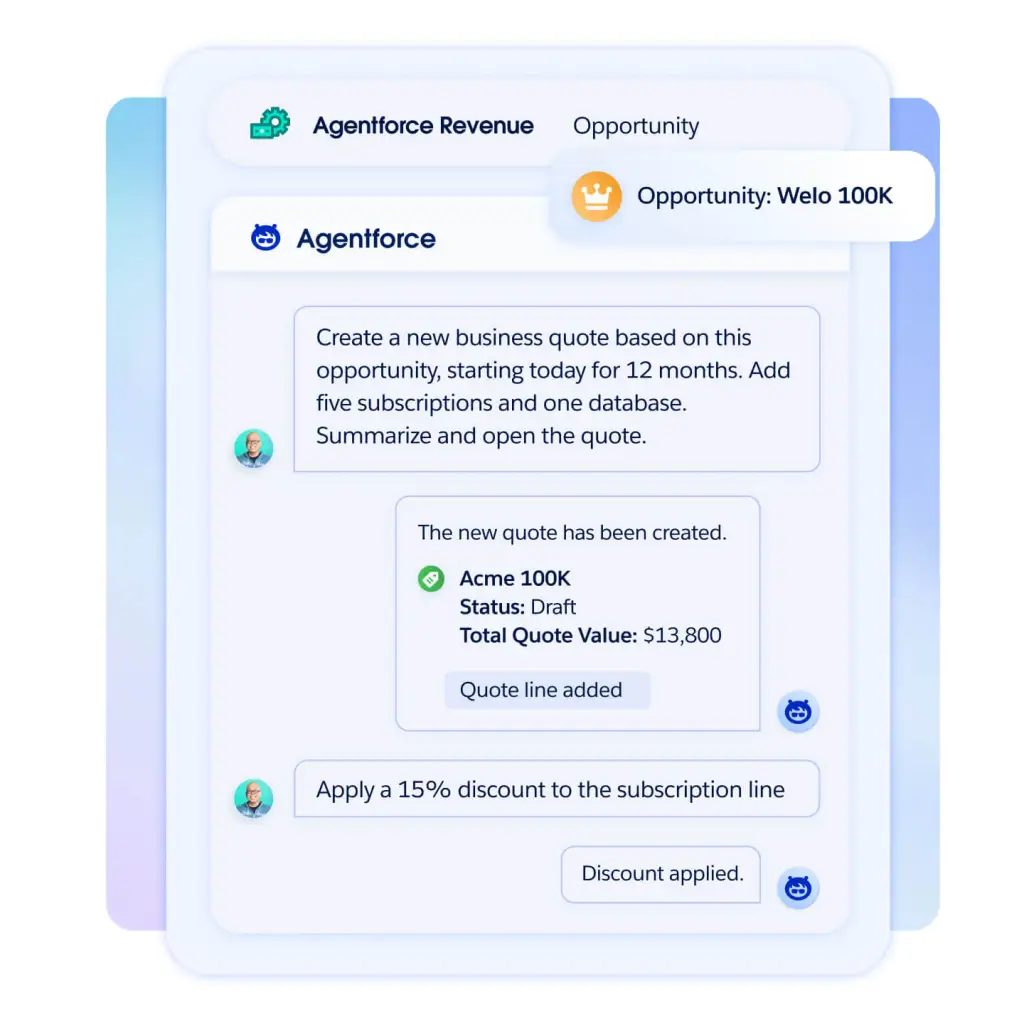
Agentforce Revenue Management (formerly Salesforce Revenue Cloud) is Salesforce's revenue lifecycle platform. It handles CPQ, contract management, order orchestration, subscription and usage-based billing, and revenue analytics, all natively on the same platform as Sales Cloud and Service Cloud. Its key capabilities include:
Native CPQ built on the Salesforce data model, with quotes created and stored directly inside CRM records
Flexible billing supporting recurring, milestone, consumption, and hybrid billing models without middleware
Contract lifecycle management from redlining and e-signature to obligation tracking
Revenue analytics via Tableau Next with out-of-the-box dashboards for pricing performance, subscription health, and billing operations
AI-assisted revenue workflows via Agentforce, with agents generating quotes and routing approvals through Slack
For enterprise organizations already running Salesforce, Revenue Cloud eliminates the core friction of maintaining a separate CPQ system alongside the CRM.
Why Choose Salesforce Revenue Cloud Over DealHub for Enterprise Salesforce-Native Revenue Management
Salesforce Revenue Cloud stands out in the following areas:
Single Native Data Model Eliminates Quote-to-Cash Fragmentation
DealHub integrates with Salesforce but remains a separate system, meaning data flows between two platforms. At enterprise scale (thousands of quotes per month), the sync layer introduces reconciliation overhead. Agentforce Revenue Management is built on core Salesforce native objects: pricing procedures, quote lines, contract terms, and billing schedules all live on the same data model. No sync, no middleware, no reconciliation step. For a head-to-head breakdown of both platforms, see our DealHub vs Salesforce CPQ comparison.
Enterprise Reporting and Audit Infrastructure
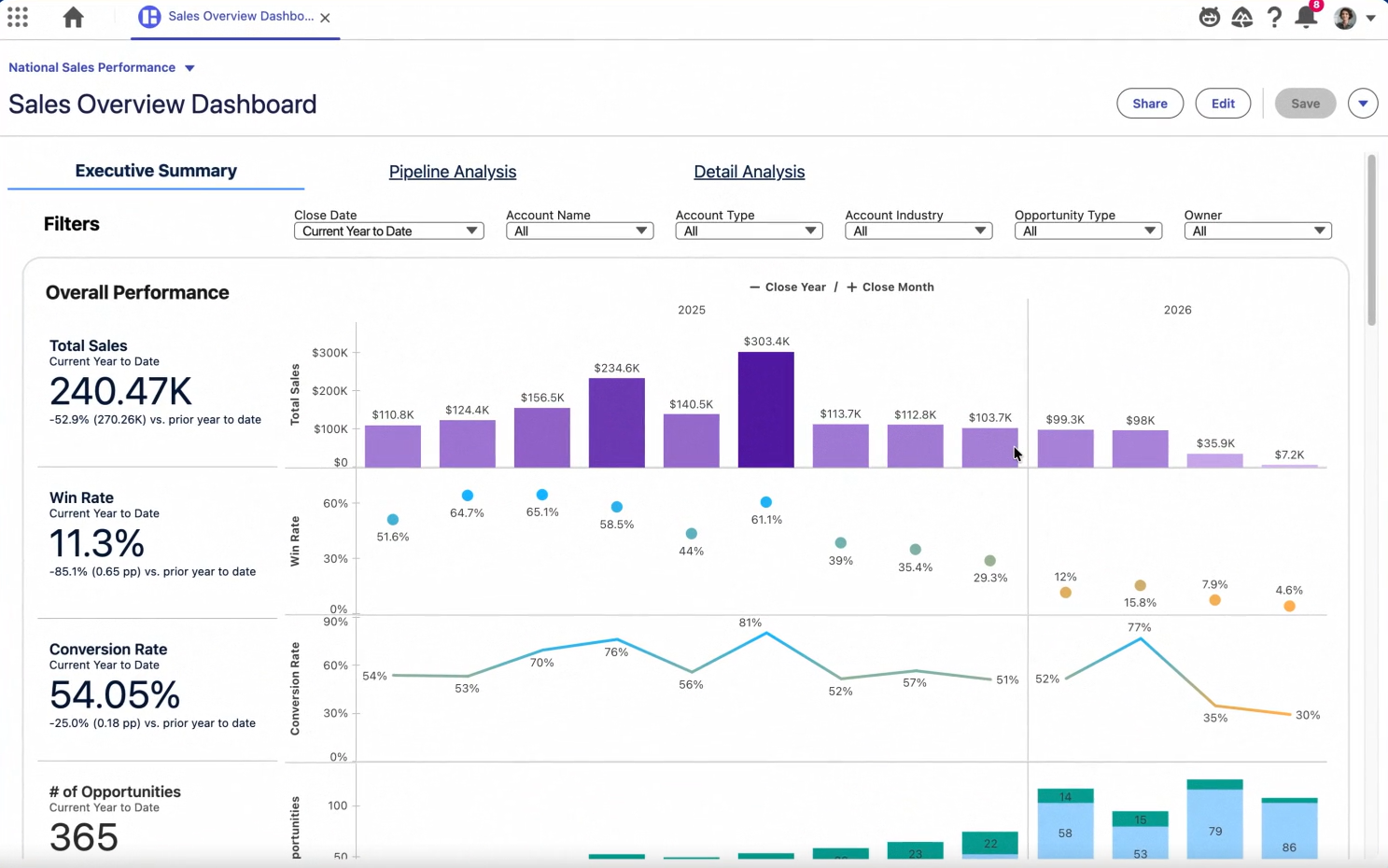
Capterra reviewers identify limited dashboards and insufficient audit trails as gaps in DealHub. Revenue Cloud addresses this at the platform level. The Price Waterfall captures a step-by-step log of every pricing adjustment.
Tableau Next powers four dashboard categories covering pricing analytics, subscription revenue, order health, and billing operations, all drawing directly from the native data model.
Source: Salesforce
Mature Native Billing vs. DealHub's Assembled Billing Stack
DealHub assembled its billing capabilities through acquisitions (Subzee in June 2023, Subskribe in November 2025). Revenue Cloud Billing handles subscriptions, consumption, milestone, and hybrid billing within a single engine, with a Digital Wallet for prepaid credit models and a dedicated Accounting Subledger for ASC 606 and IFRS 15 compliance.
NOTE: We also evaluated Conga CPQ and Oracle CPQ. Conga excels at document generation for Salesforce-adjacent use cases, and Oracle CPQ offers deep ERP integration for Oracle-native stacks. Salesforce Revenue Cloud offers the tightest CPQ, billing, and contract management for organizations committed to the Salesforce ecosystem, where the native data model reduces reconciliation overhead and strengthens audit infrastructure.
Salesforce Revenue Cloud Pricing
Salesforce Revenue Cloud uses per-seat, per-month pricing billed annually. All editions require a separate Sales Cloud or Service Cloud license.
Revenue Cloud Growth: $150/user/month. Includes quoting, configurator, product catalog, price management, order and asset lifecycle management, and billing schedules.
Revenue Cloud Advanced: $200/user/month. Everything in Growth, plus contracts and orders, consumption and invoicing, AI and analytics (Tableau Next), and Agentforce for Revenue.
Revenue Cloud Billing: Custom pricing (add-on). Usage rating, Digital Wallet, invoicing engine, and Accounting Subledger for ASC 606/IFRS 15 compliance.
Note: Salesforce does not offer a free trial for Revenue Cloud. Implementation costs for enterprise deployments are typically significant beyond the license fees.
Who Should Use Salesforce Revenue Cloud?
Choose Salesforce Revenue Cloud if:
Your organization already runs Salesforce as its CRM and you want quoting, billing, and contract management natively inside the same platform without introducing a separate system.
You need mature billing covering subscription, consumption, milestone, and hybrid models with a built-in accounting subledger supporting ASC 606 and IFRS 15.
Your RevOps or finance team requires detailed, auditable reporting (price waterfall, margin analytics, DSO tracking, churn dashboards) that goes beyond DealHub's current reporting layer.
You operate across multiple regions, currencies, or legal entities and need territory management and multi-GAAP compliance controls.
3. GetAccept — Best Alternative for Deal Rooms Without CPQ Overhead
Source: GetAccept
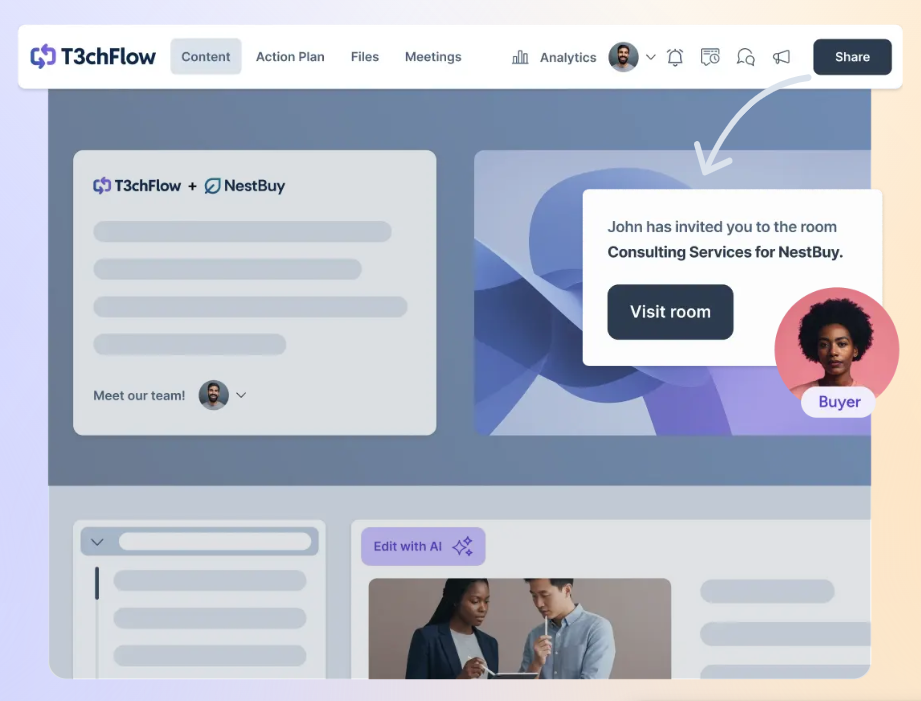
GetAccept is a Digital Sales Room and proposal platform that covers the buyer-facing deal execution layer (proposals, buyer engagement tracking, e-signatures, and contract management) without requiring teams to adopt full CPQ and billing infrastructure. Its key capabilities include:
AI-powered proposal creation that converts meeting transcripts and CRM deal data into tailored business cases
Real-time buyer engagement tracking at the page level and individual stakeholder level
Participant Engagement Score (PES): a composite 0-5 behavioral signal per stakeholder based on actual buyer activity
Built-in e-signatures covering Simple, Advanced, and Qualified Electronic Signatures under US, UK, and EU law
Mutual Action Plans with buyer-and-seller task ownership and automatic CRM stage sync
Bidirectional CRM sync with Salesforce, HubSpot, Microsoft Dynamics, and Pipedrive
Why Choose GetAccept Over DealHub for Deal Rooms
GetAccept stands out in the following areas:
Full Deal Room Experience Without CPQ Infrastructure
DealHub's DealRoom is bundled within a CPQ-first platform with multi-dimensional pricing rules, approval chains, subscription billing, and revenue recognition. For mid-market B2B teams whose primary challenge is post-demo buyer engagement (understanding who on the buying committee is engaged and closing contracts without administrative drag), DealHub's full scope can be more platform than the problem warrants. GetAccept solves the same buyer-facing challenges as a focused standalone product.
Transparent, Accessible Pricing
DealHub operates on a quote-only pricing model with no public pricing at any tier. GetAccept publishes pricing openly: the Professional plan at $49/user/month (minimum 5 users) unlocks the full Digital Sales Room, while the eSign plan at $25/user/month provides a lower-commitment entry point for teams focused on e-signatures.
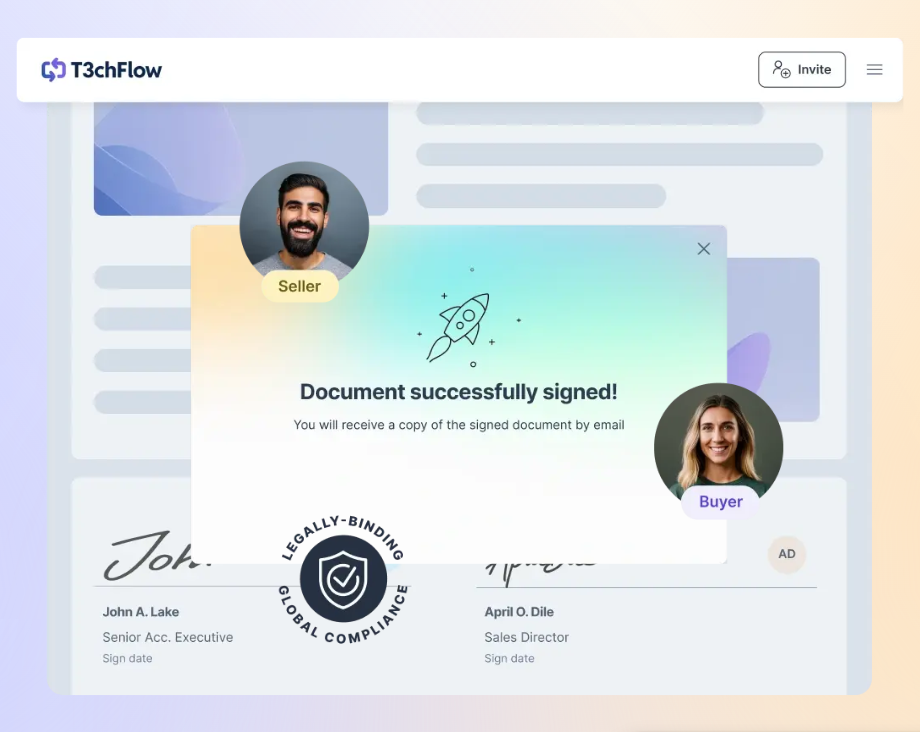
Native E-Signatures vs. External Vendor Dependency
DealHub CLM routes e-signature workflows through DocuSign, adding a second vendor relationship.
Source: GetAccept
GetAccept builds legally binding signature collection directly into the deal room across three native tiers: Simple Electronic Signature, Advanced (AdES), and Qualified (QES). Every signed document generates a tamper-proof UTC-timestamped signing certificate embedded in the PDF.
NOTE: We also evaluated Proposify and Qwilr. Proposify excels at proposal design with strong template customization. Qwilr is well-regarded for interactive, branded proposal microsites. GetAccept offers the best combination of AI proposal creation, digital sales room, built-in eSign, and bidirectional CRM sync for teams that need DealHub's deal room functionality at a price point sized for growing mid-market organizations.
GetAccept Pricing
eSign: $25/user/month. No minimum user count. Includes unlimited electronic signatures, in-app editor, basic contract management, templates, and content library.
Professional: $49/user/month, minimum 5 users ($245/month floor, billed annually). Adds full AI suite, Digital Sales Room, Mutual Action Plans, bidirectional CRM integrations, and advanced branding. Add-ons available for AI contract management, API access, and payment integrations.
Enterprise: Contact sales. Adds CPQ, SSO, SCIM provisioning, unlimited product library, and premium CRM integrations.
Who Should Use GetAccept?
Choose GetAccept if:
Your team needs DealHub's deal room experience without buying into a full CPQ platform. GetAccept delivers shared buyer workspaces, AI-powered proposals, engagement tracking, Mutual Action Plans, and e-signatures as a focused product.
You're a mid-market B2B team (5-200 reps) that needs transparent, predictable pricing. DealHub requires a sales conversation before you know what it costs; GetAccept publishes its Professional plan at $49/user/month.
Your deals close across multiple geographies and require multi-jurisdiction e-signature compliance (US, UK, and EU law) with three built-in tiers.
4. PandaDoc — Best Alternative for Accessible Document Automation & CPQ
Source: PandaDoc
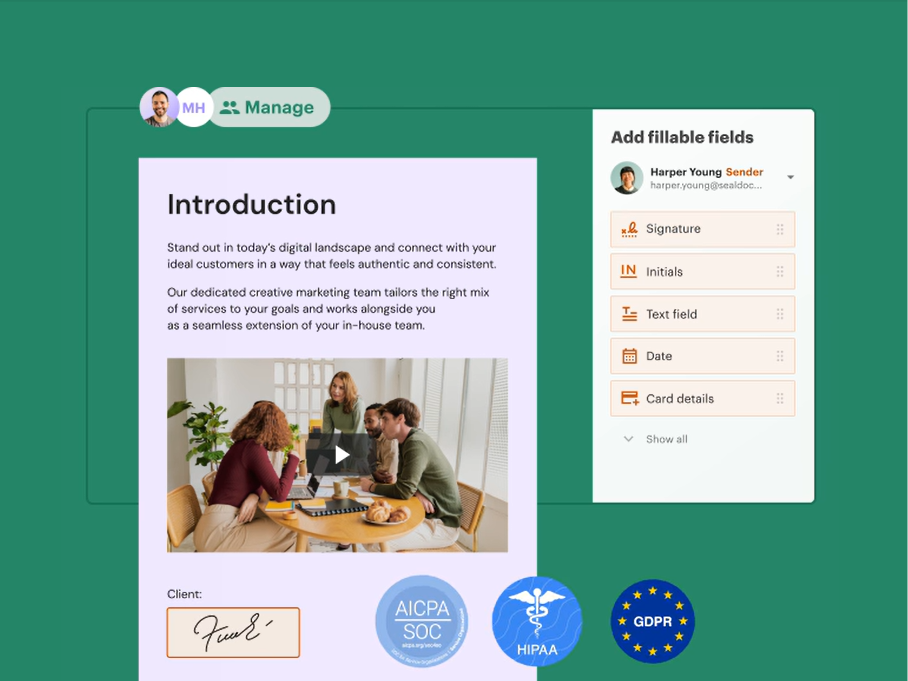
PandaDoc is a document automation and CPQ platform that consolidates proposal creation, configure-price-quote, eSignature, deal rooms, and payment collection into a single workspace. It's one of the most accessible DealHub alternatives for revenue teams that need functional quoting without enterprise implementation complexity. Its key capabilities include:
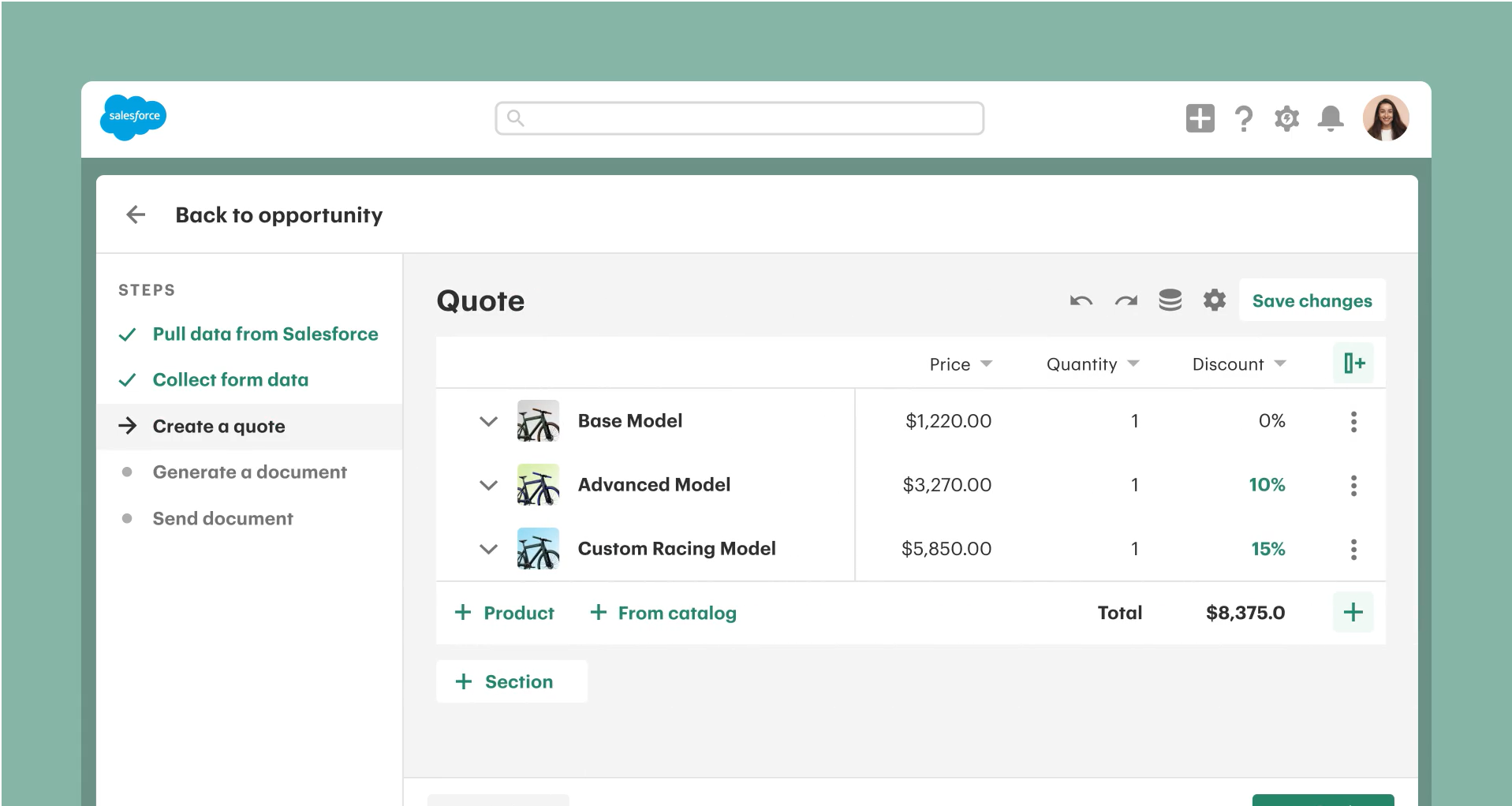
No-code CPQ rules engine with WHEN/THEN conditional logic for bundles, pricing tiers, and discount guardrails
Free eSign tier for validating the signing workflow before any budget commitment
CRM-agnostic native integrations with Salesforce, HubSpot, Pipedrive, Zoho, and 15+ additional CRM systems
Automatic pricing table calculations with conditional approval routing
Embedded payment collection via Stripe, Square, and PayPal at the moment of signing
PandaDoc suits B2B sales teams at SMB and mid-market companies (roughly 50-1,000 employees) that need to graduate from eSignature tools into quoting and document automation.
Why Choose PandaDoc Over DealHub for Accessible Document Automation
PandaDoc stands out in the following areas:
No-Code CPQ Without Enterprise Implementation Overhead
DealHub's CPQ requires custom quote conversations at every tier, implementation projects, and a dedicated admin certification program.
Source: PandaDoc
PandaDoc's CPQ rules engine lets RevOps admins define rules that adjust quantities, apply discount tiers, and route quotes to approval chains through a visual interface, requiring "no coding or expensive consultants".
Transparent Pricing With a Free Entry Point
DealHub publishes no pricing figures publicly and offers no documented free trial. PandaDoc's permanent Free plan supports unlimited seats for basic eSignature. The Starter plan at $19/user/month adds unlimited document sends. The Business plan at $49/seat/month adds CRM integrations and approval workflows. Teams can grow into quoting complexity one step at a time.
CRM-Agnostic Integration Footprint
DealHub's native CRM integrations cover Salesforce, HubSpot, and Microsoft Dynamics 365. PandaDoc has dedicated CPQ solutions for Salesforce, HubSpot, and Pipedrive, plus native integrations with Monday.com, Zoho, and 15+ additional CRMs. Teams on Pipedrive or Zoho get native integrations that DealHub does not currently match.
NOTE: We also evaluated Proposify and DocuSign CLM. Proposify excels at visually polished, proposal-forward workflows for agencies and consulting firms. DocuSign CLM offers enterprise-grade contract lifecycle management. PandaDoc offers the best combination of transparent pricing, no-code CPQ, and broad CRM compatibility for teams needing a document-to-quote workflow without enterprise CPQ overhead.
PandaDoc Pricing
Free: $0/month, unlimited seats. Basic eSignature, capped at 60 documents per year, 2 recipients per document.
Starter: $35/user/month. Unlimited document sends, audit trail, 24/7 support. No CRM integrations.
Business: $65/seat/month. CRM integrations, approval workflows, bulk send, custom quoting.
Enterprise: Custom pricing. Full CPQ with rules engine, guided selling, SSO, US or EU data residency, QES.
Who Should Use PandaDoc?
Choose PandaDoc if:
Your team works from Pipedrive, Zoho, or another CRM outside the Salesforce/HubSpot/Dynamics 365 tier, and you need CPQ-adjacent document automation that integrates natively.
You want to validate eSignature and document tracking before committing budget; PandaDoc's permanent Free plan allows that without a sales cycle.
Your quoting complexity centers on enforcing discount rules and managing product bundles but stops short of consumption-based billing and subscription lifecycle management.
Closing the gap between signature and payment matters: PandaDoc's embedded Stripe, Square, and PayPal checkout collapses sign-and-pay into a single session.
5. Qwilr — Best Alternative for Interactive Web-Native Proposals
Source: Qwilr
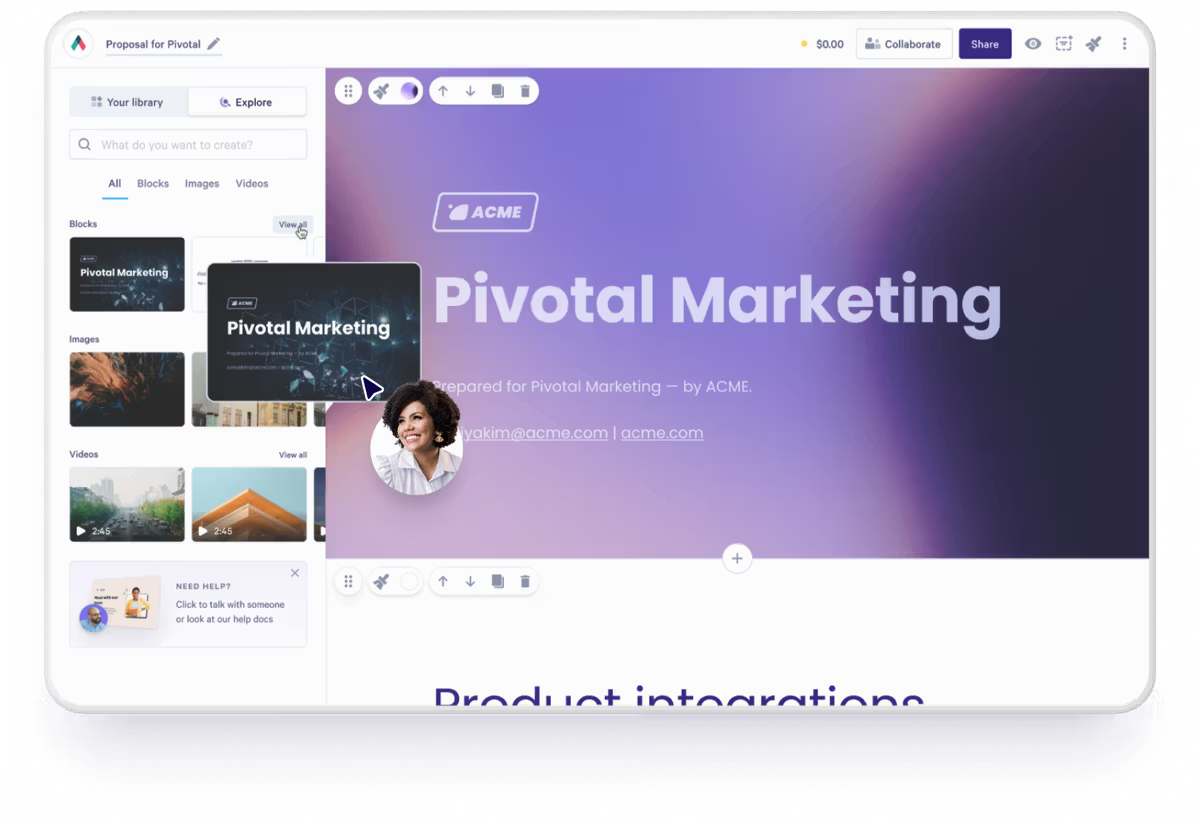
Qwilr is sales proposal software built around one premise: proposals should be live, interactive web pages, not static PDFs. Where DealHub generates document outputs from a CPQ workflow, Qwilr treats the proposal itself as the primary product (one that buyers interact with, navigate, and respond to in real time). Its core capabilities include:
Web-native interactive proposals with embedded video, ROI calculators, and interactive pricing tables
One-click buyer acceptance with in-proposal payment collection via QwilrPay
Section-level engagement analytics showing which parts buyers read and for how long
Built-in e-signatures with legally compliant multi-signer workflows
Native CRM automation with HubSpot, Salesforce, Pipedrive, and Zoho
Qwilr is built for SMB and mid-market sales teams whose core complaint with CPQ tools is the static output that comes out the other end.
Why Choose Qwilr Over DealHub for Interactive Proposal Experiences
Qwilr stands out in the following areas:
Proposals Are Living Web Pages, Not Document Exports
DealHub's output is a document (a PDF or formatted export generated from a CPQ playbook). Qwilr's proposals live at a persistent URL, are built as interactive web pages, and can be edited after sending with updates reflecting instantly. Qwilr proposals embed videos, dynamic ROI calculators, interactive pricing tables where buyers select their tier and see totals update in real time, and calendar booking links, all without the buyer leaving the proposal.
Section-Level Proposal Analytics
Qwilr's engagement tracking captures which blocks entered the buyer's screen, how long they spent on each, which accordions they opened, and which links they clicked.
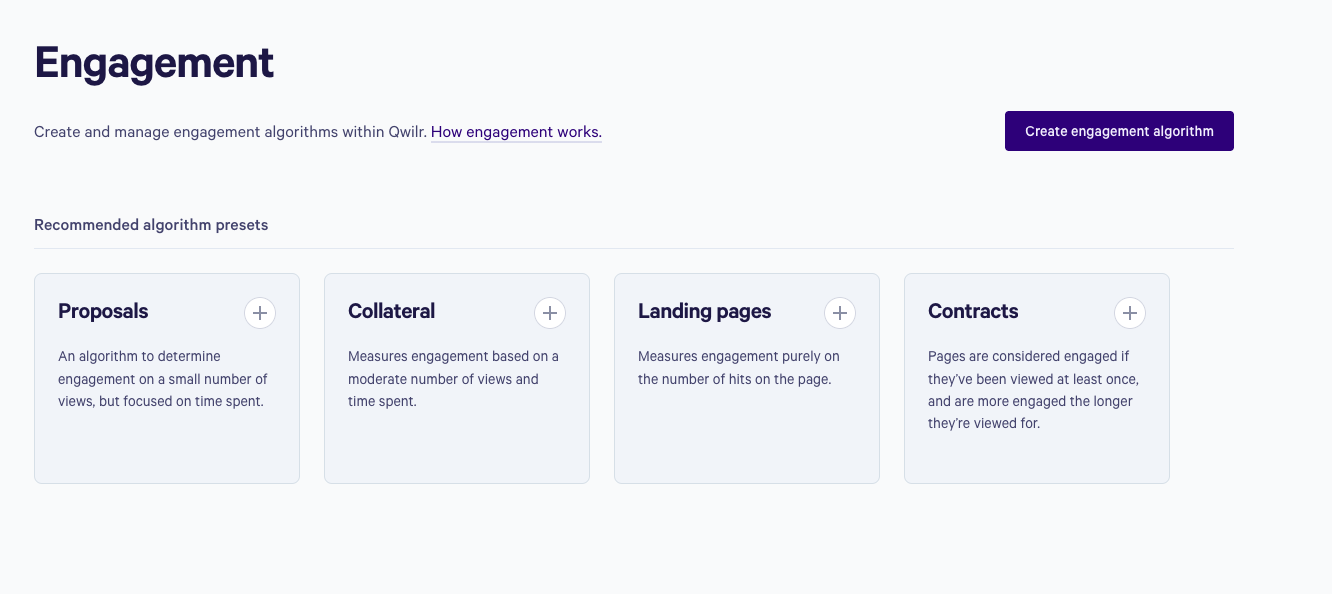
The Engagement Algorithm lets teams configure scoring thresholds and delivers Slack and email alerts when a proposal changes engagement state or when a buyer starts the acceptance flow but doesn't finish.
Source: Qwilr
Fastest Implementation in the Proposal Category
Qwilr claims the fastest time-to-ROI among the top 10 proposal platforms tracked on G2, with a 14-day free trial requiring no credit card. A rep can clone a template, swap variables from their CRM, and send a polished proposal in under ten minutes.
NOTE: We also evaluated Proposify and PandaDoc. Proposify offers solid template libraries and approval workflows. PandaDoc provides broader document automation. Qwilr offers the most distinctive interactive proposal experience for teams whose primary frustration with DealHub is the format and visual quality of its proposal output rather than the underlying CPQ workflow.
Qwilr Pricing
Business: $35/user/month (billed annually) or $39/user/month (monthly). Minimum 1 user. Full editor, e-sign, QwilrPay, interactive quotes, page analytics, CRM integrations (HubSpot, Pipedrive, Zoho). 14-day free trial, no credit card required.
Enterprise: $59/user/month (billed annually only). Minimum 10 users. Everything in Business, plus Salesforce integration, 5-year data history, SSO, identity verification, and dedicated account manager. Onboarding packages from $999.
Who Should Use Qwilr?
Choose Qwilr if:
Your team's primary complaint about DealHub is that proposals look static or PDF-like, and you want buyers to have an interactive, web-native experience.
Your pricing model is straightforward; no complex subscription billing or consumption-based pricing that requires CPQ configuration.
You manage multiple open proposals simultaneously and want section-level engagement visibility before follow-up calls, rather than relying on email-open tracking alone.
You want a "propose, sign, collect payment" workflow in a single link, replacing separate e-signature and payment tools.
6. Salesbricks — Best Alternative for SaaS-Native Quote-to-Cash
Source: Salesbricks
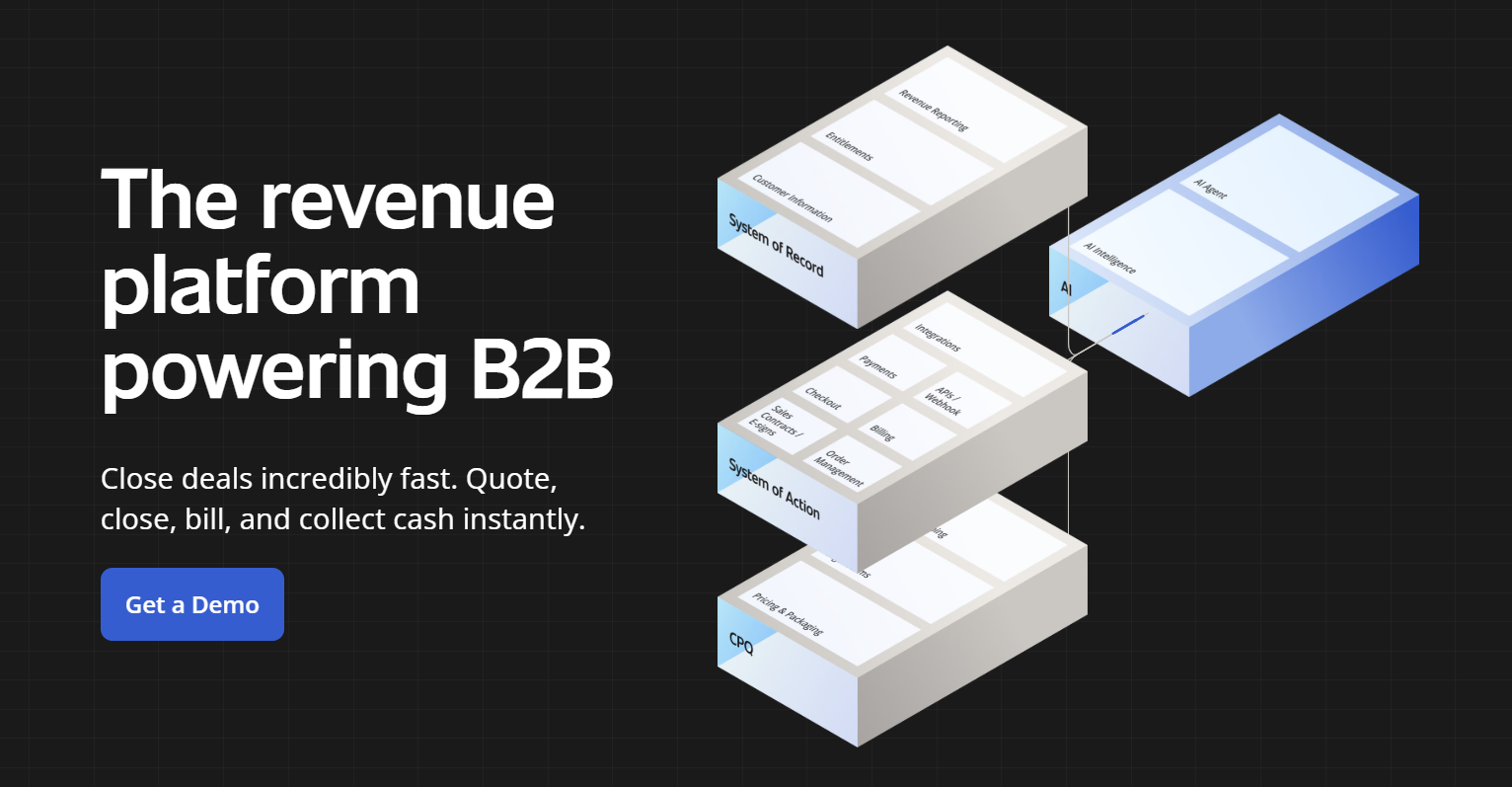
Salesbricks is a B2B revenue platform built for sales-led SaaS and AI companies that want to compress the gap between a verbal "yes" and cash in the bank. It collapses what typically requires four or five tools (CPQ, e-signature, billing, invoicing, CRM sync) into a single flow where a completed quote becomes a live checkout link the buyer can sign and pay in minutes. Key capabilities include:
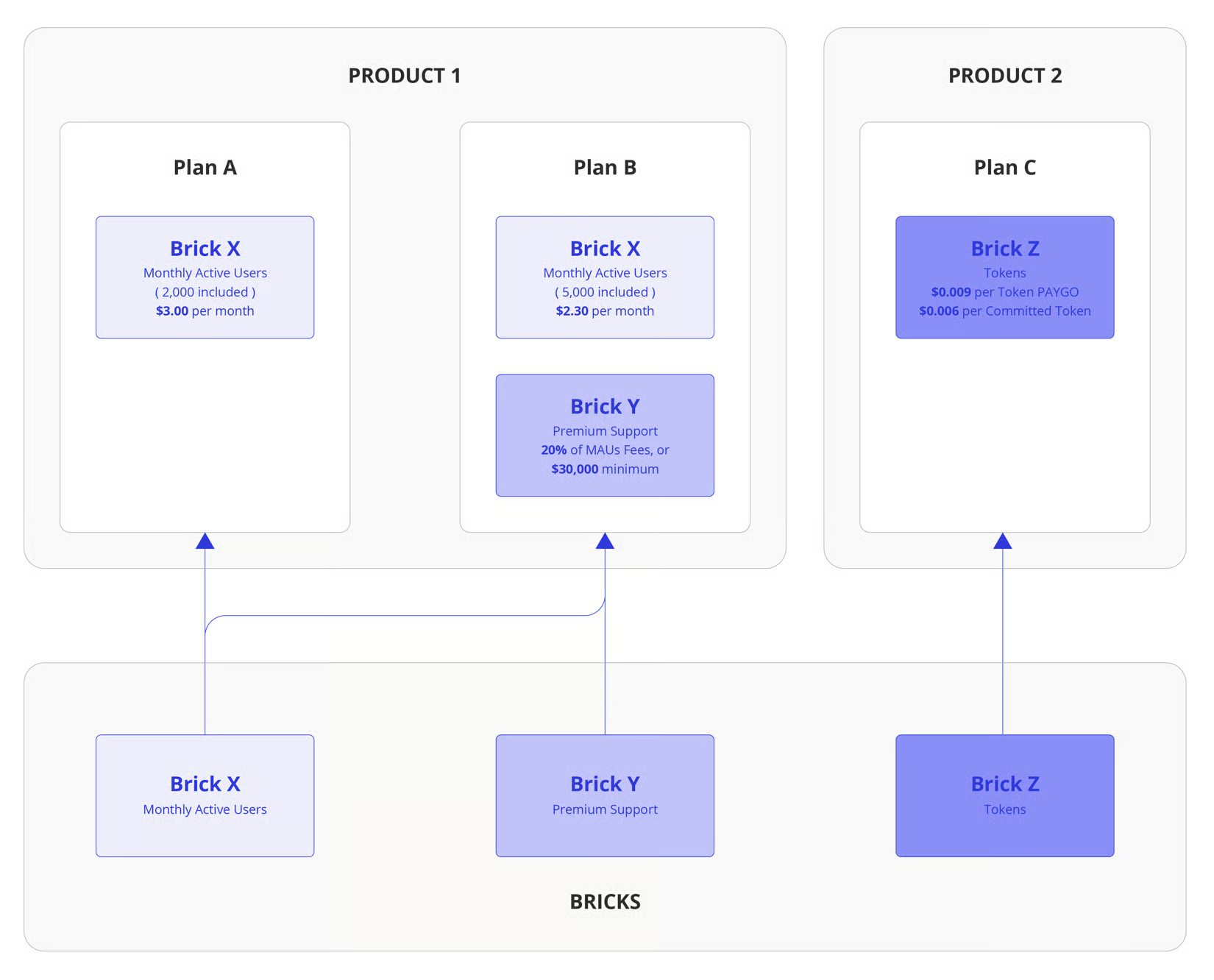
CPQ with a structured three-tier product hierarchy (Products, Plans, Bricks) supporting subscription, one-time, usage, and milestone pricing in the same deal
Embedded "Brick" checkout link: one URL replaces the quote PDF, DocuSign envelope, and manual Stripe invoice
Full contract execution with bilateral e-signature, including an Awaiting Countersign stage built into the order lifecycle
Post-close subscription management covering upgrades, renewals, and terminations with automatic proration
Native revenue reporting: ARR, MRR, churn, expansions, and renewals calculated from transactional records
Why Choose Salesbricks Over DealHub for SaaS-Native Quote-to-Cash
Salesbricks stands out in the following areas:
Architecture Built for SaaS Pricing Models
DealHub expanded to support usage-based pricing through acquisitions. Salesbricks was designed from the ground up for the billing patterns SaaS founders face: usage bricks billed in arrears, ramping seat counts, milestone-triggered invoices, and pricing model iteration without engineering tickets. The three-tier Product, Plan, Brick hierarchy handles these natively.
Source: Salesbricks
The Brick Checkout Link: Buyer Purchases Inside the Quote
DealHub's output is a document the buyer reviews in a DealRoom; payment happens downstream. Salesbricks' output is a buyer-facing checkout page where the buyer reviews pricing, accepts terms, and completes payment in one session. Checkout sessions with an average contract value of $11,050 take just 4.97 minutes to complete. Salesbricks data shows 30% of SaaS deals close outside traditional business hours.
Operational in Under 60 Minutes
DealHub's implementation requires a dedicated customer success team and runs several weeks. Salesbricks' Getting Started guide structures setup as a four-step sequence: company settings, Stripe integration, payment options, and pricing configuration.
NOTE: We also evaluated Cacheflow and Alguna. Cacheflow offers strong self-serve billing for PLG-forward teams. Alguna is built for procurement-heavy enterprise deals. Salesbricks offers the best quote-through-billing workflow for sales-led SaaS and AI companies that need both contract execution and subscription management without enterprise CPQ overhead.
Salesbricks Pricing
Salesbricks uses a two-part model: a flat monthly platform subscription (billed annually) plus a percentage-based fee on invoices processed. All tiers require contacting sales.
Startup: $500/month. Up to 5 users, up to $300K/year transaction volume, CRM integration, limited reports.
Growth: $1,500/month. Unlimited users, $300K-$2M/year transaction volume, full analytics, dedicated CSM.
Enterprise: Custom pricing. Custom transaction volume, ERP integration, scoped migrations.
Note: The undisclosed invoice percentage fee should be requested explicitly during evaluation and modeled at projected transaction volume before comparing to DealHub.
Who Should Use Salesbricks?
Choose Salesbricks if:
Your company is a sales-led or hybrid PLG SaaS or AI startup (roughly $500K-$10M ARR) where deals require quotes, contracts, e-signature, and billing but no dedicated RevOps hire exists yet.
You need to close deals the same day a verbal "yes" arrives and your current stack creates a 24-48 hour lag between agreement and a signed, invoiced contract.
Your pricing model is evolving (usage-based, consumption, seat ramps, milestone billing) and you need to iterate without engineering tickets.
7. HubSpot — Best Alternative for Free CRM-Native Quoting
Source: HubSpot
HubSpot is a CRM and go-to-market platform that serves as the most accessible, lowest-cost alternative to DealHub for teams already in the HubSpot ecosystem. Through Commerce Hub, HubSpot offers basic quoting at no additional subscription cost for existing CRM users. Its key capabilities include:
AI-assisted quote generation directly from HubSpot deal records
Commerce Hub CPQ with branded quote templates and approval workflows
Integrated e-signature for digital signing without leaving HubSpot
Payments via Stripe for quote-to-payment in 130+ currencies
Commerce analytics within existing HubSpot dashboards
Subscription management with automated recurring billing
HubSpot suits SMB and mid-market teams already invested in the platform who want CRM-native quoting without adding another tool.
Why Choose HubSpot Over DealHub for Free CRM-Native Quoting
HubSpot stands out in the following areas:
Free Entry Point Into Quoting
DealHub has no public pricing, no free tier, and no documented trial. Basic quoting is available at no additional cost for existing HubSpot CRM users. Even HubSpot's free CRM tier provides basic deal management and a product library. For a 20-person team with a straightforward catalog, DealHub's playbook-guided selling and multi-dimensional pricebooks are overhead; HubSpot's quoting pulls from the product library and deal record and generates a branded proposal in minutes.
True CRM-Nativity
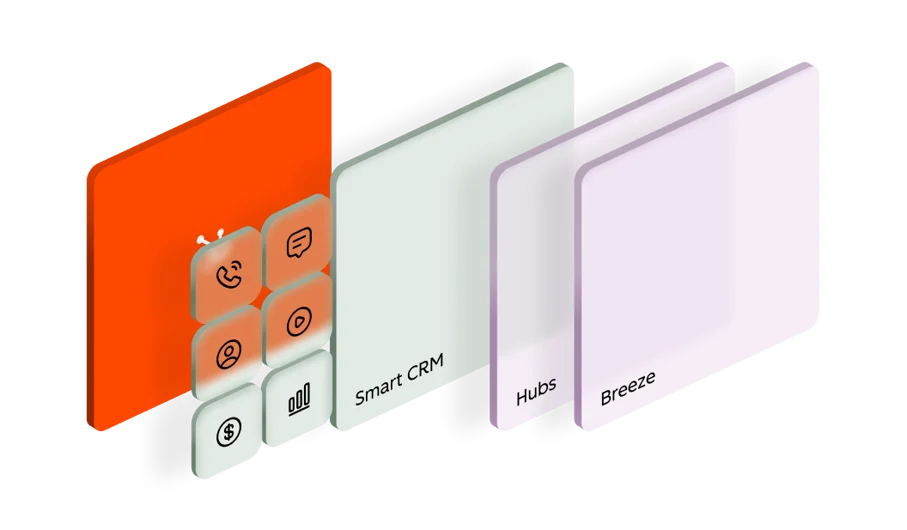
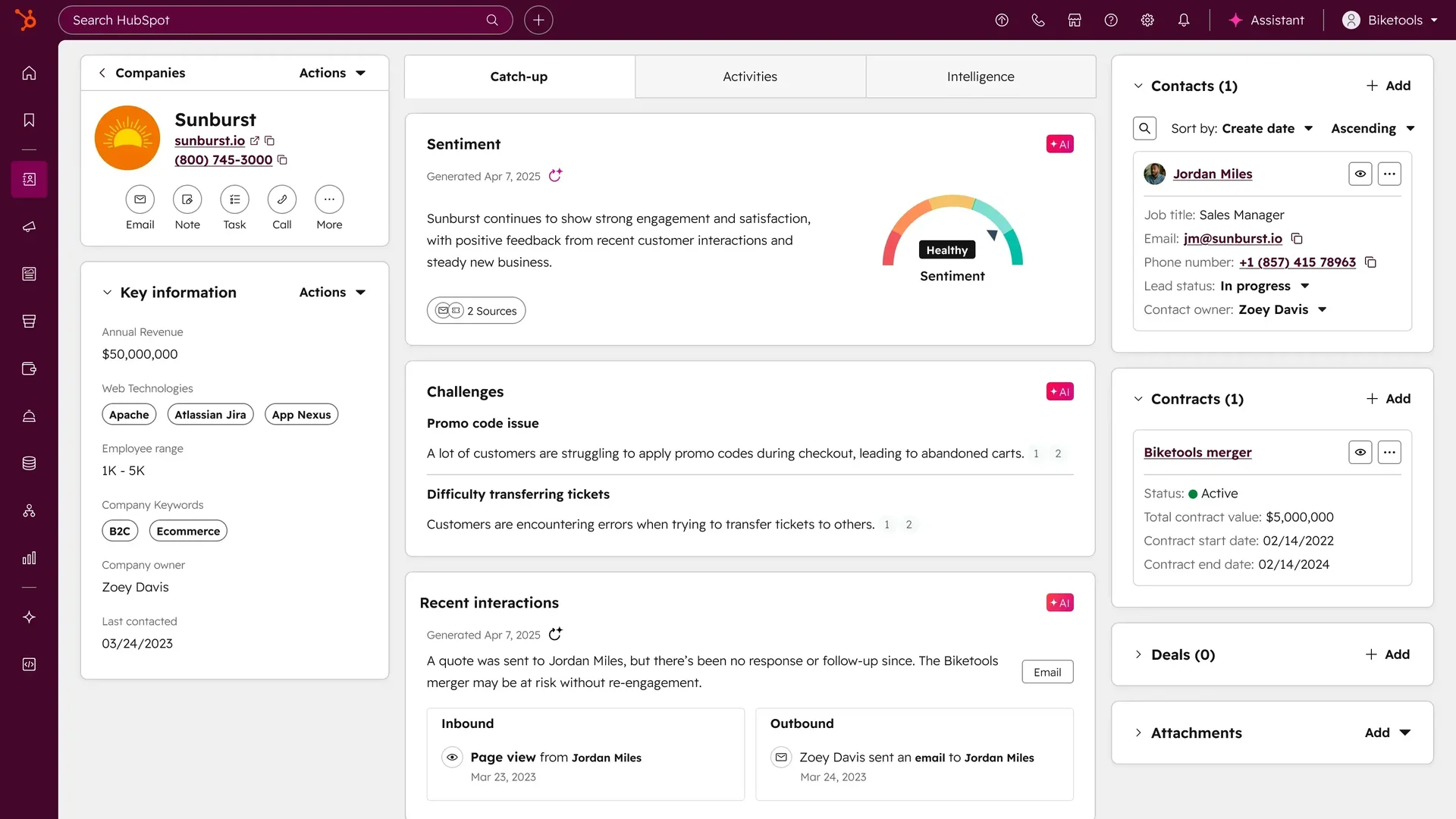
DealHub is a satellite CPQ that connects to CRMs via integrations. Because Commerce Hub is native to HubSpot's Smart CRM, quotes are created directly from deal records. Contact data, company information, and deal context pre-populate automatically.
Source: HubSpot
There is no CRM-to-quoting handoff because both functions live in the same platform. HubSpot reports 93% of its users use the platform daily, and the unified workflow drives much of that stickiness.
Commerce Analytics Inside Existing Dashboards
Capterra reviewers flag that DealHub's dashboards lack depth. All Commerce Hub data flows directly into HubSpot's analytics layer (the same reporting infrastructure used by marketing, sales, and service teams). HubSpot reports that 83% of its users say the platform unifies all their data.
NOTE: We also evaluated Zoho CRM and Freshsales. Zoho CRM includes quoting and inventory features natively with competitive SMB pricing, but requires more configuration. Freshsales includes basic quoting in higher tiers and suits Freshworks teams, but its CPQ depth falls below HubSpot's. HubSpot offers the most accessible no-cost entry into CRM-integrated quoting, with its 288,706-customer installed base and Commerce Hub's direct path from quote to payment.
HubSpot Pricing
Commerce Hub:
Free invoicing included for all HubSpot users
Commerce Hub Pro Early Adopter: $57/month (regular $95/month)
Commerce Hub Enterprise Early Adopter: $84/month (regular $140/month)
0.75% platform fee per transaction on top of standard Stripe processing
Sales Hub (includes CPQ):
Free: $0, 2-user maximum
Starter: $10/seat/month (annual)
Professional: $100/seat/month (annual), $1,500 one-time onboarding fee
Enterprise: $150/seat/month (annual only), $3,500 one-time onboarding fee
Who Should Use HubSpot?
Choose HubSpot if:
Your team already uses HubSpot CRM and you want quoting in the same system without adopting a satellite CPQ tool.
You are an SMB or growth-stage company that needs professional quoting with e-signature and payment collection, but your pricing model isn't complex enough to warrant a dedicated CPQ platform.
You want commerce analytics inside the same dashboards where your pipeline and marketing data already live.
Budget is a constraint and you want to evaluate CRM-integrated quoting at no or low additional cost before committing to a dedicated CPQ investment.
The Final Verdict
DealHub handles guided selling, CPQ, and digital deal rooms well, but growing revenue operations often need specialized tools that go deeper in specific areas. Based on our research, here are the best alternatives:
ZoomInfo for prospecting intelligence, B2B data, and the upstream GTM motion that fills the pipeline before deals reach the quoting stage
Salesforce Revenue Cloud for enterprises needing CPQ, billing, and contract management natively inside Salesforce without a separate system to sync
GetAccept for digital sales rooms and proposals without full CPQ infrastructure
PandaDoc for accessible document automation and CPQ with transparent pricing and broad CRM compatibility
Qwilr for interactive, web-native proposals that generate engagement data beyond static documents
Salesbricks for SaaS-native quote-to-cash with embedded buyer checkout and same-day deal closure
HubSpot for free CRM-native quoting and commerce within an existing HubSpot ecosystem
You don't have to choose between DealHub and these alternatives exclusively. Many revenue teams use DealHub alongside other tools. A common combination is pairing DealHub's quoting strength with ZoomInfo's GTM intelligence to cover both ends of the revenue lifecycle. Consider your specific needs and growth plans when deciding which solution fits.
Want to strengthen your pipeline with GTM intelligence? ZoomInfo gives your team the data, intent signals, and execution tools to find the right buyers, engage them at the right moment, and accelerate every deal. Get started with ZoomInfo and see what B2B intelligence can do for your revenue engine.
DealHub Alternatives FAQ
Why do businesses look for DealHub alternatives?
DealHub works well as a quote-to-revenue platform, but businesses often outgrow specific areas of its capabilities. Common reasons include needing deeper reporting and audit trails (Capterra reviewers consistently flag limited dashboards), wanting deal room functionality without full CPQ overhead, requiring prospecting and pipeline generation tools that DealHub's post-pipeline focus doesn't address, or needing billing capabilities beyond what DealHub's recently assembled billing stack currently offers.
What is the best overall DealHub alternative?
There is no single best alternative because DealHub covers multiple functions. ZoomInfo is the top choice for teams whose primary gap is upstream pipeline generation and B2B intelligence. Salesforce Revenue Cloud leads for enterprises wanting natively integrated CPQ, billing, and contracts. GetAccept is best for teams that want DealHub's deal room experience without the CPQ overhead.
Is there a free alternative to DealHub?
Yes. HubSpot offers basic quoting at no additional cost for existing CRM users, including its free CRM tier. PandaDoc provides a permanent free plan for basic eSignature. ZoomInfo offers ZoomInfo Lite, a permanent free tier with access to 100M+ verified profiles and 10 monthly export credits. Qwilr offers a 14-day free trial with no credit card required.
Which DealHub alternative is best for SaaS companies with evolving pricing models?
Salesbricks is built for SaaS and AI companies managing subscription, usage-based, consumption, and milestone pricing. Its three-tier product hierarchy handles pricing model iteration without engineering tickets. For larger SaaS enterprises already on Salesforce, Salesforce Revenue Cloud's billing module covers subscription, consumption, and hybrid models with ASC 606 compliance.
How does DealHub compare to Salesforce Revenue Cloud for enterprise use?
DealHub integrates with Salesforce but operates as a separate system, requiring bidirectional data sync. Salesforce Revenue Cloud is built on native Salesforce objects, eliminating the sync layer. Revenue Cloud offers stronger enterprise reporting (Price Waterfall, Tableau Next dashboards) and more mature billing infrastructure, while DealHub offers faster implementation and higher ease-of-use ratings for the quoting workflow specifically.
Which alternative is best for mid-market teams on a budget?
GetAccept at $49/user/month for its Professional plan and PandaDoc at $49/seat/month for its Business plan are the most accessible mid-market options with transparent pricing. HubSpot is the most budget-friendly choice for teams already in its ecosystem, offering basic quoting at no additional cost. Qwilr at $35/user/month is the most affordable option for teams focused on interactive proposals.
Can I use DealHub alongside any of these alternatives?
Yes. ZoomInfo is the most natural complement to DealHub, covering pipeline generation and prospecting intelligence that DealHub's post-pipeline workflow doesn't address. GetAccept can serve as a focused deal room for teams that use DealHub's CPQ for quoting but want a lighter tool for proposals and buyer engagement on simpler deals. HubSpot's CRM can serve as the system of record that DealHub integrates with for quoting.
Looking beyond DealHub? Compare the strongest alternatives side by side:
