

DealHub has built its reputation in the CPQ market by doing something most legacy vendors haven't: making quoting software that sales reps actually use. Rated #1 CPQ for Ease of Use on G2, with customers like Zapier reporting 100% seller adoption, the platform is the antidote to clunky, IT-dependent quoting systems.
But CPQ covers only one stage of the revenue cycle, and knowing what DealHub does well (and where its scope ends) matters before you commit.
To write this DealHub review, we analyzed the platform in depth. It's the right choice if:
You need a CPQ that sales reps will adopt without months of training
You manage complex pricing models (subscriptions, usage-based, tiered, hybrid)
You want quoting, contracts, billing, and digital sales rooms in one platform
You use Salesforce, HubSpot, or Microsoft Dynamics 365 as your CRM
You need to reduce IT dependency for pricing logic updates
However, DealHub might not be the right choice if:
You have simple, single-SKU pricing that doesn't need CPQ
You need detailed reporting dashboards and admin audit trails
You operate across multiple regions with different selling processes
You require multi-user collaboration with concurrent editing
DealHub excels at turning quotes into revenue, but it doesn't help you find the right accounts to quote in the first place. The prospects in your pipeline, the intelligence behind who to target, and the signals that tell you when a buyer is ready all happen before DealHub enters the picture.
This is where ZoomInfo fits into the workflow: an AI-powered GTM platform built on 500M contacts, 100M companies, 135M+ verified phone numbers, and 200M+ verified business emails, designed to help your team identify, prioritize, and engage buyers before they reach the quoting stage.
We've included a look at ZoomInfo later in this review as a complement for teams that want to fill their pipeline with qualified opportunities before DealHub closes them. If you're ready to see how ZoomInfo handles prospecting and buyer intelligence, start with a free trial here.
What is DealHub?
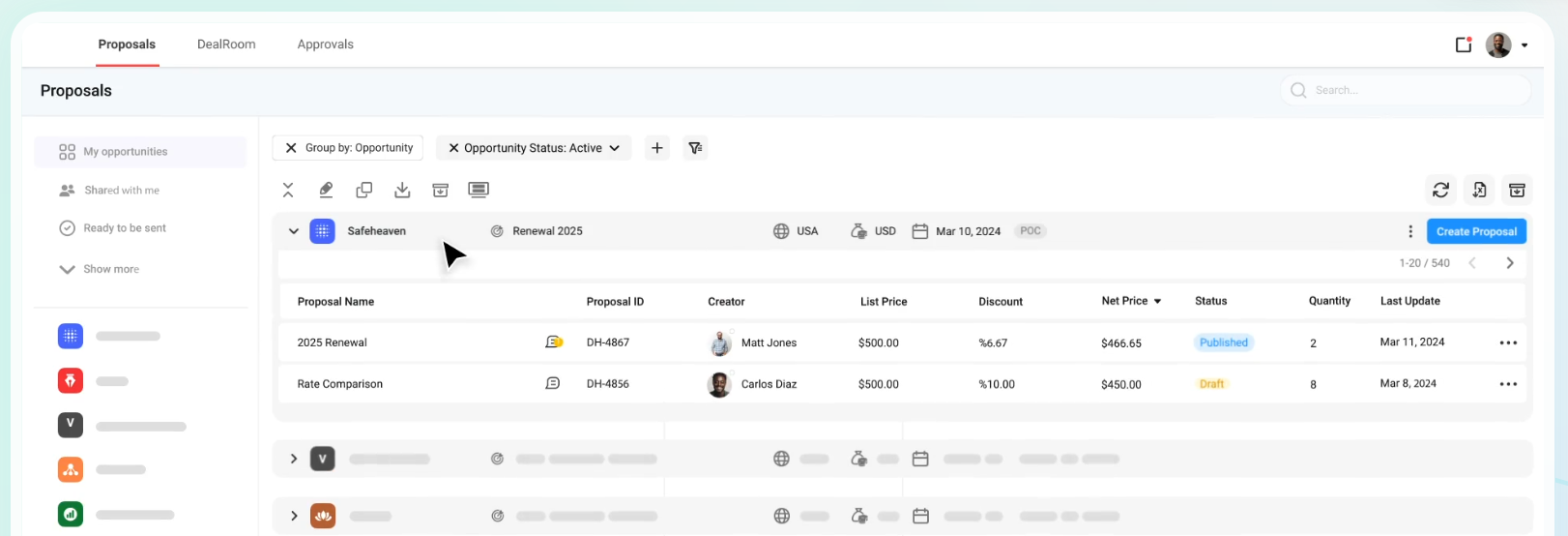
DealHub is a CPQ and quote-to-revenue platform founded in 2014 by Eyal Elbahary, Alon Lubin, and Eyal Orgil, sales leaders who had run fast-growing organizations and understood why most companies missed their sales targets. The company originally operated as Valooto before rebranding to DealHub.
Source: DealHub
Headquartered in Austin, TX with offices in Holon, Israel, the company has raised $184 million in funding across five rounds, including a $100 million growth round led by Riverwood Capital in January 2026. Customers include Zapier, Intuit, Deel, Gong, Braze, HP, Redis, Tipalti, and Quilt.
DealHub consolidates CPQ, Contract Lifecycle Management, Subscription Management, Billing, and DealRoom into a single platform, targeting mid-market to enterprise B2B organizations with complex pricing models. It offers native integrations with Salesforce, HubSpot, and Microsoft Dynamics 365. Frost & Sullivan named it 2024 Company of the Year for CPQ Innovation.
The ideal DealHub customer is a high-growth SaaS or B2B company with complex pricing models, multiple sales motions (direct, partner, PLG, e-commerce), and a need to reduce IT dependency in quoting.
DealHub Pros & Cons
Pros | Cons |
|---|---|
- Rated #1 CPQ for Ease of Use on G2 | - Performance can lag when loading quotes and syncing systems |
- Strong customer support (4.9/5 on G2) | - Reporting dashboards and admin audit trails are limited |
- No-code configuration reduces IT dependency | - Proposals can disappear if multiple users edit simultaneously |
- Unified platform: CPQ, CLM, billing, DealRoom | - Advanced backend customization can feel complex |
- Native CRM integrations (Salesforce, HubSpot, Dynamics 365) | - Multi-region setups require separate configuration per region |
- Playbook-guided selling drives consistent quoting | - No publicly listed pricing; custom quotes only |
- API-first architecture supports headless quoting | - No built-in prospecting or buyer intelligence |
DealHub Review: How It Works & Key Features
CPQ: Playbook-guided selling that turns complex pricing into accurate quotes in minutes.
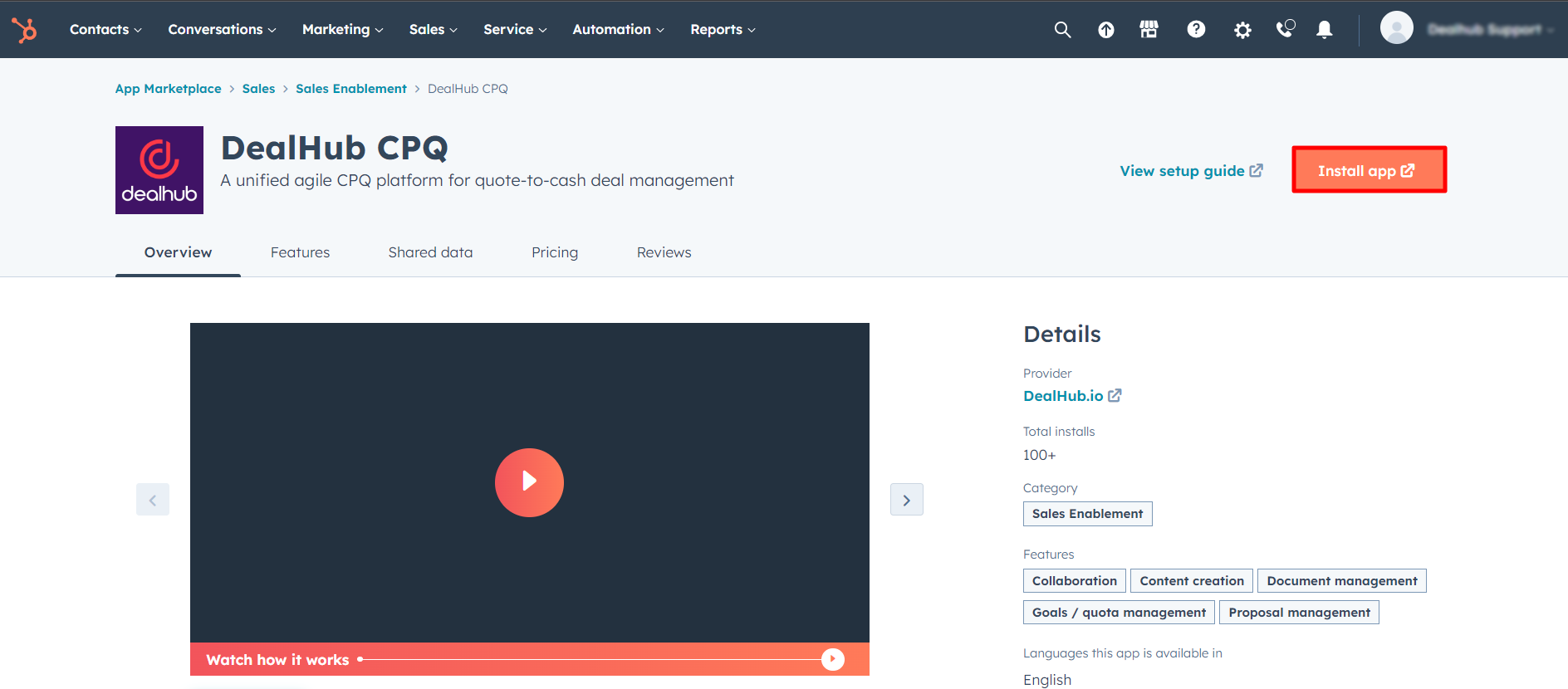
DealHub's CPQ centers on a playbook-based guided selling approach: sales reps answer a questionnaire, and the system generates the right products, calculates pricing from predefined rules, and routes quotes through approval workflows.
The process starts inside the CRM (Salesforce, HubSpot, or Dynamics 365) through native connectors.
Source: HubSpot
As reps answer questions, the system uses filters and conditional logic to narrow recommendations, suggest add-ons, and configure products based on inputs and constraints. The adaptive pricebook supports usage-based, tiered, and fixed pricing through multi-dimensional pricing structures.
For approvals, the platform routes quotes to the right stakeholders through automated parallel approvals based on discount levels, deal size, or custom criteria. A Deal Desk Dashboard gives a live view of quote progress and approval status.
DealHub also supports headless API quoting for generating quotes programmatically across e-commerce, self-service, and product-led growth models without manual input.
CLM: Automating contracts from creation through execution in one connected workflow.
DealHub CLM manages the full contract lifecycle from drafting to signing, connected to the CPQ module.
Sales teams generate NDAs, MSAs, and custom agreements using pre-approved templates and a centralized clause library, pulling approved pricing, terms, and product configurations from CPQ data.
Source: DealHub
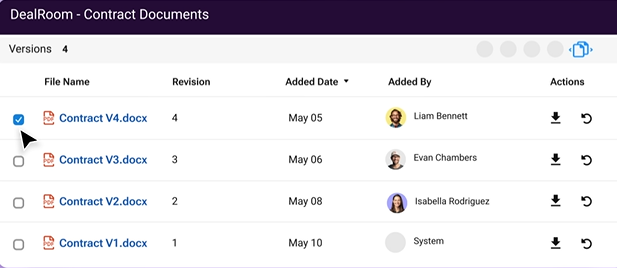
The negotiation process includes redlining and version comparison tools with guided editing for collaboration between sales and legal teams. Configurable parallel approvals keep contracts moving through legal, finance, and leadership without bottlenecks.
Once approved, teams sign contracts through built-in e-signature via DocuSign and store them in a centralized repository with version control and audit trails. The system tracks contract milestones and sends automated reminders for deliverables, renewals, and deadlines.
The key advantage is that CLM isn't a standalone tool. Because it connects to CPQ, pricing and product configurations flow into contracts without manual re-entry, and approved changes propagate across the workflow.
DealRoom: A branded digital space that replaces scattered emails and PDFs with collaborative deal execution.
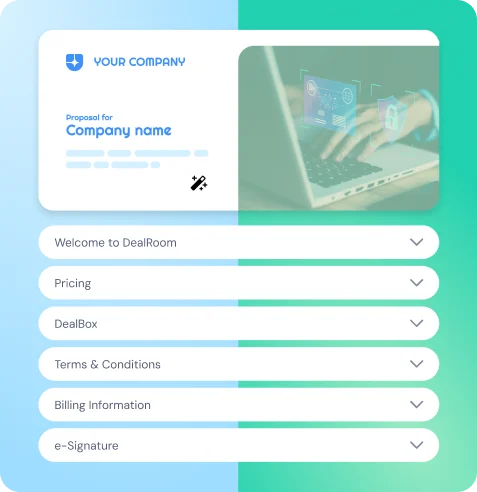
DealHub's DealRoom creates a branded digital sales space for each deal, replacing the back-and-forth of emailed PDFs and Word documents. Each room consolidates quotes, proposals, contracts, videos, case studies, and sales materials in one interactive space.
The platform tracks buyer engagement in real time, sending live notifications via email and Slack when buyers access content. The tracking identifies not just that someone viewed the room, but who in the buying committee is engaging and how much. Mutual action plans guide buyers through the process with embedded steps, assigned roles, and timelines.
Source: DealHub
DealRoom includes in-room chat (DealTalk), contract redlining, and built-in eSignature. Because it connects to CPQ, the system enforces pricing guardrails, preventing reps from offering discounts without managerial approval.
Subscriptions & Billing: Unified subscription management from activation through renewal and revenue recognition.
DealHub's Subscriptions & Billing module connects billing operations to quoting and contracting, creating a two-way data flow between quotes, contracts, and billing that eliminates manual reconciliation.
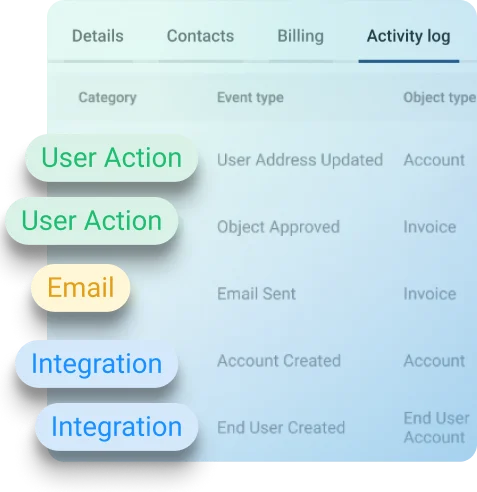
Source: DealHub
The platform supports recurring, one-time, and usage-based pricing alongside milestone and tiered models, with automated handling of mid-cycle adjustments like co-terms, prorating, upsells, and downgrades. An "estimator" feature uses historical data to project ACV for consumption models, predicting booking amounts.
For financial compliance, the module ensures ASC 606/IFRS 15 revenue recognition with visibility into revenue allocation, deferrals, and recognition. It also provides automated invoicing, payment scheduling, tax calculations, and multi-currency billing.
Integration with ERP and financial systems (NetSuite, Sage Intacct, QuickBooks, Xero) and payment processors (Stripe) ensures billing data flows into financial reporting without duplication. Moran Laufer, CFO at Factorial HR, noted: "The finance team is in love with us since we have released DealHub."
Where DealHub Falls Short
DealHub is strong at what it does: turning configured quotes into signed contracts and recognized revenue.
But several limitations show up with sustained use, and one structural gap defines where the platform's scope ends.
No Prospecting or Buyer Intelligence: DealHub starts when a deal is already in motion. It has no tools for finding new accounts, identifying in-market buyers, enriching contact data, or reading buying signals.
Your pipeline has to come from somewhere else, which means you need a separate system to identify who to sell to, when they're ready to buy, and how to reach them. That gap at the top of the funnel limits the volume and quality of opportunities entering DealHub.
Performance Under Load: Capterra reviewers cite performance as a recurring concern, specifically the time to load quotes, submit for approval, and sync between systems. For teams managing high volumes of quotes, these delays slow down the deal cycle.
Reporting and Audit Capabilities: Capterra reviews identify gaps in reporting and audit trails. Dashboards lack the detail administrators need to monitor system activity, and there is no complete audit trail.
Concurrent Editing Limitations: Capterra reviewers report that proposals can disappear if more than one person updates them at the same time. For larger deal teams where multiple stakeholders work on proposals in parallel, this creates real operational risk.
Regional Complexity: TrustRadius reviews warn that organizations with different selling operations across multiple regions face double work, as each region requires separate setup and updates must be replicated.
Opaque Pricing: DealHub offers no publicly listed prices. All three tiers require contacting sales for a custom quote. Combined with non-cancellable payment obligations and automatic renewal unless 30 days notice is given, prospective buyers should examine contract terms closely.
These limitations reflect DealHub's focus on the quoting-to-revenue stage. But the most significant gap, the absence of prospecting and buyer intelligence, is structural. A CPQ platform can only close deals that reach it, and the quality of what enters the pipeline determines what comes out the other side.
The Natural Complement to DealHub: ZoomInfo
DealHub handles deal execution: configuring products, generating quotes, managing contracts, and recognizing revenue.
ZoomInfo handles everything that comes before: finding the right accounts, identifying decision-makers, detecting buying signals, and engaging prospects at the right moment. Together, they cover the full revenue lifecycle from first signal to closed deal.
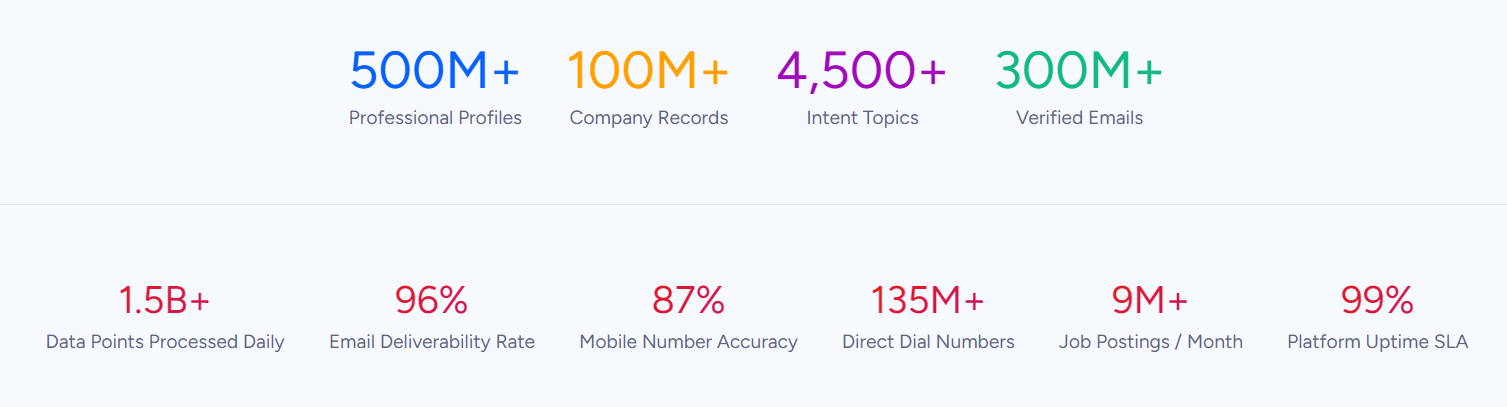
ZoomInfo is an AI-powered GTM platform built on a B2B dataset of 500M contacts, 100M companies, 135M+ verified phone numbers, and 200M+ verified business emails.
Its GTM Context Graph, which processes 1.5B+ data points daily, combines this data with your CRM records, conversation transcripts, and behavioral signals to show the context of your accounts: not just what happened, but why it happened, and what to do next.
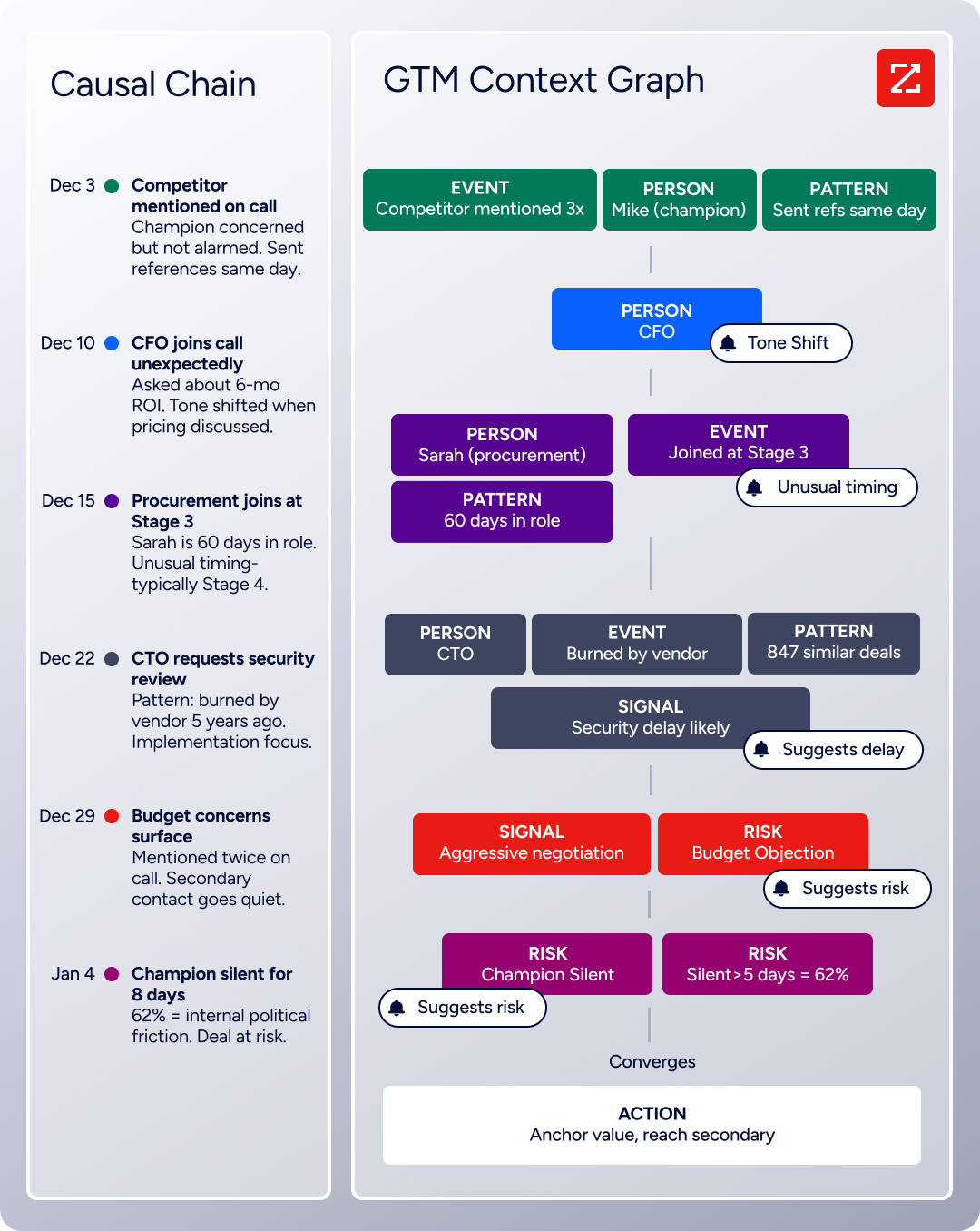
Your team can act on that intelligence through GTM Workspace for sellers, GTM Studio for marketers and RevOps, or APIs and MCP in any front-end.
Comprehensive B2B Data: The foundation DealHub doesn't provide.
DealHub assumes your pipeline already exists. ZoomInfo builds it.
The platform delivers 300+ company attributes for market segmentation, including department org charts with decision-makers' direct dials and verified emails, job-change alerts, and one-click CRM export. This data reaches up to 95% accuracy on first-party data, maintained by multi-source verification and 300+ human researchers.
Independent evaluations confirm the data quality. In a Fortune 500 competitive RFP analyzing 25 million contacts across vendors, the independent consultant concluded that "no other competitor came even close." ZoomInfo is also a Gartner Magic Quadrant Leader for ABM Platforms (2024 & 2025), a Forrester Wave Leader for Intent Data Providers (Q1 2025), and Ranked #1 in 142 G2 Reports.
For sales teams using DealHub to close deals, ZoomInfo ensures those deals start with verified contacts, complete account profiles, and buying intent.
"ZoomInfo gives us the information we need to execute. We don't have to go through and spend our time digging. It's already there, so we can be three steps ahead." (Vensure)
GTM Context Graph: Intelligence that tells you which deals deserve your best quotes.
Accurate data is the starting point. The GTM Context Graph transforms that data into intelligence your team can act on.
By combining ZoomInfo's B2B data with a customer's CRM records, conversation transcripts, and behavioral signals, the GTM Context Graph captures the context behind deal movements.
CRMs record that a deal changed stages. Conversation intelligence captures what was said on the last call. Intent data logs research activity. The GTM Context Graph connects all three to show why the deal moved and what should happen next.
This intelligence improves the quality of what enters DealHub. Instead of quoting every prospect equally, sales teams can prioritize accounts showing buying signals: executive sponsors entering conversations, rising intent scores, competitor research activity, or hiring patterns that indicate budget allocation.
ZoomInfo Intent tracks signals from 210 million IP-to-Organization pairings and 6 trillion+ new keyword-to-device pairings sourced monthly. Guided Intent, exclusive to ZoomInfo, identifies the topics historically correlated with deal success rather than requiring manual topic selection.
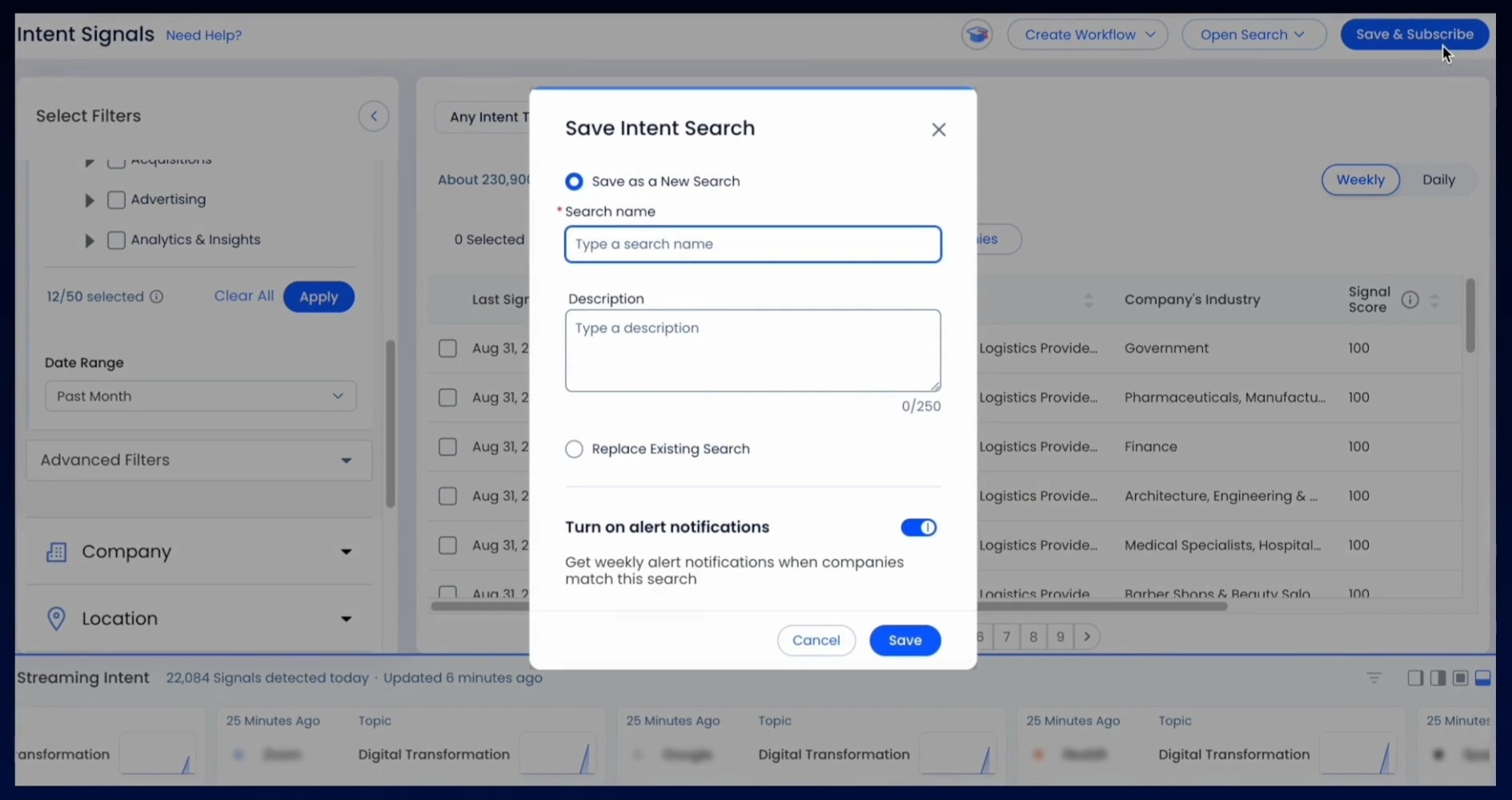
Source: ZoomInfo
"That combination of our internal CRM data, external signals, and AI that's given all that context has helped us craft very specific account- and persona-based messages. And people have responded to them right away." (Seismic)
GTM Workspace and GTM Studio: Where intelligence becomes action before deals reach the quoting stage.
ZoomInfo delivers intelligence through multiple access points, each designed for a specific team.
GTM Workspace is where sellers work. It gives them a single view of prioritized accounts, AI-drafted outreach, deal context, and recommended next steps, all drawn from the GTM Context Graph.
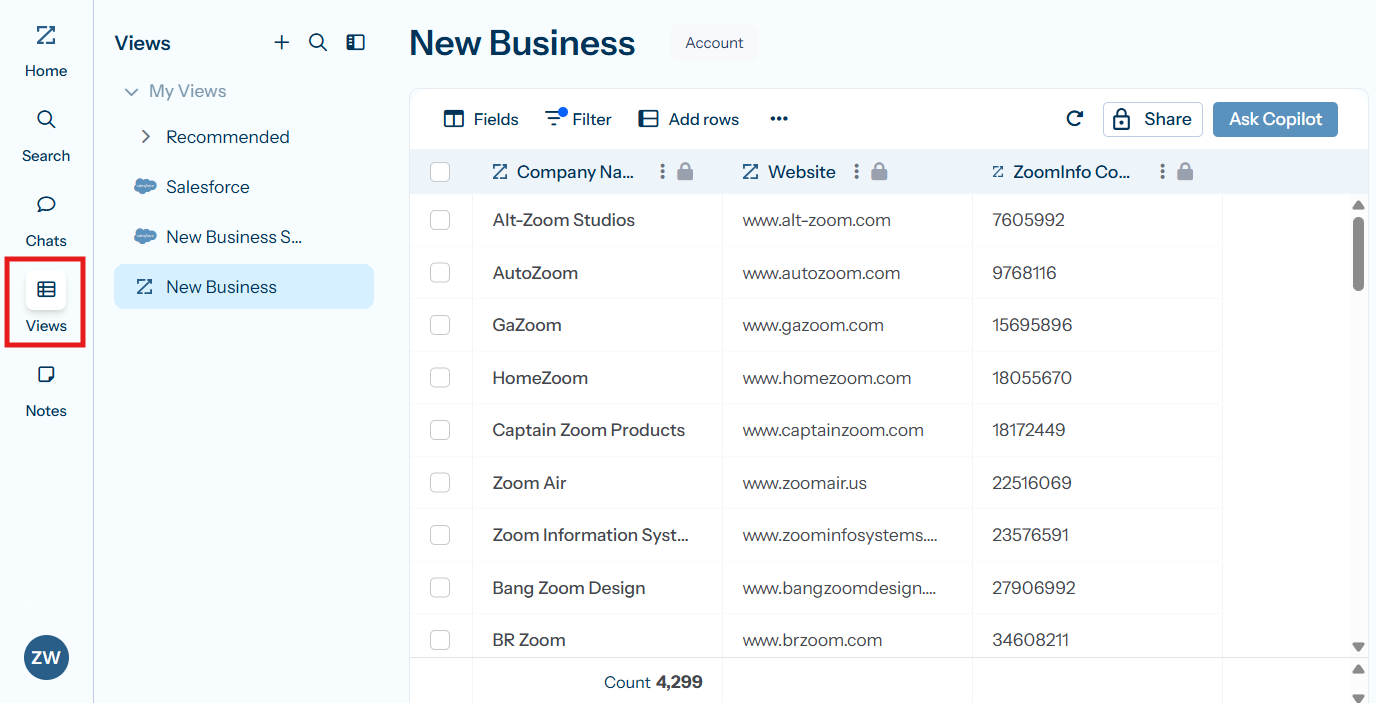
Source: ZoomInfo
AI agents handle account research, outreach generation, CRM updates, and signal monitoring. Sellers at Seismic boosted productivity by 54% and saved 11.5 hours per week, while Thomson Reuters increased closed-won deals by 40%.
GTM Studio serves marketers, RevOps, and GTM engineers with a canvas for designing audiences, launching multi-channel campaigns, and measuring pipeline impact. Expansion campaigns that took 3 weeks now launch in 30 minutes.
For teams building custom workflows, APIs and MCP expose the same intelligence to any application, AI agent, or third-party tool. All three access points (Workspace, Studio, and APIs) draw from the same GTM Context Graph, so the choice of where to work never limits what's available.
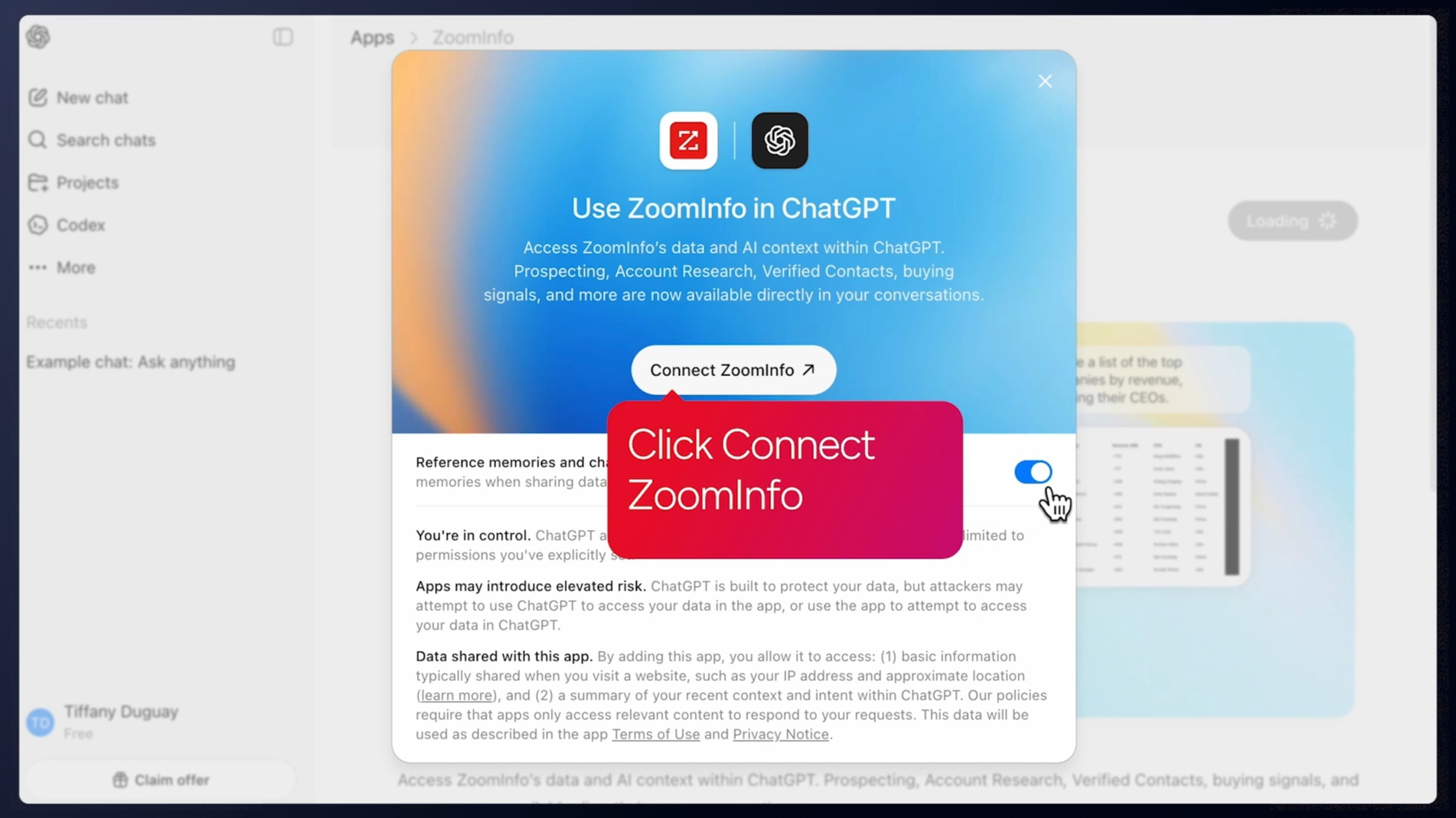
Source: ZoomInfo
"The plug-and-play aspect of the API means I can integrate it very easily into any process and get information at a moment's notice." (BDO Canada)
Pricing: Options from free to enterprise.
ZoomInfo offers two ways to start before committing to a paid plan:
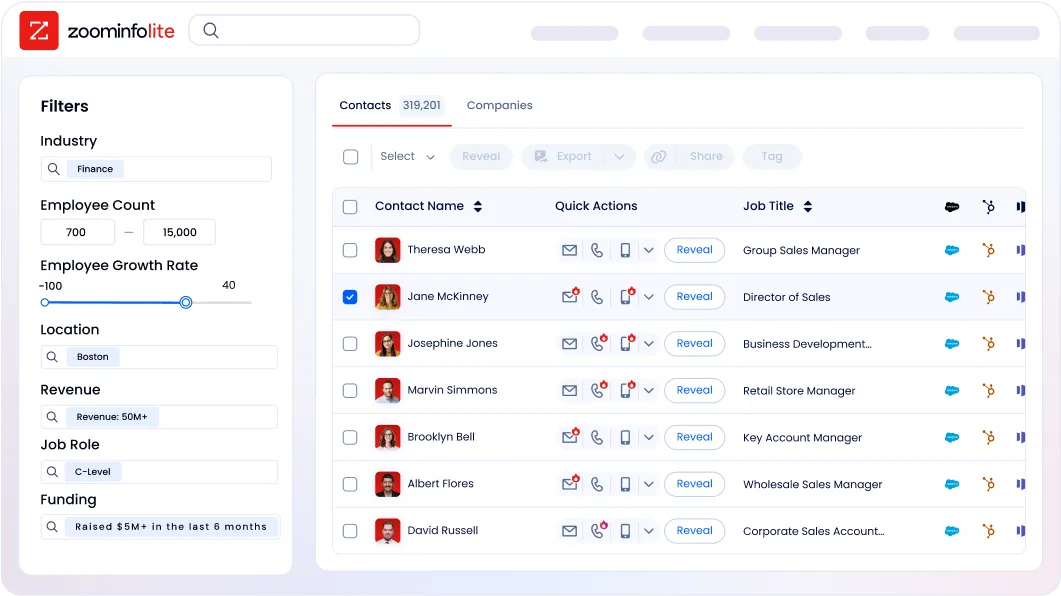
ZoomInfo Lite is a free tier (not a trial) with access to ZoomInfo's B2B database, 10 monthly export credits, individual and company searches, contact information, the ReachOut Chrome Extension, and WebSights Lite for website visitor identification.
A 7-day free trial provides access to core platform features including contact and company search, intent signals, and email outreach. No credit card required.
Paid plans are organized into Sales and Marketing product lines across Professional, Advanced, and Enterprise tiers. Pricing is consumption-based and custom-quoted, scaling around seats, credits, and feature access. API access is included in all relevant plans.
DealHub and ZoomInfo: How They Work Together
Aspect | DealHub | ZoomInfo |
|---|---|---|
Primary Focus | Quote-to-revenue execution | Prospecting, intelligence, and engagement |
Stage in Sales Cycle | Deal configuration through revenue recognition | Account identification through deal creation |
Core Strength | CPQ, contracts, billing, digital sales rooms | B2B data, buyer intent, GTM intelligence |
CRM Integration | Salesforce, HubSpot, Dynamics 365 | Salesforce, HubSpot, Dynamics 365, 120+ more |
AI Capabilities | Guided selling, approval automation | GTM Context Graph, AI agents, predictive scoring |
Prospecting Tools | None | 500M contacts, intent signals, website visitor ID |
Buyer Intelligence | DealRoom engagement tracking (post-quote) | Intent data, org charts, technographics (pre-quote) |
Free Entry Point | No public free plan or trial | Permanent free tier + 7-day trial |
Pricing Transparency | Custom quotes only | Custom quotes; free tier available |
Best For | Closing deals with accurate, fast quoting | Finding and qualifying the right deals to close |
Final Verdict
DealHub and ZoomInfo are not alternatives to each other. They serve different stages of the same revenue process, and using them together creates a complete workflow from prospect identification to revenue recognition.
Choose DealHub if your sales team is losing deals to slow, error-prone quoting. It's the right platform when sellers bypass your current CPQ because it's too complex, when pricing updates require IT tickets that take months, or when your quote-to-cash cycle drags because contracts, billing, and approvals live in disconnected systems.
Add ZoomInfo if you want every deal that enters the quoting stage to be worth pursuing. ZoomInfo ensures the accounts entering DealHub's workflow are verified, qualified, and showing buying signals, not cold leads that waste quoting effort.
The combination means your team spends less time building quotes for prospects who were never going to close, and more time configuring deals for buyers who are already in-market. With the GTM Context Graph drawing from your CRM, conversation history, and ZoomInfo's B2B data, every deal that reaches DealHub arrives with the context your reps need to quote accurately and close faster.
Start with ZoomInfo's free trial here.
Revenue teams that win don't choose between finding prospects and closing deals. They build a workflow where intelligence feeds execution, and execution informs intelligence. ZoomInfo and DealHub, working together through your CRM, create that workflow.
DealHub FAQ
What is DealHub used for?
DealHub is a CPQ (Configure-Price-Quote) and quote-to-revenue platform that automates sales quoting, contract management, subscription billing, and digital sales rooms. It's designed for B2B organizations with complex pricing models that need to reduce quoting errors, speed up approval cycles, and unify deal execution from quote to revenue recognition.
How much does DealHub cost?
DealHub does not publish pricing. All three tiers (CPQ+, CPQ + CLM, and Quote-to-Revenue) require contacting sales for a custom quote. The platform uses a subscription model where fees are based on services purchased. Annual rate increases are capped at the greater of 5% or the prior 12-month CPI, and contracts auto-renew unless 30 days notice is given.
Does DealHub offer a free trial?
DealHub's website does not mention a free trial or free plan. The company offers a demo request option and encourages prospects to get a custom quote.
ZoomInfo, by contrast, offers both a permanent free tier (ZoomInfo Lite) and a 7-day free trial with no credit card required.
What CRMs does DealHub integrate with?
DealHub offers native bidirectional integrations with Salesforce, Microsoft Dynamics 365, and HubSpot. It also connects with ERP systems including NetSuite, Sage Intacct, QuickBooks, and Xero, as well as DocuSign for e-signatures, Stripe for payments, Avalara for tax compliance, and communication tools like Slack and Gong.
Is DealHub easy to use?
G2 recognizes DealHub as the leading CPQ for ease of use, with a 4.5 ease of use rating. Sales reps can start using it within hours of adoption training, and its no-code configuration reduces dependence on IT teams. However, advanced customization and backend setup can feel complex for administrators, and some users report performance lags when loading quotes or syncing between systems.
What is DealHub's DealRoom feature?
DealRoom is a branded digital sales space that consolidates deal-related content (quotes, proposals, contracts, videos, case studies) in one interactive hub shared between buyer and seller. It tracks buyer engagement in real time, identifies which stakeholders in the buying committee are most active, and includes in-room chat, mutual action plans, and built-in e-signatures.
DealHub's analysis of over 193,000 deals found win rates increased by up to 3x when teams used DealRoom versus traditional PDFs and Word documents.
Does DealHub help with prospecting or finding new leads?
No. DealHub focuses on deal execution: quoting, contracting, billing, and digital sales rooms. It does not include tools for prospecting, lead generation, buyer intent detection, or contact data enrichment. Teams using DealHub typically pair it with a prospecting and intelligence platform like ZoomInfo to identify and qualify the accounts that enter their quoting workflow.
What compliance certifications does DealHub hold?
DealHub holds ISO 27001, ISO 27701:2019, and ISO 22301:2019 certifications, along with SOC 1 Type II and SOC 2 Type II compliance. The platform operates in alignment with GDPR and CCPA requirements. All data in transit is encrypted using HTTPS with TLS 1.2 or higher, and data at rest is encrypted with AES 256-bit algorithm.
Researching DealHub? These comparisons and alternatives help you decide:
