
Dreamdata occupies a specific position in the B2B marketing stack: it connects marketing activities to pipeline and revenue, then activates those insights across ad platforms. For B2B companies struggling to prove which campaigns drive deals, that matters. But as marketing teams mature, many find that attribution alone isn't enough. They need the data, signals, and execution tools to act on what they've learned.
To write this Dreamdata review, we've analyzed it extensively. We believe it's the ideal choice if:
You need multi-touch revenue attribution tied to CRM pipeline data
You want to prove marketing's contribution to closed deals
LinkedIn is a primary demand generation channel for your team
You need to build and sync dynamic B2B audiences to ad platforms
You're a marketing ops team comfortable with a setup-intensive analytics platform
However, Dreamdata might not be the best choice if:
You need B2B contact and company data for prospecting
Your sales team needs AI-powered execution tools alongside marketing analytics
You require conversation intelligence tied to deal outcomes
You want a single platform spanning sales, marketing, and RevOps workflows
You need verified direct-dial phone numbers and business emails at scale
In this case, you should consider ZoomInfo: an AI GTM platform built on a large B2B data foundation. Where Dreamdata measures which marketing activities drove revenue, ZoomInfo provides the data, intelligence, and tools to find, reach, and convert those buyers across your go-to-market motion, with intent signals, audience activation, and AI tools for both sales and marketing teams.
We've included a detailed look at ZoomInfo later in this Dreamdata review, as the broader platform for teams that need more than attribution analytics. If you're ready to explore what that looks like, you can start with ZoomInfo's free trial here.
What is Dreamdata?
Dreamdata is a B2B Activation and Attribution Platform founded in Copenhagen in 2018 by three former Trustpilot colleagues: Lars Grønnegaard Hansen, Ole Dallerup, and Steffen Hedebrandt.
The founding story starts with a specific problem. As Lars Grønnegaard describes it: "Think about a meeting where you have the head of product, the head of sales and the head of marketing, and they are all discussing their contribution to revenue, and each of them names a number. When you add them up, it gives like 200% of the revenue that you made."
That problem (marketing can't prove its contribution to revenue) became Dreamdata's reason for existing. The platform connects every revenue touchpoint to pipeline and closed deals, then turns that data into audience activation and AI-driven intent signals.
Its core premise: 81% of the customer journey happens before your sales team says hello, making most of marketing's work invisible to standard analytics tools.
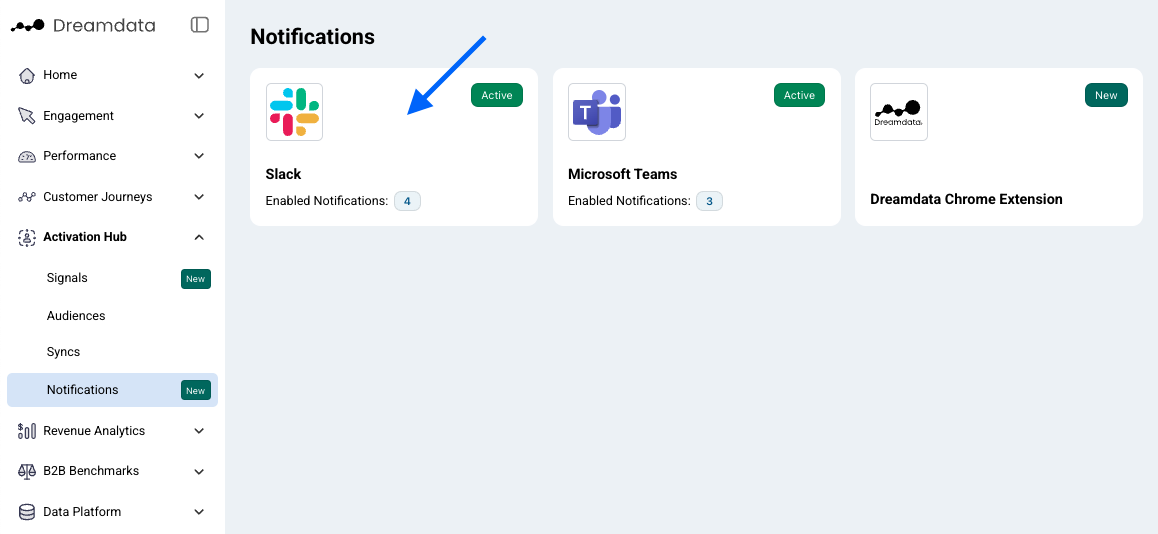
The product operates across three workflows: Measure (multi-touch revenue attribution), Activate (audience building and ad platform sync), and Automate (AI-driven intent signals and CRM/Slack alerts).
Source: Dreamdata
Dreamdata raised $55 million in Series B funding in October 2025, led by PeakSpan Capital, bringing total funding to approximately $61.2 million. The company employs roughly 71–79 people across offices in Copenhagen and New York.
Dreamdata's target buyer is a B2B SaaS company running multi-channel go-to-market motions, particularly performance marketers, demand generation managers, and CMOs who need a defensible attribution number and an activation layer for their ad spend. Named customers include Cognism, Moss, Gorgias, Clio, Finastra, and Hightouch.
Dreamdata Pros & Cons
Pros | Cons |
|---|---|
- Account-level multi-touch attribution tied to CRM revenue data | - Steep learning curve (1–2 months to proficiency) |
- LinkedIn Marketing Partner with deep integration | - Requires clean CRM data for accurate attribution |
- Dynamic audience activation to LinkedIn, Google, Meta, and Microsoft Ads | - Limited custom dashboard layouts |
- Cookieless visitor identification (up to 80% of anonymous traffic) | - No native CRM write-back capability |
- Highly rated customer support (G2: 9.5 quality of support score) | - Significant setup and integration time investment |
- Free plan with no time limit or credit card required | - Non-marketing stakeholders find the interface difficult to navigate |
- Data warehouse export to BigQuery, Snowflake, S3, and Azure | - Paid plan pricing not publicly disclosed |
Dreamdata Review: How It Works & Key Features
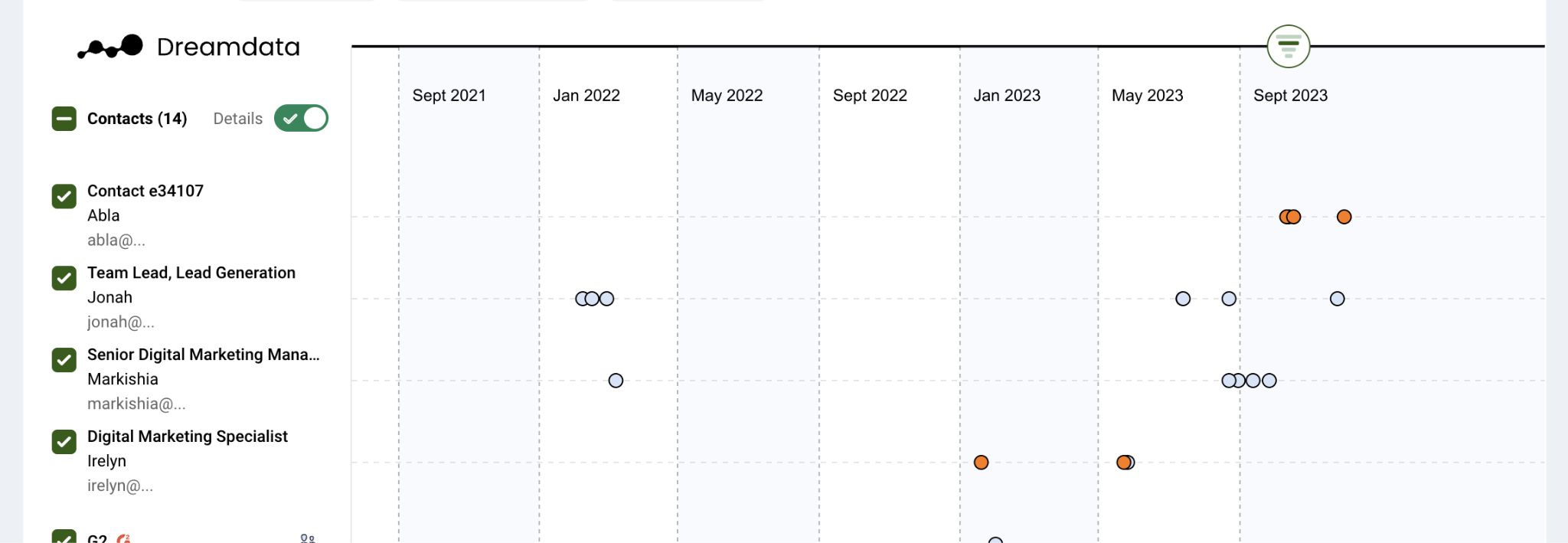
Customer Journeys: Dreamdata assembles every touchpoint across every contact at a target account into one chronological, account-level timeline.
B2B buying decisions involve multiple stakeholders, unfold over months, and span dozens of touchpoints. Most marketing tools report on individual contacts or sessions in isolation.
Dreamdata's Customer Journeys solves this by building an account-level view that connects anonymous web visits, ad impressions, form fills, and CRM opportunity data into a single interactive timeline.
The platform builds these journeys by unifying three categories of data. First-party website tracking captures site behavior, including cookieless analytics. When a visitor submits a form, Dreamdata maps the email domain to the company URL in the CRM.
For anonymous visitors, IP information associates traffic with companies. Data from connected ad platforms, CRM systems, and marketing automation platforms flows in automatically. LinkedIn Ads engagement and G2 intent data come through Dreamdata's official partner status with both platforms.
Within the journey view, users can click any session to see every data point recorded: pages visited, paths taken, content viewed, and conversions.
Source: Dreamdata
The timeline displays roles, seniority, and titles of all contacts in the journey, ordered by latest activity. Users can highlight touchpoints by channel, source, or campaign and overlay up to 7 custom company properties from the CRM. A companion Journey Metrics dashboard benchmarks journey length and session counts against industry medians from a selected peer group.
The structural advantage: Customer Journeys is built around the company, not the individual contact, reflecting how B2B buying actually works. Pre-sales anonymous coverage, LinkedIn partner data, and revenue context from the attribution platform make this more than a session replay tool.
Performance Attribution: Dreamdata connects paid and organic marketing activities directly to pipeline and revenue outcomes using configurable attribution models.
Performance Attribution is where Dreamdata earns its keep for paid media teams.
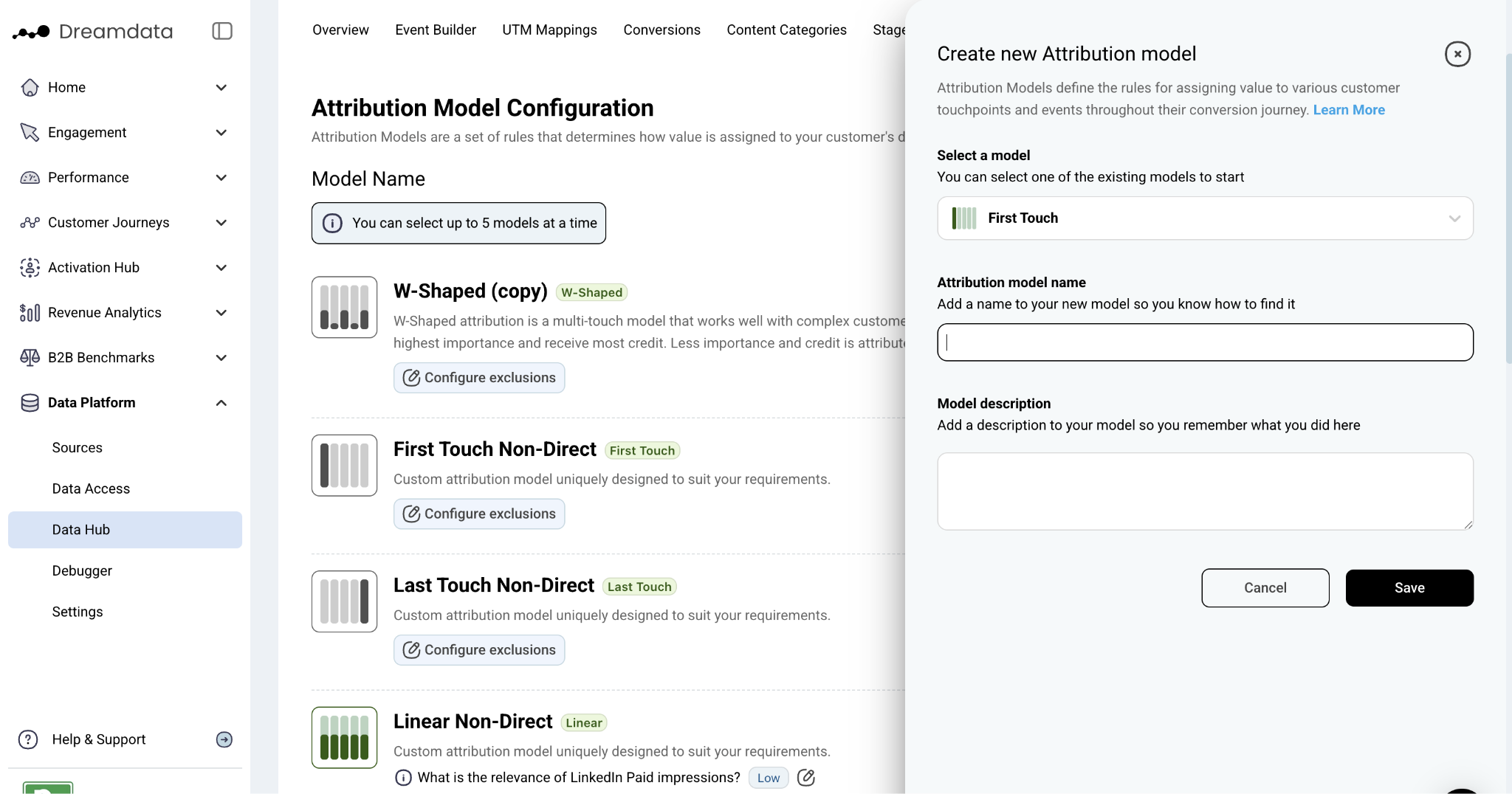
The module connects all marketing channels to revenue using six default attribution models: Linear, First-touch, Last-touch, W-shaped, U-shaped, and Data-Driven (an ML algorithm trained on the customer's own journey data).
Users can create additional model variants with custom exclusion rules, and Enterprise customers can build fully custom attribution models encoding any combination of business rules.
Source: Dreamdata
A distinction worth noting: Dreamdata formally separates Performance Attribution from Revenue Attribution. Performance looks forward from GTM activities ("what were the results of this campaign?"), while Revenue looks backward from closed deals ("who was responsible for this revenue?"). Both are available in the same platform.
For LinkedIn, Dreamdata offers LinkedIn Impression Attribution, a blended algorithm that assigns partial credit to account-level impressions at configurable weighting tiers.
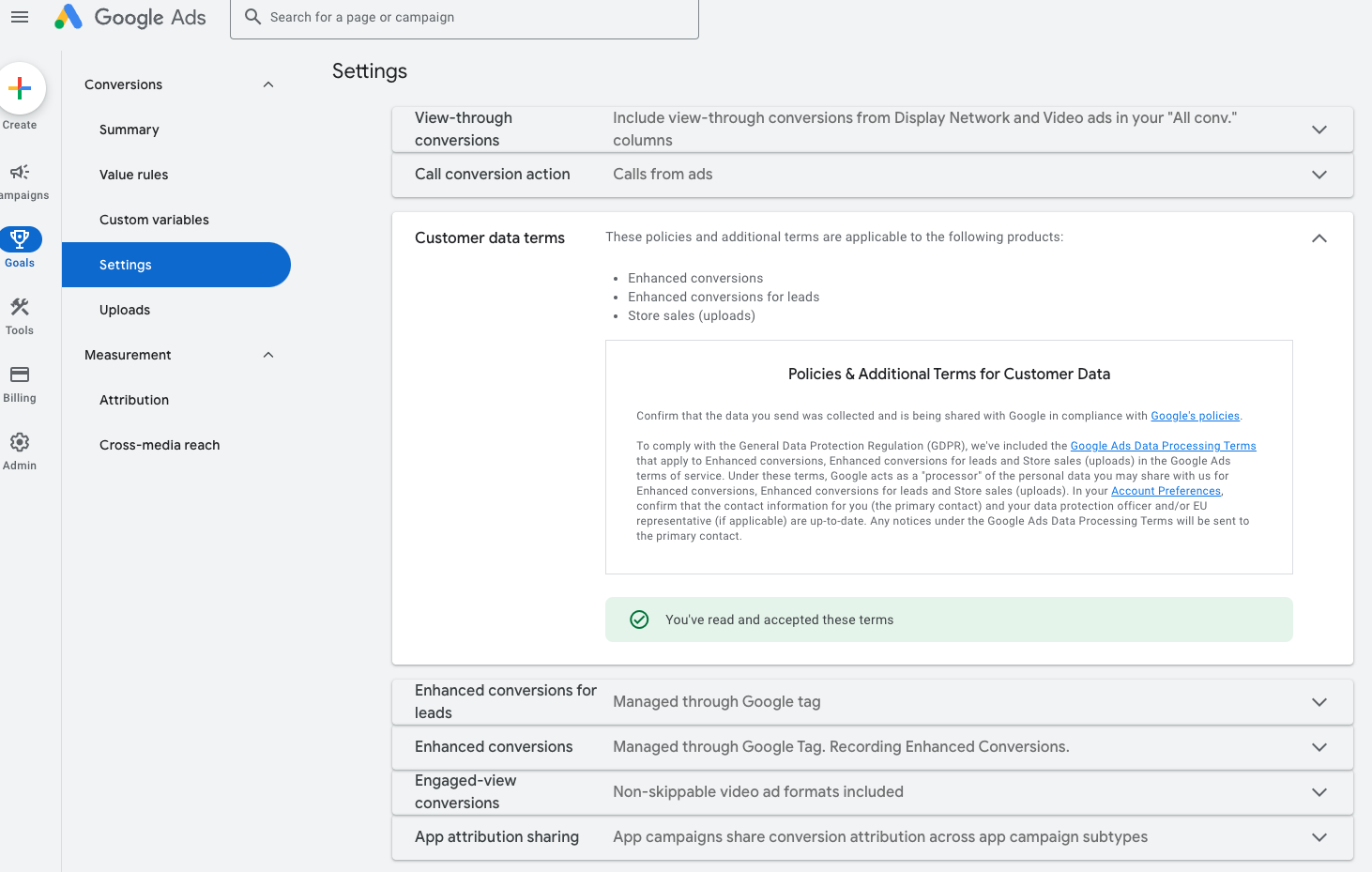
The platform also pushes pipeline stage data back to LinkedIn CAPI and Google Ads Enhanced Conversions, training ad platform algorithms on revenue signals instead of form fills.
Source: Dreamdata
Dedicated dashboards cover Google Search, Google Display, LinkedIn, Microsoft, Meta, YouTube, Capterra, and G2. An AI Report Summary feature auto-interprets performance reports in 10–15 seconds, reducing manual analysis time.
Audience Hub: Dreamdata builds and syncs targeted B2B audiences to ad platforms using behavioral, CRM, and intent data.
Most attribution tools stop at reporting.
Dreamdata's Audience Hub closes the loop between measurement and action. The Audience Builder supports unlimited filter combinations across activity conditions (ad clicks, form submissions, page visits), property conditions (any CRM field), stage conditions (funnel stage within any time frame), and anonymous company data from IP-resolved visitors not yet in the CRM.
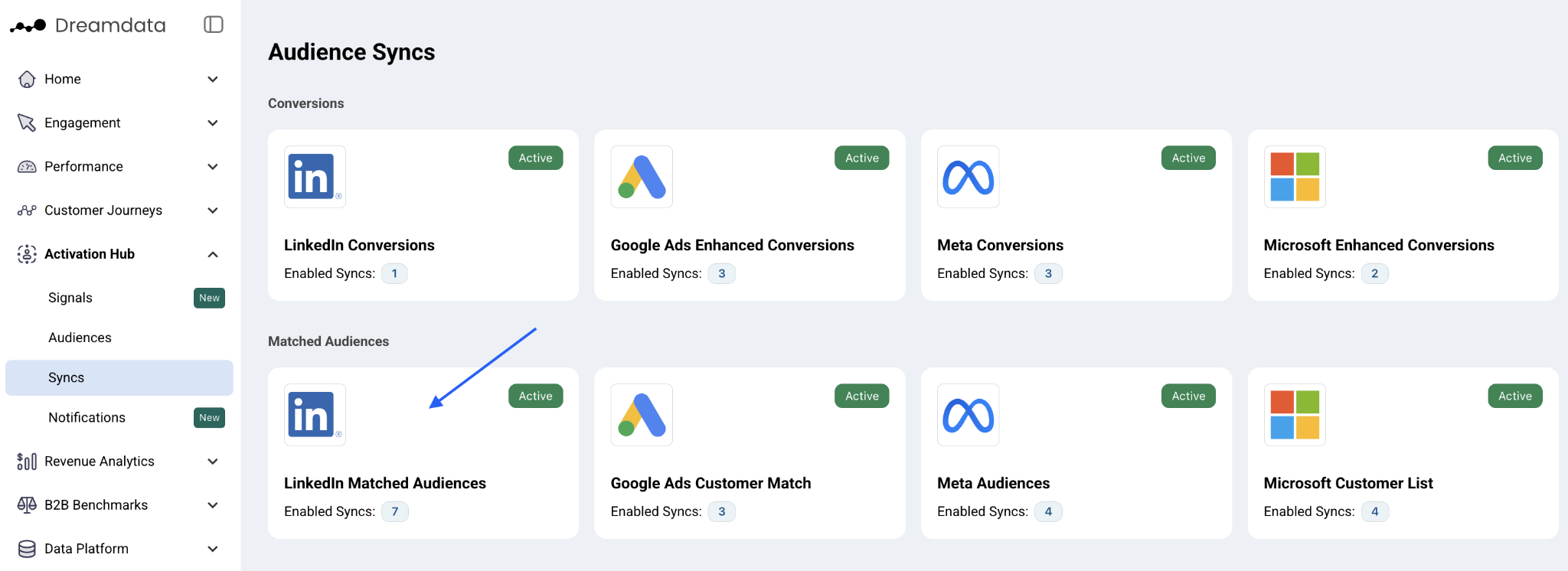
Built audiences sync daily to LinkedIn Matched Audiences, Google Customer Match, Meta Audiences, and Microsoft Customer List, with automatic additions and removals as accounts enter or exit criteria. No manual CSV exports required.
Source: Dreamdata
Conversion syncs feed pipeline events back to all four major ad platforms with a single click, training bidding algorithms on real business outcomes. The Audience Reach report fills a common ABM gap: measuring what percentage of target accounts you've actually reached, segmented by firmographics.
Signals: Dreamdata uses AI trained on your own pipeline data to identify high-intent accounts before competitors reach them.
Dreamdata Signals addresses a common problem with generic intent data: the signals aren't calibrated to your business.
The AI Signal Recommendation Agent uses a two-layer approach. A statistical ML component trains against the customer's own historical funnel data, identifying behavioral touchpoints that correlate with pipeline progression. A generative AI layer (Google Gemini) refines these findings, weighing signal frequency, historical success patterns, and relevance.
The AI requires a minimum of 50 Closed Won and 50 Closed Lost deals in the past 365 days to generate recommendations. All data fed into the Gemini AI layer is anonymized and aggregated; no personal data is shared and no data trains Google's models.
Dreamdata also claims to identify up to 80% of anonymous visitors even when cookies are declined, using proprietary IP-to-company resolution.
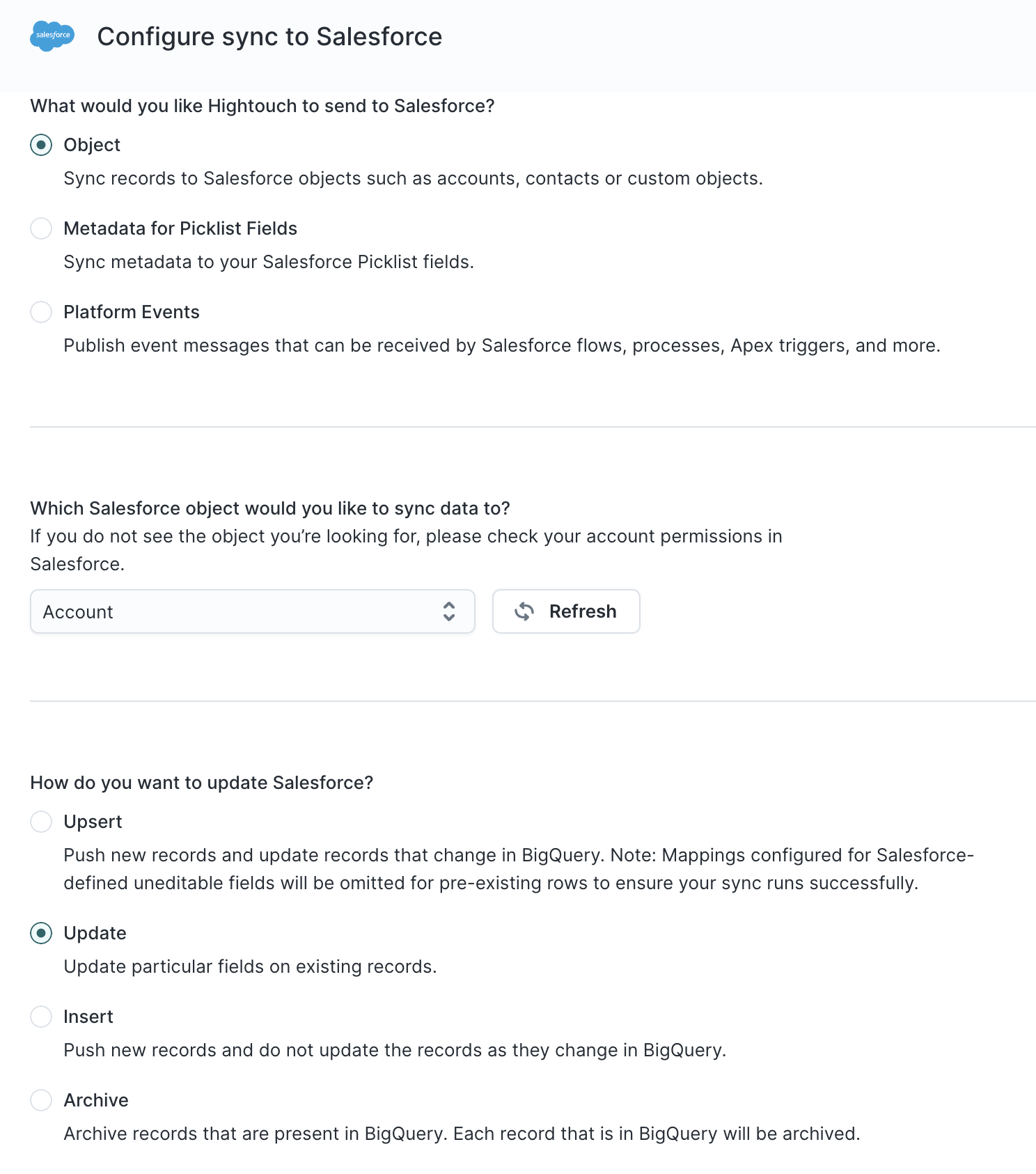
High-intent signals activate through four mechanisms: audience syncs to ad platforms, CRM pushes to HubSpot or Salesforce, real-time Slack or Microsoft Teams notifications, and a Chrome Extension that surfaces engagement data while browsing prospect profiles.
Source: Dreamdata
Pricing: Dreamdata offers a permanent free plan and a custom-priced advanced tier.
Dreamdata uses a two-tier structure: a permanently free plan and a single advanced tier called "Activation & Attribution" at custom pricing.
Free Plan ($0/month):
B2B Web Analytics with cookie and cookieless tracking
Engagement Scoring and Company Identification
Audience Builder (1 sync)
Slack/Teams Notifications (2)
Ad Spend Report and B2B Benchmarks
5 seats, 2 months of user history, 3 stage models
Self-serve onboarding, Slack community, AI chat support
No credit card required
Activation & Attribution (Custom Pricing):
AI and custom multi-touch attribution models
Revenue and Content Analytics
AI-Powered Report Summaries
Audience activation to all major ad platforms
AI ideal-buyer identification and sales alerts
Advanced Data Controls and custom data sources
Full onboarding with dedicated CSM, technical manager, and solutions consulting
Custom limits on seats, syncs, notifications, and history
The free plan works for basic B2B analytics. It's not a time-limited trial. But the features that define Dreamdata's value (multi-touch attribution, revenue analytics, AI signals, and full audience activation) all require the paid tier. Pricing for the paid plan is not publicly disclosed and requires a demo conversation.
Where Dreamdata Falls Short
Dreamdata excels at proving marketing's impact on revenue, but several limitations surface for teams whose needs extend beyond attribution analytics.
These constraints reflect a platform built for marketing measurement and activation, not full go-to-market execution.
No B2B Contact or Company Data: Dreamdata analyzes existing CRM and behavioral data but does not provide contact databases, verified phone numbers, or business email addresses. Teams still need separate tools to find and reach new prospects.
If your CRM has gaps in coverage, Dreamdata can measure what happened with the contacts you have but cannot fill in the missing names, titles, or direct dials.
Marketing-Centric, Not GTM-Wide: The platform is built for marketing practitioners. Non-marketing stakeholders find it hard to navigate, and there are no native tools for sales execution, outbound prospecting, or account management.
Sales teams receive Slack alerts and CRM pushes from Dreamdata, but the platform offers no workspace where sellers can act on those signals with AI-drafted outreach, account briefs, or buying group intelligence.
No Conversation Intelligence: Dreamdata tracks digital touchpoints but has no visibility into what happens during sales calls and meetings. It can attribute a deal to the marketing campaigns that preceded it, but cannot capture why the deal moved (executive sponsorship, competitive mention, budget objection) because it doesn't analyze conversations.
Opaque Paid Pricing: The custom-quoted Activation & Attribution plan has no published price points. Teams evaluating Dreamdata must go through a demo and sales process before knowing whether the platform fits their budget, which slows vendor comparison.
CRM Data Quality Dependency: Dreamdata's attribution accuracy depends directly on the quality of CRM data it connects to. One Capterra reviewer stated it plainly: "If your CRM health is poor, then no magic will happen." For teams without disciplined CRM hygiene, the platform's output may not justify the setup investment.
Steep Learning Curve: Reviewers across Capterra and G2 consistently describe "1–2 months" to reach proficiency. The interface can feel overwhelming on first contact, particularly for infrequent users. Dreamdata's customer success team is highly rated, but the initial time investment is real.
These limitations aren't failures. They reflect a platform optimized for marketing attribution and activation rather than full go-to-market execution. But they create a clear gap for teams that need to move beyond measurement into data-powered prospecting, sales execution, and cross-functional GTM intelligence.
Top Dreamdata Alternative for Full GTM Execution: ZoomInfo
ZoomInfo is an AI GTM platform built on a large B2B data foundation: 500M contacts, 100M companies, 135M+ verified phone numbers, and 200M+ verified business email addresses.
ZoomInfo's GTM Context Graph, an intelligence layer that processes 1.5B+ data points daily, fuses this data with your CRM records, conversation transcripts, and behavioral signals to reveal the full context of your accounts, showing not just what happened but why it happened and what to do next.
That intelligence reaches your team through the GTM Workspace for sellers, GTM Studio for marketers and RevOps, or APIs and MCP in any other front-end.
Source: ZoomInfo
Where Dreamdata focuses on answering "which marketing activities drove this revenue?", ZoomInfo addresses the broader set of GTM questions: Who should we target? How do we reach them? What should we say? And what signals tell us they're ready to buy?
Comprehensive B2B Data: ZoomInfo provides the verified contact and company intelligence that Dreamdata's analytics layer lacks entirely.
Dreamdata connects to your existing CRM data and analyzes it. ZoomInfo creates the data.
The platform spans three dimensions: identity data (500M contacts, 135M+ verified phone numbers, 120M direct-dial phone numbers, and 200M+ verified business email addresses), company context (100M companies with org charts and technographics covering 30,000+ technologies across 200+ categories), and dynamic signals that reveal when accounts are actively in-market.
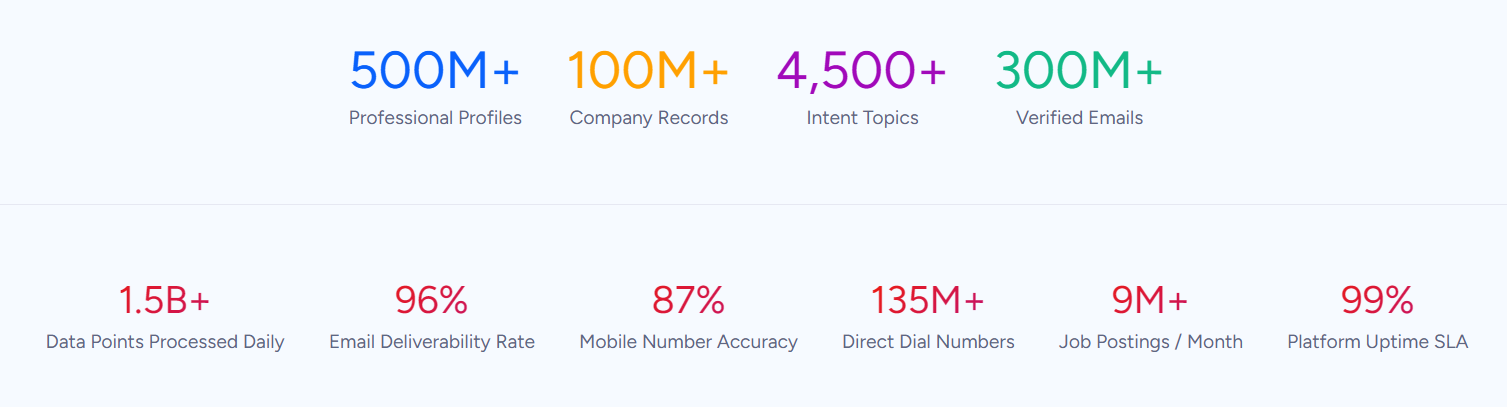
ZoomInfo verifies this data through a multi-source pipeline backed by 300+ human researchers, achieving up to 95% accuracy on first-party data. In a Fortune 500 competitive RFP analyzing 25 million contacts across vendors, an independent consultant concluded that "no other competitor came even close."
For B2B marketing teams, this changes what's possible. TAM modeling becomes a continuously verified census of your actual market rather than a theoretical exercise built on stale snapshots. CRM enrichment doesn't require stitching together multiple vendors. And the prospect data feeding your campaigns is accurate enough to act on, because the direct dials ring and the emails land.
ZoomInfo's Buyer Intent tracks signals from 210 million IP-to-Organization pairings and 6 trillion+ new keyword-to-device pairings sourced monthly. Guided Intent, exclusive to ZoomInfo, identifies topics historically correlated with deal success rather than requiring manual topic selection.
SpringDB saw 2x–3x increases in campaign conversions and a 300% increase in database usability after enriching their data with ZoomInfo. (SpringDB Case Study)
GTM Context Graph: ZoomInfo captures not just what happened in a deal, but why it happened.
Dreamdata's attribution models assign credit to touchpoints. ZoomInfo's GTM Context Graph, the intelligence layer behind the platform, goes deeper.
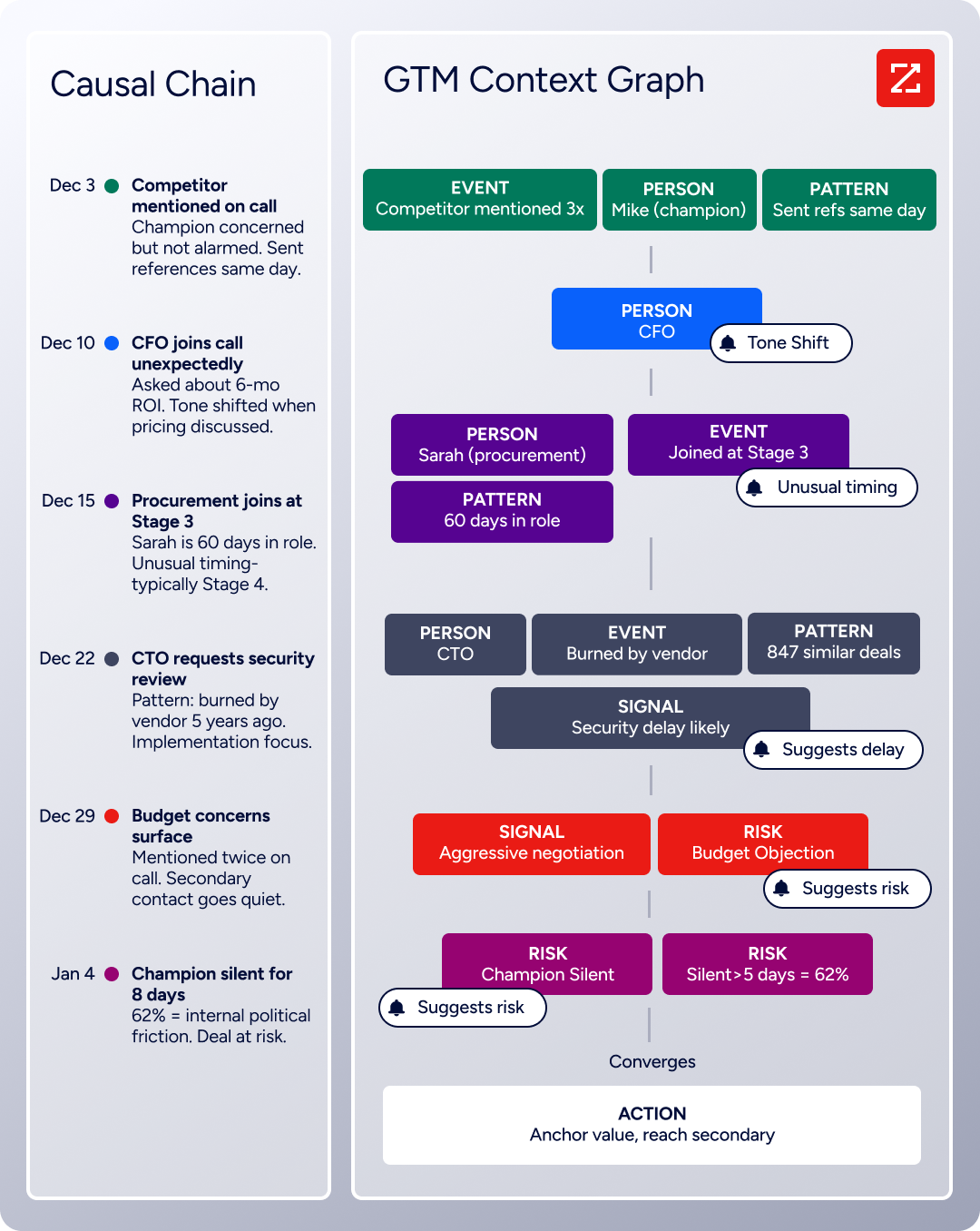
It fuses CRM records, conversation intelligence from calls and meetings, email interactions, product usage signals, and ZoomInfo's third-party intelligence into a graph that captures the context behind deal movement.
A CRM records that a deal moved from Stage 3 to Stage 4. Dreamdata can tell you which marketing campaigns touched the account before that happened.
But as ZoomInfo's Chief Product Officer Dominik Facher writes: "The CRM recorded the state change. It has no record of why it happened." Perhaps the CFO joined the last call and asked about six-month ROI. Perhaps a champion went quiet during an internal budget battle.
The GTM Context Graph makes this decision context machine-readable, capturing people and their relationships, actions and their outcomes, patterns across thousands of similar deals, and the exceptions that reveal real blockers.
This context powers every downstream action: follow-up emails address specific concerns raised in conversations, plays target accounts whose signal combinations match proven win patterns, and forecasts weight deals by buying evidence rather than stage labels.
Seismic attributed 39% of active pipeline to opportunities identified or influenced by ZoomInfo signals, reported 54% productivity gains, and saved 11.5 hours per week per seller. (Seismic Case Study)
GTM Workspace and GTM Studio: ZoomInfo provides native execution tools for both sellers and marketers.
Dreamdata surfaces signals through Slack notifications and CRM pushes, but offers no execution layer where teams act on those insights. ZoomInfo delivers its intelligence through two products built for that purpose.
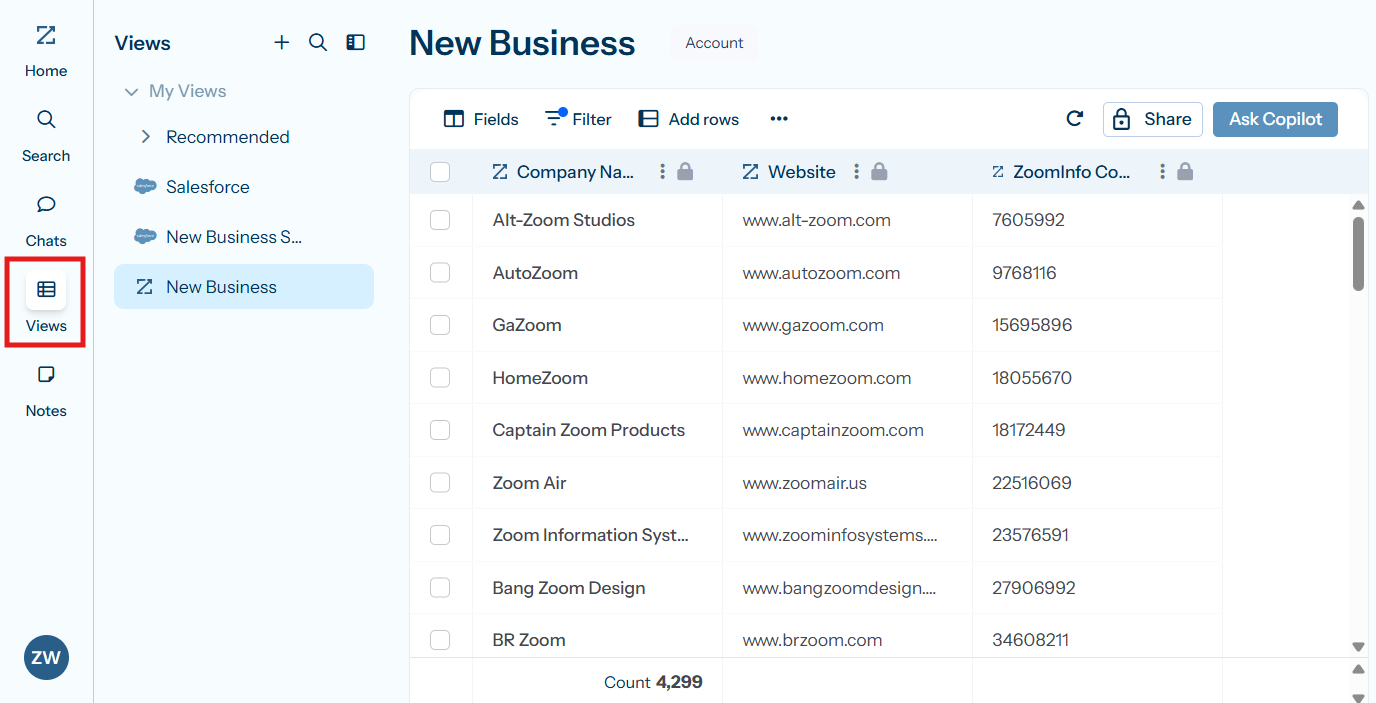
GTM Workspace is the seller's front-end: a workspace where prioritized accounts, AI-drafted outreach, and deal context converge without toggling between tools. Specialized AI agents (built on Anthropic's Claude) handle account research, outreach generation, CRM updates, and signal monitoring. The Action Feed delivers a live stream of in-market buyers with pre-drafted actions on every signal.
Source: ZoomInfo
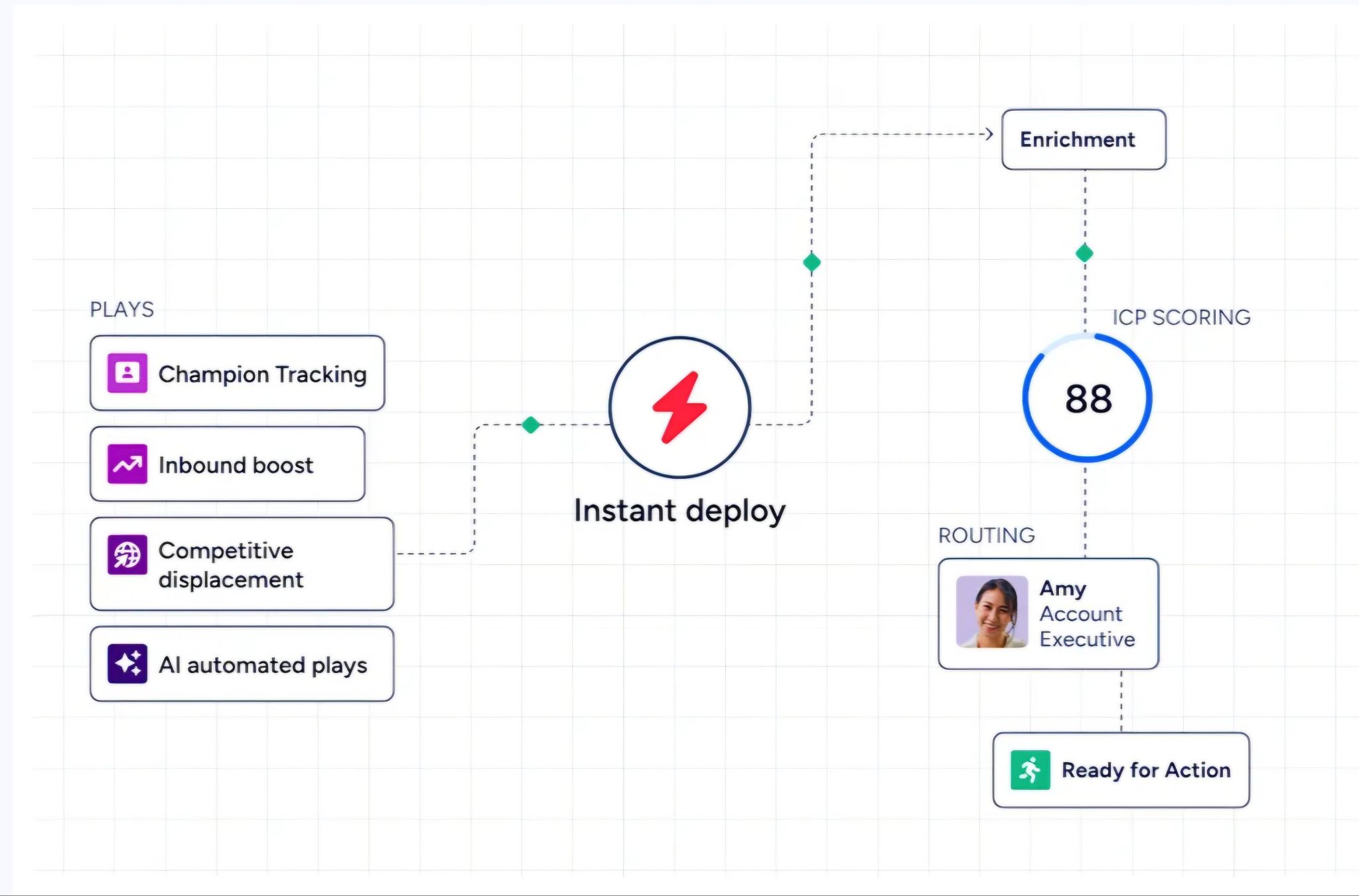
GTM Studio is the marketer's and RevOps front-end: a canvas where audience definition, campaign orchestration, and pipeline measurement happen through natural language rather than engineering tickets. Pre-built GTM plays (inbound acceleration, champion tracking, competitive displacement, ICP targeting) launch in one click. Expansion plays that used to take 3 weeks now launch in 30 minutes.
For teams that build beyond ZoomInfo's own products, APIs and MCP expose the same intelligence to any custom agent, internal tool, or partner platform. All three access methods draw from one GTM Context Graph: the same data, the same intelligence, the same continuously learning model.
"Anything that minimizes our team's need to switch contexts is beneficial. ZoomInfo offers a unified view, eliminating the need to navigate between systems." — Ben Perceval, RevOps Manager (Spekit Case Study)
Pricing and Access: ZoomInfo offers multiple entry points from free to enterprise.
ZoomInfo uses consumption-based pricing with custom quotes, organized into Sales, Marketing, and standalone products (Chorus, Chat).
Exact prices are not published, but the structure accommodates different team sizes and use cases.
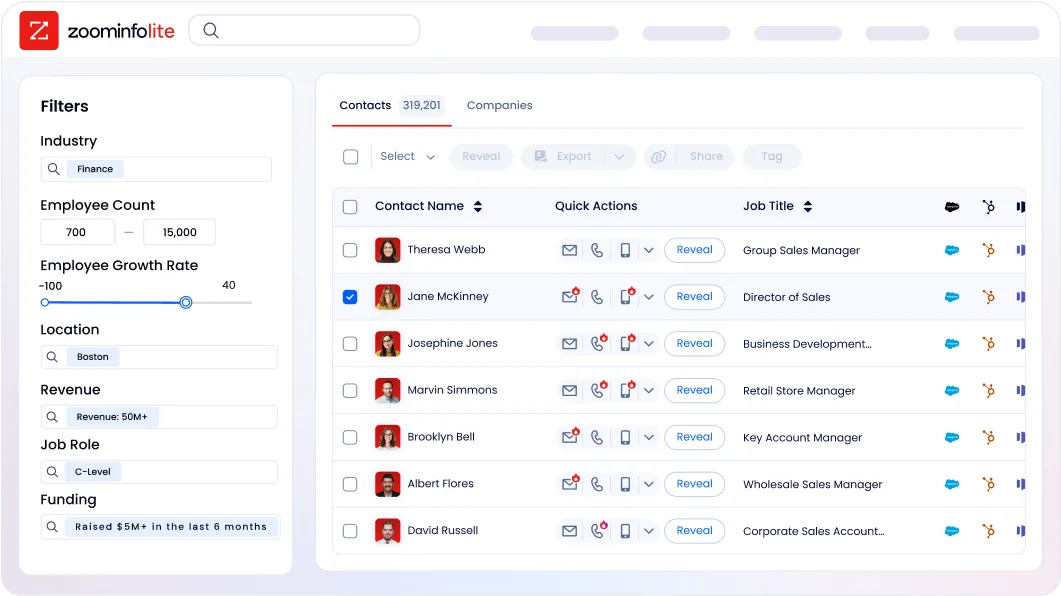
ZoomInfo Lite (Free, Permanent):
Access to ZoomInfo's B2B database with 100M+ verified profiles
Individual and company searches with advanced filters
Contact information and email addresses
ReachOut Chrome Extension and mobile app
WebSights Lite (up to 10 website visitor reveals per day)
HubSpot integration
No credit card or time limit
Paid Plans scale across three tiers (Professional, Advanced, Enterprise) for Sales, and three tiers (Marketing Demand, ABM Lite, ABM Enterprise) for Marketing. Each tier adds deeper data access, more intent signals, AI capabilities, and dedicated support. A 7-day free trial of paid features is also available.
API access is included in all relevant plans, and the MCP server lets AI agents access ZoomInfo data natively.
BDO Canada achieved an 87% reduction in time spent updating their internal data dashboards using ZoomInfo's API. Jerry Wilson, Senior Marketing Intelligence Analyst: "The plug-and-play aspect of the API means I can integrate it very easily into any process and get information at a moment's notice." (BDO Canada Case Study)
Dreamdata or ZoomInfo: Comparison Summary
Aspect | Dreamdata | ZoomInfo |
|---|---|---|
Primary Focus | B2B revenue attribution and activation | AI GTM platform |
Target Users | Marketing ops, demand gen, CMOs | Sales, marketing, RevOps, CS |
B2B Contact Data | None (relies on existing CRM data) | 500M contacts, 135M+ verified phone numbers, 200M+ verified business email addresses |
Attribution Models | 6 default + custom + data-driven ML | Not a core feature |
Intent Signals | AI trained on customer's own pipeline data | 210M IP-to-Org pairings, 6T+ keyword signals monthly, Guided Intent |
Audience Activation | LinkedIn, Google, Meta, Microsoft sync | Native DSP + LinkedIn, Google, Meta, Microsoft audiences via GTM Studio |
Website Visitor ID | Up to 80% cookieless identification | WebSights with company and contact-level identification |
Sales Execution Tools | Slack/CRM alerts only | GTM Workspace with AI agents, outreach, account briefs |
Conversation Intelligence | Not available | Chorus (recording, transcription, AI analysis) |
CRM Integrations | HubSpot, Salesforce, Pipedrive, Dynamics | Salesforce, HubSpot, Dynamics + 120 marketplace integrations |
Free Plan | Permanent: 5 seats, 2-month history | ZoomInfo Lite: permanent, 10 monthly export credits |
Paid Pricing | Custom (not published) | Custom (not published) |
Analyst Recognition | G2 Leader in Attribution Software | Gartner MQ Leader (ABM), Forrester Wave Leader (Intent Data), G2: 133 No. 1 rankings |
Final Verdict
The choice between Dreamdata and ZoomInfo depends on whether your primary need is measuring marketing's contribution to revenue or executing your entire go-to-market strategy.
Choose Dreamdata if your core problem is proving which marketing activities drive pipeline and revenue. It excels at multi-touch attribution for B2B companies with multi-channel go-to-market motions and long sales cycles.
The combination of account-level journey mapping, configurable attribution models, and audience activation makes it a strong choice for marketing teams that already have good CRM data and need to optimize their ad spend against revenue outcomes. Its LinkedIn integration depth is particularly valuable for companies where LinkedIn is a primary demand generation channel.
Choose ZoomInfo if your needs extend beyond attribution into prospecting, data enrichment, sales execution, and cross-functional GTM intelligence. ZoomInfo provides the B2B data that Dreamdata relies on its CRM to supply, the conversation intelligence that Dreamdata cannot capture, and the AI execution tools that turn signals into seller action.
For teams that want a single platform spanning the full go-to-market motion (from identifying target accounts to closing deals), ZoomInfo's combination of data, the GTM Context Graph, and native execution tools offers a scope that dedicated attribution tools cannot match.
Get started with ZoomInfo here.
Dreamdata solves a specific problem well: connecting marketing spend to revenue. ZoomInfo solves that problem as part of a broader platform that powers the entire revenue engine. Your choice depends on whether you need a specialist measurement tool or a GTM platform.
Dreamdata FAQ
What is Dreamdata used for?
Dreamdata is a B2B attribution and activation platform that connects marketing activities to pipeline and closed revenue. It builds account-level customer journey timelines, runs multi-touch attribution models, activates audiences across ad platforms, and surfaces AI-driven intent signals.
B2B marketing teams use it to prove which campaigns drive deals, optimize ad spend against revenue signals, and build targeted audiences for retargeting.
Does Dreamdata have a free plan?
Yes, Dreamdata offers a permanent free plan with no time limit or credit card required. The free tier includes B2B web analytics, cookieless tracking, engagement scoring, company identification, one audience sync, and up to 5 seats with 2 months of user history. However, multi-touch attribution, revenue analytics, AI report summaries, and full audience activation require the paid Activation & Attribution plan.
How much does Dreamdata's paid plan cost?
Dreamdata does not publish pricing for its paid Activation & Attribution tier. All pricing is custom-quoted through a demo and sales process.
The paid plan includes custom attribution models, data-driven ML attribution, revenue and content analytics, full audience activation, a dedicated customer success manager, and solutions consulting support. Contract terms and billing cadence are not publicly disclosed.
What CRM integrations does Dreamdata support?
Dreamdata integrates natively with HubSpot, Salesforce, Pipedrive, and Microsoft Dynamics, and supports connecting multiple CRMs simultaneously. It also connects to marketing automation platforms (Marketo, Pardot, Salesforce Marketing Cloud, Oracle Eloqua), ad platforms (Google, LinkedIn, Meta, Microsoft, Twitter, Capterra, G2), and data warehouses (BigQuery, Snowflake, AWS S3, Redshift, Azure).
ZoomInfo offers a broader integration ecosystem with over 120 partner integrations in its marketplace, including deeper CRM capabilities and API/MCP access for custom applications.
Is Dreamdata hard to set up?
Dreamdata requires significant setup. Meaningful output depends on connecting CRM data, configuring stage models, installing the web tracking script, mapping UTMs, and selecting attribution models. Multiple reviewers on Capterra and G2 describe a 1–2 month learning curve to reach proficiency, and the interface can feel overwhelming on first contact, particularly for infrequent users.
Dreamdata's customer success team is consistently praised for helping teams through setup and ongoing optimization, with G2 rating quality of support at 9.5.
Does Dreamdata provide B2B contact data?
No. Dreamdata is an analytics and activation platform, not a data provider. It analyzes data from your existing CRM, ad platforms, and website tracking to perform attribution and activation. It does not supply contact information, verified phone numbers, or business email addresses.
ZoomInfo, by contrast, provides 500M contacts, 135M+ verified phone numbers, and 200M+ verified business email addresses, along with company attributes, technographics, and org charts.
What makes Dreamdata's LinkedIn integration unique?
Dreamdata holds an official LinkedIn Marketing Partner designation and is the only analytics platform integrated with LinkedIn's Company Intelligence API. This enables attribution of both paid and organic LinkedIn company page impressions to pipeline and revenue, something no other attribution tool can natively provide.
Dreamdata's annual LinkedIn Ads Benchmarks Report, built from 66M+ sessions, is widely cited in the B2B marketing community. The platform won LinkedIn Marketing Partner awards in both 2024 and 2026.
Can Dreamdata replace ZoomInfo?
No. The platforms serve different purposes. Dreamdata measures and attributes marketing's contribution to revenue, then activates those insights through audience syncs and intent signals.
ZoomInfo provides B2B data (contacts, companies, intent signals, technographics), AI-powered sales execution tools (GTM Workspace), marketing orchestration (GTM Studio), and conversation intelligence (Chorus). Some capabilities overlap (intent signals, audience activation, website visitor identification), but ZoomInfo's data layer and execution tools address needs that Dreamdata does not.
