
Choosing between eWay-CRM vs. HubSpot for your CRM often comes down to five questions:
Do you want a CRM that lives inside Microsoft Outlook, or a standalone platform that covers marketing, sales, and service?
Is your team managing existing client relationships, or prospecting for new business?
How important is having verified B2B contact data, direct-dial phone numbers, and buyer intent signals inside your sales workflow?
Do you need marketing automation built into your CRM, or do you handle marketing through separate tools?
Are you looking for a low-cost CRM that stays out of your way, or a full go-to-market platform you can grow into?
In short, here's what we recommend:
eWay-CRM is built for small and mid-sized teams that run their day in Microsoft Outlook and want a CRM without learning new software. It installs as an Outlook add-in and turns the email client into a shared database of contacts, deals, projects, and tasks. The interface looks and feels like Outlook, which means almost no learning curve for teams already in the Microsoft ecosystem. eWay-CRM also handles project delivery after the sale, a capability most CRMs skip. However, it only works with Outlook, has limited marketing automation, and native reporting requires a separate Power BI setup.
HubSpot serves growing companies that want marketing, sales, and service in one connected platform. Its Smart CRM ties together six product hubs, over 2,000 app integrations, and an AI layer called Breeze that automates everything from prospecting emails to customer support. HubSpot's free tier is useful, and the platform scales to enterprise. The trade-off is pricing complexity: per-seat fees, mandatory onboarding charges at higher tiers, and a mixed-tier billing rule that can inflate costs when departments use different plan levels.
Both platforms help you manage customer relationships once you have them. But neither generates the verified B2B intelligence, the direct-dial phone numbers, or the buying intent signals that modern sales teams need to find the right prospects at the right time. That's a different problem, and it's where ZoomInfo fits.
ZoomInfo is a B2B intelligence and go-to-market platform built on 500M contacts, 100M companies, 135M+ verified phone numbers, and 200M+ verified business email addresses. Its GTM Context Graph processes 1.5B+ data points daily, combining this data with your CRM records, conversation transcripts, and behavioral signals to reveal not just who your buyers are, but when they're in-market and why deals move or stall. ZoomInfo integrates natively with HubSpot and can feed any CRM through its API and MCP access. For B2B teams, ZoomInfo is the intelligence layer that makes whichever CRM you choose work.
If verified B2B data and buyer intent signals sound like the missing piece in your sales process, see how ZoomInfo works.
eWay-CRM vs. HubSpot vs. ZoomInfo at a glance
eWay-CRM | HubSpot | ZoomInfo | |
|---|---|---|---|
Core approach | CRM inside Outlook | All-in-one CRM platform | B2B intelligence platform |
Primary strength | Outlook-native simplicity | Breadth across marketing, sales, service | B2B data, buyer intent, and AI prospecting |
Contact database | Shared Outlook-synced database | Smart CRM with up to 15M contacts | |
Marketing automation | Via Mailchimp/Constant Contact integration | Native, full-featured | Native ABM and multi-channel orchestration |
Sales pipeline | Deal board inside Outlook | Visual pipeline with AI forecasting | AI prospecting and signal-based execution |
Project management | Built-in with timesheets and budgets | Beta feature | Not applicable |
AI capabilities | Email tone analysis, contact extraction | Breeze agents across all hubs | GTM Context Graph, AI account research, intent signals |
Starting paid price | Custom-quoted | ||
Free plan | Unlimited users, limited features | Unlimited contacts, limited features | ZoomInfo Lite with 10 monthly exports |
Best for | Microsoft-first SMBs | Growing companies needing a full platform | B2B teams that need prospecting intelligence |
Two different CRM philosophies
eWay-CRM and HubSpot disagree on a basic question: should a CRM live where you already work, or should it be its own destination?
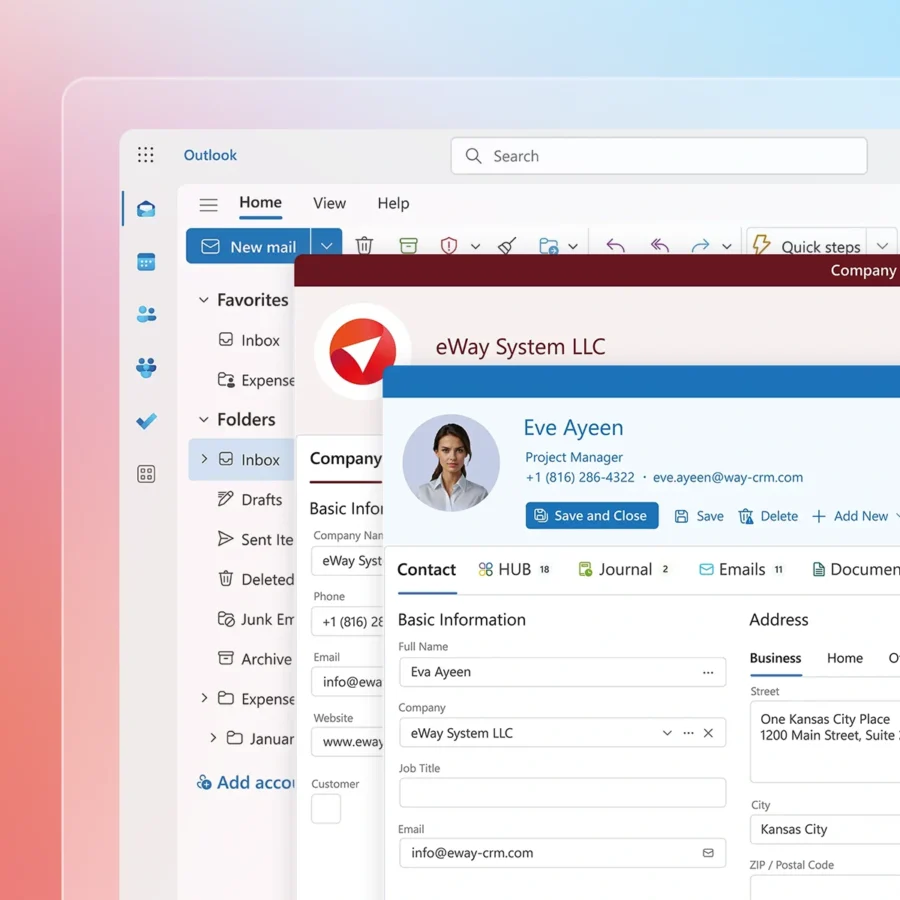
eWay-CRM answers by embedding itself inside Microsoft Outlook.
Open Outlook, and eWay-CRM is there. Contacts, deals, projects, and tasks all appear in the same interface you use for email and calendar. The premise: adoption fails when you ask people to use a new tool, so don't ask. Extend the tool they already use. For teams where every client interaction starts with an email, this makes sense.
Source: eWay-CRM
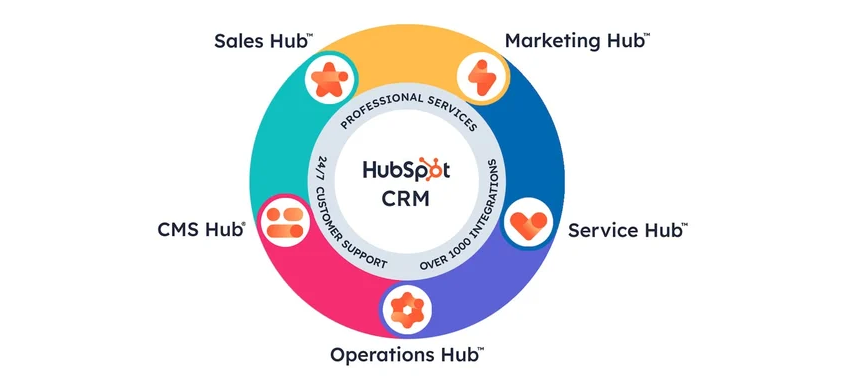
HubSpot answers by building a standalone platform that connects everything.
Marketing campaigns, sales pipelines, support tickets, content management, and payment processing all share one database. The premise: fragmented tools create fragmented data, and fragmented data means missed opportunities. For companies managing the full customer lifecycle across multiple teams, this centralized approach has clear advantages.
Source: HubSpot
The choice depends on what your team does day to day. If your salespeople live in Outlook and need shared visibility into emails and deals without learning new software, eWay-CRM removes friction. If your company needs marketing automation, lead scoring, and multi-channel campaigns coordinated with sales and service, HubSpot provides the infrastructure.
But here's what both approaches share: they manage data you put into them. Neither goes out and finds the verified contact details, org charts, or buying signals that fuel B2B prospecting.
That's ZoomInfo's job, and it works alongside either CRM.
Contact and company management tells the story
eWay-CRM's contact management is built around one idea: your Outlook address book becomes your CRM database.
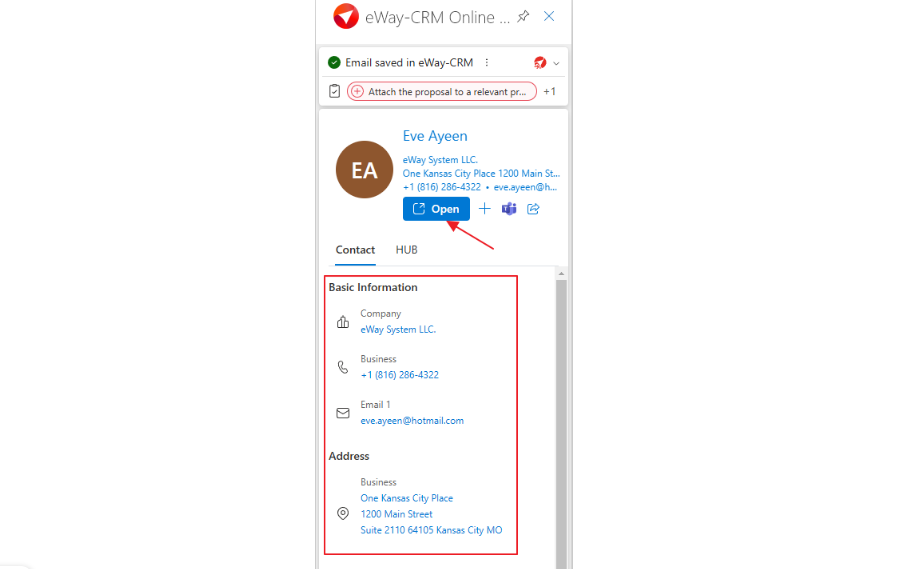
Contacts sync bidirectionally between eWay-CRM and Outlook. When a colleague adds a contact, everyone sees it. When someone emails a client, the email is logged against that contact's record automatically. The AI reads email signatures and extracts contact details in a single click, and a Contacts Suggestions feature surfaces people you email regularly who aren't yet in the database.
For a 20-person consulting firm where everyone knows their clients by name, this works well. The data is real because it comes from actual email conversations.
Source: eWay-CRM
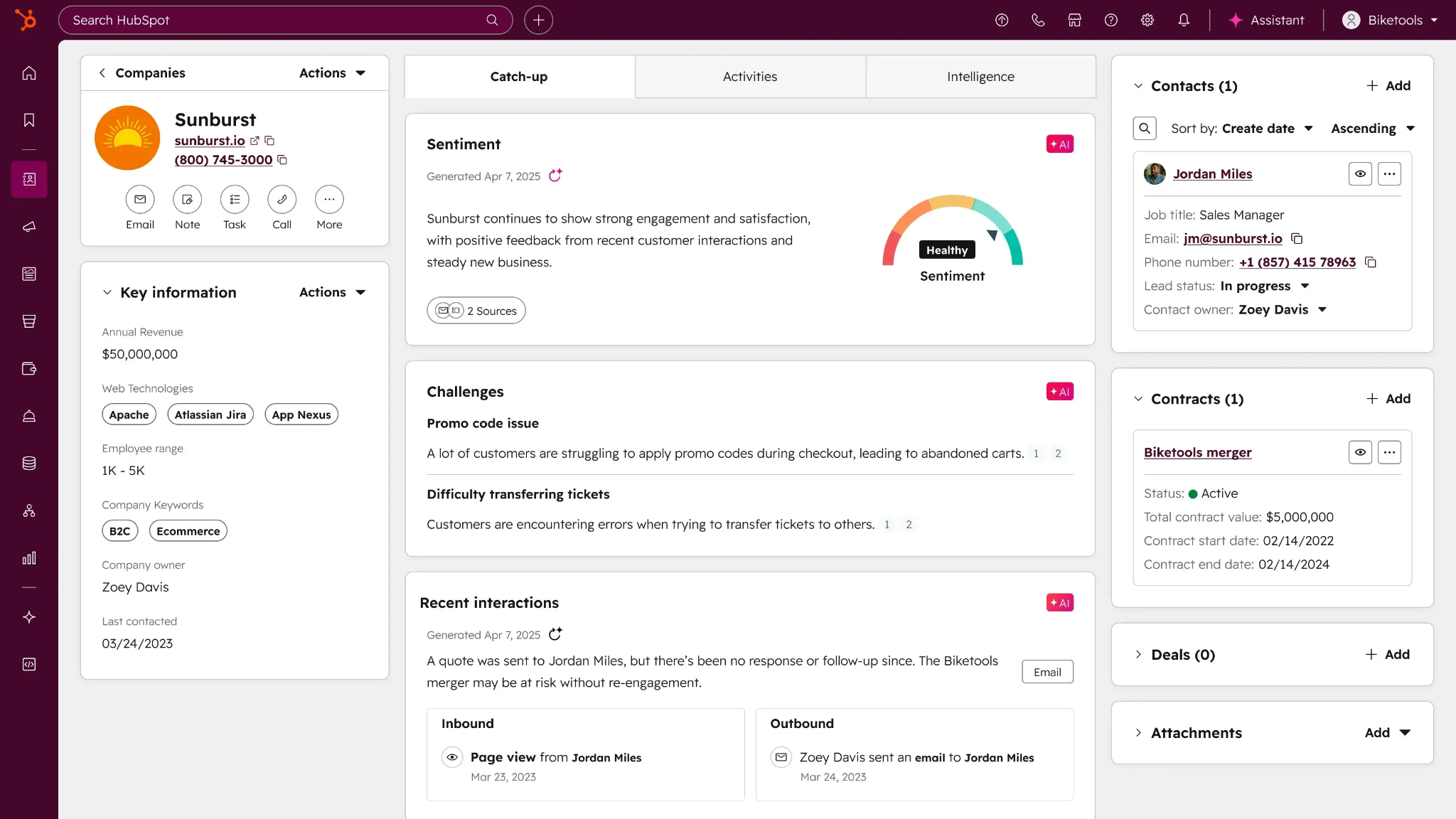
HubSpot's Smart CRM operates at a different scale.
It supports up to 15 million contacts (expandable to 50 million), custom objects, and AI-powered enrichment that pulls information from email threads, recorded calls, and external sources. Duplicate detection runs automatically. The Data Agent answers natural-language questions about your contacts.
For growing companies with thousands of leads flowing in from forms, ads, and events, HubSpot provides the infrastructure to manage volume.
Source: HubSpot
But both systems share a limitation: they're containers. They organize the contacts you already have. They don't tell you who you should be talking to, whether those people are reachable at verified phone numbers, or whether their company is researching solutions like yours right now.
ZoomInfo addresses this directly.
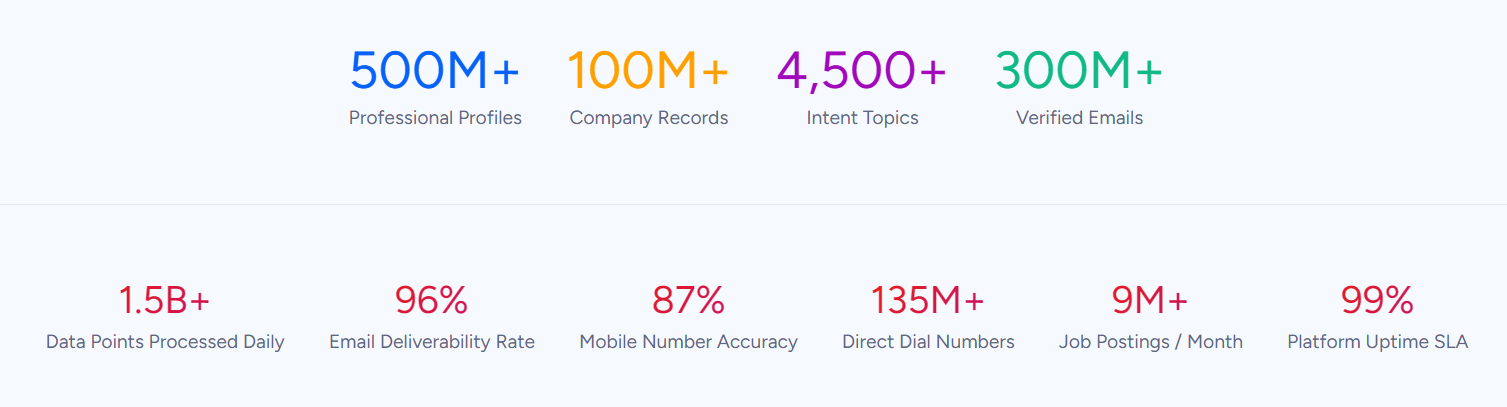
The platform maintains 500M contacts and 100M companies with verified business email addresses and 120M direct-dial phone numbers, continuously updated by 300+ human researchers and automated ML scanning of 28 million site domains daily.
The data reaches 95% accuracy on first-party data. In a Fortune 500 competitive RFP analyzing 25 million contacts across vendors, the independent consultant concluded that "no other competitor came even close."
Source: ZoomInfo
For HubSpot users, ZoomInfo integrates natively, enriching CRM records with verified data and feeding prospecting results into the pipeline. For eWay-CRM users, ZoomInfo's API and MCP access can push intelligence into any system, including through Power Automate workflows.
Vensure scaled prospecting with ZoomInfo's data: "ZoomInfo gives us the information we need to execute. We don't have to go through and spend our time digging. It's already there, so we can be three steps ahead." (Vensure case study)
Sales pipeline management: embedded vs. standalone
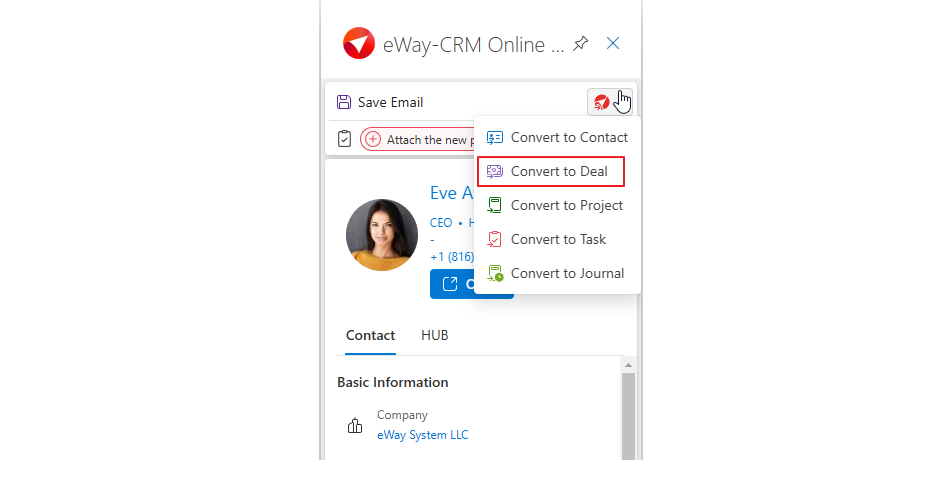
eWay-CRM's sales module keeps deals inside Outlook.
Reps convert emails to deals with a single right-click, and the AI populates the deal card by parsing the sender's email signature. Each deal moves through a configurable workflow with status transitions that can enforce required fields and trigger notifications. A weighted pipeline view multiplies estimated revenue by probability for at-a-glance pipeline health.
Where eWay-CRM stands apart from most CRMs is the handoff after the sale.
When a deal closes, it converts into a project, carrying all linked emails, notes, and documents into a project record with task assignments, timesheets, budgets, and resource planning. For service businesses (consulting firms, law practices, construction companies), this sales-to-delivery continuity in one tool is valuable.
If you're comparing eWay-CRM against another pipeline-first SMB CRM, see our eWay-CRM vs. Pipedrive breakdown.
Source: eWay-CRM
HubSpot's Sales Hub brings more sophistication and more tools.
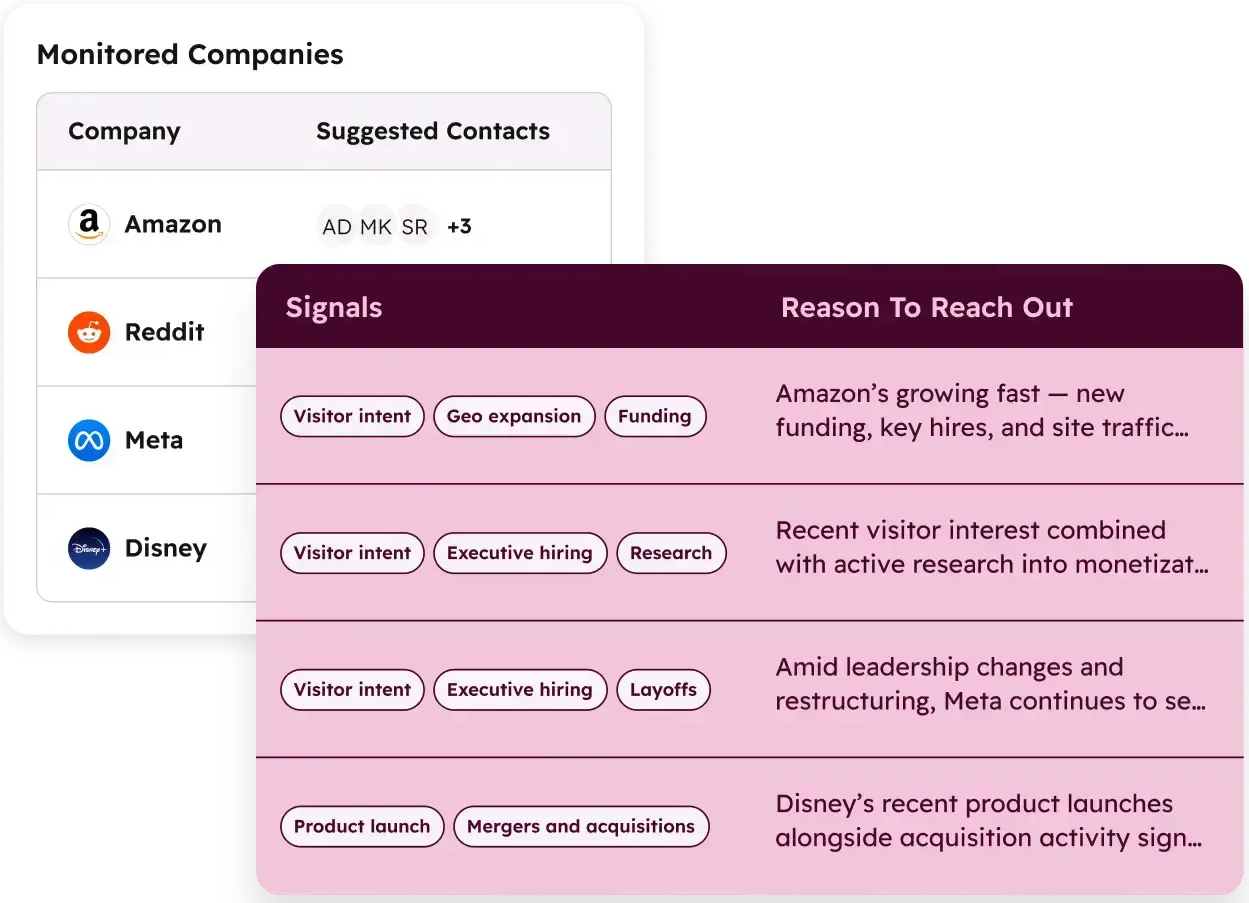
Visual deal pipelines with customizable stages, AI-guided selling that surfaces prioritized action items, sequences for multi-step outreach, conversation intelligence for call coaching, and forecasting with AI revenue projections. The Breeze Prospecting Agent researches prospects, monitors buying signals, and drafts personalized outreach emails using HubSpot's customer history.
HubSpot's sales tools work well for companies with dedicated sales teams running structured processes. But they depend on the data already in the CRM. The Prospecting Agent's personalization is only as good as the customer history it draws on.
Source: HubSpot
ZoomInfo's GTM Workspace starts from a different point.
Instead of waiting for deals to appear, it tells sellers which accounts to prioritize, when to engage, and what to say, drawing on buyer intent signals, org charts, and the full GTM Context Graph. The Action Feed delivers a live stream of in-market buyers matched to target criteria, with pre-drafted outreach on every signal. CRM updates happen without leaving the workspace.
This doesn't replace a CRM's deal management. It powers the top of the funnel that feeds it. A rep using eWay-CRM or HubSpot still needs to know which companies are researching solutions, who the decision-makers are, and what direct-dial numbers actually connect. ZoomInfo answers those questions before the first email is sent.
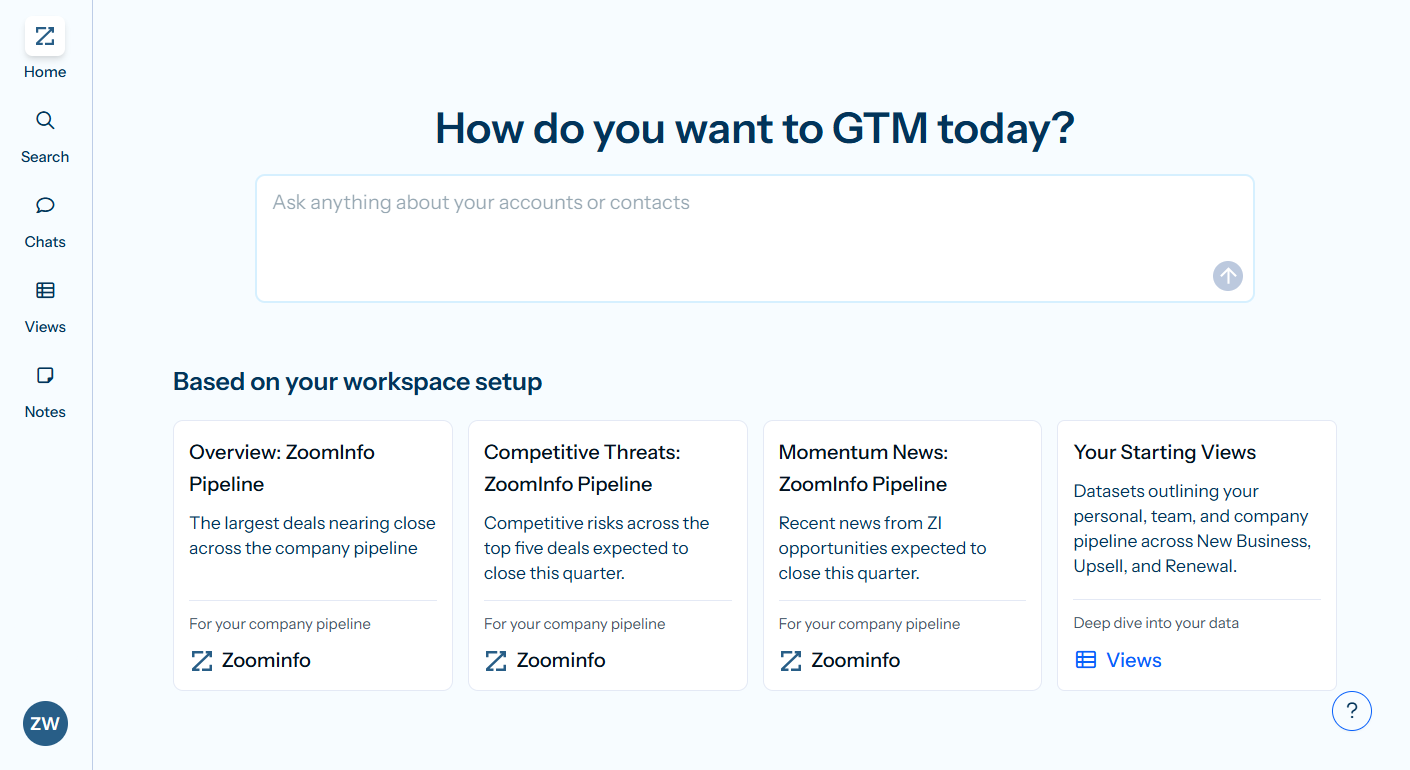
Seismic attributed 39% of active pipeline to opportunities identified or influenced by ZoomInfo signals, with sellers saving 11.5 hours per week: "It's bringing data together faster than anyone could. It's both a time saving and a quality improvement." (Seismic case study)
Marketing capabilities define the platforms' ambitions
This is where the gap between eWay-CRM and HubSpot becomes a canyon.
eWay-CRM's Marketing module is an integration layer, not a marketing platform.
It syncs contacts to Mailchimp, Constant Contact, or Emailcampaigns.eu for email campaigns, with bidirectional unsubscribe handling and CRM-driven audience segmentation. A WordPress Contact Form 7 extension captures web leads into the CRM. This works for companies that send occasional campaigns and want their marketing lists in sync with CRM data. It does not work for companies that need landing pages, automated nurture sequences, social media management, or multi-touch attribution.
HubSpot's Marketing Hub is one of the most complete marketing automation platforms available.
Visual workflow automation with branching nurture sequences. Drag-and-drop landing pages and forms. Social media management with AI scheduling. Advanced reporting with multi-touch revenue attribution. Content Remix that transforms one piece of content into formats for every channel. And AEO tools that help content surface in AI-generated search results.
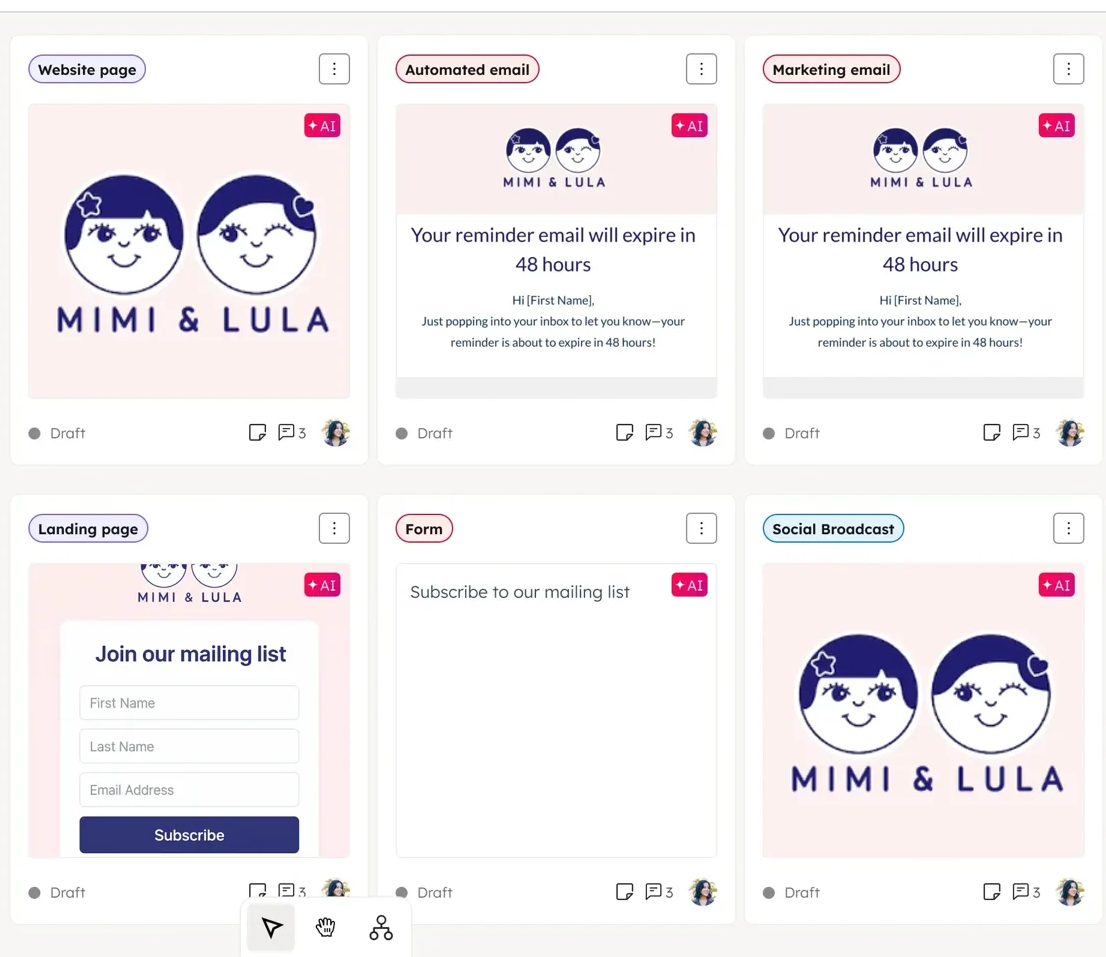
Source: HubSpot
For marketing-driven companies, this comparison isn't close. HubSpot wins.
But for B2B account-based marketing, there's a layer above what either CRM provides.
ZoomInfo's Marketing product includes a native demand-side platform for deploying display ads based on 300+ company attributes, contact-level site visitor identification (not just company-level), and FormComplete, which reduces web forms to a single field while auto-appending the rest from ZoomInfo's database. Smartsheet reported a 40%+ increase in form fills and 59% increase in win rate using FormComplete.
GTM Studio takes this further.
Marketers describe audiences in natural language, launch multi-channel plays (email, calls, ads, direct mail) triggered by buyer behavior, and watch pipeline impact in real time. Expansion plays that used to take three weeks now launch in 30 minutes, without engineering support.
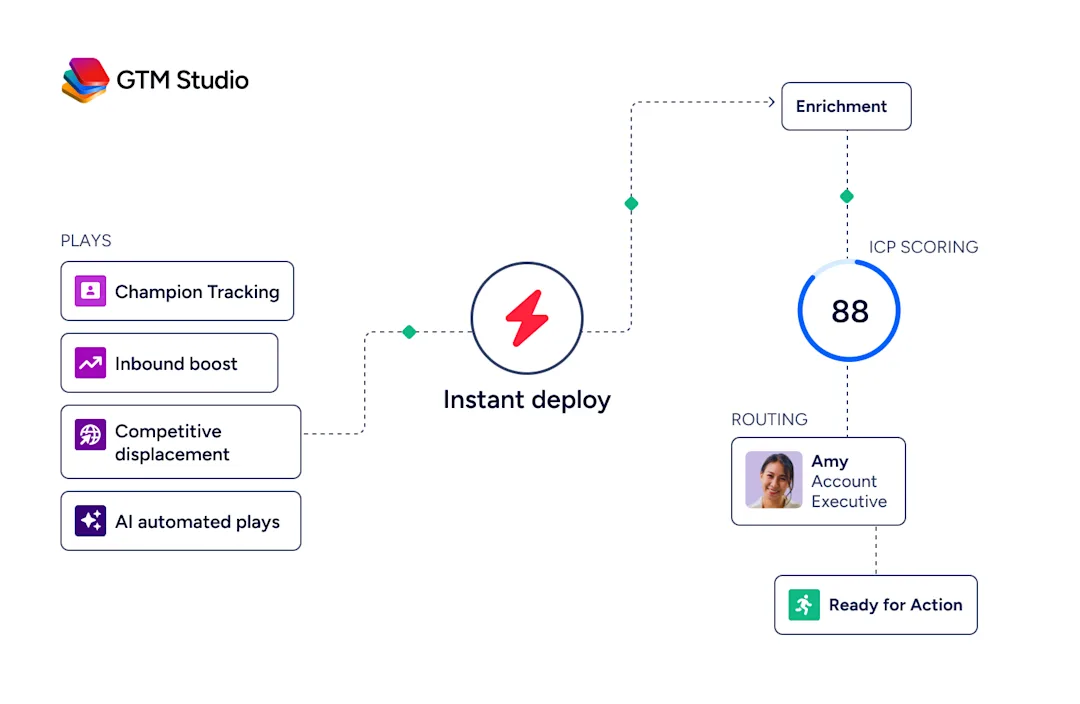
Source: ZoomInfo
Impartner saw a 45% increase in website engagement and saved 15 hours through automation: "ZoomInfo has literally changed the way we go to market." (Impartner case study)
AI in 2026: from email parsing to deal intelligence
All three platforms have AI capabilities, but they operate at different depths.
eWay-CRM's AI focuses on email workflow.
It analyzes email tone and summarizes messages, flagging urgent or frustrated-customer signals. It extracts contact details from email signatures to create CRM records automatically. And it suggests follow-up tasks based on email content. These features are practical and reduce manual data entry. They're also limited to what's in your inbox.
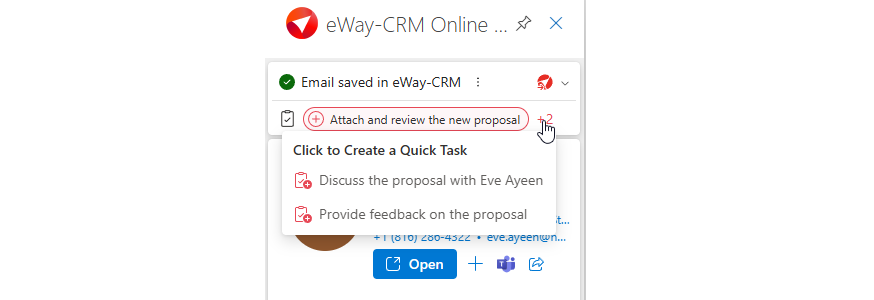
Source: eWay-CRM
HubSpot's Breeze is an AI layer that runs across the entire platform.
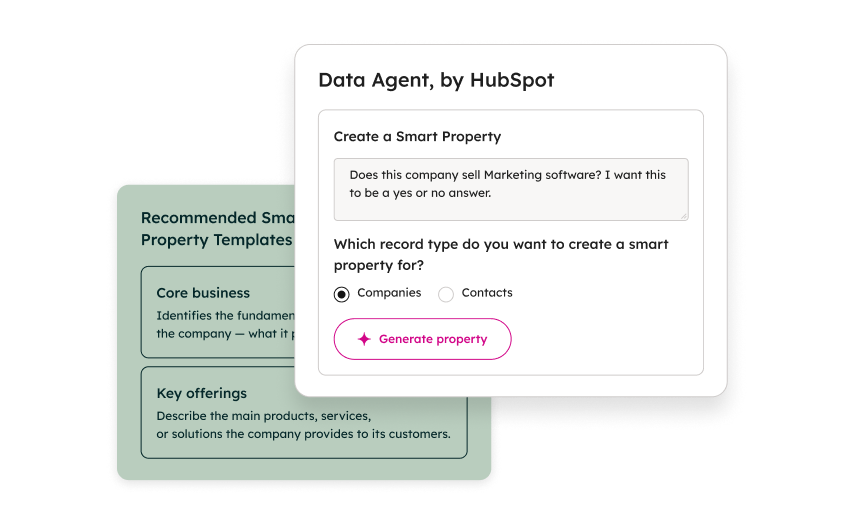
The Customer Agent handles support conversations. The Prospecting Agent monitors enrolled prospects for buying signals and drafts personalized outreach. The Data Agent answers natural-language questions about CRM data. These agents are available on Professional and Enterprise plans and run on HubSpot Credits, a consumption-based system included monthly by tier.
Breeze works well within HubSpot's own data. But AI outputs are only as useful as the data behind them. If your CRM has incomplete contact records, stale company information, or no visibility into buyer intent, the AI will generate incomplete recommendations.
Source: HubSpot
ZoomInfo's AI operates on a different data foundation.
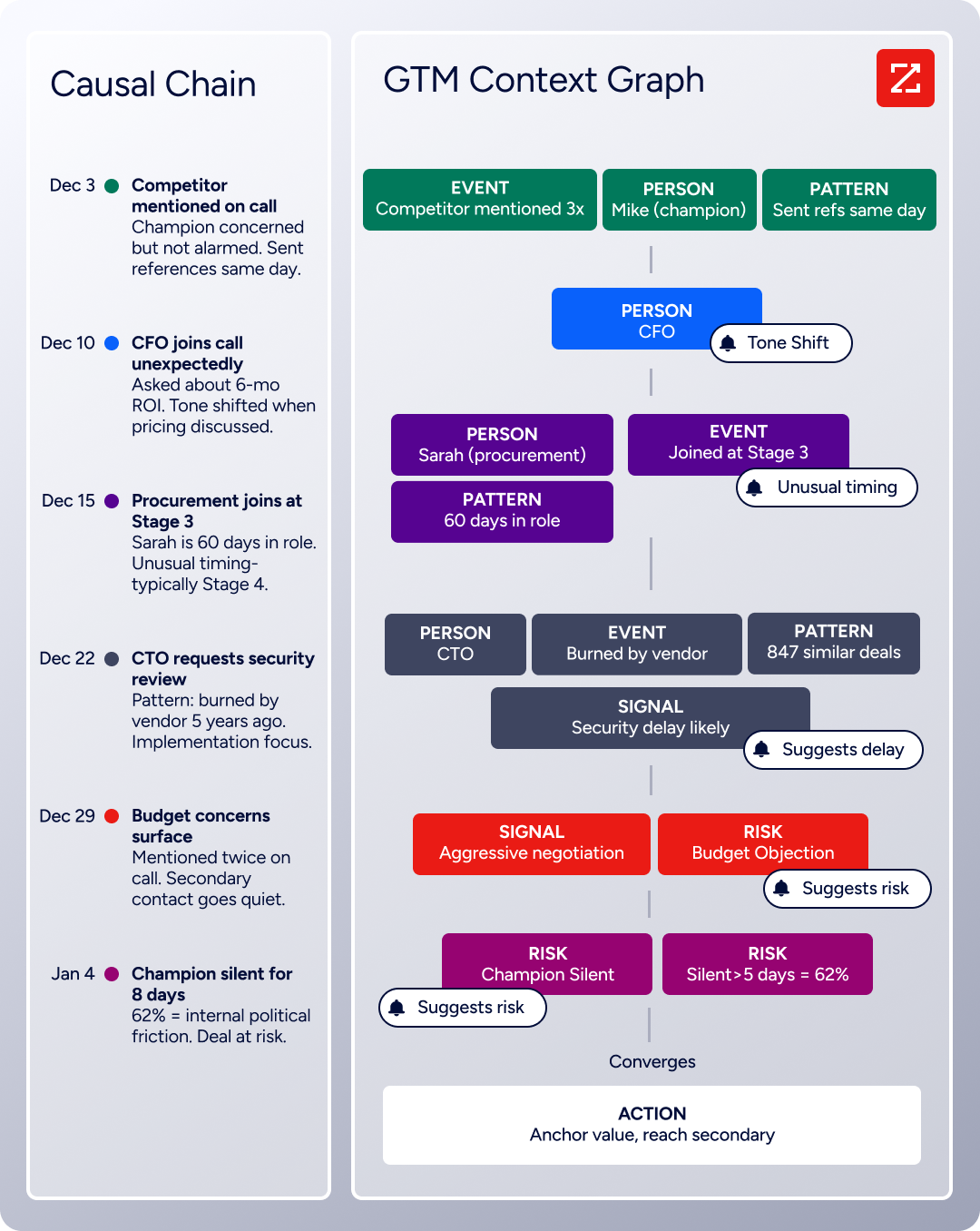
The GTM Context Graph processes 1.5B+ data points daily, combining ZoomInfo's B2B database with CRM records, conversation transcripts from Chorus (ZoomInfo's conversation intelligence), email interactions, and behavioral signals. The result is AI that understands not just what happened in a deal, but why it happened.
As ZoomInfo's CPO Dominik Facher writes: "The CRM recorded the state change." It has no record of why. A deal stage moved from 3 to 4. Was it because the CFO joined the last call and asked about six-month ROI? Was it because a VP went quiet for eight days during an internal budget battle?
The GTM Context Graph captures these signals and makes them machine-readable, so every AI recommendation carries the logic of thousands of similar deals.
Source: ZoomInfo
Buyer Intent adds another layer. ZoomInfo tracks signals from 210 million IP-to-Organization pairings and 6 trillion+ keyword-to-device pairings sourced monthly. Guided Intent, exclusive to ZoomInfo, identifies topics historically correlated with deal success rather than requiring manual topic selection. Neither eWay-CRM nor HubSpot has anything comparable built in.
For a closer look at how HubSpot and ZoomInfo stack up as complete platforms, see our HubSpot vs. ZoomInfo comparison.
Pricing: from $0 to custom quotes
The three platforms occupy different pricing ranges, reflecting their different scopes.
eWay-CRM offers the most straightforward pricing.
A permanent free tier with unlimited users covers core CRM basics with 200 MB cloud storage. Paid plans start at $20/user/month (Lite) and go to $40/user/month (Plus), with annual billing saving roughly 10% and three-year billing saving about 25%. A 14-day free trial at the Plus level starts automatically for new signups.
Key features are gated by tier: automatic email saving from Microsoft 365 requires Standard ($27/user/month) or above, and timesheets, resource planning, and field-level permissions require Plus. QuickBooks integration and custom document templates cost extra.
For a 10-person team on the Standard plan, eWay-CRM costs roughly $270/month (annual billing). That's accessible for most SMBs.
HubSpot uses a hybrid pricing model that combines seat-based charges, contact-tier pricing (for Marketing Hub), flat-fee tiers, and consumption credits for AI. The Starter Customer Platform bundles all hubs at $15/seat/month (annual) or $20/seat/month (monthly). This is affordable for small teams.
The jump to Professional changes the equation.
Marketing Hub Professional costs $800/month (annual) with a $3,000 one-time onboarding fee. Sales Hub Professional adds $90/seat/month (annual) with a $1,500 onboarding fee. And a billing rule many buyers miss: when subscribing to multiple hubs at different tiers, all Core Seats are billed at the rate of the highest tier. A company mixing Marketing Hub Professional with Sales Hub Starter pays Professional-rate seat fees across the board.
For a 10-person team on Sales Hub Professional with Marketing Hub Professional, HubSpot can exceed $2,000/month before adding contact overages or AI credits.
ZoomInfo uses custom-quoted, consumption-based pricing with no published prices.
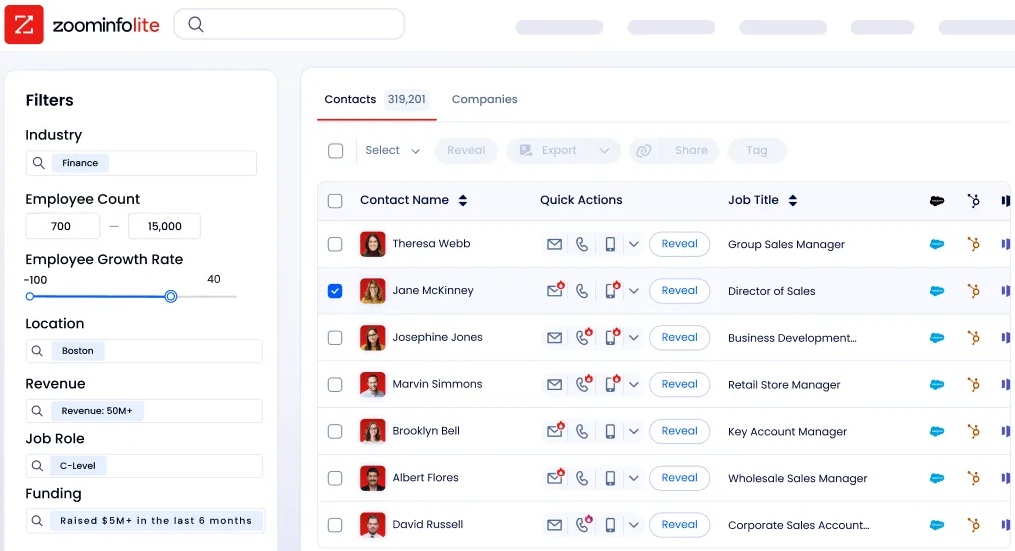
Costs scale around seats, credit volume (1 credit = 1 exported contact record), features accessed, and contract length. ZoomInfo Lite is a permanent free tier with access to ZoomInfo's B2B database, 10 monthly export credits, and a Chrome extension. A 7-day free trial of the full platform is also available.
Source: ZoomInfo
ZoomInfo is a premium investment, priced for the ROI it delivers. Customers report concrete returns: SpringDB saw 2x-3x increases in campaign conversions and 30-50% uplift in average deal size. The calculation comes down to whether the intelligence layer (verified contacts, intent signals, AI prospecting) generates enough pipeline to justify the cost. For B2B teams doing active outbound, it typically does.
Integration depth determines long-term flexibility
eWay-CRM's integration story is a Microsoft story.
Beyond the core Outlook plugin, it connects to Microsoft Teams, Power BI, SharePoint, and Power Automate. Outside Microsoft, integrations include Mailchimp, Constant Contact, QuickBooks, 3CX, Adobe Sign, and Zapier. The developer API uses a JSON-over-HTTP interface with SDKs for PHP, JavaScript, and C#. It's a reasonable set for an SMB CRM, but narrow compared to platform-scale ecosystems.
Source: eWay-CRM
HubSpot's App Marketplace has over 2,000 integrations with 2.5 million active installs.
From Salesforce to Slack to Snowflake, most business tools connect natively. The REST API covers the full CRM data model, webhooks support event-driven automation, and official SDKs exist for six languages (PHP, Java, Ruby, Go, TypeScript, Python). A remote MCP server launched in April 2026 gives AI agents read/write access to HubSpot data. The integration ecosystem is one of HubSpot's strongest advantages.
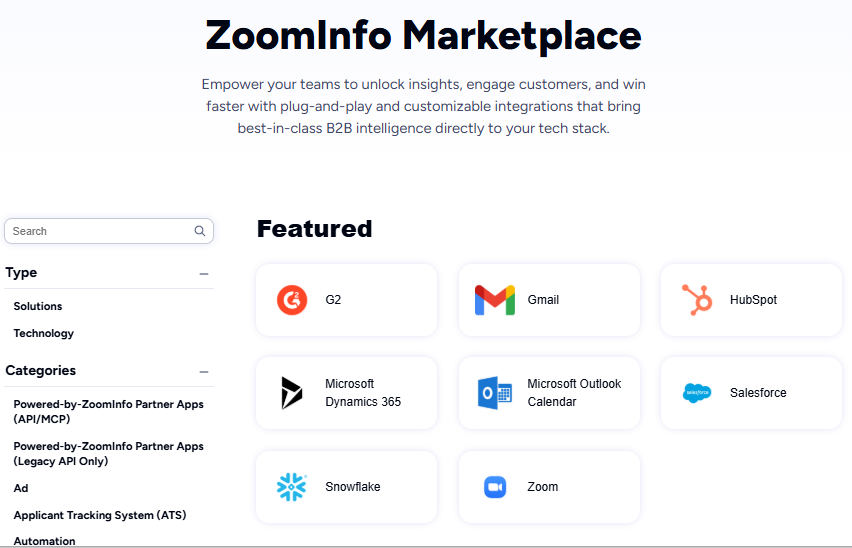
ZoomInfo's App Marketplace lists 172+ integration partners across CRM, marketing automation, sales engagement, data warehouse, and AI categories. Native integrations include Salesforce, HubSpot, Microsoft Dynamics 365, Snowflake, and major cloud platforms. The Cloud Partners program delivers ZoomInfo data into AWS, Google Cloud, Snowflake, and Databricks.
Source: ZoomInfo
What makes ZoomInfo's integration approach distinct is the open-access model.
The Enterprise API exposes search, enrichment, intent, and AI intelligence endpoints. The MCP server connects AI models to ZoomInfo's B2B data as a native tool, currently supporting Claude and ChatGPT. API access is included in all relevant plans. The same data that powers ZoomInfo's own products is available to any custom agent, internal tool, or partner application.
BDO Canada activated data within internal systems via the API: "The plug-and-play aspect of the API means I can integrate it very easily into any process and get information at a moment's notice," achieving an 87% reduction in time spent on data dashboard updates. (BDO Canada case study)
Project delivery is eWay-CRM's hidden strength
This section applies only to eWay-CRM, but it matters for certain buyers.
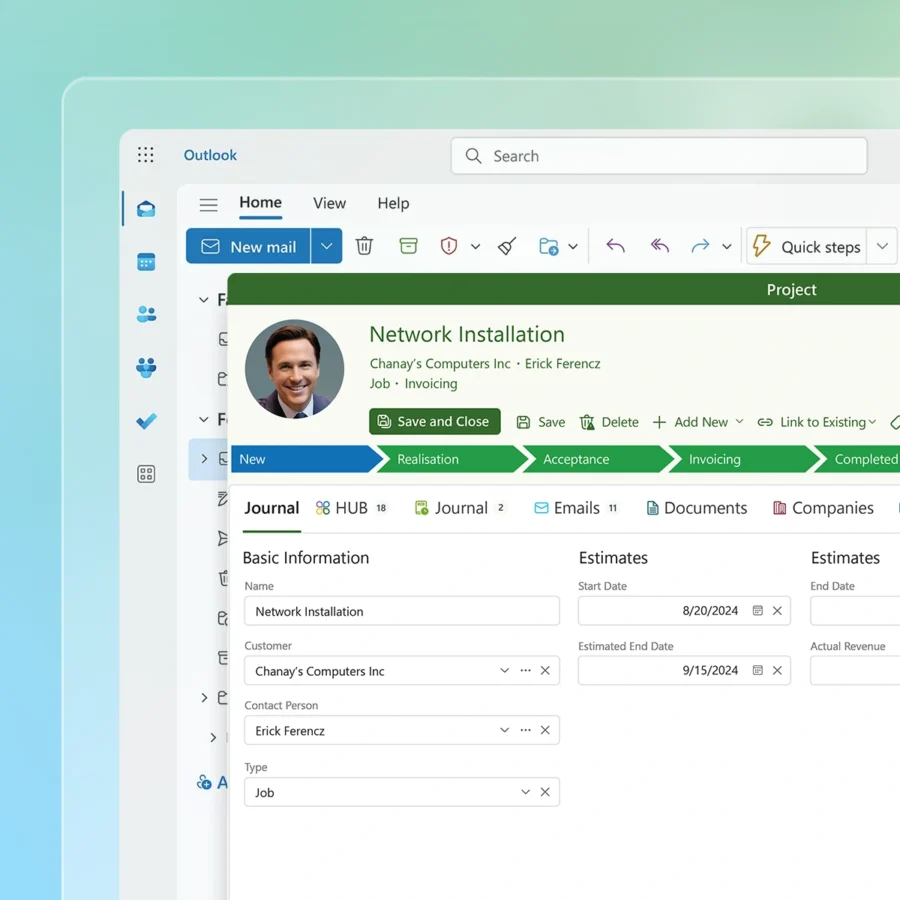
Most CRM comparisons ignore what happens after the deal closes. eWay-CRM doesn't. Its Projects module tracks task assignments, deadlines, timesheets, budget vs. actual costs, and resource planning with overallocation detection. A subproject hierarchy rolls up costs and revenue to parent projects automatically.
Source: eWay-CRM
For professional services firms (consulting, legal, accounting, IT services, construction), this matters. The deal and the delivery live in the same system with the full email history preserved. Project managers inherit every pre-sales conversation without manual data migration.
The Plus plan adds automated revenue calculation from invoices and cost calculation from timesheets using employee salary records, turning eWay-CRM into a lightweight profitability tracker.
HubSpot has a Project Management feature in beta within Smart CRM, but it's not comparable to eWay-CRM's mature project delivery capabilities. For companies that need both CRM and project management, eWay-CRM's single-system approach avoids the integration overhead of connecting HubSpot to a separate project management tool.
ZoomInfo does not offer project management, nor does it need to. It focuses on what happens before the deal, giving your team the intelligence to find and win the right opportunities in the first place.
Support and onboarding reflect each platform's scale
eWay-CRM's support model is tiered by plan.
The free tier gets community support only. Lite and Standard plans include email and helpdesk support. Plus adds phone support during US business hours. Response times are defined by severity, from 4 business hours for multi-PC malfunctions to 32 hours for cosmetic defects.
Capterra rates customer service at 4.6/5, with 96% of reviewers calling support "prompt, knowledgeable, and helpful." The company offers a formal Adoption Framework with phased onboarding, and professional services at $960/day.
HubSpot's support scales with plan level.
Free users access the Community only. Starter adds email and chat. Professional and Enterprise add phone support. The real support infrastructure is HubSpot Academy, with over 200,000 certified professionals and free courses covering everything from inbound marketing to CRM administration. The Solutions Partner ecosystem provides implementation support, given that HubSpot's own professional services revenue is only about 2% of total revenue.
ZoomInfo redesigned its onboarding program from 30 to 90 days, producing a 25% improvement in customer satisfaction scores and winning Rocketlane's Golden Comet award for Best Customer Onboarding Team.
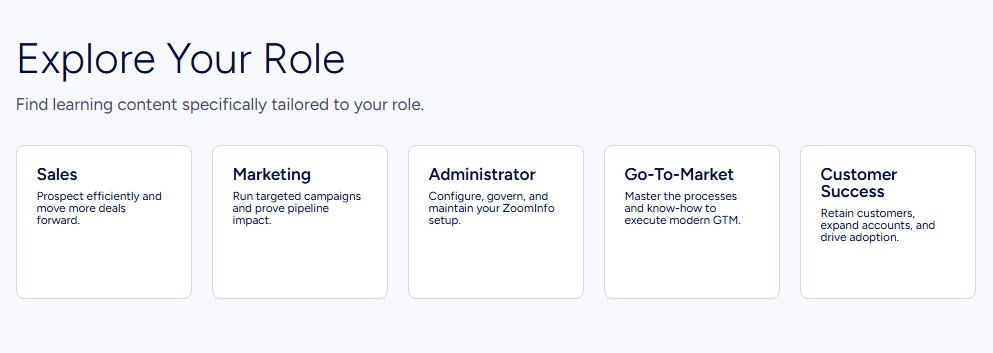
ZoomInfo University offers role-specific learning paths, certifications, and live webinars. Enterprise customers get dedicated customer success managers and access to ZoomInfo Labs for professional services.
Source: ZoomInfo
eWay-CRM vs. HubSpot vs. ZoomInfo: Which should you choose?
The right choice depends on what problem you're solving.
Choose eWay-CRM if:
Your team lives in Microsoft Outlook and resists learning new software
You need both CRM and project delivery in one system
Your business is service-based (consulting, legal, accounting, IT, construction)
Budget is tight and you need a CRM under $30/user/month
You value simplicity and familiar interfaces over feature breadth
You're an SMB with 5-50 users who need shared visibility into client communications
Choose HubSpot if:
You need marketing automation, sales pipeline, and customer service under one roof
Your growth depends on inbound marketing, content, and multi-channel campaigns
You want a large integration ecosystem with 2,000+ connected apps
Your team can invest time learning a full platform to get the most from it
You need AI across marketing, sales, and service operations
You're a growing company that wants one platform to scale with you
Add ZoomInfo if:
You need verified B2B contact data (direct dials, business emails) at scale
Buyer intent signals would change how your team prioritizes accounts
Your sales team spends too much time researching prospects manually
You want AI that understands why deals move, not just what happened in the CRM
You need to feed accurate, enriched data into whichever CRM you use
You're doing outbound sales and need an intelligence layer to power prospecting
Try ZoomInfo free to see how verified B2B intelligence can improve your pipeline.
The comparison between eWay-CRM and HubSpot is a question about scope. eWay-CRM is the CRM that stays out of your way, extending the tool your team already knows. HubSpot is the platform that brings everything under one roof. Both manage customer relationships well.
But managing relationships is only half the equation. Finding the right relationships to build, reaching decision-makers at verified phone numbers, knowing which companies are researching solutions like yours: that's the intelligence layer. ZoomInfo provides it, and it works with either CRM. The most effective B2B teams don't choose between CRM and intelligence. They use both.
eWay-CRM vs. HubSpot vs. ZoomInfo FAQ
What is the fundamental difference between eWay-CRM, HubSpot, and ZoomInfo?
eWay-CRM is a CRM that lives inside Microsoft Outlook, designed for SMBs that want to manage contacts, deals, and projects without leaving their email client.
HubSpot is a standalone CRM platform combining marketing automation, sales pipeline management, customer service, content, and commerce in one system.
ZoomInfo is a B2B intelligence platform that provides verified contact data (500M contacts, 135M+ verified phone numbers), buyer intent signals, and AI prospecting. ZoomInfo integrates with CRMs to provide the data and intelligence layer; it is not a CRM replacement.
Which platform is cheapest for a small team?
eWay-CRM has the lowest entry cost: a permanent free tier with unlimited users and paid plans starting at $20/user/month. HubSpot also offers a free CRM, with its Starter bundle at $15/seat/month (annual). For a 10-person team, eWay-CRM Standard costs roughly $240/month and HubSpot Starter costs roughly $150/month.
Both scale differently: eWay-CRM stays in the $20-40/user range, while HubSpot Professional tiers jump significantly ($800/month for Marketing Hub Professional alone, plus a $3,000 onboarding fee).
ZoomInfo is custom-quoted and positioned as a premium platform, though the permanent ZoomInfo Lite tier is free with 10 monthly export credits.
Can ZoomInfo replace eWay-CRM or HubSpot?
No. ZoomInfo is not a CRM. It does not manage deals, track customer service tickets, or handle project delivery. Instead, it provides the B2B intelligence (verified contacts, company data, intent signals, AI account research) that makes any CRM more effective.
ZoomInfo integrates natively with HubSpot, and can connect to eWay-CRM through its API, Power Automate, or Zapier. The strongest B2B teams use ZoomInfo alongside their CRM, not instead of it.
Does eWay-CRM work outside of Microsoft Outlook?
eWay-CRM's primary interface is the Outlook add-in, but it also offers eWay-CRM Online (a browser-based version for Microsoft 365 users, including Mac), a Microsoft Teams add-in, and mobile apps for iOS and Android.
However, the product is designed around Outlook as the daily driver. Teams using Gmail, Apple Mail, or other email clients have no meaningful path to adoption.
How do the marketing capabilities compare?
HubSpot has the strongest marketing capabilities of the three, with a full Marketing Hub covering email automation, landing pages, social media management, multi-touch attribution, and AI content tools.
eWay-CRM handles marketing through integrations with Mailchimp and Constant Contact, syncing CRM contacts to those platforms for email campaigns but offering no native marketing automation.
ZoomInfo provides B2B-specific marketing tools including a native demand-side platform for targeted display ads, contact-level website visitor identification, and form optimization, focused on account-based marketing rather than general marketing automation.
Which platform has the best AI features?
ZoomInfo's AI operates on the largest data foundation, with a GTM Context Graph processing 1.5B+ data points daily across CRM data, conversation intelligence, intent signals, and behavioral data. It captures why deals move, not just what changed.
HubSpot's Breeze AI layer runs across all platform hubs, with specialized agents for customer support, prospecting, and data analysis, though its effectiveness depends on the data already in the CRM. eWay-CRM's AI focuses on email-level automation: tone analysis, message summarization, and contact extraction from signatures. All three are useful at different stages of the sales process.
How do eWay-CRM and HubSpot handle the transition from sales to delivery?
eWay-CRM has a clear advantage here. Its Projects module converts closed deals into project records with task assignments, timesheets, budgets, and resource planning, all within the same Outlook interface. HubSpot has a project management feature in beta within Smart CRM but it is not comparable to eWay-CRM's mature project delivery capabilities.
For service businesses that need to manage both winning and delivering work, eWay-CRM's single-system approach avoids adding a separate project management tool.
Which platform is best for B2B outbound sales teams?
ZoomInfo is built for B2B outbound. Its database of 500M contacts with 120M direct-dial phone numbers, combined with buyer intent signals and AI prospecting through GTM Workspace, gives outbound teams the data and intelligence to reach decision-makers efficiently.
HubSpot's Sales Hub supports outbound through sequences and the Breeze Prospecting Agent, but relies on data already in the CRM. eWay-CRM supports deal tracking and follow-ups but has no native prospecting or intent data capabilities. For outbound-heavy B2B teams, ZoomInfo provides the intelligence layer while either CRM handles the relationship management.
