
You are evaluating a CRM, and the question is no longer whether Freshsales can manage contacts and deals. The question is what each feature does, how it works, and which of the four pricing tiers unlocks it.
Freshsales is a sales CRM built by Freshworks (NASDAQ: FRSH) for sales teams that want built-in phone, email, chat, pipeline management, and AI-assisted selling in one platform without the setup overhead of enterprise alternatives. This breakdown covers every feature, how it works, who it serves, and which plan unlocks it.
Freshsales fits if:
You need a CRM with built-in phone, email, and chat on every plan, including the free tier
You want AI contact scoring that trains itself on your CRM data without a separate add-on contract
You run structured multi-step outreach sequences combining email, call reminders, SMS, and LinkedIn tasks
You manage multiple sales pipelines with stage-specific stale deal detection
You want one vendor for sales, marketing automation, and customer support through the broader Freshworks suite
You need CPQ with eSignature to generate branded quotes directly from deal records
You'll hit its limits if:
You need a B2B contact and company database to fuel prospecting before leads enter the CRM
You want buyer intent signals showing which companies are researching your category across the web
You need conversation intelligence that records, transcribes, and coaches from sales calls
You want account-based marketing orchestration, display advertising, or multi-channel campaign management
You require revenue forecasting driven by conversation data and cross-deal pattern recognition
For those needs, the reference point is ZoomInfo: a GTM platform built on 500M contacts, 100M companies, 135M+ verified phone numbers, and 200M+ verified business email addresses, a GTM Context Graph that fuses B2B data with CRM records, conversation intelligence, and behavioral signals into a single intelligence layer, and access through APIs, MCP, GTM Workspace, and GTM Studio.
After the feature breakdown, this article covers where Freshsales stops and how ZoomInfo fills those gaps.
Freshsales Platform Overview
Freshsales is the sales CRM inside Freshworks' broader platform, which also includes Freshdesk (customer support), Freshservice (ITSM), and Freshmarketer (marketing automation). It targets sales teams at startups, SMBs, and mid-market companies that want CRM functionality without the complexity or cost of Salesforce or HubSpot. Named customers across the Freshworks suite include Bridgestone, New Balance, Nucor, S&P Global, and Sony Music, and the parent company serves nearly 75,000 businesses across 120+ countries.
Freshsales also sells a Freshsales Suite that bundles sales and marketing (Freshmarketer) into a single CRM, supporting phone, email, WhatsApp, chat, and SMS within the same deal record.
The platform covers six areas:
Capability Area | What It Does | Earliest Plan |
|---|---|---|
Contact & Account Management | Customer records with AI scoring, auto-enrichment, and lifecycle tracking | Free (3 users) |
Deal Pipeline Management | Visual pipelines with configurable stages, stale deal detection, and Freddy AI deal insights | Free (single pipeline); Pro for multiple |
Sales Engagement | Built-in email, phone, chat, SMS, and multi-step sales sequences | Free (email, phone, chat); Pro for sequences |
Automation & Workflows | Event-based and time-based rules with auto-assignment and territory routing | Growth ($9/user/mo) |
Freddy AI | Contact scoring, deal insights, email generation, and forecasting | Pro ($39/user/mo) for scoring and insights |
Reports & Analytics | Curated dashboards and custom reporting with scheduled delivery | Growth (curated); Pro for custom reports |
Freshsales uses per-seat, per-month pricing across four tiers: Free ($0, up to 3 users), Growth ($9/user/month), Pro ($39/user/month), and Enterprise ($59/user/month), all billed annually. A 21-day free trial with no credit card required provides access to paid-tier features. Here is the full tour.
Freshsales Contact and Account Management
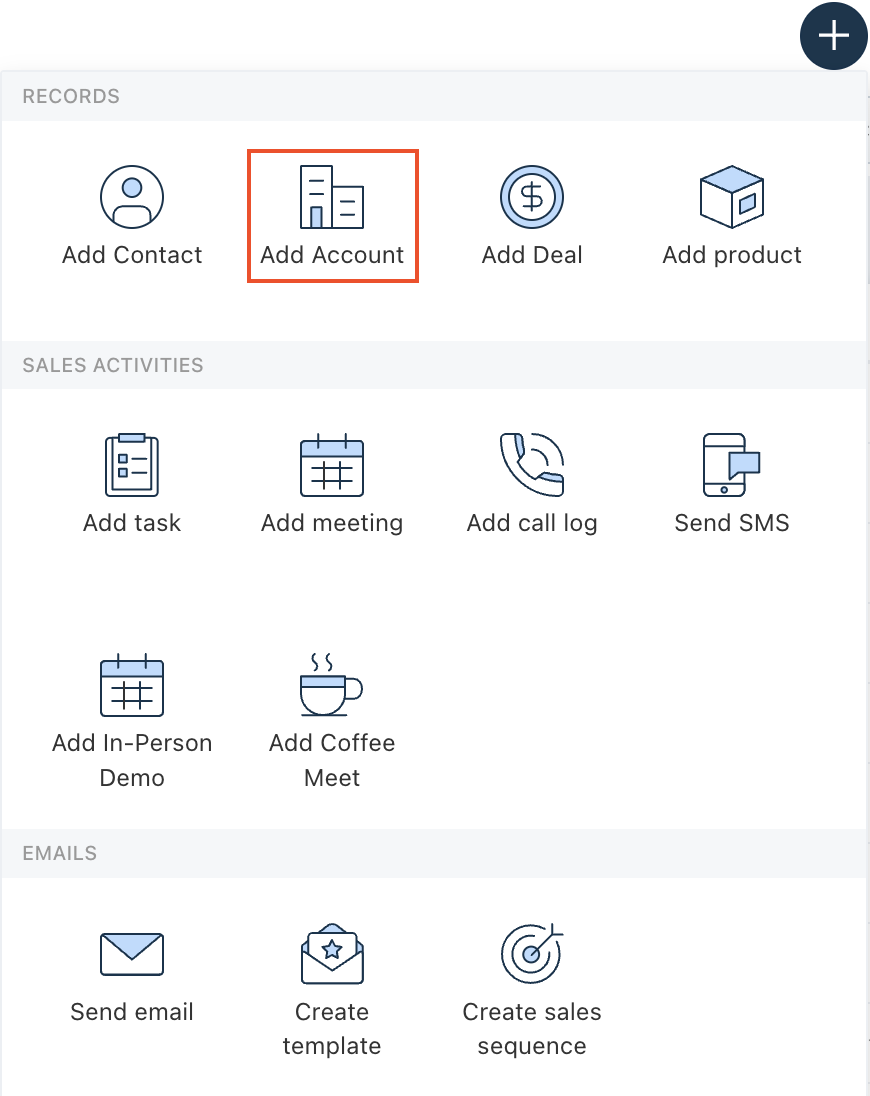
Contact and account management is the foundation everything else in Freshsales builds on. Contacts represent individuals; accounts represent companies. The system links the two so a rep can see every stakeholder at a company alongside the deals and revenue attached to that account.
Ingestion happens through several routes: manual entry, CSV/XLSX file import with duplicate detection, a JavaScript tracking code that captures website visitors, phone conversations, and chat widgets.
Once a contact has an email address, Freshsales auto-enriches their social profiles and display picture. For accounts, providing a website URL triggers enrichment of the company's logo, address, social profiles, and employee count.
Source: Freshworks
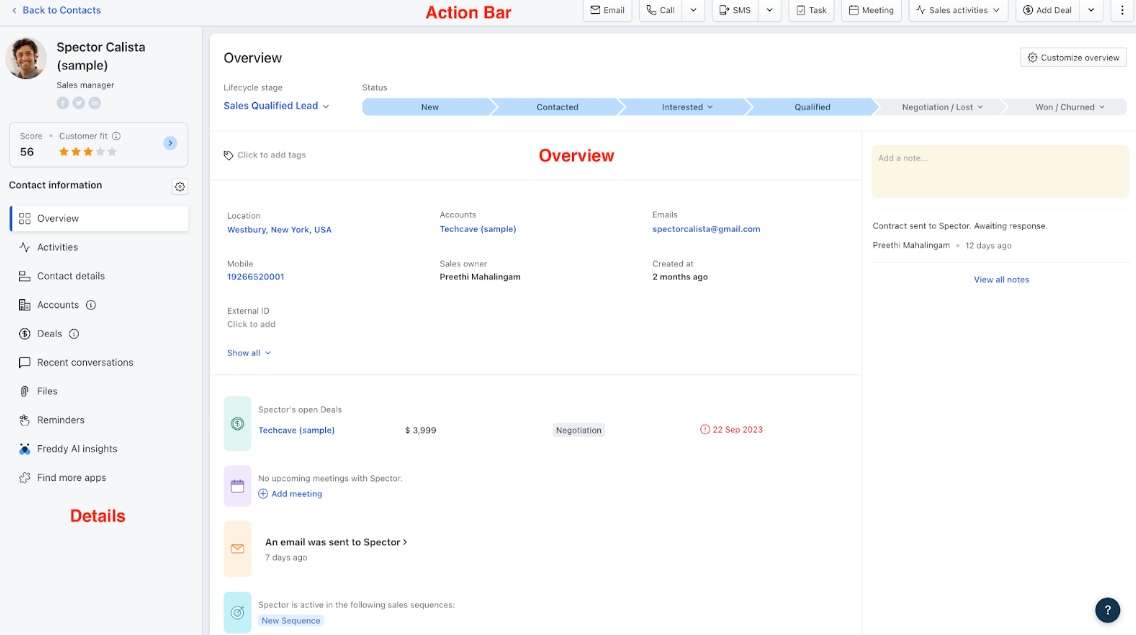
The Customer 360 details page is the central view for any contact. It opens into three sections: an Action bar for quick actions (email, call, SMS, task, meeting, deal creation), an Overview section with highlight cards (lifecycle stage, recent conversations, deal and account cards, sales activities, marketing list membership), and a Details section with a unified activity timeline, notes, tasks, meetings, and related modules.
Source: Freshworks
Administrators can rearrange which fields, highlight cards, and detail panels appear. Account records follow the same structure, showing associated contacts, key stakeholders, past deal data, purchased products, and full interaction history.
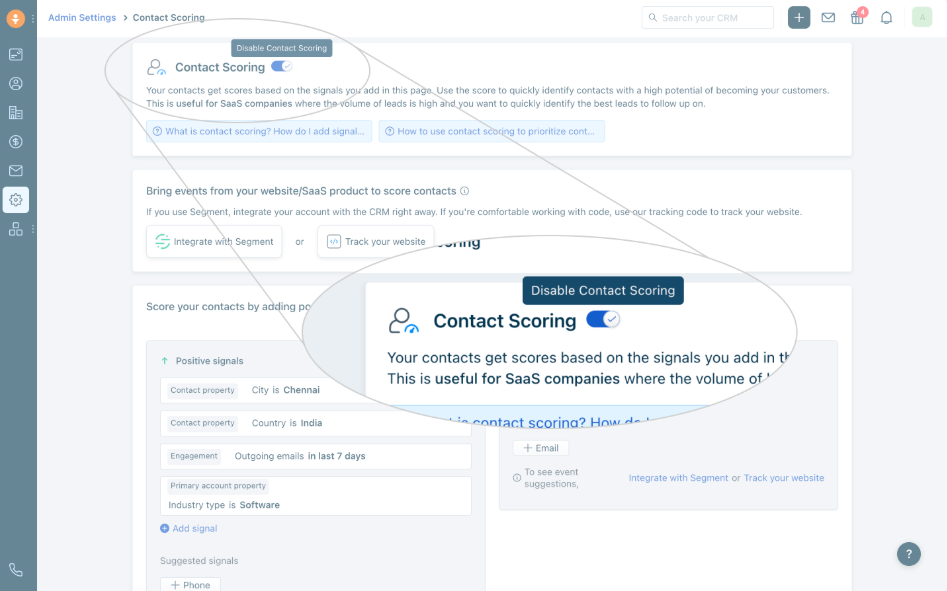
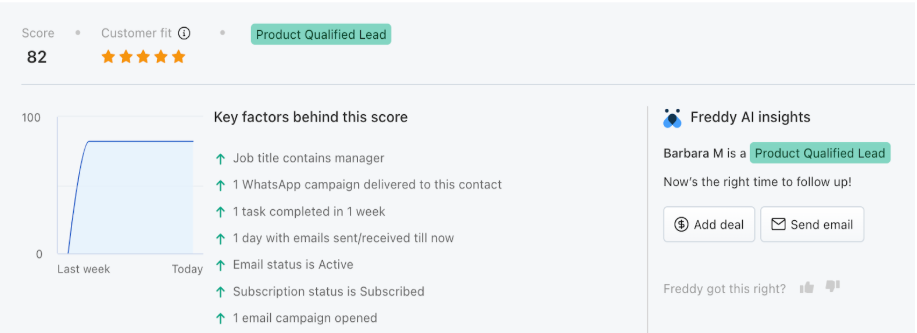
Freddy AI Contact Scoring assigns every contact a score from 0 to 99 based on signals admins define across four categories: contact properties (job title, geography, source), primary account firmographics (industry, employee count, revenue), engagement activity (meetings, calls, email interactions from the last 6 months), and product/web events captured via Segment integration or the CRM tracking code.
Source: Freshworks
Freddy's ML algorithms layer on top of admin-defined signals and improve without manual tuning. Contacts above a configured threshold are tagged as Product Qualified Leads (PQLs) for SaaS accounts or "Likely to buy" for non-SaaS accounts, and the tag persists even if the score later drops, preventing score swings from disrupting active outreach lists. Contact scoring requires Pro or above.
Contacts support multiple email addresses and phone numbers and can link to multiple accounts. Bulk actions cover email, SMS, field updates, assignment, merge, sequence management, and tag management on up to 100 records at a time.
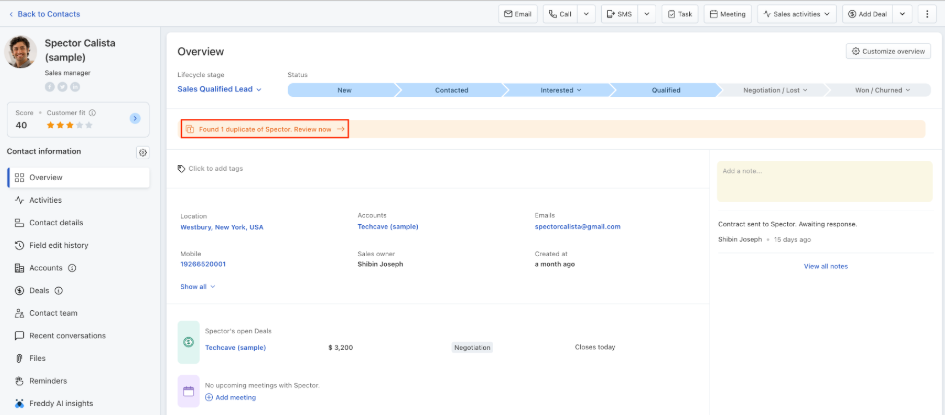
Freddy AI duplicate detection surfaces likely duplicates for review and merge on the contacts landing page. Field history tracking logs changes to contact and account fields with timestamps.
Source: Freshworks
Territory Management on Pro and above supports territory creation with hierarchy rules to auto-assign records. Account Hierarchy (Pro) models parent-child company relationships. A recycle bin holds deleted records for restoration, with GDPR "forget" capability for permanent deletion.
Freshsales Deal Pipeline Management
Deal Pipeline Management is where contacts and accounts become revenue. Deals are created against a contact or account and tracked through configurable stages from qualification to close.
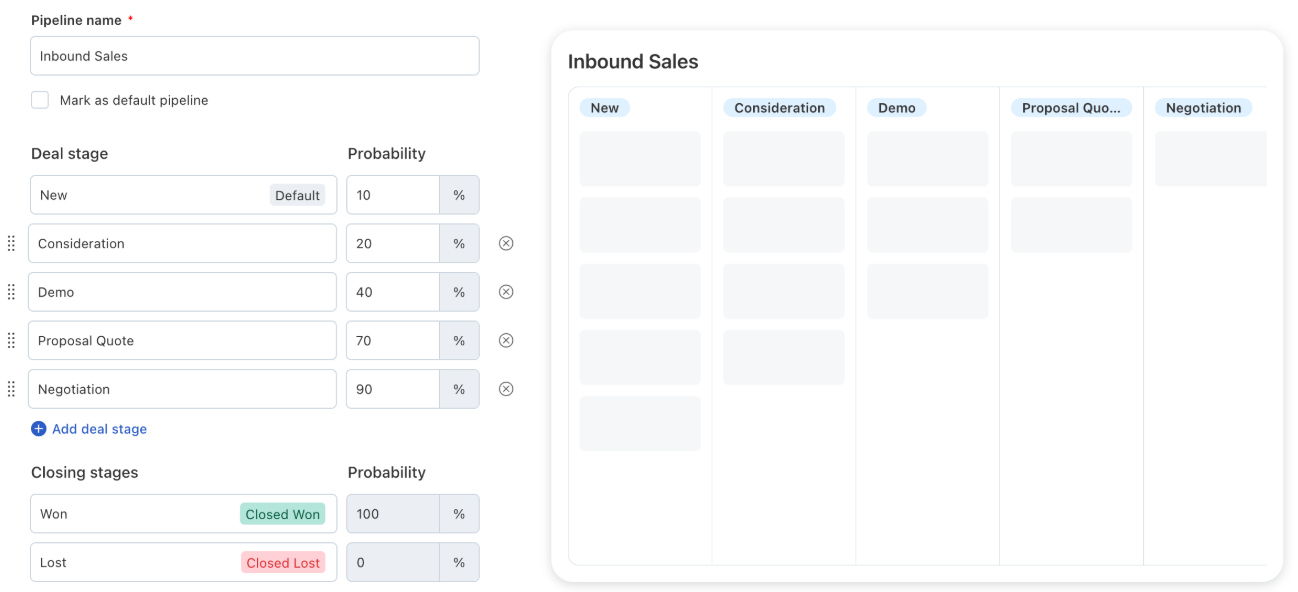
Administrators customize deal stages from Admin Settings: stages can be added, renamed, reordered via drag-and-drop, and assigned a close probability percentage. Won and Lost are fixed terminal stages; all intermediate stages are user-defined.
Source: Freshworks
Reps view the pipeline in either card (Kanban) or table format. The card view groups deals by stage, shows count and total value per stage, and supports drag-and-drop between stages. The table view fits up to 100 deals on screen without scrolling. Multiple pipelines (per product line, territory, or sales motion) are available on Pro and above.
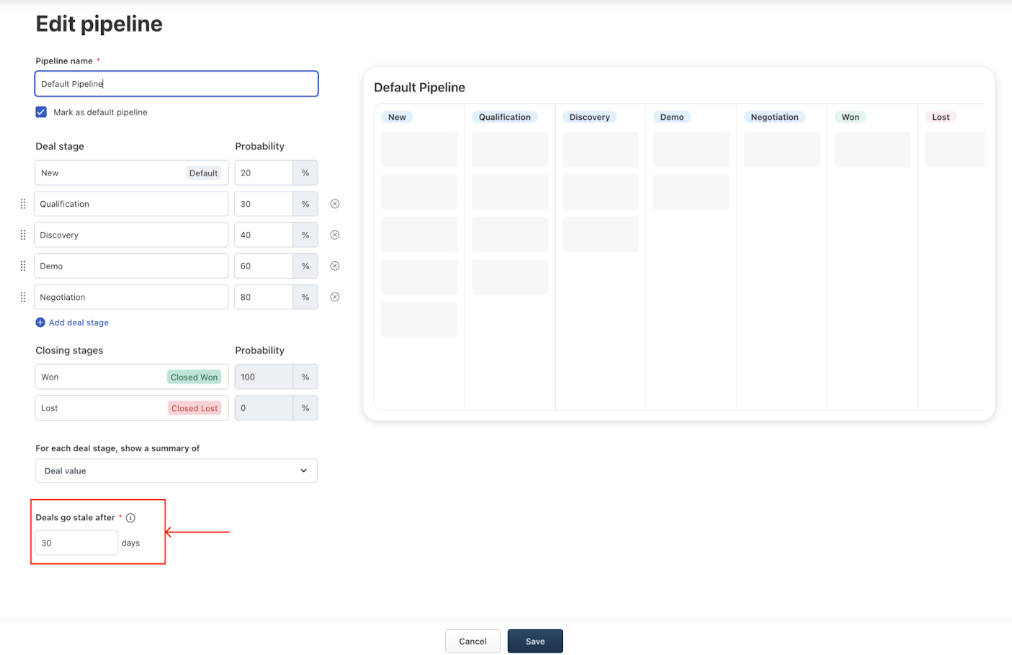
Stale deal detection stands out. Each pipeline has a configurable stale age in days, and once a deal exceeds that threshold, its card turns red. Because the threshold is set per pipeline rather than system-wide, organizations with different sales cycle lengths across products or territories can tune each pipeline independently.
Source: Freshworks
Reps can filter to show only stale deals for quick pipeline cleanup, and deals can be archived out of the active pipeline without deleting them.
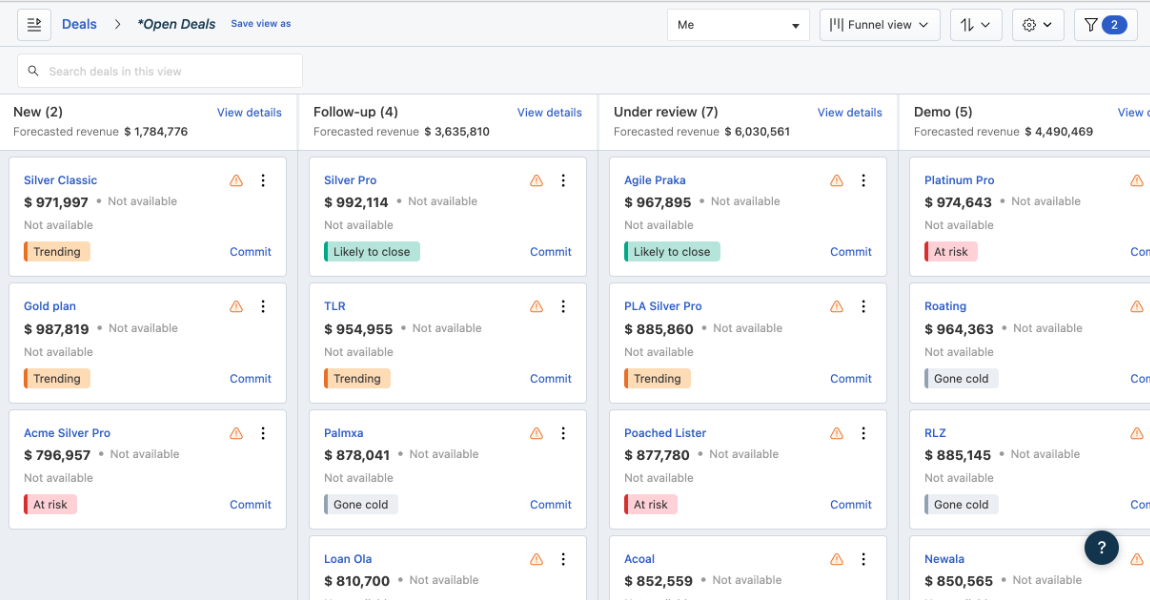
Freddy AI Deal Insights (Pro and above) tags each deal with a predicted outcome. Freddy tracks activity on all deals, builds an ML model from historical closed-won data, and assigns one of seven tags: Likely to Close, Trending, At Risk, Gone Cold, Neutral, Won, or Lost. The insight card surfaces the top signal driving the prediction and suggests a next action (email, call, or meeting).
Source: Freshworks
Reps can mark a Freddy tag as accurate or inaccurate, and Freddy uses that feedback to improve over time. The same predictions feed into the Sales Forecast dashboard, where reps commit to deals and managers reconcile forecasts against quotas. Forecast categories include Committed, Best-case, and up to 3 custom categories.
Freshsales Sales Engagement
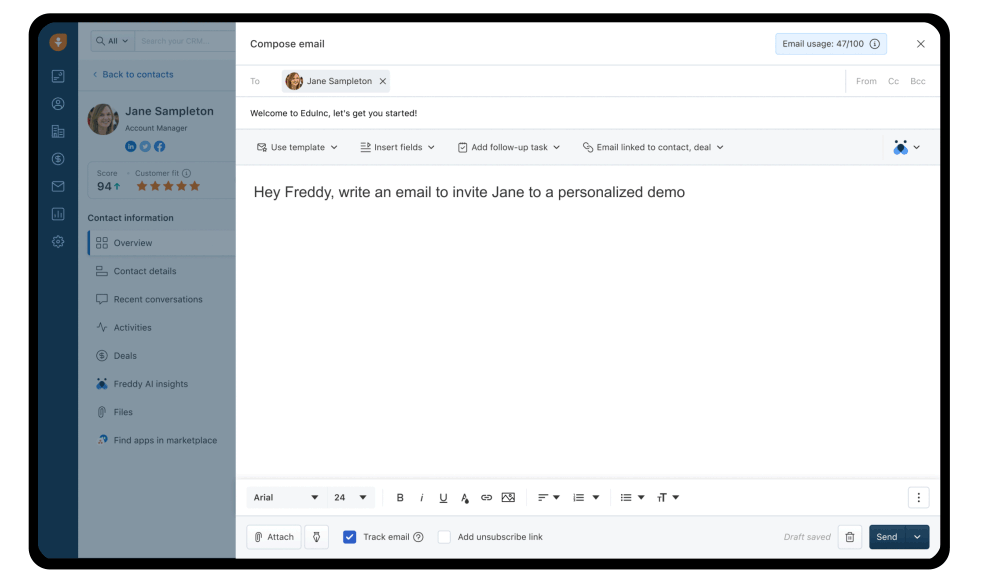
Sales engagement in Freshsales is not a separate product or add-on. Built-in email, phone, and chat are available on every plan including Free, so reps can start conversations without leaving the contact or deal view.
Source: Freshworks
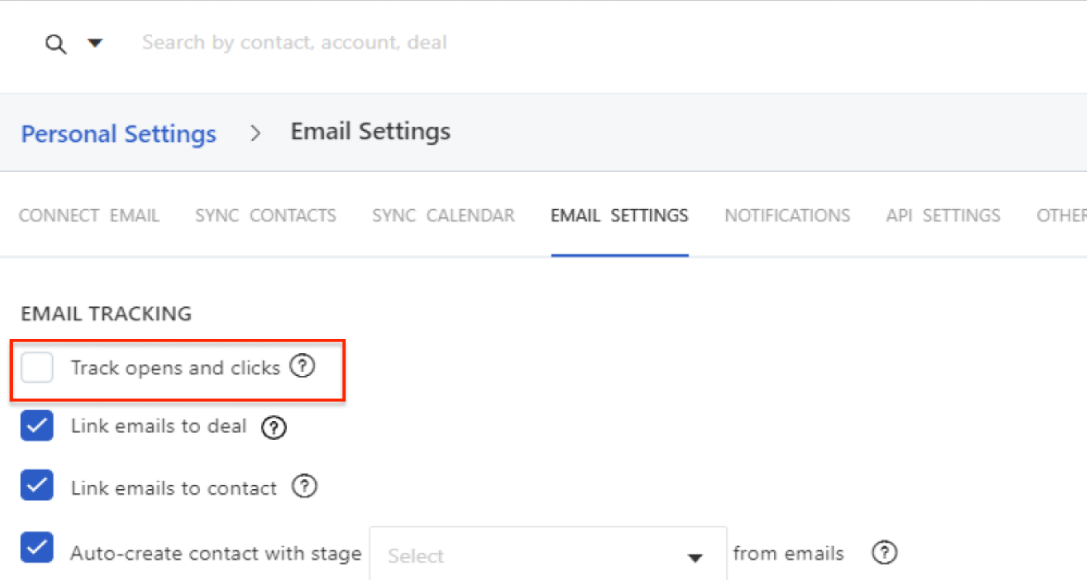
Email works through a connected mailbox (custom SMTP recommended for deliverability). Open, click, and bounce tracking is enabled per user via Profile Settings, and tracked statuses appear in the Conversations tab. On Pro and Enterprise, Freddy AI can compose sales emails and rephrase, expand, or enhance draft text, letting reps generate prospecting emails with selectable tones.
Source: Freshworks
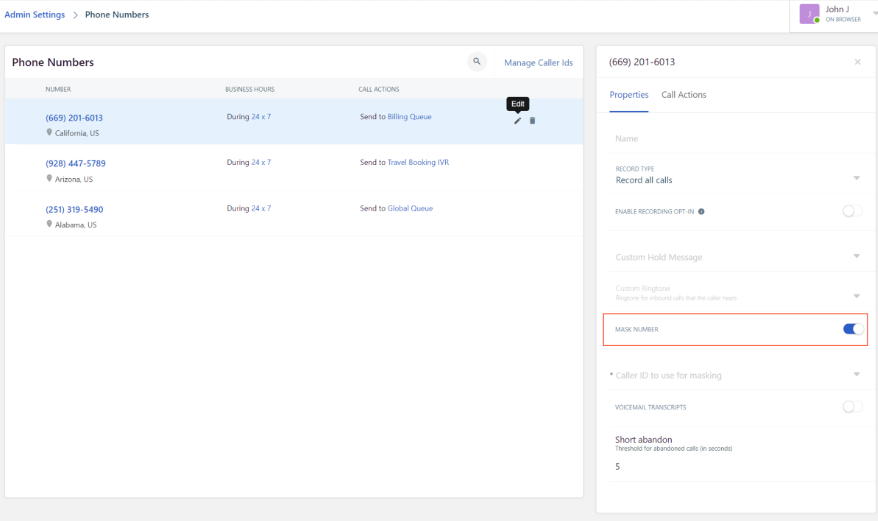
Phone is built into the CRM with options to buy numbers, port existing numbers, or Bring Your Own Carrier (BYOC) via an external SIP connection.
BYOC lets teams keep existing carrier contracts; calls made via a configured BYOC number carry no per-minute charges from Freshworks beyond optional services: call recording at $0.003/min and voicemail transcription at $0.004/min. Number masking and call recording configuration are available. BYOC is useful at this price point for teams in regions where Freshworks' built-in telephony coverage is thin.
Source: Freshworks
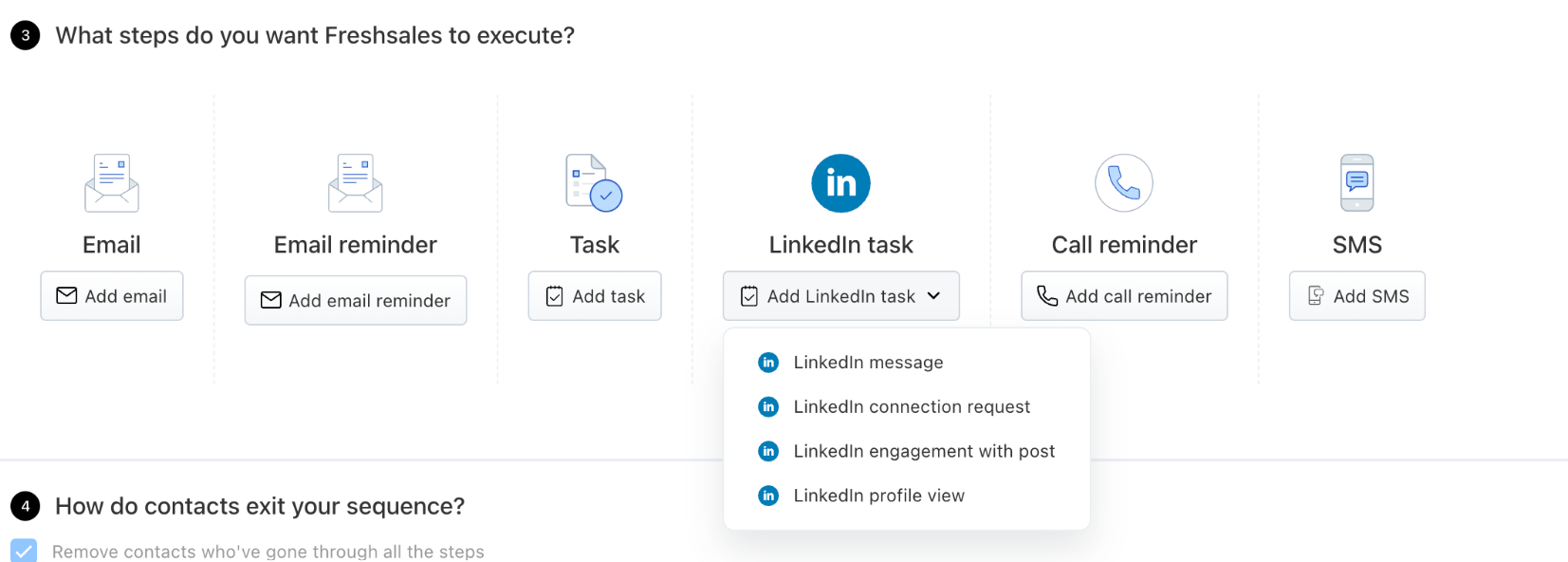
Sales Sequences (Pro and Enterprise) automate multi-step outreach across email, call reminders, SMS, LinkedIn tasks, and follow-up tasks.
Source: Freshworks
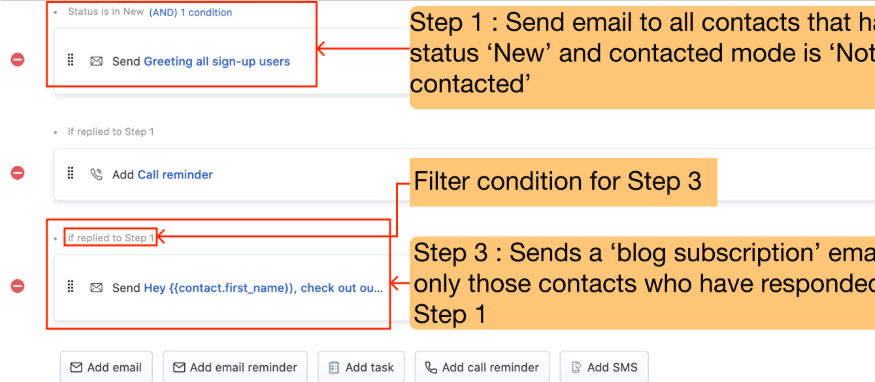
A sequence has four components: Audience (filtered contact/account views or conditions), Sequence Type, Steps, and Exit Criteria. Contacts that reply, unsubscribe, or have bounced email addresses exit automatically. Three sequence types serve different use cases:
Classic sequences: Steps run on fixed day-offsets from entry, suited to prospecting campaigns. If a step condition is not met on the scheduled day, that step is skipped permanently.
Smart sequences: Steps run on repeating intervals and re-evaluate conditions each cycle. A contact that eventually meets a step condition receives it at the next interval, even if it was skipped before. Built for longer-cycle onboarding and retention flows.
Outbound sequences: Steps execute in order based on outcomes of the prior step.
Source: Freshworks
Each step supports up to 8 filter conditions based on email activity (opened, clicked, replied) or record properties, enabling branching paths within a sequence. Limits are gated by plan: Pro allows 10 sequences per user and 1,000 sequence emails per user per month; Enterprise allows 25 sequences and 2,000 emails per user per month.
Freshsales Automation and Workflows
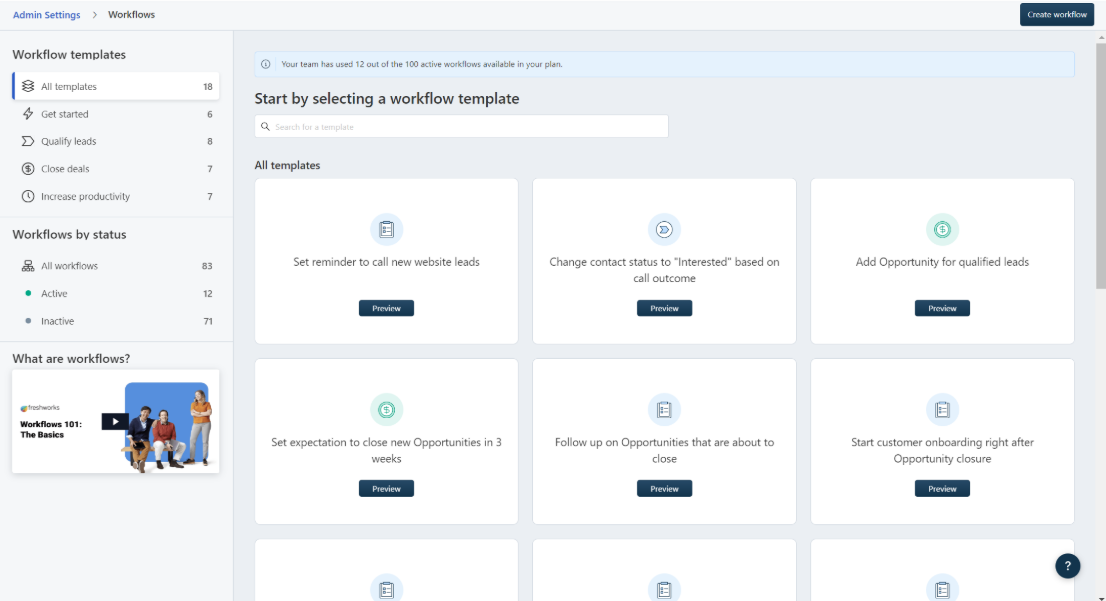
Workflows eliminate manual work by firing rules when business events occur. Every workflow has three components: a trigger, optional conditions, and actions.
Source: Freshworks
Triggers come in two forms. Record-based triggers (Growth and above) fire when a record is created or updated, running once per record or recurrently. Time-based triggers (Pro and above) fire on a recurring schedule (daily, weekly, or monthly) at a specified time, scanning all matching records.
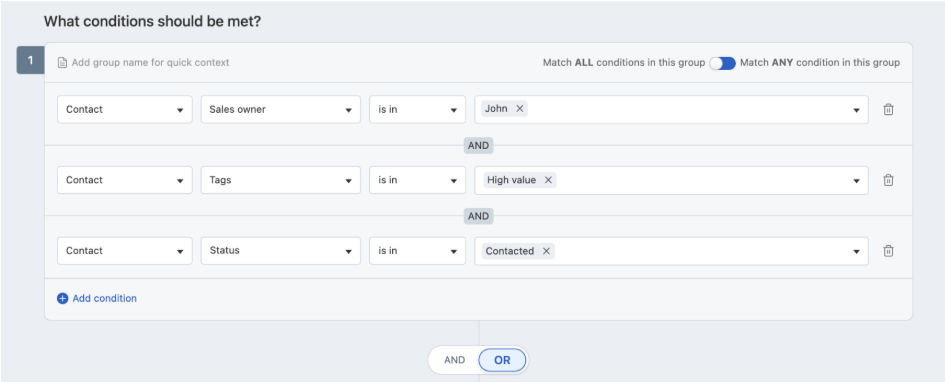
Conditions filter which records the workflow applies to: up to 10 conditions per group with AND/OR blocks for advanced conditional logic. Actions define what happens: up to 5 actions per workflow, including updating record fields, sending emails, sending SMS, creating tasks, adding deals, triggering webhooks to third-party apps, managing tags, and adding or removing contacts from marketing lists.
Source: Freshworks
Workflows can run on Contacts, Accounts, Deals, Tasks, Meetings, Call Logs, and Custom Modules (Enterprise). A library of ready-to-use workflow templates covers common use cases. Draft mode lets teams build and test before going live.
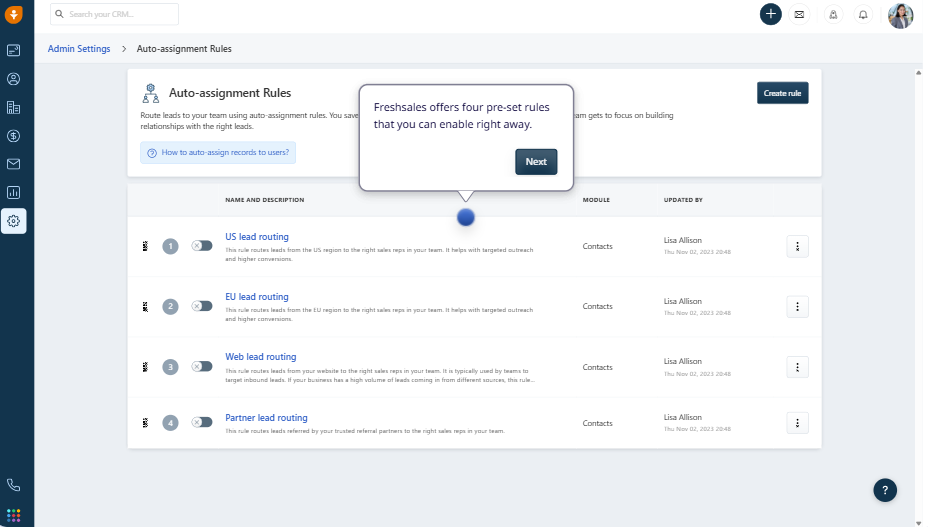
Auto-assignment Rules (Pro and above) route records automatically. Admins define conditions against module fields, select a territory and specific users, and records are assigned in round-robin fashion.
Source: Freshworks
When a record matches multiple rules, priority ordering determines which rule wins. Rules can be scoped to specific territories using AND/OR condition grouping, and a no-condition catch-all rule ensures no new record goes unassigned.
One practical note on webhooks: because Freshworks builds both the CRM and Freshdesk, teams running both products can create Freshdesk tickets directly from a Freshsales workflow without a third-party integration layer.
Freshsales Freddy AI
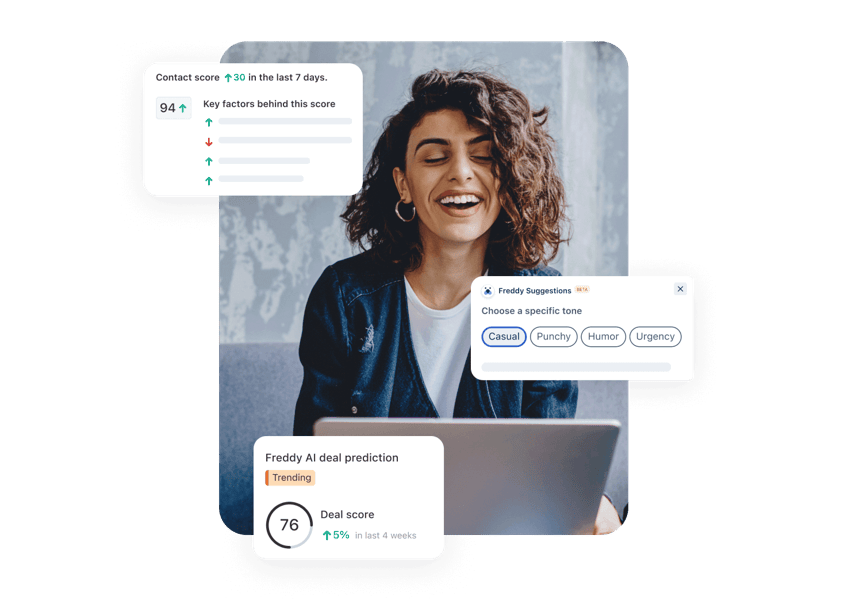
Freddy AI is Freshsales' embedded AI layer, available starting at Pro ($39/user/month). It operates across three modes: scoring, deal intelligence, and content generation. No separate AI add-on contract is required.
Source: Freshworks
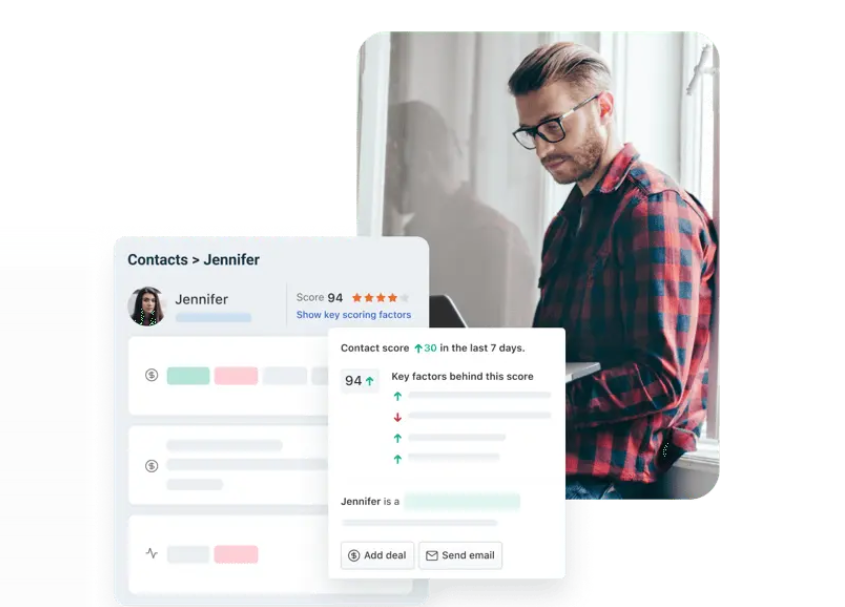
Contact Scoring assigns a 0-to-99 score by combining admin-configured signals with ML algorithms trained on the CRM's historical data. Admins define positive and negative signals across contact properties, account firmographics, sales engagement activity, and product/web events.
Activity-based scoring separately tracks marketing email engagement (opens, clicks across campaigns) and sales activity frequency, covering the last 6 months of data. Teams using Freshsales Suite (including Freshmarketer) get the most complete behavioral picture since both sales and marketing engagement flow into the score natively.
Source: Freshworks
Deal Insights parse emails, analyze historical data, and surface recommendations for each deal. The system identifies risk signals and suggests next actions. It tells a rep which deals need attention and what to do about them.
Source: Freshworks
AI Content Generation turns Freddy into an in-CRM writing assistant. Reps generate prospecting email drafts (including subject lines and body copy) by selecting from multiple tones, and use text enhancement functions (rephrase, expand, enhance) on existing copy.
Forecasting Insights (Enterprise, $59/user/month) adds AI-driven pipeline forecasting, though the mechanics of how forecast models are built are not well documented. Freddy AI surpassed $25M ARR across all Freshworks products in Q4 2025, and Freshworks has identified it as a growth driver.
The Freddy AI Agent is a separate capability: a customer-facing chatbot running on bot sessions, sold as an add-on. 500 free AI agent sessions are included with all paid plans as a one-time allotment.
Freshsales CPQ: Configure, Price, Quote
Freshsales CPQ is a paid add-on available across all plans (Free through Enterprise) that lets teams generate branded business documents inside the CRM. One free CPQ license is bundled with every account.
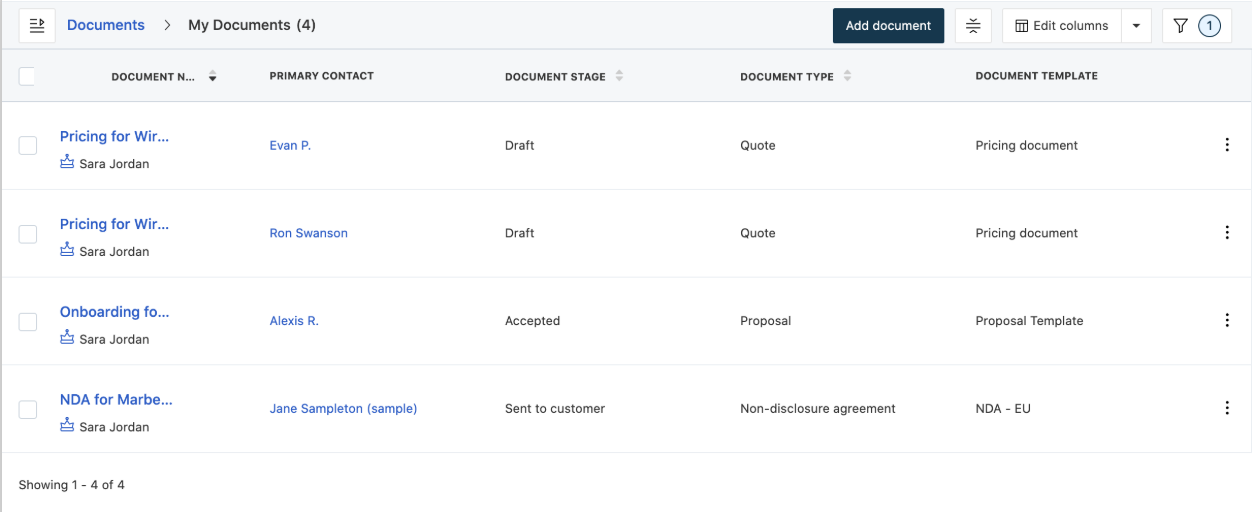
The workflow runs in three steps. An admin configures up to 20 custom document types (Quote, Proposal, NDA, MSA, or custom labels) and sets up custom document stages (Draft, Sent to Customer, Accepted, Declined).
Admins then build reusable templates with branded headers, footers, and placeholder fields mapped to CRM module fields, so field values auto-populate at document generation time. A rep opens a deal, clicks "Create quote," selects a template, and the document fills from the linked deal record. Products from the product catalog are added with automatic pricing calculation.
Source: Freshworks
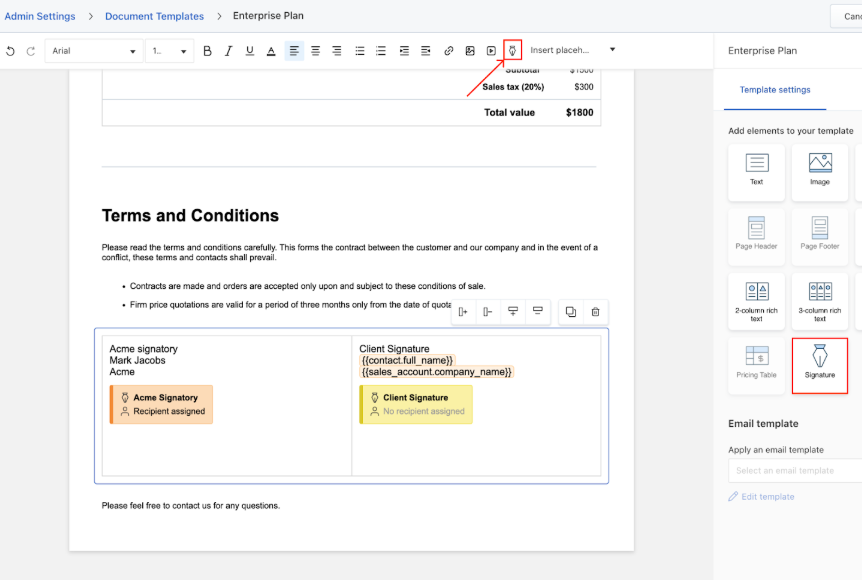
Native eSignature powered by Dropbox Sign is built in: signature blocks are dragged into templates, recipients assigned from the contacts module, and signing order is configurable. No separate Dropbox Sign account is required. The cap is 50 total signatures per account, and eSignature is not available on the free CPQ license.
Source: Freshworks
CPQ covers document generation, templating, and eSignature, but does not include dynamic pricing rules, tiered discount approval workflows, or complex product configurators. Teams with multi-currency pricing or bundle configuration needs will find it limited compared to dedicated CPQ platforms.
Freshsales Reports and Analytics
Freshworks Analytics is the built-in reporting platform, organized as Reports, Widgets, Filters, and Groups. A report groups related metrics; each report holds up to 10 widgets. Widgets track one or several metrics as charts or text.
Filters segment records by field values using AND/ANY logic, applied at the widget level or across all widgets in a report. Groups split a metric by an attribute (revenue by product, for example), with the platform choosing the best visualization automatically.
Source: Freshworks
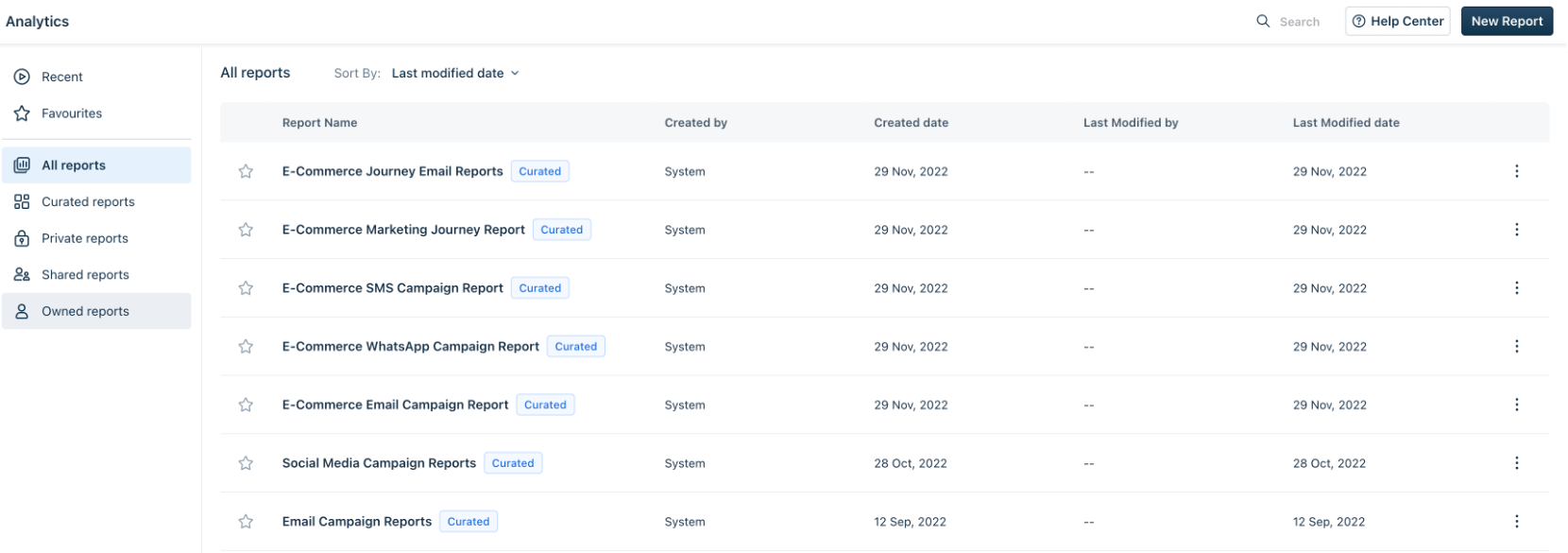
Curated Reports (all paid tiers) ship pre-built: Sales Dashboard, Contact Generation and Trends, Team Activity Dashboard, Marketing Dashboard, Email Campaign Report, Sales Trends, Sales Forecast, Products Dashboard, and WhatsApp Campaign Report.
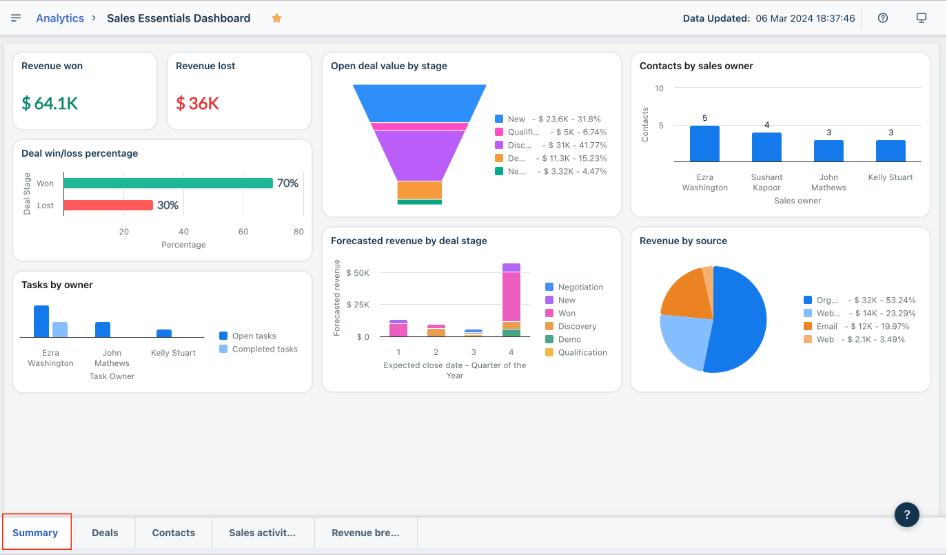
The Sales Essentials Dashboard provides 5 pre-built pages covering Summary, Deals, Contacts, Sales Activities, and Revenue, with widgets tracking revenue won/lost, open deal value by stage, deal win/loss percentage, forecast revenue by deal stage, and revenue by source. New users can preview seeded demo data before live data is available.
Source: Freshworks
Custom Reports (Pro and Enterprise) let users build reports by choosing metrics, attributes, filters, and groupings without code. Reports can be shared with team members, scheduled for recurring delivery to specified inboxes, and underlying data can be exported from any widget into a downloadable table. Advanced analytics and forecasting are Enterprise-only features.

Source: Freshworks
Because Freshworks Analytics powers reporting across Freshsales, Freshmarketer, and Freshsales Suite, the same interface covers both sales and marketing data (Marketing Dashboard, Email Campaign Report, WhatsApp Campaign Report) for teams using the combined suite.
Freshsales Integrations, API, and Technical Infrastructure
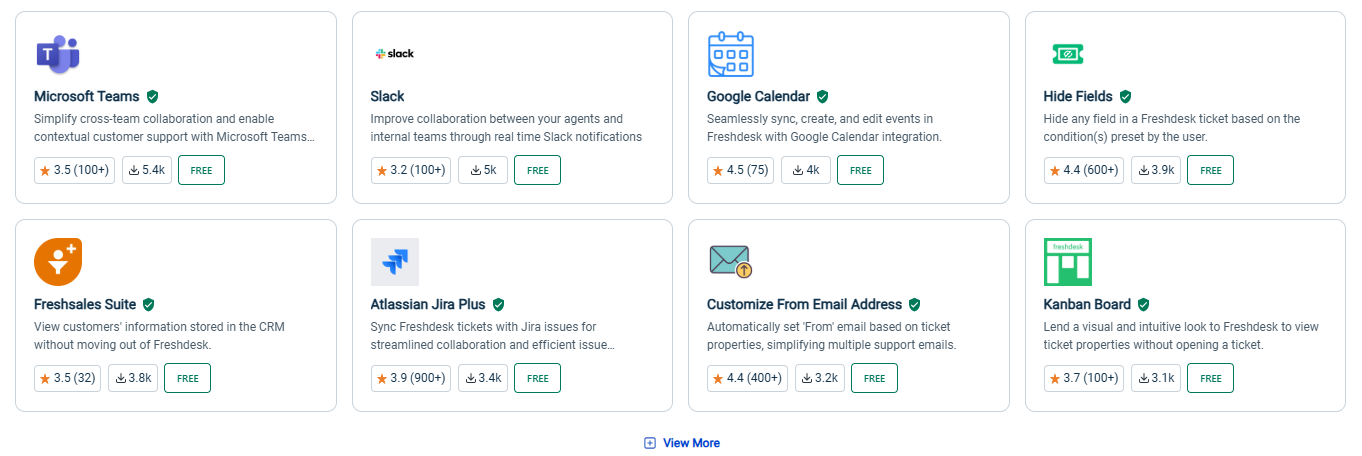
The Freshworks Marketplace hosts 1,200+ apps across all Freshworks products, with a filtered view for Freshsales. Marketplace access is included on all plan tiers.
Key integrations span the sales tech stack:
Accounting: QuickBooks (500+ installs), Xero (500+ installs)
Freshworks suite: Freshdesk (5,900+ installs, the most-installed Freshsales app), Freshchat, Freshcaller
E-commerce: Shopify, WooCommerce
Collaboration: Slack (Growth and above), Microsoft Teams
Lead capture: Facebook Ads, Google Contacts two-way sync, Contact Form 7, Gravity Forms
iPaaS: Zapier (official listing)
Source: Freshworks
The REST API supports standard CRUD operations on Contacts, Accounts, Deals, Notes, Tasks, Appointments, Sales Activities, Products (CPQ), and Documents (CPQ), with bulk upsert and bulk delete on core modules. API access is included on all plan tiers, including Free, with rate limits scaling by plan:
Free and Growth: 1,000 API requests/hour per agent
Pro: 2,000 API requests/hour per agent
Enterprise: 5,000 API requests/hour per agent
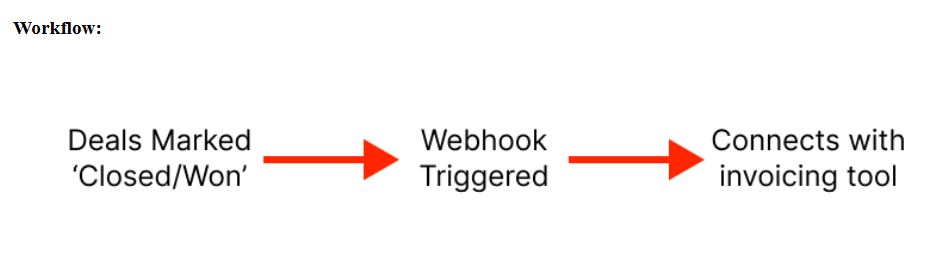
Webhooks fire through workflow automation rules, supporting POST, GET, PUT/PATCH, and DELETE with JSON, XML, or X-FORM-ENCODED payloads. Authentication covers basic auth and token-based options. The Freshworks App SDK v3.0 lets developers build custom apps that embed in the Freshsales UI and deploy across Freshsales, Freshdesk, and Freshservice simultaneously.
Source: Freshworks
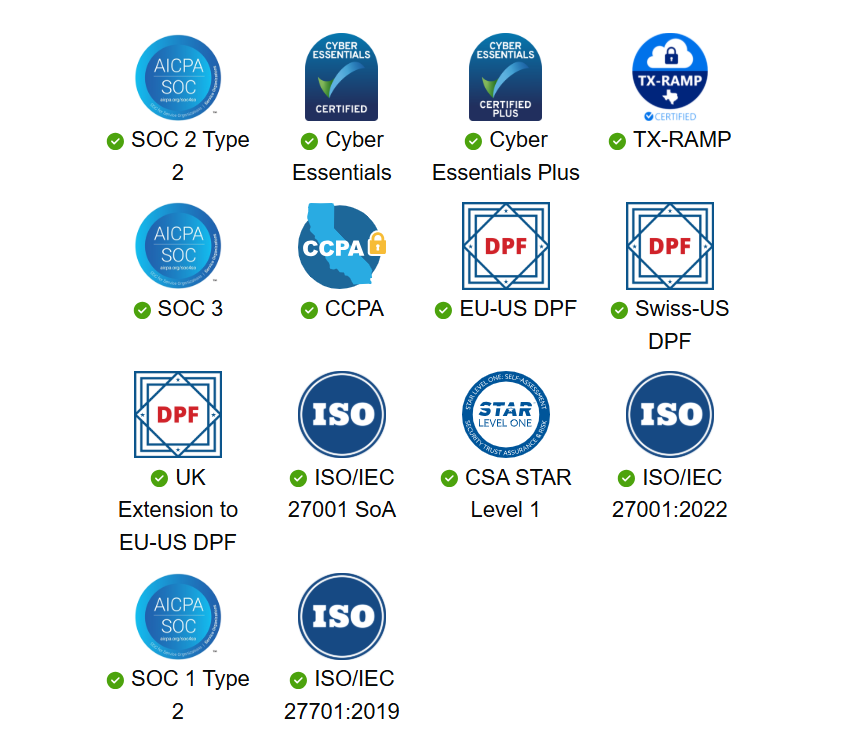
Freshsales maintains compliance through the Freshworks Trust Center: ISO/IEC 27001:2022, ISO/IEC 27701:2019, SOC 2 Type 2, SOC 1 Type 2, PCI DSS v4.0.0, and CSA STAR Level 1 certifications. Infrastructure runs on AWS with AES-256 encryption at rest and TLS 1.2 encryption in transit, 24x7 security operations monitoring, and near real-time data backups.
Source: Freshworks
Where Freshsales Stops: The Gaps
Freshsales executes the sales process once a lead exists. That focus shapes its strengths, but it also means the platform depends on external sources for several capabilities a revenue team needs upstream and alongside deal execution.
No B2B contact or company database for prospecting. Freshsales is a CRM, not a data provider. It manages contacts and accounts after they are imported but does not include a database of companies, contacts, direct dials, or verified business emails that reps can search to build outbound lists. Teams need a separate data source to fill the pipeline.
No buyer intent signals. Freddy AI scores contacts based on engagement with your own outreach and CRM activity, but Freshsales does not track which companies are researching specific topics across the web. There is no intent data layer showing in-market buying behavior before a prospect enters the CRM.
No conversation intelligence. Freshsales supports call recording and voicemail transcription as optional per-minute add-ons, but it does not include AI-driven call analysis, objection detection, talk-ratio tracking, coaching scorecards, or deal intelligence extracted from conversation data. Reps record calls; the platform does not analyze what was said.
No account-based marketing orchestration. Freshsales handles pipeline management. It does not include display advertising, audience management, cross-channel campaign orchestration, or account-based marketing capabilities.
The Freshsales Suite adds Freshmarketer for email marketing and journeys, but ABM, display ads, and multi-channel demand generation are outside its scope.
Revenue intelligence is limited. Freddy AI Deal Insights provide deal-level predictions and next actions, but the model runs from CRM field data and email engagement.
It does not fuse conversation transcripts, third-party intent signals, org chart movements, or hiring patterns into deal reasoning the way dedicated revenue intelligence platforms do. Forecasting Insights (Enterprise only) face the same constraint: they can only work with the data Freshsales sees natively.
Feature gating creates steep cost jumps. Sales sequences, multiple pipelines, AI contact scoring, deal insights, custom reports, territory management, and auto-assignment all require Pro ($39/user/month), a 4x increase over Growth ($9/user/month). Custom modules, field-level permissions, sandbox, and audit logs require Enterprise ($59/user/month). Teams needing mid-tier capabilities face a significant per-seat jump.
How ZoomInfo Covers the Gaps
The gaps above share a common thread: Freshsales manages the sales process inside the CRM but depends on external sources for the data, signals, and intelligence that determine which prospects to pursue and why deals move or stall. ZoomInfo supplies those layers.
ZoomInfo's B2B Data Platform: The contact and company database Freshsales does not include
ZoomInfo operates the largest B2B data platform available: 500M contacts, 100M companies, 135M+ verified phone numbers, 120M direct-dial phone numbers, and 200M+ verified business email addresses.

Source: ZoomInfo
The data flows through a verification pipeline backed by 300+ human researchers and automated ML scanning of 28 million site domains daily, reaching up to 95% accuracy on first-party data.
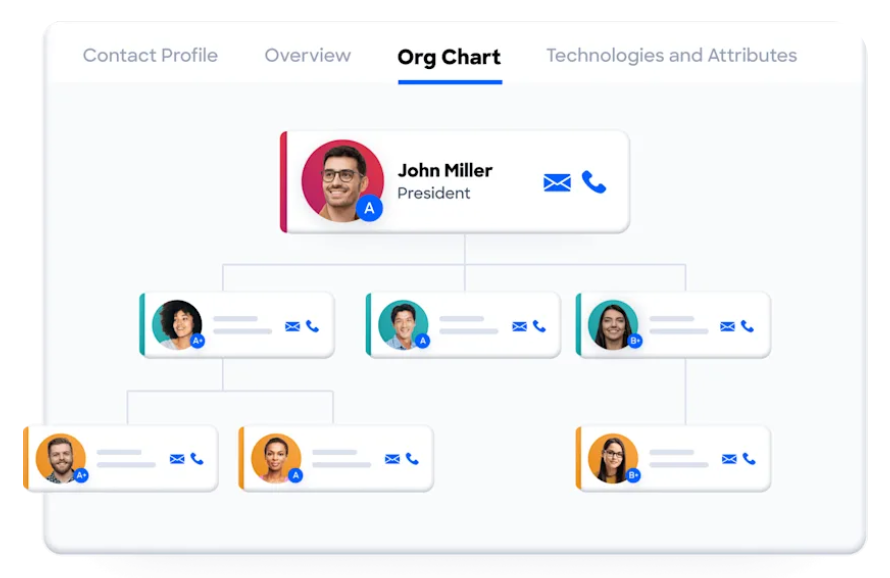
For a Freshsales user, this fills the upstream gap. Freshsales can manage contacts once they are in the CRM, but it cannot source them. ZoomInfo provides department org charts with decision-makers' direct dials and emails, 300+ company attributes for segmentation, contact tracking with job-change alerts, and technographic profiles covering 30,000+ technologies across 200+ categories for 30+ million companies.
Source: ZoomInfo
In a Fortune 500 competitive RFP analyzing 25 million contacts across vendors, an independent consultant concluded that "no other competitor came even close."
The data quality is externally validated: Leader in the Forrester Wave for Intent Data Providers, Q1 2025, Leader in the Gartner Magic Quadrant for ABM Platforms for the second consecutive year, and the only vendor positioned in the Gartner Voice of the Customer Customers' Choice quadrant with a 4.7/5.0 rating.
Source: ZoomInfo
ZoomInfo Intent and WebSights: Signals that show who is in-market before they enter the CRM
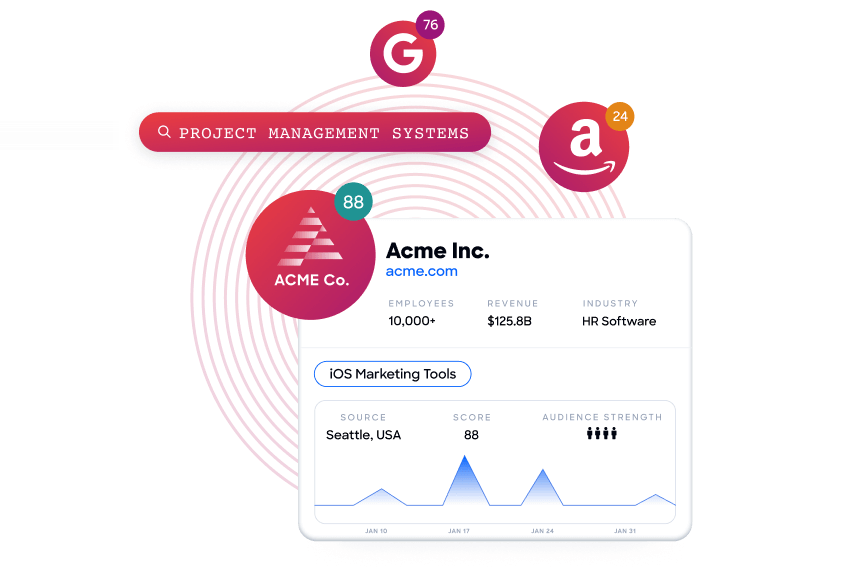
ZoomInfo Intent tracks signals from 210 million IP-to-Organization pairings and 6 trillion+ new keyword-to-device pairings sourced monthly. Where Freddy AI scores contacts based on engagement with your own outreach, ZoomInfo Intent reveals which companies are researching topics related to your product across the web, before you have ever contacted them.
Source: ZoomInfo
Guided Intent, exclusive to ZoomInfo, identifies topics historically correlated with deal success rather than requiring manual topic selection.
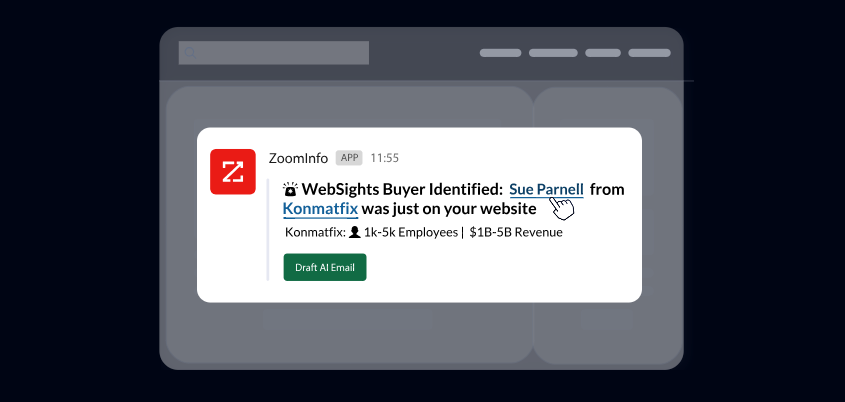
WebSights resolves anonymous website traffic to companies with Automatic Traffic Filtering that separates real visitors from bots. ZoomInfo Marketing goes further with contact-level site visitor identification, identifying who visited (not just which company) and triggering personalized outreach.
Source: ZoomInfo
ZoomInfo's GTM Context Graph and Chorus: Intelligence that captures why deals move, not just that they moved
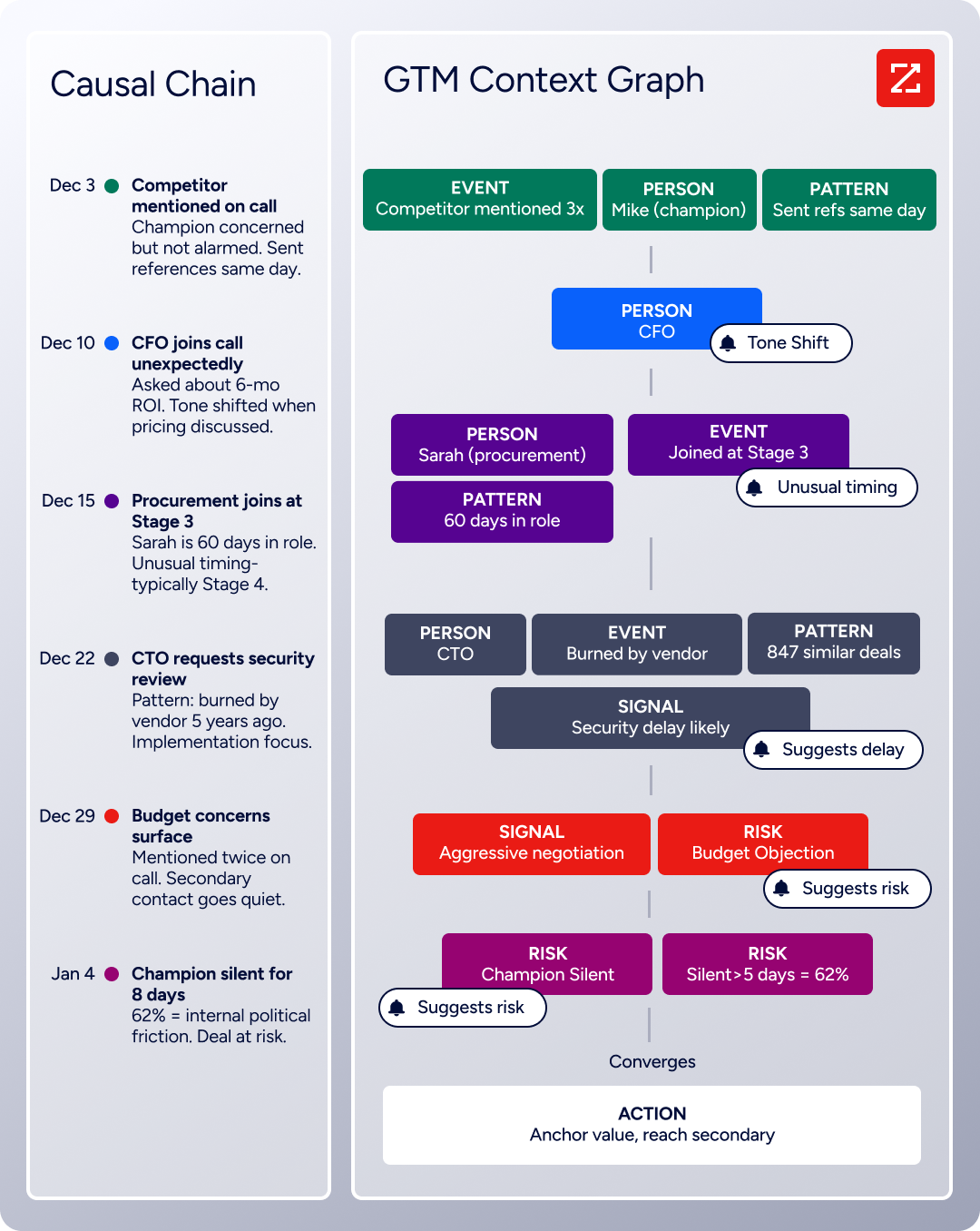
Freddy AI Deal Insights predict deal outcomes from CRM field data and email engagement. ZoomInfo's GTM Context Graph works at a different level. It processes 1.5B+ data points daily, fusing ZoomInfo's B2B data with a customer's CRM records, conversation intelligence from Chorus (backed by 14 technology patents), email interactions, and behavioral signals into a single intelligence layer.
Source: ZoomInfo
A CRM records that a deal's stage changed. The GTM Context Graph reasons about why: it connects the CFO joining the last call with ROI-focused questions to the pattern behind closed-won deals in the same segment, then links that to third-party signals showing the company is hiring and researching a competitor.
Chorus captures every customer call, meeting, and email, then surfaces AI-generated insights (talk ratios, sentiment, objection detection), auto-syncs deal intelligence to the CRM, and provides coaching scorecards and clip sharing. That intelligence flows into every downstream action.
Seismic's sales team attributed 39% of active pipeline to opportunities identified or influenced by ZoomInfo signals, boosted productivity by 54%, and saved 11.5 hours per week per seller. (Seismic Case Study)
ZoomInfo GTM Studio: Marketing orchestration and ABM the CRM cannot provide
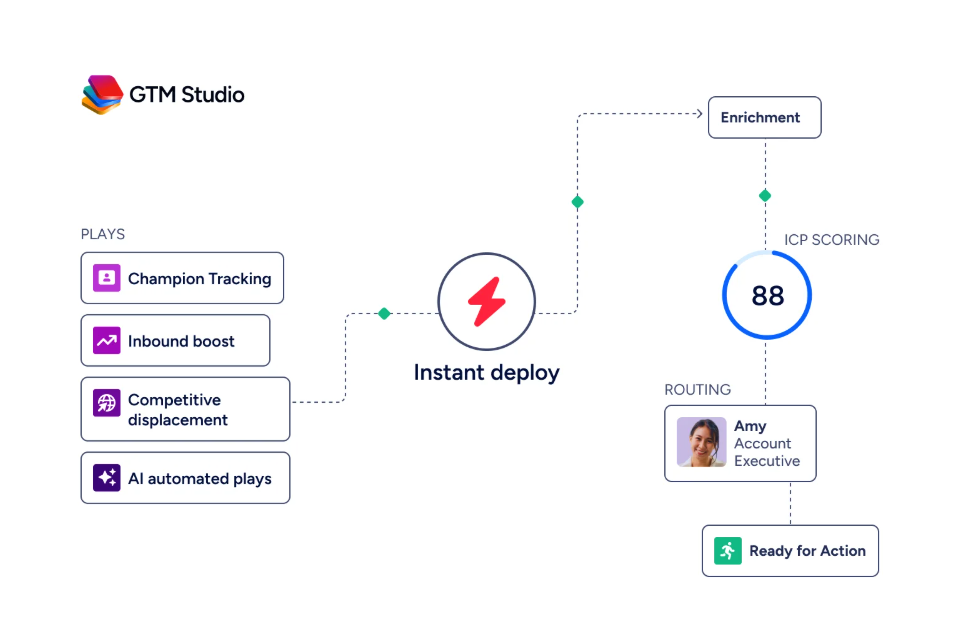
ZoomInfo’s GTM Studio addresses the marketing orchestration gap directly. Marketers, RevOps teams, and GTM engineers can build audiences using natural language, enrich with first- and third-party data, define triggers, and activate plays across channels (email, calls, display ads, direct mail, LinkedIn, Meta, Connected TV) without engineering support.
Source: ZoomInfo
Pre-built GTM plays cover inbound acceleration, champion tracking, competitive displacement, and ICP targeting. Expansion plays that used to take 3 weeks now launch in 30 minutes.
ZoomInfo Marketing includes a native Demand-Side Platform deploying display ads based on 300+ company attributes, FormComplete (reducing forms to a single field while auto-appending data), and Account Fit Scoring (predictive AI scoring 0-100 based on company attribute patterns).
ZoomInfo APIs and MCP: Data access for any tool or AI agent
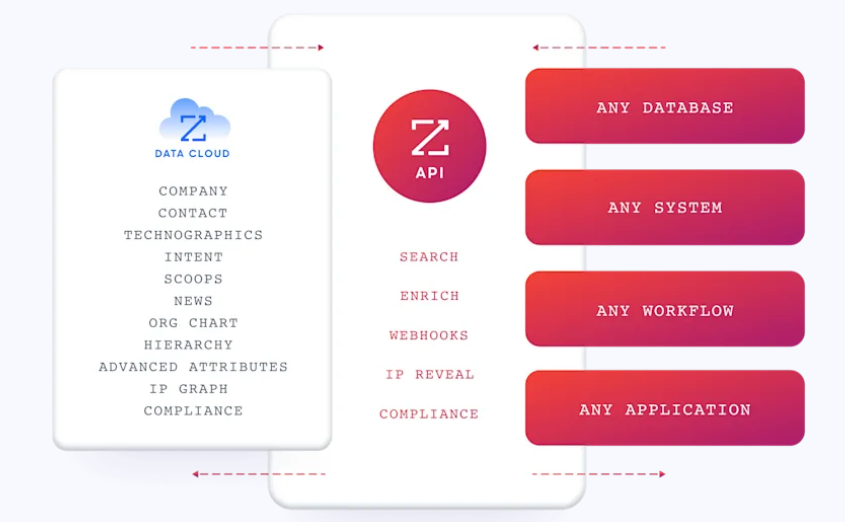
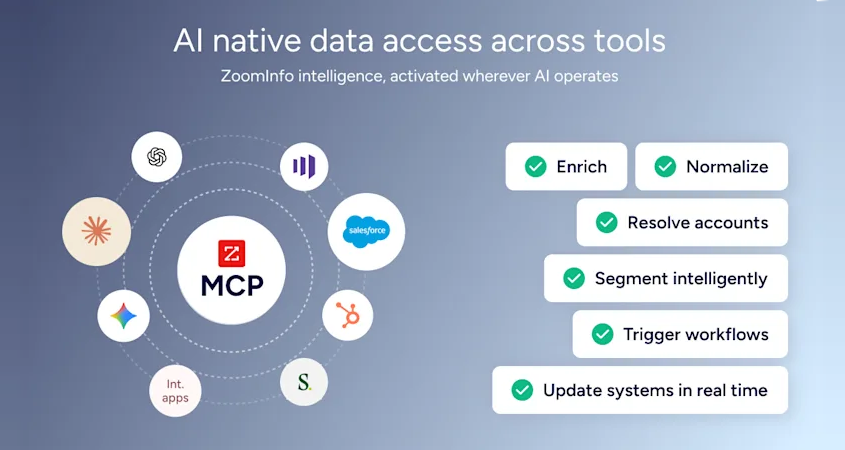
ZoomInfo delivers its intelligence through APIs and MCP (Model Context Protocol), so the same data and GTM Context Graph powering ZoomInfo's own products is accessible inside any third-party tool or custom AI agent.
Source: ZoomInfo
The MCP server connects AI models directly to ZoomInfo's B2B data as a native tool, currently supporting Claude and ChatGPT. API access is included in all relevant plans, and the Enterprise API covers Search, Enrich, Copilot (AI intelligence), Marketing (audience management), and Engagements endpoints.
Source: ZoomInfo
ZoomInfo's Free Entry Points: A way to evaluate the platform without commitment
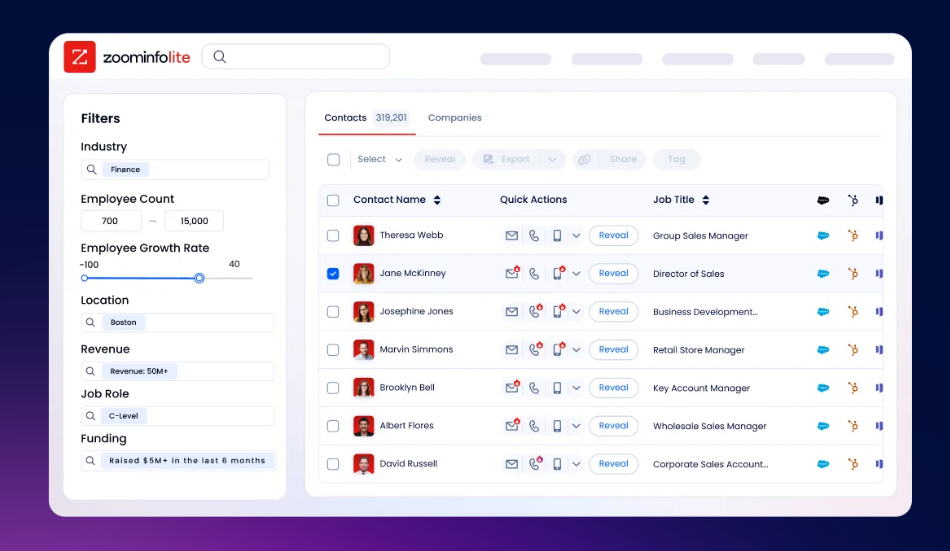
ZoomInfo Lite is a permanent free tier with access to ZoomInfo's B2B database, 10 monthly export credits, individual and company searches, a Chrome extension, and WebSights Lite with up to 10 website visitor reveals per day. A separate 7-day free trial provides broader access with no credit card required.
Source: ZoomInfo
Final Summary
Freshsales is a well-integrated CRM for sales teams that want built-in phone, email, chat, and pipeline management in one platform: Freddy AI provides contact scoring and deal insights without a separate AI contract, three sequence types automate multi-channel outreach natively, and CPQ with eSignature keeps document workflows inside the CRM.
It fits SMB and mid-market teams that want a capable CRM at $9 to $59 per user per month without the setup overhead of enterprise alternatives, especially those already using or open to adopting other Freshworks products.
It is lighter on the layers upstream and alongside the CRM: no B2B contact database for sourcing prospects, no buyer intent signals, no conversation intelligence for call analysis and coaching, and no account-based marketing orchestration.
If your bottleneck is upstream of the CRM (knowing which companies are in-market before you reach out, sourcing verified contacts to fill the pipeline) or alongside it (understanding what happened on the call and why the deal is moving, orchestrating multi-channel marketing campaigns), that is the ground ZoomInfo covers.
Its 500M-contact, 100M-company database supplies the verified emails and direct dials your sequences run on. ZoomInfo Intent surfaces accounts researching your category from 6 trillion+ keyword-to-device pairings monthly. Chorus captures and analyzes every sales conversation.
GTM Studio gives marketing teams multi-channel orchestration and ABM capabilities. And the GTM Context Graph fuses all of it into a single intelligence layer that captures why deals move, not just that they moved.
See what that intelligence layer adds to your CRM: start with ZoomInfo Lite for free, or request a demo to see how verified contacts and live intent signals flow into your pipeline.
FAQ
Does Freshsales include AI features on all plans?
No. The Free and Growth tiers do not include any Freddy AI capabilities. Contact Scoring, Deal Insights, and AI-powered email writing require Pro ($39/user/month). Forecasting Insights require Enterprise ($59/user/month). The Freddy AI Agent (customer-facing chatbot) is a separate paid add-on, though 500 free bot sessions come with all paid plans as a one-time allotment.
How many sales sequences can you run in Freshsales?
Sequences are not available on Free or Growth plans. Pro allows 10 sequences per user with 1,000 sequence emails per user per month. Enterprise allows 25 sequences with 2,000 emails per user per month. Three sequence types are available: Classic (fixed day-offsets), Smart (repeating intervals that re-evaluate conditions), and Outbound (outcome-based step progression).
Can you bring your own phone carrier to Freshsales?
Yes. Freshsales supports Bring Your Own Carrier (BYOC) via an external SIP connection on Pro and above. BYOC lets teams keep existing carrier contracts and phone numbers. Calls made via a configured BYOC number carry no per-minute charges from Freshworks, though optional services like call recording ($0.003/min) and voicemail transcription ($0.004/min) are billed separately.
Does Freshsales integrate with Salesforce or HubSpot?
Freshsales does not offer a native bidirectional sync with Salesforce or HubSpot as a CRM-to-CRM integration. The Freshworks Marketplace includes a HubSpot integration for syncing marketing contacts (600+ installs), and Zapier provides automation flows between Freshsales and other CRMs. Freshsales integrates natively with other Freshworks products (Freshdesk, Freshchat, Freshmarketer) and with accounting tools like QuickBooks and Xero.
What are the main differences between Freshsales Growth and Pro?
The jump from Growth ($9/user/month) to Pro ($39/user/month) unlocks the features most teams evaluate Freshsales for: Freddy AI Contact Scoring and Deal Insights, AI-powered email writing, Sales Sequences (all three types), Multiple Sales Pipelines, Territory Management, Auto-assignment Rules, Account Hierarchy, BYOC telephony, Advanced Workflows (time-based triggers), and Custom Reports. Growth provides the CRM foundation with basic workflows and curated reports; Pro adds the intelligence, automation, and engagement layers.
Does Freshsales offer buyer intent data?
No. Freddy AI scores contacts based on CRM engagement activity (email opens, clicks, calls, meetings) and admin-configured signals from contact properties and account firmographics. It does not include third-party intent data showing which companies are researching topics across the web. ZoomInfo Intent tracks signals from 210 million IP-to-Organization pairings and 6 trillion+ keyword-to-device pairings sourced monthly, identifying in-market accounts before any outreach begins.
Can Freshsales record and analyze sales calls?
Freshsales can record calls (at $0.003/min) and transcribe voicemails (at $0.004/min), but it does not include conversation intelligence. There is no AI analysis of recorded calls, no objection detection, no talk-ratio tracking, no coaching scorecards, and no automated extraction of deal context from conversations. ZoomInfo's Chorus, backed by 14 technology patents, records and transcribes sales calls, surfaces AI-generated insights, auto-syncs deal intelligence to the CRM, and provides coaching workflows that feed into the GTM Context Graph.
Does Freshsales include a B2B contact database for prospecting?
No. Freshsales is a CRM that manages contacts after they are imported. It does not include a searchable database of companies, contacts, direct dials, or verified business emails. Teams need a separate data source to build outbound lists. ZoomInfo provides 500M contacts, 100M companies, 120M direct-dial phone numbers, and 200M+ verified business email addresses, with data flowing through a verification pipeline backed by 300+ human researchers and reaching up to 95% accuracy on first-party data.
