

Choosing between GreenRope and HubSpot for your CRM and marketing automation comes down to five questions:
Do you need every feature in one flat-price subscription, or will you pay per seat and per hub for a larger ecosystem?
How many team members need access, and can your budget absorb per-seat costs as you grow?
Is having sales, marketing, project management, and event management in a single database more important than specialization in any one area?
Do you prioritize feature breadth at a predictable price, or polish, scalability, and a large integration marketplace?
How confident are you in the B2B data flowing into your CRM?
Here's what we recommend:
GreenRope is the all-in-one option for small and mid-sized businesses that want to consolidate their tech stack into a single subscription. It bundles CRM, email marketing, automation, project management, event management, e-commerce, website builder, and support ticketing at a flat monthly rate with unlimited users and unlimited emails. For teams tired of paying per seat across five or six tools, GreenRope's pricing model is refreshing. The trade-off: a steeper learning curve than competitors, a smaller development team, and an interface that can feel dense.
HubSpot is the platform for growing companies that want a large ecosystem and AI capabilities across marketing, sales, and service. With 288,706 customers, 2,000+ app integrations, and its Breeze AI layer handling everything from autonomous customer support to AI-driven prospecting, HubSpot offers depth that smaller platforms can't match. But that depth comes with complexity: per-seat pricing, mandatory onboarding fees at Professional and Enterprise tiers, and a billing model where costs rise quickly as your team grows.
Both platforms are capable CRMs. But neither solves the upstream problem on its own: the quality and completeness of the B2B data inside your CRM. No amount of automation matters if your contact records are stale, incomplete, or missing the people who make buying decisions. That data problem is where a different kind of platform becomes essential.
ZoomInfo is a B2B data intelligence and GTM platform built on 500M contacts, 100M companies, 135M+ verified phone numbers, and 200M+ verified business emails. That data feeds ZoomInfo's GTM Context Graph, which unifies your CRM records, conversation transcripts, and behavioral signals with the 1.5B+ data points ZoomInfo processes daily. It captures why deals move or stall, so whether you run GreenRope, HubSpot, or another CRM, your team gets full context on every account. Teams access it through GTM Workspace (for sellers), GTM Studio (for marketers and RevOps), or APIs and MCP in any front-end.
If building your pipeline on verified, continuously updated B2B data sounds like the missing piece, see how ZoomInfo works with your CRM.
GreenRope vs. HubSpot vs. ZoomInfo at a glance
GreenRope | HubSpot | ZoomInfo | |
|---|---|---|---|
Core function | All-in-one CRM and business operating system | Modular CRM platform with AI hubs | B2B data intelligence and GTM platform |
Pricing model | Flat rate by contact count; unlimited users | Per-seat + per-hub; contact-based for marketing | Custom-quoted; consumption-based |
Starting price | $99/month (500 contacts) | Free CRM; Starter at $20/seat/month | Free (ZoomInfo Lite); paid plans custom-quoted |
Users included | Unlimited at every tier | 2 on free; per-seat on paid | Varies by plan |
Marketing automation | Customer journey builder, drip campaigns, SMS | Workflows, AI agents, AEO tools | GTM Studio plays, intent-triggered campaigns |
Sales tools | Pipeline, lead scoring, proposals, e-signatures | Pipeline, sequences, AI prospecting agent, CPQ | GTM Workspace, AI account research, buyer intent |
Native integrations | Limited; primarily Zapier-dependent | 2,000+ marketplace apps | 120+ marketplace integrations; native HubSpot, Salesforce, Dynamics |
AI capabilities | ChatGPT integration for content and chatbots | Breeze AI across all hubs | GTM Context Graph, AI agents, API/MCP |
Support | 24/7 phone, chat, email; dedicated training manager | Community (free); email/chat/phone on paid tiers | Help center, ZoomInfo University, dedicated CSM (Enterprise) |
Best for | SMBs consolidating their tech stack | Growing companies needing ecosystem depth | Teams that need verified prospect data and buyer signals |
Flat-price simplicity vs. modular power
GreenRope and HubSpot represent opposite philosophies about how to build business software.
GreenRope's philosophy is consolidation. Every customer gets every feature at every pricing tier. The only variable is contact capacity. A team of three and a team of thirty pay the same monthly rate, because GreenRope charges no per-seat fees. The company positions itself against HubSpot on this point, arguing that HubSpot's add-on model drives up costs for SMBs.
HubSpot's philosophy is modularity. You choose which hubs you need (Marketing, Sales, Service, Content, Data, Commerce), which tier of each hub (Free, Starter, Professional, Enterprise), and how many seats. This lets you start small and scale precisely. But precision cuts both ways. When you subscribe to multiple hubs at different tiers, HubSpot bills all Core Seats at the rate of the highest tier, a detail that catches many buyers off guard.
For a five-person marketing team that also needs sales pipeline management, event registration, and project tracking, GreenRope delivers all of that for $99-$799/month depending on contact volume. The same setup on HubSpot could run $1,000-$2,000/month or more once you factor in Marketing Hub Professional ($890/month), Sales Hub seats, and mandatory onboarding fees.
For a twenty-person revenue team that needs advanced automation, integrations with Salesforce or Outreach, and AI-driven prospecting, HubSpot's ecosystem offers capabilities GreenRope doesn't have. The per-seat cost buys access to a platform with 135+ country coverage, Breeze AI agents, and a developer marketplace that dwarfs any SMB-focused CRM.
The right choice depends on where your business sits on that spectrum.
The data quality gap both CRMs face
This is the problem that shapes the entire comparison.
GreenRope and HubSpot are execution platforms. They manage your contacts, run your campaigns, track your deals, and report on your pipeline. They do these jobs well. But they depend entirely on the data you put into them.
Consider: a marketing team builds a campaign in HubSpot targeting VP-level decision-makers at mid-market SaaS companies. The campaign is well-designed, the copy is sharp, the automation sequences work. But the contact list came from trade show badge scans and website form fills from eighteen months ago. A quarter of those contacts have changed jobs. Some email addresses bounce. Key decision-makers at target accounts aren't in the database because they never filled out a form.
GreenRope users face the same problem. A sales rep tracks opportunities through GreenRope's pipeline, but the org chart at the target account is incomplete. The rep is selling to a director when the real authority sits with a VP the rep doesn't know exists.
ZoomInfo's 500M contacts and 100M companies, verified by 300+ human researchers with up to 95% accuracy on first-party data, exist to fill these gaps. The data isn't static. ZoomInfo's GTM Context Graph processes 1.5B+ data points daily, updating records as people change jobs, companies grow, and buying signals shift.
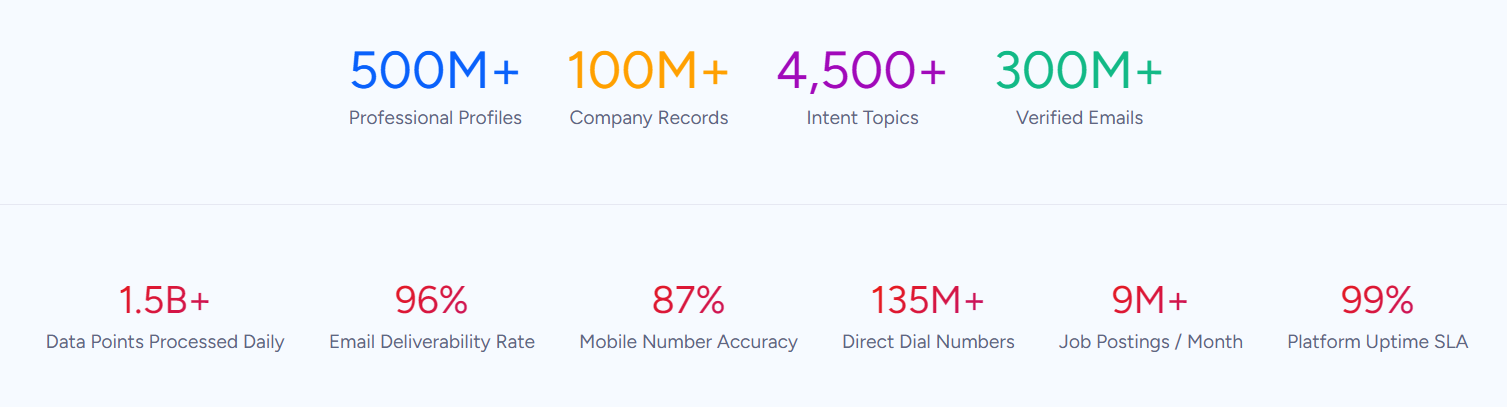
In a Fortune 500 competitive RFP analyzing 25 million contacts across vendors, an independent consultant concluded that "no other competitor came even close" to ZoomInfo's data quality.
SpringDB used ZoomInfo's enriched data to target precisely for their clients, achieving 2x-3x increases in campaign conversions, a 300% increase in database usability, and 30-50% lift in average deal size. "You'll get 10x the value if you think of ZoomInfo as a full platform and not just a tool for one team," said John Kotsuros, Founder and CEO. (SpringDB)
Marketing automation depth varies widely
Both GreenRope and HubSpot offer marketing automation, but the implementations reflect their different scales.
GreenRope's Customer Journey Builder provides drag-and-drop visual workflows triggered by contact behaviors (email opens, website visits, form submissions) or demographics. It also supports drip campaigns, A/B testing, SMS campaigns, and social media management. Because the marketing module shares a database with the CRM, behavioral data triggers automation instantly with no sync delay. For an SMB running email nurture sequences, event promotion, and lead scoring, GreenRope covers the essentials.
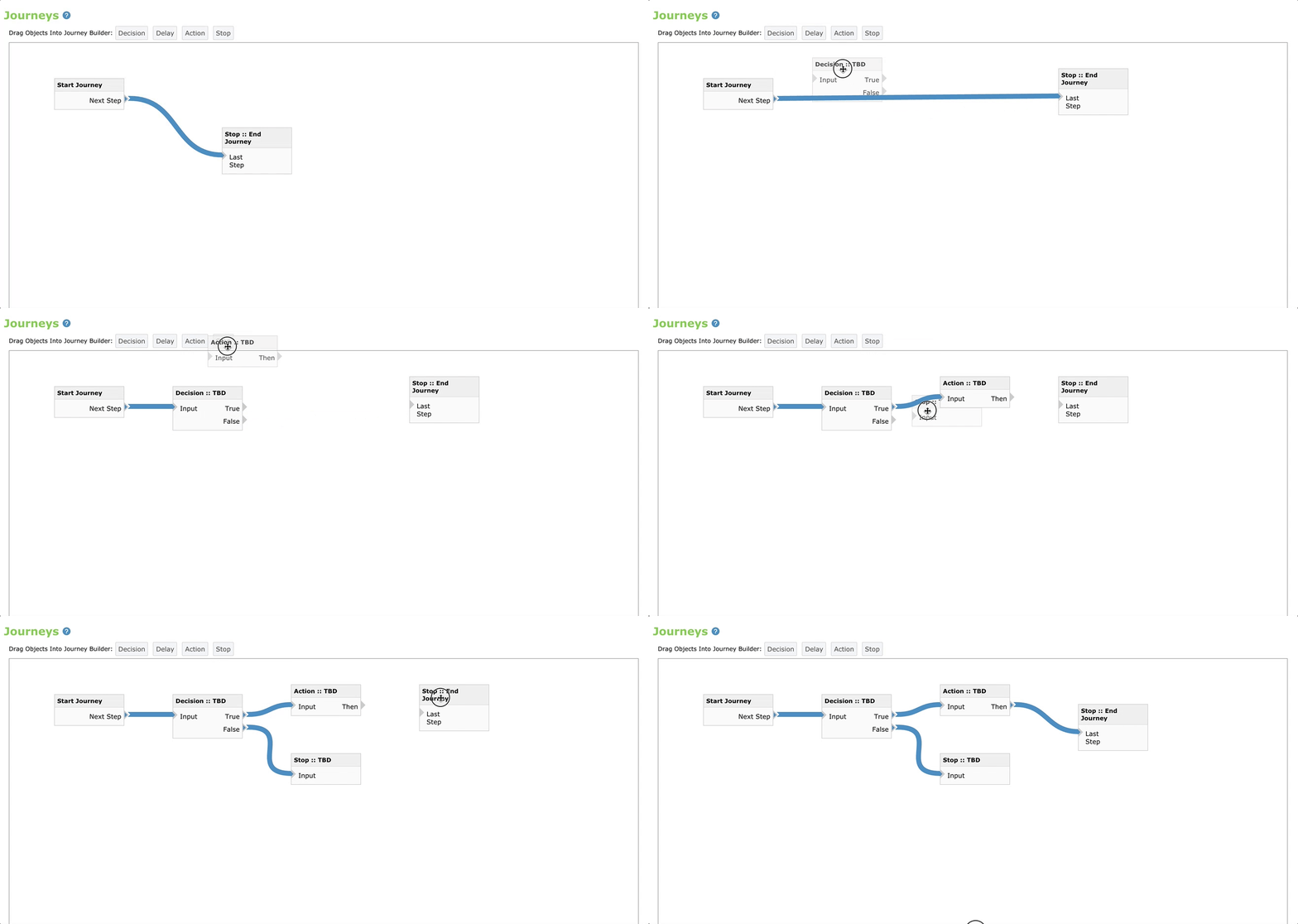
Source: GreenRope
HubSpot's Marketing Hub operates at a different scale. The workflow builder supports multi-step, branching sequences across email, ads, social, and internal notifications. Audience segments update in real time based on CRM properties and behavioral signals. The Breeze Content Agent and Social Agent automate content creation and social publishing. Content Remix turns a blog post into social posts, email copy, and video scripts. And the AEO tools help content rank in AI-generated search results, a capability no SMB-tier CRM offers today.
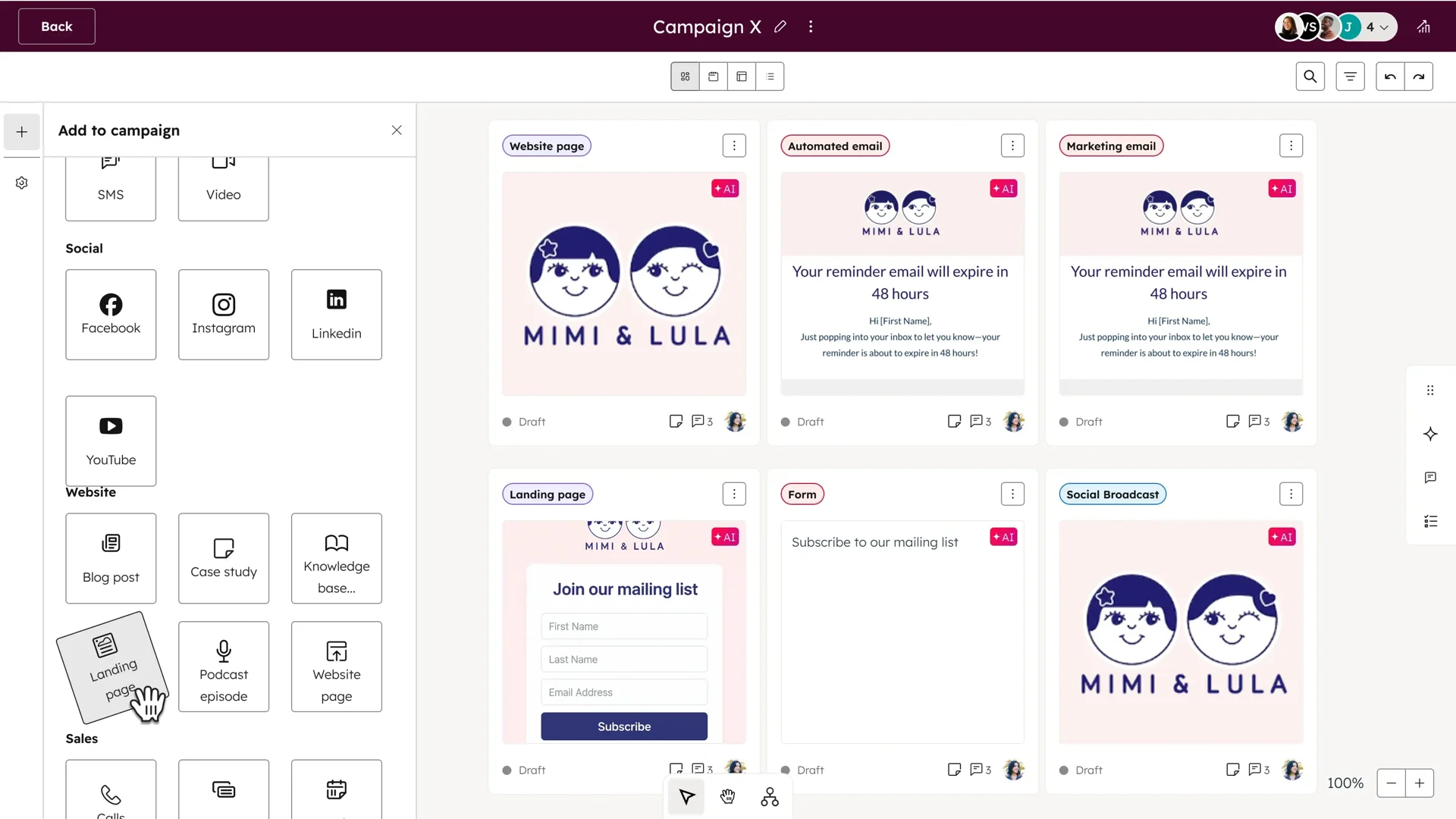
Source: HubSpot
Where neither platform can help is the top of the funnel: identifying which companies are researching your product category before they fill out a form.
ZoomInfo's buyer intent data fills that gap.
Intent signals drawn from 210 million IP-to-organization pairings and 6 trillion+ new keyword-to-device pairings monthly show you which accounts are in-market now. GTM Studio lets marketers build audiences using natural language, launch multi-channel campaigns targeting those accounts, and measure pipeline impact, all without waiting for engineering support.
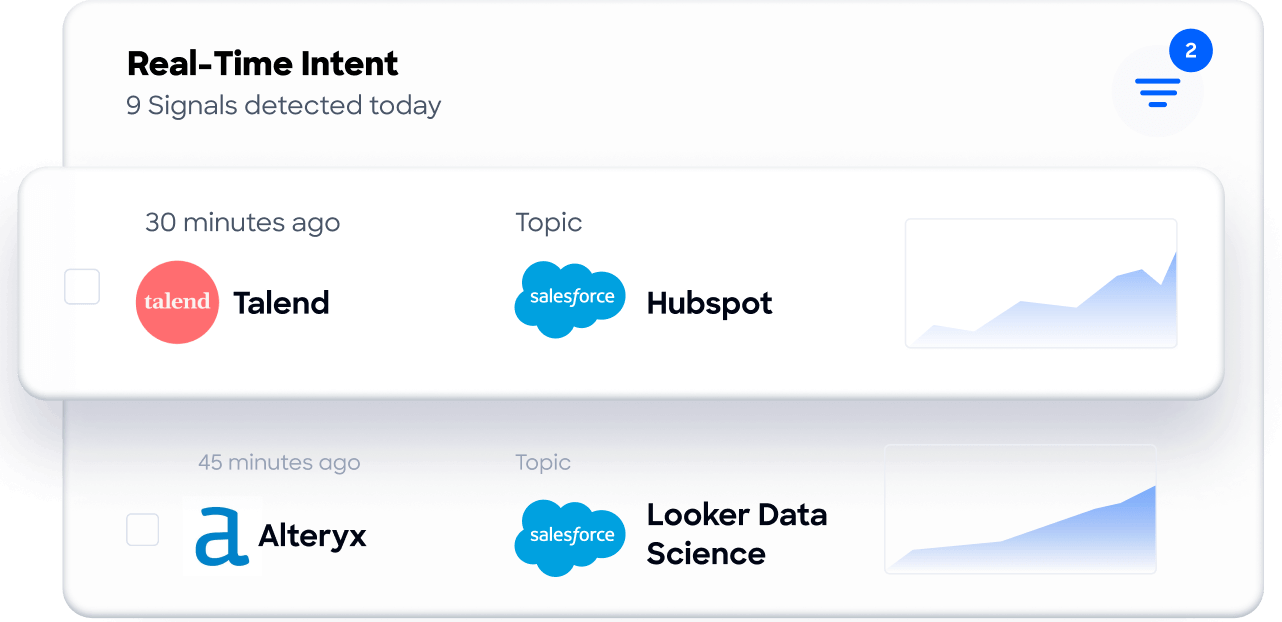
Redwood Logistics achieved a 99% reduction in cost-per-click and a 310% increase in clickthrough rate using ZoomInfo's audience data. "It's not just the data itself. It's more about the right data at the right time to help us reach out with the right message across that full buyer journey," said Chelsea Kenyon, Senior Director of Digital Strategy. (Redwood Logistics)
Sales pipeline management follows the same divide
GreenRope's sales suite centers on a drag-and-drop Kanban pipeline with custom opportunity stages, automatic lead scoring, and a built-in proposal and quote builder with e-signatures. Reps can book appointments through an integrated booking calendar, generate proposals, and collect signatures without leaving the platform. The ChatGPT integration lets reps draft emails and summarize contact profiles in natural language.
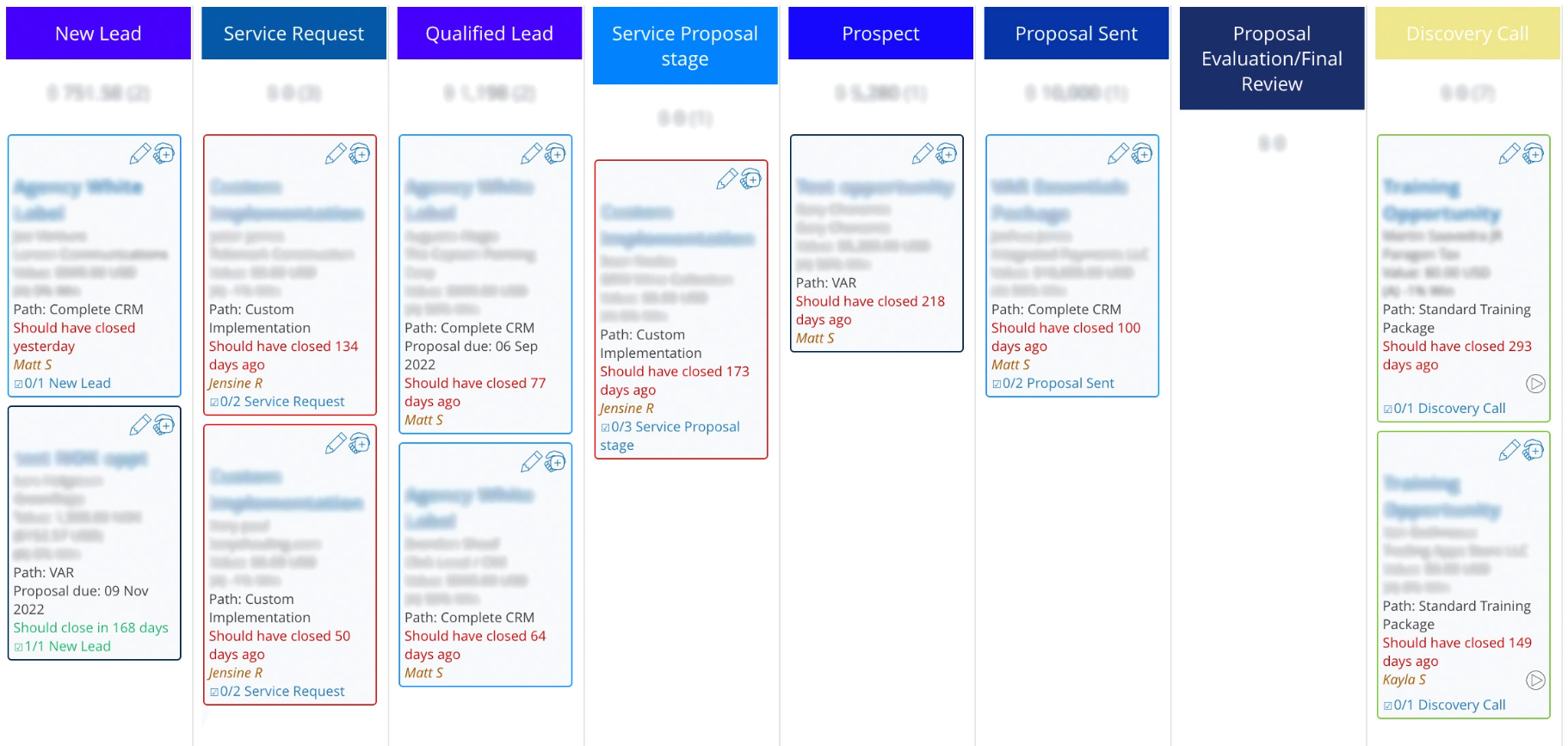
Source: GreenRope
HubSpot's Sales Hub is built for higher-volume, more complex sales operations. The Breeze Prospecting Agent researches prospects automatically, monitors buying signals, and drafts outreach using your complete customer history (in either review mode or fully autonomous mode). Sequences support automated emails, call tasks, and LinkedIn Sales Navigator tasks. CPQ software generates branded quotes from deal records in minutes. Conversation Intelligence records, transcribes, and analyzes sales calls for coaching.
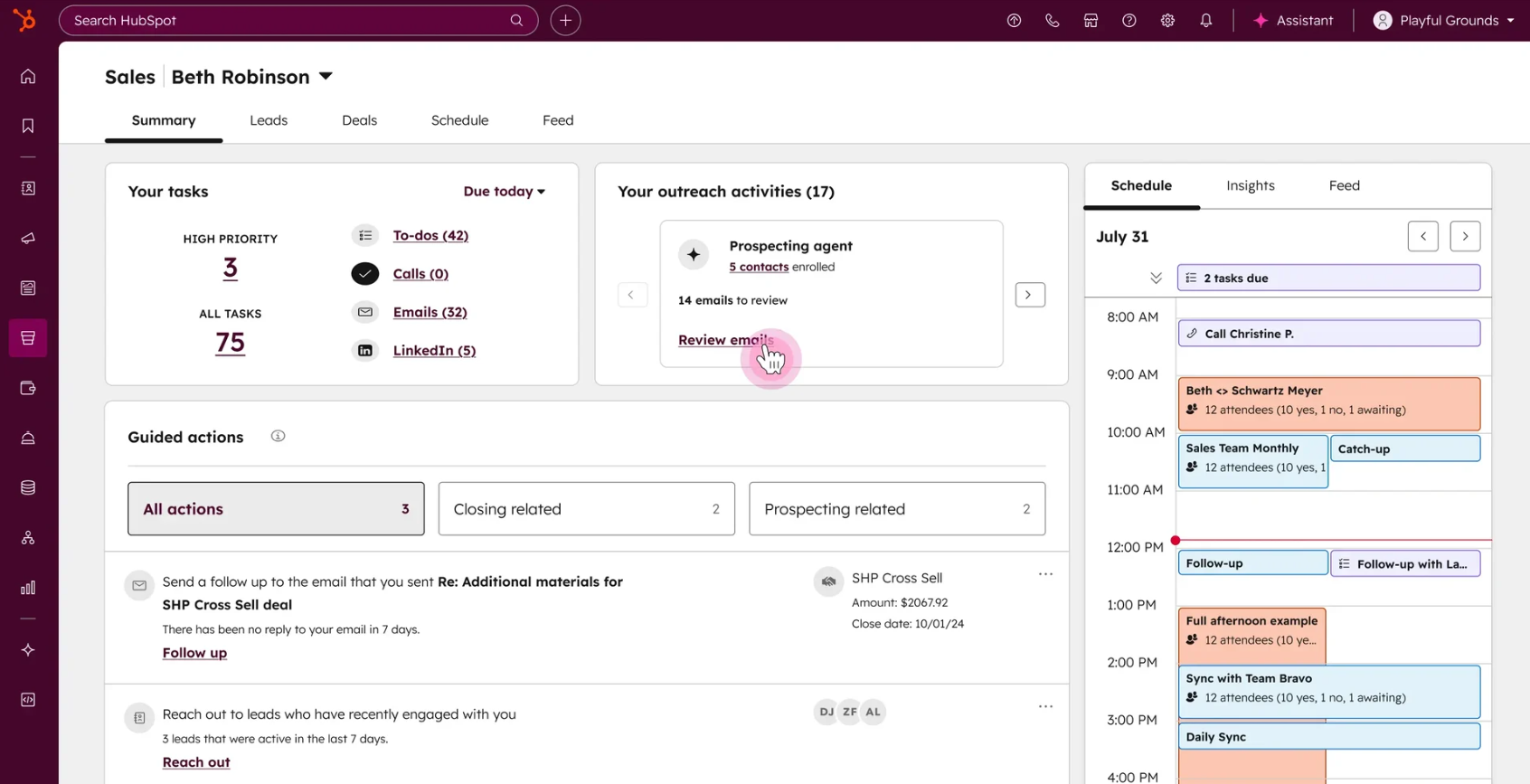
Source: HubSpot
But both platforms share a basic limitation: they can only work with the data they have. A CRM pipeline is only as strong as the contacts in it. If your records are incomplete, if you're missing key decision-makers, or if your data is months old, your pipeline reflects those gaps.
ZoomInfo's GTM Workspace addresses this directly. It gives sellers a single screen where prioritized accounts, AI-drafted outreach, and deal execution come together. The Action Feed streams in-market buyers matched to target criteria in real time, with pre-drafted actions on every signal. AI agents handle account research, outreach drafting, CRM updates, and signal monitoring. Because Workspace draws from ZoomInfo's data (120M direct-dial phone numbers, 200M+ verified business emails) plus the GTM Context Graph, reps see the full picture: who to contact, when to engage, and what to say.
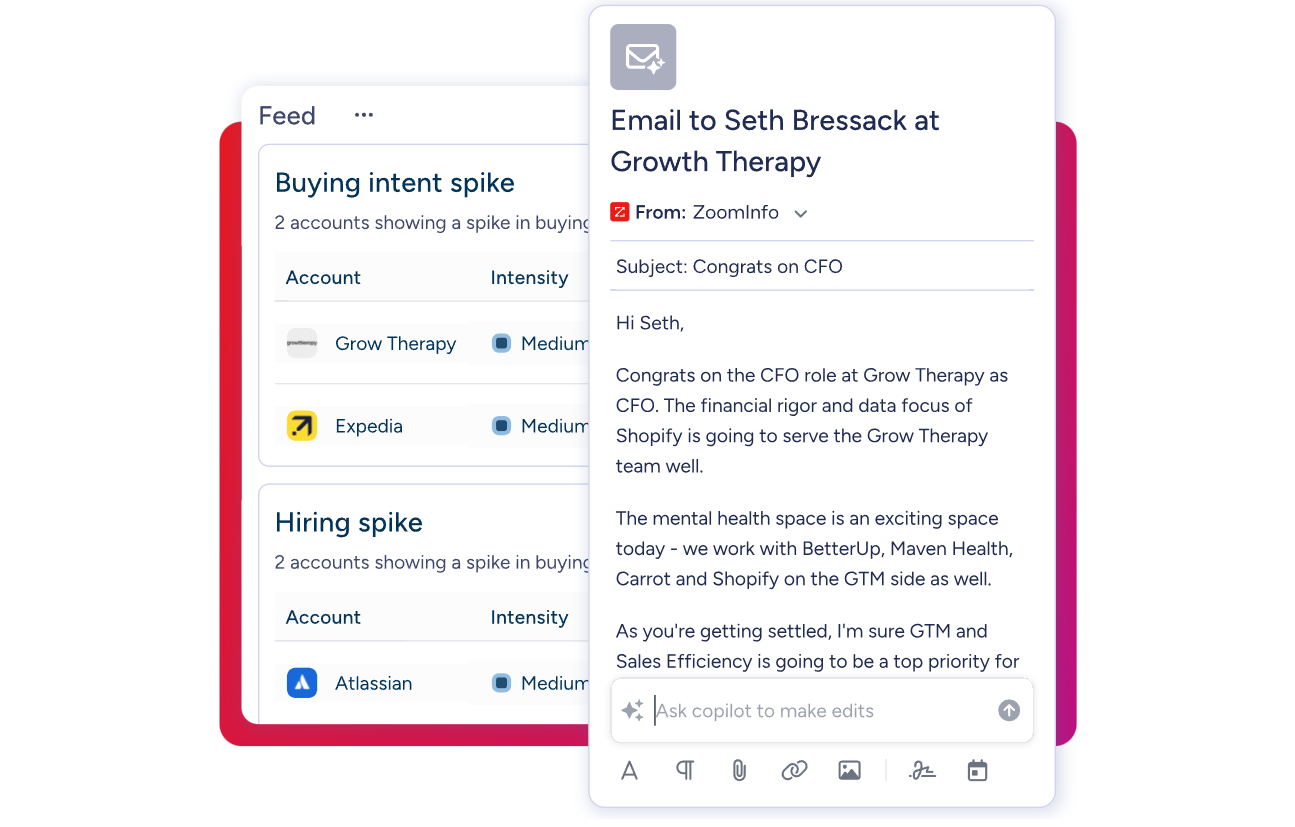
Seismic's sales team boosted productivity by 54%, saved 11.5 hours per week, and attributed 39% of active pipeline to opportunities identified or influenced by ZoomInfo signals. "That combination of our internal CRM data, external signals, and AI that's given all that context has helped us craft very specific account- and persona-based messages. And people have responded to them right away," said Toby Carrington, Chief Business Officer. (Seismic)
Integration ecosystems reflect different strategies
GreenRope's native integrations are limited: QuickBooks, Shopify, WordPress, Google Workspace, Microsoft 365, PayPal, Stripe, and Authorize.net. For everything else, GreenRope relies on Zapier, which connects it to 9,000+ apps. This works for basic data-passing (a new lead in GreenRope triggers an action in Slack, for example), but Zapier connections lack the depth of native integrations. They can break, they add latency, and complex multi-step workflows become fragile.
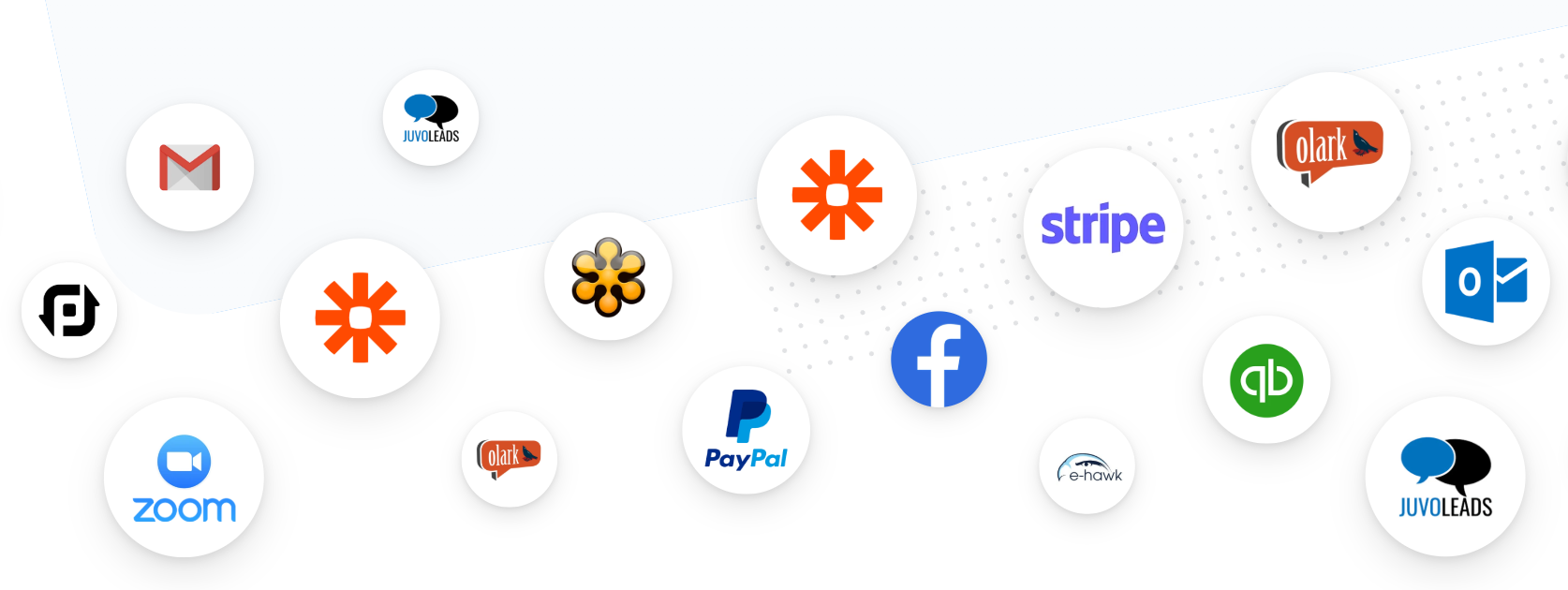
Source: GreenRope
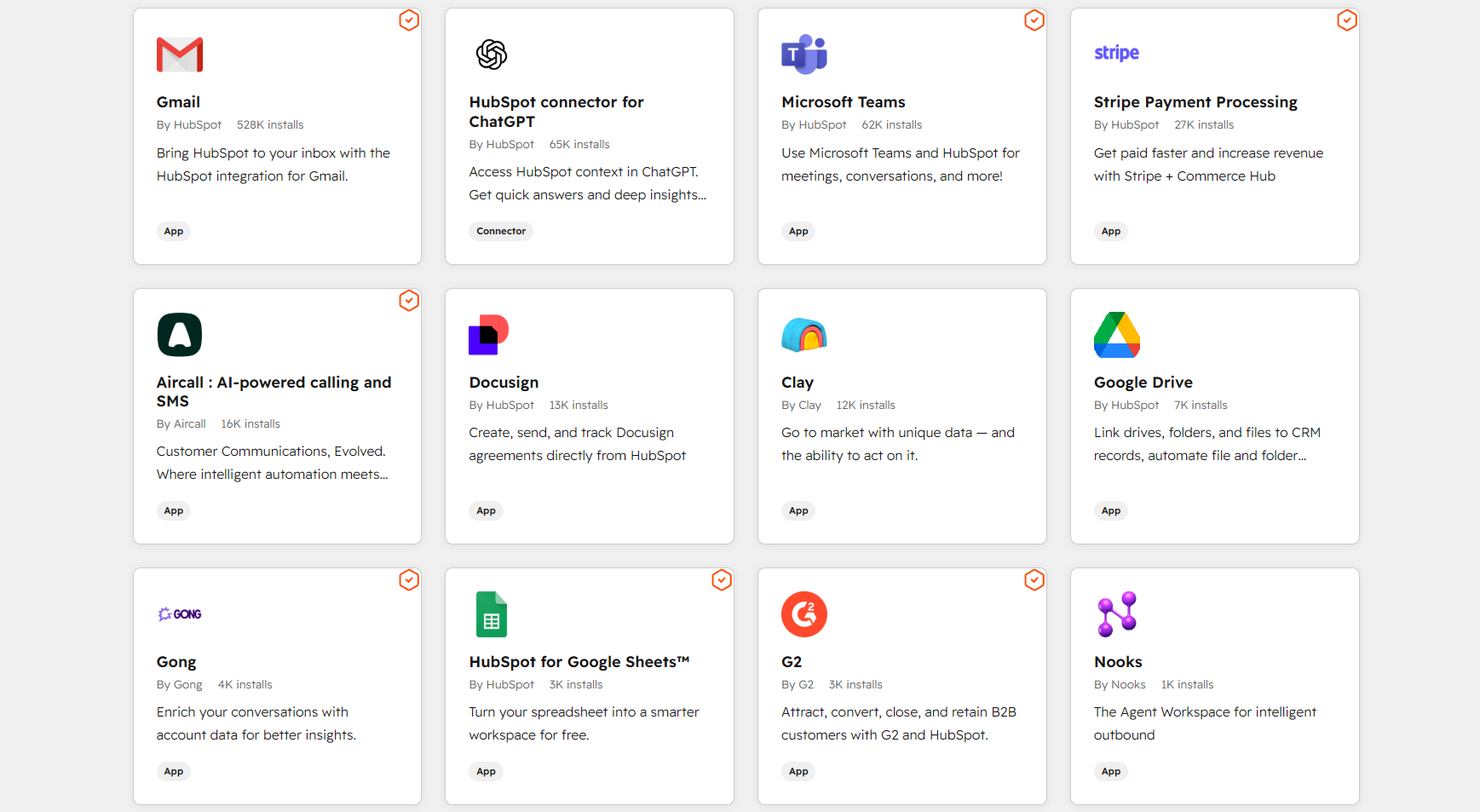
HubSpot's App Marketplace has over 2,000 integrations with 2.5 million active installs. These aren't Zapier-style connectors. Many are bidirectional integrations that share customer data, trigger workflows, and embed functionality inside HubSpot. The Salesforce bidirectional sync, Data Sync with 100+ apps, and programmable automation (custom JavaScript and Python inside workflows) give technical teams flexibility.
Source: HubSpot
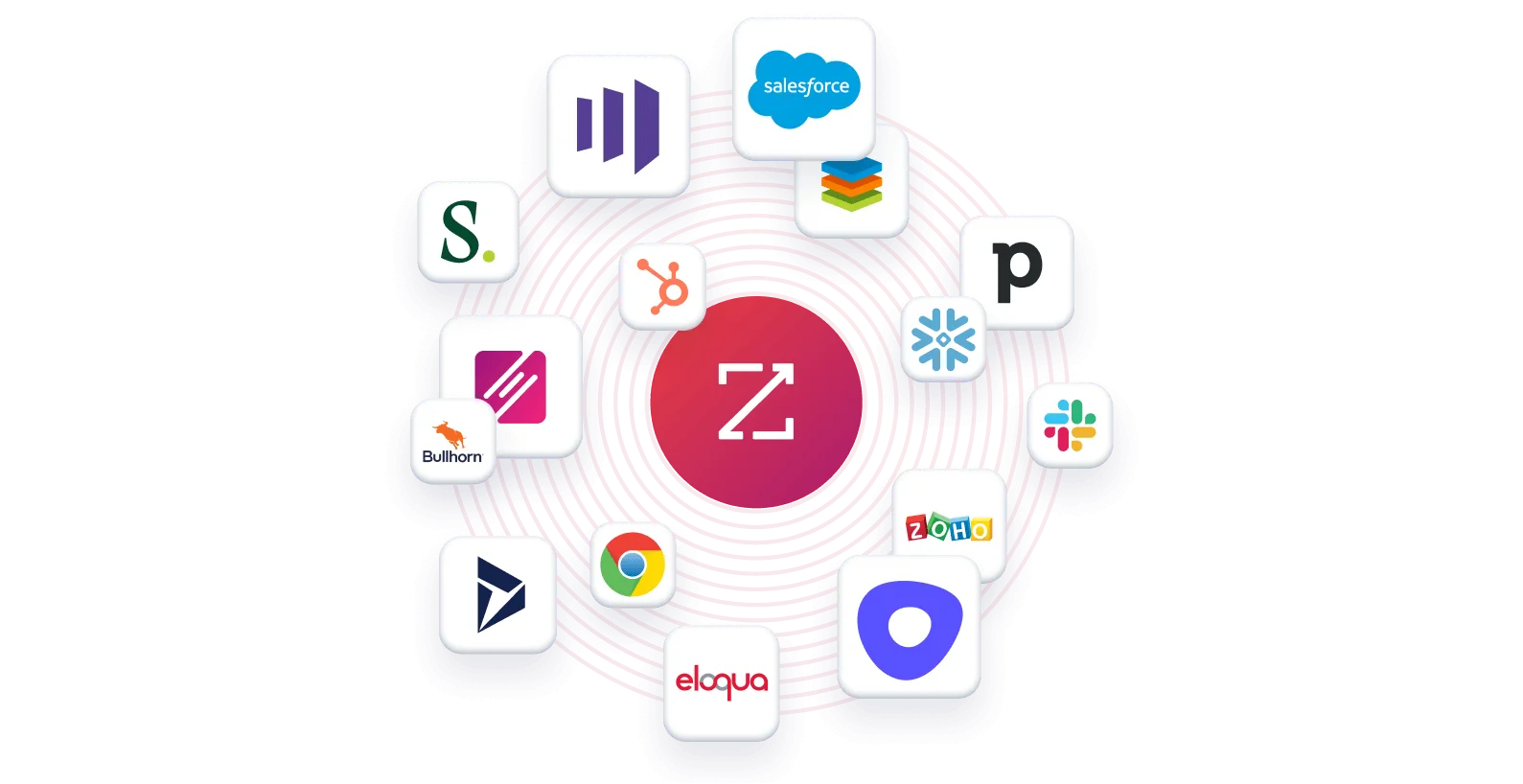
ZoomInfo takes a different approach: rather than being the platform everything connects to, it connects into everything as the data layer. The ZoomInfo App Marketplace lists 120+ partner integrations, with connections to Salesforce, HubSpot, Microsoft Dynamics 365, and Snowflake. API access is included in all relevant plans, and the MCP server lets AI models query ZoomInfo's data through natural language.
The practical result: HubSpot users get a native ZoomInfo integration out of the box, with verified contacts, intent signals, and account intelligence flowing into HubSpot's CRM. GreenRope users would connect through Zapier or the API, which works but requires more setup and maintenance.
AI capabilities show three different approaches
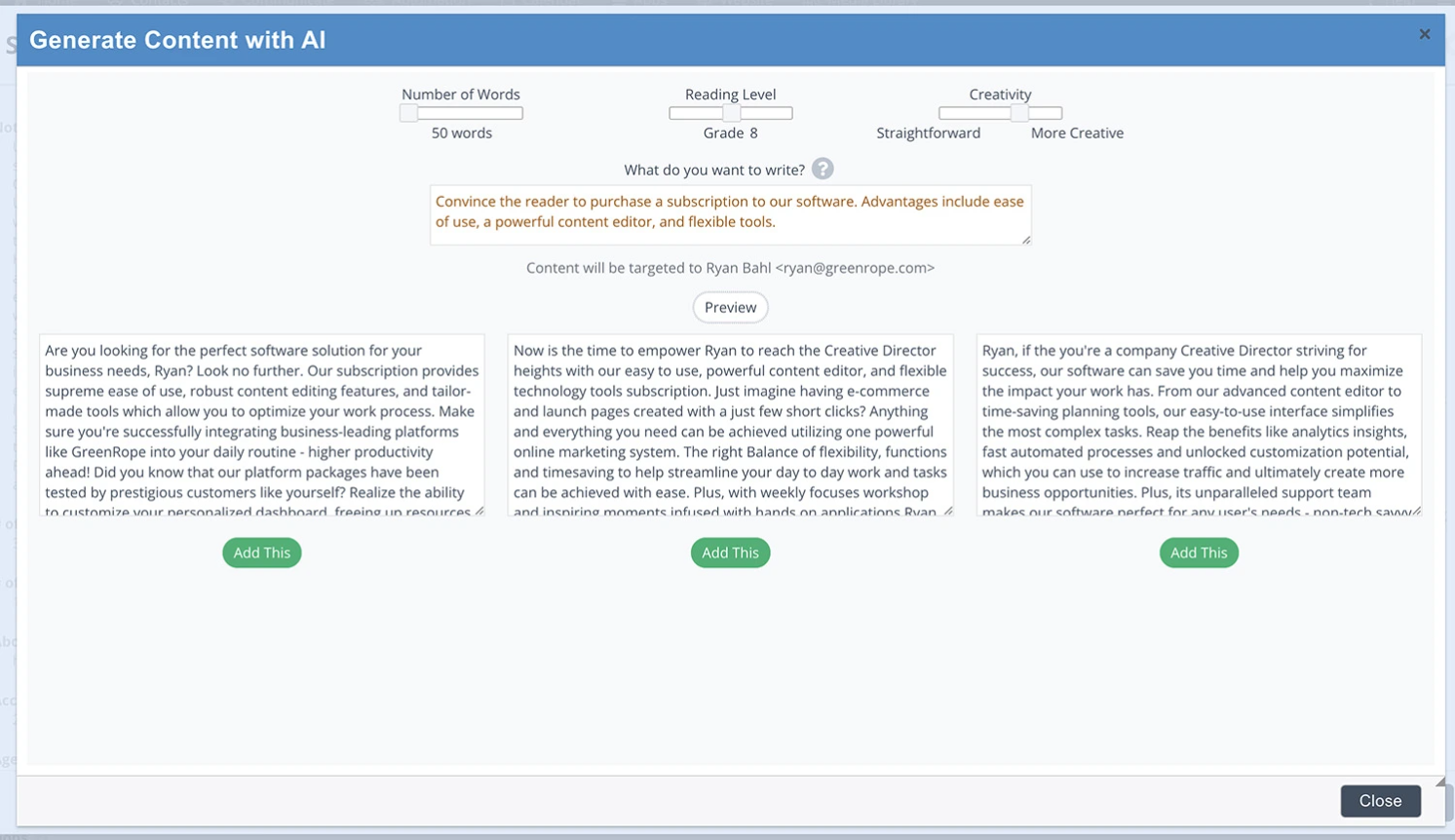
GreenRope's AI is focused and practical. The platform integrates ChatGPT for content generation and chatbot automation, letting users write emails, SMS messages, and CRM notes from natural language prompts. GreenRope also claims to be the only CRM with built-in predictive analytics for pipeline forecasting. These are useful additions for an SMB team, but they layer onto an existing workflow rather than transforming it.
Source: GreenRope
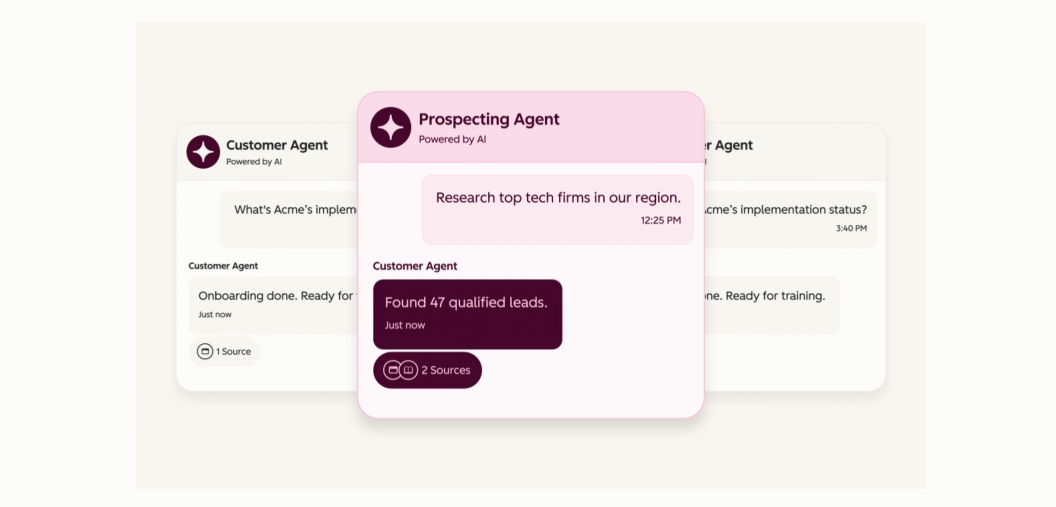
HubSpot's Breeze AI is more ambitious. It spans the entire platform: the Customer Agent reportedly resolves over 50% of customer conversations on its own. The Prospecting Agent monitors buying signals and drafts outreach. The Data Agent answers natural-language questions about your CRM data. These agents operate on HubSpot's data, so their intelligence is bounded by what's in your HubSpot database.
Source: HubSpot
ZoomInfo's AI operates on a different data layer. The GTM Context Graph doesn't just analyze your CRM fields. It combines your CRM records with ZoomInfo's third-party intelligence, conversation transcripts, and behavioral signals to capture why deals move or stall. As ZoomInfo's Chief Product Officer Dominik Facher put it: "The CRM recorded the state change. It has no record of why it happened." The CFO might have joined the last call and asked about six-month ROI (the thing that actually accelerated the deal), but a CRM can't capture that context. The GTM Context Graph can.
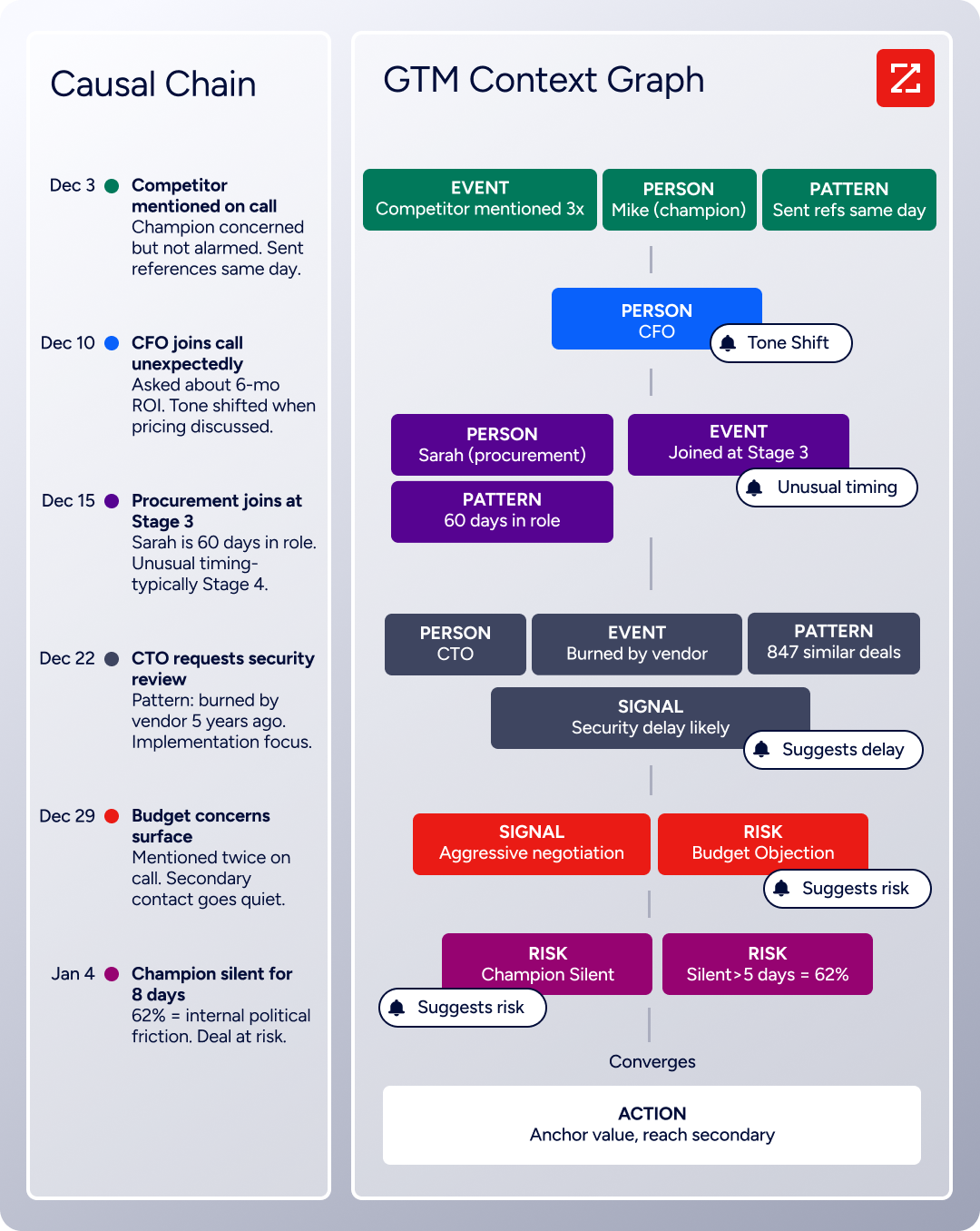
This matters because AI is only as useful as the data behind it. HubSpot's Breeze agents work well within HubSpot's data. ZoomInfo's AI reasons across a broader dataset, combining CRM signals with external market intelligence to surface insights neither platform can produce alone.
For a full head-to-head breakdown of how HubSpot and ZoomInfo compare across data, features, and pricing, see our HubSpot vs. ZoomInfo comparison.
Support quality is a surprising differentiator
GreenRope's customer support is its highest-rated attribute, scoring 4.6/5 on Capterra. Support is available 24/7 via phone, live chat, email, and tickets, and every customer gets a dedicated training manager for onboarding. A certification program provides structured learning paths.
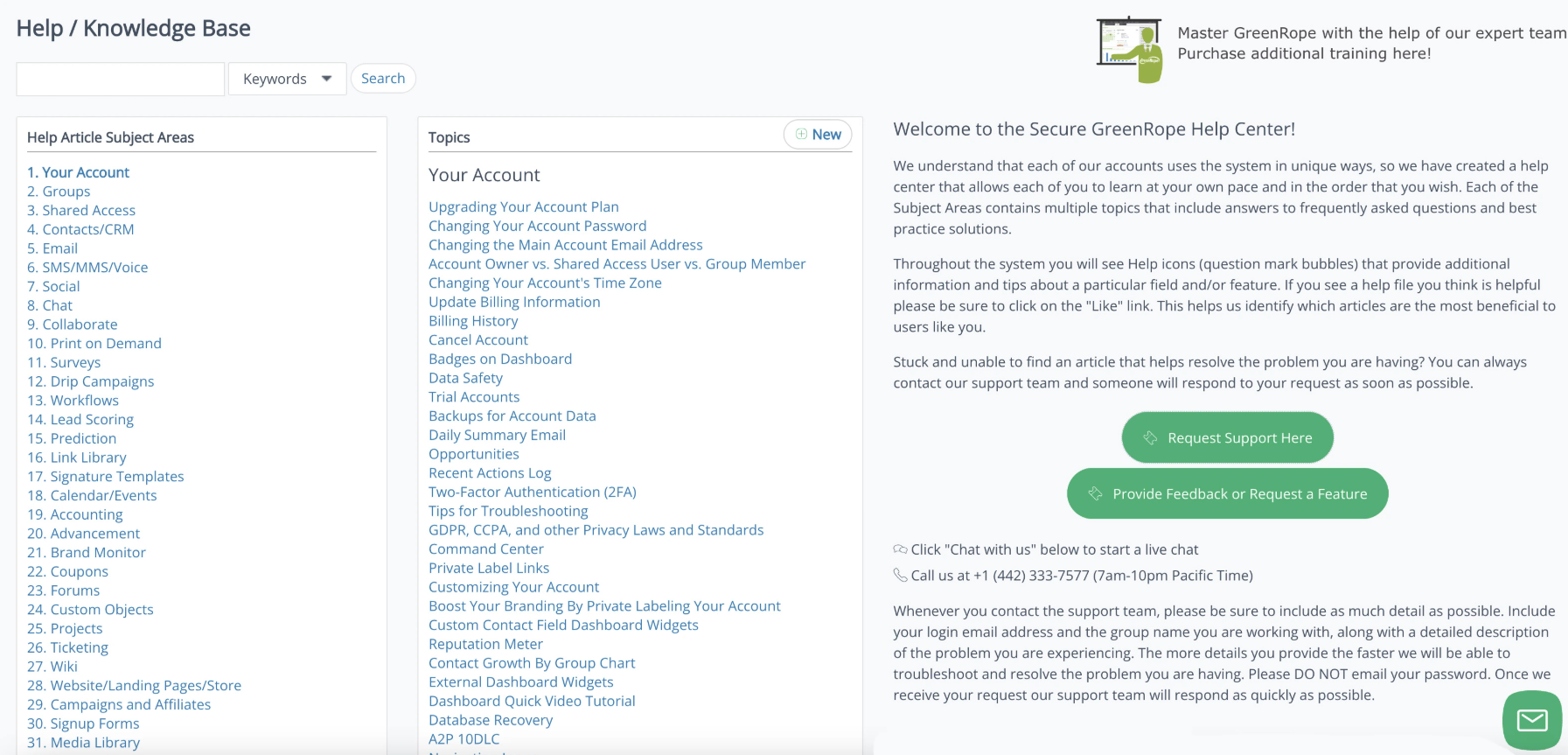
Source: GreenRope
HubSpot's support is tiered. Free users get only the community forum. Starter plans add email and chat. Phone support is reserved for Professional and Enterprise tiers. The HubSpot Academy (over 200,000 certified professionals, all courses free) and the Solutions Partner network fill the gap, but complex implementations often require paid consulting through partners. HubSpot's own professional services revenue is only about 2% of total revenue.
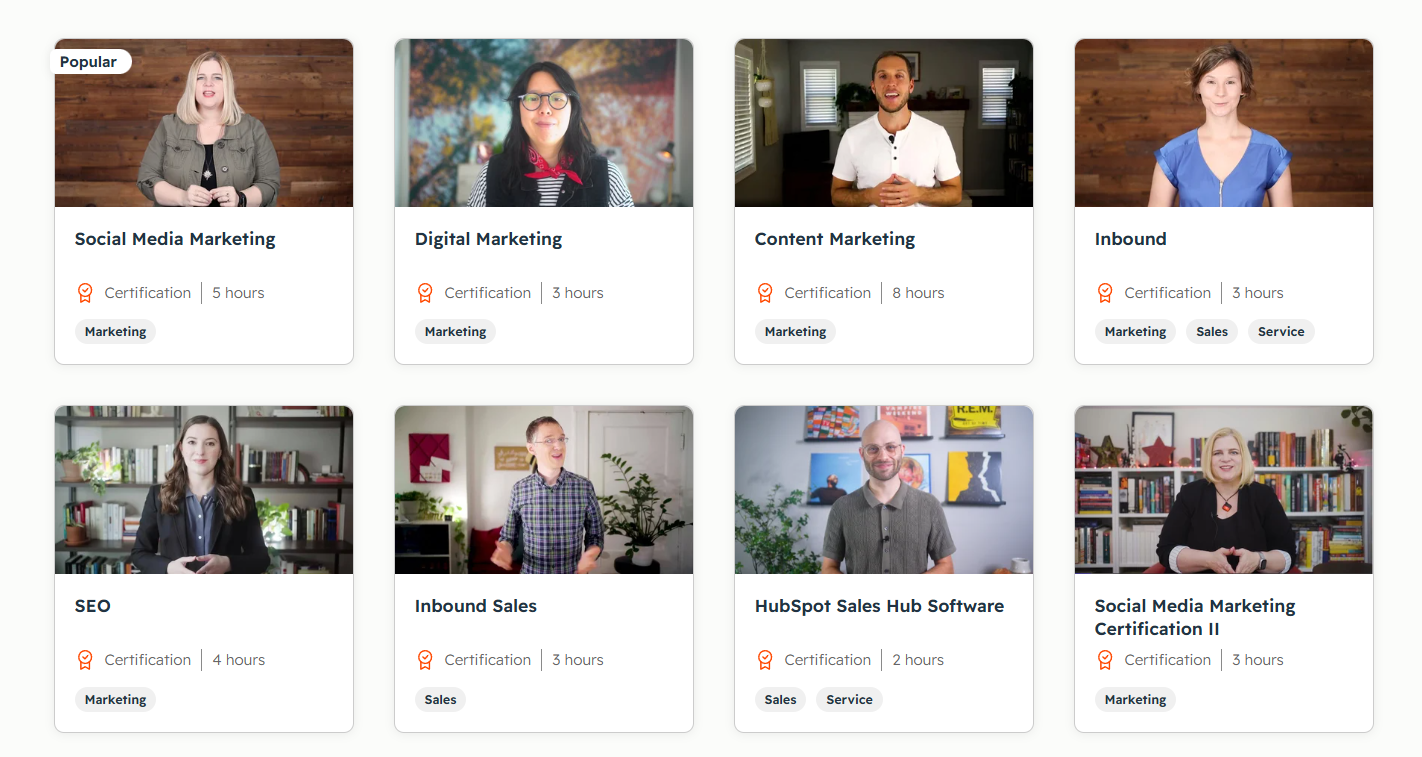
Source: HubSpot
ZoomInfo provides support through its Help Center, ZoomInfo University (role-specific learning paths and certifications), and direct phone support. Enterprise customers get dedicated customer success managers. The company redesigned its onboarding program from 30 to 90 days, producing a 25% improvement in satisfaction scores.

Operations capabilities set GreenRope apart from typical CRMs
One area where GreenRope stands out is its Operations Suite. Most CRMs don't include project management, event management, or a website builder. GreenRope does.
The event management module handles registration pages, ticket sales, QR code check-in, payment collection, and post-event reporting, with attendees automatically added to the CRM. The project management tools let teams assign tasks, set due dates, and track progress, all tied to contact and account records. The website builder publishes tracked websites where visitor activity is attributed to known contacts. The e-commerce module includes product catalogs, shopping carts, and payment processing through PayPal, Stripe, or Authorize.net, with cart abandonment automation built in.
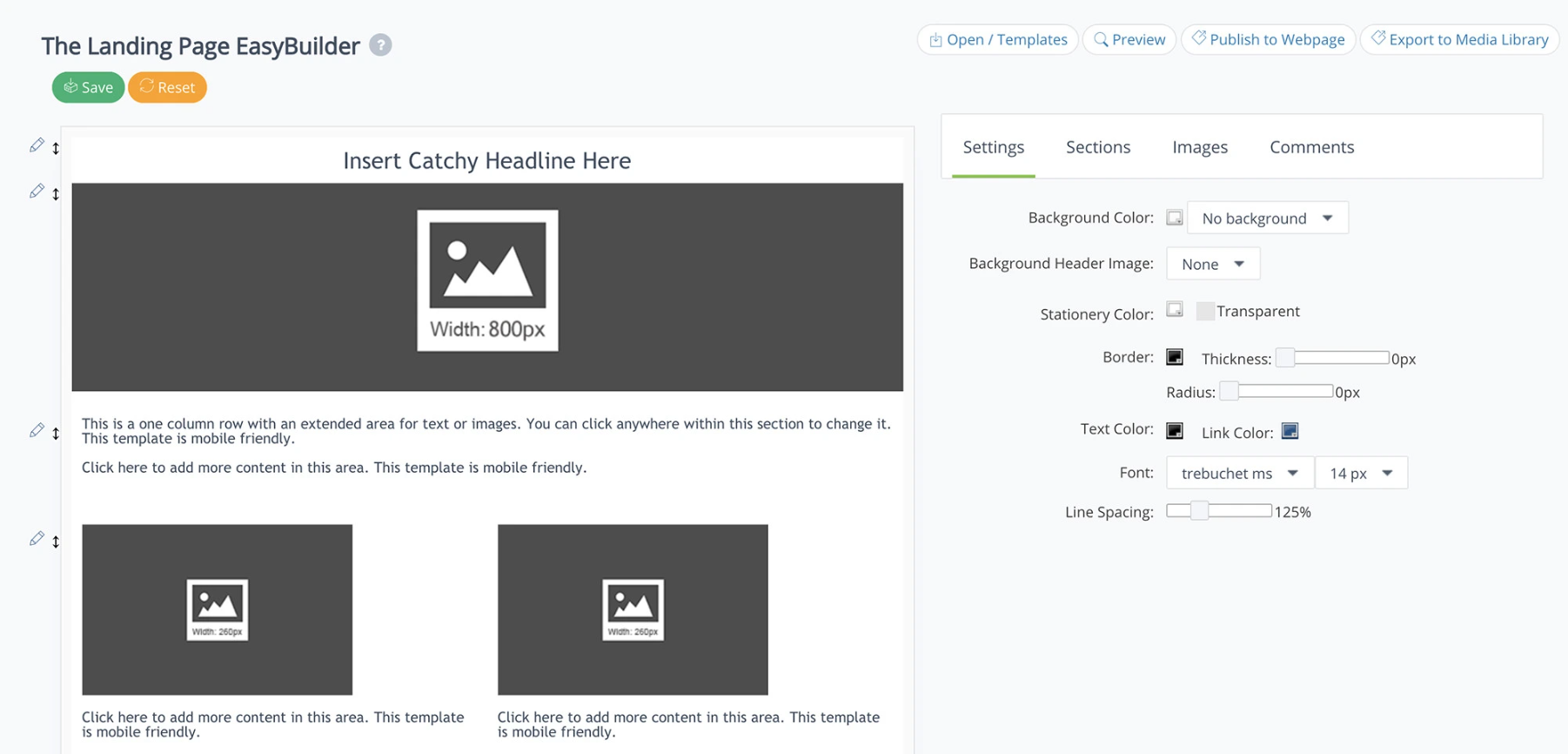
Source: GreenRope
HubSpot offers some of these capabilities across its hubs (Content Hub for website and content management, Commerce Hub for quotes, invoicing, and payments, Service Hub for ticketing), but they're spread across separate products with separate pricing. HubSpot's Project Management feature is still in beta.
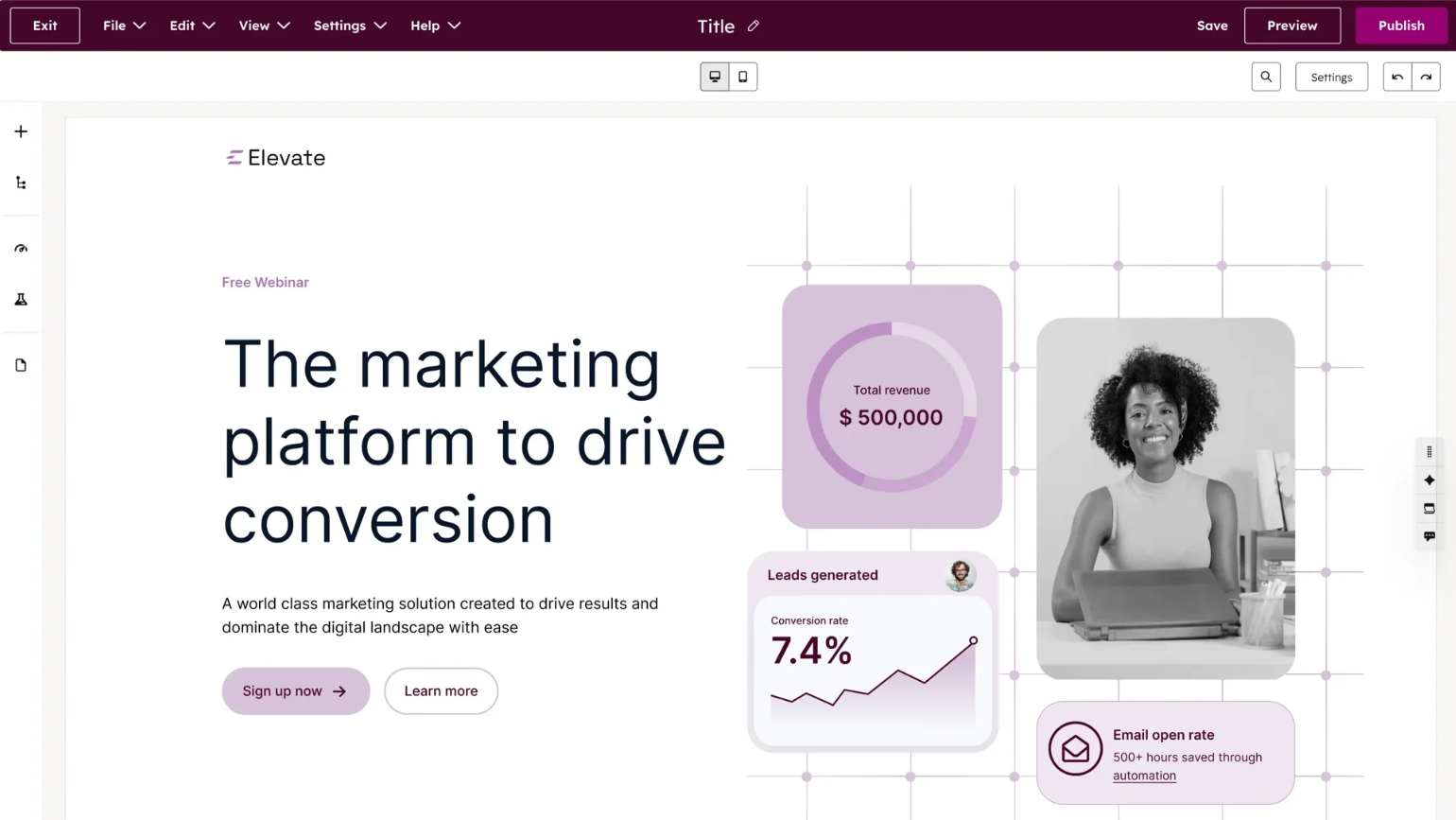
Source: HubSpot
For a small business that needs CRM, marketing automation, a website, event registration, and project tracking in one subscription, GreenRope is one of the few platforms that delivers all of it without add-on costs.
Pricing tells you who each platform is built for
GreenRope's pricing tiers are straightforward:
Plan | Contacts | Price |
|---|---|---|
Starter | 500 | $99/month |
Essential | 2,000 | $199/month |
Pro | 5,000 | $299/month |
Premium | 10,000 | $399/month |
Powerhouse | 15,000 | $499/month |
Supreme | 25,000 | $599/month |
Ultimate | 50,000 | $799/month |
Every plan includes unlimited users, unlimited emails, and every feature. No onboarding fees. No per-seat charges. A 14-day free trial is available after booking a demo, but there is no permanent free plan.
HubSpot's pricing is more layered. The free CRM is useful (unlimited contacts up to 1M records, basic tools, two seats), and the Starter Customer Platform bundles all hubs at $15/seat/month (annual). But the jump to Professional is steep:
Hub | Professional Price | Onboarding Fee |
|---|---|---|
$800/month (annual) | $3,000 | |
$90/seat/month (annual) | $1,500 | |
$90/seat/month (annual) | $1,500 |
Marketing Hub Professional includes 3 Core Seats and 2,000 marketing contacts. Exceed that contact limit and HubSpot charges overages at $250 per 5,000 additional contacts per month. Additional Core Seats cost $50/month each.
For a company with 5,000 contacts and 10 users, the annual comparison looks roughly like this: GreenRope at $299/month ($3,588/year) vs. HubSpot Marketing Hub Professional at $800/month plus additional seats and onboarding ($13,000+ in year one). GreenRope's claim of saving over 90% on total cost of ownership holds up at this scale.
ZoomInfo uses consumption-based pricing that scales with data access, API consumption, and AI activity. No published dollar amounts for paid tiers, though ZoomInfo Lite provides a permanent free tier with access to the B2B database, 10 monthly export credits, and a HubSpot integration. A 7-day free trial of the full platform is also available.
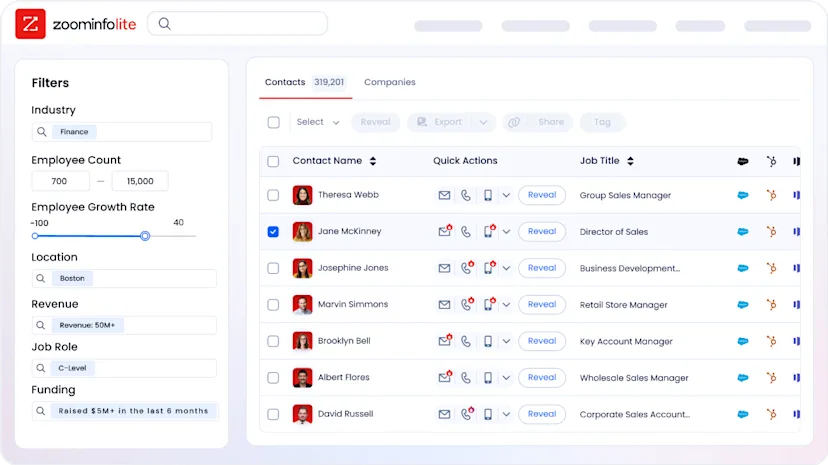
The key pricing insight: GreenRope and HubSpot are your CRM cost. ZoomInfo is your data cost. They sit in different budget lines and solve different problems.
Who each platform is built for
GreenRope is suited for small to mid-sized businesses with roughly 1-200 employees. Key verticals include education, government services, insurance, retail, and finance, along with consultants, coaches, agencies, and non-profits. The ideal buyer is a business owner or marketing manager paying for multiple separate tools who wants everything in one place without enterprise complexity or pricing.
HubSpot serves the full range from solopreneur to enterprise but delivers its strongest value at 20-2,000 employees. The Starter tier targets startups and small businesses. Professional and Enterprise tiers target growing companies with complex organizational structures. Named customers include eBay, DoorDash, Reddit, TripAdvisor, and Eventbrite. The platform is industry-agnostic but best fits B2B SaaS, professional services, and businesses with longer sales cycles.
ZoomInfo serves enterprise and upper mid-market B2B companies. Named customers include Adobe, Microsoft, Snowflake, PayPal, and Thomson Reuters, with 35,000+ companies served worldwide. The platform is built for teams with outbound sales motions, account-based marketing programs, or data enrichment needs. Key verticals include B2B SaaS, financial services, professional services, and healthcare/biotech.
"ZoomInfo is our one source of truth for account data, and even more so for contact data. There's no other provider in the market that provides you with that level of detail," said Thor Sanderson, Senior Manager of Sales Technology Enablement at Smartsheet. (Smartsheet)
GreenRope vs. HubSpot vs. ZoomInfo: Which should you choose?
The choice depends on where you need the most help: managing your operations, scaling your marketing and sales, or fueling your pipeline with verified data.
Choose GreenRope if:
You're an SMB that needs CRM, marketing, project management, events, and e-commerce in one subscription
Unlimited users at a flat monthly price is a priority
Your budget is under $600/month for your entire operational platform
You value hands-on customer support and will invest time learning a feature-dense system
Your integration needs are basic enough for Zapier connections
Choose HubSpot if:
You're a growing company that needs advanced marketing automation, AI sales tools, and a large integration ecosystem
You want a platform that grows from free to enterprise without switching systems
Your team can absorb per-seat costs and mandatory onboarding fees
You need native integrations with hundreds of tools in your stack
AI-driven customer service, prospecting, and content creation matter to your workflow
Add ZoomInfo to either platform if:
You need verified B2B contact data, direct dials, and business emails to fill your pipeline
Knowing which accounts are researching your product category would change how you prioritize outreach
Your CRM data is incomplete, stale, or missing key decision-makers
You want AI that reasons across both your CRM data and external market intelligence
Your go-to-market strategy depends on reaching the right people with the right message at the right time
Also compare against: Act-On if you need deeper marketing automation, Salesforce if you're outgrowing SMB tools, and Marketo if marketing automation is your primary need.
Try ZoomInfo Lite for free or request a demo to see the full platform.
GreenRope and HubSpot each solve the execution problem well for their audiences. GreenRope gives SMBs everything in one box at a price that's hard to beat. HubSpot gives growing companies an ecosystem that can grow with them. But execution without intelligence is just activity. ZoomInfo provides the verified data and contextual intelligence that turn CRM activity into pipeline results, no matter which platform you run.
GreenRope vs. HubSpot vs. ZoomInfo FAQ
What is the core difference between GreenRope, HubSpot, and ZoomInfo?
GreenRope is an all-in-one CRM and business operating system that bundles sales, marketing, operations, project management, event management, and e-commerce in a single flat-rate subscription for small and mid-sized businesses. HubSpot is a modular CRM platform with separate hubs for marketing, sales, service, content, data, and commerce, built for growing companies that need ecosystem depth and AI capabilities. ZoomInfo is a B2B data intelligence and go-to-market platform that provides verified contact data, buyer intent signals, and AI account intelligence to fuel the pipeline in whichever CRM you use.
Which platform is cheapest for a small team?
GreenRope starts at $99/month for 500 contacts with unlimited users and every feature included. HubSpot offers a free CRM (limited to 2 users and basic tools) and a Starter bundle at $15/seat/month (annual). For a team of 5-10 users with 2,000-5,000 contacts, GreenRope typically costs less because it charges no per-seat fees and includes all features at every tier, while HubSpot's per-seat model and feature-gated tiers add up.
Does ZoomInfo replace GreenRope or HubSpot?
No. ZoomInfo complements them. GreenRope and HubSpot manage your customer relationships, campaigns, and deal pipeline. ZoomInfo provides the verified B2B data, buyer intent signals, and account intelligence that make those systems more effective. ZoomInfo integrates natively with HubSpot and connects with other platforms through its API or Zapier.
How do the integration ecosystems compare?
HubSpot has the largest ecosystem with over 2,000 app integrations and 2.5 million active installs. ZoomInfo offers 120+ marketplace integrations with connections to major CRMs, plus API and MCP access in all relevant plans. GreenRope has limited native integrations (QuickBooks, Shopify, WordPress, Google Workspace, Microsoft 365) and relies on Zapier for most connections.
Which platform has the best AI capabilities?
HubSpot's Breeze AI is the most extensive CRM-native AI, with agents handling customer service, prospecting, content creation, and data enrichment across all hubs. ZoomInfo's AI operates on a broader data layer, combining CRM data with third-party intelligence through its GTM Context Graph to surface insights about why deals move or stall. GreenRope's ChatGPT integration covers content generation and chatbot automation. Each platform's AI is strongest in its core area: HubSpot for CRM automation, ZoomInfo for data intelligence, and GreenRope for content assistance.
Which platform has the best customer support?
GreenRope scores highest with a 4.6/5 rating on Capterra, offering 24/7 phone, chat, and email support plus a dedicated training manager at every tier. HubSpot reserves phone support for Professional and Enterprise customers, with free users limited to the community forum. ZoomInfo provides tiered support with dedicated customer success managers for enterprise accounts and a university with role-specific training paths.
Can I use all three platforms together?
Yes. A common setup for B2B companies is to use HubSpot (or GreenRope) as the CRM and marketing execution layer while using ZoomInfo as the data layer. ZoomInfo enriches your CRM with verified contacts and company data, surfaces buyer intent signals, and provides AI account insights. The CRM then manages outreach, nurture sequences, and the deal pipeline using that enriched data.
Who should consider GreenRope over HubSpot?
GreenRope fits budget-conscious small businesses (1-200 employees) that want a single subscription covering CRM, marketing automation, project management, event management, e-commerce, and a website builder, all with unlimited users. If your team is under 10 people, your contact database is under 15,000, and you want predictable monthly costs with no per-seat charges, GreenRope delivers more per dollar than HubSpot at the SMB level.
