
Choosing between GreenRope and Salesforce for your CRM comes down to five questions:
Are you a small business that wants one affordable tool for everything, or an enterprise that needs customization and scale?
Do you need unlimited users at a flat monthly rate, or can you absorb per-seat pricing that grows with your team?
Is your priority getting every feature in one box, or having specialized depth in sales, service, marketing, and AI?
How important is a large ecosystem of integrations versus a self-contained platform?
Does your team have the bandwidth to manage a complex CRM implementation, or do you need something you can adopt without dedicated administrators?
In short, here's what we recommend:
GreenRope serves small and mid-sized businesses that want CRM, email marketing, project management, event management, e-commerce, and customer support in a single subscription with unlimited users. Its contact-based pricing (starting at $99/month for 500 contacts) means your entire team can use it without per-seat costs stacking up. GreenRope's customer support scores 4.6/5 on Capterra, with 24/7 live help and dedicated onboarding at every tier. The trade-off: a steeper learning curve than you'd expect (3.9/5 ease of use), a small team of roughly 20 employees behind the product, and an integration ecosystem that leans on Zapier rather than direct connections.
Salesforce is the #1 CRM by market share worldwide, serving over 150,000 companies with a platform that spans Sales Cloud, Service Cloud, Marketing Cloud, Commerce Cloud, and its AI agent layer, Agentforce. For enterprises and growth-stage companies that need customization, industry solutions across 17 verticals, and a marketplace of 9,000+ partner apps, Salesforce is hard to match. But that scale comes at a cost: pricing that compounds across clouds and add-ons, implementations that typically require partners, and a learning curve that demands dedicated administrators.
Both platforms manage customer relationships and internal workflows. But every CRM workflow depends on the data feeding it. Incomplete contact records, stale company data, and missing buying signals undermine even the most sophisticated automation. That's where a different kind of platform adds value.
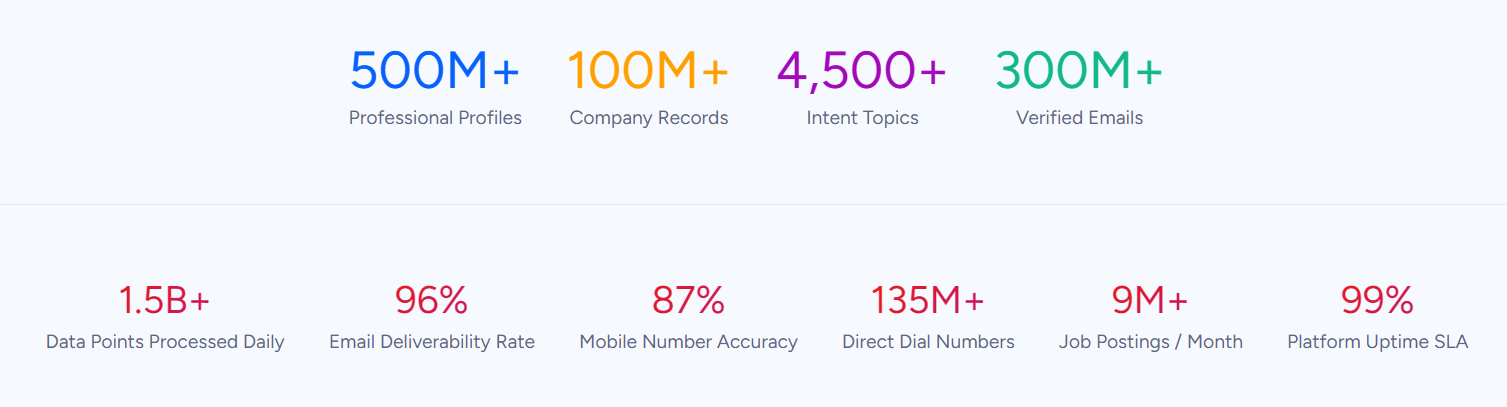
ZoomInfo is a B2B data and go-to-market platform that gives your CRM the data foundation it needs to perform. With 500M contacts, 100M companies, 135M+ verified phone numbers, and 200M+ verified business email addresses, ZoomInfo provides the largest B2B dataset available. Its GTM Context Graph combines that data with your CRM records, conversation transcripts, and behavioral signals, processing 1.5B+ data points daily to reveal not just what's happening in your pipeline, but why. Your team can access this intelligence through the GTM Workspace for sellers, GTM Studio for marketers and RevOps, or via APIs and MCP inside your existing CRM or any other tool.
If feeding your CRM with verified intelligence sounds like the missing piece, see how ZoomInfo works.
GreenRope vs. Salesforce vs. ZoomInfo at a glance
GreenRope | Salesforce | ZoomInfo | |
|---|---|---|---|
Primary function | All-in-one CRM + marketing + operations | Enterprise CRM platform + AI agents | B2B data and go-to-market intelligence platform |
Pricing model | Contact-based, all features included | Per-user, per-cloud, with add-ons | Consumption-based, custom-quoted |
Starting price | $99/month (500 contacts) | $0 (free CRM, 2 users) / $25/user/month (Starter) | Free (ZoomInfo Lite) / custom pricing for paid tiers |
User limits | Unlimited users at every tier | Per-seat pricing | Seat-and-credit-based |
Native integrations | Limited (Zapier-dependent) | 9,000+ AppExchange apps | 120+ marketplace integrations, API/MCP access |
AI capabilities | ChatGPT integration for content | Agentforce autonomous AI agents | GTM Context Graph + AI-powered GTM Workspace |
Learning curve | Steep (3.9/5 ease of use) | Steep (requires dedicated admins) | Moderate (90-day structured onboarding) |
Support | 24/7 phone, chat, email (4.6/5 rated) | Tiered: free to 30%+ of license fees | Help Center, University, dedicated support |
Best for | SMBs consolidating their tech stack | Mid-market to enterprise organizations | Go-to-market teams needing accurate data and buying signals |
Two different answers to the same problem
GreenRope and Salesforce both want to be the central system your team works from every day. They disagree on how to get there.
GreenRope's answer is consolidation.
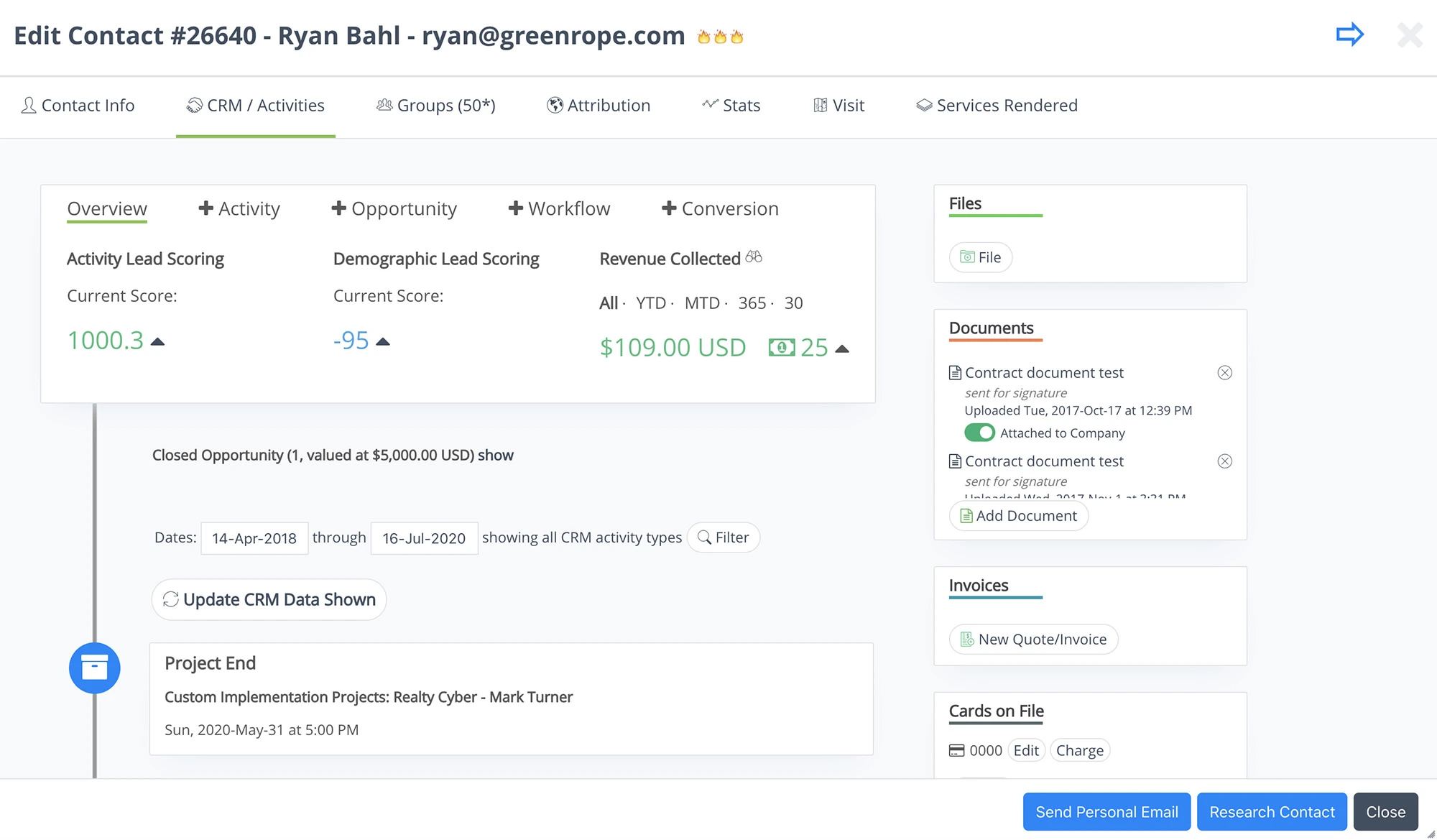
One subscription gives you CRM, email marketing, project management, event management with QR code check-in, a website builder, e-commerce with cart abandonment automation, and support ticketing. Everything shares one contact database. When a lead fills out a form, their data flows into the CRM, triggers an email sequence, and updates their project record without any integration work.
For a 15-person company running five separate subscriptions, GreenRope collapses that into one bill and one login.
Source: GreenRope
Salesforce's answer is depth and extensibility.
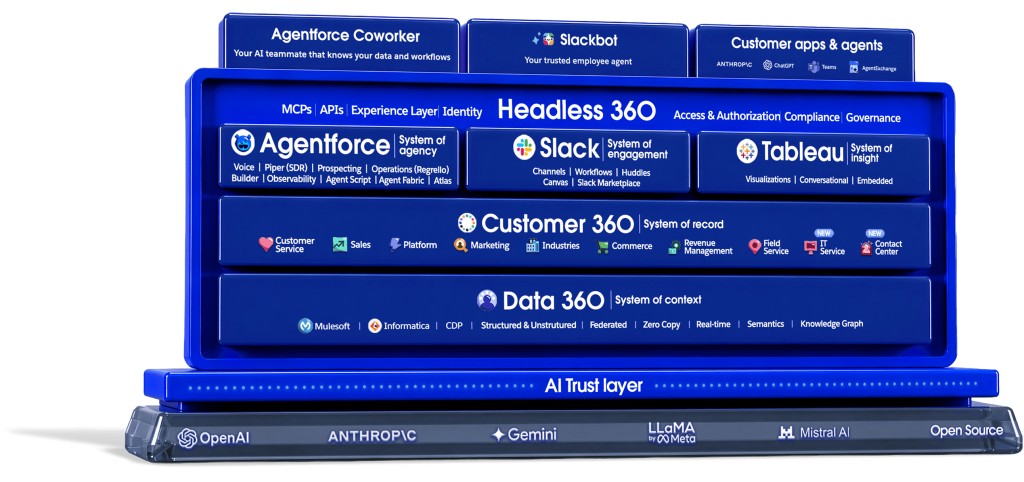
Rather than building everything into one product, Salesforce created specialized clouds for sales, service, marketing, and commerce, each with capabilities GreenRope can't match in isolation. Need AI agents that resolve 85% of requests without human escalation? That's Service Cloud with Agentforce. Need enterprise commerce with 99.99% historical uptime? Commerce Cloud. Each cloud adds cost and complexity, but the depth justifies it for organizations that need it.
Source: Salesforce
The choice often depends on where you are as a business. A 10-person consulting firm paying for HubSpot, Mailchimp, Asana, Eventbrite, and Zendesk separately would save money and headaches with GreenRope. A 500-person SaaS company with dedicated sales ops, marketing ops, and a service team would quickly outgrow what GreenRope offers.
Pricing tells you who each platform is built for
GreenRope's pricing is straightforward. It offers six contact-based plans, ranging from Starter to Supreme. Every feature is included at every tier. Unlimited users, unlimited emails, and unlimited websites. The Starter plan begins at $99/month for 500 contacts, while the Supreme plan supports up to 250,000 contacts for $599/month. The only variable is contact capacity.
For a team of 20, GreenRope costs $99 to $599/month total. Salesforce, at the Enterprise tier ($175/user/month) that most teams need for real functionality, would run $3,500/month for those same 20 users on Sales Cloud alone. Add Service Cloud, Marketing Cloud, and the Premier Success Plan (30% of license fees), and the gap widens.
Salesforce's pricing reflects its enterprise architecture.
Sales Cloud starts at $25/user/month for Starter Suite but scales to $350/user/month for Unlimited and $550/user/month for Agentforce 1. Marketing Cloud starts at $1,500/month per org. Agentforce consumption adds $2 per conversation or $500 per 100,000 Flex Credits. Commerce Cloud doesn't publish prices. Each cloud is a separate line item, and most organizations need at least two.
GreenRope claims buyers can save over 90% on total cost of ownership versus a multi-tool stack. That math holds for small teams. But Salesforce's per-seat model includes capabilities (AI agents, industry clouds, enterprise analytics) that GreenRope doesn't offer, so the comparison isn't purely about price.
The integration gap separates scrappy from scalable
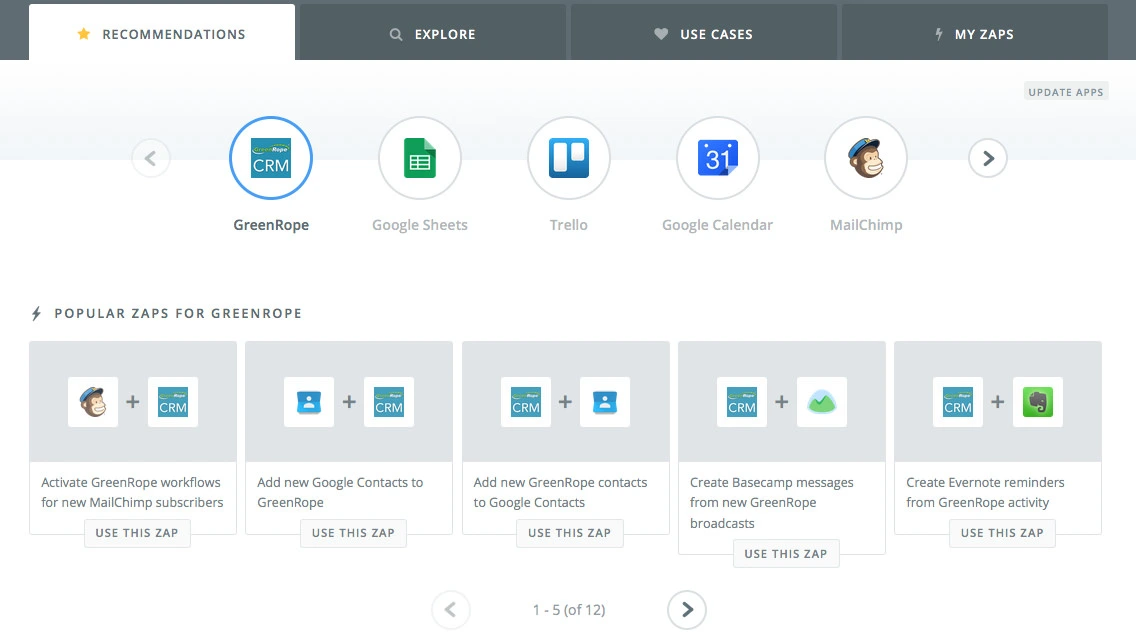
GreenRope's native integration list is short: QuickBooks, Shopify, WordPress, Google Workspace, Microsoft 365, PayPal, Stripe, and Authorize.net. For everything else, you're going through Zapier, which connects to 9,000+ apps. Zapier works, but it introduces latency, adds cost, and creates failure points that native integrations avoid.
Source: GreenRope
Salesforce operates in a different universe.
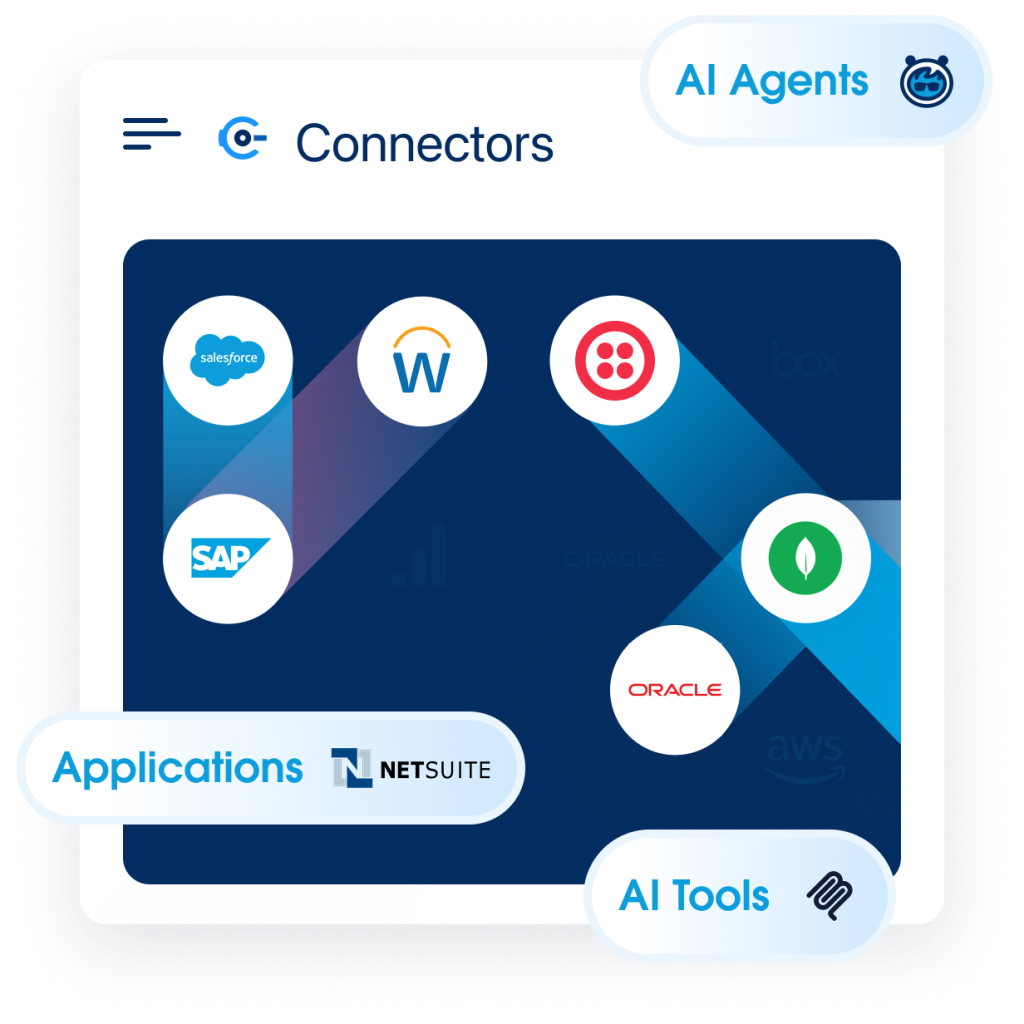
AppExchange hosts 9,000+ partner apps with over 14 million installs, and 91% of Salesforce customers use at least one. Beyond AppExchange, MuleSoft provides hundreds of pre-built connectors for complex enterprise integrations. Native connectors exist for Google Workspace, Microsoft Outlook and Teams, and Slack (which Salesforce owns). The API suite covers REST, SOAP, Bulk, Metadata, and Pub/Sub APIs.
Source: Mulesoft
For small businesses with a simple tech stack (accounting, a website, payment processing), GreenRope's integrations are adequate. For companies running Snowflake, custom internal tools, and enterprise marketing platforms, Salesforce's ecosystem is a requirement, not a luxury.
ZoomInfo bridges both worlds.
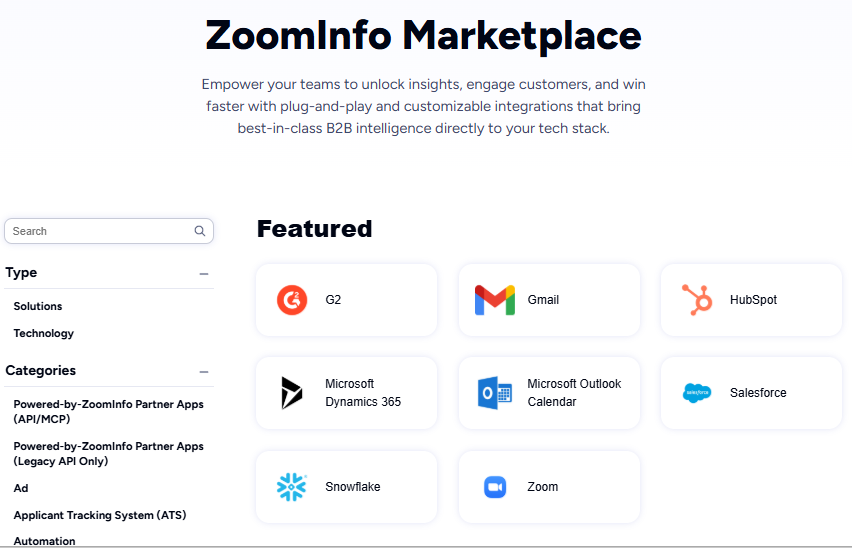
Its App Marketplace lists 120+ partner integrations across CRM, marketing automation, sales engagement, and data warehouses, with featured connections to both Salesforce and HubSpot. The Enterprise API and MCP server let you pipe ZoomInfo's intelligence into any tool: GreenRope via Zapier, Salesforce natively, or a custom AI agent your engineering team built last week. The data works wherever you work.
Source: ZoomInfo
AI capabilities are generations apart
GreenRope has integrated ChatGPT for content generation and chatbot automation, letting reps draft emails, summarize contact profiles, and generate CRM notes. The company also claims to be the only CRM with fully integrated predictive analytics for pipeline forecasting. These are useful additions for an SMB tool, but they amount to AI-assisted writing and scoring inside a traditional CRM.
Salesforce invests at a different scale.
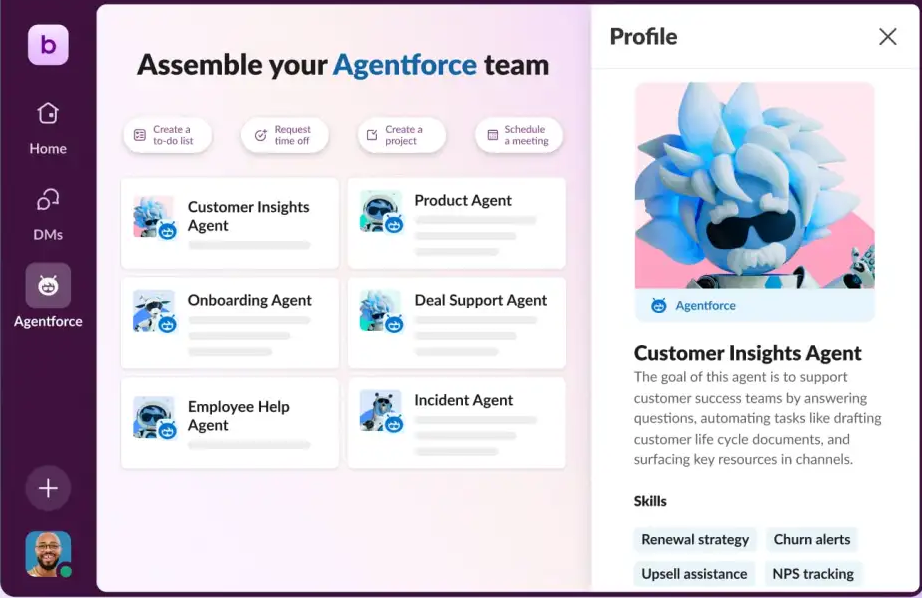
Agentforce deploys autonomous AI agents that handle multi-step tasks without constant human prompting. The Atlas Reasoning Engine powers agents that can research accounts, draft outreach, route leads, and resolve service cases across every channel including voice.
The Einstein Trust Layer adds zero data retention with LLM partners, PII masking, and toxicity detection.
Source: Salesforce
But both platforms share a fundamental limitation: their AI is only as good as the data inside them. If your CRM has outdated contacts, missing phone numbers, and no visibility into buying intent, even Agentforce will generate polished outreach to the wrong people at the wrong time.
ZoomInfo's GTM Context Graph addresses this directly.
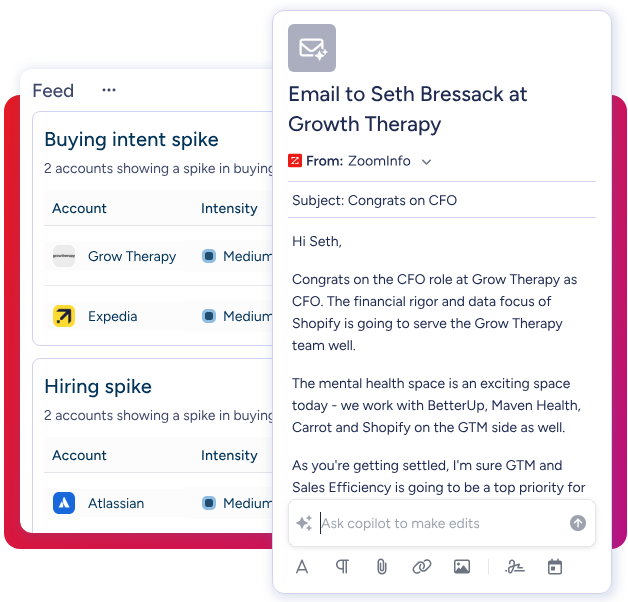
It fuses CRM records, conversation intelligence, intent signals, and behavioral data to reveal why deals move or stall. The AI inside GTM Workspace uses this context to tell sellers who to contact, when to engage, and what to say, grounded in patterns from thousands of similar deals.
That intelligence flows into Salesforce (or any CRM) through native integrations, so Agentforce's agents operate on verified, contextual data rather than whatever your reps remembered to log.
Source: ZoomInfo
Seismic's sales team attributed 39% of active pipeline to opportunities identified or influenced by ZoomInfo signals, while boosting productivity by 54% and saving 11.5 hours per week per seller. (Seismic)
Sales and pipeline management compared
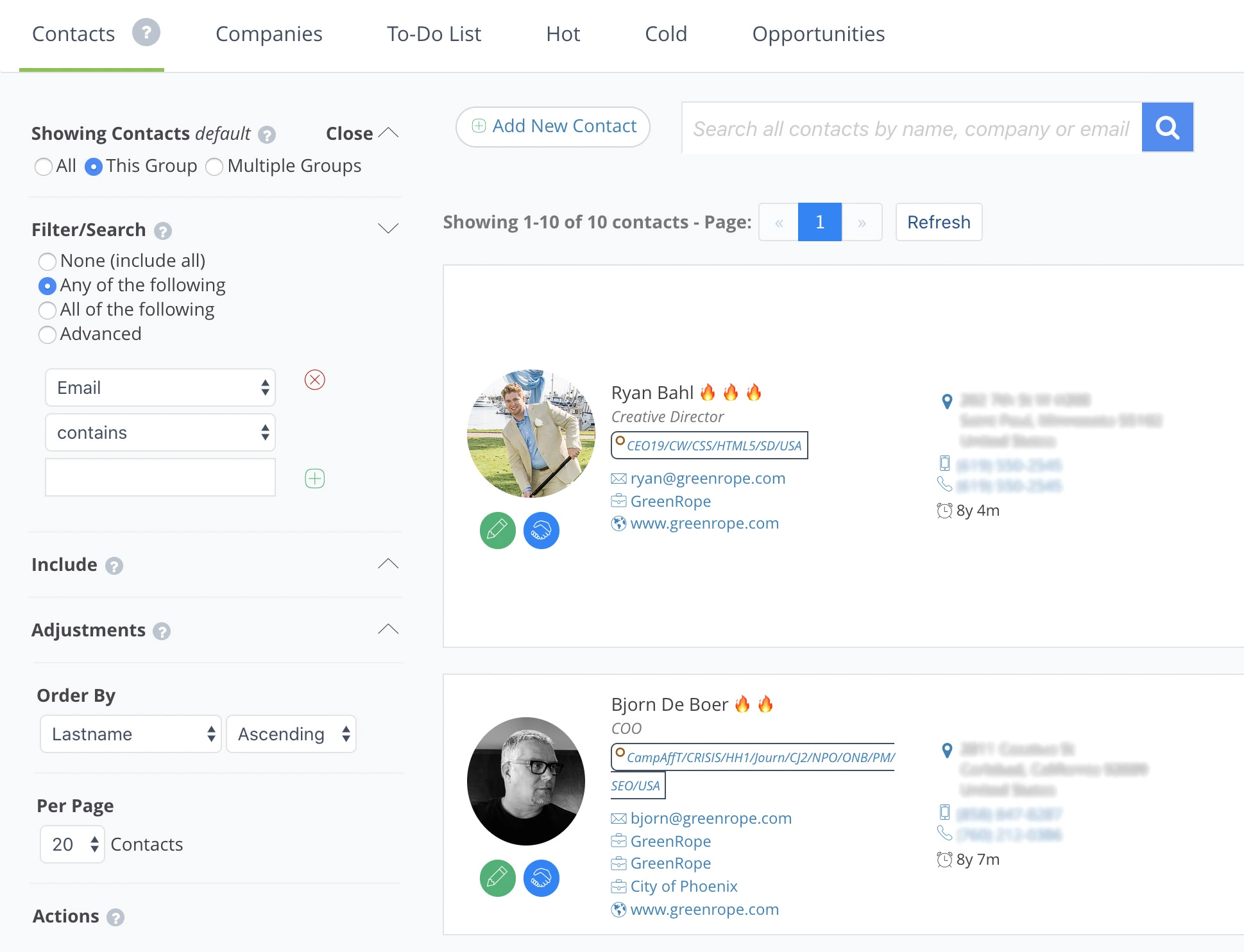
GreenRope's sales suite centers on a shared contact database with a drag-and-drop Kanban pipeline board, automatic lead scoring based on behavior and demographics, an integrated booking calendar, and a built-in proposal and quote builder with e-signatures.
For small sales teams, having pipeline management, proposals, and scheduling in one tool eliminates toggling between apps. The contact view ties every interaction (emails, website visits, form submissions, event attendance) to a single record.
Source: GreenRope
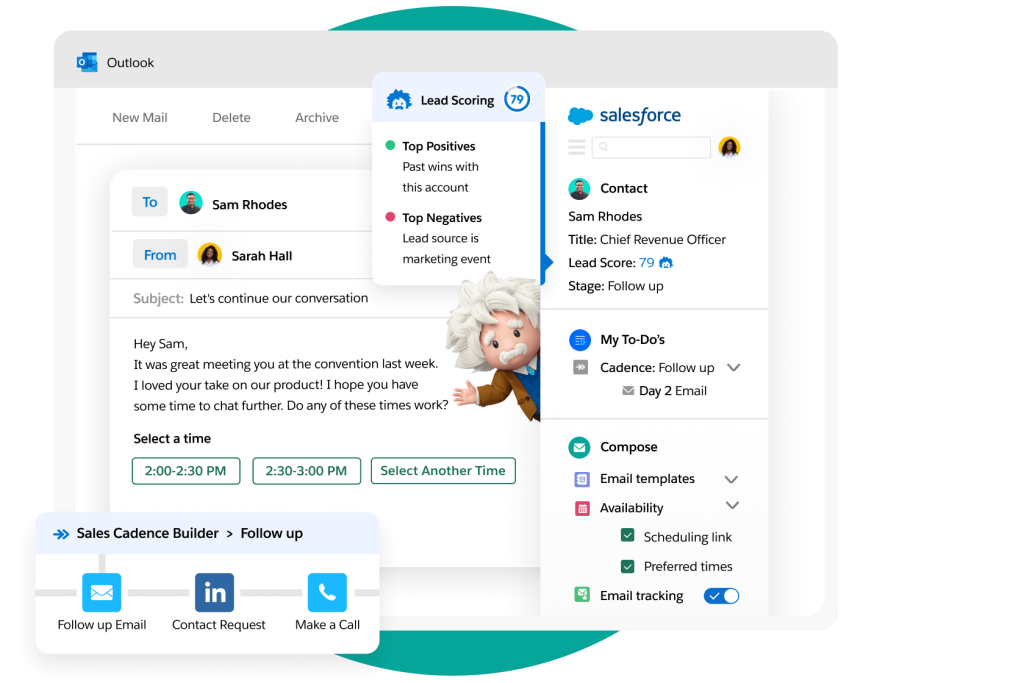
Salesforce's Sales Cloud is built for a different scale.
Einstein Lead Scoring prioritizes prospects using AI. Pipeline Management provides consolidated views with deal insights and change signals. Revenue Lifecycle Management covers CPQ, contract lifecycle, subscription management, and revenue analytics. Sales Performance Management handles quotas, territory planning, and commissions.
Source: Salesforce
GreenRope gives you everything you need to close deals in a small business. Salesforce gives enterprise sales organizations the tools to manage complex, multi-quarter deals across global teams. The question is which describes your sales motion.
Where both platforms depend on outside help is prospecting data. Neither GreenRope nor Salesforce generates verified contact data, direct-dial phone numbers, or real-time buying intent signals.
ZoomInfo fills this gap.
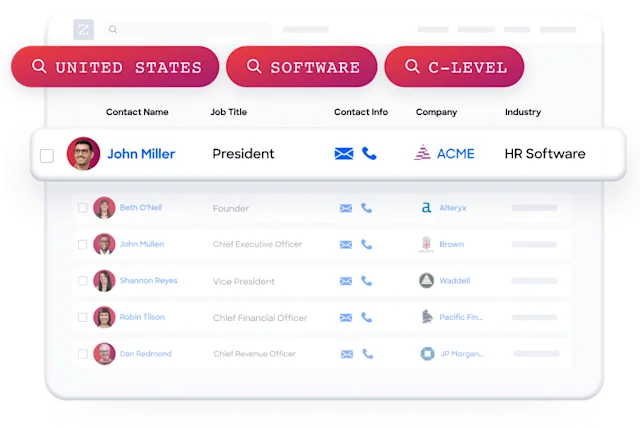
Its Contact & Company Search spans 300+ company attributes with 120M direct-dial phone numbers. Buyer Intent data tracks signals from 210 million IP-to-Organization pairings, so your team knows which accounts are researching solutions before they fill out a form.
Source: ZoomInfo
"ZoomInfo gives us the information we need to execute. We don't have to go through and spend our time digging. It's already there, so we can be three steps ahead." (Vensure)
Marketing automation and campaign execution
GreenRope's Marketing Suite shares the same contact database as the CRM, so behavioral data (website visits, email opens, form submissions) triggers automation instantly with no sync delay.
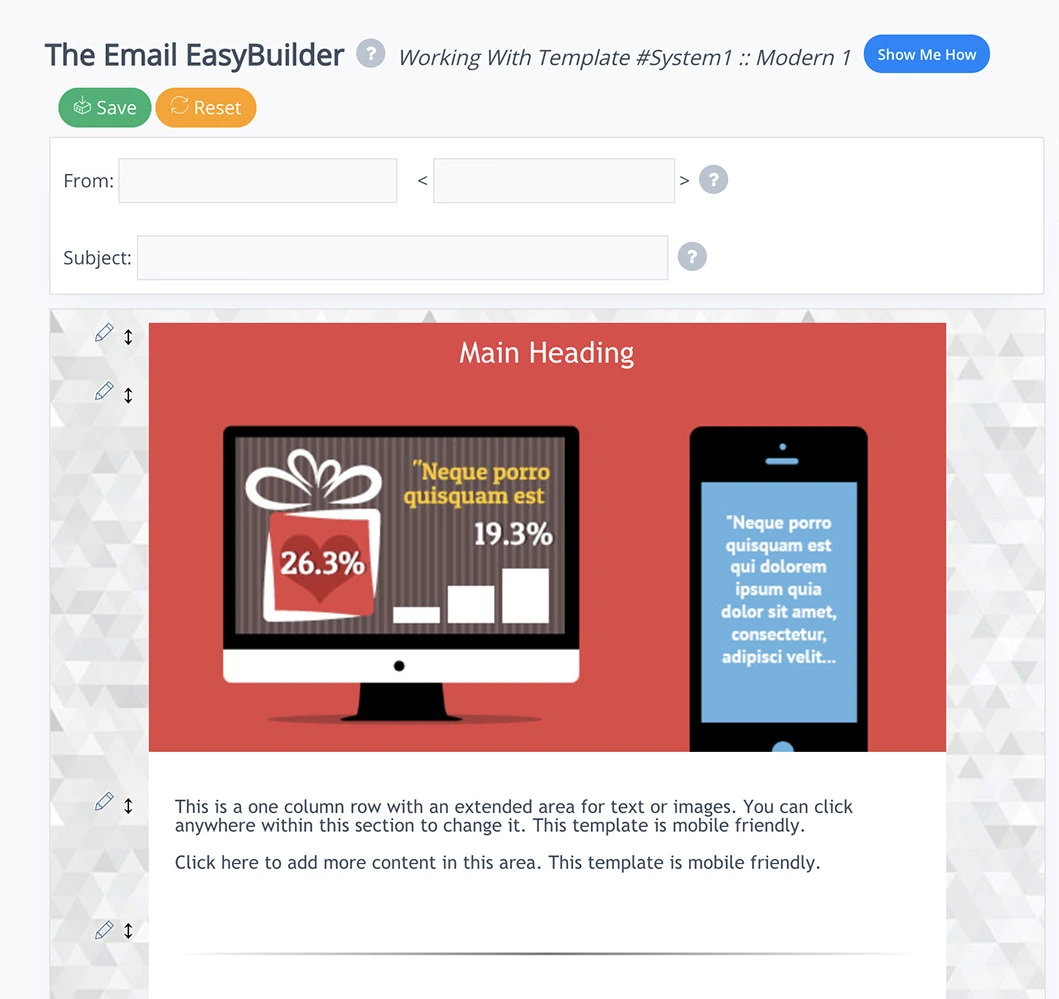
The Customer Journey Builder supports multi-step, branching workflows across email, SMS, and social. The EasyBuilder provides drag-and-drop email and landing page design. You also get A/B testing, survey tools, social media management, and coupon campaigns, all included in every plan.
Source: GreenRope
Salesforce's Marketing Cloud operates across multiple sub-products: Marketing Cloud Engagement for B2C cross-channel campaigns, Account Engagement (formerly Pardot) for B2B, Personalization for real-time AI recommendations, and Data 360 CDP for unified customer profiles.
The CDP handles identity resolution across sources with zero-copy data access from Snowflake, Databricks, and BigQuery.

Source: Salesforce
The difference is depth and price. GreenRope includes marketing tools at $99+/month. Salesforce Marketing Cloud starts at $1,500/org/month for Growth, with enterprise engagement plans reaching $30,000/org/month.
ZoomInfo's marketing capabilities complement either platform.
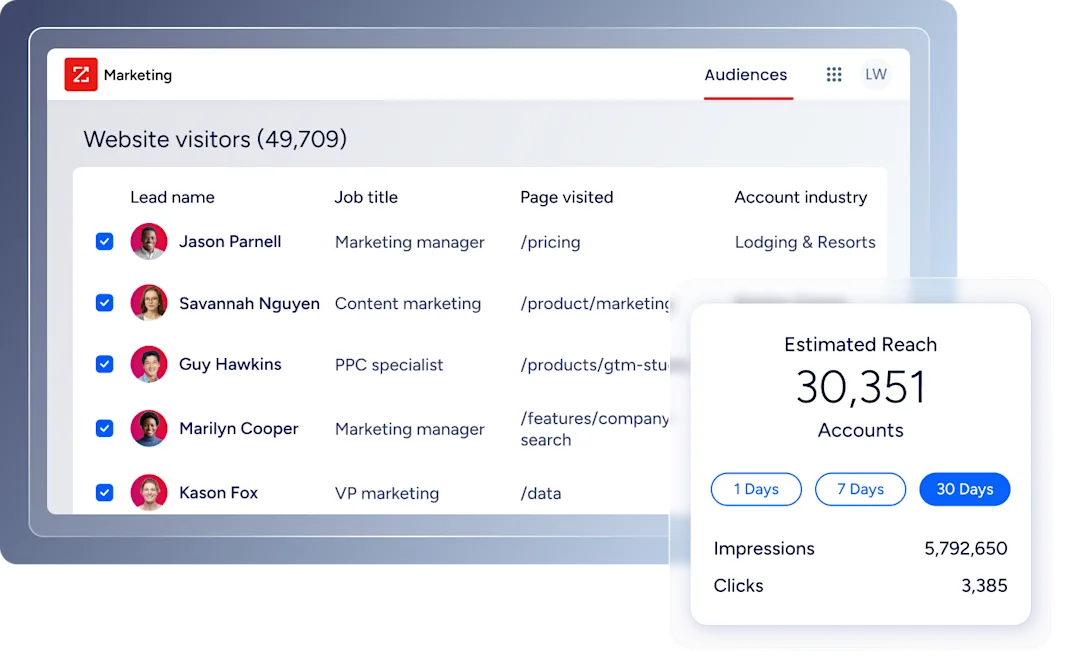
ZoomInfo Marketing provides account-based marketing with a demand-side platform for display advertising, FormComplete to reduce forms to a single field while auto-appending data, and contact-level website visitor identification.
GTM Studio lets marketers describe audiences in natural language, launch multi-channel plays, and track pipeline impact. Expansion plays that used to take 3 weeks now launch in 30 minutes.
Source: ZoomInfo
Redwood Logistics saw a 99% reduction in cost-per-click and 310% increase in clickthrough rate using ZoomInfo's audience insights. "It's not just the data itself. It's more about the right data at the right time to help us reach out with the right message across that full buyer journey." (Redwood Logistics)
Operations and support: where GreenRope stands out
GreenRope's clearest advantage over Salesforce may be its Operations Suite.
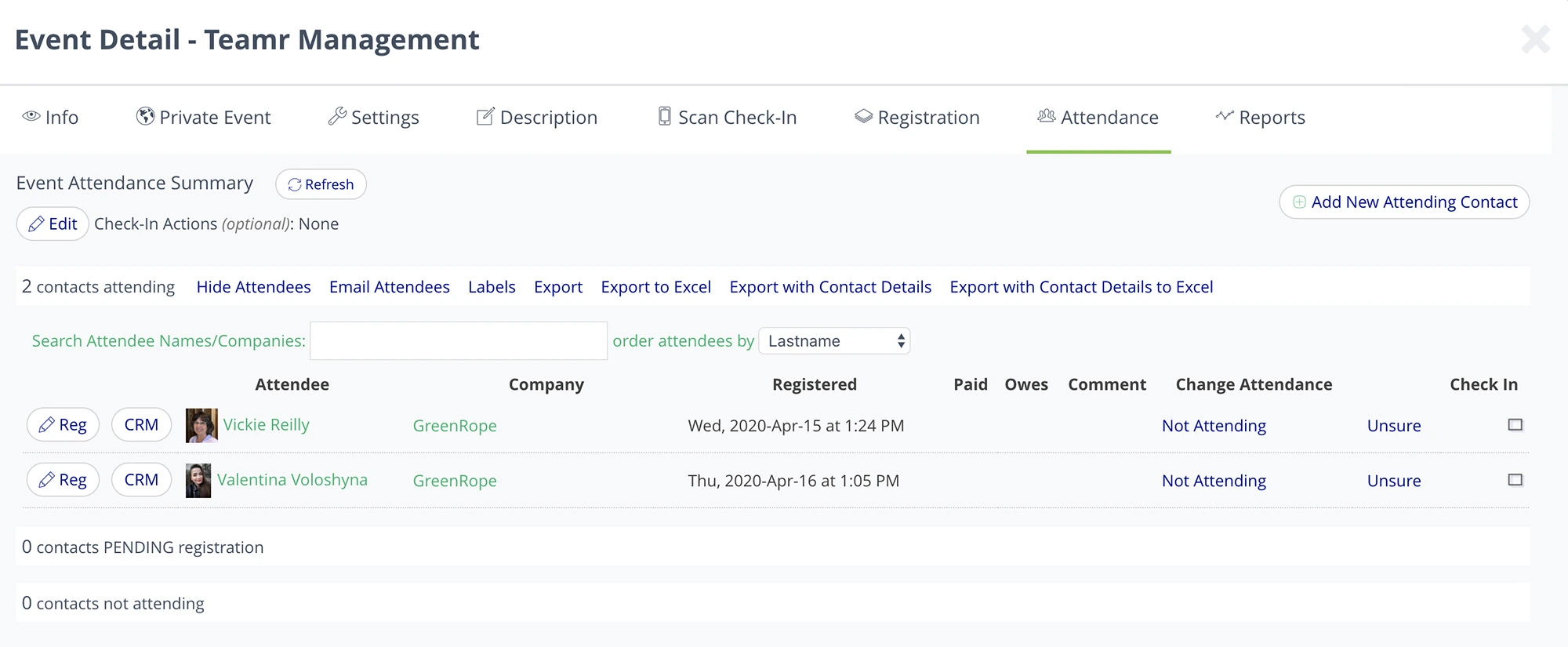
Most CRMs, including Salesforce's core offering, don't include project management, event management with QR-code check-in and ticket sales, a website builder tied to contact analytics, e-commerce with payment processing, or a support ticketing system. GreenRope bundles all of these in every plan.
For a small business that runs events, sells products online, manages client projects, and handles support tickets, GreenRope eliminates the need for Eventbrite, Shopify, Asana, and Zendesk. Every operational activity ties back to the contact record, so a support ticket shows the customer's purchase history, event attendance, and email engagement without switching tools.
Source: GreenRope
Salesforce addresses these needs differently.
Project management typically requires AppExchange apps or third-party tools. Event management isn't native. E-commerce lives in Commerce Cloud (separately priced and quote-based). Support ticketing lives in Service Cloud (starting at $25/user/month for Starter, scaling to $350/user/month for Unlimited). Each capability runs deeper than GreenRope's version, but each is also a separate purchase and implementation.
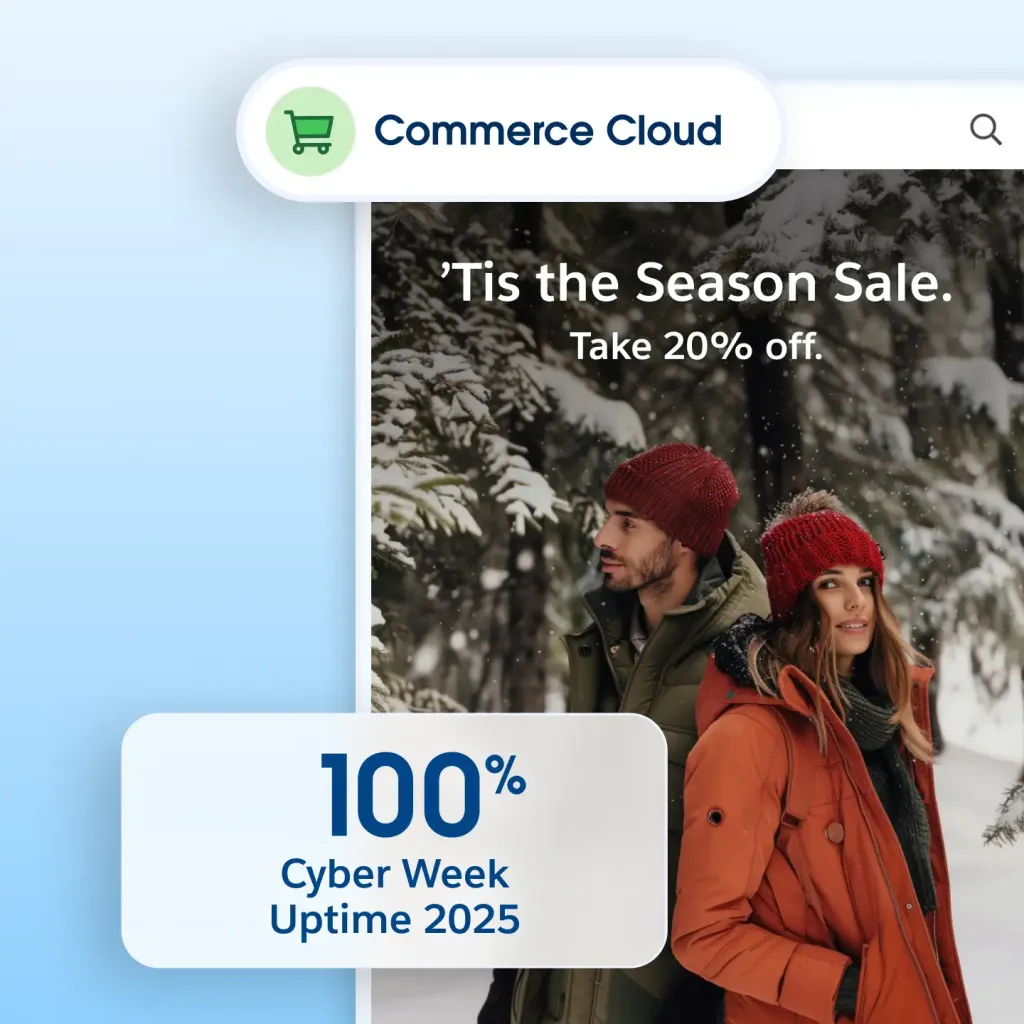
For SMBs, GreenRope's bundled approach delivers strong value. For enterprises that need a commerce platform handling billions in transactions with 100% uptime during Cyber Week, Salesforce's specialized clouds are the right tool.
Source: Salesforce
Data quality determines CRM value
Both GreenRope and Salesforce are containers for customer data. Neither generates the data your team needs to prospect, prioritize, or personalize at scale.
GreenRope tracks what happens inside its platform: email opens, website visits from known contacts, form submissions, event registrations. Salesforce does the same, plus ingests external data through Data Cloud (which has processed 112 trillion records). But Data Cloud requires data to exist somewhere first. It unifies data; it doesn't generate it.
ZoomInfo generates the data.
The platform's multi-source verification pipeline combines automated ML scanning of 28 million site domains daily, third-party partner data covering 95 million businesses, a community of 200,000+ users who share data back, and 300+ human researchers. First-party data reaches up to 95% accuracy.
In a Fortune 500 competitive RFP analyzing 25 million contacts across vendors, the independent consultant concluded that "no other competitor came even close."
Source: ZoomInfo
This data flows into your CRM of choice. ZoomInfo integrates natively with Salesforce and connects to GreenRope through Zapier or API. The result: your pipeline runs on verified contacts, current company attributes, real-time intent signals, and org charts, not on whatever your reps manually entered six months ago.
SpringDB achieved 2x to 3x increases in campaign conversions and a 300% increase in database usability using enriched ZoomInfo data. "You'll get 10x the value if you think of ZoomInfo as a full platform and not just a tool for one team." (SpringDB)
Security, compliance, and trust
GreenRope holds certified compliance with the EU-US Data Privacy Framework, the Swiss-US Data Privacy Framework, GDPR, and CCPA. It was among the first companies to achieve Privacy Shield certification in 2016. For SMBs with standard compliance needs, this coverage is sufficient.
Salesforce operates at enterprise compliance scale: ISO 27001/27017/27018, SOC 1/2/3, FedRAMP for government, and HITRUST.
Salesforce Shield adds event monitoring, platform encryption with bring-your-own-key, and indefinite field audit trails. Hyperforce enables regional data residency across multiple countries. For regulated industries (healthcare, financial services, government), Salesforce's compliance stack is table stakes.
ZoomInfo maintains ISO 27001, ISO 27701, SOC 2 Type II, TRUSTe GDPR, and TRUSTe CCPA certifications, all renewed annually. As a registered data broker in California and Vermont, ZoomInfo meets the highest transparency standards for B2B data providers. The Trust Center at trust.zoominfo.com provides real-time compliance documentation.
GreenRope vs. Salesforce vs. ZoomInfo: Which should you choose?
The right choice depends on what your business needs and where you are in your growth.
Choose GreenRope if:
You're a small to mid-sized business with 1 to 200 employees
You want CRM, email marketing, project management, events, e-commerce, and support in one subscription
Unlimited users at a flat rate matters to your budget
You prefer self-contained functionality over a large integration ecosystem
You're willing to invest time learning a feature-dense platform
Choose Salesforce if:
You're a mid-market or enterprise organization with dedicated admins
You need specialized capabilities across sales, service, marketing, and commerce
A large integration ecosystem and partner network is essential
You want AI agents that autonomously handle complex workflows
Industry-specific compliance and customization are requirements
Use ZoomInfo with either platform if:
Your CRM data is incomplete, outdated, or missing key decision-maker contacts
You need verified phone numbers and emails that actually connect
Buyer intent signals would help your team prioritize outbound outreach
You want AI that understands why deals move, not just that they moved
Your sales and marketing teams need a shared, accurate data foundation
Also compare against: HubSpot if you need marketing depth, Marketo for pure marketing automation, and Act-On as a mid-market alternative.
Try ZoomInfo Lite for free and see what verified B2B intelligence adds to your CRM.
GreenRope and Salesforce both solve real problems for their audiences. GreenRope gives small businesses everything in one box at a price that makes sense. Salesforce gives enterprises the depth and ecosystem to run global operations.
But regardless of which CRM you choose, the intelligence powering your pipeline determines whether your team reaches the right people with the right message at the right time. ZoomInfo provides that intelligence, and it works with both.
GreenRope vs. Salesforce vs. ZoomInfo FAQ
What is the core difference between GreenRope, Salesforce, and ZoomInfo?
GreenRope is an all-in-one CRM that bundles sales, marketing, project management, event management, e-commerce, and support into a single subscription with unlimited users, aimed at small and mid-sized businesses.
Salesforce is the world's largest CRM platform, offering specialized clouds for sales, service, marketing, and commerce with customization and an ecosystem of 9,000+ partner apps, aimed at mid-market and enterprise organizations.
ZoomInfo is a B2B data and go-to-market intelligence platform that provides verified contact data, company intelligence, and buying intent signals to power prospecting and pipeline across any CRM.
Which platform is most affordable for a small team?
GreenRope is the most affordable CRM option for small teams. Its contact-based pricing starts at $99/month for 500 contacts with unlimited users and all features included. Salesforce starts free for up to 2 users but scales to $175/user/month at the Enterprise tier most teams need, plus separate costs for additional clouds.
ZoomInfo offers a permanent free tier (ZoomInfo Lite) with access to its B2B database and 10 monthly export credits, with paid plans custom-quoted based on usage.
Can ZoomInfo replace GreenRope or Salesforce?
No. ZoomInfo is not a CRM and does not replace either platform. It complements both by providing the verified B2B data, buying intent signals, and account intelligence that CRMs don't generate on their own.
ZoomInfo integrates natively with Salesforce and connects to GreenRope through Zapier or API, enriching whichever CRM you use with accurate contact information and real-time signals.
How do the AI capabilities compare?
GreenRope offers ChatGPT integration for drafting emails, summarizing contacts, and generating CRM notes, plus predictive analytics for pipeline forecasting. Salesforce's Agentforce deploys autonomous AI agents powered by the Atlas Reasoning Engine that handle multi-step tasks across channels, with $800M in annual recurring revenue and customers resolving 70%+ of inquiries autonomously.
ZoomInfo's GTM Context Graph processes 1.5B+ data points daily to provide contextual intelligence about why deals move or stall, powering AI-driven account prioritization, outreach drafting, and signal detection through GTM Workspace.
Which platform has better customer support?
GreenRope's customer support scores 4.6/5 on Capterra, its highest-rated dimension, with 24/7 access via phone, chat, email, and tickets, plus a dedicated training manager at every plan level.
Salesforce ties support quality to spending: the free Standard plan provides self-service resources, Premier adds 1:1 coaching and 1-hour response times for 30% of license fees, and Signature offers a dedicated success manager with 15-minute response times at custom pricing.
Do I need ZoomInfo if I already use Salesforce Data Cloud?
Salesforce Data Cloud unifies and activates data you already have. ZoomInfo generates the B2B data most organizations are missing: verified direct-dial phone numbers, business email addresses, org charts, technographics, and real-time buyer intent signals across 500M contacts and 100M companies.
The two platforms are complementary. ZoomInfo feeds verified external data into Salesforce, and Data Cloud unifies it with your internal records. For a deeper look at how Salesforce and ZoomInfo stack up as platforms, see our Salesforce vs. ZoomInfo comparison.
Which platform is best for account-based marketing?
ZoomInfo is the strongest choice for ABM. It was named a Leader in the Gartner Magic Quadrant for ABM Platforms for two consecutive years and a Leader in the Forrester Wave for Intent Data Providers. Its demand-side platform, contact-level website visitor identification, and intent signal stacking across first- and third-party data are built for ABM.
Salesforce's Marketing Cloud offers ABM capabilities through Account Engagement, but it's designed more broadly. GreenRope offers basic marketing automation but lacks dedicated ABM tooling.
Is GreenRope suitable for growing companies that might need Salesforce later?
GreenRope works well for companies with up to roughly 200 employees. As organizations grow beyond that, limitations in native integrations, enterprise analytics, role-based access controls, and multi-org management typically surface. GreenRope's contact data can be exported for migration, though automation workflows and project configurations would need to be rebuilt.
Companies anticipating rapid growth should consider whether starting on a more scalable platform avoids a painful future migration.
