

Choosing between GreenRope and Marketo for your marketing and CRM needs comes down to five questions:
Do you need an affordable, all-in-one platform, or will you pay enterprise prices for deep marketing automation?
Is your sales cycle simple enough for basic lead nurturing, or do you run complex, multi-stakeholder B2B buying journeys?
Do you have a dedicated marketing operations person, or does your team need something they can manage without specialist training?
Are you focused on executing campaigns, or do you also need to identify and prioritize the right accounts before you send an email?
How important is the accuracy and completeness of your contact data to the success of your marketing programs?
In short, here's what we recommend:
GreenRope serves small and mid-sized businesses that want CRM, email marketing, project management, event management, and e-commerce in a single subscription. Its all-inclusive, contact-based pricing with unlimited users and unlimited emails makes it a cost-effective choice for teams consolidating tools. But its steep learning curve (3.9/5 ease of use on Capterra), limited native integrations, and small team of roughly 20 employees mean it trades polish and ecosystem depth for breadth and affordability.
Adobe Marketo Engage is the enterprise standard for B2B marketing automation. It delivers campaign orchestration, multi-dimensional lead scoring, account-based marketing, and native CRM integration with Salesforce and Microsoft Dynamics. Named a Gartner MQ Leader in the 2025 Magic Quadrant for B2B Marketing Automation Platforms, Marketo handles complex buying cycles across large databases. The trade-off: a steep learning curve, custom-quoted pricing that favors enterprise budgets, and an interface that reviewers on Capterra and TrustRadius call dated compared to modern alternatives.
Both platforms help you create and execute marketing campaigns. But campaigns are only as effective as the data behind them. If your contact records are incomplete, your lead scores unreliable, or your targeting based on stale company data, even the best automation engine produces mediocre results. That's the gap neither GreenRope nor Marketo fills on its own.
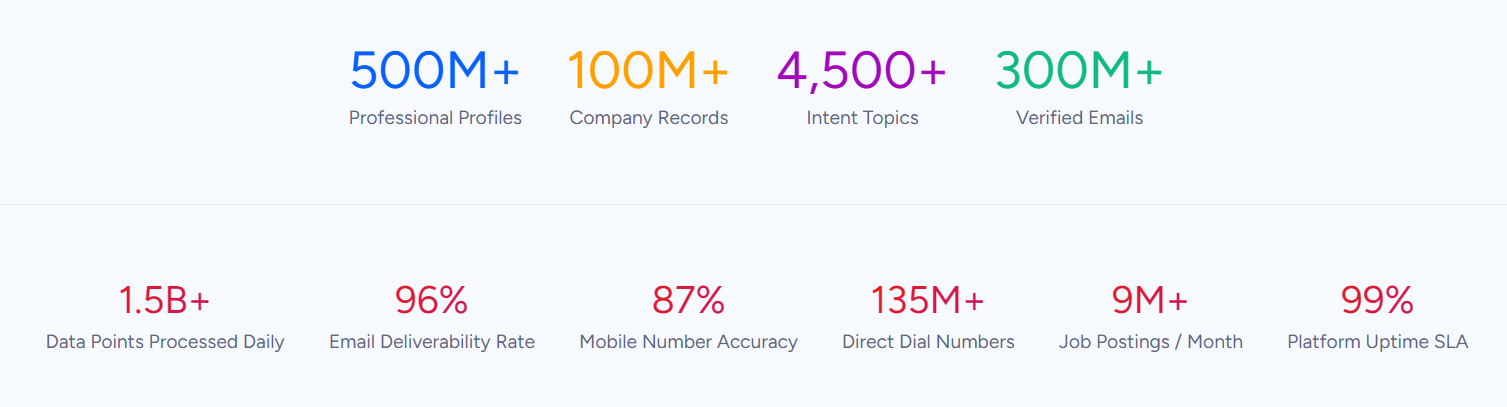
ZoomInfo is a B2B go-to-market platform built on a large data foundation: 500M contacts, 100M companies, 135M+ verified phone numbers, and 200M+ verified business email addresses. Its GTM Context Graph processes 1.5B+ data points daily, combining this data with your CRM records, conversation transcripts, and behavioral signals to show not just who your buyers are, but when they're in-market and why deals move or stall. Teams access this intelligence through GTM Workspace (for sellers), GTM Studio (for marketers and RevOps), or the API and MCP in any front-end, including Marketo itself.
If building your marketing on verified data sounds like the missing piece, see how ZoomInfo works.
GreenRope vs. Marketo vs. ZoomInfo at a glance
GreenRope | Marketo | ZoomInfo | |
|---|---|---|---|
Primary focus | All-in-one CRM and marketing for SMBs | Enterprise B2B marketing automation | GTM intelligence and execution |
Ideal buyer | Small businesses consolidating tools | Mid-market to enterprise B2B marketing teams | B2B revenue teams needing data-driven GTM |
Pricing model | Contact-based, starts at $99/month | Custom-quoted, enterprise contracts | Consumption-based, custom-quoted |
Free option | 14-day trial | No free trial or plan | Free tier (ZoomInfo Lite) + 7-day trial |
Users included | Unlimited | 25 marketing users per subscription | Seat-based by plan |
Learning curve | Steep (feature density) | Very steep (requires dedicated admin) | Moderate (role-specific onboarding) |
B2B contact data | Only what you import | Only what you import or enrich via integrations | 500M contacts, 200M+ verified emails, 135M+ verified phones |
Intent signals | None | Limited (via third-party integrations) | Native buyer intent from 210M IP-to-org pairings |
CRM integration | Zapier-dependent | Native Salesforce and Dynamics sync | Native Salesforce, HubSpot, and Dynamics |
Analyst recognition | Niche (Capterra 4.3/5) | Gartner MQ Leader (2024, 2025) | Gartner MQ Leader (ABM), Forrester Wave Leader (Intent Data) |
The all-in-one SMB platform vs. the enterprise automation engine
GreenRope and Marketo solve different versions of the same problem: how to manage customer relationships and marketing campaigns from one place. They diverge on who they serve and how deep they go.
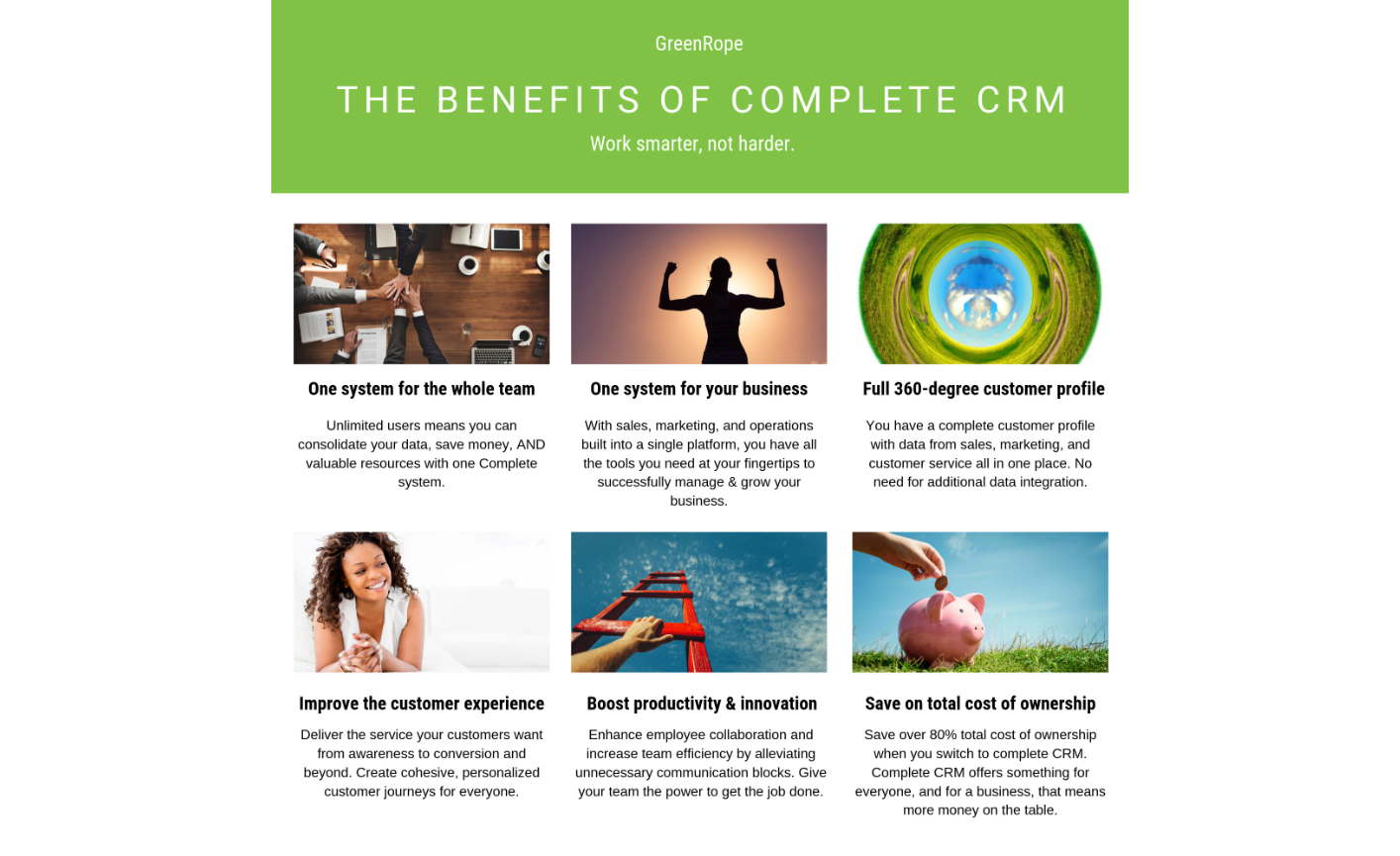
GreenRope was bootstrapped in 2010 by Lars Helgeson, who designed it as a "Complete CRM" that unifies sales, marketing, and operations in a single shared database. The pitch is consolidation: replace your CRM, email marketing tool, project manager, event platform, and e-commerce system with one subscription. Every feature is included at every tier. The only variable is how many contacts you store.
Source: GreenRope
Marketo was founded in 2006, went public in 2013, and Adobe acquired it for $4.75 billion in 2018. It doesn't try to be everything. Instead, it goes deep on B2B marketing automation: nested campaign programs, multi-stream engagement nurtures with content exhaustion logic, unlimited scoring models with decay rules, and multi-touch revenue attribution. It serves marketing teams managing hundreds of thousands of leads across months-long buying cycles.
The difference shows up immediately in daily use. A GreenRope user can create an event, send invitations, track registrations, manage the project tasks around the event, and follow up with attendees, all without leaving one platform. A Marketo user running the same event gets stronger automation (trigger campaigns from webinar poll responses, score attendees by engagement level, route hot leads to sales via CRM sync) but needs a separate event platform, a separate project management tool, and likely a dedicated admin to wire it all together.
GreenRope wins on value, Marketo wins on automation depth
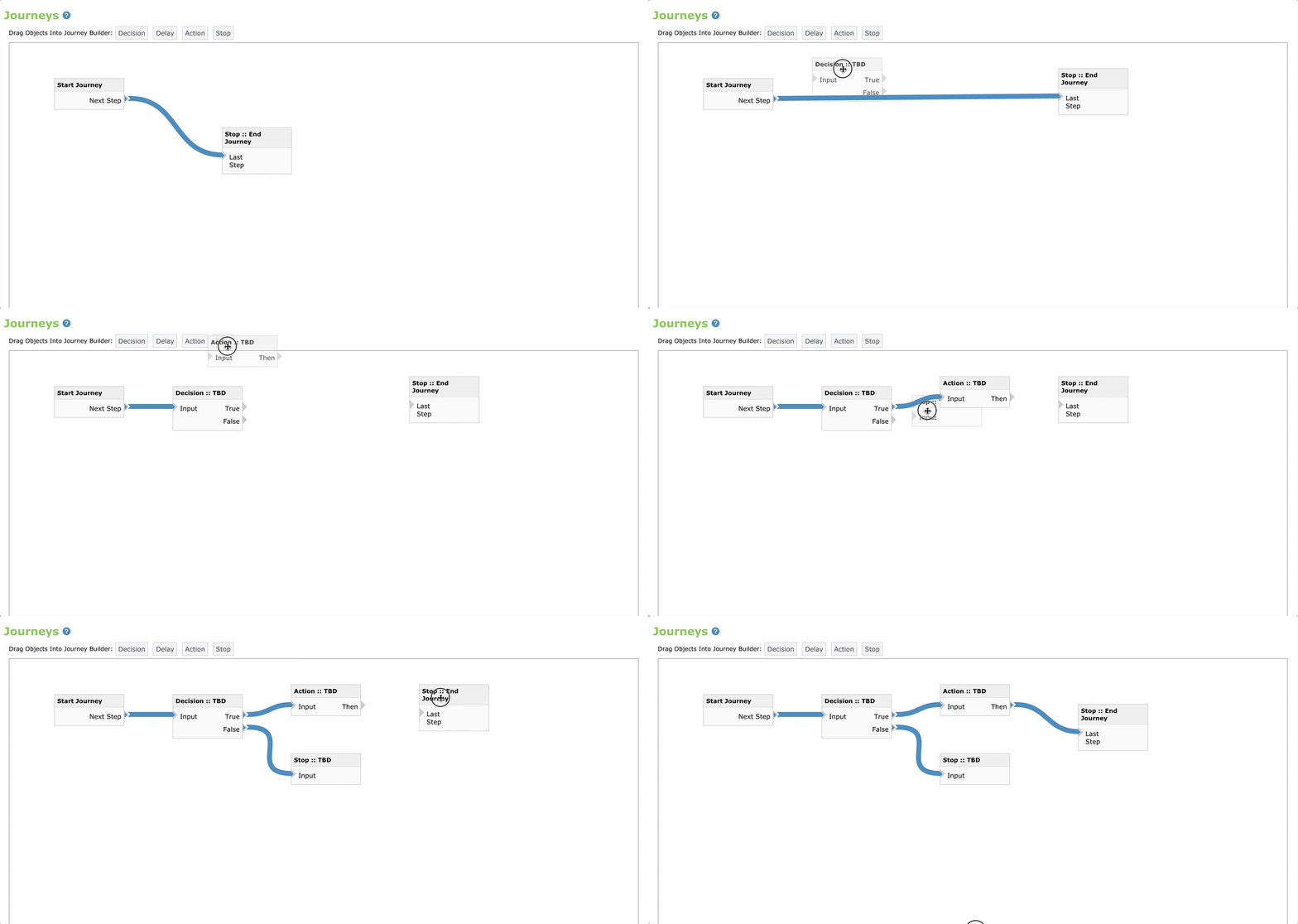
GreenRope's pricing is its strongest argument. At $99/month for 500 contacts (scaling to $799/month for 50,000 contacts), every feature is included: CRM, email marketing, customer journey builder, project management, event management with QR code check-in, e-commerce with cart abandonment automation, support ticketing, and a website builder. Unlimited users, unlimited emails, no feature-gating between tiers.
Source: GreenRope
Marketo doesn't publish prices, but the platform spans four tiers (Grow, Select, Prime, Ultimate) with add-on costs for features like Dynamic Chat, Website Personalization, Sales Insight, and sandbox environments. Enterprise contracts typically run five to six figures annually. Beyond licensing, Marketo requires a trained administrator or marketing operations specialist, adding $60,000-120,000+ in staffing costs that GreenRope users never face.
For a full breakdown of Marketo's pricing tiers and what each includes, see our Marketo pricing guide.
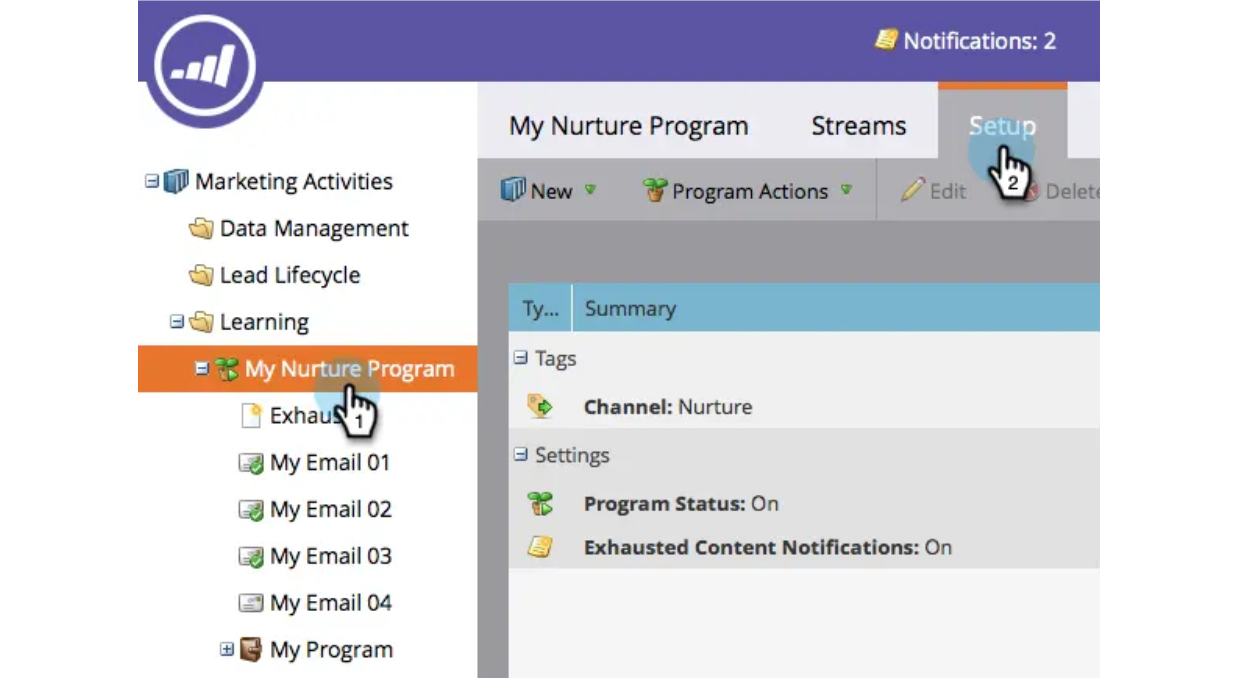
But Marketo's depth justifies those costs for the right buyer. Its Smart Campaign engine combines trigger-based real-time automation with batch processing in a single framework. Engagement Programs detect when a lead has consumed all available content in a nurture stream and flag them as exhausted, a signal to add new content or hand off to sales. The champion/challenger testing framework auto-deploys winning email variants in live trigger campaigns without manual intervention.
Source: Adobe
GreenRope offers drip campaigns and a customer journey builder, but the automation logic is less granular. You won't find content exhaustion tracking, multi-dimensional scoring with decay rules, or the nested program architecture that lets enterprise teams run hundreds of concurrent campaigns with full attribution.
For a deeper look at Marketo's full feature set, see our Marketo review.
Neither platform solves the data problem
Here's what GreenRope and Marketo share: they depend entirely on data you bring to them. Neither platform helps you find new prospects, verify contact information, or detect which accounts are researching solutions like yours.
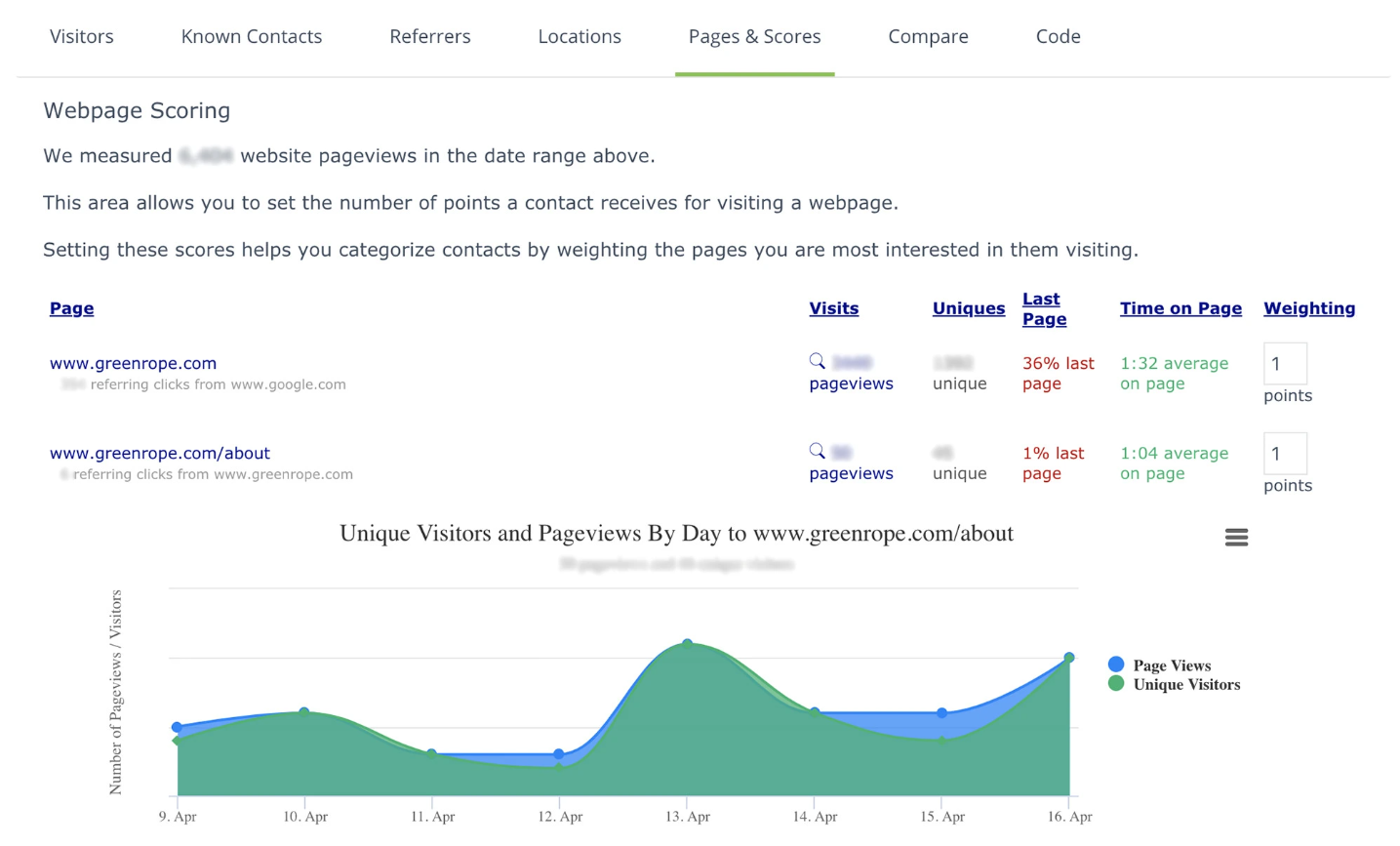
GreenRope's contact database holds whatever you import. The platform includes web analytics tied to contact records and behavioral tracking for known contacts, but it has no way to discover new buyers or enrich records with verified phone numbers, org charts, or technographic data. Its integration ecosystem is primarily Zapier-dependent, with limited native connections.
Source: GreenRope
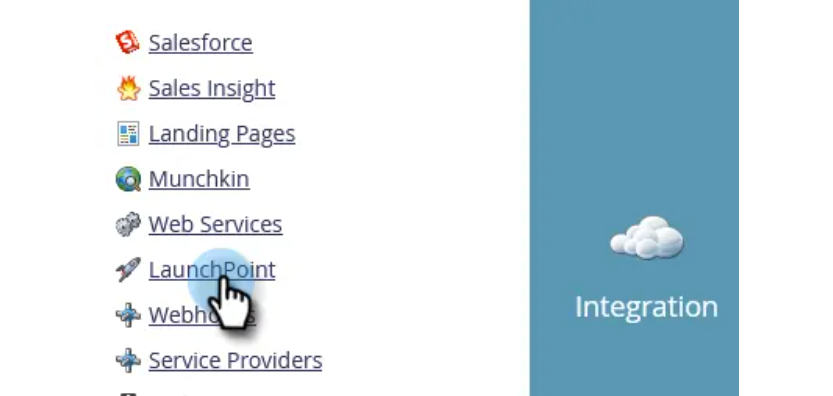
Marketo is more capable but faces the same structural limitation. It tracks known contacts through website behavior, email engagement, and CRM sync. It scores and nurtures the leads you already have. But to feed Marketo with new, verified contacts, you need third-party data providers connected via LaunchPoint integrations, adding cost and complexity.
Source: Adobe
This is the fundamental gap. You can build the most advanced automation workflows in the world, but if 20% of your email addresses are invalid, your lead scores rest on incomplete company data, and you're targeting accounts with stale information, your campaigns underperform regardless of which platform sends them.
ZoomInfo provides the intelligence layer both platforms lack
ZoomInfo solves the upstream problem neither GreenRope nor Marketo was designed to address: knowing who to target, when to target them, and having verified data accurate enough to make automation work.
The foundation is data. ZoomInfo's B2B database spans 500M contacts and 100M companies, with 120M direct-dial phone numbers and 200M+ verified business email addresses. This isn't a static directory. A multi-source verification pipeline backed by 300+ human researchers delivers up to 95% accuracy on first-party data. In a Fortune 500 competitive RFP analyzing 25 million contacts across vendors, an independent consultant concluded that "no other competitor came even close."
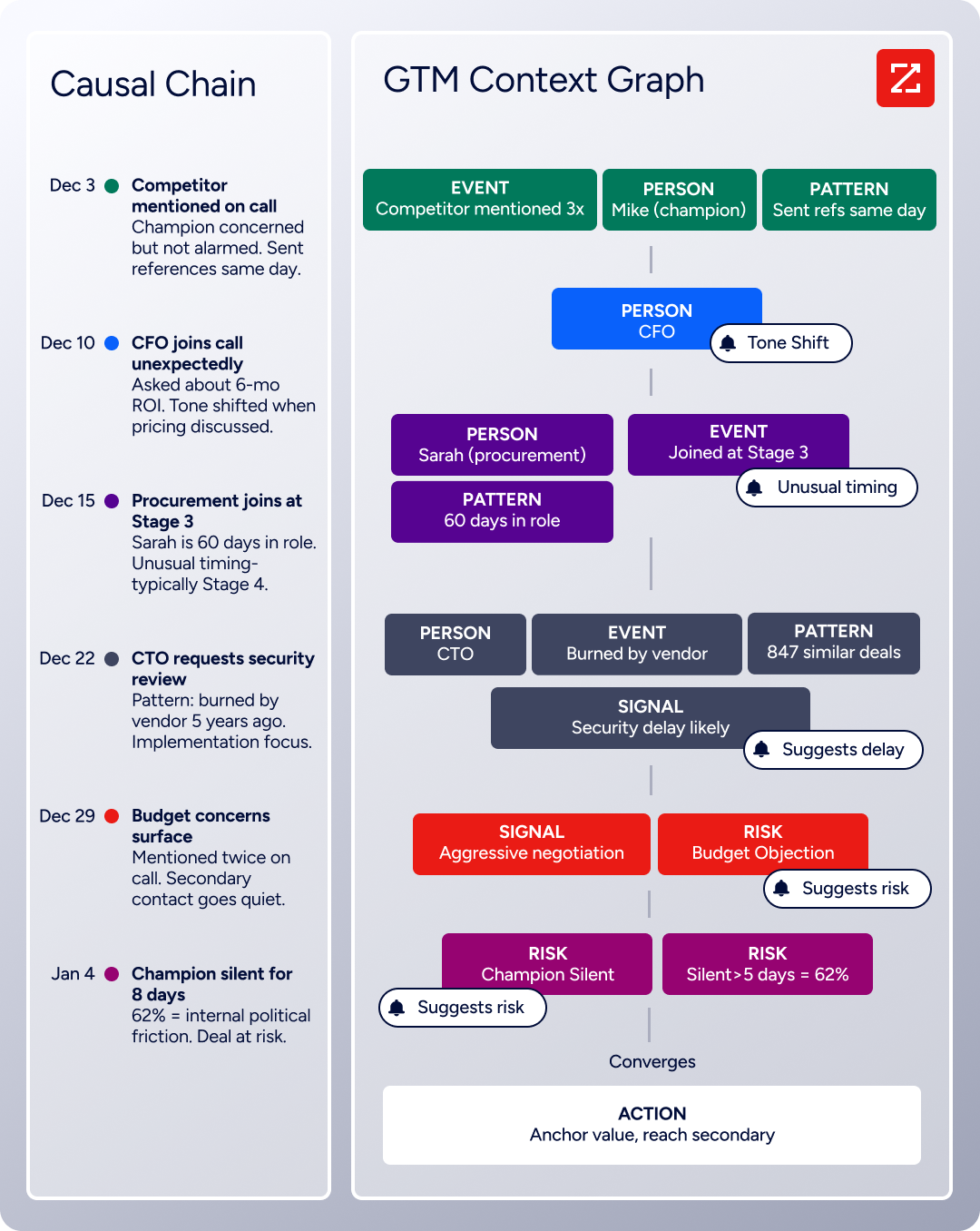
On top of this data sits the GTM Context Graph, which processes 1.5B+ data points daily by combining ZoomInfo's third-party data with a customer's CRM records, conversation transcripts, and behavioral signals. The result: an intelligence layer that captures not just what happened in a deal, but why it happened, and which actions will most likely move it forward.
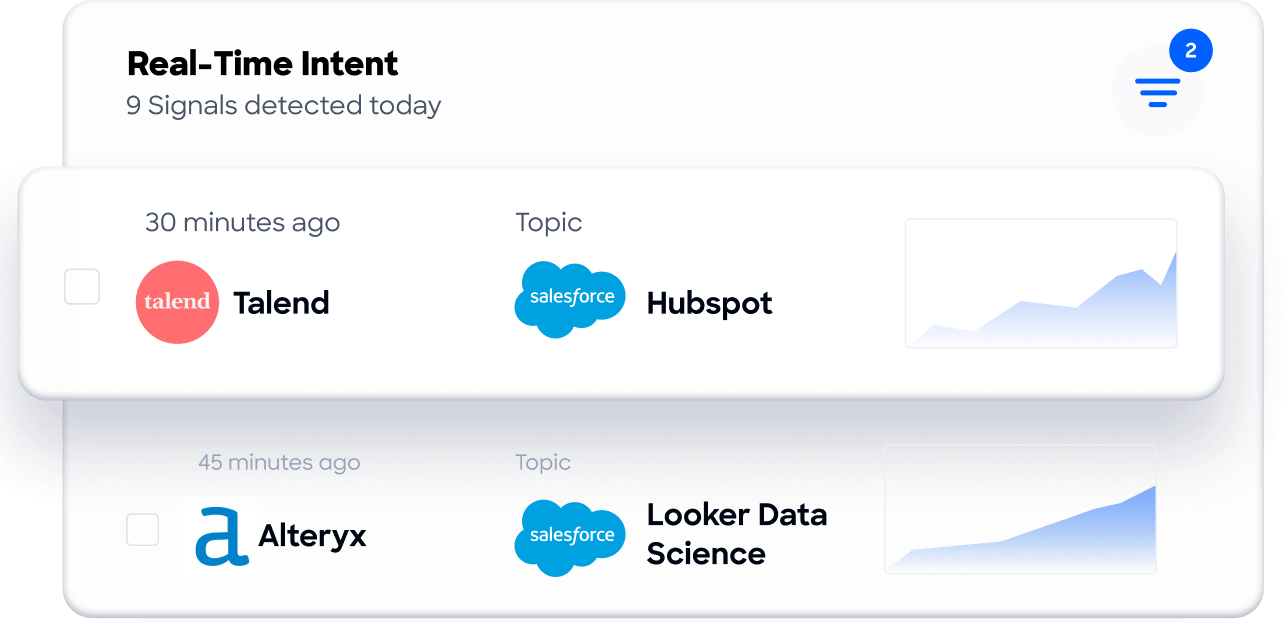
For marketing teams, ZoomInfo Intent tracks buying signals from 210 million IP-to-organization pairings and 6 trillion+ keyword-to-device pairings monthly. Guided Intent, exclusive to ZoomInfo, identifies topics historically correlated with deal success rather than requiring manual topic selection.
Seismic's sales team attributed 39% of active pipeline to opportunities identified or influenced by ZoomInfo signals, boosted productivity by 54%, and saved 11.5 hours per week. Chief Business Officer Toby Carrington said: "That combination of our internal CRM data, external signals, and AI that's given all that context has helped us craft very specific account- and persona-based messages. And people have responded to them right away." (Seismic case study)
How ZoomInfo works with Marketo and beyond
ZoomInfo integrates with Marketo via LaunchPoint, feeding enriched contact data, firmographics, technographics, and intent signals into Marketo's automation engine. Marketo users can enrich lead records automatically, trigger campaigns when target accounts show buying intent, and build smarter scoring models using ZoomInfo's verified data as input.
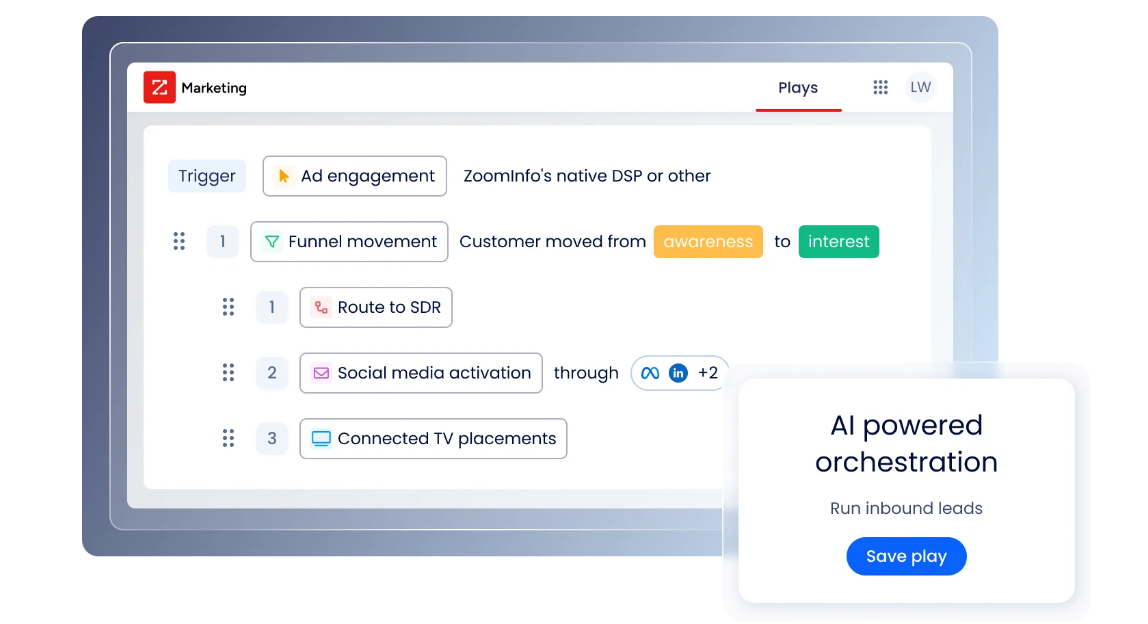
ZoomInfo also offers its own marketing execution capabilities. GTM Studio lets marketers and RevOps teams describe audiences in natural language, enrich them with first- and third-party data, and launch multi-channel plays (email, ads, direct mail, SDR routing) triggered by buyer behavior. Pre-built GTM plays for inbound acceleration, champion tracking, and competitive displacement can launch in minutes rather than the weeks a typical Marketo implementation requires.
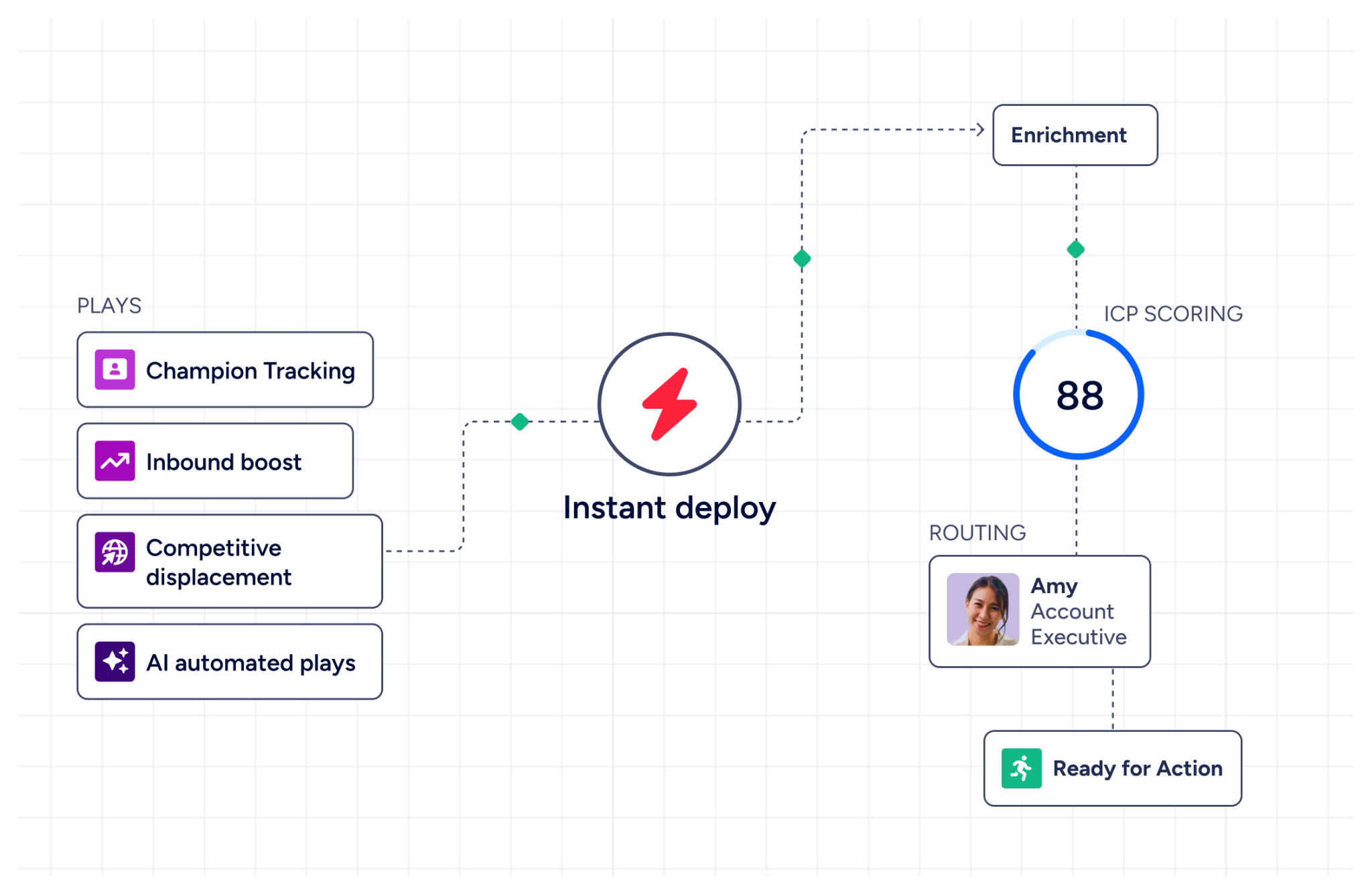
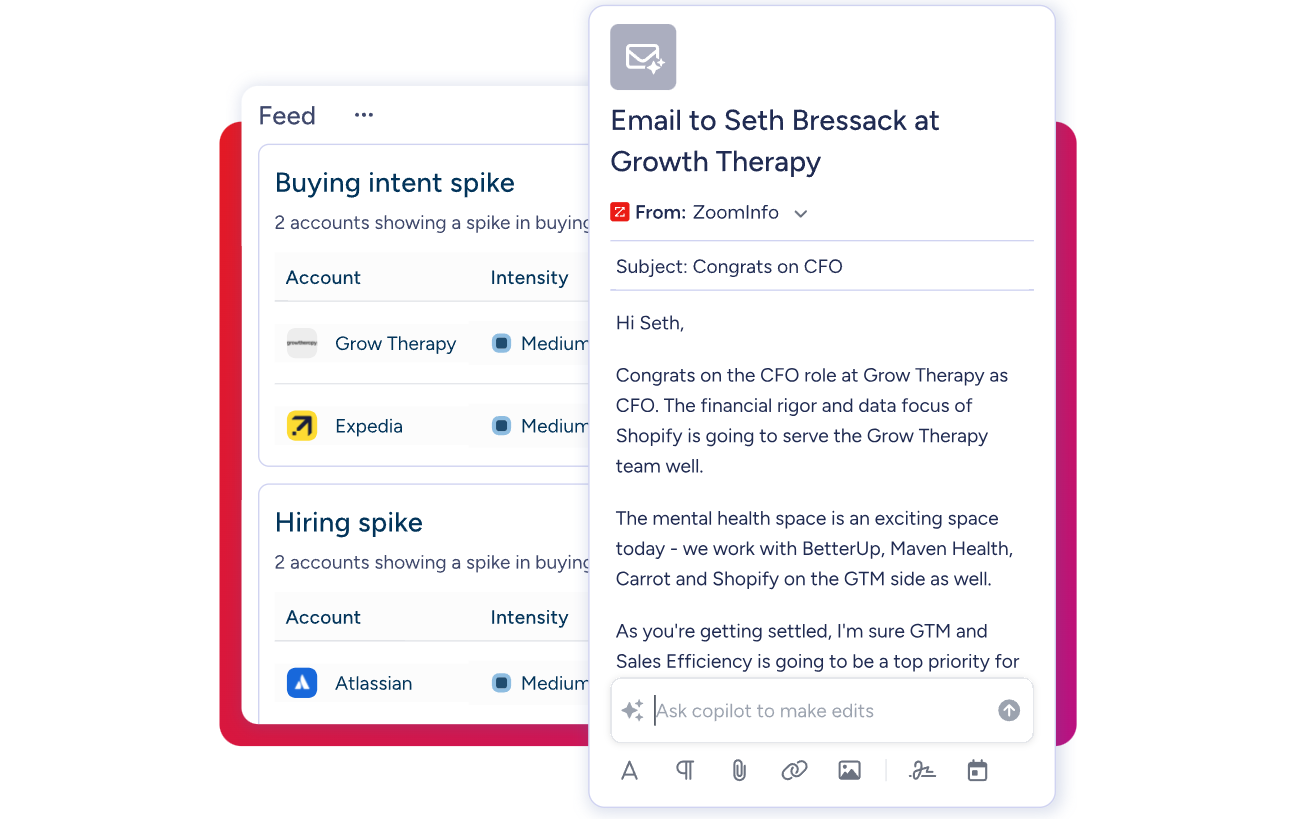
For sellers, GTM Workspace consolidates account intelligence, AI-drafted outreach, and deal execution in one place. AI agents research accounts, monitor signals, draft personalized messages, and update CRM fields without the rep switching between tools.
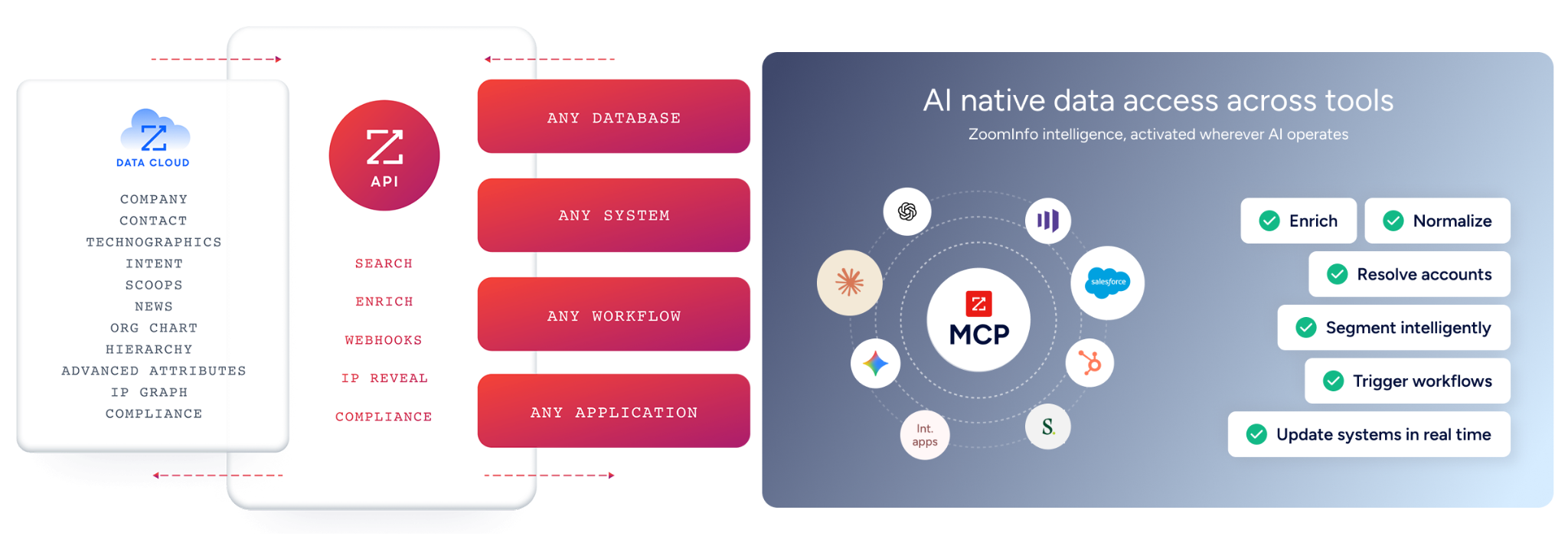
For teams that build their own tools, the API and MCP expose the same intelligence to any custom agent, internal tool, or partner platform. The same data powering ZoomInfo's own products is accessible in any front-end.
Redwood Logistics saw a 99% reduction in cost-per-click and a 310% increase in clickthrough rate using ZoomInfo's data-driven audience targeting. Senior Director of Digital Strategy Chelsea Kenyon said: "It's not just the data itself. It's more about the right data at the right time to help us reach out with the right message across that full buyer journey." (Redwood Logistics case study)
Lead scoring and qualification: different levels of sophistication
Lead scoring shows the clearest capability gap between these three platforms.
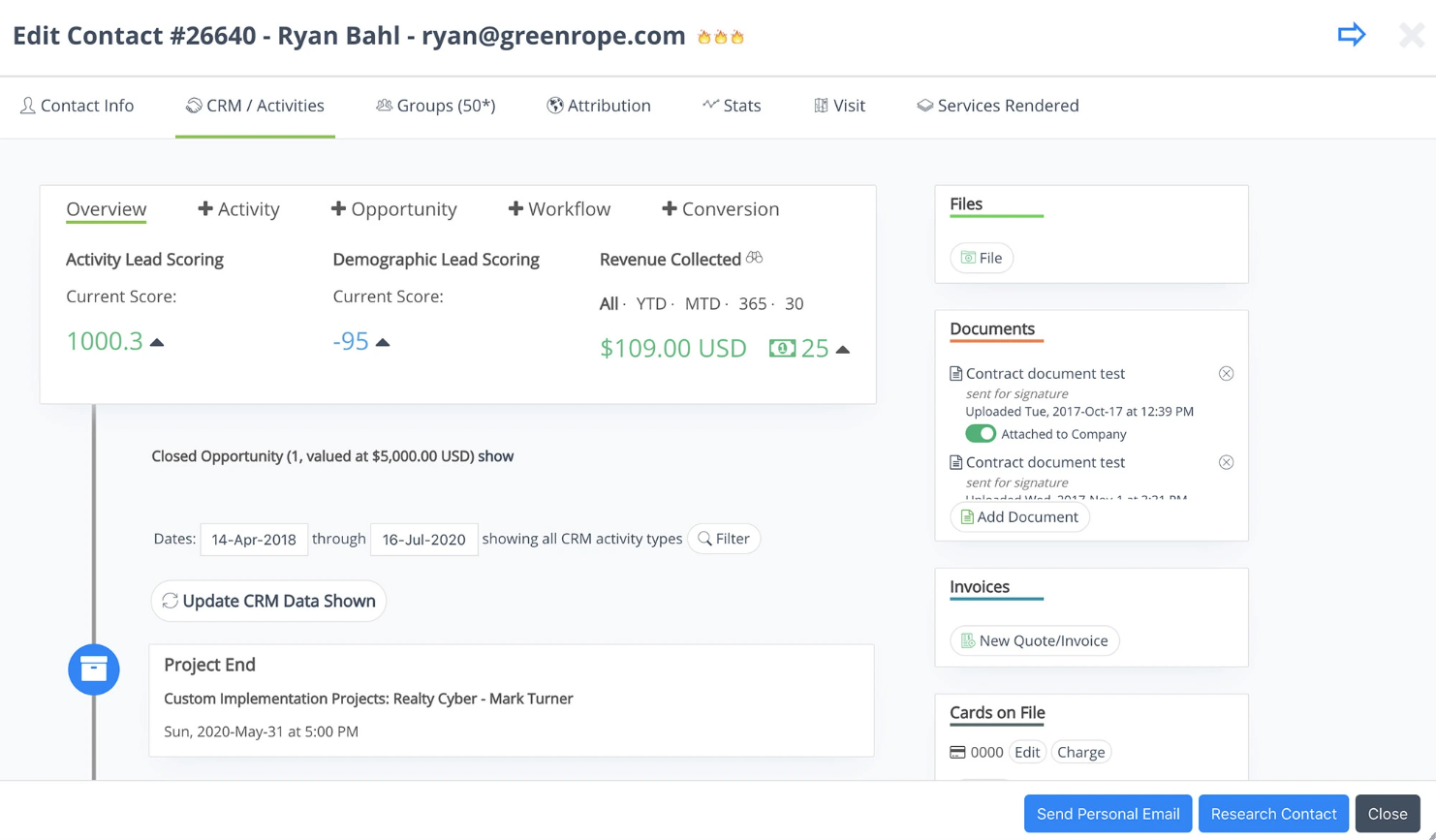
GreenRope offers automatic lead scoring based on behavioral and demographic signals that feed into its predictive analytics engine. It claims to be the only CRM to fully integrate predictive analytics. For SMBs with straightforward sales processes, this covers the basics: score contacts by email engagement, page visits, and form submissions, then route high-scoring leads to sales.
Source: GreenRope
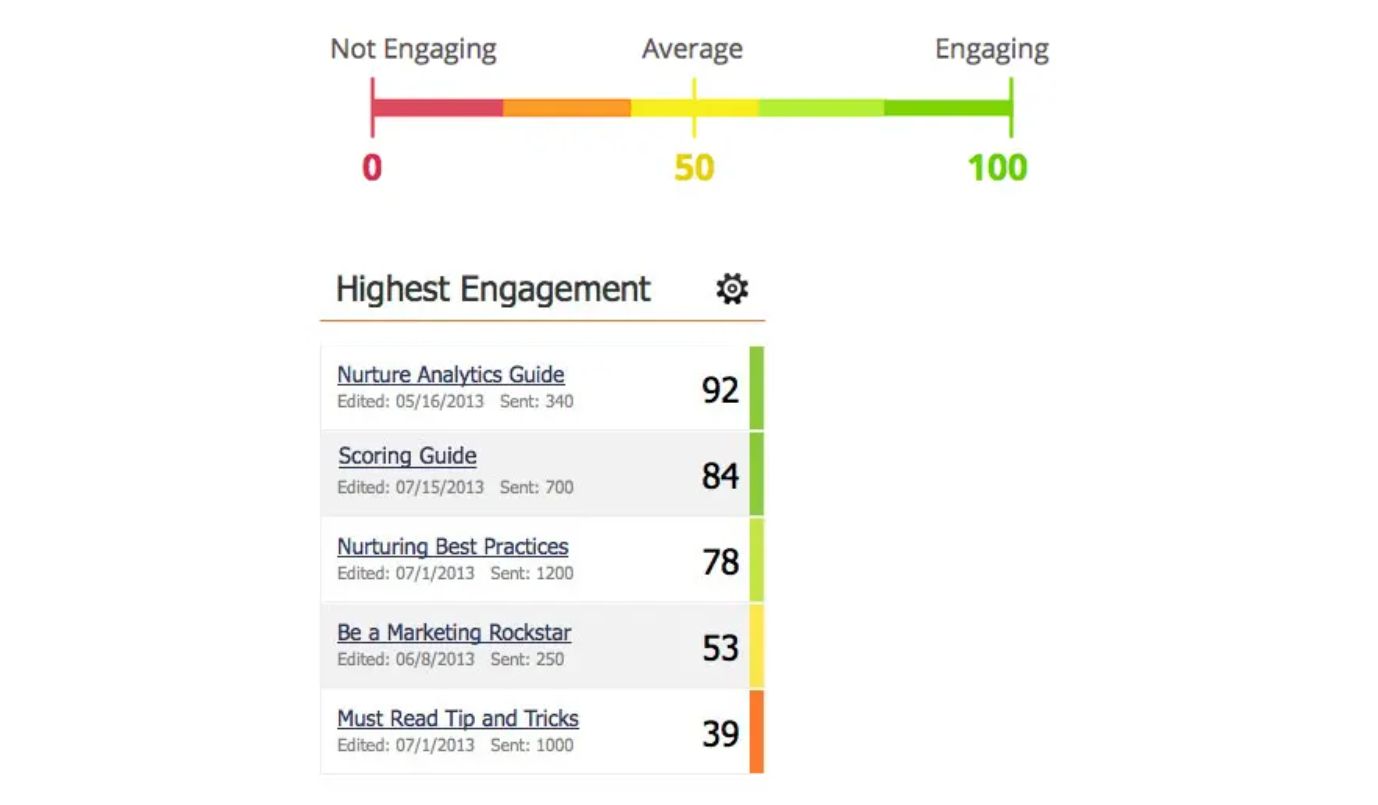
Marketo operates on a different level. Its scoring system supports multiple score dimensions maintained in parallel (behavioral, demographic, firmographic), with decay logic that reduces scores for inactive leads automatically. Engagement Programs assign a 0-100 Engagement Score to each content piece based on opens, clicks, unsubscribes, and program success metrics, so marketers can optimize nurture content on actual performance data. Sales Insight surfaces a ranked "Best Bets" list inside Salesforce, with visual urgency indicators (Stars and Flames) showing both absolute score and engagement velocity.
Source: Adobe
ZoomInfo adds the dimension neither platform provides: external buying signals. Buyer Intent data reveals when accounts are researching topics related to your product, before they fill out a form or visit your website. Website visitor identification resolves anonymous traffic to companies and contacts, with Automatic Traffic Filtering separating real visitors from bots. Account Fit Score uses predictive AI to rate accounts 0-100 based on firmographic patterns that correlate with conversion.
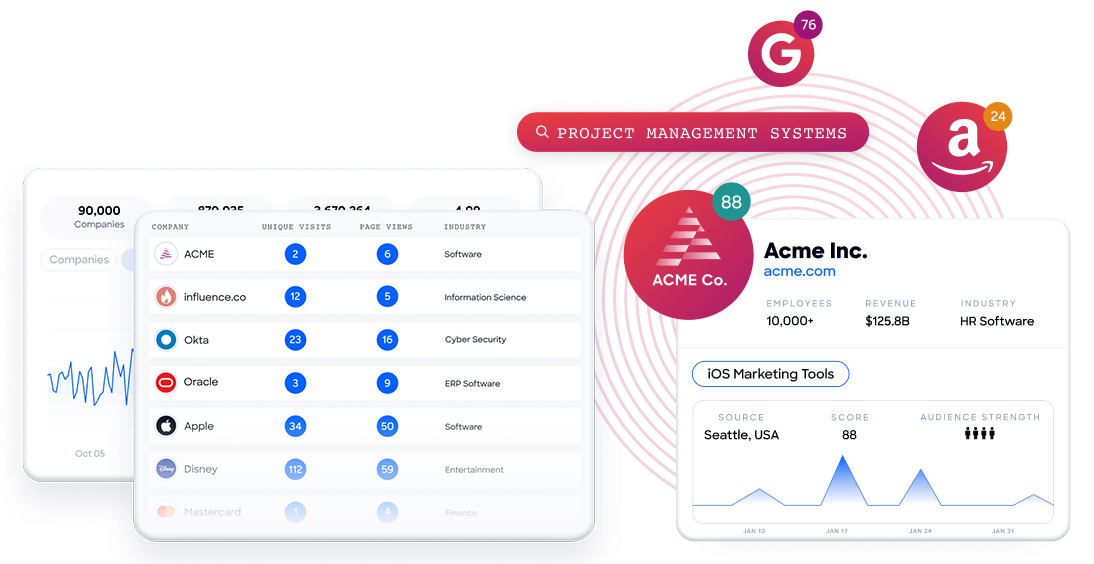
The practical difference: GreenRope and Marketo can only score leads who have already engaged with your marketing. ZoomInfo identifies which accounts are likely buyers before engagement begins, so your campaigns reach the right people at the right time.
Account-based marketing: from none to native
ABM capability is where the three platforms diverge most.
GreenRope doesn't offer ABM. It's a contact-level platform: you market to individuals, not accounts. For SMBs with simpler sales processes, this is often enough. But for B2B companies selling to buying committees, the absence of account-level targeting, scoring, and reporting is a real gap.
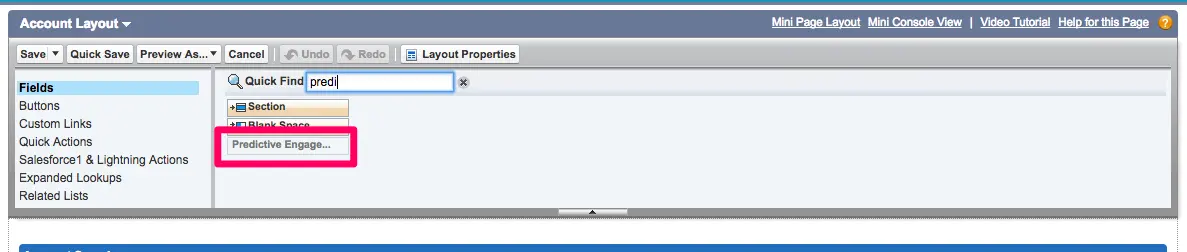
Marketo supports ABM natively, with lead-to-account mapping using eight matching methods and a Predictive Engagement Score that grades accounts by engagement intensity. The Ultimate tier includes Marketo Measure for multi-touch attribution at the account level. Adobe is extending these capabilities through Journey Optimizer B2B Edition for buying group orchestration.
Source: Adobe
ZoomInfo was named a Gartner MQ Leader for ABM Platforms in both 2024 and 2025. Its ABM approach starts upstream: identifying target accounts using 300+ company attributes, layering intent signals to prioritize those in-market, then orchestrating campaigns across channels through GTM Studio. The native Demand-Side Platform deploys display ads based on firmographic targeting without a separate ad-tech vendor. Customers report a 900% increase in clickthrough rates and 61% increase in opportunities from ZoomInfo-powered ABM campaigns.
Impartner saw a 45% increase in website engagement and saved 15 hours through automation after adopting ZoomInfo for account-based marketing. Senior Director of Marketing Operations Jeremy Melius said: "ZoomInfo has literally changed the way we go to market." (Impartner case study)
Email marketing and campaign execution
All three platforms handle email marketing, but the approach and depth vary.
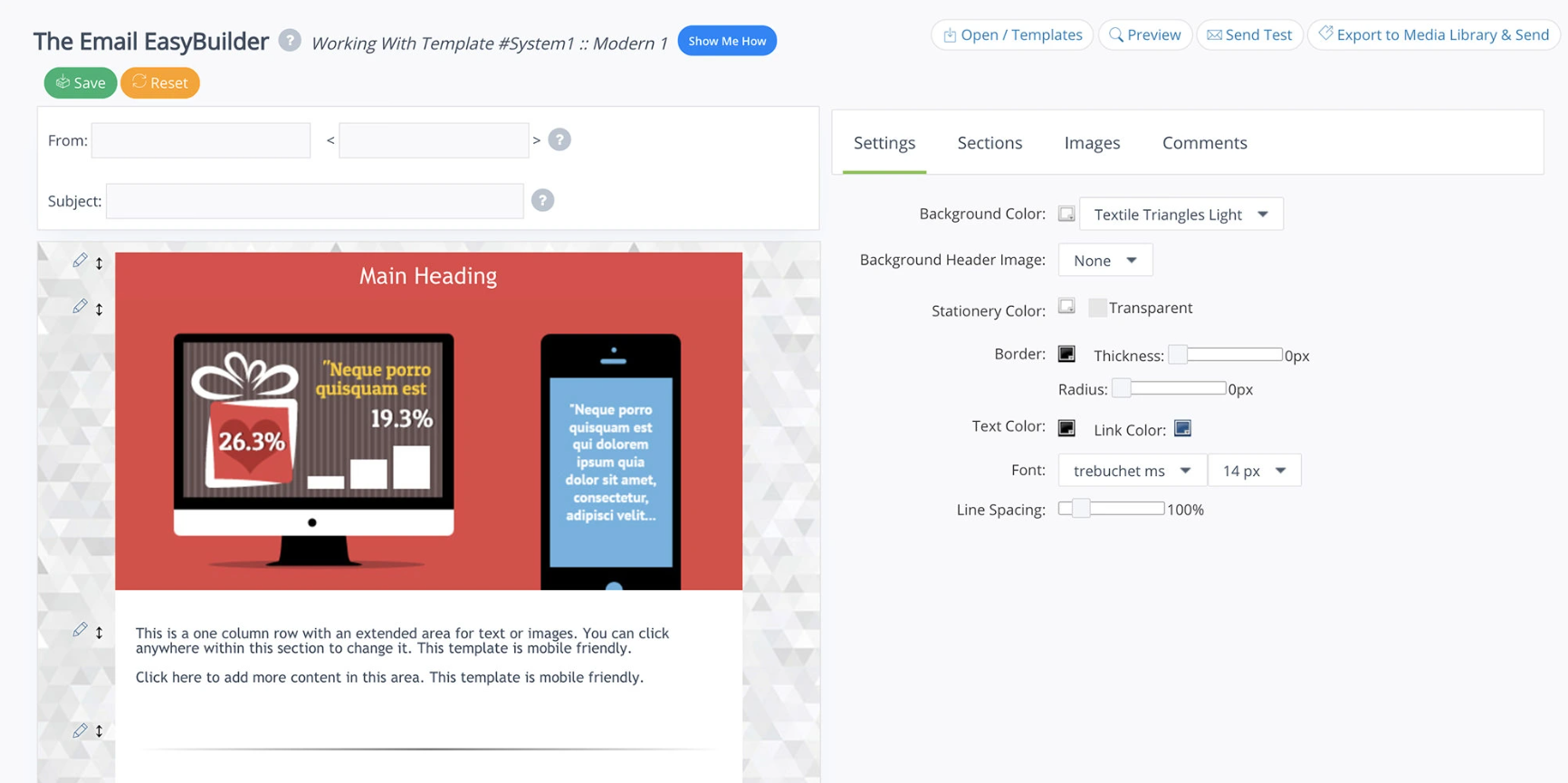
GreenRope's EasyBuilder is a drag-and-drop email designer that lets marketers create campaigns without HTML knowledge. Because the marketing suite shares a database with the CRM, behavioral data (website visits, email opens, form submissions) is available for segmentation right away. The platform also supports SMS campaigns, social media management, and survey distribution from the same interface. A/B testing covers subject lines and content. For SMBs running straightforward email programs, this covers the essentials.
Source: GreenRope
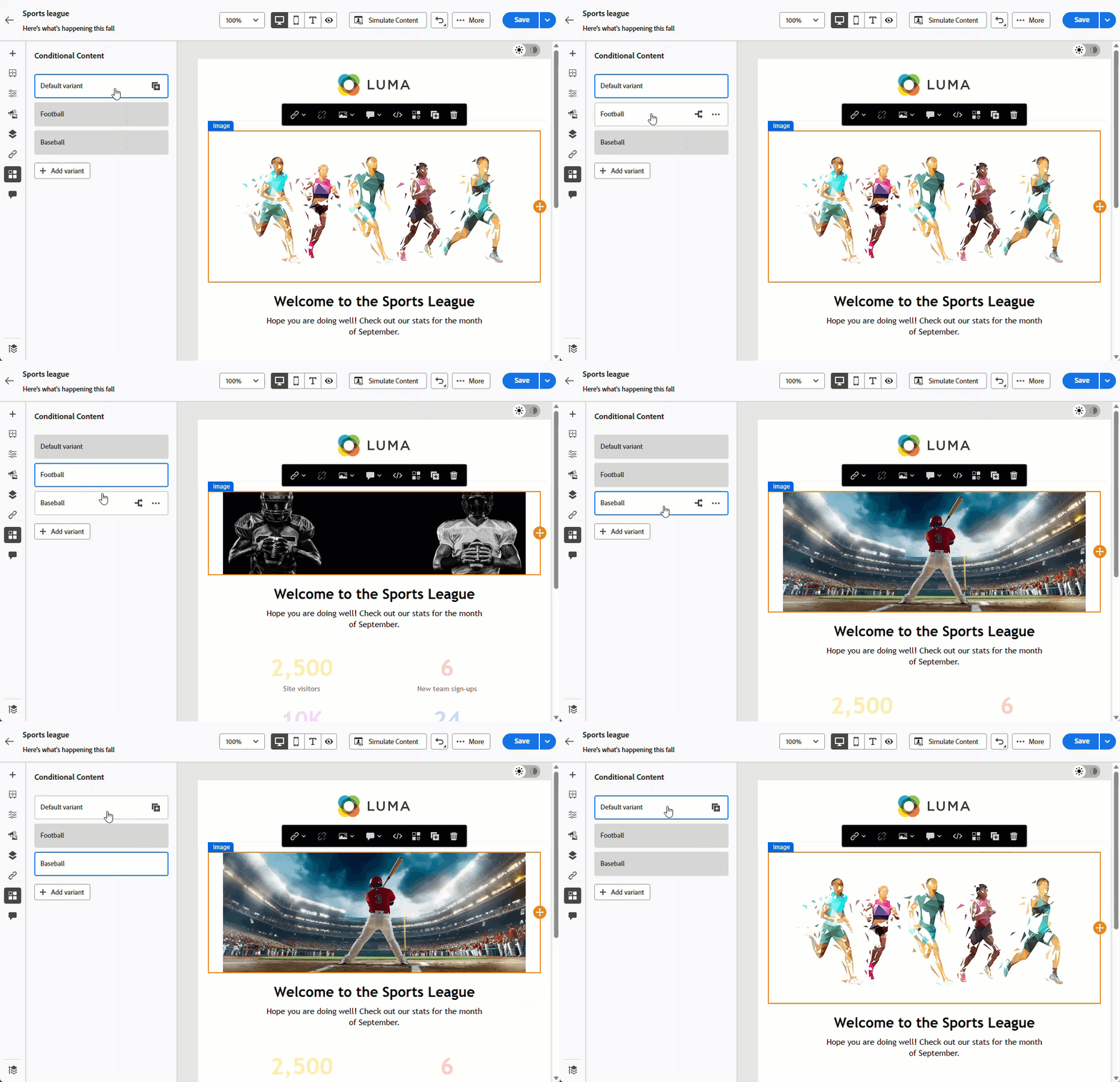
Marketo's email capabilities are stronger but have historically been harder to use. The new Email Designer (launched January 2025) adds drag-and-drop creation with AI-powered content generation, reusable fragments that propagate updates across all emails, brand themes with content locking to enforce design standards, and conditional content serving different variants to different segments within a single email. Enterprise features like image-to-HTML conversion and GenStudio integration set it apart from lighter tools.
Source: Adobe
ZoomInfo approaches email from the data side. Rather than competing with dedicated email builders, it ensures the contacts you email are accurate and the timing is informed by buying signals. GTM Studio can orchestrate email sequences as part of multi-channel plays, with AI agents handling message creation based on account context. For teams already using Marketo or another email platform, ZoomInfo enriches the contact database so emails reach real inboxes rather than bouncing off invalid addresses.

Integration ecosystems reflect different strategies
GreenRope's native integrations cover a handful of core tools: QuickBooks, Shopify, WordPress, Google Workspace, Microsoft 365, and payment processors (PayPal, Stripe, Authorize.net). Everything else routes through Zapier, which connects GreenRope to 9,000+ apps. This works for basic data passing but introduces latency and reliability concerns compared to native integrations. API access is included at all tiers, though documentation depth is limited.
Source: GreenRope
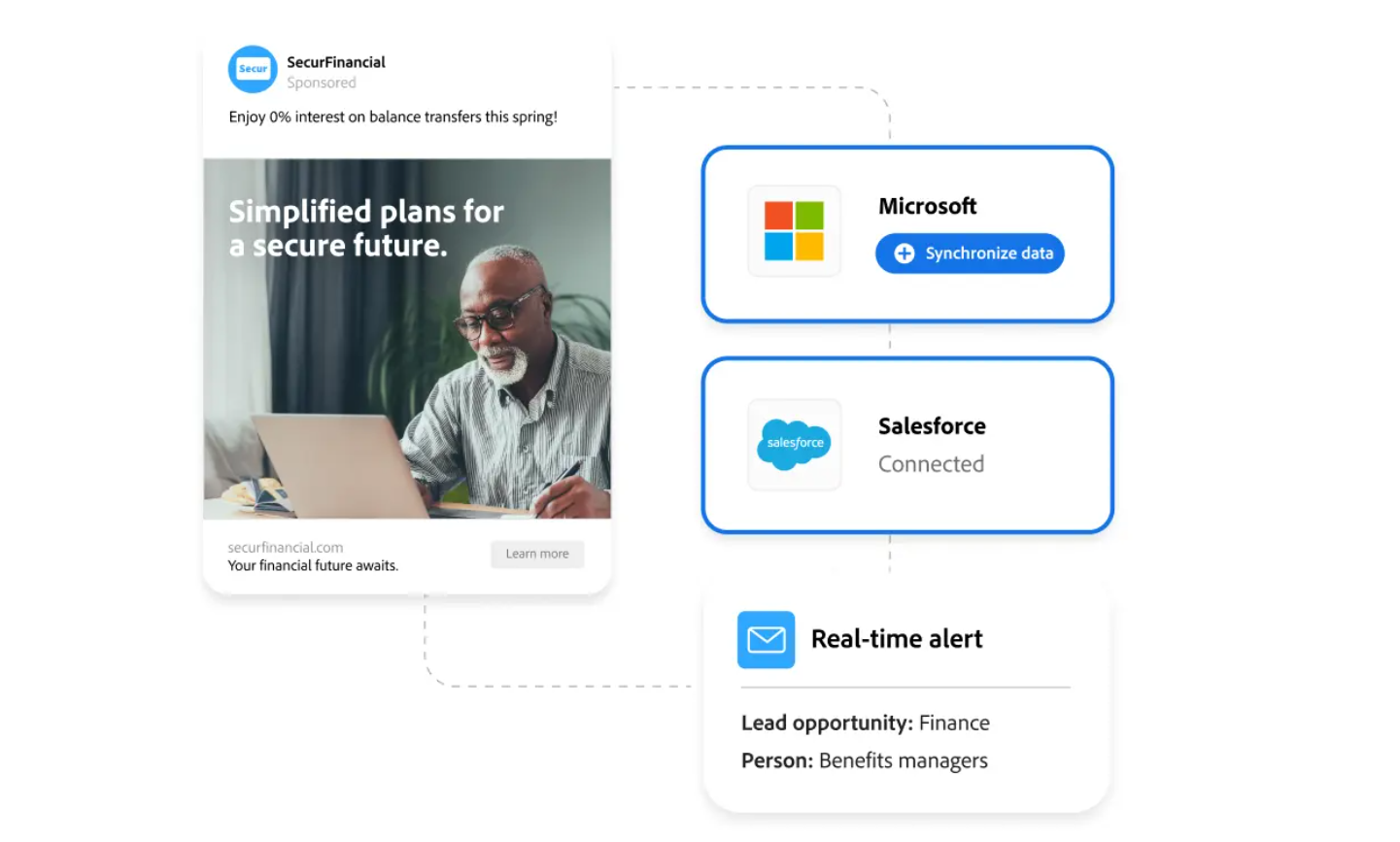
Marketo's LaunchPoint marketplace provides pre-built connectors for major data providers, advertising platforms, webinar tools, and CRM systems. Native bidirectional sync with Salesforce and Microsoft Dynamics is a core strength, with sync cycles running every five minutes. The REST API provides programmatic access to most platform capabilities, though the 50,000 calls/day default limit requires careful management at scale. Within Adobe Experience Cloud, Marketo connects to Adobe Real-Time CDP, Journey Optimizer B2B Edition, and GenStudio, though reviewers note that even first-party Adobe integrations require workarounds.
Source: Adobe
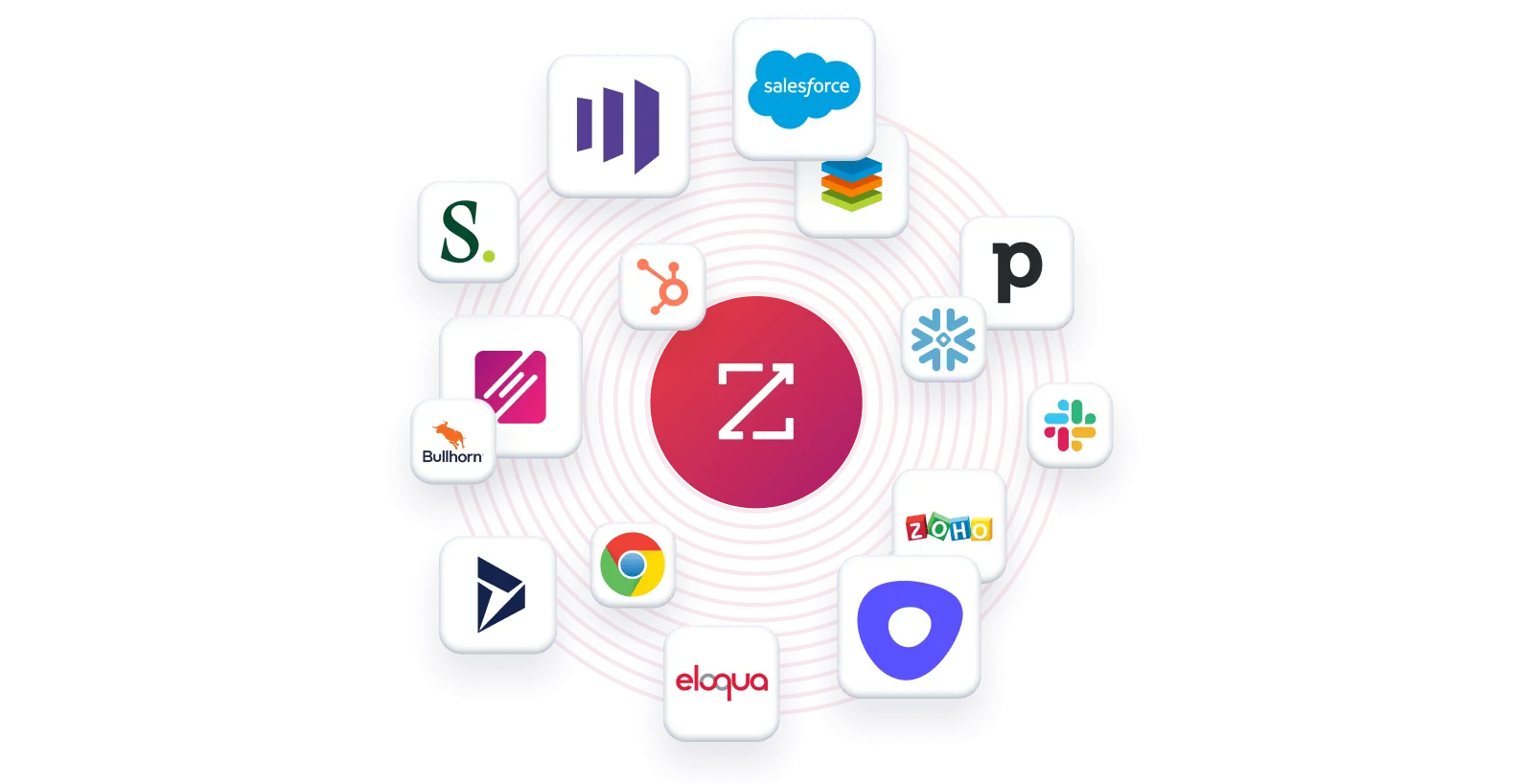
ZoomInfo's App Marketplace lists 120+ partner integrations spanning CRM, marketing automation, sales engagement, data warehouses, and more. Native integrations with Salesforce, HubSpot, and Microsoft Dynamics cover the major CRMs. Cloud Partners enable direct data ingestion into AWS, Google Cloud, Snowflake, and Databricks. The Enterprise API and MCP server make ZoomInfo's data accessible to any custom application or AI agent, including tools like Claude and ChatGPT. API access is included in all relevant plans.
Support and onboarding determine time-to-value
The onboarding experience with each platform reflects its complexity and target market.
GreenRope compensates for its steep learning curve with attentive support. Customer support is rated 4.6/5 on Capterra, the platform's highest-rated dimension. Every customer gets a dedicated training manager for one-on-one onboarding, plus 24/7 support via phone, chat, email, and tickets. GreenRope University offers a structured certification program. For a 20-person company, this level of personalized support at no extra cost is uncommon.
Marketo requires the most onboarding investment. Adobe's own implementation guidance warns that "technical setup and planning can take longer than you think." Initial CRM sync can take hours or days. The platform has proprietary constructs (Smart Lists, Smart Campaigns, Programs, Tokens, Engagement Streams) with no direct equivalent in other tools, and a formal glossary exists to help users navigate the terminology. Support quality scales with spend: base-tier response times are one hour for critical issues, but Premier Elite customers get 15-minute response times. Professional services for implementation, migration, and ongoing optimization are available separately.
ZoomInfo restructured its onboarding from 30 to 90 days, covering planning, technical implementation, education, and adoption. The redesign produced a 25% improvement in customer satisfaction scores and won Rocketlane's Golden Comet award for Best Customer Onboarding Team of 2024. ZoomInfo University offers role-specific learning paths for sales, marketing, and administrator personas. GTM Workspace "deploys in weeks, not months", notable given the platform's breadth.

Security and compliance at different scales
GreenRope complies with Data Privacy Frameworks (EU-US and Swiss-US), GDPR, and CCPA. It was among the first companies to certify Privacy Shield compliance in 2016. For SMBs in regulated industries, this covers the baseline. Enterprise-grade certifications like SOC 2 or ISO 27001, however, are not publicly documented.
Marketo inherits Adobe's enterprise security posture: SOC 2 Type II, ISO 27001:2022, GDPR compliance, and CCPA compliance. Data in transit is protected with TLS v1.2, and enterprise SSO via SAML v2.0 is supported. The Adobe Trust Center provides detailed compliance documentation, though some reports require an NDA.
ZoomInfo carries the broadest certification stack of the three, renewed annually: ISO 27001, ISO 27701, SOC 2 Type II, TRUSTe GDPR and CCPA validations. As a B2B data platform handling hundreds of millions of contact records, ZoomInfo is a registered data broker in California and Vermont, with a dedicated Trust Center providing transparency into data practices. For enterprises in regulated industries evaluating data providers, this compliance infrastructure is a baseline requirement.
GreenRope vs. Marketo vs. ZoomInfo: Which should you choose?
The right choice depends on what your business needs and where it is today.
Choose GreenRope if:
You're a small or mid-sized business consolidating CRM, email marketing, project management, and event tools into one subscription
Your budget is under $500/month and you want unlimited users with no per-seat costs
You value feature breadth over depth in any single category
Your sales cycle is straightforward and doesn't require multi-dimensional lead scoring or ABM
You can invest several weeks learning a feature-dense platform
Choose Marketo if:
You run complex, multi-stakeholder B2B sales cycles that need advanced nurture programs
You have (or will hire) a dedicated marketing operations person to manage the platform
You need enterprise-grade campaign orchestration with multi-touch revenue attribution
Your CRM is Salesforce or Microsoft Dynamics and tight bidirectional sync is non-negotiable
You're already invested in the Adobe Experience Cloud ecosystem
Choose ZoomInfo if:
Your marketing and sales results depend on the quality and completeness of your B2B contact data
You need to identify and prioritize in-market accounts before they engage with your content
You want AI-powered GTM execution (prospecting, outreach, campaign orchestration) built on verified data
You need a platform that works inside your existing tools (Marketo, Salesforce, HubSpot) or stands alone
You're ready to move from campaign execution to data-driven go-to-market strategy
Also compare against: HubSpot for the growing-team platform, Salesforce for enterprise scale, and Act-On as a mid-market marketing automation peer.
Get started with ZoomInfo Lite for free, or request a demo of the full platform.
The deepest automation engine and the most affordable all-in-one CRM both hit the same ceiling: they can only work with the data you give them. GreenRope and Marketo each excel at their part of the marketing workflow, but building campaigns on incomplete or outdated data is like running a race in the wrong direction efficiently. ZoomInfo provides the intelligence layer that ensures your marketing reaches the right people, at the right time, with the right message, regardless of which platform sends it.
GreenRope vs. Marketo vs. ZoomInfo FAQ
What is the core difference between GreenRope, Marketo, and ZoomInfo?
GreenRope is an all-in-one CRM and business operating system for small and mid-sized businesses, combining CRM, email marketing, project management, event management, and e-commerce in a single subscription starting at $99/month. Marketo is an enterprise B2B marketing automation platform for complex, multi-touch campaigns with lead scoring, nurture programs, and CRM integration. ZoomInfo is a go-to-market intelligence platform that provides B2B data, buyer intent signals, and account intelligence that feed into marketing and sales tools.
Which platform is best for small businesses on a tight budget?
GreenRope is the most affordable option, with all features included at every pricing tier and unlimited users. At $99/month for 500 contacts (scaling to $799/month for 50,000 contacts), it replaces several separate subscriptions. ZoomInfo offers a permanent free tier (ZoomInfo Lite) with access to its B2B database and 10 monthly export credits. Marketo does not offer a free tier or trial, and enterprise pricing puts it out of reach for most small businesses.
Can ZoomInfo replace GreenRope or Marketo?
ZoomInfo is not a traditional CRM or marketing automation platform. It provides the data intelligence layer (verified contacts, company data, buyer intent signals, and account insights) that makes CRM and marketing tools more effective. ZoomInfo's GTM Studio offers marketing orchestration capabilities, but most teams use ZoomInfo alongside their existing marketing platform. ZoomInfo integrates with Marketo via LaunchPoint and can feed data into GreenRope via Zapier or API.
Which platform has the best lead scoring capabilities?
Marketo has the deepest lead scoring, with multi-dimensional scoring models, decay logic, engagement scoring on content, and automatic exhaustion tracking in nurture programs. GreenRope offers behavioral and demographic lead scoring with predictive analytics. ZoomInfo adds a dimension neither platform provides: external buying signals and intent data that identify which accounts are in-market before they engage with your content, plus Account Fit Score using 300+ company attributes.
How do the platforms handle account-based marketing?
GreenRope does not offer ABM. Marketo supports native ABM with lead-to-account mapping, Predictive Engagement Score, and account-level attribution through Marketo Measure (Ultimate tier). ZoomInfo is a two-time Gartner Magic Quadrant Leader for ABM Platforms, offering intent-driven account identification, a native display advertising DSP, multi-channel orchestration, and audience targeting through GTM Studio.
Which platform requires the least technical expertise to use?
GreenRope has the lowest barrier to entry, with a dedicated training manager included for every customer and 24/7 support, though the breadth of features creates a real learning curve. Marketo requires the most technical expertise, effectively demanding a dedicated administrator. ZoomInfo falls between the two, with role-specific onboarding paths and an award-winning onboarding program, though the full platform spans data, marketing, and sales capabilities.
Do any of these platforms provide their own B2B contact database?
Only ZoomInfo provides its own contact database: 500 million contacts, 100 million companies, 135 million-plus verified phone numbers, and 200 million-plus verified business email addresses. Both GreenRope and Marketo rely on contacts you import or acquire through third-party data providers and integrations.
What integrations does each platform support?
GreenRope has limited native integrations (QuickBooks, Shopify, WordPress, Google Workspace, Microsoft 365) and relies on Zapier for 9,000-plus app connections. Marketo offers pre-built connectors through LaunchPoint for CRM, advertising, webinar, and data platforms, with native bidirectional sync for Salesforce and Microsoft Dynamics. ZoomInfo provides 120-plus partner integrations, native CRM connectors, cloud data delivery to AWS and Snowflake, and API and MCP access that makes its data available in any front-end or AI agent.
