
Comparing HoneyBook vs. Pipedrive is like comparing a project management tool to a sales dashboard. They share the CRM label, but they serve different businesses solving different problems.
The real questions you should ask:
Is your business built around booking clients for services (photography, events, design), or closing deals through an active sales process?
Do you need contracts, invoicing, and payments inside your CRM, or pipeline tracking, email automation, and sales forecasting?
Are you a solo operator managing client projects, or a sales team working deals across stages?
Does your growth depend on referrals and repeat clients, or on identifying and qualifying new prospects at scale?
Do you have visibility into which companies are researching what you sell, or are you waiting for leads to find you?
In short, here's what we recommend:
HoneyBook is the client management platform built for independent service professionals: photographers, event planners, interior designers, coaches, and similar practitioners. Its defining feature is Smart Files, interactive documents that combine a service menu, contract, invoice, payment collection, and scheduling into a single link a client can complete in one sitting. With 28M+ client relationships managed and $23B+ in projects booked through the platform, HoneyBook has earned loyalty in the creative and service economy. It's designed for solo operators and small teams, available only in the US, Canada, UK, and Australia, and offers no public API for custom integrations.
Pipedrive is the visual, pipeline-first CRM built for small and medium-sized sales teams. Pipedrive pioneered the kanban-style pipeline view in CRM software, and the product still centers on that philosophy: every deal lives on a visual board, and the interface asks what your next action should be. With 100,000+ companies in 179 countries and 500+ marketplace integrations, Pipedrive gives sales teams a workspace for tracking deals, automating follow-ups, and forecasting revenue. But it lacks native contracts, invoicing, or payment processing, and its marketing automation remains an add-on.
Both platforms help you manage existing relationships. HoneyBook organizes client projects. Pipedrive tracks sales deals. But neither tells you which companies to target, when they're ready to buy, or who the decision-makers are. For B2B companies where the quality of your targeting determines the quality of your pipeline, the CRM is only half the equation.
ZoomInfo is an AI go-to-market platform that gives your team the intelligence to find the right prospects before a single deal enters the pipeline. Built on a B2B dataset of 500M contacts, 100M companies, 135M+ verified phone numbers, and 200M+ verified business emails, ZoomInfo's GTM Context Graph combines this data with your CRM records, conversation transcripts, and behavioral signals to reveal what's happening in your accounts, and why. Sellers work from GTM Workspace, where AI agents handle account research, draft outreach, and surface the next best action. Marketers and RevOps build and launch plays in GTM Studio. The same intelligence flows into any tool via APIs and MCP.
If your sales team needs intelligence that turns prospecting from guesswork into precision, see ZoomInfo in action with a free trial.
HoneyBook vs. Pipedrive vs. ZoomInfo at a glance
HoneyBook | Pipedrive |
| |
|---|---|---|---|
Primary function | Client management for service businesses | Sales pipeline CRM | AI-powered go-to-market intelligence |
Pipeline view | Project-based pipeline | Kanban deal pipeline | AI-prioritized account feed |
Contracts & invoicing | Native (Smart Files) | Smart Docs add-on | Not applicable |
Payment processing | Built-in (CC, ACH) | Not native | Not applicable |
Prospecting data | None | LeadBooster add-on (400M+ profiles) | 500M contacts, 135M+ verified phones, 200M+ verified emails |
Buyer intent signals | None | Basic deal scoring | Intent data from 210M IP-to-Org pairings |
AI capabilities | Lead scoring, email drafts, meeting notes | AI Sales Assistant, AI email writer | GTM Context Graph, AI agents, conversation intelligence |
API access | No public API (Zapier only) | Open REST API on all plans | Enterprise API + MCP for AI agents |
Global availability | US, Canada, UK, Australia | 179 countries, 22 languages | Global |
Starting price | $29/month (flat) | $14/seat/month | Custom-quoted (free Lite tier available) |
Best for | Solo service professionals and small teams | SMB sales teams | B2B revenue teams at scale |
Three platforms built for three different jobs
HoneyBook, Pipedrive, and ZoomInfo each answer a different question.
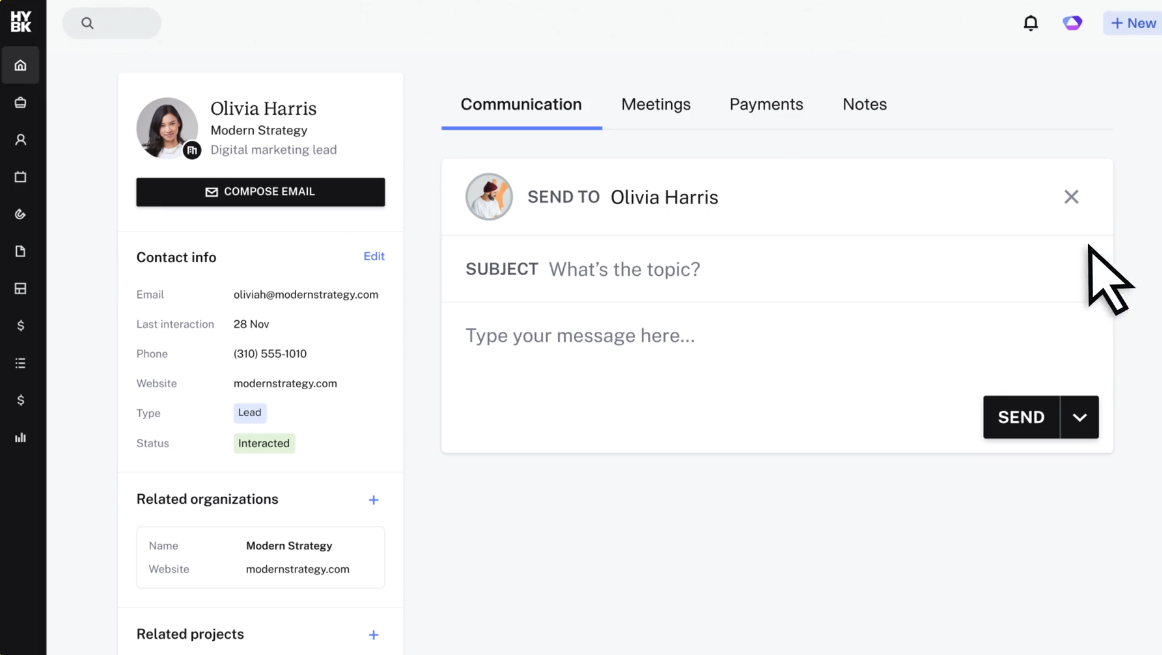
HoneyBook answers: How do I manage every client project without drowning in admin? The platform organizes work around "projects," where each project bundles a client's communication history, contracts, invoices, payments, notes, and files into a single workspace.
Source: HoneyBook
For a wedding photographer juggling 30 active bookings, this structure replaces the mess of Gmail threads, PDF contracts, Venmo requests, and spreadsheet trackers.
HoneyBook targets the independent service professional across six named verticals: event services, design and creative, personal services, marketing services, professional services, and home and real estate.
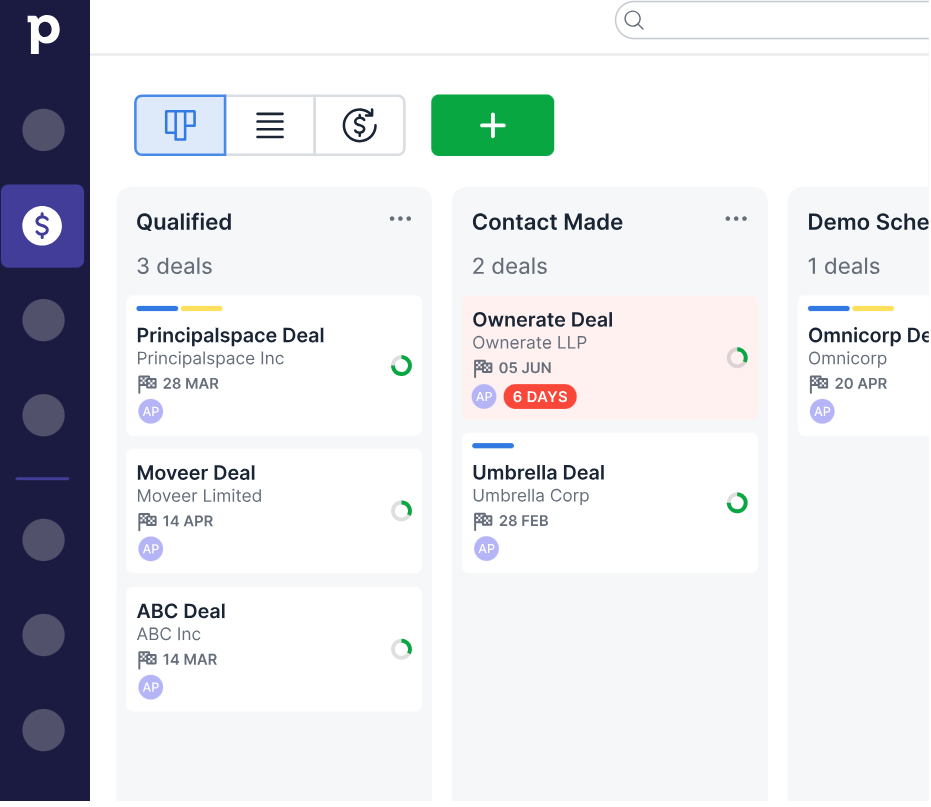
Pipedrive answers: How do I keep every deal moving toward close? The product assumes you have an active sales process with deals progressing through defined stages. It shows you deals that are stalling (color-coded "rotting" alerts), activities you need to complete, and forecasts of expected revenue.
Source: Pipedrive
For a SaaS sales team running 200 active opportunities, this visibility is the difference between losing deals in the noise and closing them on time. Pipedrive serves SMBs across industries including real estate, SaaS, insurance, recruiting, and consulting.
ZoomInfo answers: Who should we be targeting, and when are they ready to buy? Neither HoneyBook nor Pipedrive addresses this.
HoneyBook assumes clients find you through referrals and inbound inquiries. Pipedrive assumes you already have leads to work.
ZoomInfo provides the intelligence upstream of both: verified contact data, company attributes, org charts, technology stacks, and real-time buyer intent signals from 210 million IP-to-Organization pairings and 6 trillion+ new keyword-to-device pairings sourced monthly.
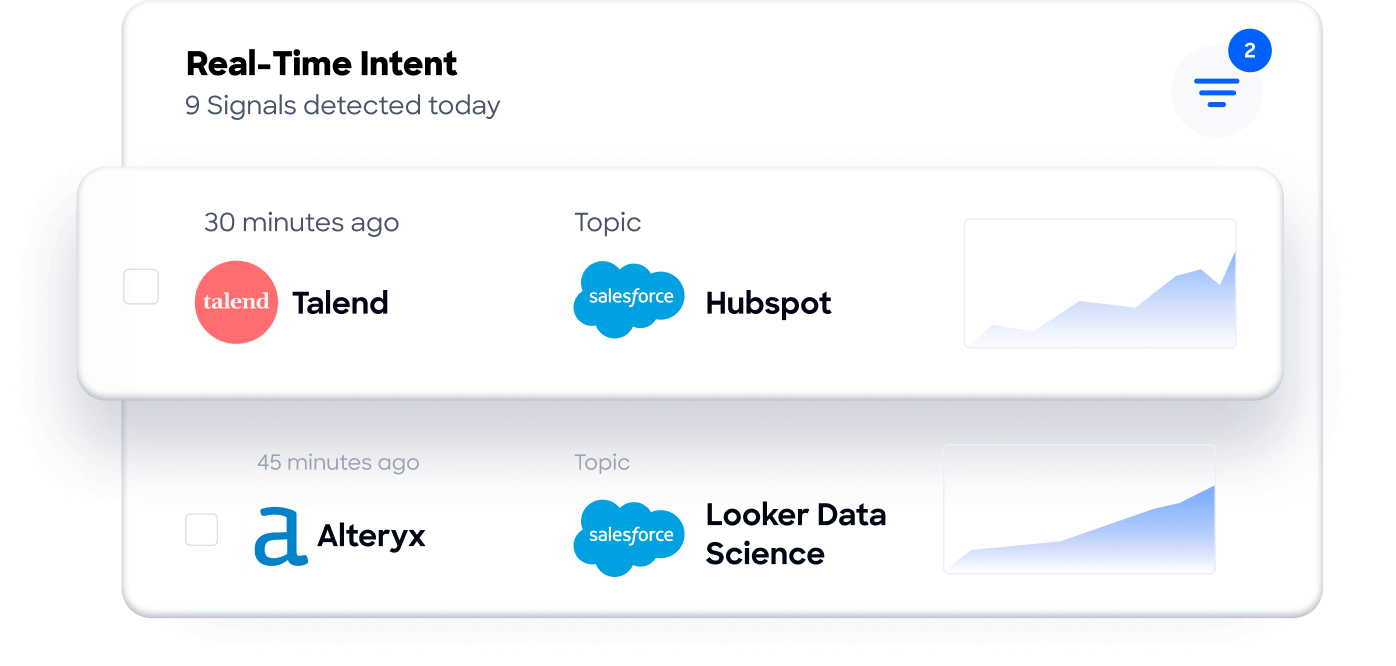
For B2B teams where outbound prospecting drives pipeline, this intelligence determines whether every downstream effort hits the right target.
HoneyBook turns client intake into a single step
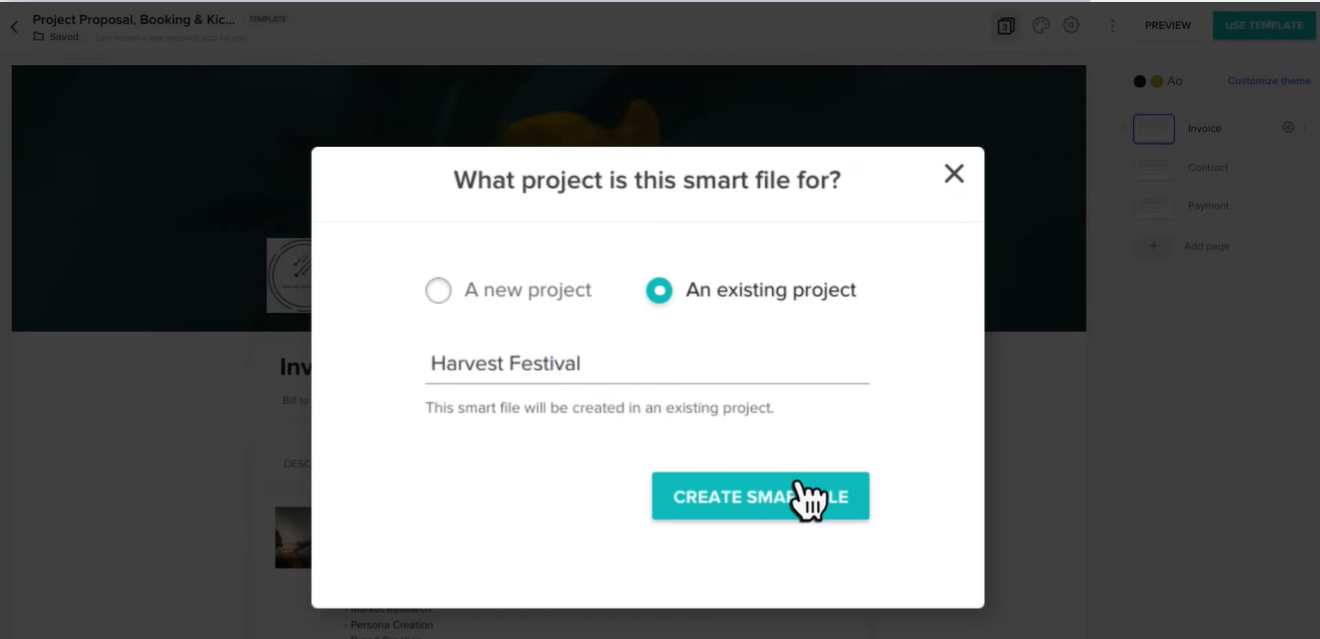
HoneyBook's defining advantage is Smart Files: interactive documents built on a block editor that combine proposals, contracts, invoices, payment collection, questionnaires, and scheduling into one shareable link.
Source: HoneyBook
A client receives a single file and moves through each section, selecting services, signing the contract, paying a deposit, and booking a kickoff call without leaving the page. Dynamic pricing updates the invoice total in real time as the client makes selections.
This is different from how most CRMs handle client intake. In Pipedrive, you'd send a Smart Docs proposal, then follow up with a separate invoice, then manage payment through a third-party integration, then share a scheduling link. Each handoff is a friction point.
HoneyBook reports that 90% of invoices on its platform are paid on time or early, a metric it attributes to removing those handoffs.
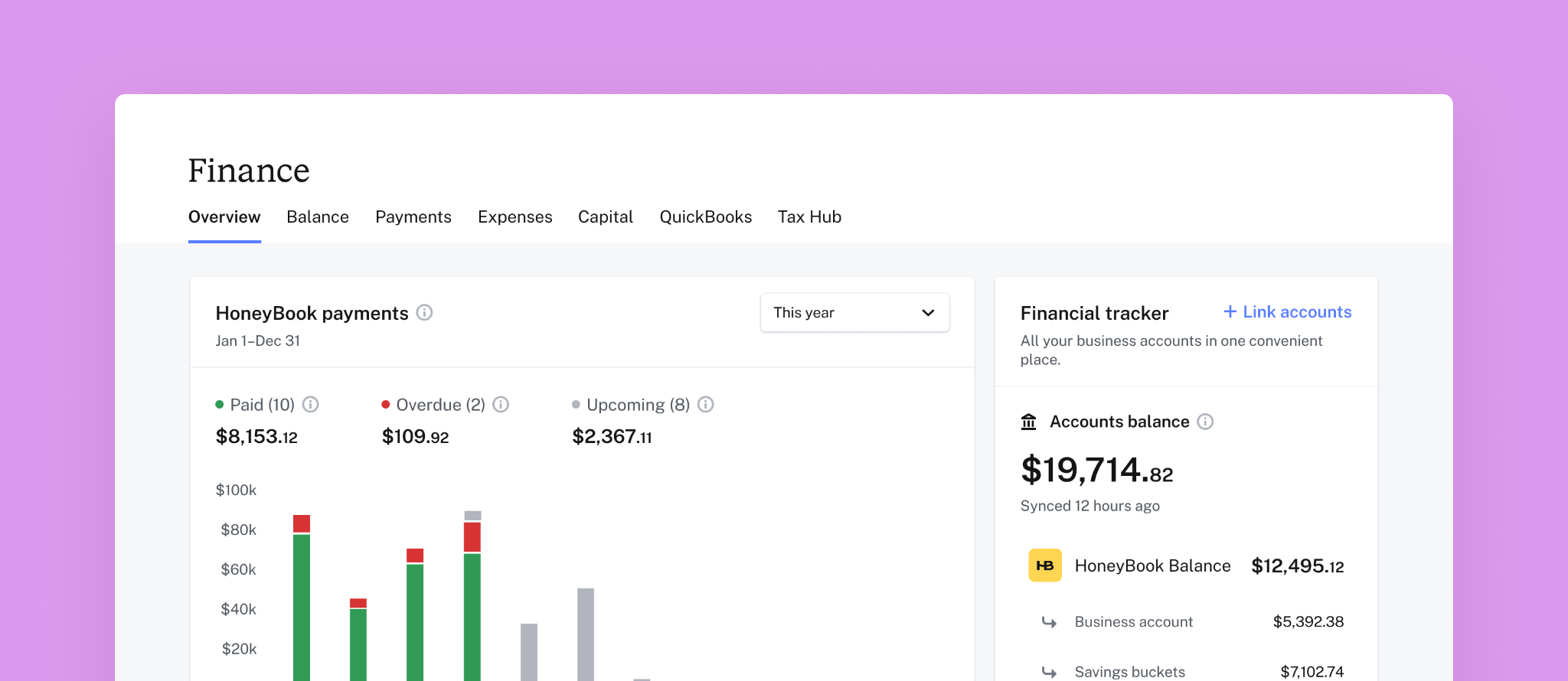
Payment processing is native: credit card at 2.9% + $0.25, ACH at 1.5%, with instant deposits for HoneyBook Balance members at no extra charge. HoneyBook Finance extends this with a business checking account, Visa debit card, automated tax savings buckets, cash flow projections tied to booked projects, and revenue-based business loans with repayment that scales to actual earnings.
Source: HoneyBook
For a solo operator juggling separate tools for contracts, invoicing, scheduling, and banking, consolidating into one subscription matters.
The limitation is scope. HoneyBook is designed for businesses where the work happens after the booking. There is no outbound prospecting, no lead database, no pipeline stages for complex multi-stakeholder sales cycles. If your sales process involves qualifying enterprise prospects, navigating buying committees, or managing 90-day deal cycles, HoneyBook's project-based model won't fit. If you're weighing it against a full marketing and sales platform rather than a pipeline CRM, see our HoneyBook vs. HubSpot comparison.
Pipedrive keeps every deal visible and moving
Pipedrive was born from a specific frustration: CRMs built for managers to monitor salespeople, not for salespeople to close deals. The five co-founders were themselves salespeople who wanted a tool that matched how they actually worked.
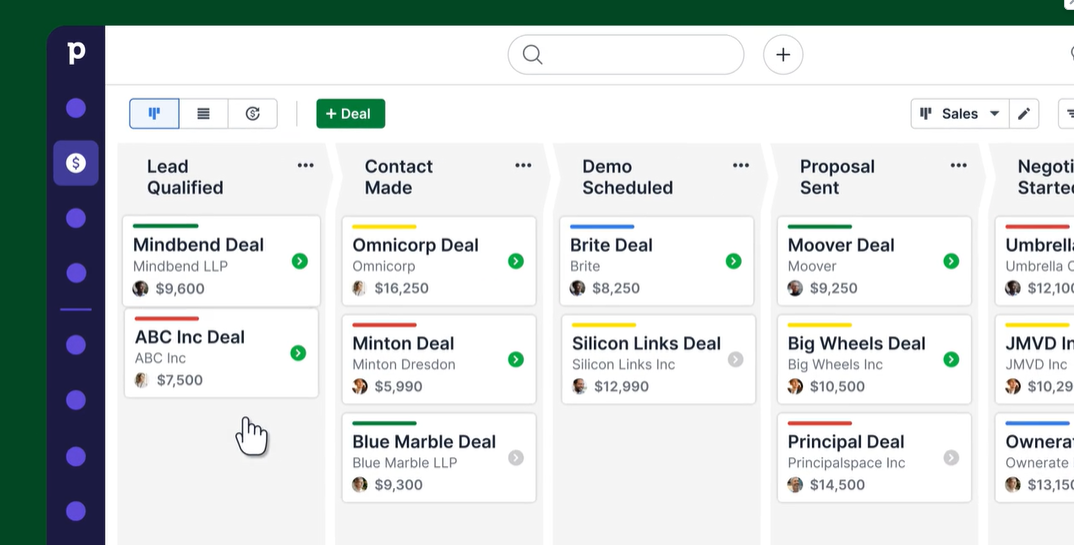
The result is a pipeline-centric CRM where the kanban board is the primary workspace. Deals are cards. Stages are columns. Dragging a card from "Proposal Sent" to "Negotiation" takes one motion. Colored cues flag deals going cold before you forget about them.
Source: Pipedrive
The activity calendar ensures every deal has a scheduled next step. Self-reported data from Pipedrive customers suggests an average 93% increase in pipeline deals, 46% faster closing time, and 21% higher average deal value after adoption.
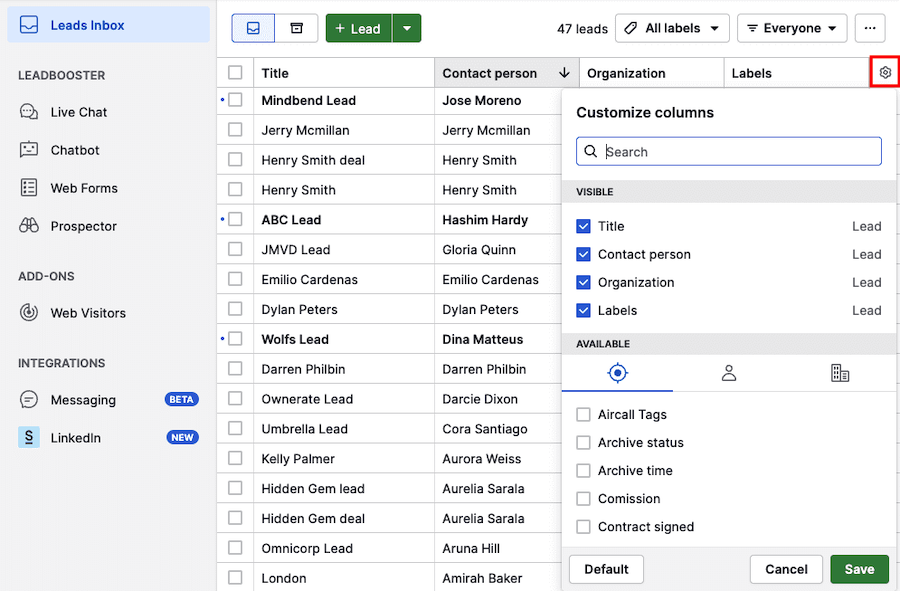
Pipedrive extends into lead generation with the Leads Inbox, a pre-pipeline holding area where unqualified contacts sit until they're ready to become deals.
Source: Pipedrive
The optional LeadBooster add-on bundles a chatbot, live chat, web forms, and a Prospector database of over 400 million profiles and 10 million companies. The newer Pulse toolkit adds data enrichment, custom lead scoring, and automated multi-step sequences that pause when prospects engage.
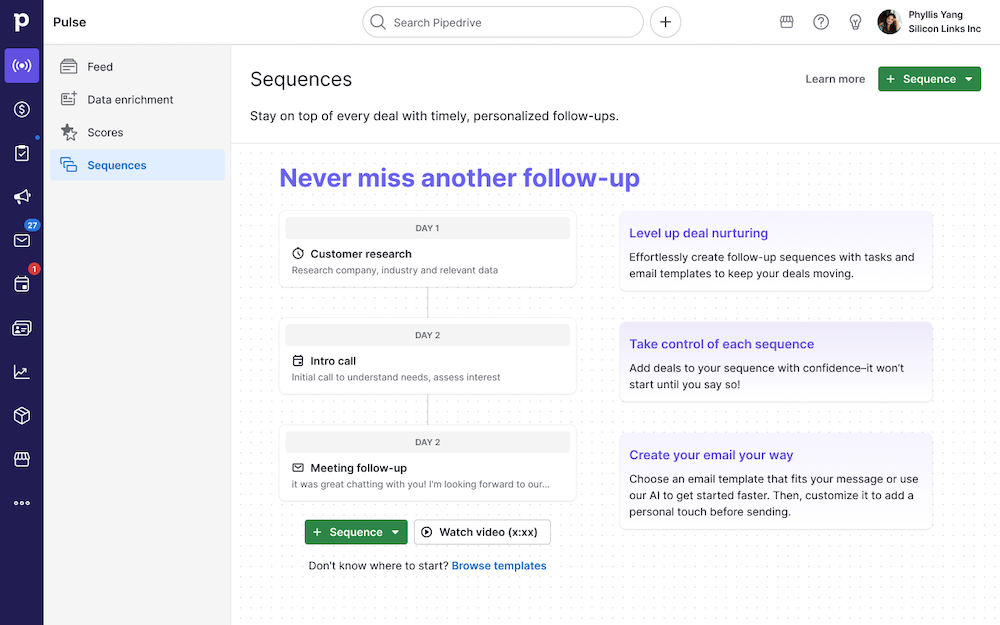
Source: Pipedrive
Where Pipedrive falls short is beyond the sale. Once a deal closes, Pipedrive doesn't transition naturally into project delivery, invoicing, or ongoing client management. A Projects feature exists on Premium and Ultimate plans, but it's far simpler than dedicated project tools.
And while Smart Docs handles basic proposals and eSignatures, there's no built-in invoicing or payment processing. You'll need integrations with QuickBooks or Stripe for the financial side.
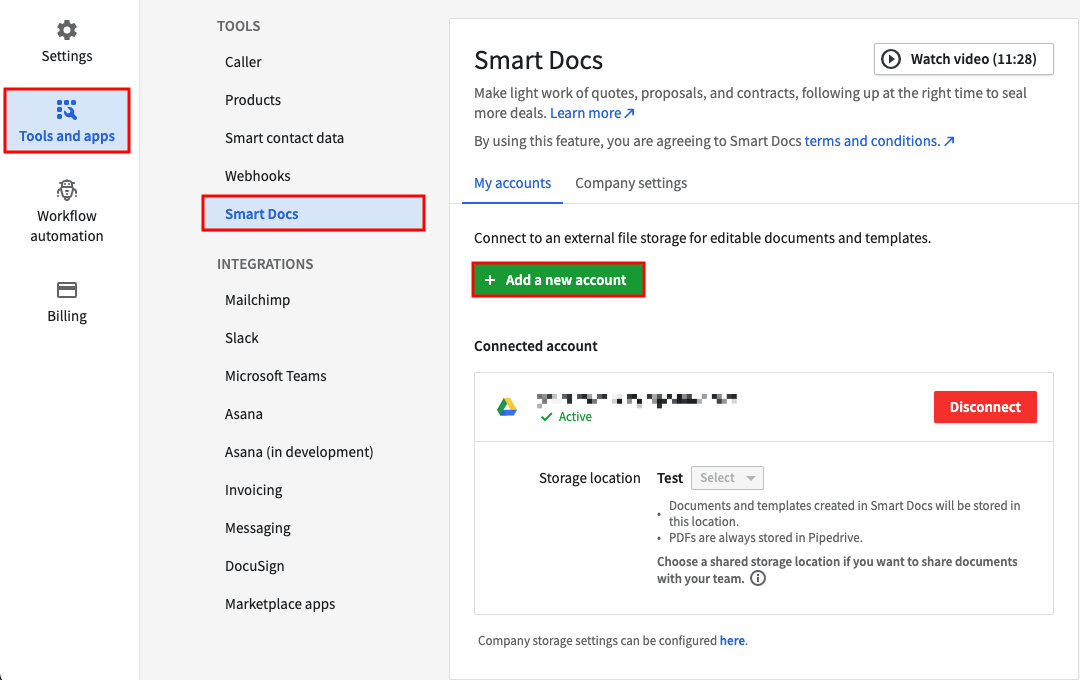
Source: Pipedrive
Finding the right prospects is the hardest part of selling
Both HoneyBook and Pipedrive help you manage business you already have. HoneyBook organizes client projects. Pipedrive tracks deal progression. Neither answers the question that determines whether your pipeline stays full: who should you be talking to?
Pipedrive's LeadBooster and Pulse take a step in this direction, offering a prospecting database and data enrichment. But the depth of that data differs from what a dedicated intelligence platform provides.
ZoomInfo operates the largest B2B data platform available: 500M contacts, 100M companies, 135M+ verified phone numbers, 120M direct-dial phone numbers, and 200M+ verified business email addresses. A verification process backed by 300+ human researchers maintains this data, with up to 95% accuracy on first-party data.
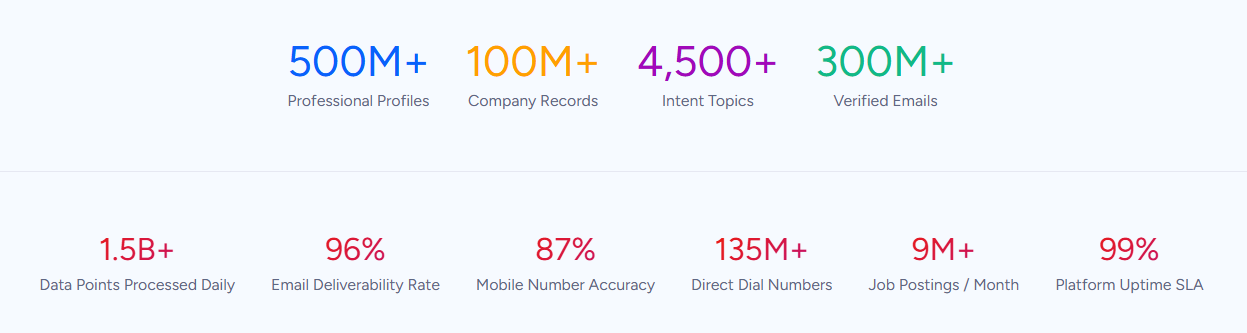
In a Fortune 500 competitive RFP analyzing 25 million contacts across vendors, an independent consultant concluded that "no other competitor came even close."
But raw data alone doesn't close deals. ZoomInfo's GTM Context Graph processes 1.5B+ data points daily, combining ZoomInfo's B2B intelligence with your CRM records, conversation transcripts, and behavioral signals.
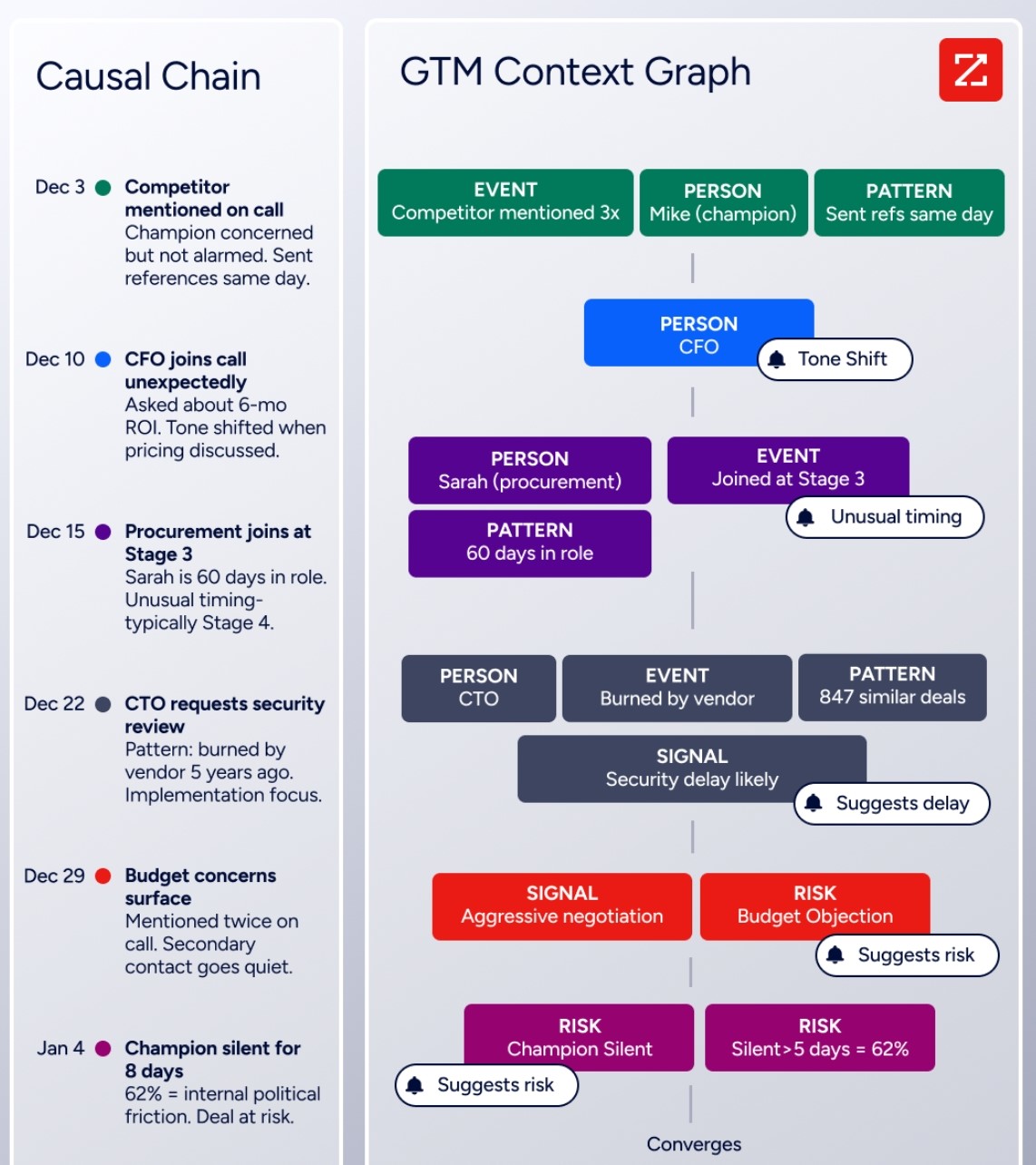
The result is an intelligence layer that captures not just what happened in a deal, but why. A CRM records that a deal moved to Stage 3. The GTM Context Graph understands that executive sponsorship entered the conversation, the prospect's company just raised a funding round, and the signal pattern matches your historical wins.
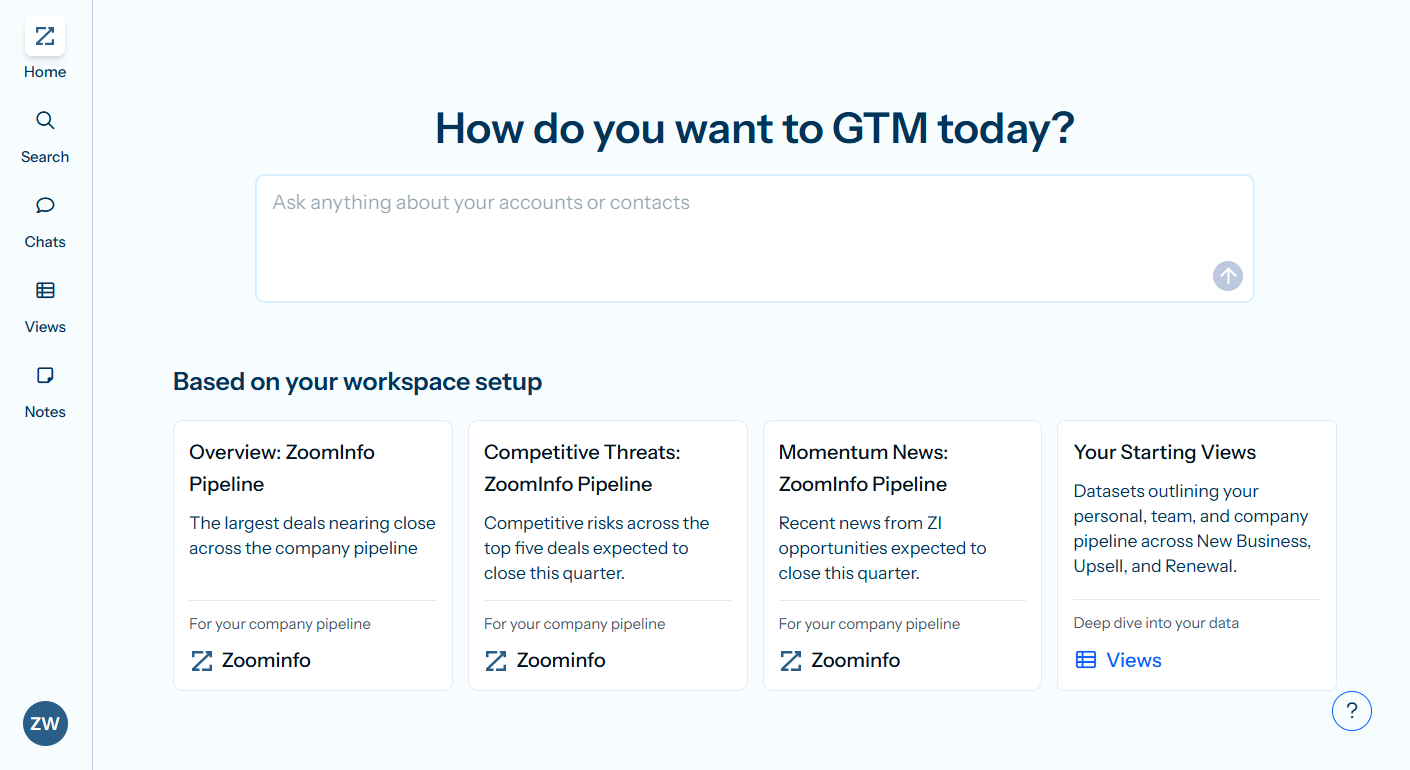
For sales teams, this intelligence takes three forms. GTM Workspace gives sellers a prioritized account feed with AI-drafted outreach and one-click account briefs that pull CRM history, company news, and stakeholder context into a 10-second summary.
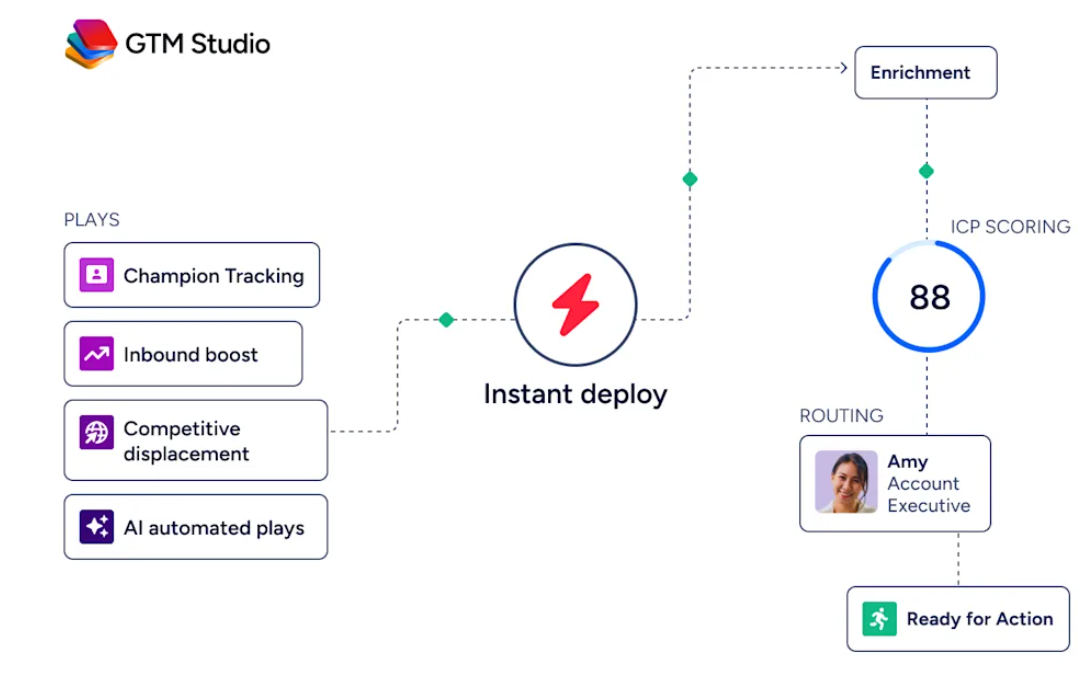
GTM Studio lets marketers and RevOps describe audiences in natural language, build multi-channel plays, and launch expansion plays in 30 minutes that used to take three weeks.
APIs and MCP deliver the same intelligence into any tool, including AI assistants like Claude and ChatGPT.
Seismic's sales team boosted productivity by 54%, saved 11.5 hours per week, and attributed 39% of active pipeline to opportunities identified or influenced by ZoomInfo signals. (Seismic)
Automation and AI take different paths
All three platforms invest in AI, but each applies it to a different problem.
HoneyBook AI trains on data from over 45 industries and billions of client interactions drawn from the service businesses HoneyBook serves. Its capabilities are practical and specific to workflows: priority lead notifications that score incoming inquiries against your historical booking data, an AI meeting notetaker for Zoom and Google Meet that stores transcripts and action items in the project workspace, and project recaps that synthesize project details five days before an event date.

Source: HoneyBook
HoneyBook's Automations 2.0 supports conditional branching, event-based waits, and triggers across the client lifecycle, and an AI automation builder generates workflows from plain-language descriptions.
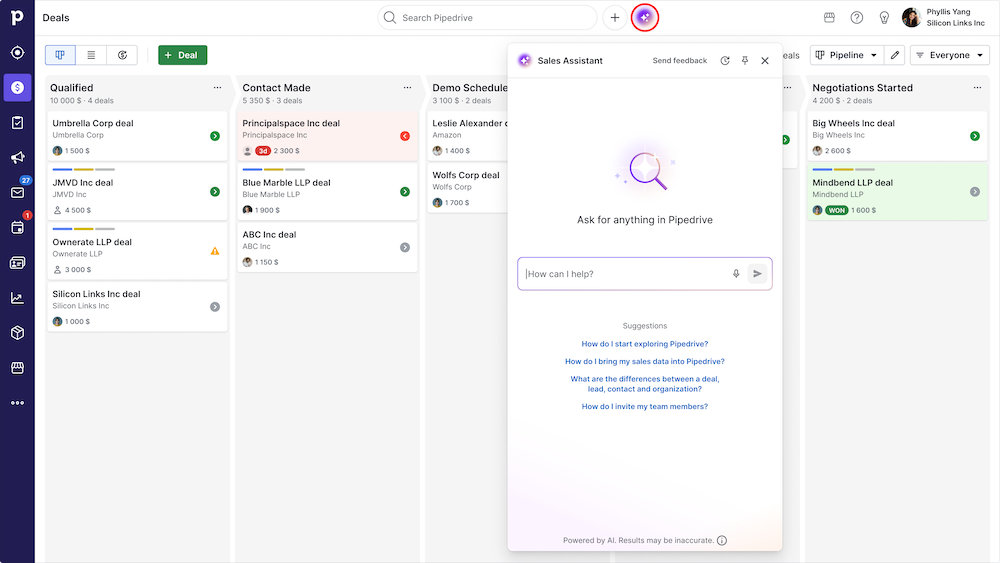
Pipedrive AI centers on the AI Sales Assistant, which surfaces high-priority deals, predicts next actions, and identifies at-risk opportunities.
Source: Pipedrive
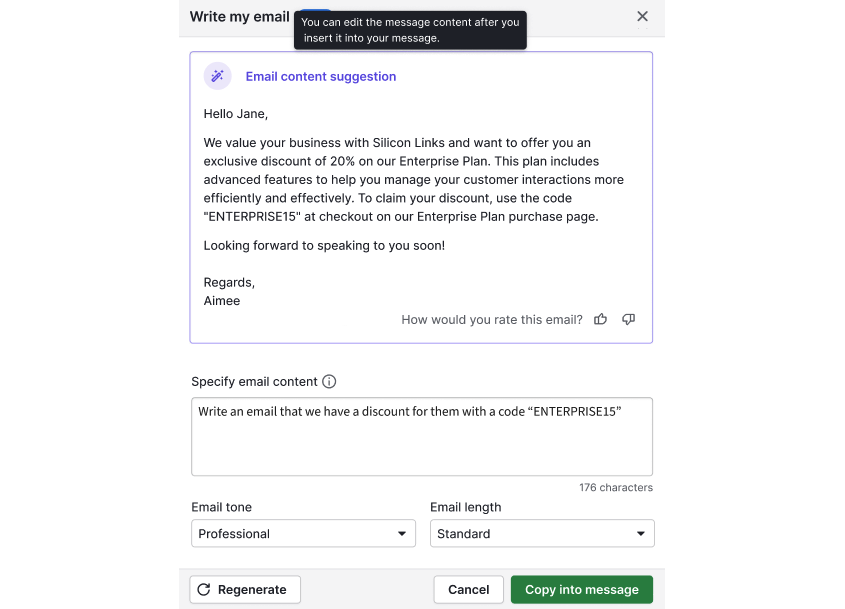
The AI email writer generates drafts from prompts with configurable tone and length, and AI email summarization condenses long threads into key themes and a readiness-to-buy score.
Source: Pipedrive
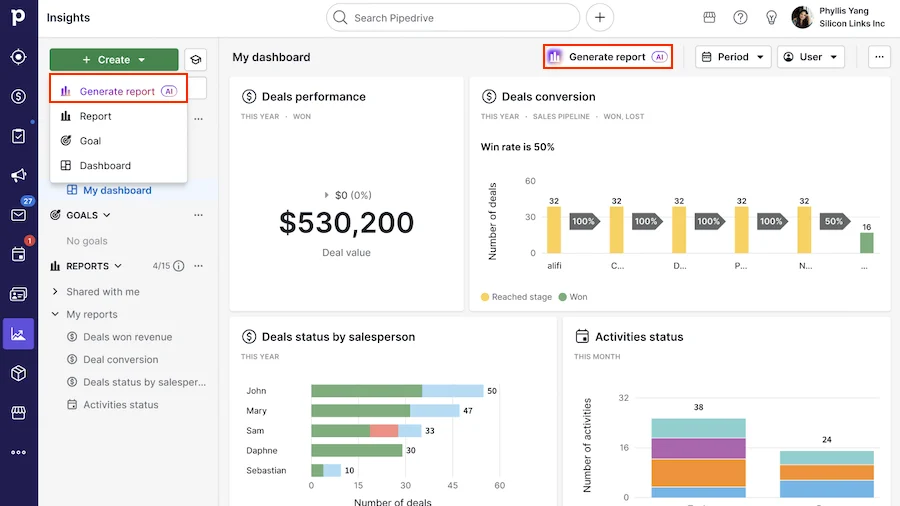
A natural-language AI report generator creates pipeline analyses without manual filter setup.
Source: Pipedrive
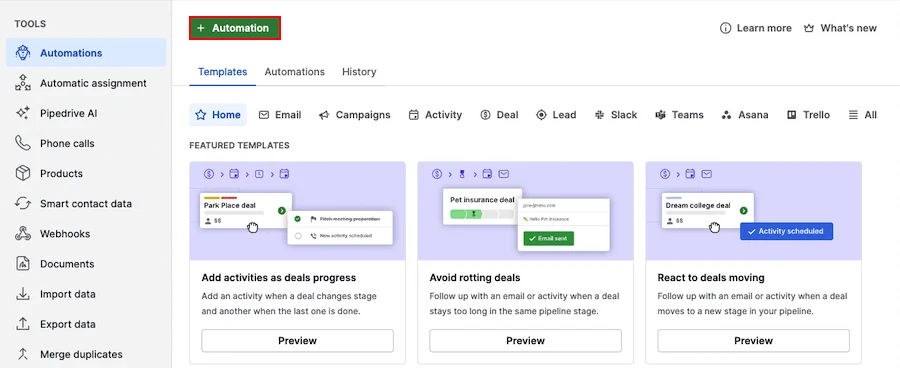
Pipedrive's workflow automation engine supports trigger-action rules with if/else branching, event-based waits, and native integrations with Slack, Teams, Trello, and Asana.
Source: Pipedrive
ZoomInfo AI operates at a different level because it draws on different data. While HoneyBook's AI learns from client interaction patterns and Pipedrive's AI analyzes deal activity, ZoomInfo's GTM Context Graph reasons across your CRM data, conversation intelligence, third-party intent signals, company events, and competitive activity at once.
The AI agents in GTM Workspace don't just draft emails. They research accounts, monitor signals, identify hidden stakeholders, and update your CRM, drawing from Chorus conversation intelligence that captures why deals accelerate or stall. GTM Studio uses AI to let marketers describe audiences in natural language and launch multi-channel plays that get smarter as prospects respond.
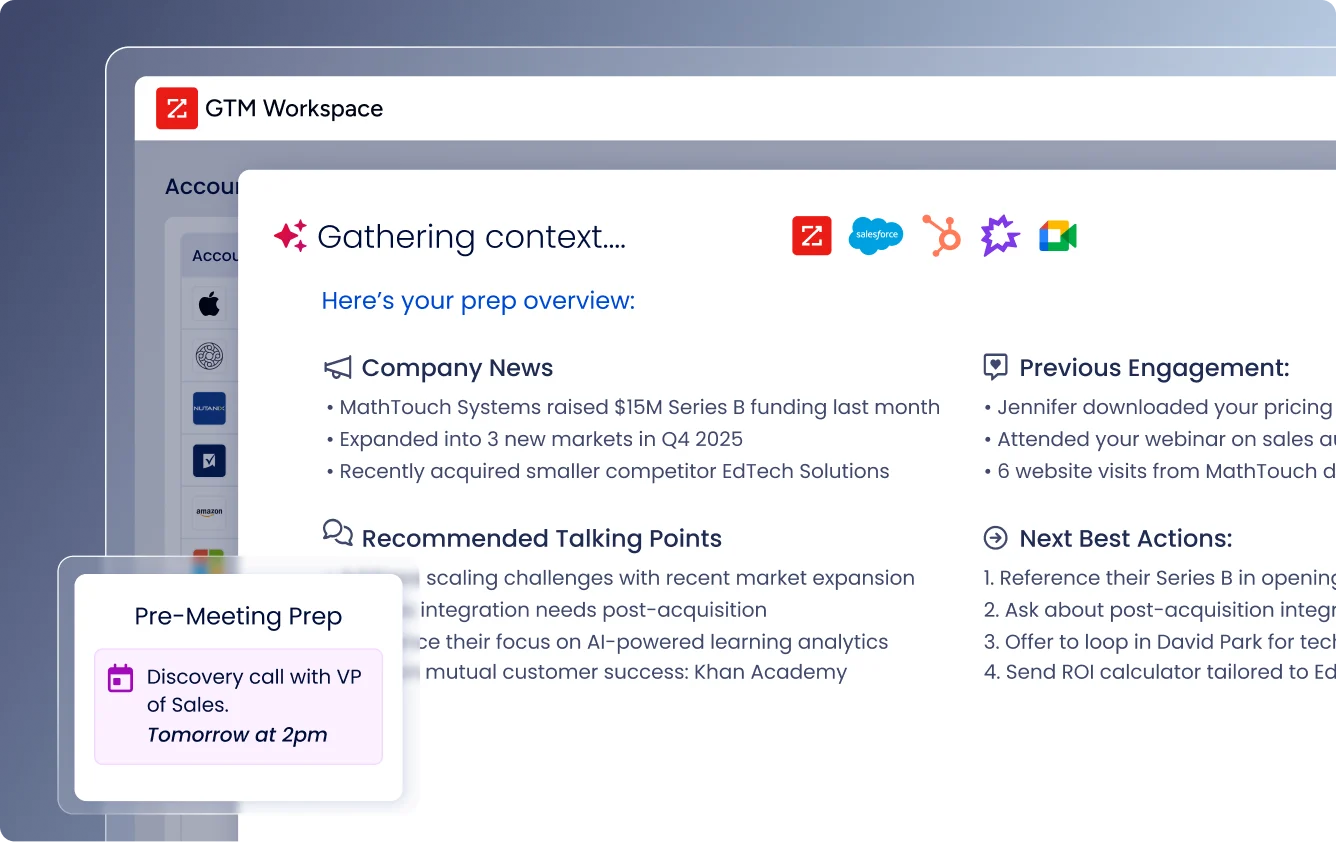
"ZoomInfo's not just a contact data company anymore. They've built a full system of execution. GTM Intelligence works the list, writes the outreach, triggers the play, and helps drive predictable growth." (Ian Brodie, CEO & Co-Founder, Levanta. Levanta)
Pricing models reflect three different businesses
Each platform's pricing reveals who it's designed for.
HoneyBook charges a flat monthly fee, not per seat:
Starter: $29/month (annual). Unlimited clients and projects, invoices, contracts, calendar, basic reports, AI.
Essentials: $49/month (annual). Adds scheduler, automations, QuickBooks integration, 2 team members, SMS reminders.
Premium: $109/month (annual). Unlimited team members, priority support, advanced reports, multiple companies.
Payment processing fees apply on top: credit card at 2.9% + $0.25, ACH at 1.5%. A 30-day free trial requires no credit card. The flat-fee model makes sense for solo operators: your cost doesn't multiply as you serve more clients.
Pipedrive charges per seat, per month, with four plans following a 2025 restructuring:
Lite: starting at $14/seat/month. Pipelines, deals, contacts, Leads Inbox, API access, Pulse feed, AI reports.
Growth: adds email sync, automations, sequences, meeting scheduler, forecast view.
Premium: adds Smart Docs, Projects, LeadBooster, AI email tools, phone support.
Ultimate: highest limits, contact data enrichment, security alerts.
Annual billing saves up to 42%. Add-ons like Campaigns (email marketing) and Web Visitors are billed per company, not per seat. Per-seat pricing means costs grow with team size, which matters for growing sales organizations.
ZoomInfo uses custom-quoted, consumption-based pricing with no publicly listed prices. Pricing scales around seats, data credits (1 credit = 1 contact or company export), and AI activity.
ZoomInfo Lite is permanently free, with 10 monthly export credits, access to the B2B database, Chrome extension, and HubSpot integration. Paid plans span three tiers each for Sales and Marketing, with intent signals, AI features, and advanced integrations gated by tier. A 7-day free trial with full access is also available.
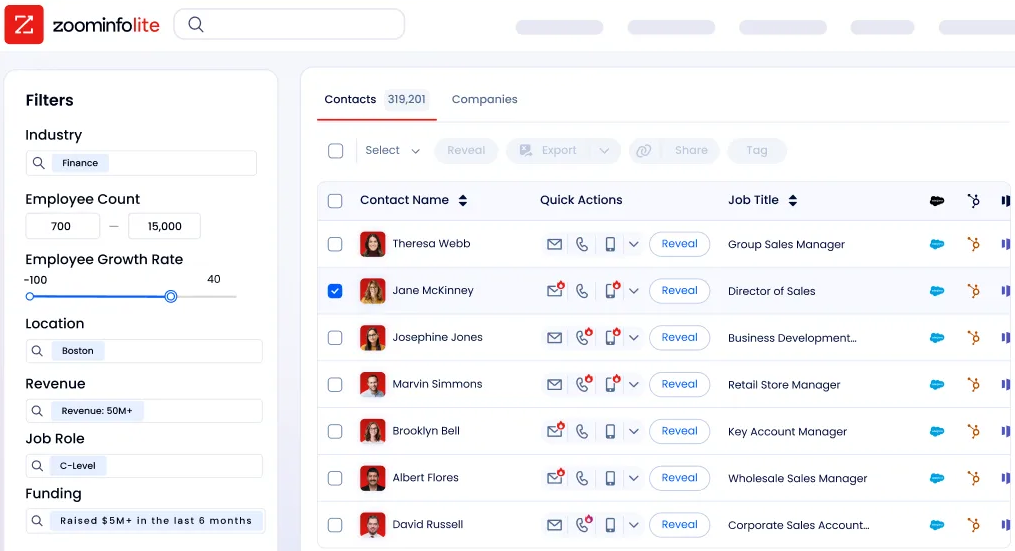
ZoomInfo's pricing is premium, reflecting its enterprise and upper mid-market positioning. The relevant comparison isn't cost per seat but cost per closed deal.
Vensure scaled prospecting with ZoomInfo's data, reaching company goals faster. "ZoomInfo gives us the information we need to execute. We don't have to spend our time digging. It's already there, so we can be three steps ahead." (William Kenimer, VP of Revenue Operations. Vensure)
Integrations and API access reveal different philosophies
How each platform connects to other tools says as much about their target customer as their feature list.
HoneyBook takes a curated, no-code approach. The integrations page lists connections to Gmail, Outlook, Google Calendar, QuickBooks, Zoom, Calendly, Mailchimp, Slack, and industry-specific tools like Pic-Time for photographers. But there is no public API. The only developer-adjacent option is a Zapier API key, available only on Essentials and Premium plans.
For HoneyBook's target user, this is likely enough. For businesses with custom data flows or technical teams, it's a hard ceiling.
Pipedrive is more extensible. The Marketplace contains 500+ integrations, and a free open REST API is available on all plans, including the entry-level Lite tier. The API supports both API token and OAuth 2.0 authentication, with official client libraries for Node.js and PHP, plus community libraries for Python, .NET, and Ruby. Webhooks v2 delivers real-time event notifications for deal changes, contact updates, and pipeline activity.
Developers can embed custom UI inside Pipedrive via App Extensions. A Pipedrive MCP server is available in beta for AI assistants. For technical teams that want to build around their CRM, Pipedrive's openness is a real advantage.
ZoomInfo approaches integrations as infrastructure. The Enterprise API covers four areas: a Data API for searching and enriching contacts, companies, intent, and news; a GTM Workspace API for AI-powered account summaries, lookalike expansion, and buying committee recommendations; a Marketing API for audience management; and a Platform API for engagement data ingestion.
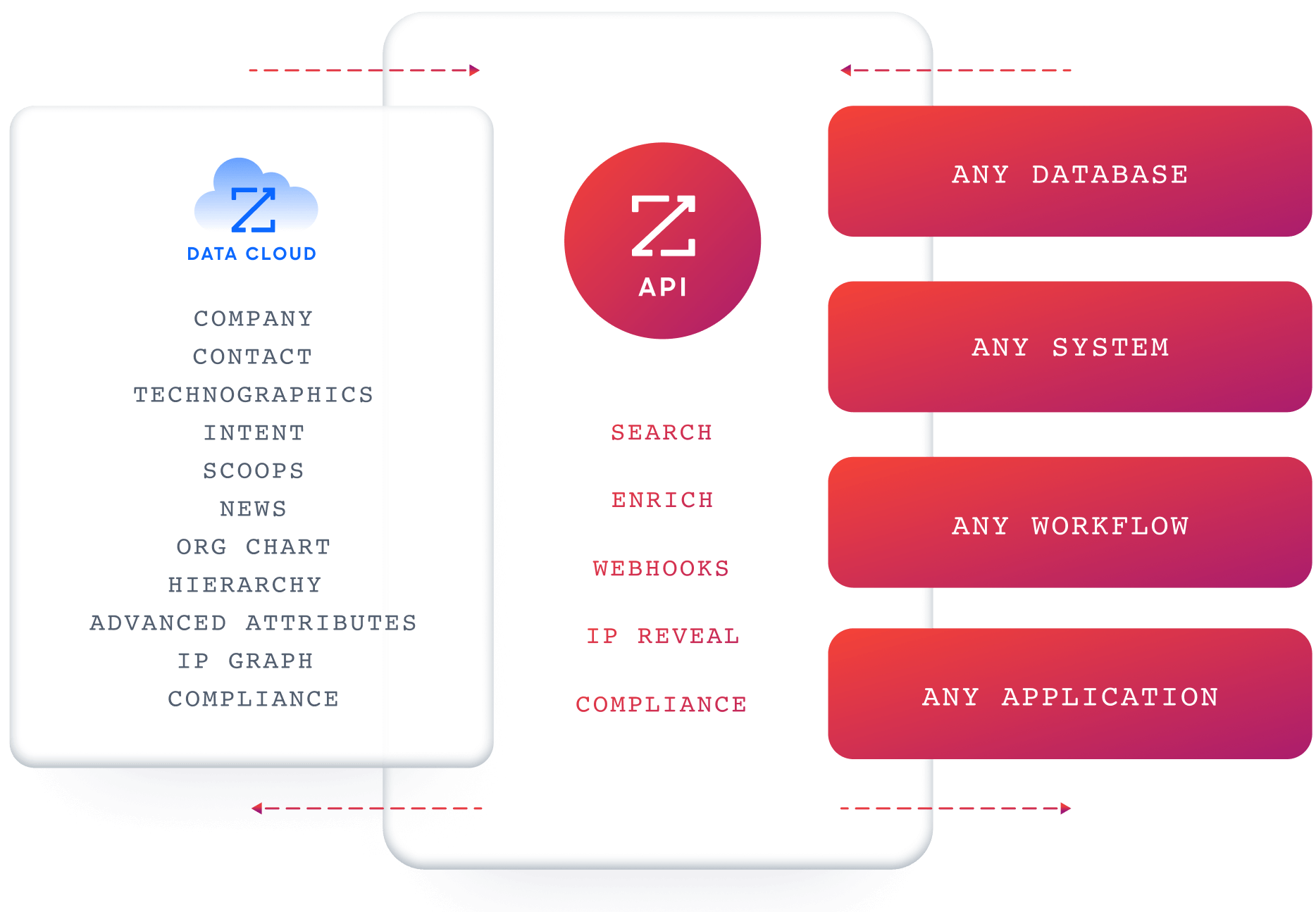
Authentication uses OAuth 2.0 with PKCE via Okta. Rate limits scale from 5 to 35 requests/second depending on package tier (Builder through Scaling).
The ZoomInfo MCP server connects AI assistants to ZoomInfo's data through natural language, with no custom coding required. It's listed in the Claude directory and supports Claude and ChatGPT.
The App Marketplace lists 172+ partner integrations, including native connections to Salesforce, HubSpot, Microsoft Dynamics 365, and cloud data platforms (Snowflake, AWS, Google Cloud, Databricks). API access is included in all relevant plans.
"The plug-and-play aspect of the API means I can integrate it into any process and get information at a moment's notice." BDO Canada cut time spent on internal data dashboard updates by 87% using ZoomInfo's API. (BDO Canada)
HoneyBook vs. Pipedrive vs. ZoomInfo: Which should you choose?
The right platform depends on what kind of business you run and what problem you need to solve.
Choose HoneyBook if:
You're an independent service professional (photographer, planner, designer, consultant, coach)
Your business revolves around client projects with proposals, contracts, and invoicing
You want one platform to replace DocuSign, QuickBooks, Calendly, and a basic CRM
You're a solo operator or team of 2-3 people
Your clients come through referrals, your website, and social media
Choose Pipedrive if:
You have an active sales process with deals moving through defined stages
Your team needs a visual pipeline to track opportunities and forecast revenue
You want a CRM that's easy to adopt without enterprise complexity
Integration with your existing sales stack (email, telephony, marketing) matters
You need an open API to build custom workflows around your CRM data
Choose ZoomInfo if:
You're a B2B company that needs to find and engage the right prospects at scale
Knowing who the decision-makers are, what technology they use, and when they're in-market would transform your prospecting
You want AI-powered outreach, account research, and deal intelligence driven by real buyer signals
Your team needs verified contact data (direct dials, business emails) that actually connects
You're ready for a platform that provides intelligence, not just organization
Try ZoomInfo free or explore ZoomInfo Lite for permanent free access to the B2B database.
HoneyBook is the right tool for service businesses that need to look professional and get paid on time. Pipedrive is the right tool for sales teams that need to see every deal and never let one slip. ZoomInfo is the intelligence layer that tells B2B teams which prospects to pursue, when to engage, and what to say, then provides the tools to act on that intelligence.
The most important step isn't choosing between them. It's recognizing which problem you're actually solving.
HoneyBook vs. Pipedrive vs. ZoomInfo FAQ
What is the fundamental difference between HoneyBook, Pipedrive, and ZoomInfo?
HoneyBook is a client management platform for independent service businesses, combining proposals, contracts, invoicing, payments, and scheduling in one tool. Pipedrive is a sales CRM built around a visual pipeline for tracking and closing deals.
ZoomInfo is an AI-powered go-to-market intelligence platform that provides verified B2B contact data, buyer intent signals, and AI-driven prospecting tools to help revenue teams find the right prospects at the right time.
Which platform is cheapest?
HoneyBook starts at $29/month as a flat fee regardless of team size. Pipedrive starts at $14/seat/month, so costs grow with your team. ZoomInfo uses custom-quoted pricing with no published rates, though a permanently free ZoomInfo Lite tier provides 10 monthly export credits and access to the B2B database.
For a solo operator, HoneyBook offers the most straightforward value. For a small sales team, Pipedrive is the most affordable CRM. ZoomInfo is a premium investment for B2B companies where data quality directly impacts revenue.
Can I use ZoomInfo alongside Pipedrive or HoneyBook?
ZoomInfo's data and intelligence can flow into virtually any system via its Enterprise API and MCP server. ZoomInfo integrates natively with major CRMs including Salesforce, HubSpot, and Microsoft Dynamics.
For Pipedrive users, ZoomInfo's open API and iPaaS connectors could bridge the gap. The more typical setup for B2B sales teams is using ZoomInfo's GTM Workspace as the primary seller workspace, with CRM integration handling the pipeline record.
Which platform is best for a solo service business?
HoneyBook is designed for this use case. Its Smart Files combine service selection, contracts, invoicing, and scheduling into a single client-facing link. The flat monthly pricing means no per-seat costs. Embedded payment processing and HoneyBook Finance (checking account, tax savings, business loans) eliminate the need for several separate tools.
Pipedrive lacks native contracts and invoicing. ZoomInfo is designed for B2B prospecting at scale, not service-business client management.
Which platform has the strongest prospecting capabilities?
ZoomInfo leads by a wide margin with 500M contacts, 135M+ verified phone numbers, and 200M+ verified business emails, maintained by 300+ human researchers with up to 95% accuracy on first-party data. Pipedrive's LeadBooster add-on provides access to over 400 million profiles and 10 million companies, but without the same depth of verification, intent signals, or AI-driven account intelligence. HoneyBook has no prospecting features.
How does AI differ across the three platforms?
HoneyBook AI trains on service-business data and focuses on practical workflow tasks: scoring incoming inquiries, drafting emails, transcribing meetings, and summarizing project details before event dates. Pipedrive AI centers on deal management with an AI Sales Assistant that predicts deal outcomes, an AI email writer, and a natural-language report generator.
ZoomInfo AI operates across a broader intelligence layer, processing 1.5B+ data points daily through its GTM Context Graph to identify buying signals, recommend accounts, surface buying committees, and generate contextual outreach based on conversation intelligence and intent data.
Does Pipedrive include contracts and invoicing?
Pipedrive includes Smart Docs for basic proposal and contract creation with eSignatures on Premium and Ultimate plans. It does not include native invoicing or payment processing. You would need integrations with QuickBooks, Xero, or Stripe for financial transactions. HoneyBook includes all of these natively.
Which platform works best for a B2B sales team?
For B2B sales teams with an active outbound motion, ZoomInfo provides the intelligence layer (verified contacts, buyer intent, AI-driven account prioritization) that determines whether prospecting efforts hit the right targets.
ZoomInfo's GTM Workspace also offers its own seller workspace with AI agents that handle account research, outreach drafting, and CRM updates. Pipedrive is a strong fit for smaller B2B teams with simpler inbound-driven sales processes who need an affordable, visual pipeline CRM. HoneyBook is not designed for B2B sales workflows.
