

Hyperbound has become one of the most discussed AI sales coaching platforms since its public launch in January 2024. It has attracted over 40,000 reps across companies like IBM, LinkedIn, Vanta, and Monday.com, earning a 4.9/5.0 rating on G2.
The premise is straightforward: give sales reps a place to practice calls against AI buyer personas that react like real prospects, then score those calls against the team's sales methodology.
To write this Hyperbound review, we analyzed the platform in depth. We believe it fits best if:
You need to shorten new-hire ramp time without growing your management team
You want reps practicing against AI buyers before high-stakes calls
You value AI-scored feedback tied to your specific sales methodology
You're managing 20+ reps where manager coaching capacity is the bottleneck
You need to certify reps on new messaging before they go live with prospects
Hyperbound excels at helping reps practice and sharpen their conversations, but it doesn't provide the prospect intelligence that determines whether those conversations happen with the right people at the right time.
This is where ZoomInfo enters the picture: a go-to-market platform whose B2B data, intent signals, and GTM Context Graph give reps the intelligence they need before they pick up the phone, making both practice sessions and real calls more effective.
We've included a look at ZoomInfo later in this Hyperbound review as the natural complement for teams that want reps to be both well-practiced and well-informed. If you're ready to explore how prospect intelligence changes sales execution, you can learn more here.
What is Hyperbound?
Hyperbound is an AI sales coaching platform founded in June 2023 by Sriharsha Guduguntla (CEO) and Atul Raghunathan (CTO), two AI engineers who met in high school. The company entered Y Combinator's Summer 2023 batch and launched publicly in January 2024.
The founding story involves a pivot. After cold-messaging over 25,000 people on LinkedIn and sending 10,000 cold emails, the founders conducted roughly 2,000 user interviews. Their first product was an AI email personalization tool. While building it, they created an internal solution (AI avatars for practicing sales conversations) and discovered that the prototype drew stronger market demand.
They pivoted, and within 11 months of launch had closed 40 enterprise customers, reached $1 million in ARR, and secured contracts up to six figures.
Today, Hyperbound calls itself a "Revenue Activation Platform" built on three products:
Hyperbound Practice for AI roleplay and automated coaching
Hyperbound Perform for real call scoring and deal coaching
Kota Activate for AI deal analysis and revenue automation
The platform serves over 7,000 companies across more than 40 countries, with primary industries including B2B SaaS, transportation and logistics, banking and financial services, and sales training agencies. Headquartered in San Francisco, the company has raised $18.3 million in total funding, including a $15M Series A led by Peak XV Partners with participation from Y Combinator and Snowflake Ventures.
Hyperbound Pros & Cons
Pros | Cons |
|---|---|
- Realistic AI buyer personas with dynamic, real-time responses | - Enterprise pricing requires a sales demo (no published prices) |
- Published case studies with specific ramp-time metrics | - Bot organization becomes cumbersome at scale |
- First bot setup in under 10 minutes | - Custom scenario creation requires real enablement effort |
- SOC 2 Type II, ISO 27001, and GDPR certified | - Perform and Kota modules are newer with fewer published case studies |
- 25+ language support across 40+ countries | - No built-in prospect data or intelligence |
- Free plan with no time limit | - Automated scenario generation from CRM data limited at entry tiers |
- Vision-enabled screen-share demo practice |
Hyperbound Review: How it Works & Key Features
Hyperbound Practice: AI roleplay that gives reps a safe space to fail and improve before real calls.
The core of Hyperbound is its AI buyer bot: a voice-based persona that simulates a prospect. Admins build bots by supplying context (company name, buyer scenario, pain points, objections), and Hyperbound's AI constructs a developed persona. Bots can be created in 3–5 minutes from minimal inputs.
During a roleplay, a rep calls the bot as they would a real prospect. The bot speaks as a distinct character with consistent priorities and objections, responding based on what the rep says. After the call, an AI scorecard evaluates the conversation against customizable criteria tied to the team's sales methodology.
The platform offers six bot types covering the full sales cycle: Cold Call, Warm Call, Discovery Call, Renewal Call, Check-in Call, and Focus Call. An Advanced Settings panel lets admins configure bots to focus on specific skills (objection handling, budget qualification, discovery, closing), so reps can run short, targeted simulations rather than full calls.
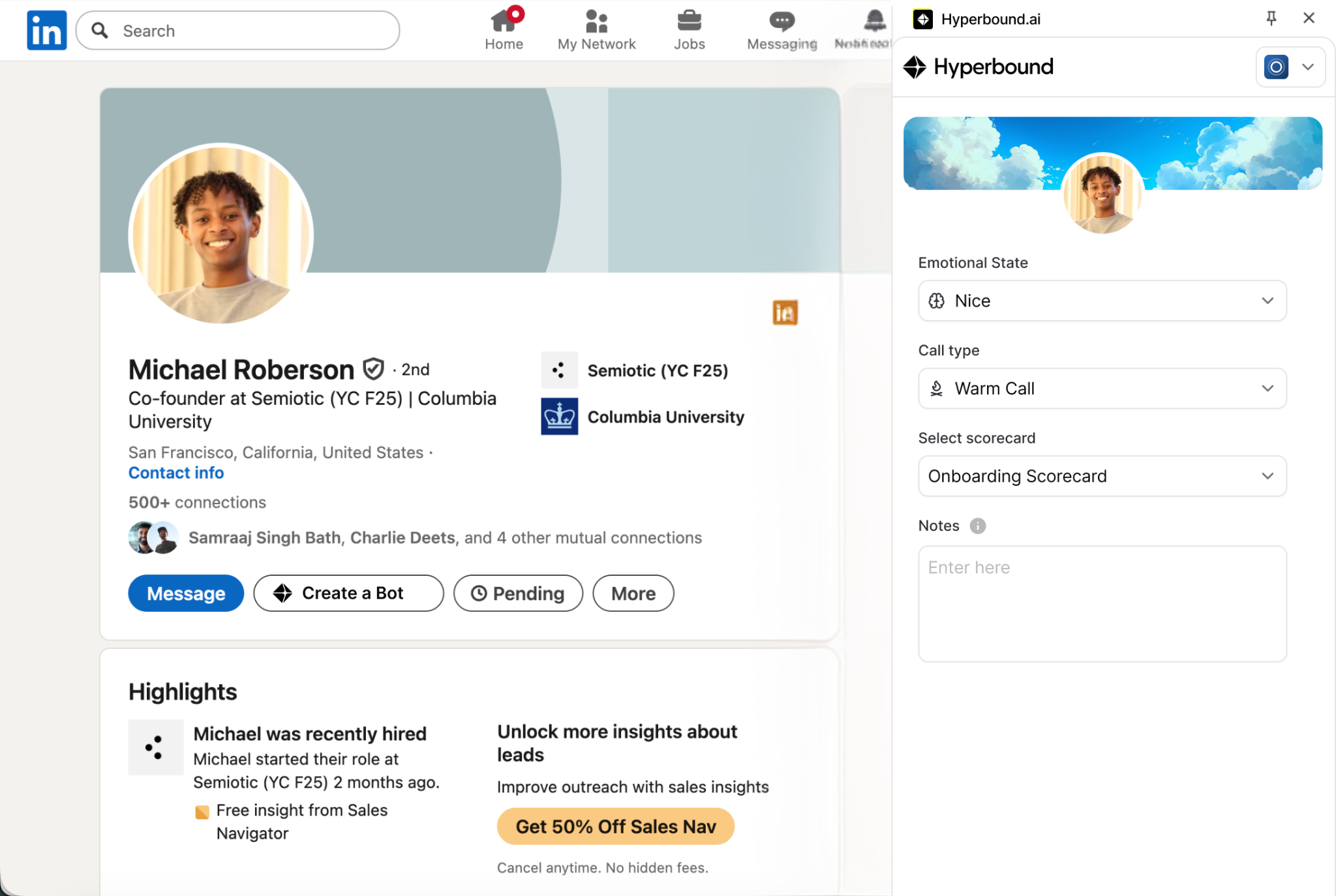
Several features push the realism further. Multi-party roleplay supports scenarios with up to four AI participants that simulate buying-committee conversations, each with distinct priorities and objections. Vision-enabled bots can see and respond to a rep's screen share during demo practice. The Chrome extension lets reps create a bot from any LinkedIn profile in one click for pre-call prep.
Source: Hyperbound
Admins can also build bots from uploaded materials. They can upload call transcripts, ICP documents, and enablement materials, and Hyperbound extracts persona details, scenarios, and objections automatically. The platform supports 30+ languages including Spanish, French, German, Mandarin, Japanese, Korean, and Hindi, with AI feedback delivered in both English and the rep's native language.
When a rep misses something during practice, the platform surfaces the exact moment a top-performing rep handled the same situation correctly, giving them a concrete model rather than abstract advice.
Hyperbound Perform: Real call scoring that connects practice to live performance.
Hyperbound Perform analyzes actual sales conversations and scores them against the same criteria used in roleplay practice. The stated positioning: "Call intelligence tools show you what happened. Hyperbound shows you what to do next."
Source: Hyperbound
The system ingests calls through either Hyperbound's native meeting recorder (which auto-detects meetings from Google or Outlook calendars) or through integration with existing tools. A Gong integration lets teams import calls automatically or manually by date range, with a scorecard and call type assigned at import time.
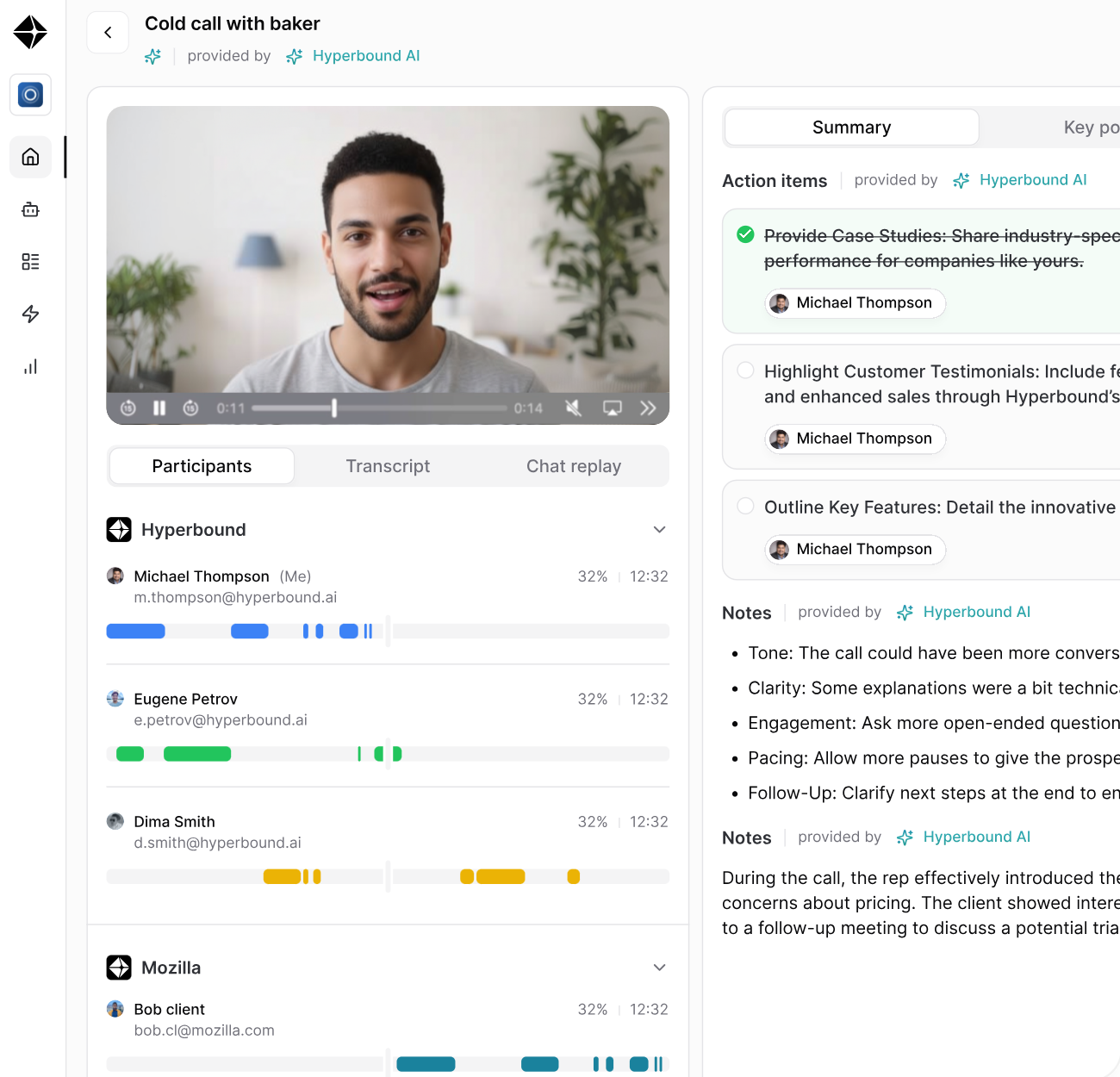
After recording a call, AI applies the team's configured scorecard. The post-call screen shows a score breakdown, call statistics (talk ratio, filler word usage), criterion-level feedback, and every objection identified with timestamps and handling evaluations.
The Manager Dashboard aggregates scored calls across the team, with a Reps of Concern widget (three improvement areas per rep vs. team average), Call Volume by Rep with Pass Rate, a Criterion by Rep heatmap, and an Objection Handling matrix.
This solves a real constraint: managers often lack time to listen to every rep's call. AI scoring ensures no conversation goes unreviewed, including mid-performers who get overlooked when managers only sample the top and bottom of the roster.
The most distinctive capability is the closed loop between scoring and practice. The AI Coach analyzes real calls to detect patterns and gaps, then recommends targeted roleplay scenarios. If a rep consistently struggles with objection handling, the system directs them to a roleplay built around that failure mode.
Managers can also verify whether reps are applying techniques from training by tracking metrics like objection rebuttals and discovery questioning from real call analytics.
Kota Activate: An AI agent that reads deal signals and tells you what to do next.
Kota Activate is Hyperbound's AI revenue agent. Where most conversation intelligence tools surface information and expect users to interpret it, Kota reads signals across calls, emails, and CRM data, then either answers questions in plain language or runs automated workflows.
Source: Hyperbound
Kota Ask Anything is a conversational interface on top of real sales conversations. It ingests every call recording, email thread, and CRM signal, then lets users query that data in plain English. The system draws on the organization's own data, not generic AI training data, so answers reflect actual deals and performance.
Kota Automations let users set a trigger, define what Kota does with the signal, and choose where it goes. Hyperbound ships 40+ prebuilt automation templates for use cases like rescuing at-risk deals, filling CRM fields automatically, and assigning targeted practice scenarios.
Kota also works in Slack. After a one-click OAuth connection, reps and managers can DM the Hyperbound bot with natural-language questions and receive insights and deal notifications without opening Hyperbound. For developers, the Hyperbound MCP Server extends Kota to external AI clients like Claude, allowing queries and tool calls with OAuth-authenticated access.
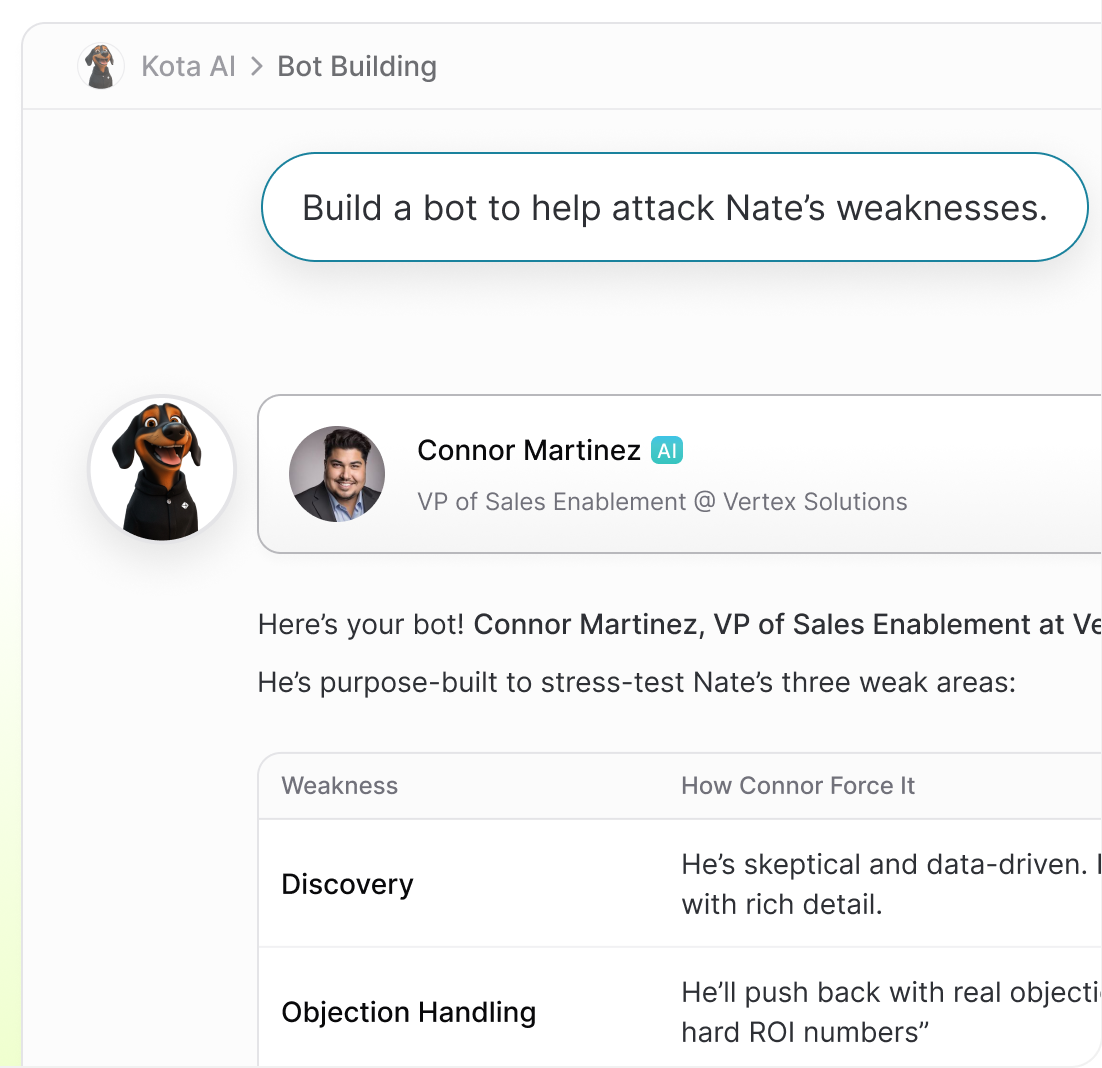
When Kota detects deal risk, it can generate a deal-specific roleplay tied to that exact scenario, connecting deal intelligence and practice in one workflow. Users can also describe what they need in a prompt and Kota generates a complete roleplay bot configuration, reducing the time enablement teams spend building practice content.
Pricing: A free plan paired with opaque enterprise pricing.
Hyperbound uses a two-tier model: a permanently free plan and a custom-quoted paid tier.
Free Plan (no credit card, no time limit):
9 pre-built AI roleplay bots (Cold Call, Warm Call, and Discovery Call types only)
Video call roleplay support
Pre-built default AI scorecards
Full call transcription and AI coaching feedback
Unlimited call time
Company-wide call history
Custom Plan (pricing requires a demo):
Everything in the Free plan
Unlimited custom AI bots across all call types (including Demo and Post-Sales)
AI Scorecard Builder with unlimited custom scorecards
LMS/CMS integrations (WorkRamp, Cornerstone, Seismic, Highspot, and others)
Real call scoring (Hyperbound Perform)
Multilingual support (25+ languages)
SSO, SIEM, and security configurations
25+ integrations with custom integrations on request
Hiring assessments, gamification, and learning modules
API access and data exports
The free plan works for individual reps exploring the platform. But organizations that need custom bots, real call scoring, or LMS integration must contact sales. No per-seat or per-tier pricing is published.
Where Hyperbound Falls Short
Hyperbound excels at sales practice and coaching, but several limitations surface for teams running a full sales operation. These reflect a platform built for conversation skill development, not the broader intelligence needs of a revenue team.
No Prospect Intelligence. Hyperbound helps reps practice what to say, but doesn't tell them who to call, when to reach out, or what a prospect cares about. The LinkedIn Chrome extension creates a bot from a prospect's public profile, but it doesn't draw on verified B2B data, intent signals, or buying patterns.
A rep can nail the roleplay but walk into a real call without knowing the prospect's tech stack, recent funding round, or that they've been researching competitors. Practice is only as good as the intelligence behind it.
Pricing Opacity. All enterprise pricing requires booking a demo. Buyers who want to compare costs against alternatives cannot do so without engaging the sales team. The free plan lowers the barrier for individuals, but teams evaluating the platform for 50 or 500 reps cannot model costs on their own.
Bot Management at Scale. A recurring theme in G2 reviews: while bots are easy to create, organizing, categorizing, and managing them grows cumbersome as libraries expand. Large teams with hundreds of custom bots report navigation and housekeeping as persistent friction.
Manual Scenario Creation. Building quality custom roleplays requires real upfront effort from enablement teams: crafting personas, defining objections, configuring scoring rubrics. For organizations moving fast, this setup overhead can slow adoption. Users note that automatically converting lost deals or underperforming calls into practice scenarios is not available at entry tiers, requiring manual work instead.
Newer Modules Are Less Proven. Hyperbound Practice is the established core product with published case studies showing specific results. Hyperbound Perform and Kota Activate are newer additions with fewer documented outcomes. Teams whose primary need is conversation intelligence or deal forecasting may find these modules still maturing relative to established alternatives.
These limitations follow naturally from a platform built for sales practice and coaching. But they leave a clear gap: reps who practice well still need verified prospect data, buying signals, and account intelligence to make those conversations count.
The Natural Complement to Hyperbound: ZoomInfo
Hyperbound sharpens how reps sell. ZoomInfo provides the intelligence about who to sell to, when to engage, and why a prospect might buy. Together, they cover the full arc from preparation to execution.
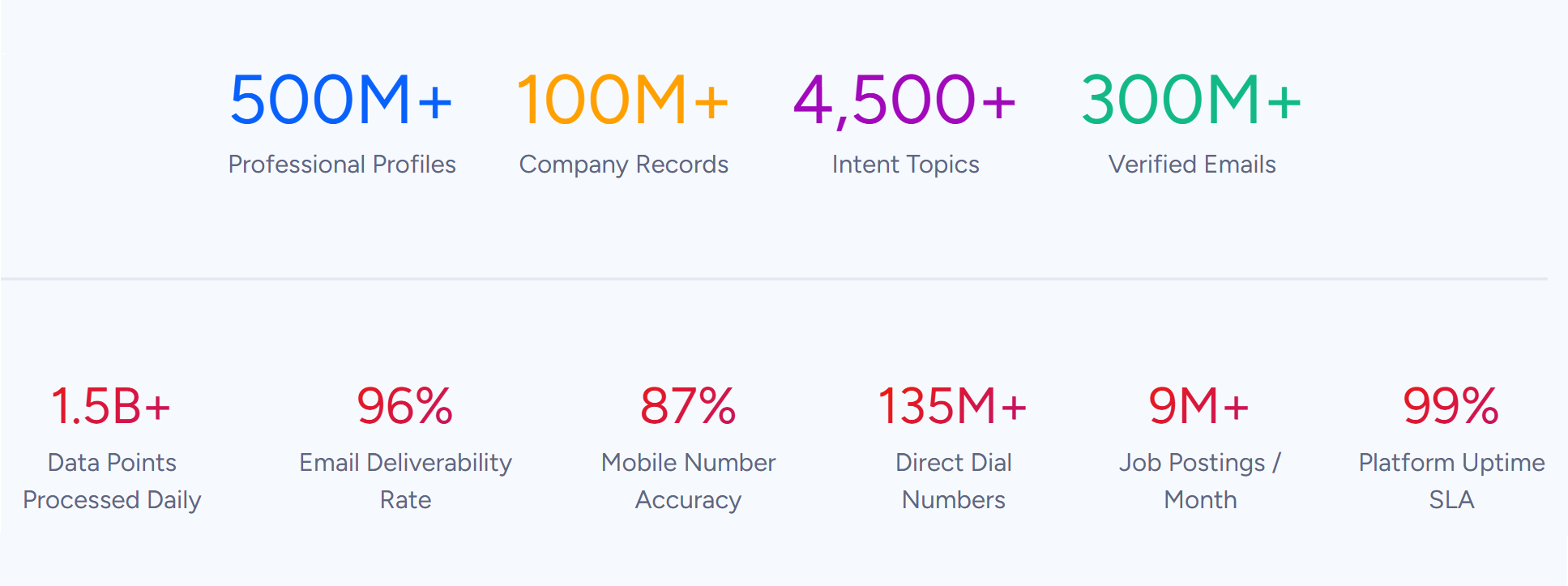
ZoomInfo is a go-to-market platform built on a large B2B data foundation: 500M contacts, 100M companies, 135M+ verified phone numbers, and 200M+ verified business emails.
Source: ZoomInfo
That data fuels the GTM Context Graph, which processes 1.5B+ data points daily by combining ZoomInfo's B2B data with your CRM records, conversation transcripts, and behavioral signals to reveal the full context of accounts and deals (not just what happened, but why it happened, and what to do next).
Teams access this intelligence through GTM Workspace for sellers, GTM Studio for marketers and RevOps, or APIs and MCP in any third-party tool.
B2B Data That Informs Every Call: The intelligence Hyperbound doesn't provide.
Hyperbound creates AI buyer personas, but those personas are only as accurate as the information behind them. ZoomInfo's data platform provides the verified prospect intelligence that makes both practice and real calls more effective.
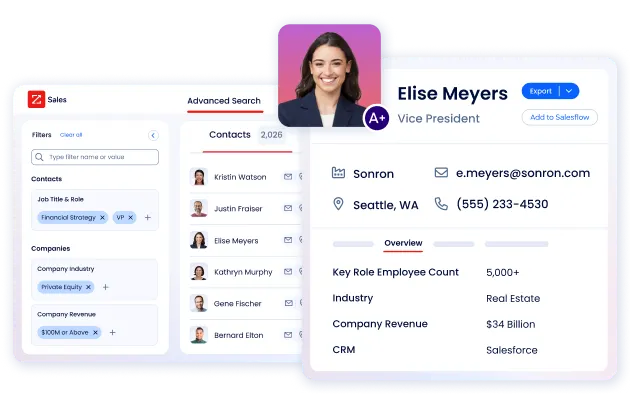
Concretely, that means 120M direct-dial phone numbers, 200M+ verified business email addresses, department org charts with decision-makers identified, 300+ company attributes for segmentation, and technographic profiles covering 30,000+ technologies across 30M+ companies. A multi-source pipeline backed by 300+ human researchers verifies the data, reaching up to 95% accuracy on first-party records.
Source: ZoomInfo
For a sales team using Hyperbound, this data changes the equation. Reps can build roleplay scenarios grounded in verified prospect intelligence rather than guesswork. And when they move from practice to a real call, they bring verified contact data, company context, and organizational mapping with them. The direct dial actually rings. The email actually lands.
"ZoomInfo gives us the information we need to execute. We don't have to go through and spend our time digging. It's already there, so we can be three steps ahead." (Vensure)
Intent Signals and the GTM Context Graph: Knowing when to engage and why deals move.
Practice becomes more valuable when reps know which accounts are actively in market. ZoomInfo Intent tracks signals from 210 million IP-to-Organization pairings and 6 trillion+ new keyword-to-device pairings sourced monthly. Guided Intent, exclusive to ZoomInfo, identifies topics historically correlated with deal success rather than requiring manual topic selection.

Source: ZoomInfo
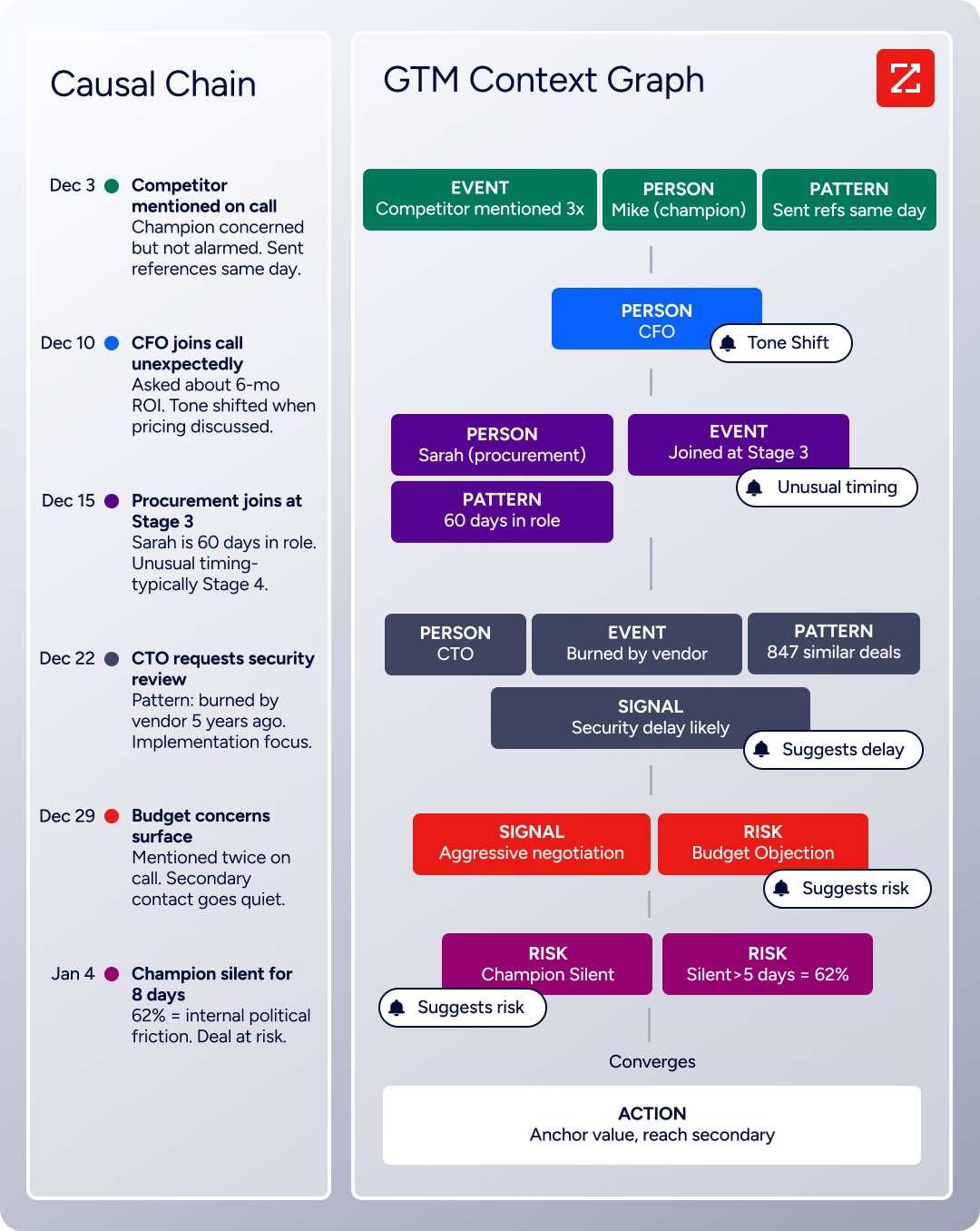
The GTM Context Graph goes further. It unifies ZoomInfo's third-party data with a customer's own CRM records, conversation intelligence, and behavioral signals to capture why deals move or stall. A CRM records that a deal moved to Stage 4.
Source: ZoomInfo
The GTM Context Graph connects that movement to the CFO joining the last call, the ROI-focused questions asked, and third-party signals showing the company is evaluating competitors.
For teams using Hyperbound alongside ZoomInfo, this creates a clear workflow. ZoomInfo surfaces which accounts are researching your category and why they are in-market. Reps use that intelligence to build targeted Hyperbound roleplays against AI personas modeled on the actual buying committee. Then they walk into the real conversation with both practiced skills and account context.
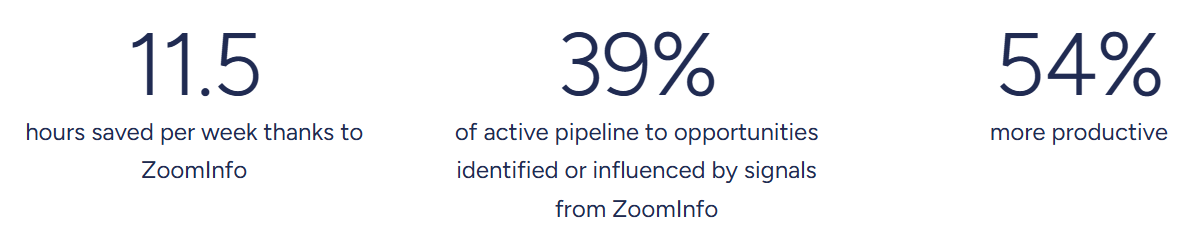
"That combination of our internal CRM data, external signals, and AI that's given all that context has helped us craft very specific account- and persona-based messages. And people have responded to them right away." (Seismic)
Source: ZoomInfo
Universal Access: Intelligence that reaches every tool in the sales stack.
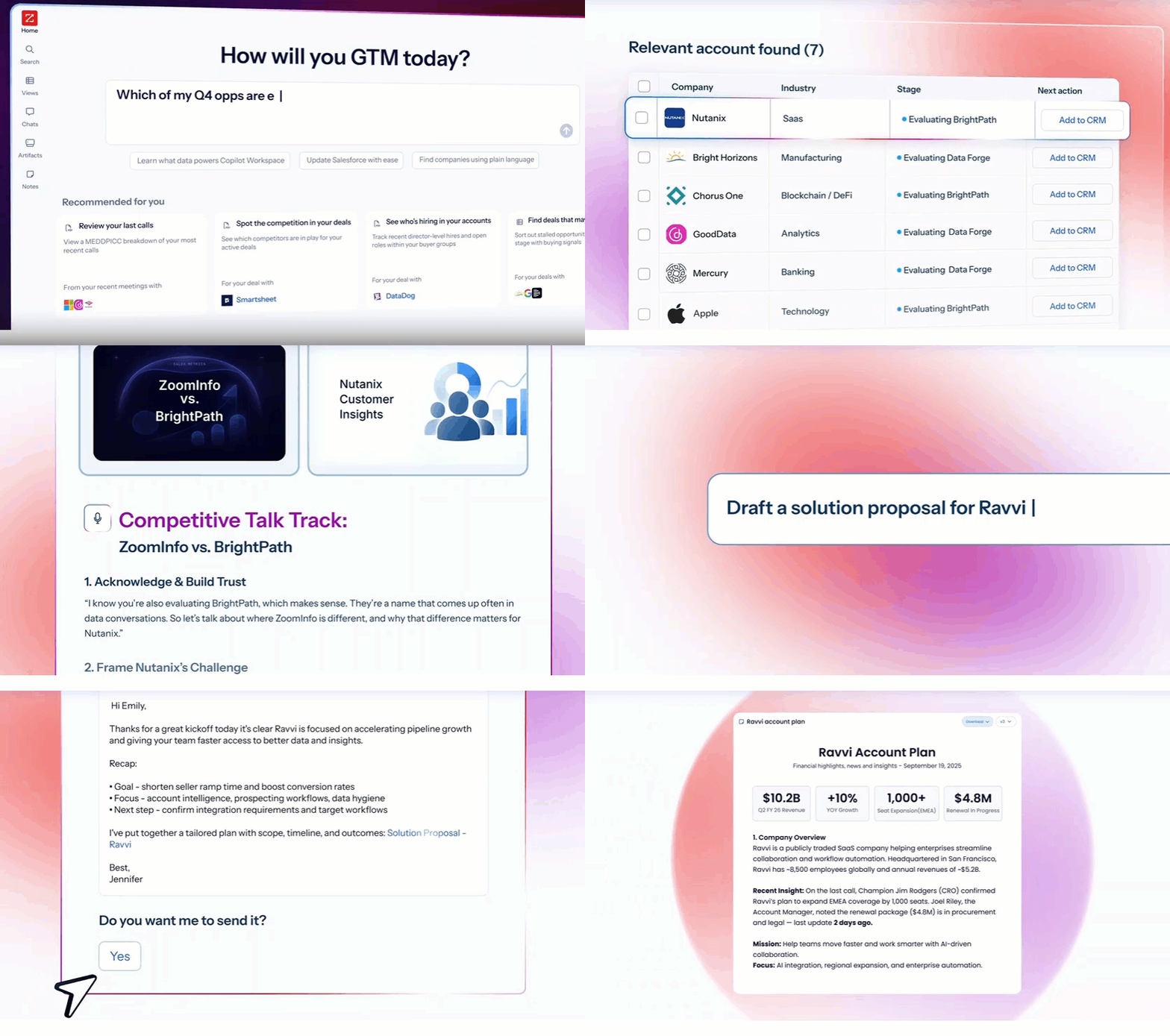
ZoomInfo delivers its intelligence through three channels. GTM Workspace gives sellers a book-of-business view with an Action Feed of pre-drafted actions on every buying signal, AI-generated outreach based on account context, and native CRM integration.
Source: ZoomInfo
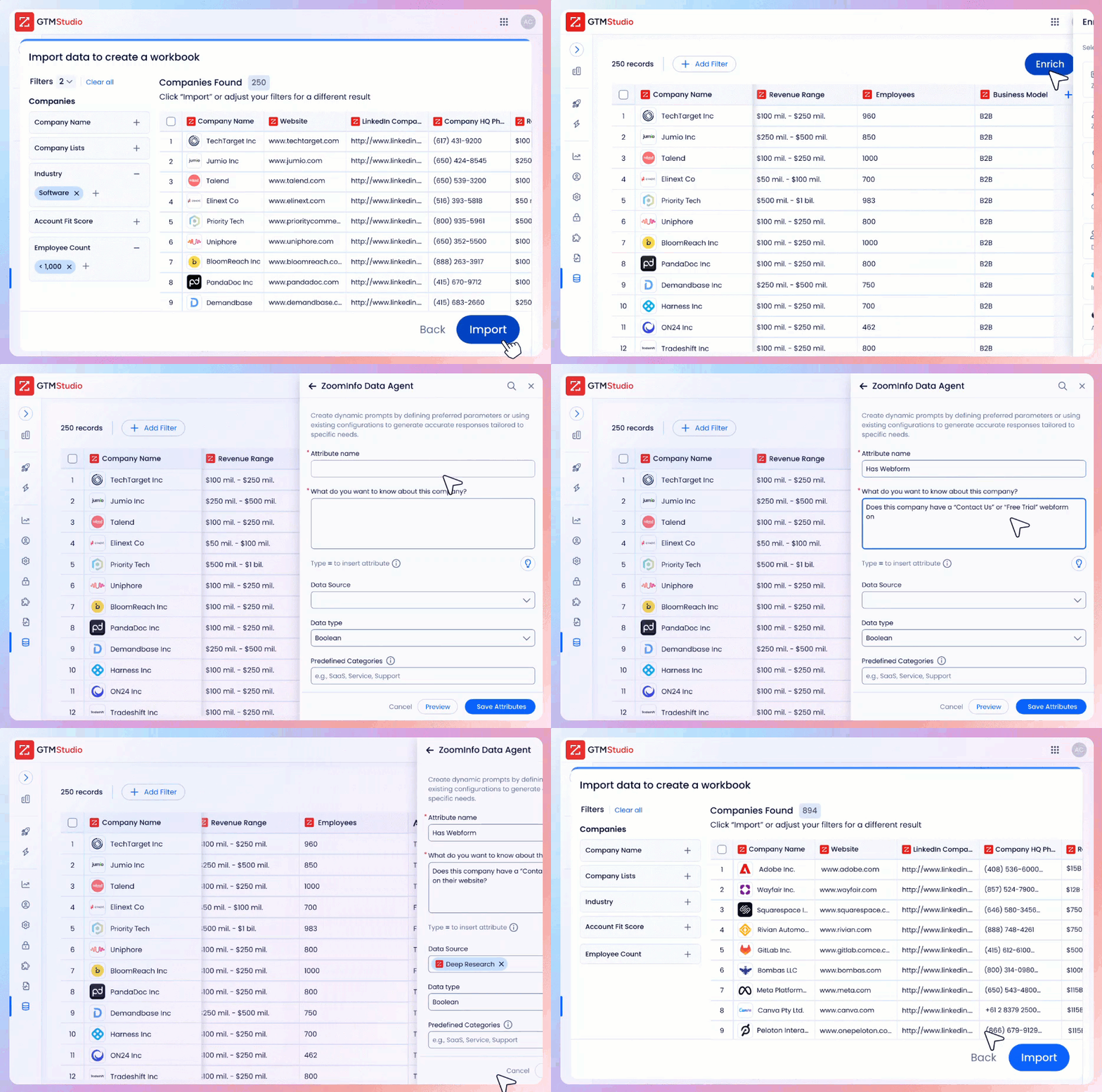
GTM Studio gives marketers and RevOps a canvas to define audiences in natural language, launch multi-channel plays, and measure pipeline impact.
Source: ZoomInfo
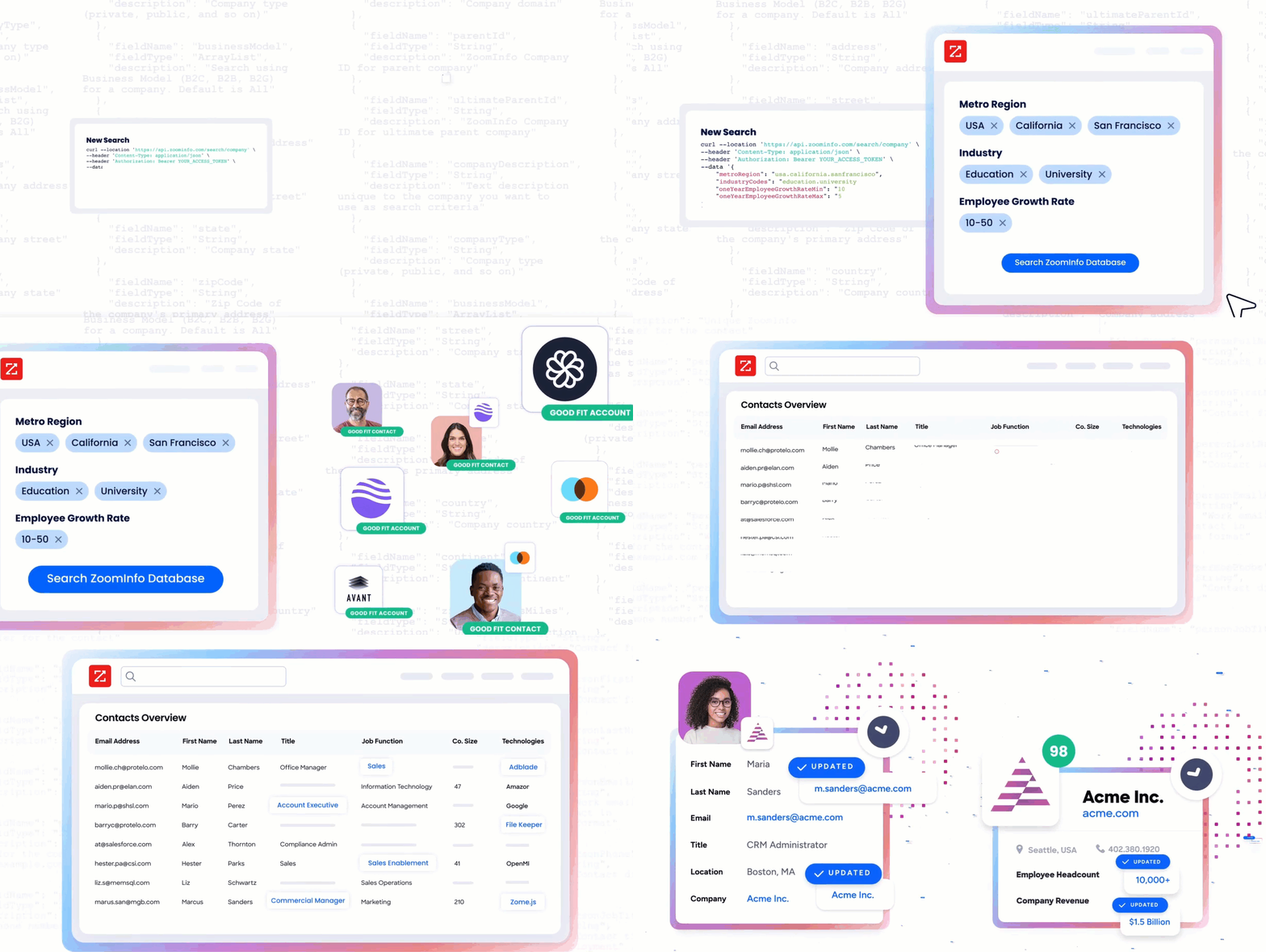
For teams that build beyond ZoomInfo's products, APIs and MCP expose the same intelligence to any custom agent or third-party platform.
Source: ZoomInfo
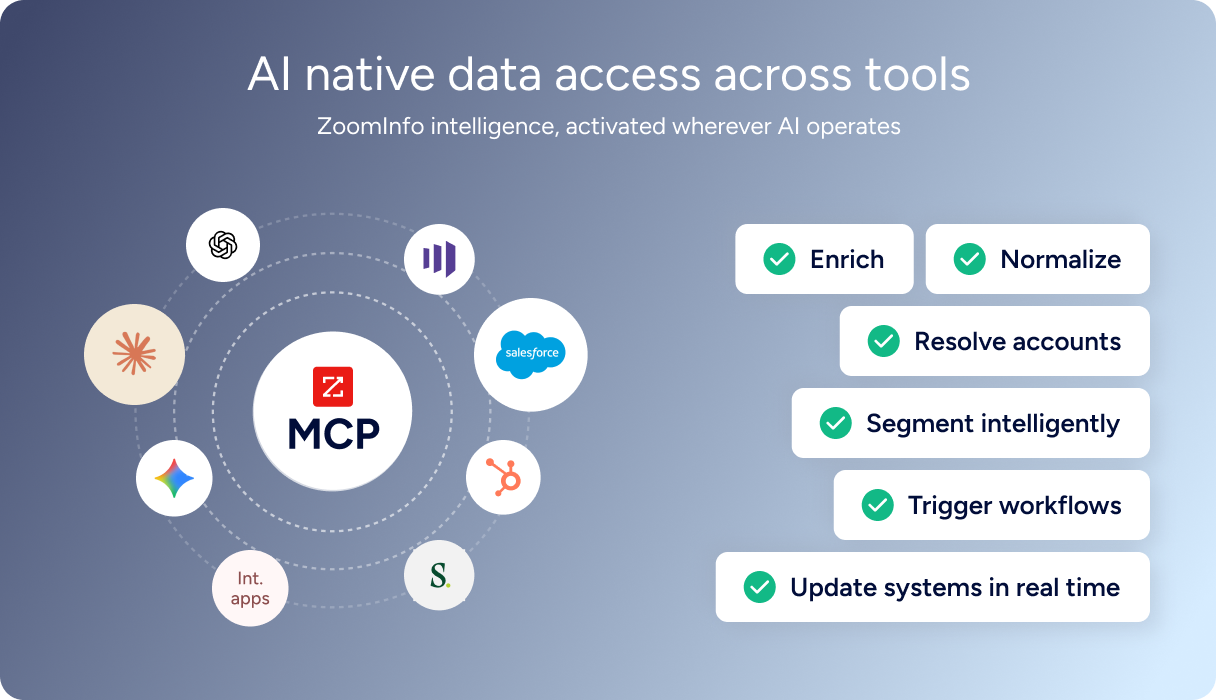
The ZoomInfo MCP server connects to AI tools like Claude and ChatGPT, so the same intelligence powering GTM Workspace can flow into any MCP-compatible workflow. API access is included in all relevant plans, so intelligence flows wherever work happens rather than staying locked inside one application.
Source: ZoomInfo
"Anything that minimizes our team's need to switch contexts is beneficial. ZoomInfo offers a single view, eliminating the need to navigate between systems." (Spekit)
Hyperbound and ZoomInfo: How They Work Together
Aspect | Hyperbound | ZoomInfo |
|---|---|---|
Primary purpose | AI sales coaching and practice | B2B data, intelligence, and go-to-market execution |
Core strength | AI roleplay and call scoring | Verified prospect data and buying signals |
When used | Before calls (practice) and after calls (scoring) | Before calls (research) and during deals (intelligence) |
Data source | Internal call recordings and enablement content | 500M contacts, 100M companies, intent signals, GTM Context Graph |
AI capability | AI buyer personas, scorecards, deal coaching | AI agents for research, outreach, and CRM updates |
Target buyer | VP Sales, Enablement, RevOps | Sales, Marketing, RevOps, GTM Engineers |
Integration approach | CRM, LMS, dialers, conversation intelligence tools | CRM, marketing, sales engagement, any AI agent via MCP |
Security | SOC 2 Type II, ISO 27001, GDPR | SOC 2 Type II, ISO 27001, ISO 27701, GDPR, CCPA |
Free entry point | Free plan (no time limit) | ZoomInfo Lite (permanent free tier) + 7-day trial |
Best for | Training reps to have better conversations | Ensuring reps have the right conversations with the right people |
Final Verdict
Hyperbound and ZoomInfo serve different but connected roles in a sales organization. The choice isn't between them; it's a question of what your team needs most right now, and most teams will benefit from both.
Choose Hyperbound if your immediate challenge is rep readiness. If new hires take too long to ramp, if messaging is inconsistent across the team, or if managers spend too much time on role-plays they can't scale, Hyperbound addresses those problems directly.
The AI roleplay is realistic, the scorecard system ties practice to your methodology, and published results from companies like Vanta (60% ramp-time reduction), JumpCloud (2x faster time to first meeting), and ALKU (time to first deal cut in half) show measurable impact. Hyperbound offers a free plan for teams evaluating the platform.
Add ZoomInfo when your reps are well-practiced but need the intelligence to make every conversation count. ZoomInfo ensures that practiced skills reach the right accounts at the right time, with the right context. Its data, intent signals, and GTM Context Graph provide the prospect intelligence that turns a good conversation into a closed deal.
Get started with ZoomInfo here.
The strongest sales teams invest in both sides: building the skills to have great conversations and building the intelligence to know which conversations matter most. Hyperbound develops the how. ZoomInfo provides the who, when, and why.
Hyperbound FAQ
Is there a free version of Hyperbound?
Yes. Hyperbound offers a permanently free plan that requires no credit card and has no time limit. It includes 9 pre-built AI roleplay bots (limited to Cold Call, Warm Call, and Discovery Call types), pre-built default scorecards, full call transcription, AI coaching feedback, and unlimited call time.
Key limitations: no custom bot builder, no real call scoring, no LMS integrations, no multilingual support, and no custom scorecards. ZoomInfo also offers a permanent free tier called ZoomInfo Lite, which provides access to its B2B database with 10 monthly export credits.
How realistic are Hyperbound's AI buyer personas?
Realism is Hyperbound's primary differentiator. The AI bots speak as distinct characters with consistent tone, priorities, and objections, and respond based on what the rep says. Multi-party roleplay supports up to four AI participants simulating buying committees, and vision-enabled bots can see and respond to a rep's screen share during demo practice.
The platform holds a 4.9/5.0 rating on G2, where reviewers consistently cite realism as the top strength.
How much does Hyperbound cost?
Hyperbound does not publish enterprise pricing. The free plan provides a permanent entry point for individuals, but organizations needing custom bots, real call scoring, LMS integration, or multilingual support must contact Hyperbound's sales team for a custom quote. Contract terms and billing frequency are negotiated individually.
What integrations does Hyperbound support?
Hyperbound integrates with CRMs (Salesforce, HubSpot, Microsoft Dynamics), meeting recorders and conversation intelligence tools (Gong, Chorus, Zoom, Google Meet, Microsoft Teams), dialers (Salesloft, Outreach, Aircall, Apollo.io Dialer), LMS platforms (Cornerstone, Seismic, Highspot, 360Learning, WorkRamp), and team communication tools (Slack, Microsoft Teams).
SCORM export is available for deploying bots into any SCORM-compliant LMS. Custom integrations are available on request for enterprise customers.
Can Hyperbound score real sales calls, not just roleplays?
Yes. Hyperbound Perform records and scores live sales conversations using the same customizable scorecards applied to roleplay practice. The system ingests calls through Hyperbound's native meeting recorder or through integration with Gong and other tools.
The AI Coach then analyzes patterns across real calls and recommends targeted roleplay scenarios to address specific gaps, closing the loop between practice and performance.
What results have companies achieved with Hyperbound?
Published case studies show specific outcomes. Vanta cut ramp time by 60% (from 210 days to 72) while scaling its BDR team 4x and influencing over $125M in pipeline. JumpCloud achieved 2x faster time to first meeting and 247% more practice volume during onboarding. ALKU cut time to first deal from 6 months to 3 across 300+ reps.
Does Hyperbound work for non-English-speaking teams?
Yes. Hyperbound supports 30+ languages including Spanish, French, German, Mandarin, Cantonese, Japanese, Korean, Hindi, Hebrew, and Vietnamese. A single bot can be configured with multiple languages, and AI feedback is delivered in both English and the rep's native language after the call.
Does Hyperbound replace conversation intelligence tools like Gong?
Not exactly. Hyperbound Perform provides call scoring and deal coaching that overlap with some conversation intelligence features, but the platform complements existing tools rather than replacing them. It integrates directly with Gong, allowing teams to import calls and apply Hyperbound's scorecards alongside their existing setup.
The primary value is the closed loop between real call scoring and AI roleplay, where gaps identified on live calls automatically generate targeted practice scenarios.
Researching Hyperbound? These comparisons and alternatives help you decide:
