
Choosing between Hyperbound vs. Exec for AI-powered sales training often comes down to five questions:
Do you need a platform focused on sales conversations, or one that covers conversations across sales, support, customer success, and leadership?
Is deal-level coaching and pipeline intelligence part of your training investment, or do you handle that separately?
How important is it that your training scenarios draw from real call data and live deal context?
Do you need a structured L&D program builder with human coaching, or a sales-specific practice environment with gamification and competitions?
Does your team already have the account intelligence to know who reps should practice calling, and when those accounts are in-market?
In short, here's what we recommend:
Hyperbound is the AI sales training platform built for revenue teams that want practice tied to pipeline. Its AI buyer bots simulate real prospects well enough that reps can rehearse specific upcoming calls, not just generic scenarios. A Chrome extension turns any LinkedIn profile into a practice bot in one click. Beyond roleplay, Hyperbound Perform scores real calls and Kota Activate surfaces deal risk and recommends next actions. The trade-offs: all pricing requires a sales conversation, the newer Perform and Kota modules have fewer published case studies than the core roleplay product, and large bot libraries can get unwieldy.
Exec is the AI training platform built for organizations where conversations extend beyond sales into customer success, support, and leadership development. Its Diagnose, Practice, Verify loop scores real calls to find skill gaps, runs voice-based AI roleplays targeting those gaps, then measures improvement. The platform supports screen-sharing roleplay for demo certification, a post-session AI Coach that lets reps challenge their scores and re-practice specific moments, and structured Programs that bundle roleplays, coaching, videos, and certifications into cohort-based learning paths. The trade-off: Call Scoring and Coaching are gated to the Enterprise tier, the platform is not a full LMS, and voice-only roleplays require a quiet environment.
Both platforms solve the same problem: turning training into behavior change. But neither answers the question that comes before practice: which accounts should your reps prepare for, and when are those accounts ready to buy? That intelligence gap is where the training investment either compounds or gets diluted.
ZoomInfo is a GTM platform that provides the account intelligence layer feeding into whatever training platform your team uses. With 500M contacts, 100M companies, 135M+ verified phone numbers, and 200M+ verified business email addresses, ZoomInfo gives reps the contact data to know exactly who they're calling. Its GTM Context Graph (processing 1.5B+ data points daily) fuses this data with your CRM records, conversation transcripts, and behavioral signals to surface why deals move or stall. Buyer Intent data reveals which accounts are researching your category right now. Whether your reps access this through GTM Workspace, GTM Studio, or the API and MCP in another tool, ZoomInfo turns generic roleplay practice into targeted preparation for the deals that matter.
If building a training program on a foundation of real account intelligence sounds like the missing piece, see how ZoomInfo works with your existing tools.
Hyperbound vs. Exec vs. ZoomInfo at a glance
Hyperbound | Exec | ZoomInfo | |
|---|---|---|---|
Core function | AI sales roleplay + call scoring + deal coaching | AI training for all high-stakes conversations | B2B data intelligence + GTM execution |
Primary audience | Sales and revenue teams | Sales, CS, support, L&D, and leadership | Sales, marketing, RevOps, and GTM teams |
AI roleplay | Voice-based bots with LinkedIn extension | Voice-based with screen sharing and AI Coach | Not a roleplay tool (provides account context for roleplay) |
Call scoring | Included on paid plans | Enterprise tier only | Conversation intelligence via Chorus |
Deal coaching | Kota Activate (AI deal agent) | Not offered | GTM Workspace (AI-driven account execution) |
Human coaching | Not offered | 300+ vetted coaches (Enterprise) | Not offered |
Program management | Learning modules and certifications | Full program builder with 8 component types | Not a training tool |
Integrations | 25+ (Salesforce, HubSpot, Gong, Salesloft, LMS tools) | LTI 1.3, SCIM/SSO, call recorders | 120+ marketplace integrations, API, MCP |
Security | SOC 2 Type II, ISO 27001, GDPR | SOC 2 Type II, SOC 3 | ISO 27001, ISO 27701, SOC 2 Type II, GDPR, CCPA |
Free option | Free plan (9 bots, limited features) | Free plan (3 basic seats, no roleplay) | ZoomInfo Lite (permanent free) + 7-day trial |
Paid pricing | Custom (contact sales) | $20-$39/seat/month; Enterprise custom | Custom (consumption-based) |
Both platforms close the gap between practice and real calls
The pitch behind both Hyperbound and Exec is the same: traditional sales training fails because it doesn't translate into behavior change. Reps attend workshops, forget most of what they learned, and improve only through trial and error on live prospects. Both platforms replace that pattern with AI-powered practice tied to measurable skill improvement.
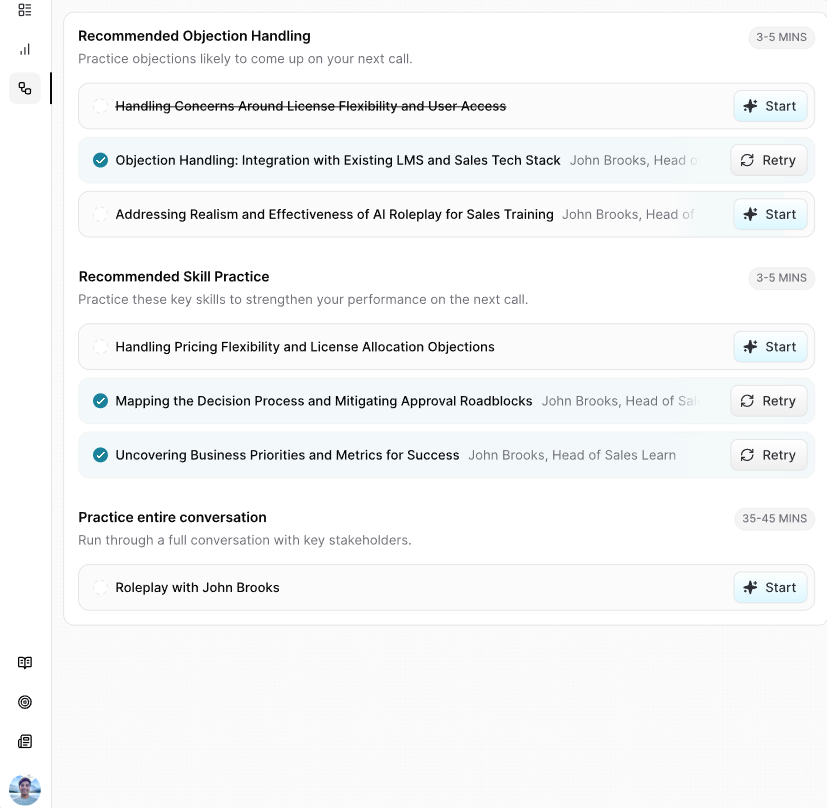
Where they converge is the closed loop. Both score real calls, identify where reps fall short, and route them toward practice on those weaknesses. Hyperbound Perform scores live calls and recommends targeted roleplay scenarios based on the gaps it detects. Exec's Call Scoring does the same: a low score on a real call generates a suggested AI roleplay on the matched skill, using the same rubric framework.
Source: Hyperbound
Both also use customizable scorecards aligned to the buyer's sales methodology. Whether your team runs MEDDIC, Challenger, or something proprietary, both platforms let you define the criteria for evaluating every call and roleplay.
The differences emerge in scope, depth, and where each platform draws the boundary of its product.
Hyperbound goes deeper on sales execution, Exec goes wider across teams
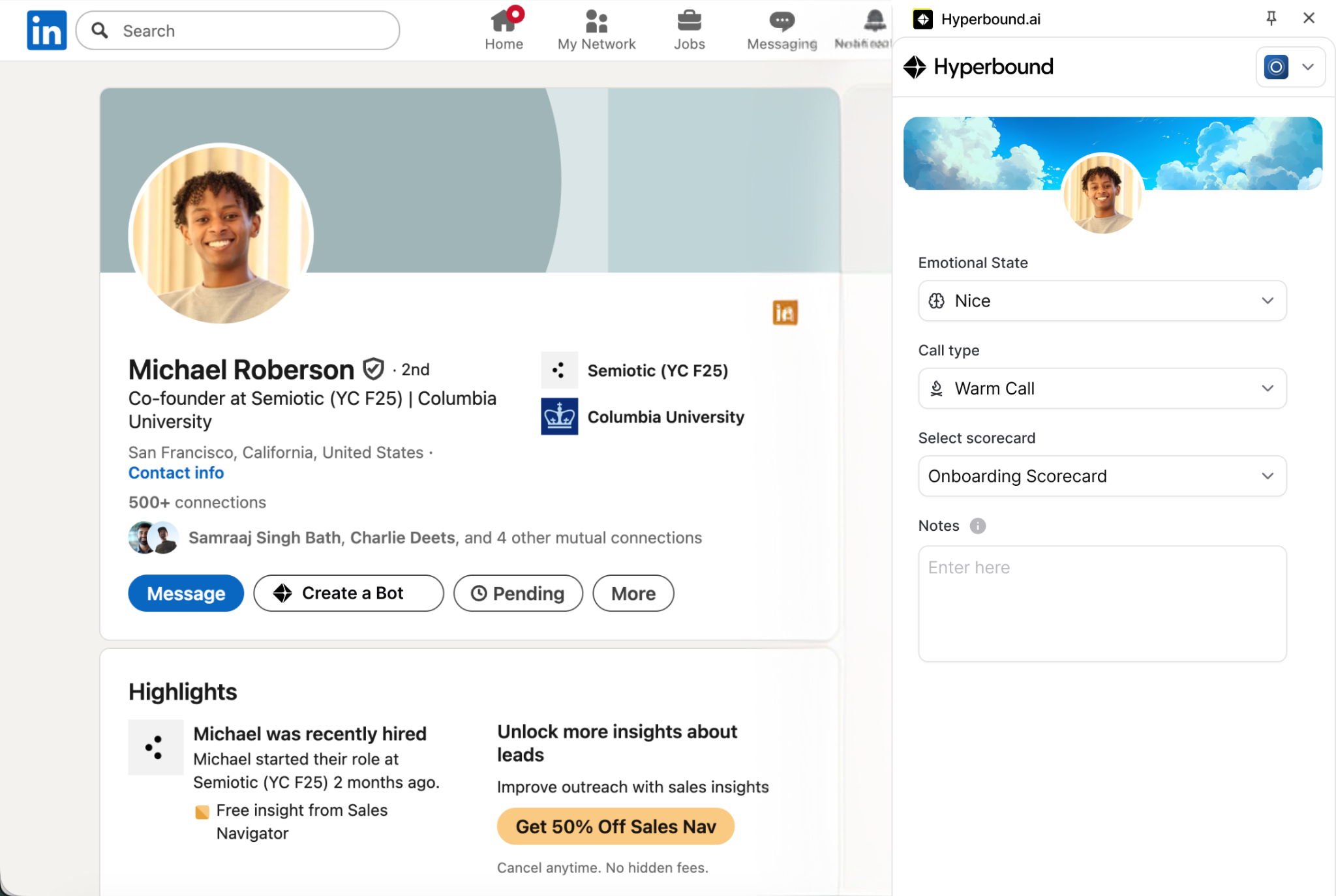
Hyperbound was built by and for sales teams. The six bot types map to the sales cycle: Cold Call, Warm Call, Discovery Call, Renewal Call, Check-in Call, and Focus Call. The Chrome extension that converts any LinkedIn profile into an AI prospect in one click tells you who this platform was designed for: reps preparing for a specific meeting with a specific person.
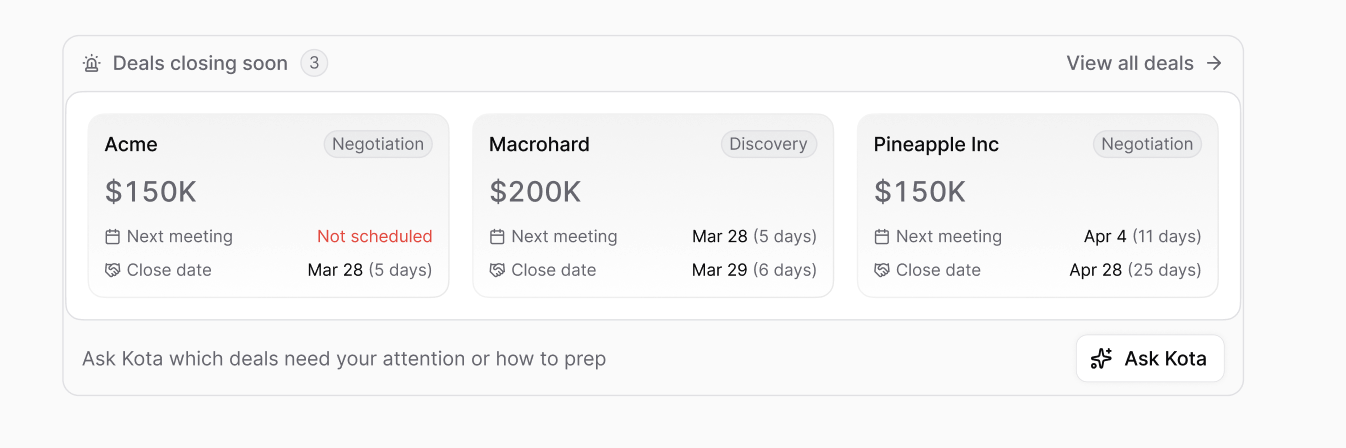
The product extends beyond training into pipeline management. Kota Activate, Hyperbound's AI revenue agent, reads signals across calls, emails, and CRM data to answer questions like "Which deals are at risk this quarter?" and "What should I focus on to move this deal forward?" It operates in Slack, inside the Hyperbound app, and through an MCP server for external AI clients. When Kota detects a risk pattern, it can generate a deal-specific roleplay tied to that scenario.
Source: Hyperbound
Exec takes a broader view. The platform targets four functional teams (Sales Enablement, Customer Success, Support, and L&D) across four industries (Technology and SaaS, Healthcare and Life Sciences, Financial Services, and Professional Services). The roleplay scenarios reflect this breadth: beyond sales objections and discovery calls, Exec supports practice for renewal negotiations, performance reviews, layoff notifications, change management announcements, behavioral interviews, and incident response.
Source: Exec
For organizations where conversation quality matters across the entire customer lifecycle (not just the sales cycle), Exec's wider scope is an advantage. For sales-led organizations that want training, coaching, and deal intelligence in one platform, Hyperbound's depth is harder to match.
AI roleplay: different design choices for the same goal
Both platforms deliver voice-based AI roleplay where reps speak naturally with an AI character that adapts in real time. Neither relies on scripted responses or text chat. But the design details diverge in ways that matter depending on your use case.
Bot creation. Hyperbound lets admins upload up to three files (call transcripts, ICP documents, enablement materials) and extracts persona details, objections, and context automatically. The Chrome extension creates a prospect-specific bot from any LinkedIn profile in one click. Exec's Scenario Studio uses a conversational AI interface where creators describe scenarios in plain language and get a draft in 1-2 minutes. Both approaches require minimal technical skill, but Hyperbound's LinkedIn integration makes pre-call prep for a specific upcoming meeting fast.
Source: Hyperbound
Multi-party scenarios. Hyperbound supports roleplay with up to four AI participants simultaneously, simulating buying-committee conversations where each bot holds independent priorities and objections. Exec does not document a comparable multi-party capability. For enterprise sales cycles involving multiple stakeholders, this is a clear Hyperbound advantage.
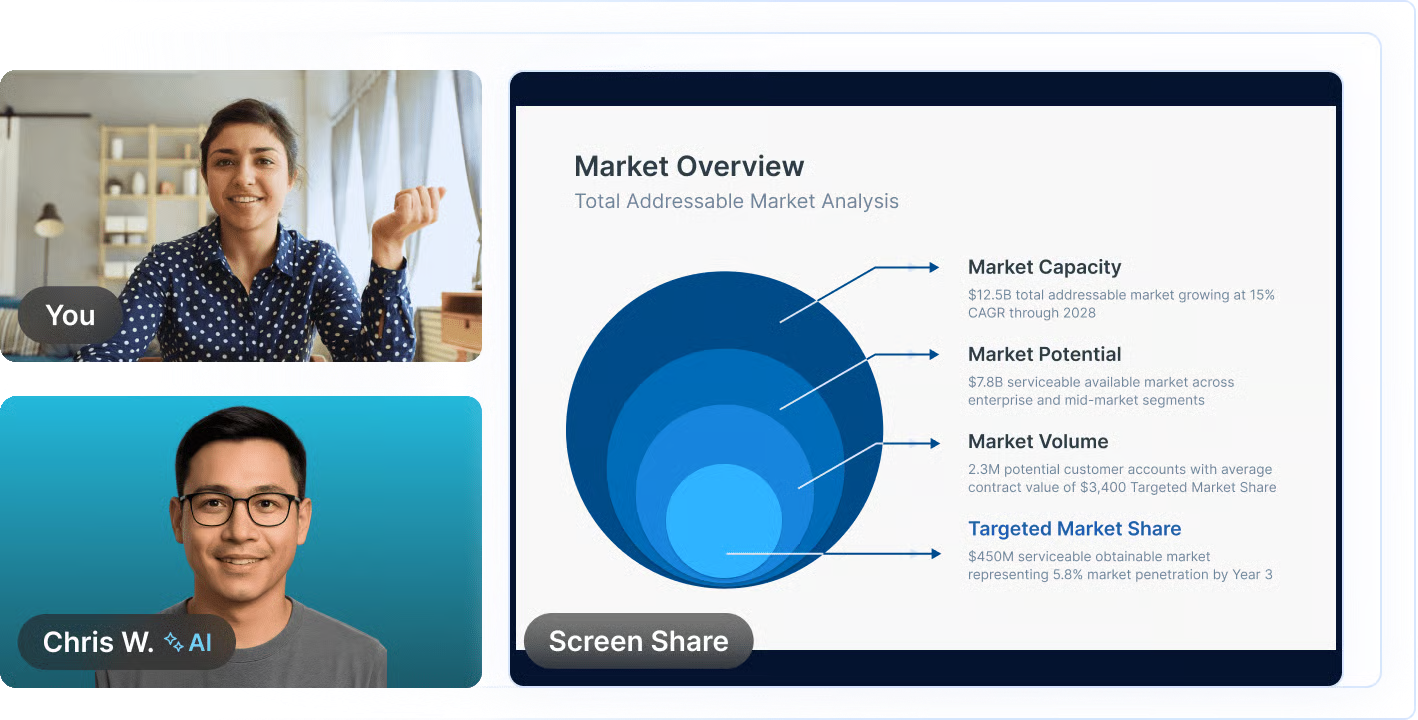
Screen sharing. Exec's screen-sharing feature lets an AI buyer see and respond to an actual product demo in real time. This enables demo certification where a sales engineer presents real slides to an AI audience that reacts to the on-screen content. Hyperbound offers a similar Vision-enabled capability on select bot types. Both platforms cover this use case, though Exec positions it more prominently.
Source: Exec
Post-session feedback. Both platforms provide AI-generated scorecards after each session. Exec adds an AI Coach that opens a chat interface with full session context. Reps can challenge specific scores against their transcript, request examples of better responses, or ask the AI Coach to step back into character for re-practice of a specific moment. Hyperbound's feedback surfaces the exact clip of the top-performing rep who handled the same situation well, providing a concrete behavioral model from the team's own data.
Language support. Hyperbound supports 30+ languages with feedback in both English and the native language. Exec offers multi-language roleplays on Professional and Enterprise plans without specifying the count.
Structured programs and coaching: Exec's breadth vs. Hyperbound's focus
This is where Exec and Hyperbound diverge most sharply.
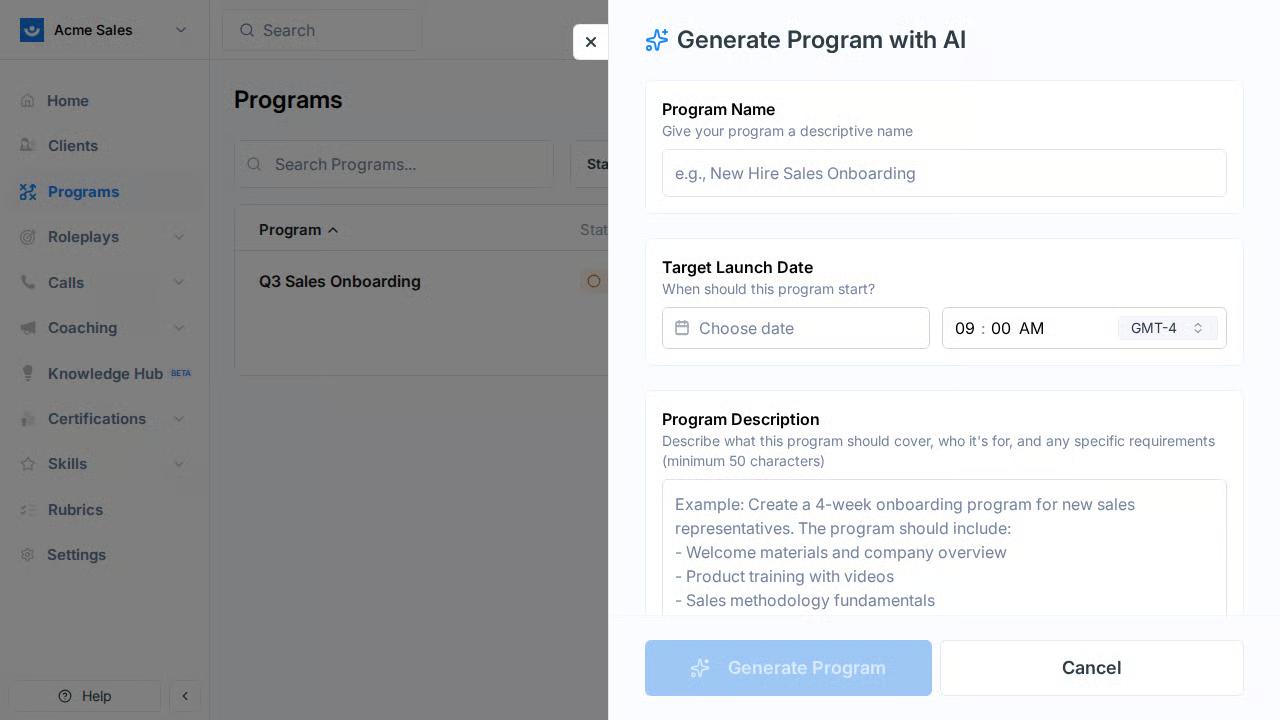
Exec's Programs feature lets L&D teams bundle multiple training activities (roleplays, videos, coaching sessions, surveys, articles, and action items) into a single cohort-based learning path with defined timelines, deadlines, prerequisite gating, and automated completion tracking.
An AI program builder can generate a full program structure from a plain-language description. Programs can be cloned for different departments, seniority levels, or regions. When linked to a certification, Exec evaluates participants and issues certificates to those who pass.
Source: Exec
The coaching module adds a human dimension. Exec's vetted network of 300+ coaches, drawn from over 20,000 applicants (acceptance rate under 1.5%), carry operational backgrounds at companies like Airbnb, Uber, Starbucks, and Salesforce. Coaching sessions are embedded within structured programs as tracked components, not standalone add-ons. A credit-based model ties spend to completed sessions.
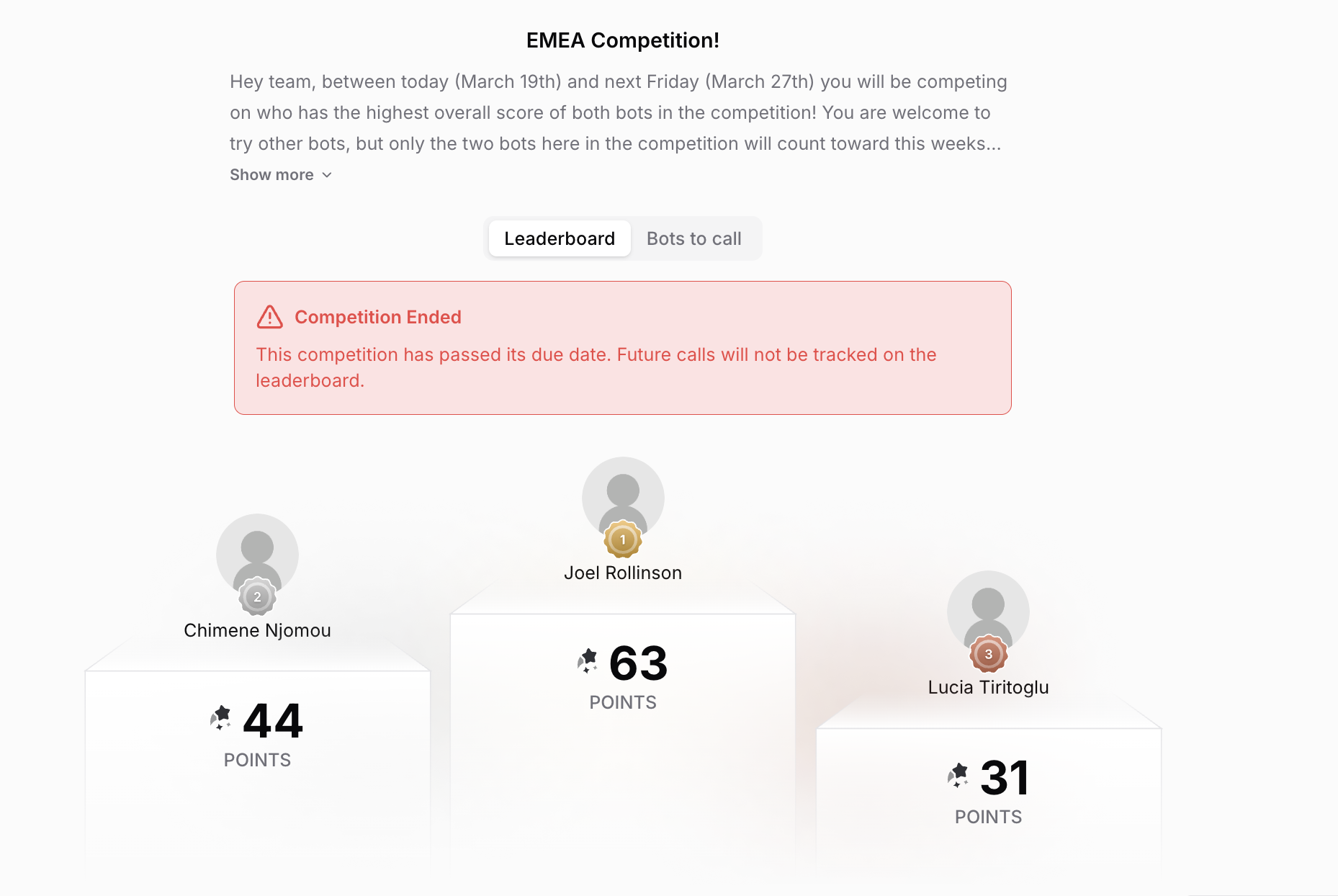
Hyperbound takes a different path. Instead of broad L&D infrastructure, it offers learning modules and certifications alongside competitions with live leaderboards and multi-bot brackets. These are sales-team engagement tools: time-bound challenges, limited call attempts, and scorecard-based rankings designed to drive voluntary practice.
Source: Hyperbound
For organizations with a dedicated L&D function running multi-week programs across departments, Exec's program builder and coaching network are built for that workflow. For sales teams where the priority is getting reps to practice more and compete against each other, Hyperbound's gamification drives adoption without the program administration overhead.
The intelligence gap that sits upstream of both platforms
Both Hyperbound and Exec make reps better at conversations. Neither tells reps which conversations to prepare for.
Consider how most teams use AI roleplay today: an enablement manager builds a set of generic scenarios (pricing objection, competitive displacement, executive discovery), assigns them to the team, and tracks completion. Reps practice. Scores improve. But the practice isn't connected to what's happening in the pipeline. The rep rehearsing a pricing objection may have three deals this week where the real blocker is a missing executive sponsor.
This is the gap ZoomInfo fills. Not as a replacement for Hyperbound or Exec, but as the intelligence layer that makes either platform more targeted.
ZoomInfo's Buyer Intent data tracks signals from 210 million IP-to-Organization pairings and 6 trillion+ new keyword-to-device pairings sourced monthly. When an account starts researching your competitor, ZoomInfo surfaces that signal. A rep preparing for that call can then practice competitive displacement in Hyperbound or Exec with real context behind the scenario, not a hypothetical.
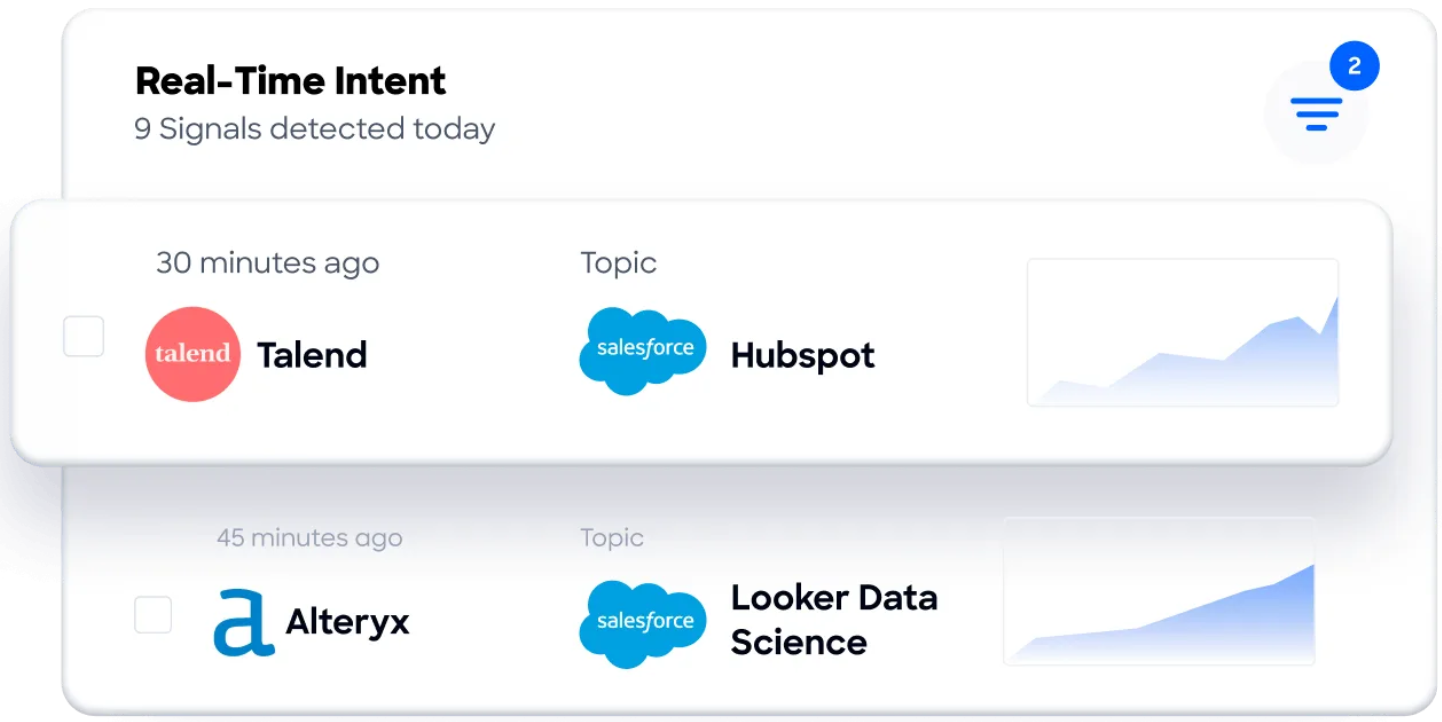
The GTM Context Graph goes further. By fusing ZoomInfo's B2B data with your CRM records, conversation transcripts, and behavioral signals, it captures not just what happened in a deal but why it happened. The CFO joined the last call and asked about six-month ROI: that's what accelerated the deal. The VP went quiet for eight days during an internal budget battle: that's what almost stalled it. This context turns practice from generic skill-building into preparation for specific deal dynamics.
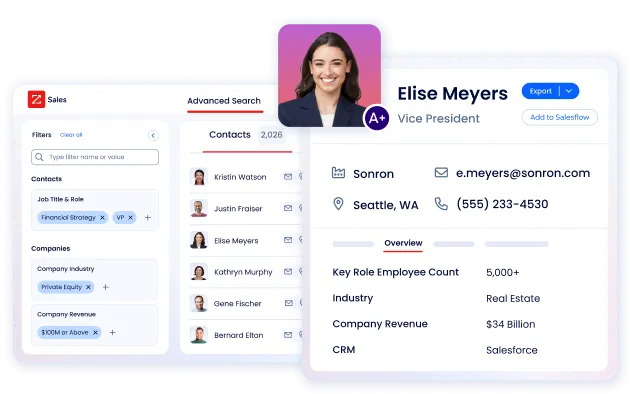
And at the point of action, verified contact data matters. ZoomInfo's database provides 120M direct-dial phone numbers and 200M+ verified business email addresses, with up to 95% accuracy on first-party data. The rep who practiced a cold call in Hyperbound or Exec can reach the person they rehearsed for, through a direct dial that rings rather than a gatekept main line.
"That combination of our internal CRM data, external signals, and AI that's given all that context has helped us craft very specific account- and persona-based messages. And people have responded to them right away." (Seismic)
Both Hyperbound and Exec integrate with CRM and conversation intelligence tools. ZoomInfo fits into that same stack, with 120+ marketplace integrations and API and MCP access that delivers its intelligence into any application, including the AI agents and workflows your team already uses.
"ZoomInfo gives us the information we need to execute. We don't have to go through and spend our time digging. It's already there, so we can be three steps ahead." (Vensure)
Call scoring and conversation intelligence compared
Both platforms score real calls, but access and depth differ.
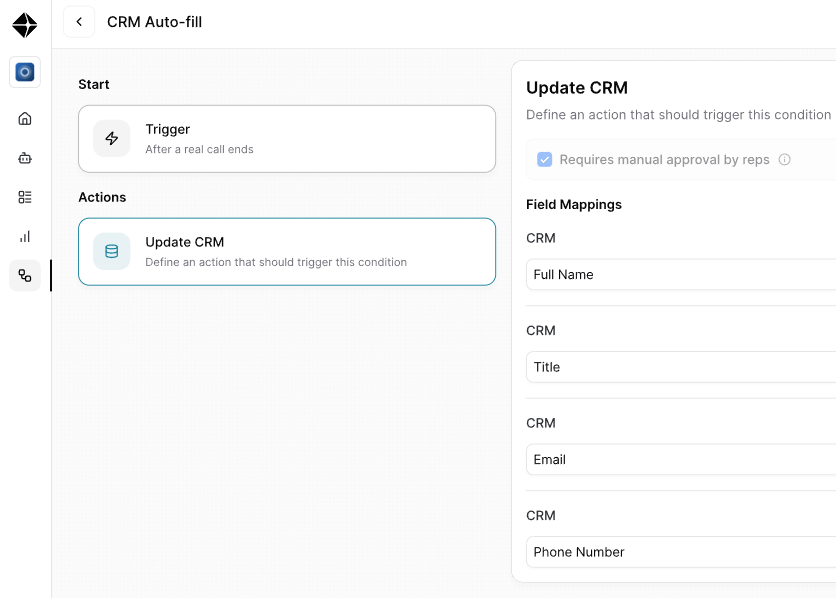
Hyperbound Perform is available on the paid Custom plan. It ingests calls through Hyperbound's native meeting recorder or through integrations with Gong, Chorus, Zoom, Google Meet, and Microsoft Teams. Scored calls feed into a Manager Dashboard with a Reps of Concern widget, pass rate tracking, and an objection handling matrix. The platform also auto-fills CRM fields from call data, eliminating post-call data entry.
Source: Hyperbound
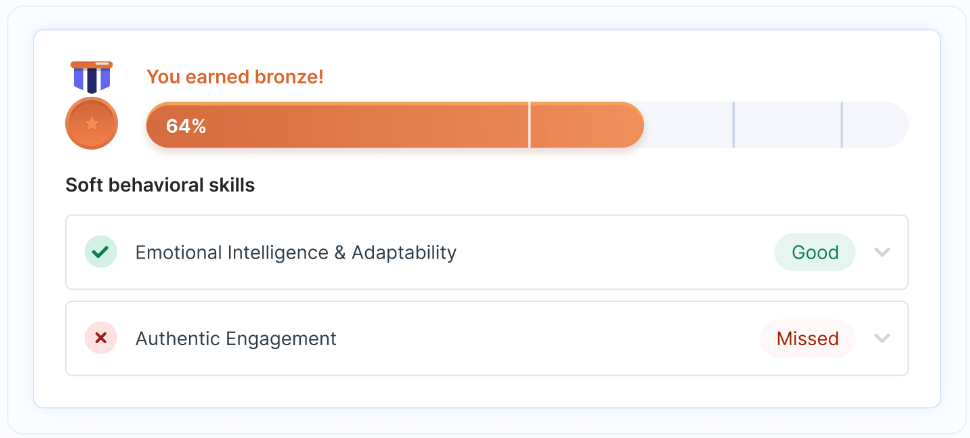
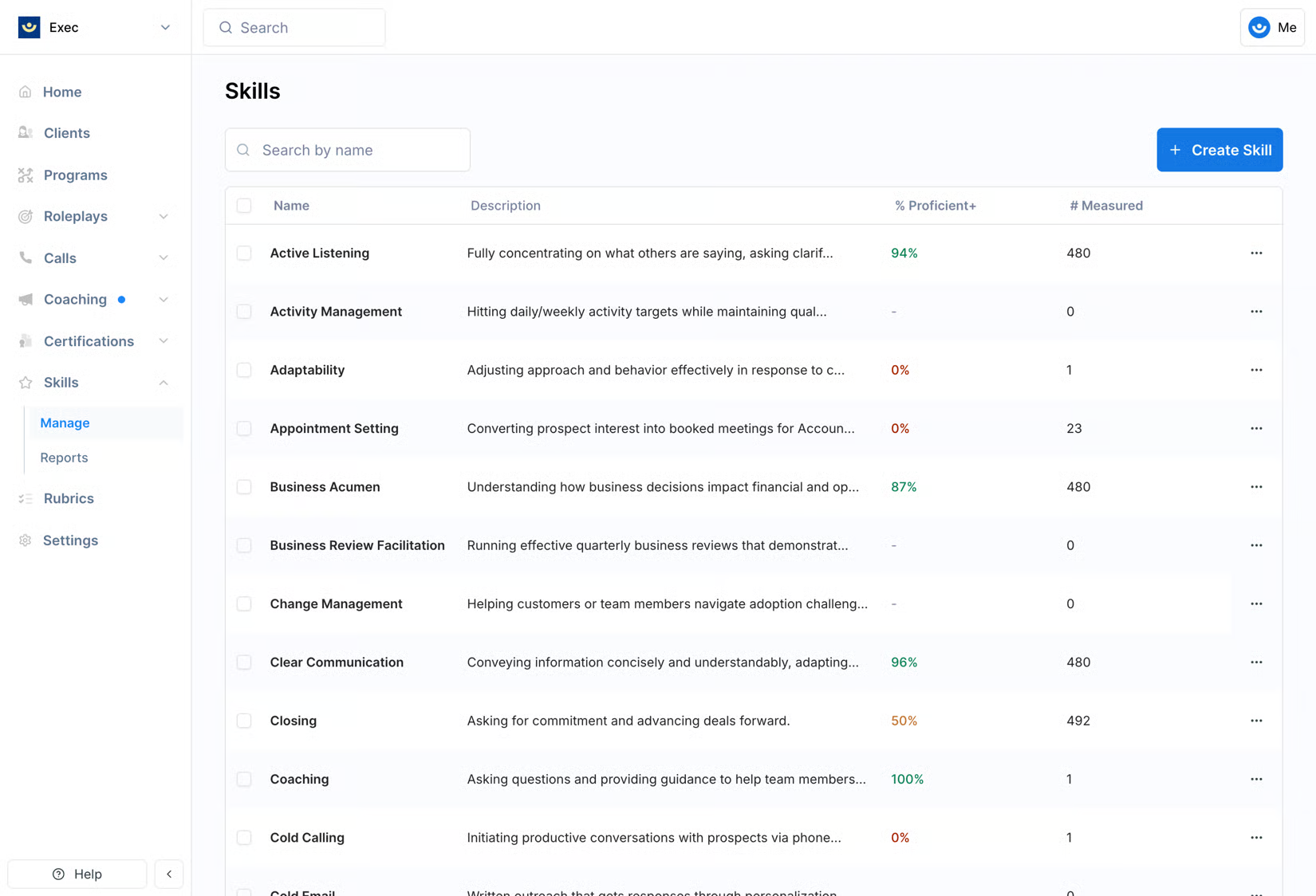
Exec Call Scoring is available only on the Enterprise tier. It integrates with Gong, Chorus, Zoom, and Microsoft Teams and scores each call against customizable rubrics with defined Good, Fair, and Poor behavior descriptions for each criterion. The Call Analyst lets managers ask plain-English questions to search across call transcripts using hybrid semantic-plus-keyword matching. A distinctive feature: call scoring and roleplay scoring use the same rubric framework, feeding into a unified skill proficiency score per competency.
Source: Exec
The tier gating matters. Organizations on Exec's Starter ($20/seat/month) or Professional ($39/seat/month) plans cannot analyze real call recordings at all. This breaks the Diagnose-Practice-Verify loop that Exec positions as its core value proposition for anyone below Enterprise pricing. Hyperbound includes call scoring on its paid plan without requiring an enterprise commitment.
For teams already using Gong or a similar conversation intelligence tool, both platforms integrate rather than replace. Hyperbound's positioning is explicit: "Call intelligence tools show you what happened. Hyperbound shows you what to do next." Both platforms aim to be the action layer on top of existing conversation data.
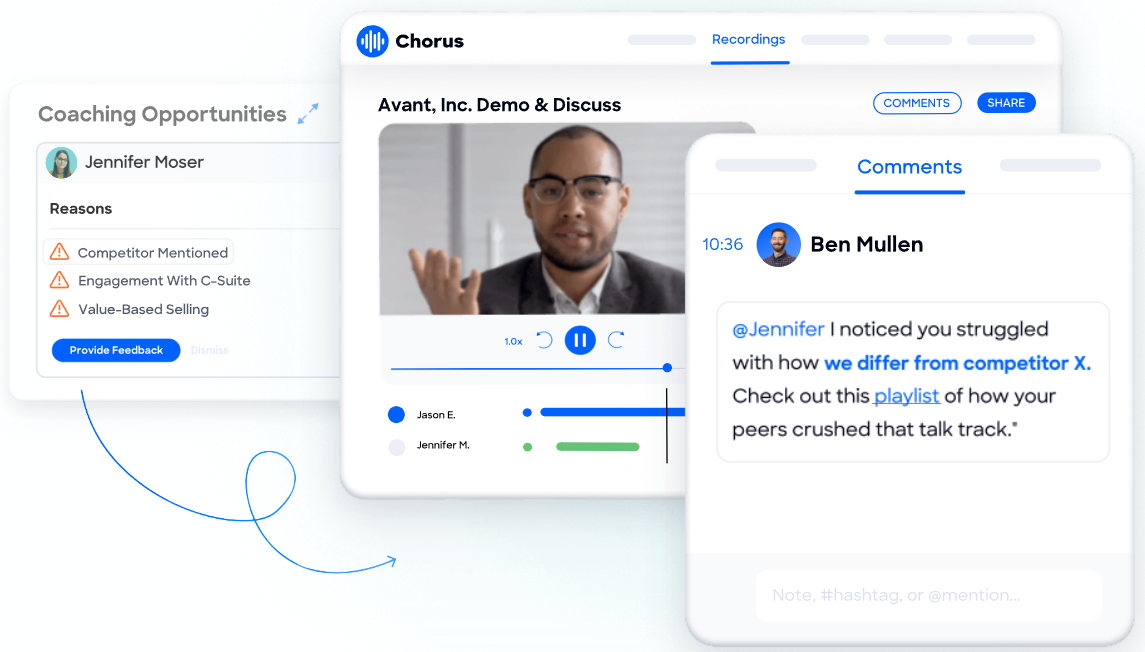
ZoomInfo approaches conversation intelligence differently through Chorus, which captures and analyzes customer calls, meetings, and emails. Chorus feeds the GTM Context Graph with the reasoning behind deal outcomes, not just the transcripts. This context layer lets ZoomInfo's AI understand why deals move or stall, intelligence that both Hyperbound and Exec can benefit from when connected to the same CRM and call recording infrastructure.
Pricing comparison
The three platforms occupy different price points and serve different budget categories.
Hyperbound uses a two-tier model: a permanently free plan and a custom-quoted paid plan. The free plan includes 9 pre-built bots (Cold Calls, Warm Calls, and Discovery Calls only), default AI scorecards, unlimited call time, and full transcription, but no custom bots, no custom scorecards, no real call scoring, and no LMS integrations. All paid pricing requires booking a demo. Per-seat rates, minimum commitments, and contract terms are not published.
Exec publishes tiered pricing:
Free: 3 basic seats, up to 5 programs, no AI roleplay access
Starter ($20/seat/month, annual, 5-seat minimum): 10 roleplay sessions per user per month, up to 50 custom scenarios, roleplay analytics, custom rubrics, screen sharing
Professional ($39/seat/month, annual, 15-seat minimum): Unlimited roleplay sessions, unlimited custom scenarios, priority support
Enterprise (custom pricing): Call scoring, coaching, SSO/SCIM, API access, dedicated CSM
The gap between Professional and Enterprise is significant. Call Scoring, the coaching network, and API access are all Enterprise-only. Teams on lower tiers get the practice component without the real-call diagnosis that makes practice most targeted.
ZoomInfo uses custom, consumption-based pricing with no published dollar amounts. Pricing scales around data access, API consumption, and AI activity. A permanent free tier (ZoomInfo Lite) provides access to the B2B database with 10 monthly export credits, and a 7-day free trial opens access to core platform features.
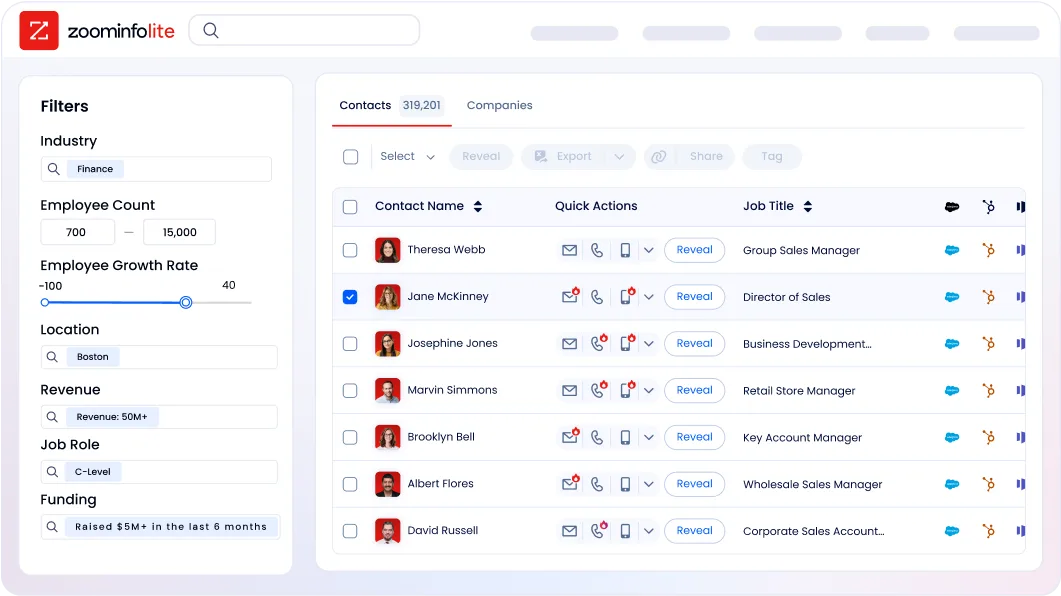
Since ZoomInfo serves a different function than Hyperbound or Exec, the pricing comparison isn't apples-to-apples. ZoomInfo is a data and intelligence investment; Hyperbound and Exec are training investments. Many organizations will use ZoomInfo alongside one of the training platforms rather than choosing between them.
Security and compliance
All three platforms maintain strong security postures, though the certifications differ.
Hyperbound holds SOC 2 Type II, ISO 27001, and GDPR certification, with enterprise SSO, SIEM support, and multitenancy. A dedicated Security Trust Center provides detailed documentation.
Exec holds SOC 2 Type II and SOC 3 certification with TLS 1.2+ encryption and logical customer data isolation. Exec commits that customer data is never used to train AI models. SSO (SAML/OIDC) and SCIM provisioning are Enterprise-only.
ZoomInfo carries the broadest certification stack: ISO 27001, ISO 27701, SOC 2 Type II, TRUSTe GDPR, and TRUSTe CCPA, all renewed annually. As a public company handling B2B contact data at scale, ZoomInfo's compliance infrastructure reflects the scrutiny that comes with its market position.
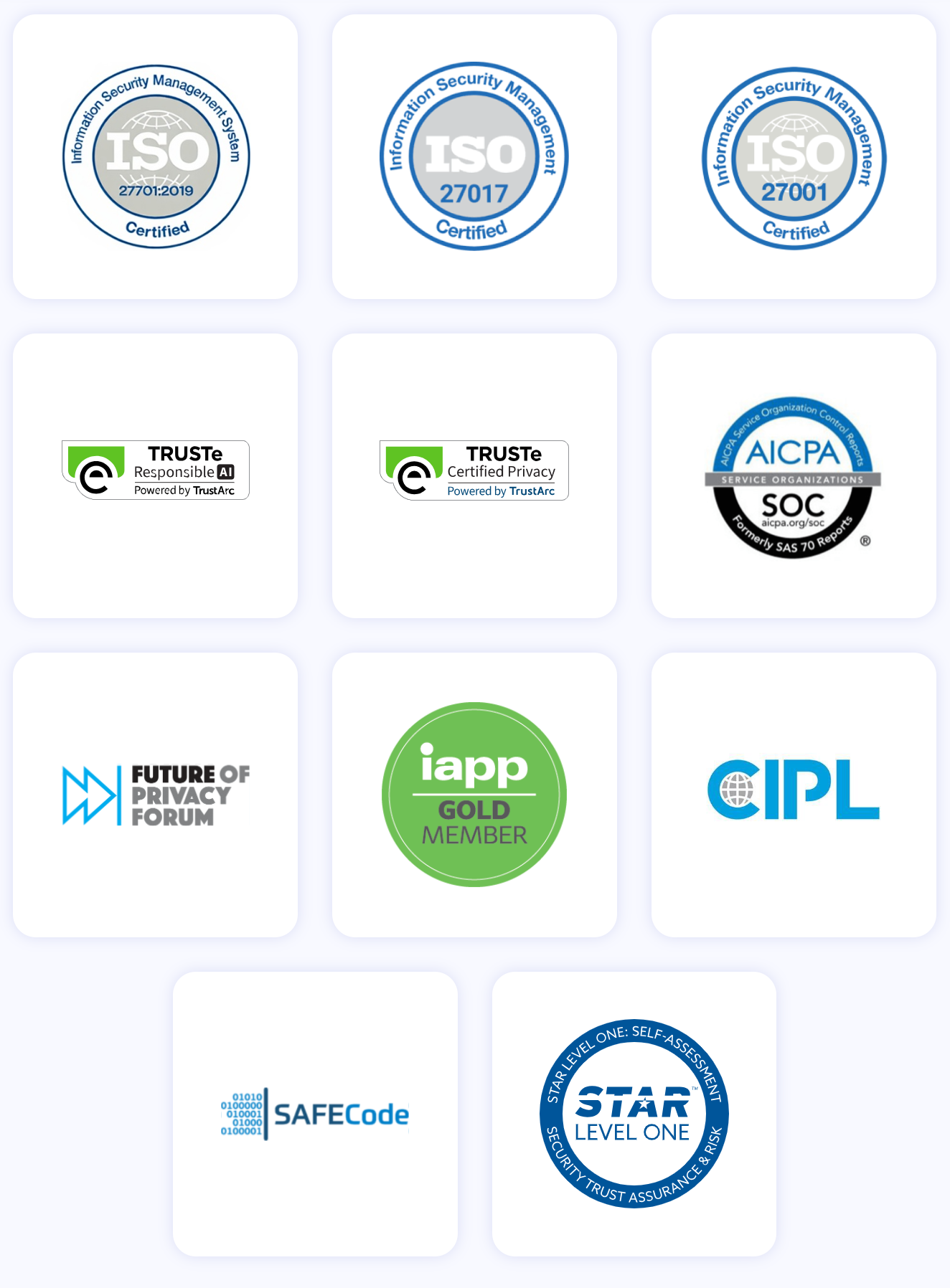
For regulated industries (healthcare, financial services), Exec's data sovereignty pledge and ZoomInfo's ISO 27701 privacy certification are the most relevant. Hyperbound's ISO 27001 and SOC 2 Type II cover the security controls most enterprise procurement teams evaluate first.
Hyperbound vs. Exec vs. ZoomInfo: Which should you choose?
These three platforms serve different roles in a revenue team's stack. The right choice depends on which problem you're solving first.
Choose Hyperbound if:
Your primary need is training and coaching sales reps specifically
You want AI roleplay, call scoring, and deal coaching in one platform
Building practice bots from LinkedIn profiles and real call transcripts matters to your workflow
Multi-party roleplay for buying-committee simulation is important
You want pipeline intelligence (Kota Activate) alongside training, not in a separate tool
Choose Exec if:
You need training that extends beyond sales into customer success, support, and leadership
Structured L&D programs with cohort management, certifications, and human coaching are priorities
Your team values a post-session AI Coach that enables coaching dialogue, not just a scorecard
Screen-sharing roleplay for demo and presentation certification is a key use case
You have the budget for Enterprise pricing to unlock Call Scoring and the coaching network
Use ZoomInfo alongside either platform if:
You want your training investment connected to real account intelligence, not generic scenarios
Knowing which accounts are in-market, who the decision-makers are, and what signals matter would make your roleplay practice more targeted
Your reps need verified direct dials and business emails so the conversations they practice for actually happen
You want one intelligence layer across your entire GTM stack, not siloed data in each tool
Explore ZoomInfo Lite for free or start a 7-day trial to see how account intelligence transforms your team's preparation.
The most effective revenue teams don't choose between better training and better intelligence. They build both layers: a training platform that develops conversation skills (Hyperbound or Exec) and an intelligence platform that ensures those skills are applied to the right accounts at the right time (ZoomInfo). Practice without context produces generalists. Context without practice produces knowledgeable reps who still fumble the call. The combination is where the real improvement happens.
"It's not just the data itself. It's more about the right data at the right time to help us reach out with the right message across that full buyer journey." (Redwood Logistics)
Hyperbound vs. Exec vs. ZoomInfo FAQ
What is the core difference between Hyperbound and Exec?
Hyperbound is a sales-focused platform combining AI roleplay, real call scoring, and AI deal coaching (Kota Activate) into one product for revenue teams. Exec is a broader training platform covering sales, customer success, support, and leadership development, with structured program management, automated certifications, and a vetted network of 300+ human coaches. Hyperbound goes deeper on pipeline execution; Exec goes wider across organizational training needs.
How does ZoomInfo fit alongside Hyperbound or Exec?
ZoomInfo is not a training platform. It provides the B2B data intelligence layer (500M contacts, 100M companies, buyer intent signals, and the GTM Context Graph) that makes training on either platform more targeted. Instead of practicing generic scenarios, reps can prepare for specific accounts that ZoomInfo has identified as in-market, with verified contact data to reach the right people and contextual intelligence about why deals are moving or stalling.
Which platform is better for reducing new-hire ramp time?
Both have strong published results. Vanta cut ramp time by 60% using Hyperbound, going from 210 days to 72 while scaling their BDR team 4x. Exec reports a 60% ramp-time reduction on its sales training solutions page and claims a 92% program completion rate across deployments. Hyperbound emphasizes high-volume practice through gamification and competitions; Exec uses structured programs with sequenced activities, prerequisites, and human coaching.
Is call scoring available on both platforms' basic plans?
No. Hyperbound includes real call scoring on its paid Custom plan (pricing requires a demo). Exec restricts Call Scoring to its Enterprise tier, meaning teams on Starter ($20/seat/month) or Professional ($39/seat/month) cannot analyze real call recordings. This is a significant difference for teams that want the full practice-to-performance loop without committing to enterprise pricing.
Can I use Hyperbound or Exec with my existing conversation intelligence tool?
Yes. Both integrate with major call recording and conversation intelligence tools. Hyperbound connects with Gong, Chorus, Zoom, Google Meet, Microsoft Teams, and others for call ingestion. Exec integrates with Gong, Chorus, Zoom, and Microsoft Teams for Call Scoring. Both position themselves as an action layer on top of existing conversation data rather than a replacement for tools you already use.
Which platform handles non-sales training better?
Exec is the stronger choice for training beyond sales. It targets customer success (with reported +18% renewal rate improvement), support (50% reduction in agent ramp time), and leadership development (+34% manager effectiveness scores). Its Programs feature supports 8 component types (including coaching sessions, videos, surveys, and articles) organized into cohort-based learning paths with automated certifications. Hyperbound's product design, from bot types to deal coaching, is built for revenue-generating conversations.
What security certifications do the platforms hold?
Hyperbound holds SOC 2 Type II, ISO 27001, and GDPR certification. Exec holds SOC 2 Type II and SOC 3 certification, with a commitment that customer data is never used to train AI models. ZoomInfo carries ISO 27001, ISO 27701, SOC 2 Type II, TRUSTe GDPR, and TRUSTe CCPA certifications, all renewed annually. All three support enterprise SSO, though Exec gates SSO to its Enterprise tier.
How transparent is each platform's pricing?
Exec is the most transparent, publishing per-seat pricing for Starter ($20/seat/month) and Professional ($39/seat/month) with clear feature breakdowns per tier. Enterprise pricing is custom. Hyperbound publishes no pricing; every paid plan requires booking a demo. ZoomInfo also uses custom, consumption-based pricing with no published dollar amounts. Both Hyperbound and ZoomInfo offer permanent free plans as entry points.
Comparing Hyperbound and Exec? These related breakdowns go deeper:
