
IQVIA occupies a distinct position in life sciences. Formed from the 2016 merger of Quintiles and IMS Health, it combines the world's largest pharmaceutical market data business with one of the first global contract research organizations, creating a $15.4 billion revenue entity with approximately 88,000 employees across 100+ countries.
For pharmaceutical companies, that means one partner can handle clinical trials, commercial analytics, real-world evidence, and regulatory compliance.
To create this IQVIA review, we analyzed the platform in detail. It's the right choice if:
You're a pharmaceutical or biotech company needing one partner across clinical development and commercial operations
You require global clinical trial execution at enterprise scale
You need access to the largest proprietary healthcare data assets for market intelligence and real-world evidence
You want healthcare-specific AI built for regulated environments
You operate across multiple countries and need a vendor with regulatory expertise in each
However, IQVIA might not be the right choice if:
You're a small biotech needing a focused CRO for a single early-stage asset
You want self-serve analytics tools you can deploy without a multi-month implementation
You need published pricing before entering a sales conversation
You require B2B sales intelligence for contacts beyond healthcare
You prefer quick-start platforms over enterprise engagements
For life sciences companies that also need to find and engage business contacts outside the healthcare professional universe (partners, enterprise buyers, investors, technology vendors), ZoomInfo provides the B2B intelligence layer that IQVIA's healthcare-focused platform doesn't cover.
As a B2B go-to-market platform, ZoomInfo offers 500M contacts, 100M companies, 135M+ verified phone numbers, and 200M+ verified business email addresses, along with intent signals, AI-powered prospecting, and go-to-market orchestration for any B2B industry.
We've included an overview of ZoomInfo at the end of this review for life sciences teams whose go-to-market needs extend beyond healthcare. You can start with the free trial here.
What is IQVIA?
IQVIA Holdings, Inc. is a global life sciences data, technology, and services company headquartered in Durham, North Carolina.
Source: IQVIA
The company was created through the October 2016 merger of two industry pillars: IMS Health, founded in 1954 as the standard source of pharmaceutical prescription and market-share data, and Quintiles, founded in 1982 by biostatistics professor Dennis Gillings as one of the world's first dedicated contract research organizations.
The combined company operated as QuintilesIMS before rebranding to IQVIA in November 2017: "I" for IMS Health, "Q" for Quintiles, and "VIA" signifying the shared path forward.
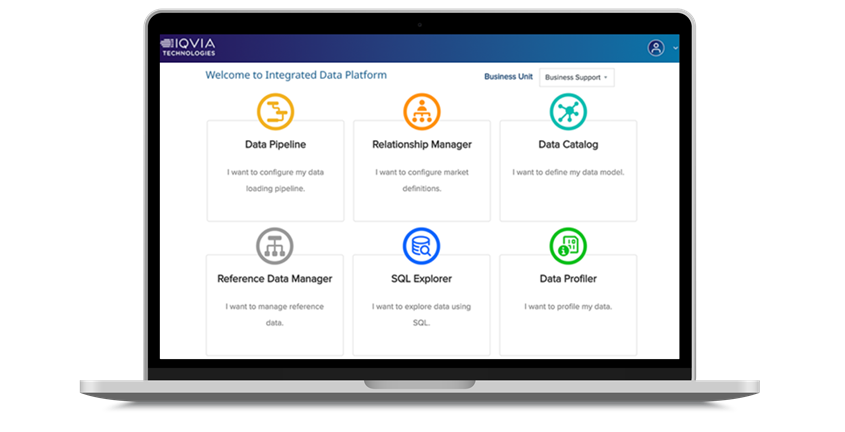
Today, IQVIA serves pharmaceutical, biotech, medical device, and healthcare organizations under the framework of IQVIA Connected Intelligence, which combines proprietary healthcare data, domain expertise, and AI-powered analytics across clinical, commercial, and regulatory workflows.
Led by Chairman and CEO Ari Bousbib since 2010, IQVIA trades on the NYSE under the ticker IQV with a market capitalization of approximately $34–38 billion.
IQVIA's primary buyers are large pharmaceutical manufacturers, emerging biopharma companies, generics makers, medical device companies, and healthcare payers and providers.
The company works with 22 of the top 25 pharmaceutical companies and has supported 800+ emerging biopharma companies through dedicated offerings. It ranks 282 on the Fortune 500 and 680 on the Forbes Global 2000.
IQVIA Pros & Cons
Pros | Cons |
|---|---|
Proprietary healthcare data covering 100+ countries | Enterprise complexity limits access for smaller organizations |
Full molecule-to-market services under one vendor | No published pricing; all contracts are quote-based |
$31.1 billion R&D contracted backlog provides execution certainty | Steep learning curve on software products |
Healthcare-grade AI with proprietary Med-R1 8B medical reasoning model | Data queries restricted to top 20 peers at granular levels |
Global reach with ~88,000 employees across 100+ countries | Premium pricing over specialist competitors |
Industry recognition (Everest Group Leader, Fierce CRO Award) | Exposure to biotech funding cycle fluctuations |
Strong free cash flow ($2.1B in FY2024) funding continued investment | No free trial or self-serve product access |
IQVIA Review: How it Works & Key Features
Clinical Trial Execution: IQVIA runs global trials from Phase I through post-market with data-driven site selection and patient recruitment.
IQVIA's Research & Development division is one of the world's largest CRO operations, with approximately 51,000 R&D Solutions employees.
The service covers every phase of drug development: early-phase trials through dedicated Phase I units (with 41 GxP-qualified sites across 6 continents, 2,424 bed capacity, and 536 Phase I studies involving 28,122 subjects over the past five years), Phase IIb/III pivotal trials, and post-market lifecycle work.
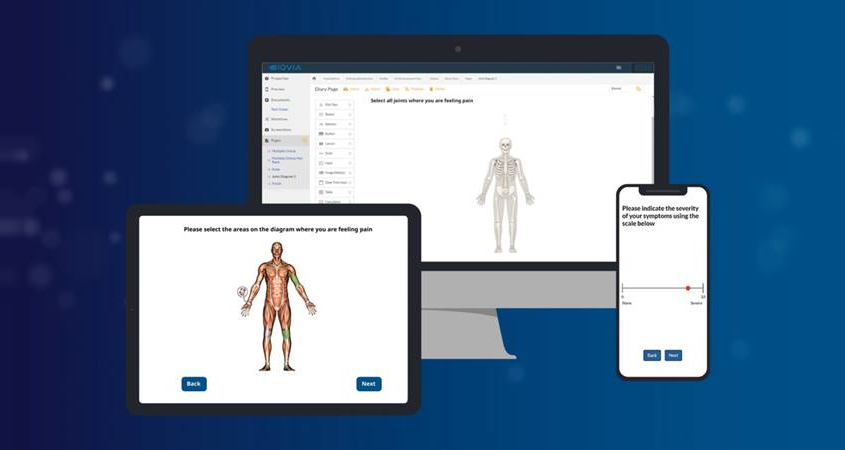
The clinical platform uses IQVIA's proprietary data to speed up slow processes. The Planning Suite runs enrollment simulations and models country/site mixes before a study launches.
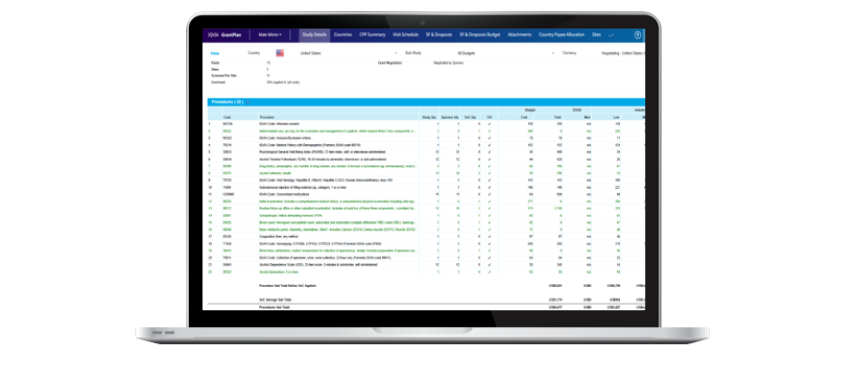
Its Activity Schedule Designer has delivered up to 40% reduction in protocol amendments and 30-day acceleration in site selection. GrantPlan, the budgeting tool used in 76% of global clinical trials, provides fair-market-value costing at the line-item level.
The Site Suite handles site activation, delivering a 22% reduction in site start-up cycle times, with 95% of sites recommending it to peers. Patient recruitment draws on a network of 1,100+ vetted sites across 67 countries and 350+ specialty recruitment partners, driving 2x growth in recruitment rates at supported versus unsupported sites.
The "one SOP, one platform, one project manager" model keeps continuity from Phase I through Phase IIa, removing the friction that occurs when sponsors hand off an asset between CROs. IQVIA was also recognized as a leader in the 2024 IDC MarketScape for DCT technology, integrating eConsent, eCOA, eSource, IRT, telemedicine, and wearable devices.
The R&D Solutions segment ended 2024 with a contracted backlog of $31.1 billion, up 5.5% year-over-year at constant currency, with approximately $7.9 billion expected to convert in the following 12 months.
Source: IQVIA
Commercial Analytics & HCP Engagement: IQVIA tracks over 90% of global pharmaceutical sales and coordinates engagement for field teams.
IQVIA's Commercialization suite rests on a proprietary data foundation no competitor has replicated.
MIDAS tracks pharmaceutical sales across 95 countries, covering 1.8 million products and 600 diseases, including 35 tumor types and 85,000+ price records across major markets.
IQVIA OneKey maintains reference data on 25 million healthcare professionals and 6 million healthcare organizations in 118 countries. The company also aggregates 1.2 billion+ de-identified patient records for patient journey mapping at population scale.
On top of this data sits the analytics layer. Commercial Analytics modules use 40+ AI/ML models for forecasting, competitive analysis, targeting, and next-best-action recommendations. Published results include 95x more undiagnosed patients identified for ultra-rare diseases, a 27% increase in brand conversions for triggered HCPs, and 35% prescription uplift with predictive modeling.
The Orchestrated Customer Engagement (OCE) platform connects field representatives, digital channels, and medical affairs teams into coordinated workflows. OCE serves 400+ customers across 130+ countries and embeds AI-driven next-best-action recommendations into daily field operations. One client reached over 80% end-user adoption by week four after go-live.
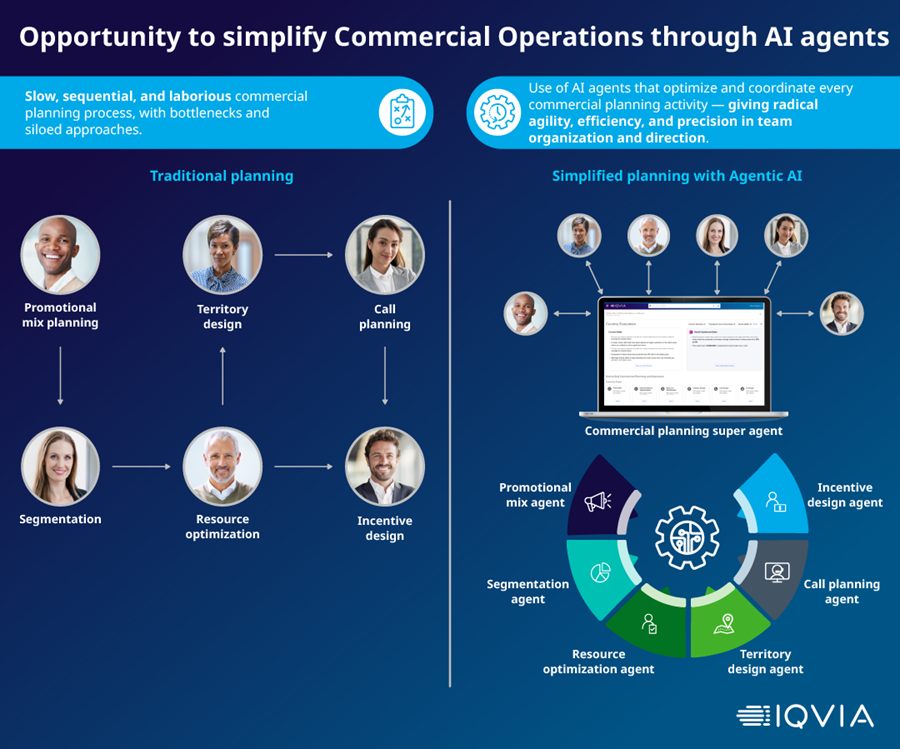
More recently, IQVIA deployed Commercial Agentic AI across four agent families. The Field Force Agent reported a 15%+ increase in multichannel call equivalents. The Commercial Planner Agent reported 30–40% improvement in forecast accuracy. The Global Market Insights Agent delivers pharmaceutical market views via natural language queries in minutes.
Source: IQVIA
Real-World Evidence: IQVIA generates post-market evidence from what it calls the world's largest health data catalog.
Real World Evidence is where IQVIA's data advantage is most visible.
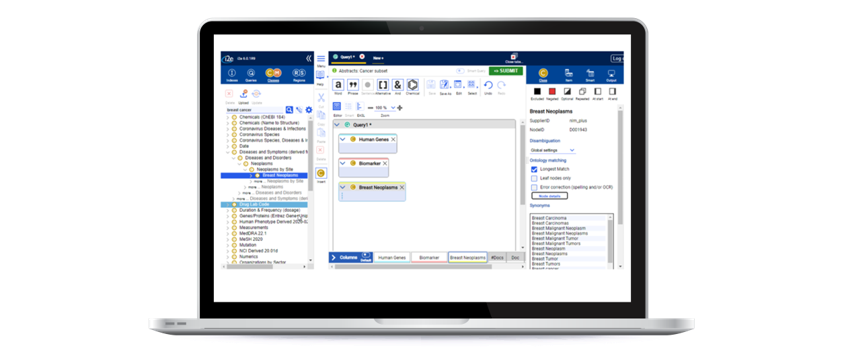
The Analytics Research Accelerator (ARA) surfaces a catalog of 4,600+ global data assets across 3,700+ curated sources spanning 100+ countries, searchable via 250+ variables. The underlying corpus draws from 1.2 billion+ de-identified patient records sourced from 150,000+ data suppliers across 60+ petabytes of data.
The IQVIA NLP Platform converts unstructured clinical text into structured data, processing 12,000+ documents per second with 95% accuracy. It enables 12x faster clinical endpoint extraction and 70x faster phenotype curation, with up to 99% reduction in chart review burden. Eighteen of the top 20 pharma companies and the US FDA use the platform.
Source: IQVIA
For market access and regulatory submissions, IQVIA's Health Economics & Value services cover modeling, indirect treatment comparisons, and HTA submissions across EMA, FDA, NICE, G-BA, and other national bodies. The team includes over 1,600 MDs and 2,000 PhDs across 12 therapeutic centers of excellence. ISR surveys have rated IQVIA the preferred RWE provider for 9 consecutive years.
The Evidence Networks architecture supports federated data access, keeping data at its source for local compliance (GDPR, HIPAA, country-specific rules) while enabling global multi-country analytics.
AI & Connected Intelligence: IQVIA has deployed 150+ AI agents and built a proprietary medical reasoning model.
IQVIA's AI strategy operates under the Healthcare-grade AI brand, emphasizing precision and auditability for regulated environments.
The IQVIA.ai platform, launched in March 2026 on NVIDIA NIM microservices, serves as an agentic AI command center. By early 2026, 19 of the top 20 pharmaceutical companies had incorporated IQVIA agents into their workflows.
The company's most notable AI development is Med-R1 8B, a proprietary 8-billion-parameter medical reasoning model. Despite being roughly 200x smaller than GPT-4 by parameter count, Med-R1 8B reportedly outperforms it on PubMedQA and averages 77.44% across standardized medical benchmarks (MedQA, PubMedQA, MedMCQA).
The model uses reinforcement learning and ontology-enhanced architecture to interpret clinical data and explain its reasoning step-by-step for clinician validation.
Specific agents already deliver measurable results. The Clinical Data Review Agent cuts review timelines from seven weeks to as little as two. The Literature AI Platform delivers 75% faster literature reviews.
The Clinical Trial Financial Suite has processed $15 billion+ in payments across 200+ geographies, with 90% of top 20 pharma companies using GrantPlan. Across the full AI platform, IQVIA reports 97% accuracy in production testing and 100+ AI-related patents filed.
Source: IQVIA
AI governance rests on five principles (Fairness, Transparency, Respect, Accountability, and Auditability), backed by 200+ peer-reviewed AI publications. The NVIDIA partnership provides access to NIM Agent Blueprints, NeMo Customizer, and NeMo Guardrails for agent development and deployment.
Where IQVIA Falls Short
IQVIA's scale and specialization give it real advantages for large pharmaceutical operations. But the same design choices create friction for certain buyers.
Enterprise-Only Accessibility. IQVIA does not publish pricing, offer free trials, or provide self-serve product access. Every engagement begins with a sales conversation and multi-month contract negotiation.
For smaller biotech companies or teams evaluating options, this means committing significant time to procurement before seeing the product. The closest public resource is the IQVIA Institute for Human Data Science, which publishes research reports, but that is not a product trial.
Software Learning Curve. Gartner Peer Insights reviews of IQVIA RIM Smart consistently flag a steep learning curve, occasional system lag, and limited customization. These patterns recur across IQVIA's regulatory and safety technology suite.
A typical OCE rollout, for example, runs through an eight-week proof of concept followed by three months of integration before any reps go live. That timeline reflects enterprise rigor, but it also means months before teams see value.
Data Query Constraints at Granular Levels. G2 reviewers note that when building queries across multiple hierarchical levels, sales data is restricted to the top 20 peers. Users must strip out levels to access full datasets, a real constraint for teams running multi-tier segmentation or niche competitive analysis.
Premium Cost Structure. IQVIA charges a premium over smaller specialist competitors. For emerging biopharma companies with sub-$5M engagement budgets, the cost and contracting complexity can put IQVIA at a disadvantage against leaner CROs like Medpace or Fortrea. Financial analysts have also flagged elevated debt-to-equity ratios and declining gross margins as longer-term concerns.
Healthcare-Only Data Universe. IQVIA's data assets cover the healthcare ecosystem: HCPs, prescribing patterns, patient records, clinical outcomes. Life sciences companies that also need to find and engage non-healthcare business contacts (co-development partners, enterprise technology buyers, investors, consultants, service providers) will find no coverage in IQVIA's platform.
This is not a flaw; IQVIA was built for healthcare intelligence, and that focus is what makes its healthcare data so strong. But the gap means life sciences companies with B2B go-to-market needs beyond HCP engagement must look elsewhere for business contact data, company intelligence, and buying signals.
These limitations follow naturally from building a platform for enterprise-scale life sciences operations. They create opportunities for complementary tools that address the accessibility, cost, and data coverage gaps IQVIA's design choices leave open.
For B2B Intelligence Beyond Healthcare: ZoomInfo
IQVIA's OneKey database covers 25 million healthcare professionals and 6 million healthcare organizations. That is the healthcare universe.
But life sciences companies don't operate exclusively within it. Business development teams pursue co-development and licensing partnerships. Commercial teams sell to health systems, payers, and enterprise buyers. Investor relations teams engage financial institutions. These contacts aren't HCPs, and they aren't in IQVIA's database.
ZoomInfo provides the B2B intelligence layer for these non-healthcare go-to-market needs.
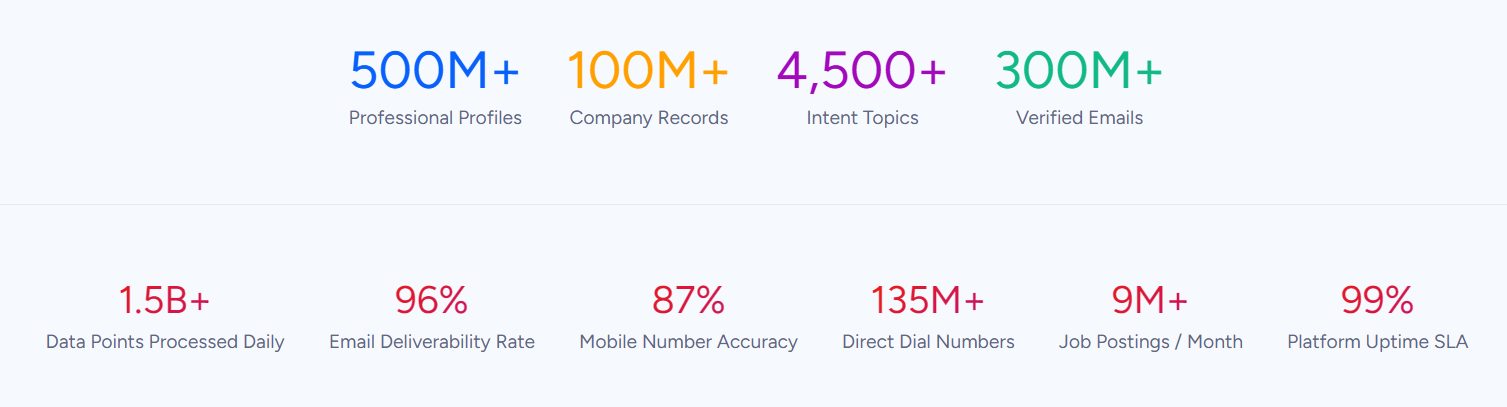
Built on 500M contacts, 100M companies, 135M+ verified phone numbers, and 200M+ verified business email addresses, ZoomInfo covers the business contacts and company intelligence that IQVIA's healthcare-focused platform does not.
B2B Data at Scale: ZoomInfo operates the largest verified B2B contact and company database.
ZoomInfo's data spans three dimensions: identity data (who buyers are and how to reach them), company context (firmographics, org charts, technographics covering 30,000+ technologies across 200+ categories), and dynamic signals that reveal when accounts are actively in-market.
The data is maintained through multiple sources: automated ML scanning of 28 million site domains daily, third-party partner data covering 95 million businesses, a community of 200,000+ ZoomInfo Lite users who share data back, and an in-house Data Training Lab of 300+ human researchers. First-party data reaches up to 95% accuracy.
In a Fortune 500 competitive RFP analyzing 25 million contacts across vendors, an independent consultant concluded that "no other competitor came even close."
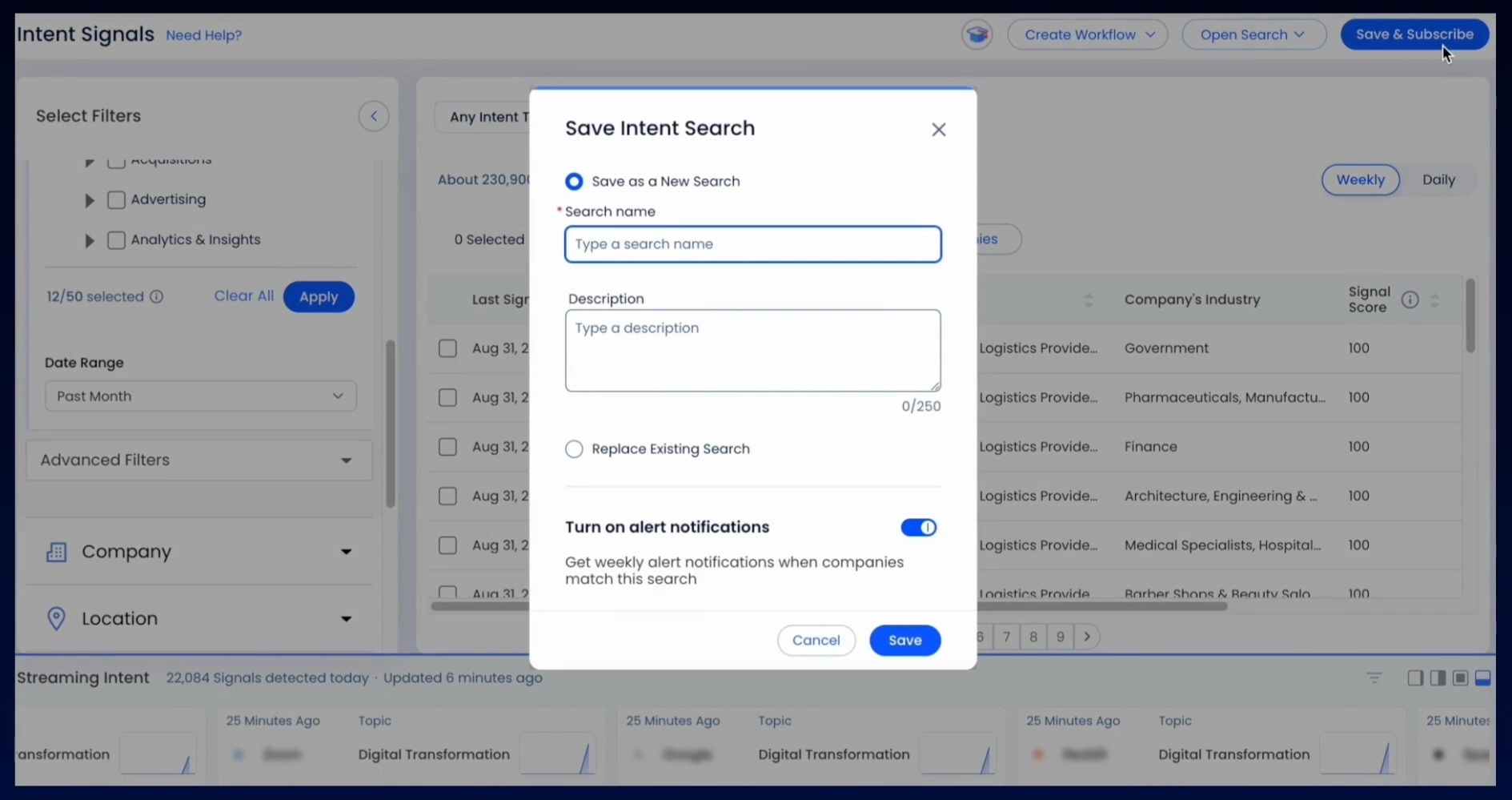
Buyer Intent data tracks signals from 210 million IP-to-Organization pairings and 6 trillion+ new keyword-to-device pairings sourced monthly. For life sciences companies, this means spotting when a potential partner, investor, or enterprise buyer is actively researching topics relevant to your business, not just healthcare prescribing activity.
Source: ZoomInfo
"ZoomInfo gives us the information we need to execute. We don't have to go through and spend our time digging. It's already there, so we can be three steps ahead," said William Kenimer, Vice President of Revenue Operations. (Vensure)
AI-Powered Intelligence: The GTM Context Graph captures not just what happened in a deal, but why.
ZoomInfo's GTM Context Graph fuses ZoomInfo's B2B data with a customer's own CRM records, conversation intelligence, email interactions, and behavioral signals into a single intelligence layer that processes 1.5B+ data points daily.
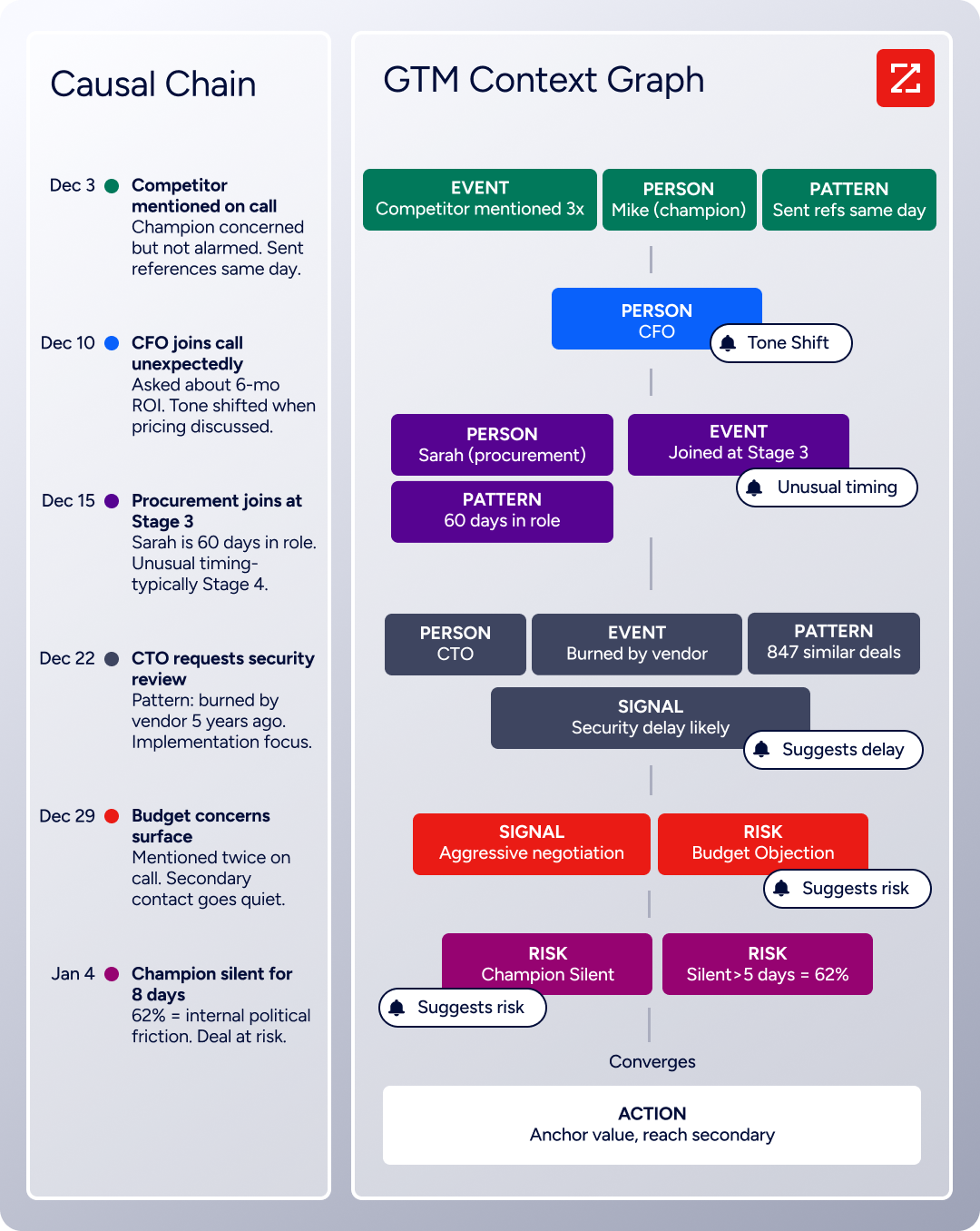
Where a CRM records that a deal moved stages, the GTM Context Graph reasons across multiple data sources to capture why the deal moved, what buying patterns predict success, and what actions to take next.
For life sciences BD teams managing complex partnership discussions or enterprise sales cycles, this means AI-drafted outreach that addresses the specific concerns raised in the last conversation, pipeline prioritization based on actual buying patterns rather than stage labels, and forecasting grounded in evidence rather than intuition.
Seismic attributed 39% of active pipeline to opportunities identified or influenced by ZoomInfo signals, with their sales team boosting productivity by 54%. "That combination of our internal CRM data, external signals, and AI that's given all that context has helped us craft very specific account- and persona-based messages. And people have responded to them right away," said Toby Carrington, Chief Business Officer. (Seismic)
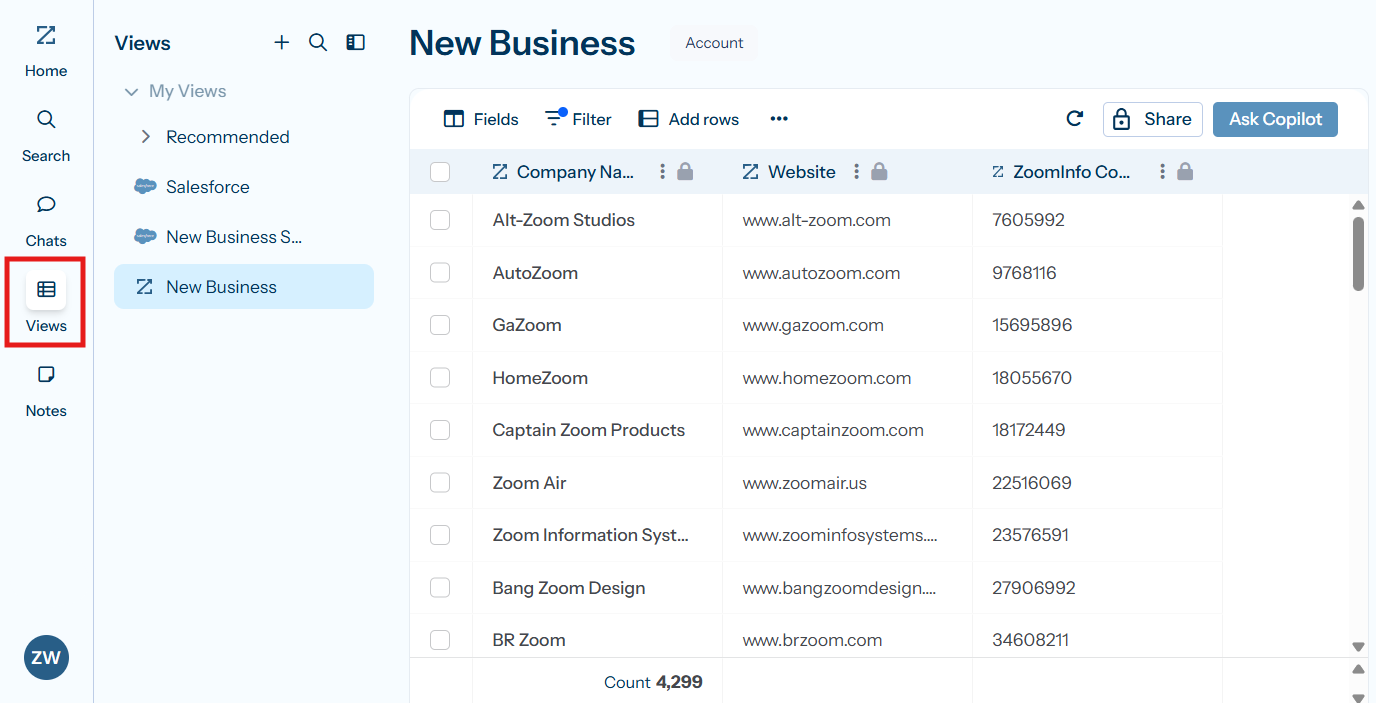
Universal Access: Use ZoomInfo's intelligence in any tool, not just ZoomInfo's own products.
ZoomInfo delivers its intelligence through three channels: GTM Workspace for sellers (an AI-powered workspace with account briefs, signal feeds, and AI-drafted outreach), GTM Studio for marketers and RevOps (a builder environment where audience definition and campaign orchestration happen in natural language), and APIs and MCP for any custom application or AI agent.
Source: ZoomInfo
The open architecture matters for life sciences companies that already have established technology stacks. ZoomInfo's Enterprise API integrates with Salesforce, HubSpot, and Microsoft Dynamics, and the MCP server connects to AI assistants including Claude and ChatGPT.
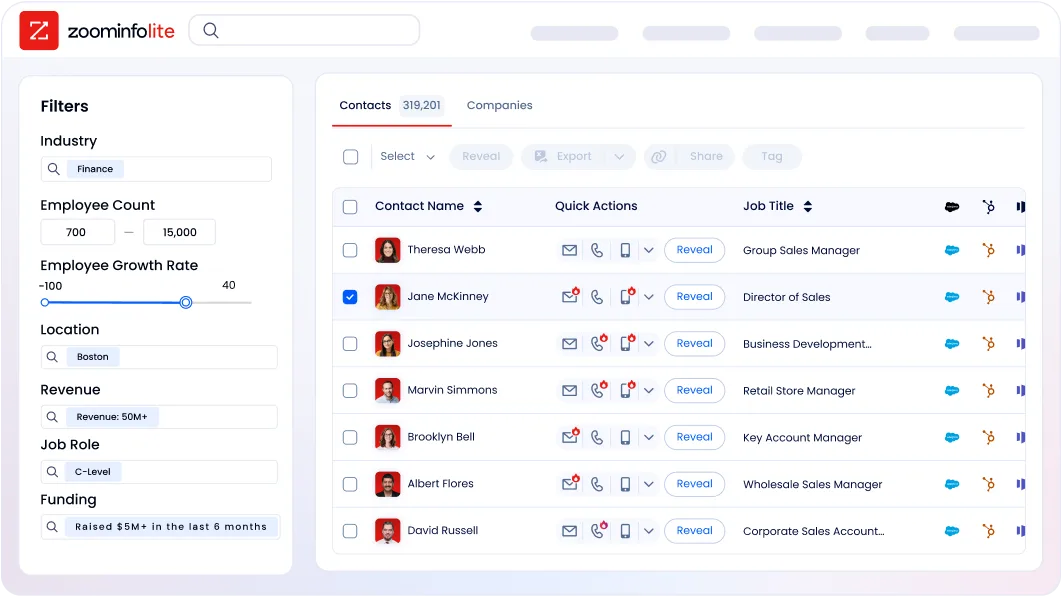
Unlike IQVIA's enterprise-only deployment model, ZoomInfo offers ZoomInfo Lite as a permanent free tier (with access to 100M+ verified profiles, 10 monthly export credits, and website visitor identification) and a 7-day free trial for paid features, with no credit card required.
"The plug-and-play aspect of the API means I can integrate it very easily into any process and get information at a moment's notice," said Jerry Wilson, Senior Marketing Intelligence Analyst at BDO Canada. The team achieved an 87% reduction in time spent on updates to internal data dashboards. (BDO Canada)
IQVIA and ZoomInfo: Comparison Summary
Aspect | IQVIA | ZoomInfo |
|---|---|---|
Primary focus | Life sciences CRO, healthcare data analytics, technology | B2B sales intelligence and go-to-market platform |
Data domain | Healthcare (HCPs, patients, prescriptions, clinical trials) | Business (contacts, companies, intent signals, technographics) |
Contact database | 25M HCPs, 6M HCOs in 118 countries | 500M contacts, 100M companies across all B2B industries |
Target industries | Pharmaceutical, biotech, medtech, healthcare | Any B2B industry |
AI capabilities | Healthcare-grade AI, Med-R1 8B, 150+ clinical/commercial agents | GTM Context Graph, AI-powered prospecting and outreach agents |
Pricing transparency | No published pricing; enterprise contracts only | Consumption-based pricing with permanent free tier (ZoomInfo Lite) |
Free access | No free trial or self-serve | Free tier + 7-day trial, no credit card required |
Implementation timeline | Months (enterprise deployment) | Weeks for GTM Workspace; instant for Lite |
Integrations | Salesforce (OCE), Veeva, AWS, NVIDIA | 172+ marketplace integrations, API, MCP |
Best for | Drug development, pharma commercial ops, healthcare analytics | B2B prospecting, pipeline generation, go-to-market execution |
Final Verdict
IQVIA and ZoomInfo serve different needs. The choice isn't between them; it's about understanding which intelligence layer your organization requires, and whether you need both.
Choose IQVIA if your primary challenge is clinical development, pharmaceutical commercial operations, or healthcare-specific analytics.
IQVIA's combination of the largest proprietary healthcare data assets, global CRO capabilities, and domain-specific AI makes it the default partner for pharmaceutical and biotech companies running clinical trials, generating real-world evidence, or optimizing HCP engagement.
Its $31.1 billion R&D backlog and partnerships with 22 of the top 25 pharmaceutical companies reflect a position earned through decades of data accumulation and operational scale.
Choose ZoomInfo if your life sciences company needs B2B intelligence for go-to-market activities beyond healthcare professional engagement. Partnership prospecting, enterprise sales, investor engagement, and vendor evaluation all require verified business contact data, company intelligence, and buying signals that healthcare-specific platforms don't provide.
ZoomInfo's 500M contacts, GTM Context Graph, and open architecture (APIs, MCP, free tier) make it the B2B intelligence layer that complements IQVIA's healthcare-specific data.
Get started with ZoomInfo here.
Both platforms are data intelligence companies at their core. IQVIA has spent 70 years building the definitive healthcare data asset. ZoomInfo has spent nearly two decades building the definitive B2B data asset. For life sciences organizations that operate in both worlds, both have a role.
IQVIA FAQ
What is IQVIA?
IQVIA is a global life sciences data, technology, and services company formed from the 2016 merger of IMS Health (pharmaceutical market data, founded 1954) and Quintiles (contract research organization, founded 1982).
With approximately 88,000 employees across 100+ countries and $15.4 billion in annual revenue, IQVIA provides clinical trial services, commercial analytics, real-world evidence, regulatory compliance, and AI-powered technologies for pharmaceutical, biotech, and medical device companies.
How much does IQVIA cost?
IQVIA does not publish pricing for any of its products or services. All pricing is quote-based and negotiated directly with IQVIA's sales team. Engagements are typically structured as multi-year contracts with separate line items for software subscriptions, data licensing, implementation, and pass-through costs.
IQVIA's Technology and Analytics Solutions segment generated $6.6 billion in full-year 2025 revenue, indicating the scale of its commercial operations.
ZoomInfo, by contrast, offers a permanent free tier (ZoomInfo Lite) and a 7-day free trial with no credit card required.
Does IQVIA offer a free trial?
No. IQVIA does not offer a free trial, freemium tier, or self-serve product access for its enterprise platforms. Prospective buyers must engage IQVIA's sales teams via iqvia.com/contact to begin the evaluation process. The IQVIA Institute for Human Data Science publishes research reports accessible by email subscription, but this is not a product trial.
Who are IQVIA's main competitors?
IQVIA competes across multiple segments. In clinical trial services, its competitors include ICON, Labcorp Drug Development, Fortrea, and Medpace. In pharmaceutical market data and commercial analytics, it competes with Veeva Systems, Komodo Health, and specialized analytics firms.
In healthcare AI, it faces growing competition from cloud healthcare services (Google Cloud, AWS) and AI-native startups building on general-purpose models.
What is IQVIA Connected Intelligence?
IQVIA Connected Intelligence is the company's framework for bringing together proprietary healthcare data, domain expertise, AI, analytics, and technology across clinical, commercial, and regulatory workflows.
Rather than treating each service as a standalone offering, Connected Intelligence is how IQVIA explains why integrating its data assets with its operational capabilities creates value that individual point solutions cannot replicate.
What is IQVIA's Healthcare-grade AI?
Healthcare-grade AI is IQVIA's registered trademark for AI systems built to meet the precision, speed, and trust requirements of regulated life sciences environments.
The approach includes IQVIA's proprietary Med-R1 8B medical reasoning model (an 8-billion-parameter LLM that reportedly outperforms GPT-4 on PubMedQA despite being roughly 200x smaller), 150+ deployed AI agents, and a governance framework backed by 200+ peer-reviewed AI publications. The IQVIA.ai platform, launched in March 2026 on NVIDIA NIM microservices, serves as the command center for these capabilities.
Does IQVIA have an API?
IQVIA operates several product-scoped APIs, including the OneKey Connector for HCP/HCO reference data, the Healthcare Authenticator SDK for HCP identity verification, the Market Access Insights API, and the Regulatory Intelligence API. A developer hub exists at developer.iqvia.com.
However, IQVIA does not publish a single unified public REST API. Most technical documentation is gated behind authenticated portals or enterprise agreements, and API access typically requires an existing commercial relationship.
ZoomInfo provides a documented REST API at docs.zoominfo.com with interactive exploration, OAuth 2.0 authentication, and an MCP server for AI agent integration.
Is IQVIA suitable for small biotech companies?
IQVIA has dedicated Emerging Biopharma offerings and reports having supported 800+ emerging biopharma companies through its Asset Maximizer program.
However, the company's pricing, contracting complexity, and enterprise-oriented deployment model are built for larger engagements. Small biotechs needing a focused CRO for a single early-stage asset may find better fits with specialist CROs like Medpace or Fortrea, which offer more accessible engagement models for smaller programs.
More related breakdowns and alternatives:
