

Invoca has built its reputation on a specific conviction: that for high-value purchases (insurance policies, healthcare
While digital marketers obsess over clicks and form fills, Invoca tracks the calls those clicks generate, analyzes what happens on them, and feeds conversion data back to ad platforms so they can optimize toward actual revenue, not just traffic.
The result is a platform serving enterprise brands like Mayo Clinic, DIRECTV, AutoNation, and Mutual of Omaha, with over $100 million in annual recurring revenue and a $1.1 billion valuation.
To write this Invoca review, we analyzed the platform in detail. We believe it's the right choice if:
You run significant paid media in industries where phone calls close deals (insurance, healthcare, automotive, telecom, home services)
You need to attribute inbound calls to specific campaigns, keywords, and ads
You want AI to analyze 100% of your calls for quality, outcomes, and coaching insights
You operate contact centers where agent performance directly impacts revenue
You require enterprise-grade compliance (HIPAA, PCI DSS, SOC 2)
However, Invoca might not be the best choice if:
Your revenue motion is primarily outbound B2B prospecting, not inbound calls
You need verified contact data, company intelligence, and intent signals to find and reach buyers
You want conversation intelligence across outbound sales calls, meetings, and emails, not just inbound phone calls
You need a single platform that covers data, prospecting, marketing automation, and conversation intelligence together
Your team size or call volume doesn't justify enterprise-level pricing
In this case, you should consider ZoomInfo: an AI-powered go-to-market platform built on a large B2B dataset (500M contacts, 100M companies, 135M+ verified phone numbers, 200M+ verified business emails).
ZoomInfo's GTM Context Graph combines this data with your CRM records, conversation transcripts, and behavioral signals to show not just what happened in a deal, but why, driving AI-powered prospecting, outreach, and revenue execution across every channel.
We've included a detailed look at ZoomInfo later in this Invoca review, as the right fit for B2B revenue teams that need the full go-to-market stack rather than inbound call intelligence alone. If you'd like to explore ZoomInfo's platform, you can start with a free trial here.
What is Invoca?
Invoca was founded in 2008 in Santa Barbara, California by Jason Spievak, Robert Duva, and Colin Kelley, who had previously worked together at CallWave.
The company launched as RingRevenue, focused on pay-per-call performance marketing, before rebranding to Invoca in 2013 to pursue a broader vision in call analytics for enterprise brands.
The founding insight was straightforward: digital advertising was growing fast, but purchase decisions for high-value products still happened over the phone. The gap between online ad spend and offline revenue was the problem Invoca set out to close.
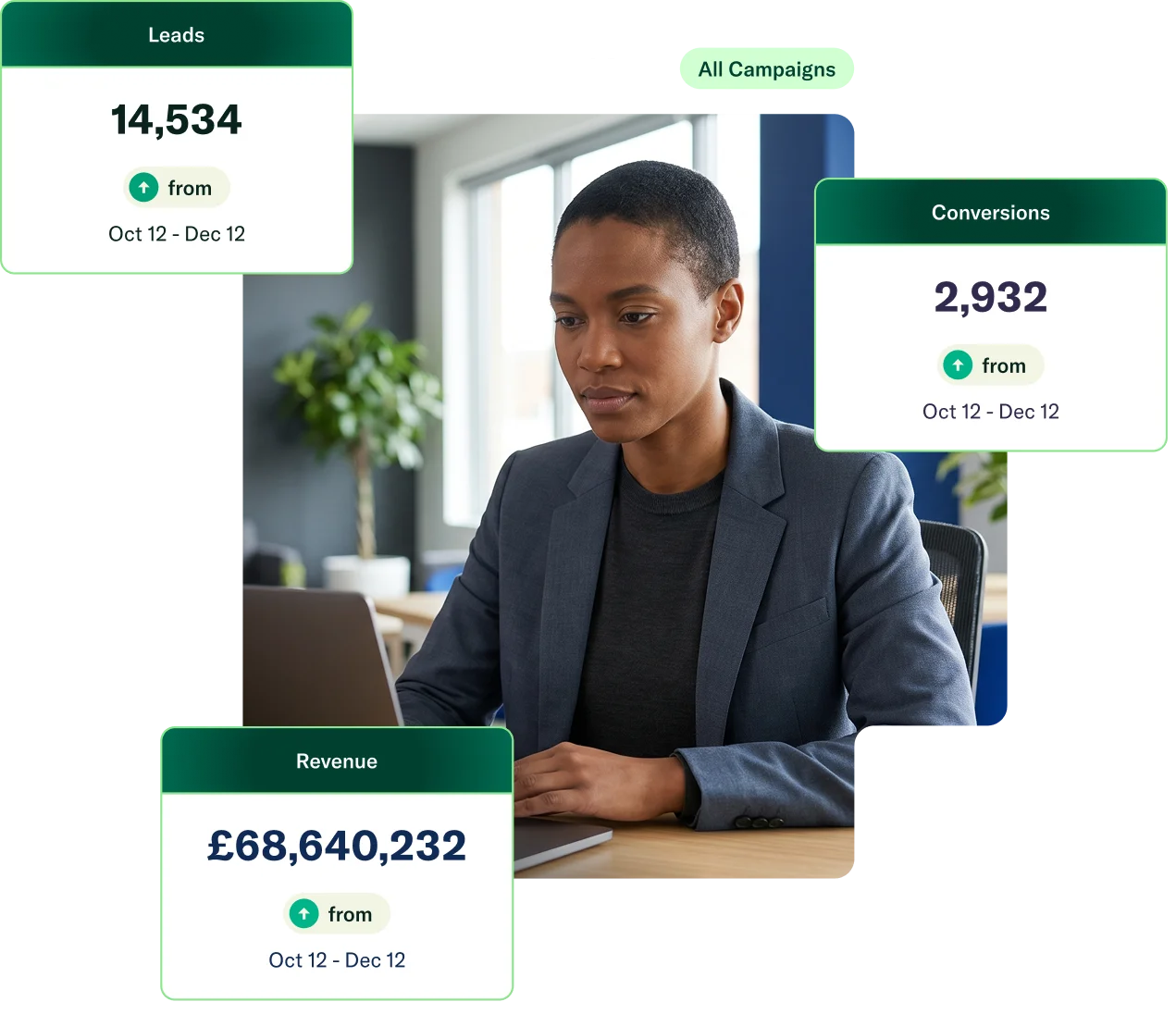
A pivotal moment came in May 2021 when Invoca acquired DialogTech, a direct competitor, consolidating the enterprise call intelligence market.
Under CEO Gregg Johnson (who joined in 2017 after leading Salesforce's Marketing Cloud social portfolio), Invoca evolved from a call tracking vendor to what it now calls a "Revenue Execution Platform", using AI to connect marketing spend to call outcomes across the buyer journey.
Today, Invoca positions itself as "The AI Platform to Convert More Inbound Leads," serving industries where phone calls remain critical to conversion: automotive, insurance, financial services, healthcare, telecommunications, home services, and multi-location businesses. Forrester named it a Leader in its Real-Time Revenue Execution Platforms report (Q2 2024), giving it the highest possible score in 19 of 31 criteria.
Invoca Pros & Cons
Pros | Cons |
|---|---|
AI-powered call outcome attribution, not just call counting | High price point excludes small businesses |
PreSense delivers caller context before agents pick up | Initial setup complexity for advanced features (Signal AI, IVR) |
Signal AI scores 100% of calls with custom, trainable models | Transcription accuracy issues noted by some users |
Enterprise compliance (HIPAA, PCI DSS, SOC 2 Type 2) | No native outbound sales capabilities |
Integration ecosystem (Google Ads, Salesforce, Genesys, Five9) | Post-onboarding support shifts to ticketing system |
Quality Management with Agent Voice ID (~95% accuracy) | Custom pricing with non-cancellable contracts by default |
24/7 AI Voice and Messaging Agents for lead engagement | Ring pool/DNI functionality seen as stagnant |
Invoca Review: How it Works & Key Features
Call Tracking & Marketing Attribution: Invoca closes the gap between ad clicks and phone conversions.
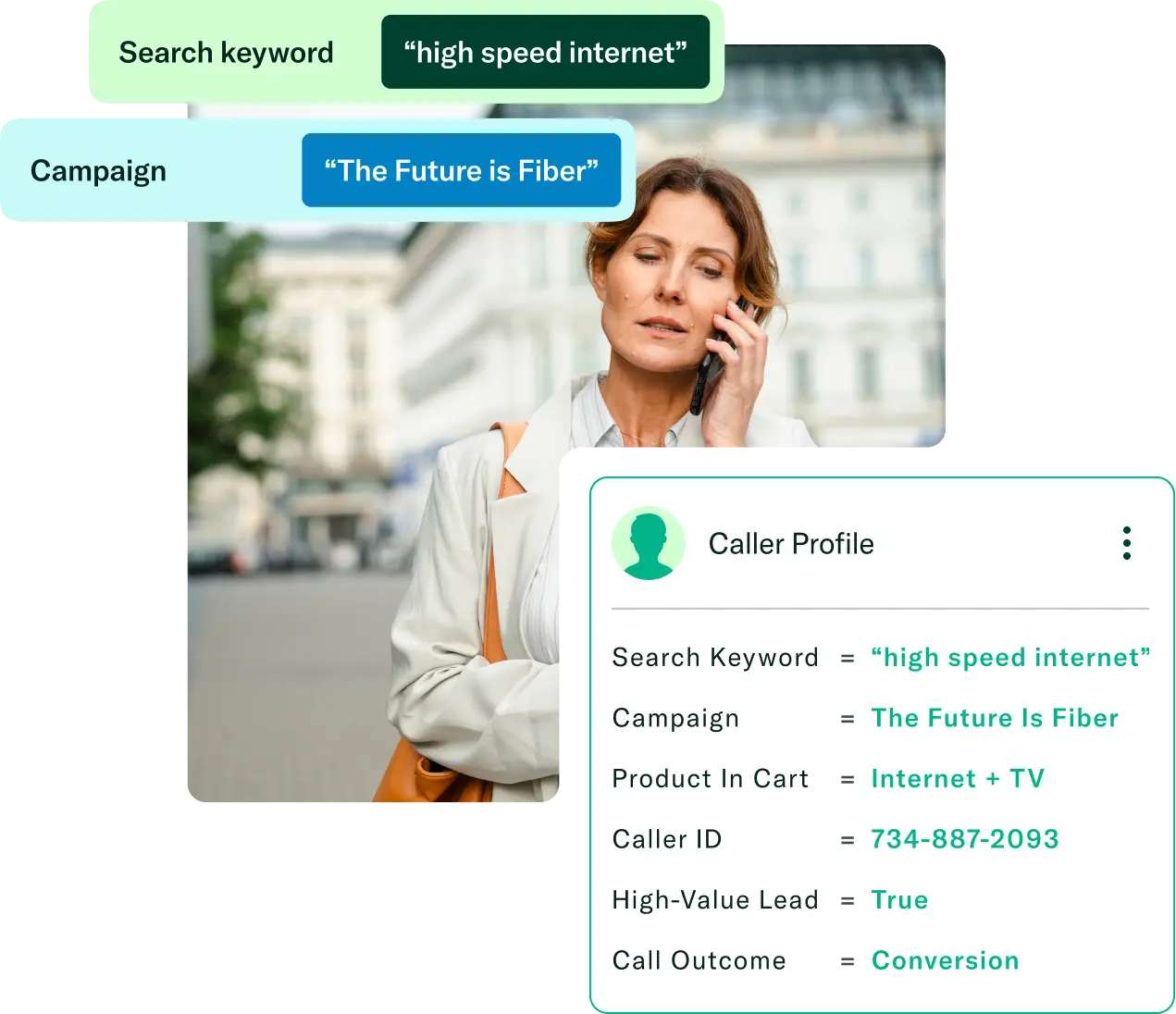
Invoca's Call Tracking & Analytics solves a measurement problem that affects every marketing team running campaigns in call-heavy industries: without call tracking, marketers cannot accurately account for 50% or more of the conversions they drive.
Source: Invoca
The system works through dynamic number insertion (DNI). A JavaScript snippet on your website replaces static phone numbers with unique tracking numbers at the session level, based on the visitor's traffic source.
When a visitor calls, Invoca captures the full digital context (UTM parameters, Google Click ID, search keyword, landing page, referrer) and attaches it to the call record, creating an attribution thread from ad click to phone conversation.
For high-traffic sites, numbers are allocated from a RingPool via the Bulk RingPool API. Attribution extends across search, social, display, email, direct mail, broadcast, and connected TV.
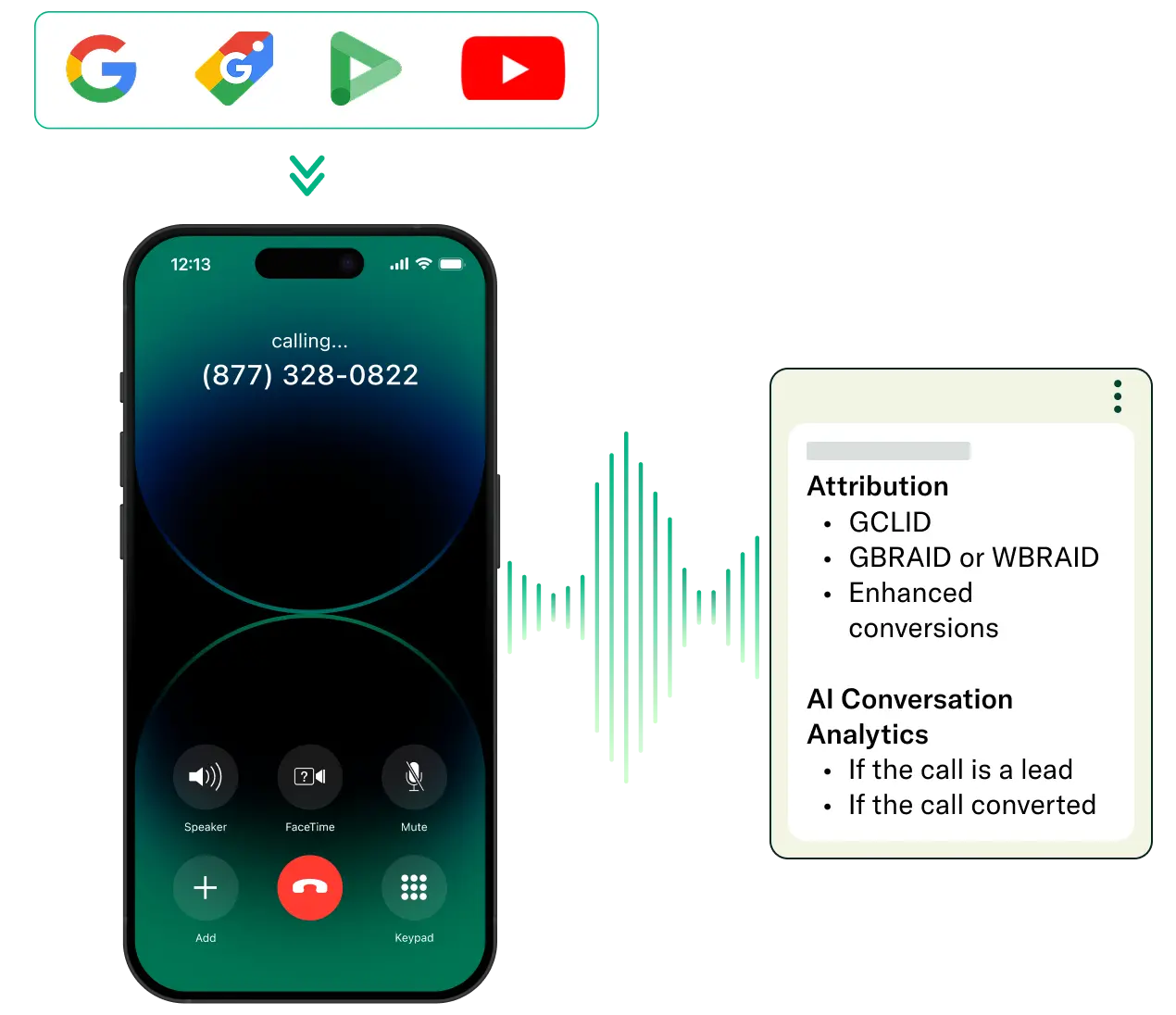
What separates Invoca from basic call tracking is what happens after the call connects. Rather than counting calls per campaign, Invoca's Signal AI analyzes each conversation to determine whether a conversion occurred, what products were discussed, and whether the caller was a qualified lead.
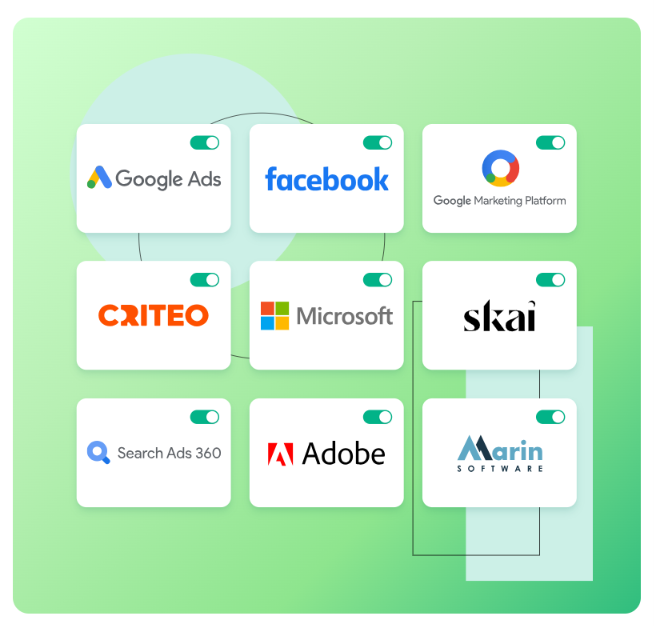
This outcome data then streams in real time to ad platforms including Google Ads, GA4, Meta Ads, Microsoft Ads, and TikTok, feeding smart bidding algorithms actual revenue outcomes rather than raw call volume.
Source: Invoca
The platform also supports enhanced conversions for Google Ads (released May 2025), maintaining attribution accuracy as third-party cookies erode.
Source: Invoca
Invoca states that the top reason customers switched from another provider is its integrations: no-code connections that activate conversion data in virtually any ad platform automatically.
Signal AI: Invoca's conversation intelligence suite extracts structured insights from every call.
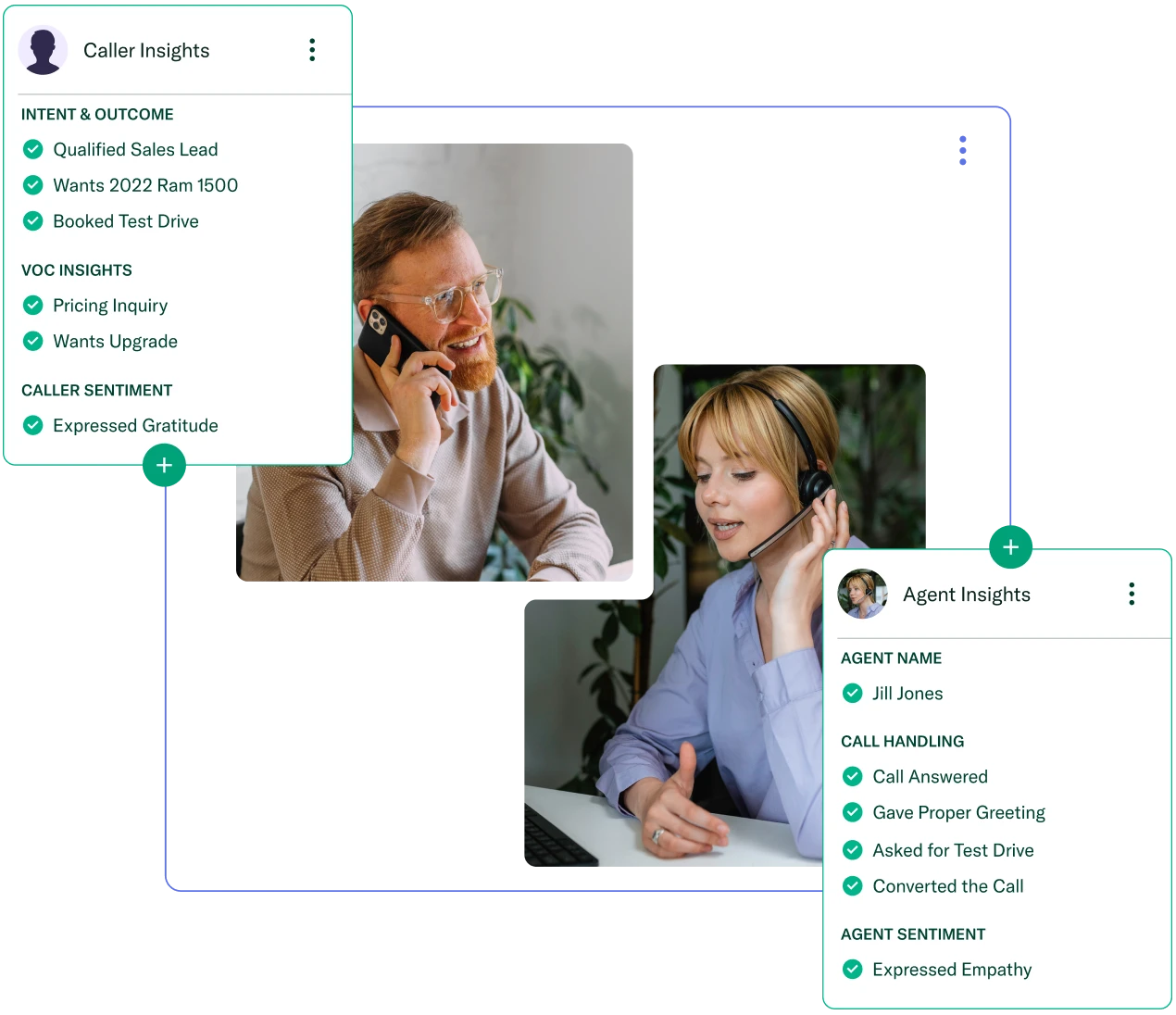
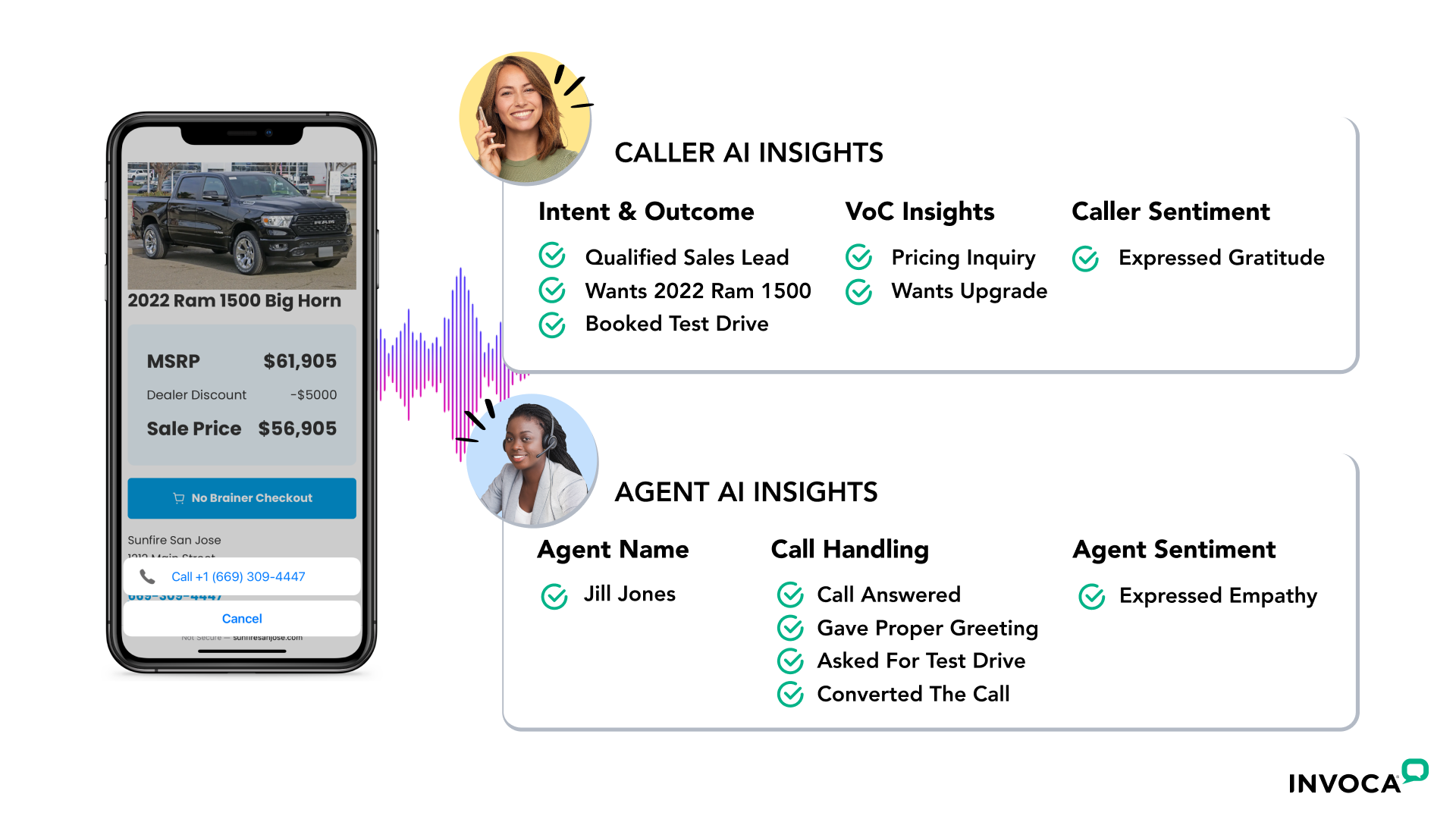
Signal AI transforms raw call recordings into structured data. It transcribes, scores, and analyzes 100% of inbound calls using a multi-layer AI pipeline, then pushes structured outcomes to downstream platforms in real time.
Source: Invoca
The transcription engine runs on generative AI LLMs trained on nearly 1 million hours of supervised audio data. On top of that transcription, several distinct AI systems work:

Source: Invoca
Signal AI Studio is the no-code model-training interface. Users describe an insight they want to detect in plain language ("Did the caller book an appointment?"), and the system uses patented machine learning to surface matching call excerpts.
Users label examples True or False; the model updates with each label. What previously required about 1,000 calls over several weeks has been reduced to roughly 50 calls and an hour of review.
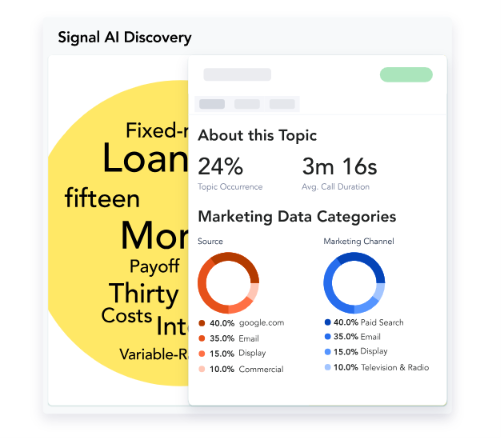
Signal AI Discovery uses unsupervised machine learning to cluster thousands of calls into similar topics automatically, surfacing trends the business wasn't monitoring (competitor mentions, new objections, emerging product issues). Any discovered topic can be converted into a tracked Signal.
Source: Invoca
Signal AI Autocapture uses AI-powered named entity recognition to extract structured first-party data from conversations automatically, such as the year, make, and model of a vehicle discussed during an automotive sales call.
Source: Invoca
The platform also provides dual-track sentiment analysis that tracks caller and agent sentiment separately throughout each call, showing when and why a conversation turned positive or negative.
Generative AI produces call summaries, and automatic PII redaction removes credit card numbers, SSNs, and dates of birth before data is stored.
Enterprise plans include 50 custom Signals; Pro plans include 5.
PreSense: Invoca delivers a caller's digital journey to agents before they answer.
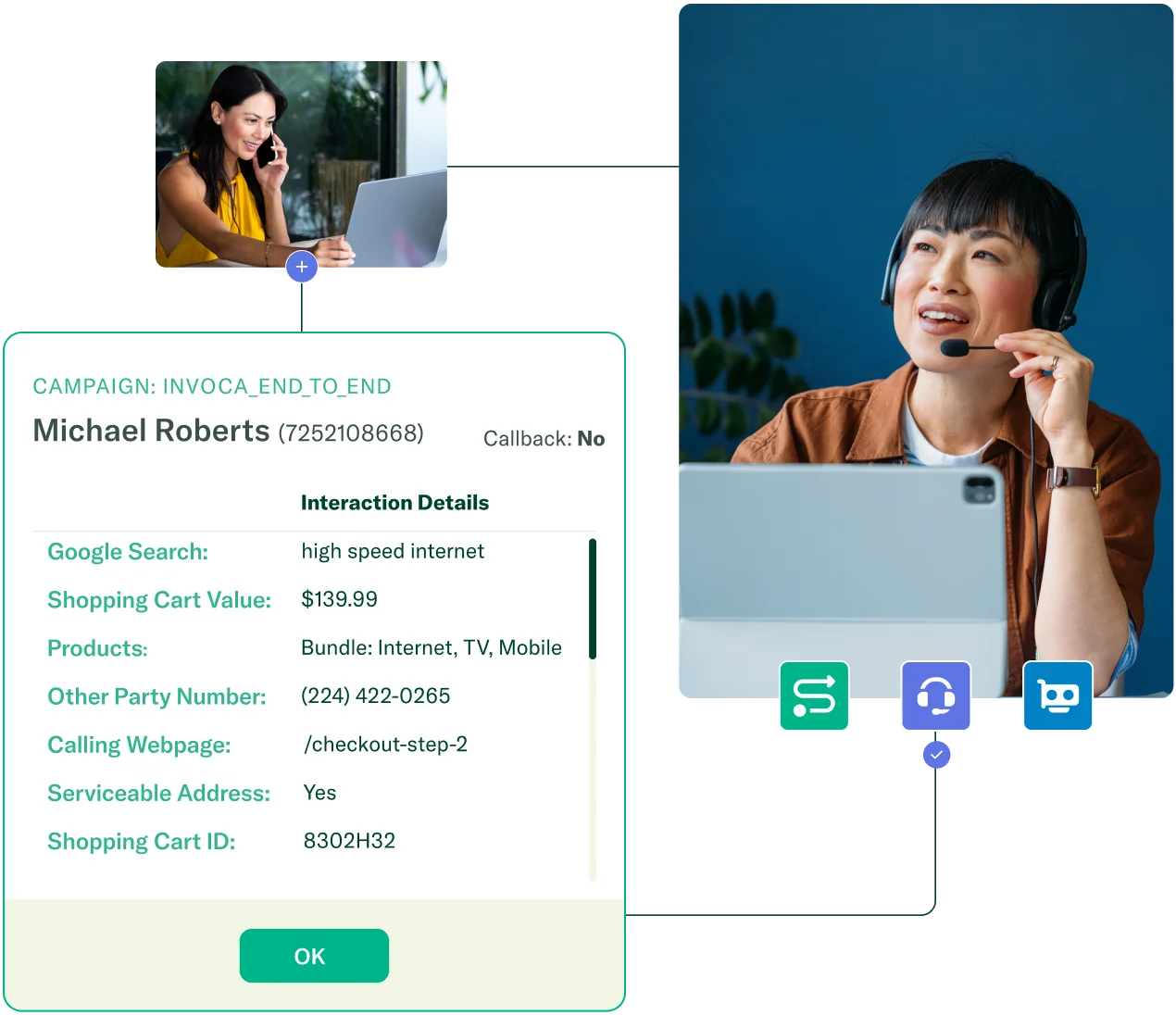
PreSense addresses a disconnect familiar to any contact center: a consumer researches a product online, calls in, and reaches an agent who has no idea what prompted the call.
Source: Invoca
The customer repeats themselves, tolerates transfers, and navigates irrelevant IVR menus. Over a third of consumers expect businesses to already know something about why they are calling, even in a first interaction.
PreSense captures the caller's pre-call digital journey (search keywords, ads clicked, web pages visited, support articles browsed, shopping cart contents) and delivers that data two ways: it routes callers to the most appropriate agent based on demonstrated intent, and it surfaces a screen pop on the agent's desktop with the caller's intent data before they pick up.
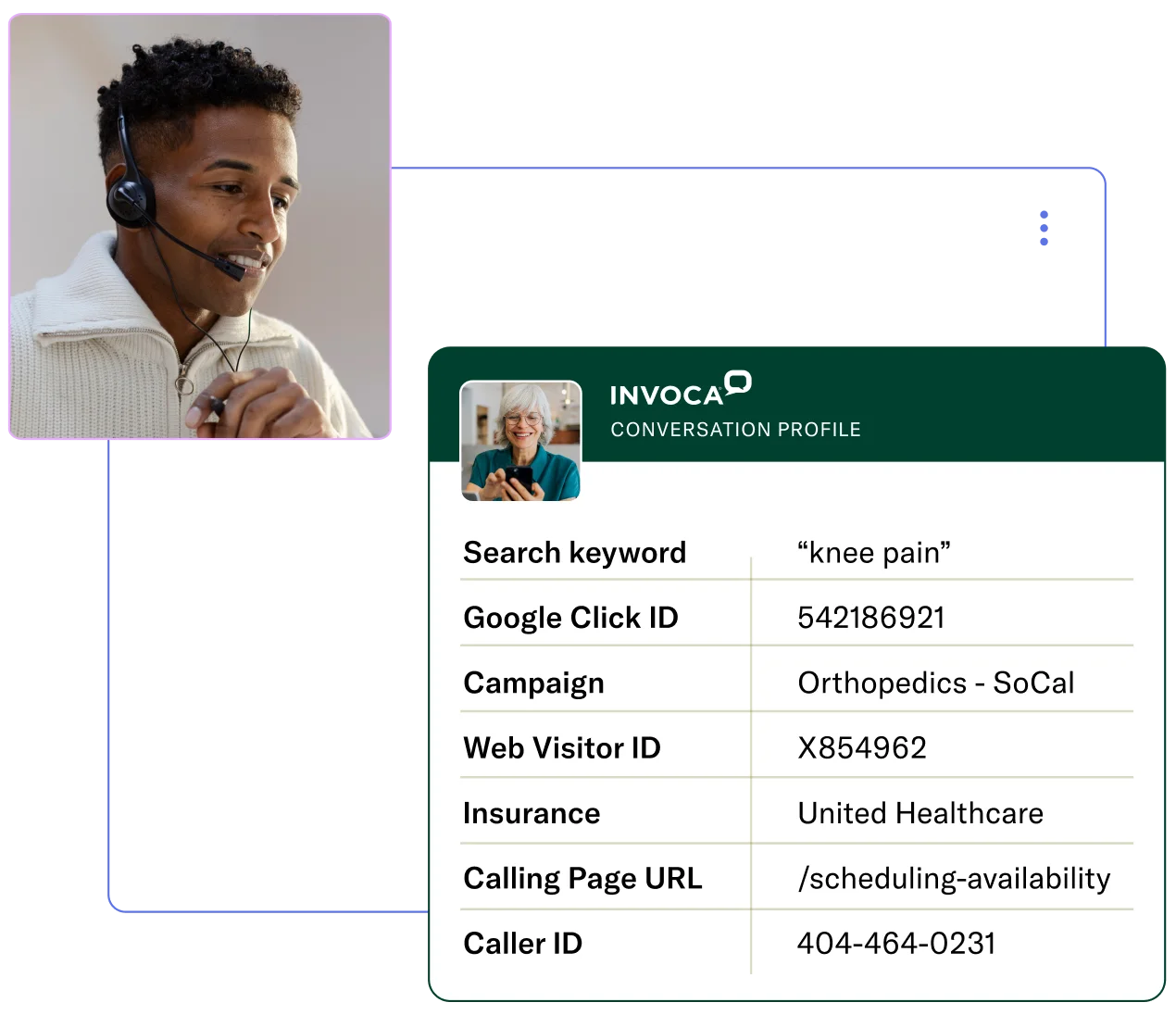
Source: Invoca
The same pre-call data enhances AI-powered virtual agents. If a caller is on a password reset page, an AI agent can immediately ask, "Are you calling to reset your password?"
PreSense connects to contact center platforms through Invoca's APIs, with native support for Five9, NICE inContact, Genesys, Salesforce, Amazon Connect, and others. Unlike CRM lookups that rely on data that may be outdated or nonexistent for first-time buyers, PreSense uses live, session-level first-party digital signals.
Quality Management & AI Agents: Invoca automates QA scoring and extends engagement beyond business hours.
Quality Management: Traditional call center QA reviews a tiny sample of calls, typically less than 1%. Invoca's Quality Management automates scoring across 100% of calls using AI-powered scorecards.
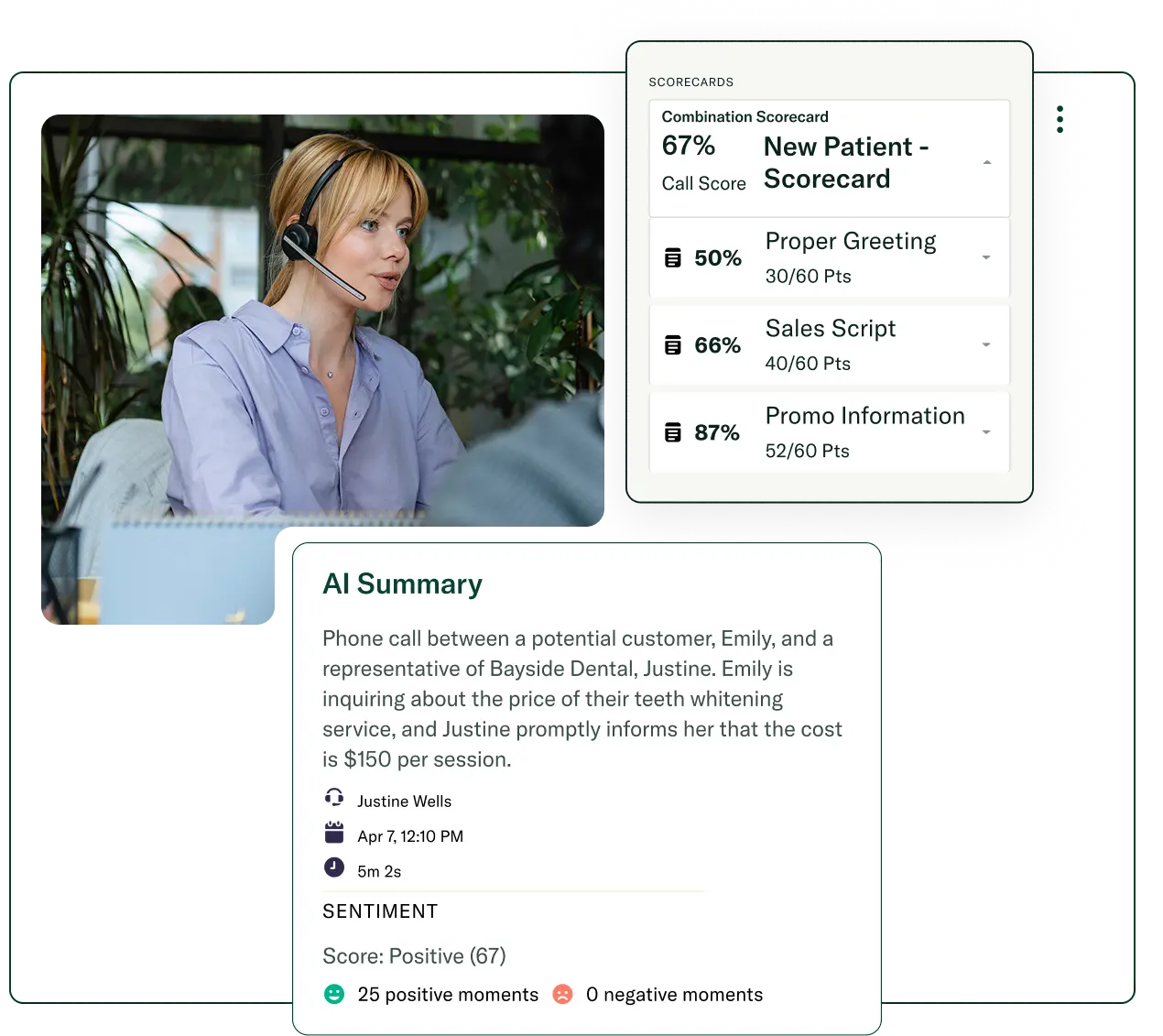
Source: Invoca
Managers define custom criteria (greeting script, caller identification, asking for the sale), and the AI evaluates every call. Pre-built scorecards trained on tens of thousands of calls are available for day-one use.
Agent Voice ID uses voice biometric technology to identify the specific agent on each call with roughly 95% accuracy, without requiring telephony integrations. This matters most for multi-location and franchise businesses where shared phone numbers make agent attribution otherwise impossible.
AI Voice Agent and AI Messaging Agent: Invoca's newest capabilities extend engagement beyond human agent availability.
The AI Voice Agent answers inbound calls 24/7, qualifies caller intent, handles routine inquiries, and routes high-value leads to the right sales agent with full context.
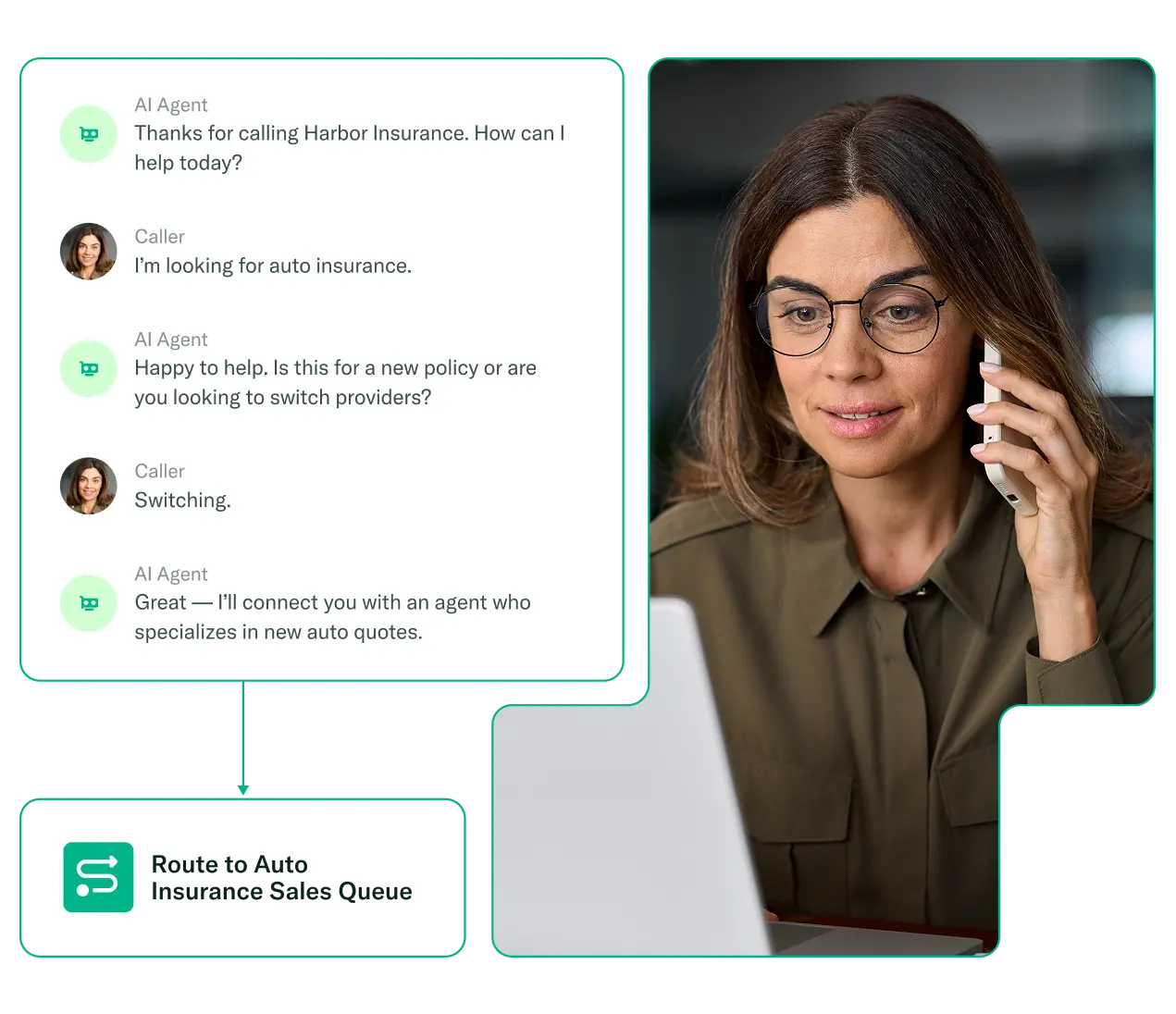
Source: Invoca
The AI Messaging Agent does the same via SMS, engaging web form and phone leads with two-way text conversations that qualify intent and book appointments automatically.
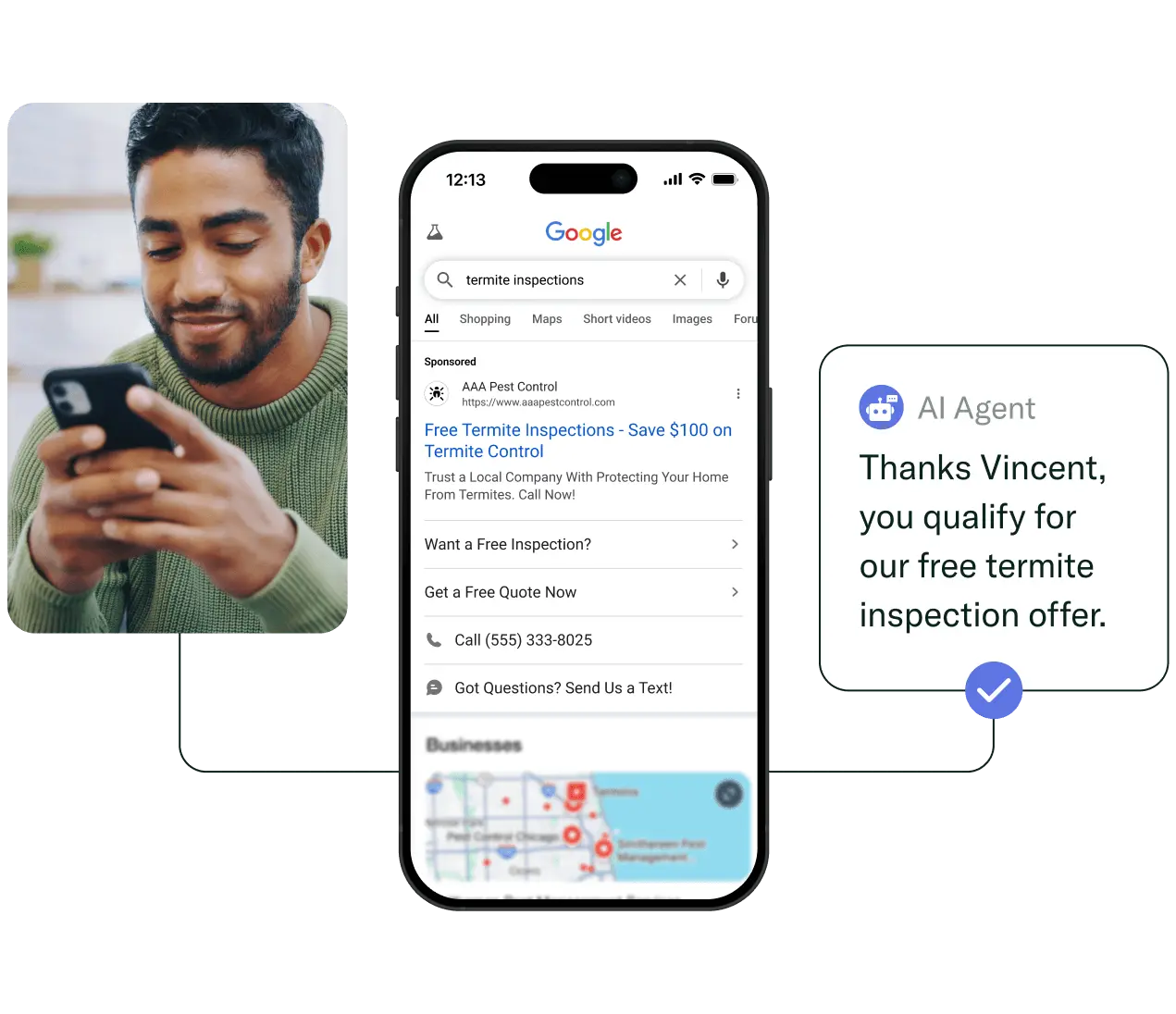
Source: Invoca
Both agents train on the business's highest-converting calls, not generic scripts.
Where Invoca Falls Short
Invoca is built for inbound call intelligence in high-consideration B2C industries. That focus creates strengths, but it also defines boundaries.
High price, no public pricing, and rigid contracts. Invoca uses custom-quoted pricing with no publicly listed rates. G2 reviewers and Capterra reviewers consistently flag cost as a top concern, describing it as "significantly higher than others" and "difficult for small business owners to justify."
Per the Master Services and Subscription Agreement, subscriptions are non-cancellable by default, quantities cannot decrease mid-term, fees are non-refundable, and prices automatically increase by 10% on each annual cycle.
Add-on modules (Signal AI, PreSense, Quality Management, Advanced IVR, premium integrations) are each priced separately.
Inbound only. Invoca is inbound-first by design. There is no native outbound dialer, sales sequencing, or outbound conversation intelligence.
Organizations with both inbound and outbound motions need a separate platform for prospecting, outreach, and outbound call analytics.
Transcription accuracy concerns. G2 reviewers specifically note that "the strength of the transcription is often inaccurate."
Since Signal AI models train on transcripts, this can affect downstream signal reliability, particularly for calls with heavy accents or noisy environments.
Setup complexity and learning curve. Multiple G2 reviewers note that advanced features (Signal AI configuration, IVR design, and integration setup) require "thoughtful setup to get the most value" and carry a real learning curve.
After initial onboarding, support transitions to a ticketing system, which some users find inadequate given the platform's cost and complexity.
No B2B prospecting data or contact intelligence. Invoca does not provide contact databases, company intelligence, buyer intent signals, or verified phone numbers and email addresses for outbound prospecting.
Capterra analysis flags CRM, lead capture, and multi-campaign management as areas where Invoca underperforms relative to comparable tools. Teams that need to identify, research, and reach potential buyers require a separate data and intelligence platform.
Limited scope for B2B revenue teams. Invoca's target industries (automotive, insurance, healthcare, telecom, home services) are predominantly B2C or high-consideration consumer verticals.
B2B organizations whose sales cycles run through email, video meetings, and multi-threaded outbound sequences will find Invoca's inbound phone-call focus too narrow for their go-to-market needs.
These limitations reflect Invoca's deliberate focus on inbound call intelligence in specific verticals. But for revenue teams that need a broader toolkit (outbound prospecting, B2B data, multi-channel conversation intelligence, and GTM execution), a different platform is required.
Top Invoca Alternative for B2B Revenue Teams: ZoomInfo
ZoomInfo is an AI-powered go-to-market platform built on a large B2B data foundation: 500M contacts, 100M companies, 135M+ verified phone numbers, 120M direct-dial phone numbers, and 200M+ verified business email addresses.
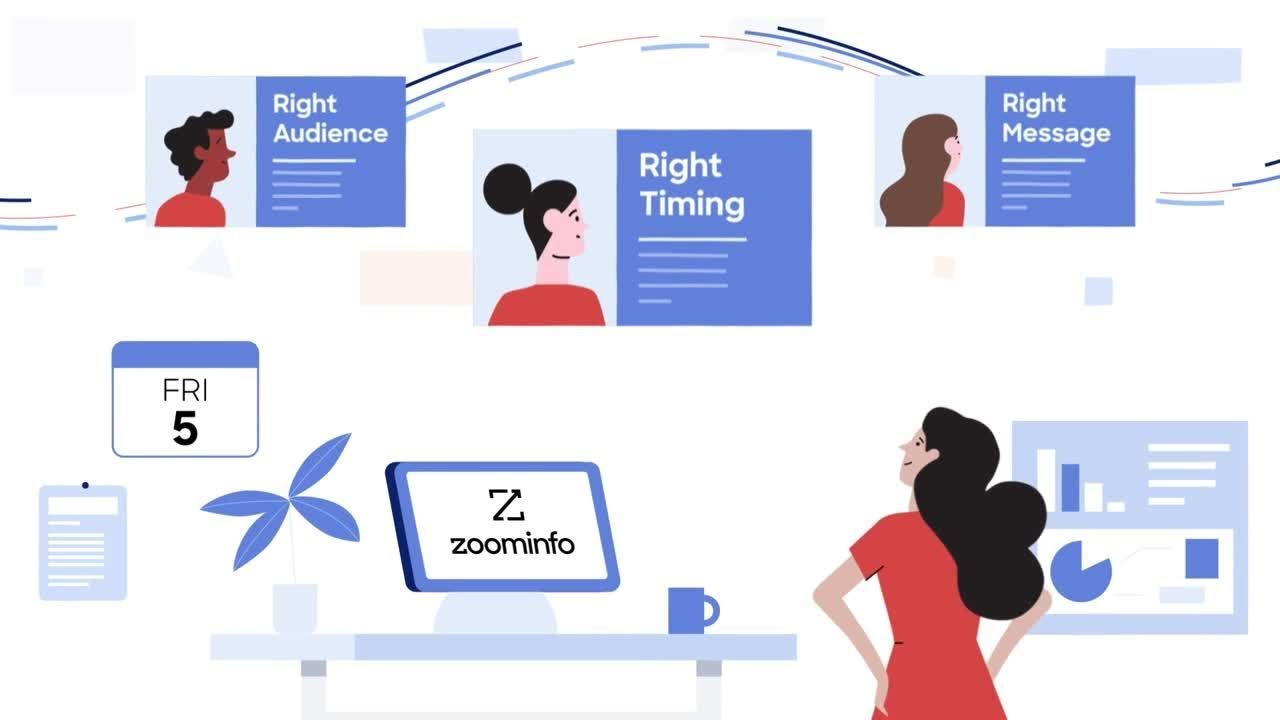
Where Invoca analyzes inbound calls after they happen, ZoomInfo helps revenue teams find buyers, understand when they're in-market, engage them across channels, and close deals, with conversation intelligence woven into the full workflow.
Comprehensive B2B Data: ZoomInfo provides a verified foundation of contact and company intelligence.
Invoca captures data from calls that come in. ZoomInfo provides the data you need before anyone calls. The platform spans three dimensions: identity data (who buyers are and how to reach them), company context (firmographics, org charts, technographics across 100M companies), and dynamic signals that reveal when accounts are actively in market.
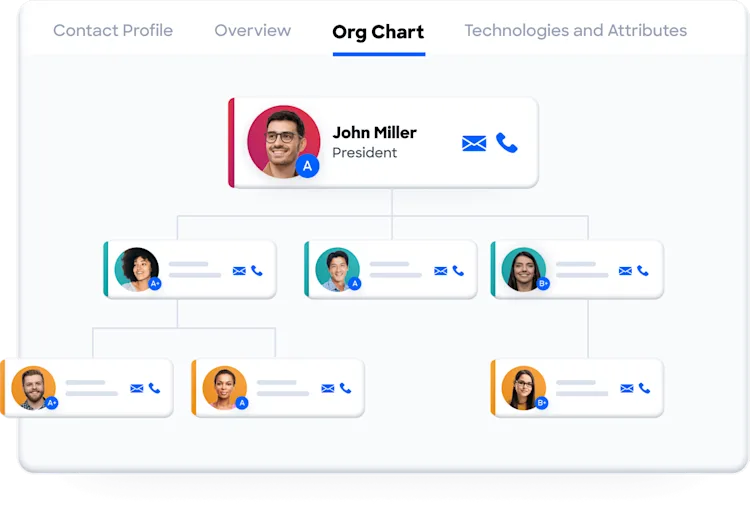
Source: ZoomInfo
This data is verified through a multi-source pipeline backed by 300+ human researchers, reaching up to 95% accuracy on first-party data.
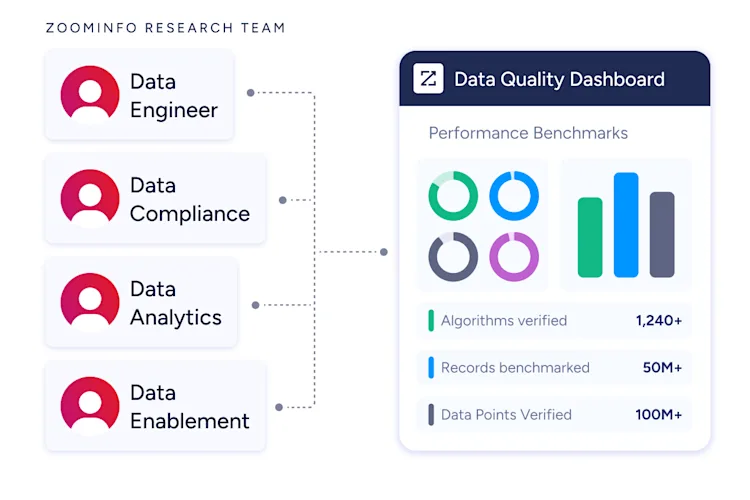
Source: ZoomInfo
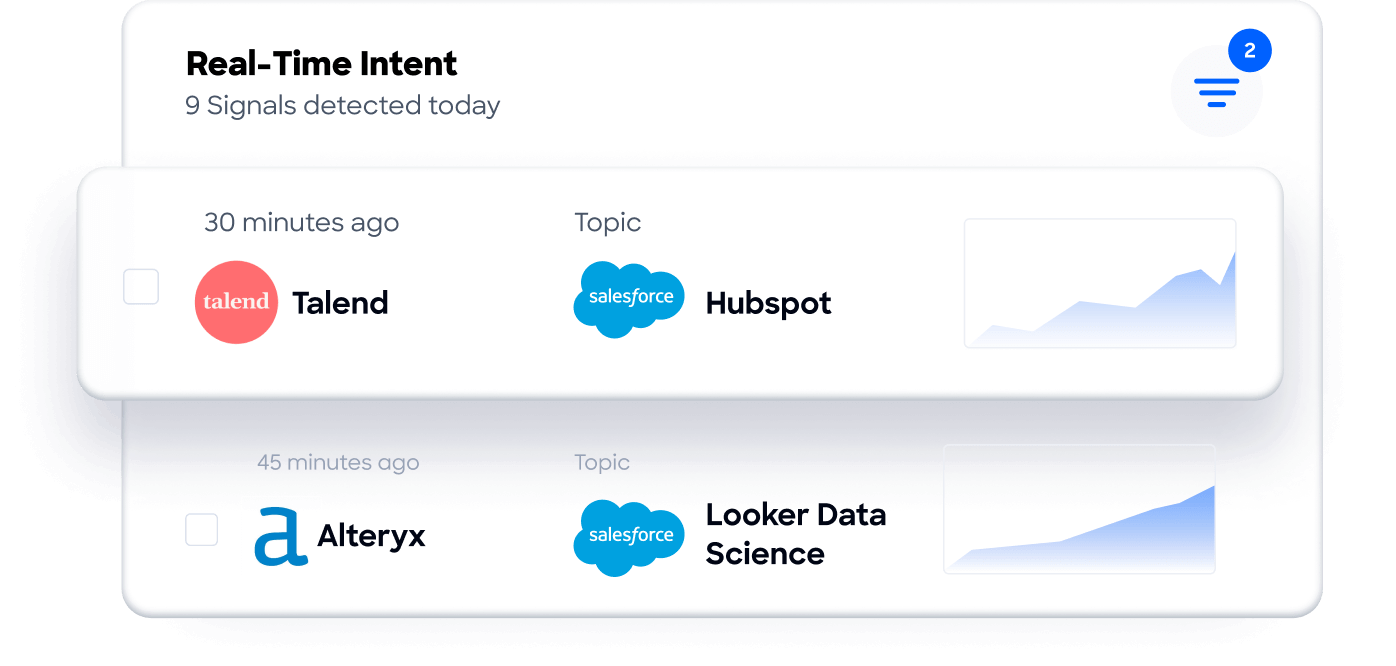
Buyer Intent tracks signals from 210 million IP-to-Organization pairings and 6 trillion+ new keyword-to-device pairings sourced monthly.
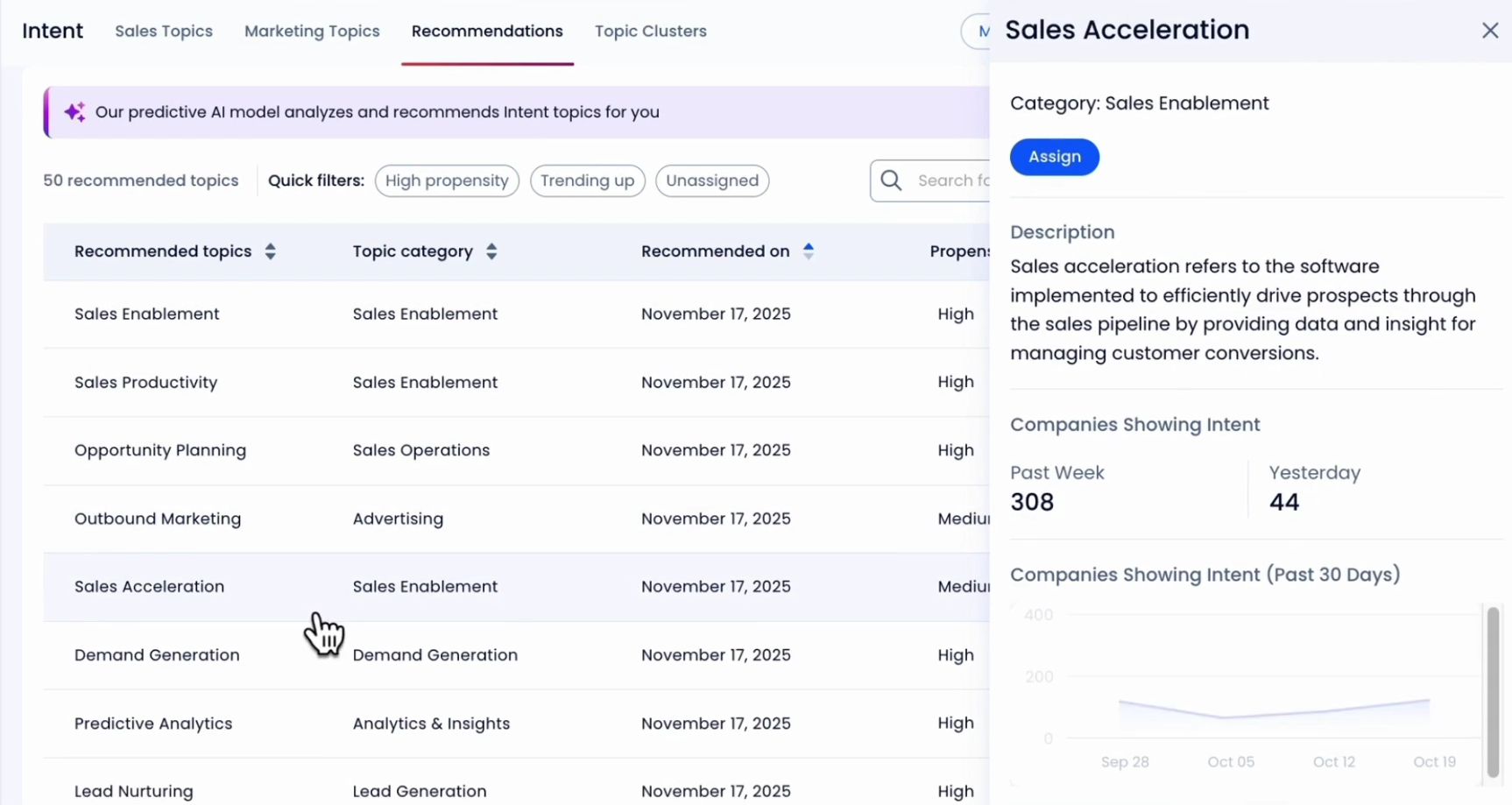
Guided Intent, exclusive to ZoomInfo, identifies topics historically correlated with deal success rather than requiring manual topic selection.In a Fortune 500 competitive RFP analyzing 25 million contacts across vendors, an independent consultant concluded that "no other competitor came even close."
Source: ZoomInfo
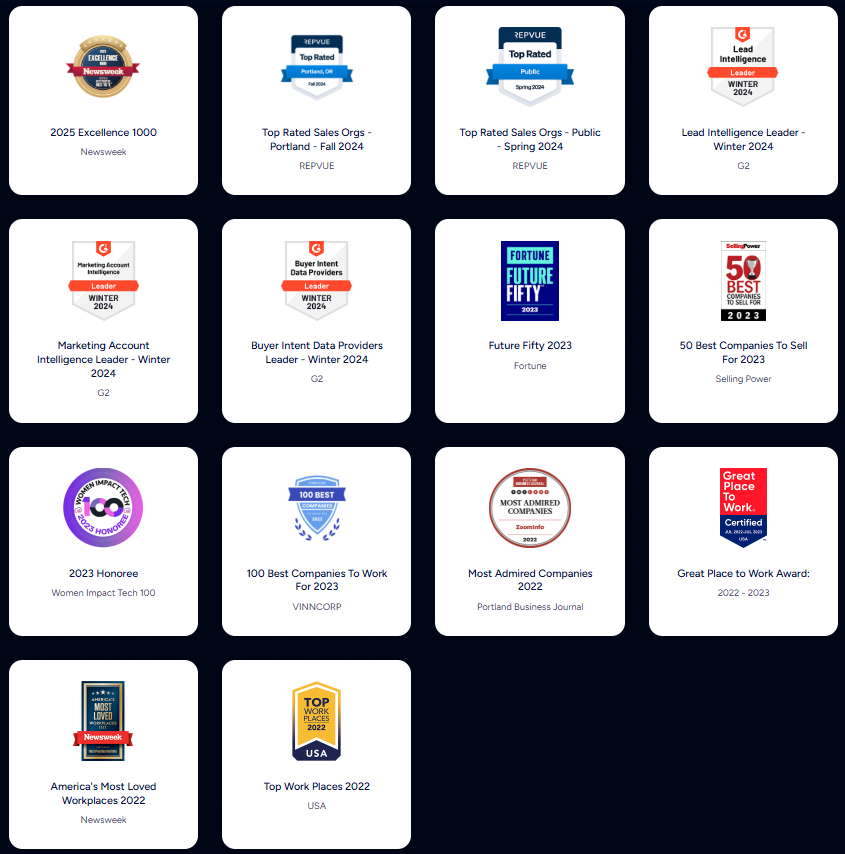
ZoomInfo holds 133 No. 1 rankings on G2 across Sales Intelligence, Buyer Intent, Data Quality, and related categories, and was named a Leader in the Gartner Magic Quadrant for ABM Platforms (2024 & 2025) and the Forrester Wave for Intent Data Providers (Q1 2025).
SpringDB used ZoomInfo's enriched data for precise targeting, achieving 2x to 3x increases in campaign conversions and a 300% increase in database usability. (SpringDB)
GTM Context Graph: ZoomInfo's intelligence layer captures why deals move, not just that they moved.
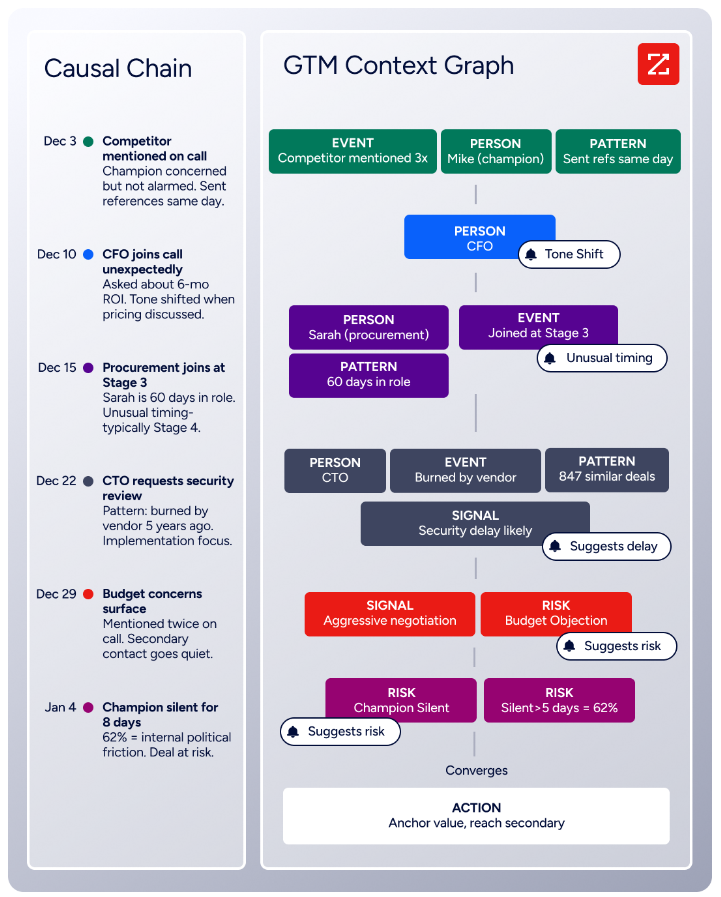
ZoomInfo's GTM Context Graph processes 1.5B+ data points daily, combining ZoomInfo's B2B data with a customer's CRM records, conversation transcripts (captured by Chorus, ZoomInfo's conversation intelligence product, which records and analyzes sales calls, meetings, and emails), email interactions, and behavioral signals into a single intelligence layer.
Source: ZoomInfo
CRMs record that a deal moved stages. Conversation intelligence transcribes what was said on the last call. Intent platforms log research activity. The GTM Context Graph reasons across all three to capture why the deal moved and which actions should follow.
As ZoomInfo's Chief Product Officer Dominik Facher writes: "The CRM recorded the state change. It has no record of why it happened."
This differs from Invoca's conversation intelligence in a fundamental way. Invoca analyzes inbound phone calls in isolation, extracting outcomes and routing signals from those specific conversations.
The GTM Context Graph connects conversations to the full surrounding context: who else is involved in the deal, what the org chart looks like, which intent signals preceded the call, what happened in prior interactions across channels, and what patterns across thousands of similar deals suggest happens next.
Seismic's sales team attributed 39% of active pipeline to opportunities identified or influenced by ZoomInfo signals, boosted productivity by 54%, and saved 11.5 hours per week per seller. (Seismic)
Universal Access: ZoomInfo delivers intelligence through dedicated products and open infrastructure.
ZoomInfo makes its data and intelligence available through three channels:
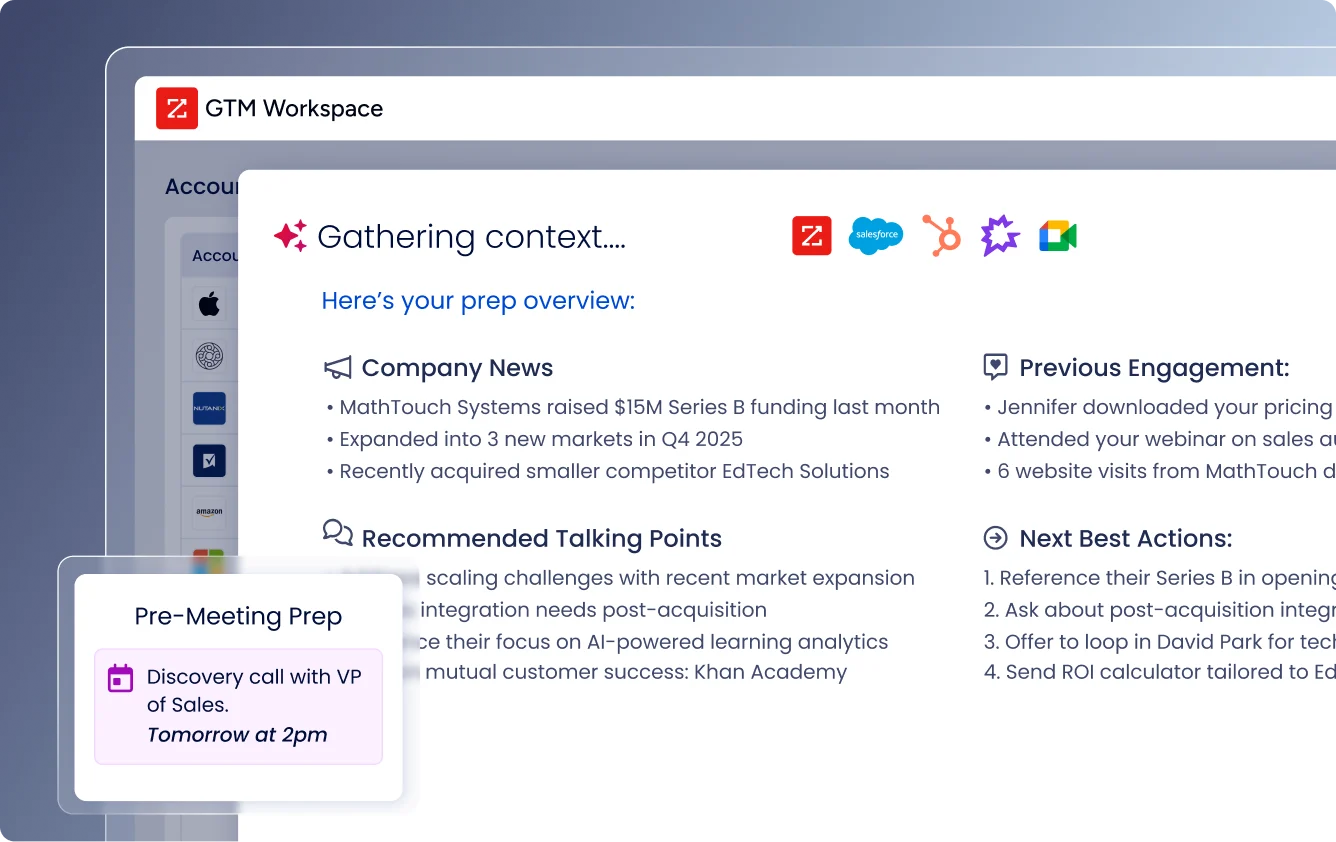
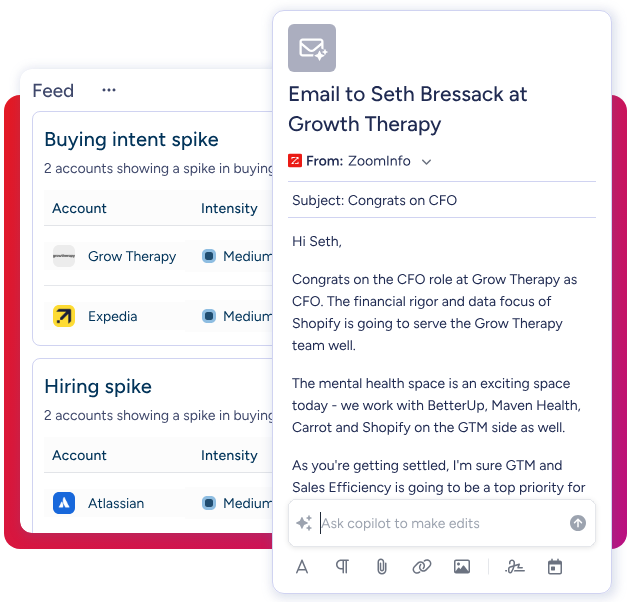
GTM Workspace is the seller's interface. It consolidates a rep's book of business across CRM, ZoomInfo data, conversation history, and market intelligence into a single view. AI agents handle account research, outreach drafting, CRM updates, and signal monitoring.
Source: ZoomInfo
The Action Feed delivers a live stream of in-market buyers matched to target criteria, with pre-drafted actions on every signal.
Source: ZoomInfo
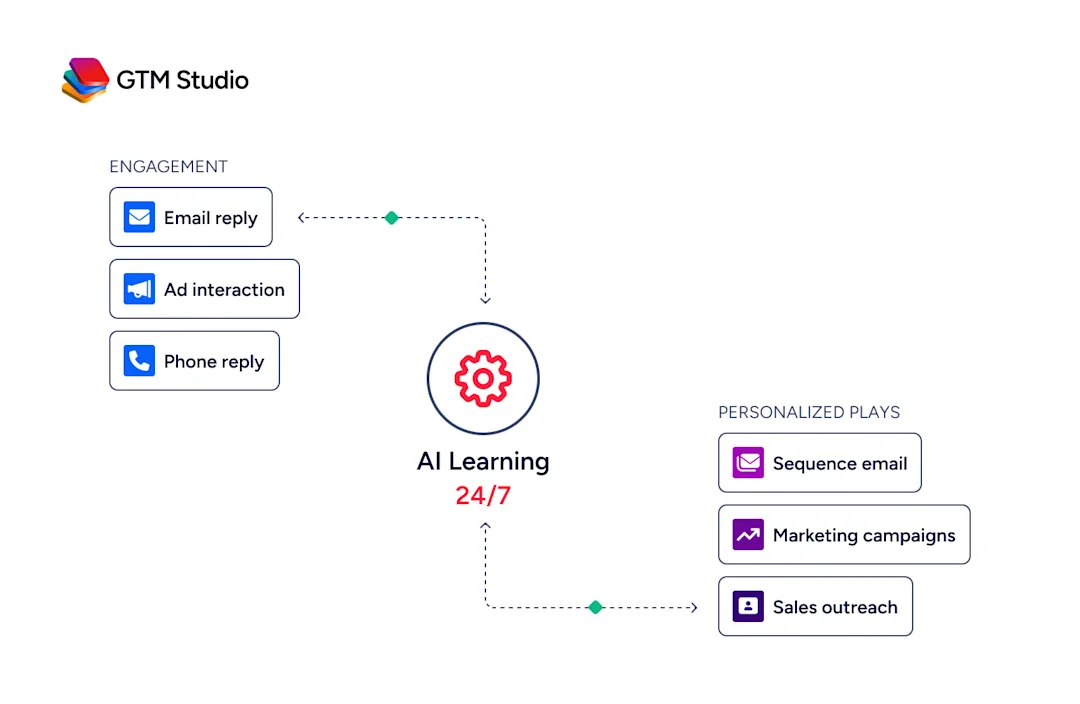
GTM Studio is the marketer and RevOps interface. It lets teams describe audiences in natural language, enrich with first- and third-party data, define triggers, and activate multi-channel plays (email, calls, ads, direct mail) without engineering support.
Expansion plays that used to take 3 weeks now launch in 30 minutes.
Source: ZoomInfo
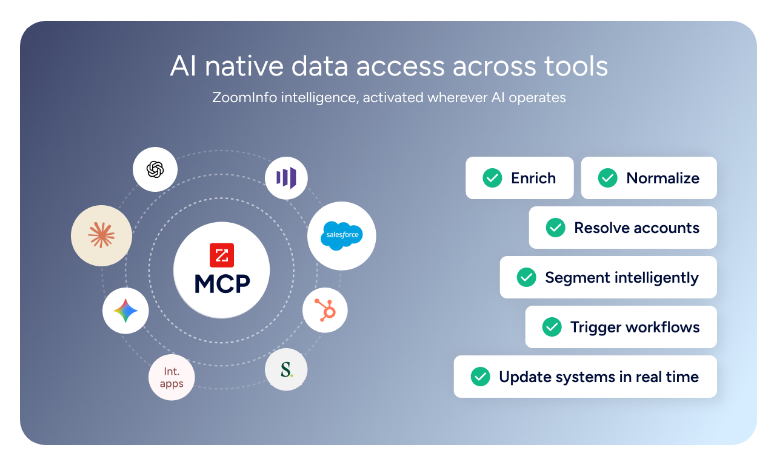
APIs and MCP expose the same intelligence to any custom agent, internal tool, or partner platform.
The MCP server connects AI models directly to ZoomInfo's B2B data as a native tool, currently supporting Claude and ChatGPT. API Access is included in all relevant plans.
Source: ZoomInfo
All three channels draw from the same GTM Context Graph. The same data, the same reasoning, the same continuously learning model. Nothing is degraded or siloed by access point.
BDO Canada's Senior Marketing Intelligence Analyst Jerry Wilson: "The plug-and-play aspect of the API means I can integrate it very easily into any process and get information at a moment's notice," achieving an 87% reduction in time spent on updates to internal data dashboards. (BDO Canada)
Pricing and Entry: ZoomInfo offers both free and trial options before commitment.
ZoomInfo uses custom-quoted, consumption-based pricing for paid tiers, similar to Invoca in that no dollar amounts are published. However, ZoomInfo provides two paths to evaluate the platform before committing.
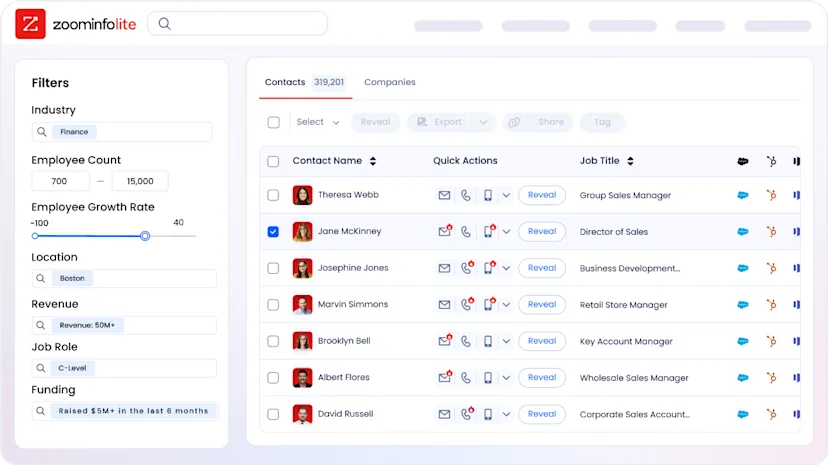
ZoomInfo Lite is a permanent free tier (not a trial) with no credit card or time limits. It includes access to ZoomInfo's B2B database, 10 monthly export credits, individual and company searches, the ReachOut Chrome Extension, and WebSights Lite for up to 10 website visitor reveals per day.
Source: ZoomInfo
A separate 7-day free trial is available with no credit card required, providing access to core platform features including contact and company search, sales intelligence tools, intent signals, and email outreach.
Paid plans are organized into Sales, Marketing, and standalone product lines (Chorus, Chat), each with tiered access. Credits work on a 1 credit = 1 export model; searching and viewing data within ZoomInfo does not consume credits.
Levanta CEO Ian Brodie: "ZoomInfo's not just a contact data company anymore. They've built a full system of execution that works the list, writes the outreach, and drives predictable growth." (Levanta)
Invoca or ZoomInfo: Comparison Summary
Invoca | ZoomInfo | |
|---|---|---|
Primary focus | Inbound call tracking, conversation intelligence, and revenue execution for phone-driven businesses | AI go-to-market platform: B2B data, prospecting, marketing, conversation intelligence, and deal execution |
Target market | B2C and high-consideration industries (healthcare, automotive, insurance, telecom, home services) | B2B organizations across SaaS, financial services, manufacturing, and professional services |
Data | First-party call and digital journey data from your own campaigns | 500M contacts, 100M companies, 135M+ verified phone numbers, 200M+ verified business emails |
Conversation intelligence | Inbound phone calls only (Signal AI) | All sales calls, meetings, and emails (Chorus) |
Outbound capabilities | None | Full prospecting, sequencing, and multi-channel outreach |
Marketing attribution | Calls attributed to ads, keywords, and campaigns | Intent signals, website visitor identification, and ABM |
Contact center tools | Quality Management, Agent Voice ID, PreSense, AI Voice and Messaging Agents | Not applicable |
AI capabilities | Signal AI, AI Voice Agent, AI Messaging Agent, Conversational IVR | GTM Context Graph, AI agents in GTM Workspace and GTM Studio, Chorus AI analysis |
Free tier | No (trial only) | ZoomInfo Lite (permanent free plan) + 7-day free trial |
Pricing transparency | Custom quotes, non-cancellable contracts, 10% annual escalation | Custom quotes, consumption-based |
Compliance | HIPAA, PCI DSS, SOC 2 Type 2, GDPR, CCPA | ISO 27001, ISO 27701, SOC 2 Type II, TRUSTe GDPR/CCPA |
Best for | Enterprise brands where inbound phone calls are the primary conversion event | B2B revenue teams that need data, intelligence, and execution in one platform |
Final Verdict
The choice between Invoca and ZoomInfo depends on where your revenue comes from and how your team reaches buyers.
Choose Invoca if your business generates revenue primarily through inbound phone calls driven by marketing campaigns. It's the right platform for enterprise brands in healthcare, insurance, automotive, telecom, and home services where phone conversations are the final step in a high-value purchase.
Invoca's call tracking, Signal AI, PreSense, and quality management tools are built for this motion, and its compliance certifications (HIPAA, PCI DSS) make it one of the few platforms that can operate legally in regulated industries.
If your contact center is a revenue center and you need to connect every marketing dollar to actual call outcomes, Invoca delivers that closed-loop accountability.
Choose ZoomInfo if your revenue motion depends on identifying, reaching, and engaging B2B buyers across channels.
Built on a large B2B data foundation and powered by the GTM Context Graph that captures why deals move, ZoomInfo gives your sales reps verified contact data and AI-driven account intelligence through GTM Workspace, your marketers audience targeting and campaign orchestration through GTM Studio, and your engineers programmatic access to the same intelligence through APIs and MCP.
For B2B revenue teams that need prospecting data, conversation intelligence, intent signals, and GTM execution in one platform, ZoomInfo covers the full workflow that Invoca was never designed to address.
Get started with ZoomInfo here.
Invoca and ZoomInfo serve different revenue motions. Invoca optimizes the inbound calls your marketing already generates. ZoomInfo helps you find, engage, and win buyers you haven't reached yet. The right choice depends on which problem is more urgent for your business.
Invoca FAQ
What is Invoca used for?
Invoca is an AI-powered platform that tracks inbound phone calls from marketing campaigns, analyzes conversations using AI, and feeds conversion data back to ad platforms.
It serves enterprise brands in industries where phone calls close deals (healthcare, insurance, automotive, telecom, home services), helping marketing teams attribute calls to specific campaigns and keywords, contact centers score agent performance, and AI agents handle lead engagement around the clock.
How much does Invoca cost?
Invoca uses custom-quoted pricing with no publicly listed rates. The platform offers two tiers for brands and agencies (Pro and Enterprise), with add-on modules for Signal AI, PreSense, Quality Management, and premium integrations priced separately.
Contracts are non-cancellable by default, and prices automatically increase by 10% on each annual renewal cycle.
Multiple user reviews describe the pricing as higher than competitors, making it difficult for small businesses to justify. A promotional "3 months free" offer is available for new customers.
Does Invoca offer a free plan?
No, Invoca does not have a permanent free plan. The platform offers a free trial that runs until the earlier of the trial period's end, the start of a purchased subscription, or termination by Invoca. Data and customizations from the trial are permanently lost unless a subscription is purchased before the trial ends.
ZoomInfo, by comparison, offers ZoomInfo Lite as a permanent free tier with access to its B2B database, 10 monthly export credits, and website visitor identification, plus a separate 7-day free trial.
What industries is Invoca designed for?
Invoca targets industries with high average order values and complex sales processes where phone calls remain critical to conversion. Primary verticals include automotive, insurance, financial services, retail, healthcare, telecommunications, home services, travel and hospitality, and multi-location businesses.
The platform holds HIPAA compliance and BAA support for healthcare, and PCI DSS certification for financial services. B2B SaaS companies whose sales cycles run primarily through email and video are not Invoca's target market.
Does Invoca have outbound sales capabilities?
No. Invoca is inbound-first by design. It does not include outbound dialers, sales sequencing, outbound conversation intelligence, or B2B contact databases. Organizations that need both inbound call intelligence and outbound sales execution require a separate platform.
ZoomInfo covers the outbound motion with verified contact data (120M direct-dial phone numbers, 200M+ verified business emails), AI-powered prospecting through GTM Workspace, and conversation intelligence across sales calls and meetings through Chorus.
How accurate is Invoca's call transcription?
Invoca's transcription engine runs on generative AI LLMs trained on nearly 1 million hours of supervised audio data. However, some G2 reviewers have flagged accuracy as a concern, noting that "the strength of the transcription is often inaccurate," particularly with heavy accents or noisy call environments.
Since Invoca's Signal AI models train on these transcripts, transcription quality directly affects the reliability of downstream call scoring and outcome detection.
What integrations does Invoca support?
Invoca maintains an integration ecosystem through the Invoca Exchange, connecting with platforms across advertising, contact centers, CRM, and analytics.
Named integrations include Google Ads, Genesys, Five9, Salesforce, Adobe Experience Platform, ChatGPT Ads, LinkedIn Ads, Reddit Ads, Meta, TikTok, Microsoft Ads, Dynamic Yield, and CTV platforms including tvScientific, iSpot, and Innovid.
The platform also offers APIs, webhooks, and SIP support for custom integrations. Invoca was among the first to integrate with ChatGPT Ads in May 2026.
Can Invoca and ZoomInfo be used together?
Invoca and ZoomInfo serve different parts of the revenue process. Invoca tracks and analyzes inbound phone calls generated by marketing campaigns, while ZoomInfo provides B2B data, intent signals, and outbound prospecting tools.
Organizations with both significant inbound call volume in consumer-facing verticals and outbound B2B sales motions could use both, though there is no direct native integration between the platforms.
For most B2B-focused teams, ZoomInfo covers conversation intelligence through Chorus alongside the full go-to-market stack.
Researching Invoca? These comparisons and alternatives help you decide:
