
LeanData is a leading revenue orchestration platform for B2B organizations running complex GTM motions on Salesforce. Its visual FlowBuilder, AI-powered lead-to-account matching, and BookIt scheduling tools have made it the standard for enterprise RevOps teams managing high-volume lead flows across multiple territories and product lines.
But as your go-to-market strategy evolves, you may find that orchestrating lead routing is only one piece of the puzzle. You might need better buyer intelligence to know which leads are worth routing, or a platform that works natively with HubSpot (not just Salesforce), or a routing solution that doesn't require weeks of implementation and undisclosed enterprise pricing.
That's where this guide comes in. Whether you're looking to:
Power your GTM orchestration with B2B data intelligence and AI-driven insights
Convert inbound demand into booked meetings instantly with transparent, modular pricing
Manage Salesforce data quality with routing, deduplication, and account hierarchies in one suite
Consolidate enrichment, routing, and scheduling into a single workflow engine
Automate lead routing for small Salesforce teams without enterprise complexity
Achieve high lead-to-account matching accuracy across multiple CRMs
Get affordable, all-inclusive Salesforce routing at a flat per-user price
We'll explore LeanData alternatives that excel in these areas.
Some teams use these tools alongside LeanData to strengthen specific capabilities, while others replace it entirely with a solution better suited to their size, CRM, or GTM complexity. This isn't about finding a "better" platform; it's about finding the right fit as your revenue operations mature.
Let's look at the LeanData alternatives and find the right tool for your team.
The Best LeanData Alternatives | |
|---|---|
ZoomInfoBest Alternative for AI-Powered GTM Intelligence and Data-Driven OrchestrationWe chose ZoomInfo because it provides the B2B data foundation and intelligence layer that makes orchestration work, spanning 500M contacts, intent signals, and a GTM Context Graph that reveals why deals move or stall. | |
Chili PiperBest Alternative for Instant Meeting Conversion With Transparent PricingWe chose Chili Piper because it closes the gap between buyer interest and booked meetings, qualifying, routing, and scheduling conversations in real time with modular pricing starting at $45 per user per month. | |
Traction CompleteBest Alternative for Salesforce-Native Data Management at Enterprise ScaleWe chose Traction Complete because it combines routing, deduplication, and account hierarchies in a single 100% Salesforce-native suite with zero external data movement, suited to security-conscious enterprises. | |
DefaultBest Alternative for Unified RevOps Automation Without Tool SprawlWe chose Default because it puts enrichment, routing, scheduling, and CRM updates on a single workflow canvas, replacing the multi-tool stitching that defines traditional RevOps stacks. | |
Distribution EngineBest Alternative for Small Salesforce Teams Needing Reliable RoutingWe chose Distribution Engine because it delivers routing logic through an accessible, no-code interface at transparent pricing, built for small-to-midsize teams that have outgrown Salesforce's native assignment rules. | |
LeadAngelBest Alternative for Multi-CRM Lead-to-Account Matching PrecisionWe chose LeadAngel because its multi-algorithm matching stack achieves 99.7% accuracy across Salesforce, HubSpot, and Dynamics 365, with a six-month free trial for production validation. | |
KubaruBest Alternative for Affordable All-Inclusive Salesforce RoutingWe chose Kubaru because it provides every routing feature at a flat $20 per user per month with no tier restrictions, no hidden fees, and same-day implementation. |
What is LeanData?
LeanData is a Salesforce-native revenue orchestration platform that translates buyer signals into coordinated revenue action across the customer lifecycle. Founded in 2012 and serving more than 1,000 organizations worldwide (including Uber, Snowflake, Palo Alto Networks, and OpenAI), LeanData handles data quality, workflow automation, scheduling, and cross-functional collaboration in complex enterprise environments.
Its key features include:
Orchestration with a visual FlowBuilder for no-code lead routing, matching, and workflow automation across the revenue lifecycle
AI-powered lead-to-account matching achieving 95% accuracy using fuzzy logic across multiple fields
BookIt Scheduling for instant meeting booking from webforms, internal handoffs, and shareable links
Buying Groups that use AI to identify buying committee members, assign roles, and track engagement across the opportunity lifecycle
SLA enforcement with automated re-routing when leads go unworked
Salesforce integration scoring 4.6 on G2 for CRM integration quality
When a lead enters your system, LeanData's orchestration engine matches it to the correct account, routes it to the right rep based on territory rules and ownership logic, and can trigger scheduling or sequence enrollment.
However, as your revenue operations scale, you might find that LeanData's Salesforce-first architecture creates friction for dual-CRM environments, that its Graph Builder UI becomes unresponsive on complex routing graphs, or that it cannot orchestrate actions across marketing automation platforms, enrichment vendors, or customer success systems.
Teams also note a steep learning curve, undisclosed pricing, and the reality that orchestrating leads well depends on having the intelligence to know which leads matter in the first place.
That's why we've focused on platforms that address specific needs where LeanData falls short.
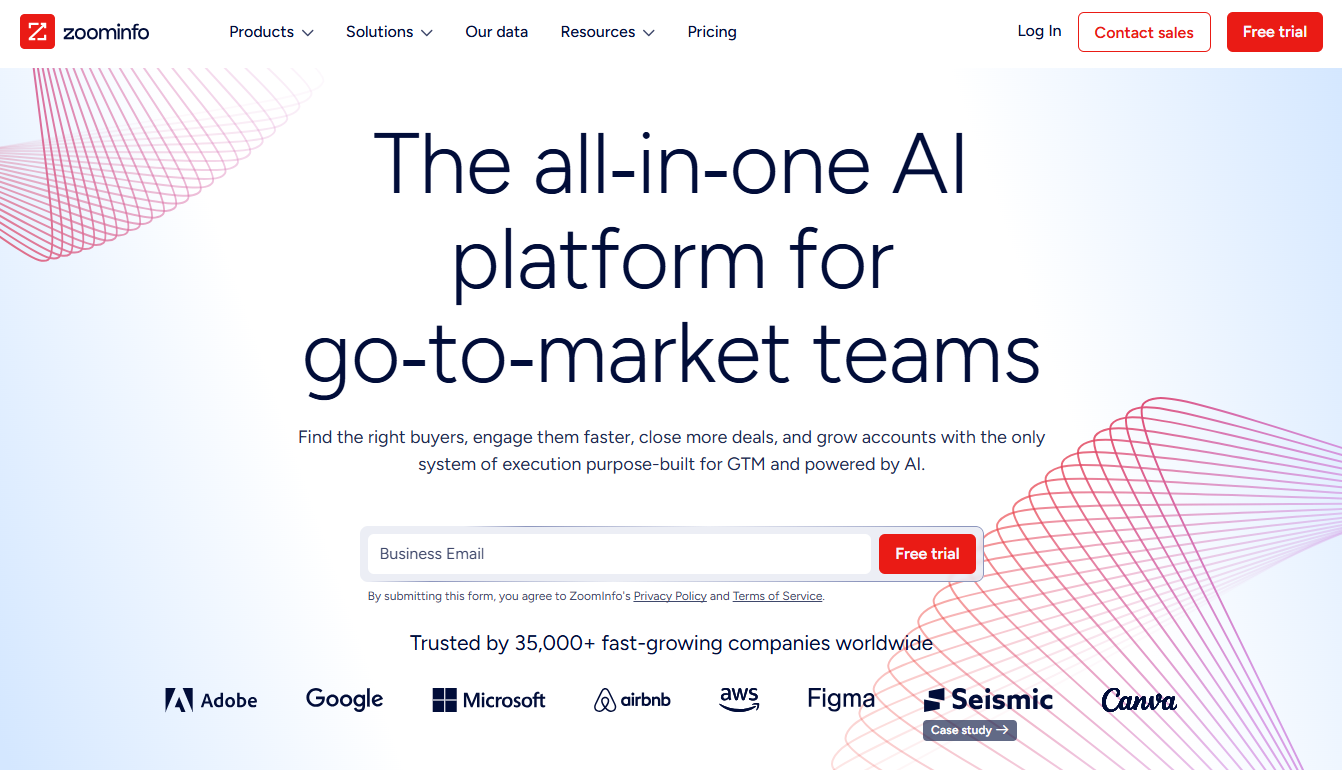
Looking for the intelligence layer that powers smarter orchestration? ZoomInfo's GTM Context Graph combines B2B data, intent signals, and conversation intelligence so your team knows which leads matter, why they matter, and when to act. Learn more about ZoomInfo.
How We Curated Our List of LeanData Alternatives
After testing LeanData and researching the revenue operations market, we found that LeanData's Salesforce-native orchestration approach may not work for all business models, CRM environments, and team sizes. While LeanData handles complex, multi-territory routing logic inside Salesforce well, some organizations need more for:
Accessing B2B data intelligence that informs which leads to prioritize before routing them
Converting inbound demand into meetings instantly with transparent, modular pricing
Managing data quality with routing, deduplication, and account hierarchies in one place
Consolidating enrichment, routing, and scheduling into a single platform instead of stitching together multiple tools
Automating lead assignment for small teams without enterprise complexity or implementation timelines
Achieving precise lead-to-account matching across Salesforce, HubSpot, and Dynamics 365
Getting full-featured routing automation at an accessible, all-inclusive price point
Each tool on this list leads in one of these areas. You might use them alongside LeanData to fill specific gaps, or switch to one entirely depending on what your team needs most.
❗DISCLAIMER: We aren't covering every single tool in the market! Our focus is on highlighting the best alternatives that address some of LeanData's limitations for various use cases. The goal is to provide insights into tools that cater to specific business needs. |
|---|
1. ZoomInfo — Best Alternative for AI-Powered GTM Intelligence and Data-Driven Orchestration
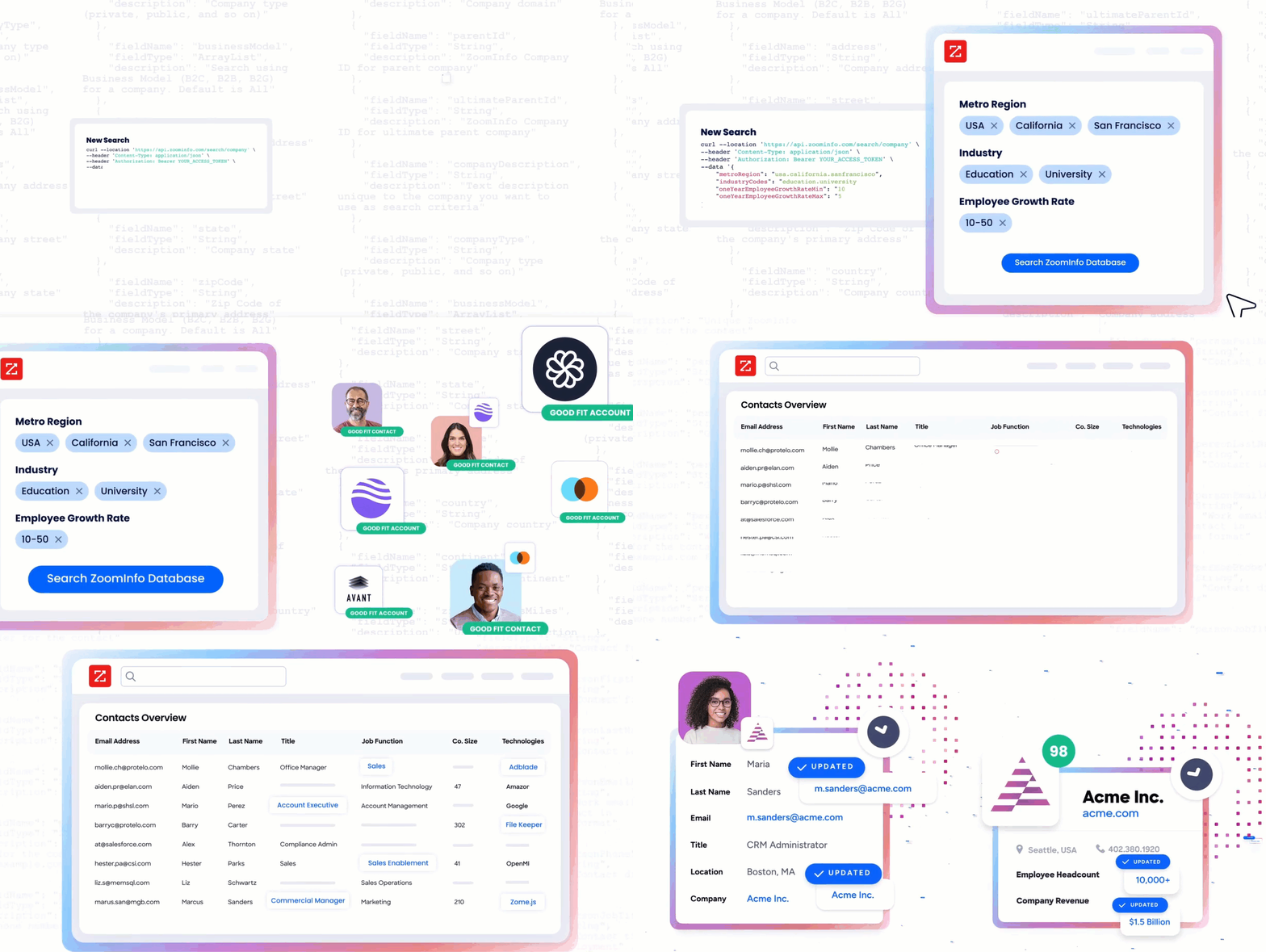
ZoomInfo is an AI GTM Platform built on a large B2B data foundation: 500M contacts, 100M companies, 135M+ verified phone numbers, and 200M+ verified business email addresses. Its GTM Context Graph, which processes 1.5B+ data points daily, unifies this data with your CRM records, conversation transcripts, and behavioral signals to reveal the full context of your accounts.
That context gives AI the fuel to show not just what happened, but why it happened, and which actions to take next. Your team can drive sales motions from the GTM Workspace, run GTM plays from GTM Studio, or power their own tools through the API and MCP. Its key features include:
B2B data platform spanning identity data, company context, and buying signals with up to 95% accuracy on first-party data
GTM Context Graph that unifies CRM records, conversation intelligence, and behavioral signals to capture not just what happened in a deal, but why it happened
Buyer intent signals tracking 210 million IP-to-Organization pairings and 6 trillion+ new keyword-to-device pairings sourced monthly
GTM Workspace for sellers with AI-powered account research, outreach drafting, and deal execution
GTM Studio for marketers and RevOps to design, enrich, and activate GTM plays in natural language
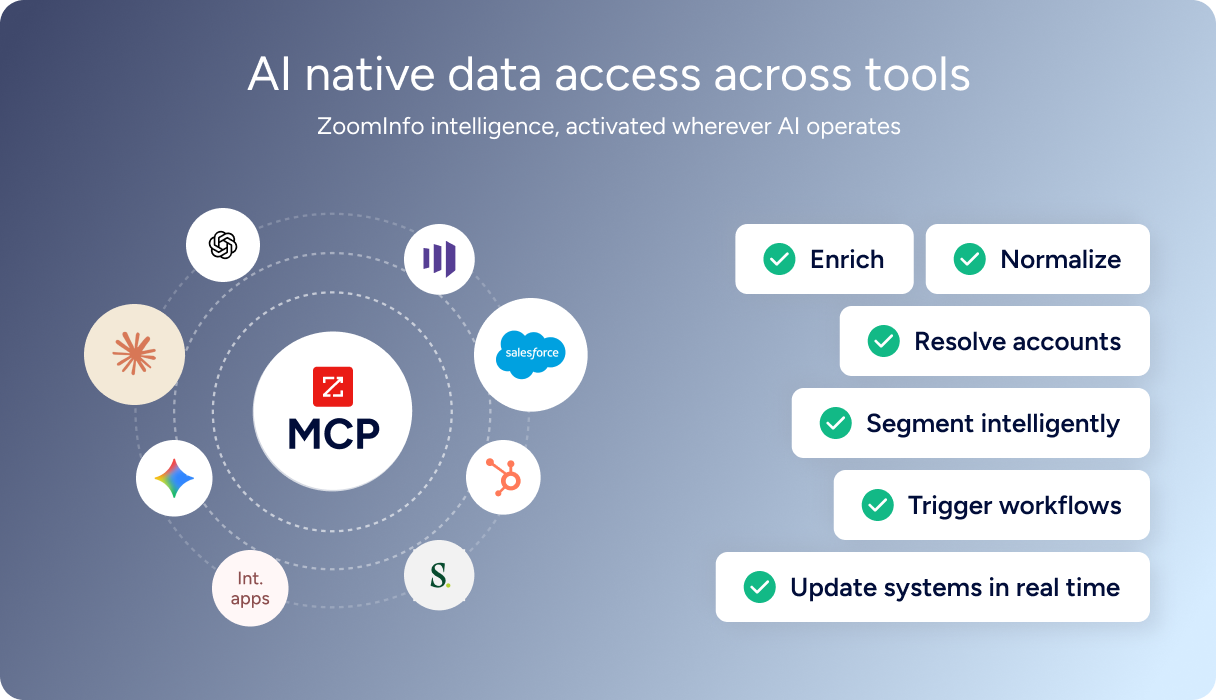
Universal access via APIs and MCP delivering intelligence into any tool, workflow, or AI agent
Where LeanData orchestrates what happens after a lead enters your CRM, ZoomInfo provides the intelligence that determines which leads are worth prioritizing in the first place.
LeanData routes leads based on existing CRM data and rules you define; ZoomInfo enriches that picture with verified contact data, technographic profiles, intent signals, and AI-driven account insights that make every routing decision smarter.
Why Choose ZoomInfo Over LeanData for GTM Intelligence
While LeanData excels at Salesforce-native workflow orchestration, ZoomInfo provides the data and intelligence layer that transforms orchestration from a process automation tool into a revenue intelligence engine. Here's where ZoomInfo steps up.
B2B Data Foundation: Know Who You're Routing and Why They Matter
LeanData orchestrates leads based on the data already in your Salesforce instance, but routing decisions are only as good as that data. Forbes estimates 91% of CRM data is incomplete, which means even the best routing logic works with gaps.
ZoomInfo fills those gaps at scale. The platform covers 500M contacts and 100M companies with 300+ company attributes for market segmentation, including department org charts with decision-makers' direct dials and emails, technographics covering 30,000+ technologies across 200+ categories, and global coverage with 34M+ company profiles outside North America.
Source: ZoomInfo Data
This data quality is externally validated. In a Fortune 500 competitive RFP analyzing 25 million contacts across vendors, the independent consultant concluded that "no other competitor came even close." ZoomInfo has been named a Leader in the Forrester Wave for Intent Data Providers B2B (Q1 2025) and holds 133 No. 1 rankings on G2 across categories including Sales Intelligence, Buyer Intent, and Data Quality.
⚡ZoomInfo in Action: When a lead enters your pipeline, ZoomInfo enriches it with verified contact details, company context, tech stack data, and org chart context. Instead of routing a bare lead record with just a name and email, your orchestration engine gets the full picture: the contact's seniority, department, the company's size, industry, technology stack, and whether they're actively researching solutions like yours.
That context transforms routing from "send to the right territory" into "send to the right rep with the right intelligence at the right moment."
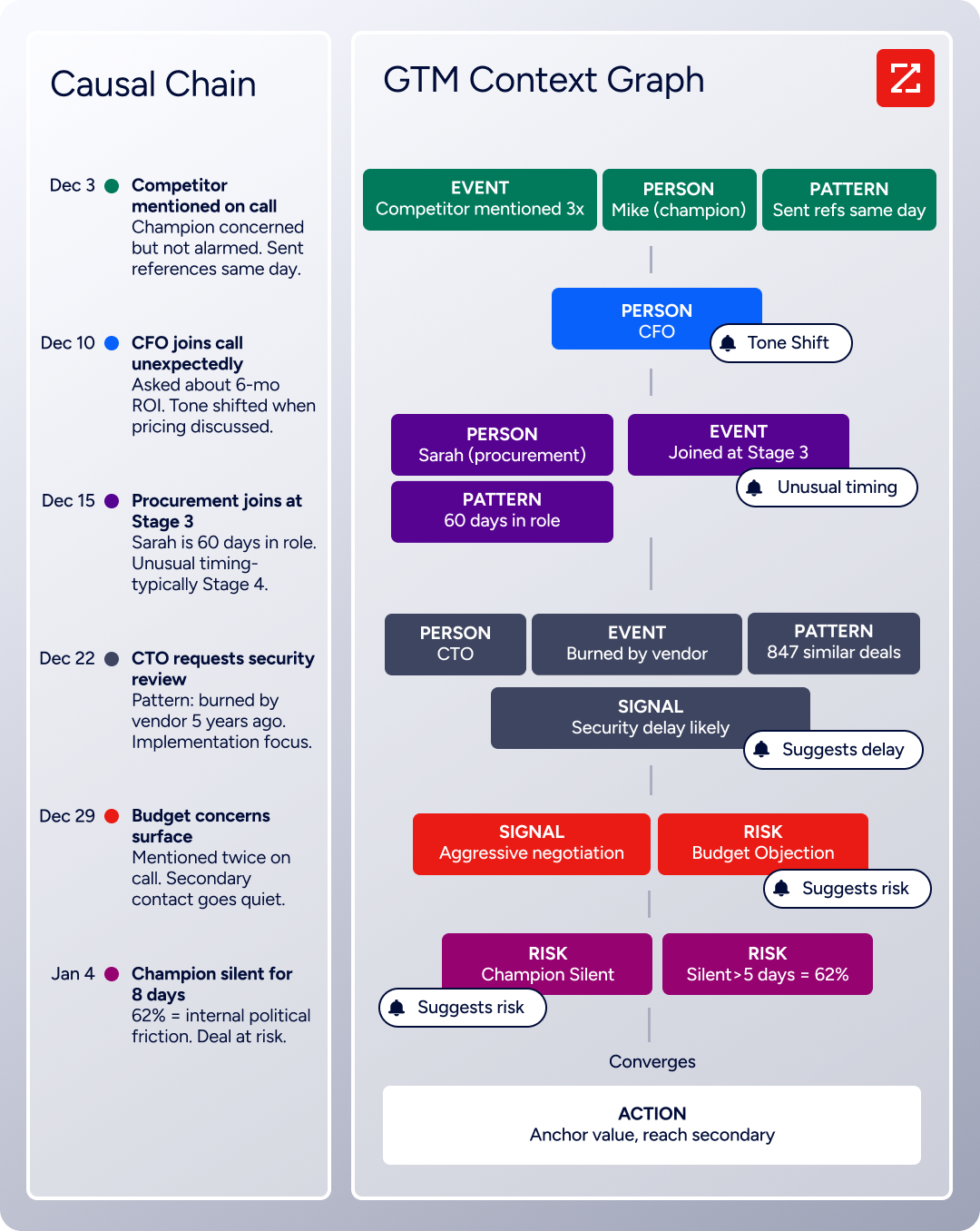
GTM Context Graph: Intelligence That Reveals Why Deals Move
LeanData captures what happens to a lead as it moves through your Salesforce workflows: who it was assigned to, what actions fired, and how long each step took. But as ZoomInfo's Chief Product Officer Dominik Facher writes: "The CRM recorded the state change. It has no record of why it happened."
The GTM Context Graph fills that gap. It combines ZoomInfo's B2B data with your CRM records, conversation transcripts from calls and meetings, email interactions, and behavioral signals into a single intelligence layer.
Source: ZoomInfo Context Graph
The result: AI that doesn't just know the CFO joined the last call, but recognizes that executive sponsorship entering at this stage, combined with ROI-focused questions, matches the pattern behind closed-won deals in your segment.
This intelligence layer exists because of two decades of infrastructure investment that no single point solution can replicate, including the acquisition of Chorus for conversation intelligence and the construction of a B2B data unification platform.
Source: ZoomInfo Chorus
⚡ZoomInfo in Action: Your sales team is working 50 accounts flagged by intent signals. Instead of treating all 50 equally, the GTM Context Graph identifies which accounts match your actual closed-won patterns: the ones where executive sponsors entered conversations early, where buying committee members across departments engaged simultaneously, and where third-party research activity correlates with historic deal acceleration.
Your team focuses on the 12 accounts most likely to convert, and the AI-drafted outreach addresses the specific concerns surfaced in each account's conversation history.
GTM Workspace and Studio: From Intelligence to Execution
LeanData's FlowBuilder lets RevOps teams design orchestration workflows visually. ZoomInfo extends that concept across the full GTM motion with two execution environments.
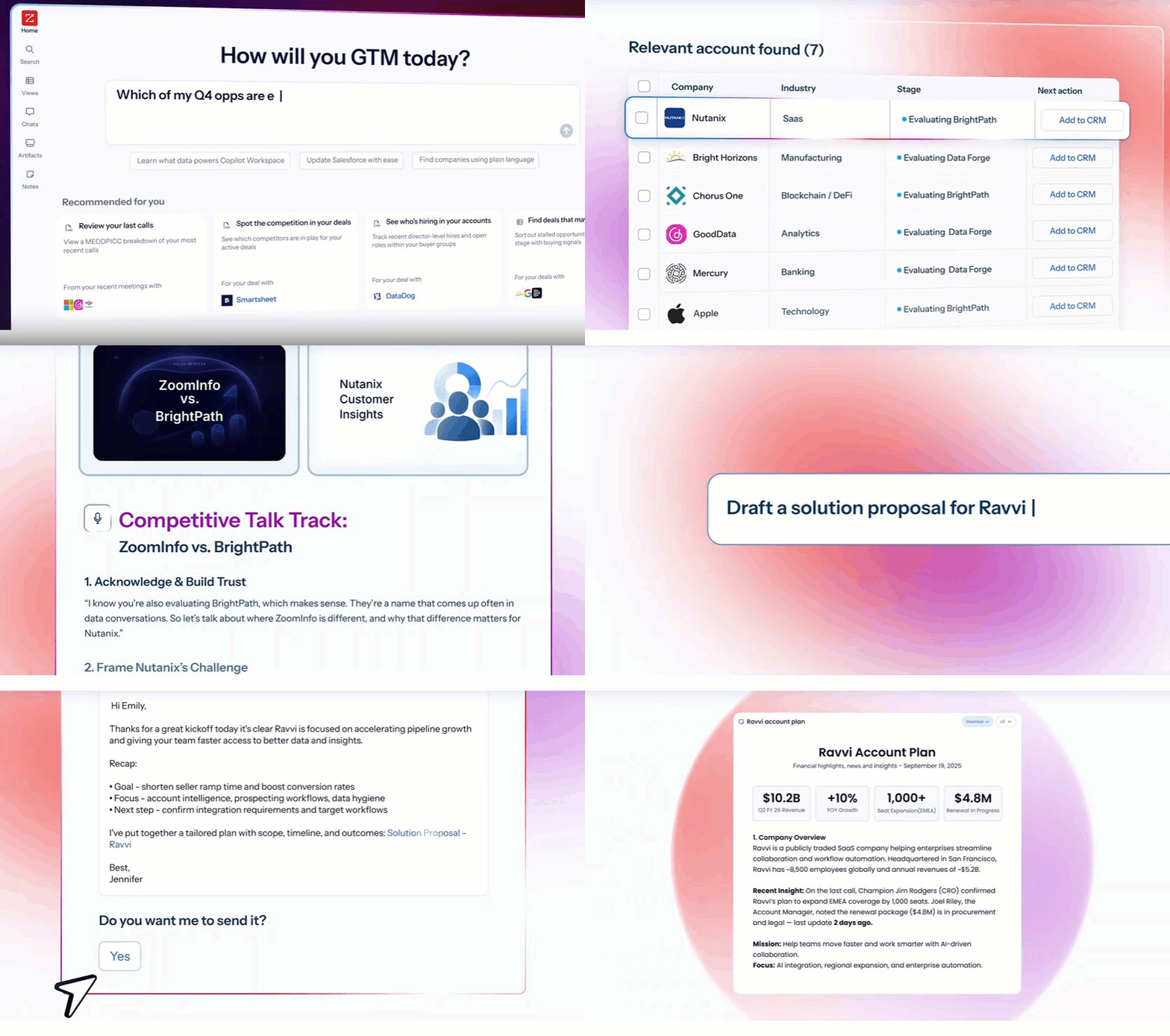
GTM Workspace gives sellers a single surface where prioritized accounts, AI-drafted outreach, and deal execution converge. AI agents handle account research, outreach generation, CRM updates, and signal monitoring. Customer results include: Seismic's sales team boosted productivity by 54% and saved 11.5 hours per week, Databricks reached prospects 50% faster, and Thomson Reuters increased closed-won deals by 40%.

Source: ZoomInfo GTM Workspace
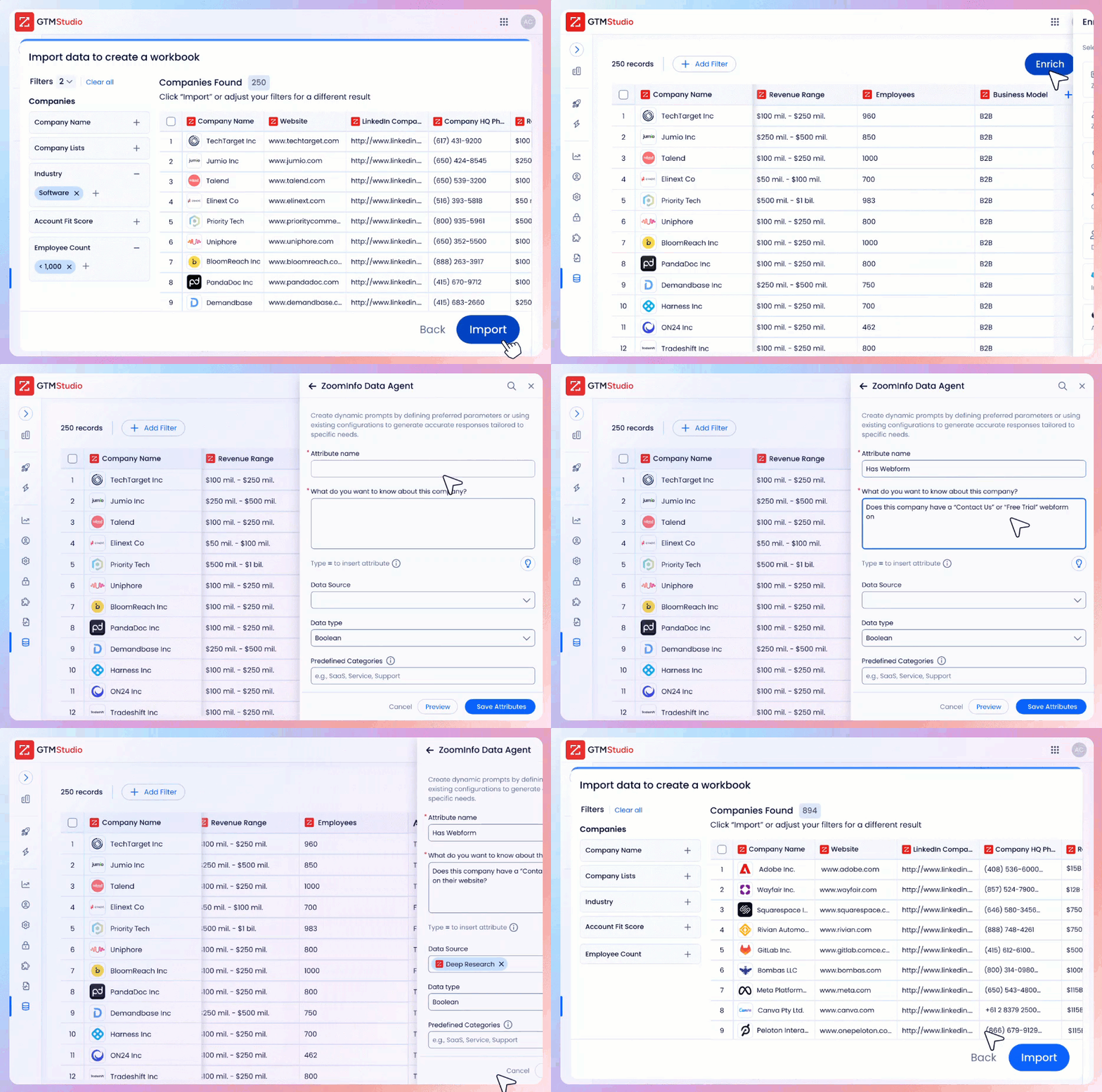
GTM Studio gives marketers, RevOps, and GTM engineers an AI-powered canvas where audience definition, campaign orchestration, and pipeline measurement happen in natural language. Expansion plays that used to take 3 weeks now launch in 30 minutes, and top-performing teams run 50+ plays per quarter.
Source: ZoomInfo GTM Studio
⚡ZoomInfo in Action: A marketer in GTM Studio describes an audience in plain language: "mid-market SaaS companies in North America that use Salesforce, are showing intent around revenue orchestration, and have had recent VP-level hiring in sales operations."
The system builds the audience, enriches it with verified contacts, launches a multi-channel play, and routes hot accounts into GTM Workspace where sellers see pre-drafted outreach addressing each account's situation. No engineering ticket, no CSV export, no manual enrichment step.
Universal Access: APIs and MCP for Any Tool
LeanData operates exclusively within the Salesforce ecosystem. ZoomInfo delivers its intelligence through APIs and MCP (Model Context Protocol) into any application, workflow, or AI agent.
Source: ZoomInfo MCP
The Enterprise API provides Search, Enrich, Copilot AI, Marketing, and Engagement endpoints. The MCP server connects AI models directly to ZoomInfo's B2B data as a native tool, currently supporting Claude and ChatGPT. API access is included in all relevant plans.
Source: ZoomInfo API
⚡ZoomInfo in Action: Your engineering team builds a custom AI agent that monitors your CRM for accounts showing declining engagement. When the agent detects risk, it queries ZoomInfo's MCP server for updated org chart data and recent intent signals, identifies whether key champions have changed roles, and surfaces the intelligence into your account management workflow.
The same data powering ZoomInfo's native products now powers your proprietary systems.
🏅 NOTE: We evaluated other B2B intelligence platforms and found that ZoomInfo's combination of data scale (500M contacts, 100M companies), the GTM Context Graph intelligence layer, and universal access via APIs/MCP positions it as both a standalone GTM platform and an intelligence backbone for existing orchestration tools like LeanData.
ZoomInfo Pricing
ZoomInfo uses a custom-quoted, seat-and-credit-based subscription model. Pricing depends on the number of users, monthly credit volume, features selected, and contract length. ZoomInfo's pricing page organizes plans into three product lines:
Sales Plans:
Professional: Contact and company data, CRM integrations, Chrome extension, AI-powered email generation
Advanced: Adds AI-driven account prioritization, buyer intent signals, website visitor tracking, champion tracking, and automated outreach workflows
Enterprise: Adds real-time buyer intent, sales activity automation, AI-generated account summaries, custom integrations, and dedicated customer service
Marketing Plans:
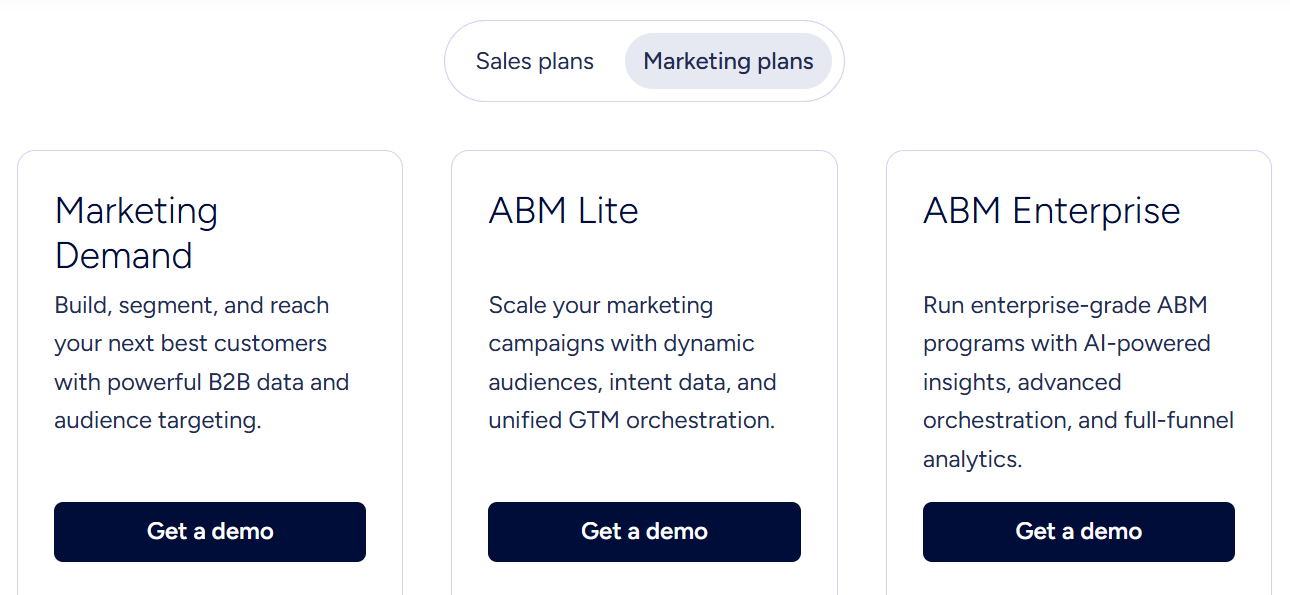
Marketing Demand: B2B audience targeting, dynamic audiences, CRM/MAP integrations, GTM workflows
ABM Lite: Intent data with ZoomInfo Display Network, Facebook/LinkedIn/Google advertising, AI-driven buying-group identification
ABM Enterprise: Unlimited intent topics, unlimited display campaigns, AI account summaries and lookalikes, predictive scoring

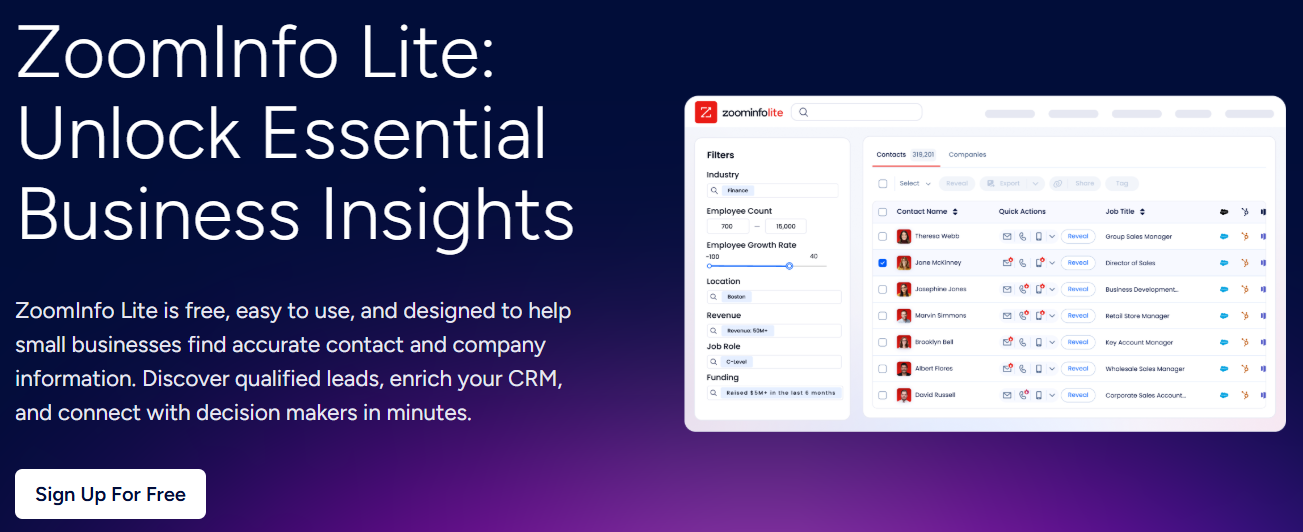
ZoomInfo also offers ZoomInfo Lite, a permanent free tier with access to the B2B database, 10 monthly export credits, individual and company searches, and HubSpot integration. A 7-day free trial is available with no credit card required.
Who Should Use ZoomInfo?
Choose ZoomInfo if:
You need the intelligence layer behind orchestration, not just the routing mechanics. Your team wants to know which leads are worth prioritizing, which accounts are actively in-market, and why deals are moving or stalling, with verified B2B data spanning 500M contacts and 100M companies.
You're building an AI-powered GTM motion and need a data foundation that feeds any tool, any agent, and any workflow through APIs and MCP, rather than being locked into a single CRM's ecosystem.
Your revenue team spans sales, marketing, and RevOps, and you need a platform where sellers execute from GTM Workspace, marketers orchestrate from GTM Studio, and engineers build on the same intelligence through programmatic access.
Ready to see the intelligence behind your best deals? ZoomInfo's GTM Context Graph reveals why deals move, which accounts to prioritize, and what to say next. Get started with a free trial or request a demo to see it in action.
2. Chili Piper — Best Alternative for Instant Meeting Conversion With Transparent Pricing

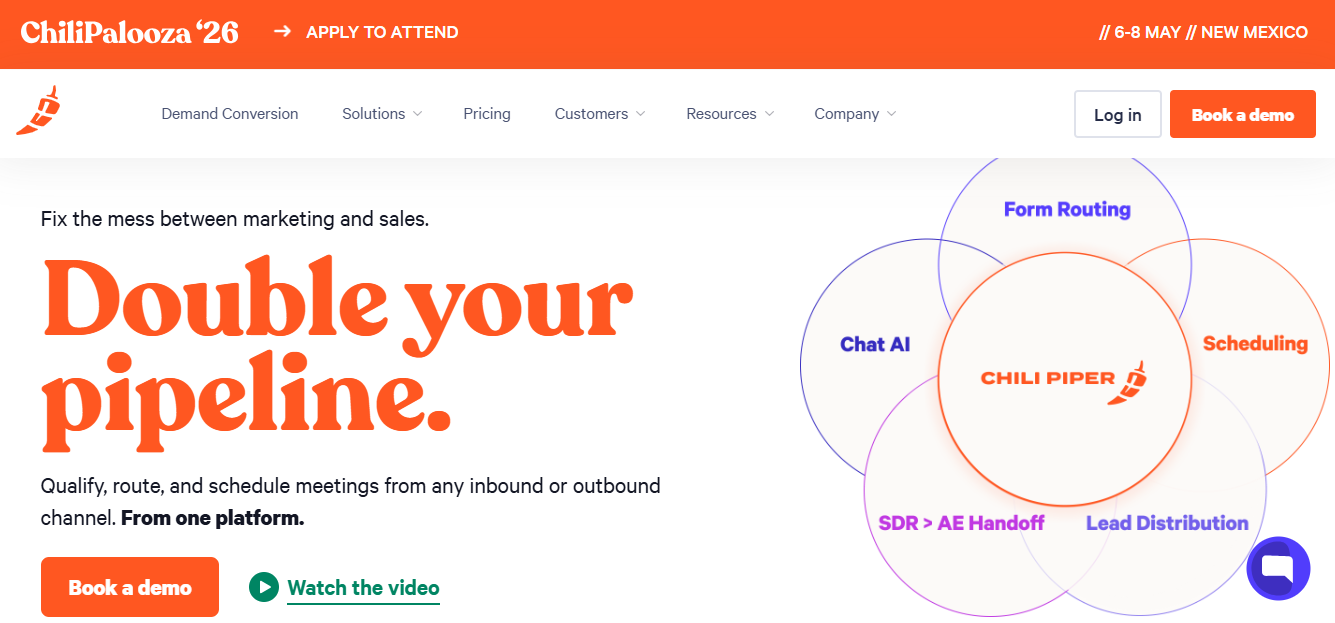
Chili Piper is a Demand Conversion Platform that closes the gap between buyer interest and scheduled meetings by qualifying, routing, and booking conversations in real time. Instead of asking prospects to fill out a form and wait for follow-up, Chili Piper qualifies prospects, routes them to the correct rep, and displays a calendar to book a meeting within seconds of form submission. Its key features include:
Form Concierge for instant scheduling from web forms with native qualification logic
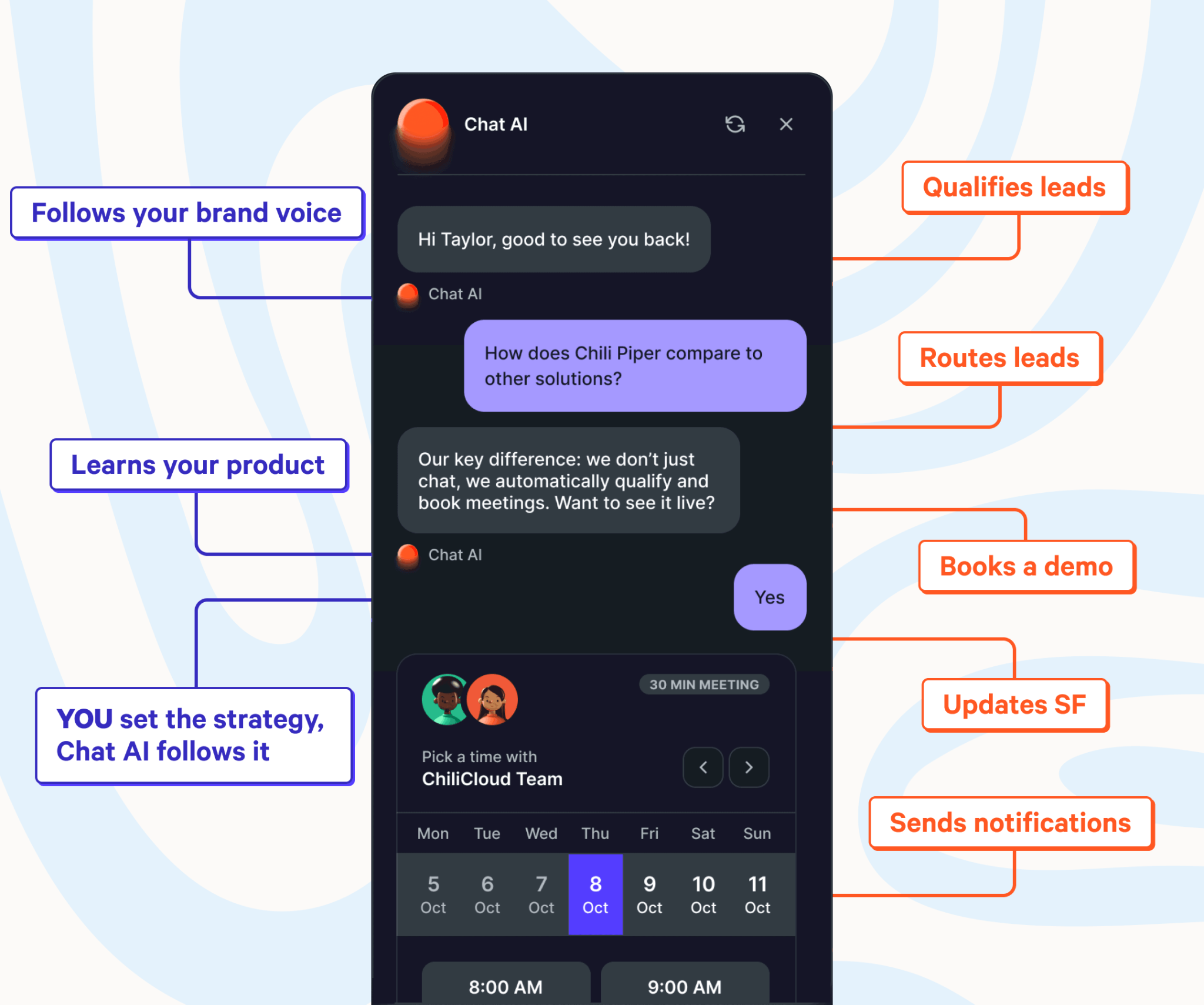
Chat AI powered by OpenAI GPT-4.1 Turbo for 24/7 lead qualification and meeting booking
Distro for Salesforce record distribution with territory rules and round-robin assignment
Handoff for automated SDR-to-AE scheduling based on routing rules
Chili Piper targets B2B revenue teams focused on converting inbound demand into meetings and pipeline. Customers report converting 50% to 80% of inbound leads to pipeline on average, effectively doubling inbound conversions compared to traditional lead management.
Why Choose Chili Piper Over LeanData for Instant Meeting Conversion
Chili Piper stands out in the following areas:
Transparent, Modular Pricing vs. Undisclosed Enterprise Quotes
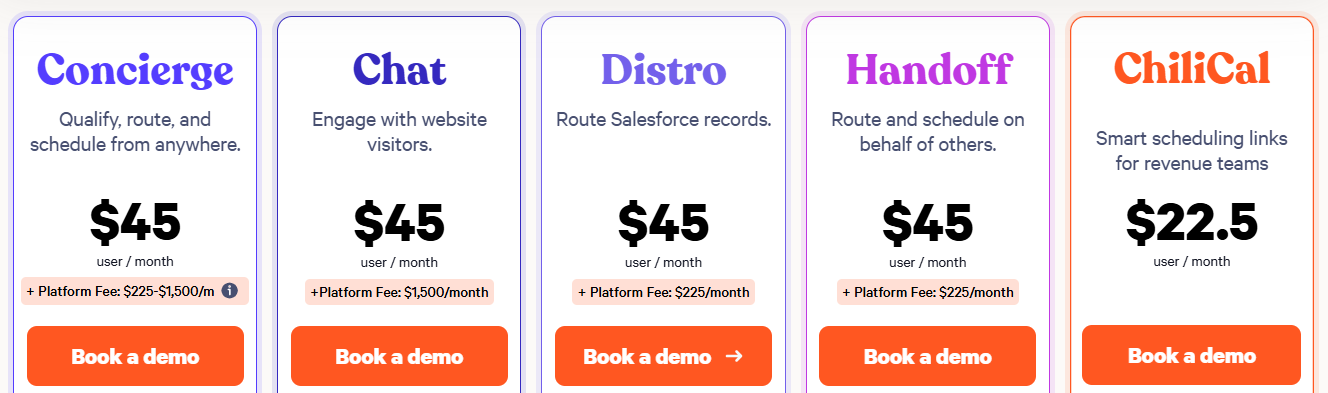
LeanData displays "Schedule a demo" rather than specific prices, with setup and onboarding billed separately and pricing increasing with additional modules. Chili Piper publishes transparent pricing on its website: individual products start at $45 per user per month, with volume discounts for multi-product bundles (2 products at $25/user/month, 3 at $20, 4+ at $18).
Teams can adopt only what they need and expand incrementally, making it straightforward to model costs at each stage of growth.
Native 24/7 Chat AI vs. No Chat Channel
LeanData does not include a native chat channel for engaging website visitors. Chili Piper includes Chat AI as part of its platform, an always-on AI chatbot that qualifies visitors, answers questions, and books meetings around the clock. Research shows that 78% of buyers choose the vendor that responds first, making immediate chat engagement a revenue-critical channel.
Source: Chili Piper Chat AI
Fast Implementation for Non-Technical Users
LeanData's initial setup is described as moderately difficult, with implementation packages ranging from 4 hours to 6+ weeks. Chili Piper emphasizes speed: Proposify set up in two hours what took around a month with their previous routing tool, and the platform's interface only shows options that won't break the router, making it accessible for non-technical users.
🏅 NOTE: We also evaluated Default and RevenueHero for this category. While Default excels at consolidating the full inbound stack and RevenueHero offers competitive inbound conversion features, Chili Piper offers the strongest demand conversion experience for teams needing modular products with transparent pricing that scales predictably.
Chili Piper Pricing
Chili Piper uses a hybrid per-user plus platform fee model:
Form Concierge: $45/user/month + platform fee ($225-$1,500/month based on lead volume)
Distro: $45/user/month + $225/month platform fee
Handoff: $45/user/month + $225/month platform fee
Chat AI: $20,000/year flat fee + $225/month platform fee
Multi-product bundles reduce per-user costs: 2 products at $25/user/month, 3 at $20, 4+ at $18. Multi-year contracts save 15-40%.
Who Should Use Chili Piper?
Choose Chili Piper if:
You need transparent pricing to model total cost of ownership before committing, with clear per-user fees instead of undisclosed enterprise quotes.
Your team prioritizes speed-to-meeting over complex multi-object orchestration, with customers achieving 92% average show rates and 8-second lead response times.
You want to convert website visitors 24/7 through native chat AI without integrating a separate tool.
3. Traction Complete — Best Alternative for Salesforce-Native Data Management at Enterprise Scale
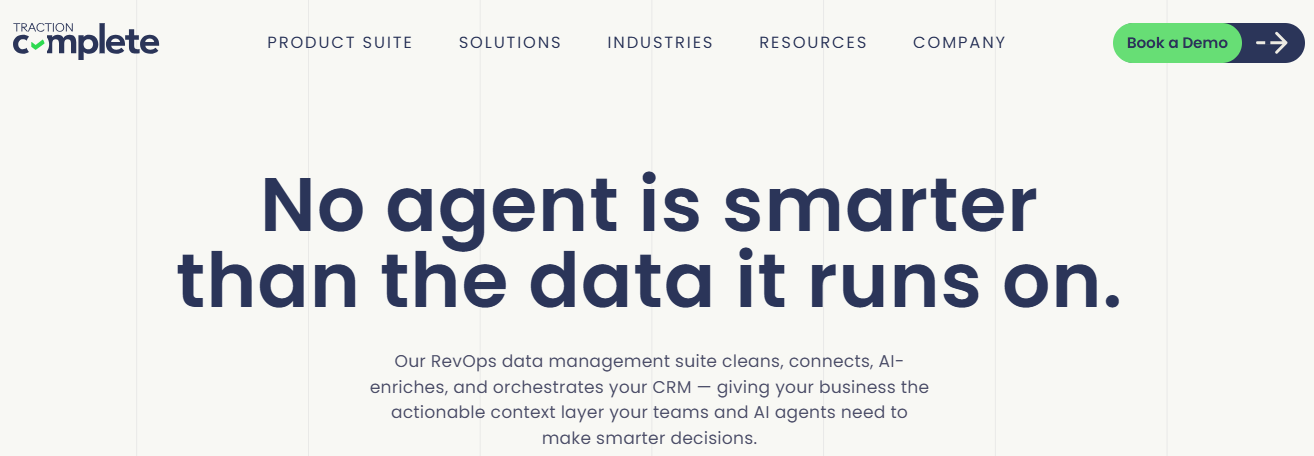
Traction Complete is a 100% Salesforce-native RevOps data management suite that cleans, connects, AI-enriches, and orchestrates CRM data entirely within your Salesforce environment. No external integration to maintain, no data leaving your Salesforce security perimeter.
Serving over 3,500 RevOps leaders at organizations including Cisco, NVIDIA, and Zoom, the platform addresses the data quality challenges that must be solved before any orchestration can work reliably. Its key features include:
Complete Leads for flexible lead-to-account matching and routing with a drag-and-drop visual interface supporting any Salesforce object
Complete Clean for automated deduplication with customizable survivorship criteria and mass merging
Complete Hierarchies for automated parent-child account relationship mapping, the first automated account hierarchies solution on the Salesforce AppExchange (since 2014)
Complete AI for AI-powered data enrichment and workflow automation using a bring-your-own-key model
Why Choose Traction Complete Over LeanData for Salesforce-Native Data Management
Traction Complete stands out in the following areas:
Zero External Data Movement
While LeanData integrates tightly with Salesforce, Traction Complete takes native architecture further: all data processing happens entirely inside the customer's own Salesforce org with no external API calls or middleware.
Cisco's case study notes that "Complete Leads is 100% native to Salesforce, Cisco's data never left its environment", a requirement many Fortune 500 security policies mandate. The platform inherits Salesforce's security architecture including GDPR, HIPAA, and ISO 27001 certifications.
Deduplication as a Core Product vs. Add-On
LeanData includes basic duplicate detection, but advanced merging typically requires add-ons. Traction Complete offers Complete Clean as a standalone core product with mass deduplication and field-by-field retention rules.
Source: Traction Complete Duplicate Detection
Twelve Years of Account Hierarchy Maturity
LeanData added account hierarchy support in Q1 2026. Traction Complete launched Complete Hierarchies on the Salesforce AppExchange in 2014, giving it a twelve-year head start. The platform builds hierarchies even when parent accounts are missing from the org, supports multiple simultaneous hierarchy types, and provides a drag-and-drop custom hierarchy builder.
🏅 NOTE: We also evaluated Openprise and RingLead for this category. While Openprise excels at cross-system data orchestration beyond Salesforce, Traction Complete offers the most complete Salesforce-native data management for teams needing routing, deduplication, and hierarchies in one place without external data processing.
Traction Complete Pricing
Traction Complete does not publicly disclose pricing. All commercial terms are handled via negotiated Order Forms:
Pricing model: License-based (per-Salesforce-seat) with annual subscription and prepaid invoicing
Modular suite: Six products (Complete Hierarchies, Leads, Clean, Influence, AI, Discover) available individually or as bundles
Included: Salesforce-certified CSM, onboarding guidance, team enablement, and regular check-ins
Implementation timelines: Complete Clean in 1-2 weeks, Complete Leads in 4-6 weeks, Complete Hierarchies in 2-4 weeks
Who Should Use Traction Complete?
Choose Traction Complete if:
Your organization has committed to Salesforce as your system of record and needs data management that operates entirely within that environment, with zero external data processing.
You need routing, deduplication, and account hierarchies treated as first-class products with dedicated engineering investment, not optional add-ons.
You're selling into large corporate families where understanding parent-child account relationships is critical for land-and-expand motions.
4. Default — Best Alternative for Unified RevOps Automation Without Tool Sprawl
Default is a workflow engine that unifies lead enrichment, qualification, routing, scheduling, and CRM updates into a single automated workflow. Where LeanData requires separate vendors for enrichment and scheduling, Default handles the entire sequence from form fill to booked meeting in one pass on a visual canvas. Its key features include:
Unified workflow engine combining forms, enrichment, routing, meeting booking, and CRM writes on a single canvas
Embedded enrichment with Clearbit and Apollo included at no additional cost, plus waterfall enrichment across six providers on Growth tier
Native two-way sync with both Salesforce and HubSpot simultaneously
Behavioral routing with automated re-engagement for no-shows and cancellations
Why Choose Default Over LeanData for Unified RevOps Automation
Default stands out in the following areas:
Enrichment, Routing, and Scheduling on One Canvas
LeanData cannot orchestrate actions across enrichment vendors or scheduling tools, requiring separate contracts for each.
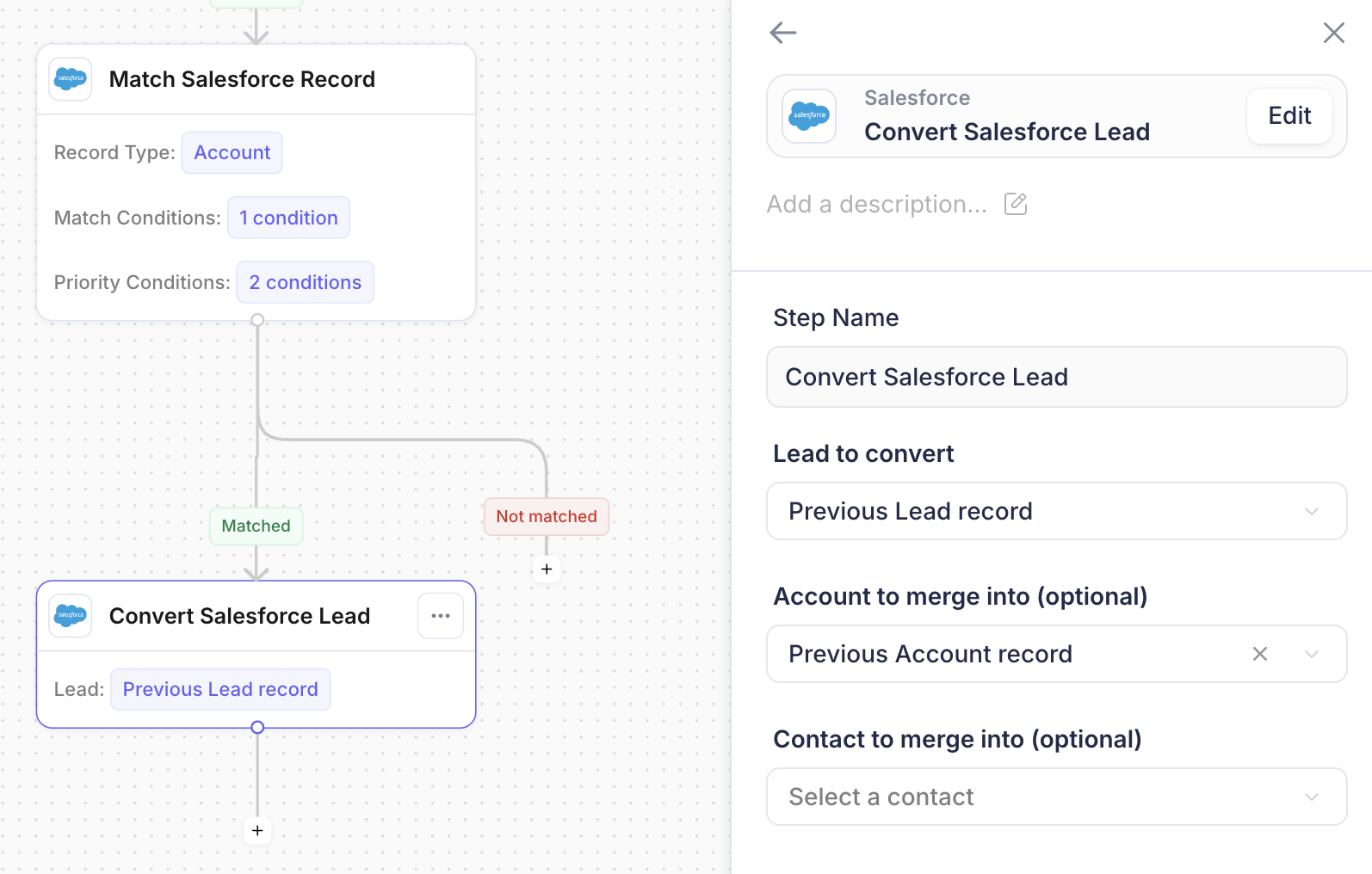
Default collapses the entire stack into one workflow: a lead enters, gets enriched through Clearbit and Apollo, qualified against ICP criteria, routed to the correct rep, shown a calendar, and written to CRM, all in a single pass.
Dual-CRM Native Support
LeanData users find it challenging to configure with HubSpot due to its Salesforce-first architecture. Default routes from and writes back to both HubSpot and Salesforce in the same workflow, supporting dual-CRM stacks without middleware.
Source: Default with Salesforce
Transparent Startup-Accessible Pricing
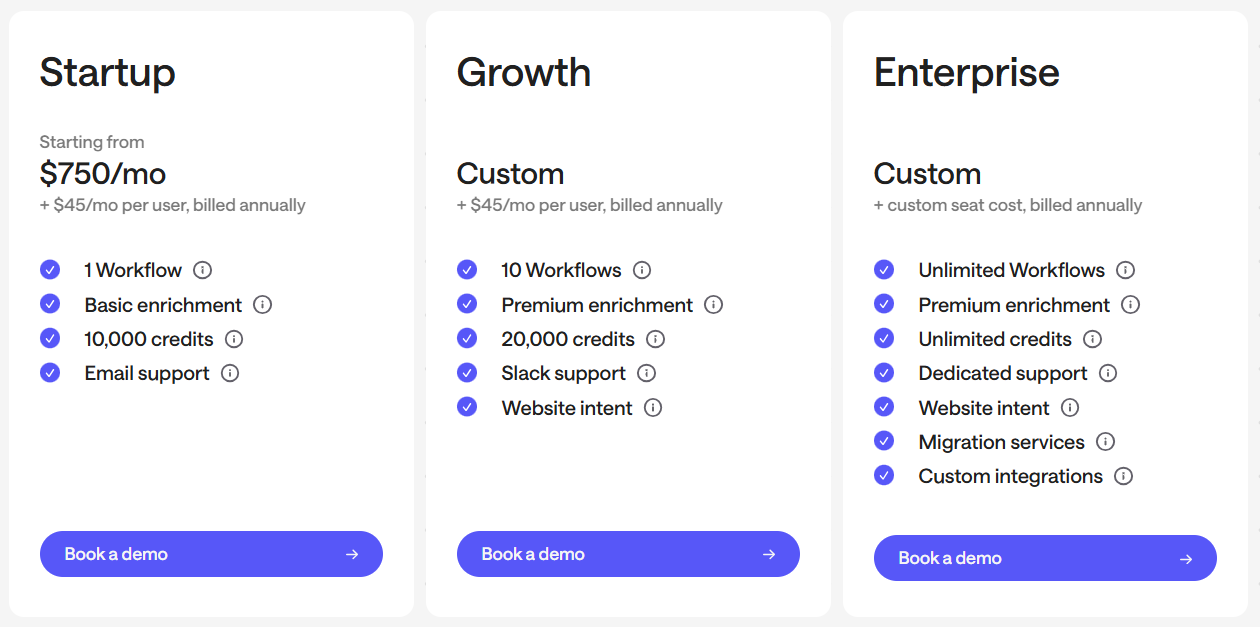
Default's Startup plan starts at $750 per month with $45 per seat, giving Series A companies access without enterprise procurement friction. A 20-person GTM team's annual contract stays under $20K, compared to LeanData's undisclosed pricing with mandatory professional services.
🏅 NOTE: We also evaluated Chili Piper and RevenueHero as scheduling-focused alternatives. While Chili Piper excels at inbound meeting booking and RevenueHero offers affordable conversion features, Default offers the most complete consolidation of the inbound stack for teams looking to replace multiple tools with a single workflow engine.
Default Pricing
Default uses a hybrid base-fee plus per-seat model, billed annually:
Startup: $750/month base + $45/user/month (routing + scheduling), includes 1 workflow, basic enrichment, 10,000 credits/year
Growth: Custom pricing, includes 10 workflows, premium enrichment across 6 providers, 20,000 credits/year
Enterprise: Custom pricing, unlimited workflows and credits, migration services, custom integrations
Who Should Use Default?
Choose Default if:
You're managing separate contracts for routing, scheduling, enrichment, and lead capture, and you want to consolidate the entire inbound stack into a single platform.
You're running a dual-CRM stack (HubSpot for marketing, Salesforce for sales) and need a workflow engine that writes to both natively.
You're a Series A-C B2B SaaS company that needs enterprise routing capabilities without enterprise complexity or procurement timelines.
5. Distribution Engine — Best Alternative for Small Salesforce Teams Needing Reliable Routing
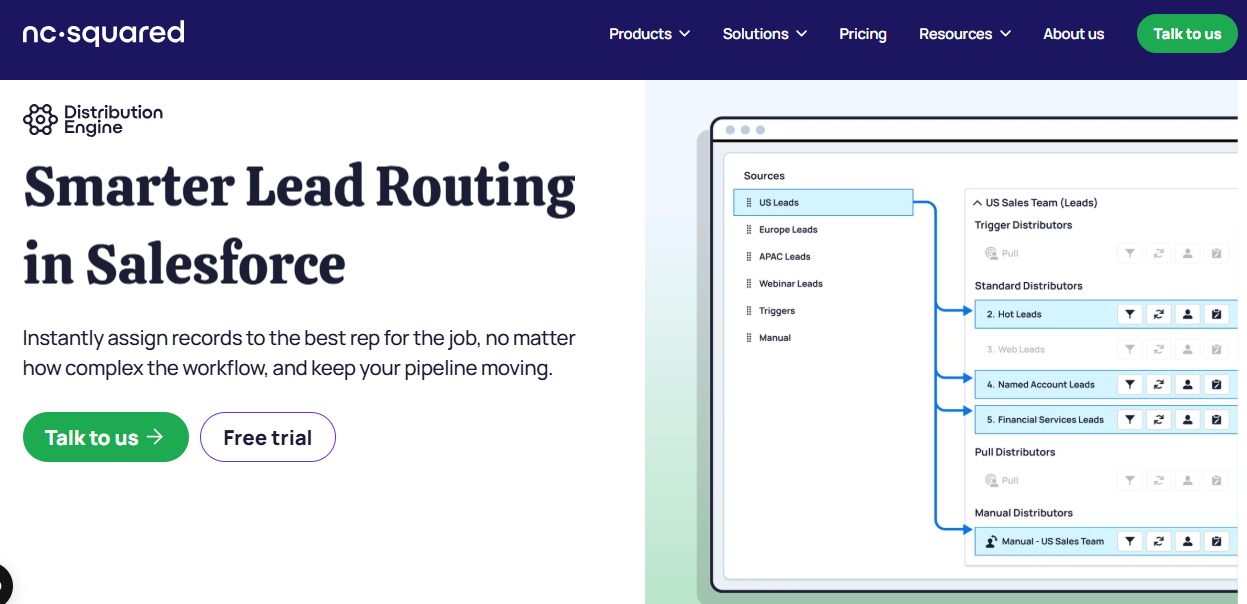
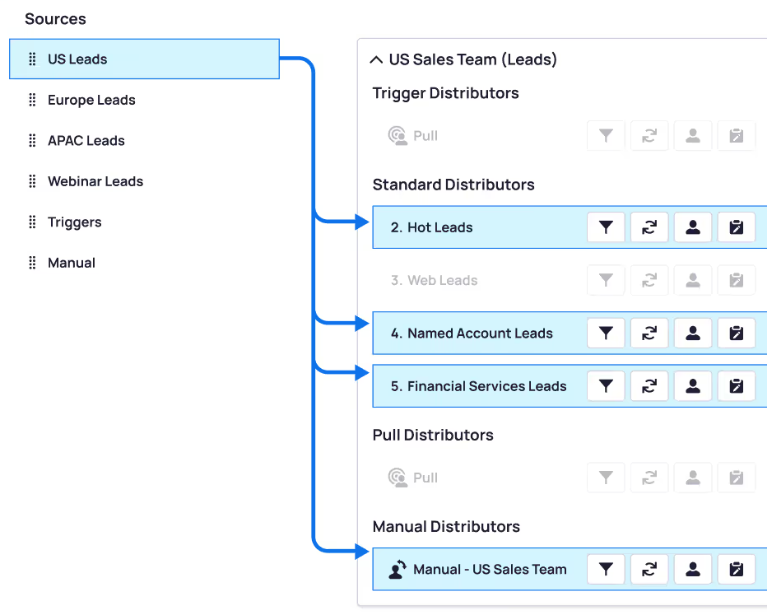
Distribution Engine is a 100% Salesforce-native lead routing and work distribution platform built for small-to-midsize teams that need automated assignment without the overhead of enterprise orchestration.
Built by the UK-based NC Squared and serving over 20,000 users worldwide, the platform fills the gap between Salesforce's basic assignment rules and complex revenue orchestration platforms. Its key features include:
Intelligent round-robin with workload balancing and weighted distribution factoring in availability and shift patterns
Territory routing with an interactive visual map interface that cleans messy address data automatically
Tag-based routing for specialist skills, product knowledge, or language capabilities
Lead-to-account matching with fuzzy matching logic and automatic lead conversion
Why Choose Distribution Engine Over LeanData for Small Team Routing
Distribution Engine stands out in the following areas:
No-Code Simplicity vs. Enterprise Complexity
Distribution Engine is built for teams that need to configure and modify routing without technical assistance. Managers can make changes in minutes rather than days.
In contrast, LeanData users report a steep learning curve, with initial setup described as moderately difficult.
Transparent, Accessible Pricing
Distribution Engine publishes clear pricing at $20/user/month (Starter), $35/user/month (Advanced), and $55/user/month (Unlimited) with a 30-day free trial. A 10-person team can implement full routing on the Advanced tier for $4,200 annually. Nonprofit and volume discounts are available.
Focused Routing Without Platform Overhead
Distribution Engine delivers focused routing for Salesforce without expanding into scheduling, buying groups, or cross-platform orchestration. Teams that already have scheduling and engagement tools don't need to pay for redundant capabilities. 360 Learning achieved 40% increase in lead conversions with >97% assignment accuracy.
Source: Distribution Engine with Salesforce
🏅 NOTE: We also evaluated Kubaru and Salesforce native assignment rules. While Kubaru offers routing at $20/user/month and Salesforce's native rules work for basic cases, Distribution Engine offers the most complete routing automation for small teams that have outgrown native capabilities but don't yet need enterprise orchestration.
Distribution Engine Pricing
Distribution Engine uses an annual per-user subscription with a 5-license minimum and 30-day free trial:
Starter: $20/user/month, basic tagging, round robin, segmentation
Advanced: $35/user/month, adds enhanced weighting, lead-to-account matching, territories, custom reporting
Unlimited: $55/user/month, all features, dedicated CSM, full API access, advanced availability management
Optional Premier Support: +20% surcharge with <30 minute response time and bi-annual configuration review
Who Should Use Distribution Engine?
Choose Distribution Engine if:
You have 5-50 Salesforce users and need solid routing at small business pricing under $20K annually.
You lack dedicated RevOps engineering resources and need a solution that sales ops generalists can configure and maintain.
Your routing requirements focus on assignment logic rather than broader orchestration, and you already have scheduling and engagement tools in your stack.
6. LeadAngel — Best Alternative for Multi-CRM Lead-to-Account Matching Precision
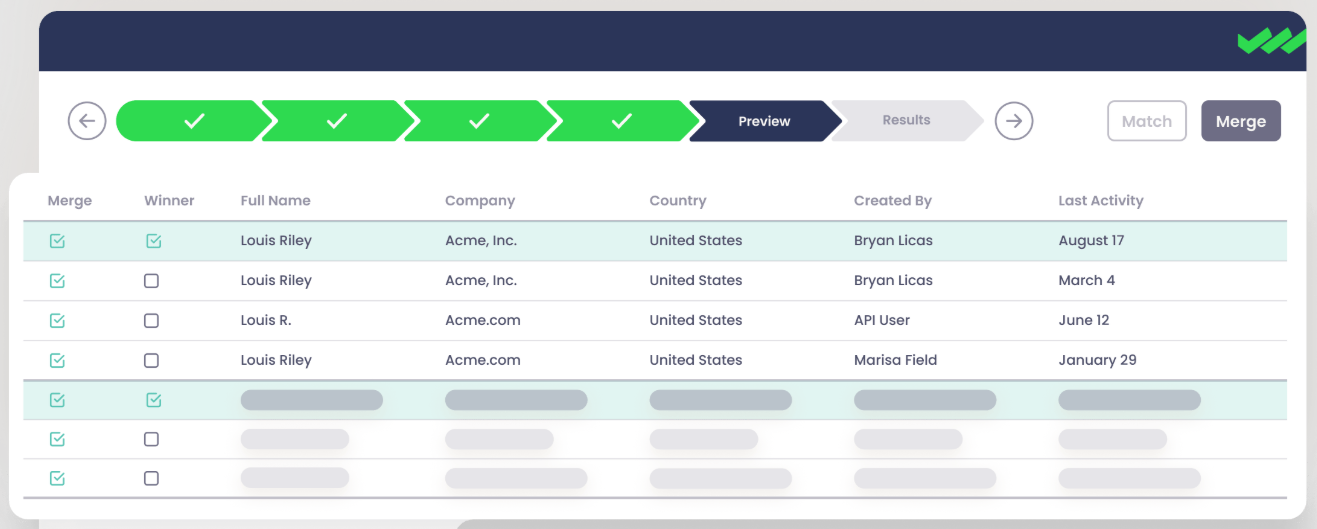
LeadAngel is a lead routing, matching, and sales acceleration platform designed to eliminate revenue leakage from mismatched accounts and misrouted leads. The platform claims 99.7% lead-to-account matching accuracy using a multi-algorithm matching stack, and provides native integration across Salesforce, Microsoft Dynamics 365, and HubSpot. Its key features include:
Multi-algorithm matching using a layered sequence of ten distinct matching methods (domain match, exact name, clean name, geo expansion, M&A logic, and more)
Multi-CRM native support across Salesforce, HubSpot, and Dynamics 365 as first-class integrations
On-The-Spot Handoff for real-time SDR-to-AE transfer of high-intent prospects
Extended free trial with the first six months free for new customers
Why Choose LeadAngel Over LeanData for Matching Precision
LeadAngel stands out in the following areas:
Superior Matching Accuracy
LeadAngel's claimed 99.7% accuracy represents a meaningful precision advantage over LeanData's documented 95%.
While LeanData uses AI-powered fuzzy logic across multiple fields, LeadAngel applies ten distinct matching methods in sequence, each handling a specific edge case the previous method missed: domain match, exact name, clean name, geo expansion, M&A logic, popular name match, industry match, relaxed match, stock code match, and first-word match. A partner testimonial confirmed the platform delivered 40% more lead-to-account matches compared to prior solutions.
True Multi-CRM Flexibility
LeanData's Salesforce-first architecture means users find it challenging to configure with HubSpot. LeadAngel is CRM-agnostic by design, with native integrations for Salesforce, Dynamics 365, and HubSpot built as first-class citizens.
Source: LeadAngel with Hubspot
For HubSpot users, LeadAngel's AI-driven logic and custom rules go beyond HubSpot's native domain-only matching.
Extended Free Trial for Production Validation
LeanData does not publicly disclose free trial details. LeadAngel offers six months free with no credit card required, allowing teams to deploy, validate matching accuracy against real CRM data, and quantify impact before committing to paid licensing. Deployment reportedly takes under 30 minutes for native CRM connections.
🏅 NOTE: We also evaluated Kubaru and Distribution Engine for this category. LeadAngel was selected because its multi-algorithm matching stack and native multi-CRM support directly address the matching precision and CRM flexibility gaps that lead teams away from LeanData's Salesforce-first approach.
LeadAngel Pricing
LeadAngel uses a contact-sales model. List prices from a February 2025 press release provide planning benchmarks:
Professional: $500/month billed annually, includes lead-to-account matching, lead routing with all algorithms, team management. Scheduling and deduplication available as paid add-ons.
Professional Plus: $2,042/month billed annually, includes everything in Professional plus expanded object routing, Data Dedupe, ScheduleNow for Web Forms and HandOff, and dedicated support.
Free Trial: First six months free for new customers with no credit card required.
Who Should Use LeadAngel?
Choose LeadAngel if:
Your team runs HubSpot or Microsoft Dynamics 365 as the primary CRM and needs native lead routing and matching that works as a first-class integration.
Matching precision is your primary buying criterion and the difference between 95% and 99.7% accuracy matters because your accounts have complex hierarchies or M&A relationships.
You want to validate routing performance in production before committing, and the six-month free trial gives you sufficient time to test with real lead volume.
7. Kubaru — Best Alternative for Affordable All-Inclusive Salesforce Routing
Kubaru is a Salesforce-native lead routing and case assignment application that provides every routing feature at a flat $20 per user per month with no tier restrictions or hidden fees. The platform positions itself as "the simpler, more affordable alternative to LeanData", removing the technical complexity, months of implementation, and tier-restricted feature limits that lock away capabilities. Its key features include:
Round robin with weighted assignment and adaptive algorithms for fair distribution
Load balancing based on active workload to prevent rep burnout
Territory management with geographic boundaries using countries, states, and zip codes
Skill-based routing matching records to reps by language, industry, or product expertise
SLA reassignment to re-route unworked records automatically
Why Choose Kubaru Over LeanData for Affordable Routing
Kubaru stands out in the following areas:
All-Inclusive Pricing vs. Tiered Licensing
Every Kubaru customer receives the full feature set at $20/user/month: round robin, load balancing, territory management, skill-based routing, SLA enforcement, and duplicate matching.
LeanData's Standard tier only covers the Lead object, Advanced adds Contact and Account, and Premium unlocks custom objects. Teams often discover mid-implementation that core requirements need budget adjustments.
Same-Day Implementation
Kubaru can be "installed and configured in a single afternoon" with sales managers and RevOps teams able to create and update routing rules themselves. Conga achieved implementation in a single afternoon. LeanData requires implementation packages from 4 hours to 6+ weeks, billed separately from licensing.
No Feature Gating
Kubaru removes Salesforce's native 3,000 assignment rule limit and includes free lifetime support with every license. Users describe the support team as "some of the most responsive, helpful individuals" they've worked with, all included in the base price.
Source: Kubaru Review
🏅 NOTE: We also evaluated Distribution Engine and Salesforce native assignment rules. While Distribution Engine offers similar capabilities at a slightly higher price point, Kubaru offers the most complete feature set at the most accessible price with a 30-day free trial and zero-cost evaluation.
Kubaru Pricing
Kubaru uses a single-tier model at $20/user/month with all features included:
All routing features: unlimited assignment rules, weighted round robin, skill-based assignment, load balancing, territory management, SLA enforcement, duplicate matching
Free lifetime support for active customers
30-day free trial with no credit card required
Licenses only required for users administering or receiving assignments, not all Salesforce users
Compatible with Salesforce Professional, Enterprise, and Unlimited editions
Who Should Use Kubaru?
Choose Kubaru if:
You need routing beyond Salesforce's native assignment rule limits but want to avoid enterprise platform complexity and undisclosed pricing.
Your budget requires transparent, all-inclusive pricing at $20/user/month rather than tiered licensing where core capabilities require upgrades or add-on purchases.
You operate exclusively within Salesforce and prioritize same-day implementation over cross-platform orchestration, with routing rule changes taking effect in minutes rather than weeks.
The Final Verdict
LeanData excels as a Salesforce-native revenue orchestration platform for enterprise teams with complex, multi-territory routing requirements. But growing organizations often need specialized tools that address specific gaps in their GTM stack. Based on our research, here are the best alternatives:
ZoomInfo for B2B data intelligence and the AI-powered GTM Context Graph that makes every orchestration decision smarter
Chili Piper for instant inbound meeting conversion with transparent, modular pricing
Traction Complete for Salesforce data management with routing, deduplication, and account hierarchies in one suite
Default for consolidating enrichment, routing, and scheduling into a single workflow engine without tool sprawl
Distribution Engine for small Salesforce teams that need reliable routing without enterprise complexity
LeadAngel for matching precision at 99.7% accuracy across Salesforce, HubSpot, and Dynamics 365
Kubaru for affordable, all-inclusive Salesforce routing at a flat $20 per user per month
You don't have to choose between LeanData and these alternatives exclusively. Many organizations layer specialized tools on top of their existing orchestration setup to strengthen specific capabilities. Consider your CRM environment, team size, budget, and growth plans when deciding which solution works best.
Ready to power your GTM orchestration with the industry's largest B2B dataset? ZoomInfo's GTM Context Graph reveals why deals move, which accounts to prioritize, and what actions to take next. Start your free trial or request a demo to see the intelligence layer behind your best deals.
