

Choosing between Lemlist and Reply for outbound sales comes down to five questions:
Do you need a multichannel sequencing tool, or a platform that covers the full go-to-market cycle from data to deal close?
How important is the accuracy of your contact data, and are you willing to stitch together multiple vendors to get the full picture?
Is your team focused on cold outbound, or do you also need intent signals, conversation intelligence, and account-based plays?
Do you want AI that writes better cold emails, or AI that understands why deals move and what to do next?
Are you a small outbound team optimizing sequences, or an organization aligning sales, marketing, and ops around shared intelligence?
Here's what we recommend:
Lemlist is built for sales teams that want multichannel outreach in one place. It combines a 600M+ contact database with sequences spanning email, LinkedIn, WhatsApp, and phone, plus deliverability tooling through its built-in lemwarm warm-up system. Its AI personalization extends beyond text into dynamic images, landing pages, and voice cloning. Lemlist works best for teams of 10 to 500 running outbound as their primary pipeline motion. The trade-off: it's outbound-only, with no inbound routing, no conversation intelligence, and limited visibility into what happens after the meeting is booked.
Reply takes a similar multichannel approach but leans on autonomous AI. Its Jason AI SDR agent handles the full outbound loop (prospecting, sequencing, reply handling, and meeting booking) with little human involvement, drawing from a 1B+ contact database. Reply also offers agency-ready features like white-label branding and multi-workspace management. However, its LinkedIn automation carries documented account-ban risk, billing practices have drawn consistent complaints on review platforms, and true multichannel cost runs higher than the published base price once add-ons are factored in.
Both platforms are good outbound sequencers. But outbound sequences are one piece of a revenue engine. The contacts you target, the signals you act on, the intelligence behind your messaging, and the context that carries from first touch through closed deal all determine whether sequences produce pipeline or noise. That's a different problem.
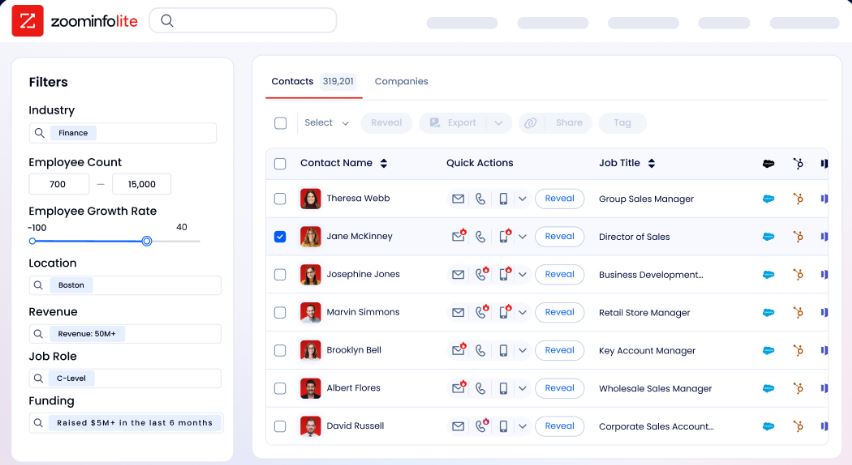
ZoomInfo is a go-to-market platform built on a broad B2B data foundation: 500M contacts, 100M companies, 135M+ verified phone numbers, and 200M+ verified business emails. Where Lemlist and Reply focus on sending the sequence, ZoomInfo focuses on everything that makes the sequence work. Its GTM Context Graph processes 1.5B+ data points daily, unifying this data with your CRM records, conversation transcripts, and behavioral signals to reveal the full context of your accounts, not just what happened, but why, and which actions to take next. That intelligence reaches sellers through GTM Workspace, marketers and RevOps through GTM Studio, and any tool or AI agent through the API and MCP.
If you need more than a sequencing tool and want the data, intelligence, and execution that power the full go-to-market motion, see how ZoomInfo works.
Lemlist vs. Reply vs. ZoomInfo at a glance
Lemlist | Reply | ZoomInfo | |
|---|---|---|---|
Core focus | Multichannel outbound sequencing | AI SDR + multichannel outreach | GTM platform |
Contact database | 600M+ contacts, 63M+ companies | 1B+ contacts, 60M+ accounts | 500M contacts, 100M companies |
Data verification | Waterfall enrichment from 8+ providers | Real-time verification at search | 300+ human researchers, up to 95% accuracy on first-party data |
Verified phone numbers | Waterfall from 5 providers | Included in database | 135M+ verified, 120M direct dials |
Outbound channels | Email, LinkedIn, WhatsApp, phone | Email, LinkedIn, calls, SMS, WhatsApp | Email, phone (via Salesloft partnership), multichannel orchestration via GTM Studio |
AI capabilities | AI Variables, personalized images, voice cloning | Jason AI SDR (autonomous agent) | GTM Context Graph, AI agents in Workspace, AI orchestration in Studio |
Deliverability | lemwarm included free, inbox rotation | MailToaster warm-up included free, inbox rotation | Partner ecosystem; focused on data accuracy to prevent bounces |
Conversation intelligence | Claap (acquired, $60/user/mo add-on) | Not available | Chorus (native, 14 patents) |
Intent signals | Website visits, LinkedIn engagement, hiring (limited) | Hiring, tech usage, website visits | 210M IP-to-Org pairings, 6T+ keyword-device pairings monthly, Guided Intent |
Best for | Outbound-first sales teams (10–500 employees) | SDR teams, agencies, AI-first outbound | Revenue organizations aligning sales, marketing, and ops |
Starting price | $39/user/mo | $49/mo (Email Volume) | Custom-quoted; free tier available |
Outbound sequencing vs. full go-to-market intelligence
Lemlist and Reply solve the same problem: getting personalized outreach in front of prospects across multiple channels without manual work. Both do it well. The question is whether outbound sequencing is the whole problem or just part of it.
Lemlist organizes around four pillars: find leads, automate multichannel sequences, personalize with AI, and land in the inbox. The platform handles all four in a single interface, producing a focused product. ElevenLabs' GTM team chose Lemlist because the sequence builder felt "built by people who really understand prospection".
Source: Lemlist
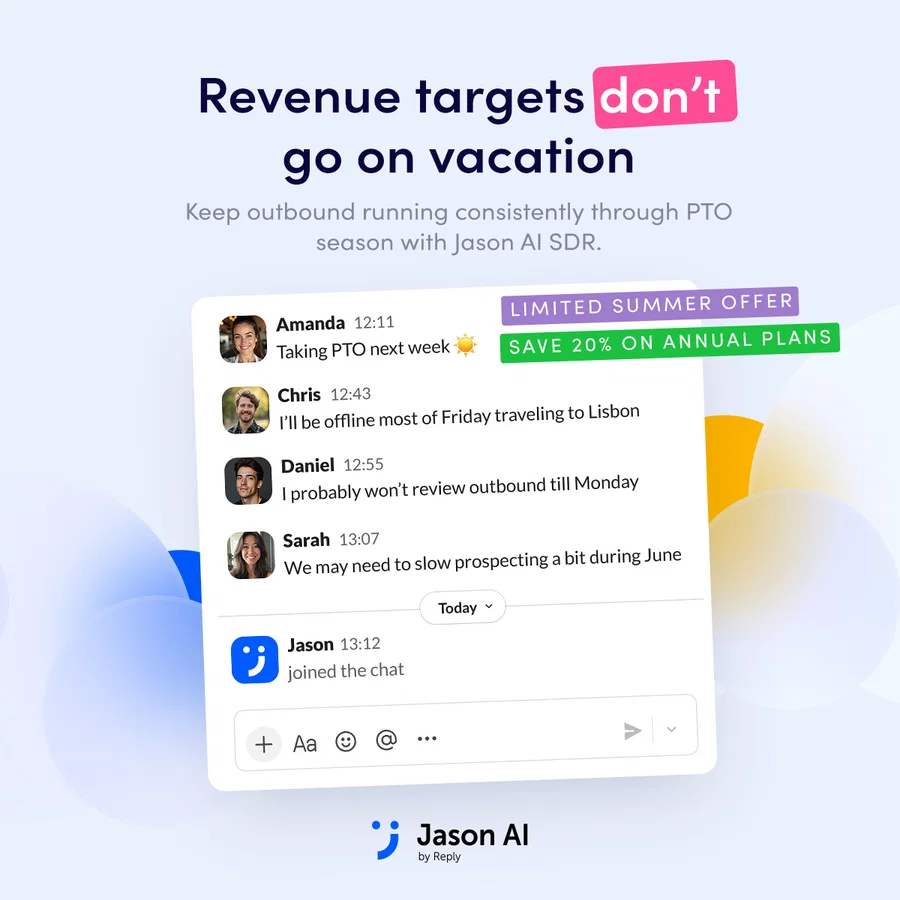
Reply follows a similar structure but pushes further toward automation with Jason AI SDR, an autonomous agent that defines your ICP, sources leads, writes sequences, handles replies, and books meetings. For teams that want less human involvement in the early pipeline, Jason is a step beyond traditional sequencing.
Source: Reply
ZoomInfo operates at a different level. Rather than starting with "how do I send better sequences," it starts with "how do I understand my entire market and act on that understanding." The GTM Context Graph processes 1.5B+ data points daily, unifying a customer's CRM, conversation transcripts, email threads, and product usage data with ZoomInfo's third-party intelligence.
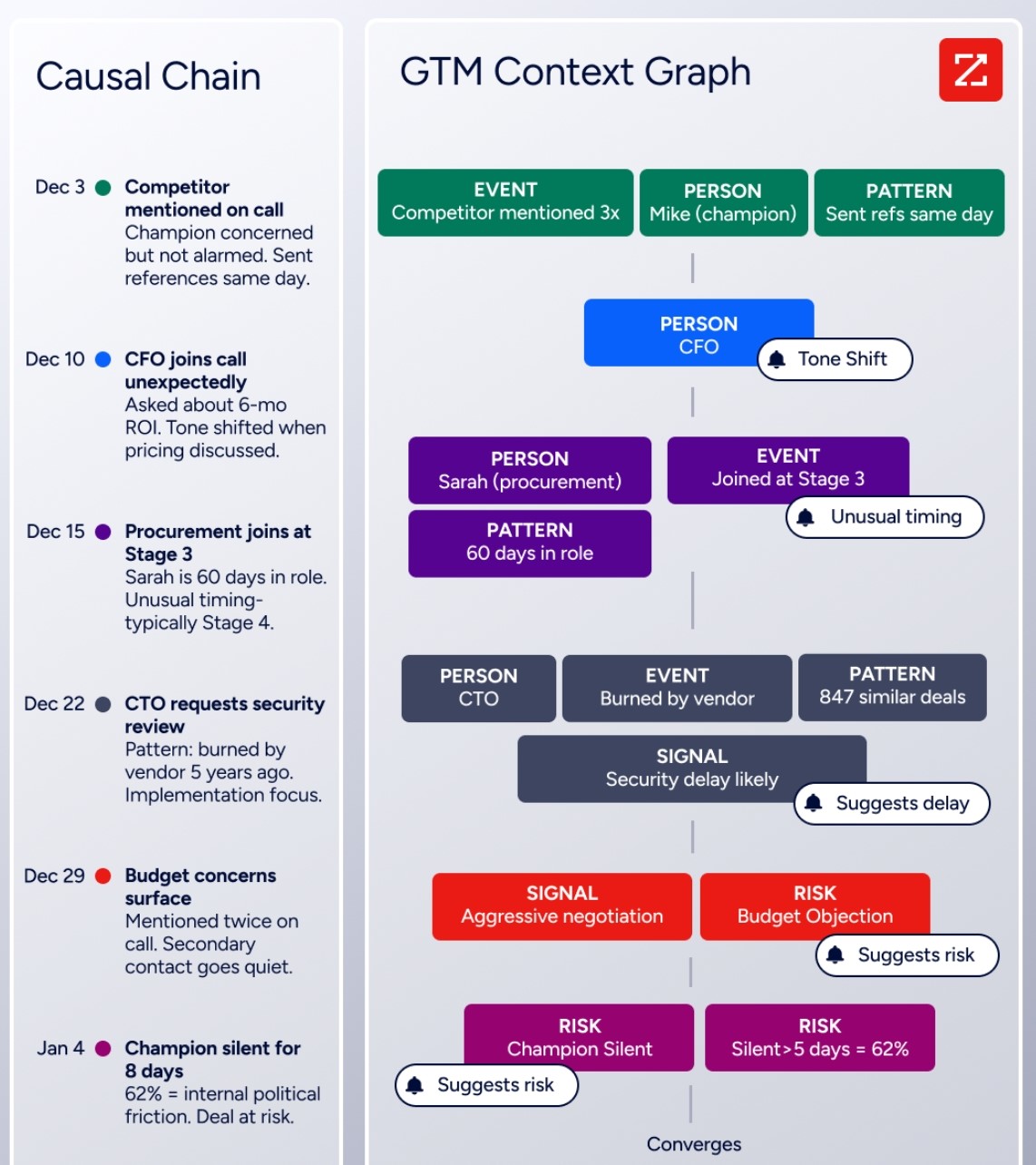
The output isn't a list of contacts to sequence. It's a continuously updated model of why deals move, who's involved, and what to do next.
For a five-person SDR team running cold outbound against a defined ICP, Lemlist or Reply may be all you need. For an organization where sales, marketing, and ops must coordinate around shared account intelligence, the sequencing tool is a small part of a larger system.
Data quality separates prospecting tools from intelligence platforms
All three platforms include a built-in contact database. The numbers look comparable at first glance, but the approaches differ.
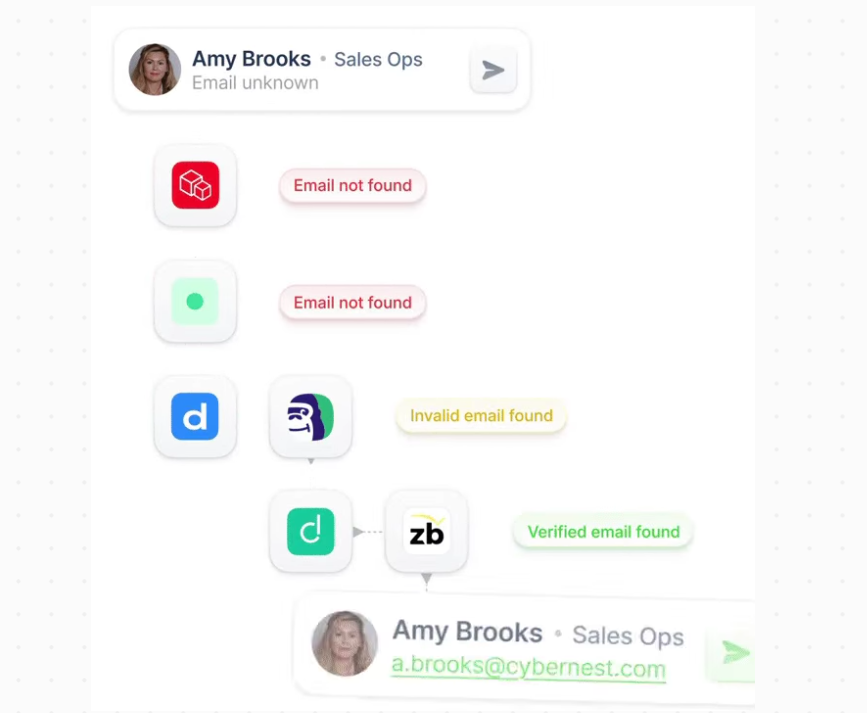
Lemlist provides 600M+ contacts and 63M+ company accounts. Its differentiator is waterfall enrichment: rather than relying on a single data source, Lemlist checks 8+ providers sequentially (including Prospeo, Icypeas, Dropcontact, and Datagma), claiming an 80% email found rate compared to 30–60% from a single provider. Every email found is double-verified, and users pay only for deliverable results.
Source: Lemlist
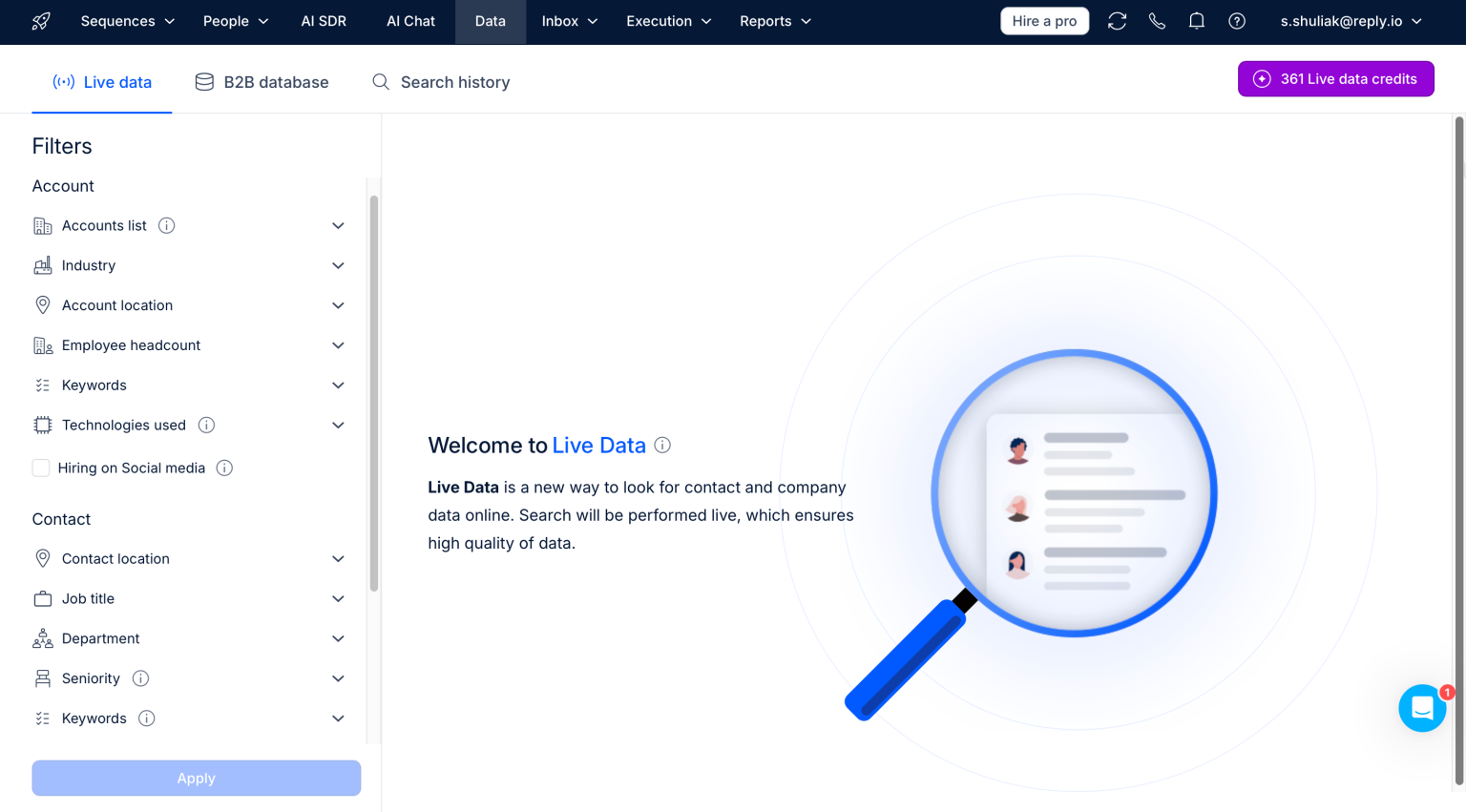
Reply claims the largest raw database at 1B+ contacts across 150+ countries, with emails verified at search rather than cached from a prior crawl. Reply reports bounce rates below 3% as a result. However, the depth of company data enrichment and phone number coverage relative to specialist data platforms is not independently documented.
Source: Reply
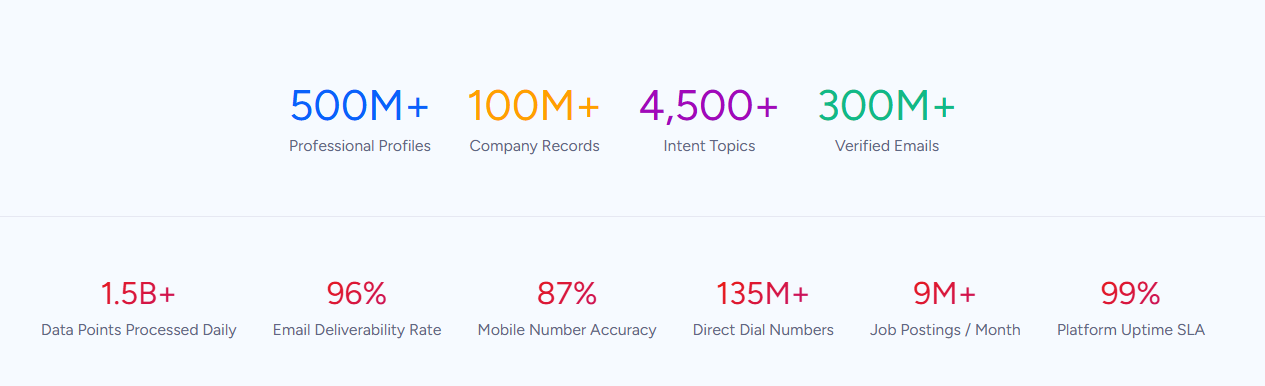
ZoomInfo takes a different approach. The database spans 500M contacts and 100M companies, but the story is about verification depth, not raw count. A multi-source pipeline backed by 300+ human researchers, automated ML scanning of 28 million site domains daily, and a community of 200,000+ ZoomInfo Lite users who share data back achieves up to 95% accuracy on first-party data.
The phone number advantage is concrete: 135M+ verified phone numbers and 120M direct dials, far exceeding what either sequencing platform offers natively.
The gap shows up in external validation. In a Fortune 500 competitive RFP analyzing 25 million contacts across vendors, the independent consultant concluded that "no other competitor came even close."
ZoomInfo was named a Leader in the Forrester Wave for Intent Data Providers (Q1 2025) and holds 133 No. 1 rankings on G2 across Sales Intelligence, Data Quality, and related categories.
For outbound teams, the practical difference is simple: a direct dial that rings and an email that lands means fewer wasted sequence steps.
For revenue organizations, the difference compounds. ZoomInfo's data includes 300+ company attributes, department org charts, technographic profiles covering 30,000+ technologies across 30M+ companies, and verified corporate hierarchies. You're not just finding contacts; you're mapping buying committees.
"ZoomInfo gives us the information we need to execute. We don't have to go through and spend our time digging. It's already there, so we can be three steps ahead." (Vensure)
Multichannel outreach execution compared
This is where Lemlist and Reply earn their keep. Both treat multichannel sequencing as a core capability, not an afterthought.
Lemlist executes five LinkedIn actions natively within sequences: profile visits, connection requests, direct messages, voice notes (including AI voice cloning), and feed engagement. WhatsApp automation is a $20/user/month add-on with built-in account warm-up.
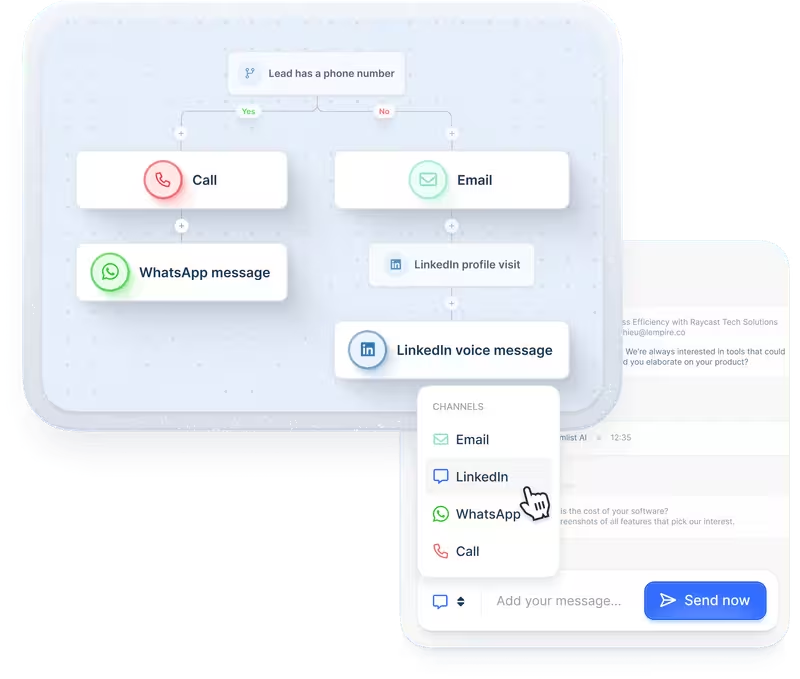
The in-app VoIP dialer includes AI call summaries and CRM sync. The standout feature is advanced conditions: sequences branch based on prospect behavior (email opens, LinkedIn acceptance, call completion), routing each contact down a path that matches their engagement rather than forcing a fixed linear drip.
Source: Lemlist
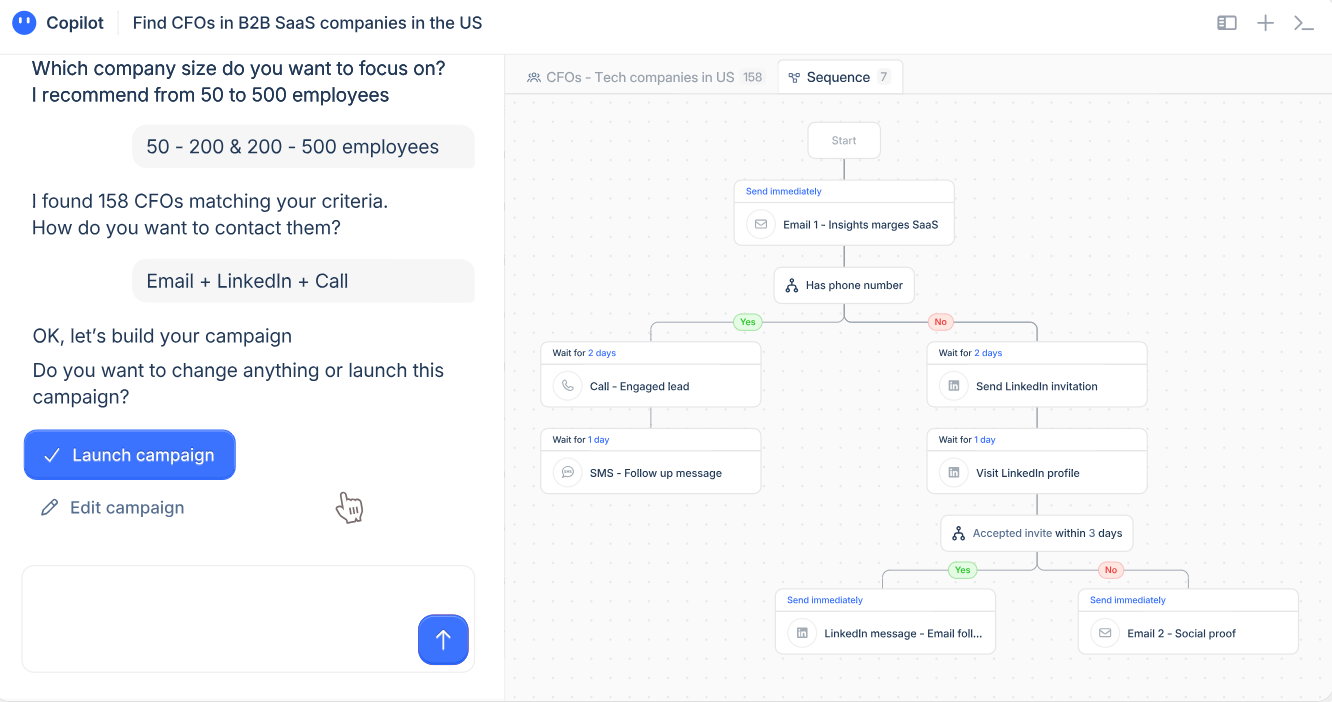
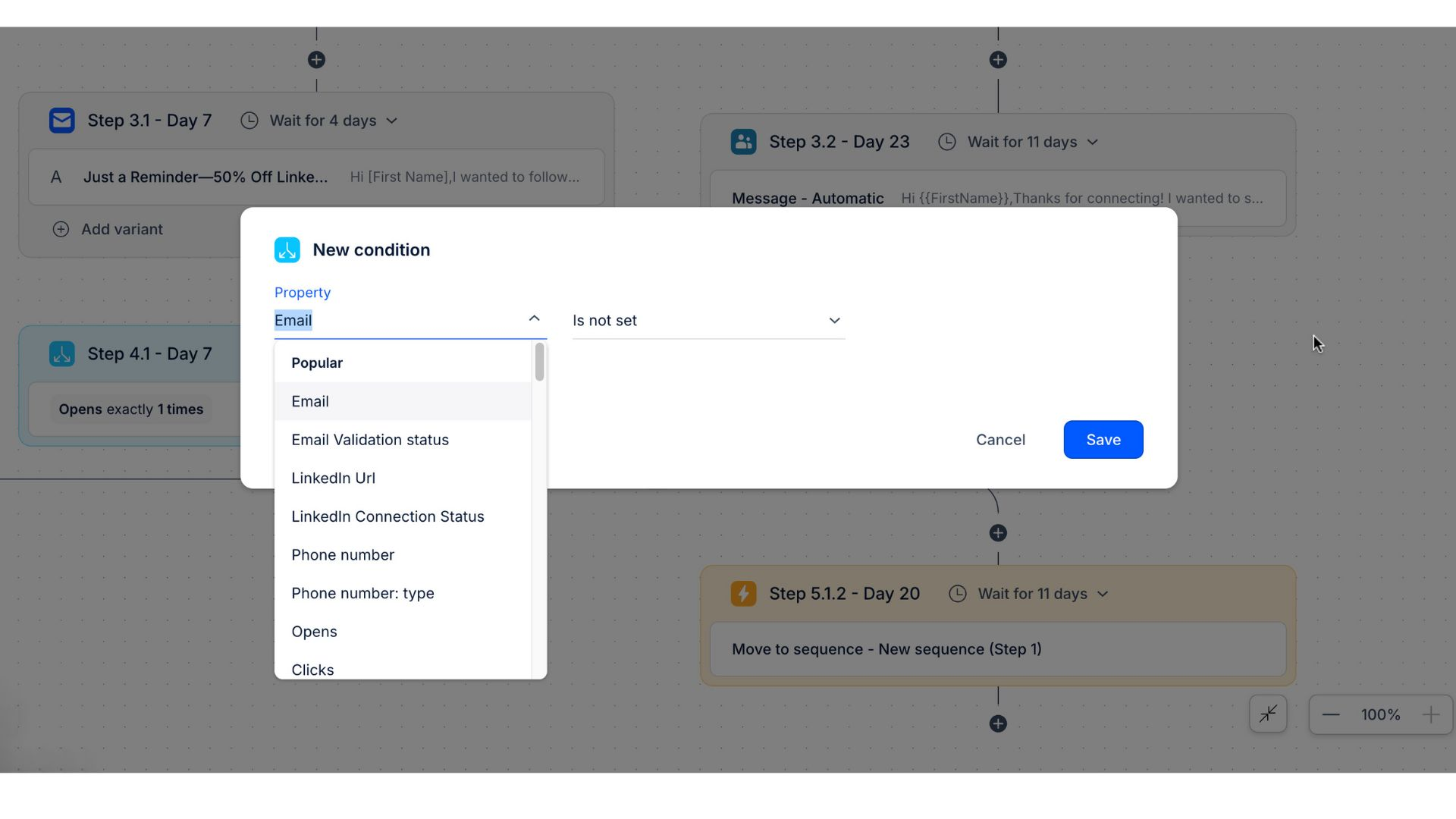
Reply covers a similar channel set (email, LinkedIn, calls, SMS, WhatsApp) and adds conditional branching via Conditional Sequences. The system monitors contacts every 10 minutes and routes them through Yes/No branches based on engagement triggers.
Source: Reply
Reply's LinkedIn automation is deeper in some respects, covering connection requests, messages, voice messages, AI voice messages, profile views, InMails, and post likes. However, LinkedIn automation is a $69/account add-on, and automating LinkedIn actions violates LinkedIn's Terms of Service. Trustpilot reviewers report account restrictions following aggressive automation use.
ZoomInfo approaches outreach differently. Rather than building its own sequencing engine, ZoomInfo partners with Salesloft for sales automation, feeding buyer intent signals and verified contact data into Salesloft's sequencing and pipeline management tools.
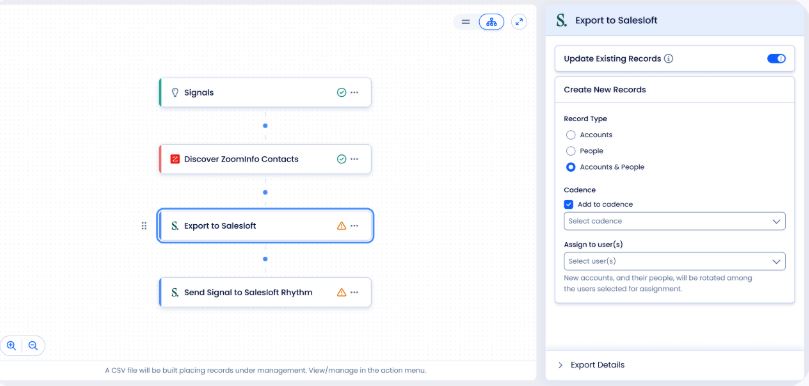
ZoomInfo Buying Signals sync to Salesloft Rhythm for AI-prioritized engagement. GTM Studio adds multichannel orchestration across email, calls, ads, and direct mail triggered by buyer behavior. The approach trades native sequence-building for outreach fed by verified data and real-time buying signals, delivered through whatever tools a team already uses.
For teams whose primary workflow is building and iterating on cold sequences, Lemlist and Reply give tighter, more hands-on control. For teams that want signals to trigger the right action in the right tool at the right time, ZoomInfo's architecture handles that coordination.
AI takes three different forms
Each platform uses AI, but for different purposes and at different layers of the sales process.
Lemlist's AI operates at the message layer. AI Variables clean, enrich, and transform lead data before it reaches any message. Users select from OpenAI, Claude, Perplexity, or Google per column, chain multiple AI columns into compound pipelines, and save them as reusable workflow templates.
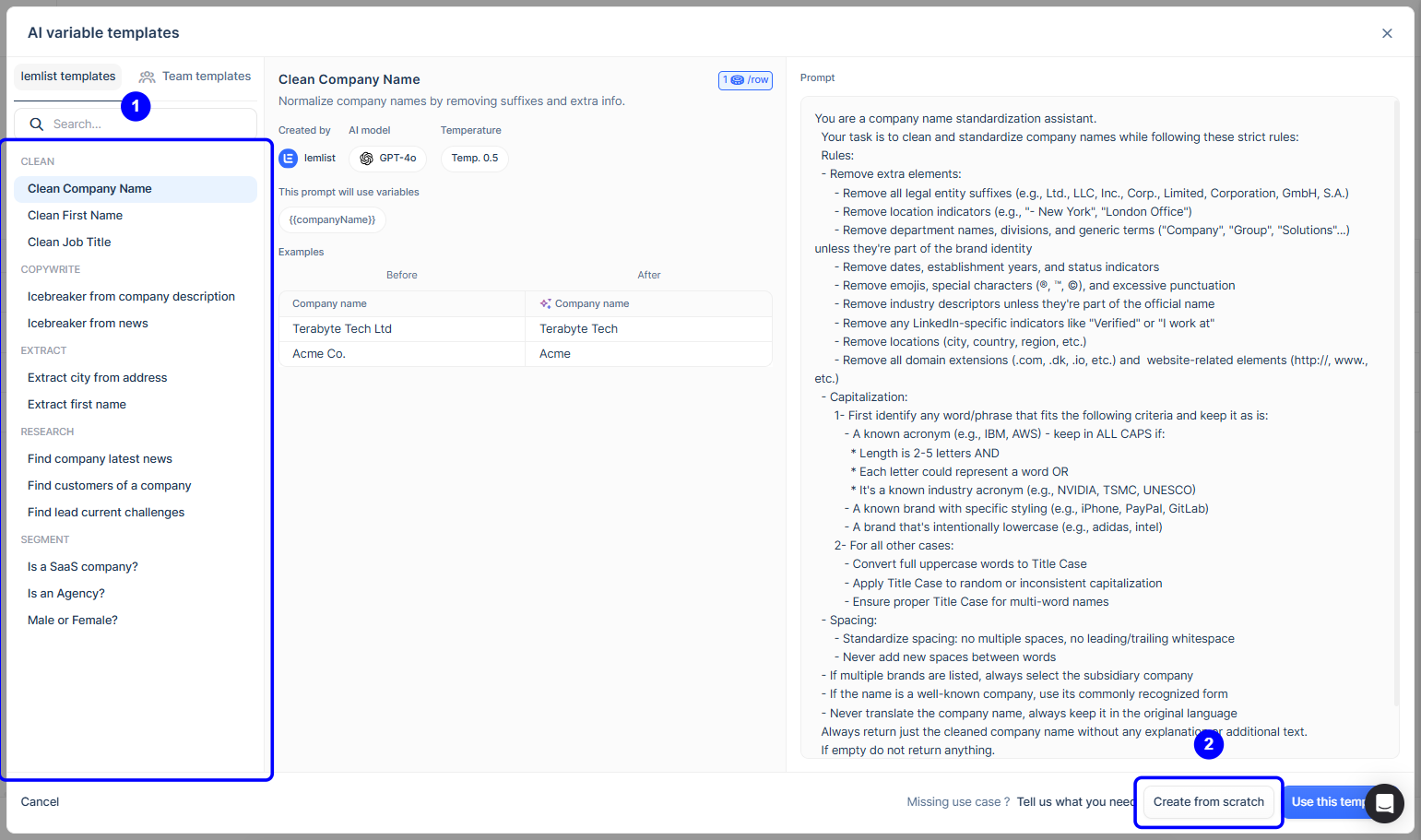
Source: Lemlist
The result is personalization that extends beyond text: dynamic images with per-lead variables, personalized landing pages, and AI voice cloning for LinkedIn voice notes. AI is included in all paid plans, and users can bring their own API key for cost transparency.
Reply's AI operates at the agent layer. Jason AI SDR goes beyond writing assistance: it conducts multi-step prospect research, generates validated personalized messages, handles inbound replies in Copilot or Autopilot mode, and books meetings by syncing with Google Calendar in real time.
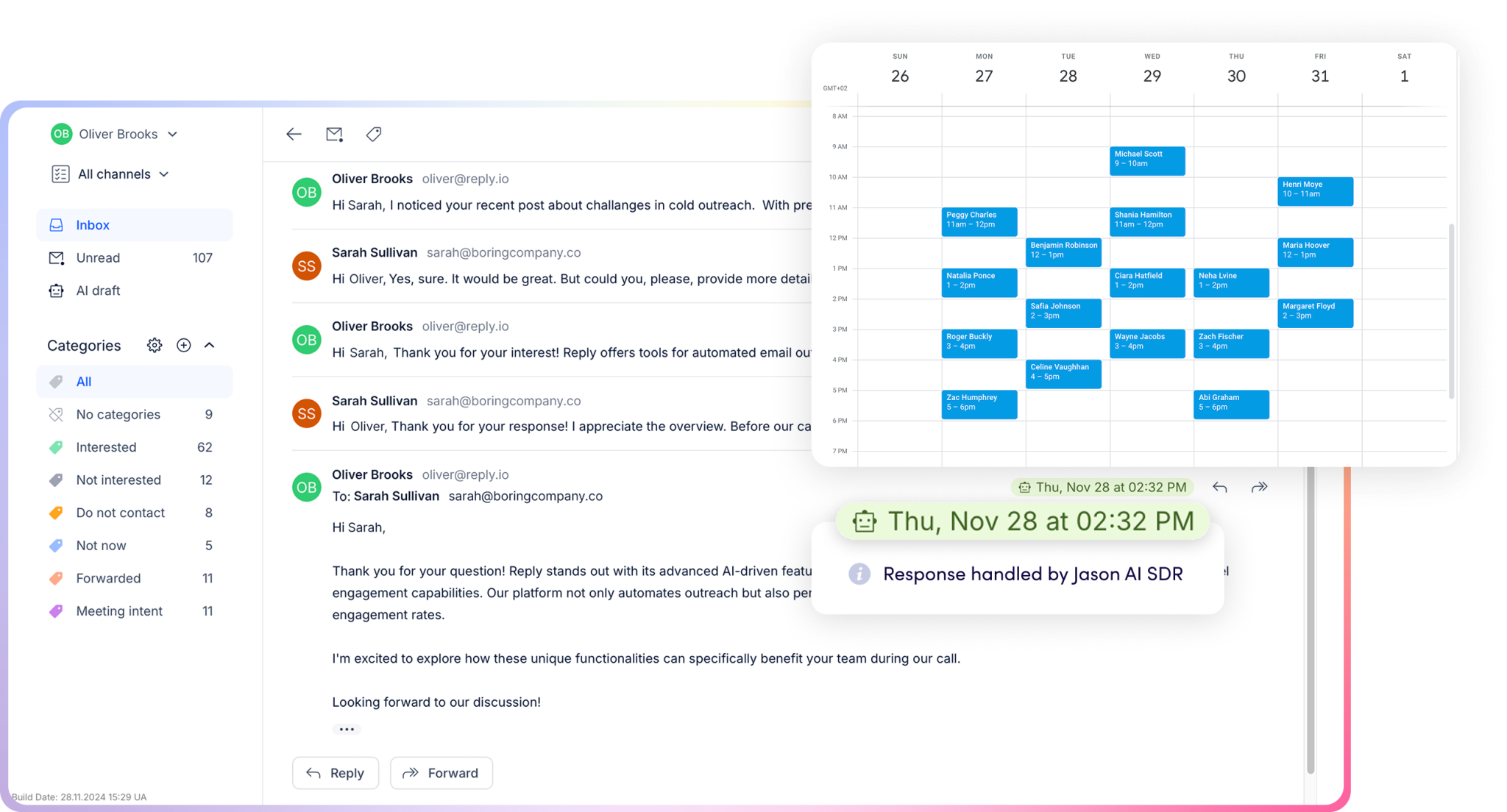
Source: Reply
The 3-level validation system cross-checks personalized claims for accuracy before sending. Users can choose the underlying LLM (Claude, Gemini, Mistral, or OpenAI). Jason AI is a genuine attempt to automate the SDR function, not just the writing.
ZoomInfo's AI operates at the intelligence layer. The GTM Context Graph doesn't generate text or automate tasks. It analyzes CRM records, conversation transcripts, intent signals, and behavioral data to understand why deals move.
Inside GTM Workspace, AI agents handle account research, draft outreach based on full account context, monitor signals, and surface next actions. The AI assistant generates one-click account briefs pulling CRM history, company news, and stakeholder context.
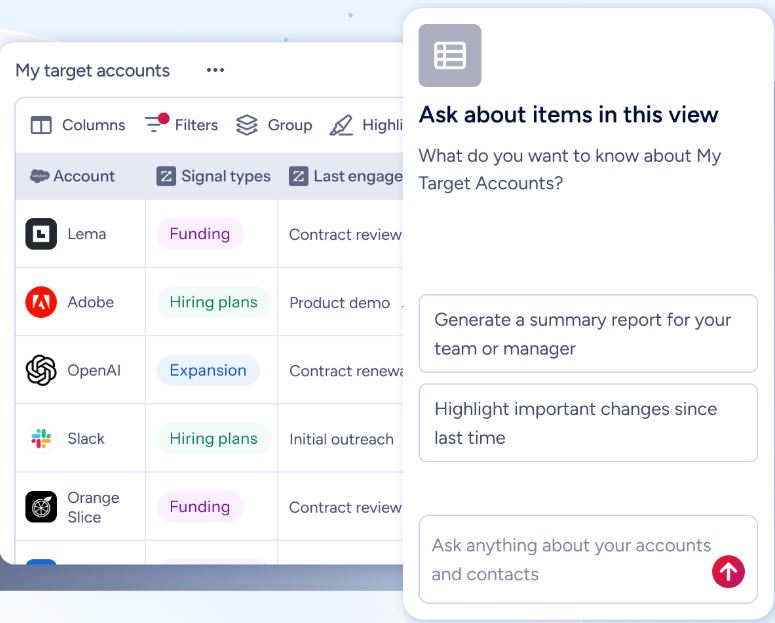
In GTM Studio, marketers describe audiences in natural language, and AI agents handle enrichment, scoring, routing, and campaign activation.
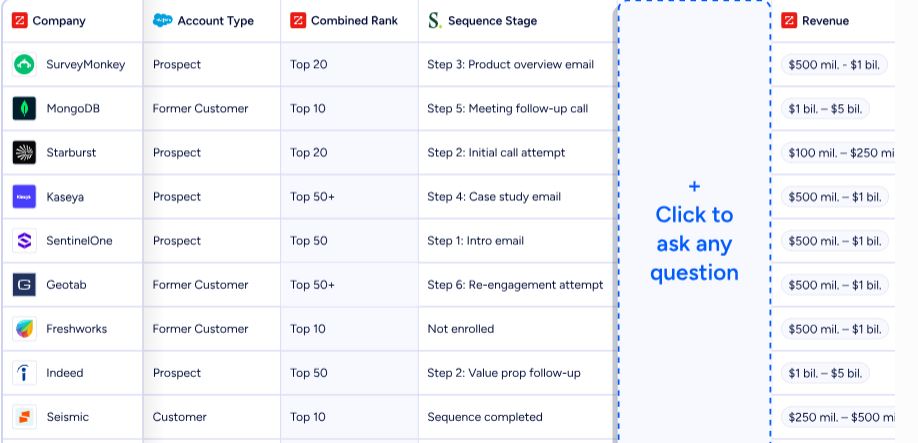
The practical difference: Lemlist's AI writes better emails. Reply's AI replaces parts of the SDR workflow. ZoomInfo's AI tells your team which accounts to prioritize, why they're in-market, who the buying committee is, and what messaging will resonate based on patterns across thousands of similar deals.
"That combination of our internal CRM data, external signals, and AI that's given all that context has helped us craft very specific account- and persona-based messages. And people have responded to them right away." (Seismic)
Deliverability infrastructure compared
Cold email deliverability is table stakes for outbound platforms. All three address it, though the mechanisms differ.
Lemlist ships lemwarm, its warm-up and deliverability tool, free with all paid plans. The warm-up network spans 10,000+ users across 20,000+ domains from 150+ countries.

Source: Lemlist
Beyond warm-up, Lemlist includes inbox rotation across multiple sender accounts, a Deliverability Hub dashboard tracking delivery and bounce rates by provider pair, and Matching ESP (routing emails to recipients using the same email service provider).
Reply includes free email warm-up on every connected mailbox, powered by MailToaster through a peer-to-peer network of real inboxes (not bots or temporary accounts).
The platform bundles Email Ramp-Up (gradual volume increase), an Email Health Checker verifying SPF/DKIM/DMARC per mailbox, Google Postmaster integration for real-time spam rate monitoring, and Gmail API sending (which Reply claims raises average open rates by about 15%). Reply also offers email validation classifying contacts as Valid, Risky, or Invalid before sending.
ZoomInfo approaches deliverability from the data side rather than the sending side. When your contact data is accurate (up to 95% accuracy on first-party data, with 200M+ verified business email addresses), bounce rates stay low regardless of which sending tool you use.
ZoomInfo's NeverBounce acquisition added email verification to its data quality layer, and the Operations product includes automated deduplication, verification, and perimeter protection that blocks bad data at entry. For warm-up and sending infrastructure, ZoomInfo integrates with outreach platforms rather than building its own.
The distinction: Lemlist and Reply solve deliverability at the sending layer (warm-up, rotation, DNS monitoring). ZoomInfo solves it at the data layer (accurate emails that don't bounce). Teams running high-volume outbound through Lemlist or Reply benefit from their built-in deliverability tooling. Teams feeding ZoomInfo-verified data into any outreach tool benefit from lower bounce rates and cleaner sending records.
Intent signals and buyer intelligence
Knowing who to contact matters less than knowing who's ready to buy. Each platform offers some form of intent or signal intelligence, but the depth varies.
Lemlist's Intent Signals detect four types: company hiring for a specific role, company visited your website, prospect engaged with a LinkedIn profile, and prospect engaged with a LinkedIn topic or keyword.
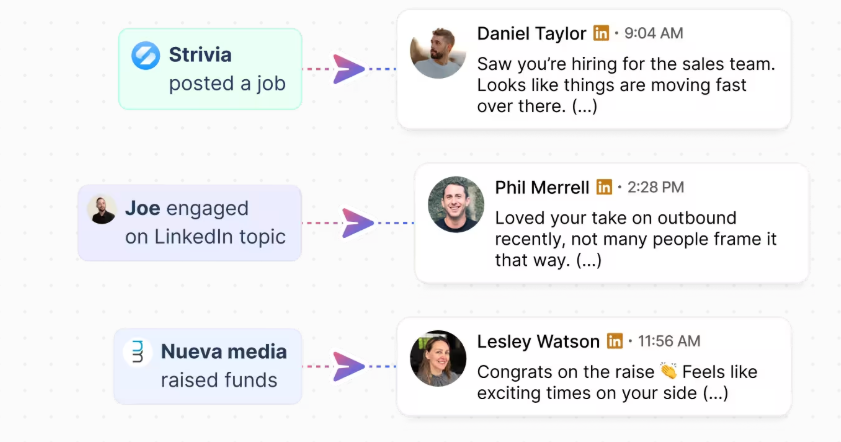
Source: Lemlist
Two additional signals ("Company hired a specific role" and "Contact changed jobs") are listed as coming soon. AI turns each signal into a personalized icebreaker. Intent monitoring costs 400 credits per profile per month.
Reply surfaces hiring and tech usage signals as filters within its 16-filter search interface, and Jason AI incorporates real-time intent signals including LinkedIn engagement and website visits into its prospecting workflow. Jason AI 3.5 adds ICP scoring that ranks leads by both fit and real-time intent.
ZoomInfo's intent capabilities are in a different category. ZoomInfo Intent tracks signals from 210 million IP-to-Org pairings and 6 trillion+ new keyword-to-device pairings sourced monthly.
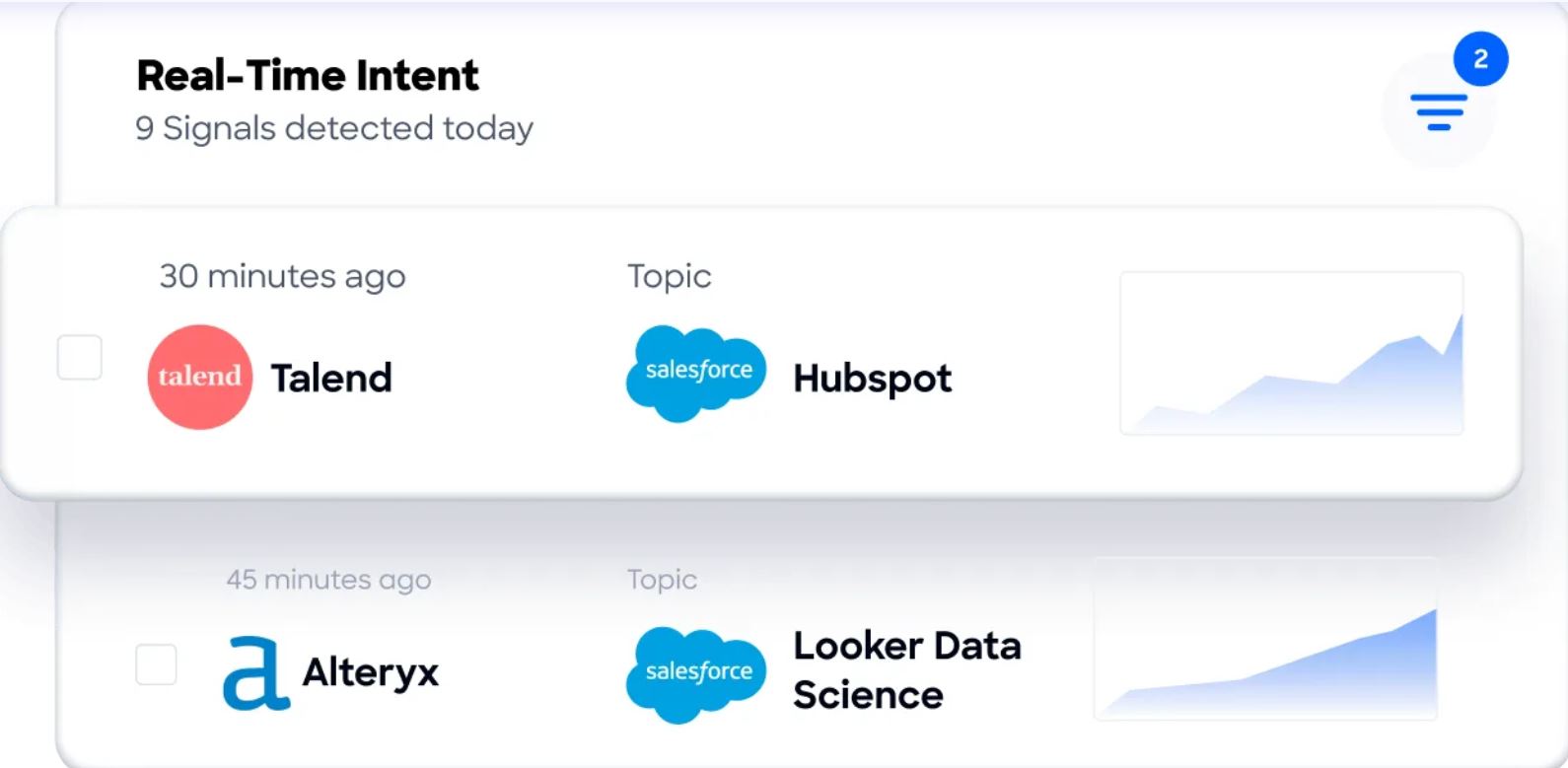
Guided Intent, exclusive to ZoomInfo, identifies topics historically correlated with deal success rather than requiring manual topic selection.
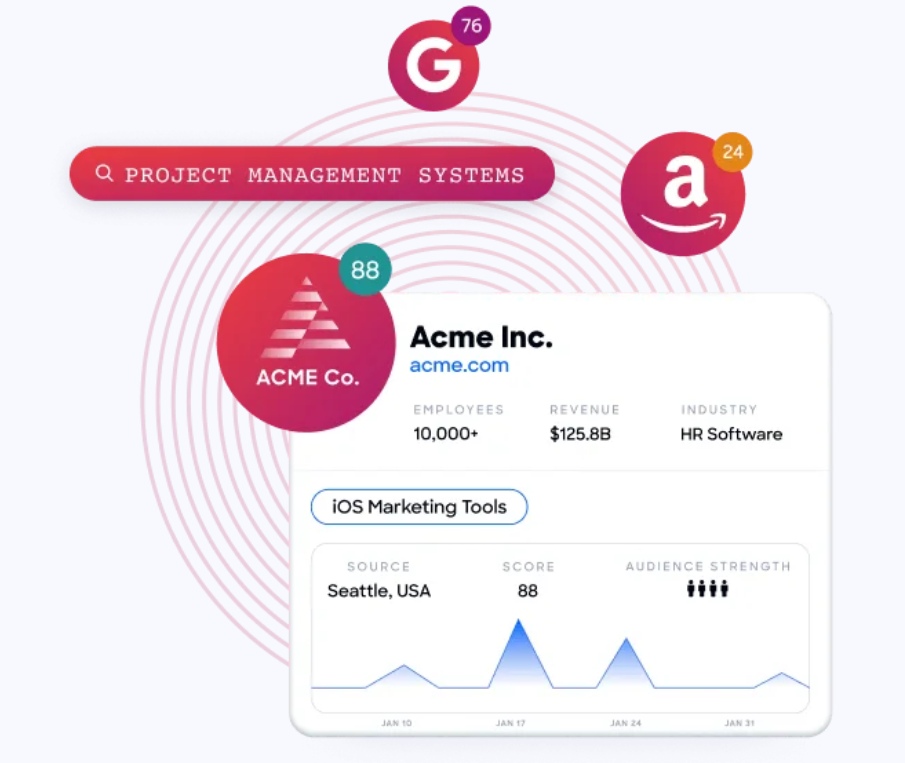
WebSights resolves anonymous website traffic to companies, including buying team identification and direct contact info. The GTM Context Graph layers these third-party signals on top of first-party data (CRM, conversation intelligence, behavioral signals) to identify not just that an account is in-market, but why, and which actions match the patterns behind your closed-won deals.
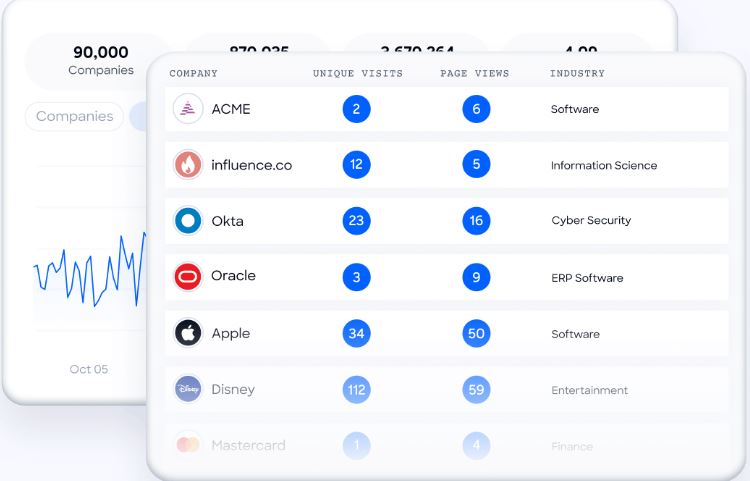
Forrester validated this advantage, naming ZoomInfo a Leader in Intent Data Providers for B2B (Q1 2025) and noting ZoomInfo had "the largest R&D investment of any provider in this evaluation."
"It's not just the data itself. It's more about the right data at the right time to help us reach out with the right message across that full buyer journey." (Redwood Logistics)
What happens after the meeting is booked
Lemlist and Reply both optimize for one metric: booked meetings. That's a valid focus for outbound-first teams. But for growing revenue organizations, the meeting is the beginning of the deal cycle, not the end.
Lemlist recently acquired Claap (AI conversation intelligence) for over $15M, signaling intent to extend beyond outbound. But Claap is separately priced at $60/user/month, and full native integration is still in progress. Beyond Claap, Lemlist has no deal intelligence, pipeline management, or account-based marketing capabilities.
Reply has no conversation intelligence or post-meeting capabilities. Its scope ends when the meeting hits the calendar. For teams that need pipeline visibility, deal coaching, or forecasting, Reply requires a separate tool.
ZoomInfo covers the full cycle. Chorus captures and analyzes every customer call, meeting, and email, extracting context that feeds back into the GTM Context Graph.
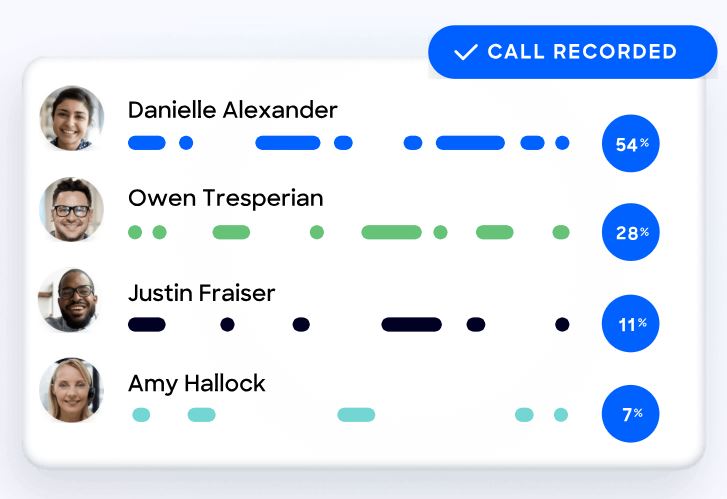
GTM Workspace gives sellers a single view of their book of business with AI-generated account briefs, deal health monitoring, and customer health tracking. GTM Studio lets marketers launch account-based plays targeting accounts at specific deal stages. The result is a closed loop: outreach generates meetings, meetings generate conversation intelligence, conversation intelligence improves future outreach.
This is the architectural difference. Lemlist and Reply are point solutions for the top of the funnel. ZoomInfo is infrastructure for the full go-to-market motion.
"ZoomInfo's not just a contact data company anymore. They've built a full system of execution." (Levanta)
Pricing reflects different product scopes
The three platforms serve different needs at different price points, and direct comparison requires understanding what each dollar buys. Lemlist uses per-seat subscription pricing with Email, Multichannel, and Enterprise plans. The Email plan starts at $39/month and includes email outreach, lead database access, CRM integrations, deliverability tools, and AI-assisted personalization. The Multichannel plan starts at $109/month and adds LinkedIn outreach, calling capabilities, multichannel sequencing, and a unified inbox. Enterprise pricing is custom.
In addition to seat-based subscriptions, Lemlist uses a credit-based (consumption-based) model for certain data enrichment and prospecting activities. Credit allocations and usage limits vary by plan. A 14-day free trial is available with no credit card required.
Reply offers multiple pricing models. The Email Volume plan starts at $49/month (email only, priced by active contacts). The Multichannel plan starts at $89/user/month but does not include LinkedIn automation ($69/account add-on) or calling ($29/account add-on).
A solo rep running full multichannel pays about $187/month. The Jason AI SDR starts at $500/month per workspace (1,000 active contacts, unlimited users). Reply offers a 14-day free trial and a startup discount program.
ZoomInfo uses custom-quoted pricing based on seats, credit volume, features, and contract length. There are no published dollar amounts. This reflects ZoomInfo's enterprise positioning: the product scope (data, intelligence, conversation intelligence, marketing, operations, and AI agents) is broader than what a per-seat outbound tool covers.
For teams that want to evaluate before committing, ZoomInfo Lite is a permanent free tier with access to the B2B database, 10 monthly export credits, the Chrome extension, and WebSights Lite. A 7-day free trial of the full platform is also available.
Note: ZoomInfo is transitioning toward a consumption-based pricing model.
The pricing comparison is a scope comparison. Lemlist and Reply price for outbound sequencing. ZoomInfo prices for go-to-market infrastructure. A team that only needs to send sequences will find Lemlist or Reply more cost-effective. A team currently paying for a data provider, an outreach tool, an intent data vendor, and conversation intelligence separately may find ZoomInfo consolidates those costs.
Lemlist vs. Reply vs. ZoomInfo: Which should you choose?
The right platform depends on what you're building, not just what you're sending.
Choose Lemlist if:
Multichannel outbound sequencing is your primary pipeline motion
You want email, LinkedIn, WhatsApp, and phone coordinated in a single workflow
AI personalization (images, landing pages, voice cloning) matters to your outreach strategy
Deliverability tooling needs to be built into the platform, not added on
You're a sales team of 10–500 that needs a focused, practitioner-friendly tool
Choose Reply if:
You want an autonomous AI SDR handling prospecting, sequencing, and reply management
You're an agency needing white-label capabilities and multi-client workspace management
You prefer choosing your own underlying LLM for AI-generated outreach
You need the largest raw contact database among the three platforms
You're comfortable managing LinkedIn automation risk and add-on costs
Choose ZoomInfo if:
You need accurate, verified B2B data as the foundation for every go-to-market motion
Your team includes sales, marketing, and RevOps and they need shared account intelligence
You want AI that understands deal context and buyer behavior, not just AI that writes emails
Intent signals, conversation intelligence, and account-based plays are part of your strategy
You want data and intelligence accessible in any tool through APIs and MCP, not locked into one sequencer
Try ZoomInfo free or start with ZoomInfo Lite for permanent free access to the B2B database.
Lemlist and Reply have made cold outbound accessible and effective for small sales teams. They're good tools for a specific job. ZoomInfo addresses a different question: not "how do I send better sequences," but "how do I build a revenue engine where every team acts on the same intelligence."
For organizations ready for that shift, the data, the GTM Context Graph, and the universal access model make the difference.
Lemlist vs. Reply vs. ZoomInfo FAQ
What is the key difference between Lemlist, Reply, and ZoomInfo?
Lemlist and Reply are multichannel outbound sequencing platforms that automate cold outreach across email, LinkedIn, phone, and other channels.
ZoomInfo is a go-to-market intelligence platform that provides B2B data (500M contacts, 100M companies, 135M+ verified phone numbers), an AI intelligence layer called the GTM Context Graph, and access through seller workspaces, marketing orchestration tools, and APIs that feed any third-party tool.
Which platform has the best contact data?
ZoomInfo's data is the most rigorously verified, with up to 95% accuracy on first-party data, 300+ human researchers, and external validation from a Fortune 500 competitive RFP where an independent consultant concluded no other competitor came close.
Lemlist aggregates from 8+ providers via waterfall enrichment, claiming an 80% email found rate. Reply claims the largest raw database at 1B+ contacts with real-time verification at search. ZoomInfo's advantage is strongest on verified phone numbers (135M+ verified, 120M direct dials) and data depth (technographics, org charts, and 300+ company attributes).
How do the pricing models compare?
Lemlist charges per seat starting at $39/user/month (annual) for email-only, $109/user/month for multichannel. Reply starts at $49/month for email-volume-based plans, $89/user/month for multichannel (plus $69 for LinkedIn automation and $29 for calling add-ons), or $500/month for the Jason AI SDR.
ZoomInfo uses custom-quoted pricing based on seats, credits, and features, with no published dollar amounts. ZoomInfo also offers a permanent free tier (ZoomInfo Lite) with 10 monthly export credits and database access.
Which platform is best for agencies running outreach for multiple clients?
Reply stands out for agencies with white-label capabilities, multi-workspace management, a centralized agency dashboard, and role-based access controls. Partner pricing of up to 50% off standard rates is available. Lemlist prohibits sending emails on behalf of third parties in its Sending Policy, which disqualifies agencies from running client outreach through Lemlist.
ZoomInfo serves enterprise clients and does not position as an agency outreach tool.
Can Lemlist or Reply replace ZoomInfo for prospecting?
Lemlist and Reply both include built-in contact databases suitable for sourcing leads and running outbound sequences.
However, they lack ZoomInfo's depth in data verification, intent signals (210M IP-to-Org pairings, 6T+ keyword-device pairings monthly), technographic coverage (30,000+ technologies across 30M+ companies), conversation intelligence (Chorus), and the GTM Context Graph that connects these into a single intelligence layer.
Teams that rely only on outbound sequencing may not need ZoomInfo, but teams running coordinated go-to-market motions across sales, marketing, and ops will find the data and intelligence gaps significant.
Which platform handles LinkedIn outreach best?
Lemlist executes five LinkedIn actions natively (profile visits, connection requests, messages, voice notes with AI voice cloning, and feed engagement) via a Chrome extension. Reply covers connection requests, messages, InMails, profile views, AI voice messages, and post likes, also via Chrome extension.
Both platforms automate LinkedIn in ways that violate LinkedIn's Terms of Service, which carries account restriction risk.
ZoomInfo does not automate LinkedIn outreach directly but provides verified contact data (including direct dial phone numbers and business emails) that lets you reach prospects through compliant channels.
What AI capabilities does each platform offer?
Lemlist's AI focuses on message-level personalization: AI Variables that clean and transform lead data, generate personalized openers, create dynamic images, and produce AI voice clones. Reply's Jason AI SDR is an autonomous agent that handles the full outbound loop from prospecting through meeting booking, with a 3-level validation system and multi-LLM support.
ZoomInfo's AI operates at the intelligence layer: the GTM Context Graph analyzes CRM data, conversation transcripts, and buying signals to surface which accounts to prioritize and why, while AI agents in GTM Workspace handle account research, outreach drafting, and next-action recommendations.
Which platform is best for teams that need more than just outbound?
ZoomInfo is the only platform of the three that covers the full go-to-market cycle. Beyond prospecting, it includes conversation intelligence (Chorus), account-based marketing, website visitor identification, data operations and enrichment, CRM data management, and AI orchestration across sales and marketing.
Lemlist is exploring post-meeting capabilities with its Claap acquisition but integration is still in progress. Reply's scope ends at meeting booking.
See more related Lemlist comparisons and alternatives:
