

MailReach occupies a narrow lane in cold email. Built by former agency operators who spent years fighting spam folders, it focuses on one problem: making sure outbound emails reach the inbox. With a warmup network of 30,000+ business inboxes, a direct-send spam tester, and an AI monitoring co-pilot, it gives teams a focused set of tools for treating inbox placement as an operational metric.
To write this MailReach review, we analyzed it in detail. We believe it's the right choice if:
You need email warmup for cold outreach mailboxes
You want pre-send spam testing with a direct-send methodology
You prefer a specialist deliverability tool over bundled platform features
You run a manageable number of sending mailboxes
You value a set-and-forget warmup experience with minimal configuration
However, MailReach might not be the best choice if:
You need verified contact data and company intelligence alongside deliverability
You want buyer intent signals to know which prospects are actively researching
You prefer a single platform covering data, intelligence, and outreach execution
You run large mailbox counts where per-mailbox pricing becomes prohibitive
You need enterprise-grade security certifications
In this case, you should consider ZoomInfo: an AI GTM platform that gives outbound teams verified contact data, intent signals to know when buyers are actively researching, and AI-driven execution to act on those signals across channels, all from one platform.
We've included a detailed look at ZoomInfo later in this MailReach review as the broader alternative for teams that need more than deliverability infrastructure. If you're ready to explore a full outbound intelligence platform, you can start with ZoomInfo Lite for free here.
What is MailReach?
MailReach is an email deliverability platform founded in 2020 in Paris, France, by Damien Brenelière (CEO) and Florian Boulay (CTO).
Both co-founders previously ran Nimley, a cold email agency, where they kept hitting inbox placement failures that existing tools couldn't diagnose or fix. MailReach was built to close that gap, a product born from agency work rather than market analysis.
The platform serves 3,000+ businesses and focuses exclusively on deliverability. It does not send marketing campaigns, manage contacts, or build prospect lists.
Its three core functions are email warmup (automated peer-inbox interactions to build sender reputation), spam testing (pre-send placement diagnostics across major inbox providers), and real-time deliverability monitoring via an AI-powered Co-pilot.
MailReach works alongside any cold email or sales engagement tool. Users connect their mailboxes without migrating their sending workflows, making it an add-on rather than a platform replacement.
The platform's ideal users include lead generation agencies managing multiple client mailboxes, B2B sales development teams running high-volume outreach, recruitment agencies facing aggressive spam filtering, and deliverability consultants who need credible diagnostic tools for client reporting.
MailReach Pros & Cons
Pros | Cons |
|---|---|
- Warmup network of 30,000+ Google Workspace and Microsoft 365 business inboxes | - Per-mailbox pricing scales up for larger teams |
- Direct-send spam test methodology for accurate placement results | - No free trial for the Email Warmup product |
- Autopilot mode requires minimal configuration | - No email sequencing or campaign sending capabilities |
- Free tier: 3 spam tests/day with no account required | - 14-day minimum warmup before spam test results are meaningful |
- Compatible with any mailbox provider and sending tool | - Co-pilot and Email Verifier have limited public documentation |
- Separate B2B and B2C placement scores | - No SOC 2 or ISO 27001 certifications reported |
- API included in all paid plans | - No contact data, prospecting, or buyer intelligence features |
MailReach Review: How it Works & Key Features
Email Warmup: MailReach builds sender reputation through automated interactions with a network of real business inboxes.
Email Warmup is MailReach's core product.
It solves the cold-start problem every outbound sender faces: when a new domain or mailbox starts sending cold email without prior history, ISPs have no positive signal to evaluate, and emails default to spam. Warmup creates that history by simulating realistic sends, opens, replies, and "mark as not spam" actions over a calibrated ramp period.
The process follows a five-stage flow:
Connect: Authenticate your mailbox via Google OAuth, Microsoft OAuth, or SMTP/IMAP credentials. For teams with multiple accounts, MailReach supports batch import via Google Workspace domain-wide delegation and Microsoft Entra app registration, letting dozens of mailboxes be imported in a single authentication step.
Send: MailReach begins sending warming emails from your mailbox into its peer network. The Autopilot algorithm sets send volume, timing, and pacing without manual schedule configuration.
Interact: Network inboxes auto-open the warming emails, auto-reply to simulate conversation threads, and mark them as "not spam" to generate positive engagement signals.
Ramp: Send volume increases gradually, scaling toward a maximum of 100 warming emails per day per mailbox.
Monitor: Slack and email alerts fire if placement scores drop, letting you pause campaigns before damage compounds.
The network itself is a competitive advantage. MailReach's 30,000+ inboxes are Google Workspace and Microsoft 365 business accounts, not consumer Gmail or throwaway addresses. Business-provider interactions carry more reputation weight with enterprise spam filters, which matters most for B2B outbound where recipients sit behind corporate mail security.
Source: MailReach
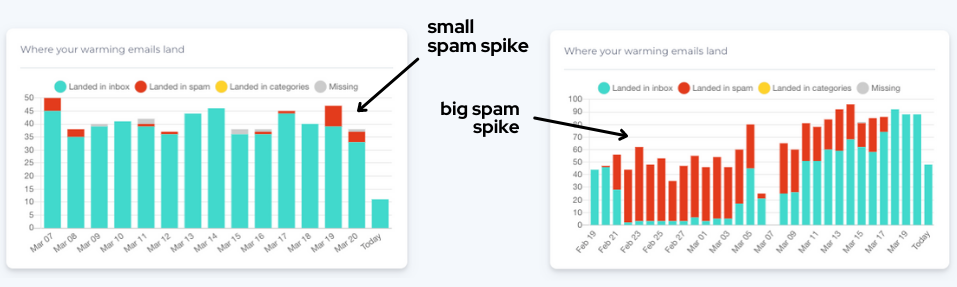
A minimum of 14 days of warmup is required before the spam test safety gate lifts, preventing misleading results from accounts that haven't had time to build reputation.
Email Spam Test: MailReach uses direct-send diagnostics to show where emails land before a campaign goes out.
MailReach’s Email Spam Test is an on-demand diagnostic that reveals inbox, spam, or undelivered placement across major email providers.
Source: MailReach
It solves the problem of pre-launch uncertainty: most senders discover placement problems only after open rates decline on a live campaign, by which point reputation damage has already occurred.
The test uses a direct-send architecture rather than email forwarding:
MailReach provides a unique code snippet to insert into the email being tested.
You send the email from your actual sending mailbox to MailReach's seedlist addresses, a curated set of inboxes across major providers.
MailReach polls the seed inboxes via direct IMAP connection. No forwarding is involved, which means no forwarding headers or artifacts that can alter how spam filters evaluate the message.
Results return in 3-5 minutes, showing per-provider placement breakdown and aggregate scores.
MailReach separates results into two scores: a btob_score for business inbox providers and a btoc_score for consumer providers like Gmail and Yahoo.
For outbound sales teams, the B2B score determines whether cold emails reach corporate recipients; most competitors report only a single aggregate number.
The free tier offers 3 spam tests per day with no account required, letting teams evaluate test accuracy before connecting a mailbox or committing to a paid subscription. Automated tests can run on a recurring schedule, with a safety gate that skips tests on accounts warmed up for fewer than 14 days.
Seed addresses rotate over time to prevent ISPs from habituating to fixed identifiers, maintaining test accuracy across repeated use.
Co-pilot and Email Verifier: MailReach adds AI monitoring and address validation to the deliverability stack.
Co-pilot is MailReach's AI monitoring layer.
It watches placement ratios, email authentication records (SPF, DKIM, DMARC), and blacklist presence continuously, then adjusts Email Warmup pacing to protect or recover sender reputation. Instead of just alerting you to a problem, Co-pilot acts on it by reducing warmup volume when scores drop and accelerating recovery when conditions improve.
Co-pilot is included in the All-in-One plan rather than sold separately. Alerts arrive via Slack and email. The specifics of how its adaptation algorithm works, what thresholds trigger pacing changes, and whether manual overrides are available are not publicly documented.
Email Verifier checks whether email addresses are deliverable before they enter outreach sequences, preventing bounces that damage sender reputation.
Based on available descriptions, the verification pipeline includes syntax validation, MX record lookup, SMTP connection testing, catch-all detection, disposable address flagging, and blacklist checks. The feature is accessible from the MailReach dashboard, though it lacks a dedicated product page or published API documentation.
Pricing Structure: MailReach charges per mailbox for warmup and per credit for spam testing.
Email Warmup:
$25/mailbox/month on monthly billing
$20/mailbox/month on annual billing
Price applies per connected mailbox. A team with 10 active warmup mailboxes pays $250/month on monthly billing or $200/month on annual billing.
Email Spam Tester:
From $135/month for 300 credits (1 credit = 1 spam test)
All-in-One Plan:
Combines Email Warmup, Email Spam Tester, Co-pilot, and Email Verifier
Exact pricing is not published on the pricing page
Free Tier:
3 spam tests per day with no account required
No warmup free trial is available
Contract Terms:
Cancel anytime with no long-term contract required
API access is included in all paid plans at no additional cost
The per-mailbox model is straightforward for small teams but creates cost pressure as mailbox counts grow. No volume discount structure is published for high-count deployments. MailReach is also a Stripe Climate partner, contributing 1% of revenue to carbon removal.
Where MailReach Falls Short
MailReach executes well on deliverability, but several limitations surface for teams with broader outbound needs.
These constraints follow naturally from building a specialist tool rather than a full platform.
No Contact Data or Prospecting: MailReach can warm up your mailbox and verify that emails land in the inbox, but it cannot tell you who to email. There is no contact database, no company intelligence, no org chart data, and no lead discovery. Teams still need a separate data provider, which means evaluating, purchasing, and maintaining another tool before a single outreach email goes out.
Deliverability Without Targeting Context: Getting into the inbox is necessary but not sufficient. MailReach has no buyer intent signals, no account prioritization, and no way to distinguish an in-market prospect from one with no purchasing timeline.
A team can achieve perfect inbox placement and still waste sequences on prospects who aren't researching solutions. Deliverability solves the "where" problem; targeting solves the "who" and "when" problems.
Stack Complexity: MailReach requires pairing with a sending platform (for sequences) and a data provider (for prospect lists), creating a minimum three-tool stack for cold outreach. Each tool has its own subscription, login, learning curve, and support channel. For teams that prefer simplicity, managing three vendors for one workflow introduces friction.
Per-Mailbox Cost at Scale: At $25/mailbox/month, a team running 20 active sending mailboxes pays $500/month for warmup alone, before adding sending platform and data provider costs. Agencies managing client mailbox portfolios face the steepest math: 50 mailboxes across clients is $1,250/month. Bundled platforms that include warmup alongside sending and data offset this per-unit cost.
No Free Trial for Core Product: The Email Warmup product, MailReach's primary offering, has no trial period. The 3 free daily spam tests let buyers evaluate the diagnostic tool, but warmup effectiveness (the reason most buyers come to MailReach) cannot be tested before committing to a paid subscription.
These limitations are not failures. They reflect a deliberate decision to build a specialist deliverability tool rather than a broader platform. But they create a clear gap for teams that want their outbound intelligence, data, and execution in one place.
Top MailReach Alternative for Outbound Teams: ZoomInfo
ZoomInfo addresses MailReach's gaps by approaching outbound from the opposite direction.
Instead of starting with deliverability infrastructure, ZoomInfo (an AI GTM platform) starts with the intelligence layer: verified contact data, buyer intent signals, and AI-powered execution.
Its data foundation (200M+ verified business email addresses with up to 95% accuracy) also helps prevent deliverability problems at the source, since sending to verified addresses reduces the bounces that damage sender reputation in the first place.
Verified B2B Data at Scale: ZoomInfo provides the contact and company intelligence that deliverability tools assume you already have.
MailReach optimizes email placement. ZoomInfo answers the question that comes before placement: who should you be emailing?
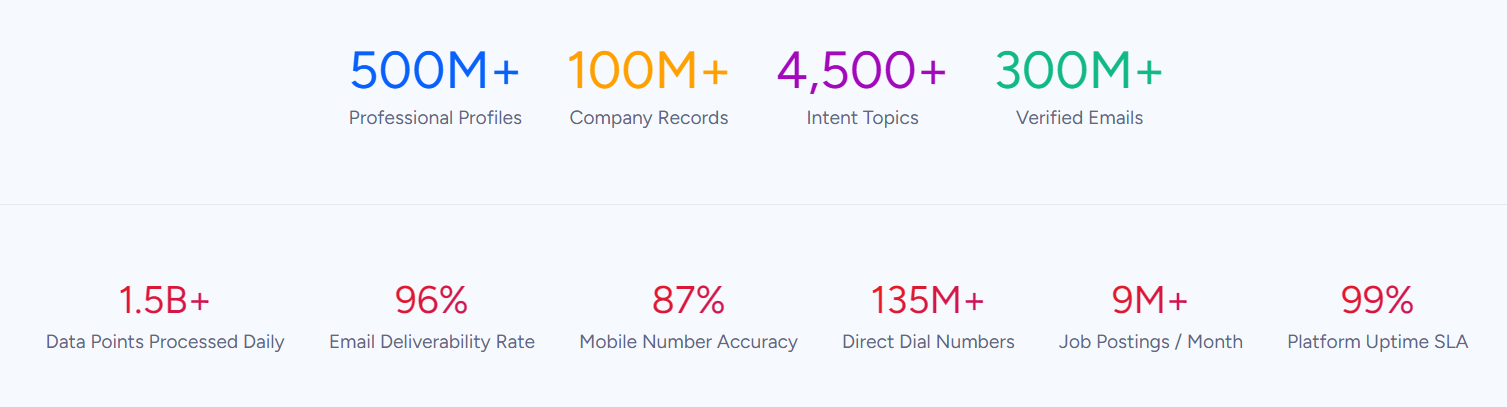
The platform maintains one of the largest B2B data sets available: 500M contacts, 100M companies, 135M+ verified phone numbers, 120M direct-dial phone numbers, and 200M+ verified business email addresses. This data runs through a multi-source verification pipeline backed by 300+ human researchers, with first-party data reaching up to 95% accuracy.
For outbound teams, data accuracy directly affects deliverability. Sending to stale or incorrect email addresses generates hard bounces, which are among the strongest negative signals ISPs use to suppress a sender's reputation. A data provider with high verification standards reduces the bounce exposure that tools like MailReach exist to recover from.
Contact and company search supports 300+ company attributes for market segmentation, including department org charts with decision-makers' direct dials and verified emails, job-change alerts, and one-click CRM export. Teams can build prospect lists filtered by job title, company size, industry, location, technology stack, and revenue, then export directly to their CRM or sequencing tool.
The data quality is externally validated. In a Fortune 500 competitive RFP analyzing 25 million contacts across vendors, the independent consultant concluded that "no other competitor came even close." ZoomInfo holds 133 No. 1 rankings on G2 across Sales Intelligence, Data Quality, and related categories.
SpringDB saw 2x-3x increases in campaign conversions across channels and a 300% increase in database usability after using ZoomInfo's enriched data for precise client targeting. (SpringDB)
Buyer Intent and Account Intelligence: ZoomInfo shows which accounts are actively researching, so outreach reaches buyers when they're ready to engage.
Inbox placement on a prospect who isn't in-market is wasted effort.
ZoomInfo closes this gap with Buyer Intent data that tracks signals from 210 million IP-to-Organization pairings and 6 trillion+ new keyword-to-device pairings sourced monthly.
Guided Intent, exclusive to ZoomInfo, identifies topics historically correlated with deal success in your segment rather than requiring manual topic selection. This moves account prioritization from guesswork to pattern-matched intelligence.
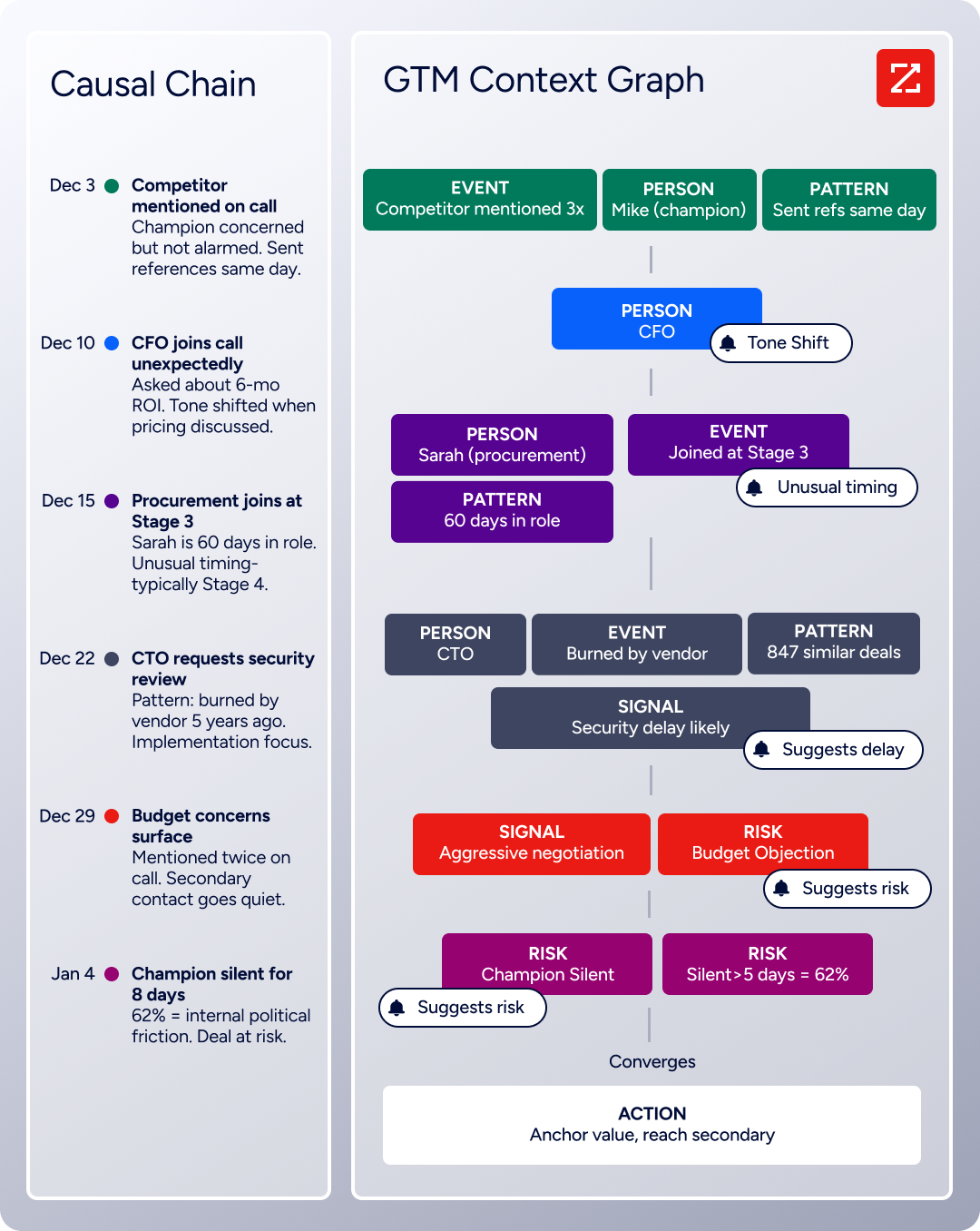
Built on top of intent is the GTM Context Graph, which processes 1.5B+ data points daily by combining ZoomInfo's B2B data with a customer's CRM records, conversation transcripts, and behavioral signals. The result is an intelligence layer that captures not just what happened in a deal, but why it happened, giving teams the context to act on signals rather than just observe them.
Additional signal layers include WebSights (resolving anonymous website visitors to companies with buying team identification), technographics (tracking 30,000+ technologies across 200+ categories on 30+ million companies), and company data covering revenue, headcount, org hierarchy, and locations.
Seismic attributed 39% of its active pipeline to opportunities identified or influenced by ZoomInfo signals and reported that its sales team became 54% more productive after adopting the platform. (Seismic)
AI-Powered GTM Execution: ZoomInfo turns intelligence into action through dedicated workspaces for sellers, marketers, and developers.
MailReach handles warmup; ZoomInfo handles what happens after you've warmed up. The platform delivers its intelligence through three channels, so teams can act on data wherever they work:
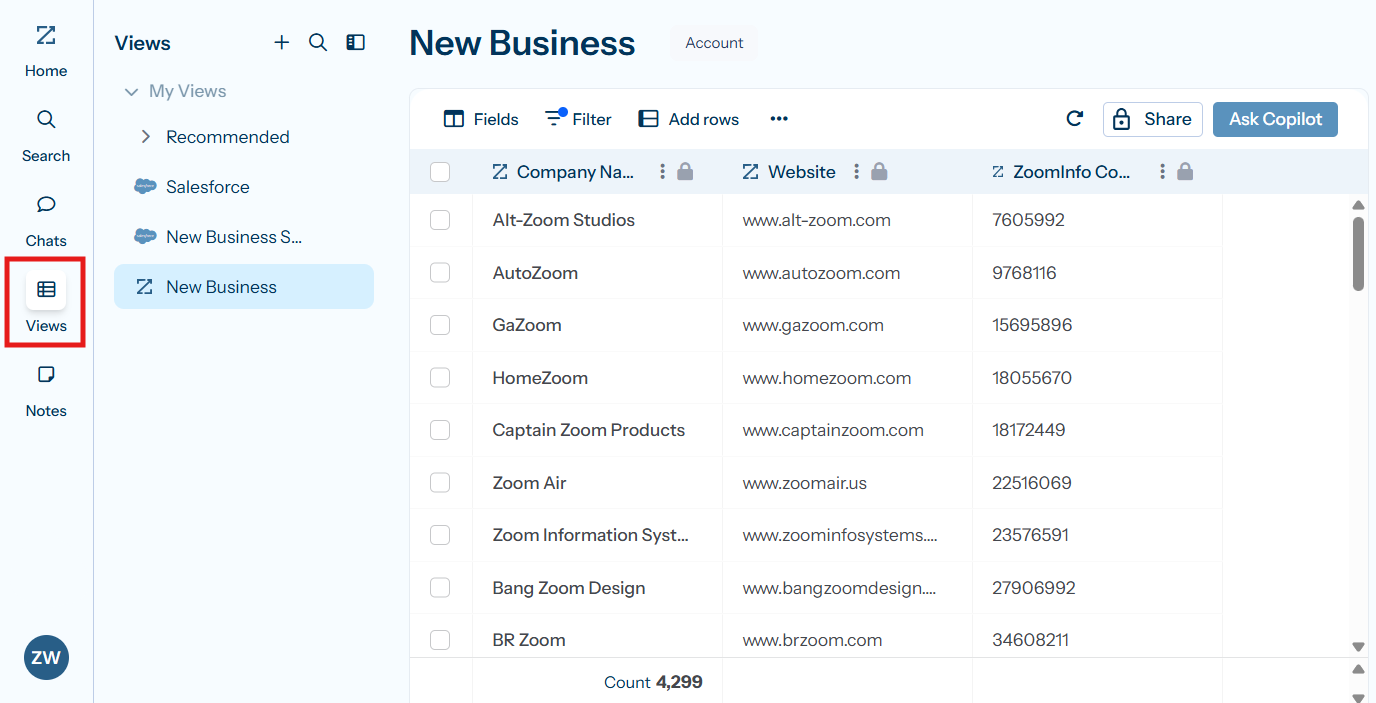
GTM Workspace is the seller's front-end. It consolidates CRM data, ZoomInfo intelligence, conversation history, and market signals into a single view. AI agents handle account research, outreach drafting, CRM updates, and signal monitoring.
Source: ZoomInfo
An Action Feed surfaces in-market buyers matched to target criteria with pre-drafted actions on every signal. Outreach is personalized from full account context, not generic templates.
GTM Studio serves marketers, RevOps, and GTM engineers. Teams can build audiences using natural language, enrich with first- and third-party data, define triggers, and activate multi-channel plays (email, calls, ads, direct mail) without engineering support. Plays run continuously and improve as prospects respond.
APIs and MCP expose the same intelligence to any custom agent, internal tool, or partner platform. ZoomInfo's MCP server connects AI models directly to its B2B data as a native tool, with no custom coding required. It is listed in the Claude directory and currently supports Claude and ChatGPT.
All three channels draw from the same GTM Context Graph. Where you choose to work never limits the intelligence available.
ZoomInfo offers a permanent free tier (ZoomInfo Lite) with access to the B2B database, 10 monthly export credits, contact and company search, a Chrome extension, and HubSpot integration.
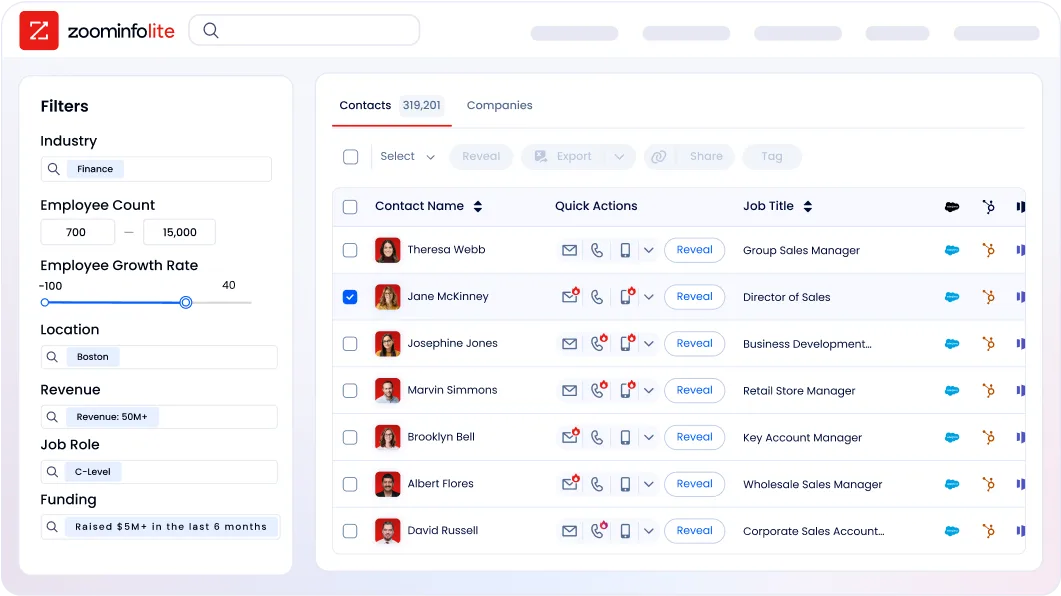
A 7-day free trial is also available for evaluating paid features. Paid plans use custom-quoted, consumption-based pricing scaled to usage patterns, user count, and feature requirements.
Levanta's CEO Ian Brodie noted: "ZoomInfo's not just a contact data company anymore. They've built a full system of execution. GTM Intelligence actually works the list, writes the outreach, triggers the play, and helps drive predictable growth." (Levanta)
MailReach or ZoomInfo: Comparison Summary
MailReach | ZoomInfo | |
|---|---|---|
Primary focus | Email deliverability (warmup, spam testing, monitoring) | AI GTM platform (data, intelligence, execution) |
Contact data | None | 500M contacts, 200M+ verified business emails |
Buyer intent | None | Intent signals from 210M IP-to-Organization pairings |
Email warmup | 30,000+ business inbox network | Not available |
Spam testing | Direct-send methodology with btob/btoc scores | Not available |
Outreach execution | None (requires separate sending tool) | AI-powered multi-channel outreach via GTM Workspace |
CRM integrations | Zapier and Make | Native Salesforce, HubSpot, Dynamics 365 + 120+ marketplace integrations |
Free tier | 3 spam tests/day, no account needed | ZoomInfo Lite (permanent, 10 monthly exports) |
Free trial | None for Email Warmup | 7-day free trial |
Pricing model | $25/mailbox/month (warmup); from $135/month (spam testing) | Custom-quoted, consumption-based |
Security certifications | GDPR compliant | ISO 27001, SOC 2 Type II, ISO 27701, TRUSTe GDPR/CCPA |
API access | REST API included in all paid plans | Enterprise API + MCP server for AI agents |
Best for | Teams needing dedicated deliverability infrastructure | Teams needing full outbound intelligence and execution |
Final Verdict
The choice between MailReach and ZoomInfo depends on where your outbound operation's biggest gap is: getting into the inbox, or knowing who belongs in your sequences.
Choose MailReach if your outbound infrastructure already produces results and your bottleneck is inbox placement. It's the right tool when you have a reliable contact data source, a sending platform you're satisfied with, and the specific problem is that too many emails land in spam.
MailReach's warmup network of business inboxes, its direct-send spam tester, and its minimal configuration make it effective at the one thing it does. For agencies and sales teams that already have the rest of their stack in place, MailReach adds a deliverability layer without disrupting existing workflows.
Choose ZoomInfo if you need the full picture: not just deliverability, but the intelligence to know who to email, when they're in-market, and what to say. ZoomInfo's verified contact data reduces bounce-driven reputation damage at the source, while buyer intent signals and AI-powered execution ensure outreach reaches the right buyers at the right time.
For teams building or scaling outbound, ZoomInfo provides the data foundation, targeting intelligence, and execution layer in a single platform, replacing the multi-vendor stack that specialist tools require.
Get started with ZoomInfo for free here.
Deliverability matters. But it's one variable in the outbound equation. MailReach solves for placement; ZoomInfo solves for the entire motion, from identifying buyers to closing deals, and its data quality helps prevent the placement problems that deliverability tools exist to fix.
MailReach FAQ
Is there a free version of MailReach?
MailReach offers 3 free spam tests per day with no account required, useful for evaluating the diagnostic tool. However, the Email Warmup product (MailReach's primary offering) has no free tier or free trial. A paid subscription starting at $25/mailbox/month is required to use warmup.
ZoomInfo offers a permanent free tier called ZoomInfo Lite with access to its B2B database, 10 monthly export credits, contact and company search, and a Chrome extension.
How much does MailReach cost per mailbox?
Email Warmup costs $25/mailbox/month on monthly billing or $20/mailbox/month on annual billing. The Email Spam Tester starts at $135/month for 300 credits. An All-in-One plan combining warmup, spam testing, Co-pilot, and Email Verifier is available, though exact pricing for this bundle is not published on the pricing page.
ZoomInfo uses custom-quoted, consumption-based pricing based on usage patterns, user count, and feature requirements.
How long does email warmup take with MailReach?
MailReach requires a minimum of 14 days of warmup before its spam test safety gate lifts, meaning full diagnostic value isn't available until two weeks of warmup have elapsed.
The warmup process ramps send volume gradually, scaling toward a maximum of 100 warming emails per day per mailbox. MailReach recommends keeping warmup running continuously alongside live campaigns to maintain sender reputation.
Does MailReach send cold email campaigns?
No. MailReach is not a sending tool. It handles deliverability (warmup, spam testing, monitoring) but does not offer email sequencing, campaign management, or outreach automation. Teams need a separate cold email platform for sending.
ZoomInfo includes AI-powered outreach execution through GTM Workspace, where sellers can draft and send personalized emails informed by account intelligence and buyer intent signals.
What email providers does MailReach support?
MailReach works with Google Workspace, Microsoft 365/Outlook, and any custom domain via SMTP/IMAP credentials. Batch import is supported via Google Workspace domain-wide delegation and Microsoft Entra app registration for teams managing multiple mailboxes. The platform is provider-agnostic and does not require migrating sending workflows.
Does MailReach integrate with CRMs or sales tools?
MailReach does not offer native CRM integrations. It connects to external tools through its REST API, Zapier, and Make. Common automation patterns include adding new mailboxes to warmup when provisioned, pausing warmup during high-volume sends, and triggering Slack notifications on test results.
ZoomInfo offers native integrations with Salesforce, HubSpot, and Microsoft Dynamics 365, along with 120+ integrations in its App Marketplace and an MCP server for connecting to AI agents.
Researching MailReach? These comparisons and alternatives help you decide:
