

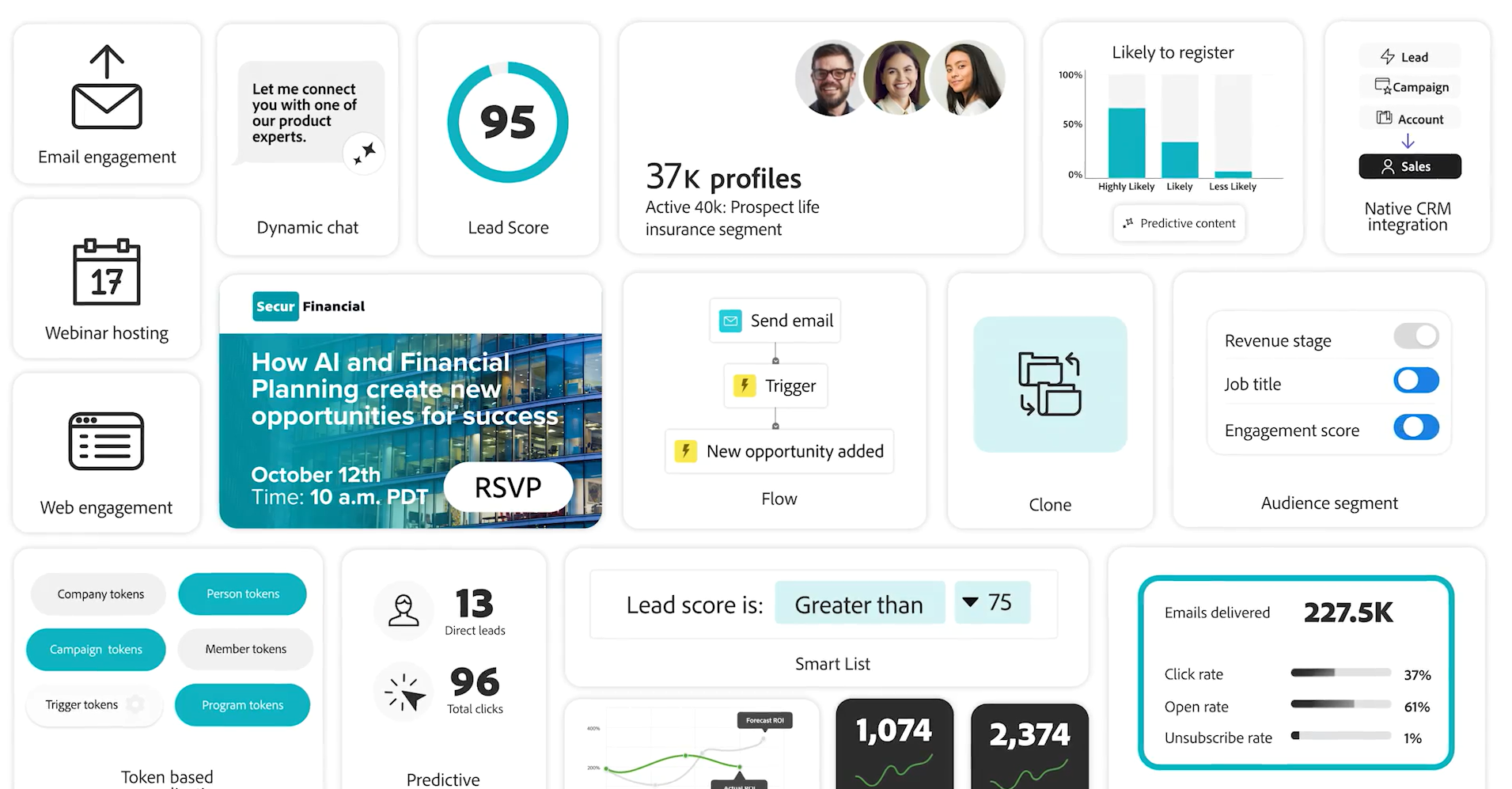
Running B2B marketing at enterprise scale means orchestrating campaigns across channels, scoring leads through multi-month buying cycles, aligning sales handoffs with behavioral data, and proving which programs generate revenue. Adobe Marketo Engage is a marketing automation platform built for that complexity. It covers email creation, campaign orchestration, lead scoring, account-based marketing, conversational AI chat, native webinars, sales intelligence, and multi-touch revenue attribution.
This breakdown covers every feature, how it works, who it serves, and which plan unlocks it.
Marketo Engage's feature set has you covered if:
You run multi-touch B2B demand generation programs with complex segmentation, lead scoring, and CRM handoff requirements
You need engagement programs that automatically nurture leads through content streams with exhaustion logic and per-person cadence control
You manage account-based marketing targeting buying committees across multiple stakeholders at named accounts
You want a native AI-powered chatbot that qualifies website visitors, books meetings, and feeds engagement data directly into your lead records
You need built-in webinar hosting with attendee behavior (poll responses, Q&A, downloads) captured as structured marketing data
You require multi-touch revenue attribution connecting every campaign touchpoint to pipeline and closed revenue
You'll reach the edges of its capabilities if:
You need a B2B contact and company database to identify and reach the people your campaigns target
You want buyer intent signals showing which companies are researching your category across the web before they engage with your content
You need conversation intelligence that records, transcribes, and analyzes what happens on sales calls after marketing hands off a lead
You want contact-level website visitor identification (who specifically visited, not just which company)
You need an AI-powered seller workspace that connects marketing signals to daily sales execution without switching tools
For those needs, the reference point is ZoomInfo: an AI GTM platform built on 500M contacts, 100M companies, 135M+ verified phone numbers, and 200M+ verified business email addresses. Its GTM Context Graph processes 1.5B+ data points daily, combining B2B data with CRM records, conversation intelligence, and behavioral signals into a single intelligence layer. Teams access that intelligence through APIs, MCP, GTM Workspace, and GTM Studio. ZoomInfo is already a LaunchPoint integration partner for Marketo Engage, with data flowing directly into the platform.
After the feature breakdown, this article covers where Marketo Engage stops and how ZoomInfo fills those gaps.
Marketo Engage Platform Overview
Adobe Marketo Engage calls itself "a complete AI-powered marketing automation platform" for B2B marketing teams managing complex, multi-touch buying journeys.
Source: Marketo
Adobe acquired it for $4.75 billion in 2018. It now sits inside Adobe Experience Cloud as the B2B marketing automation engine, connected natively to Adobe Real-Time CDP, Adobe Journey Optimizer B2B Edition, and Adobe Workfront.
The platform targets enterprise and mid-market B2B organizations (particularly in technology, professional services, manufacturing, and financial services) managing considered-purchase sales cycles with multiple buying committee members. It is a Leader in the 2025 Gartner Magic Quadrant for B2B Marketing Automation Platforms and the 2025 Gartner Magic Quadrant for Multichannel Marketing Hubs, and earned the 2025 TrustRadius Top Rated award.
The platform is organized around nine capability areas:
Capability | What It Does | Tier / Availability |
|---|---|---|
Drag-and-drop email designer with AI, A/B testing, dynamic content | All tiers | |
Trigger and batch campaign orchestration, engagement programs | All tiers | |
Multi-dimensional scoring, nurture streams, CRM handoff | All tiers | |
Lead-to-account mapping, Predictive Engagement Score | All tiers; attribution in Ultimate | |
AI chatbot, live chat, meeting scheduling | Select (100 lifetime chats); GenAI in Prime | |
Native webinar hosting with attendee behavior capture | All tiers | |
In-CRM lead engagement intelligence for sales reps | Add-on (5-user packs) | |
Sales email, dialer, and cadences inside Salesforce | Add-on (Salesforce only) | |
Multi-touch B2B revenue attribution | Ultimate only |
Marketo Engage uses a contact-volume subscription model billed per 1,000 contacts, with four packages: Grow, Select, Prime, and Ultimate. Pricing is custom and quote-based. With that structure in place, here is the full tour.
Marketo Engage Email Marketing and Content Creation
Email is the core outbound channel in Marketo Engage.
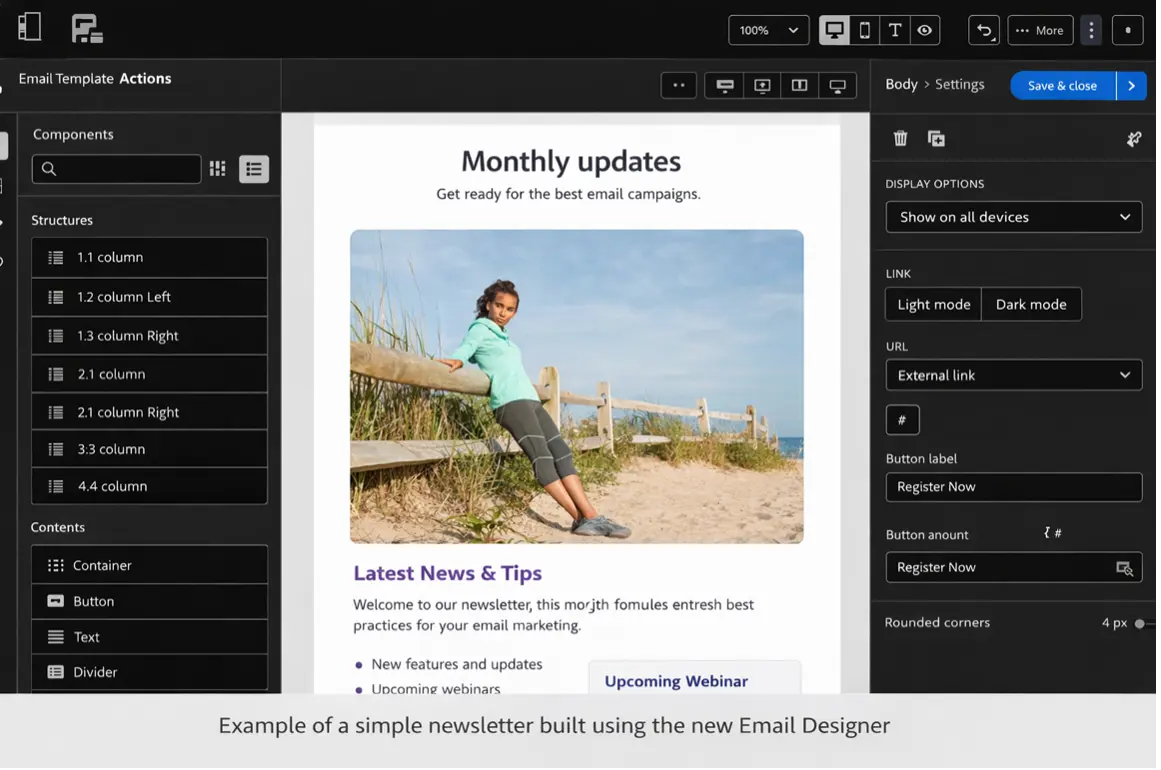
The January 2025 release introduced the new Email Designer, a WYSIWYG drag-and-drop editor with out-of-the-box templates and integrated generative AI. The designer removes the dependency on external HTML developers.
Source: Marketo
It supports column-based layouts, content blocks (text, image, button), padding and styling controls, and a navigation tree for editing individual layers. The classic Email Editor 2.0 still works alongside it, so teams with large template libraries face no forced migration.
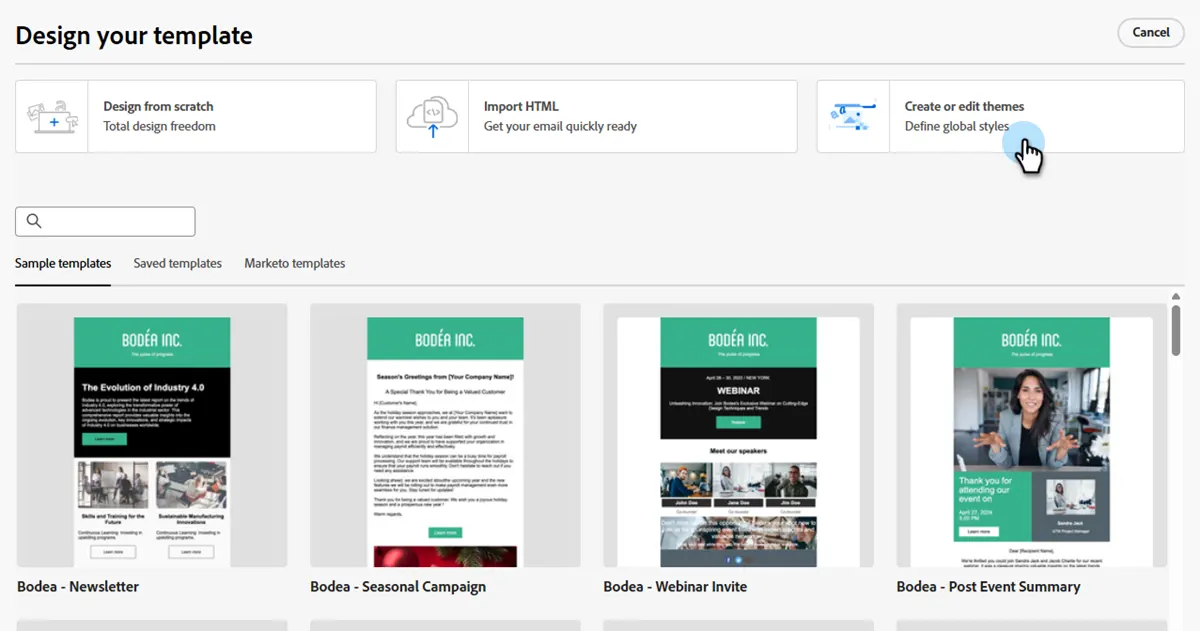
Reusable fragments (headers, footers, legal disclaimers) are created once and inserted across multiple emails and templates; updates to the source fragment propagate to every email that references it. Conditional content serves different images, copy blocks, or sections to different audience segments within a single email, driven by Marketo's segmentation engine. Brand themes enforce fonts, colors, and logos, and content locking in templates prevents other users from modifying non-brand elements.
Source: Marketo
The AI Assistant generates subject lines, preheaders, section copy, or entire emails from a template. What makes it B2B-specific: it accepts buying group role (Practitioner, Influencer, Decision Maker), marketing journey stage (Discover, Evaluate, Commit), and communication strategy as structured inputs, aligning generated content to ABM motions that generic AI writing tools do not support. AI image generation runs on Adobe Firefly.
An image-to-HTML converter lets teams upload a PNG or JPEG mockup and receive editable HTML for use in the designer.
A/B and multivariate testing runs across both batch and trigger-based sends. For trigger campaigns, a champion/challenger framework automatically selects and deploys the highest-performing variant on an ongoing basis, so live campaigns always use the best content without manual intervention.
The Email Designer also connects to Adobe Experience Manager for asset management and GenStudio for Performance Marketing for brand-governed content creation at scale.
Marketo Engage Marketing Automation and Campaign Operations
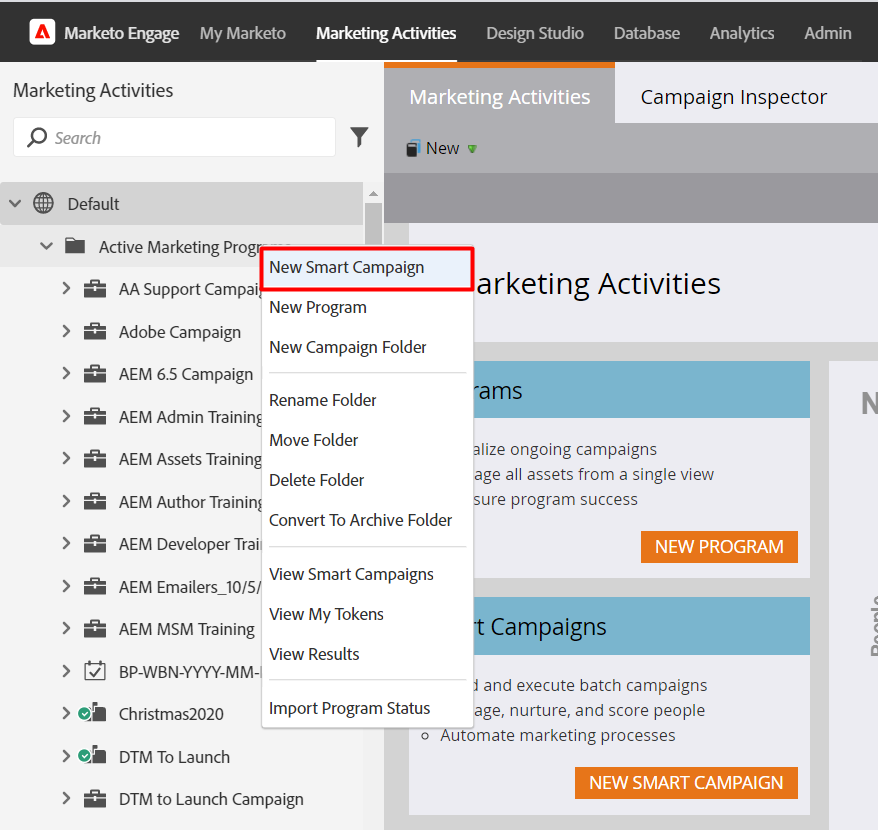
The operational backbone of Marketo Engage is the Smart Campaign, which Adobe calls the platform's "engine." Every Smart Campaign has three components: a Smart List (who is targeted, using filters and triggers), a Flow (what happens, as a sequence of drag-and-drop flow steps such as sending an email, changing a score, or routing to a sales rep), and a Schedule (when it runs). Flow steps support wait delays, conditional branching ("Add Choice"), and reordering.
Source: Marketo
Two execution modes give teams control over timing. Trigger mode runs on one person at a time the instant they meet a condition: a link click, a form fill, a score threshold. Multiple triggers use OR logic, and triggers can coexist with filters in the same Smart List, so triggers determine entry while filters narrow the qualifying set. Batch mode runs against a qualifying audience snapshot on a schedule, suited for broadcast sends and periodic data operations.
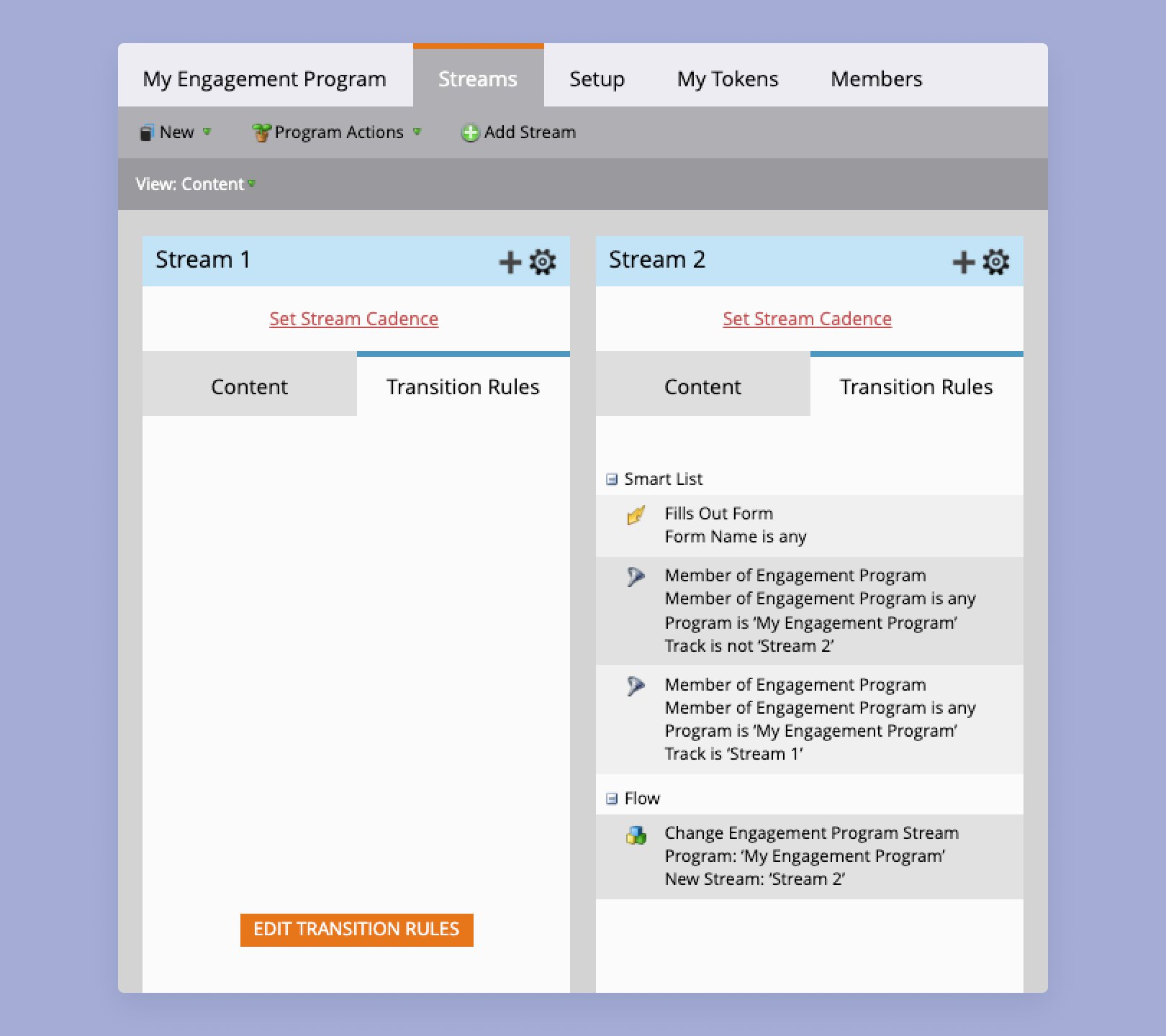
Engagement Programs handle structured nurture. Each program contains "streams" (prioritized pools of content delivered at a configurable cadence called "casts"). When a lead has consumed every content piece in a stream, the system flags them as "Exhausted," a clear signal to add new content, move them to a different stream, or hand them off to sales.
Source: Marketo
Each person's cadence status (Normal or Paused) controls delivery, and per-person pause/resume means a lead entering a sales cycle can stop receiving marketing nurture and re-enroll if the deal goes cold, without being removed from the program. Each content piece in an engagement program receives a 0-100 Engagement Score calculated from opens, clicks, unsubscribes, and program success metrics, so marketers see which assets drive engagement within the nurture context. Up to 100 active engagement programs run per subscription.
Four program types (Default, Email, Engagement, and Event) group the local assets needed for a specific initiative. Smart Campaigns also serve as a general-purpose automation engine beyond email: they normalize data, trigger CRM updates, reassign leads, fire webhooks, and create sales alerts, all within the same object type that handles campaign sends. Archiving a folder automatically disables active trigger campaigns and cancels scheduled batch runs in that folder, preventing orphaned live campaigns from running unmonitored.
On the roadmap, Adobe has announced an Agentic Lead Orchestration engine: a visual canvas where marketers collaborate with an AI-powered Journey Agent to design, execute, and optimize the full marketing lifecycle, from audience creation through omnichannel activation to sales qualification.
Marketo Engage Lead Management and Scoring
Lead management in Marketo Engage covers the full lifecycle from capture through sales-ready handoff. It solves a chronic revenue leak: marketing passes too many unqualified leads, sales ignores them, and engaged prospects fall through the cracks.
Lead scoring uses Smart Campaign flow steps to increment or decrement a numerical score based on demographic, firmographic, and behavioral data. Teams maintain separate scores for behavioral activity (email opens, page visits, form fills) and demographic/firmographic fit (title, company size, industry). Score decay logic subtracts points for inactivity, so stale leads do not persist at the top of the queue. When a lead crosses a score threshold, Smart Campaigns trigger automatic handoff actions: alerts to sales reps, CRM task creation, or enrollment in a sales-focused nurture track.
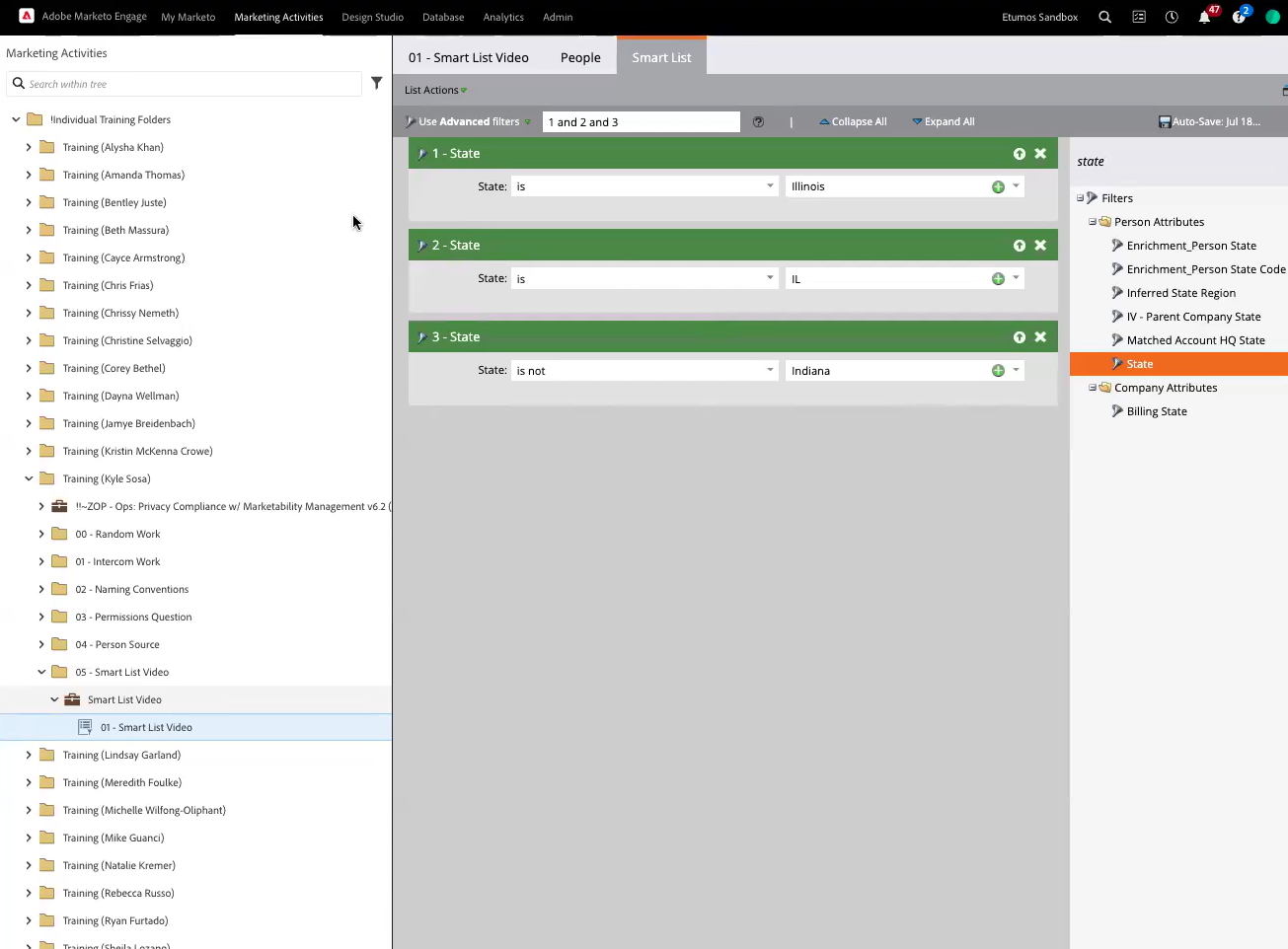
Smart Lists with 150+ filters segment the database using any combination of behavioral, demographic, firmographic, and CRM-synced attributes. A Smart List can define an audience as "Job Title contains VP AND Visited Pricing Page AND Score > 50," combining any number of conditions into precise audience definitions.
Source: Marketo
Automated enrichment continuously updates lead- and account-level profiles, enabling precise segmentation without manual list uploads. Marketo also separates operational emails (transactional messages sent regardless of opt-out status) from marketing emails, so system notifications never get blocked by subscription preferences.
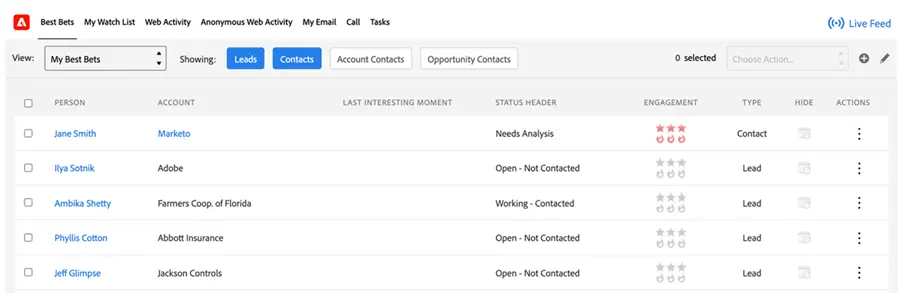
The sales-facing layer is Sales Insight's Best Bets: a ranked list of the hottest leads by urgency and relative score, surfaced inside Salesforce. Reps can send Marketo emails, add leads to campaigns, or add them to watchlists from the same view, maintaining marketing attribution even on outbound sales touches.
Source: Marketo
Account-Based Marketing in Marketo Engage
Marketo Engage supports both lead-based and account-based marketing within the same platform. The ABM layer targets entire companies and buying committees rather than individual contacts, coordinating campaigns across multiple stakeholders at named accounts.
Lead-to-account mapping automatically associates individual leads with their parent company accounts. Marketo Measure uses a hierarchy of eight matching methods applied in priority order: lead website to account website, lead email domain to account website domain, lead company name to account name, and five additional fallback patterns. The account with the most matching signals wins.
The Predictive Engagement Score (PES) is a dynamically calculated score reflecting how actively an account engages with marketing. Inputs include total and average page views from the account, number of persons in the account, recency of the last page view, visits to key pages in the past 30/60/90 days, and whether the account has a prior closed-won or closed-lost deal.
Source: Marketo
The PES requires a minimum data threshold (at least 25 accounts with closed-won opportunities and 25 without) to build an accurate model baseline. Accounts are segmented and prioritized by PES grade for targeted campaign outreach.
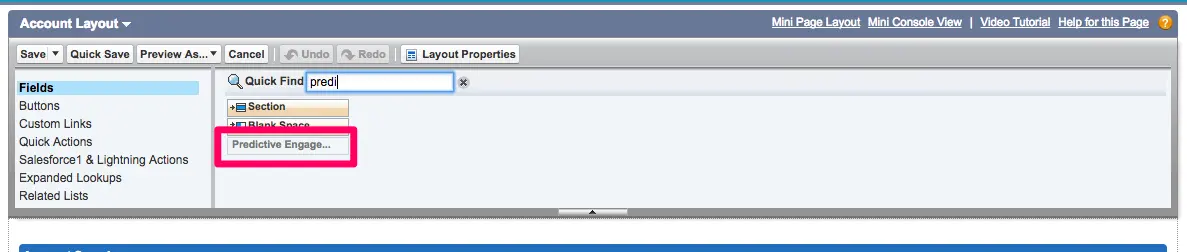
The ABM layer surfaces inside Salesforce page layouts, so sales reps see account engagement data in their existing workflow. Marketo Measure includes account-based attribution models, engagement scoring, funnel diagnostics, and pipeline impact reporting connecting ABM efforts to revenue outcomes. For organizations using Adobe Real-Time CDP B2B Edition, account and contact data feeds into the ABM layer, and Adobe Journey Optimizer B2B Edition adds buying-group-aware orchestration within a single vendor relationship.
Marketo Engage Dynamic Chat
Dynamic Chat is Marketo Engage's native conversational marketing module: a generative AI chatbot and live chat platform that captures website visitor engagement and feeds it into lead records, Smart Lists, and program membership without a third-party integration.
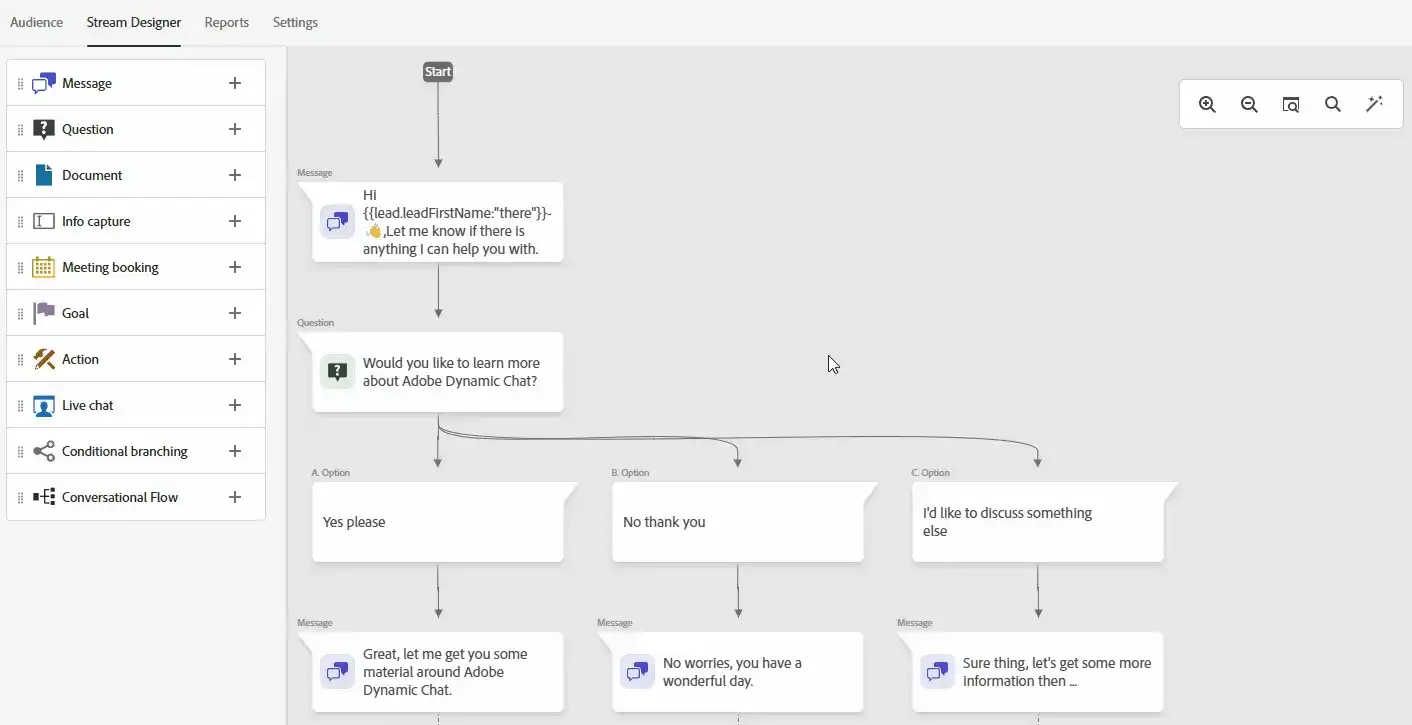
Source: Marketo
The primary automated unit is the Dialogue. Marketers use the Stream Designer (a visual, drag-and-drop flow builder) to define branching conversation logic: which pages the chat appears on, which visitor attributes must match, and the conversational flow (question cards, information capture cards, meeting booking cards, live chat escalation cards, and generative AI response cards). Each Dialogue tracks Total Triggered, Engaged, Completed, People Acquired, Meetings Booked, and Goals Reached.
Conversational Flows are a lighter variant, initiated by a visitor action (clicking a link, submitting a form) rather than a proactive pop-up, enabling post-conversion conversations that continue in context.
The Meeting Scheduler is available to all Marketo Engage customers: visitors select and book a meeting with a sales rep from within the chat widget, with routing via round robin, team assignment, or custom rules.
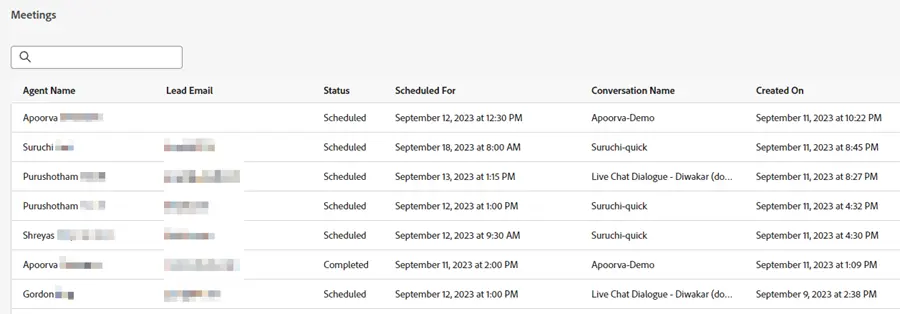
Source: Marketo
Live Chat escalates bot conversations to a human agent via a dedicated Agent Inbox, where agents see CRM data and the visitor's prior marketing activity inline. Agents have 100 seconds to accept before the chat falls back to a configured fallback message.
The GenAI layer (requiring the Dynamic Chat Prime add-on) adds three capabilities. The Generation Response Card answers visitor questions using a pre-approved Response Library of marketer-curated Q&A pairs, so AI responses stay within brand-controlled content. Conversation Summary generates a real-time summary of each chat, logged to the visitor's Person Record in Marketo Engage. And Unanswered Questions surfaces suggested new Q&A pairs from previously unanswered visitor questions, helping teams expand the Response Library over time.
A feature specific to Marketo's chat: Discussed Topics extracted from GenAI conversations are available as Smart List triggers and filters. Teams can segment and trigger follow-up programs based on what a visitor actually asked about, not just that they chatted.
Callback functions let Dynamic Chat analytics events feed into external systems such as Adobe Analytics or Google Analytics.
The base Select package includes live chat as a trial (100 lifetime engagements). The full GenAI feature set requires the Prime subscription tier.
Marketo Engage Interactive Webinars
Interactive Webinars is Marketo's built-in webinar platform, powered by a native Adobe Connect integration. It eliminates the need for a separate webinar tool and the integration work required to connect third-party platforms back into Marketo. The entire event lifecycle (creation, registration, delivery, recording, engagement data capture, and post-event workflows) lives within a single Marketo Engage instance.
Three webinar formats are available. Live webinars run in real time with full interactivity: chat, polls, Q&A, and audio/video broadcast. Simulated Live webinars play pre-recorded content at a scheduled time while still offering live chat, polls, and Q&A, combining content reliability with live engagement data collection. On-Demand webinars extend the content's reach after the live event.
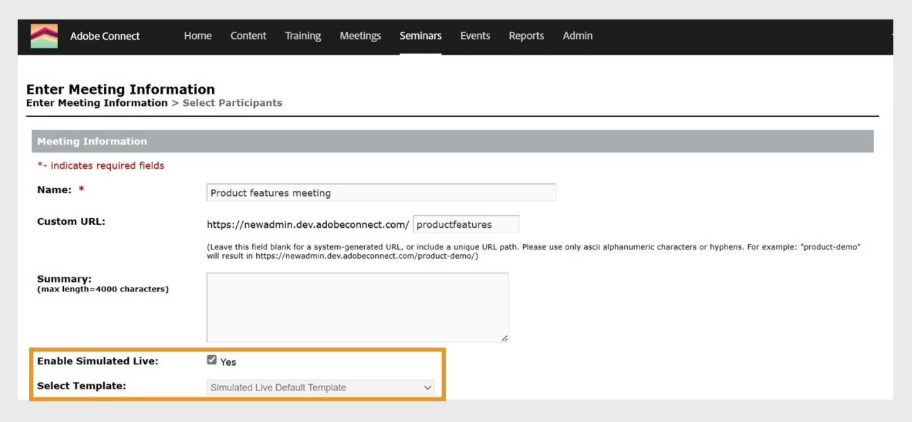
Source: Marketo
The production workflow includes a Broadcast Controls / virtual green room where hosts and presenters communicate privately before going live. Prepare Mode lets hosts modify room layouts mid-session in the background without disrupting the participant view, pushing changes only when ready. Sessions are recorded in MP4 format. Multiple prebuilt room templates are available at creation, all customizable, and hosts can design a "Lobby" layout for early joiners.
The real advantage is the data. Attendee behavior during the webinar (poll responses, Q&A questions, links clicked, assets downloaded) flows into Marketo as structured activity data on the lead's Person Record. Granular Smart List triggers include Asks Questions During Event, Attends Event, Clicks on a Link, Downloads an Asset, and Responds to a Poll, each with constraints for sub-segment targeting. A post-event analytics dashboard covers Event Program Status, Attendance Duration, Poll Performance, and Click/File Download Activity, with on-demand data retained beyond 30 days. Six languages are supported: English, French, German, Japanese, Portuguese, and Spanish.
Marketo Engage Sales Intelligence and Engagement
Marketo Sales Insight (MSI) bridges marketing automation data and the daily workflow of sales reps. It installs as a Visualforce panel inside Salesforce (and natively for Microsoft Dynamics and Veeva CRM), surfacing real-time behavioral data from Marketo Engage within Lead, Contact, Account, and Opportunity records.
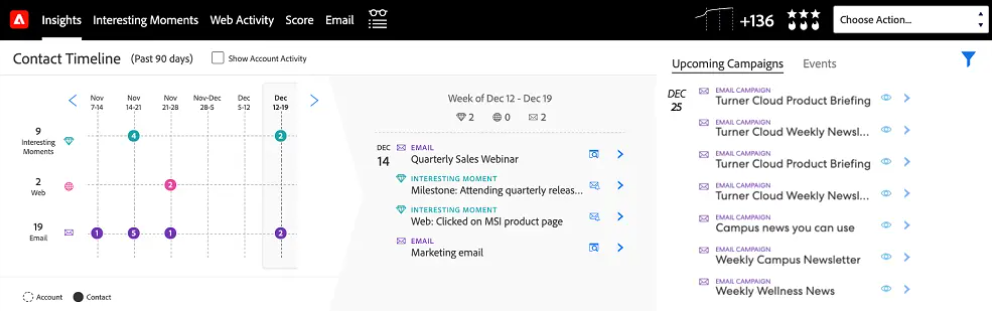
Source: Marketo
The Insights Dashboard displays an Engagement Velocity Grid showing Interesting Moments, email activity, and web activity over the last 90 days. Interesting Moments fire real-time alerts when a prospect takes a meaningful action (visits key pages, opens emails, attends webinars, hits score thresholds). Stars and Flames are visual scoring indicators: Stars represent lead score relative to other leads, Flames represent recency and velocity of engagement. Reps can pin specific leads or contacts to a personal Watchlist to monitor engagement over time.
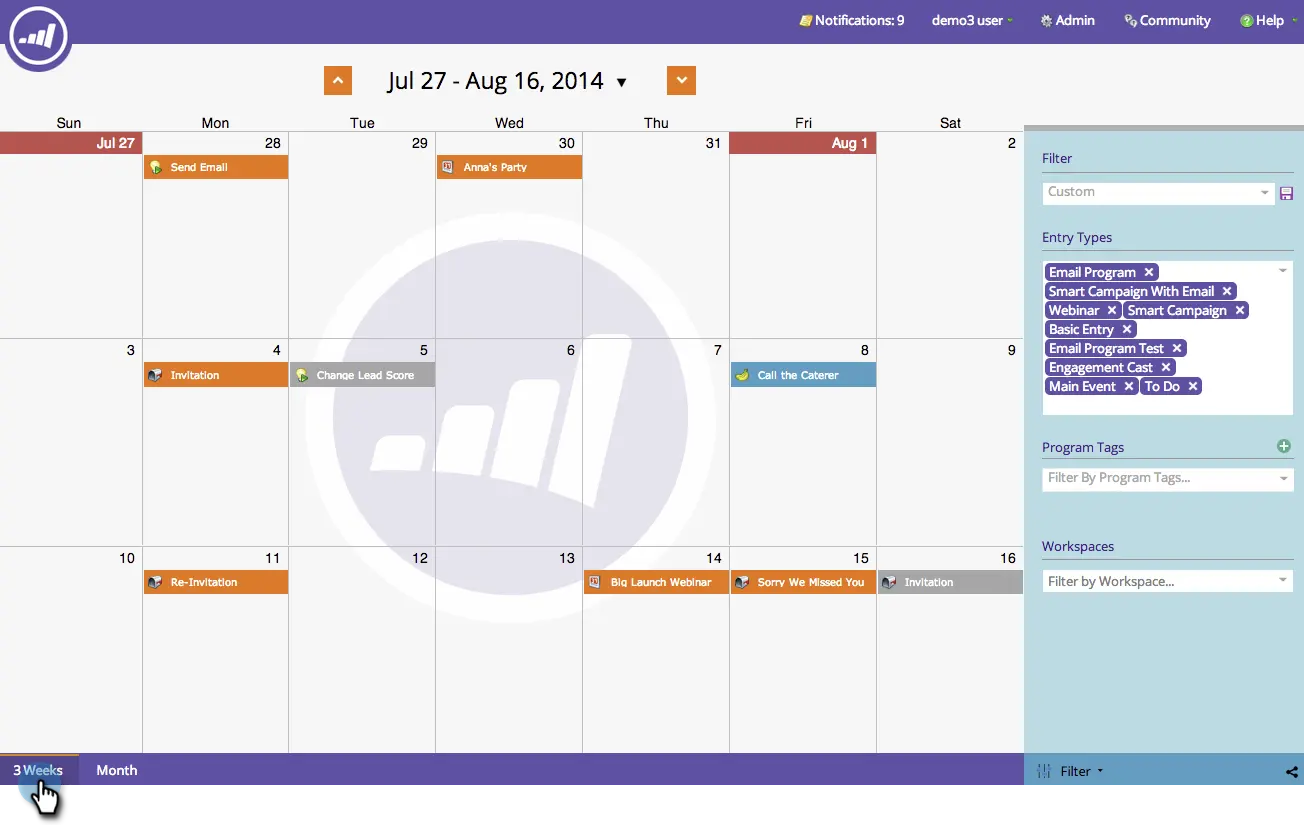
The Upcoming Marketing Calendar shows scheduled email campaigns and events within the next 90 days that the prospect is enrolled in, giving reps visibility into what marketing is about to send. At the account level, the Insights Dashboard aggregates engagement across all contacts within an account (up to 800 contacts), giving account executives a single view of the buying group's collective engagement.
Source: Marketo
Sales Insight Actions extends intelligence with execution tools. Reps can send tracked emails (with open, click, and reply tracking), make calls using a built-in dialer with local presence numbers and call recording, and run multi-step Sales Campaigns (cadences combining emails, calls, LinkedIn InMail tasks, and custom tasks). Every activity logged through Sales Insight Actions writes back to the corresponding Marketo person record, enabling Smart Campaign triggers and filters to fire on sales activity events ("Is Sent Sales Email," "Receives Sales Call"). Marketing can then build automated nurture responses based on sales outreach, closing the loop between the two teams.
Sales Insight is sold as an add-on in 5-user packs and supports Salesforce, Microsoft Dynamics, and Veeva CRM. Sales Insight Actions is available for Salesforce only.
Marketo Engage Analytics and Attribution
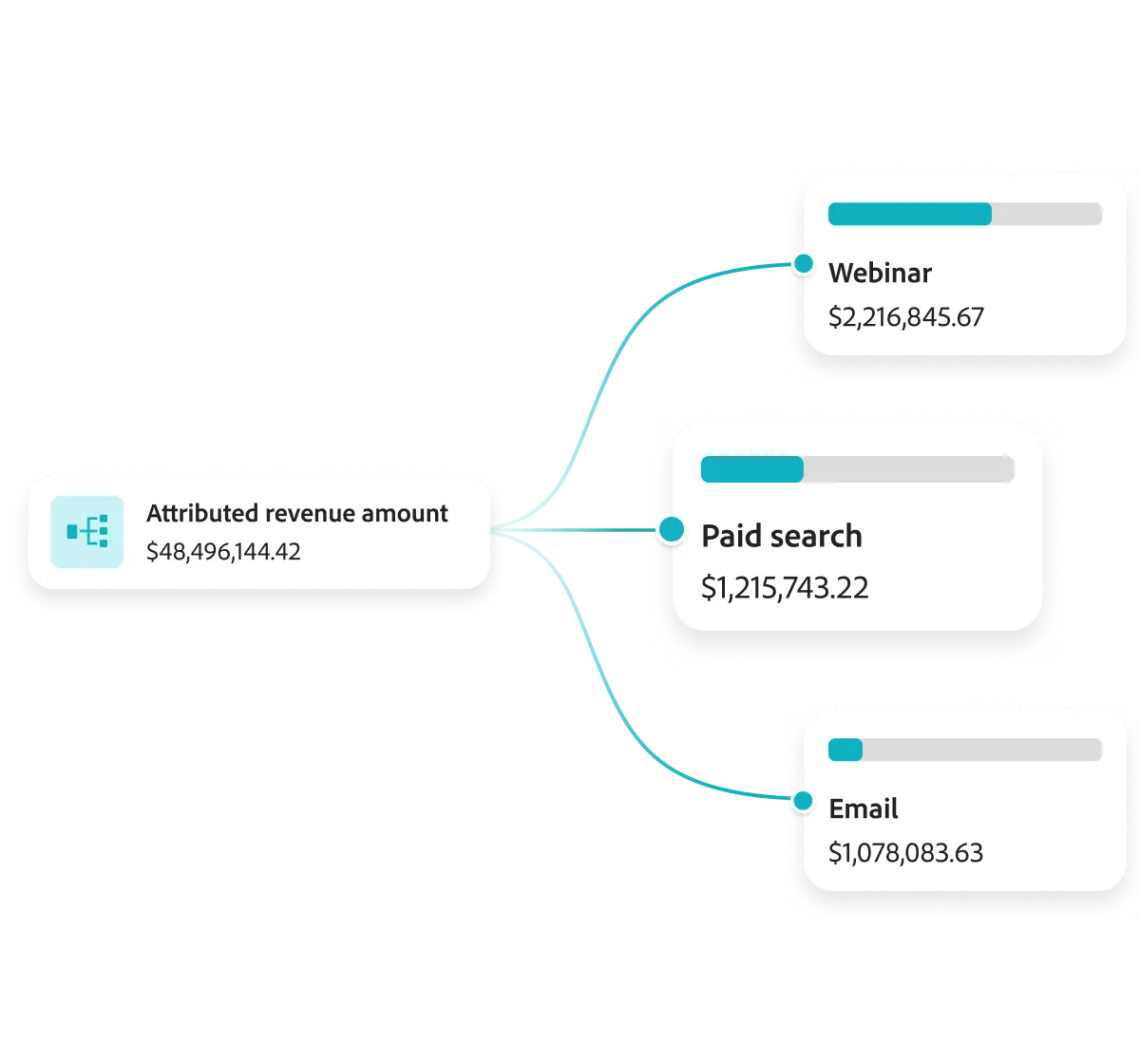
Marketo Measure (formerly Bizible) is Adobe's multi-touch B2B marketing attribution platform, included in Marketo Engage at the Ultimate tier. It solves a fundamental measurement problem: when buyer activity is scattered across Salesforce, Marketo Engage, paid media platforms, and offline channels, tying marketing spend to revenue becomes nearly impossible.
Source: Marketo
The platform captures buyer touchpoint data across every channel a prospect interacts with. JavaScript tracking on the website captures page views, form fills, and ad clicks. Connected paid media sources (LinkedIn, Google Ads), CRM activities (calls, emails, meetings logged by SDRs in Salesforce), webinars, chat, and offline channels all feed into the system. Two object types result: Bizible Touchpoints (individual interactions) and Bizible Attribution Touchpoints (generated once an opportunity is created, linking all prior touchpoints to that deal).
Six attribution models run simultaneously, so teams can compare results across models without re-running analyses:
First Touch: 100% credit to first interaction
Lead Creation: 100% credit to the interaction that created the lead
U-Shaped: 50/50 split between first touch and lead creation
W-Shaped: 30% each to first touch, lead creation, and opportunity creation; 10% spread across middle touches
Full Path: 22.5% to each of four milestones (first touch, lead creation, opportunity creation, closed-won); 10% across middle touches
Custom Model: a drag-and-drop interface to assign any credit weight to any touchpoint or custom lifecycle stage
On the Ultimate tier, Attribution AI replaces rules-based models with AI pattern recognition, surfacing incremental scoring (the marginal contribution a touchpoint made beyond what would have happened without it) and supporting multiple separately trained AI models for different go-to-market segments.
Six redesigned Discover dashboards (introduced 2024) cover Revenue Overview, Attributed Revenue, ROI, Discover, Passport, and Engagement Path, with point-and-click cross-filtering for deeper analysis. Results also surface in Salesforce reports. Sales-generated touchpoints (calls, emails, meetings) receive the same attribution credit as marketing-generated touchpoints, giving a complete picture of the full revenue team's impact.
Marketo Engage Integrations, API, and Platform Infrastructure
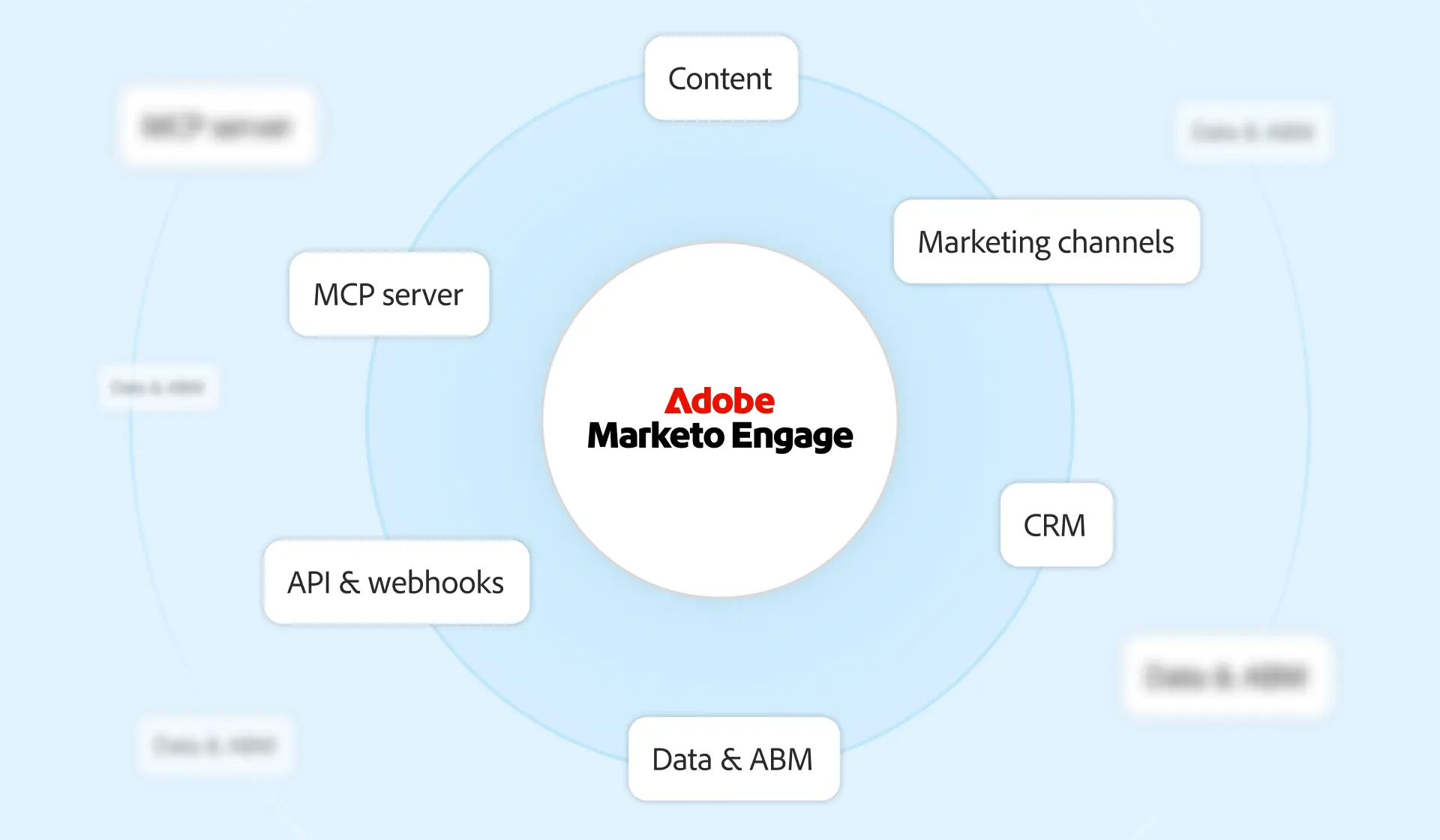
Marketo Engage connects to the broader revenue stack through native CRM integrations, a REST API, webhooks, a partner marketplace, and the Adobe Experience Cloud ecosystem.
CRM integrations are a core differentiator. Native bidirectional sync with Salesforce covers leads, contacts, accounts, opportunities, campaigns, custom objects, and activity, running continuously with a 5-minute pause between sync cycles and throughput of up to 200,000 records per hour. Microsoft Dynamics has equivalent native bidirectional sync, and Veeva CRM integration serves life sciences customers.
LaunchPoint is Marketo's integration marketplace, providing pre-built connectors across data and ABM platforms (ZoomInfo, Clearbit), advertising (Google Ads, Facebook, LinkedIn, X), webinars (Zoom, ON24, Adobe Connect), SMS (Vibes), analytics (Google Analytics, Adobe Analytics), and sales engagement (Outreach, Gong). Adobe Experience Platform audiences can be pushed to Marketo as static lists for campaign activation. Integration middleware (Workato, Vertify, and Informatica) enables complex multi-system workflows.
Source: Marketo
The Marketo REST API provides programmatic access to nearly all platform capabilities through three API surfaces: Lead Database (person records, companies, opportunities, activities, custom objects), Asset (emails, templates, forms, programs, landing pages), and User Management. Authentication uses OAuth 2.0 with client credentials. Key constraints:
Rate limit: 100 calls per 20 seconds, maximum 10 concurrent calls
Daily quota: 20,000 calls on Grow; 50,000 on Select, Prime, and Ultimate
Bulk Extract: up to 500 MB per day, 31-day date range maximum, 2 concurrent jobs
CRM sync throughput: up to 200,000 records per hour; 2 million records per day
A Bulk Extract API supports asynchronous exports of leads, activities, program members, and custom objects. The legacy SOAP API retires on July 31, 2026; all new development targets the REST API.
Webhooks are outbound only: Marketo calls external services as flow steps in trigger Smart Campaigns, with response mappings writing returned values back to lead fields for real-time data enrichment. Marketo does not receive inbound webhook notifications. A Marketo Engage MCP Server recently launched, letting AI tools such as Cursor, Claude, ChatGPT, and Gemini read, write, and act on Marketo data.
On security, Adobe maintains SOC 2 Type II and ISO 27001:2022 certifications across enterprise cloud products including Marketo Engage, with GDPR and CCPA compliance tooling, HTTPS with TLS v1.2 in transit, and enterprise SSO via SAML v2.0.
Where Marketo Engage Stops: The Gaps
Marketo Engage orchestrates B2B marketing at scale: building campaigns, scoring leads, nurturing prospects, managing events, and measuring attribution. That focus shapes its strength, but it also means the platform depends on external sources for several capabilities a B2B revenue team needs.
No native B2B contact or company database. Marketo Engage does not include a database of contacts, companies, direct dials, or verified business emails. It automates what happens after leads enter the system but does not supply the prospect data itself. Teams need a separate data provider to identify and reach the people their campaigns target. Marketo's lead enrichment updates existing records but does not generate new contacts.
No native buyer intent data. The platform captures engagement signals from its own channels (email opens, page visits, form fills, webinar attendance) and uses those to score and nurture leads. It does not include intent data showing which companies are researching specific topics across the web before they engage with your content. Engagement signals tell you who is responding to your marketing; intent signals tell you who is in-market before they arrive.
No conversation intelligence. Marketo Engage tracks the marketing side of the buyer journey but does not record, transcribe, or analyze sales calls. Once a lead reaches sales, the platform loses visibility into what happens in conversations. Sales Insight shows reps the marketing engagement history, and Sales Insight Actions provides email, dialer, and cadence tools, but neither captures call content, objection patterns, or coaching signals from live conversations.
Company-level website visitor identification only. Marketo's web tracking (via the Munchkin JavaScript API) identifies known visitors (those who have previously filled out a form) and tracks anonymous visitor behavior at the session level. It does not include reverse IP lookup to identify anonymous companies or resolve anonymous visits to individual contacts. Teams that want to know which companies or specific people visit their website before those visitors identify themselves need external visitor identification tools.
Batch-based architecture introduces latency. Marketo's batch-processing model creates delays in lead routing, scoring updates, and CRM handoffs. Real-time triggers exist for individual events, but large-scale data operations run in batch cycles. Many RevOps teams add a real-time orchestration layer on top, increasing complexity and cost.
No published pricing or self-serve entry. Marketo Engage does not publish prices for any tier, and no self-serve free trial or permanent free plan is publicly documented. Every package requires contacting Adobe Sales for a quote.
How ZoomInfo Covers the Gaps
The gaps above share a common thread: Marketo Engage orchestrates what happens after a lead enters the funnel but does not supply the data, signals, or conversation context that determine which leads enter and why deals move.
ZoomInfo supplies those layers, and it is already a LaunchPoint integration partner for Marketo Engage, meaning the two platforms connect directly.
ZoomInfo's B2B Data Platform: The contact and company database Marketo does not include
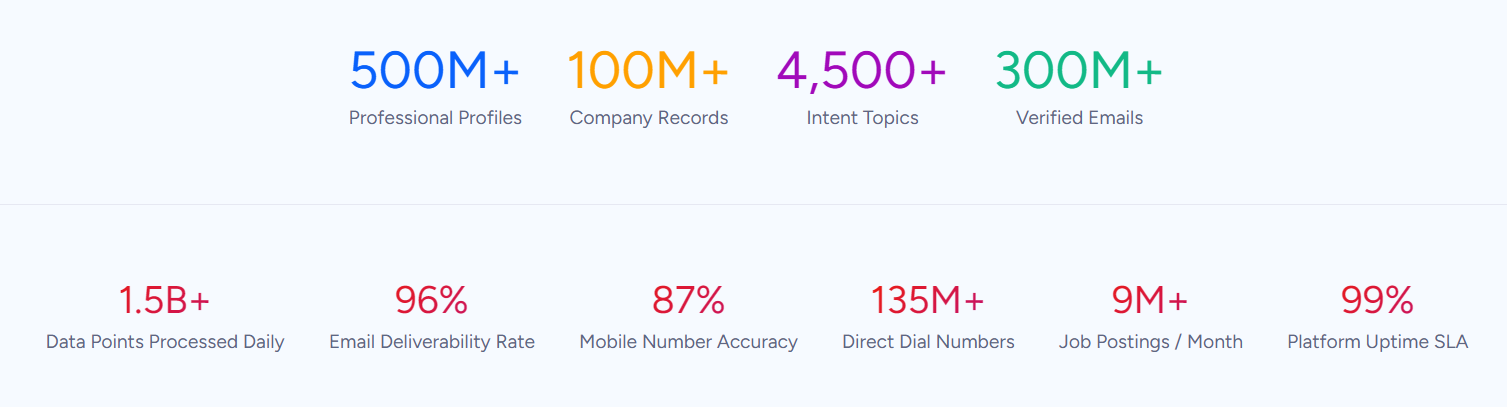
ZoomInfo operates a B2B data platform covering 500M contacts, 100M companies, 135M+ verified phone numbers, 120M direct-dial phone numbers, and 200M+ verified business email addresses. The data flows through a verification pipeline backed by 300+ human researchers and automated ML scanning 28 million domains daily, reaching up to 95% accuracy on first-party data.
For a team using Marketo Engage, this fills the upstream gap. Marketo can score, nurture, and orchestrate campaigns for leads in the database, but it needs those leads to arrive first. ZoomInfo provides department org charts with decision-maker contact data, 300+ company attributes for segmentation, technographic profiles covering 30,000+ technologies across 200+ categories for 30+ million companies, and job-change alerts. As a LaunchPoint partner, ZoomInfo data flows directly into Marketo for campaign activation.
In a Fortune 500 competitive RFP analyzing 25 million contacts across vendors, an independent consultant concluded that "no other competitor came even close." The data quality advantage is externally validated: Leader in the Forrester Wave for Intent Data Providers, Q1 2025, Leader in the Gartner Magic Quadrant for ABM Platforms for the second consecutive year, and the only vendor positioned in the Gartner Voice of the Customer Customers' Choice quadrant with a 4.7/5.0 rating.
ZoomInfo Intent and WebSights: Signals that reveal in-market buyers before they engage your content
ZoomInfo Intent tracks signals from 210 million IP-to-Organization pairings and 6 trillion+ new keyword-to-device pairings sourced monthly.
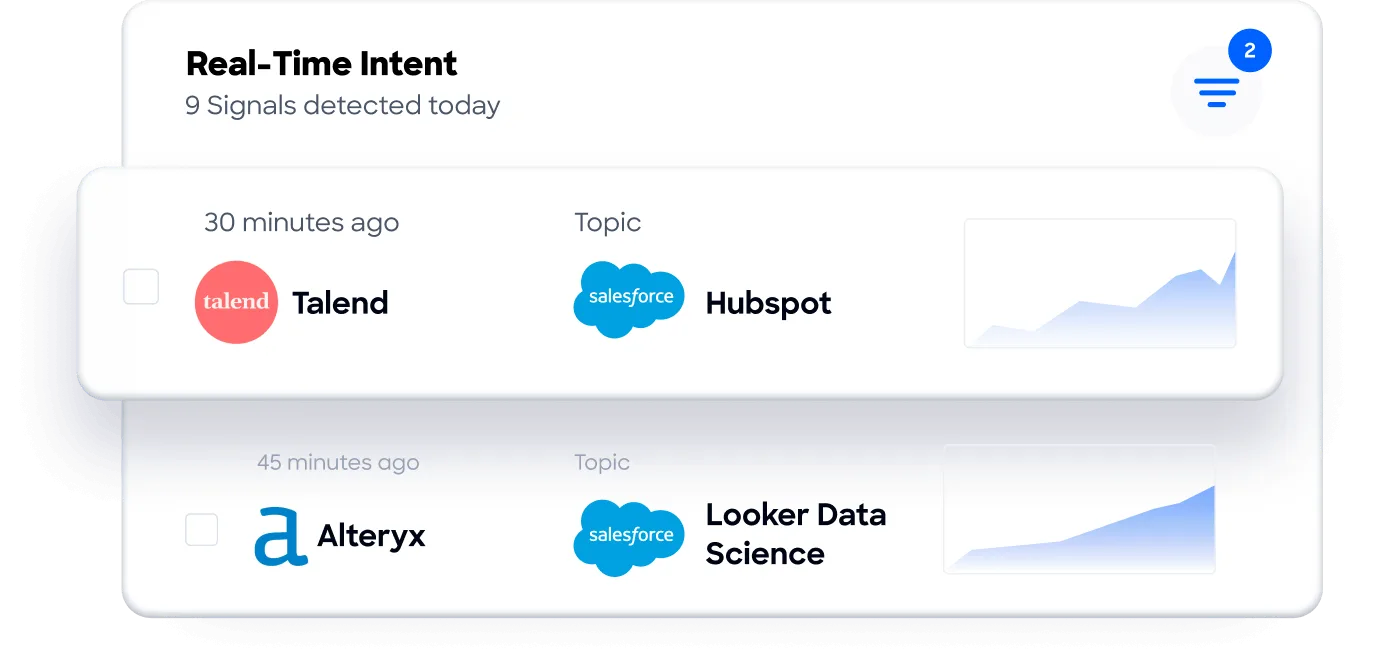
Where Marketo Engage scores leads based on engagement with your own marketing (email opens, page visits, form fills), ZoomInfo's intent data reveals which companies are researching topics related to your product across the web, before they ever interact with your content.
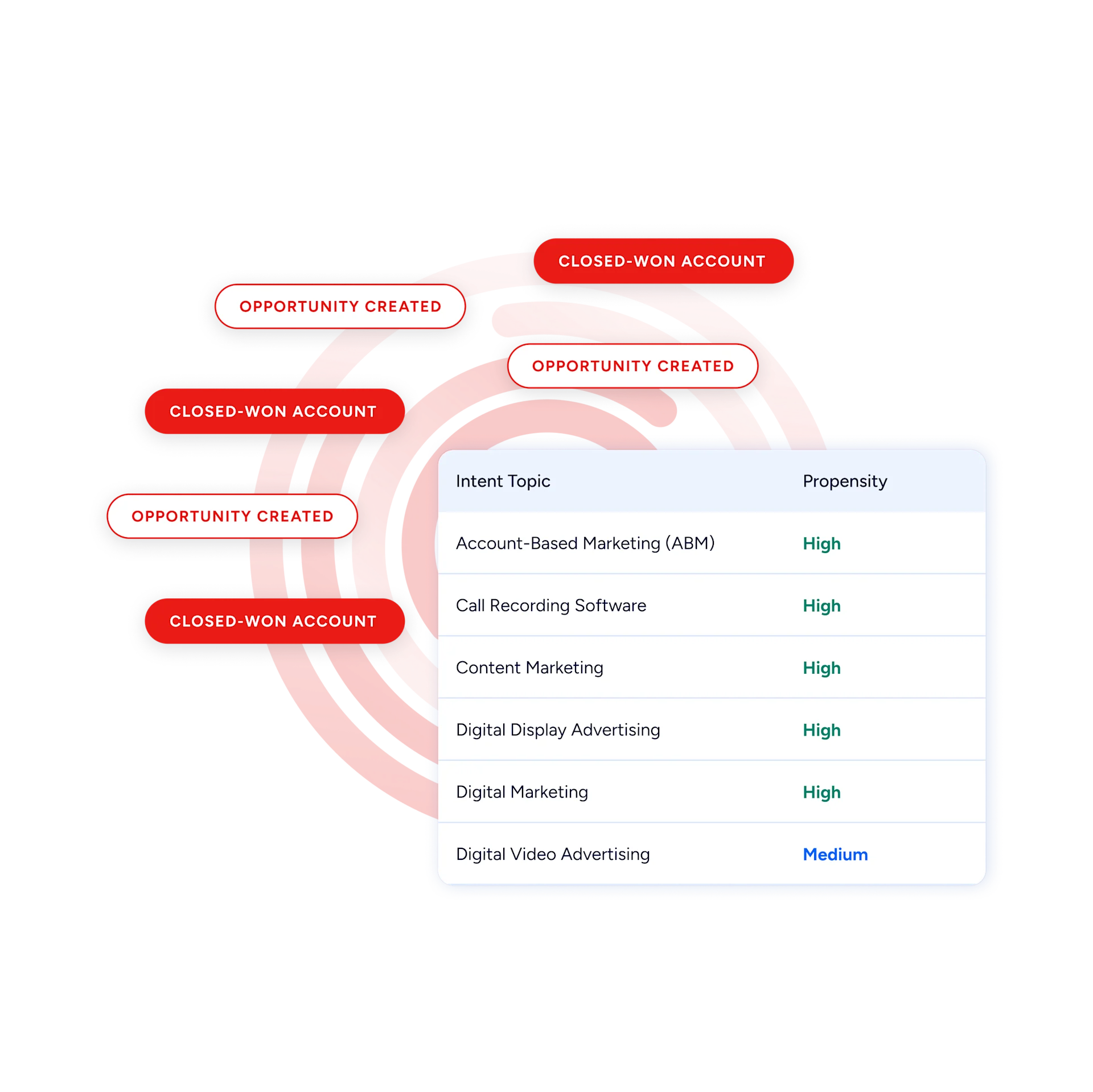
Guided Intent, exclusive to ZoomInfo, identifies the topics historically correlated with deal success rather than requiring manual topic selection.
On the website side, WebSights resolves anonymous website traffic to companies with Automatic Traffic Filtering that distinguishes real visitors from bots.
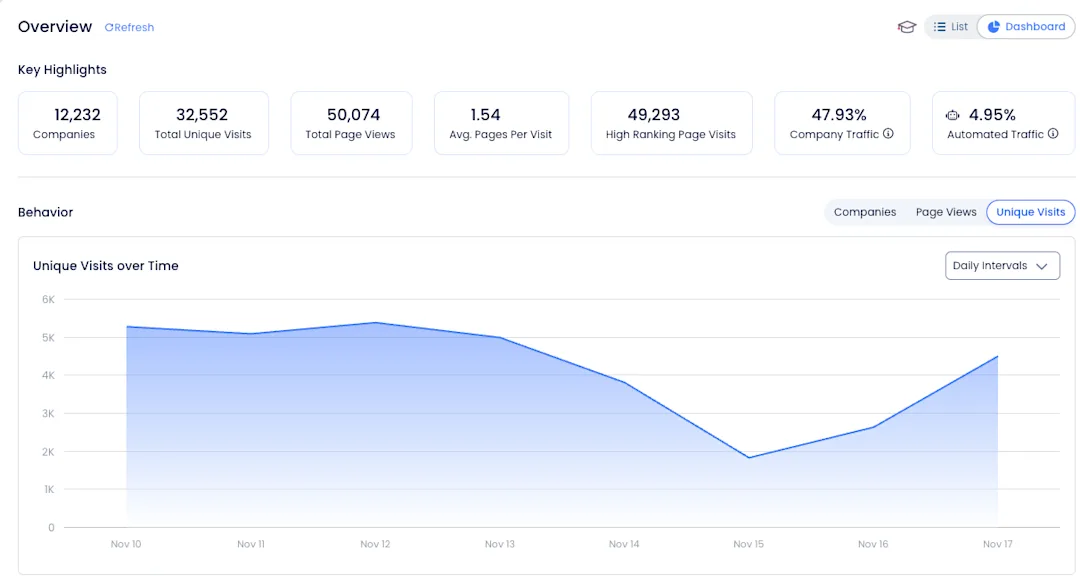
ZoomInfo Marketing goes further with contact-level site visitor identification, identifying who specifically visited (not just which company) and triggering personalized outreach. Where Marketo's Munchkin tracks anonymous sessions until a visitor self-identifies via a form, ZoomInfo resolves visitor identity before any form fill occurs.
ZoomInfo's GTM Context Graph and Chorus: Conversation intelligence that captures why deals move after marketing hands them off
Marketo Engage captures the marketing side of the buyer journey (emails opened, content consumed, events attended, scores reached).
ZoomInfo's GTM Context Graph captures what happens next by processing 1.5B+ data points daily, combining B2B data with CRM records, conversation intelligence from Chorus, email interactions, and behavioral signals into a single intelligence layer.
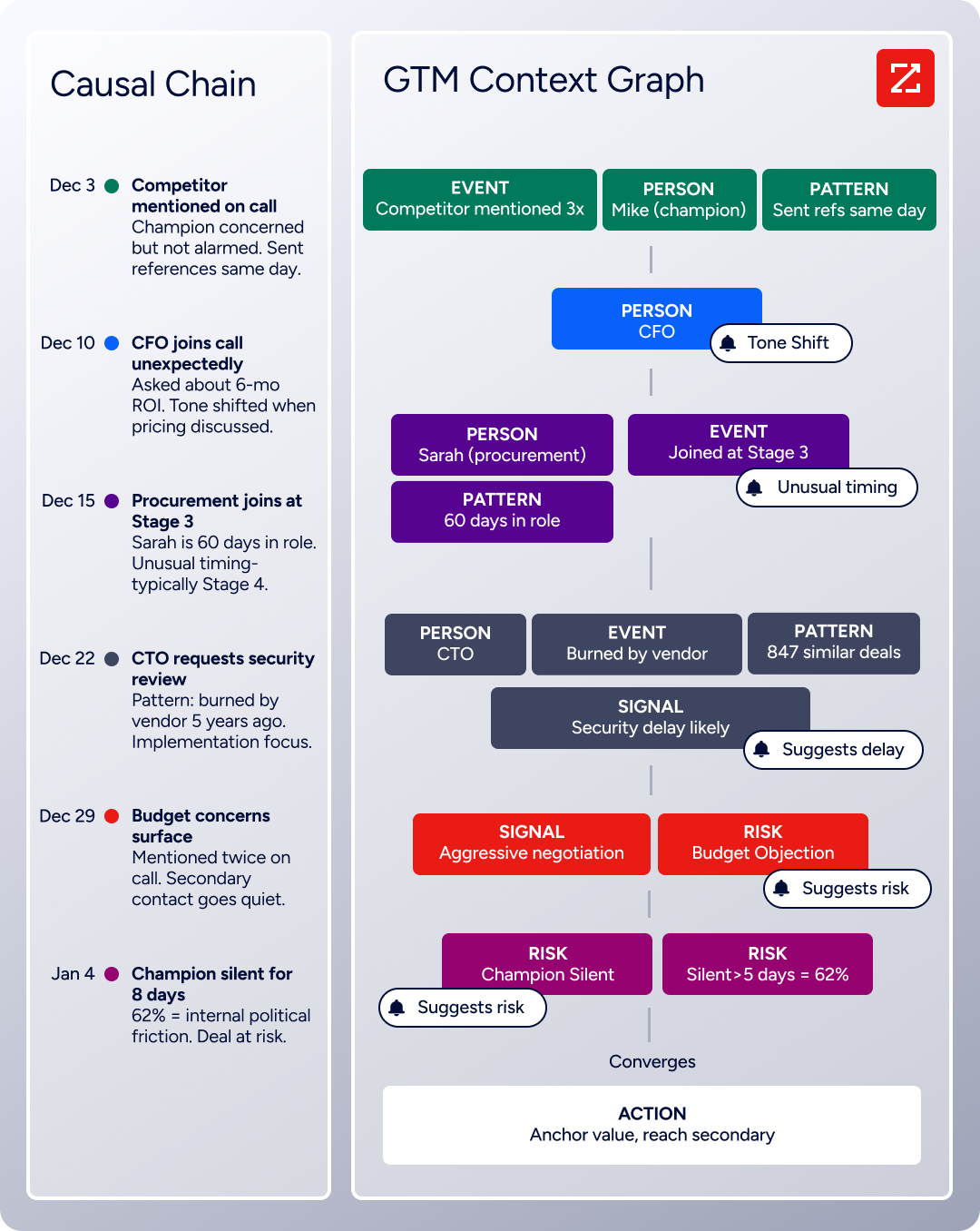
Chorus, backed by 14 technology patents, records and transcribes sales calls, surfaces AI-generated insights (talk ratios, sentiment, objection detection), auto-syncs deal intelligence to the CRM, and provides coaching scorecards and clip sharing.
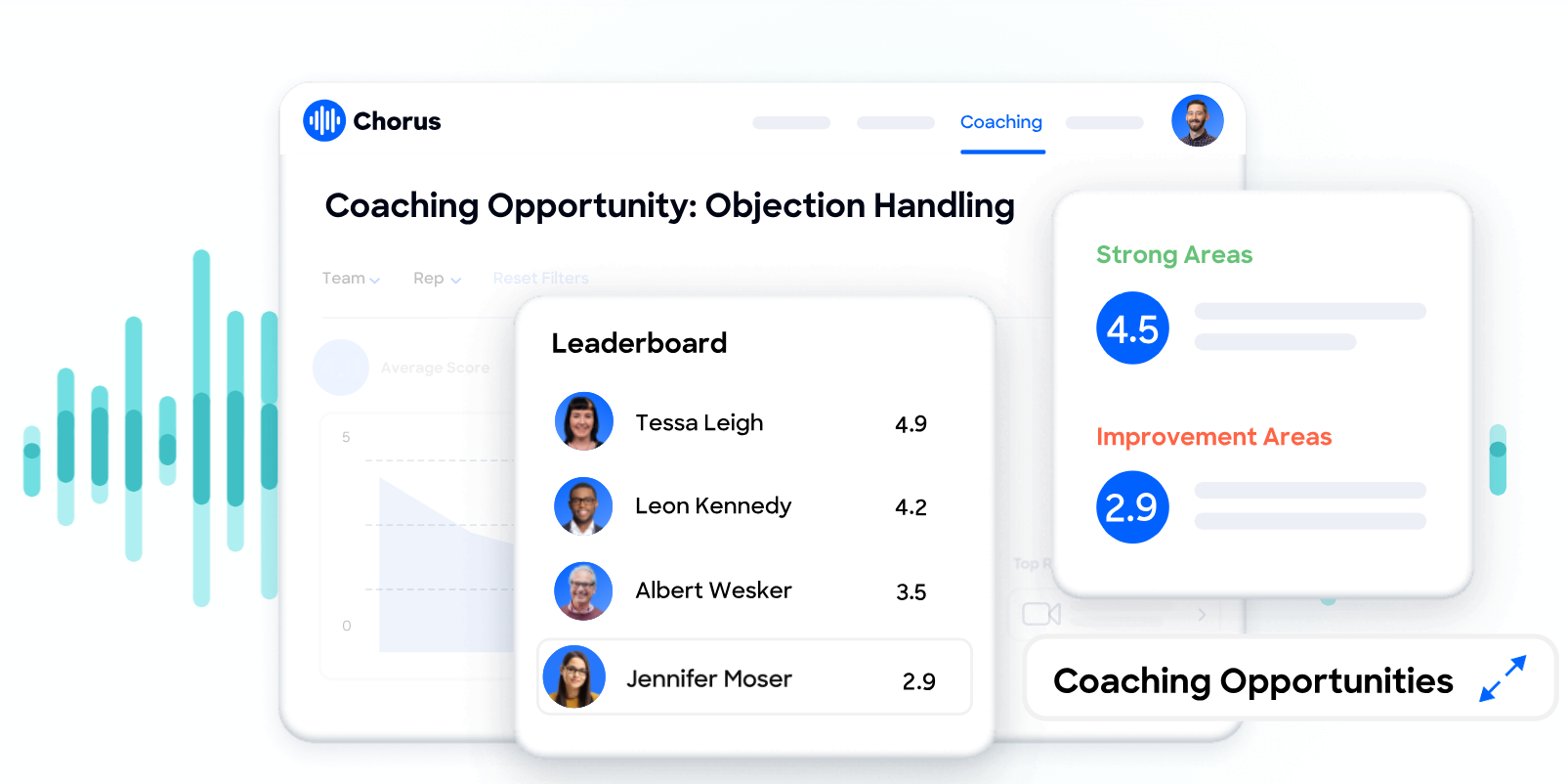
It captures the context Marketo's Sales Insight cannot: why a champion went quiet, what a competitive mention means for deal risk, which objection patterns predict closed-lost outcomes. This intelligence feeds back into the GTM Context Graph, so the entire revenue team operates on a shared understanding of deal context, not just lead scores.
Seismic's sales team attributed 39% of active pipeline to opportunities identified or influenced by ZoomInfo signals, boosted productivity by 54%, and saved 11.5 hours per week per seller. (Seismic Case Study)
ZoomInfo GTM Studio: Marketing orchestration powered by data Marketo does not have
ZoomInfo’s GTM Studio gives marketers, RevOps teams, and GTM engineers a canvas to build audiences using natural language, enrich with first- and third-party data, define triggers, and activate plays across channels without engineering support.
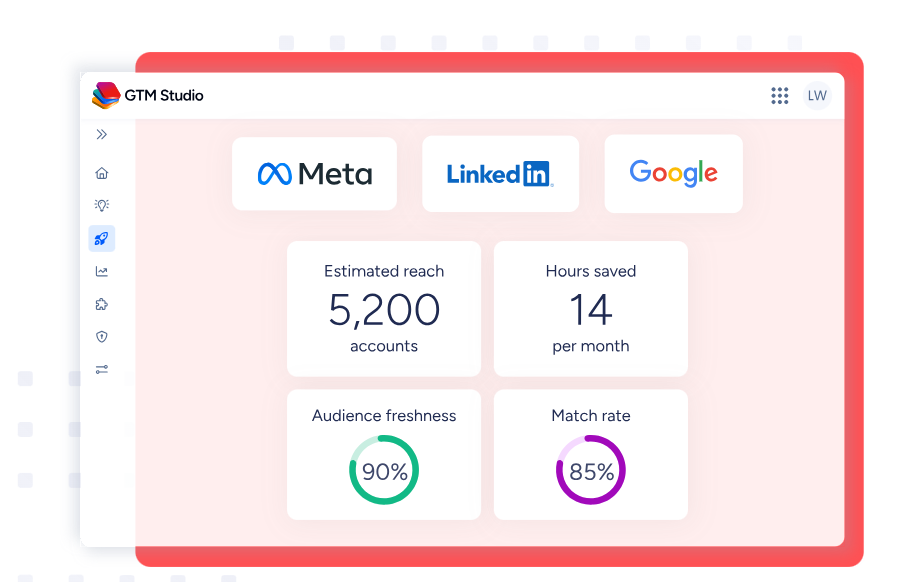
Pre-built GTM plays cover inbound acceleration, champion tracking, competitive displacement, and ICP targeting. Expansion plays that used to take 3 weeks now launch in 30 minutes.
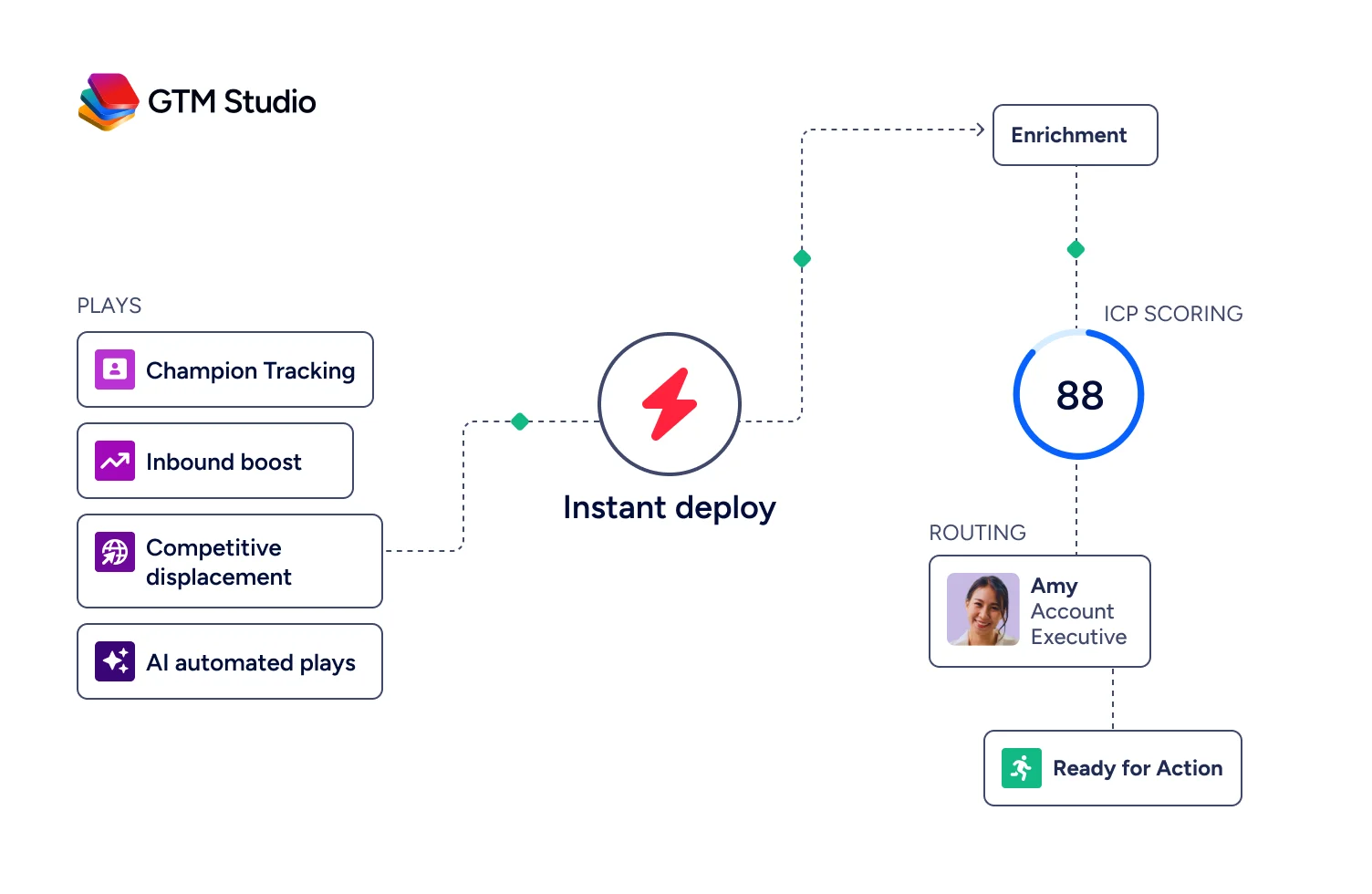
Where Marketo Engage orchestrates campaigns against leads already in the database, GTM Studio orchestrates plays against the entire addressable market, using ZoomInfo's data and intent signals to identify the right accounts and contacts before they enter the funnel.
ZoomInfo Marketing includes a native Demand-Side Platform deploying display ads based on 300+ company attributes, FormComplete (reducing landing page forms to a single field while auto-appending data), and Account Fit Scoring (predictive AI scoring 0-100 based on company attribute patterns). The two platforms together cover the full cycle: ZoomInfo identifies the accounts and contacts, Marketo nurtures them through the funnel.
ZoomInfo's Free Entry Points: A path into the platform without a sales call
ZoomInfo offers what Marketo Engage does not: a way to use the platform before any commitment.
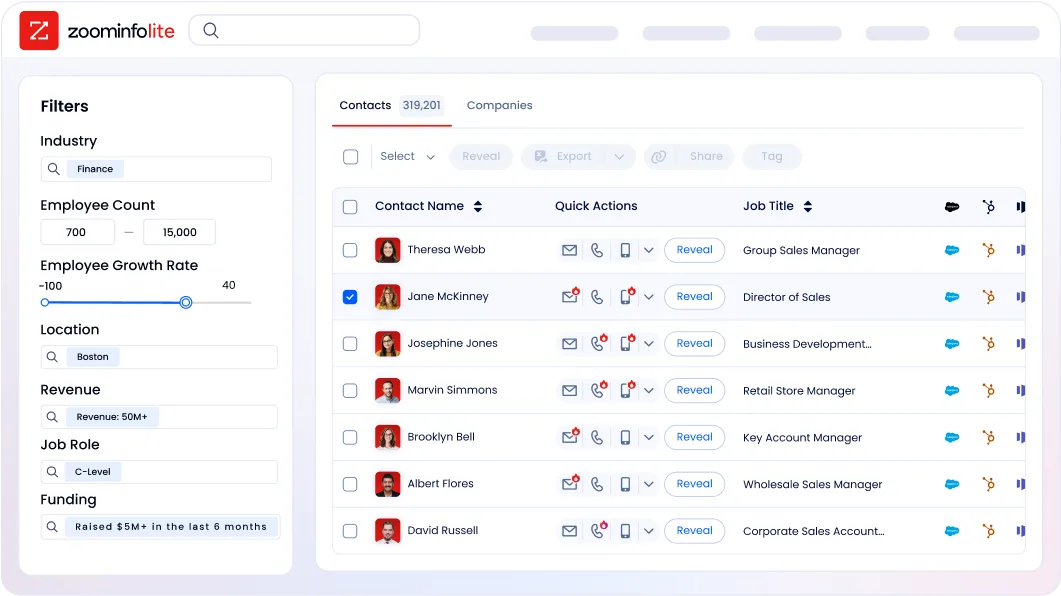
ZoomInfo Lite is a permanent free tier with access to ZoomInfo's B2B database, 10 monthly export credits, individual and company searches, a Chrome extension, and WebSights Lite with up to 10 website visitor reveals per day. A separate 7-day free trial provides broader access with no credit card required.
Final Summary
Marketo Engage is a mature B2B marketing automation platform: Smart Campaigns handle both trigger-based and batch orchestration, engagement programs nurture leads with content exhaustion logic and per-person cadence control, the new AI-powered Email Designer removes the dependency on HTML developers, Dynamic Chat qualifies website visitors and books meetings natively, Interactive Webinars captures attendee behavior as structured marketing data, and Marketo Measure ties every touchpoint to pipeline and revenue through six simultaneous attribution models. It fits mid-market and enterprise B2B teams managing complex, multi-touch buying cycles with dedicated marketing operations staff.
It is lighter on the layers that sit before and alongside those campaigns: no native B2B database to identify and reach prospects, no buyer intent signals, no conversation intelligence after leads move to sales, and no contact-level website visitor identification.
If your bottleneck is upstream of campaign orchestration (knowing who to target and which accounts are in-market) or downstream of the marketing handoff (understanding what happens on sales calls and why deals move), that is the ground ZoomInfo covers. Its 500M-contact, 100M-company database supplies the verified emails and direct dials that feed Marketo's campaigns. ZoomInfo Intent surfaces accounts researching your category from 6 trillion+ keyword-to-device pairings monthly, before those accounts engage your content. Chorus captures and analyzes every sales conversation after marketing hands off the lead. And GTM Studio gives marketing teams a canvas to build and activate plays against the entire addressable market, powered by ZoomInfo's data and the GTM Context Graph. As a LaunchPoint partner, ZoomInfo connects directly to Marketo Engage, so the two run as one motion: ZoomInfo identifies the buyer, Marketo nurtures the relationship.
See what that data and intelligence layer adds to your marketing stack: start with ZoomInfo Lite for free, or request a demo to watch verified contacts and intent signals flow into your campaigns.
FAQ
Does Marketo Engage include a B2B contact database?
No. Marketo Engage is a marketing automation platform, not a data provider. It orchestrates campaigns, scores leads, and manages the buyer journey for contacts already in the system, but it does not include its own database of prospects, direct dials, or verified business emails. Teams pair Marketo with a data platform like ZoomInfo, whose 500M contacts and 200M+ verified business email addresses supply the prospects that feed campaigns and nurture programs.
Which Marketo Engage tier includes revenue attribution?
Marketo Measure (multi-touch B2B attribution) is available only on the Ultimate tier. Grow, Select, and Prime include campaign performance reporting but not the full attribution engine with six simultaneous models, the custom model builder, or Attribution AI. Ultimate also carries forward everything in Prime, including sandbox access, Lifecycle Modeler, and Workspaces and Partitions.
Can Marketo Engage identify anonymous website visitors?
Marketo's Munchkin JavaScript API tracks anonymous visitor behavior at the session level and associates it with a known lead record once the visitor identifies themselves (typically by filling out a form). It does not include reverse IP lookup or company-level identification for anonymous traffic. For company-level and contact-level website visitor identification before form fill, teams use tools like ZoomInfo WebSights, which resolves anonymous traffic to companies and, through ZoomInfo Marketing, to individual contacts.
How does Dynamic Chat's GenAI work?
Dynamic Chat's GenAI features require the Dynamic Chat Prime add-on. The AI generates responses from a marketer-curated Response Library of pre-approved Q&A pairs, so answers stay within brand-controlled content. The Generation Response Card handles visitor questions within a conversation, Conversation Summary auto-generates a summary logged to the lead's record, and Unanswered Questions surfaces suggested new Q&A pairs for continuous improvement. The base Select tier includes live chat as a trial with 100 lifetime engagements.
What CRMs does Marketo Engage sync with?
Marketo Engage maintains native bidirectional sync with Salesforce, Microsoft Dynamics, and Veeva CRM. The Salesforce sync covers leads, contacts, accounts, opportunities, campaigns, custom objects, and activity, running continuously with a 5-minute pause between sync cycles and throughput of up to 200,000 records per hour. Sales Insight (the in-CRM intelligence panel) supports all three CRMs, but Sales Insight Actions (the engagement toolset with email, dialer, and cadences) is available only for Salesforce.
Does Marketo Engage offer buyer intent data?
Marketo Engage captures engagement signals from its own channels (email opens, page visits, form fills, webinar attendance, chat interactions) and uses those to score leads and trigger campaigns. It does not include third-party intent data showing which companies are researching topics across the web before they engage your content. Intent signals enter through partner integrations. ZoomInfo Intent, which tracks signals from 210 million IP-to-Organization pairings and 6 trillion+ keyword-to-device pairings monthly, is available as a LaunchPoint integration.
Is there a free trial or free plan for Marketo Engage?
No publicly documented free trial or free plan exists for Marketo Engage. Pricing is custom and quote-based across all four tiers (Grow, Select, Prime, Ultimate). Prospective buyers must contact Adobe Sales for a quote. ZoomInfo, by contrast, offers both ZoomInfo Lite (a permanent free tier with real data access) and a 7-day free trial with no credit card required.
Does Marketo Engage include conversation intelligence for sales calls?
No. Marketo Engage tracks the marketing side of the buyer journey but does not record, transcribe, or analyze sales calls. Sales Insight surfaces marketing engagement data inside the CRM for sales reps, and Sales Insight Actions provides email, dialer, and cadence tools, but neither captures call content, coaching signals, or conversation analytics. ZoomInfo's Chorus records and transcribes every sales call, surfaces AI-generated insights including talk ratios, sentiment, and objection detection, and feeds that context into the GTM Context Graph for deal-level intelligence.
More sales tool comparisons:
