
Comparing NetSuite vs. Pipedrive often starts with the wrong question: "Which CRM should we buy?" The real questions run deeper:
Do you need a CRM, or do you need a full business operations system that happens to include one?
Is your sales team's biggest problem managing deals, or finding the right people to put into deals?
Are you a 10-person sales team that needs to close faster, or a growing company with multi-entity financials, inventory, and order management to run alongside sales?
How much are you willing to spend on implementation and training before your team sees results?
Does your pipeline suffer from poor execution, or from poor data?
In short, here's what we recommend:
NetSuite is the choice for mid-market companies ($25M to $1B+ in revenue) that have outgrown standalone tools and need financials, CRM, inventory, e-commerce, and order management in one cloud platform.
Its native CRM shares a single database with the ERP, so a sales rep can check a customer's payment history, open orders, and credit status before quoting. That integration matters for operationally complex businesses.
But NetSuite carries serious cost (year-one spend commonly hits mid-to-high five figures), lengthy implementations that can stretch to 12 months, and a learning curve that users consistently flag as one of the steepest in the category.
Pipedrive is built for small and mid-sized sales teams who need one thing done well: visual pipeline management that keeps reps focused on the next action.
Its kanban-style pipeline view pioneered how modern CRMs display deals, and features like deal rotting alerts and activity-based selling keep momentum visible. At $14/month per seat on the entry plan, it costs a fraction of NetSuite.
But Pipedrive is a sales tool, not a business operations platform. It has no financials, no inventory management, no order-to-cash workflow. If you need more than pipeline tracking, you'll be stitching together additional tools.
Both platforms manage customer relationships. Neither solves the problem that comes before relationship management: knowing which companies are actively in-market, who the decision-makers are, how to reach them, and what to say. That gap is where deals die before they start, and it's what ZoomInfo was built to close.
ZoomInfo is a B2B intelligence and GTM platform built on 500M contacts, 100M companies, 135M+ verified phone numbers, and 200M+ verified business email addresses. Its GTM Context Graph combines this data with your CRM records, conversation transcripts, and behavioral signals to show not just who your buyers are, but why deals move or stall.
Your team can work from the GTM Workspace for sellers, build plays in GTM Studio for marketers and RevOps, or pipe the same intelligence into NetSuite, Pipedrive, or any other tool through APIs and MCP. ZoomInfo doesn't replace your CRM. It makes whatever CRM you choose more effective by filling the data and intelligence layer underneath it.
If you want to see how ZoomInfo's intelligence layer can strengthen your pipeline, start a free trial.
NetSuite vs. Pipedrive vs. ZoomInfo at a glance
NetSuite | Pipedrive | ZoomInfo | |
|---|---|---|---|
Primary function | Cloud ERP with built-in CRM | Sales CRM and pipeline management | B2B intelligence and GTM platform |
CRM capability | Full (native to ERP) | Full (standalone) | Complements any CRM with data |
Pipeline visualization | Functional but secondary to ERP | Core strength (kanban-first) | Action Feed with AI-prioritized signals |
Implementation time | 90 days to 12+ months | Hours to days | Deploys in weeks |
Financials/ERP | Full suite | None | None |
B2B contact database | None | None | 500M contacts, 200M+ verified emails |
Buyer intent signals | None | None | Yes (Guided Intent, 210M IP pairings) |
AI capabilities | NetSuite Next (Ask Oracle, Autonomous Close) | AI Sales Assistant, AI email writer | GTM Workspace AI agents |
Integrations | 700+ SuiteApps | 500+ Marketplace apps | 120+ partner integrations + API/MCP |
Starting price | Custom quote (mid-five figures/year typical) | $14/month per seat | Free tier (ZoomInfo Lite); paid plans custom-quoted |
Free trial/plan | No free trial (demo only) | 14-day free trial | Permanent free tier + 7-day full trial |
Best for | Mid-market companies needing unified operations | SMB sales teams needing deal tracking | Revenue teams needing buyer data and signals |
These tools solve different problems
The comparison between NetSuite and Pipedrive is less "which CRM is better" and more "what kind of business problem are you solving?"
NetSuite is an enterprise resource planning system. The CRM is one module inside a platform that also handles general ledger accounting, accounts payable and receivable, inventory management, order fulfillment, e-commerce, revenue recognition, and professional services automation.
For companies running multiple subsidiaries across 220 countries, the value is consolidation. When a sales rep closes a deal, the system generates the order, triggers fulfillment, creates the invoice, and posts to the general ledger automatically. No middleware. No re-keying data.
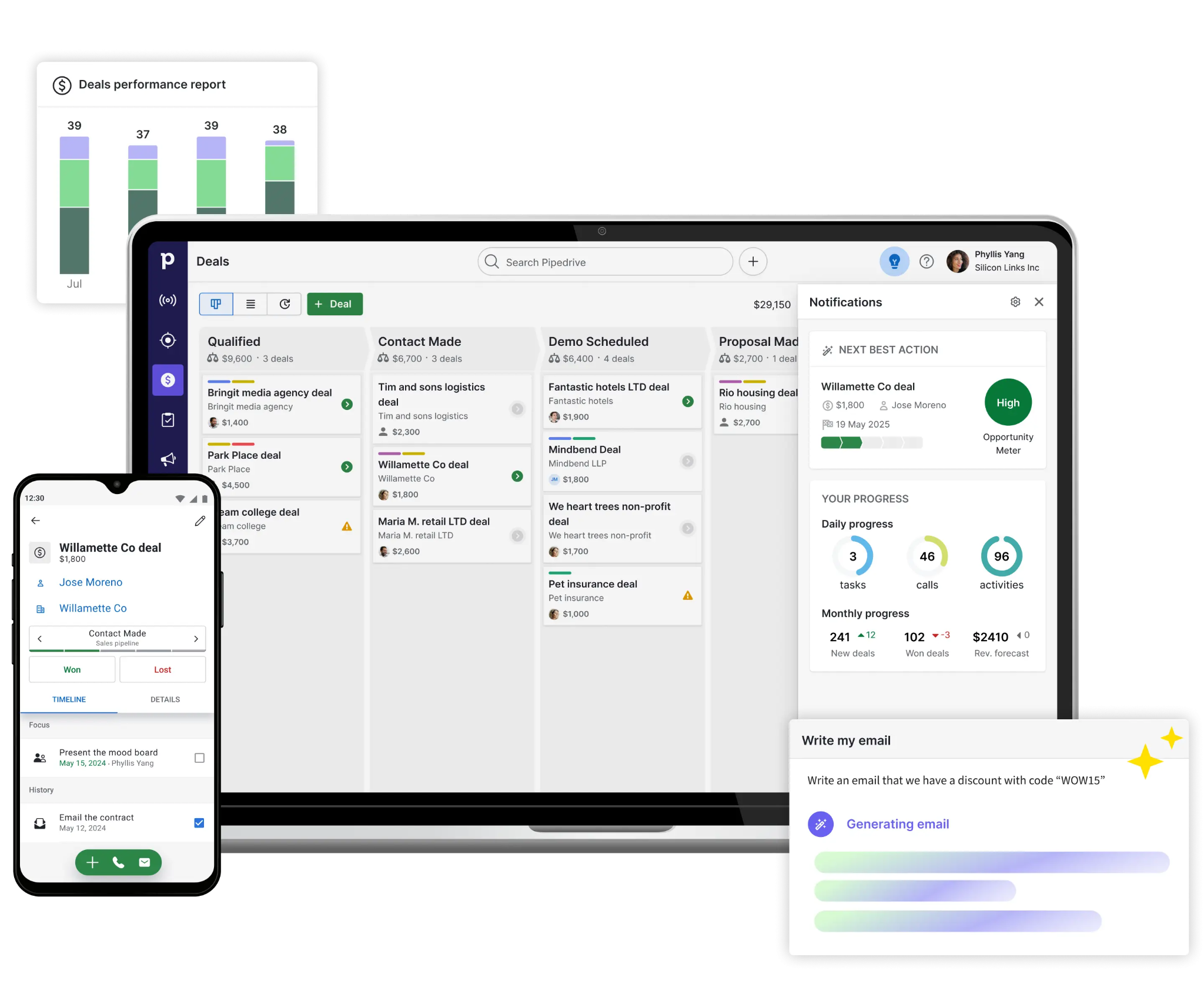
Pipedrive exists in a different universe. It does one job: help salespeople track deals and take action. Open the app, see every deal on a visual board, drag it to the next stage when something happens, get reminded when something needs to happen.
Source: Pipedrive
That simplicity is the product. 100,000+ companies use it because it works without training, without consultants, and without a six-month implementation project.
The confusion arises because both platforms manage customer data and sales pipelines. But comparing their CRM functionality head-to-head is like comparing a pickup truck to a sedan because both have steering wheels. They serve different drivers with different loads.
Pipeline management: Pipedrive wins on focus, NetSuite wins on context
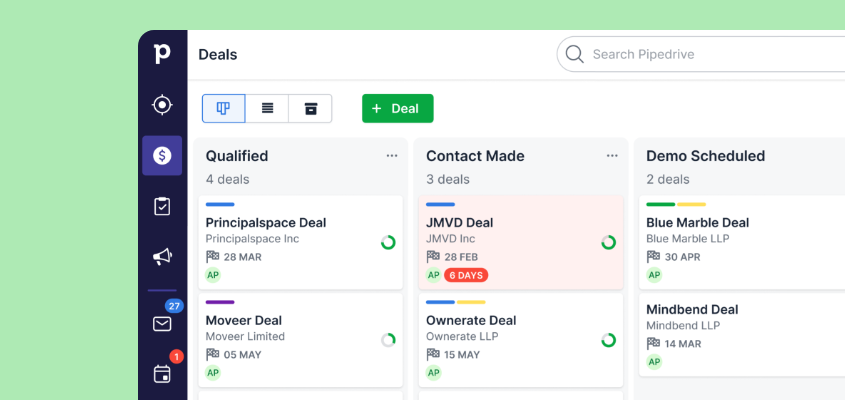
Pipedrive's pipeline is the center of the product. The kanban board shows every deal's position, value, and next activity at a glance, with colored cues flagging deals going cold.
Source: Pipedrive
Reps can create custom pipelines with custom stages, toggle between kanban, list, and forecast views, and attach activities (calls, meetings, emails) to any deal. The deal rotting feature works well: set a threshold, and any deal sitting idle past that mark gets flagged before it goes cold.
Self-reported data from Pipedrive users shows an average 93% increase in pipeline deals, 46% faster closing time, and 21% higher average deal value. Those numbers reflect what happens when a CRM is designed around the salesperson's daily workflow rather than the manager's reporting needs.
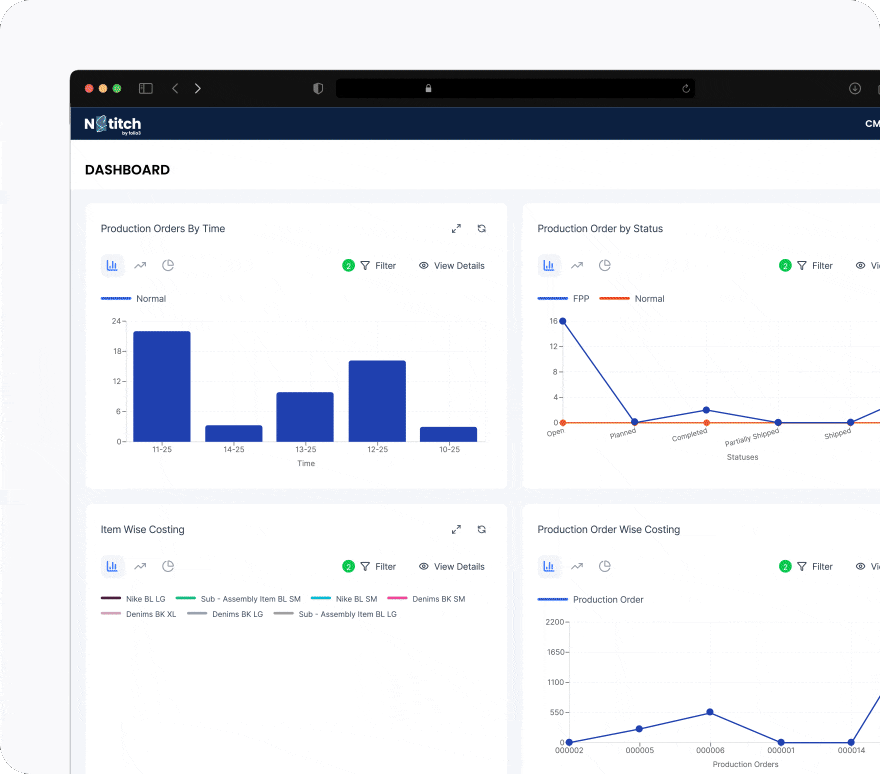
NetSuite's CRM offers pipeline management too, but it's not the focal point. Opportunities move through configurable pipeline stages with probability weighting, expected close dates, and forecast categories.
Source: NetSuite
What NetSuite adds is operational context: because inventory and pricing live in the same system, reps can check stock availability and credit status before committing. A quote converts to a sales order without re-entering data, and back-end financials process automatically from there.
For businesses where selling and fulfillment are tightly linked (manufacturers, distributors, e-commerce companies), this integration removes an entire class of handoff errors.
The trade-off is clear: Pipedrive gives you the strongest pipeline experience in the category. NetSuite gives you a pipeline connected to everything else your business does.
Neither CRM tells you who to call next
Here's the gap both platforms share: they manage relationships with people already in your system. Neither tells you which companies are actively researching solutions like yours, who the decision-makers are, how to reach them, or what message will resonate.
Pipedrive offers a Prospector tool through the LeadBooster add-on, sourcing leads from a database of over 400 million profiles and 10 million companies. It's useful for basic outbound, but it's a lead sourcing tool, not an intelligence platform.

Source: Pipedrive
There's no buyer intent data, no conversation intelligence, and no signal that tells you when to reach out.
NetSuite's CRM includes lead capture and routing, but no prospecting database at all. If you want to fill the top of the funnel, you need external tools.
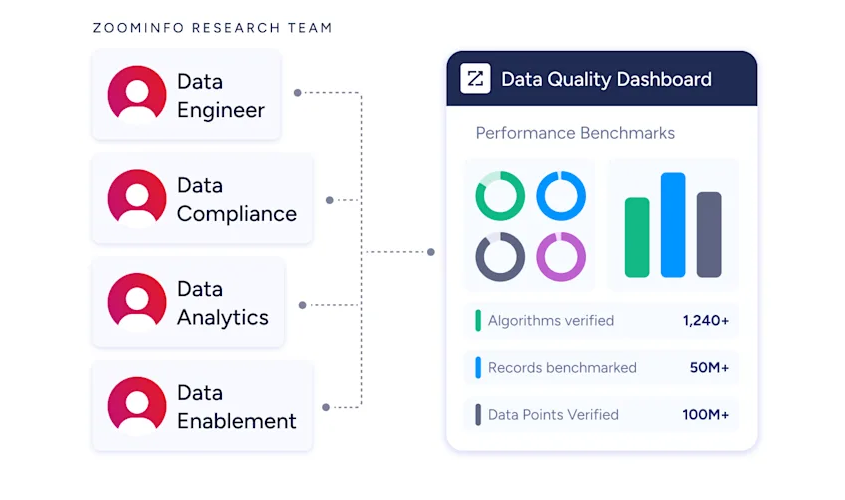
ZoomInfo exists to solve this problem. The platform's 500M contacts and 200M+ verified business email addresses are verified through a multi-source pipeline backed by 300+ human researchers, achieving up to 95% accuracy on first-party data.
Source: ZoomInfo
In a Fortune 500 competitive RFP analyzing 25 million contacts across vendors, the independent consultant concluded that "no other competitor came even close."
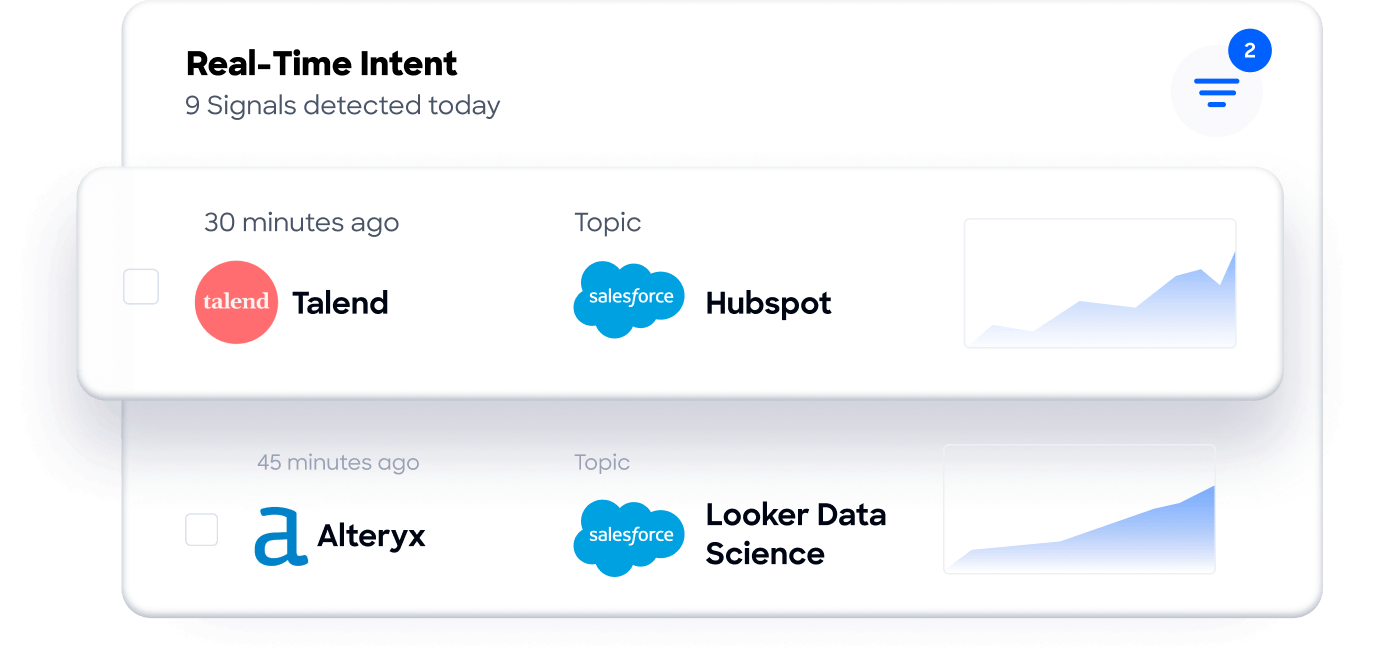
But the data is just the foundation. ZoomInfo Intent tracks buying signals from 210 million IP-to-Organization pairings and 6 trillion+ new keyword-to-device pairings monthly, identifying companies actively researching topics related to your product.
Guided Intent, exclusive to ZoomInfo, identifies topics historically correlated with deal success rather than requiring you to guess which keywords matter.
Source: ZoomInfo
The result: instead of reps cold-calling from a list, they engage companies showing active buying behavior, reaching verified decision-makers through direct dials and emails that work.
Seismic's sales team attributed 39% of active pipeline to opportunities identified or influenced by ZoomInfo signals, with reps saving 11.5 hours per week. (Seismic Case Study)
The intelligence layer changes what your CRM can do
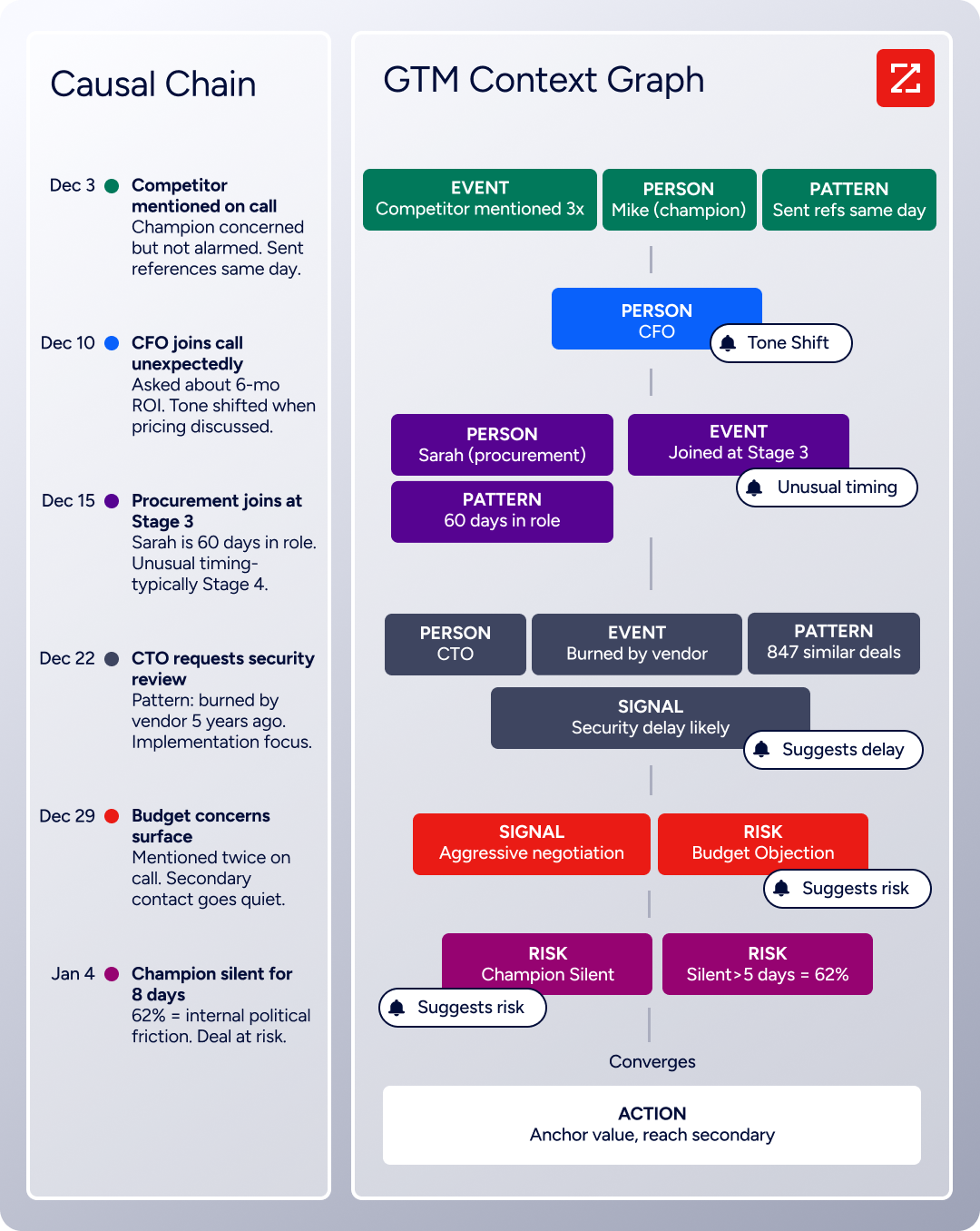
The GTM Context Graph is what separates ZoomInfo from a traditional data provider. It processes 1.5B+ data points daily, combining ZoomInfo's B2B intelligence with your CRM records, conversation transcripts, email interactions, and behavioral signals into a single layer that captures not just what happened in a deal, but why.
Source: ZoomInfo
As ZoomInfo's Chief Product Officer Dominik Facher writes: "The CRM recorded the state change. It has no record of why it happened." A deal moved from stage 3 to stage 4. Was it because the CFO joined the last call and asked about six-month ROI? Was it because the VP went quiet for eight days during an internal budget battle? CRMs (whether NetSuite or Pipedrive) record the stage change. The GTM Context Graph captures the context behind it.
This matters because context turns data into decisions. The follow-up email addresses the specific concern the CFO raised. The play targets accounts whose signal combinations match actual win patterns. The forecast reflects buying evidence, not rep optimism.
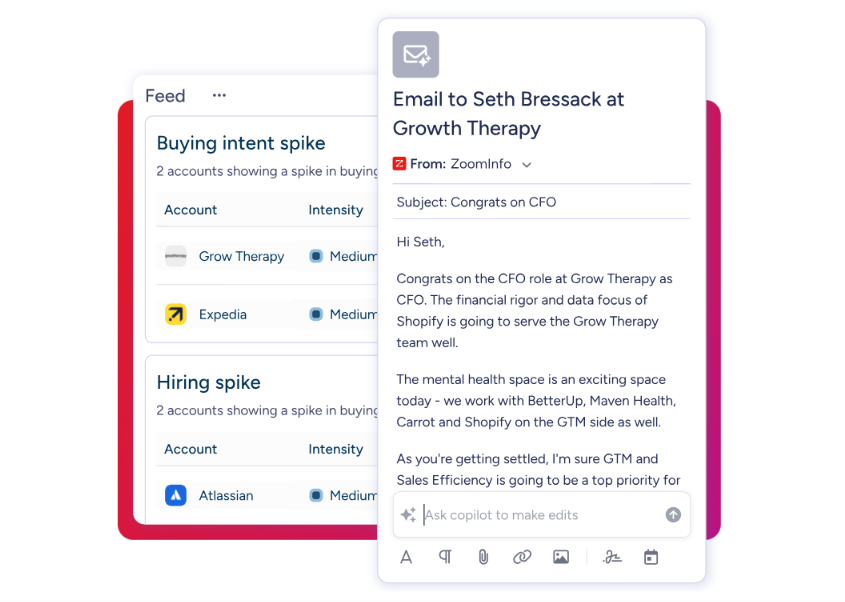
GTM Workspace, the seller's front-end to the GTM Context Graph, puts this intelligence into the daily workflow. Reps see an Action Feed with live signals (G2 comparisons, funding events, executive hires) and pre-drafted actions on every one.
Source: ZoomInfo
AI agents handle account research, outreach drafting, CRM updates, and signal monitoring. The same intelligence flows into GTM Studio for marketers and RevOps, and into any external tool through APIs and MCP.
Spekit found that opportunities at higher-scoring accounts were 43% more likely to become qualified pipeline, moving 58% faster through qualification. (Spekit Case Study)
Pricing reflects different buyers
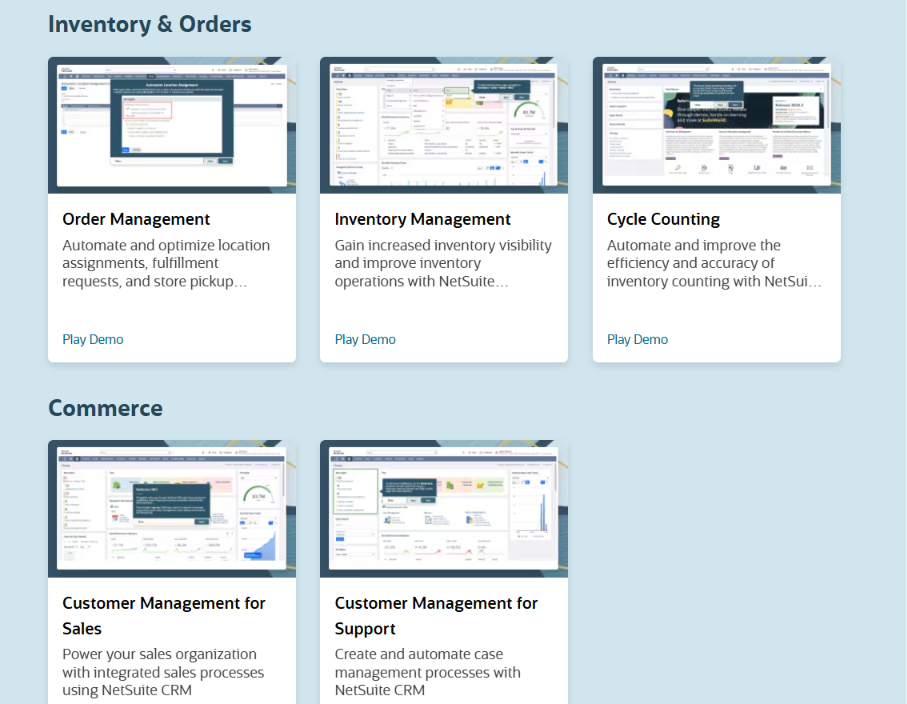
NetSuite uses an annual subscription model with no publicly listed prices. The annual license includes a base platform fee, optional add-on modules, and per-user seats. There's also a one-time implementation fee that varies by complexity.
For smaller deployments, total year-one spend commonly runs into the mid-to-high five figures. No free trial exists, though product demo simulations are available. Contracts are annual, non-cancellable, with automatic one-year renewals.
Source: NetSuite
Pipedrive starts at $14/month per seat on the Lite plan, scaling through Growth, Premium, and Ultimate tiers. Annual billing saves up to 42%. A 14-day free trial with full access and no credit card is available. Add-ons like LeadBooster ($32.50/company/month) and Campaigns are priced separately.
Features like unlimited sales pipelines, product catalogs, and customizable reports are available across all plans, not gated behind enterprise tiers.
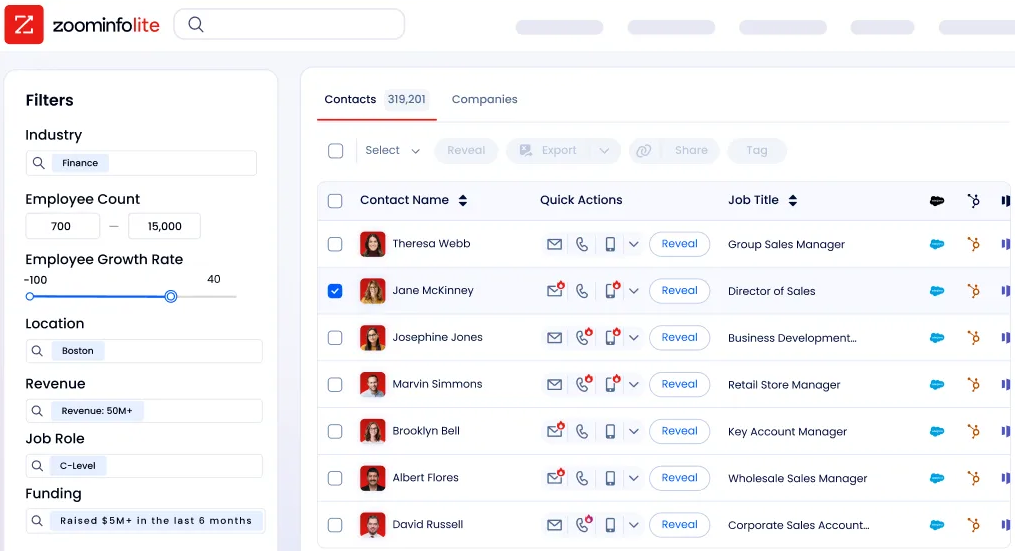
ZoomInfo offers a permanent free tier (ZoomInfo Lite) with access to the B2B database, 10 monthly export credits, and WebSights Lite (up to 10 website visitor reveals per day). A 7-day free trial unlocks full platform features.
Source: ZoomInfo
Paid plans use custom-quoted, consumption-based pricing that scales around seats, credits, and features. API access is included in all relevant plans.
The pricing math depends on what you're buying. A five-person sales team running Pipedrive at the Growth tier might spend $1,500 to $2,000 per year. The same team using NetSuite would likely spend 20 to 50 times that. But NetSuite replaces their accounting software, inventory system, and e-commerce platform too. The comparison only makes sense when you account for what each dollar buys.
Implementation and learning curve
This is where the difference between the platforms becomes visceral.
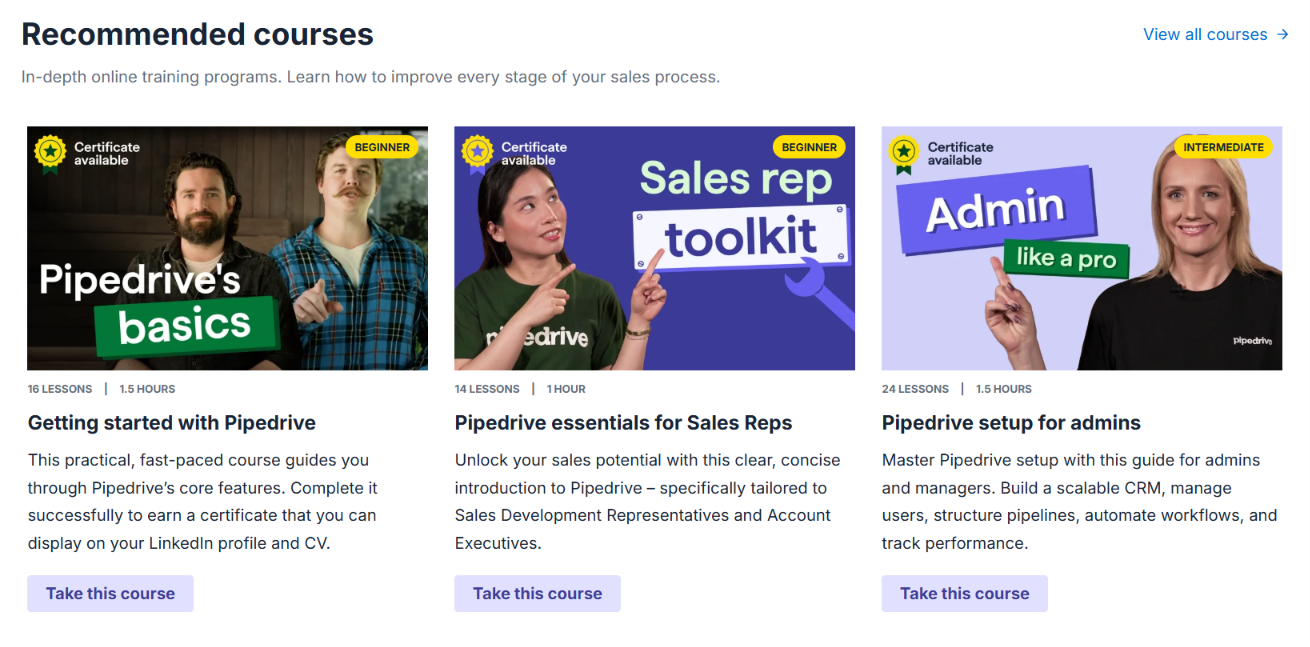
Pipedrive requires almost no implementation. Sign up, import contacts, configure pipeline stages, start selling. The interface is designed for non-technical users, and most teams are productive the same day. Pipedrive Academy offers free courses if you want to go deeper, but most features are self-explanatory.
Source: Pipedrive
NetSuite is a different proposition entirely. SuiteSuccess pre-configured editions promise "zero to cloud in 100 days," but that's the optimistic case.
Custom and multi-entity deployments take 9 to 12 months, and global enterprises with multi-currency and phased cutover can stretch beyond 12 months.
The learning curve is consistently cited as one of the biggest adoption risks: organizations that skip structured training experience "resistance, errors, and workarounds" at go-live.
G2 user reviews praise the platform's capabilities but regularly call out the interface as complex, a gap Oracle is addressing with the Redwood Design System and the NetSuite Next initiative.
ZoomInfo falls between the two. GTM Workspace "deploys in weeks, not months." ZoomInfo's redesigned onboarding program runs 30 to 90 days depending on product scope, and produced a 25% improvement in customer satisfaction scores.
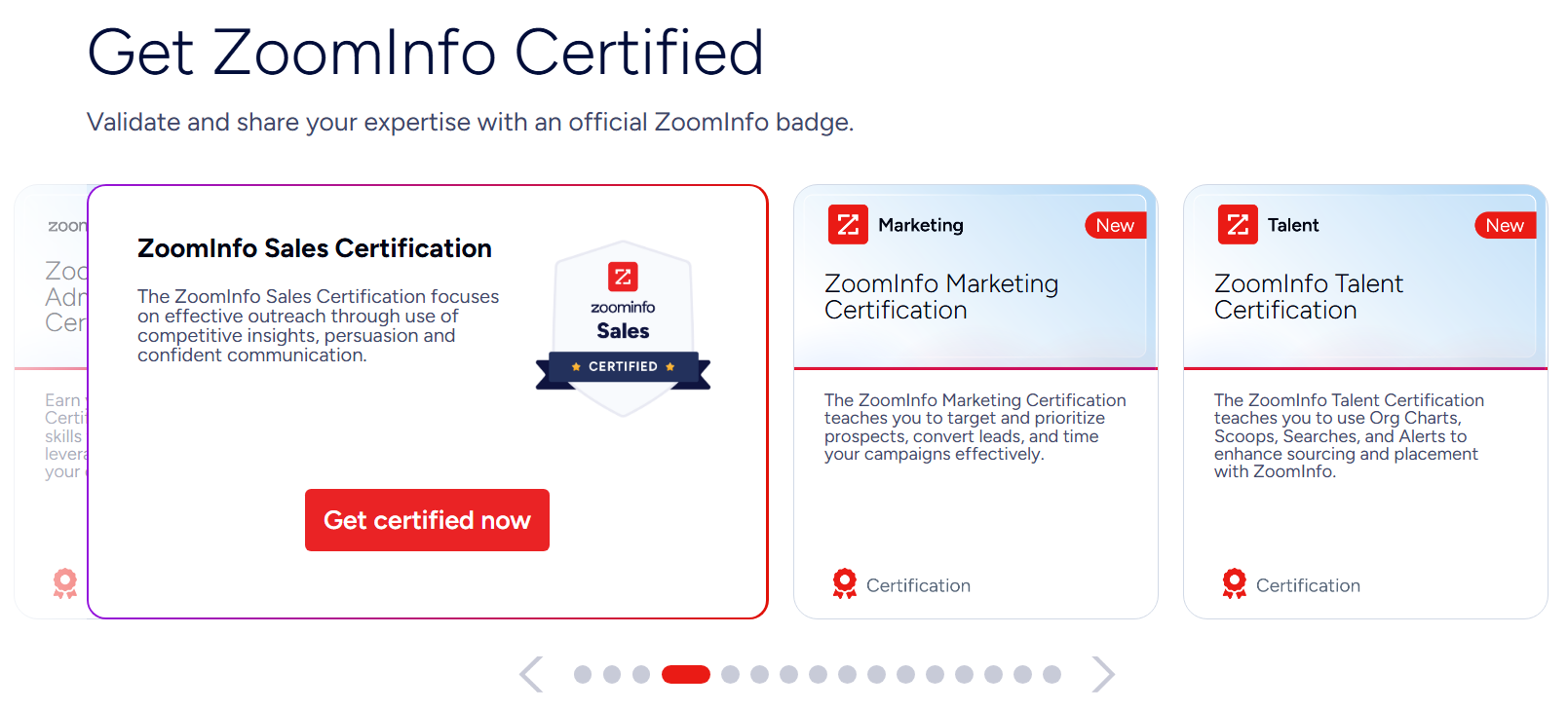
ZoomInfo University provides role-specific learning paths with product certifications.
Source: ZoomInfo
For basic use cases like prospecting and data enrichment, teams can be productive within days.
Reporting and analytics
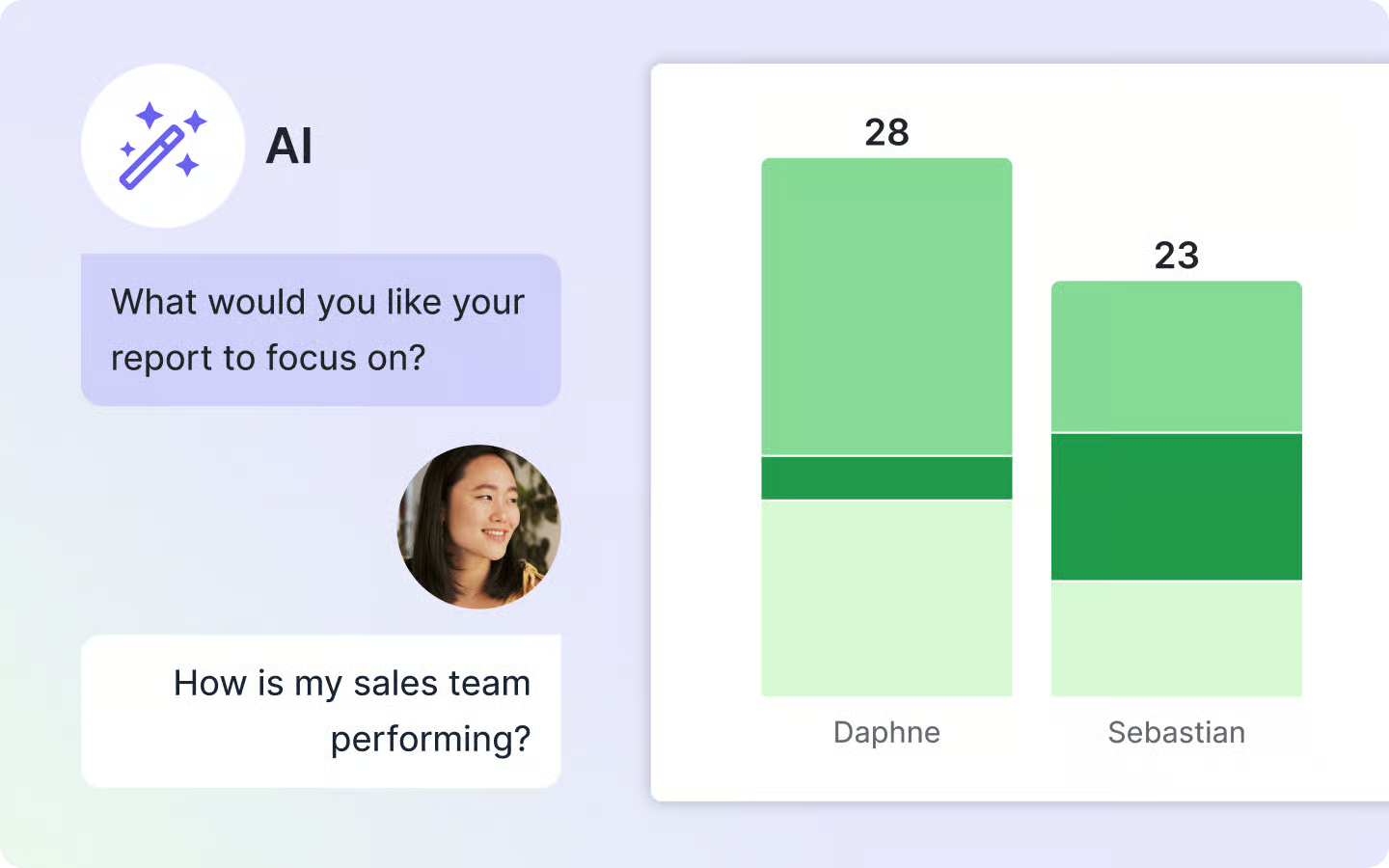
Pipedrive's Insights module covers what sales teams need: revenue forecasts, conversion reports, deal velocity reports, and team performance dashboards. Reports are customizable and shareable with anyone via link, including non-Pipedrive users.
The AI report generator lets managers create pipeline analyses from natural-language prompts. For a sales-focused CRM, the reporting is solid.
Source: Pipedrive
NetSuite's SuiteAnalytics is far broader. The platform ships with 75+ built-in KPIs spanning financials, operations, and CRM.
SuiteAnalytics Workbook allows interactive, ad-hoc analysis with pivot tables, linked datasets, and custom formula fields across any record type, all on live data.
The NetSuite Analytics Warehouse (premium add-on) adds a prebuilt cloud data warehouse with 57+ prebuilt metrics and AI-powered Contextual Insights. Yet despite this depth, reporting gaps are the second most common user complaint on TrustRadius, with 148 mentions.
Users describe needing to export data to spreadsheets for analysis the built-in tools can't handle easily.
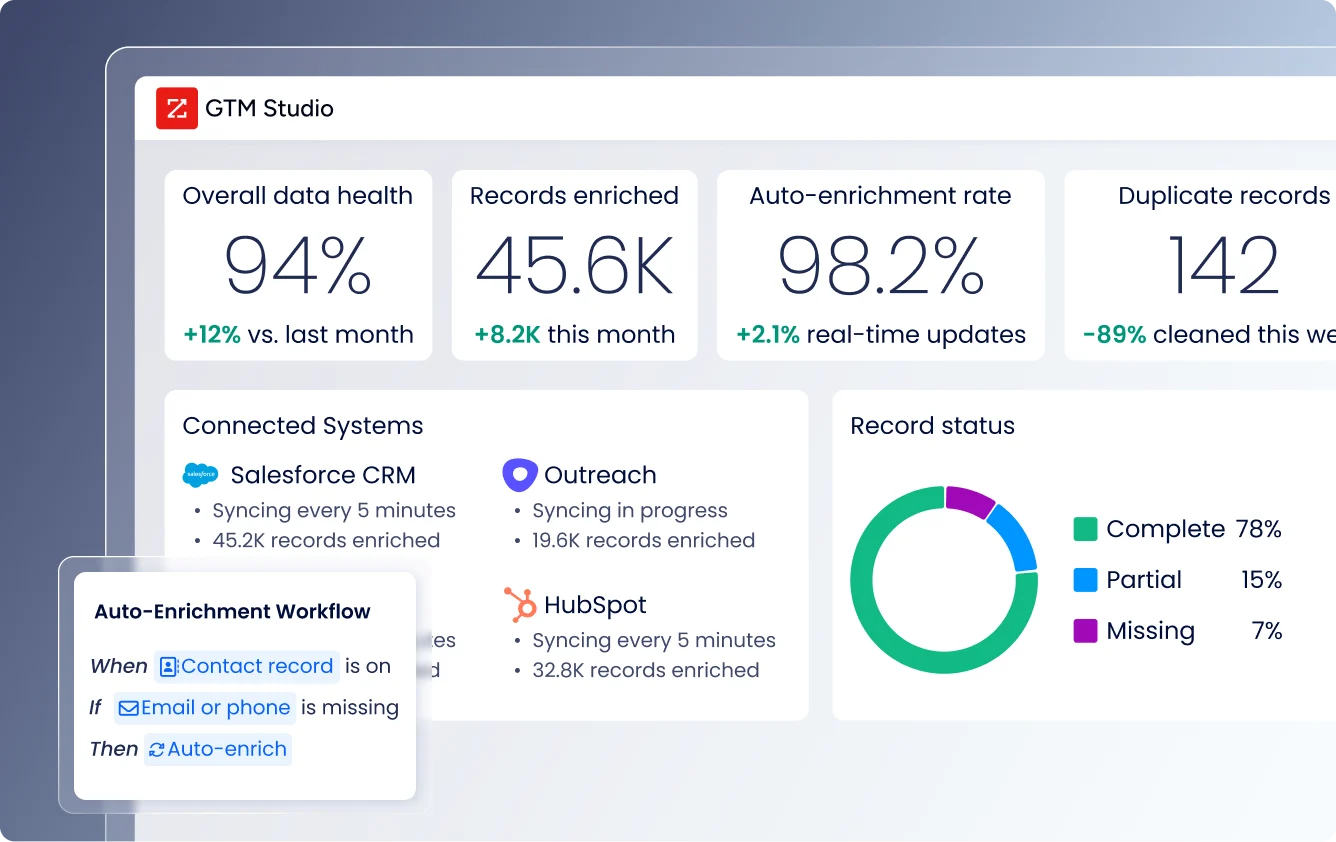
ZoomInfo reports on a different layer entirely. Instead of deal metrics and financials, ZoomInfo surfaces market intelligence: which accounts match your ICP, which show intent, how your outreach is performing, and which signals correlate with wins. GTM Studio's dashboards track engagement, funnel progression, and top-performing segments.
Source: ZoomInfo
The GTM Context Graph feeds these dashboards with cross-source data that neither CRM has access to on its own.
Integrations and data flow
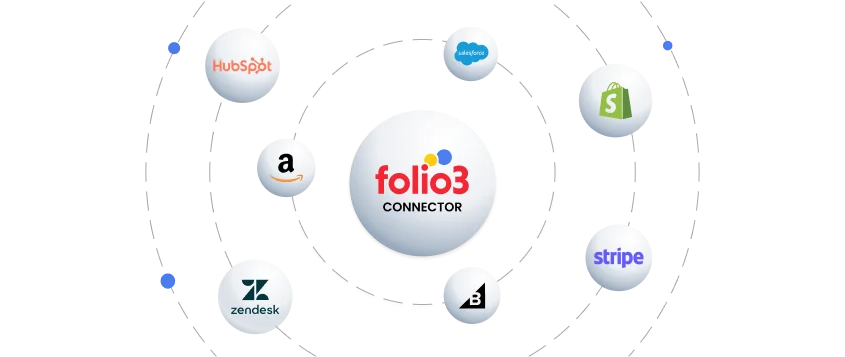
NetSuite has over 700 applications in its SuiteApp Marketplace, covering everything from iPaaS tools (Celigo, Boomi, Workato) to shipping, HR, and analytics add-ons.
Source: NetSuite
Its REST Web Services API supports OAuth 2.0, SuiteQL queries, and asynchronous processing, with full parity with SOAP as of 2026.1. Pre-built connectors exist for Shopify, BigCommerce, Amazon, Salesforce, and Square.
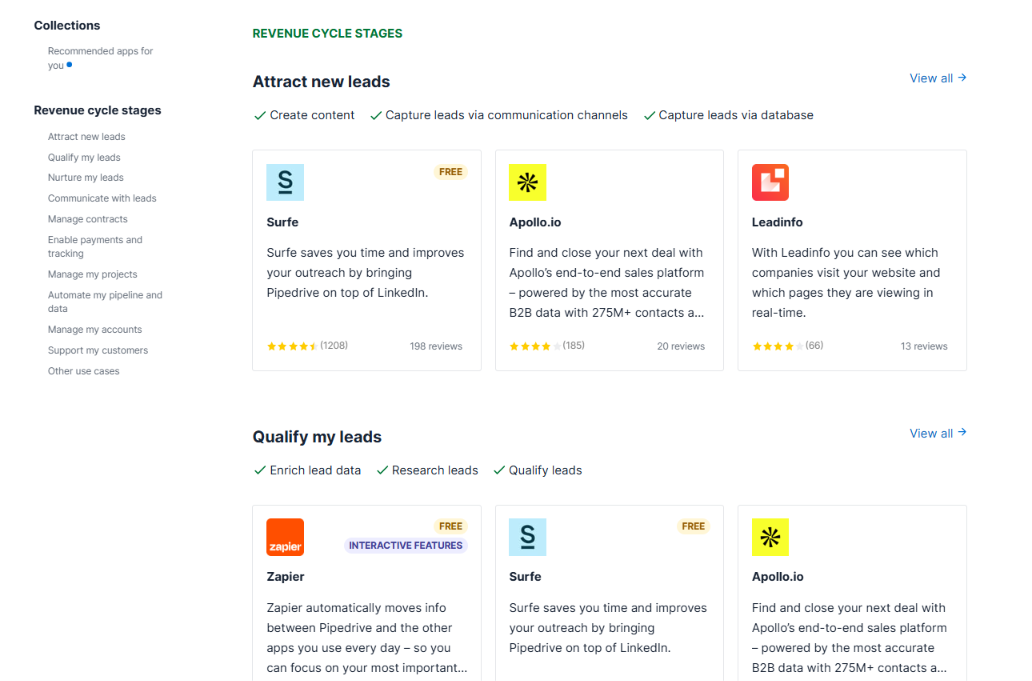
Pipedrive has 500+ integrations in its Marketplace, with Zapier as the highest-reviewed (2,444 ratings). The RESTful API with API token and OAuth 2.0 authentication is available on all plans, with a newer API v2 for improved efficiency.
Source: Pipedrive
Webhooks v2 supports real-time event notifications. A free developer sandbox account is available for testing. The integration ecosystem covers the typical sales stack: Mailchimp, PandaDoc, DocuSign, QuickBooks, Xero, Stripe, Slack, and JustCall.
ZoomInfo approaches integration from the intelligence layer outward. The Enterprise API surfaces search, enrichment, intent, and AI intelligence programmatically.
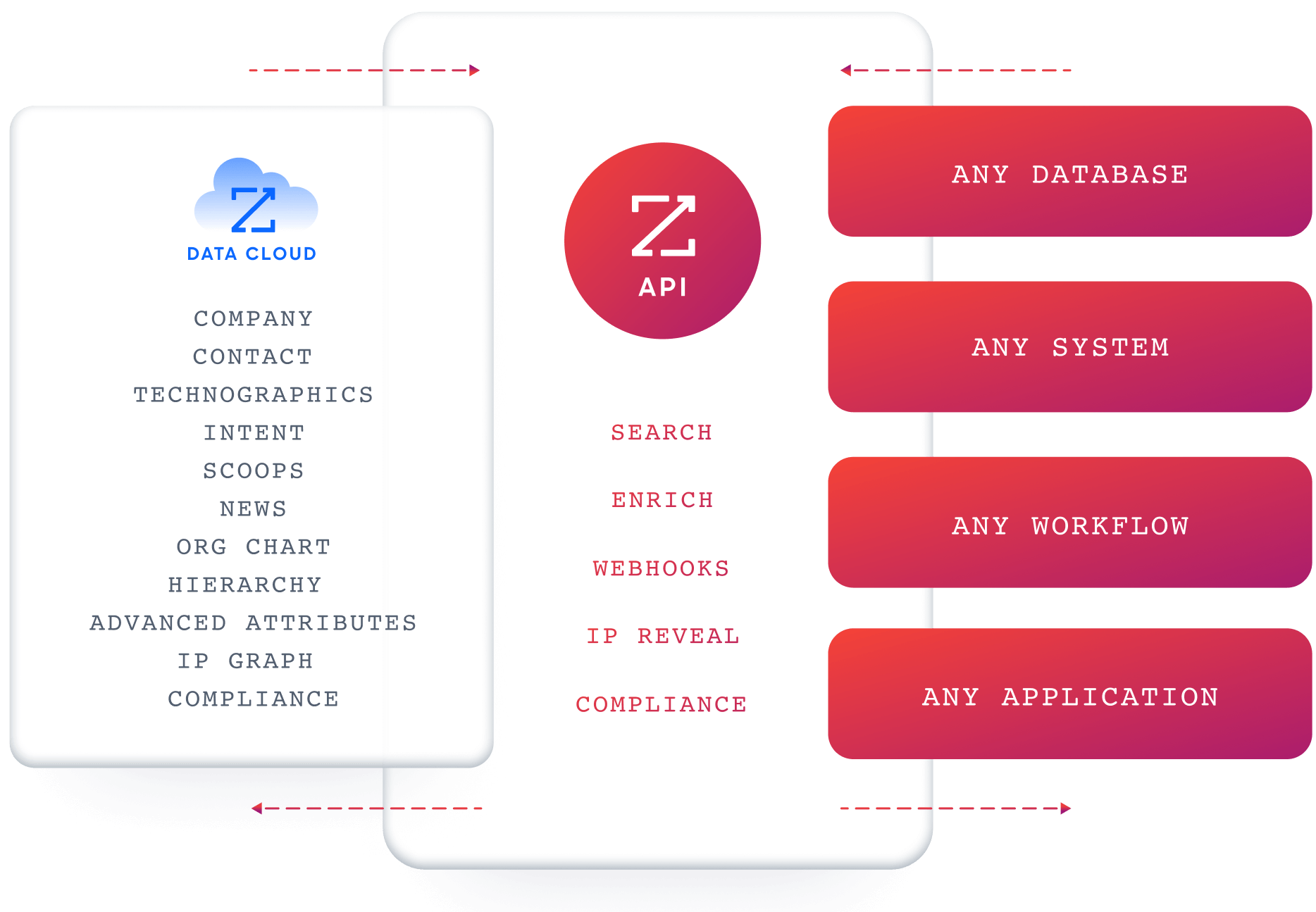
Source: ZoomInfo
The ZoomInfo MCP server connects AI models directly to ZoomInfo's B2B data without custom coding. Native integrations include Salesforce, HubSpot, Microsoft Dynamics 365, with Cloud Partners delivering data into AWS, Google Cloud, Snowflake, and Databricks. The App Marketplace lists 172+ integration partners.
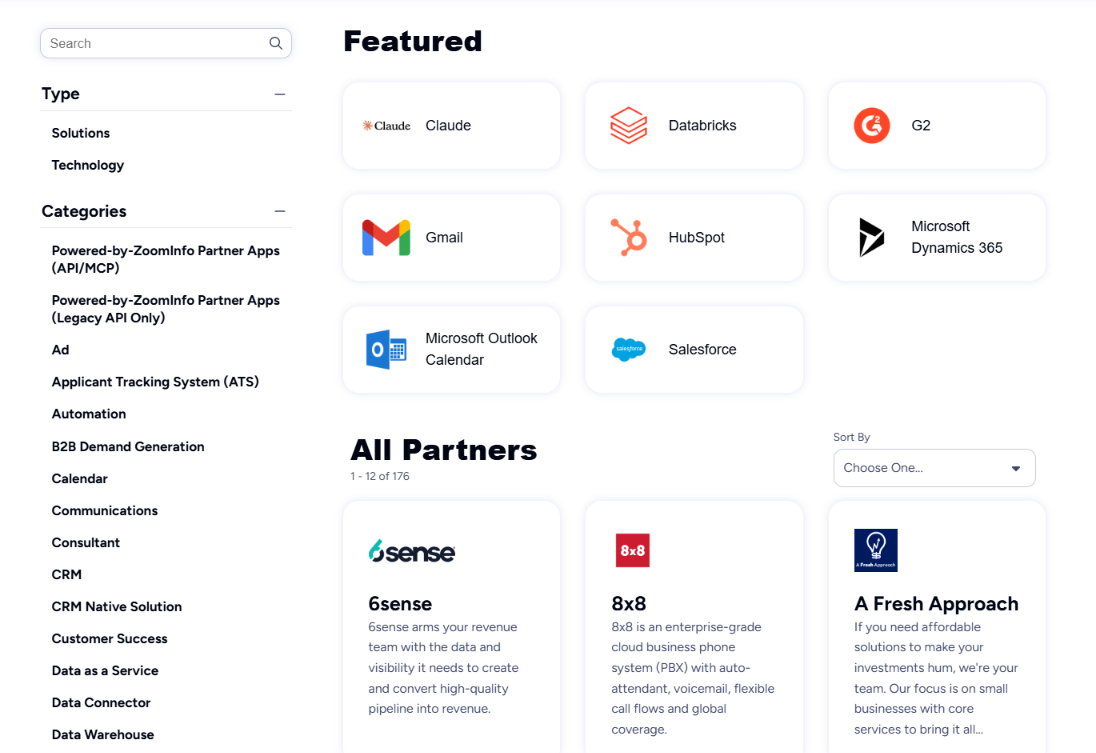
Source: ZoomInfo
The key integration point: ZoomInfo enriches whatever CRM you run. Whether your contact records live in NetSuite or Pipedrive, ZoomInfo's data keeps them accurate, complete, and connected to live buying signals.
BDO Canada's Senior Marketing Intelligence Analyst Jerry Wilson reported an 87% reduction in time spent on internal data dashboard updates thanks to ZoomInfo's API: "The plug-and-play aspect of the API means I can integrate it very easily into any process and get information at a moment's notice." (BDO Canada Case Study)
Security and compliance
All three platforms maintain strong security postures.
NetSuite holds SOC 1 and SOC 2 Type II, ISO 27001, ISO 27018, PCI DSS Level 1, and GDPR compliance via Oracle's Binding Corporate Rules.
Encryption uses AES-256 at rest and TLS 1.3 in transit. The platform supports SOX compliance with audit trails, segregation of duties, and role-based access controls.
Pipedrive holds ISO/IEC 27001:2022, ISO/IEC 27701:2019, SOC 2 Type 2, and SOC 3 certifications. Data is hosted on AWS with separate databases per customer, encrypted in transit and at rest.
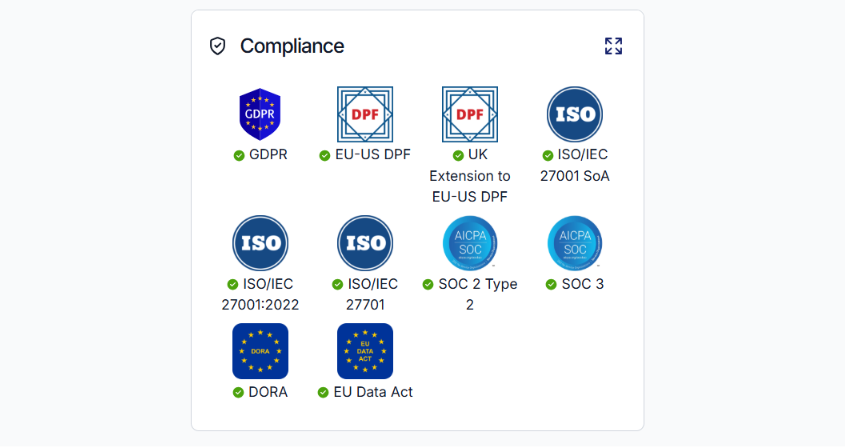
Source: Pipedrive
GDPR, EU-US Data Privacy Framework, and DORA compliance are maintained. Access controls include SSO via SAML 2.0, two-factor authentication, and IP allowlisting.
ZoomInfo holds ISO 27001, ISO 27701, SOC 2 Type II, plus TRUSTe GDPR and CCPA validations, all renewed annually. ZoomInfo is a registered data broker in California and Vermont.
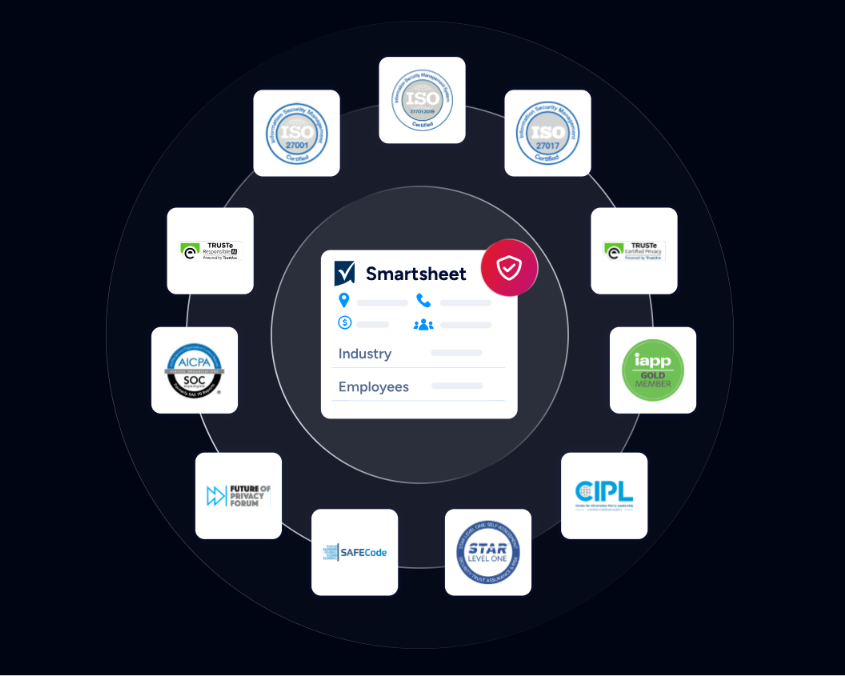
Source: ZoomInfo
For regulated industries, NetSuite's SOX and PCI compliance give it the edge on financial controls. Pipedrive's DORA certification matters for EU financial services. ZoomInfo's data privacy framework is critical for organizations using third-party B2B data at scale.
NetSuite vs. Pipedrive vs. ZoomInfo: Which should you choose?
These three platforms aren't competing for the same slot in your stack. The right combination depends on your company's size, operational complexity, and where your pipeline actually breaks down.
Choose NetSuite if:
You need unified financials, CRM, inventory, and order management in one platform
Your company runs multiple subsidiaries, currencies, or legal entities
You're preparing for an IPO, PE ownership, or an audit that demands financial controls
The quote-to-cash cycle (sales order to fulfillment to invoice to revenue recognition) needs to be automated
You can invest in a 3- to 12-month implementation and structured training
Choose Pipedrive if:
Your primary need is sales pipeline management for a small or mid-sized team
You want a CRM your reps will actually use without weeks of training
Budget is a constraint (under $100/month per user)
You're comfortable using separate tools for accounting, inventory, and other operations
Speed to value matters more than operational breadth
Add ZoomInfo to either if:
Your sales team spends too much time finding prospects and not enough time selling
You need verified contact data, direct dials, and business emails that work
You want to know which accounts are actively researching solutions like yours before your competitors do
Your CRM data is incomplete, stale, or missing the intelligence layer that turns contacts into pipeline
You're ready to move from reactive selling to signal-driven execution
Try ZoomInfo free and see what your pipeline looks like with verified data and buyer intent.
The real insight: NetSuite and Pipedrive answer the question "how do we manage our sales process?" ZoomInfo answers a different one: "who should we be selling to, and when?" The most effective revenue teams don't choose between these questions. They answer both.
"ZoomInfo gives us the information we need to execute. It's already there, so we can be three steps ahead." (William Kenimer, VP of Revenue Operations, Vensure; Vensure Case Study)
NetSuite vs. Pipedrive vs. ZoomInfo FAQ
What is the fundamental difference between NetSuite, Pipedrive, and ZoomInfo?
NetSuite is a cloud ERP platform that bundles financials, CRM, inventory, order management, and e-commerce into one system, targeting mid-market companies with complex operations.
Pipedrive is a standalone sales CRM built around visual pipeline management for small and mid-sized teams.
ZoomInfo is a B2B intelligence platform that provides verified contact data, buyer intent signals, and AI-powered GTM execution. NetSuite and Pipedrive manage your sales process; ZoomInfo tells you who to put into that process and when.
Can I use ZoomInfo with NetSuite or Pipedrive?
Yes. ZoomInfo complements your CRM rather than replacing it. ZoomInfo data and signals can be exported to or integrated with either platform. ZoomInfo natively integrates with Salesforce, HubSpot, and Microsoft Dynamics, and its Enterprise API and MCP server allow programmatic data flow into any system. The intelligence layer (verified contacts, intent signals, GTM Context Graph insights) enriches whichever CRM your team uses.
Which platform is cheapest for a small sales team?
Pipedrive is the most affordable starting point, at $14/month per seat on the Lite plan with most core CRM features included. ZoomInfo Lite is free permanently with 10 monthly export credits. NetSuite requires a custom quote with annual commitments, and year-one costs commonly reach mid-to-high five figures. It's designed for companies with the revenue and operational complexity to justify the investment.
Does NetSuite's built-in CRM compete with Pipedrive?
They overlap in CRM functionality but serve different audiences. NetSuite's CRM shares a single database with the ERP, letting sales reps see payment history, open orders, and credit status alongside deal records. Pipedrive's CRM focuses entirely on pipeline visibility and sales execution. Companies whose sales process is tightly connected to fulfillment, inventory, and financials benefit from NetSuite's integration. Companies that need a fast, intuitive deal-tracking tool will find Pipedrive more productive.
How does implementation compare across the three platforms?
Pipedrive requires almost no implementation; most teams are productive the same day. ZoomInfo deploys in weeks, with a structured 30- to 90-day onboarding program.
NetSuite is the most complex, with pre-configured SuiteSuccess editions targeting 90 to 120 days and custom deployments stretching 9 to 12 months or longer. NetSuite also typically carries a one-time implementation fee on top of the annual subscription.
What kind of data does ZoomInfo provide that NetSuite and Pipedrive don't?
ZoomInfo provides B2B intelligence data: 500M contacts with verified business emails and 135M+ verified phone numbers, company attributes and technographics for 100M companies, buyer intent signals tracking which companies are actively researching relevant topics, and the GTM Context Graph that connects all of this with your own CRM and conversation data.
Neither NetSuite nor Pipedrive includes a B2B prospecting database or buyer intent signals.
Which platform has the best AI capabilities?
Each platform applies AI to its own domain. NetSuite Next embeds AI into ERP workflows: natural language queries (Ask Oracle), automated month-end close (Autonomous Close), and AI-generated financial narratives.
Pipedrive's AI Sales Assistant provides deal prioritization and an AI email writer.
ZoomInfo's GTM Context Graph processes 1.5B+ data points daily to surface why deals move or stall, with AI agents in GTM Workspace that handle account research, outreach drafting, and signal monitoring. ZoomInfo's AI is the most relevant for prospecting and pipeline intelligence.
Is ZoomInfo only useful for large enterprises?
No. ZoomInfo Lite is free and available to individual users and small teams, providing access to the B2B database with 10 monthly export credits and basic website visitor identification. Paid plans scale with usage and are custom-quoted.
While ZoomInfo's largest customers include enterprises like Adobe, Snowflake, and Thomson Reuters, the platform serves companies of varying sizes.
Other tools worth evaluating side by side:
